ic Related Articles
Stay Ahead with Expert Electronics Insights,
Industry Trends, and Innovative Tips
- Electronic Components
- News Room
- General electronic semiconductor
- Components Guide
- Sort by
- Robots
- Transmitters
- Capacitors
- IC Chips
- PCBs
- Connectors
- Amplifiers
- Memory
- LED
- Diodes
- Transistors
- Battery
- Oscillators
- Resistors
- Transceiver
- RFID
- FPGA
- Mosfets
- Sensor
- Motors, Solenoids, Driver Boards/Modules
- Relays
- Optoelectronics
- Power
- Transformer
- Fuse
- Thyristor
- potentiometer
- Development Boards
- RF/IF
- Semiconductor Information
- Sensors
- PCB
- transistor
What are Comparators?Comparators are like the referees in an electronic game. They decide if one signal is higher or lower than another and give a clear thumbs up or down as a result. Types of comparators (integrated reference, high speed, low power)Comparators in electronics are like the judges of a race, deciding which signal is faster or stronger. They come in different flavors, each designed for a specific role in the electronic world. Integrated Reference Comparators:These gadgets have a built-in reference voltage, making them plug-and-play for many applications. Imagine you're baking cookies and your oven could automatically adjust the temperature to just right; that's what integrated reference comparators do with voltages.You'll find these in systems where stability is key—like keeping the lights on in your house steady, even when everyone in the neighborhood turns theirs on at dusk. High Speed Comparators:With less than 100 ns propagation delay, these are the sprinters of the comparator world. It's like comparing two drag racers; high-speed comparators can swiftly tell which signal reaches the finish line first.Their speed makes them perfect for jobs where timing is everything. In an action-packed video game, they ensure that every explosion and character movement appears without lag. Low Power Comparators:These work well under limited power conditions, sipping energy like a fuel-efficient car. Ideal for battery-powered gadgets, they stretch out energy use so your device doesn't drain quickly.You'll see them in portable medical devices or remote sensors, ensuring they keep running for ages on a single charge.Each type has its arena—integrated reference comparators stabilize voltage levels like no other; high-speed ones make sure fast signals don't get blurred together; low-power comparators keep things going when energy is scarce. Whether it's in automotive dashboards or handheld gaming consoles, these judges play a crucial role in making electronic circuits perform their best. Products available in this categoryLinear comparators play a crucial role in electronic circuits. They help compare values and give out a clear signal based on what they find. Here's a list of key products in this category, highlighting their unique features:MAX40008 - Known for its precision, the MAX40008 is an integral part of applications needing accurate signal processing. It shines in power supply systems and data acquisition settings, making it a go-to choice for professionals.MAX40009 - This device stands out with its ability to operate under low power conditions. Its efficiency is ideal for portable devices and battery-operated gadgets, ensuring longer run times without sacrificing performance.MAX40001 - With high-speed capabilities, the MAX40001 excels in fast-paced environments where rapid signal comparison is vital. It finds its place in telecommunications and automotive sectors, where speed can't be compromised.MAX40000 - This comparator boasts integrated reference features, simplifying designs and reducing the need for external components. Its versatility makes it well-suited for LED lighting controls and surge suppression tasks.MAX9095 - Offering exceptional reliability, the MAX9095 serves well in harsh conditions, such as industrial control systems. Its durable design ensures it can handle heavy loads without faltering.MAX9092 - A standout for analog-to-digital conversion applications, the MAX9092 combines efficiency with precision to support complex digital signal processors (DSPs) and field programmable gate arrays (FPGAs).MAX9093 - Ideal for use in backplane systems and instrumentation panels, the MAX9093 delivers reliable performance with threshold detection capabilities that guarantee error-free operations.MAX9094 - When stability is key, especially in sensing applications involving variable resistors or trimmer potentiometers, the MAX9094 offers a stable output signal that engineers can rely on.MAX9034 - Excelling in op-amp (operational amplifier) applications, the MAX9034 compares analogue voltage levels against preset references with high accuracy, perfect for analog devices within control systems.AX9024 - Ideal for polymer capacitor management and filtering processes within power supplies, theMAX9024 ensures smooth operation by managing variations efficiently.These comparators meet various needs across multiple industries by offering specific functionalities for different tasks—from monitoring voltage levels to improving operational efficiency in electronic circuits. Functionality of Linear ComparatorsLinear comparators act like electronic decision-makers. They take in two electrical inputs, compare them, and kick out a clear yes or no answer as an electrical signal.Comparing measurable quantities with a referenceLinear comparators shine in their role to weigh two analog input signals against each other. Imagine a race where the finish line is the reference point, and the runners are the input signals.These components act as referees, deciding which signal reaches the finish line first. This decision-making process helps electronic circuits determine next steps based on comparing these measurable quantities to a set benchmark.In my experience working with linear comparators in various projects, I've found that they excel under pressure—handling large differences between inputs without breaking a sweat.For instance, when integrating them into an A/D converter circuit for temperature monitoring, their ability to quickly evaluate how close the sensed temperature was relative to our target range proved invaluable.This fast decision capability allowed us to monitor system health more efficiently and respond rapidly when temperatures strayed from the desired range. Through this use of comparators from top brands like Texas Instruments and Microchip Technology, it's clear they're crucial for precise control in many electronic applications. Outputting a digital signalLinear comparators shine in their role by wrapping up the decision-making process into a neat digital signal. They act like efficient gatekeepers, letting an electric "yes" or "no" pass through based on the comparison they make.Imagine standing at a crossroads where one path is labeled “greater” and the other “lesser.” The comparator stands there too, directing signals down one path or the other after quickly deciding which signal is larger.This binary output isn't just about knowing which way to go; it's about speedily moving forward with clarity.I recall working on my first electronic project that involved an analog to digital converter (ADC), using a linear comparator at its heart. The setup was simple: compare incoming analog voltages against a fixed reference, then convert these comparisons into clear-cut digital signals that could be easily read by microcontrollers and digital systems.It felt like magic watching these tiny components make swift decisions, pushing our project from concept to reality much faster than expected. Through this hands-on experience, I learned firsthand how vital linear comparators are for transforming ambiguous analog data into definitive digital form, making them indispensable in designing efficient electronic circuits. Op-Amp ComparatorsOp-Amp Comparators are like the traffic cops of electronic circuits. They look at two different voltages, decide which one is bigger, and then tell the rest of the circuit which way to go with a clear signal. Comparing analogue voltage levelsComparators in electronics act like detectives. They are always on the lookout, comparing one voltage level to another. Imagine you have two wires, one from your guitar and another from a music box.The comparator listens closely. If your guitar's tune is louder (has higher voltage), the comparator notices and sends a signal saying, "Guitar wins!" This process uses op-amps, short for operational amplifiers—an electronic device that boosts up tiny electrical signals into bigger ones.An op-amp can turn whispers into shouts.In this world of gadgets and gizmos, comparators using op-amps play a crucial role. Let's take LED lights as an example. To decide whether an LED should light up or not, comparators compare incoming voltages against a known value called preset reference voltage.If the input is high enough passing this preset mark—the LED shines bright! Comparing analog levels helps ensure devices work correctly by making quick decisions based on the information they get from their surroundings like light sensors adjusting screen brightness on your smartphone. Outputting an output signal based on a preset reference voltageLinear comparators are like the gatekeepers of electronic signals. They look at two inputs: one from your gadget and another fixed one they already know, called a preset reference voltage.Imagine you're setting up dominoes in a pattern. You want them to fall just right. The comparator makes sure each domino (signal) falls when it's supposed to by saying "yes" or "no" - that's its output signal.It's binary, straightforward.I once used an op-amp for a school project to control LEDs in a light display based on sound levels—a real-world dance floor vibe! I set my desired loudness as the reference voltage, and whenever the music hit that level or higher, boom, lights flashed accordingly.This was all thanks to my handy linear comparator making quick decisions based on my preset conditions—my own electronic bouncer deciding which signals got into the club! Through this hands-on experience, I learned how crucial these components are in shaping how responsive and interactive tech devices can be. Applications of Linear ComparatorsLinear comparators are like referees in an electronics game, deciding who's above or below the play line. They shine in places where signals need a quick check, making them heroes in car gadgets and phones. In electronic circuits for signal comparisonIn electronic gadgets, comparing signals is like a game of "hot or cold." Linear comparators are the referees. They peek at two inputs: what we've got versus what's expected. If our signal’s hotter (higher), the comparator cheers with a thumbs-up signal.But if it's colder (lower), it gives a thumbs-down. This simple yes or no keeps gadgets smart, making sure your phone talks to the cell tower just right.These handy devices pop up everywhere, from measuring car engine speeds to keeping data flowing smoothly in telecom networks. Using tools like op amps and ADCs, they work behind the scenes in PCBs smaller than a postage stamp.Even though we don't see them, without these tiny judges, streaming videos would freeze and cars might cough and sputter. So next time your day zooms by without a glitch, thank those little comparators for playing referee so well! Importance in various industries (automotive, telecommunications, etc.)Linear comparators play a key role in many industries, making gadgets smarter and vehicles safer. From ensuring the longevity of a battery in your smartphone to controlling the airbags in cars, these tiny components are mighty in function.In the automotive world, linear comparators are vital. They monitor battery levels and control system functions in electric and hybrid vehicles. This precision helps avoid breakdowns and extends the life of key parts.Telecommunications rely on them to keep signals clear and strong. Comparators filter out noise, making sure data travels swiftly and accurately across networks. Without them, your internet speed would crawl, and calls might drop more often.For handheld devices including smartphones and tablets, these comparators work behind the scenes to manage power efficiently. This way, your device charges faster and holds that charge longer, all thanks to smart energy use.Industrial sectors use comparators in control systems for machinery. They ensure equipment operates within safe parameters, protecting both workers and products from harm due to malfunctions or overloads.The healthcare industry benefits from them too, especially in portable medical instruments. Comparators keep tabs on critical readings like blood pressure or glucose levels, alerting patients and doctors to potential issues fast.Renewable energy systems utilize comparators to optimize power conversion from solar panels or wind turbines into usable electricity for homes or businesses.Safety systems across various fields depend on linear comparators as well. They're used in smoke detectors, CO2 monitors, and burglar alarms to trigger alerts when measurements reach dangerous levels.Each example shows just how much we count on linear comparators every day—they make modern life smoother and safer across a spectrum of activities from driving to web surfing to staying healthy. ConclusionLinear comparators are like the traffic lights of electronic circuits. They make sure signals go where they should. Just like a referee in a game, they decide what's in and what's out.They work fast, making them perfect for cars, phones, and other tech stuff we love. So next time you're chatting on your phone or playing video games, keep in mind these little helpers make it all run smoothly! Thanks to them, our gadgets are smart, quick, and reliable. FAQs1. What's the role of linear comparators in electronic circuits?Linear comparators are like gatekeepers in electronic circuits, they compare signals and give a thumbs up or down! They can work with various components such as bipolar (BJT) and MOSFETs, thyristors, SCRs, relays and so much more.2. Can I use linear comparators with other devices?Absolutely! Linear comparators can be best buddies with analog to digital converters (A/D), digital to analog converters (D/A), programmable logic devices (PLDs) including system on chip (SoC). They also play nice with breakout boards and switching regulators.3. How do linear comparators interact with sensors?Sensors send their data to linear comparators which then decide what needs to happen next. It’s like a game of telephone but for your circuit protection!4. Do I need special connectors for my circuit that uses a linear comparator?Not at all! Your usual jacks, plugs and sockets will do just fine. If you're feeling fancy though, circular connectors or spade connectors could add some pizzazz!5. Are there any unique materials used in circuits involving linear regulators?You betcha! From ferrite cores to film capacitors or even polymer capacitors – it's like an all-you-can-eat buffet of electronic components.6. Where can I find these parts for my circuit using a linear comparator?Look no further than an electronic components distributor! You'll find everything from rheostats to racks, GDTs to desoldering braid - it's practically Christmas morning for electronics enthusiasts.
Allen On 2024-07-22
The three-day electronica china 2024 officially opened at the Shanghai New International Expo Center from July 8th to 10th. The exhibition brought together globally renowned electronics companies, with Kynix, a well-regarded electronic components distributor favored by customers, making an appearance at this event. Electronica china is one of the most influential events in the Asian and global electronics industry. It is reported that the exhibition covers an area of up to 90,000 square meters, with over 1600 exhibitors from countries and regions such as China Taiwan, Germany, the United Kingdom, and Russia. The exhibition focuses on cutting-edge application areas such as automotive electronics, medical electronics, semiconductors, and data centers. As a major event in the electronics industry, electronica China 2024 has created themed exhibition areas for electronic manufacturing services, distributors, semiconductors, passive components, and closely follows popular application markets such as automotive electronics, medical electronics, and motor drives. It also concurrently hosts multiple innovative forums, providing a platform for professionals in the electronics industry and companies seeking cooperation opportunities to exchange ideas and collaborate.During the three-day exhibition, Kynix's booth attracted a large number of professional visitors, with booth staff elaborating on Kynix's advantages in integrated supply chain management systems, allowing attendees to deeply appreciate Kynix's leading position in the electronics industry. This exhibition provided Kynix with an excellent opportunity to showcase its technological strength and networking platform, offering strong support for brand promotion and resource integration. The successful experience of the exhibition will provide robust momentum for Kynix's future development and growth, as Kynix continues to explore new trends in the electronics industry and deliver higher-quality products and services to customers.
Kynix On 2024-07-09
Understanding LC NetworksLC networks are like magic keys that unlock clear signals. LC networks use inductors and capacitors to filter out noise, keeping your devices running smoothly without any annoying interference. Function and Application of LC FiltersLC filters play a big role in keeping electronic devices running smoothly. They cut down on electromagnetic interference (EMI) and radio frequency interference (RFI). This means your favorite gadgets, like smartphones and TVs, work better because these filters keep the noise out.Think of them as bouncers at a club who only let the good vibes in.These filters show up in lots of places - from power supply units to RF circuits. In industrial settings, they're key to making sure machines talk to each other without static messing things up.Whether it's for controlling temperature in a manufacturing plant or ensuring clear communication between control systems, LC filters are behind the scenes heroes. They help meet tough standards and ensure gadgets and gear do what they’re supposed to do without any glitchy surprises. Key Components: Inductors and CapacitorsInductors and capacitors are like the salt and pepper of the electronic world. They spice things up in LC filters. Inductors, such as transformers, coils, or chokes, store energy in a magnetic field when electric current flows through them.It's like they're holding onto energy for just the right moment to release it. Capacitors do something similar but with an electric field. They save up charge until the circuit needs it.These components work together perfectly to filter out unwanted noise from signals—think of it as cleaning up your favorite song so you can hear every note clearly.In the symphony of electronics, inductors provide the rhythm while capacitors hit the notes.These key players come in various types and sizes for different jobs—like smoothing out power supplies or making sure data gets where it’s going without interference. Some are made specifically for high-speed digital signal processors (DSPs) or analog to digital converters (ADCs), ensuring clear communication without losing any detail along the way.Just imagine trying to watch your favorite show with constant static interrupting—the right combo of these tiny heroes makes sure that doesn’t happen with your gadgets! Exploring RC NetworksDigging into RC networks, we find a world where resistors and capacitors team up. This duo controls electric flow and shapes signals, making our gadgets run smooth as silk. Role and Use of RC FiltersRC filters, made of resistors and capacitors, are the unsung heroes in gadgets we use every day. They control how fast or slow electrical signals change in devices like radios and TVs.This might not sound flashy, but without RC filters, listening to your favorite tunes or binge-watching shows would be a mess. Their main job? To smooth out signal flows, ensuring clear sounds and sharp pictures.Using these components is akin to adding just the right amount of sugar to your coffee; it has to be perfect. I recall hooking up an LED lighting project with some capacitors I had lying around.At first, the lights flickered like a disco ball! It was only after tweaking the resistor values that everything calmed down into a steady glow. That's RC filters at work – they help manage energy flow for smoother operations in electronics everywhere from data acquisition systems to microchip technology setups. Constituent Elements: Resistors and CapacitorsResistors and capacitors are the superheroes of RC networks, zapping away unwanted noise like champs. Think of resistors as the guardians that slow down the electric current, making sure it's just right.They come in various types such as variable resistors and PTC resettable fuses, ready to tackle any challenge. On the flip side, capacitors are like storage bins for electricity. They hold onto electric charge until it's needed and can release it in a flash.Their types range from feed through capacitors to ceramic filters, each with its special power.I once had a project where I mixed up my components and ended up with a wacky signal on my breadboard experiment. It was like trying to listen to your favorite radio station but only getting static—it drove me nuts! After some tinkering, I realized I had used a capacitor where I should have placed a resistor.Swapping them put everything back in harmony—clear tunes with no buzz or hum. This hands-on mess-up taught me the real-world magic these tiny parts play in controlling our electronic world. Comparing LC and RC NetworksChoosing between LC and RC networks is like picking sneakers or loafers - both get you places, but in different styles. LC networks, with their inductors and capacitors, ace at blocking unwanted noise in high-speed circuits.On the flip side, RC networks use resistors and capacitors to slow things down a bit, making them great for audio gear. Each has its spotlight moments depending on the gig! Advantages and Disadvantages of Each TypeLC networks shine because they block low-frequency noise like a champ. Imagine you're in a noisy cafe trying to listen to music. LC filters are like noise-canceling headphones for your device, keeping the annoying hum away.But, there's a catch – these network parts are bulky. Ever tried stuffing an oversized sweater into a small suitcase? That's what adding inductors feels like in circuit design.RC networks, on the other hand, are the compact backpacks of the filter world. They fit almost anywhere because of their simple resistor and capacitor setup. Perfect for tight spaces! But if LC filters are noise-canceling headphones, RC filters are more like basic earplugs.They can't quite handle those low-frequency noises as well. It's a bit like trying to block out café chatter with tissue paper stuffed in your ears - not as effective but better than nothing! ConclusionAlright, now you're in the know about EMI/RFI filters and how LC and RC networks play their part. These little wizards clean up the mess in our gadgets, making sure things run smooth without any annoying interference.Think of them like the unsung heroes behind your favorite devices, working hard so you can binge-watch or game on without a hitch. Whether you're dealing with industrial machines or just keeping your smartphone clear of static, these filters have got your back.It's all about keeping our tech happy and humming along nicely. FAQs1. What's the deal with EMI/RFI filters?Think of EMI/RFI filters as superheroes for your electronics. They fight off unwanted noise from electromagnetic interference (EMI) and radio frequency interference (RFI), keeping signals clean and devices happy.2. How do LC and RC networks fit into this picture?Imagine LC (inductor-capacitor) networks as bouncers at a club, only letting in the good vibes (frequencies). RC (resistor-capacitor) networks are like the club's managers, adjusting how much fun (signal strength) gets through to keep everything balanced.3. Can these filters really stop all that electronic noise?Yep! Whether it's buzz from power lines or chatter from other gadgets, these filters use components like capacitors and inductors to block out the racket, ensuring your device only listens to what it should.4. Are there different kinds for all my gadgets?Absolutely! From smartphones needing a tiny touch of quiet with integrated circuits, to big machines craving calm with chunky chokes and coils – there’s a filter for every device under the sun.5. Why do some devices have more than one type of filter?It's like wearing layers on a chilly day. Some devices face more electronic weather than others, so they layer up with both LC and RC networks to stay snug against all types of interference.6. Do I need to be an engineer to understand all this stuff about filters?Not at all! Just remember: EMI/RFI filters are the unsung heroes keeping your electronics free from invisible waves of disruption, ensuring smooth sailing for your favorite tech toys.
Allen On 2024-06-25
Overview of CPLDs CPLDs, also known as logic devices act as the powerful brains, behind electronic devices. They manage rules and decisions swiftly to enhance technologys intelligence and speed.Definition and Basic FunctionComplex Programmable Logic Devices (CPLDs) focus on enabling medium-sized digital circuits to perform their functions. Consider a container packed with logic gates that are configurable to execute various tasks.Picture a collection of miniature computers that can be educated to handle different responsibilities simultaneously. These devices utilize programmable logic to ensure they execute precisely the functions required by engineers, whether it be regulating an automobile's engine or coordinating signals in a mobile device.From my own experience working with these gadgets, I've learned that simplicity is key. You start with an idea for a circuit and then use hardware description languages (think of them as the instruction manual) to tell the CPLD how to behave.This might involve setting up sequences of operations or deciding which inputs lead to which outputs. It’s fascinating work because it feels like teaching a child basic steps and watching them learn how to perform complex tasks on their own.Key Components of CPLDsCPLDs light up with their logic blocks and macrocells each controlled by /OR arrays. Imagine them as neighborhoods where each building ( block) can be rearranged to meet the citys requirements.These blocks are linked through a system of switches that we can customize, similar, to choosing which streets, in our city should be one way or allow two way traffic. This adaptability enables us to transmit signals through the routes reducing time and energy consumption.In my own tinkering with CPLDs for a small robot project, I marveled at how EEPROMs play the role of memory keepers in these devices. Unlike regular memory that forgets everything once power goes off, EEPROM remembers its programming even after being switched off.This trait is crucial for gadgets that need to wake up and run with no delay because they don't have to be reprogrammed every time they turn on. It's like teaching an old dog new tricks but never having to teach them again. Comparing CPLDs to FPGAsCPLDs and FPGAs might seem like twins in the digital world, but they play very different games. CPLDs are simpler, making them a go-to for small tasks, while FPGas handle complex projects with more muscle.Architecture DifferencesFPGAs and CPLDs may appear similar, at glance. They are quite different in the world of electronics. FPGAs offer logic blocks (CLBs) that function like building blocks you can assemble in ways as you please.These blocks are versatile allowing you to construct designs with memory blocks for data storage and DSPs (Digital Signal Processors) for handling mathematical tasks. It's like having a brain that can tackle heavy lifting.On the hand CPLDs take an approach by using a fixed number of macrocells. Picture these as made Lego sets; while theres less room for customization they often provide just the right fit, for many projects.During my own tinkering adventures, I once tried using an FPGA for a basic project only to realize it was overkill – like driving a semi-truck to pick up groceries! Switching to a CPLD made more sense; its simpler architecture did the job without extra bells and whistles.This experience taught me that understanding these differences isn't just academic – it impacts what lands on your workbench. You get why choosing between them hinges on how complex your circuits need to be or how much speed matters for your specific task.Performance and ComplexityCPLDs shine in the race with their lean power appetite. FPGAs might sprint ahead with muscle and flex, offering more performance and resources, but they also guzzle more juice. Imagine a sports car versus a reliable sedan; one dazzles at high speeds while the other wins on efficiency over long distances.I once worked on a project where every watt mattered. We chose CPLDs for their thriftiness in power consumption, making our embedded system not just smart but also energy-smart.Tackling complexity, CPLDs keep it simple with their straightforward architecture. FPGAs boast of intricate arrangements that can handle vast logic designs and parallel tasks, stretching from field-programmable gate arrays to digital logic circuits.Yet this complexity is not everyone's cup of tea. For many designers like me who juggle timing analysis and hardware description languages, the simplicity of CPLDs makes them our go-to choice for streamlined projects where speed and need meet without causing headaches over tangled configurations or bloated costs.Cost ImplicationsMoney talks, especially in tech. If you're deciding between a CPLD (complex programmable logic device) and its cousins like FPGA (field programmable gate array) or ASIC (application-specific integrated circuit), cost is a big deal.FPGAs often come with more muscle for handling complex tasks but also carry a heavier price tag due to their design flexibility and performance capabilities. On the flip side, CPLDs are your go-to for simpler, less expensive solutions.They work well when you don't need all the bells and whistles but still want something reliable.I once had to choose between using a CPLD or an FPGA for a quick-turnaround project. The clock was ticking, and so was my budget meter. After crunching some numbers, it became clear that leveraging a CPLD's lower cost would let us meet our financial limits without sacrificing quality.This choice saved us thousands and allowed us to allocate funds towards other vital components of our design—like simulation tools Verilog for testing our logic thoroughly before launch.It’s moments like these that show: saving money while maintaining efficiency isn’t just good business; it’s smart engineering. Application Areas for CPLDsCPLDs show off their skills in gadgets we use every day, like phones and TVs. They also help cars talk to each other and keep our internet calls clear and fast.Consumer ElectronicsConsumer electronics like smartphones, game consoles, and TVs rely heavily on CPLDs. These gadgets need to process data quickly and effectively. CPLDs help them do just that by managing tasks in parallel, speeding things up.Thanks to their ability to handle sequential logic and glue logic operations, devices can perform multiple actions at once. This makes your phone or TV smarter and faster.In the design of these electronics, engineers use tools like Verilog, a hardware description language. They also employ simulators to test how the CPLD will behave under different conditions.This way, they make sure your gadget works well and reacts swiftly when you're switching between apps or streaming videos. With CPLDs embedded in consumer electronics, every click leads to instant responses, enhancing your experience with technology daily.Automotive IndustryCars are getting smarter every day. They use CPLDs in their electronics, especially for things like ADAS and self-driving cars. This tech helps cars make quick decisions on the road.In these vehicles, CPLDs play a major role. They process data fast, making sure everything runs smoothly. From controlling your car's speed to ensuring safe lane changes, CPLDs are key players behind the scenes in the automotive world.TelecommunicationsIn telecommunications, CPLDs play a big role. They handle the fast data we send and receive every day. Think about texting a friend or streaming a video. CPLDs help make sure those messages and movies get to us quickly and without errors.I once toured a telecom company and saw these devices in action. It was like seeing the internet's backstage—lots of blinking lights and complex setups, but all smoothly managed by CPLD technology.They also work well with field-programmable gate arrays (FPGAs) to manage networks efficiently. Together, they control how data moves through our phones and computers. This teamwork helps your apps run fast, even if the internet is busy.So next time your video call doesn't lag, you can thank both FPGAs and CPLDs for keeping things speedy! The Role of CPLDs in High-Speed Data ProcessingCPLDs turbo-charge data handling, making gadgets zip through tasks. Discover how these powerhouses speed up our tech world!Advantages in Speed and EfficiencyCPLDs shine with their fast timing for simple logic functions. They make quick decisions, handle data at high speeds, and reduce the need for extra chips on a board. Think of CPLDs as sprinters in a race; they're built for speed over short distances.This trait is invaluable in consumer gadgets where response time can make or break the user experience. By using these devices, designers cut down on system power use, which is essential for battery-powered electronics.From my desk full of gadgets and scribbles, I've seen CPLDs work magic in projects. They process commands swiftly, making them perfect for tasks requiring immediate action like signal processing or managing control systems in cars.These small yet powerful chips ensure that your favorite electronic devices are both fast and efficient with energy use. With tools like Verilog and simulation software, tweaking these tiny powerhouses to achieve optimal performance becomes an enjoyable puzzle to solve. Specific Use Cases in Data HandlingCPLDs shine in data handling by making things faster and using less juice. They're like superheroes, swooping in to take the heavy lifting off a device's main brain. Here’s a scoop on how they rock in the digital world:Managing Traffic: In a busy network, CPLDs act as traffic cops, directing data where it needs to go without causing delays. This keeps videos streaming smoothly and websites loading quickly.Super Quick Decisions: With their ability to handle multiple tasks at once, CPLDs make lightning-fast decisions that help self-driving cars avoid obstacles and drones fly safely.Keeping Secrets Safe: For security, CPLDs are like vaults. They encrypt data making it tough for hackers to crack, protecting everything from your phone calls to your bank account.Power Savers: By taking over smaller tasks, CPLDs allow the main processor to snooze more often, saving power. Phones last longer between charges because of this clever handoff.Heartbeat Monitors: In healthcare gadgets, CPLDs monitor heartbeats and other vital signs in real-time, ensuring doctors get accurate info ASAP.Talking Devices: They allow devices from different areas to speak the same language, whether it's a printer talking to a computer or a thermostat chatting with a smartphone app.7.Eyes and Ears: In security cameras and smart homes, CPLDs process images and sounds super fast, helping these gadgets understand what they see and hear without getting confused.8.Smooth Operators: Electronic brains need updates without hiccups. CPLDs manage these updates seamlessly, making sure your gadget doesn’t skip a beat while learning new tricks.9.Game Changers: For gamers, CPLDs keep lag at bay by processing complex game physics in real-time, ensuring that every explosion looks epic and every race feels speedy.10.Network Ninjas: In big server farms that power the internet, CPLD-equipped machines juggle data packets like hot potatoes, keeping everything from emails to social media posts zipping along without getting stuck.CPLDs spring into action across various fields with their multitasking prowess and energy efficiency, proving indispensable in our increasingly connected world. Design and Development Tools for CPLDsDesigning with CPLDs? You'll need the right tools, like language translators for hardware and test simulators. This toolkit makes creating fast and smart devices a breeze. Excited to learn more? Keep reading!Hardware Description LanguagesCPLDs get their smarts from programming, and that's where hardware description languages (HDLs) like Verilog and VHDL come into play. Think of HDLs as the instruction manuals for CPLDs.They tell the device how to behave, helping it understand complex logic equations and tasks. Using these languages, designers turn ideas into code that can be compiled, simulated, and then loaded onto a CPLD.It's a bit like writing a recipe for your computer to follow.I've used both Verilog and VHDL in my projects, crafting everything from simple light-blinking operations to more intricate signal-processing tasks. Each time, the process begins with an idea or problem needing a solution.Then comes sketching out the logic using these languages—sort of like planning out your chess moves before making them. This isn't just about typing commands; it's about structuring thoughts in a way machines comprehend.Once coded, tools transform this script into something the CPLD can execute—a magic moment where ideas become actions!Simulation and Verification ToolsSimulation and verification tools like ModelSim, Xilinx ISE Simulator, FormalPro, and JasperGold are crucial. They check if the CPLD designs work right before making them real. Imagine them as test runs for video games but for electronic design.These tools see through your code to find mistakes early. This saves time and money.Using these tools feels like having a crystal ball. You get to see the future of your project without guessing. They use hardware description language (HDL) to model how data moves in your design.It's like building with digital LEGO blocks on a computer screen, ensuring everything fits perfectly before you commit. Optimizing CPLD PerformanceTo get the most out of your CPLD, it's like tuning a race car; you focus on timing analysis and smart use of resources. Get ready to boost speed and efficiency with these tricks!Timing Analysis TechniquesTiming analysis helps designers make sure CPLDs and FPGAs work fast and right. Tools like Quartus Prime Timing Analyzer check the clock's timing across the whole chip. They look at how data moves and when signals hit their targets.This makes sure everything works together well without delays.Designers use this info to tweak their designs for better speed and reliability. They might adjust paths or reduce tasks that take too long. This way, embedded systems using CPLDs can handle data quickly and efficiently, making gadgets work smoother.Resource Utilization StrategiesTo get the most out of complex programmable logic devices (CPLDs), it helps to focus on smart strategies. Pipelining is a way to speed things up by organizing tasks in a line, so one starts as soon as the other ends.By balancing logic circuits, we make sure no part of the CPLD works too hard while others slack off. Pushing the clock frequency higher lets us do more tasks faster but demands careful planning to avoid errors.From my experience, sprinkling these techniques across the design makes a huge difference. On an embedded processor project, adjusting the clock's speed just right shaved milliseconds off our processing time – that might not sound like much, but in data transmission and image processing, it’s gold.Using software like Verilog for hardware description and then testing with simulation tools ensured we were on track without wasting resources on dead-end designs. It’s like finding the perfect balance on a seesaw; everything runs smoother when you distribute weight evenly. Future Trends in CPLD TechnologyCPLD technology is sprinting ahead, with new tricks up its sleeve. Expect smarter chips that learn on the fly and play nice with the latest gadgets. Keep reading to stay ahead of the curve!Market ProjectionsThe market for field programmable gate arrays (FPGAs) is on a fast track, expected to hit USD 12.5 billion by 2025. This growth isn't slowing anytime soon with a steady climb at a rate of 9.7% from now until then.It's clear that the demand for these integrated circuits, which include complex programmable logic devices (CPLDs), is skyrocketing across various sectors like computer vision and network functions virtualization.These projections show us that industries are banking more on technologies like FPGAs and CPLDs to power their innovations, especially in high-speed data processing tasks. With such crucial roles in computing languages, software development platforms, and even open computing language applications, it's evident that both today’s developers and tomorrow's innovations will lean heavily on these adaptable circuits.Innovations on the HorizonFuture trends in CPLD technology point to a world where combining complex programmable logic devices with microprocessors and ASICs becomes the norm. This blend creates more efficient solutions, perfect for tackling tasks that demand high-speed data crunching without breaking a sweat.Imagine having the power of both brains and brawn at your fingertips – this is what's coming.People who design those tiny yet powerful chips are already experimenting with ways to make them faster, smarter, and cheaper. By using tools like Verilog for hardware description and leveraging simulation technologies, these innovators ensure gadgets get smarter by the day.They're not just thinking about today; they're crafting the future of technology piece by piece, aiming for leaps in areas such as multi-access edge computing and software-defined networking that could change how we interact with devices around us.It's like giving steroids to an already fast runner, making sure they stay ahead of the pack by miles, not just steps. Choosing the Right CPLD for Your ProjectPicking the best CPLD for your project might feel like finding a needle in a haystack. You need to eye factors like speed, cost, and what tasks you want it to handle. Say you're working on a fast video game console or a smart car system.You'll favor CPLDs that juggle tasks quickly without breaking the bank. Deciding between CPLDs and their cousins, FPGAs, comes down to your project's size and how complex its brain needs to be.Don't forget about tools like Verilog or VHDL for crafting your designs. These programming languages are just the ticket for telling your CPLD how to behave — think of them as teaching an old dog new tricks! Simulation tools also step into the arena, letting you test drive your design before making anything real.In short: hunting down the perfect CPLD is all about matching its features with what you dream up in your head. Ready to play matchmaker? Let's get started! Factors to ConsiderChoosing the right CPLD for your project can feel like a maze. With various factors at play, making an informed choice ensures your project runs smoothly without unnecessary hiccups. Here's what to keep in mind:Complexity of Your Project: Consider how complex your design needs to be. CPLDs, with fewer logic blocks, work well for simpler designs. If your project involves more intricate operations, like those found in GPUs or advanced telecommunications protocols, you might need to think again.Performance Needs: High-speed data processing demands devices that can keep up. CPLDs excel in executing simple tasks quickly thanks to their architecture that supports parallelism, making them ideal for applications needing swift responses, such as interrupt handling in automotive systems.Time-to-Market: If you're racing against the clock, CPLDs could be your best bet. They typically require less development time compared to FPGAs or ASICs owing to their simplicity and pre-built logic structures.Power Consumption: For battery-operated devices where power is precious, the low power usage of CPLDs makes them stand out. Their static nature means they consume less power than FPGAs, extending the life of portable electronics.Design Flexibility: Need room for last-minute changes? CPLDs offer flexibility because they're reprogrammable devices. This feature allows you to tweak your design without starting from scratch.Cost Concerns: Budget always matters. Generally speaking, CPLDs cost less than FPGAs or ASICs both in terms of initial investment and during the product lifecycle due to lower power consumption and development costs.Size Restrictions: Sometimes size does matter! In projects where board space is limited, like wearable technology or small consumer gadgets, the compact footprint of a CPLD can be a deciding factor.Development Tools Availability: Access to powerful development environments such as Visual Studio or hardware description languages including C/C++ plays a crucial role in programming efficiency and ease.Future Scalability: Thinking ahead pays off. Consider whether your project might need more functionality down the line requiring more logic blocks or faster performance that only bigger or more advanced CPLDs can provide.10 Software Compatibility: Ensure that the operating system and other software layers your project relies on mesh well with the CPLD you choose to avoid compatibility nightmares later on.Each point directs you to a clearer decision-making path ensuring that whatever choice you make aligns perfectly with both current needs and future aspirations of your high-speed data processing projects. When to Opt for a CPLD Over an FPGAChoosing a CPLD instead of an FPGA makes sense for projects needing fast timing and straightforward logic operations. In my work, I've found that CPLDs shine in managing tasks like bus interfacing, bringing different parts of a system to talk smoothly with one another, or gluing various components together so they play nice.For setups where the focus is on speed rather than complexity—think quick decision-making over intricate data processing—CPLDs are your go-to.Take power management as an example. In a scenario where you need precise control over how and when power flows through your device's circuits, a CPLD can handle those demands efficiently due to its simple yet powerful setup.It executes actions quickly, making it ideal for applications where response time is critical but the overall system design doesn't call for the high levels of flexibility FPGAs offer.In essence, if your project has clear-cut needs without requiring extensive programmable resources, leaning towards a CPLD could save both time and money while delivering reliable performance. Common Questions About CPLDsGot burning questions about CPLDs? You're not alone! People often wonder how they stack up against FPGAs in power munching or if they're the right pick for their next big project. It's time to clear the air and get those answers.Keep reading, and let's crack this nut together!Differences in Power Consumption Between CPLDs and FPGAsCPLDs are like sprinters, quick and efficient for short distances, thanks to their simple structure. They use less juice than FPGAs because they're smaller and not as complex. Imagine a light bulb versus a spotlight; CPLDs are the light bulbs.Their power needs stay steady, making them reliable for tasks that need speed without draining energy.FPGAs, on the other hand, are more like marathon runners with extra gear strapped on. They pack more punch but also suck up more power due to their beefy architecture and flexibility in handling intricate designs.The catch? How much energy they gulp down can swing wildly based on how busy they get or how you've set them up – from the clock ticks to the logic gates buzzing inside. So if your project is like planning a city's electric grid versus lighting up a single street, FPGAs might be drawing more from your power plant.Suitability of CPLDs for Specific ApplicationsComplex programmable logic devices shine in control systems, automotive electronics, and industrial automation. Their lower power usage makes gadgets last longer before needing a recharge.For quick decisions in cars or machines, they're top-notch because of their simple design that works fast.Using them in projects means you can change parts without starting over—just update the software. I tried this on an automation project; tweaking was a breeze with just some clicks instead of soldering new circuits all day.They fit best where speed and flexibility count but without breaking the bank or using too much juice. ConclusionCPLDs are like the hidden wizards of gadgets, making everything work faster and smarter. They're not as famous as their cousin FPGAs, but they sure pack a punch in data processing speed.With tools like Verilog and cool innovations on the rise, picking the right CPLD could be your golden ticket in tech projects. So next time you’re up for some high-speed tech action, think CPLDs – small but mighty! FAQs1. What's a CPLD, and why should I care?Imagine a tiny box that can do magic tricks with data faster than you can blink. That's a CPLD (Complex Programmable Logic Device) for you! It’s like the brain behind making gadgets work quicker and smarter without taking coffee breaks.2. How does this CPLD thingy speed up my devices?CPLDs are like super-efficient office workers who organize data, make decisions on where it goes next, and don't waste time. They use flip-flops (no, not the sandals), Boolean logic (a way of using true/false to solve problems), and other smart tools to process information at lightning speed.3. Can CPLDs learn new tricks?Absolutely! Unlike your old dog, these chips can learn new skills through something called programming. You can teach them new ways to handle data or even play nice with other tech inside your gadgets.4. Are there different kinds of memory in these devices?Yes siree! Think of it as having different types of notebooks for various tasks - some you can erase (erasable programmable read-only memory), some you can rewrite over many times (electrically erasable programmable read-only memory), and some are just for reading what’s written down by someone else (read-only memory).5. Do I need to be a rocket scientist to work with CPLDs?Not at all! While it sounds complex, diving into the world of hardware design with things like state machines and sequential logic circuits is more about curiosity and less about having a PhD in rocket science.6.Could these gizmos get along with my computer stuff?You bet! CPLDs love playing nice with virtual machines, software defined networking, and even fancy graphics stuff like Vulkan or CUDA. They're pretty sociable in the tech world.
Allen On 2024-06-21
Overview: This article lists various semiconductor materials utilized in solar cell technology, focusing on gallium arsenide. It explores the properties, advantages, and disadvantages, highlighting the superior efficiency and applications of gallium arsenide in solar cells. Various semiconductor materials, such as cadmium telluride, copper indium gallium selenide, and gallium arsenide, can be utilized to create solar cells. Thin-film technologies make use of these semiconductor materials. Firstly, cadmium telluride appears to be as effective as crystalline silicon, but telluride sources are limited, and cadmium is extremely poisonous. Secondly, copper indium gallium selenide has a good efficiency of up to 20% but comes with higher production costs. Most of these semiconductor materials, including silicon, have only an efficiency of up to 20%. Why is gallium arsenide used as a solar cell?The combination of the elements gallium and arsenide, known as gallium arsenide, offers the highest solar cell efficiency, up to 30%. Gallium, with atomic number 31 and from group III, is not found naturally; it can be found in trace amounts in minerals like bauxite and is a byproduct of zinc. Arsenide has an atomic number of 33 and belongs to the V group. These groups III and V are known for their particular characteristics; when combined, they provide a wide spectrum of bandgaps that are useful in numerous electronic applications. The distance between the valence and conduction bands is known as the band gap or forbidden gap, as shown in Fig. 1. The band gap is a crucial factor in determining the conductivity of a material. In metals, the valence and conduction bands overlap, making them very conductive. On the other hand, the bandgap is much lower in semiconductors like silicon, gallium, and arsenide, which means that they conduct electricity when heated up (when exposed to photons). Finally, the bandgap is higher in insulators like rubber, making them non-conductive. In semiconductors, the incident photon must have energy larger than the semiconductor material's bandgap to knock an electron from the valence band into the conduction band, where it is free to move and conduct electricity. Compound semiconductors like gallium arsenide have a bandgap of about 1.4 eV. The majority of photons emitted by the sun have an energy of approximately 1.5 eV, which is very close to the bandgap of the gallium arsenide semiconductor material. Hence, the solar cell made of gallium arsenide can excite the electron from its valence band to its conduction band and achieve its highest efficiency. In contrast, a high-band gap semiconductor material such as gallium nitride, which has a bandgap of 3.4 eV, and an incident photon with a bandgap of 1.5 eV will not have enough energy to dislodge an electron from the valence shell. Therefore, the efficiency of gallium nitride would be low, making them unsuitable for use as solar cells. AdvantagesGallium arsenide is a direct bandgap semiconductor material, meaning that the valence band's highest energy and the conduction band's lowest energy levels occur at the same momentum level, as shown in Fig. 2. This process facilitates the direct transfer of electrons, leading to the emission or absorption of energy. Gallium arsenide possesses the ability to efficiently absorb or emit photons, making it often utilized in applications that involve the conversion of light into electricity or vice versa. Gallium arsenide has significantly higher electron mobility compared to silicon, resulting in a gain in efficiency of up to 30% in solar cells, and they are even commonly employed as high electron mobility transistors (HEMT). Gallium arsenide has enhanced resistance to heat and moisture. As the temperature rises, the production of charge carriers (electron-hole pairs) increases. Consequently, gallium arsenide is well-suited for use in applications that operate at elevated temperatures. LimitationsDespite gallium arsenide's impressive record efficiency of up to 30%, its deployment as a common solar cell is limited due to the high manufacturing costs. The cost of solar cells fluctuates depending on the production method, equipment expenses, and the number of junctions involved. The fabrication of gallium arsenide is a highly intricate procedure and has significant costs. Most commonly, they are associated with the epitaxial growth method and the expensive source materials. Research is being conducted to decrease the manufacturing expenses associated with gallium arsenide. The gallium arsenide films formed are extremely fragile and susceptible to numerous crystalline defects. Due to its brittleness, gallium is often fabricated in smaller ingot sizes than silicon. Arsenide, a highly poisonous substance, requires meticulous handling during manufacturing and disposal. ApplicationsGallium arsenide exhibits enhanced performance at elevated temperatures, making it a frequently utilized material in aerospace applications. They provide a wide range of spectral coverage. The initial documented practical application of gallium arsenide solar cells in outer space occurred during the Venera 3 mission, launched in 1965. Additionally, they were employed for the Lunokhod rovers and subsequently became the predominant cell type utilized for solar arrays in satellite applications. They are frequently utilized in the aviation and defense sectors because of their numerous benefits. They are also employed in unmanned aerial vehicles. Additionally, they are utilized as concentrators. Multijunctional Solar CellsGallium arsenide solar cells can optimize their performance through layering, allowing for the incorporation of up to eight thin layers. Each layer is designed to absorb light at a certain wavelength, enhancing the overall efficiency of the solar cell. These types of photovoltaic cells are referred to as multi-junction. Typically, the uppermost layer possesses a significant difference in energy levels and captures the majority of the visible light spectrum. In contrast, the lower layer has a smaller difference in energy levels and absorbs light. Maximum efficiency can be attained by encompassing a broad range of electromagnetic wavelengths. Additional layers frequently employed include GaAs, AlGaAs, InP, InGaP, and GaInAs. A multijunctional solar cell is depicted in Fig. 3. Multi-junction solar cells, also known as thin-layer solar cells, are considered the second generation of solar cells and have already been successfully brought into the commercial market. It is a well-developed and well-controlled technology that is already widely utilized in several fields. Due to their complex structure, they are able to attain greater efficiency compared to traditional single-layer solar cells. To conclude, despite their impressive efficiency, gallium arsenide films' high manufacturing costs and fragility limit their widespread adoption in solar cell technology. Ongoing research aims to reduce manufacturing expenses and address crystalline defects, paving the way for broader utilization of gallium arsenide in solar cells. Summarizing the Key PointsGallium arsenide offers superior efficiency in solar cells, reaching up to 30% due to its direct bandgap property and high electron mobility.Its aerospace, defense, and satellite technology applications showcase its reliability and performance in demanding environments.Multijunctional solar cells with layered structures enhance efficiency by absorbing light at specific wavelengths, optimizing overall performance. ReferenceNikola Papež et al., “Overview of the Current State of Gallium Arsenide-Based Solar Cells,” Materials 14, no. 11 (June 4, 2021): 3075, https://doi.org/10.3390/ma14113075.Ehab El-Fayome et al., “Proposal for Repairable Silicon Solar Panels: Proof of Concept,” Energies 16, no. 18 (September 8, 2023): 6492, https://doi.org/10.3390/en16186492.Athil S. Al-Ezzi and Mohamed Nainar M. Ansari, “Photovoltaic Solar Cells: A Review,” Applied System Innovation 5, no. 4 (July 8, 2022): 67, https://doi.org/10.3390/asi5040067.
Rakesh Kumar, Ph.D. On 2024-05-30
CatalogOverview of Temperature SensorsAnalog Temperature SensorsDigital Temperature SensorsComparing Analog vs Digital Output in Temperature SensorsApplications and Benefits of Analog and Digital Temperature SensorsConclusion FAQsEver had trouble choosing the right thermometer for your project? Well, you’re not alone. This post will go through both analog and digital thermometers, showing you their benefits.Hang on tightly to yourself; This will be exciting. Overview of Temperature SensorsTemperature sensors like thermometers for your appliances. They monitor how hot or cold devices are, be it a computer chip or a car engine. Analog Temperature SensorsAnalog temperature sensors shine in their simplicity. These sophisticated devices translate heat into electrical signals. This makes them super easy to read straight-up temperatures without having to make fine adjustments.They’re like thermometers in the tech world, but instead of raising the mercury, they use electrical signals to tell us how hot or cold something is.These sensors handle critical temperature, freezing and cooling, and operate anywhere from -55°C to 175°C. That’s the extreme! Whether it’s cooling a car engine or making sure chocolate doesn’t melt, they’re ready for action.And if you have an AEC-Q100 qualified vehicle and grades, you know these features mean performance when accuracy matters."In a world where accuracy is everything, analog temperature sensors hold their ground by converting degrees of data."From power supplies to temperature monitoring systems, these sensors are everywhere. They move effortlessly into things that require simple temperature controls—no extra fluff.Imagine trying to cook a perfect steak without knowing the temperature of the grill; That’s where analog enters – it sets things right. Digital Temperature SensorsDigital temperature sensors excel in a wide range of environments. They operate from extreme cold at -55°C to really hot at 175°C. This makes them perfect in many situations, whether in the comfort of home or outside in the harsh outdoors.They come packed with cool features like different output types, voltage supply options and accuracy levels. With over 3,850 models on the market, it’s easy to find one that fits your needs like pie.These sensors are not just about measuring temperature; They also involve smart technology. Many use I2C connections, making them easy to integrate with microcontrollers and other digital systems.This feature allows smartphones, computers and other devices to read the ambient temperature without breaking a sweat. It’s all about getting accurate data faster, and using less energy while doing so.The fate behind digital temperature sensors lies in their accuracy and efficiency. They can tell you exactly how hot or cold something is, without requiring much power from batteries or electricity.Imagine trying to charge your phone faster or trying to save electricity in your home - these sensors help make that happen by making everything run more smoothly. Comparing Analog vs Digital Output in Temperature SensorsLet’s dive in and break down the two star temperature sensors: analog and digital output sensors. Each has a light level, depending on what the game requires.AspectAnalog OutputDigital OutputSignal TypeContinuousDiscreteConversion NeededYes, to digital for most usesNo, already in digital formSusceptibility to NoiseMore proneLess proneCost ImplicationsHigher, due to extra processingLower, simpler data handlingBest Fit forHigh accuracy needsQuick, reliable data transmissionAnalog sensors, like old school vinyl, give you all the subtle tonal information but can get hissy and interference. Digital sensors, think MP3s, make the music clearer but can lose subtlety. Got a tight budget and hate fudge? Digital is your friend. Craving details and willing to tweak the layout? Analog is your go to. Choose based on what your project is jamming. Applications and Benefits of Analog and Digital Temperature SensorsAnalog and digital temperature sensors play an important role in our daily lives. From beautifying homes to optimizing industrial gadgets, these little tools are everywhere.Analog sensors are like the old school way of measuring temperature. It is always shown to change smoothly with increasing or decreasing temperature. This makes them perfect for use in HVAC systems to make buildings feel right or in car engines where precise temperature control keeps things running smoothly.On the flip side, digital sensors speak in numbers and this makes them easier for computers and machines to understand. They are built into smart home appliances, allowing you to control your temperature from your phone no matter where you are.In practice, they help monitor equipment health through predictive maintenance or target systems to monitor asset health without missing a beat. In addition, with the ability to quickly send accurate data to programmable logic controllers or data-acquisition systems, quick decision making is a breeze.Both types of sensors offer unique perks based on needs - analog smoothness over accuracy and sharp communication skills with digital. Whether it’s to optimize the power supply with µModule regulators and LED driver ICs or to keep delicate electronics safe with heaters and cooling systems, these sensors ensure that everything does work without interruption.For any gadget enthusiast or anyone involved in industrial automation technology looking for reliable ways to accurately measure temperature change – analog and digital temperature sensors have it covered! ConclusionChoosing between analog and digital temperature sensors can feel like choosing your favorite ice cream flavor – both have their advantages! Analogs shine in simplicity and cost, perfect for when you just need the basics.Digital sensors, on the other hand, bring precision to the table without breaking a sweat on the noise barrier. From keeping cars cool to making sure devices don’t overheat, these young tech giants play a big part in a variety of areas. FAQs1. What's the deal with temperature sensors?Temperature sensors are like your home thermostat but way cooler (pun intended). They can sense how hot or cold an object is, and there are two types: analog and digital. Think of them as never-ending spies in a tropical world. 2. Analog vs Digital Output: Which team are you on?The analog band transmits vibes (signals) that change smoothly as the temperature rises or falls. In other words, Team Digital communicates the code - ones and zeros - to give you the lowdown on temperature changes. Both have a secret handle for dealing with the heat! 3. Can these sensors play nice with other gadgets?exactly! These sensors are like social bees; They integrate with many gadgets like light sensors, accelerometers and those fancy wireless charging systems. It’s like having a party where everyone is invited – from PCBs to LED lighting. 4. Is hooking up these sensors harder than building a rocket ship?No! No need to be a rocket scientist here. Whether you insert a terminal block or solder on a PCB (with your trusty soldering iron), installation is more like putting LEGO bricks together than launching a satellite. 5. Do I need to break my piggy bank to afford one?Not at all! Temperature sensors won't mess up a wallet faster than you can say "Google Pay." They’re very affordable, which means keeping things cold (or warm) won’t freeze your pockets. 6. Will using these make me look like a mad scientist?Only if you want to! Playing with temperature sensors will make you feel like a genius inventor without crazy hairstyles – unless that’s your style, no judgement here!
Allen On 2024-05-27
Join our mailing list!
Be the first to know about new products, special offers, and more.
Feature Posts
How Resistors Work: From Basic Principles to Advanced Applications2025-07-30
DC Switching Regulators: Principles, Selection, and Applications2025-05-30
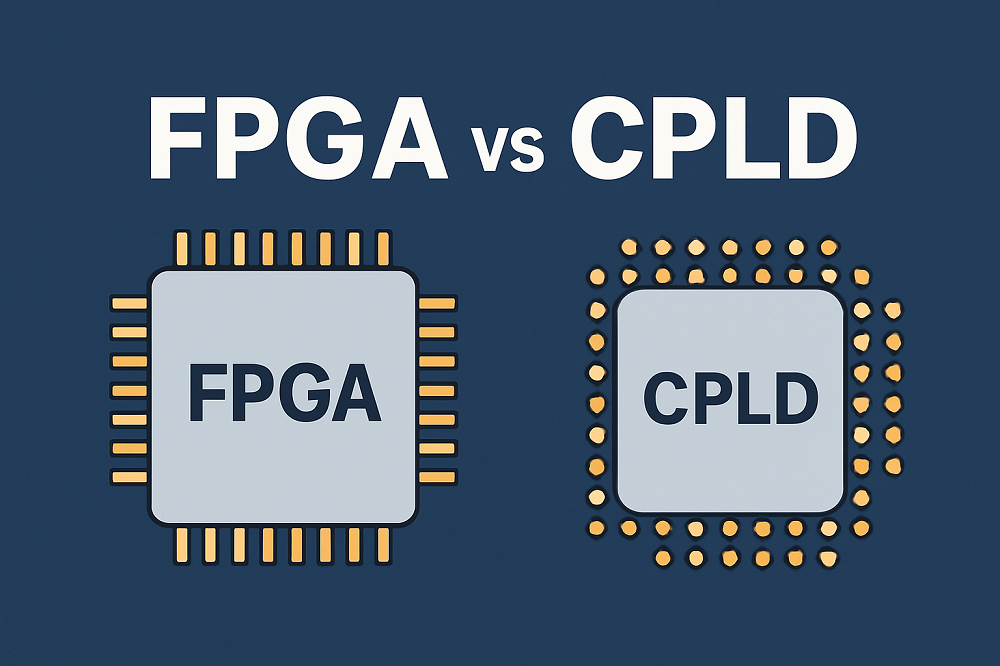
FPGA vs CPLD: In-depth Analysis of Architecture, Performance and Application2025-05-07
MOSFET Technology: Essential Guide to Working Principles & Applications2025-05-04
SMD Resistor: Types, Applications, and Selection Guide2025-04-30