info@kynix.com
 00852-6915 1330


 0
0


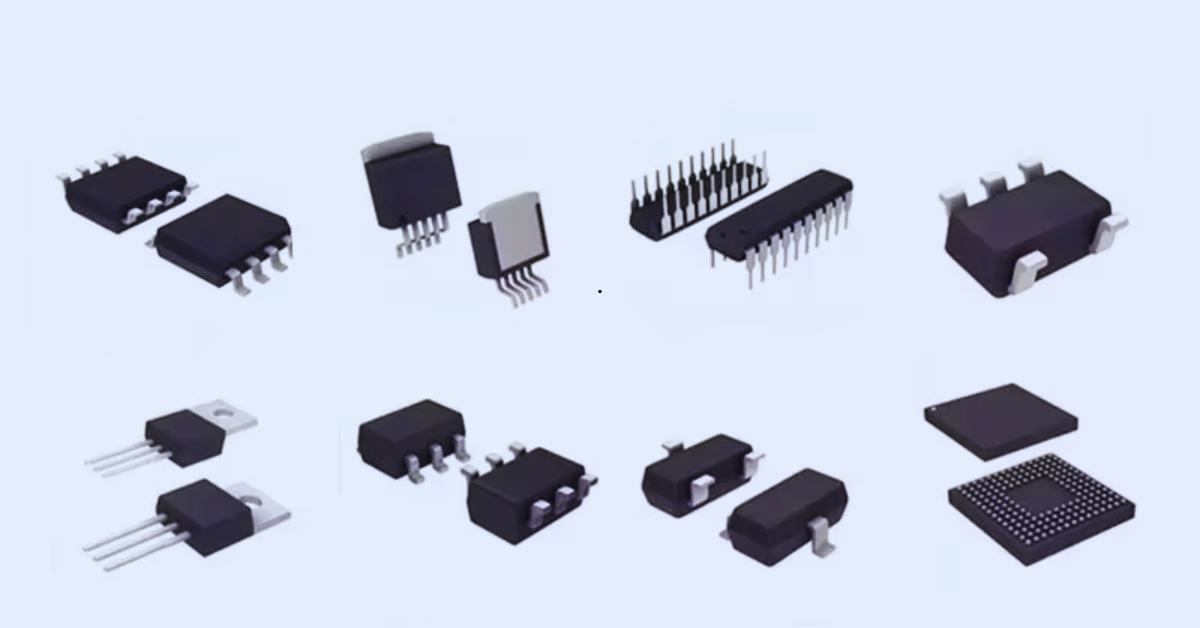


When requesting RoHS REACH component documentation from electronic component suppliers, procurement and compliance teams must collect four distinct file categories: (1) Substance Compliance Declarations (RoHS Certificate of Compliance/Conformity and REACH Article 33 SVHC statements), (2) Material Composition Disclosures (Full Material Disclosures or FMDs), (3) Analytical Laboratory Test Reports (empirical chemical testing per IEC 62321 methods), and (4) Batch and Lot Traceability Documents (linking physical reel labels to compliance paperwork at incoming inspection). Crucially, a supplier's compliance declaration is a legally binding attestation—never an empirical laboratory test conclusion.Upfront Decision Framework: What to Request Based on Sourcing RiskBefore requesting every possible report for every line item on a Bill of Materials (BOM), use this risk-based triage framework to match documentation rigor to component risk:Standard off-the-shelf components from OCMs or franchised distributors: Request a current Part-Number or verified Series-Level RoHS Certificate of Compliance (CoC) or Declaration of Conformity (DoC), a dated REACH SVHC Declaration referencing the active Candidate List, and a Shipment Lot CoC at receiving.Components claiming RoHS exemptions, complex sub-assemblies, or parts exposed to frequent ECHA updates: Escalate to a Full Material Disclosure (FMD) (commonly in IPC-1752A or IEC 62474 format) plus REACH Article 33 Safe Use instructions and SCIP database references if any Substance of Very High Concern (SVHC) exceeds 0.1% weight by weight (w/w).Custom-manufactured parts, high-risk polymers/platings, or independent channel sourcing: Require Analytical Laboratory Test Reports (IEC 62321) covering all 10 restricted RoHS substances, paired with a signed supplier declaration and strict batch/lot traceability at Incoming Quality Control (IQC).Quick-Reference Summary: The 4 Component Compliance Document CategoriesDocument CategorySpecific Files to RequestWhat It Proves (Legal vs. Empirical)When to Request (RFQ vs. Receiving)1. Substance Compliance DeclarationsRoHS CoC/DoC, Annex III/IV Exemption Statement, REACH Article 33 SVHC Declaration, Article Safe Use StatementLegal attestation: Binds the manufacturer or supplier to conformity claims and discloses SVHCs above 0.1% w/w. Does not provide raw chemical measurements.RFQ / Onboarding (refresh when ECHA updates the SVHC list or upon PCN).2. Material Composition DisclosuresFull Material Disclosure (FMD), typically exchanged in IPC-1752A or IEC 62474 schemaDeclared mass balance: Breaks down homogeneous materials and chemical substances by CAS number and weight percentage.RFQ / Engineering Qualification (used to screen against future SVHC additions).3. Analytical Laboratory Test ReportsAccredited lab test report referencing IEC 62321 methods (e.g., XRF screening + wet chemistry / GC-MS)Empirical measurement: Proves the chemical concentrations of a specific tested physical sample or production batch.RFQ / Part Qualification (or per-batch for custom/high-risk materials).4. Batch & Lot Traceability DocumentsShipment Lot CoC, Packing List, OCM Reel/MBB Bar-Code Labels (MPN, Pb-Free Suffix, Lot/Date Code)Physical custody link: Connects the physical components on the receiving dock to the approved compliance certificates.Every Shipment at Incoming Inspection (IQC).Why Component Compliance Starts at Receiving: Regulatory Scope & Official Version ChecksAccepting incomplete or outdated compliance paperwork during part setup or warehouse receiving creates a direct legal vulnerability for original equipment manufacturers (OEMs) and contract electronics manufacturers (CEMs). While EU RoHS and EU REACH are almost always requested together during component onboarding, they operate under fundamentally different legal mechanisms, calculation denominators, and update cycles.EU RoHS Scope: Homogeneous Material RestrictionsUnder EU RoHS Directive 2011/65/EU[4] (as amended by Commission Delegated Directive (EU) 2015/863), electrical and electronic equipment (EEE) placed on the EU market must restrict 10 hazardous substances:Four heavy metals: Lead (Pb), Mercury (Hg), Hexavalent Chromium (Cr6+), and Cadmium (Cd).Two brominated flame retardants: Polybrominated Biphenyls (PBB) and Polybrominated Diphenyl Ethers (PBDE).Four phthalates (added via (EU) 2015/863): Bis(2-ethylhexyl) phthalate (DEHP), Butyl benzyl phthalate (BBP), Dibutyl phthalate (DBP), and Diisobutyl phthalate (DIBP).RoHS concentration limits apply at the homogeneous material level—meaning any single material that cannot be mechanically disjointed into different materials (such as the thermoplastic housing of a connector, the epoxy molding compound of an IC, or the tin-silver-copper plating on a leadframe). As reflected in standard component declarations like TE Connectivity's EU RoHS compliance statements[8], nine of the restricted substances are capped at a maximum concentration of 0.1% by weight (1,000 ppm) in any homogeneous material, while Cadmium is strictly capped at 0.01% by weight (100 ppm).EN IEC 63000:2018: How Supplier Files Feed Your CE Technical FileMany procurement teams assume RoHS compliance is solely an environmental formality. In reality, RoHS is a CE-marking directive. According to the European Commission Staff Working Document on RoHS technical assessment[5], EN IEC 63000:2018 (Technical documentation for the assessment of electrical and electronic products with respect to the restriction of hazardous substances) is the official harmonised standard governing the technical documentation manufacturers must compile to demonstrate RoHS conformity (replacing the withdrawn EN 50581:2012 standard).EN IEC 63000:2018 establishes a risk-based framework: rather than requiring OEMs to perform destructive chemical testing on every passive resistor and integrated circuit in a product, the standard allows manufacturers to assemble their technical file using verified supplier declarations, contractual agreements, material disclosures, and targeted analytical test reports. Consequently, if your procurement or IQC team accepts an expired, unsigned, or mismatched supplier declaration, your final product's EN IEC 63000:2018 technical file becomes defenseless during a national market surveillance audit.EU REACH Scope & The "Once an Article, Always an Article" RuleUnlike RoHS, EU REACH (Regulation (EC) No 1907/2006) governs chemicals across all industries, affecting electronic components primarily through Article 33 (communication of Substances of Very High Concern in articles) and Annex XVII (substance restrictions).When evaluating complex electronic assemblies, buyers must follow the European Court of Justice and ECHA "Once an Article, Always an Article" rule. According to ECHA's summary guidance on substances in articles[1] and the comprehensive ECHA guidance on requirements for substances in articles[2], the communication duties under REACH Article 33(1) apply to each individual constituent article within a complex object whenever a Candidate List SVHC is present above 0.1% weight by weight (w/w).For an electronics manufacturer, this means you cannot dilute an SVHC's weight against the total weight of a finished printed circuit board assembly (PCBA). If an individual brass standoff, diode internal die-attach, or connector pin contains an SVHC above 0.1% w/w of that individual sub-article's weight, the supplier is legally obligated to declare the substance name and provide safe use information.Comparison of EU RoHS homogeneous material calculation limits versus EU REACH Article 33 individual sub-article thresholds.EU SCIP Database Notification TriggerWhen a component crosses the 0.1% w/w REACH SVHC threshold, it also triggers waste-stage reporting obligations in the European Union. As detailed in ECHA's official SCIP database Q&A[3], under Article 9(1)(i) of the EU Waste Framework Directive (2008/98/EC), EU manufacturers, importers, and assemblers placing articles on the EU market that contain a Candidate List SVHC above 0.1% w/w must submit a dossier to the SCIP database (Substances of Concern In articles as such or in complex objects (Products)). Without accurate component-level SVHC data from upstream suppliers at the RFQ stage, EU importers and OEMs cannot generate valid SCIP notifications.Regulatory Comparison & Application BoundariesRegulatory FrameworkLegal / Standard BasisCalculation DenominatorSubstance ScopeExemption MechanismMandatory Supplier OutputEU RoHSDirective 2011/65/EU + Delegated Directive (EU) 2015/863 + EN IEC 63000:2018Each homogeneous material within the component (≤0.1% w/w; Cadmium ≤0.01% w/w).10 restricted substances (4 heavy metals, 2 flame retardants, 4 phthalates).Time-limited technical exemptions under Annex III and Annex IV (e.g., 6(c), 7(a), 7(c)-I).RoHS CoC/DoC (citing explicit Annex III/IV exemptions if claimed) + FMD or IEC 62321 report per risk tier.EU REACH (SVHC)Regulation (EC) No 1907/2006 (Article 33 & Candidate List)Each individual article / sub-component in a complex object (>0.1% w/w).Expanding ECHA Candidate List of SVHCs (typically updated twice a year by ECHA).None for communication: Presence >0.1% w/w requires mandatory disclosure even if RoHS-exempt.REACH SVHC Declaration (citing active list date) + Substance Name/CAS + Article Safe Use Statement.EU WFD SCIPWaste Framework Directive 2008/98/EC Article 9(1)(i)Each individual article containing a Candidate List SVHC (>0.1% w/w).Same as ECHA REACH SVHC Candidate List.No exemption for articles placed on the EU market above threshold.SCIP Notification Number or component material/TARIC data enabling downstream SCIP filing.What to Verify on Official Portals (Avoiding Static Template Traps)Check the Active ECHA Candidate List Date: ECHA updates the REACH SVHC Candidate List periodically—typically twice a year in January/February and June/July. Never hardcode a static SVHC count into your quality manual for multiple years. Always verify that a supplier's REACH declaration states the exact ECHA Candidate List publication date evaluated.Verify RoHS Exemption Validity on EUR-Lex: Do not rely on second-hand charts or blog summaries for RoHS Annex III and Annex IV expiration dates. The European Commission periodically issues Delegated Directives revising split-entry wording and expiration timelines (such as the transition windows for lead exemptions in series 6 and 7). Always check the consolidated text on the official European Commission / EUR-Lex portal.Decision Framework: When to Request a CoC vs. FMD vs. Analytical Lab Test ReportDemanding third-party chemical lab reports for every standard surface-mount resistor will stall your procurement timeline, while accepting a generic one-page self-declaration for a custom plastic housing or broker-sourced IC exposes your line to recalls. Applying the risk-based methodology of EN IEC 63000:2018 alongside supply chain verification practices outlined by TTI MarketEye, DigiKey, Altium, and SiliconExpert, teams should scale their documentation requests across three operational axes.Axis 1: Part-Number vs. Product-Series ScopeOriginal Component Manufacturers (OCMs) issue compliance certificates in two distinct structural scopes. Looking at Panasonic Industry's RoHS/REACH Confirmation Report portal[6], buyers can download confirmation reports either by individual Part Number or by Product Series.When a Series-Level (Blanket) Report is Acceptable: A series-level declaration is valid for your EN IEC 63000:2018 technical file only if the document explicitly defines the part-numbering nomenclature (including packaging and lead-free termination suffixes) so an auditor can unambiguously verify that your exact ordered Manufacturer Part Number (MPN) falls inside the compliant series scope.When a Part-Number-Specific Report is Mandatory: If a product family offers both legacy tin-lead (SnPb) finishes for aerospace/defense and lead-free (SnAgCu or matte tin) finishes for commercial electronics, a generic family letter is insufficient. You must request a part-number-specific confirmation covering the exact ordering suffix.Axis 2: Component Material & Exemption RiskNot all electronic materials carry equal chemical risk:Low-Risk Materials: Standard monolithic silicon ICs and ceramic passives from tier-1 OCMs with established green manufacturing lines.Medium/High-Risk Exemption Parts: Power semiconductors using high-melting-point lead solder internal die attach (RoHS Exemption 7(a)), thick-film resistors or diodes containing lead in glass or ceramic matrices (Exemption 7(c)-I), and machined brass/copper alloy connectors containing up to 4% lead (Exemption 6(c)).High-Risk Polymer & Plating Parts: Flexible PVC wire harnesses, heat-shrink tubing, rubber gaskets, O-rings, and adhesives carry high risk for restricted phthalates (DEHP, BBP, DBP, DIBP), while custom sheet-metal brackets and fasteners carry hexavalent chromium (Cr6+) passivation risks.Axis 3: Supplier Channel Tier & BOM IntegrationAn OCM or authorized distributor (as detailed in DigiKey's guide to RoHS and REACH approved components) maintains direct digital links to factory material declarations and Product Change Notifications (PCNs). Conversely, custom build-to-print mechanical vendors or unvetted secondary suppliers require empirical verification. To prevent compliance files from sitting disconnected in email folders, engineering teams should integrate part-level exemption codes, FMD files, and SVHC status directly into their active component database using effective electronics BOM management practices.Risk-Tier Decision Matrix: Matching Component Scenarios to Document PackagesComponent & Sourcing ScenarioRisk LevelMinimum Document Package to RequestWhy Escalating (or De-escalating) MattersStandard catalog passives/ICs (no exemptions) via OCM or franchised distributorLowPart-Number or verified Series-Level RoHS CoC/DoC + dated REACH SVHC Declaration + Shipment Lot CoC.De-escalating from mandatory lab testing saves onboarding time while satisfying EN IEC 63000 low-risk assessment rules.Components claiming RoHS Annex III/IV exemptions (e.g., 6(c), 7(a), 7(c)-I)Medium-HighRoHS CoC explicitly citing the exemption code + Full Material Disclosure (FMD) + REACH Article 33 SVHC Declaration (>0.1% w/w Lead) & Safe Use / SCIP data.Lead allowed by RoHS exemption usually exceeds 0.1% w/w of the sub-article, triggering mandatory REACH SVHC and SCIP reporting.Multi-material assemblies, connectors, or parts on long-lifecycle industrial/medical BOMsMedium-HighFull Material Disclosure (FMD in IPC-1752A / IEC 62474 format) + RoHS/REACH CoC + Lot CoC.FMDs list CAS numbers by weight, allowing instant internal BOM re-screening whenever ECHA adds new SVHCs every six months.Custom cables, PVC/elastomers, custom platings, or newly onboarded contract manufacturersHighSigned Supplier RoHS/REACH Declaration on your official template + Analytical Lab Test Report (IEC 62321 for all 10 substances) + Batch Traceability.Flexible polymers and custom plating baths carry high risk of phthalate plasticizer or Cr6+ cross-contamination.Spot-buy or independent channel sourcing for shortage/obsolete ICsCriticalOCM original RoHS/REACH status + Lot/Batch Traceability + XRF/Analytical Verification + Decapsulation/Solderability inspection.Prevents remarked leaded (SnPb) legacy parts or counterfeit lots with fabricated PDF certificates from entering SMT lines.The 4 Document Categories Explained (And Why a Supplier Declaration Is Not a Lab Test Report)To build an audit-ready technical file—as outlined in industry frameworks such as Enviropass's RoHS and REACH compliance assessment guide and Altium's supply chain compliance documentation guide—procurement and quality engineers must understand what each of the four document types can and cannot prove.1. Substance Compliance Declarations (RoHS DoC/CoC & REACH SVHC Statements)A Certificate of Compliance (CoC) or Declaration of Conformity (DoC) is a formal legal statement signed by an authorized representative of the manufacturer or supplier affirming that specified parts comply with EU RoHS and/or REACH regulations. In B2B manufacturing, submitting this declaration is a standard contractual obligation, as illustrated in the Piher Sensors & Controls Supplier Manual[7], which requires suppliers to provide formal Certificate of Compliance letters for both RoHS and REACH/SVHC during qualification.When a component contains a REACH Candidate List SVHC above 0.1% w/w, the declaration cannot simply state "Compliant" or "Non-Compliant." Under REACH Article 33, the supplier must identify the SVHC and provide Article Safe Usage Statements. For example, real-world component documentation such as Distrelec's component technical datasheet and safe use documentation includes explicit safe handling, industrial hygiene (e.g., "Do not eat, drink or smoke when using this product"), and end-of-life recycling instructions when restricted or declarable substances are present.Best For / Core Strength: Fast, legally binding baseline assurance from trusted OCMs for standard catalog components.Key Drawback: A pass/fail declaration hides the underlying chemical composition. The moment ECHA adds new substances to the SVHC Candidate List, a static REACH declaration becomes obsolete because it does not tell you whether the newly added CAS numbers are present in the part below or above 0.1% w/w.Who Should Not Rely on It Alone: Teams managing long-lifecycle products (medical, automotive, industrial control) or sourcing custom polymers/mechanicals from higher-risk tiers.2. Material Composition Disclosures (Full Material Disclosure / FMD)A Full Material Disclosure (FMD) is an engineering bill of materials for the chemical makeup of the component itself. It breaks the component down into each constituent homogeneous material (silicon die, die-attach adhesive, gold bond wire, copper leadframe, epoxy molding compound, matte tin termination plating) and lists the exact chemical substances by CAS (Chemical Abstracts Service) number and weight/mass percentage.As noted in JAK Electronics' procurement and engineering compliance guide, electronics supply chains commonly exchange FMD files using standardized machine-readable schemas such as IPC-1752A (Classes C and D XML/PDF formats) or IEC 62474 (the electrotechnical industry material declaration standard; automotive electronics teams similarly rely on the International Material Data System, or IMDS, to submit material composition proof).Best For / Core Strength: Future-proofing BOM compliance. When ECHA adds new substances to the REACH Candidate List, an engineering team with 100% FMD coverage can query their PLM/BOM database by CAS number in minutes and generate updated customer REACH declarations without re-contacting a single supplier.Key Drawback: An FMD is still a declared engineering calculation based on raw material specifications, not an empirical laboratory measurement of a finished lot. Furthermore, some suppliers refuse to disclose 100% of proprietary chemical formulations (such as specialized fluxes or dopants), holding back a small percentage as "trade secret / non-declarable."Who Should Not Rely on It Alone: Quality teams investigating suspected material contamination or unverified sub-tier plating shops, where declared theoretical composition may not match what actually happened on the factory floor.3. Analytical Laboratory Test Reports (IEC 62321 Methods)An Analytical Laboratory Test Report documents empirical physical and chemical testing performed on a specific component sample by an accredited testing laboratory (typically ISO/IEC 17025 accredited) following IEC 62321 test methods (Determination of certain substances in electrotechnical products). Standard IEC 62321 testing involves non-destructive X-Ray Fluorescence (XRF) screening for heavy metals (Pb, Hg, Cd, total Cr, total Br), followed by wet-chemical confirmation (such as UV-Vis for Cr6+) and Gas Chromatography–Mass Spectrometry (GC-MS) to measure the four restricted phthalates (DEHP, BBP, DBP, DIBP).The "Declaration vs. Lab Report" Rejection TrapOne of the most frequent compliance failures in electronics procurement is confusing a Supplier Declaration with a Laboratory Test Report. As highlighted in TTI MarketEye's analysis of RoHS test requirements vs. certificates of compliance, these two documents serve completely different functions—and substituting one for the other triggers immediate quality rejections:Why a CoC is NOT a Lab Test Conclusion: A Certificate of Compliance is a legal promise signed by the supplier. It does not prove that the specific reel of components you received was chemically tested in a laboratory.Why Forwarding a Raw Lab Report Alone Gets Rejected: When a customer's quality team requests a "RoHS Declaration," junior buyers or suppliers sometimes attach a raw third-party lab report (RoHS_Test_Result.pdf) by itself. Customer quality auditors reject this immediately because a lab report only certifies the chemistry of the individual sample sent to the lab—it is not a legally binding declaration signed by the supplier warranting the ongoing production parts shipped under your purchase order. For high-risk or automotive/industrial parts, you need both: the underlying IEC 62321 test report as empirical proof ("no report, no declaration"), and the signed Supplier Declaration executed on the required compliance template.RoHS Made Simple: Everything You Need to KnowBest For / Core Strength: Providing indisputable empirical proof that specific homogeneous materials (especially plastics, elastomers, solders, and platings) contain less than 0.1% (or 0.01% for Cd) of all 10 RoHS substances.Key Drawback: High cost and point-in-time scope. A lab report from three years ago proves nothing if the supplier quietly changed resin vendors last month.Who Should Not Rely on It Alone: Buyers who accept an old test report without a signed supplier declaration and batch traceability linking the current shipment to the tested material configuration.Visual breakdown of the four core RoHS and REACH compliance document categories and their verification functions.4. Batch & Lot Traceability Documents (Closing the Loop at IQC)Even the most thorough RoHS CoC, IPC-1752A FMD, and IEC 62321 lab report are worthless during an inspection if your warehouse receiving team cannot prove that those PDF files apply to the physical reels sitting on the loading dock. Batch and Lot Traceability Documents include the Shipment Certificate of Conformance (Lot CoC), Packing List, and the original component manufacturer's bar-code labels on the moisture barrier bag (MBB) and inner reel.These documents bind the physical Manufacturer Part Number (MPN), lead-free ordering suffix, Date Code, and Lot/Batch Number to your compliance file. Traceability breakdowns are especially dangerous when buyers turn to unvetted secondary markets during shortages. Reviewing the common mistakes to avoid when sourcing ICs online reveals how non-authorized brokers frequently attach generic, outdated, or scraped OCM RoHS PDFs to shipments of legacy tin-lead (SnPb) or remarked components whose lot codes have zero connection to the attached paperwork.Best For / Core Strength: Proving chain of custody and ensuring that the physical parts entering SMT assembly match the approved engineering compliance file.Key Drawback: Contains no detailed chemical breakdown or SVHC list details on its own—it must reference the master RoHS/REACH declaration on file.Who Should Not Rely on It Alone: Procurement teams that collect packing slip CoCs at the warehouse dock without first verifying the part's underlying RoHS exemption and REACH SVHC status during engineering onboarding.Document Category Comparison MatrixAttribute1. Substance Compliance Declaration (CoC / DoC)2. Material Composition Disclosure (FMD)3. Analytical Lab Test Report4. Batch / Lot Traceability FilePrimary PurposeLegally binds supplier to RoHS/REACH conformity & discloses SVHCs >0.1% w/w.Discloses 100% homogeneous material & chemical CAS breakdown by weight.Empirically measures chemical concentration in a physical sample.Links physical shipped reels/trays to the approved MPN and compliance file.Standard / Legal BasisEU 2011/65/EU, (EU) 2015/863, REACH Art. 33, EN IEC 63000:2018.Commonly formatted to IPC-1752A or IEC 62474 (or IMDS in auto).Tested per IEC 62321 methods by an ISO/IEC 17025 lab.ISO 9001 / AS9100 / IATF 16949 lot control & OCM label standards.Contains Empirical Lab Data?No (Legal attestation only).No (Calculated mass balance from material specs).Yes (XRF, wet chemistry, GC-MS results in ppm / % w/w).No (Manufacturing lot, date code, and suffix confirmation).Survives Future ECHA SVHC Updates?No (Must request a new letter whenever ECHA updates the list).Yes (CAS numbers on file can be re-screened internally against new SVHCs).No (Only tests for specific substances targeted during the lab run).N/A (Applies strictly to the physical shipment batch).When It Fails an AuditMissing 2015/863 reference, undated REACH list, or unrecorded RoHS exemption.Exceeds allowable trade-secret threshold or omits homogeneous layer weights.Only covers 6 legacy RoHS substances (missing 4 phthalates) or lacks a signed CoC.Reel suffix or lot code on physical label does not match the PO or CoC.Field-by-Field Verification Checklist: RFQ Stage vs. Incoming Inspection (IQC)Compliance workflows break down when companies either expect warehouse receiving clerks to interpret European chemical law at the loading dock, or allow buyers to archive a PDF during RFQ without ever checking the physical termination suffix when parts arrive.As emphasized in SiliconExpert's guide to RoHS and REACH compliance across the electronics lifecycle, effective verification separates Stage 1 (Engineering & RFQ Qualification) from Stage 2 (Incoming Quality Control at Receiving).Two-stage compliance verification workflow separating RFQ engineering qualification from physical warehouse IQC checks.Two-Stage Operational Verification TableVerification StageField to VerifyExact Requirement / Acceptance CriteriaRed Flag / Rejection TriggerStage 1: RFQ & Onboarding (Procurement & Compliance Engineering)1. Issuing Authority & Template FormatIssued on official OCM letterhead/portal (Panasonic example[6]) or executed on your mandatory customer compliance template with an authorized signature, title, and date.Unsigned PDFs, distributor-typed generic letters for non-franchised stock, or informal self-made supplier letters missing required legal fields.Stage 1: RFQ & Onboarding2. Exact Part Number / Series MappingLists the full OCM Part Number including the RoHS/lead-free ordering suffix (e.g., -LF, PBF, G, E3), or a Series table that explicitly maps the suffix.Blanket series certificate where the series includes both leaded (SnPb) and Pb-free variants without distinguishing the suffix.Stage 1: RFQ & Onboarding3. RoHS Directive & 10-Substance ScopeExplicitly cites Directive 2011/65/EU and Delegated Directive (EU) 2015/863 (confirming all 10 substances at ≤0.1% w/w and Cd at ≤0.01% w/w in homogeneous materials).References withdrawn directives (2002/95/EC) or only covers the legacy 6 RoHS substances (omitting DEHP, BBP, DBP, DIBP).Stage 1: RFQ & Onboarding4. RoHS Annex III / IV Exemption CodeExplicitly states "Compliant without exemptions" OR lists the exact Annex III/IV code (e.g., 6(c), 7(a), 7(c)-I) verified as active on EUR-Lex.States a bare "RoHS Compliant / Pass" for a high-temp solder diode or brass connector while hiding the underlying Annex III exemption.Stage 1: RFQ & Onboarding5. REACH SVHC Candidate List VersionCites Regulation (EC) No 1907/2006 Article 33 and states the exact ECHA Candidate List publication date evaluated at the individual article level (0.1% w/w).Undated "REACH Compliant" statement, or a certificate referencing an outdated ECHA Candidate List from previous years.Stage 1: RFQ & Onboarding6. SVHC >0.1% w/w, Safe Use & SCIP DataIf any sub-article exceeds 0.1% w/w SVHC, provides substance name, CAS/EC number, concentration, Article Safe Usage Statements, and SCIP notification data[3].Claims a lead RoHS exemption (e.g., 6(c) or 7(a)) while simultaneously claiming "0% SVHC / REACH Free".Stage 2: Receiving / IQC (Warehouse & Quality Inspectors)7. Physical MPN & Pb-Free Suffix MatchThe MPN and plating suffix printed on the physical OCM reel/tray/tube label match the Purchase Order, Packing List, and approved Stage 1 RoHS certificate.Physical reel arrives with a standard/leaded suffix (or missing the -LF/PBF suffix) despite the PO specifying the RoHS-compliant part.Stage 2: Receiving / IQC8. RoHS / Pb-Free Label SymbolsMoisture barrier bag (MBB) and inner reel label display OCM RoHS/Pb-Free markings (RoHS, Pb-Free, e3/e4 JEDEC code, and peak reflow temp).Missing environmental markings, tampered labels, or conflicting secondary labels placed over the original OCM bar code.Stage 2: Receiving / IQC9. Lot / Batch & Date Code ContinuityLot Number and Date Code on the physical reel match the shipment's Lot CoC and fall within the validity date of the declaration or IEC 62321 report.Lot CoC omits batch numbers, or date codes predate the supplier's transition to phthalate-free (2015/863) materials.Stage 2: Receiving / IQC10. Authorized Chain of CustodyPacking slip and CoC trace directly to the OCM or authorized distributor (DigiKey verification model).Unverified broker invoice CoC with no OCM packing trace (escalate immediately to XRF screening).Common Documentation Red Flags & Why Online Compliance Advice Often MisleadsWhen procurement specialists search online for component compliance templates or read generic summaries, they often encounter conflicting advice. Understanding why industry sources appear to disagree—and knowing which red flags to reject immediately—protects your engineering team from audit failures.Part A: Why Search Results, Vendor Blogs, and Generic Templates DisagreeConflating Legal Declarations with Lab Testing: Many surface-level compliance blogs use the terms "RoHS certificate," "RoHS declaration," and "RoHS test report" interchangeably. As a result, buyers ask suppliers for a "test report" when they actually need a legal Declaration of Conformity—or worse, assume that because they hold a signed CoC, the supplier chemically tested that batch in a lab.Frozen SVHC Counts & Stale Exemption Lists: Because ECHA adds new substances to the REACH Candidate List twice a year and the European Commission periodically updates RoHS Annex III exemption expiry dates, static blog posts age rapidly. An article written in 2022, 2024, or 2026 will cite different SVHC totals. Any template that hardcodes a static number without requiring the ECHA Candidate List publication date will mislead your team within six months.SaaS Over-Simplification vs. Physical Receiving Reality: Compliance software vendors focus heavily on automated portal collection of PDF declarations at the corporate level. While software portals streamline Stage 1 onboarding, they ignore Stage 2 physical IQC reality—where a pristine PDF sits in an ERP system while a distributor accidentally ships a leaded suffix reel to the warehouse dock.Part B: 5 Concrete Documentation Red Flags to Reject ImmediatelyRed Flag 1: The RoHS-Exemption-to-REACH-SVHC Crossover Trap (Contradictory Lead Claims)Lead (Pb, CAS 7439-92-1, EC 231-100-4) is restricted under EU RoHS (0.1% homogeneous limit) and listed as an ECHA REACH Candidate List SVHC (>0.1% w/w article threshold). Many components are legally RoHS Compliant by Exemption under Annex III—such as Exemption 6(c) (copper/brass alloys containing up to 4% lead), Exemption 7(a) (high-melting-temperature solders containing ≥85% lead), or Exemption 7(c)-I (lead in glass or ceramic electronic components). Because the lead concentration in that brass pin, solder joint, or ceramic element exceeds 0.1% w/w of that sub-article, ECHA's Article 33 rules on substances in articles[1] require the supplier to declare Lead as a REACH SVHC above 0.1% w/w and provide Safe Use/SCIP data. Rule: If a supplier certificate claims RoHS Exemption 6(c), 7(a), or 7(c)-I while simultaneously checking "0% REACH SVHC," the document is legally contradictory and must be rejected.Red Flag 2: Legacy 6-Substance Lab Reports (Missing Phthalates)Suppliers of cables, plastic housings, or fans occasionally submit older IEC 62321 laboratory reports that only test for the original six RoHS substances (Pb, Hg, Cd, Cr6+, PBB, PBDE). Always verify that the lab report explicitly lists test results for all 10 substances, including the four phthalates (DEHP, BBP, DBP, DIBP) mandated under Delegated Directive (EU) 2015/863.Red Flag 3: Undated or Self-Made "REACH Compliant" LettersReject any letter that simply states "Our products are REACH compliant" without citing the specific ECHA Candidate List date evaluated. Similarly, if your quality system requires suppliers to complete a standardized 10-substance declaration table, reject informal, self-made two-sentence letters that omit homogeneous material threshold warranties.Red Flag 4: Series-Level Certificates Masking Leaded Ordering SuffixesWhen downloading a family-level confirmation report (such as a series report from Panasonic Industry's compliance portal[6]), check the part-number breakdown carefully. If the series report covers the -Z or -LF lead-free packaging code, but your purchase order specifies a legacy suffix, the certificate does not cover your parts.Red Flag 5: Orphan Lab Reports or Untraceable Broker CoCsNever accept a raw third-party lab report without an accompanying signed supplier declaration binding the supplier to those test results. Conversely, never accept a non-authorized broker's packing-slip CoC as proof of chemical compliance without verifying OCM lot traceability or performing incoming XRF inspection.Frequently Asked Questions (FAQ)How do I get a REACH certificate for electronic components?Neither the European Chemicals Agency (ECHA) nor any EU government body issues an official "REACH certificate" or approval stamp. Instead, procurement teams demonstrate compliance by requesting a supplier's REACH Article 33 SVHC Declaration referencing the active ECHA Candidate List date, Article Safe Use instructions (if any SVHC exceeds 0.1% w/w), and a Full Material Disclosure (FMD).Can a supplier combine RoHS and REACH into a single compliance document?Yes. Many tier-1 component manufacturers—such as Panasonic Industry[6]—issue combined RoHS and REACH confirmation reports by part number or product series. To pass an audit, a combined document must explicitly state the EU RoHS directive versions (2011/65/EU and (EU) 2015/863), any claimed Annex III/IV exemptions, and the exact ECHA SVHC Candidate List publication date.If an electronic component is RoHS compliant, is it automatically REACH SVHC free?No. First, REACH tracks an expanding Candidate List of SVHCs far beyond the 10 substances restricted by EU RoHS. Second, a component can be legally "RoHS compliant by exemption" (such as containing lead above 0.1% w/w in high-temperature solder or brass alloys under Annex III) while simultaneously triggering mandatory REACH Article 33 SVHC disclosure and SCIP notification.How often should procurement teams update REACH SVHC declarations from suppliers?Because ECHA typically updates the SVHC Candidate List twice a year, standalone pass/fail REACH declarations should be refreshed after each ECHA Candidate List update or whenever a Product Change Notification (PCN) alters component materials. Collecting a Full Material Disclosure (FMD) eliminates the need to re-survey suppliers after every semiannual ECHA update.Final Action Checklist for Procurement & IQC TeamsBefore closing your next component onboarding ticket or releasing a shipment from receiving inspection, run through this final operational checklist:At RFQ / Part Setup:Confirm whether the part is low-risk (CoC + REACH SVHC letter), exemption/update-sensitive (escalate to IPC-1752A / IEC 62474 FMD), or high-risk polymer/custom (require IEC 62321 10-substance lab test report + signed declaration).Verify explicit citation of 2011/65/EU and (EU) 2015/863 (≤0.1% w/w; Cd ≤0.01% w/w in homogeneous materials).Record any claimed RoHS Annex III/IV exemption code in your BOM software and verify its active expiration window on official European Commission / EUR-Lex publications.Cross-check lead exemptions: if the component uses a lead exemption (6(c), 7(a), 7(c)-I) exceeding 0.1% w/w of the sub-article, ensure the REACH declaration properly lists Lead (7439-92-1) as an SVHC along with Safe Use instructions and SCIP data.Verify that the REACH SVHC statement cites the current ECHA Candidate List publication date.At Warehouse Receiving (IQC):Match the physical reel/tray label MPN and lead-free suffix against the Purchase Order and the Stage 1 RoHS certificate.Verify RoHS / Pb-Free markings on the moisture barrier bag and reel label.Confirm that the physical Lot/Batch Number and Date Code tie directly to the shipment's Lot CoC.Sources and references used for this guideRequirements for substances in articles - ECHASource type: standards bodyUsed for: Verifying REACH Article 33 communication obligations (>0.1% w/w SVHC) for individual articles within complex electronic objects.Caution: Official ECHA summary guidance; always verify the active SVHC Candidate List publication date on ECHA's portal.Guidance on requirements for substances in articles - ECHASource type: standards bodyUsed for: Supporting the 'Once an Article, Always an Article' calculation rule for electronic components assembled into complex products.Caution: Official ECHA regulatory guidance; apply alongside current Candidate List updates.Questions and answers - ECHA - European UnionSource type: official support pageUsed for: Supporting SCIP database notification requirements for EU manufacturers and importers when an article contains an SVHC above 0.1% w/w.Caution: Applies specifically to EU Waste Framework Directive SCIP reporting obligations.RoHS Directive - Environment - European CommissionSource type: standards bodyUsed for: Confirming the scope and legal basis of EU RoHS Directive 2011/65/EU restricting hazardous substances in electrical and electronic equipment.Caution: Official European Commission portal; check official consolidated texts for active Annex III and IV exemption expiration dates.SWD_2023_760_1_EN_autre_d...Source type: standards bodyUsed for: Confirming harmonised standard EN IEC 63000:2018 as the technical documentation framework under the EU RoHS Directive.Caution: European Commission Staff Working Document; confirms the role of EN IEC 63000:2018 for technical documentation.RoHS / REACH Confirmation ReportSource type: official company documentationUsed for: Demonstrating that component manufacturers issue RoHS/REACH confirmation reports either by individual Part Number or by Product Series.Caution: Manufacturer-specific compliance portal; series-level reports require verifying exact part number and suffix inclusion.Piher Sensors & Controls Supplier ManualSource type: official company documentationUsed for: Showing how electronics manufacturers contractually require suppliers to provide a Certificate of Compliance letter for RoHS and REACH/SVHC.Caution: Company-specific supplier manual illustrating B2B onboarding requirements.Product ComplianceSource type: official company documentationUsed for: Providing a real-world example of component compliance wording confirming the 0.1% by weight maximum concentration in homogeneous materials under EU RoHS.Caution: Point-in-time TE Connectivity compliance statement hosted by a distributor; verify current revisions for active procurements.
On 2026-10-20