Phone

    00852-6915 1330

The Kynix Blog

Stay Ahead with Expert Electronics Insights,
Industry Trends, and Innovative Tips

Resistors

Semiconductor Manufacturing Steps with Flow Charts

IntroductionThe manufacture of each semiconductor components products requires hundreds of processes. After sorting, the entire manufacturing process is divided into eight steps: Wafer Processing, Oxidation, Photography, Etching, Film Deposition, Interconnection, Test, and Package.Figure 1. Semiconductor Parts Manufacturing ProcessCatalogIntroductionⅠ Wafer ProcessingⅡ OxidationⅢ PhotomaskⅣ EtchingⅤ Film DepositionⅥ InterconnectionⅦ TestⅧ PackageⅠ Wafer ProcessingFewer people know, all semiconductor processes start with a grain of sand. Because the silicon contained in sand is the raw material needed to produce wafers. A wafer is a round slice formed by cutting a single crystal column made of silicon (Si) or gallium arsenide (GaAs). To extract high-purity silicon materials, silica sand is required, a special material with a silicon dioxide content of up to 95%, which is also the main raw material for making wafers. Wafer processing is the process of making and obtaining wafers.Semiconductor Production Process Explained① Ingot CastingFirst, the sand needs to be heated to separate the carbon monoxide and silicon, and the process is repeated until the ultra-high purity electronic grade silicon (EG-Si) is obtained. High-purity silicon melts into a liquid, and then solidifies into a single-crystal solid form called an "ingot", which is the first step in semiconductor manufacturing. The manufacturing precision of silicon ingots (silicon pillars) is very high, reaching the nano level.② Ingot CuttingAfter the previous step is completed, you need to cut off both ends of the ingot with a diamond saw, and then cut it into slices of a certain thickness. The diameter of the ingot slice determines the size of the wafer. Larger and thinner wafers can be divided into more units, which helps reduce production costs. After cutting the silicon ingot, it is necessary to add a "flat area" or "indent" mark on the slice, so that it is convenient to set the processing direction based on it as a standard in the subsequent steps.③ Wafer Surface PolishingThe thin slice obtained through the above-mentioned cutting process is called a "die", that is, an unprocessed "raw wafer". The die surface is uneven, and it is impossible to directly print circuit patterns on it. Therefore, it is necessary to first remove surface defects through grinding and chemical etching processes, then form a smooth surface through polishing and then cleaning residual contaminants. Ⅱ OxidationThe role of the oxidation process is to form a protective film on the surface of the wafer. It can protect the wafer from chemical impurities, prevent leakage current from entering the circuit, diffusion during ion implantation, and the wafer from slipping off during etching.Figure 2. OxidationThe first step of the oxidation process is to remove impurities and pollutants, such as organic matter, metals and evaporation residual moisture with four steps. After the cleaning is completed, the wafer can be placed in a high temperature environment of 800 to 1200 degrees Celsius, and a layer of silicon dioxide is formed by the flow of oxygen or vapor on the wafer surface. Oxygen diffuses through the oxide layer and reacts with silicon to form oxide layers of different thicknesses, which can be measured after the oxidation is complete.✔️Dry Oxidation and Wet Oxidation MethodAccording to the different oxidants in the oxidation reaction, the thermal oxidation process can be divided into dry oxidation and wet oxidation. The former uses pure oxygen to produce a silicon dioxide layer, which is slow but the oxide layer is thin and dense. The latter requires both oxygen and high solubility. The characteristic of water vapor is that the growth rate is fast, but the protective layer is relatively thick and the density is low.Figure 3. Dry Oxidation and Wet Oxidation MethodIn addition to the oxidizer, there are other variables that affect the thickness of the silicon dioxide layer. First of all, the wafer structure, surface defects and internal doping concentration will affect the rate of formation of the oxide layer. In addition, the higher the pressure and temperature generated by the oxidation equipment, the faster the oxide layer will be formed. In the oxidation process, it is also necessary to use dummy wafers according to the location of the wafers in the unit to protect the wafers and reduce the difference in oxidation degree. Ⅲ PhotomaskPhotomask is the use of light to "print" circuit patterns onto a wafer. We can understand it as semiconductor parts drawing on the surface of the wafer. The higher the fineness of the circuit pattern, the higher the integration of the product chip, which can only be achieved through advanced photomask technology. Specifically, it can be divided into three steps: photoresist coating, exposure and development.① Coated PhotoresistThe first step in drawing a circuit on a wafer is to coat photoresist on the oxide layer. Photoresist changes the chemical properties of the wafer to become "photographic paper". The thinner the photoresist layer on the surface of the wafer, the more uniform the coating, and the finer the patterns that can be printed. In addition, this step can use the "spin coating" method.Figure 4. Coating PhotoresistAccording to the difference of UV light reactivity, photoresist can be divided into two types: positive glue and negative glue. The former will decompose and disappear after being exposed to light, leaving a pattern of unreceived areas, while the latter will polymerize after being exposed to light to let the pattern of the light-receiving part appear.② ExposeAfter covering the photoresist film on the wafer, the circuit can be printed by controlling the light irradiation. This process is called "exposure." We can selectively pass light through the exposure equipment. When the light passes through the mask containing the circuit pattern, the circuit can be printed on the wafer coated with a photoresist film underneath.Figure 5. ExposureDuring the exposure process, the finer the printed pattern, the more components can be accommodated in the final chip, which helps to improve production efficiency and reduce the cost of individual components. ③ DevelopmentThe step after exposure is to spray developer on the wafer, in order to remove the photoresist in the area not covered by the pattern, so that the printed circuit pattern can be revealed. After the development is completed, it needs to be checked by various measuring equipment and optical microscopes to ensure the quality of the drawing of the circuit diagram. Ⅳ EtchingAfter the photolithography of the circuit diagram is completed on the wafer, an etching process is used to remove any excess oxide film and only the semiconductor circuit diagram is left. To do this, liquid, gas or plasma is used to remove the unselected parts.There are two main etching methods, depending on the material used: wet etching that uses a specific chemical solution for chemical reaction to remove the oxide film, and dry etching that uses gas or plasma.1) Wet EtchingFigure 6. Wet Etching MethodWet etching that uses chemical solutions to remove oxide films has the advantages of low cost, fast etching speed, and high productivity. However, wet etching has the characteristics of isotropy, that is, its speed is the same in any direction. This will cause the mask (or sensitive film) and the etched oxide film to not be completely aligned, making it difficult to process very fine circuit diagrams.2) Dry EtchingDry etching can be divided into three different types:The first is chemical etching, which uses etching gas (mainly hydrogen fluoride). Like wet etching, this method is also isotropic, which means that it is not suitable for fine etching.The second method is physical sputtering, that is, ions in the plasma are used to strike and remove the excess oxide layer. As an anisotropic etching method, it has different etching speeds in the horizontal and vertical directions, so its fineness must exceed that of chemical etching. However, the disadvantage of this method is that the etching speed is slow, because it completely relies on the physical reaction caused by ion collision.Figure 7. Physical SputteringThe third method is reactive ion etching (RIE). It combines the first two methods, that is, while using plasma for ionized physical etching, and chemical etching is performed with free radicals generated after plasma activation. In addition to the etching speed exceeding the first two methods, RIE can use the characteristics of ion anisotropy to achieve high-definition pattern etching.Figure 8. Reactive Ion Etching (RIE)Now dry etching has been widely used to improve the yield of fine semiconductor circuits. Maintaining the uniformity of full-wafer etching and increasing the etching speed are crucial. Today's most advanced dry etching equipment is supporting the production of the most advanced logic and memory chips with higher performance. Ⅴ Film DepositionIn order to create the micro devices inside the chip, we need to continuously deposit layers of thin films and remove the excess parts by etching, and add some materials to separate the different devices. Each transistor or memory cell is constructed step by step through the above process. The "thin film" we are talking about here refers to a "membrane" whose thickness is less than 1 micron (μm, one millionth of a meter) and cannot be manufactured by ordinary mechanical processing methods. Here the process of putting a thin film containing the desired molecular or atomic unit on the wafer is "deposition."Figure 9. DepositionTo form a multi-layer semiconductor structure, we need to fabricate a device stack first, that is, alternately stacking multiple thin metal (conductive) films and dielectric (insulating) films on the surface of the wafer, and then repeat the etching process to remove excess parts and form a three-dimensional structure. Technologies that can be used in the deposition process include chemical vapor deposition (CVD), atomic layer deposition (ALD) and physical vapor deposition (PVD). The methods using these technologies can be divided into dry and wet deposition.① Chemical Vapor DepositionFigure 10. Chemical Vapor DepositionIn chemical vapor deposition, the precursor gas chemically reacts in the reaction chamber and generates a thin film attached to the surface of the wafer and by-products that are drawn out of the chamber.Plasma-enhanced chemical vapor deposition requires the use of plasma to generate reactive gas. This method reduces the reaction temperature and is very suitable for temperature-sensitive structures. In addition, the use of plasma can also reduce the number of depositions, which can often lead to higher quality films.② Atomic Layer DepositionFigure 11. Atomic Layer DepositionAtomic layer deposition forms a thin film by depositing only a few atomic layers at a time. The key to this method is to loop the independent steps in a certain order and maintain good control. Coating the precursor on the wafer surface is the first step, after which different gases are introduced to react with the precursor to form the required substances on the wafer surface.③ Physical Vapor DepositionFigure 12. Physical Vapor DepositionPhysical vapor deposition refers to the formation of thin films by physical means. Sputtering is a physical vapor deposition method. Its principle is that atoms of the target material are sputtered out by the bombardment of argon plasma and deposited on the wafer surface to form a thin film.In some cases, the deposited film can be treated and improved by techniques such as ultraviolet heat treatment. Ⅵ InterconnectionThe conductivity of semiconductors is between conductors and non-conductors (ie insulators). This characteristic allows us to fully control the current. Through wafer-based lithography, etching and deposition processes, transistors and other components can be constructed, but they also need to be connected to achieve power and signal transmission and reception.Metal is used for circuit interconnection because of its conductivity, which is need to meet the following conditions:✔️Low Resistance: Since the metal circuit needs to pass current, the metal in it should have low resistance.✔️Thermochemical stability: The properties of the metal material must remain unchanged during the metal interconnection process.✔️High Reliability: With the development of integrated circuit technology, even a small amount of metal interconnect materials must have sufficient durability.✔️Manufacturing Cost: Even if the previous three conditions have been met, high cost is not suitable for the mass production.The interconnection process mainly uses two substances, aluminum (Al) and copper (Co).Figure 13. Al and Co Interconnection Process✔️Aluminum Interconnect ProcessThis process starts with aluminum deposition, photoresist application, and exposure and development, removing any excess aluminum and photoresist before entering the oxidation process through etching tech. After the foregoing steps are completed, repeat them until the interconnection is completed.With its excellent electrical conductivity, aluminum is also easy to lithography, etch, and deposit. In addition, it has a lower cost and a better adhesion to the oxide film. The disadvantage is that it is easy to corrode and has a low melting point. In addition, in order to prevent the reaction of aluminum and silicon from causing connection problems, it is also necessary to add a metal deposit to separate the aluminum from the wafer, which is called a "barrier metal."Aluminum circuits are formed by deposition. After the wafer enters the vacuum state, the thin film formed by aluminum particles will adhere to the wafer. This process is called "Vapour Deposition" and includes chemical vapor deposition and physical vapor deposition.✔️Copper Interconnection ProcessWith the improvement of semiconductor process precision and the shrinking of device size, the connection speed and electrical characteristics of aluminum circuits are gradually unable to meet the requirements. For this reason, we need to find new conductors that satisfy the requirements of both size and cost. With its lower resistance, so it can achieve faster connection speed. What’s more, copper is more reliable because it is more resistant to electromigration than aluminum, which is the movement of metal ions that occurs when current flows through the metal.However, copper does not easily form compounds, so it is difficult to vaporize and remove it from the wafer surface. To solve this problem, we no longer etch copper, but the dielectric materials, so that metal circuit patterns composed of trenches and via holes can be formed, and then copper is filled into the aforementioned to help interconnection, which is called "inlaid process".Figure 14. Copper Interconnection BarriersAs the copper atoms continue to diffuse into the dielectric, the insulation of the latter will decrease and produce a barrier layer that prevents the copper atoms from continuing to diffuse. Then a very thin copper seed layer will be formed on the barrier layer. After this step, electroplating can be carried out, that is, the high-aspect-ratio graphics are filled with copper. After filling, the excess copper can be removed by a metal chemical mechanical polishing (CMP) method. After completion, an oxide film can be deposited, and the excess film can be removed by photolithography and etching processes. The full entire process needs to be repeated continuously until the copper interconnection is completed.It can be seen from the above comparison that the difference between the copper interconnection and the aluminum interconnection is that the excess copper is removed by metal CMP instead of etching. Ⅶ TestThe main goal of the test is to check whether the quality of the semiconductor chip meets a certain standard, thereby eliminating defective products and improving the reliability of the chip. In addition, products that are tested and defective will not enter the packaging step, which helps to save cost and time. Electronic die sorting (EDS) is a testing method for wafers.EDS is a process for inspecting the electrical characteristics of each chip in the wafer state and thereby improving the semiconductor yield. EDS can be divided into five steps, as follows:Electrical Die Sorting (EDS)1)EPMTest whether the electrical parameters of transistors, capacitors, diodes and other devices meet the standards.2)Aging TestTest method of applying a certain temperature and AC/DC voltage to the wafer.3)TestPerform temperature, speed and motion tests on the wafer through the probe card.4)RepairReplace the components in the defective wafer and test again.5)InkUse special ink to mark defective chips.1) EPMEPM is the first step in semiconductor chip testing. This step will test every device (including transistors, capacitors, and diodes) that the semiconductor integrated circuit needs to use to ensure that its electrical parameters meet the standards. The measured electrical characteristic data will be used to improve the efficiency of the semiconductor manufacturing process and product performance (not to detect defective products).2) Wafer Aging TestThe semiconductor defect rate comes from two aspects, namely, the rate of manufacturing defects (higher in the early stage) and the rate of defects occurring throughout the life cycle afterwards. Wafer aging test refers to testing the wafer under a certain temperature and AC/DC voltage to find out which products may have defects in the early stage, that is, to improve the reliability of the final product by discovering potential defects.3) Parameters TestTemp TestHigh TemperaturVerify that the chip can work at a temperature that exceeds the maximum temperature by 10% or higher.Low TemperaturVerify that the chip can work at a temperature that lower the minimum temperature by 10% or more.Room TemperaturCheck whether the chip can work at room temperature (25°C).The high and low temperature test requirements for storage semiconductors are 85-90℃ and -5-40℃ respectively.Speed TestCoreCheck whether the core functions are valid.SpeedTest movement speed.Motion TestDCApply direct current to check whether the current and voltage are normal.ACApply alternating current to test movement characteristics.FunctionCheck whether all functions are normal.4) RepairRepairing is the most important test step, because some defective chips can be repaired, and you only need to replace the defective components.5) InkThe chips that failed the electrical test have been sorted out in the previous steps, but they still need to be marked to distinguish them. In the past, we needed to mark defective chips with special inks to ensure that they can be identified with the naked eye. Today, the system automatically sorts them based on the test data values. Ⅷ PackageSquare chips (also called single wafers) of equal size are formed on the wafers processed by the previous several processes. The next thing to do is to obtain individual chips by cutting. The chip that has just been cut is very fragile and cannot exchange electrical signals, so it needs to be processed separately. This process is packaging, including forming a protective shell on the outside of the semiconductor chip and allowing them to exchange electrical signals with the outside. The entire packaging process is divided into five steps, namely wafer sawing, single wafer attachment, interconnection, molding, and packaging testing.1) Wafer SawingTo cut countless densely arranged chips from the wafer, we must first grind the back of the wafer until its thickness can meet the needs of the packaging process. After grinding, we can cut along the scribing line on the wafer until the semiconductor chip is separated.There are three types of wafer sawing techniques: blade cutting, laser cutting and plasma cutting. Blade cutting refers to cutting wafers with diamond blades, which is prone to generate frictional heat and debris and thus damage the wafers. Laser cutting has higher precision and can easily handle wafers with thin thickness or small scribing line pitch. Plasma cutting uses the principle of plasma etching, so even if the scribing line pitch is very small, this technology can also be applied.2) Single Wafer AttachmentAfter all the chips are separated from the wafer, we need to attach the individual chips (single chip) to the substrate (lead frame). The role of the substrate is to protect the semiconductor chips and allow them to exchange electrical signals with external circuits. A liquid or solid tape adhesive can be used to attach the chip.3) BondFigure 15. BondingAfter attaching the chip to the substrate, we also need to connect the contact points of the two to achieve electrical signal exchange. There are two connection methods that can be used in this step: wire bonding using thin metal wires and flip chip bonding using spherical gold or tin blocks. Wire bonding is a traditional method, and flip-chip bonding can speed up semiconductor product manufacturing.4) MoldingFigure 16. MoldingAfter completing the connection of the semiconductor chip, it is necessary to use a molding process to add a package to the outside of the chip to protect the semiconductor integrated circuit from external conditions such as temperature and humidity. After the packaging mold is made as required, we put the semiconductor chip and the epoxy molding compound (EMC) into the mold and seal it. The sealed chip is in its final product.5) Package TestThe chip that has the final form must pass the final defect test. All that enters the final test is the finished semiconductor chip. They will be put into the test equipment, set different conditions such as voltage, temperature and humidity, etc. for electrical, functional and speed tests. The results of these tests can be used to find defects, improve product quality and production efficiency. Frequently Asked Questions about Semiconductor Manufacturing Steps1. What is a semiconductor and how is it made?Semiconductors are made from materials that have free electrons in their structure that can move easily between atoms, which aids the flow of electricity. ... Silicon has four electrons in its outer orbital, which allows the covalent bonds to form a lattice and thus form a crystal. 2. How many steps are in a manufacturing semiconductor?In semiconductor device fabrication, the various processing steps fall into four general categories: deposition, removal, patterning, and modification of electrical properties. 3. How is semiconductor manufactured?In the manufacturing process of IC, electronic circuits with components such as transistors are formed on the surface of a silicon crystal wafer. A thin film layer that will form the wiring, transistors and other components is deposited on the wafer (deposition). The thin film is coated with photoresist. 4. What type of operation is semiconductor processing?In semiconductor device fabrication, the various processing steps fall into four general categories: Deposition, Removal, Patterning, and Modification of electrical properties. Deposition is any process that grows, coats, or otherwise transfers a material onto the wafer. 5. What chemicals are used in semiconductor manufacturing?Semiconductors chemstry is mainly organized around the chemical treatment by solvents and acido-basic attacks of semiconductors. Chemistry of solvents : the main chemicals used during this stage are trichloroethylene, acetone, isopropanol and also other alcohols such as denatured ethanol.
kynix On 2021-08-18   51855
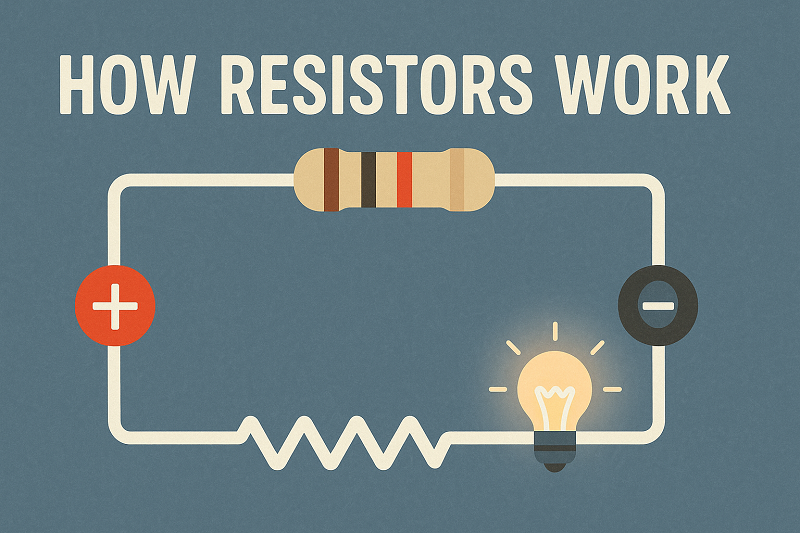
Resistors

What is the Function of a Diode?

Ⅰ Working Principle1.1 TerminologyA diode is a two-terminal electronic device characterized by unidirectional conductivity—it allows current to flow easily in one direction but severely restricts current from flowing in the opposite direction. Historically, diodes are divided into vacuum tube diodes (formerly called electron diodes) and semiconductor diodes (crystalline diodes). Due to the high heat loss, large size, and lower efficiency of vacuum tubes, semiconductor diodes are the standard in modern electronics.The fundamental principle of a modern diode relies on the PN junction. Adding leads and a protective package to this PN junction creates the discrete component we know as a diode.A semiconductor diode consists of a PN junction formed by joining a P-type semiconductor and an N-type semiconductor. A depletion region (space charge layer) forms at the interface, creating a self-built electric field. In the absence of applied voltage, the diffusion current (caused by the difference in carrier concentration) and the drift current (caused by the internal electric field) balance each other out, resulting in a state of electrical equilibrium.Forward Bias: When a forward voltage is applied, the external electric field opposes the self-built field. This lowers the barrier, causing the diffusion current of carriers to increase significantly, resulting in a forward current (conduction).Reverse Bias: When a reverse voltage is applied, the external field reinforces the self-built field. This widens the depletion region and prevents majority carriers from crossing. Only a tiny "reverse saturation current" flows (leakage), which remains roughly constant over a specific voltage range.Breakdown: When the reverse voltage exceeds a critical threshold, the electric field strength in the depletion layer becomes high enough to trigger a multiplication of carriers. This generates a large number of electron-hole pairs, causing a sharp increase in reverse current. This is known as the breakdown phenomenon. It is worth noting that reverse breakdown is categorized into two types: Zener breakdown (in highly doped junctions at lower voltages) and Avalanche breakdown (at higher voltages). Figure 1. P-type Semiconductor and N-type Semiconductor 1.2 PN JunctionA PN junction is the boundary interface between two types of semiconductor materials: P-type and N-type. The "P" (Positive) region contains an excess of holes, while the "N" (Negative) region contains an excess of free electrons. Due to the concentration gradient, free electrons from the N region diffuse into the P region, and holes from the P region diffuse into the N region. This movement creates the depletion region at the junction.Metal leads are connected to these regions to form terminals: the lead connected to the P-region is the Anode (positive pole), and the lead connected to the N-region is the Cathode (negative pole).1.2.1 Doping PrincipleP-type formation: Intrinsic semiconductors (pure silicon) are doped with trivalent impurities (Group III elements), such as Boron. A Boron atom has only three valence electrons. When it forms covalent bonds with surrounding silicon atoms (which have four electrons), a "hole" (a lack of an electron) is created in the lattice. This hole can accept an electron, effectively making the Boron atom a static negative ion. In P-type material, holes are the majority carriers.N-type formation: Similarly, when intrinsic silicon is doped with pentavalent impurities (Group V elements), such as Phosphorus, the impurity atoms form covalent bonds with silicon. Since Phosphorus has five valence electrons, one excess electron is left free to move. In N-type material, free electrons are the majority carriers. Figure 2. PN Junction StructureWhen these two regions meet, the diffusion of electrons and holes across the boundary disrupts the electrical neutrality near the junction, creating an electric field that eventually stops further diffusion, establishing equilibrium.1.2.2 Feature: Unidirectional ConductivityWhen forward voltage is applied (Anode positive, Cathode negative), the external field pushes holes and electrons toward the junction. This narrows the depletion region and neutralizes the internal electric field. Once the voltage exceeds the threshold voltage (typically ~0.7V for Silicon, ~0.3V for Germanium), the diode conducts current with very low resistance.1.2.3 Supplementary NoteForward Bias: Current flows easily; the diode acts like a closed switch (low impedance).Reverse Bias: Current is blocked; the diode acts like an open switch (high impedance). Ⅱ Diode ApplicationsDiodes are ubiquitous in electronics. From simple power conversion to complex signal processing, they protect circuits, regulate voltage, and enable logic functions. Understanding the diode is the first step to mastering electronics.Function of a Diode in Circuit Design2.1 Main FunctionsDiodes serve four primary roles in modern circuitry:(1) Switching Circuit (Current Steering)In digital logic and computing, diodes utilize their unidirectional conductivity to act as automatic switches. They ensure current flows only when specific conditions are met (like in AND/OR logic gates). Switching diodes (like the 1N4148) are optimized for speed, offering much faster response times than mechanical switches and preventing damage from reverse currents.(2) Limiter/Clipper Circuit (Signal Control)Limiter circuits (or clippers) use diodes to restrict the voltage amplitude of a signal. By placing diodes in parallel with the signal path, any voltage exceeding the diode's forward drop (plus any series reference voltage) is shunted to ground. This is essential for protecting sensitive inputs on microcontrollers or audio equipment from signal spikes.(3) Regulator Circuit (Voltage Stabilization)Zener diodes are the key component here. Unlike standard diodes, Zeners are designed to operate in the reverse breakdown region reliably. If the voltage across a Zener exceeds its "Zener Voltage" (Vz), it conducts heavily, clamping the voltage at that level. This makes them perfect for creating simple voltage references or low-power regulators.(4) Varactor Circuit (Tuning and Frequency Control)Varactor diodes (or Varicaps) act as voltage-controlled capacitors. When reverse-biased, the width of the depletion layer changes with voltage, which changes the junction capacitance. These are widely used in Voltage Controlled Oscillators (VCOs) for tuning radios, TVs, and mobile phones, as well as in frequency modulation (FM) circuits. 2.2 Typical Diode ApplicationsLight-emitting diode (LED)Figure 3. Light-emitting DiodeLEDs emit light when electrons recombine with holes at the PN junction, releasing energy in the form of photons. They have revolutionized lighting due to their safety, high efficiency, durability, and fast response time.Key Applications:1. Consumer Electronics: Backlights for LCD TVs, computer monitors, and smartphone screens.2. Automotive: Used in headlights, brake lights, and turn signals. Their fast switching speed improves safety (brake lights trigger faster than incandescent bulbs), and their longevity reduces maintenance.3. Industrial & Mining: Due to their robustness and efficiency, LEDs are replacing traditional lamps in harsh environments like underground mining.4. Urban Lighting: Replacing high-voltage, fragile neon tubes with LED strips for signage and architectural lighting reduces energy costs and fire risks.Zener diodeZener diodes maintain a constant voltage across their terminals when reverse-biased, even as current fluctuates. They are categorized by their breakdown voltage (e.g., 3.3V, 5.1V, 12V). They can be connected in series to achieve higher regulated voltages. Figure 4. Zener Diode CircuitRectifier diodeRectifier diodes allow current to flow only in one direction, converting Alternating Current (AC) into pulsating Direct Current (DC). This is the fundamental component of power supplies. Figure 5. Full Wave Rectifier CircuitLow Frequency (Mains): For standard 50Hz/60Hz rectification, the 1N400x or 1N540x series are standard. Key parameters are Maximum Rectified Current (Io) and Peak Inverse Voltage (PIV).High Frequency: In Switching Mode Power Supplies (SMPS), standard rectifiers are too slow. Fast Recovery Diodes (FRD) or Schottky diodes are required to handle high switching frequencies efficiently.Detector diodeDetector diodes (often Germanium or Schottky point-contact diodes) possess high detection efficiency and low junction capacitance. They are used to demodulate Amplitude Modulated (AM) signals in radios, extracting the audio signal from the carrier wave.  Figure 6. Detector Diode CircuitSchottky diodeA Schottky diode uses a metal-semiconductor junction rather than a P-N junction. This gives it two distinct advantages: 1. Low Forward Voltage Drop: Typically 0.15V to 0.45V (compared to 0.7V for Silicon), which reduces power loss and heat. 2. High Speed: Zero reverse recovery time makes them ideal for high-frequency switching power supplies, inverters, and motor drivers.Switching diodeDesigned specifically for rapid on/off operations. In the circuit below, VD1 acts as a switch to control the charging path of capacitor C2. Figure 7. Switching Diode CircuitFast recovery diode (FRD)FRDs are PN junction diodes doped to have a significantly reduced Reverse Recovery Time (trr). While a standard rectifier might take microseconds to stop conducting when voltage reverses, an FRD stops in nanoseconds. This is critical in modern power electronics like inverters and PWM controllers to prevent short-circuit currents. Update for 2025: In high-power applications, Silicon Carbide (SiC) diodes are increasingly replacing traditional silicon FRDs due to their ability to handle higher voltages and temperatures with almost zero switching loss.Transient voltage suppressor (TVS)Transient Voltage Suppressors (TVS) are specialized avalanche diodes designed to absorb high-energy spikes. They are the primary defense against ESD (Electrostatic Discharge) and voltage surges in sensitive electronics. Figure 8. Diode Circuit Symbols Ⅲ One Question Related to Diode Functions and Going Further3.1 QuestionWhy do we use diodes in a circuit?3.2 AnswerThe primary function is to serve as an electronic "check valve" or "one-way street" for electricity. This enables: 1. Rectification: Converting AC power (wall outlet) to DC power (batteries/electronics). 2. Protection: Blocking reverse polarity (if you put a battery in backward) or clamping high-voltage spikes (TVS). 3. Signal Manipulation: Demodulating radio signals or creating logic gates. 4. Reference: Providing a stable voltage reference (Zener). Ⅳ Diode Distributors RecommendationWhether you are sourcing standard rectifiers or advanced SiC power diodes, reliability is key. Here are some recommended sources for diode components:Mouser Electronics (Global Distributor)onsemi (Leading Manufacturer)KYNIX Semiconductor (Electronic Component Distributor)Digi-Key Electronics (Global Distributor) Frequently Asked Questions about Diode Function1. What is a diode used for?Its most common function is to allow electric current to pass in one direction (forward direction) while blocking it in the opposite direction (reverse direction). This is used for rectification, protection, and signal isolation. 2. What is the main function of a PN junction diode?It controls the flow of electrons. By manipulating the PN junction bias, it acts as a switch that is either ON (conducting) or OFF (insulating), depending on the direction of voltage applied. 3. What is the function of a rectifier diode?Rectifier diodes are specifically built to handle the conversion of AC (Alternating Current) to DC (Direct Current). They are robust enough to handle the high currents found in power supply units. 4. Do diodes output AC or DC?Diodes do not generate power. However, when an AC source is fed into a diode, the output is pulsating DC. The diode blocks the negative half of the AC cycle, leaving only the positive flow. 5. What is the function of a Zener diode?Zener diodes are used for voltage regulation. Unlike standard diodes, they are designed to conduct in reverse at a specific breakdown voltage (Vz). They are used to stabilize voltage rails and protect circuits from over-voltage surges. 6. What is the difference between a diode and a rectifier?"Diode" is the broad name for the component type (a two-terminal device). "Rectifier" is a function or a specific type of diode designed for power conversion. All rectifiers are diodes, but not all diodes are rectifiers (e.g., LEDs, Zener, and Varactors are diodes but are not used as rectifiers).
Kynix On 2020-03-12   49997
Resistors

How to Wire and Test a 5 Pin Relay

SummaryUnderstanding the 5-pin relay is essential for modern automotive electrical work, from restoring classics to upgrading 2026 electric vehicle accessories. This guide covers the fundamentals of SPDT relays, detailed wiring instructions for positive and negative triggers, differentiation between relay types, and comprehensive troubleshooting using a digital multimeter.IntroductionManufactured in Europe to exacting original equipment standards under ISO9001 supervision, modern 5-pin relays are designed for resilience. These components feature silver contacts for long-lasting performance and typically include a removable metal mounting tab for versatile installation.As of 2026, high-quality automotive relays maintain a 500,000+ cycle rating and often include a braided power strap for increased reliability under thermal stress. They are available in various amp ratings (commonly 30A, 40A, or high-current 60A) in 12V, 24V, and occasionally 48V configurations for mild-hybrid systems. Most now include resistor or diode-style circuit protection to prevent voltage spikes from damaging sensitive onboard computers (ECUs).Figure 1: Standard automotive 5-pin relayⅠ What are 5 Pin Relays Used for?A relay with five pins typically utilizes two pins to operate the electromagnetic coil and three pins to function as an SPDT (Single Pole Double Throw) switch. This configuration includes:Common Contact (30): The main power source.Normally Open (NO) Contact (87): Connected only when energized.Normally Closed (NC) Contact (87a): Connected when unenergized.This setup is technically referred to as a Form C contact.While SPST NO (Single Pole Single Throw, Normally Open) relays are common for simple on/off tasks, the SPDT 5-pin relay allows for complex switching. It can toggle power between two circuits (e.g., switching between Daytime Running Lights and High Beams) or create a disabling circuit (e.g., a starter kill switch).In 2026, complex multi-pole relays like 2PDT and 4PDT are still used in industrial applications, but the 5-pin SPDT remains the workhorse of the automotive aftermarket.1.1 Why Do You Need a Relay?Relays are crucial in the automotive industry to separate high-amperage circuits from low-amperage controls. They allow you to use a delicate, low-current switch (or a signal from a Body Control Module) inside the cockpit to control a high-power device like a fuel pump, cooling fan, or light bar located elsewhere.Key Benefits:Voltage Drop Reduction: By keeping high-current wires short (battery to relay to component), you minimize voltage loss.Safety: If a 30A circuit were wired directly through a dashboard switch, the heat generated could melt the switch or cause a fire. A relay allows a tiny 5 amp signal to safely control that 30 amp load.The device depicted above is an electromagnetic attraction type relay. When the coil is energized, it generates a magnetic field that attracts a movable armature, physically closing or opening the contacts.Ⅱ How to Wire a 5 Pin RelayThe standard Bosch-style 5-pin relay uses an SPDT configuration. Here is the universal pinout logic:Pins 85 and 86: The Control Circuit (Coil). Sending power and ground to these creates the magnetic field.Pin 30: Common Power (Input). Usually connected to the battery via a fuse.Pin 87a: Normally Closed (Output). Has power when the relay is OFF.Pin 87: Normally Open (Output). Has power when the relay is ON.Typical Horn Circuit Example:Pin 30 connects to the battery (+) via a fuse. Pin 87 connects to the horn (Load). Pin 86 connects to 12V (+), and Pin 85 connects to the horn button (which grounds the circuit when pressed). When you press the horn, the coil activates, bridging Pin 30 to Pin 87, and the horn sounds.Note: In modern automotive design, it is standard practice to place the switch on the "ground" side (Pin 85) rather than the 12V side to reduce the risk of short circuits in the dashboard.2.1 5 Pin Relay DiagramThis diagram is versatile and applies to various 2026 applications, including:Reverse Camera Triggers: Activating a camera screen only when the reverse lights engage.Amplifier Turn-Ons: Using a remote output wire to power high-wattage audio equipment.High-Draw Accessories: Powering LED light bars, air compressors, or electric water pumps.2.2 How to Wire a 5 Pin Relay with a Positive TriggerIn a positive trigger system, the switch sends 12V (+) to the relay to activate it.Pin 30: High current 12V (+) input from battery (Fused).Pin 86: Signal wire from your dash switch (sends 12V when ON).Pin 85: Connected to Chassis Ground (-).Pin 87: Output to accessory (Lights/Fan/Horn).Pin 87A: Unused (Insulate this terminal).2.3 How to Wire a 5 Pin Relay with a Negative TriggerIn a negative trigger system (common in Japanese vehicles and modern alarms), the relay has constant 12V, and the switch provides the Ground (-).Pin 30: High current 12V (+) input from battery (Fused).Pin 86: Jumper wire from Pin 30 (or an ignition-switched 12V source).Pin 85: Connects to your switch (Switch then connects to Ground).Pin 87: Output to accessory.Pin 87A: Unused (Insulate this terminal).Note: With negative switching, you cannot easily use a standard lighted switch, as the switch lacks a direct 12V feed.Ⅲ Are all 5 Pin Relays the Same?No. While they may look identical externally, internal specifications vary significantly.The only guarantee is that they have 5 pins. Variations include:Coil Voltage: 12V is standard for cars, but 24V is used in heavy trucks, and 48V is emerging in hybrids. Plugging a 12V relay into a 24V system will instantly burn out the coil.Amperage Rating: Ranging from 20A to 80A. Using a 20A relay for a 40A fuel pump will fuse the contacts.Pin-out Configuration: While "Bosch Type" is standard, some manufacturers swap Pins 30 and 86. Always check the diagram printed on the relay case.Protection: Some relays contain internal flyback diodes or resistors to protect vehicle electronics. These are polarity-sensitive; wiring pins 85/86 backward on a diode-protected relay will cause a short circuit.Ⅳ How to Test a 5-pin Relay Using a Digital MultimeterBefore replacing components, it is vital to test the relay. A faulty relay is a common cause of electrical failure in aging vehicles. Here is the 2026 standard procedure for testing:4.1 Testing the Relay’s Coil (Pins 85 & 86)The coil should have specific resistance. Consult the manufacturer's datasheet (typically between 50Ω and 120Ω for 12V relays).Set your multimeter to the Ohms (Ω) setting (typically the 200Ω scale).Connect the probes to pins 85 and 86. Polarity does not matter for resistance testing.Result: If the meter reads within range (e.g., 75Ω), the coil is intact. If it reads "OL" (Open Loop) or infinite resistance, the coil wire is broken inside, and the relay must be replaced. If it reads 0Ω, the coil is shorted.4.2 Testing the Relay’s Terminals (Contacts)We must verify that the switching mechanism actually connects and disconnects as intended.4.3 Testing Normally Open Terminal (Pin 87)Set the multimeter to Ohms or Continuity mode.Connect probes to Pin 30 (Common) and Pin 87 (NO).Result: You should see "OL" or high resistance. This is correct because the relay is at rest (OFF). If you find continuity (near 0Ω) while the relay is on the bench, the contacts have welded together, and the relay is trash.4.4 Testing the Normally Closed Terminals (Pin 87a)Keep multimeter in Ohms/Continuity mode.Connect probes to Pin 30 and Pin 87a.Result: You should hear a beep or see near 0Ω resistance. This indicates the circuit is closed by default. If it reads "OL", the internal contact is damaged or corroded.4.5 Testing the Energized StateThis is the final verification.Use a 12V battery or bench power supply.Connect Positive to Pin 86 and Negative to Pin 85. You should hear a distinct "Click".While energized, measure resistance between Pin 30 and Pin 87.Result: It should now read 0Ω (Continuity). If it clicks but shows high resistance, the contacts are burnt (carbon buildup) and cannot carry high current.Pro Tip: Relays are generally non-serviceable. If any test fails, replace the unit. In an emergency, if Pin 87 is burnt but 87a works, you cannot swap them; you must replace the relay.Ⅴ FAQ1. What can perform the function of an SPST NC relay when actuated?An SPDT 5-pin relay can perform this function. By wiring your circuit to Pin 87a (Normally Closed), the device will turn OFF when you activate the switch, effectively acting as an NC relay.2. What is the blue wire on a 5 pin trailer plug?In trailer wiring, the blue wire in a 5-way flat connector usually controls the hydraulic lockout solenoid for surge brakes. When you put the vehicle in reverse, this wire energizes to disengage the trailer brakes, allowing you to back up without the brakes locking up. It can also power reverse lights on the trailer.3. Why does my trailer have 5 wires?A 5-wire harness connects the standard lighting (Left Turn, Right Turn, Running Lights, Ground) plus a fifth line, typically for reverse lights or disabling surge brakes. This is an upgrade over the standard 4-pin setup commonly found on boat trailers.4. What is the difference between a 4-pin and 5 pin trailer plug?The 4-pin plug handles basic legal lighting (Brake/Turn/Tail). The 5-pin plug adds a fifth wire (usually blue) specifically for reverse operations (backup lights or brake lockout). Ensure your tow vehicle is wired to support this fifth pin if your trailer requires it.5. Can a 5 pin relay be used in place of a 4 pin?Yes. A 5-pin SPDT relay fits into a 4-pin SPST socket perfectly in most Bosch-style applications. The extra pin (87a) will simply slide into the empty slot in the socket (or hang in the air) and remain unused. The relay will function exactly like a 4-pin relay.{ "@context": "https://schema.org", "@type": "FAQPage", "mainEntity": [ { "@type": "Question", "name": "What can perform the function of an SPST NC relay when actuated?", "acceptedAnswer": { "@type": "Answer", "text": "An SPDT 5-pin relay can perform this function. By wiring your circuit to Pin 87a (Normally Closed), the device will turn OFF when you activate the switch, effectively acting as an NC relay." } }, { "@type": "Question", "name": "What is the blue wire on a 5 pin trailer plug?", "acceptedAnswer": { "@type": "Answer", "text": "In trailer wiring, the blue wire in a 5-way flat connector usually controls the hydraulic lockout solenoid for surge brakes. When you put the vehicle in reverse, this wire energizes to disengage the trailer brakes, allowing you to back up without the brakes locking up. It can also power reverse lights on the trailer." } }, { "@type": "Question", "name": "Why does my trailer have 5 wires?", "acceptedAnswer": { "@type": "Answer", "text": "A 5-wire harness connects the standard lighting (Left Turn, Right Turn, Running Lights, Ground) plus a fifth line, typically for reverse lights or disabling surge brakes. This is an upgrade over the standard 4-pin setup commonly found on boat trailers." } }, { "@type": "Question", "name": "What is the difference between a 4-pin and 5 pin trailer plug?", "acceptedAnswer": { "@type": "Answer", "text": "The 4-pin plug handles basic legal lighting (Brake/Turn/Tail). The 5-pin plug adds a fifth wire (usually blue) specifically for reverse operations (backup lights or brake lockout). Ensure your tow vehicle is wired to support this fifth pin if your trailer requires it." } }, { "@type": "Question", "name": "Can a 5 pin relay be used in place of a 4 pin?", "acceptedAnswer": { "@type": "Answer", "text": "Yes. A 5-pin SPDT relay fits into a 4-pin SPST socket perfectly in most Bosch-style applications. The extra pin (87a) will simply slide into the empty slot in the socket (or hang in the air) and remain unused. The relay will function exactly like a 4-pin relay." } } ]}
Kynix On 2022-02-15   48396
Resistors

How to Test a Capacitor with a Multimeter in 5 Ways?

I IntroductionTwo adjacent conductors are sandwiched by a layer of a non-conductive insulating medium to form a capacitor. Capacitors are one of the most commonly used electronic components. They play an important role in circuits like tuning, bypassing, coupling, and filtering. For example, they are often used in the tuning circuit of the transistor radio, coupling circuit and bypass circuit of the color TV. This article mainly introduces how to properly use multimeters to test capacitors and aluminum electrolytic capacitors (solid state capacitor), including detailed operating steps, working principles, notice, and explaining some fundamental knowledge about capacitors. We also have a related post about how to check start capacitors you may be interested in. Don't miss it! How to Test Capacitors with a Digital MultimeterCatalogI IntroductionII Definition of CapacitorIII The Reasons and Effects of Testing Capacitors and Withstand Voltage Performance  3.1 Why Should We Measure the Capacitance of A Capacitor?  3.2 Why Should Capacitors Undergo A Withstand Voltage Test?IV The Difference of Capacitors with Different Capacity in Test  4.1 Small-capacity Capacitor Test  4.2 Large-capacity Capacitor Test  4.3 Supercapacitor TestV How to Test Capacitors with A Multimeter?  5.1 Direct Test with A Capacitor  5.2 Test with Resistance File  5.3 Test with Voltage File  5.4 Test with Buzzer  5.5 Use a Digital Multimeter to Measure Capacitance Greater Than 20μFVI How to Detect Capacitors in Aluminum Capacitors  6.1 Appearance Physical Inspection  6.2 Capacity and Loss Test  6.3 Ripple Voltage Test  6.4 Leakage Current Test  6.5 Explosion Test  6.6 Temperature TestVII Considerations for Capacitor TestingVIII One Question Related to Testing Capacitor  8.1 Question  8.2 AnswerⅨ Frequently Asked Questions about How to Test a CapacitorII Definition of CapacitorCapacitors comprise components that store electricity and electrical energy (potential energy). A conductor is surrounded by another conductor, or the electric field lines emitted by one conductor all terminate in the conduction system of the other conductor, called a capacitor. This is a short introduction of capacitor. Under what circumstances do you need to test the capacitors, that's when you have capacitor uncertainty in use. So let's analyze it here. III The Reasons and Effects of Testing Capacitors and Withstand Voltage Performance3.1 Why Should We Measure the Capacitance of A Capacitor?The purpose of measuring the capacitance value of a capacitor in a general sense of electricity is to check the change of its capacitance value. By comparing the measured value with the value on the nameplate, you can judge whether the internal wiring is correct and whether the insulation has deteriorated because of moisture, whether the component has broken down, and whether oil leakage has caused the capacitance to decrease. So be careful during the substantial operation. 3.2 Why Should Capacitors Undergo A Withstand Voltage Test?The withstand voltage test refers to the test of the capability of withstanding voltage of various electrical devices and structures. The process of applying a high voltage to an insulating material or an insulating structure without damaging the performance of the insulating material is considered a withstand voltage test. Broadly speaking, the primary purpose of the capability of withstanding voltage test is to check the ability of the insulation to withstand working voltage or overvoltage, and then to check whether the insulation performance of the product equipment meets safety standards capability of withstanding voltage test is to check the ability of the insulation to withstand working voltage or overvoltage, and then to check whether the insulation performance of the product equipment meets safety standards.Figure1. Capacitor TestingIV The Difference of Capacitors with Different Capacity in Test4.1 Small-capacity Capacitor TestThe capacitance of a small-capacity capacitor is generally below 1 UF because the capacity is too minor, the charging phenomenon is unobvious, and the angle of the hand to the right is not large when measuring. Therefore, it is generally impossible to estimate its capacitance with a multimeter, but only to detect whether it has leakage or breakdown. Under normal conditions, the resistance value of both ends of the multimeter R × 10 k should be infinite. If the certain resistance value is measured or the resistance value is close to 0, it means that the capacitor has leaked electricity or has been damaged by a breakdown.Related recommendation: How to Test Ceramic Disc Capacitor 4.2 Large-capacity Capacitor TestLarge capacity can generally be tested by 1K-10K, see the sweep of the meter during charging, and the resistance value indicated by the last meter. The closer to the left, the better. If the resistance is too small, it cannot be used. 4.3 Supercapacitor TestThe method of measuring supercapacitors is completely different from other types of capacitors. Supercapacitors have exceptionally large capacitance values that cannot be measured directly by standard equipment. Ordinary methods for testing the capacitance of these capacitors are by charging the supercapacitors at the rated voltage and discharging the supercapacitors by a constant current load.Figure2. Different CapacitorsV How to Test Capacitors with A Multimeter?5.1 Direct Test with A CapacitorSome digital multimeters have the function of measuring capacitance, and their ranges are divided into five ranges of 2,000p, 20n, 200n, 2μ and 20μ. When measuring, you can directly insert the two pins of the discharged capacitor into the Cx jack on the meter board and select the appropriate range to read the display data. 2,000p file, suitable for measuring capacitance less than 2000pF; 20n file, suitable for measuring the capacitance between 2000pF and 20nF; 200n file, suitable for measuring the capacitance between 20nF and 200nF; 2μ file, suitable for measuring between 200nF and 2μF Capacitance; 20μ range, suitable for measuring the capacitance between 2μF and 20μF. Experience has shown that some types of digital multimeters (like DT890B +) allow a considerable error when measuring small-capacity capacitors below 50pF, and there is almost no reference value for measuring capacitance below 20pF. At this time, the small value capacitance can be measured by the series method. Method: First find a capacitor of about 220pF, use a digital multimeter to measure its actual capacity C1, and then connect the small capacitor to be tested in parallel to measure its total capacity C2. The difference between the two (C1-C2) is subsequently the capacity of small capacitors under test.It is extremely accurate to measure the small capacitance of 1 ~ 20pF with this method.Figure3. How to Test a Capacitor with a Multimeter5.2 Test with Resistance FileThe practice has proved the charging process of capacitors can also be observed by using a digital multimeter, which actually reflects the change of charging voltage in discrete digital quantities. Assuming that the digital multimeter's measurement rate is n times/second, in the process of observing the charging of the capacitor, you can see n readings that are independent of each other and increase sequentially. According to this display characteristic of the digital multimeter, it is possible to detect the quality of the capacitor and estimate the size of the capacitance. The following describes the method of detecting the capacitor using the resistance meter of a digital multimeter, which is of practical value for instruments without a capacitor. This method is suitable for measuring large-capacitance capacitors from 0.1 μF to several thousand microfarads. 5.2.1 Operation Method of MeasurementAs shown in Figure 4, set the digital multimeter to the appropriate resistance level. The red and black test leads respectively to touch the two poles of the capacitor Cx under test. At this time, the displayed value will gradually increase from "000" until the display Overflow symbol "1."If"000" is consistently displayed, it means the capacitor is short-circuited internally; if it is constantly displayed, the internal poles of the capacitor may be open-circuited, or the selected resistance level may be inappropriate. When checking electrolytic capacitors, pay attention to the red test lead (positive charge) is connected to the positive electrode of the capacitor, and the black test lead is connected to the negative electrode of the capacitor.Figure4. Digital Multimeter 5.2.2 Measurement PrincipleFigure5 shows the measurement principle of measuring capacitors with resistance files. During the measurement, the positive power source charges, the capacitor Cx to be measured through the standard resistor R0. At the moment when charging starts, Vc = 0, so “000” is displayed. As Vc gradually increases, the displayed value increases. When Vc = 2VR, the meter starts to display the overflow symbol "1." The charging time t is the time required for the displayed value to alter from "000" to overflow. This time interval can be measured with a quartz meter.Figure5. Principle of Measurement 5.2.3 Measured Data Using DT830 Digital Multimeter to Estimate CapacitanceThe principle of selecting the resistance range is: when the capacitance is small, a high resistance should be selected, and when the capacitance is large, a low resistance should be selected. If you use a high-resistance range to estimate a large-capacity capacitor, the measurement time will last a long time because the charging process is very slow. If you use a low-resistance range to check a small-capacity capacitor, the meter will always show an overflow because the charging time is extremely short, and you cannot see the change. 5.3 Test with Voltage FileDetecting capacitors with the DC multimeter of a digital multimeter is actually an indirect measurement method. This method can measure small-capacitance capacitors from 220pF to 1μF, and can accurately measure the capacitor leakage current.5.3.1 Measurement Methods and PrinciplesThe measurement circuit is shown in Figure6. E is an external 1.5V dry battery. Set the digital multimeter to the DC 2V range, connect the red test lead to one electrode of the capacitor Cx under test, and the black test lead to the battery negative. The input resistance of the 2V range is RIN = 10MΩ. After the power is turned on, battery E charges Cx via RIN and starts to establish voltage Vc. The relationship between Vc and charging time t isFigure6. Wiring Diagram of Measuring Capacitor with Voltage Block Here, because the voltage across RIN is the instrument input voltage VIN, so RIN actually has the function of a sampling resistor. obviously,VIN (t) = E-Vc (t) = Eexp (-t / RINCx) (5-2)Figure7 is the change curve of the input voltage VIN (t) and the charging voltage Vc (t) on the capacitor under test. It can be seen from the figure that the change process of VIN (t) and Vc (t) is just the opposite. The curve of VIN (t) decreases with time, while Vc (t) increases with time. Although the meter shows the change process of VIN- (t), it indirectly reflects the charging process of the capacitor Cx under test. During the test, if Cx is open (no capacity), the displayed value will always be “000”. If Cx is internally short-circuited, the displayed value will always be the battery voltage E and will not change with time.Figure7. Change Curve of VIN (t) and Vc (t) Equation (5-2) shows that when the circuit is turned on, t = 0, VIN = E, the initial display value of the digital multimeter is the battery voltage, and then as Vc (t) increases, VIN (t) gradually decreases. Until VIN = 0V, the Cx charging process ends, at this timeVcx (t) = EUsing digital multimeter voltage level detection capacitor, not only can check small-capacitance capacitors from 220pF to 1μF, but also measure the capacitor leakage current. Let the leakage current of the capacitor being measured be ID, and the stable value displayed by the meter at the end is VD (the unit is V), thenFigure8. Equation (5-3) 5.3.2 ExamplesExample 1:The measured capacitance is a 1μF / 160V fixed capacitor, using the 2VDC range of the DT830 digital multimeter (RIN = 10MΩ). Connect the circuit according to Figure6. Initially, the meter displayed 1.543V, and then the displayed value gradually decreased. After about 2 minutes, the displayed value stabilized at 0.003V. Find the leakage current of the capacitor under test.Figure9. Equation The leakage current of the capacitor under test is only 0.3nA, indicating good quality.Example 2:The capacitor under test is a 0.022μF / 63V polyester capacitor. The measurement method is the same as in Example 1. Due to the small capacity of this capacitor, VIN (t) decreases rapidly during measurement, and after about 3 seconds, the displayed value decreases to 0.002V. Substituting this value into equation (5-3), the leakage current was calculated to be 0.2nA. 5.3.3 Notes(1) Before measurement, the two pins of the capacitor should be short-circuited and discharged, otherwise, the change process of the reading may not be observed.(2) Do not touch the capacitor electrode with both hands during the measurement to avoid meter jumping.(3) During the measurement, the value of VIN (t) changes exponentially, and decreases rapidly at the beginning. With the increase of time, the decline rate will become slower and slower. When the capacitance of the capacitor Cx under test is less than a few thousand picofarads, because VIN (t) initially drops too quickly, and the meter's measurement rate is too low to reflect the original voltage value, the initial display value of the meter is lower than the battery Voltage E.(4) When the measured capacitor Cx is greater than 1 μF, in order to shorten the measurement time, a resistance file can be used for measurement. However, when the capacitance of the capacitor under test is less than 200pF, it is difficult to observe the charging process because the change in the reading is very short. 5.4 Test with BuzzerUsing the buzzer file of the digital multimeter, you can quickly check the quality of the electrolytic capacitor. The measurement method is shown in Figure10. Set the digital multimeter to the buzzer position, and use two test leads to contact the two pins of the capacitor Cx under test. A short beep sound should be heard, the sound will stop, and the overflow symbol "1" will be displayed. Then, measure the two test leads again, and the buzzer should sound again, and the overflow symbol “1” will be displayed at last, which indicates that the electrolytic capacitor under test is basically normal. At this time, you can dial to 20MΩ or 200MΩ high resistance to measure the leakage resistance of the capacitor to determine its quality.Figure10. Wiring Diagram For Testing Electrolytic Capacitor with Buzzer The principle of the above measurement process is: At the beginning of the test, the charging current of the instrument to Cx is large, which is equivalent to the path, so the buzzer sounds. As the voltage across the capacitor continues to increase, the charging current rapidly decreases, and finally, the buzzer stops sounding. During the test, if the buzzer keeps sounding, it means that the internal of the electrolytic capacitor has been short-circuited. If the buzzer keeps sounding and the meter always shows "1" when the meter pen is repeatedly measured, it means that the capacitor under test is open or the capacity disappears. 5.5 Use a Digital Multimeter to Measure Capacitance Greater Than 20μFFor common digital multimeters, the maximum measurement value of the capacitance file is 20 μF, which sometimes cannot meet the measurement requirements. For this reason, the following simple method can be used to measure the capacitance of more than 20μF with the capacitance file of the digital multimeter, and the maximum capacitance of several thousand microfarads can be measured. When using this method to measure large-capacitance capacitors, there is no need to make any changes to the original digital multimeter circuit. The measurement principle of this method is based on the formula C string = C1C2 / (C1 + C2) of two capacitors in series. Since two capacitors with different capacities are connected in series, the total capacity after the series connection is smaller than that of the capacitor with the smaller capacity. Therefore, if the capacity of the capacitor to be measured exceeds 20 μF, only one capacitor with a capacity of less than 20 μF is used. In series with it, you can measure directly on the digital multimeter. According to the formula of two capacitors in series, it is easy to derive C1 = C2C string / (C2-C string). Using this formula, the capacitance value of the measured capacitor can be calculated. Here is a test example to illustrate the specific method of using this formula. The component under test is an electrolytic capacitor with a nominal capacity of 220 μF, and is set to C1. Select an electrolytic capacitor with a nominal value of 10μF as C2, use a digital multimeter 20μF capacitor to measure the actual value of this capacitor as 9.5μF, and connect the two capacitors in series to measure the C string as 9.09μF. Substituting C2 = 9.5 μF and C string = 9.09 μF into the formula, thenC1 = C2C string / (C2-C string) = 9.5 9.09 / (9.5-9.09) ≈211 (μF)Figure11. Digital MultimeterNote: No matter how much the capacity of C2 is selected, a capacitor with a larger capacity must be selected under the premise of less than 20μF, and C2 in the formula should be substituted into the actual measured value instead of the nominal value, which can reduce errors. The two capacitors are connected in series and measured with a digital multimeter. Due to the capacitance error and measurement error of the capacitor itself, as long as the actual measured value is close to the calculated value, the capacitor C1 to be measured is considered good. capacity. In theory, this method can measure the capacitance of any capacity, but if the capacity of the capacitor under test is too large, the error will increase. The error is proportional to the size of the capacitor to be measured.Do you want to know about other tools to test capacitors? You can Three Measuring Tools to Test Capacitors. VI How to Test Aluminum Electrolytic Capacitors6.1 Appearance Physical Inspection(1) First check whether the capacitor under test has a formal "Product Specification", which includes the product name, specifications, installation dimensions, process requirements, technical parameters, and supplier name, address and contact information to ensure this. Batch products are provided by regular manufacturers. The logo on the capacitor should include the trademark, working voltage, standard capacitance, polarity, and operating temperature range. (2) Refer to the process parameters in the “Product Specification” and observe whether the appearance, color, and material of the capacitor are consistent with the process indicators marked on it. (3) Use a vernier caliper to confirm the installation size of the capacitor to ensure that the diameter, height, and diameter and spacing of the lead-out terminal are within the tolerance of the product process, and the external dimensions must meet the company's selection requirements. (4) Check the appearance of the capacitor to ensure its appearance is neat, without obvious deformation, breakage, cracks, spots, dirt, rust, etc., and its marking is clear, firm, correct and complete. (5) Check the lead-out terminals to ensure that their terminals are straight, free from oxidation, rust, and have no effect on their conductive properties and that the lead-out terminals are free of distortion, deformation, and mechanical damage that affects insertion and removal. (6) Check that the production date marked on the electrolytic capacitor should not exceed six months, and make a record.Figure12. Aluminum Electrolytic Capacitor6.2 Capacity and Loss Test(1) Use the electric bridge to test whether the actual capacity is consistent with the nominal capacity (the electrolytic capacitor generally has an error range of ± 20%). The loss tangent value tanθ (that is, the D value) is in compliance with the standard. (2) How to use the Zen tech bridge tester: After connecting the power supply correctly, press the "POWER" key to turn on the tester's working voltage; press the "LCR" key to select the test type (L: Inductance, C: Capacitance, R: resistance). (3) Press the "UP" and "DOWN" keys to select the test range (μF, nF, pF) and press the "FREQ" key to select the test frequency (100HZ,(120HZ, 1KHZ) can choose the required test frequency according to the technical parameters provided by the manufacturer, the test in this article selects "100HZ". (4) Press "SERIES" (parallel) and "PARALLEL" (parallel) to select the connection mode for the test, small capacitance (less than 10μF)To use parallel mode, use large mode (10μF and above) in series mode. (5) After the setting is completed, connect the bridge test ports ("LOW" and "HIGH") to the two ends of the capacitor, and use the label paper to record the capacity value and loss value on the display respectively. And attach the label paper to the corresponding capacitor for subsequent analysis. 6.3 Ripple Voltage Test(1) Connect the circuit as shown below, and connect the capacitor to be tested to the adjustable DC power supply (note that the positive and negative poles are not connected reversely). Connect the positive electrode of the oscilloscope probe with a non-inductive capacitor (1μF 1200V.DC) in series to the positive electrode of the capacitor to be tested.Figure13. Circuit of Ripple Voltage Test (2) For the setting of the oscilloscope, it must be set to the DC test position first, and the fine adjustment knob of the oscilloscope voltage must be locked. (3) During the test, the DC voltage should be slowly increased to the rated voltage with a voltage regulator, and the changes displayed by the oscilloscope should be closely monitored. The correct range should be selected to ensure that the voltage can be accurately read from the oscilloscope waveform. (4) Take the ripple waveform with the camera, and record the range and division of the oscilloscope with label paper (that is, calculate the ripple voltage and paste it on the corresponding capacitor for subsequent analysis and comparison. (5) After the recording is completed, disconnect the DC power supply, discharge the capacitor under test and the non-inductive capacitor with the bulb load, and then remove the capacitor under test from the test bench. 6.4 Leakage Current Test6.4.1 Indirect Measurement Method OneConnect as shown below. Connect a 1K resistor in series with the capacitor under test and connect it to a DC adjustable power supply. Use an oscilloscope probe to connect to both ends of the resistor. Indirectly calculate the leakage current of the capacitor to be measured by sampling the voltage signal across the resistor. Operating essentials and precautions: After the circuit is connected, adjust the DC adjustable power supply to the rated voltage of the capacitor. After the circuit is equilibrated for two minutes, read the voltage value across the resistor. When reading the oscilloscope, the voltage trimming knob should be locked. Record the maximum value of the voltage waveform as the voltage value and divide it by the resistance value to obtain the value of the leakage current. The current is too large and the resistor is burned out. After the test, the capacitor should be discharged and then removed to avoid accidents.Figure14. Circuit 6.4.2 Indirect Measurement Method TwoConnect the wiring as shown in the figure, and add an air switch in series between the capacitor and the DC power supply. First close S1 and S2 respectively, and adjust the voltage regulator to the rated voltage to charge the capacitor for two minutes.Figure15. Circuit After that, both S1 and S2 are disconnected. At this time, the adjustable power supply is at the rated value. Do not move. Add a milliamp meter between S1 and S2, as shown in the figure below: S1 and S2 are both closed, and the leakage current can be directly read through the milliamp meter after one minute of stabilization.Figure16. Circuit 6.4.3 PrecautionsRemember not to connect the milliamp meter to the line directly when the capacitor is not charged, because the initial charging current is large, the milliamp meter will be burned out by accident. In the disassembly process, first discharge the capacitor with the bulb load. When discharging, remove the milliamp meter first, and ensure that the discharge current does not pass the test resistor to prevent damage to the test resistor and the millimeter meter.6.4.4 Leakage Current at 1.2UnAdjust the DC voltage to 1.2 times the rated voltage of the electrolytic capacitor, measure its leakage current again and compare different samples. 6.5 Explosion Test6.5.1 DC TestApply reverse DC voltage to the capacitor under test, slowly adjust the adjustable DC voltage, and observe the current closely with a clamp meter.The DC power setting is generally not more than 30V. The current value is set according to the size of the capacitor as follows:When the capacitor diameter is 6mm ≤ 22.4mm, the current cannot exceed 1A; when the capacitor diameter is> 22.4mm, the current cannot exceed 10A. 6.5.2 Observe The Surface Temperature of The CapacitorDuring the experiment, use a thermometer to closely observe the surface temperature of the capacitor (the sensing contact of the thermometer can be wrapped around the capacitor with tape). Note that the initial current is very small and almost zero. When the temperature of the capacitor rises (about 35-40 ° C) The current is significantly increased. At this time, close observation should be made. When the current reaches or approaches 10A, the voltage should be lowered to ensure that the current is controlled within 10A. 6.5.3 Capacitor Safety ValveWithin 30 minutes after the start of the test, the capacitor safety valve should be opened. If the capacitor fuse is open, the power should be cut off immediately (the electrolytic capacitor of 350V 6800F will automatically open under the following conditions, the current is about 8A, the surface temperature is about 45-60 ° C.), If the current is close to 10A and the fuse is still 30 minutes later, If it is not turned on, this function is missing.Figure17. DC Digital Voltmeter6.6 Temperature TestThe capacity of a capacitor will change due to different ambient temperatures. In general, the capacity will increase as the temperature rises. The temperature test is to test the change of capacitance after equilibration under the set temperature. 6.6.1 High-Temperature Test(1) Connect two small wires to the lead-out terminal of the capacitor to be tested respectively, and test the capacity of the two lead terminals at normal temperature, and label them for record.(2) Put the capacitor into the high and low temperature alternating humidity and heat test box, and leave the leads outside the test box to test the capacitance.(3) Turn on the test box switch button, click "Temperature Setting" on the screen, set the temperature to 100 ° C, and click "Run" to start the test box.(4) Test the capacity again about 2 hours after the temperature reaches 100 ° C, and calculate the percentage change in capacity (the initial measurement of the difference). 6.6.2 Low-Temperature Test(1) Put the capacitor to be tested into the test box (be careful not to use capacitors that have been tested at high temperatures, except for special needs).(2) Turn on the test box switch button, click "temperature setting" on the screen, set the temperature to -25 ° C, and click "run".(3) Test the capacity again about 2 hours after the temperature reaches -25 ° C, and calculate the percentage change in capacity (the initial measurement of the difference). 6.6.3 PrecautionsThe test should pay close attention to whether there is any obvious change in the capacitor. If serious conditions such as cracking of the capacitor surface and opening of the safety valve occur, the test box should be stopped immediately. During the test, the operating procedures of the test box should be strictly followed, and the door of the test box should not be opened at will. At the end of the high temperature test, the capacitor can only be taken out after the temperature inside the test box has dropped to prevent accidents such as burns.Figure18. CapacitorsVII Considerations for Capacitor Testing(1) When measuring with a multimeter, select the gear according to the rated voltage of the capacitor. For example, the capacitor voltage commonly used in electronic equipment is low, only a few volts to dozens of volts. If the multimeter RX10k is used for measurement, the battery voltage in the meter is 12 ~ 22.5V, which is likely to cause capacitor breakdown. Therefore, the RXlk file should be used. measuring.(2) For the capacitor just removed from the line, be sure to discharge the capacitor before measurement to prevent the residual charge in the capacitor from being discharged to the meter and damage the meter.(3) For capacitors with high working voltage and large capacity, the capacitors should be sufficiently discharged, and the operator should have protective measures to prevent electric shocks during discharge. VIII One Question Related to Testing Capacitor8.1 QuestionWhat should we do when checking a capacitor with an ohm meter?8.2 AnswerTo remove the capacitor from the circuit. It's usually easy to remove a start or run capacitor – you simply unhook it from its harness and disconnect the wires. However, be careful to avoid touching the capacitor terminals. If the capacitor isn't dead, it might have a full charge, and if so, you could get a serious shock.  Ⅸ Frequently Asked Questions about How to Test a Capacitor1. How do you check if a capacitor is bad with a multimeter?Use the multimeter and read the voltage on the capacitor leads. The voltage should read near 9 volts. The voltage will discharge rapidly to 0V because the capacitor is discharging through the multimeter. If the capacitor will not retain that voltage, it is defective and should be replaced. 2. How do you test a capacitor at home?Set your voltmeter to read DC voltage (if it's capable of reading both AC and DC). Connect the voltmeter leads to the capacitor. Connect the positive(red) lead to the positive (longer) terminal and the negative (black) lead to the negative (shorter) terminal. Note the initial voltage reading. 3. How to test capacitor using multimeter? 4. Can you test capacitor on board?You just cannot test a bad capacitor inside or outside a circuit board by measuring its capacitance value with a capacitor meter or a multimeter. ... When the capacitor is outside the board, sometimes a bad capacitor may give you a proper capacitance value on the multimeter or capacitor meter. 5. What is the best capacitor tester?Best Capacitance Meter Review:Signstek MESR-100 V2 Auto Ranging in Circuit ESR LCR Meter CapacitorELIKE Digital Capacitor Tester 0.1pF to 20mFHoneytek A6013l Capacitor TesterMESR-100 circuit tester, KKMOON mesr-100 capacitor testerMultimeter Digital Capacitance Meter Capacitor Tester 0.1Pf to 2000uFExcelvan M6013 Digital Auto Ranging Capacitance Meter Capacitor TesterDigital Capacitance Meter Professional Capacitor 0.1Pf – 20000Uf 6. How do you test a capacitor with a cheap multimeter? 7. How many ohms should a capacitor have?1,000 ohmsSet it to its highest ohm (Ω) setting, at least 1 kΩ (1,000 ohms). At this setting, the meter generates a small current when you connect the meter leads to the capacitor terminals. 8. What is the capacitor symbol on a multimeter?Most digital multimeters use a symbol similar to –|(– to signify capacitance. Move the dial to that symbol. If several symbols share that spot on the dial, you may need to press a button to cycle between them until the capacitance symbol appears on the screen. 9. What if a capacitor reads high?It is reading as if there is a short circuit across it. If we read a very high resistance across the capacitor (several MΩ), this is a sign that the capacitor likely is defective as well. It is reading as if there is an open circuit across the capacitor. ... But not 0Ω or several MΩ. 10. What is the first step in testing a capacitor?The first and most simple is to inspect the capacitor. If it appears “blotted” or swelled, it is a safe bet that it is bad. It is good practice to go ahead and perform the following test even though it is swelled. Make a sketch of the wires connected to the capacitor and note the colors or numbers that identify them.
kynix On 2020-03-07   45148
Resistors

4 Pin Relay Wiring Diagram vs 5 Pin Relay Wiring Diagram

CatalogIntroductionⅠ How to Wire a Relay?Ⅱ Why Use a Relay?Ⅲ Relay Wiring DiagramⅣ 4 Pin Relay Wiring Diagram vs 5 Pin Relay Wiring Diagram4.1 The Main Difference between 4 or 5 Pin Relays4.2 4 Pin Relay Wiring Diagram4.3 Sample Wiring Diagrams for a 4 Pin Normally Open Relay4.4 Why to Use a 4 Pin Relay for Driving Lights4.5 5 Pin Relay Wiring Diagram4.6 How To Use 5 Pin Relay4.7 5 Pin Relay Wiring Diagram for lightsⅤ FAQIntroductionIn layman's terms, a relay is an electromagnetic switch that is typically used to switch the power supply either automatically or manually. In this post, I'll go over the fundamentals of 4 and 5 pin relay wiring diagrams. The relay comes in a variety of shapes and sizes. It can be based on the pins or contacts, ampers, or voltage ratting (AC or DC). These contacts are pins 4, 5, 8, 11, 14, and so on. However, we have two coil pins on each pin. Where we supply the necessary ratting current. As an example, suppose we have a 12-volt DCV relay. As a result, we will supply 12 volts of DC (Direct current) to the relay coil. And if we have the 220 ACV, we can supply the relay coil with 220 volts AC (alternating current).The remaining pins and contacts are known as main contacts or switching contacts. The relay switching pins include the following: common, NC (normally open), and NO (normally close).Ⅰ How to Wire a Relay?How To Wire A Relay - Quick TipStill confused? See the full video here. Ⅱ Why Use a Relay?There are several reasons why you might need or want to use a relay:Using a lower current circuit to replace a high current circuit.This is the most common reason, and it is useful when an in-line switch or existing circuit cannot handle the required current. For example, if you wanted to install some high-powered work lights that activate with the headlights, there's a chance they'd exceed the capacity of the existing loom.Cost SavingBecause high current capacity wiring and switches are more expensive than lower current capacity versions, using relays reduces the need for more expensive components.Activating more than one circuit from a Single InputA single input signal from one part of an electrical system (e.g., central locking output, manual switch, etc.) can be used to activate one or more relays, which then complete one or more other circuits, allowing you to carry out multiple functions from a single input signal.Carrying Out Logic FunctionsWhen linked together, electromagnetic relays can be used to perform logical operations based on specific inputs (for example, latching a +12V output on and off from a momentary input, flashing alternative left and right lights, and so on). Although electronic modules have largely replaced these logical functions in OEM designs, it can still be useful, fun, and often more cost-effective to use relays to perform them in some after-market projects (particularly where you have a bespoke application).Ⅲ Relay Wiring DiagramA simple wiring diagram of a relay is shown here to help you understand how it works in a circuit.Relay wiring diagramLet's talk about this relay wiring diagram now.It is the relay that is powered by the DC supply. Pin 1 is the magnetic coil's positive pin. Pin 2 is the coil's negative pin. As a result, we used an SPST switch to connect a DC power source across terminals 1 and 2. We can use this switch to turn on or off the power supply to the relay coil whenever we want.Terminal 3 is shared by NO and NC contacts. Terminal 5 is designated as NO, while Terminal 4 is designated as NC. This means that under normal circumstances, terminal 3 is connected to terminal 4. When we apply power to the coil, terminal 3 is connected to terminal 5.As you can see, we connected two LEDs here. The NO terminal is connected to the red LED, and the NC terminal is connected to the green LED. So, under normal circumstances, the green LED will glow, but when we apply power to the relay by turning on the switch, the red LED will glow.Ⅳ 4 Pin Relay Wiring Diagram vs 5 Pin Relay Wiring Diagram4.1 The Main Difference between 4 or 5 Pin RelaysA 4 pin relay controls a single circuit, whereas a 5 pin relay switches power between two circuits.4 Pin Relay2 pins (85 & 86) control the coil and 2 pins (30 & 87) switch power on a single circuit in a 4 pin relay. Four-pin relays are available in two configurations: normally open and normally closed. When the coil is activated, a normally open relay turns on the power to a circuit. When the coil is activated, a normally closed relay turns off the power to the circuit.5 Pin Relay5 pin relays have two pins (85 & 86) for controlling the coil and three pins (30, 87 & 87A) for switching power between two circuits. They have connection pins that are both normally open and normally closed. Power is switched from the normally closed pin to the normally open pin when the coil is activated.4.2 4 Pin Relay Wiring Diagram The diagram of a four-pin relay is depicted in the image below. This circuit diagram will be used later to wire a relay for driving lights.4 Pin Relay Wiring DiagramYou'll need to use a fuse to connect the relay's Pin 30 to the 12V battery for driving lights. We're not directly connecting pin 30 to the battery here; instead, we're using a fuse. This is because the fuse protects us from overcurrents.If there is a fault in the driving light circuit, the fuse protects the burning of lights and other circuits from current overshoots.Pin 85 of the relay is grounded, while Pins 87 and 86 are switching pins. You can turn on the main beams of the driving light using this 4 pin relay by switching the battery connections to either circuit connected with pin 86 or 87 of the relay.4.3 Sample Wiring Diagrams for a 4 Pin Normally Open Relay Sample Wiring Diagrams for a Normally Open RelayExample 1. 4 pin (normally open) relay with the switch on the control circuit's positive side.  Example 2. 4 pin (normally open) relay with the switch on the control circuit's negative side.   Note: These circuits have been simplified to demonstrate the function of a relay and thus do not include the fuse protection that would be required. Relay coil terminals have no polarity unless the relay coil is protected by a diode (inside the relay), in which case the coil terminal wired to the diode's anode must be connected to negative.4.4 Why to Use a 4 Pin Relay for Driving LightsThe main reason for installing this relay system is to keep dangerous voltages outside of your cabin or driving area.The high voltage required by your headlight, which is supplied by the battery, is kept inside the engine compartment by a relay.Simply put, a relay is a switch that is controlled by another switch. The switch installed in the vehicle's sitting cabin, on the front side of the driver, operates on very low voltage. As you can see, this voltage is not high enough to harm the driver or other electronic components. This switch provides power to the relay, which is essentially an electromagnet. It will also control the high current circuit that is directly connected to the headlights.This is how a low current circuit controls a high current circuit, keeping both the driver and the car electronics safe, and why we need a relay in our headlights!4.5 5 Pin Relay Wiring Diagram A pin relay is SPDT relay, which means that the contacts of relay single pole double throw. In single pole double throw relay, we have one pin is common, 2nd are normally close and 3rd are normally open. Two pins for the coil. This relay can be used for different types of controlling or switching. Such as for lights, fan, fuel pump, etc. Here I showed the 5 pin relay wiring diagram. 5 pin relay wiring diagramIn the diagram above, I've depicted a single pole double throw relay (5 pin relay). Not that his relay can be 5 volts DCV, 12 volts DCV, 24 volts DCV, and so on, depending on the coil's ratting voltage. In the above 5 pin relay diagram, pins 1 and 2 are for the coil, pin 3 is the common pin, pin 4 is normally closed, and pin 5 is normally open.4.6 How to Use 5 Pin RelayA relay can be used for a variety of switching purposes. If you want to control electrical devices automatically, a relay is the best option. When we talk about relays, as I previously stated, there are various types of relays for various applications. This post, however, is about the 5 pin relay. As illustrated by the 5 pin relay diagram. This has three main pins. As opposed to a single pole double throw.So when we say single pole double throw, we mean that it has a common point as well as two other points (NC and NO).To switch something from a single pole double throw relay, you must use the common and other points. For example, if you require that the light bulb be turned off when the relay operates. Then you must use a common, normally closed pin. If you want to turn on the light bulb, you must use the common and normally open pins. I've shown how to wire a 5 pin relay for lights in this article.4.7 5 Pin Relay Wiring Diagram for lightsIn the 5 pin relay wiring diagram below, I show how to turn on lights when the relay is activated and how to turn them off when the relay is deactivated.Similarly, if you want to control or wire a fan with a relay, you can use the same method. It is important to note that the ratted voltage must be applied to the relay coil. If your relay is powered by 12 volts DCV. Then you must supply the 12-volt DCV.Ⅴ FAQ1. What costs more than lower current capacity versions?High current capacity wiring and switches.2. What can you use to activate one or more relays?A single input from one part of an electrical system.3. How can you use a single input from one part of an electrical system?To activate one or more relays that then complete one or more other circuits and so carry out multiple functions from one input signal.4. What will switch power on for a circuit when the coil is activated?A normally open relay.5. What is the main purpose of installing a 4 Pin Relay for Driving Lights?To keep dangerous voltages outside of your cabin or driving place.   
kynix On 2022-02-10   43889
Resistors

Which Battery Can Replace CR2032?

IntroductionThe modern automobile industry is developing very rapidly. Take car keys for example, the traditional mechanical keys are basically replaced now. Because our remote control keys and even smart keys are already very common. However, this also brings some troubles to many consumers-what should I do if the key is out of power or the battery is damaged? How to replace the battery? What type of battery should I choose?For example, in most cases, temperatures too high or too low still compromise their ability to store and release energy. Put simply, cold weather will decrease the lifespan of your battery because it will require charging more often. Here will give you some basic ideas of car key batteries comparison in modern life.CatalogIntroductionⅠ What Are CR Batteries?1.1 CR×××× Definition1.2 CR Button Battery ExamplesⅡ SummeryⅠ What Are CR Batteries?1.1 CR×××× DefinitionGenerally speaking, the batteries of car keys are button batteries, which have a relatively long service life. Conventionally, a battery can be used for more than 3 years. To replace the battery of the car key, you must buy the right model. Not all car keys use CR2032, while CR2450, CR2025, and CR2016 are also optional. Here, what models are CR2032 and CR2025? What does CR stand for in battery? According to IEC rules, in Lithium batteries, Chromium is also used in it that is why it's also called CR batteries. Most of the people related CR with the button or coin batteries but it's a chemical designation of Chromium.C-denotes Lithium Manganese Dioxide.R-after another letter denotes a round cell with the chemistry shown by the first letter.Digit-The next four digits indicate the size, the first two digits indicate the diameter, and the last two digits indicate the thickness.All the batteries who have this chemical substance in their batteries they can use this abbreviation CR.1.2 CR Button Battery Examples🚩CR2032 BatteryMax Size: 20.0×3.2mmNominal Capacity: 240mAhNominal Voltage: 3.0VOperating Temperature: -20°C ~+60°CRef.Weight: 3.0gCR2032 batteries is the most common battery coin providing long-lasting, reliable power for various devices. They are used to power small electronics devices such as calculators, wrist watches, various medical devices, fitness appliances, toys etc. As for CR2032 run time, that is, how long should a 2032 battery last? For example, a typical LED uses about 20mA and the capacity of a CR2032 Coin Cell is 200mAh. 🚩CR2016 BatteryMax Size: 20.0×1.6mmNominal Capacity: 90mAhNominal Voltage: 3.0VStandard Current: 0.1mAMax Continuous Current: 1.0mAMax Pulse Current: 15mARef.Weight: 1.8gCR2016 batteries are commonly used in calculators, digital watches, memory back-up, laser pens, car key remotes, calculator, toys, fitness appliances and medical devices like a clinical thermometer and a tensiometer. It has a proven track record for appliances where conventional batteries cannot be used. 🚩CR2025 BatteryMax Size: 20.0×2.5mmNominal Capacity: 170mAhNominal Voltage: 3.0VMax Continuous Current: 2.0mAMax Pulse Current: 20mARef.Weight: 2.5gCR2025 batteries provide long-lasting reliable power in various devices. This battery is frequently used in car key remotes, medical devices, digital watches, fitness devices and other electronics. 🚩CR1632 BatteryMax Size: 16.0×3.2mmNominal Capacity: 120mAhNominal Voltage: 3.0VMax Continuous Current: 1.0mAMax Pulse Current: 15mARef.Weight: 1.8gCR1632 batteries mainly used for low power consumption electronic products, generally its output current from 0.001mA to 5mA. For example, CR1632 batteries are often used in car key remotes, watches, toys and other electronic appliances. Also it provides long-lasting reliable power. Store in room temperature, ventilated, dry environment (humidity not more than 60%), having period of validity up to 2 years. 🚩CR2450 BatteryMax Size: 24.0×5.0mmNominal Capacity: 520mAhNominal Voltage: 3.0VOperating Temperature: -30°C ~+60°CMax Continuous Current: 3.0mAMax Pulse Current: 20mARef.Weight: 5.8gVery high weight-to-power ratioNo mercury addedHigh leak protectionCR2450 batteries have certain accomplishments for applications where traditions where traditional cannot be used. Use them for calculators, digital watches, laser pens, car keys, medical devices like a clinical thermometer and a tensionmeter and fitness appliances. Store in room temperature, ventilated, dry environment (humidity not more than 60%), having period of validity up to 3-5 years.🚩Recommended Readingcr2025 vs cr2032cr2016 vs cr2032Ⅱ SummeryThey are not rechargeable, and are all lithium primary batteries. That is, they are very similar to each other. The shelf life of lithium coin cells stored at normal room temperature and relative humidity is 10 years. If the manufacturing level is not high or the quality control is not good, their life will be greatly shortened. What’s more, if the use environment is ideal, their life span can reach 10 years or more. They are often used on computer motherboard CMOS batteries, memory functions or power-off protection modules, electronic scales, calculators, electronic dictionaries and other products, and can also be used on car remote control keys. With the requirements of new industries, there are also specially improved with very different capacities, mainly to improve their high-current output capabilities, such as those used in flashing lights or RF products.From the above, we can see the difference between them. As for interchangeable batteries, if you are a consumer, replace the battery with the same one that was originally intended, as the holder was designed to fit either one or the other.A derivative problem, what happens to old lithium batteries? Since they cannot be recharged, they has to be disposed of properly. For proper disposal of large numbers of lithium batteries at the same time, they can be disposed of by scattering them in different directions so that they will not touch one another. In short, you can't throw away lithium-ion batteries with your regular trash or even in your blue recycling bin. What you should do is dropping them off at a battery recycling center or battery drop-off, or requesting a battery pick-up through your local government's website. Frequently Asked Questions about Difference between Cr2032 and CR2025, CR2016, CR24501. Can I replace a CR2016 battery with a CR2032?They are not the same in thickness, the cr2016 is thinner then the cr2032 although if you stack two of the cr2016 batteries then it will then be the same thickness as the cr2032 battery and they both worked for the car stereo remote and key fob. That is, if it fits in the device's battery slot and makes a good electrical connection, a CR2016 can substitute for a CR2032. However, it will have less than half the CR2032's lifetime. 2. Can I use a CR2032 in place of a CR2025?2032 and 2025 are literally the dimensions of the battery. For as long as either fits in the battery compartment, the CR2025 and CR2032 may be used interchangeably with minimal effect although the CR2032 would probably last slightly longer simply because it has a higher capacity (mAh). 3. Are CR1632 and CR2032 interchangeable?The CR1632 battery is very similar to CR2032 or CR2025 but they are not interchangeable because of their dimensions. The name CR1632 indicates that the battery is 16mm wide and 3.2mm thick. It is rated for 3V and 130mAh capacity. 4. Is CR2450 the same as CR2032?CR2450 vs CR2032CR2450 is often compared with a very popular lithium 3.0 volts CR2032 battery. Output voltages of these batteries are the same for the same chemistry types. However, due to the larger volume of CR2450, it features a larger capacity - 600-620 mAh (CR2450) vs 210-230 mAh (CR2032). 5. What battery is equivalent to CR2032?
kynix On 2021-05-14   41075

Kynix

Kynix was founded in 2008, specializing in the electronic components distribution business. We adhere to honesty and ethics as our business philosophy and have gradually established an excellent reputation and credibility in our international business. With the accurate quotation, excellent credit, reasonable price, reliable quality, fast delivery, and authentic service, we have won the praise of the majority of customers.

Follow us

Join our mailing list!

Be the first to know about new products, special offers, and more.

Kynix

  • How to purchase

  • Order
  • Search & Inquiry
  • Shipping & Tracking
  • Payment Methods
  • Contact Us

  • Tel: 00852-6915 1330
  • Email: info@kynix.com
  • Follow Us

authentication

Kynix

© 2008-2026 kynix.com all rights reserved.