Phone

    00852-6915 1330

circuit Related Articles

Stay Ahead with Expert Electronics Insights,
Industry Trends, and Innovative Tips

General electronic semiconductor

The Functionality Of Linear Comparators

What are Comparators?Comparators are like the referees in an electronic game. They decide if one signal is higher or lower than another and give a clear thumbs up or down as a result. Types of comparators (integrated reference, high speed, low power)Comparators in electronics are like the judges of a race, deciding which signal is faster or stronger. They come in different flavors, each designed for a specific role in the electronic world. Integrated Reference Comparators:These gadgets have a built-in reference voltage, making them plug-and-play for many applications. Imagine you're baking cookies and your oven could automatically adjust the temperature to just right; that's what integrated reference comparators do with voltages.You'll find these in systems where stability is key—like keeping the lights on in your house steady, even when everyone in the neighborhood turns theirs on at dusk. High Speed Comparators:With less than 100 ns propagation delay, these are the sprinters of the comparator world. It's like comparing two drag racers; high-speed comparators can swiftly tell which signal reaches the finish line first.Their speed makes them perfect for jobs where timing is everything. In an action-packed video game, they ensure that every explosion and character movement appears without lag. Low Power Comparators:These work well under limited power conditions, sipping energy like a fuel-efficient car. Ideal for battery-powered gadgets, they stretch out energy use so your device doesn't drain quickly.You'll see them in portable medical devices or remote sensors, ensuring they keep running for ages on a single charge.Each type has its arena—integrated reference comparators stabilize voltage levels like no other; high-speed ones make sure fast signals don't get blurred together; low-power comparators keep things going when energy is scarce. Whether it's in automotive dashboards or handheld gaming consoles, these judges play a crucial role in making electronic circuits perform their best. Products available in this categoryLinear comparators play a crucial role in electronic circuits. They help compare values and give out a clear signal based on what they find. Here's a list of key products in this category, highlighting their unique features:MAX40008 - Known for its precision, the MAX40008 is an integral part of applications needing accurate signal processing. It shines in power supply systems and data acquisition settings, making it a go-to choice for professionals.MAX40009 - This device stands out with its ability to operate under low power conditions. Its efficiency is ideal for portable devices and battery-operated gadgets, ensuring longer run times without sacrificing performance.MAX40001 - With high-speed capabilities, the MAX40001 excels in fast-paced environments where rapid signal comparison is vital. It finds its place in telecommunications and automotive sectors, where speed can't be compromised.MAX40000 - This comparator boasts integrated reference features, simplifying designs and reducing the need for external components. Its versatility makes it well-suited for LED lighting controls and surge suppression tasks.MAX9095 - Offering exceptional reliability, the MAX9095 serves well in harsh conditions, such as industrial control systems. Its durable design ensures it can handle heavy loads without faltering.MAX9092 - A standout for analog-to-digital conversion applications, the MAX9092 combines efficiency with precision to support complex digital signal processors (DSPs) and field programmable gate arrays (FPGAs).MAX9093 - Ideal for use in backplane systems and instrumentation panels, the MAX9093 delivers reliable performance with threshold detection capabilities that guarantee error-free operations.MAX9094 - When stability is key, especially in sensing applications involving variable resistors or trimmer potentiometers, the MAX9094 offers a stable output signal that engineers can rely on.MAX9034 - Excelling in op-amp (operational amplifier) applications, the MAX9034 compares analogue voltage levels against preset references with high accuracy, perfect for analog devices within control systems.AX9024 - Ideal for polymer capacitor management and filtering processes within power supplies, theMAX9024 ensures smooth operation by managing variations efficiently.These comparators meet various needs across multiple industries by offering specific functionalities for different tasks—from monitoring voltage levels to improving operational efficiency in electronic circuits. Functionality of Linear ComparatorsLinear comparators act like electronic decision-makers. They take in two electrical inputs, compare them, and kick out a clear yes or no answer as an electrical signal.Comparing measurable quantities with a referenceLinear comparators shine in their role to weigh two analog input signals against each other. Imagine a race where the finish line is the reference point, and the runners are the input signals.These components act as referees, deciding which signal reaches the finish line first. This decision-making process helps electronic circuits determine next steps based on comparing these measurable quantities to a set benchmark.In my experience working with linear comparators in various projects, I've found that they excel under pressure—handling large differences between inputs without breaking a sweat.For instance, when integrating them into an A/D converter circuit for temperature monitoring, their ability to quickly evaluate how close the sensed temperature was relative to our target range proved invaluable.This fast decision capability allowed us to monitor system health more efficiently and respond rapidly when temperatures strayed from the desired range. Through this use of comparators from top brands like Texas Instruments and Microchip Technology, it's clear they're crucial for precise control in many electronic applications. Outputting a digital signalLinear comparators shine in their role by wrapping up the decision-making process into a neat digital signal. They act like efficient gatekeepers, letting an electric "yes" or "no" pass through based on the comparison they make.Imagine standing at a crossroads where one path is labeled “greater” and the other “lesser.” The comparator stands there too, directing signals down one path or the other after quickly deciding which signal is larger.This binary output isn't just about knowing which way to go; it's about speedily moving forward with clarity.I recall working on my first electronic project that involved an analog to digital converter (ADC), using a linear comparator at its heart. The setup was simple: compare incoming analog voltages against a fixed reference, then convert these comparisons into clear-cut digital signals that could be easily read by microcontrollers and digital systems.It felt like magic watching these tiny components make swift decisions, pushing our project from concept to reality much faster than expected. Through this hands-on experience, I learned firsthand how vital linear comparators are for transforming ambiguous analog data into definitive digital form, making them indispensable in designing efficient electronic circuits. Op-Amp ComparatorsOp-Amp Comparators are like the traffic cops of electronic circuits. They look at two different voltages, decide which one is bigger, and then tell the rest of the circuit which way to go with a clear signal. Comparing analogue voltage levelsComparators in electronics act like detectives. They are always on the lookout, comparing one voltage level to another. Imagine you have two wires, one from your guitar and another from a music box.The comparator listens closely. If your guitar's tune is louder (has higher voltage), the comparator notices and sends a signal saying, "Guitar wins!" This process uses op-amps, short for operational amplifiers—an electronic device that boosts up tiny electrical signals into bigger ones.An op-amp can turn whispers into shouts.In this world of gadgets and gizmos, comparators using op-amps play a crucial role. Let's take LED lights as an example. To decide whether an LED should light up or not, comparators compare incoming voltages against a known value called preset reference voltage.If the input is high enough passing this preset mark—the LED shines bright! Comparing analog levels helps ensure devices work correctly by making quick decisions based on the information they get from their surroundings like light sensors adjusting screen brightness on your smartphone. Outputting an output signal based on a preset reference voltageLinear comparators are like the gatekeepers of electronic signals. They look at two inputs: one from your gadget and another fixed one they already know, called a preset reference voltage.Imagine you're setting up dominoes in a pattern. You want them to fall just right. The comparator makes sure each domino (signal) falls when it's supposed to by saying "yes" or "no" - that's its output signal.It's binary, straightforward.I once used an op-amp for a school project to control LEDs in a light display based on sound levels—a real-world dance floor vibe! I set my desired loudness as the reference voltage, and whenever the music hit that level or higher, boom, lights flashed accordingly.This was all thanks to my handy linear comparator making quick decisions based on my preset conditions—my own electronic bouncer deciding which signals got into the club! Through this hands-on experience, I learned how crucial these components are in shaping how responsive and interactive tech devices can be. Applications of Linear ComparatorsLinear comparators are like referees in an electronics game, deciding who's above or below the play line. They shine in places where signals need a quick check, making them heroes in car gadgets and phones. In electronic circuits for signal comparisonIn electronic gadgets, comparing signals is like a game of "hot or cold." Linear comparators are the referees. They peek at two inputs: what we've got versus what's expected. If our signal’s hotter (higher), the comparator cheers with a thumbs-up signal.But if it's colder (lower), it gives a thumbs-down. This simple yes or no keeps gadgets smart, making sure your phone talks to the cell tower just right.These handy devices pop up everywhere, from measuring car engine speeds to keeping data flowing smoothly in telecom networks. Using tools like op amps and ADCs, they work behind the scenes in PCBs smaller than a postage stamp.Even though we don't see them, without these tiny judges, streaming videos would freeze and cars might cough and sputter. So next time your day zooms by without a glitch, thank those little comparators for playing referee so well! Importance in various industries (automotive, telecommunications, etc.)Linear comparators play a key role in many industries, making gadgets smarter and vehicles safer. From ensuring the longevity of a battery in your smartphone to controlling the airbags in cars, these tiny components are mighty in function.In the automotive world, linear comparators are vital. They monitor battery levels and control system functions in electric and hybrid vehicles. This precision helps avoid breakdowns and extends the life of key parts.Telecommunications rely on them to keep signals clear and strong. Comparators filter out noise, making sure data travels swiftly and accurately across networks. Without them, your internet speed would crawl, and calls might drop more often.For handheld devices including smartphones and tablets, these comparators work behind the scenes to manage power efficiently. This way, your device charges faster and holds that charge longer, all thanks to smart energy use.Industrial sectors use comparators in control systems for machinery. They ensure equipment operates within safe parameters, protecting both workers and products from harm due to malfunctions or overloads.The healthcare industry benefits from them too, especially in portable medical instruments. Comparators keep tabs on critical readings like blood pressure or glucose levels, alerting patients and doctors to potential issues fast.Renewable energy systems utilize comparators to optimize power conversion from solar panels or wind turbines into usable electricity for homes or businesses.Safety systems across various fields depend on linear comparators as well. They're used in smoke detectors, CO2 monitors, and burglar alarms to trigger alerts when measurements reach dangerous levels.Each example shows just how much we count on linear comparators every day—they make modern life smoother and safer across a spectrum of activities from driving to web surfing to staying healthy. ConclusionLinear comparators are like the traffic lights of electronic circuits. They make sure signals go where they should. Just like a referee in a game, they decide what's in and what's out.They work fast, making them perfect for cars, phones, and other tech stuff we love. So next time you're chatting on your phone or playing video games, keep in mind these little helpers make it all run smoothly! Thanks to them, our gadgets are smart, quick, and reliable. FAQs1. What's the role of linear comparators in electronic circuits?Linear comparators are like gatekeepers in electronic circuits, they compare signals and give a thumbs up or down! They can work with various components such as bipolar (BJT) and MOSFETs, thyristors, SCRs, relays and so much more.2. Can I use linear comparators with other devices?Absolutely! Linear comparators can be best buddies with analog to digital converters (A/D), digital to analog converters (D/A), programmable logic devices (PLDs) including system on chip (SoC). They also play nice with breakout boards and switching regulators.3. How do linear comparators interact with sensors?Sensors send their data to linear comparators which then decide what needs to happen next. It’s like a game of telephone but for your circuit protection!4. Do I need special connectors for my circuit that uses a linear comparator?Not at all! Your usual jacks, plugs and sockets will do just fine. If you're feeling fancy though, circular connectors or spade connectors could add some pizzazz!5. Are there any unique materials used in circuits involving linear regulators?You betcha! From ferrite cores to film capacitors or even polymer capacitors – it's like an all-you-can-eat buffet of electronic components.6. Where can I find these parts for my circuit using a linear comparator?Look no further than an electronic components distributor! You'll find everything from rheostats to racks, GDTs to desoldering braid - it's practically Christmas morning for electronics enthusiasts.
Allen On 2024-07-22   47
Resistors

Understanding The Functionality Of Logic Output Optocouplers

Defining Logic Output Optocouplerslight-emitting diode (LED)The optical couplers at the logic output are like small security devices that transmit electronic messages. They ensure that signals travel safely from one side of a power line to the other side, without risk of damage.Imagine a narrow tunnel with no lightning. This distinction exists between a signal transmitter, which is a light-emitting diode (LED), and a signal receiver, which is a photodetector.The LED lights up when it receives an electrical signal, and the searchlight detects this light and seems to send smoke signals on its way but decides to light up with the same electrical message inside the electronics.In fact, those extraordinary capabilities are considered superheroes in electronics rooms, defending tirelessly against the insidious dangers of scrapers that can disrupt sensitive balances.Standing motionless as strong guards, they prevent excessive voltages or unwanted surges from reaching the sensitive electronic components involved, thus avoiding potential hazards and they ensure that the equipment is easy to operate.Also, the speed is definitely amazing to watch! The speed with which messages are transmitted, often referred to as "timeouts," requires the necessity for shorter responses, including computers or devices.Every nanosecond counts in the intense dance of changing mathematics, and these materials excel at facilitating lightning-fast interactions, providing seamless connections and fast responses that can has been crucial to the optimal operation of these devices.Take, if you will, the thrill of a relay race, in which athletes spin the pole with precision and speed, with each flawless transition illustrated in a display of sportsmanship and teamwork that is and around it.Similarly, these features ensure that the signals zip through all circuits with flawless timing and power, comparable to a simple alternative to a relay race rod, and drive the device successfully with unmatched speed and accuracy.As the relay team struggles to deliver the correct handshake, those components set up signals that cycle flawlessly at the same time, indicators of the mastery of electronics and exchanges that they are in the den. Exploring the Functionality of Logic Output Optocouplershow logic output optocouplers workImmersing yourself in how logic output optocouplers work can feel like opening a magic box. They are key players in getting devices to talk to each other safely, seamlessly converting complex signals into meaningful signals for both parties. Integration in IC CircuitsThe optical couplers in the logic output fit snugly into IC circuits, like puzzle pieces finding their proper place. Zip digital signals are transmitted over invisible wires, keeping things secure and separate.Think of it as a small circuit that can transmit messages without ever touching the underlying electric field. They work hard behind your favorite devices.In a world filled with noise and chaos, the presence of interconnected lights emerge as quiet heroes, adept at muffling the disturbing sounds that threaten to infiltrate our circuits.Their sensitivity goes beyond mere light, as they apply ultrasonic power to technology.These sparkling organizations boast impressive specifications that command the respect and admiration of technology enthusiasts around the world.With lightning-fast rise times of only 2 nanoseconds to 35 nanoseconds, and fall times of 2 nanoseconds to 56 nanoseconds, they exhibit remarkable flexibility for the most discerning engineers even nod their heads in agreement.Equipped with such unmatched capabilities, they are still poised and ready to deliver stellar performance on any circuit, while effortlessly taking over their surroundings the stress-free tension.Whether they’re a low-profile, soft-emitting LED light or a rugged motherboard cranking out activity within the confines of your computer, all of these features come together to ensure a seamless connection and a perfect connection without electrical interference without the disturbing effectsAs experienced drivers form rhythmic connections, these interlocking lights facilitate synchronized dialogue, ensuring smooth and error-free communication between each side, and engineering into a melody of energy working in perfect harmony emerges. Enhancing Isolation CapabilitiesIncreasing the isolation capacity at the logic output optocoupler all involves subtle control of the isolation voltage and temperature range. These devices work like competitors, preventing high voltages from damaging sensitive parts of electronic systems.Think of them as football players; The unwanted electrical "target" is stored. By paying attention to these measures, you ensure that your system remains secure and functional in a variety of circumstances.If you dive deeper, data sheets are like treasure maps to make better use of the optocouplers’ isolation features. You are instructed to choose a slower generator, which means lower temperatures and more efficiency in the electrical system.Also, as the maximum delay times for shipping and logistics are nailed down, noise or interruptions can cause the team to fall off, off the speed of your delivery plan. Types of Logic Output OptocouplersLogic output light couplers come in a variety of flavours, each with its own unique touch. You’ve got push-pull and logic gates, which are the chocolate and vanilla of this electronic world, providing ways to safely and effectively process signals in isolated circuits. Push-Pull Logic Output OptocouplersPush-pull logic output optocouplers stand out because they transmit signals that your everyday devices understand. They need a little extra water from an external power supply to work their magic.This relay race is like a handyman, it goes fast and doesn’t throw a baton.A push-pull optocoupler is a reliable team member that always knows when to pass the rod.These features integrate well with electronic systems, allowing the devices to talk to each other securely. They are the heroes behind the PCB, ensuring messages get where they need to go without messing around or causing any risk.Maybe your electronics onboard these guys will play together nicely. Logic-Gate-Output OptocouplersLogic-gate-output light couplers work like angels in electronics. They carry signals from one side to the other, making sure that nothing bad happens along the way. Think of them as stewards who keep everything running smoothly.These features are intelligent because they are able to recognize vital signs and need to be tapped. This makes them perfect for applications where safety and accuracy are paramount.These little heroes come in a variety of forms for different tasks, such as turning on lights or running machines safely. Their function is important because they protect sensitive parts from high or potentially damaging forces.By doing this, they ensure that your equipment is working properly without any hiccups. Uses of Logic Output OptocouplersLogic output optocouplers appear in locations you won't expect, together with making sure your digital gadgets speak to every different accurately.They are invisible heroes in a number of devices, from uncluttered signal amplification to precise manage of electricity float.In Electronic Instrumentation AmplifiersOptical couplers play an important role in logic output in electronic measuring devices. Digital signals are transmitted through a solitary barrier. This means that the input and output sides are untouched and everything is secure.These devices are like secret messengers who never reveal themselves. They ensure that nothing bad like power outage or data error happens to the devices.Optical couplers at the logic output of these amplifiers work with sensors and meters to accurately read the signals. They help avoid noise from other electronic devices that can impair readability.Imagine yourself in a serene room, enveloped in the soft glow of ambient lighting, as you settle into your favorite chair. Picture the gentle melody of your beloved song filling the air, each note resonating with clarity and depth.Now, contrast this with the jarring cacophony of loud car noises intruding upon your musical sanctuary. The discordant sounds disrupt the harmonious flow, robbing you of the joy and immersion that music brings.In a similar way, optical couplers act as guardians of your audio experience, shielding it from the disruptive interference that can distort and degrade the signal.By creating a barrier against external disturbances, these couplers ensure that the purity of the sound remains untainted, allowing for precise and reliable measurements to be taken with utmost accuracy and consistency.Just as a conductor orchestrates a symphony to perfection, these optical couplers conduct a seamless transmission, enabling you to revel in the unadulterated beauty of your music, undisturbed by the noisy chaos that seeks to disrupt your auditory pleasure. With TRIAC DevicesLogic output optocouplers combine with TRIAC devices for double power. They control the AC voltage, allowing things to turn on and off safely. This combination shines in areas like automation systems and consumer electronics.It is all about safe and accurate power management.This combination creates electrical noise and energy up to the curb. When used together, they enable and protect the electronic system. From high-intensity lighting devices to controls, they contribute to the efficiency and safety of many devices. ConclusionSo, we zipped together into the world of logic output optocouplers. They are like little superheroes in electronics, keeping things safe and communicating well over dangerous power outages.From safely routing signals through digital devices to counteracting surges in telecom gear, they do it all. With glass cooling from -40°C to +110°C and superhero speed for signal placement, there’s no denying their power.Whether you’re into building tools or making machines smarter, it’s a smart move to have these little winners on your side. Just remember, in busy cities with circuits and wires, they are quiet heroes keeping the peace. FAQs1. What's an optocoupler, and why do I need it?Think of an optical coupler as a secret messenger that sends text messages between the digital world of your devices without causing them to lose touch. This prevents your electronics from overheating each other at high voltages. So, if you like your device, you want one!2. How does this magic device work?Imagine teasing a friend through a hose in a playground; That's kinda how the optocoupler works. It takes your electrical signal, converts it into light inside its tiny body, and then converts it back into electricity on the other side—no physical connection required!3. Can it handle the big leagues like LED lighting or power supplies?exactly! Whether we’re talking LED lighting or electrical controls, our little hero can carry a huge load without breaking a sweat.4. Is there more than one type?Yes, Siri! Optocouplers come in different styles for different missions—some are like lone wolves (single style), while others like to work in pairs (two styles) Plus, there are different dress codes for different occasions: some SMD for fancy parties Wear /SMT suits and others wear through-the-hole suits for traditional gigs.5. Do these gizmos play nice with all temperatures?They are very dense cookies! They can cool down to really freezing temperatures and still hang around when things are heating up - just look at their glasses to see how hot or cold they can go before inviting you to your electronic party.6. Will my project be eco-friendly using these components?You betcha you! Most of these gadgets are RoHS compliant which means they consider their behavior by not using nasty ingredients that are harming our planet. So, you can tinker away knowing you’re being kind to Mother Earth.
kynix On 2024-04-19   270
Fuse

Understanding Positive Temperature Coefficient (PTC) Resettable Fuses: A Comprehensive Guide

IntroductionIn the world of electrical safety and circuit protection, PCT resettable fuses have gained attention as the primary support for a complete set of safety features that protect electronic devices from the damages caused by overcurrent and short circuit conditions. Innovative self-repairing devices that caused a stir in the market and became the trend in consumer electronics and auto driving are among the examples of such applications. This guide covers PTC resettable fuses from A to Z, explaining their derivate purpose, capabilities, areas of application, and physical characteristics, aiding with knowledge on the subject by professionals and hobbyists. Positive Temperature Coefficient (PTC) Resettable FusesThe Positive Temperature Coefficient (PTC) fuse is a resettable fuse for overcurrent fault protection that instantly resets after a fault condition occurs and is cleared. In contrast to a standard fuse that will be discarded after being used to break a circuit, the PTC fuse is in the normal state and can be used again. The electric fuse unites this specific property into its unique performance principle. This PTC thermistor means that the more heat the fuse is exposed to, the higher its resistance, and so does the capacity of the current flow limit in the case of an overcurrent. Types of Resettable FusesThere are two main types of resettable fuses: such as radial and surface mount leads. Each type has its unique characteristics and applications:Radial Leaded: These PTC parts are recommended for a hole drilled through which they are installed on a printed circuit board (PCB). They are found in the power supplies, chargers, and a lot of electronics products.Surface Mount: Surface mount resettable fuses are built for automatic assembly on the printed circuit board (PCB) through surface mount technology (SMT). They are small in size and can provide maximum current condition. The surface mount PTC units are commonly seen in high-density electronic applications, like smartphones and tablets. How Positive Temperature Coefficient (PTC) Resettable Fuses WorkThe core operation principle of a PTC fuse is based on the PTC thermistor material, consisting of a polymer or ceramic blend. In a normal state of operation, the fuse is characterized by low resistance in a way that will not interrupt the passing of current through the circuit. However, in case of an overcurrent or short circuit, the thermistor's resistance suddenly increases due to the generated heat. This rise of the resistance is sufficient to reduce the currents to safe levels so that this activity will not harm circuitry devices. Undoing the fault, the machine gets a hold, and thus, the resistance falls back to a level position, most probably allowing the normal flow of current to pass. What are the Specifications of a Resettable Fuse? Holding Current:the most amount of electricity flow the non-resettable fuse can handle and operating modes – from a low resistance state (during regular operation) to a high resistance state (after the maximum current has caused it to trip). The purpose of a fuse is that it holds a current higher than the maximum amount of electricity in a circuit, so it doesn’t trip during regular operation. Trip Current:the level of fullness that the fuse will burst, and then the circuit will be closed. They have high instantaneous currents that engage magnetic circuits, which jump in response to overcurrent conditions. The flow of the trip is usually more significant than the retentive force provided by the contact wires. Rated Voltage:the specified highest surgeable rating that a given fuse can tolerate before breakdown. The fuse voltage rating and the voltage being used must be the same, or the circuit voltage must be lower than the fuse voltage rating. Maximum Current:the maximum amount of electricity that will pass through a fuse, which limits the current to a certain level to avoid hazards. The rated maximum current is usually specified by thermistor manufacturers, taking into consideration the size, composition, and design of the thermistor developed. Max Time to Trip (MTT):the longest possible time it takes between the minimum and maximum of fast transition (a rapid switch from low-resistance state to high-resistance state) when an abnormal current appears. The trip time of the PPTC unit is defined as the duration from the initiation of a fault current till the device gets tripped. It depends on the degree and duration (details) of the fault current flowing and also on ambient temperature. Typical Power:the average amount of power usually could have been produced by a fuse when it tripped in steady air condition with an ambient temperature of 23°C. Advantages of Using Temperature Coefficient (PTC) Resettable FusesThe self-recovering feature of PTC fuses offers multiple advantages: Cost Efficiency:No more replacing the so-called equipment after a fault, less maintenance work will be done, and the times of downtime will be lessened as well. Enhanced Safety:Incorporates insulation reliable in noble protection of overcurrents and short circuits, enhancing electronic safety. Design Flexibility:PTC fuses are highly adjustable with multiple sizes and ratings, and this PTC fuse type can accommodate many applications. Ease of Use:It saves components in the design of the protective circuit as less number of components are required for overcurrent protection. Applications of Right Temperature Coefficient (PTC) Resettable FusePTC resettable fuses are versatile and find applications in multiple fields: Consumer Electronics:Used for current control in charging smartphones, laptops, and battery packs to avoid overcharging or circuit damage. Automotive Electronics:This feature prevents electrical overloads in the vehicle's electronic systems, including audio, lighting, and control units. Telecommunications:Ensure that the communication devices and infrastructure are functional by preventing the overcurrent assisting the damage. Industrial Automation:Prevents electrical faults from damaging industrial equipment and control systems and improves operational performance. Selecting the Right Temperature Coefficient (PTC) Resettable FuseChoosing the appropriate PTC fuse involves considering several factors: Rated Current: Current flowing through the device that the device is able to withstand before it becomes unstable. Therefore, it must be equal to or higher than the nominal working current of the circuit.Trip Current:The operating current that governs the transition of the device from a low-resistance state to a high-resistance state is the critical factor for the operation. It should be higher than the maximum average operating current but lower than the maximum working standard, which would be tiresome on the appliance.Voltage Rating:The maximum working voltage of the device should be given. Make sure you choose a resistor that offers the same or even higher DC voltage than your circuit's operating voltage.Time to Trip:The time the device takes to terminate the overcurrent condition. The time taken for this process of the device is called the time of limitation. It should be compliant and pass safety standards.Form Factor: Regarding the actual size and shape of the fuse, it would be required to verify if they would correspond with the boundaries of the demanded application. Installation and MaintenanceWhile PTC resettable fuses were built to assure longevity and reliability, proper installations should be deemed necessary to ensure they perform better. The installation algorithm should be used in compliance with the given supplier guidelines, including sun orientation and air gaps, to avoid overheating. Regular analysis of the elements can help anticipate the possible ones before they cause the circuits to fail up to date with the protection of your electronic system. ConclusionResettable PTC fuses are a considerable step forward in circuit protection technology. It is indeed a combination of safety, reliability, and cost-effectiveness. Besides providing continuous protection of the grid, their auto-healing nature lessens both maintenance workload and cost thrust. Knowing how to use them, their advantages, and selection criteria, designers and engineers can integrate these devices among a variety of applications, from consumer electronics to automotive systems, and increase the safety and reliability of electronic gadgets.
Allen On 2024-04-03   187
IC Chips

FPGAs vs Microcontrollers

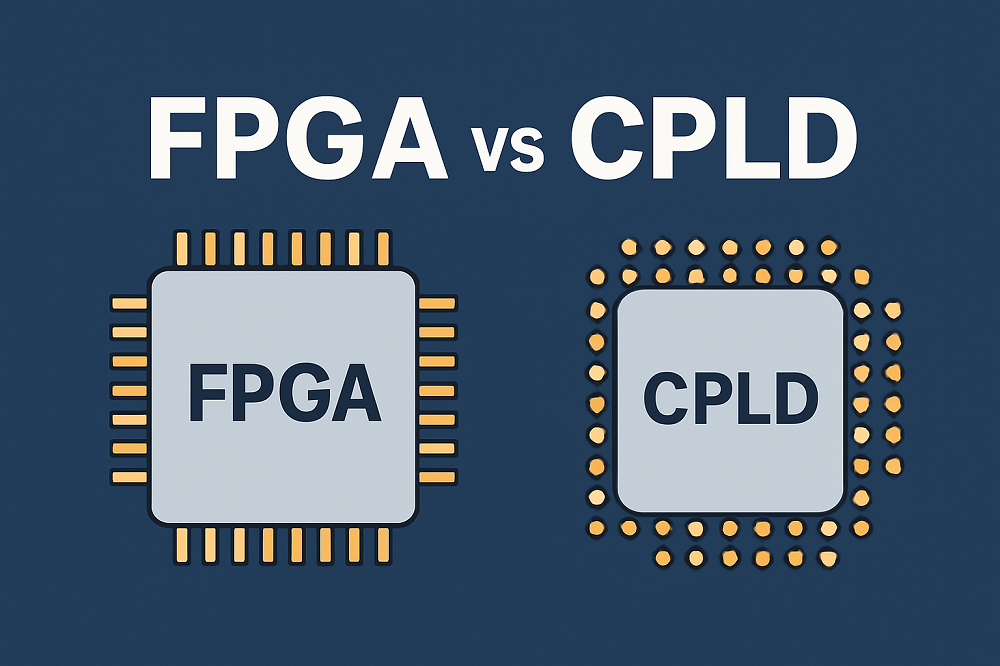
Introduction & Technical Background:Investigating the intriguing domains of FPGA (Field-Programmable Gate Array) and microcontrollers demonstrates the critical roles these two technologies play in embedded systems and digital design. By programming FPGAs at the hardware level, users can design unique digital circuits using these incredibly adaptable integrated circuits. Because of their great flexibility, they are perfect for complicated applications that need to be reconfigurable and prototyped quickly. Microcontrollers, on the other hand, are small integrated circuits that house a CPU core, memory, and several peripherals on a single chip. They offer an affordable option for simple to moderately complicated applications and are built for specialized needs. A microcontroller is a small integrated circuit that is used in embedded systems to control particular functions. Integrated circuits known as Field Programmable Gate Arrays (FPGAs) are frequently offered off-the-shelf. The reason they are called "field-programmable" is because they enable users to modify the hardware after it has been manufactured to satisfy certain use case specifications. FPGAs are "field-programmable," meaning that users can program the hardware after it is manufactured, whereas microcontrollers can only be more loosely customized. Microcontrollers:"Microcontrollers (MCU) are used in embedded systems to perform a certain task, handle communication, and control other hardware components." ( Pervasive Cardiovascular and Respiratory Monitoring Devices, 2023). To manage a single function in a device, a microcontroller is integrated into a system. It accomplishes this by using its core CPU to evaluate data that it gets from its I/O peripherals. In the home and workplace, building automation, manufacturing, robotics, automotive, lighting, smart energy, industrial automation, communications, and Internet of Things (IoT) deployments are just a few of the industries and applications that use microcontrollers. FPGAs"An FPGA is, as the name implies, a component comprising a large number of logic gates and other functional parts connected by a network, the connectivity of which can be determined by “programming” the device." (High-Performance Computing, 2018). The majority of FPGAs are programmed using an SRAM-based methodology. These FPGAs require external boot devices, but they can be programmed and reprogrammed in-system. Digital signal processing, biomedical instrumentation, device controllers, software-defined radio, random logic, medical imaging, computer hardware emulation, voice recognition, cryptography, filtering and communication encoding, and more are some of the specific applications that make use of an FPGA. Comparison between Microcontrollers and FPGAs:Power Consumption:In comparison and contrast, FPGAs are less efficient than parts like ASICs (Application Specific Integrated Circuits). When logic utilization drops due to reprogramming an FPGA, inefficiency also results. Similarly, more power is consumed when transistors are not in use. Microcontrollers are slower than FPGAs, though. The degree of customization and complexity that separates an FPGA from a microcontroller is the primary distinction. Their cost and level of usability also differ. In essence, an FPGA enables more intricate operations, higher levels of customization, and hardware modifications that can be made in the past. Because of their massive number of programmable parts and parallel architecture, FPGAs typically use more power than microcontrollers. An FPGA's power consumption is influenced by several variables, including the quantity of active logic parts, the interconnect switching frequency, and the I/O activity. Processing Speed:A microcontroller's typical processing speed falls between MHz to 50 MHz. While on the other hand, clock rates for FPGAs typically range from 100 MHz to 200 MHz. Compared to a CPU, which can readily operate at 3 GHz or higher, these rates are far lower. Flexibility & Programmability:When deciding between FPGAs and microcontrollers, the desired application's needs for customization and flexibility must be taken into account. An FPGA might be a preferable option if the application calls for a high level of hardware customization and flexibility. A microcontroller, however, would be more appropriate if the application could profit from the software-based customization and integrated peripherals that microcontrollers provide. It is crucial to take the target application's complexity and development time into account while deciding between FPGAs and microcontrollers. An FPGA can be a preferable option if the application calls for a high level of hardware customization and the development team has the required FPGA development experience. A microcontroller might be a better option, though, if the application can take advantage of the simpler and quicker development process that microcontrollers provide and the development team has more software development experience. The decision between FPGAs and microcontrollers can also be influenced by development time and complexity. A microcontroller can be a better option because of its easier and quicker development process if the development team has more experience with software development and high-level programming languages. On the other hand, an FPGA can be a preferable option if the team has experience with FPGA development and the application requires a high level of hardware customization. Through meticulous examination of the specifications and comparative analysis of various technologies, designers can make well-informed choices that optimize performance, power efficiency, flexibility, and development time, all while meeting the demands of their intended application. It is crucial to assess the unique needs of the intended application and balance the benefits and drawbacks of each technology when evaluating cost-related issues. An FPGA might be a preferable option if the application requires high-performance parallel processing and can afford the higher initial price of FPGAs. A microcontroller might be more appropriate, though, if the application can profit from the cheaper initial costs and easier development process that microcontrollers provide. Application FieldsMicrocontrollers are utilized in automatically operated items and gadgets, including power tools, toys, office equipment, appliances, implanted medical devices, remote controls, car engine control systems, and other embedded systems. Small, inexpensive, programmable microcontrollers are used to regulate the operation and behavior of a wide range of consumer electronics devices. They can communicate with sensors, buttons, LEDs, displays, motors, and other parts since they are integrated into circuits. Numerous characteristics of microcontrollers make them suited for use in embedded systems, including: Because every required peripheral is housed on a single integrated circuit chip, they are self-contained. They are intended to execute one specific application.FPGAs are perfect for applications like data analytics, machine learning, and scientific simulations because they can be programmed to create specialized hardware circuits that can execute certain algorithms far quicker than CPUs and GPUs. Because of their ability to make use of both temporal and spatial parallelism, FPGAs are frequently employed as implementation platforms for real-time image processing applications. FPGAs are advantageous in excellent-performance Computing applications because of their excellent energy efficiency, low latency, and parallel processing capabilities. They have been applied to several High-Performance Computing use cases, including data compression, cryptography, and machine learning. ConclusionIn conclusion, diverse applications can benefit from the distinct benefits and challenges that FPGAs and microcontrollers offer. Microcontrollers have a simpler development process and use less power than FPGAs, but FPGAs are better at parallel processing workloads and allow a great degree of hardware customization. It is crucial to take into account aspects like cost, development time, performance, power consumption, adaptability, and the particular needs of the intended application while deciding between various technologies. Through meticulous assessment of these variables and comprehensive consideration of the benefits and drawbacks of each technology, designers are better equipped to make options that best suit their projects' requirements, maximizing flexibility, power efficiency, performance, and development time.
Allen On 2023-12-29   81
IC Chips

Comprehensive Guide to the Types of Integrated Circuits

Integrated circuits (ICs) are the fundamental components of modern electronics. They are vital in manufacturing various systems and gadgets, including computers, smartphones, industrial machinery, and medical equipment. Indeed, integrated circuits are electronic components with small sizes and are composed of several parts and functions on a single semiconductor substrate, like silicon.Integrated circuits have various forms, each designed to meet particular needs and applications. Over time, these integrated circuits have developed into increasingly complex, powerful, and adaptable devices. Integrated circuits can be categorized according to several factors, such as their fabrication technology, functionality, and complexity. This article will explain the integrated circuit, its significant types, and the development trends of integrated circuits. What is an Integrated Circuit?An integrated circuit is just like a semiconductor wafer that has thousands or millions of small resistors, capacitors, transistors, and diodes. There are multiple examples of integrated circuits, which are computer memory, counter, oscillator, computer memory, logic gate, timer, processor, and microcontroller. An IC has become the fundamental building element for all modern electric devices. It is an integrated system that contains several miniaturized and interconnected components embedded in a thin silicon chip. An integrated circuit is developed by connecting a vast number of tiny MOSFETs (Metal-Oxide-Semiconductor Field-Effect Transistors) that are crammed onto a tiny chip. Compared to discrete circuits constructed with discrete electronic components, this results in circuits that are substantially faster, smaller, and less expensive.Since ICs can be produced in large quantities and use building blocks for integrated circuit design, the electronics industry has rushed to incorporate standardized ICs into designs that use discrete transistors. ICs are superior to discrete circuits in two crucial ways: cost and performance.Performance is much higher in ICs than in discrete counterparts because the components inside an IC have quicker switch times and use less power due to their proximity and compact size. ICs are highly inexpensive because they are generated by photolithography as a single unit instead of one transistor at a time. Less material is used when you compare packaged circuits to discrete circuits.Integrated circuits constantly evolve due to technological advancements, providing better functionality, lower power consumption, and higher performance. To fully utilize these potent components in their applications, engineers, designers, and enthusiasts must have a thorough understanding of the various types of integrated circuits.However, a significant drawback of integrated circuits is their high design cost and photolithography mask creation. Because of this, ICs can only be profitable when large manufacturing volumes are anticipated, enabling profit margins to justify them.Introduction to All Types of Integrated CircuitsThere are several types of integrated circuits (ICs), each designed especially for a specific use or application. ICs are categorized according to several factors, such as their fabrication technology, functionality, and complexity. Understanding the different types of integrated circuits is essential for engineers, designers, and enthusiasts, as it allows them to select the right ICs for their applications. This guide will discuss the multiple types of integrated circuits.Continuous electrical signals are intended to operate with analog integrated circuits. They are crucial in processing and manipulating analog data from the real world, including sensor signals, audio, and video. These chips can convert analog signals to digital, filtering and amplifying. Analog-to-digital converters (ADCs), voltage regulators, and operational amplifiers (op-amps) are examples of analog integrated circuits.Unlike analog ICs, digital ICs handle discrete digital signals and usually operate at two logic levels: 0 and 1. They are the fundamental digital electronics components of data processing, memory storage, and logical operations. Digital integrated circuits (ICs) include microcontrollers, microprocessors, and memory chips like RAM and flash memory.These circuits serve as a link between the analog and digital realms, combining analog and digital components. They play a role in applications that require processing and interfacing with both types of signals. You can commonly find mixed-signal ICs in telecommunications, audio processing, and sensor interfaces, as they enable converting real-world analog data into form and vice versa.RFICs are designed for high-frequency operations, making them ideal for communication devices such as cell phones, Wi-Fi routers, and satellite communication systems. These ICs excel at handling signals at radio frequencies to transmit and receive information effectively.Microprocessor CircuitsThe most complex integrated circuits are microprocessors. They contain billions of transistors that can be arranged to form countless distinct virtual circuits. Furthermore, every circuit possesses a distinct set of sound judgment qualities. These synchronized circuits, for good judgment, comprise the entirety of a microprocessor. The central processing unit (CPU) of a computer is frequently a microprocessor.             Similar to a marching band, the circuits use the bandmaster's guidance to execute their good judgment on the course best. The bandmaster is enclosed in a microchip and tries to communicate. It refers to the clock as well. The clock represents the ability to move quickly between states of sound judgment. Every time the clock changes states, each of the microprocessor's good judgment circuits does a certain task. Relying on the speed of the microprocessor allows calculations to be completed quickly.Data is stored in a few circuits called registers, which comprise a microprocessor. Every processor features a multitude of distinct register styles. Preprogrammed commands are kept in permanent registers. The output of operations on integers is saved in temporary registers.Digital Sign ProcessorsAn analog waveform that can be electrically recorded in any situation is a sign. An analog waveform quickly altered into a binary integer sequence is called a virtual sign. A virtual sign processor (DSP) processes indicators digitally as streams of 1s and 0s, as the name suggests. An analog-to-virtual converter also called an A-to-D or A/D converter, can convert a speech recording into virtual 1s and 0s.Following that, the virtual voice can be altered through complex mathematical calculations and a DSP. The circuit's DSP rules can be configured to digitally eliminate background noise from the waveform and identify the spaces between spoken words as history noise.Lastly, a D/A converter can transform the processed signal back into an analog signal for listening. Digital processing can filter history noise so fast that there is no discernible delay, and the sign appears to be heard in "real time."Memory CircuitsGenerally speaking, microprocessors should be able to store more statistics than some registers can hold. Massive memory circuits receive this excess of records. Dense arrays of parallel circuits that use voltage states to store records make up memory. The microprocessor's temporary library of programs or instructions is also kept in memory.To provide functionality without requiring additional space, manufacturers always try to reduce the size of memory circuits. Moreover, smaller additives are usually less expensive to produce, operate more effectively, and require less electricity.Application-specific Integrated CircuitsAn analog or digital application-specific integrated circuit (ASIC) performs only one task and cannot be reconfigured. For instance, an RC car's speed controller integrated circuit is hardwired to perform a single function and is never intended to evolve into a microprocessor. An application-specific integrated circuit is not capable of responding to alternative commands.Efficiency plays a role in electronic devices. Power management integrated circuits (ICs) are responsible for controlling and distributing power in systems, ensuring power usage and stable voltage supply. These ICs are commonly found in battery-powered devices like smartphones and laptops, power supplies, and voltage regulation circuits.A virtual circuit accepts the best voltages of specific values. A binary circuit employs optimal states. In this circuit configuration, the binary numbers "on" and "off" represent 1 and 0, respectively. It also makes use of the good judgment of Boolean algebra. (Boolean algebra is also used to perform binary quantity device arithmetic.) These fundamental elements work with the IC layout to enable virtual computer systems and gadgets to perform the desired operations.Development Trends of Integrated CircuitsLet's discuss the emerging trends of Integrated circuits in detail.High IntegrationWith the trend of thin and short electronic devices, consumers now expect products to be lighter, smaller, and packed with features. Manufacturers of consumer electronics have raised the bar for portable mobile devices' power management systems to serve consumers' needs better. Combining several features into a single power management chip can reduce the number of external devices, enhance the system's long-term reliability, decrease solution size, and boost profit margin.High Efficiency and Low Power ConsumptionAs the consumer electronics industry continues to grow, customers are now demanding the best products that have performance and longer battery life. That is why manufacturers maintain low power consumption by improving continuous device performance. Indeed, low-power and high-performance power management chip products are anticipated to be preferred by the market. Low-power power supply design is also becoming a critical technology impacting electronic system design.AI and Machine Learning HardwareSpecialized integrated circuits (ICs) are generated specifically for machine learning and artificial intelligence (AI). Hardware specifically made to speed up AI workloads includes tensor processing units (TPUs) and graphics processing units (GPUs). The development of image recognition, natural language processing, autonomous vehicles, and many other AI-driven technologies depends on these AI-focused integrated circuits. There will likely be an increase in demand for specialized hardware as AI spreads in various industries.More and more integrated circuits (ICs) are programmable and customizable, allowing hardware designers to customize components for particular uses. For example, field-programmable gate arrays (FPGAs) have various applications since they enable logic gate reconfiguration after manufacturing. Another example of a customized integrated circuit (IC) that balances performance and power efficiency is the application-specific integrated circuit (ASIC). These programmability and customization trends allow engineers to tailor their designs to meet specific requirements.Development trends in integrated circuits align with sustainability objectives as people's awareness of how electronics affect the environment grows. This entails using fewer dangerous materials, increasing energy economy, and designing integrated circuits (ICs) for recycling and appropriate disposal. In short, optimizing the end-of-life disposal process for electronic components is becoming a priority, and green IC design practices, like using lead-free and RoHS-compliant materials, have become common.Packaging technologies have advanced to meet the demands for smaller form factors, better thermal management, and enhanced signal integrity as integrated circuits (ICs) become more complex and functional. Indeed, chiplet-based architectures, wafer-level packaging, and three-dimensional stacking are advanced packaging options that give IC designers new ways to tackle the increasing complexity of contemporary electronic systems. Therefore, by minimizing the distances between chip components, these packaging techniques improve performance and reduce energy consumption.The need for reliable and secure ICs is more significant than ever as technology increasingly integrates into our daily lives. Hardware security features such as tamper resistance, secure boot processes, and hardware-based encryption are all included in this trend. Furthermore, supply chain security—ensuring that integrated circuits (ICs) are not compromised during their manufacturing and distribution processes—is becoming increasingly important. This is especially crucial in defense applications and critical infrastructure.ConclusionIn summary, integrated circuits (ICs) are the building blocks of modern electronics, driving innovation and establishing a world of ever-expanding digital technology. We've talked about different types of integrated circuits that can be extremely important in the digital world. These integrated circuits have developed over time, becoming more effective and energy-efficient while also adjusting to the particular requirements of various technologies.Furthermore, integrated circuit development trends are constantly changing to satisfy the ever-increasing demands of the digital era. ICs continue to be at the forefront of technological advancement, whether it is through their pursuit of energy efficiency, security, or specialized hardware for emerging technologies. To effectively navigate the complex landscape of integrated circuit design and production, industry leaders need to stay up to date on these trends.
Kynix On 2023-11-06   348
IC Chips

New Applications and Innovations in Integrated Circuits and Electronic Components

1: IntroductionElectronics and communication technology serves as the foundation of modern civilization. The industrial revolution that shaped the 21st century would not have been possible without the advent of modern electronics. Internet, smart phones, computers, satellites, and all such revolutionary technologies are off-shoots of electronics and communication technology. In this article, we will discuss the latest applications and innovations in electronics components industry.1.1: Overview of Integrated Circuits and Electronics ComponentsIntegrated circuits (ICs) also known as chips or microchips, are tiny electronic circuits etched on a small piece of semiconductor material. Modern ICs can house billions of transistors and other electronic components. Due to incredibly high-speed, small size, and efficiency, the IC technology has transformed the entire landscape of modern electronics and computing industry.Before the invention of ICs, electronic circuits were created using discrete components that greatly limited their size, performance, complexity, and efficiency. Since, the invention of ICs, the graph of innovation in electronics and computing industry has sky-rocketed. Microprocessors, memory chips, microcontrollers, and ASICs are all examples of modern ICs.Despite the revolution brought forth by ICs, discrete components still have their applications and are widely used in modern electronic circuits. Examples of discrete electronic components include resistors, capacitors, coils, diodes, transistors, and sensors. Most modern electronic circuits use a combination of integrated and discrete components to achieve optimal performance, low power consumption, and high cost-efficacy.1.2: Significance of Innovations in the IndustryIn the face of changing requirements and emerging challenges, electronics industry is constantly striving for new and innovative solutions. This innovation is the primary driving force behind the technological and industrial progress. Some of the salient advantages of innovations in electronic components industry include: enhanced computing power, reduced form factor, improved energy efficiency, advanced connectivity, and integration with latest AI technologies. Each new invention and improvement opens up doors for new business opportunities, research, and consumer satisfaction.2: AI Chips and Intelligent Computing2.1: Understanding AI Chips and Their ArchitectureArtificial intelligence is an emerging technology that has far-reaching implications for all sectors and industries. AI systems require massive computing power and therefore, the need for specialized electronic hardware for AI applications exists. AI processors or accelerators are specialized ICs that are designed to handle complex AI algorithms and calculations. These chips utilize parallel processing and matrix multiplication functions to provide necessary computing power for AI applications.2.2: Advancements in AI Chips for Deep Learning and Neural NetworksApart from artificial intelligence, AI chips are also playing a crucial role in advanced computing technologies like neural networks, fuzzy logic, machine learning, and big data analytics. Due their enhanced computing power, these chips are able to process large data sets in a short span of time. The advancements in AI chip architecture such as systolic arrays and tensor processing units (TPUs) have further enhanced the accuracy and speed of AI algorithms.2.3: AI Chips in Edge Devices and IoT ApplicationsOne of the most impactful applications of AI chips is their integration with edge computing devices and IoT nodes. By bringing the AI processing closer to the data source, latency is minimized and need for cloud computing is reduced. These benefits make AI chips excellent for IoT applications requiring real-time processing and low power consumption.3: 5G Technology and RF Components3.1: The Role of Integrated Circuits in 5G Technology5G is the next big thing in the mobile communications and internet industry. With its ultra-fast speed, extremely low latency, and high bandwidth, 5G is set to revolutionize the digital and online world. 5G technology aims to provide the network infrastructure for the smart cities and smart factories of the future. These advanced 5G-enabled technologies will provide unprecedented levels of automation, efficiency, and productivity.5G technologyLike all other digital technologies, 5G communication also depends on the advancement in ICs and electronics components. Advanced ICs designed for high-frequency and high-speed applications will play a crucial role in handling the complex modulation schemes, MIMO antenna arrays, and massive data traffic of the future 5G networks.3.2: Advancements in RF (Radio Frequency) Components for 5GCommunication in all mobile networks including 5G takes place through the transmission and reception of radio frequency (RF) signals. Therefore, advanced RF components and ICs are required for the implementation of 5G hardware. Examples of 5G RF devices include power amplifiers, low-noise amplifiers, filters, mixers, and multiplexers. Without the development of advanced RF ICs and components, the roll-out of 5G networks would not have been possible.3.3: Applications of 5G Integrated Circuits in Smart Cities and IoTIoT devices are already transforming the industries, offices, and homes with advanced automation features. One of the most ambitious use-cases of IoT is the creation of smart cities. 5G and IoT are two of the most important technologies for the creation of smart cities. When the high-speed of 5G networks and remote control/monitoring capabilities of IoT are combined, innovative solutions can be created for traffic system, public transportation, energy distribution, water management and surveillance.4: ICs for Power Electronics and Electric VehiclesWith the rising awareness of global warming and climate change, the focus of masses is shifting towards green technologies. The widespread popularity of electric vehicles (EVs) is a living proof of this trend. However, the mass production of electric vehicles would never have been possible without the advancements in power electronic components and ICs.4.1: Power Electronics for EV Propulsion SystemsElectric vehicles incorporate electric motors for propulsion instead of internal combustion engines. The control of these motors is achieved through advanced ICs designed for efficient power conversion, smart motor control, and energy management. Existing semiconductor materials prove to be insufficient for EV applications. Therefore, new and more efficient semiconductor materials are utilized for EV applications including Silicon Carbide (SiC) and Gallium Nitride (GaN). These advanced materials offer the advantages of higher efficiency, lower losses, and enhanced power density that lead to increased driving range and reduced charging times.4.2: On-Board Charging SystemsAdvanced ICs and power electronic components have significantly improved the on-board charging systems of EVs. Smart charge controllers and power management ICs enable quick and safe charging of EVs. With the advent of advanced semiconductor materials and power electronic components, new use-cases are emerging for EVs including vehicle-to-grid (V2G) integration. Wireless charging technologies also have a promising future in regards to EVs.4.3: Battery Management SystemBatteries play a crucial role in EVs as they serve as the main power source for driving the propulsion motor. Efficient and safe management of batteries has a direct impact on driver’s safety and vehicle’s range. The battery management system of an EV is a sophisticated electronic control system that monitors, balances, and protects the battery pack. Advanced IC and electronic components on the BMS allow for accurate cell voltage monitoring, state-of-charge estimation, and temperature management. BMS is a hot area of research and latest innovations in this domain include multi-cell integrated solutions and predictive algorithms.5: ConclusionInnovations in electronic components and ICs are the driving force behind all the modern technological progress. Modern electronic circuits are a combination of ICs and discrete electronic components. The advances in the IC and electronic components technology have revolutionized all areas of life including artificial intelligence, 5G networks, and electric vehicles. These new technologies require fast processing speed, low latency, low power consumption, and high efficiency. Therefore, new ICs and electronic components are being developed for these applications. In this article, we have discussed the applications and innovations in ICs and electronic components industry, for the creation of novel solutions for AI, IoT, 5G, and EV industries.
Kynix On 2023-08-01   167

Kynix

Kynix was founded in 2008, specializing in the electronic components distribution business. We adhere to honesty and ethics as our business philosophy and have gradually established an excellent reputation and credibility in our international business. With the accurate quotation, excellent credit, reasonable price, reliable quality, fast delivery, and authentic service, we have won the praise of the majority of customers.

Follow us

Join our mailing list!

Be the first to know about new products, special offers, and more.

Kynix

  • How to purchase

  • Order
  • Search & Inquiry
  • Shipping & Tracking
  • Payment Methods
  • Contact Us

  • Tel: 00852-6915 1330
  • Email: info@kynix.com
  • Follow Us

authentication

Kynix

© 2008-2026 kynix.com all rights reserve.