The Kynix Blog
Stay Ahead with Expert Electronics Insights,
Industry Trends, and Innovative Tips
- Electronic Components
- News Room
- General electronic semiconductor
- Components Guide
- Sort by
- Robots
- Transmitters
- Capacitors
- IC Chips
- PCBs
- Connectors
- Amplifiers
- Memory
- LED
- Diodes
- Transistors
- Battery
- Oscillators
- Resistors
- Transceiver
- RFID
- FPGA
- Mosfets
- Sensor
- Motors, Solenoids, Driver Boards/Modules
- Relays
- Optoelectronics
- Power
- Transformer
- Fuse
- Thyristor
- potentiometer
- Development Boards
- RF/IF
- Semiconductor Information
- PCB
- transistor
Access to clean, safe water is one of the world’s pressing needs, yet today’s water distribution systems lose an average of 20 percent of their supply because of leaks. These leaks not only make shortages worse but also can cause serious structural damage to buildings and roads by undermining foundations, which is a great loss.Many property losses experienced by business owners involve water damage caused by leaky pipes. Water can be very destructive whether it seeps from a loose fitting or gushes from a ruptured main.Unfortunately, leak detection systems are expensive and slow to operate — and they don’t work well in systems that use wood, clay, or plastic pipes, which account for the majority of systems in the developing world. Now, a new system developed by researchers at MIT could provide a fast, inexpensive solution that can find even tiny leaks with pinpoint precision, no matter what the pipes are made of. The system, which has been under development and testing for nine years by professor of mechanical engineering Kamal Youcef-Toumi, graduate student You Wu, and two others, will be described in detail at the upcoming IEEE/RSJ International Conference on Intelligent Robots and Systems (IROS) in September. Meanwhile, the team is carrying out tests this summer on 12-inch concrete water-distribution pipes under the city of Monterrey, Mexico. The system uses a small, rubbery robotic device that looks something like an oversized badminton birdie. The device can be inserted into the water system through any fire hydrant. It then moves passively with the flow, logging its position as it goes. It detects even small variations in pressure by sensing the pull at the edges of its soft rubber skirt, which fills the diameter of of the pipe.(The fast, inexpensive robotic device that developed by engineers from MIT can find even tiny leaks in pipes with pinpoint precision, no matter what the pipes are made of.)This device contains two parts: "skirt" sensor and soft body drone. It is then retrieved using a net through another hydrant, and its data is uploaded. No digging is required, and there is no need for any interruption of the water service. In addition to the passive device that is pushed by the water flow, the team also produced an active version that can control its motion.Monterrey itself has a strong incentive to take part in this study, since it loses an estimated 40 percent of its water supply to leaks every year, costing the city about $80 million in lost revenue. Leaks can also lead to contamination of the water supply when polluted water backs up into the distribution pipes. The MIT team, called PipeGuard, intends to commercialize its robotic detection system to help alleviate such losses. In Saudi Arabia, where most drinking water is provided through expensive desalination plants, some 33 percent is lost through leakage. That’s why that desert nation’s King Fahd University of Petroleum and Minerals has sponsored and collaborated on much of the MIT team’s work, including successful field tests there earlier this year that resulted in some further design improvements to the system, Youcef-Toumi says. DKNY CEO Caroline Brown, said “PipeGuard has created a simple, pragmatic and elegant solution to a complex problem. … This robot is a great example of utilizing smart design to simplify complexity and maximize efficiency.”
kynix On 2017-09-21
Modern life will be almost unthinkable without transistors. They are the ubiquitous building blocks of all electronic devices: each computer chip contains billions of them. However, as the chips become smaller and smaller, the current 3D field-electronic transistors (FETs) are reaching their efficiency limit. A research team at the Center for Artificial Low Dimensional Electronic Systems, within the Institute for Basic Science (IBS), has developed the first 2D electronic circuit (FET) made of a single material. Published on Nature Nanotechnology, this study shows a new method to make metal and semiconductor from the same material in order to manifacture 2D FETs. Faster electronic device architectures are in the offing with the unveiling of the world’s first fully two-dimensional field-effect transistor (FET) by researchers with Lawrence Berkeley National Laboratory (Berkeley Lab). Unlike conventional FETs made from silicon, these 2D FETs suffer no performance drop-off under high voltages and provide high electron mobility, even when scaled to a monolayer in thickness.(Berkeley Lab researchers fabricated the first fully 2D field-effect transistor from layers of molybdenum disulfide, hexagonal boron nitride and graphene held together by van der Waals bonding.) Ali Javey, a faculty scientist in Berkeley Lab’s Materials Sciences Division and a UC Berkeley professor of electrical engineering and computer science, led this research in which 2D heterostructures were fabricated from layers of a transition metal dichalcogenide, hexagonal boron nitride and graphene stacked via van der Waals interactions. In simple terms, FETs can be thought as high-speed switches, composed of two metal electrodes and a semiconducting channel in between. Electrons (or holes) move from the source electrode to the drain electrode, flowing through the channel. While 3D FETs have been scaled down to nanoscale dimensions successfully, their physical limitations are starting to emerge. Short semiconductor channel lengths lead to a decrease in performance: some electrons (or holes) are able to flow between the electrodes even when they should not, causing heat and efficiency reduction. To overcome this performance degradation, transistor channels have to be made with nanometer-scale thin materials. However, even thin 3D materials are not good enough, as unpaired electrons, part of the so-called "dangling bonds" at the surface interfere with the flowing electrons, leading to scattering. FETs, so-called because an electrical signal sent through one electrode creates an electrical current throughout the device, are one of the pillars of the electronics industry, ubiquitous to computers, cell phones, tablets, pads and virtually every other widely used electronic device. All FETs are comprised of gate, source and drain electrodes connected by a channel through which a charge-carrier – either electrons or holes – flow. Mismatches between the crystal structure and atomic lattices of these individual components result in rough surfaces – often with dangling chemical bonds – that degrade charge-carrier mobility, especially at high electrical fields. Passing from thin 3D FETs to 2D FETs can overcome these problems and bring in new attractive properties. "FETs made from 2D semiconductors are free from short-channel effects because all electrons are confined in naturally atomically thin channels, free of dangling bonds at the surface," explains Ji Ho Sung, first author of the study. Moreover, single- and few-layer form of layered 2D materials have a wide range of electrical and tunable optical properties, atomic-scale thickness, mechanical flexibility and large bandgaps (1~2 eV). Researchers produced the first 2D field-effect transistor (FET) made of a single materialThe major issue for 2D FET transistors is the existence of a large contact resistance at the interface between the 2D semiconductor and any bulk metal. To address this, the team devised a new technique to produce 2D transistors with semiconductor and metal made of the same chemical compound, molybdenum telluride (MoTe2). It is a polymorphic material, meaning that it can be used both as metal and as semiconductor. Contact resistance at the interface between the semiconductor and metallic MoTe2 is shown to be very low. Barrier height was lowered by a factor of 7, from 150meV to 22meV. IBS scientists used the chemical vapor deposition (CVD) technique to build high quality metallic or semiconducting MoTe2 crystals. The polymorphism is controlled by the temperature inside a hot-walled quartz-tube furnace filled with NaCl vapor: 710°C to obtain metal and 670°C for a semiconductor. The scientists also manufactured larger scale structures using stripes of tungsten diselenide (WSe2) alternated with tungsten ditelluride (WTe2). They first created a thin layer of semiconducting WSe2 with chemical vapor deposition, then scraped out some stripes and grew metallic WTe2 on its place. It is anticipated that in the future, it would be possible to realize an even smaller contact resistance, reaching the theoretical quantum limit, which is regarded as a major issue in the study of 2D materials, including graphene and other transition metal dichalcogenide materials. Ref.FDMT800120DCSTP160N3LL
kynix On 2017-09-20
(2017 Korea Electronic Show) From October 17th to 20th, the Korea Electronic Show(KES) will be held in Seoul,Korea. As an exhibitor of the exhibiton, Kynix Semiconductor sincerely invites you to visit this exhibition. It is believed that you can have a better understanding of our company and we can form a stabler partnership.Following are some information about the Korea Electronic Show(KES). OverviewKorea Electronics Show (KES) has always been walking along with the 51 years history of the Korean electronic industry and the most important threshold to the international markets.Having strong connections especially with Asian Pacific IT shows in Japan, Hong Kong, Taiwan, and China, the buyers from North America, Europe, and Middle East tend to schedule every October as an Asian IT show pilgrimage. Exhibit areas:Electronics Parts & Materials; 3D Convergence & 3D Printing; Software & Mobile Apps; IT ConvergenceTheme:Where the Creative Things are!Venue: COEX Hall A, Hall B,World Trade Center Seoul,Seoul, South KoreaScale:1,500 booths representing 500 companies (including 100 overseas)Visitors:70,000(4,000 foreign)Date:October 17(Tue.)-20(Fri.),2017Well-known Exhibitors:UNION SEIMITSU CO., LTD.;SILICONE VALLEY CO., LTD.;SANYO DENKI (THAILAND) CO.,LTD.;MORNSUN.etcGlobal Partners:CEAC, CCPIT, CECC, HQEW(China), TEEMA(Taiwan), JESA, JMA(Japan), HKTDC(Hong Kong), AEECC(Asia Electronics Exhibition Cooperate Conference), Messe Berlin(Germany), CEA(U.S.A), RATEK(Russia), CMAI, TEMA(India), VEIA(Vietnam)Our Booth Number:E450 Floor Plan About Kynix Kynix Semiconductor has founded for 10 years since 2008. These 10 years have witnessed our company's trials of becoming a better and better distributor and supplier in electronic components industry. In 2009, our company established the International Sales Department and became members of TBF and HKInventory. In 2010, we established cooperative relationships with accredited testing organizations like CECCLab, White Horse Lab, AAA...In 2013, we established a strategic partnership with dozens of well-known electronic components manufacturers including TI.In 2015,we reached an electronic components supply strategic partnership with Foxconn.Also ,our B2B trading platform was launched officially,whose members have exceeded 15,000 in 2017. Recently, our partners in electronics field have increased to 700. Our Advantages 1. Strong operation system2. Good warehouse management3. Cooperation with advanced international testing companies4. Cooperation with international high standard logistics companies like UPS, DHL, TNT, FedEx5. Competitive supply from SumSung / Micron / BroadCom / Freescale / Atmel / Cypress and etc... After-sales ServicesGurantee1.Each product from Kynix has been given a warranty period of 1 YEAR .During this period , we could provide free technical maintenance if there are any problems about our products.2.If you find quality problems about our products after receiving them , you could test them and apply for unconditional refund if it can be proved.But it's just on this premise that the product is not used and the packing is not damaged . Commitment to QualityKynix has always been laying emphasis on the quality of its products and maintaining a sound cooperative relation with electronic components manufacturers since its founding. It has been conducting quality-monitoring system following the rigid rules in terms of the quality of the product, delivery, and it's after-sales service. It is claimed by Kynix that all products sold are 100% authentic. Each product has been tested carefully before being sent to the customer. It is our aim to be responsible for our customers and make them satisfactory. ContactIf you have any questions, please contact us through our emails! Hope the exhibition finishes perfectly! We will be there and waiting for your coming!
kynix On 2017-09-19
A New Breakthrough in Battery Technology The breakthrough comes from a team of engineers led by John Goodenough, the co-inventor of the lithium-ion battery. A new discovery has come out which could pave the way for batteries to last more, and it won’t explode. The breakthrough comes from a team of engineers led by John Goodenough, the co-inventor of the lithium-ion battery which is used to power everything from smartphones to electric cars. Led by John Goodenough and a team of engineers, the co-inventor of lithium-ion battery has made this breakthrough. The research was published in Energy and Environmental Science in December and publicized by the University of Texas last week. The research states that in the future a “solid-state” battery design could potentially hold up to three times more energy and charge faster than today’s batteries. The solid-state battery is still in the early stages of development and swaps out one of the essential parts of today’s lithium design—liquid electrolytes—for glass components. The glass electrolytes can store more energy and are much more stable since they prevent the formation of dendrites—metallic projections which grow through liquid electrolyte layers and cause short circuits and explosions. The researchers have stated that the glass electrolytes will allow them to exchange lithium for sodium, which would be cheaper and more eco-friendly option since it can be extracted from seawater. This means the batteries would not just be economical as well, but the will be more powerful than the current batteries we have today. The solid-state batteries can also work in extreme conditions, down to -4 degrees Fahrenheit. This could be a massive breakthrough for car batteries, which obviously have to work through extreme weather. This breakthrough sounds exciting—but it could still be a long way from coming to modern age smartphones. This was just preliminary research, similar to other solid state designs we have seen in the past, so there’s no timetable for when the batteries might actually be applied for practical use, if ever.As super battery started to be used in the works, lithium-ion may be history. Super battery with supercapacitors“Super” is a popular adjective when it comes to energy storage. Supercapacitors even have it in their name. Now they supposedly make it possible to charge smartphones in seconds and power them for a week. Super! Supercapacitors are already being used in plenty of everyday things as replacements for or supplements to batteries. They power the rear lights on our bicycles when we stop, fill in for interruption-free power supplies in the event of an emergency, prevent data loss in static memories (SRAMs) and provide a brief horsepower boost and save gasoline in racecars by accumulating recovered braking energy. Unlike lithium-ion batteries, they can release and absorb a great deal of energy in a short period of time—hundreds of thousands of times with deep discharging and high currents. However, the storable charge quantity is low. That is why they are still too large and too expensive to be used in smartphone or tablets. The reason that rechargeable batteries and supercapacitors, which are also known as ultra- or double-layer capacitors, have opposing characteristics is the way they store a charge. While this happens in “sluggish” chemical processes such as oxidation, reduction and the storage of molecules or ions in batteries, when it comes to supercapacitors, it generally happens through “swift” charge separation, which is gentle on the electrodes. Ref.KY605-NH50BP-2KY605-BP33-12S-B7
kynix On 2017-09-18
(Researchers have developed an algorithm that allows residential customers to share power from the renewable energy sources in their homes during an outage.) If you think you can use the solar panels on your roof to power your home during an outage, think again. During an outage, while your home remains connected to the grid, the devices that manage your solar panels are powered down for safety reasons. In other words, this permanent connection to the grid makes it impossible for homeowners to draw on power generated by their own renewable energy resources. A team of engineers at the University of California San Diego wants to change this. They have developed algorithms that would allow homes to use and share power from their renewable energy sources during outages by strategically disconnecting these devices, called solar inverters, from the grid. The algorithms work with existing technology and would improve systems' reliability by 25 to 35 percent. Researchers detail the algorithms and their applications in a paper they presented at the American Control Conference in Seattle, Wash. "We were inspired to start investigating a way to use renewable power during outages after Hurricane Sandy affected eight million people on the East Coast and left some without power for up to two weeks," said Abdulelah H. Habib, a Ph.D. candidate in mechanical engineering at UC San Diego and the paper's first author. Our Society is Dependent upon ElectricityJust a few hours without power can cause massive losses to both product and revenue.We rely on electricity much more than we realize. Even if you live "off the grid," as I did for years, you are still living in a world and a society that is deeply dependent upon electricity. If the power is out for a few hours, we have all experienced that; of course you'll be fine. Maybe you will be a little bored and inconvenienced, but if the outage is lengthy and widespread, the consequences can be much more severe, even deadly. What would happen if the electricity was out for a week?Every year, 7 million customers experience power outages. Outages that last more than 5 to 10 minutes cost customers more than $80 billion each year. How the Algorithm WorksThe innovation here is the algorithm's capability to prioritize distribution of power from renewable resources during an outage. The equations take into account forecasts for solar and wind power generation as well as how much energy storage is available, including electric vehicles, batteries and so on. The algorithm combines that information with the amount of energy that the residents are projected to use as well as the amount of energy that a cluster of homes can generate.The algorithm could also be programmed to include a priority function, based on different parameters. For example, customers who are willing to pay more could get priority to get power during an outage. Or customers who generate more energy than they produce during normal operations would not lose power during an outage. More importantly, the algorithm could give priority to customers who are in urgent need of power, because they use life support equipment, for example. Ref.KY605-LC-R064R5PKY605-0860-0004
kynix On 2017-09-16
With the rapid increase in production of intermittent energy sources such as wind and solar, there is an increasing need for large-scale electrical energy storage systems to more efficiently match supply and demand for these renewable sources. Also, large-scale energy storage can increase the annual load factor (defined as the annual mean power divided by the maximum three-day mean power) by load leveling. Traditionally, pumped-hydro has been used for load leveling at large scale plants, but this is geographically limited to a small subset of locations.Flow batteries are especially attractive for these leveling and stabilization applications for electric power companies. In addition, they are also useful for electric power customers such as factories and office buildings that require increased capacities, uninterrupted supply, or backup power.And how much do you know anything about flow battery? Flow BatteryA flow battery is a type of rechargeable battery where rechargeability is provided by two chemical components dissolved in liquids contained within the system and most commonly separated by a membrane. This technology is akin to both a fuel cell and a battery - where liquid energy sources are tapped to create electricity and are able to be recharged within the same system. One of the biggest advantages of flow batteries is that they can be almost instantly recharged by replacing the electrolyte liquid, while simultaneously recovering the spent material for re-energization. Different classes of flow cells (batteries) have been developed, including redox, hybrid and membraneless. The fundamental difference between conventional batteries and flow cells is that energy is stored as the electrode material in conventional batteries but as the electrolyte in flow cells. A rechargeable battery to power a home from rooftop solar panelsRecently scientists have said that a rechargeable battery that could make storage of electricity from intermittent energy sources like solar and wind safe and cost-effective for both residential and commercial use. The new research builds on earlier work by members of the same team that could enable cheaper and more reliable electricity storage at the grid level. The mismatch between the availability of intermittent wind or sunshine and the variability of demand is a great obstacle to getting a large fraction of our electricity from renewable sources. This problem could be solved by a cost-effective means of storing large amounts of electrical energy for delivery over the long periods when the wind isn't blowing and the sun isn't shining. In the operation of the battery, electrons are picked up and released by compounds composed of inexpensive, earth-abundant elements (carbon, oxygen, nitrogen, hydrogen, iron and potassium) dissolved in water. The compounds are non-toxic, non-flammable, and widely available, making them safer and cheaper than other battery systems. "This is chemistry I'd be happy to put in my basement," says Michael J. Aziz, Gene and Tracy Sykes Professor of Materials and Energy Technologies at Harvard Paulson School of Engineering and Applied Sciences (SEAS), and project Principal Investigator. "The non-toxicity and cheap, abundant materials placed in water solution mean that it's safe—it can't catch on fire—and that's huge when you're storing large amounts of electrical energy anywhere near people." This new rechargeable battery chemistry was discovered by post-doctoral fellow Michael Marshak and graduate student Kaixiang Lin working together with co-lead author Roy Gordon, Thomas Dudley Cabot Professor of Chemistry and Professor of Materials Science at Harvard. "We combined a common organic dye with an inexpensive food additive to increase our battery voltage by about 50 percent over our previous materials," says Gordon. The findings "deliver the first high-performance, non-flammable, non-toxic, non-corrosive, and low-cost chemicals for flow batteries." Unlike solid-electrode batteries, flow batteries store energy in liquids contained in external tanks, similar to fuel cells. The tanks (which set the energy capacity), as well as the electrochemical conversion hardware through which the fluids are pumped (which sets peak power capacity), can be sized independently. Since the amount of energy that can be stored can be arbitrarily increased by scaling up only the size of the tanks, larger amounts of energy can be stored at lower cost than traditional battery systems. Application&BenefitsThe main benefits of flow batteries can be aggregated into a comprehensive value proposition.The main features that distinguish flow batteries are: Long service life: The semi-permanent electrolyte combined with minimal electrode degradation allows for a high number of full charge-discharge cycles before replacement is needed. The electrodes do not undergo physical/chemical changes, so they can be optimized for catalytic and electrical properties without having to design for holding active substances. Also, convective cooling of the electrodes by the pumped electrolyte aids in heat distribution and management. No standby loss: During prolonged gaps in use, there is little self-discharge since the charge-carrying electrolyte is stored in separate tanks. Low maintenance: The charge state of each cell is the same since the same electrolyte is used for all cells, thus overcharging is not necessary to guarantee a uniform a charge. Recyclability & Safety: Waste vanadium can be reused and cross-contamination across the positive and negative electrode compartments does not affect the composition. Also, the electrolytes are relatively nontoxic. Charging characteristics: Redox flow batteries are "not affected by fluctuating power demand, repeated total discharge, or charge rates as high as the maximum discharge rates." These actions severely reduce cycle life in other batteries. Modularity: Perhaps most important is that energy capacity can be scaled independently of the power; cell characteristics such as electrode area do not need to be changed to modify capacity. This allows for underground storage of electrolyte in freeform tanks, which has been demonstrated successfully in a 20 kW system. Ref.KY605-BP12-12-T2KY605-EB50-12-I2
kynix On 2017-09-15
Join our mailing list!
Be the first to know about new products, special offers, and more.
Feature Posts
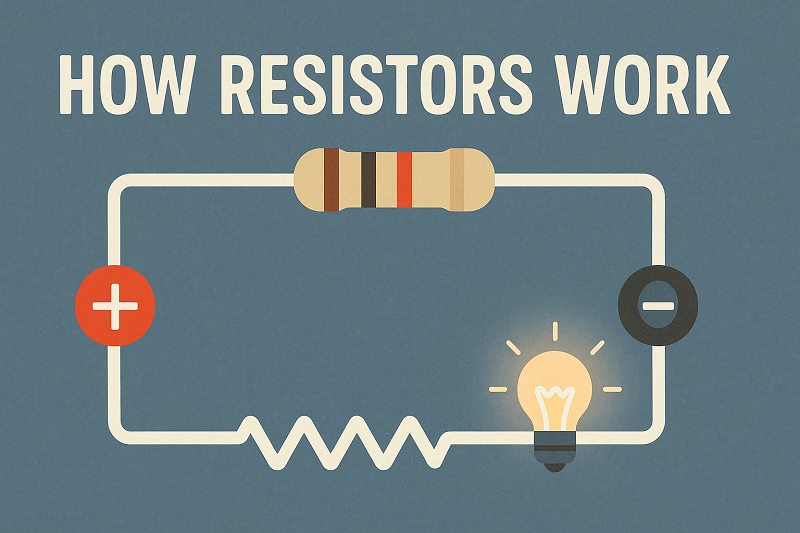
How Resistors Work: From Basic Principles to Advanced Applications2025-07-30
DC Switching Regulators: Principles, Selection, and Applications2025-05-30
FPGA vs CPLD: In-depth Analysis of Architecture, Performance and Application2025-05-07
MOSFET Technology: Essential Guide to Working Principles & Applications2025-05-04
SMD Resistor: Types, Applications, and Selection Guide2025-04-30