The Kynix Blog
Stay Ahead with Expert Electronics Insights,
Industry Trends, and Innovative Tips
- Electronic Components
- News Room
- General electronic semiconductor
- Components Guide
- Sort by
- Robots
- Transmitters
- Capacitors
- IC Chips
- PCBs
- Connectors
- Amplifiers
- Memory
- LED
- Diodes
- Transistors
- Battery
- Oscillators
- Resistors
- Transceiver
- RFID
- FPGA
- Mosfets
- Sensor
- Motors, Solenoids, Driver Boards/Modules
- Relays
- Optoelectronics
- Power
- Transformer
- Fuse
- Thyristor
- potentiometer
- Development Boards
- RF/IF
- Semiconductor Information
- PCB
- transistor
A printed circuit board, also known as PCB, is the electrical connection provider of electronic components. It has been developed for more than 100 years; its key point is about layout design. The main advantage of using circuit board is to greatly reduce wiring and assembly errors, improve the level of automation and productivity. In today's blog, we are going to introduce PCB systematically to show you what is PCB, what's its features, and its manufacturing method and wiring technique and so many more. Catalog PCB Introduction PCB Form PCB Features PCB Advantages PCB Basic Manufacturing How to Designing Your Own PCBs PCB Function Testing PCB Design PCB Wiring How Does PCB Works PCB Recycle FAQ PCB Introduction A printed circuit board, also known as PCB, is the electrical connection provider of electronic components. It has been developed for more than 100 years; its key point is about layout design. The main advantage of using circuit board is to greatly reduce wiring and assembly errors, improve the level of automation and productivity. Since printed circuit boards are not general end products, there is a slight confusion in the definition of it. For example, the motherboard for personal computers is called the motherboard and cannot be called the circuit board directly, although there is a circuit board in the motherboard. They are not the same, so the relationship between the two cannot be said to be the same when evaluating the industry. Another example: because integrated circuit parts are mounted on a circuit board, the news media call it IC board, but in essence, it is not equal to a printed circuit board. We commonly refer to PCB as a bare board which components are not on it. The number of PCB layers can be divided into a single panel, double panel, four-layer board, six-layer board and multilayer board. PCB Material Common materials of PCB boards are electric boards, glass fiberboards, and various types of plastic boards. PCB manufacturers generally use an insulating portion consists of glass fibre, non-fabric, and resin, then pressed with epoxy resin and copper foil to form a prepreg. PCB Metallic Coating The metal coating is where the substrate line meets the electronic component. Furthermore, metal solderability, contact, resistance, and so on will have a direct impact on the component's effectiveness. And different metals have a direct impact on production costs. Copper, tin (the thickness is usually 5 to 15 m), lead-tin alloy (or tin-copper alloy, that is solder, the thickness is 5 to 25 m, about 63 percent is tin), gold (usually plated on the interface), and silver are the most commonly used metallic coatings (usually plated on the interface, or as a whole is silver alloy). PCB Line Design Software Simple layout design can be completed by hand, but complex circuit design is usually realized through computer-aided design (CAD), and well-known design software includes CAD, Pads (that is PowerPCB), Altium designer (that is Protel), FreePCB, CAM350, and others. PCB Form The current circuit boards are primarily made up of the following components: The Line and Pattern: A line is a tool used to connect the original parts. The large copper surface will be designed as the grounding and power supply layer in the design. The wiring route is created concurrently with the pattern. Dielectric is used to keep lines and layers insulated. Through-hole / via: it can switch the lines above the two layers on and off, larger ones are used to set components, and non-through holes (nPTH) are typically used as surface mounting positioning and fixing screws for assembly. Solder resistant / Solder Mask: not all copper surfaces needed solder parts with sin, so the non-tin soldering area will print something to separate tin (usually epoxy resin), to avoid a short circuit. According to different processes, this can be divided into green oil, red oil and blue oil to distinguish different functional areas. Legend / Marking/ Silk screen: it is not necessary. Its main function is to mark the name and position of each part on the circuit board for easy maintenance and identification after assembly. Surface Finish: because the copper surface is easy to oxidize in the general environment, leading to failure to solder tin ( or solder poor), therefore, it will make the copper surface protection which needing to solder sin. The methods of protection include HASL, ENIG, Immersion Silver, tin, Immersion Tin, and OSP, which are generally called surface treatment, having their own advantages and disadvantages. PCB Features Bare panels (no parts on them) are also known as "Printed Wiring Board (PWB)". The board itself is made of insulating, non-bending material. The thin wire material that can be seen on the surface is copper foil, which is originally covered on the whole board but is etched away in the manufacturing process, and the remaining part becomes a small net line. These lines are called conductor pattern or wiring and are used to provide electrical connections to parts on the PCB. The colour of PCB is usually green or brown, which is the colour of the solder mask. It is an insulating protective layer that protects copper wire, prevents short circuit caused by wave welding, and saves solder consumption. Also, a silkscreen will be printed on the solder mask layer. Text and symbols (most are white) are usually printed on them to indicate the location of each part on the board. Silkscreen is also called a legend. Integrated circuits, transistors, diodes, passive components (such as resistors, capacitors, connectors, etc.) and a variety of other electronic components are installed when the final product made. By connecting wires, electronic signals can be connected and their functions can be work. PCB Advantages (1) Because of the reproducibility and consistency of the graphics, the errors in wiring and assembly are reduced, and the maintenance, debugging and checking the time of the equipment are saved; (2) The design can be standardized and interchangeable; (3) High density of wiring, small size, lightweight, which is beneficial to the miniaturization of electronic equipment; (4) It is beneficial to mechanization and automatic production, increasing labour productivity and reducing the cost of electronic equipment PCB Basic Manufacturing PCB manufacturing methods are classified into two types: subtractive and additive. At the moment, the subtractive etching copper foil method is primarily used in mass industrial production. Basic Manufacturing Procedure: First, we’ll need a blank circuit board (a circuit board with complete metal foil), and the rest are required circuit boards. Screen printing: a screen mask is made from a pre-designed circuit diagram. The screen's unnecessary circuit is covered with wax or waterproof material. Following that, the screen mask is placed on a blank circuit board, with a protective agent applied to the screen to prevent corrosion. Finally, immerse the circuit board in the corrosion solution; the part not covered by the protective agent will be corroded away, leaving only the rest to be cleaned away. Photosensitive board: a pre-designed circuit diagram is printed on a transparent film mask (the simplest method is to print the film with a printer), and the required part is printed in an opaque color in the same way. Then, apply photosensitive pigment to the blank circuit board, place the prepared film mask on the board while it is blazing for a few minutes, remove the mask, and use a developer to display the pattern on the board. Engraving: use a milling machine or laser engraving machine to remove unnecessary parts of a blank line directly. Other Manufacture Procedure: (1)Additive The additive, is a pre-coated copper substrate coated with a photoresistor (D/F), exposed to ultraviolet light and exposed where it is needed. Then using electroplating to thicken the copper of the formal circuit line to the required specification, and plating a layer of anti-corrosion thin tin, and finally remove the photoresist (this process is called film removal), and then etch the copper foil layer under the photoresist. (2)Layer Method The lamination method is one of the methods of making multilayer printed circuit board. The outer layer is made after the inner layer is wrapped, and the outer layer is treated by the subtractive or additive method. The sequential layer method can be used to get the multi-layer printed circuit board with multiple layers by repeating the action of the stacking method. 1. Making inner layer 2. Laminated formation( bonding different layers) 3. Layer completion ( Outer metal-containing foil film by subtractive method, mixing with the additive method) 4. Drilling (3)Panel Method 1. Whole PCB electroplating 2. Add a barrier layer where the surface is to be retained 3. Etching4. Removal of barrier layer (4)Pattern Method 1. Add a barrier layer to the area where the surface is not required 2. Electroplating requires with thickness 3. Removal of barrier layer4. Etching into unnecessary foil film to disappear (5)Complete Addition Method 1. Add a barrier layer where there is no conductor 2. Circuit consisting of no electrolytic copper (6)Partial Addition Method 1. Covered with electrolytic copper PCB 2. Add a barrier layer where there is no conductor 3. Electrolytic copper plating 4. Removal of barrier layer 5. No electrolytic copper disappeared until etched under the original barrier layer. (7)ALIVH ALIVH (Any Layer Interstitial Via Hole,Any Layer IVA), this is using aramid fiber fabric as the substrate. 1. Prepreg: dip the fabric in an epoxy resin to form a “Adhesive sheet”. 2. Laser drilling. 3. Filling the hole with conductive paste. 4. Attaching copper foil to the outer layer. 5. Making Circuit pattern by etching on copper foi. 6. Gluing the copper foil on the semi-finished product after the second step. 7. Laminated formation 8. Repeating steps 5 to 7 until completed. (8)B2it (Buried Bump Interconnection Technology) 1. First make a double panel or multilayer board. 2. Printing silver paste as cone on copper foil. 3. To place the adhesive on a silver paste, making silver cone to penetrate the adhesive. 4. Attaching the previous adhesive to the board of the first step. 5. Etching the copper foil of the adhesive into a circuit pattern. 6. Repeat the second to fourth steps until it completed. How to Designing Your Own PCBs How do you go about designing your own PCB? The ins and outs of PCB design are way too in-depth to get into here, but if you really want to get started, here are some pointers: 1. Find a CAD package: there are a lot of low-cost or free options out there on the market for PCB design. Things to consider when choosing a package: Community support: are there a lot of people using the package? The more people using it, the more likely you are to find ready-made libraries with the parts you need. Ease-of-use: if it's painful to use it, you won't. Capability: some programs place limitations on your design- number of layers, number of components, size of the board, etc. Most of them allow you to pay for a license to upgrade their capability. Portability: some free programs do not allow you to export or convert your designs, locking you into one supplier only. Maybe that’s a fair price to pay for convenience and price, maybe not. 2. Look at other people’s layouts to see what they have done. Open Source Hardware makes this easier than ever. 3. More practice. 4. Maintain low expectations. Your first board design will have lots of problems. Your 20th board design will have fewer, but will still have some. You’ll never get rid of them all. 5. Schematics are important. Trying to design a board without a good schematic in place first is an exercise in futility. Finally, a few words on the utility of designing your own circuit boards. If you plan on making more than one or two of a given project, the payback on designing a board is pretty good- point-to-point wiring circuits on a protoboard is a hassle, and they tend to be less robust than purpose-designed boards. PCB Function Testing More intensive PCB, with the higher bus speed and analog RF circuits, pose unprecedented challenges to the testing, where efficient testing requires careful design, thoughtful testing methods and appropriate tools which can provide credible test results. In high-density UUT, if calibration or diagnosis is required, manual work is likely to be required. This is because the machine is limited and the test requires faster (the UUT can collect data quickly with a probe instead of feedback the information to the edge connector), in this case, that the operator is required to probe the test points on the UUT to make sure the test points are clearly marked. Testing Issues include: (1) Is the probe bigger than the test point? (2)Is the probe in danger of shorting several test points and damaging UUT? (3) Is there a shock hazard to the operator? (4)Can each operator find out the test point quickly and check it out? (5)Are test points large and easy to identify? (6)How long does it take the operator to press the probe on the test point to get an accurate reading? (7)If the time is too long, there will be some trouble in the small test area, for example, the operator's hand will slide, so it is recommended to expand the test area to avoid this problem. After considering the above problems, the test engineer should re-evaluate the type of the test probe, modify the test file to better identify the location of the test point or even change the requirements for the operator. PCB Automatic Exploration In some cases, the use of automated probes may be required, such as when PCB is difficult to detect manually, or when the test speed is significantly reduced due to the technical limitations of the operator, under this case which an automated approach should be considered. The automatic probe can eliminate human error, reduce the possibility of short circuit at several test points, and speed up test operation. However, it should be noted that there may be some limitations to automated probes, depending on the vendor's design, including: (1)A size of UUT (2)Number of synchronous probes (3)How close are the two test points? (4)Positioning accuracy of the testing probe (5)Can the system detect UUT on both sides? (6)How fast does the probe move to the next test point? (7)What is the actual interval required for the probe system? (it is generally larger than an offline functional test system.) Automatic detection usually does not touch test points with probe and is generally slower than the production line, so two steps may be required: if the detector is used only for diagnosis, the traditional function test system can be used in the production line, and the detector should be put on the side of the production line as the diagnostic system. If the purpose of the detector is using the UUT to calibrate, it is necessary to use multiple systems, which is still much faster than manual operation. Another key issue is how to integrate the test system into the production line. Is there still room on the production line? Can the system be connected to the conveyor belt? Fortunately, many new detection systems are compatible with the SMEMA standard, so they work in an online environment. PCB Boundary Scan Because it requires specialized components to perform the task, this technology should have been discussed prior to the product design phase. Devices with IEEE1194 (boundary-scan) support can be purchased in UUT with a digital circuit, allowing most diagnostic problems to be solved with little or no detection. However, because it expands the area of each compatible device, boundary scanning reduces the overall functionality of the UUT (4 to 5 pins per chip and some wires). When selecting this technology, the goal is to improve diagnosis. Furthermore, it is emphasized that boundary scans can be used to program Flash memory and PLD devices on UUT, which strengthens the case for selecting the test method. PCB Design In the design of a printed circuit board, the layout of components and wiring of circuit connection are two key aspects. PCB Layout The layout is to put the circuit device in the printed circuit board wiring area. The layout not only affects the wiring work behind it, but it also has a significant impact on the overall performance of the circuit board. To meet the requirements of process, detection, and maintenance, the components should be uniform, neat, and compactly placed on the PCB to minimize the lead and connection between the components, resulting in uniform assembly density. PCB Functional Differentiation Components should be arranged in groups based on their power-supply voltage, digital and analog circuits, speed, current, and so on, to avoid interference with one another. When installing the digital circuit and analog circuit on the circuit board, the ground wire and power supply system of the two circuits should be completely separated, and the digital circuit and analog circuit should be arranged in different layers if the conditions allow. When arranging the fast, medium, and low-speed logic circuits on the circuit board, they should be close to the connector, while the memory should be far away from the connector. This reduces common impedance coupling, radiation, and crosstalk. The clock and high-frequency circuits, which are the primary sources of disturbance emitter, must be arranged separately and away from the sensitive circuit. PCB Thermal Magnetic Balance The heating parts and the heat-sensitive parts are as far away as possible, the influence of electromagnetic compatibility should be considered. Manufacturability: (1) Surface The mounting parts are installed on one side as far as possible and simplify the assembly process. (2) Spacing The minimum distance between components is determined according to the shape of components and other related properties. At present, the distance between components is generally not less than 0.2mm~0.3mm, the distance between components and PCB edge should be more than 2mm. (3) Direction The direction and density of the elements should be favourable to the convection of the air. Considering the assembly process, the component direction is as consistent as possible. PCB Wiring 1. Wires (1) Width The minimum width of the printed wire is determined by the adhesive strength between the conductor and the insulating substrate and the current value flowing through them. Printed wire can be as wide as possible, especially power lines and ground wires, as wide as possible under the condition of the plate surface, even if the area is tight, generally not less than 1mm. In particular, ground wires, even if they are not allowed to be widened locally, it is necessary to widen somewhere permitted to reduce the resistance of the whole ground wire system. For example, the conductors longer than 80mm, even if the current is small, should be widened to reduce the influence of conductor voltage drop on the circuit. (2) Length To minimize the length of the wiring, the shorter the wiring, the less interference and crosstalk, and the lower the parasitic reactance and the less radiation. Especially the FET gate, transistor base and high-frequency circuit should pay more attention to short wiring. (3) Gap The distance between adjacent conductors should meet electrical safety standards. The main electrical issues affecting wiring spacing are crosstalk and voltage breakdown. The spacing should be as wide as possible for ease of operation and production, and the minimum spacing should be appropriate to the applied voltage. This voltage includes the operating voltage, the additional fluctuation voltage, the overvoltage, and the peak voltage for other reasons. For safety reasons, the spacing should be wider when there is a current-voltage in the circuit. (4) Path The signal path from driver to load should be constant in width. The path impedance (resistance, inductance, and capacitance) changes as the path width changes, resulting in reflection and line impedance imbalance. As a result, it is best to keep the path width constant. Furthermore, it is best to avoid right and sharp angles for the wiring corner, which should generally be greater than 90 °. The inner edge of the right path can generate a concentrated electric field, which produces noise coupled to the adjacent path, and the 45 °path outperforms the right angle and acute angle paths. When two conductors come together at an acute angle, the acute angle should be turned into a circle. 2. Aperture and Pad The aperture of components should be better matched with the diameter of the lead; in other words, the diameter of the installation hole should be slightly larger 0.150.3mm than the component's lead diameter. DIL packaging pins and most small components have an aperture of 0.8mm and a pad diameter of about 2mm. For large pad aperture, in order to get better adhesion ability, the ratio of the aperture and the diameter of the pad is about 2 for epoxy glass plate and 2.5~3 for phenol cardboard. Perforation, which is commonly used in multilayer PCBs, has a minimum available diameter that is related to plate thickness, and the plate thickness to aperture ratio is usually 6:1. A high-speed signal generates 14nH inductance and 0.38pF capacitance when perforated. As a result, when laying high-speed signal channels, the number of holes should be kept to a bare minimum. If layer changes are unavoidable for high-speed parallel lines (such as address and data lines), it is necessary to ensure that the number of holes in each signal line is the same, and that the number of holes is minimized. When necessary, a printed conductor protection ring or protective line should be installed to prevent oscillations and improve circuit performance. 3. Grounding Design Unreasonable grounding design will affect the printed circuit board, fail to reach the design target, and even can not work. The ground wire is the reference of the potential in the circuit and the common current channel. The ground potential value is zero theoretically, but in fact, because of the existence of conductor impedance, the potential everywhere of the ground wire is not all zero. As long as the ground wire has a certain length, it's potential may not in zero everywhere. The ground wire is not only a necessary common circuit channel, it also a channel for interference. One point grounding is the basic principle of eliminating grounding interference. The ground wire of all circuits and devices must be connected to a unified grounding point, which is used as the circuit and the zero potential reference point of the equipment. One point grounding is divided into common ground wire series grounding and independent wires parallel grounding. The common ground-wire series grounding is simple. The grounding lead of each circuit is relatively short, and its resistance is relatively small. This kind of grounding method is often used in the earthing of the equipment cabinet. The independent wires parallel grounding has one ground point which is defined as the ground reference point. The other points that need to be grounded are directly connected to this point, and the earth potential of each circuit is related only to the ground current base impedance of the circuit, which will not be affected by other circuits. The Following Points Should Be Noted in Specific Wiring: (1)The line length is as short as possible in order to minimize the lead inductance. In low-frequency circuits, multipoint grounding is avoided because the ground current of all circuits flows through a common grounding impedance or grounding plane. (2)Common ground wires should be arranged as far as possible on the edge of the printed circuit board. As much copper foil as possible should be retained on the circuit board as the ground wire, which can enhance shielding ability. (3)The double-layer plate can use the ground surface, the purpose of which is to provide a low-impedance ground wire. (4)In a multi-layer printed circuit board, a grounding layer can be set, and it is designed as a mesh. The spacing of the earth grid can not be too large because one of the main functions of the earth wire is to provide the signal return path. If the spacing of the grid is large signal-loop area will be formed, which will cause radiation and sensitivity problems. In addition, if the signal reflux path is a small loop area, other ground lines will not take into effect. (5)The earth surface can minimize the radiation loop. How Does PCB Works PCB Recycle PCB manufacturing technology is a very complex, comprehensive processing technology. Especially in the process of wet processing, a large amount of water is needed, so there are many kinds of heavy metal wastewater and organic wastewater discharged. The composition is complex, and the treatment is difficult. If the copper foil utilization ratio of the printed circuit board is 30% and 40%, most of the copper content is in wastewater. If the thickness of each copper foil is 35 microns based on 10, 000 square meters of double panels, the wastewater contains about 4500 kilograms of copper, and there are many other heavy metals and precious metals. These are found in waste liquid and wastewater, if the metal is discharged without treatment, it is not only a big waste but also pollutes the environment. Therefore, the treatment of wastewater and the recycling of copper and other metals in the process of PCB production are of great significance and are indispensable parts in PCB production. It is well known that the wastewater in the production of the printed circuit board is a large amount of copper, and a very small amount of lead, tin, gold, silver, fluorine, ammonia, organic compounds and organic complexes, etc. As for the production of copper wastewater, the main processes are: copper sink, copper plating, copper electroplating, etching and various PCB pretreatment processes (chemical pretreatment, brush plate pretreatment, pozzolanic ash grinding plate pretreatment, etc.). The copper-containing wastewater produced by the above processes can be divided into complex wastewater and non-complex wastewater according to its composition. In order to make the wastewater treatment meet the environment-protection standard, and the maximum allowable compound concentration of copper is 1mg/l (according to copper), but different wastewater treatment methods must be adopted for different copper-containing wastewater. FAQ 1. What is PCB? A printed circuit board, or PCB, is used to mechanically support and electrically connect electronic components using conductive pathways, tracks or signal traces etched from copper sheets laminated onto a non-conductive substrate. 2. What is PCB and types of PCB? A printed circuit board (PCB) is a thin board made from fiberglass, composite epoxy, or other laminate materials. PCBs are found in various electrical and electronic components such as beepers, radios, radars, computer systems, etc. Different types of PCBs are used based on the applications. 3. What can a PCB be used for? Printed circuit boards (PCBs) are used to mechanically support and electrically connect electronic components using conductive pathways, tracks or signal traces etched from copper sheets laminated onto a non-conductive substrate, employed in the manufacturing of business machines and computers, as well as communication ... 4. Why are PCB green? It is due to the solder mask, which protects the copper circuits printed on the fibre glass core to prevent short circuits, soldering errors, etc. ... The colour of the solder mask gives the board its appearance. 5. What is PCB and its advantages? Compact Size and Saving of Wire. A characteristic PCB includes a large number of electronic components. On a Printed circuit board, the interconnection between the components is made through copper tracks instead of using a number of current carrying wires. It makes the interconnections less bulky. 6. How long does it take for PCBs to break down? 3.5 to 83 days. The time it takes for half of the amount of PCBs (initially) present to be broken down ranges from 3.5 to 83 days for molecules with 1 to 5 chlorine atoms. In water, PCBs are essentially broken down by the effect of sunlight (photolysis). 7. What is the disadvantage of PCB? Disadvantages: Easy to Cause Handling Damage. Process Uses a Carcinogen (Thiourea) Exposed Tin on Final Assembly can Corrode. 8. Which PCB design software is the best for beginners? Top Best PCB Design Software of 2021 a. PROTEL (Altium Designer) b.PADS (PowerPCB) c. ORCAD. d. Allegro. e. Eagle(Easily Applicable Graphical Layout Editor) f. Kicad. g. EasyEda. h. Fritzing. 9. What are the advantage of flexible PCB? The flexible circuit board are designed for saving room and improving the flexibility to meet a smaller and higher density mounting design, it also helps to reduce the assembly process and enhance reliability. 10. Why do we use PCB instead of breadboard circuit? The advantages of a printed circuit board: the board is permanent to have an electronic device worked. PCB has a better current carrying capacity comparing to a breadboard, you can make your traces wider to take more current so that work well. ... You can mount heat-sinks to the board so that have them rigid.
kynix On 2018-11-30
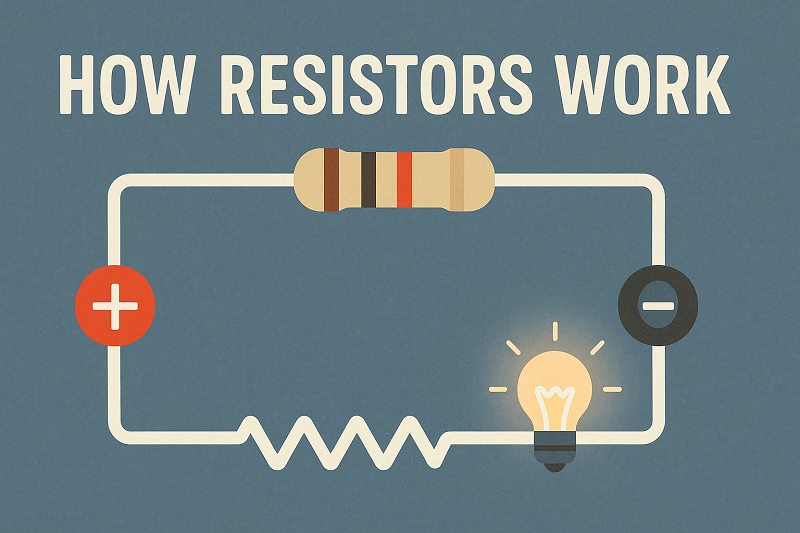
Introduction How to Read an Electrical Diagram Lesson What is a circuit Diagram? Circuit diagram is the basic of engineering research and planning. A schematic layout diagram, which is drawn with the standard symbol of physical electricity, can show the working principle of each component and device relationship, Each electronic component has a symbol. After seeing a few circuit diagrams, you’ll quickly learn how to distinguish the different symbols, and provide planning plan for installing electrons or electrical products. Circuit diagram is one of the basic skills that must be learned by electronic engineers. So this paper gathers the classical circuit materials related to regulated voltage power supply, DCDC conversion power supply, switching power supply, charging circuit, constant current source to provide the most practical circuit diagram reference for engineers. Schematic Symbols Basic Devices A resistor is a passive two-terminal electrical component that implements electrical resistance as a circuit element. In electronic circuits, resistors are used to reduce current flow, adjust signal levels, to divide voltages, bias active elements, and terminate transmission lines, among other uses. An inductor, also called a coil, choke, or reactor, is a passive two-terminal electrical component that stores energy in a magnetic field when electric current flows through it. An inductor typically consists of an insulated wire wound into a coil around a core. An electric battery is a device consisting of one or more electrochemical cells with external connections provided to power electrical devices such as flashlights, smartphones, and electric cars.[1] When a battery is supplying electric power, its positive terminal is the cathode and its negative terminal is the anode.[2] The terminal marked negative is the source of electrons that will flow through an external electric circuit to the positive terminal. A relay is an electrically operated switch. Many relays use an electromagnet to mechanically operate a switch, but other operating principles are also used, such as solid-state relays. Relays are used where it is necessary to control a circuit by a separate low-power signal, or where several circuits must be controlled by one signal. Five Parts to Understand Circuit Diagrams *Regulated Power Supply 1. The voltage adjustable range is between 3.5V~25V, the output current is large, using VR- tube circuit to obtain the stable output voltage. Working principle: after rectifying and filtering, DC voltage is supplied by R1 to the base of the adjusting tube, so that the adjusting tube can be switched on. When the voltage passes through the RP, R2 of the V1 conduction, V2 switched on, and then V3 is switched on. At this time, the emitter and collector voltage of V1, V2 and V3 do not change (it acts exactly like a voltage stabilizer). A stable output voltage can be obtained by adjusting RP, and the ratio of R1, PR, R2 to R3 determines the output voltage of the circuit. T: 80W~100W Input: AC220VOutput Duplex Winding: AC28VRP: 1W (resistance: 250K~330K)FU1: 1A FU2: 3A~5A VD1 | VD2: 6A02C4: 470µF/35V(electrolytic capacitor)C1: 3300µF / 35VC2 | C3: 0.1µF (MONO CAP)R1: 180~220Ω / 0.1W~1W Fig 1. VR-tube Circuit 2. Regulated Voltage Adjustable Power Supply Circuit Diagram Whether the computer detection or electronic product can not be separated from the regulated power supply(RPS). This paper introduces one kind of RPS: a DC voltage continuously adjustable from 3V to 15V, the maximum current can be up to 10A, and the circuit uses a high precision standard voltage source integrated circuit (TL431) with temperature compensation which makes the voltage stabilizer more accurate. If there is no special requirement, it can basically meet the normal maintenance. The circuit is shown in the figure below. Fig 2. Regulated Voltage Adjustable Power Supply Circuit Diagram Its working principle is divided into two parts. The first part is a fixed 5V/1.5A power supply circuit; the second part is a high precision and large current regulator circuit which can be adjusted continuously from 3V to 15V. The first circuit is very simple. The DC voltage rectified by silicon bridge QL1 is filtered by C1 from the secondary 8V AC voltage of transformer, then the 5V three-terminal stabilizer block LM7805 can produce a fixed 5V | 1A power supply at the output end without any adjustment. This power supply can be used as an internal power source when the computer board is overhauled. The second part is basically the same as the common series power supply. The circuit is simple, the cost is low, but the voltage stabilizer performance is very high. The resistor R4, the regulator TL431, potentiometer R3 constitutes a continuously adjustable constant voltage source, which provides the reference voltage for the BG2 base. The regulated voltage value of the regulator TL431 is continuously adjustable, which determines the maximum output voltage of the power supply. If you want to expand the range of adjustable voltage, you can change the resistance values of R4 and R3, of course, the secondary voltage of transformer should also be increased. The power of the transformer can be controlled flexibly according to the output current, and the secondary voltage is about 15 V. Bridge rectifier QL, using 15A-20A silicon bridge, compact structure, fixed screws in the middle, can be directly fixed on the shell aluminum plate, better for heat sink. What adjusts the tube is the high current NPN metal shell silicon tube, because it has the very big heat, if the chassis allows, buying the big radiator as far as possible to expand the heat dissipation area; if does not need the big current, a smaller power silicon tube can be used to makes it smaller. The filter uses three 50V/4700uF electrolytic capacitance C5 and C7 in parallel, respectively, to make the output of large current more stable. In addition, this capacitor should be bought with a relatively larger volume, and those smaller ones will also mark 50V/4700uF, but the voltage fluctuates frequently, Or easy to fail for a long time lay idle. Finally, the power transformer can buy a ready-made switching power supply of more than 200W instead of the transformer. In this way, the voltage stability can be further improved, but the manufacturing cost is not too high, and other electronic components have no special requirements. After installation is completed, it can work properly without too much adjustment. *Switched Power Supply(specific examples) The working principle of integrated control IC-UC3842 for PWM switching power supply The following is the UC3842 internal block diagram and pin diagram. UC3842 uses a fixed frequency pulse width controllable modulation mode, a total of 8 pins, each foot function as follows: Pin① is the output of the error amplifier, and the external resistor-capacitor unit is used to improve the gain and frequency characteristics of the error amplifier; Pin② is the feedback voltage input, which is compared with the 2.5 V reference voltage at the same phase of the error amplifier to generate the error voltage, thus controlling the pulse width; Pin③ is the current detection input, when detecting voltage exceeds 1V, the pulse width is reduced so that the power supply is in the state of intermittent operation; Pin④ is the timing end, the operating frequency of the internal oscillator is determined by the external resistor-capacitor time constant, f=1.8 / (RT×CT); Pin⑤ is the common ground; Pin⑦ is a DC power supply terminal with the function of undervoltage and overvoltage locking, the chip power consumption is 15mW. Pin⑧ is the output terminal of 5V reference voltage, its load capacity is 50mA. Fig 3. IC-UC3842 Electrical Diagram UC3842 Internal Schematic Diagram UC3842 is an integrated controller of PWM switching power supply with excellent performance, wide application and simple structure. Because it has only one output, it is mainly used for voice control. The UC3842 pin7 is a voltage input with a starting voltage range of 16V-34V. When the power supply is on, the VCC is less than 16V, and the output of the Schmidt comparator is 0. At the same time, no reference voltage is generated and the circuit does not work. When Vcc > 16V, the input voltage Schmidt comparator sends out a high voltage to the 5V fern voltage regulator, which generates a 5V reference voltage. On the one hand, this voltage used in internal circuit; on the other hand, it provides a reference voltage to the outside through pin8. Once the Schmidt comparator flips to a high level (when the chip starts working), Vcc can change in the 10V-34V range without affecting circuit; when the Vcc is below 10V, the Schmidt comparator flips to a low level and the circuit stops working. When the reference voltage stabilizer has a 5V reference voltage output, the reference voltage detection logic comparator outputs a high level signal to the output circuit. At the same time, the oscillator will generate the oscillation signal of the f=Rt/Ct according to the parameters of the pin④ external Rt and Ct, which is added directly to the input of the totem pole circuit, the other is added to the position end of RS flip-flop made by PWM pulse width modulator, and the output end of R connects the output of current-detection comparator. The R-terminal is the control end of the duty ratio. When the R voltage rises, the Q pulse is widened. At the same time, the pulse width of pin⑥ is widened (duty cycle increased); when the R voltage drops, The Q pulse narrows and the pin⑥ pulse width becomes narrow (duty cycle reduced). The sequence of UC3842 points is as shown in the diagram. Only when the E point is in high level, and meanwhile, a point and b point is all in high level, the d point sends out the high level, the c point sends the low level, otherwise the d point sends the low level, c point sends out the high level. Pin② generally connects the feedback signal. When the pin②voltage increases, the pin① voltage will decrease, and the R-terminal voltage will also decrease, so the pin⑥ pulse will narrow, on the contrary, the pin⑥ pulse will become wider. Pin③ is a current sensing terminal. Usually, a small sample resistor is inserted into the source or emitter of the power transistor to convert the current passing through the switch to a voltage, and the voltage is introduced into the pin. When the load short circuit or other reasons cause the current of the power transistor to increase and the voltage on the sampling resistance exceeds 1V, the pulse output pin⑥ is stopped, which can effectively protect the power transistor from damage. Fig 4. UC3842 Internal Schematic Diagram TOP224P 12V | 20W Switching DC Power Supply Circuit Based on Regulated Voltage Two integrated circuits are used in the circuit: TOP224P three-terminal monolithic switching power supply (IC1) and PC817A linear optical coupler (IC2). After UR and Cl rectifier filter, AC power supply produces DC high voltage Ui, to supply primary winding of high frequency transformer T. VDz1 and VD1 can clamp the peak voltage of leakage inductance to the safe value and can attenuate the ringing voltage. VDz1 adopts P6KE200 type transient voltage suppressor with reverse breakdown voltage 200V, and VDl uses UF4005 type UFRD in 1A/600V. The secondary winding voltage is filtered by V, C2, L1 and C3 rectifier, getting 12V output voltage Uo. Uo value is set by the sum of the forward voltage drop UF, R1 of LED and the value of regulated voltage Uz2. Other output voltage values can be obtained by changing the turn ratio of high frequency transformer and the regulated voltage value of VDz2. R2 and VDz2 also provide a false load for 12V output to improve the load adjustment rate at light load. The feedback winding voltage is filtered by VD3 and C4 rectifier to supply the bias voltage required by TOP224P. Since the control current is regulated by R2 and VDz2, the output duty cycle is changed to stabilize the voltage. The common mode choke L2 can reduce the common mode leakage current generated by the waveform of the high voltage switch connected to the D by the primary winding. C7 is a protective capacitor used to filter out interference caused by coupling capacitors of primary and secondary windings. C6 can reduce the differential mode leakage current caused by the fundamental and harmonic waves of the primary winding current. C5 can not only filter the peak current added to the control terminal, but also determine the self-starting frequency, compensating the control loop with R1 and R3. Fig 5. TOP224P 12V | 20W Switching DC Power Supply Circuit The Main Technical Specifications of This Power Supply are as Follows AC Voltage: u=85~265V Voltage Regulation: η=78% Grid Frequency: fLl=47~440Hz Input Voltage (Io=1.67A): Uo=12V Working Temperature: TA=0~50℃ Maximum Output Current: IOM=1.67A Maximum Output Ripple Voltage: ±60mV Continuous Power Output: Po=20W /TA=25℃ or 15W /TA=50℃) *DC-DC Power Supply 3V→+5V or +12V Circuit Portable electronic products powered by batteries generally use low power supply voltage, which can reduce the number of batteries and product size. In order to ensure the stability and accuracy of the circuit, it is necessary to use a regulated power supply. If the circuit uses 5V working voltage, but one component requires a higher working voltage, this often makes the designer feeling hard. In this paper, a circuit composed of two booster modules is introduced to solve this problem, and only two batteries are used to supply power. The circuit has fewer components, small size, light weight, stable output of 5V or 12V, and meets the requirements of portable electronic products. +5V power supply can output 60mA, and +12 V power supply maximum output current is 5 mA. Fig 6. 3V→+5V or +12V Circuit The circuit is shown above. It is composed of AH805 and FP106 booster module. AH805 is a kind of boost module with an input of 1.2V~3V and an output of 5V, which can output 100mA current at 3V. FP106 is a chip boost module with input of 4V~6V and output fixed voltage of 29 ±1V, the output current up to 40 mA. AH805 and FP106 are both a level-controlled to shut down the power. The output voltage of two 1.5V alkaline batteries is 3V, inputting to the AH805, and its output voltage is 5V, inputting 5V to the FP106, and the output voltage is 28V~30V, and then the output voltage is 12 V after through the voltage stabilizer. It can be seen from the diagram that different output voltages can be obtained by changing the stabilizer voltage. Pin⑤ of FP106 is the closing end of controlling the power supply. When Pin⑤ is added a high level > 2.5V, the power supply is switched on; When adding the low level is less than 0.4V, the power supply is off. It can be controlled by circuit or manually. If it is not necessary, Pin⑤ is connected to Pin⑧. MC34063 3.6V→9V Circuit Working State: No-load: Output 3.65V| 18uA Load: Output 9.88V | 50.2mA; Input 3.65V | 186.7mA, efficiency 72% Working Principle: When there is no load, the IC has no power on pin⑥ and stops working. The input current is only 18uA with input 3.65V. When there is a load (Q1 has Ieb current), the EC pole of 8550 is switched on and the IC is operating. Whether the IC works is determined by whether there is a load or not, it is quite a battery. Using IC has a high voltage conversion efficiency and output stably. If this circuit adds a point of improvement, for example, when increasing power, it can turn into a power supply from 4.2V to 5V without switch. You can use a battery box as a backup power source for your phone. Fig 7. MC34063 3.6V→9V Circuit *Charging Circuit lm358 basic Battery Charger Circuit Diagram Fig 8. lm358 basic Battery Charger Circuit Diagram There are two different arguments about whether alkaline batteries can be recharged. Some can be filled; the other say it has a risk of explosion. In fact, alkaline batteries can be rechargeable, generally 30-50 times of its service life. In fact, due to the charging methods, there are two different consequences. First of all, there is no doubt that alkaline batteries can be rechargeable, and in the battery instructions, it is mentioned that alkaline batteries are not rechargeable and that charging can lead to explosions. That's true, but note that the word is "could". Actually, it can be viewed as a manufacturer's self-protection statement of exemption. The key to charging alkaline batteries is temperature. As long as you can charge the battery without high temperature, you can successfully do it. The right charging method requires several points: small current: 50mA charge 1.7V discharge 1.3V After some people tried charging practice, they said categorically that they could not recharge. The reason for the problems such as lack of charging, short electricity consumption, leakage, explosion, actually, most are charger problems. If the charging current of the charger is too large, far more than 50 ma, and some fast chargers is above 200ma, the direct result is that the temperature of the battery is very high. If the battery is hot, the batteries will leak, and the serious will explode. Some people use Ni-MH rechargeable battery charger to charge, low grade charger does not automatically stop charging function, after long time charging will lead to overcharge then causing battery leakage and explosion. A better charger has the function of automatic shutdown, but the stop charge voltage is generally set to 1.42 V of the Ni-MH rechargeable battery, while the voltage of the alkaline battery is about 1.7V when it fully charged. As a result, the voltage is too low which causing fake charge. And not to wait until the battery is completely out of power to charge, it will lead to poor lifetime of the battery. It is recommended that the voltage of alkaline battery is not less than 1.3V. Therefore, if you plan to charge the alkaline battery, you must have a qualified charger, charging current around 50mA, and charging cut-off voltage is about 1.7V. Related Description Alkaline manganese rechargeable battery: based on alkaline zinc manganese battery, it is also called mercury-free alkaline manganese battery because of the use of mercury-free zinc powder and new additives. The battery can be recharged for dozens to hundreds of times without changing the discharge characteristics of the alkaline battery, which is more economical. Alkaline zinc-manganese battery was developed in 1882. It was developed in 1912 and put into production in 1949. It has been found that when KOH electrolyte solution replaces NH4Cl as electrolyte, both the electrolyte and the structure change greatly, its performance improved significantly. Features Open voltage is 1.5V Working temperature is between -20℃ to 60℃, it is suitable in alpine region. The capacity of high current continuous discharge is about 5 times that of acid zinc-manganese battery. 2.75W USB Charger This design adopts Power Integrations's LinkSwitch series product LNK613DG. This design is well suited for mobile phones or similar USB charger applications, including mobile phone battery chargers, USB chargers, or any application with constant voltage or constant current. In the circuit, the diode D1 to D4 rectifies the AC input, and the capacitors C1 and C2 filter the DC. The L1, C1 and C2 form a π type filter to attenuate the differential mode conduction EMI noise. These are connected by E-sheild technology of Power Integrations transformers. This design can easily meet the requirements of EN55022 B-type conduction EMI with sufficient margin, and no Y capacitor is required. Fire proof, fusible, winding resistor RF1 provides fault protection and limits surge current generated during startup. Fig 9. 2.75W USB Charger Circuit Fig 9 shows that U1 is powered by optional offset power, which reduces no-load power to less than 40 mW. The value of by-pass capacitance C4 determines the number of cable voltage drop compensation. The value of 1μF corresponds to the compensation of a 0.3Ω / 24 AWG USB output cable. (10μF capacitance compensates 0.49 Ω / 26 AWG USB output cable.). In the constant voltage stage, the output voltage is regulated by switch control. The output voltage is maintained by skipping the switching cycle. By adjusting the ratio of the prohibition period to maintain voltage regularly. This also optimizes the efficiency of the converter throughout the load range. Under the condition of light load (trickle charge), the current limit will be decreased to reduce the magnetic flux density of the transformer, thus reducing the audio noise and switching loss. With the increase of load current, the current limit will increase, and the skipping period will be reduced continuously. When no longer skipping any switching period (maximum power point), the controller in the LinkSwitch-II switches to constant current mode. When the load current needs to be further increased, the output voltage will decrease, and it reflects in the FB pin voltage. In response to the voltage drop of the FB pin, the switching frequency will decrease linearly to achieve constant current output. The RCD-R clamping circuit is composed of D5, R2, R3 and C3, which is used to limit the leakage voltage spike caused by leakage inductance. Resistance R3 has a relatively large value to avoid drain voltage waveform oscillations caused by leakage inductance, which prevents excessive oscillation during turn-off, thus reducing EMI conduction. Diode D7 rectifies secondary and C7 filters it. C6 and R7 together limit the transient voltage spike on D7 and reduce EMI conduction and radiation. The resistor R8 and Zener diode VR1 form an false output load which ensures that the output voltage is within an acceptable limit and that the battery does not discharge completely when the charger is off. Feedback resistors R5 and R6 set maximum operating frequency and output voltage at constant voltage stage. *Constant-Current Source 1. Discussion on How to Design Three-wire Constant Current Source Driving Circuit The constant current source drive circuit is responsible for driving the temperature sensor Pt1000, to convert its sensing resistive signal with temperature into measurable voltage signal. In this system, the required constant current source should have good temperature stability, large output resistance, output current less than 0.5mA (upper limit of Pt1000 without self-heating effect), earthing at one end of load, and variable polarity of output current. Because the influence of temperature on the parameters of integrated operational amplifier is less significant than of the transistor or FET, the constant current source composed of integrated operational amplifier has the advantages of better stability and higher constant current performance. Especially in the case where one end of the load needs grounding, it has been widely used. So use the dual operational amplifier constant current source shown in figure 2. Amplifier UA1 is used as adder, UA2 as follower, UA1 and UA2 are gain bipolar operational amplifier OP07, which having low noise, low misalignment and high open-loop. Fig 10. Three-wire Constant Current Source Driving Circuit Vb and Va are the up and down potential of the reference resistor Rref in figure 2: Va is the output of in-phase adder UA1. When taking the resistor R1= R2 , R3=R4, the output current of the Va=VREFx+Vb. It can be seen that the dual operational amplifier constant-current source has the following remarkable characteristics: Load earthing The output current is bipolar when the operational amplifier is supplied by a dual power source. The constant current can be achieved by changing the input reference VREF or adjusting the reference resistor Rref0. It is easy to obtain stable small current and compensation calibration. Because of the mismatch of the resistor, the voltage at both ends of the reference resistance Rref0 will be affected by the terminal voltage Vb of its driving load. At the same time, as a constant current source, Vb will definitely change with the load, which will affect the stability of the constant current source. Therefore, the four resistors R1, R2, R3, R4 are chosen according to the principle that the mismatch should be as small as possible, in addition, the mismatch direction of each pair of resistors should be consistent. In practice, a large number of precision resistors of the same batch can be screened, and 4 resistors with close resistance values can be selected. 2. High Voltage Constant Current Source Circuit Diagram(switch power model) The instrument needs a constant current source that can generate 1mA current on 0 to 3 megabytes ohmic resistance. A design composed with 12V storage battery and UC3845 has be made: the transformer uses a color TV high voltage packet, in which L1 enamelled wire is wound 24 turns on the core of the original high voltage package; L3 uses a coil of the original high voltage package and L2 with the high voltage part of the high voltage packet; L3 and LM393 constitute a voltage limiting circuit which limits the output voltage too high and adjusts the open-circuit output voltage by adjusting R10. Fig 11. High Voltage Constant Current Source Circuit Diagram(switch power model) You May Also Like Filtering Circuit Tutorial (Schematic Diagrams) Switch Mode Power Supply Circuit Design Tutorial Selection Guidance of Five Main Materials for Flexible Circuit Board Production Recommendation MC34063A SOP8 LM7805A UC3842AD FAQ 1. What are the basic elements of electronics?When building electronic circuits, you will work with a number of basic electronic components, including resistors, capacitors, diodes, transistors, inductors and integrated circuits. 2. What is the schematic symbol represented in the electrical and electronic diagram?It is also called a schematic symbol. Each component has typical functionality according to its operational characteristics. An electronic circuit or schematic drawing uses a wired path between electronic components to complete the circuit. These components are represented by respective symbols for it. 3. What are the 5 components of electricity?The Basics of Electrical ComponentsResistors. The very first component that you should know about is the resistor.CapacitorsLight Emitting Diode (LED)TransistorsInductorsIntegrated Circuit (IC) 4. What are the types of electronics?Electronics has branches as follows:Digital electronicsAnalogue electronicsMicroelectronicsCircuit designIntegrated circuitsPower electronicsOptoelectronicsSemiconductor devices 5. What are the different schematic symbols?Schematic Symbols:Wires (Connected)Wires (Not Connected)DC Supply VoltageGroundNo Connection (nc)ResistorCapacitor, Polarized (Electrolytic)Light-Emitting Diode (LED) 6. What are the electrical diagrams?Image result for Electrical DiagramElectrical diagrams are drawings which are used to represent electrical circuits, these circuits are represented by using lines, symbols, and number combinations. Electrical diagrams show the wiring between components and the relative position of the components. 7. What are the three types of electrical diagrams?There are three ways to show electrical circuits. They are wiring, schematic, and pictorial diagrams. The two most commonly used are the wiring diagram and the schematic diagram. 8. What are the four types of electrical diagram?Image result for Electrical DiagramSome of these electrical drawings or diagrams have been described below.Block DiagramSchematics Circuit DiagramSingle Line Diagram or One-line DiagramWiring DiagramPictorial DiagramLadder Diagram or Line DiagramLogic DiagramRiser Diagram 9. What are the 2 main types of electricity?Current electricity is a constant flow of electrons. There are two kinds of current electricity: direct current (DC) and alternating current (AC). 10. What are the 2 types of electric circuit?Types of Electric CircuitsThere are two types of circuits found in homes and other common devices; namely series circuits and parallel circuits. 11. What is electrical block diagram?Block Diagram – A block diagram shows the major components of electrical or mechanical interrelations in block, or square or rectangular, form. The lines between the blocks represent the connections between the systems or components. 12. What are the 4 basic components of a circuit?Every electric circuit, regardless of where it is or how large or small it is, has four basic parts: an energy source (AC or DC), a conductor (wire), an electrical load (device), and at least one controller (switch). Visualize what happens when you switch on a room light. 13. What is type of wiring diagram?Schematic Diagrams often called a ladder diagram, is intended to be the simplest form of an electrical circuit. This diagram shows the circuit components on horizontal lines without regard to their physical location. It is used for troubleshooting because it is easy to understand the operation of the circuit. 14. What is the main purpose of electrical diagram?Electrical drawings, sometimes referred to as wiring diagrams, are a type of technical drawing that provide visual representation describing electrical systems or circuits. They are used to explain the design to electricians or other workers who will use them to help install or repair electrical systems. 15. Which software is used for electrical design?Top 8 Software For Electrical EngineersAutoCAD ElectricalPLC ProgrammingSCADA SoftwareAC/DC Drive SoftwareProteus And PspiceOrCADXilinxKeil
kynix On 2018-11-23
Schematic Diagrams CLC П-Filter 1. Working Principle a. When the positive pulse is input, C1 is charged first, the charging current is ic1, and meanwhile, reaching the peak voltage of pulse. The inductor L also has a linearly increasing current, and the magnetic energy is stored in L. With the increase of the current, more and more magnetic energy is stored, and the capacitor C2 is charged with voltage through inductor L (the charge current is ic2), the voltage of C2 is basically equal to the voltage on C1, in addition, the current IRL in load RL is also supplied by input pulse. b. When the input positive pulse disappearing, the current of the load RL is supplied by two channels: one is -ic2 provided by the C2 discharge, the other is converted from the magnetic energy stored by the inductor L, in other words, L connects with C1 to provide current -ic1. The current in the loaded RL is equal to the sum of the discharge currents of the two capacitors, that is IL=-(ic2+ ic1). c. For DC, C1 and C2 in CLC filter are equivalent to open circuit, and the inductance of inductor L to DC component is zero, which is equivalent to short circuit, so DC component can pass through inductor L1 smoothly. d. For AC: capacitors have a large capacity equivalent to short circuit, while inductors are sensitive to various sinusoidal waves, so AC components can not be removed or fewer passed. 2. Advantages High output DC voltage, sometimes the highest peak voltage can reach the rectangular wave. It is suitable for large load current, the output voltage pulsation is small. 3. Disadvantages It is used in the power supply without voltage regulator, and its load capacity is poor. 4. Application CLC filter is usually used in switching power supply of pulse-amplitude modulation. The larger the capacitance and inductance, the better the filtering. DLC Filiter 1. Working Principle a. When the secondary winding of the transformer is up positive and down negative, because the output voltage of the secondary winding of the transformer is positive and negative alternating rectangular wave, so the negative half cycle is removed from the D1 rectifier, the positive half cycle passes through the D1 rectifier, the magnetic energy is stored when current flowing through the inductance L. This current is partly charged for C1, and another is for load RL, at the same time, D2 off. b. When the inputting positive pulse disappears, the self-inductance voltage generated by the secondary winding of the transformer is up negative and down positive, so the rectifier D1 cut off. The filter has no input voltage, and the current supply of the load RL consists of two parts. One is the magnetic energy stored in the inductor converted to electric energy, the current direction is the same as the original current, and forms the circuit current iL through the fly-wheel diode D2; the other is -ic1 provides by the provided by C1 discharge. 2. The output DC voltage of the DLC filter is the average of the input rectangular wave value. 3. DLC filter is usually used in the pulse-width switching power supply. The output of the DLC needs a parallel resistor to the ground, commonly called "release resistor", in general, 30-50mA current is enough. CRC П-Filiter 1. Working Principle a. The output voltage of the rectifier is filtered by C1 capacitor at first, filtering out most of the AC components. And the voltage after C1 is added to the RC filter circuit composed of RL and C2, then the AC component is further filtered by capacitor C2. b. There is almost no inductance in the small capacitor C1, also its capacitive reactance is very small, so the high frequency interference component is easily filtered to the ground, that is to say, the filter effect of high frequency AC interference is better. c. The capacitance capacity is large (C2>C1), the low-frequency AC component flows through C2, so the effect of low-frequency AC interference filtering is better. d. The resistor has voltage drop and power loss effect on AC and DC, so CRC is only used for low load current. Product Recommendation KY53-ZJYS51R5-4PT-01 KY53-CM3032V201R-00 KY53-B39871B3762Z810
kynix On 2018-11-20
The heat sink has a thermal conductor that carries heat away from the device into fins that provide a large surface area for the heat to dissipate throughout the rest of the components, thus cooling both the heat sink and processor. Both a heat sink and a radiator require airflow and, therefore, both have fans built-in. At present, the main failure form of electronic equipment is thermal failure. According to statistics, 55% of failure of electronic equipment is caused by temperature exceeding the rated value. With the increase of temperature, the failure rate of electronic equipment increases exponentially. Therefore, the thermal design of power devices is most important in the structural design of electronic equipment, which directly determines the success of the products. Good thermal design is the basis for the stable and reliable operation of the equipment. Electronics Thermal Heatsink Design Tutorial CatalogI. Main Parameters of Thermal PropertiesII. Thermal Design of Power DeviceIII. Heat Dissipation CalculationIV. Calculation ExampleV. Selection of RadiatorVI. ConclusionFAQ I. Main Parameters of Thermal Properties The thermal stress of the power device can come from the inside of the device or from the outside of the device. If the heat dissipation capacity of the device is limited, the consumption of power will lead to the rise of temperature and junction temperature in the active region of the chip inside the device, reducing the reliability of the device lower and making the device unable to work safely. The main parameters to characterize the thermal capacity of power devices are junction temperature and thermal resistance. The active region of the device can be the PN junction region of the junction device (such as a transistor), the channel region of the field-effect device, the diffused resistor, or the thin film resistance of the integrated circuit, and so on. When the junction temperature Tj is higher than the ambient temperature Ta, the heat through the temperature difference to form a diffusive heat flow, which is emitted from the chip through the tube shell, and the heat emitted increases with the increase of the temperature difference (Tj-Ta). In order to ensure that the device can work properly for a long time, an allowable maximum junction temperature Tj max has been made. Tj max is determined by chip materials, packaging materials, and reliability of devices. The heat dissipation ability of power devices is usually characterized by thermal resistance, called Rt. The larger the thermal resistance is, the worse the heat dissipation ability is. Thermal resistance is also divided into internal thermal resistance and external thermal resistance. Internal thermal resistance is the inherent thermal resistance of the device itself, which is related to the thermal conductivity, thickness, and cross-sectional area of the tube core, shell material, and processing technology, while external thermal resistance is related to the form of tube package. Generally speaking, the larger the shell area, the smaller the external thermal resistance. The external thermal resistance of the metal shell is obviously lower than that of the plastic. When the power consumption reaches a certain level, the junction temperature of the device goes up and the reliability of the system decreases. In order to improve the reliability, the thermal design of the power device should be carried out. II. Thermal Design of Power Device The thermal design of the power device is mainly to prevent thermal failure caused by overheating or alternating temperature. It can be divided into the thermal design of the internal chip, thermal design of the package, thermal design of the tube, and thermal design in practical use. For general power devices, only the thermal design of the device's interior, package, and the tube should be considered. But when the power consumption is high, the appropriate radiator should be installed, through which the heat can be effectively dissipated to ensure the device works normally and reliably within the safe junction temperature. III. Heat Dissipation CalculationThe most commonly used heat dissipation method is to install the power device on the radiator, using the radiator to disperse the heat into the surrounding, if necessary, to add the fan to strengthen the heat dissipation with a certain wind speed. Flow cold water cooling plate is also used in some large power devices, which has a better heat dissipation effect. Heat dissipation calculation is to determine the appropriate heat dissipation measures and radiators through calculation under certain working conditions. There is a certain thermal resistance in the heat transfer process. The thermal resistance from the core of the device to the bottom is Rjc, between the bottom and the radiator is Rcs, a radiator that spreads heat into the surrounding is Rsa, the total resistance is Rja=Rjc+Rcs+Rsa. If the maximum power loss of the device is Pd, and the permitted junction temperature of the device is Tj, ambient temperature is Ta, the reasonable total thermal resistance Rja can be obtained by the following formula.Rja ≤(Tj-Ta)/Pd The thermal resistance of the maximum allowable Rsa is: Rsa ≤(Tj-Ta)/Pd-(Rjc+Rcs) For design consideration, Tj is generally set to 125℃, Ta=40℃ ~ 60℃ generally used in the case of bad ambient temperature. The size of Rjc depends on the size of the core and the package structure, which can be found from the parameter list. Rcs size depends on the installation technology and device packaging. If the device adopts heat conducting grease or heat transfer pad, installing with the radiator, the typical value of Rcs is 0. 1 ℃/W / ~ 0. 2 ℃/W; If the bottom surface of the device is not insulated and additional mica insulation is required, the Rcs can reach 1 ℃/W. Pd is the maximum power loss calculated according to the working conditions of different devices. In this way, Rsa can be calculated to select an appropriate radiator. IV. Calculation ExampleA power operational amplifier PA02 as low-frequency power amplifier, the device is 8-pin and TO-3 metal shell package. The operating conditions are as follows: the operating voltage Vs is 18 V, the load impedance RL is 4Ω, the ambient temperature is 40 ℃, and the natural cooling is adopted. According to the data of PA02: the typical value of static current Iq is 27mA, the maximum value is 40mA, and the typical value of Rjc (from tube core to shell) is 2.4 ℃/W, and the maximum value is 2.6 ℃/W. The power consumption of the device is Pd=Pdq+ Pdout(Pdq is the internal power consumption and Pdout is the output power consumption). The calculation is as follows: Pdq=Iq(Vs+|-Vs|) Pdout=Vs2/(4RL) Iq=37mA Pd=Iq(Vs+|-Vs|)+Vs2/(4 RL) =0.037×(18+18)+182/(4×4) =21.6 W Radiator thermal resistance: Rsa ≤(Tj-Ta)/Pd-(Rjc+Rcs) Tj=125℃, Ta=40℃, Rjc=2.6℃/W, Rcs=0.2℃/W(PA02 installed directly on radiator with heat conductive grease in the middle) Substitute the above data into the formula to get Rsa≤ (125-40)/21.6-(2.6+0.2)≤ 1.135℃/W The thermal resistance HSO4 in natural convection is 0. 95 ℃/W, which can meet the requirement of heat dissipation. V. Selection of RadiatorRadiators are generally standard parts, but also provide customization. The surface of the radiator is treated by electrophoretic coating or black oxygen polarization, which aims to improve heat dissipation and insulation performance. In natural cooling can be increased by 10%~15%, in ventilation cooling can be increased by 3%, and electrophoretic coating can withstand pressure 500V~800V. The heat resistance of different types of radiators in different heat dissipation conditions is given by the radiator manufacturers. The radiator is used to control the temperature of the power device, especially the junction temperature (Tj), making is lower than the safe junction temperature of the power device, so as to improve the reliability of the power device. Conventional radiators tend to be standardized, serialized, universal, and new products develop towards low thermal resistance, multifunction, small volume, lightweight, and suitable for automatic production and installation. The internal thermal resistance of various power devices is different and the difference of contact surface and installation torque will lead to the thermal-resistance difference between the contracts. The main factor of selecting a radiator is the heat resistance Rtf. Under different environmental conditions, the heat dissipation of power devices is also different. Therefore, environmental factors, the matching between radiator and power device, and the volume and quality of the whole electronic equipment should be taken into account in selecting the appropriate radiator. First of all, according to the performance parameters and environmental parameters of the power device in normal operation, calculate whether the junction temperature of the power device is within the safe condition, determine whether it is necessary to install the radiator, and calculate the corresponding thermal resistance of the radiator if it needs to be installed. The junction temperature of the power device is recalculated to determine whether the junction temperature of the power device is within the range of safe junction temperature, so as to judge whether the selected radiator meets the requirements. For the radiator that meets the requirements, the optimum design should be carried out according to the actual engineering requirements. VI. ConclusionThrough the analysis and calculation of the heating principle of the power device, it can guide the design of the heat dissipation mode and the selection of the radiator, ensure the power device work in the safe temperature range, reduce the quality problem, and improve the reliability of the electronic products. The reliability of electronic equipment is also related to the components, structure, assembly, process, processing quality, and so on. In practical engineering applications, feedback data should be obtained through various tests to perfect the design and further improve the reliability of electronic equipment. FAQ 1. What is a heat sink and how does it work?A heat sink (also commonly spelled heatsink) is a passive heat exchanger that transfers the heat generated by an electronic or a mechanical device to a fluid medium, often air or a liquid coolant, where it is dissipated away from the device, thereby allowing regulation of the device's temperature. 2. What is a heat sink used for?A heat sink is a component that increases the heat flow away from a hot device. It accomplishes this task by increasing the device's working surface area and the amount of low-temperature fluid that moves across its enlarged surface area. 3. Does a heat sink need a fan?Most heatsinks have denser fins, which requires a fan to be mounted directly on the cooler. If your heatsink has heat pipes (copper tubes running through the fins), then it's most likely designed to be used with a fan. It's simple to test whether or not a heatsink can safely be run without a fan on it. 4. What material dissipates heat the best?Thermal conductivity is the measure of a metal's ability to conduct heat. What this means is that that the metal acts to cool temperatures, through a process of dissipation. The metals with the highest thermal conductivity are copper and aluminium. The lowest are steel and bronze. 5. How many types of heat sinks are there?The Two Major Heat Sink Categories. All heat sinks can be broken down into two major categories… active and passive. 6. What is the difference between active and passive heat sinks?An active heat sink has a fan attached to it, to actively pull heat away from the heat sink and chip that lies underneath it. A passive heat sink is just a heat sink, a piece of flat metal with fins on top that directs heat away from the chip set it is installed on. 7. Which is better heat sink or fan?Generally though, with good airflow provided by the fan heatsinks can often be a lot smaller. The only benefit to a heatsink-only arrangement is less noise. ... Out of preference you want the heatsink fins to be standing upwards so that hot air can immediately rise off of it and cool air be pulled in. 8. What is the difference between a heatsink and a CPU fan?The heatsink draws the heat away from the CPU, and the fan ensures a steady stream of air for the heatsink to pass the heat to. However, there is more to selecting a heatsink and fan than just looking for a good price or one that looks cool. 9. What is the difference between a heat sink and a heat pipe?Vapor chambers are most often used to spread heat to a local heat sink, whereas heat pipes are generally better for moving heat to a remote sink. ... If you need a heat sink that's minimally 10 times, but usually closer to 20 times, the area of the heat source, consider vapor chambers. 10. How is a heat sink attached to an electrical component?A heat sink is a mechanical component that is attached to an electrical component for the sake of transferring heat from the electrical component into the surrounding environment. This environment is most commonly air, but it can also be other fluids, such as water or coolant.
kynix On 2018-11-16
ROM and RAM belong to the semiconductor memory. ROM is the abbreviation of read only memory, and RAM is the abbreviation of random access memory. ROM can keep data when the system powers off, and RAM is in the opposite, a typical RAM is the computer memory. But sometimes we are not clear: what is the difference between Flash Memory and ROM and RAM? How much do you really know about memory, or RAM, ROM, and flash memory specifically? Here we will tell them in different aspects, this article will act as a guide to basic memories. Catalog I What are types of RAM? 1.1 Static RAM (SRAM) 1.2 Dynamic RAM (DRAM) II What are types of ROM? III What is Flash Memory? 3.1 Performance Comparison 3.2 Interface Difference 3.3 Capacity and Cost 3.4 Reliability and Durability 3.5 Simple Operation 3.6 Software Support IV Conclusion FAQ I What are types of RAM? RAM Upgrade Guide - What You Need to Know 1.1 Static RAM (SRAM) SRAM is very fast and the fastest storage device to read and write currently, but it is also very expensive, so it is only used in demanding places, such as the first and second level buffer of CPU. 1.2 Dynamic RAM (DRAM) DRAM keeps data for a short time and its operation is slower than the SRAM, but it's still faster than the ROM. In addition, it's much cheaper than SRAM. The computer memory is DRAM. DRAM is divided into many kinds, the most common ones are FPRAM / FastPage, EDORAM, SDRAM, DDR, RAM, RDRAM, SGRAM, WRAM and so on. DDR RAM, one of which is introduced here. DDR RAM (Double-Date-Rate RAM), also known as DDR SDRAM, the improved RAM and SDRAM, are essentially the same, except that they can read and write data twice in one clock, doubling the speed of data transmission. This is the most used memory in a computer today, and it has a cost advantage, which in fact defeats another Intel memory~ Rambus DRAM. Many high-end graphics cards are also equipped with high-speed DDR RAM to increase bandwidth, which can greatly improve the pixel rendering capability of 3D accelerator cards. II What are types of ROM? PROM (programmable ROM), is programmed once that can not be modified, this is an early product, now it is gone. EPROM (erasable and programmable ROM), is a kind of universal memory which erases the original program by ultraviolet radiation. EEPROM, is electronically erased, very expensive, long writing time. For example, mobile phone software is generally placed in the EEPROM, when we call, some of the last numbers that are dialed are temporarily in the SRAM, but not immediately written in the call log (the call record is stored in the EEPROM). Memory is used to storage data and programs that are currently in use (that is in execution), and the memory of the computer we normally used refers to dynamic memory (that is DRAM). The so-called "dynamic" in dynamic memory refers to when we write data to the DRAM, after a period of time, the data will be lost, so we need an extra circuit to refresh the memory. It works like this: whether a DRAM's memory cell stores 0 or 1 depends on whether the capacitor has a charge. 1 represents a charge, 0 represents no charge. But over time, the capacitance of 1 will discharge, and the capacitance of 0 will absorb the charge, which is why the data is lost. Taking refresh operation regularly checks the capacitor, if the charge is greater than 1/2 of the full charge, it is considered to represent 1, charging the capacitor fully; If the quantity of electricity is less than 1/2, it is considered to represent 0, and the capacitor is discharged to maintain the continuity of the data. ROM III What is Flash Memory? Flash memory combines the advantages of ROM and RAM. It not only has the electrically erasable and programmable capability (EEPROM), but also can read data quickly without power loss (the advantage of NVRAM). This memory is used in USB and MP3. For the past 20 years, embedded systems have been using ROM (EPROM) as their storage device. However, in recent years, FLASH has completely replaced the position of ROM (EPROM) in embedded systems to store Bootloader and operating systems, or Program code or directly as the hard disk (U disk). At present, there are two kinds of NOR Flash and NAND Flash. NOR Flash reading is the same as the common SDRAM reading. Users can run the code loaded in NOR FLASH directly, which reduces the capacity of the SRAM and saves cost. NAND Flash doesn’t have memory random read technique, which reads in the form of a block at a time, usually 512 bytes at a time, thus it is cheaper. Users cannot run program code on NAND directly, so many developers using NAND have to use a small NOR Flash to startup and run code. NOR Flash, is generally used in small capacity because of its fast reading speed, and it is used to store important information such as operating system. The most common NAND FLASH used for large capacity, combines with embedded system DOC (Disk On Chip) and common "flash disk", which can be erased online. At present, the FLASH on the market mainly comes from Intel, AMD, Fujitsu and Toshiba, and the main manufacturers of NAND Flash are Samsung and Toshiba. NOR and NAND are the two main non-volatile flash memory technologies in the market. Memory IC Intel first developed NOR flash technology in 1988, which completely changed the situation in which EPROM and EEPROM dominated the world. Then, in 1989, Toshiba published its NAND flash architecture, emphasizing lower cost per bit, higher performance, and easy upgrades via interfaces like disks. But after more than a decade, a considerable number of hardware engineers still can not distinguish between NOR and NAND flash memory. Flash memory is often used interchangeably with phase NOR memory. Many in the industry are also confused about the advantages of NAND flash over NOR, because in most cases flash memory is only used to store a small amount of code, and NOR flash memory may be more appropriate, while NAND is an ideal solution for data needed high storage density. NOR is the main non-volatile flash memory technology in the market. NOR is generally used to store a small amount of code, especially in code storage media. NOR is characterized by simple application, no special interface circuit, high transmission efficiency, it belongs to the in-chip execution(XIP, eXecute In Place), so that applications can run directly in (NOR) flash memory. No longer need to read the code into the system RAM. Low write and erase speed can be very cost-effective but affect its performance for small capacity when it is 1~4MB. NOR flash comes with an SRAM interface and has enough address pins to access, it is convenient to storage and use each byte. NOR flash accounts for the majority of the 1~16MB flash market. NAND structure can provide extremely high cell density and high storage density, and fast write and erase speed. The difficulty of applying NAND lies in the management of flash and the need of special system interface. 3.1 Performance Comparison Flash memory is non-volatile memory and can be erased and reprogrammed on memory cell block. The write operation of any flash device can only be done in an empty or erased cell, so in most cases, the erasure must be performed before the writing. In general, the NAND devices perform the erasure operation easily. But NOR requires that all bits in the target block be written as 1 before erasing. Since the NOR device is erased as a block of 64~128KB, the time to perform a write / erase operation is 5s. In contrast, the erasure NAND device is performed as a block of 8~32KB, and the same operation only needs 4 ms at most. The performance gap between NOR and NADN is further widened by the difference of block size in the execution of erasure. It is shown that for a given set of write operations (especially when updating small files), more erasure operations must be performed in NOR based cells. Therefore, when choosing a storage solution, the designer must weigh the following factors: The read speed of NOR is a little faster than NAND, but the writing speed is on the opposite. The 4ms erasure speed of NAND is much faster than that of NOR. Most writing operation need running erasure. The NAND erasure unit is smaller and the corresponding erasure circuit is less. Flash memory 3.2 Interface Difference NOR flash has a SRAM interface, and enough address pins to address, and easy storage and program to every byte inside. NAND devices use complex I/O ports to serially access data, which may vary from product to product or from manufacturer to manufacturer. Eight pins are used to transmit and control address and data information. NAND read and write operations use 512-byte blocks, which is similar to the hard disk management. Naturally, NAND based memory can replace hard drives or other block devices. 3.3 Capacity and Cost The cell size of NAND flash is almost half that of NOR devices. Because of the simpler manufacturing process, the NAND structure can provide higher capacity within a given die size, thus lowering the price accordingly. NOR flash accounts for most of the 1~16MB flash market, while NAND flash is only used in 8~128MB products, which means that NOR is mainly used in code storage, and NAND is suitable for data storage, mainly used in CompactFlash, Secure Digital, PC Cards and MMC memory cards. 3.4 Reliability and Durability One of the key issues needed to consider is reliability when using flahs media. For systems that need to extend MTBF, Flash is a very suitable storage solution. So the reliability of NOR and NAND can be compared between bit switching, lifetime (durability) and bad block processing. - Service Life The maximum number of erasures per block in NAND flash memory is one million times, while that of NOR is 100,000 times. In addition, NAND memory has the advantage of 10: 1 erasure speed, 8 times smaller than that of the NOR device, and each NAND memory block has fewer deletions at a given time. - Bit Switching All flash devices are plagued by bit switching. In some cases (rarely, NAND occurs more often than NOR), a bit reverses or its reversion is reported. One changing bit may not be obvious, but if it happens on a critical file, this minor failure could cause the system to shut down. If existing wrong report, it may be solved by reading it a few more times. Of course, if the bit really changes, the error detection / error correction (EDC/ECC) algorithm must be used. The problem of bit inversion is more common in NAND flash memory, therefore, it is recommended that using NAND flash memory and EDC/ECC algorithm at the same time. But this problem is not fatal when storing multimedia information in NAND. Of course, if you use a local storage device to store an operating system, configuration file, or other sensitive information, you must use the EDC/ECC system to ensure reliability. - Bad Block Processing The bad blocks in NAND devices are randomly distributed. There have been previous efforts to eliminate bad blocks, but they found that the yield is too low and the cost is too high. The NAND device needs to initialize the medium to detect the bad block and mark it. In the fabricated devices, the failure rate will be high if this treatment cannot be carried out by a reliable method. 3.5 Simple Operation NOR-based flash memory can be used very directly, can be connected as other memory, and can run code directly on it. NAND is much more complex because of the need for an I / O interface. Access methods for various NAND devices vary from manufacturer to manufacturer. When using NAND devices, you must write to the driver before doing anything else. Writing information to NAND devices requires that designers don’t write to bad blocks, which means virtual mapping is necessary all the time on NAND devices. 3.6 Software Support When discussing software support, a distinction should be made between basic read / write / erasing operations and higher-level software for disk emulation and algorithms of flash management, also including the performance optimization. Running code on a NOR device doesn't require any software support. But using a NAND device, you usually need a driver, that is MTD(Memory Technology Driver). Both NAND and NOR devices need MTD when writing and erasing operations. NOR devices requires less MTD, because many vendors offer more advanced software for NOR devices, including M-System 's TrueFFS driver, which is used by manufacturers such as Wind River System, Microsoft, QNX Software System, Symbian and Intel. It also used to simulate DiskOnChip products and manage the NAND flash memory, including error correction, bad block handling, and loss balancing. The main manufacturers of NOR FLASH is INTEL and MICRO, used to be the mainstream of FLASH products, but its market share now squeezed by NAND FLASH. Its advantage is that it can run programs directly from FLASH, but the process is complex, thus it is expensive. NAND FLASH's main suppliers are SAMSUNG and Toshiba, and it widely used in USB drives, memory cards, and MP3 players. With different processes, it has larger storage capacity and is cheaper than the NOR FLASH. But also has the drawback, is unable to address runs the program directly, only used to store the data. In addition, NAND FLASH is very prone to bad blocks, so it is necessary to detect it by the related algorithm. NAND FLASH is used to store data and programs in laptops, but it must be started with NOR FLASH. In addition to SAMSUNG processors, other mainstream processors for laptops do not support NAND FLASH startup directly. Therefore, you must start the machine with a small piece of NOR FLASH, and run OS and other software through the NAND FLASH load into SDRAM. IV Conclusion The DRAM uses the charge on the gate capacitor of the MOS transistor to store the information. Once the power is down, all the information will be lost. Because the grid will leak, it needs refresh operation to replenish the charge on these gate capacitors regularly. And every time the data is read out, it requires running the same work. This is called dynamic refresh, so it is called dynamic RAM. Because it uses only one MOS to store information, it can be highly integrated and can do a lot of work. SRAM uses registers to store information, so once the power is down, the data will be lost. But when the power supply, its data will always exist without the need for dynamic refresh, thus it is called static RAM. The above is mainly used in the system with large capacity, do not need to recover data through refresh operation. Flash ROM uses the capacitor on the floating gate to store the charge to store the information, because the floating gate does not leak, so the information can still be saved after the power is off. Also because of its simple mechanism, it can be integrated highly, and the capacity can be very large. Flash rom needs to be erased by electricity before writing, but in different approach of erasure, EEPROM can be erased in bytes, and flash rom can only be done in sector. However, it can be written in byte units, mainly used for bios, U disk and Mp3 devices that require large capacity and data storage when power is down. FAQ 1.What is ROM and its function? Read-only memory (ROM) is a type of storage medium that permanently stores data on personal computers (PCs) and other electronic devices. It contains the programming needed to start a PC, which is essential for boot-up; it performs major input/output tasks and holds programs or software instructions. 2. What are the four types of ROM? MROM (Masked ROM) ... PROM (Programmable Read Only Memory) ... EPROM (Erasable and Programmable Read Only Memory) ... EEPROM (Electrically Erasable and Programmable Read Only Memory) ... 3. What is a RAM in a computer? RAM stands for random-access memory, but what does that mean? Your computer RAM is essentially short term memory where data is stored as the processor needs it. This isn't to be confused with long-term data that's stored on your hard drive, which stays there even when your computer is turned off. 4. What is flash memory used for? Flash memory is a long-life and non-volatile storage chip that is widely used in embedded systems. It can keep stored data and information even when the power is off. It can be electrically erased and reprogrammed. Flash memory was developed from EEPROM (electronically erasable programmable read-only memory). 5. Is Flash memory a RAM or ROM? RAM is Read Only Memory. Unlike RAM, ROM is the persistent storage. ... Flash Memory is one category of ROM i.e Electrically Erasable Read Only Memory (EEPROM). 6. What is flash memory and its types? Flash memory is a type of erasable read-only memory (EEPROM) that clears and rewrites data in chunks for fast, energy-efficient access and rewriting. Flash memory, or flash storage, is non-volatile, which means it remains viable even without an active power source. 7. What is RAM and ROM? RAM, which stands for random access memory, and ROM, which stands for read-only memory, are both present in your computer. RAM is volatile memory that temporarily stores the files you are working on. ROM is non-volatile memory that permanently stores instructions for your computer. 8. Which is better RAM or ROM? RAM is random access memory and cannot hold the data without the power, whereas ROM is a read-only memory and can hold the data even without the power. ... With RAM, writing data is a much faster and lightening process, whereas ROM, writing data speed is much slower as compared to RAM. 9. What are the disadvantages of ROM? The disadvantages of Erasable Programmable ROM (EPROM) are: The static power consumption is high as the transistors used have higher resistance. It is not possible for a particular byte to be erased, instead the entire content is erased. UV based EPROM takes time to erase the content. 10.What are the disadvantages of RAM? If CPU wants to read data only from the RAM, then the data access from the cache and the registers is slow in comparison to ROM. RAM is volatile, which means it is difficult to store data for a lengthy period of time. Unplanned circumstances like a power outage can result in data loss. 11. What is the work of ROM? Read only memory (ROM) provides permanent storage for instructions needed during bootstrapping, or the process of turning on the computer. It does so by storing the BIOS and other firmware for the computer hardware. This firmware is very hardware-specific and rarely needs updating. 12. Why is more RAM better? Generally, the faster the RAM, the faster the processing speed. With faster RAM, you increase the speed at which memory transfers information to other components. Meaning, your fast processor now has an equally fast way of talking to the other components, making your computer much more efficient. 13. Is RAM is a volatile memory? Volatile memory is computer memory that requires power to maintain the stored information. Most modern semiconductor volatile memory is either Static RAM (see SRAM) or dynamic RAM (see DRAM). 14. Why is ROM so important? ROM provides the necessary instructions for communication between various hardware components. As mentioned before, it is essential for the storage and operation of the BIOS, but it can also be used for basic data management, to hold software for basic processes of utilities and to read and write to peripheral devices. 15. What is stored in ROM? ROM is memory that cannot be changed by a program or user. ROM retains its memory even after the computer is turned off. For example, ROM stores the instructions for the computer to start up when it is turned on again.
kynix On 2018-11-13
The larger the resistance of the drive, the longer the turn-on time of MOSFET, and the longer the voltage and current overlap time in the switching time, the greater the switching loss. Therefore, the smaller the resistance, the better the drive resistance should be, provided that the drive resistance can provide enough damping to prevent the drive-current oscillation. When designing switch power supply or motor drive circuit with MOSFET, the factors such as on resistance, maximum voltage and maximum current of MOSFET should be considered. In general, the MOSFET tube can be divided into the enhanced and depleted, P-channel or N-channel is a total of 4 types, but the enhanced NMOS tube and PMOS tube are mainly used, in these two commonly mentioned enhanced type, the more commonly used is NMOS, The reason is its small on-resistance and easy to manufacture. However, it is not enough to consider these, because the current will have different losses in various devices, so we must ensure that sufficient current to drive the MOSFET. Figure 1. MOS schematic diagram In this paper, we will discuss the calculation of the MOS gate drive resistor. The range of the MOSFET drive resistance is between 5~100ohms, so how to further optimize the selection of the resistance value in this range? Equivalent Drive Circuit Figure 2. Equivalent drive circuit L is the PCB line inductor, according to the professional experience its straight line value is 1nH/ mm, considering other line factors, take L=Length +10 (nH), where Length unit is mm. Rg is the gate drive resistance, and the driving signal is a square wave with a peak value of 12 V. Cgs is the gate and source capacitance of MOSFET, with different tubes and driving voltage its value will be different, here is 1nF. VL+VRg+VCgs=12V Taking drive circuit: Getting differential equation of driving voltage of Cgs: Obtaining Transformation function by method of Laplace transform: This is a third-order system, which is an overdamped vibration when its poles are three different real roots, there are two same solid roots is critical damped vibrations, and there are imaginary roots is underdemped vibrations, which will generate waves of oscillation up and down at the gate of MOFET. This is something we do not want to see, so the choice of gate resistance Rg should make it work in the critical damping and over damping states, but the parameter error is actually working in the overdamped state. Based on the above, therefore, the minimum range of Rg values can be obtained according to the length of the line. Making the length of running line of 20mm and 70mm respectively: L20= 30nH , L70= 80nH, then Rg20=8.94Ω, Rg70=17.89Ω, Here are the voltage and current waveforms Figure 3. Driving current ripple curve According to the diagram when the Rg is small, the driving voltage surge will be higher, more and more oscillation will exist when the L becomes large, and the performance of MOSFET and other devices will be affected obviously. However, when the resistance value is too large, the driving waveform will rise slowly, while it will have a negative effect when the MOSFET has a large current passing through. In addition, we should note that when L is small, the peak value of driving current is larger, and the output capacity of general IC is limited. When the actual driving current reaches the maximum value of IC output, the output of IC is equivalent to a constant current source. When Cgs is charged linearly, the rising of driving voltage waveform will slow down. The current curve may be shown on the follow (the inductance does not work because the current is constant), this may have an impact on the reliability of the IC, and a small step or burr may occur in the rise of the voltage waveform. Figure 4. Current curve The PWM OUT output of the general IC is shown in the left figure. The internal integration includes the current-limiting resistor Rsource and Rsink, usually Rsource > Rsink, but the actual values are related to the peak driving output ability of the IC. It can be approximately considered that R=Vcc/Ipeak. The drive output capacity of IC is about 0.5A, and meanwhile Rsource is about 20Ω. From the previous voltage and current curves, we can see that the IC driver can drive MOSFET, but the drive line is usually not a straight line, the inductance may be greater, and in order to prevent external interference, it is necessary to use the Rg drive resistor to suppress. This resistance should be as close as possible to the gate of the MOSFET when considering the effect of the line distribution capacitance. Figure 6. PWM OUT The effect of Rg and L on rising time: (Cgs=1nF, VCgs=0.9*Vdrive) TR(nS)19492302045229Rg(ohm)10221001022100L(nH)303030808080 It can be seen that L has little effect on TR, but Rg has great influence on TR. TR can be estimated approximately by 2*Rg*Cgs. Usually, the rise time is less than 20 percent of the conduction time, and the loss of the MOSFET switch when it is switched on will not cause a heat problem. So when the minimum conduction time of MOSFET is determined, the maximum value of Rg is determined . Generally, the smaller the Rg is, the better, but if considering the EMI, its value should be taken as large as possible. The selection of resistor in MOSFET on-state is discussed above. In order to ensure the fast discharge of gate charge in MOSFET off-state, the resistance should be as small as possible, which is the reason of Rsink<Rsource. To ensure rapid discharge, a diode can be connected in parallel on the Rg. When the discharge resistance is too small, it will also cause resonance due to the inductance of the line (so in some applications there will be a small resistance on the diode.). But the reverse current of the diode is not conductive, at the same time, the Rg is involved in the reverse resonant circuit. Therefore, the peak of reverse resonance can be suppressed. This Diodes usually use a high frequency and small signal tube 1N4148. In practice, we should also consider the influence of the gate and drain of MOSFET and a capacitor Cgd. When MOSFET is on, Rg has to charge Cgd, which will change the voltage rise slope. When off, VCC will charge Cgs through Cgd. In this case, the charge on Cgs must be removed quickly, otherwise, it will lead to abnormal conduction of MOSFET. Figure 7. MOSFET schematic diagram FAQ 1. Why do MOSFETs need resistor? MOSFET gates are exceptionally high impedance. Just like a GPIO pin set to be an input, a pull-down or pull-up resistor helps keep the transistor on or off during power-on. ... When used with a switch or cable that could be disconnected, it is obvious to use a pull-down or pull-up resistor. 2. Do MOSFETs need pull down resistors? You either need a resistor to pull it down to ground or you need the input signal to drive it low. ... You only have to drain the inherent capacitance on the MOSFET gate when you're pulling it low so even at a high resistance to ground the RC time constant is usually relatively short. 3. Does Mosfet have resistance? The MOSFET behaves like a resistor when switched ON (i.e. when Vgs is large enough; check the data sheet). Look in the data sheet for the value of this resistor. It's called Rds(on). It may be a very small resistance, much less than an Ohm. 4. What is the purpose of gate resistor? A gate resistor is used is to slow down the turn-on and turn-off of the MOSFET. (This is more relevant to power circuits that switch a fair amount of current.) 5. What is Mosfet used for? The MOSFET (Metal Oxide Semiconductor Field Effect Transistor) transistor is a semiconductor device which is widely used for switching and amplifying electronic signals in the electronic devices. The MOSFET is a three terminal device such as source, gate, and drain. 6. What is Mosfet and how it works? In general, the MOSFET works as a switch, the MOSFET controls the voltage and current flow between the source and drain. The working of the MOSFET depends on the MOS capacitor, which is the semiconductor surface below the oxide layers between the source and drain terminal. 7. How Mosfet can be used as a resistor? When you slowly increase the gate voltage the MOSFET slowly starts conducting by entering the linear region where it starts developing voltage across it which we call as VDS . In this region, the MOSFET acts as a resistance of finite value. 8. Can Mosfet switch AC? Yes, but you need to connect two back to back to deal with the body diode. Connect the source terminals and gate terminals and connect a floating voltage supply between sources and gates. This circuit is typically called a solid state relay. 9. How much current can a Mosfet handle? Modern MOSFETs can have on resistances of less than 10 milliohms. A little math shows that this device can handle 10 amps with one watt converted into waste heat (power = current2 x resistance). Since many MOSFETs come in TO-220 packages, no heatsink is needed in this instance. 10. How many types of Mosfet are there? four types. There are two classes of MOSFETs. There is depletion mode and there is enhancement mode. Each class is available as n- or a p-channel, giving a total of four types of MOSFETs. Depletion mode comes in an N or a P and an enhancement mode comes in an N or a P.
kynix On 2018-11-07
Join our mailing list!
Be the first to know about new products, special offers, and more.
Feature Posts
How Resistors Work: From Basic Principles to Advanced Applications2025-07-30
DC Switching Regulators: Principles, Selection, and Applications2025-05-30
FPGA vs CPLD: In-depth Analysis of Architecture, Performance and Application2025-05-07
MOSFET Technology: Essential Guide to Working Principles & Applications2025-05-04
SMD Resistor: Types, Applications, and Selection Guide2025-04-30