Phone

    00852-6915 1330

What Is PCB(Printed Circuit Board) ? PCB Basics

  • Contents


A printed circuit board, also known as PCB, is the electrical connection provider of electronic components. It has been developed for more than 100 years; its key point is about layout design. The main advantage of using circuit board is to greatly reduce wiring and assembly errors, improve the level of automation and productivity.


In today's blog, we are going to introduce PCB systematically to show you what is PCB, what's its features, and its manufacturing method and wiring technique and so many more.


PCB Board


Catalog


PCB Introduction

PCB Form

PCB Features

PCB Advantages

PCB Basic Manufacturing

How to Designing Your Own PCBs

PCB Function Testing

PCB Design

PCB Wiring

How Does PCB Works

PCB Recycle

FAQ


PCB Introduction


A printed circuit board, also known as PCB, is the electrical connection provider of electronic components. It has been developed for more than 100 years; its key point is about layout design. The main advantage of using circuit board is to greatly reduce wiring and assembly errors, improve the level of automation and productivity.


Since printed circuit boards are not general end products, there is a slight confusion in the definition of it. For example, the motherboard for personal computers is called the motherboard and cannot be called the circuit board directly, although there is a circuit board in the motherboard. They are not the same, so the relationship between the two cannot be said to be the same when evaluating the industry.


Another example: because integrated circuit parts are mounted on a circuit board, the news media call it IC board, but in essence, it is not equal to a printed circuit board. We commonly refer to PCB as a bare board which components are not on it.


The number of PCB layers can be divided into a single panel, double panel, four-layer board, six-layer board and multilayer board.


PCB Material

Common materials of PCB boards are electric boards, glass fiberboards, and various types of plastic boards. PCB manufacturers generally use an insulating portion consists of glass fibre, non-fabric, and resin, then pressed with epoxy resin and copper foil to form a prepreg.


PCB Metallic Coating

The metal coating is where the substrate line meets the electronic component. Furthermore, metal solderability, contact, resistance, and so on will have a direct impact on the component's effectiveness. And different metals have a direct impact on production costs.


Copper, tin (the thickness is usually 5 to 15 m), lead-tin alloy (or tin-copper alloy, that is solder, the thickness is 5 to 25 m, about 63 percent is tin), gold (usually plated on the interface), and silver are the most commonly used metallic coatings (usually plated on the interface, or as a whole is silver alloy).


PCB Line Design Software

Simple layout design can be completed by hand, but complex circuit design is usually realized through computer-aided design (CAD), and well-known design software includes CAD, Pads (that is PowerPCB), Altium designer (that is Protel), FreePCB, CAM350, and others.


PCB Form


The current circuit boards are primarily made up of the following components:


The Line and Pattern: A line is a tool used to connect the original parts. The large copper surface will be designed as the grounding and power supply layer in the design. The wiring route is created concurrently with the pattern.


Dielectric is used to keep lines and layers insulated.


Through-hole / via: it can switch the lines above the two layers on and off, larger ones are used to set components, and non-through holes (nPTH) are typically used as surface mounting positioning and fixing screws for assembly.


Solder resistant / Solder Mask: not all copper surfaces needed solder parts with sin, so the non-tin soldering area will print something to separate tin (usually epoxy resin), to avoid a short circuit. According to different processes, this can be divided into green oil, red oil and blue oil to distinguish different functional areas.


Legend / Marking/ Silk screen: it is not necessary. Its main function is to mark the name and position of each part on the circuit board for easy maintenance and identification after assembly.


Surface Finish: because the copper surface is easy to oxidize in the general environment, leading to failure to solder tin ( or solder poor), therefore, it will make the copper surface protection which needing to solder sin. The methods of protection include HASL, ENIG, Immersion Silver, tin, Immersion Tin, and OSP, which are generally called surface treatment, having their own advantages and disadvantages.


PCB Features


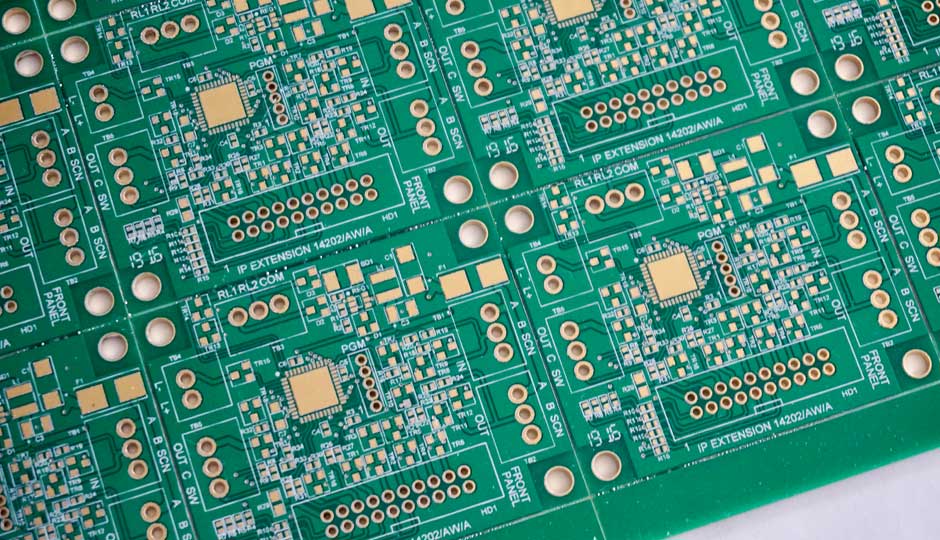
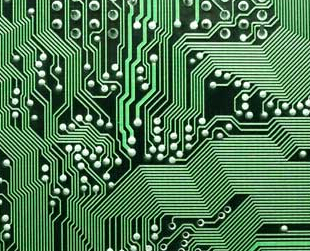
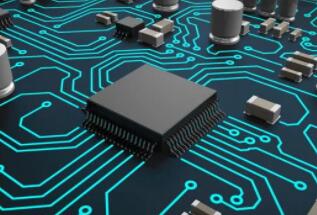
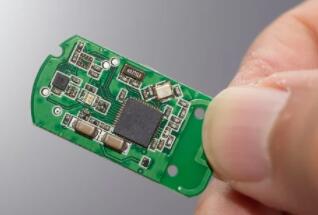
Bare panels (no parts on them) are also known as "Printed Wiring Board (PWB)". The board itself is made of insulating, non-bending material. The thin wire material that can be seen on the surface is copper foil, which is originally covered on the whole board but is etched away in the manufacturing process, and the remaining part becomes a small net line. These lines are called conductor pattern or wiring and are used to provide electrical connections to parts on the PCB.


The colour of PCB is usually green or brown, which is the colour of the solder mask. It is an insulating protective layer that protects copper wire, prevents short circuit caused by wave welding, and saves solder consumption. Also, a silkscreen will be printed on the solder mask layer. Text and symbols (most are white) are usually printed on them to indicate the location of each part on the board. Silkscreen is also called a legend.


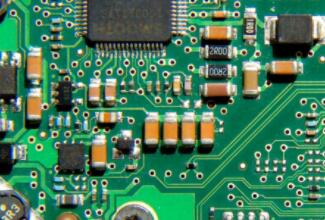
Integrated circuits, transistors, diodes, passive components (such as resistors, capacitors, connectors, etc.) and a variety of other electronic components are installed when the final product made. By connecting wires, electronic signals can be connected and their functions can be work.


Printed Circuit Board


PCB Advantages


(1) Because of the reproducibility and consistency of the graphics, the errors in wiring and assembly are reduced, and the maintenance, debugging and checking the time of the equipment are saved;


(2) The design can be standardized and interchangeable;


(3) High density of wiring, small size, lightweight, which is beneficial to the miniaturization of electronic equipment;


(4) It is beneficial to mechanization and automatic production, increasing labour productivity and reducing the cost of electronic equipment


PCB Basic Manufacturing


PCB manufacturing methods are classified into two types: subtractive and additive. At the moment, the subtractive etching copper foil method is primarily used in mass industrial production.


Basic Manufacturing Procedure:

First, we’ll need a blank circuit board (a circuit board with complete metal foil), and the rest are required circuit boards.


Screen printing: a screen mask is made from a pre-designed circuit diagram. The screen's unnecessary circuit is covered with wax or waterproof material. Following that, the screen mask is placed on a blank circuit board, with a protective agent applied to the screen to prevent corrosion. Finally, immerse the circuit board in the corrosion solution; the part not covered by the protective agent will be corroded away, leaving only the rest to be cleaned away.


Photosensitive board: a pre-designed circuit diagram is printed on a transparent film mask (the simplest method is to print the film with a printer), and the required part is printed in an opaque color in the same way. Then, apply photosensitive pigment to the blank circuit board, place the prepared film mask on the board while it is blazing for a few minutes, remove the mask, and use a developer to display the pattern on the board.


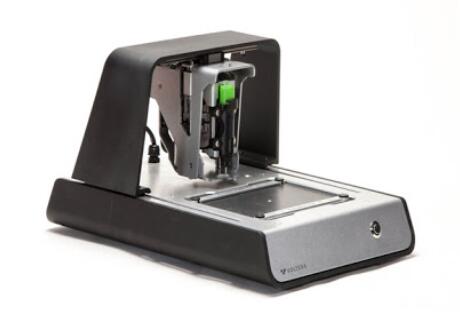
Engraving: use a milling machine or laser engraving machine to remove unnecessary parts of a blank line directly.

 PCB

Other Manufacture Procedure:


(1)Additive

The additive, is a pre-coated copper substrate coated with a photoresistor (D/F), exposed to ultraviolet light and exposed where it is needed. Then using electroplating to thicken the copper of the formal circuit line to the required specification, and plating a layer of anti-corrosion thin tin, and finally remove the photoresist (this process is called film removal), and then etch the copper foil layer under the photoresist.


(2)Layer Method

The lamination method is one of the methods of making multilayer printed circuit board. The outer layer is made after the inner layer is wrapped, and the outer layer is treated by the subtractive or additive method. The sequential layer method can be used to get the multi-layer printed circuit board with multiple layers by repeating the action of the stacking method.

1. Making inner layer

2. Laminated formation( bonding different layers)

3. Layer completion ( Outer metal-containing foil film by subtractive method, mixing with the additive method)

4. Drilling


(3)Panel Method

1. Whole PCB electroplating

2. Add a barrier layer where the surface is to be retained

3. Etching4. Removal of barrier layer


(4)Pattern Method

1. Add a barrier layer to the area where the surface is not required

2. Electroplating requires with thickness

3. Removal of barrier layer4. Etching into unnecessary foil film to disappear


(5)Complete Addition Method

1. Add a barrier layer where there is no conductor

2. Circuit consisting of no electrolytic copper


(6)Partial Addition Method

1. Covered with electrolytic copper PCB

2. Add a barrier layer where there is no conductor

3. Electrolytic copper plating

4. Removal of barrier layer

5. No electrolytic copper disappeared until etched under the original barrier layer.


(7)ALIVH

ALIVH (Any Layer Interstitial Via Hole,Any Layer IVA), this is using aramid fiber fabric as the substrate.

1. Prepreg: dip the fabric in an epoxy resin to form a “Adhesive sheet”.

2. Laser drilling.

3. Filling the hole with conductive paste.

4. Attaching copper foil to the outer layer.

5. Making Circuit pattern by etching on copper foi.

6. Gluing the copper foil on the semi-finished product after the second step.

7. Laminated formation

8. Repeating steps 5 to 7 until completed.


(8)B2it (Buried Bump Interconnection Technology)

1. First make a double panel or multilayer board.

2. Printing silver paste as cone on copper foil.

3. To place the adhesive on a silver paste, making silver cone to penetrate the adhesive.

4. Attaching the previous adhesive to the board of the first step.

5. Etching the copper foil of the adhesive into a circuit pattern.

6. Repeat the second to fourth steps until it completed.

PCB Etching


How to Designing Your Own PCBs


How do you go about designing your own PCB? The ins and outs of PCB design are way too in-depth to get into here, but if you really want to get started, here are some pointers:


1. Find a CAD package: there are a lot of low-cost or free options out there on the market for PCB design. Things to consider when choosing a package:


Community support: are there a lot of people using the package? The more people using it, the more likely you are to find ready-made libraries with the parts you need.


Ease-of-use: if it's painful to use it, you won't.


Capability: some programs place limitations on your design- number of layers, number of components, size of the board, etc. Most of them allow you to pay for a license to upgrade their capability.


Portability: some free programs do not allow you to export or convert your designs, locking you into one supplier only. Maybe that’s a fair price to pay for convenience and price, maybe not.


2. Look at other people’s layouts to see what they have done. Open Source Hardware makes this easier than ever.


3. More practice.


4. Maintain low expectations. Your first board design will have lots of problems. Your 20th board design will have fewer, but will still have some. You’ll never get rid of them all.


5. Schematics are important. Trying to design a board without a good schematic in place first is an exercise in futility.


Finally, a few words on the utility of designing your own circuit boards. If you plan on making more than one or two of a given project, the payback on designing a board is pretty good- point-to-point wiring circuits on a protoboard is a hassle, and they tend to be less robust than purpose-designed boards.


PCB Function Testing


More intensive PCB, with the higher bus speed and analog RF circuits, pose unprecedented challenges to the testing, where efficient testing requires careful design, thoughtful testing methods and appropriate tools which can provide credible test results.


In high-density UUT, if calibration or diagnosis is required, manual work is likely to be required. This is because the machine is limited and the test requires faster (the UUT can collect data quickly with a probe instead of feedback the information to the edge connector), in this case, that the operator is required to probe the test points on the UUT to make sure the test points are clearly marked.


Testing Issues include:

(1) Is the probe bigger than the test point?

(2)Is the probe in danger of shorting several test points and damaging UUT?

(3) Is there a shock hazard to the operator?

(4)Can each operator find out the test point quickly and check it out?

(5)Are test points large and easy to identify?

(6)How long does it take the operator to press the probe on the test point to get an accurate reading?

(7)If the time is too long, there will be some trouble in the small test area, for example, the operator's hand will slide, so it is recommended to expand the test area to avoid this problem.


After considering the above problems, the test engineer should re-evaluate the type of the test probe, modify the test file to better identify the location of the test point or even change the requirements for the operator.


PCB Automatic Exploration

In some cases, the use of automated probes may be required, such as when PCB is difficult to detect manually, or when the test speed is significantly reduced due to the technical limitations of the operator, under this case which an automated approach should be considered.


The automatic probe can eliminate human error, reduce the possibility of short circuit at several test points, and speed up test operation. However, it should be noted that there may be some limitations to automated probes, depending on the vendor's design, including:


(1)A size of UUT

(2)Number of synchronous probes

(3)How close are the two test points?

(4)Positioning accuracy of the testing probe

(5)Can the system detect UUT on both sides?

(6)How fast does the probe move to the next test point?

(7)What is the actual interval required for the probe system? (it is generally larger than an offline functional test system.)


Automatic detection usually does not touch test points with probe and is generally slower than the production line, so two steps may be required: if the detector is used only for diagnosis, the traditional function test system can be used in the production line, and the detector should be put on the side of the production line as the diagnostic system. If the purpose of the detector is using the UUT to calibrate, it is necessary to use multiple systems, which is still much faster than manual operation.


Another key issue is how to integrate the test system into the production line. Is there still room on the production line? Can the system be connected to the conveyor belt? Fortunately, many new detection systems are compatible with the SMEMA standard, so they work in an online environment.


PCB Boundary Scan

Because it requires specialized components to perform the task, this technology should have been discussed prior to the product design phase. Devices with IEEE1194 (boundary-scan) support can be purchased in UUT with a digital circuit, allowing most diagnostic problems to be solved with little or no detection. However, because it expands the area of each compatible device, boundary scanning reduces the overall functionality of the UUT (4 to 5 pins per chip and some wires).


When selecting this technology, the goal is to improve diagnosis. Furthermore, it is emphasized that boundary scans can be used to program Flash memory and PLD devices on UUT, which strengthens the case for selecting the test method.


PCB Design

In the design of a printed circuit board, the layout of components and wiring of circuit connection are two key aspects.


PCB Layout

The layout is to put the circuit device in the printed circuit board wiring area.

 PCB Layout

The layout not only affects the wiring work behind it, but it also has a significant impact on the overall performance of the circuit board. To meet the requirements of process, detection, and maintenance, the components should be uniform, neat, and compactly placed on the PCB to minimize the lead and connection between the components, resulting in uniform assembly density.


PCB Functional Differentiation

Components should be arranged in groups based on their power-supply voltage, digital and analog circuits, speed, current, and so on, to avoid interference with one another.


When installing the digital circuit and analog circuit on the circuit board, the ground wire and power supply system of the two circuits should be completely separated, and the digital circuit and analog circuit should be arranged in different layers if the conditions allow. When arranging the fast, medium, and low-speed logic circuits on the circuit board, they should be close to the connector, while the memory should be far away from the connector.


This reduces common impedance coupling, radiation, and crosstalk. The clock and high-frequency circuits, which are the primary sources of disturbance emitter, must be arranged separately and away from the sensitive circuit.


PCB Thermal Magnetic Balance

The heating parts and the heat-sensitive parts are as far away as possible, the influence of electromagnetic compatibility should be considered.


Manufacturability:

(1) Surface

The mounting parts are installed on one side as far as possible and simplify the assembly process.


(2) Spacing

The minimum distance between components is determined according to the shape of components and other related properties. At present, the distance between components is generally not less than 0.2mm~0.3mm, the distance between components and PCB edge should be more than 2mm.


(3) Direction

The direction and density of the elements should be favourable to the convection of the air. Considering the assembly process, the component direction is as consistent as possible.


PCB Wiring


1. Wires

(1) Width

The minimum width of the printed wire is determined by the adhesive strength between the conductor and the insulating substrate and the current value flowing through them. Printed wire can be as wide as possible, especially power lines and ground wires, as wide as possible under the condition of the plate surface, even if the area is tight, generally not less than 1mm.


In particular, ground wires, even if they are not allowed to be widened locally, it is necessary to widen somewhere permitted to reduce the resistance of the whole ground wire system. For example, the conductors longer than 80mm, even if the current is small, should be widened to reduce the influence of conductor voltage drop on the circuit.


(2) Length

To minimize the length of the wiring, the shorter the wiring, the less interference and crosstalk, and the lower the parasitic reactance and the less radiation. Especially the FET gate, transistor base and high-frequency circuit should pay more attention to short wiring.


(3) Gap

The distance between adjacent conductors should meet electrical safety standards. The main electrical issues affecting wiring spacing are crosstalk and voltage breakdown. The spacing should be as wide as possible for ease of operation and production, and the minimum spacing should be appropriate to the applied voltage. This voltage includes the operating voltage, the additional fluctuation voltage, the overvoltage, and the peak voltage for other reasons. For safety reasons, the spacing should be wider when there is a current-voltage in the circuit.


(4) Path

The signal path from driver to load should be constant in width. The path impedance (resistance, inductance, and capacitance) changes as the path width changes, resulting in reflection and line impedance imbalance. As a result, it is best to keep the path width constant.


Furthermore, it is best to avoid right and sharp angles for the wiring corner, which should generally be greater than 90 °. The inner edge of the right path can generate a concentrated electric field, which produces noise coupled to the adjacent path, and the 45 °path outperforms the right angle and acute angle paths. When two conductors come together at an acute angle, the acute angle should be turned into a circle.


2. Aperture and Pad 

PCB's Aperture and Pad

The aperture of components should be better matched with the diameter of the lead; in other words, the diameter of the installation hole should be slightly larger 0.150.3mm than the component's lead diameter. DIL packaging pins and most small components have an aperture of 0.8mm and a pad diameter of about 2mm.


For large pad aperture, in order to get better adhesion ability, the ratio of the aperture and the diameter of the pad is about 2 for epoxy glass plate and 2.5~3 for phenol cardboard.


Perforation, which is commonly used in multilayer PCBs, has a minimum available diameter that is related to plate thickness, and the plate thickness to aperture ratio is usually 6:1. A high-speed signal generates 14nH inductance and 0.38pF capacitance when perforated. As a result, when laying high-speed signal channels, the number of holes should be kept to a bare minimum.


If layer changes are unavoidable for high-speed parallel lines (such as address and data lines), it is necessary to ensure that the number of holes in each signal line is the same, and that the number of holes is minimized. When necessary, a printed conductor protection ring or protective line should be installed to prevent oscillations and improve circuit performance.


3. Grounding Design

Unreasonable grounding design will affect the printed circuit board, fail to reach the design target, and even can not work. The ground wire is the reference of the potential in the circuit and the common current channel. The ground potential value is zero theoretically, but in fact, because of the existence of conductor impedance, the potential everywhere of the ground wire is not all zero. As long as the ground wire has a certain length, it's potential may not in zero everywhere. The ground wire is not only a necessary common circuit channel, it also a channel for interference.


One point grounding is the basic principle of eliminating grounding interference. The ground wire of all circuits and devices must be connected to a unified grounding point, which is used as the circuit and the zero potential reference point of the equipment. One point grounding is divided into common ground wire series grounding and independent wires parallel grounding.


The common ground-wire series grounding is simple. The grounding lead of each circuit is relatively short, and its resistance is relatively small. This kind of grounding method is often used in the earthing of the equipment cabinet. The independent wires parallel grounding has one ground point which is defined as the ground reference point. The other points that need to be grounded are directly connected to this point, and the earth potential of each circuit is related only to the ground current base impedance of the circuit, which will not be affected by other circuits.


The Following Points Should Be Noted in Specific Wiring:

(1)The line length is as short as possible in order to minimize the lead inductance. In low-frequency circuits, multipoint grounding is avoided because the ground current of all circuits flows through a common grounding impedance or grounding plane.


(2)Common ground wires should be arranged as far as possible on the edge of the printed circuit board. As much copper foil as possible should be retained on the circuit board as the ground wire, which can enhance shielding ability.


(3)The double-layer plate can use the ground surface, the purpose of which is to provide a low-impedance ground wire.


(4)In a multi-layer printed circuit board, a grounding layer can be set, and it is designed as a mesh. The spacing of the earth grid can not be too large because one of the main functions of the earth wire is to provide the signal return path. If the spacing of the grid is large signal-loop area will be formed, which will cause radiation and sensitivity problems. In addition, if the signal reflux path is a small loop area, other ground lines will not take into effect.


(5)The earth surface can minimize the radiation loop.


How Does PCB Works


PCB Recycle


PCB manufacturing technology is a very complex, comprehensive processing technology. Especially in the process of wet processing, a large amount of water is needed, so there are many kinds of heavy metal wastewater and organic wastewater discharged. 


The composition is complex, and the treatment is difficult. If the copper foil utilization ratio of the printed circuit board is 30% and 40%, most of the copper content is in wastewater. If the thickness of each copper foil is 35 microns based on 10, 000 square meters of double panels, the wastewater contains about 4500 kilograms of copper, and there are many other heavy metals and precious metals. These are found in waste liquid and wastewater, if the metal is discharged without treatment, it is not only a big waste but also pollutes the environment. 


Therefore, the treatment of wastewater and the recycling of copper and other metals in the process of PCB production are of great significance and are indispensable parts in PCB production.


It is well known that the wastewater in the production of the printed circuit board is a large amount of copper, and a very small amount of lead, tin, gold, silver, fluorine, ammonia, organic compounds and organic complexes, etc.


As for the production of copper wastewater, the main processes are: copper sink, copper plating, copper electroplating, etching and various PCB pretreatment processes (chemical pretreatment, brush plate pretreatment, pozzolanic ash grinding plate pretreatment, etc.).


The copper-containing wastewater produced by the above processes can be divided into complex wastewater and non-complex wastewater according to its composition. In order to make the wastewater treatment meet the environment-protection standard, and the maximum allowable compound concentration of copper is 1mg/l (according to copper), but different wastewater treatment methods must be adopted for different copper-containing wastewater.


FAQ


1. What is PCB?

A printed circuit board, or PCB, is used to mechanically support and electrically connect electronic components using conductive pathways, tracks or signal traces etched from copper sheets laminated onto a non-conductive substrate.


2. What is PCB and types of PCB?

A printed circuit board (PCB) is a thin board made from fiberglass, composite epoxy, or other laminate materials. PCBs are found in various electrical and electronic components such as beepers, radios, radars, computer systems, etc. Different types of PCBs are used based on the applications.


3. What can a PCB be used for?

Printed circuit boards (PCBs) are used to mechanically support and electrically connect electronic components using conductive pathways, tracks or signal traces etched from copper sheets laminated onto a non-conductive substrate, employed in the manufacturing of business machines and computers, as well as communication ...


4. Why are PCB green?

It is due to the solder mask, which protects the copper circuits printed on the fibre glass core to prevent short circuits, soldering errors, etc. ... The colour of the solder mask gives the board its appearance.


5. What is PCB and its advantages?

Compact Size and Saving of Wire. A characteristic PCB includes a large number of electronic components. On a Printed circuit board, the interconnection between the components is made through copper tracks instead of using a number of current carrying wires. It makes the interconnections less bulky.


6. How long does it take for PCBs to break down?

3.5 to 83 days. The time it takes for half of the amount of PCBs (initially) present to be broken down ranges from 3.5 to 83 days for molecules with 1 to 5 chlorine atoms. In water, PCBs are essentially broken down by the effect of sunlight (photolysis).


7. What is the disadvantage of PCB?

Disadvantages: Easy to Cause Handling Damage. Process Uses a Carcinogen (Thiourea) Exposed Tin on Final Assembly can Corrode.


8. Which PCB design software is the best for beginners?

Top Best PCB Design Software of 2021

a. PROTEL (Altium Designer) 

b.PADS (PowerPCB) 

c. ORCAD. 

d. Allegro. 

e. Eagle(Easily Applicable Graphical Layout Editor)

f. Kicad.

g. EasyEda.

h. Fritzing.


9. What are the advantage of flexible PCB?

The flexible circuit board are designed for saving room and improving the flexibility to meet a smaller and higher density mounting design, it also helps to reduce the assembly process and enhance reliability.


10. Why do we use PCB instead of breadboard circuit?

The advantages of a printed circuit board: the board is permanent to have an electronic device worked. PCB has a better current carrying capacity comparing to a breadboard, you can make your traces wider to take more current so that work well. ... You can mount heat-sinks to the board so that have them rigid.

Kynix

Kynix was founded in 2008, specializing in the electronic components distribution business. We adhere to honesty and ethics as our business philosophy and have gradually established an excellent reputation and credibility in our international business. With the accurate quotation, excellent credit, reasonable price, reliable quality, fast delivery, and authentic service, we have won the praise of the majority of customers.

Join our mailing list!

Be the first to know about new products, special offers, and more.

Leave a Reply

We'd love to hear from you! Feel free to share your thoughts and comments below. Rest assured, your email address will remain private.

Name *
Email *
Captcha *
Rating:

Kynix

  • How to purchase

  • Order
  • Search & Inquiry
  • Shipping & Tracking
  • Payment Methods
  • Contact Us

  • Tel: 00852-6915 1330
  • Email: info@kynix.com
  • Follow Us

authentication

Kynix

© 2008-2026 kynix.com all rights reserved.