The Kynix Blog
Stay Ahead with Expert Electronics Insights,
Industry Trends, and Innovative Tips
- Electronic Components
- News Room
- General electronic semiconductor
- Components Guide
- Sort by
- Robots
- Transmitters
- Capacitors
- IC Chips
- PCBs
- Connectors
- Amplifiers
- Memory
- LED
- Diodes
- Transistors
- Battery
- Oscillators
- Resistors
- Transceiver
- RFID
- FPGA
- Mosfets
- Sensor
- Motors, Solenoids, Driver Boards/Modules
- Relays
- Optoelectronics
- Power
- Transformer
- Fuse
- Thyristor
- potentiometer
- Development Boards
- RF/IF
- Semiconductor Information
- PCB
- transistor
A safety monitoring method called On-Site Visualization has been implemented in metro system construction sites in Jakarta, Indonesia as part of a Japan International Cooperation Agency (JICA) project. On-Site Visualization (OSV), as its name suggests, is a real-time data processing technology used to check safety levels at construction sites. A device with built-in LEDs is attached to walls and pillars at the building site and measures any irregularities or tilting. The LEDs light up like traffic lights to indicate the danger level with different colors: blue for "no irregularities", and yellow and red for "danger of collapse". This clear method of representation is important in countries with low literacy rates.The JICA project, titled Economic and Social Development Support in Developing Countries through Partnerships with the Private Sector, had participants from multiple private organizations in the OSV Consortium (an industry-academic collaborative group that promotes use of OSV technology). Professor Akutagawa oversaw the technology use. The teams monitored safety levels using OSV for a fixed period at three metro system building sites in the center of Jakarta (two stations in the city center and an elevated track in the south). Following this, they held a seminar presenting the results of the implementation. The project was evaluated highly by the head of construction at Jakarta MRT, who stated that "We can now expect higher standards of safety management".In many developing countries, an increase in public works is accompanied by a sharp rise in the number of accidents, and there is a growing need for safety monitoring. "I want to build a human network that combines know-how from different fields to improve levels of safety and security" commented Professor Akutagawa.Reference:LM324MMLM2710LM3080
kynix On 2016-12-10
Researchers have proposed a design for the first DNA sequencer based on an electronic nanosensor that can detect tiny motions as small as a single atom. The proposed device—a type of capacitor, which stores electric charge—is a tiny ribbon of molybdenum disulfide suspended over a metal electrode and immersed in water. The ribbon is 15.5 nanometers (nm, billionths of a meter) long and 4.5 nm wide. Single-stranded DNA, containing a chain of bases (bits of genetic code), is threaded through a hole 2.5 nm wide in the thin ribbon. The ribbon flexes only when a DNA base pairs up with and then separates from a complementary base affixed to the hole. The membrane motion is detected as an electrical signal. As described in a new paper, the NIST team made numerical simulations and theoretical estimates to show the membrane would be 79 to 86 percent accurate in identifying DNA bases in a single measurement at speeds up to about 70 million bases per second. Integrated circuits would detect and measure electrical signals and identify bases. The results suggest such a device could be a fast, accurate and cost-effective DNA sequencer, according to the paper. Conventional sequencing, developed in the 1970s, involves separating, copying, labeling and reassembling pieces of DNA to read the genetic information. Newer methods include automated sequencing of many DNA fragments at once—still costly—and novel "nanopore sequencing" concepts. For example, the same NIST group recently demonstrated the idea of sequencing DNA by passing it through a graphene nanopore, and measuring how graphene's electronic properties respond to strain. The latest NIST proposal relies on a thin film of molybdenum disulfide—a stable, layered material that conducts electricity and is often used as a lubricant. Among other advantages, this material does not stick to DNA, which can be a problem with graphene. The NIST team suggests the method might even work without a nanopore—a simpler design—by passing DNA across the edge of the membrane. "This approach potentially solves the issue with DNA sticking to graphene if inserted improperly, because this approach does not use graphene, period," NIST theorist and lead author Alex Smolyanitsky said. "Another major difference is that instead of relying on the properties of graphene or any particular material used, we read motions electrically in an easier way by forming a capacitor. This makes any electrically conductive membrane suitable for the application." Nanomaterials expert Boris Yakobson of Rice University, a co-author on the paper, suggested the capacitor idea. Computational support was provided by the University of Groningen in the Netherlands. DNA has four bases. For the simulations, cytosine (C), which naturally pairs up with guanine (G), is attached to the inside of the pore. When a piece of DNA passes through the pore, any G in the strand temporarily attaches to the embedded C, pulling on the nanoribbon and signaling the electrode. The DNA sequence is determined by measuring how and when electrical blips vary over time. To detect all four bases, four nanoribbons, each with a different base attached to the pore, could be stacked vertically to create an integrated DNA sensor. The molybdenum disulfide ribbon is flexible enough to deform measurably in response to the forces required to break up a DNA pair, but rigid enough to have less ongoing, meaningless movement than graphene, potentially reducing unwanted noise in the sequencing signals. The deflection of the ribbon is exceedingly small, on the order of one angstrom, the size of a hydrogen atom. Its pulling force is on the order of 50 piconewtons, or trillionths of a newton, enough to break up the delicate chemical bonds between DNA bases. Researchers estimated how the device would perform in an integrated circuit and found the peak currents through the capacitor were measurable (50 to 70 picoamperes), even for the small nanoribbons studied. The current peaks are expected to be even larger in physical systems. The device size could be tweaked to make it even easier to measure sequencing signals. The NIST authors hope to build a physical version of the device in the future. For practical applications, the chip-sized DNA sequencing microfluidic technology might be combined with electronics into a single device small enough to be handheld. Reference: RFCS04021000BJTT1 RFCS04025000DBTT1 SC02201518
kynix On 2016-12-09
The availability of the MMC5883MA 3 Axis Magnetic Sensor has been announced by MEMSIC. The newest member of MEMSIC’s Anisotropic Magneto Resistive (AMR) based Magnetic Sensor family, it provides the industry’s highest accuracy, lowest noise and lowest power consumption. All combined in an industry standard small LGA package, and addresses the ever-increasing demands of industrial and drone applications.Dr. Yang Zhao, MEMSIC’s Chairman, President and CEO said: “With more than 300 million units shipped, MEMSIC has a long history of success with its AMR magnetic sensor in a wide range of critical portable and wearable applications. Integrating innovative design architecture and optimised processes, MEMSIC’s new 3-Axis, ± 8 Gauss Full Scale Range (FSR) MMC5883MA provides a reliable, high performance solution for industrial and drone system design and development engineers who need to provide stability and direction sensing for their designs.”The MEMSIC MMC5883MA 3-Axis Magnetic Sensor provides 16-bit operation over a wide ± 8 Gauss operating range with linearity of ±0.2 % FSR, hysteresis of 0.2 % FSR and repeatability of 0.2 % FSR on each of its 3-axis. Its exceptionally high performance enables faster algorithms for hard and soft iron interference correction delivering more precise and faster heading determination. The small, low profile LGA package measures 3.0x3.0x1.0 mm. and operates over the -40 to +85°C temperature range from a supply voltage of 2.16-3.6V. It exhibits extremely low current consumption of only 20uA at seven samples per second data rate and extremely low noise level of only 0.4mGauss total RMS noise making it ideal for drone and industrial markets.The MC5883MA is complete system incorporating on-chip signal processing and an integrated I2C 400kHz FAST mode operation digital interface for direct connectivity to the system microprocessor.The MEMSIC MMC5883MA 3-Axis Magnetic Sensor is available immediately and in production now. Devices pre-mounted on prototyping boards can be purchased directly from MEMSIC. Designers can evaluate and log data using MEMSIC's Universal Evaluation Board.Reference:TLE4976-2KAH180-WG-7AH1801-WG-7
kynix On 2016-12-08
Even if you can afford a new car this year, you might just enjoy hacking together your own version of the connected car of the future instead of buying the latest $50,000 fully electric car. If you have an iPhone or Android phone and about a hundred bucks, you can add a device to your current car that will sync with an app and provide a few of the Internet of Things features that will become standard as connected cars are made by every automaker.Connecting to the Connected CarThe key to making these devices work is that they all hook into a car’s OBD-II Port. Cars made in the US after 1996 are required to have this port, and the connector must be within 2 feet of the steering wheel or somewhere within reach of the driver. This port accesses the car’s main computer that records mileage, speed, emissions, and other critical data.The device used to connect to the OBD-II port is often called a dongle, and a variety of tech start-ups are making their own versions. These dongles take your car’s data and transmit it to your iPhone or Android device using Wi-Fi, Bluetooth, or cellular connectivity – meaning the dongle itself will have some kind of transmitter, such as a SIM card if it uses a cellular connection.Connected Car App BenefitsThe last piece is the mobile app on your phone, which analyzes the car data on the go. Typically, the same company that makes the dongle has an app that works with it.Connected car apps have three main categories of features:Automatic crash detection and roadside assistance – If you get into a car accident, the app will send out an alert on your phone to 911 and your predefined emergency contacts.Vehicle health diagnostics – The app tracks conditions such as engine codes, battery drain, fluids, and more, helping with preventative car maintenance.Real-time location monitoring – From finding your car quickly in a parking lot to geo-fencing a teen driver to tracking a stolen vehicle, this app features help you know where your car is.Most connected car apps offer a combination of these main benefits in some fashion. Other possible tools include standalone GPS mapping, remote lock/unlock, trip history, security features, driver awareness monitoring, and pole-position style games.There are plenty of options to choose from now on, it just depends on what interests you and how much you want to spend. Unless you can wait until these features are built into every car available.Reference:BVL120600003NBVL062000003N3202P
kynix On 2016-12-08
Scientists often discover interesting things without completely understanding how they work. That has been the case with an experimental memory technology in which temperature and voltage work together to create the conditions for data storage. But precisely how was unknown. But when a Stanford team found a way to untangle the chip’s energy and heat requirements, their tentative findings revealed a pleasant surprise: The process may be more energy efficient than was previously supposed.That’s good news for next-generation mobile devices whose batteries would last longer if they were powering lower energy chips. The group that made this discovery, led by Stanford electrical engineer H.-S. Philip Wong, is presenting the paper when the IEEE International Electron Devices Meeting (IEDM) brings leading researchers to San Francisco Dec. 5.The new technology the team investigated is called resistive random-access memory, or RRAM for short. RRAM is based on a new type of semiconductor material that forms digital zeros and ones by resisting or permitting the flow of electrons.RRAM has the potential to do things that aren’t possible with silicon: for instance, being layered on top of computer transistors in new three-dimensional, high-rise chips that would be faster and more energy efficient than current electronics, which is ideal for smartphones and other mobile devices where energy efficiency is a vital feature.But while engineers can observe that RRAM does store data, they don’t know exactly how these new materials work. “We need much more precise information about the fundamental behavior of RRAM before we can hope to produce reliable devices,” Wong said. So to help engineers understand some of the unknowns, Wong’s team built a tool to measure the basic forces that make RRAM chips work.Graduate student Zizhen Jiang of the Stanford team explained the basics: RRAM materials are insulators, which normally do not allow electricity to flow, she said. But under certain circumstances, insulators can be induced to let electrons flow.Past research had shown how: Jolting RRAM materials with an electric field causes a pathway to form that permitted electron flows. This pathway is called a filament. To break the filament, researchers apply another jolt and the material becomes an insulator again. So each jolt switched the RRAM from zero to one or back, which is what makes the material useful for data storage.But electricity is not the only force at play in RRAM switching. Pumping electrons into any material raises its temperature. That’s the principle behind electric stoves. In the case of RRAM, it was the elevated temperature caused by introducing voltage that induced filaments to form or break. The question was what voltage-induced temperature was needed to cause the switching. No one knew.Before the new Stanford study researchers thought short bursts of voltage, sufficient to generate temperatures of about 1,160ºF – hot enough to melt aluminum – was the switching point. But those were estimates because there was no way to measure the heat generated by an electric jolt. “In order to begin to answer our questions, we had to decouple the effects of voltage and temperature on filament formation,” said Ziwen Wang, another graduate student on the team.Essentially, the Stanford researchers had to heat the RRAM material without using an electric field. So they put an RRAM chip on a micro thermal stage (MTS) device – a sophisticated hot plate capable of generating a wide range of temperatures inside the material.Of course the objective was not merely to heat the material, but also to measure how filaments formed. Here they took advantage of the fact that RRAM materials are insulators in their natural state. That makes them digital zeros. As soon as a filament formed electrons would flow. The digital zero would become a digital one, which the researchers could detect.Using this experimental model, the team put RRAM chips on the burner and cranked up the heat, starting at about 80ºF – roughly the temperature of a warm room – all the way up to 1,520ºF, hot enough to melt a silver coin. Heating the RRAM to various temperatures in between these extremes, the researchers measured precisely if and how RRAM switched from its native zero to a digital one.To their pleasant surprise, the researchers observed that filaments could form more efficiently at ambient temperatures between 80ºF and 260ºF, which is hotter than boiling water – contrary to prior expectation that hotter was better.If confirmed by subsequent research, this would be good news because in a working chip the switching temperature would be created by the voltage and duration of the electric jolt. Efficient switching at lower temperatures would require less electricity and make RRAM more energy efficient and extend battery life when used as the memory in mobile devices.Much work remains to be done to make RRAM memory practical but this research provides the test bed to vary conditions systematically instead of relying on hit-and-miss hunches. “Now we can use voltage and temperature as design inputs in a predictive manner and that is going to enable us to design a better memory device,” Wang said.Reference:MT16JTF51264AZ-1G6M1SDUS5EB-001GMD2202-D192
kynix On 2016-12-07
Researchers from the Institute for Biomedical Engineering have succeeded in measuring tiny changes in strong magnetic fields. In their experiments, the scientists magnetised a water droplet inside a magnetic resonance imaging (MRI) scanner, a device that is used for medical imaging. The researchers were able to detect even the tiniest variations of the magnetic field strength within the droplet.These changes were up to a trillion times smaller than the seven tesla field strength of the MRI scanner used in the experiment. “Until now, it was possible only to measure such small variations in weak magnetic fields,” says Klaas Prüssmann, Professor of Bioimaging at ETH Zurich and the University of Zurich.An example of a weak magnetic field is that of the Earth, where the field strength is just a few dozen microtesla. For fields of this kind, highly sensitive measurement methods are already able to detect variations of about a trillionth of the field strength, says Prüssmann.“Now, we have a similarly sensitive method for strong fields of more than one tesla, such as those used, inter alia, in medical imaging.” The scientists based the sensing technique on the principle of nuclear magnetic resonance, which also serves as the basis for magnetic resonance imaging and the spectroscopic methods that biologists use to elucidate the 3D structure of molecules.However, to measure the variations, the scientists had to build a new high-precision sensor, part of which is a highly sensitive digital radio receiver. “This allowed us to reduce background noise to an extremely low level during the measurements,” says Simon Gross. Gross wrote his doctoral thesis on this topic in Prüssmann’s group and is lead author of the paper published in the journal Nature Communications.In the case of nuclear magnetic resonance, radio waves are used to excite atomic nuclei in a magnetic field. This causes the nuclei to emit weak radio waves of their own, which are measured using a radio antenna; their exact frequency indicates the strength of the magnetic field.As the scientists emphasise, it was a challenge to construct the sensor in such a way that the radio antenna did not distort the measurements. The scientists have to position it in the immediate vicinity of the water droplet, but as it is made of copper it becomes magnetised in the strong magnetic field, causing a change in the magnetic field inside the droplet.The researchers therefore came up with a trick: they cast the droplet and antenna in a specially prepared polymer; its magnetisability (magnetic susceptibility) exactly matched that of the copper antenna. In this way, the scientists were able to eliminate the detrimental influence of the antenna on the water sample.This measurement technique for very small changes in magnetic fields allows the scientists to now look into the causes of such changes. They expect their technique to find use in various areas of science, some of them in the field of medicine, although the majority of these applications are still in their infancy.“In an MRI scanner, the molecules in body tissue receive minimal magnetisation – in particular, the water molecules that are also present in blood,” explains doctoral student Gross. “The new sensor is so sensitive that we can use it to measure mechanical processes in the body; for example, the contraction of the heart with the heartbeat.”The scientists carried out an experiment in which they positioned their sensor in front of the chest of a volunteer test subject inside an MRI scanner. They were able to detect periodic changes in the magnetic field, which pulsated in time with the heartbeat.The measurement curve is reminiscent of an electrocardiogram (ECG), but unlike the latter measures a mechanical process (the contraction of the heart) rather than electrical conduction.“We are in the process of analysing and refining our magnetometer measurement technique in collaboration with cardiologists and signal processing experts,” says Prüssmann. “Ultimately, we hope that our sensor will be able to provide information on heart disease – and do so non-invasively and in real time.”The new measurement technique could also be used in the development of new contrast agents for magnetic resonance imaging: in MRI, the image contrast is based largely on how quickly a magnetised nuclear spin reverts to its equilibrium state.Experts call this process relaxation. Contrast agents influence the relaxation characteristics of nuclear spins even at low concentrations and are used to highlight certain structures in the body.In strong magnetic fields, sensitivity issues had previously restricted scientists to measurement of just two of the three spatial nuclear spin components and their relaxation.They had to rely on an indirect measurement of relaxation in the important third dimension. For the first time, the new high-precision measurement technique allows the direct measurement of all three dimensions of nuclear spin in strong magnetic fields.Direct measurement of all three nuclear spin components also paves the way for future developments in nuclear magnetic resonance (NMR) spectroscopy for applications in biological and chemical research.
kynix On 2016-12-07
Join our mailing list!
Be the first to know about new products, special offers, and more.
Feature Posts
How Resistors Work: From Basic Principles to Advanced Applications2025-07-30
DC Switching Regulators: Principles, Selection, and Applications2025-05-30
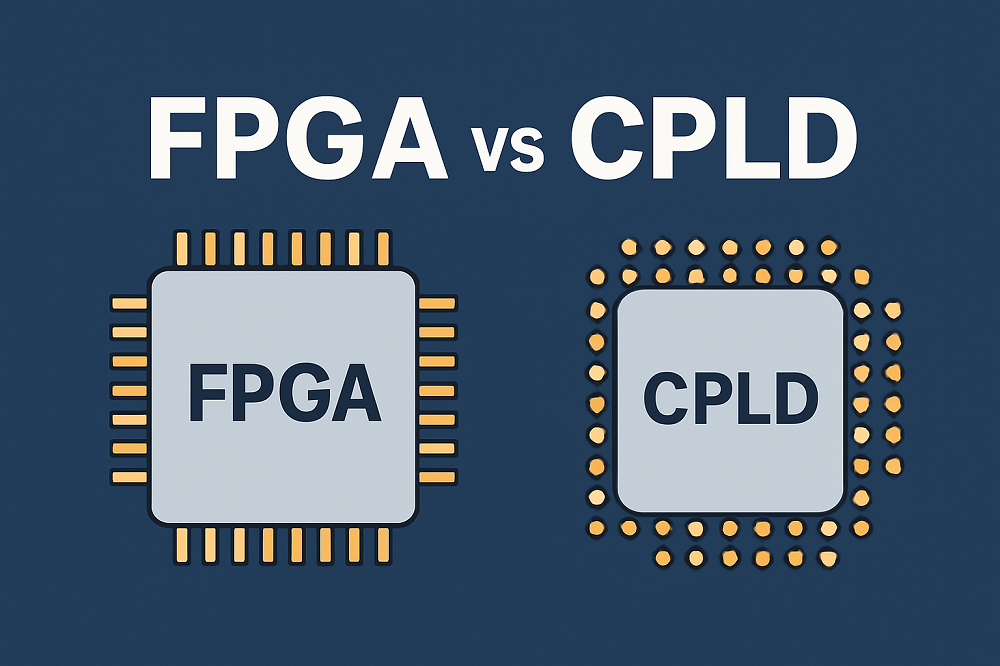
FPGA vs CPLD: In-depth Analysis of Architecture, Performance and Application2025-05-07
MOSFET Technology: Essential Guide to Working Principles & Applications2025-05-04
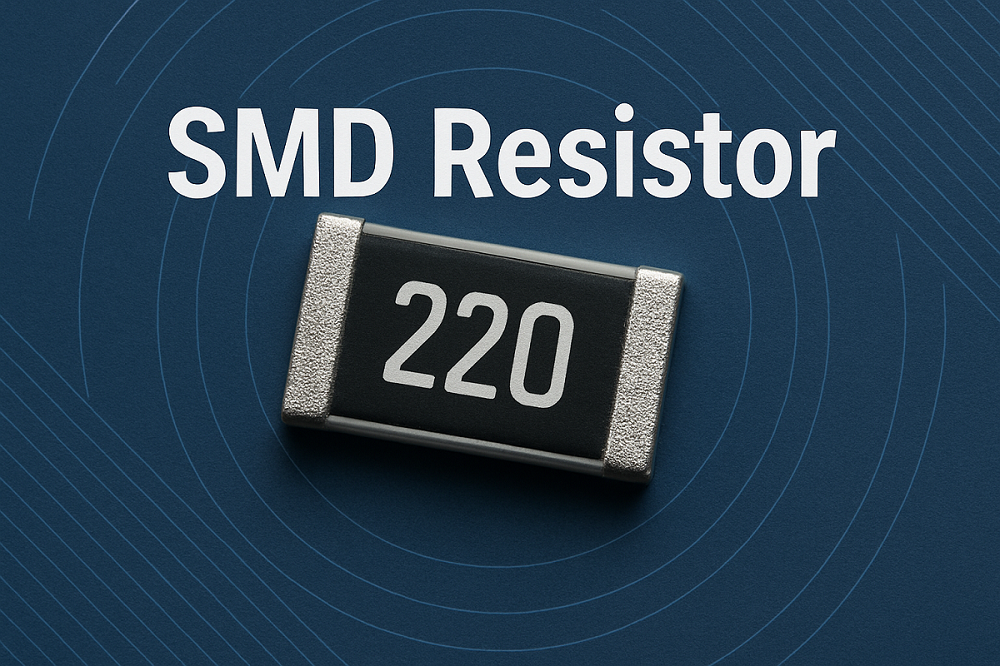
SMD Resistor: Types, Applications, and Selection Guide2025-04-30