The Kynix Blog
Stay Ahead with Expert Electronics Insights,
Industry Trends, and Innovative Tips
- Electronic Components
- News Room
- General electronic semiconductor
- Components Guide
- Sort by
- Robots
- Transmitters
- Capacitors
- IC Chips
- PCBs
- Connectors
- Amplifiers
- Memory
- LED
- Diodes
- Transistors
- Battery
- Oscillators
- Resistors
- Transceiver
- RFID
- FPGA
- Mosfets
- Sensor
- Motors, Solenoids, Driver Boards/Modules
- Relays
- Optoelectronics
- Power
- Transformer
- Fuse
- Thyristor
- potentiometer
- Development Boards
- RF/IF
- Semiconductor Information
- PCB
- transistor
Powerbox introduces two board mounted DC/DC converters to power industrial and railway applications; the extra wide input PQB50U-72S and the ultra-high power density PFB600W-110S. With an unprecedented extra wide input of 12:1 (14V to 160V) the PQB50U-72S delivers 50W in quarter brick packaging, bringing simplicity to power designers addressing EN50155 applications (one unit covering all bus voltages).In full brick packaging, the PFB600W-110S delivers industry’s first 600W unit within a 4:1 input voltage range of 43V to 160V, accommodating 72V, 96V and 110V bus voltages. Both products can be operated from -40°C up to +100°C case temperature, matching very demanding and ruggedized requirements such as in construction vehicles, mining equipment & heavy machinery process control.Demanding Industry and Railway power designers always face challenges to optimize board power solutions when designing standardized equipment for worldwide operation on a very large variety of system bus voltages. In the railway industry, designers are permanently seeking the best power architecture to operate within the overall EN50155 input voltage range, from 24V up to 110V (including continuous operation in the 14.4V brownout condition and 154V transients). To guarantee board power designers the highest level of flexibility, the PQB50U-72S has been developed to deliver full and stable power within an extended input voltage range from 14V up to 160V.In Demanding Industry and the forthcoming Industry 4.0 applications, system designers have to guarantee full performance in a multitude of applications operating from 24V to 72V and fixed industrial battery backup systems using 110V in which the quality of line is often disturbed. In those applications, the PQB50U-72S is designed to sustain high level of line disturbance within a range as low as 14V to a 200V surge. In such environments, the PQB50U-72S guarantees full output performance, simplifying design for systems architects and by having only one power module covering all ranges of input voltage, thus reducing inventory.PQB50U-72S comes in a standardized DOSA quarter-brick package. The module is available in four output voltages (5V/6A ; 12V/4.2A ; 24V/2.1A and 48V/1.05A). The device sustains 200V/100ms surge input voltage, includes short circuit and over-voltage protection, meets UL60950-1-2nd edition basic insulation and meets the EN50155 (EN61373) shock and vibration standard. The unit can be operated from -40 up to +100°C case temperature and has an efficiency of 86%. The PQB50U-72S includes an aluminum baseplate, making it possible to fix a heatsink or mount it directly to a cold-wall or chassis.Used in demanding applications, the PQB50U-72S has an isolation voltage of 3,000VDC (min) between input/output, 1,500VDC input/case and 1,500VDC output to case.“From the early days, board mounted DC/DC converters simplified the design process, whilst shortening the time to market” says Martin Fredmark, VP Product Management. “With the increased demand from Systems Designers to meet a large variety of bus voltages and from Supply Chain Managers to reduce inventory and fewer product-codes, Powerbox has been working on Swiss-knife power solutions, of which the PQB50U-72S and PFB600W-110S are perfect example of products responding to those needs”Part of the railway and industry modernization programs introduce more digital communication, entertainment systems, local computers and radio-communication, requiring higher power board mounted converters, able to operate independently of the system bus voltage, such as the EN50155 input bus voltage (72V, 96V, 110V), industrial 48V while delivering 600W output power.Designed and optimized for railway 110V systems, the new Powerbox PFB600W-110S can be operated from 43V up to 160V input, sustaining 180V/100ms surge voltage. The 4:1 input voltage range makes it easier and simpler for the system designer when developing new equipment for international railway applications.Packaged in an industry standard full-brick, the PFB600W-110S is available in four output voltages (12V/50A ; 24V/25A ; 28V/21.4A and 48V/12.5A) with an output power up to 600W. The PFB600W-110S is fully regulated and operates at a fixed switching frequency of 250 KHz and includes a PI type input filter reducing the input and noise. PFB600W-110S includes current limiting, continuous short-circuit protection, under/over-voltage lockout and an over-temperature protection with thermal shutdown with automatic recovery. For safety, the module complies with the UL60950-1 2nd edition (Basic isolation) has an input/output and input/case isolation of 2,500VDC and 500VDC output/case.For additional power or operational redundancy, the PFB600W-110S can be used in parallel. A paralleling control circuit is included within the product, guaranteeing true load-sharing, without the need to add external components. PFB600W-110S has a typical efficiency of 89% and designed carefully to optimize the thermal dissipation through the baseplate.The product complies with EN50155 (EN61373) shock and vibration standard and environmental EN50155 (EN60068-2-1). PQB50U-72S and PFB600W-110S meet CE Mark 2004/108/EC requirements.Reference:DS1200DEZ1582CM-2.5SC2608AS
kynix On 2016-11-04
Samsung Electronics unveiled the industry’s first removable memory cards based on the JEDEC UFS 1.0 Card Extension Standard, for use in high-resolution mobile shooting devices such as DSLRs, 3D VR cameras, action cams and drones. Coming in a wide range of storage capacities including 256, 128, 64 and 32 GB, Samsung’s UFS cards are expected to bring a significant performance boost to the external memory storage market, allowing much more satisfying multimedia experiences.“Our new 256GB UFS card will provide an ideal user experience for digitally-minded consumers and lead the industry in establishing the most competitive memory card solution,” said Jung-bae Lee, senior vice president, Memory Product Planning & Application Engineering, Samsung Electronics.“By launching our new high-capacity, high-performance UFS card line-up, we are changing the growth paradigm of the memory card market to prioritise performance and user convenience above all.”Samsung’s new 256GB UFS removable memory card ─ simply referred to as the UFS card will provide greatly improved user experiences, especially in high-resolution 3D gaming and high-resolution movie playback.It provides more than five times faster sequential read performance compared to that of a typical microSD card, reading sequentially at 530 MB/s which is similar to the sequential read speed of the most widely used SATA SSDs.With this UFS card, consumers have the ability to read a 5GB, Full-HD movie in approximately 10 seconds, compared to a typical UHS-1 microSD card, which would take over 50 seconds with 95MB/s of sequential reading speed.Also, at a random read rate of 40,000 IOPS, the 256GB card delivers more than 20 times higher random read performance compared to a typical microSD, which offers approximately 1,800 IOPS.When it comes to writing, the new 256GB UFS card processes 35,000 random IOPS, which is 350 times higher than the 100 IOPs of a typical microSD card, and attains a 170MB/s sequential write speed, almost doubling the top-end microSD card speed.With these substantial performance improvements, the new 256GB UFS card significantly reduces multimedia data downloading time, photo thumbnail loading time and buffer clearing time in burst shooting mode, which, collectively, can be particularly beneficial to DSLR camera users.To shoot 24 large/extra fine JPEG photographs (1,120 MB-equivalent) continuously with a high-end DSLR camera, the 256GB UFS card takes less than seven seconds, compared to a UHS-1 microSD card which typically takes about 32 seconds, at 35MB/s.To achieve the highest performance and most power-efficient data transport, the UFS card supports multiple commands with command queuing features and enables simultaneous reading and writing through the use of separately dedicated paths, doubling throughput.As the leading memory storage provider, Samsung has been aggressive in preparing UFS solutions for the marketplace, while contributing to JEDEC standardisation of the Universal Flash Storage 2.0 specification in September 2013 and the UFS 1.0 Card Extension standard in March 2016.Following its introduction of the industry-first 128GB embedded UFS chip in January 2015, the company successfully launched a 256GB embedded UFS memory for high-end mobile devices in February of this year.As of earlier this month, Samsung also completed the Universal Flash Storage Association (UFSA)’s certification program that evaluates electrical and functional specifications for compatibility of a UFS card, and Samsung’s new UFS card products were approved as UFSA-certified UFS cards with the right to use the official UFS logo for the first time in the industry.Reference:S29GL032N11FFIS42S29GL064N90FFIS30S29AS016J70BFA040
kynix On 2016-11-04
A*STAR Institute of Microelectronics (IME) and Cubic Micro today announce that they have developed and demonstrated a 400 MHz radio frequency (RF) transceiver with the highest power efficiency and leading performance reported to deliver high quality signals over industry's widest coverage in wireless sensor network applications. The transceiver is integrated with a highly configurable baseband, which allows users to customize transceiver performance for specific applications ranging from wireless smart energy management and security control in homes and buildings to long-range remote industrial monitoring.To achieve low power consumption in RF transceiver, performance is typically sacrificed, resulting in degradations of sensitivity, channel selectivity and interference immunity during the wireless signal communication process.To address the performance and power consumption dilemma, the IME team has employed a low-power low-noise linear RF chain and a 75-dB-dynamic-range band-pass analogue-to-digital converter (ADC) so that channel filtering is conducted in the low-power digital circuits. This strategy cuts energy consumption by up to 55% while providing unprecedented wireless communication range that supports highest reported sensitivity along with excellent selectivity compared to commercially available RF transceiver integrated chips. These features translate into fewer sensor nodes to achieve similar network coverage in a wireless sensor network, further reducing costs and power consumption.The design is amenable to mass production and is compatible with both Japanese standards[1], while also meeting the emission limits of Europe and US."IME's commitment to continually demonstrate strong R&D capabilities in CMOS RF design has attracted partners who look forward to developing next-generation smart energy metering solutions," said Professor Dim-Lee Kwong, Executive Director of IME. "We look forward to strengthening customer adoption to benefit the community with a wider range of innovative applications.""We are glad to have developed the lowest power and high performance RFIC in Asia together with IME," said Mr Yutaka Kumagai, Managing Director of Cubic Micro. "This kind of joint developments will be needed for high diversity business environment, and we believe IME will be one of the best technology partners in the area of wireless solution to create new product and technologies."Reference:BC417143B-GIQN-E4CC430F5147IRGZTLMX9838SBX/NOPB
kynix On 2016-11-03
Sending a password or secret code over airborne radio waves like WiFi or Bluetooth means anyone can eavesdrop, making those transmissions vulnerable to hackers who can attempt to break the encrypted code.Now, University of Washington computer scientists and electrical engineers have devised a way to send secure passwords through the human body—using benign, low-frequency transmissions generated by fingerprint sensors and touchpads on consumer devices."Fingerprint sensors have so far been used as an input device. What is cool is that we've shown for the first time that fingerprint sensors can be re-purposed to send out information that is confined to the body," said senior author Shyam Gollakota, UW assistant professor of computer science and engineering.These "on-body" transmissions offer a more secure way to transmit authenticating information between devices that touch parts of your body—such as a smart door lock or wearable medical device—and a phone or device that confirms your identity by asking you to type in a password.This new technique, which leverages the signals already generated by fingerprint sensors on smartphones and laptop touchpads to transmit data in new ways, is described in a paper presented in September at the 2016 Association for Computing Machinery's International Joint Conference on Pervasive and Ubiquitous Computing (UbiComp 2016) in Germany."Let's say I want to open a door using an electronic smart lock," said co-lead author Merhdad Hessar, a UW electrical engineering doctoral student. "I can touch the doorknob and touch the fingerprint sensor on my phone and transmit my secret credentials through my body to open the door, without leaking that personal information over the air."The research team tested the technique on iPhone and other fingerprint sensors, as well as Lenovo laptop trackpads and the Adafruit capacitive touchpad. In tests with 10 different subjects, they were able to generate usable on-body transmissions on people of different heights, weights and body types. The system also worked when subjects were in motion—including while they walked and moved their arms."We showed that it works in different postures like standing, sitting and sleeping," said co-lead author Vikram Iyer, a UW electrical engineering doctoral student. "We can also get a strong signal throughout your body. The receivers can be anywhere—on your leg, chest, hands—and still work."The research team from the UW's Networks and Mobile Systems Lab systematically analyzed smartphone sensors to understand which of them generates low-frequency transmissions below 30 megahertz that travel well through the human body but don't propagate over the air.The researchers found that fingerprint sensors and touchpads generate signals in the 2 to 10 megahertz range and employ capacitive coupling to sense where your finger is in space, and to identify the ridges and valleys that form unique fingerprint patterns.Normally, sensors use these signals to receive input about your finger. But the UW engineers devised a way to use these signals as output that corresponds to data contained in a password or access code. When entered on a smartphone, data that authenticates your identity can travel securely through your body to a receiver embedded in a device that needs to confirm who you are.Their process employs a sequence of finger scans to encode and transmit data. Performing a finger scan correlates to a 1-bit of digital data and not performing the scan correlates to a 0-bit.The technology could also be useful for secure key transmissions to medical devices such as glucose monitors or insulin pumps, which seek to confirm someone's identity before sending or sharing data.The team achieved bit rates of 50 bits per second on laptop touchpads and 25 bits per second with fingerprint sensors—fast enough to send a simple password or numerical code through the body and to a receiver within seconds.This represents only a first step, the researchers say. Data can be transmitted through the body even faster if fingerprint sensor manufacturers provide more access to their software.Reference:HMR3400HMC6343HMR3000-D00-232HMR2300-D00-485
kynix On 2016-11-03
A newly-developed form of transistor opens up a range of new electronic applications including wearable or implantable devices by drastically reducing the amount of power used. Devices based on this type of ultralow power transistor, developed by engineers at the University of Cambridge, could function for months or even years without a battery by 'scavenging' energy from their environment.Using a similar principle to a computer in sleep mode, the new transistor harnesses a tiny 'leakage' of electrical current, known as a near-off-state current, for its operations. This leak, like water dripping from a faulty tap, is a characteristic of all transistors, but this is the first time that it has been effectively captured and used functionally. The results, reported in the journal Science, open up new avenues for system design for the Internet of Things, in which most of the things we interact with every day are connected to the Internet.The transistors can be produced at low temperatures and can be printed on almost any material, from glass and plastic to polyester and paper. They are based on a unique geometry which uses a 'non-desirable' characteristic, namely the point of contact between the metal and semiconducting components of a transistor, a so-called 'Schottky barrier.'"We're challenging conventional perception of how a transistor should be," said Professor Arokia Nathan of Cambridge's Department of Engineering, the paper's co-author. "We've found that these Schottky barriers, which most engineers try to avoid, actually have the ideal characteristics for the type of ultralow power applications we're looking at, such as wearable or implantable electronics for health monitoring."The new design gets around one of the main issues preventing the development of ultralow power transistors, namely the ability to produce them at very small sizes. As transistors get smaller, their two electrodes start to influence the behaviour of one another, and the voltages spread, meaning that below a certain size, transistors fail to function as desired. By changing the design of the transistors, the Cambridge researchers were able to use the Schottky barriers to keep the electrodes independent from one another, so that the transistors can be scaled down to very small geometries.The design also achieves a very high level of gain, or signal amplification. The transistor's operating voltage is less than a volt, with power consumption below a billionth of a watt. This ultralow power consumption makes them most suitable for applications where function is more important than speed, which is the essence of the Internet of Things."If we were to draw energy from a typical AA battery based on this design, it would last for a billion years," said Dr Sungsik Lee, the paper's first author, also from the Department of Engineering. "Using the Schottky barrier allows us to keep the electrodes from interfering with each other in order to amplify the amplitude of the signal even at the state where the transistor is almost switched off.""This will bring about a new design model for ultralow power sensor interfaces and analogue signal processing in wearable and implantable devices, all of which are critical for the Internet of Things," said Nathan.Reference:2SA19872sb1647FJA4213RTU
kynix On 2016-11-02
Last March, the AI program AlphaGo beat Korean Go champion LEE Se-Dol at the Asian board game. "The game was quite tight, but AlphaGo used 1200 CPUs and 56,000 watts per hour, while Lee used only 20 W. If a hardware that mimics the human brain structure is developed, we can operate artificial intelligence with less power," points out Professor YU Woo Jong.In collaboration with Sungkyunkwan University, researchers from the Center for Integrated Nanostructure Physics within the Institute for Basic Science (IBS), have devised a new memory device inspired by the neuron connections of the human brain.The research, published in Nature Communications, highlights the devise's highly reliable performance, long retention time and endurance. Moreover, its stretchability and flexibility makes it a promising tool for next-gen soft electronics attached to clothes or body.The brain is able to learn and memorise thanks to a huge number of connections between neurons. The information you memorise is transmitted through synapses from one neuron to the next as an electro-chemical signal.Inspired by these connections, IBS scientists constructed a memory called two-terminal tunnelling random access memory (TRAM), where two electrodes, referred to as drain and source, resemble the two communicating neurons of the synapse.While mainstream mobile electronics, like digital cameras and mobile phones use the so-called three-terminal flash memory, the advantage of two-terminal memories like TRAM is that two-terminal memories do not need a thick and rigid oxide layer."Flash memory is still more reliable and has better performance, but TRAM is more flexible and can be scalable," explains Professor Yu.TRAM is made up of a stack of one-atom-thick or a few atom-thick 2D crystal layers: One layer of the semiconductor molybdenum disulfide (MoS2) with two electrodes (drain and source), an insulating layer of hexagonal boron nitride (h-BN) and a graphene layer.In simple terms, memory is created (logical-0), read and erased (logical-1) by the flowing of charges through these layers. TRAM stores data by keeping electrons on its graphene layer. By applying different voltages between the electrodes, electrons flow from the drain to the graphene layer tunnelling through the insulating h-BN layer.The graphene layer becomes negatively charged and memory is written and stored and vice versa, when positive charges are introduced in the graphene layer, memory is erased.IBS scientists carefully selected the thickness of the insulating h-BN layer as they found that a thickness of 7.5 nm allows the electrons to tunnel from the drain electrode to the graphene layer without leakages and without losing flexibility.Flexibility and stretchability are indeed two key features of TRAM. When TRAM was fabricated on flexible plastic (PET) and stretachable silicone materials (PDMS), it could be strained up to 0.5% and 20%, respectively.In the future, TRAM can be useful to save data from flexible or wearable smartphones, eye cameras, smart surgical gloves, and body-attachable biomedical devices.Last but not least, TRAM has better performance than other types of two-terminal memories known as phase-change random-access memory (PRAM) and resistive random-access memory (RRAM).Reference:MT16JTF51264AZ-1G6M1MD2202-D192MD2203-D576
kynix On 2016-11-02
Join our mailing list!
Be the first to know about new products, special offers, and more.
Feature Posts
How Resistors Work: From Basic Principles to Advanced Applications2025-07-30
DC Switching Regulators: Principles, Selection, and Applications2025-05-30
FPGA vs CPLD: In-depth Analysis of Architecture, Performance and Application2025-05-07
MOSFET Technology: Essential Guide to Working Principles & Applications2025-05-04
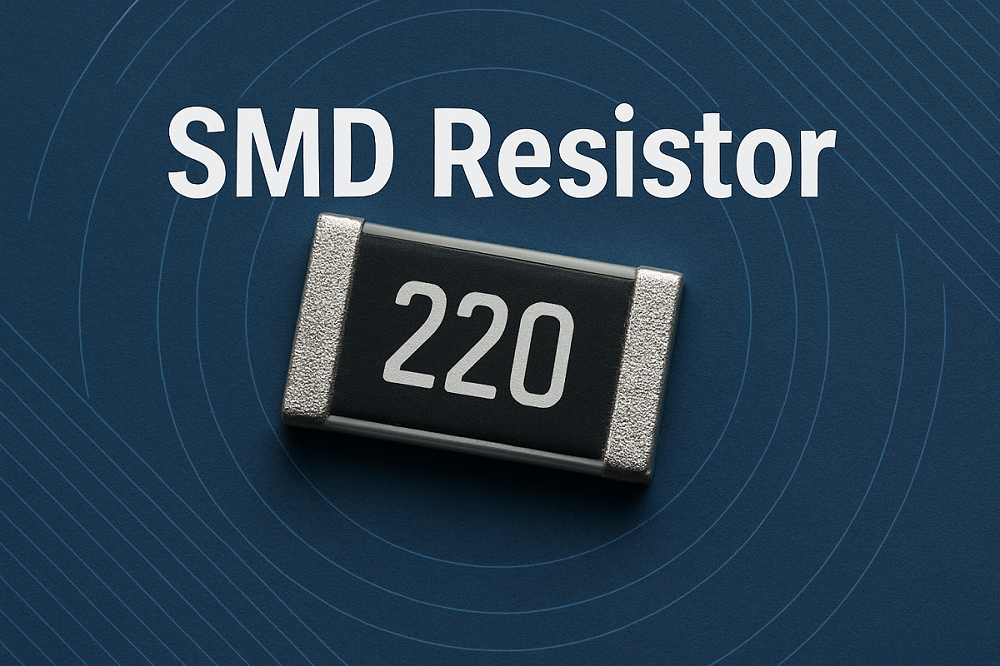
SMD Resistor: Types, Applications, and Selection Guide2025-04-30