info@kynix.com
 00852-6915 1330


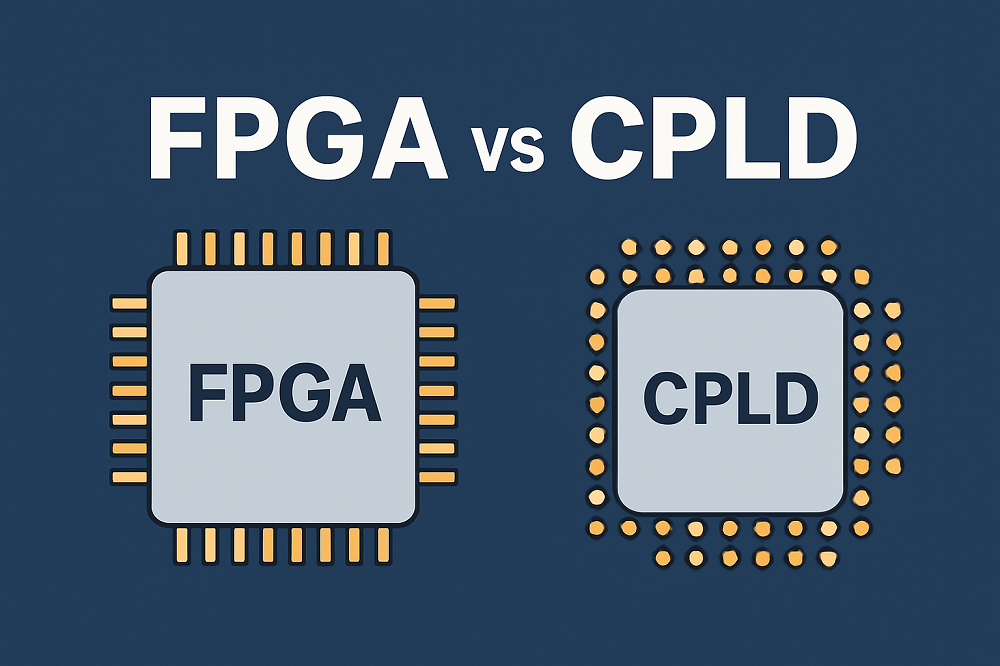
Overview of CPLDs CPLDs, also known as logic devices act as the powerful brains, behind electronic devices. They manage rules and decisions swiftly to enhance technologys intelligence and speed.Definition and Basic FunctionComplex Programmable Logic Devices (CPLDs) focus on enabling medium-sized digital circuits to perform their functions. Consider a container packed with logic gates that are configurable to execute various tasks.Picture a collection of miniature computers that can be educated to handle different responsibilities simultaneously. These devices utilize programmable logic to ensure they execute precisely the functions required by engineers, whether it be regulating an automobile's engine or coordinating signals in a mobile device.From my own experience working with these gadgets, I've learned that simplicity is key. You start with an idea for a circuit and then use hardware description languages (think of them as the instruction manual) to tell the CPLD how to behave.This might involve setting up sequences of operations or deciding which inputs lead to which outputs. It’s fascinating work because it feels like teaching a child basic steps and watching them learn how to perform complex tasks on their own.Key Components of CPLDsCPLDs light up with their logic blocks and macrocells each controlled by /OR arrays. Imagine them as neighborhoods where each building ( block) can be rearranged to meet the citys requirements.These blocks are linked through a system of switches that we can customize, similar, to choosing which streets, in our city should be one way or allow two way traffic. This adaptability enables us to transmit signals through the routes reducing time and energy consumption.In my own tinkering with CPLDs for a small robot project, I marveled at how EEPROMs play the role of memory keepers in these devices. Unlike regular memory that forgets everything once power goes off, EEPROM remembers its programming even after being switched off.This trait is crucial for gadgets that need to wake up and run with no delay because they don't have to be reprogrammed every time they turn on. It's like teaching an old dog new tricks but never having to teach them again. Comparing CPLDs to FPGAsCPLDs and FPGAs might seem like twins in the digital world, but they play very different games. CPLDs are simpler, making them a go-to for small tasks, while FPGas handle complex projects with more muscle.Architecture DifferencesFPGAs and CPLDs may appear similar, at glance. They are quite different in the world of electronics. FPGAs offer logic blocks (CLBs) that function like building blocks you can assemble in ways as you please.These blocks are versatile allowing you to construct designs with memory blocks for data storage and DSPs (Digital Signal Processors) for handling mathematical tasks. It's like having a brain that can tackle heavy lifting.On the hand CPLDs take an approach by using a fixed number of macrocells. Picture these as made Lego sets; while theres less room for customization they often provide just the right fit, for many projects.During my own tinkering adventures, I once tried using an FPGA for a basic project only to realize it was overkill – like driving a semi-truck to pick up groceries! Switching to a CPLD made more sense; its simpler architecture did the job without extra bells and whistles.This experience taught me that understanding these differences isn't just academic – it impacts what lands on your workbench. You get why choosing between them hinges on how complex your circuits need to be or how much speed matters for your specific task.Performance and ComplexityCPLDs shine in the race with their lean power appetite. FPGAs might sprint ahead with muscle and flex, offering more performance and resources, but they also guzzle more juice. Imagine a sports car versus a reliable sedan; one dazzles at high speeds while the other wins on efficiency over long distances.I once worked on a project where every watt mattered. We chose CPLDs for their thriftiness in power consumption, making our embedded system not just smart but also energy-smart.Tackling complexity, CPLDs keep it simple with their straightforward architecture. FPGAs boast of intricate arrangements that can handle vast logic designs and parallel tasks, stretching from field-programmable gate arrays to digital logic circuits.Yet this complexity is not everyone's cup of tea. For many designers like me who juggle timing analysis and hardware description languages, the simplicity of CPLDs makes them our go-to choice for streamlined projects where speed and need meet without causing headaches over tangled configurations or bloated costs.Cost ImplicationsMoney talks, especially in tech. If you're deciding between a CPLD (complex programmable logic device) and its cousins like FPGA (field programmable gate array) or ASIC (application-specific integrated circuit), cost is a big deal.FPGAs often come with more muscle for handling complex tasks but also carry a heavier price tag due to their design flexibility and performance capabilities. On the flip side, CPLDs are your go-to for simpler, less expensive solutions.They work well when you don't need all the bells and whistles but still want something reliable.I once had to choose between using a CPLD or an FPGA for a quick-turnaround project. The clock was ticking, and so was my budget meter. After crunching some numbers, it became clear that leveraging a CPLD's lower cost would let us meet our financial limits without sacrificing quality.This choice saved us thousands and allowed us to allocate funds towards other vital components of our design—like simulation tools Verilog for testing our logic thoroughly before launch.It’s moments like these that show: saving money while maintaining efficiency isn’t just good business; it’s smart engineering. Application Areas for CPLDsCPLDs show off their skills in gadgets we use every day, like phones and TVs. They also help cars talk to each other and keep our internet calls clear and fast.Consumer ElectronicsConsumer electronics like smartphones, game consoles, and TVs rely heavily on CPLDs. These gadgets need to process data quickly and effectively. CPLDs help them do just that by managing tasks in parallel, speeding things up.Thanks to their ability to handle sequential logic and glue logic operations, devices can perform multiple actions at once. This makes your phone or TV smarter and faster.In the design of these electronics, engineers use tools like Verilog, a hardware description language. They also employ simulators to test how the CPLD will behave under different conditions.This way, they make sure your gadget works well and reacts swiftly when you're switching between apps or streaming videos. With CPLDs embedded in consumer electronics, every click leads to instant responses, enhancing your experience with technology daily.Automotive IndustryCars are getting smarter every day. They use CPLDs in their electronics, especially for things like ADAS and self-driving cars. This tech helps cars make quick decisions on the road.In these vehicles, CPLDs play a major role. They process data fast, making sure everything runs smoothly. From controlling your car's speed to ensuring safe lane changes, CPLDs are key players behind the scenes in the automotive world.TelecommunicationsIn telecommunications, CPLDs play a big role. They handle the fast data we send and receive every day. Think about texting a friend or streaming a video. CPLDs help make sure those messages and movies get to us quickly and without errors.I once toured a telecom company and saw these devices in action. It was like seeing the internet's backstage—lots of blinking lights and complex setups, but all smoothly managed by CPLD technology.They also work well with field-programmable gate arrays (FPGAs) to manage networks efficiently. Together, they control how data moves through our phones and computers. This teamwork helps your apps run fast, even if the internet is busy.So next time your video call doesn't lag, you can thank both FPGAs and CPLDs for keeping things speedy! The Role of CPLDs in High-Speed Data ProcessingCPLDs turbo-charge data handling, making gadgets zip through tasks. Discover how these powerhouses speed up our tech world!Advantages in Speed and EfficiencyCPLDs shine with their fast timing for simple logic functions. They make quick decisions, handle data at high speeds, and reduce the need for extra chips on a board. Think of CPLDs as sprinters in a race; they're built for speed over short distances.This trait is invaluable in consumer gadgets where response time can make or break the user experience. By using these devices, designers cut down on system power use, which is essential for battery-powered electronics.From my desk full of gadgets and scribbles, I've seen CPLDs work magic in projects. They process commands swiftly, making them perfect for tasks requiring immediate action like signal processing or managing control systems in cars.These small yet powerful chips ensure that your favorite electronic devices are both fast and efficient with energy use. With tools like Verilog and simulation software, tweaking these tiny powerhouses to achieve optimal performance becomes an enjoyable puzzle to solve. Specific Use Cases in Data HandlingCPLDs shine in data handling by making things faster and using less juice. They're like superheroes, swooping in to take the heavy lifting off a device's main brain. Here’s a scoop on how they rock in the digital world:Managing Traffic: In a busy network, CPLDs act as traffic cops, directing data where it needs to go without causing delays. This keeps videos streaming smoothly and websites loading quickly.Super Quick Decisions: With their ability to handle multiple tasks at once, CPLDs make lightning-fast decisions that help self-driving cars avoid obstacles and drones fly safely.Keeping Secrets Safe: For security, CPLDs are like vaults. They encrypt data making it tough for hackers to crack, protecting everything from your phone calls to your bank account.Power Savers: By taking over smaller tasks, CPLDs allow the main processor to snooze more often, saving power. Phones last longer between charges because of this clever handoff.Heartbeat Monitors: In healthcare gadgets, CPLDs monitor heartbeats and other vital signs in real-time, ensuring doctors get accurate info ASAP.Talking Devices: They allow devices from different areas to speak the same language, whether it's a printer talking to a computer or a thermostat chatting with a smartphone app.7.Eyes and Ears: In security cameras and smart homes, CPLDs process images and sounds super fast, helping these gadgets understand what they see and hear without getting confused.8.Smooth Operators: Electronic brains need updates without hiccups. CPLDs manage these updates seamlessly, making sure your gadget doesn’t skip a beat while learning new tricks.9.Game Changers: For gamers, CPLDs keep lag at bay by processing complex game physics in real-time, ensuring that every explosion looks epic and every race feels speedy.10.Network Ninjas: In big server farms that power the internet, CPLD-equipped machines juggle data packets like hot potatoes, keeping everything from emails to social media posts zipping along without getting stuck.CPLDs spring into action across various fields with their multitasking prowess and energy efficiency, proving indispensable in our increasingly connected world. Design and Development Tools for CPLDsDesigning with CPLDs? You'll need the right tools, like language translators for hardware and test simulators. This toolkit makes creating fast and smart devices a breeze. Excited to learn more? Keep reading!Hardware Description LanguagesCPLDs get their smarts from programming, and that's where hardware description languages (HDLs) like Verilog and VHDL come into play. Think of HDLs as the instruction manuals for CPLDs.They tell the device how to behave, helping it understand complex logic equations and tasks. Using these languages, designers turn ideas into code that can be compiled, simulated, and then loaded onto a CPLD.It's a bit like writing a recipe for your computer to follow.I've used both Verilog and VHDL in my projects, crafting everything from simple light-blinking operations to more intricate signal-processing tasks. Each time, the process begins with an idea or problem needing a solution.Then comes sketching out the logic using these languages—sort of like planning out your chess moves before making them. This isn't just about typing commands; it's about structuring thoughts in a way machines comprehend.Once coded, tools transform this script into something the CPLD can execute—a magic moment where ideas become actions!Simulation and Verification ToolsSimulation and verification tools like ModelSim, Xilinx ISE Simulator, FormalPro, and JasperGold are crucial. They check if the CPLD designs work right before making them real. Imagine them as test runs for video games but for electronic design.These tools see through your code to find mistakes early. This saves time and money.Using these tools feels like having a crystal ball. You get to see the future of your project without guessing. They use hardware description language (HDL) to model how data moves in your design.It's like building with digital LEGO blocks on a computer screen, ensuring everything fits perfectly before you commit. Optimizing CPLD PerformanceTo get the most out of your CPLD, it's like tuning a race car; you focus on timing analysis and smart use of resources. Get ready to boost speed and efficiency with these tricks!Timing Analysis TechniquesTiming analysis helps designers make sure CPLDs and FPGAs work fast and right. Tools like Quartus Prime Timing Analyzer check the clock's timing across the whole chip. They look at how data moves and when signals hit their targets.This makes sure everything works together well without delays.Designers use this info to tweak their designs for better speed and reliability. They might adjust paths or reduce tasks that take too long. This way, embedded systems using CPLDs can handle data quickly and efficiently, making gadgets work smoother.Resource Utilization StrategiesTo get the most out of complex programmable logic devices (CPLDs), it helps to focus on smart strategies. Pipelining is a way to speed things up by organizing tasks in a line, so one starts as soon as the other ends.By balancing logic circuits, we make sure no part of the CPLD works too hard while others slack off. Pushing the clock frequency higher lets us do more tasks faster but demands careful planning to avoid errors.From my experience, sprinkling these techniques across the design makes a huge difference. On an embedded processor project, adjusting the clock's speed just right shaved milliseconds off our processing time – that might not sound like much, but in data transmission and image processing, it’s gold.Using software like Verilog for hardware description and then testing with simulation tools ensured we were on track without wasting resources on dead-end designs. It’s like finding the perfect balance on a seesaw; everything runs smoother when you distribute weight evenly. Future Trends in CPLD TechnologyCPLD technology is sprinting ahead, with new tricks up its sleeve. Expect smarter chips that learn on the fly and play nice with the latest gadgets. Keep reading to stay ahead of the curve!Market ProjectionsThe market for field programmable gate arrays (FPGAs) is on a fast track, expected to hit USD 12.5 billion by 2025. This growth isn't slowing anytime soon with a steady climb at a rate of 9.7% from now until then.It's clear that the demand for these integrated circuits, which include complex programmable logic devices (CPLDs), is skyrocketing across various sectors like computer vision and network functions virtualization.These projections show us that industries are banking more on technologies like FPGAs and CPLDs to power their innovations, especially in high-speed data processing tasks. With such crucial roles in computing languages, software development platforms, and even open computing language applications, it's evident that both today’s developers and tomorrow's innovations will lean heavily on these adaptable circuits.Innovations on the HorizonFuture trends in CPLD technology point to a world where combining complex programmable logic devices with microprocessors and ASICs becomes the norm. This blend creates more efficient solutions, perfect for tackling tasks that demand high-speed data crunching without breaking a sweat.Imagine having the power of both brains and brawn at your fingertips – this is what's coming.People who design those tiny yet powerful chips are already experimenting with ways to make them faster, smarter, and cheaper. By using tools like Verilog for hardware description and leveraging simulation technologies, these innovators ensure gadgets get smarter by the day.They're not just thinking about today; they're crafting the future of technology piece by piece, aiming for leaps in areas such as multi-access edge computing and software-defined networking that could change how we interact with devices around us.It's like giving steroids to an already fast runner, making sure they stay ahead of the pack by miles, not just steps. Choosing the Right CPLD for Your ProjectPicking the best CPLD for your project might feel like finding a needle in a haystack. You need to eye factors like speed, cost, and what tasks you want it to handle. Say you're working on a fast video game console or a smart car system.You'll favor CPLDs that juggle tasks quickly without breaking the bank. Deciding between CPLDs and their cousins, FPGAs, comes down to your project's size and how complex its brain needs to be.Don't forget about tools like Verilog or VHDL for crafting your designs. These programming languages are just the ticket for telling your CPLD how to behave — think of them as teaching an old dog new tricks! Simulation tools also step into the arena, letting you test drive your design before making anything real.In short: hunting down the perfect CPLD is all about matching its features with what you dream up in your head. Ready to play matchmaker? Let's get started! Factors to ConsiderChoosing the right CPLD for your project can feel like a maze. With various factors at play, making an informed choice ensures your project runs smoothly without unnecessary hiccups. Here's what to keep in mind:Complexity of Your Project: Consider how complex your design needs to be. CPLDs, with fewer logic blocks, work well for simpler designs. If your project involves more intricate operations, like those found in GPUs or advanced telecommunications protocols, you might need to think again.Performance Needs: High-speed data processing demands devices that can keep up. CPLDs excel in executing simple tasks quickly thanks to their architecture that supports parallelism, making them ideal for applications needing swift responses, such as interrupt handling in automotive systems.Time-to-Market: If you're racing against the clock, CPLDs could be your best bet. They typically require less development time compared to FPGAs or ASICs owing to their simplicity and pre-built logic structures.Power Consumption: For battery-operated devices where power is precious, the low power usage of CPLDs makes them stand out. Their static nature means they consume less power than FPGAs, extending the life of portable electronics.Design Flexibility: Need room for last-minute changes? CPLDs offer flexibility because they're reprogrammable devices. This feature allows you to tweak your design without starting from scratch.Cost Concerns: Budget always matters. Generally speaking, CPLDs cost less than FPGAs or ASICs both in terms of initial investment and during the product lifecycle due to lower power consumption and development costs.Size Restrictions: Sometimes size does matter! In projects where board space is limited, like wearable technology or small consumer gadgets, the compact footprint of a CPLD can be a deciding factor.Development Tools Availability: Access to powerful development environments such as Visual Studio or hardware description languages including C/C++ plays a crucial role in programming efficiency and ease.Future Scalability: Thinking ahead pays off. Consider whether your project might need more functionality down the line requiring more logic blocks or faster performance that only bigger or more advanced CPLDs can provide.10 Software Compatibility: Ensure that the operating system and other software layers your project relies on mesh well with the CPLD you choose to avoid compatibility nightmares later on.Each point directs you to a clearer decision-making path ensuring that whatever choice you make aligns perfectly with both current needs and future aspirations of your high-speed data processing projects. When to Opt for a CPLD Over an FPGAChoosing a CPLD instead of an FPGA makes sense for projects needing fast timing and straightforward logic operations. In my work, I've found that CPLDs shine in managing tasks like bus interfacing, bringing different parts of a system to talk smoothly with one another, or gluing various components together so they play nice.For setups where the focus is on speed rather than complexity—think quick decision-making over intricate data processing—CPLDs are your go-to.Take power management as an example. In a scenario where you need precise control over how and when power flows through your device's circuits, a CPLD can handle those demands efficiently due to its simple yet powerful setup.It executes actions quickly, making it ideal for applications where response time is critical but the overall system design doesn't call for the high levels of flexibility FPGAs offer.In essence, if your project has clear-cut needs without requiring extensive programmable resources, leaning towards a CPLD could save both time and money while delivering reliable performance. Common Questions About CPLDsGot burning questions about CPLDs? You're not alone! People often wonder how they stack up against FPGAs in power munching or if they're the right pick for their next big project. It's time to clear the air and get those answers.Keep reading, and let's crack this nut together!Differences in Power Consumption Between CPLDs and FPGAsCPLDs are like sprinters, quick and efficient for short distances, thanks to their simple structure. They use less juice than FPGAs because they're smaller and not as complex. Imagine a light bulb versus a spotlight; CPLDs are the light bulbs.Their power needs stay steady, making them reliable for tasks that need speed without draining energy.FPGAs, on the other hand, are more like marathon runners with extra gear strapped on. They pack more punch but also suck up more power due to their beefy architecture and flexibility in handling intricate designs.The catch? How much energy they gulp down can swing wildly based on how busy they get or how you've set them up – from the clock ticks to the logic gates buzzing inside. So if your project is like planning a city's electric grid versus lighting up a single street, FPGAs might be drawing more from your power plant.Suitability of CPLDs for Specific ApplicationsComplex programmable logic devices shine in control systems, automotive electronics, and industrial automation. Their lower power usage makes gadgets last longer before needing a recharge.For quick decisions in cars or machines, they're top-notch because of their simple design that works fast.Using them in projects means you can change parts without starting over—just update the software. I tried this on an automation project; tweaking was a breeze with just some clicks instead of soldering new circuits all day.They fit best where speed and flexibility count but without breaking the bank or using too much juice. ConclusionCPLDs are like the hidden wizards of gadgets, making everything work faster and smarter. They're not as famous as their cousin FPGAs, but they sure pack a punch in data processing speed.With tools like Verilog and cool innovations on the rise, picking the right CPLD could be your golden ticket in tech projects. So next time you’re up for some high-speed tech action, think CPLDs – small but mighty! FAQs1. What's a CPLD, and why should I care?Imagine a tiny box that can do magic tricks with data faster than you can blink. That's a CPLD (Complex Programmable Logic Device) for you! It’s like the brain behind making gadgets work quicker and smarter without taking coffee breaks.2. How does this CPLD thingy speed up my devices?CPLDs are like super-efficient office workers who organize data, make decisions on where it goes next, and don't waste time. They use flip-flops (no, not the sandals), Boolean logic (a way of using true/false to solve problems), and other smart tools to process information at lightning speed.3. Can CPLDs learn new tricks?Absolutely! Unlike your old dog, these chips can learn new skills through something called programming. You can teach them new ways to handle data or even play nice with other tech inside your gadgets.4. Are there different kinds of memory in these devices?Yes siree! Think of it as having different types of notebooks for various tasks - some you can erase (erasable programmable read-only memory), some you can rewrite over many times (electrically erasable programmable read-only memory), and some are just for reading what’s written down by someone else (read-only memory).5. Do I need to be a rocket scientist to work with CPLDs?Not at all! While it sounds complex, diving into the world of hardware design with things like state machines and sequential logic circuits is more about curiosity and less about having a PhD in rocket science.6.Could these gizmos get along with my computer stuff?You bet! CPLDs love playing nice with virtual machines, software defined networking, and even fancy graphics stuff like Vulkan or CUDA. They're pretty sociable in the tech world.
Allen On 2024-06-21