The Kynix Blog
Stay Ahead with Expert Electronics Insights,
Industry Trends, and Innovative Tips
- Electronic Components
- News Room
- General electronic semiconductor
- Components Guide
- Sort by
- Robots
- Transmitters
- Capacitors
- IC Chips
- PCBs
- Connectors
- Amplifiers
- Memory
- LED
- Diodes
- Transistors
- Battery
- Oscillators
- Resistors
- Transceiver
- RFID
- FPGA
- Mosfets
- Sensor
- Motors, Solenoids, Driver Boards/Modules
- Relays
- Optoelectronics
- Power
- Transformer
- Fuse
- Thyristor
- potentiometer
- Development Boards
- RF/IF
- Semiconductor Information
- PCB
- transistor
Overview: This article explores the opportunities and challenges of integrating clean technologies and information and communication technologies for efficient and sustainable energy management in smart grids. Decarbonization has accelerated the fundamental shift in society toward clean technologies. Electrical energy will be a significant factor in the decarbonization process. Electrical energy is one of the most common forms of energy carriers and is seeing growing usage. Increasing electricity demand forces the expansion of the generation and transmission systems, requiring a significant amount of investment. Power loss and reactive power flow in the transmission systems make the conventional, centralized structure of power systems less efficient. Distributed generations (DGs) have been incorporated into low- and medium-voltage distribution networks in order to increase system availability, efficiency, and cost-effectiveness. Furthermore, renewable-based distributed generation aids in the decarbonization of the electric energy sector.Evolution of Smart GridDistribution systems that have been powered up can function as a microgrid in the absence of the utility grid. A microgrid is an island-based distribution system that uses local distributed generation and energy storage to provide critical loads in island mode. Distribution systems with microgrid capabilities will have some benefits, such as increased productivity, dependability, accessibility, and power quality. However, information and communication technologies (ICTs) are necessary for the optimal and reliable operation of various distributed generation and energy storage systems in microgrids. To operate modern energy distribution systems as efficiently and dependably as possible, the smart grid concept has been introduced. To operate and plan grid systems with irregular output and variable power sources, ICTs must be available at both the generation and transmission levels. These systems enable power systems to meet customer demands by intelligently monitoring, making decisions, and controlling contemporary power systems. In addition to incorporating DGs into distribution networks, large-scale renewable power plants like photovoltaic (PV) and wind energy systems have been widely installed in power systems, and the power grids are currently moving toward more fully renewable energy systems. Figure 1. Concept of a Distributed Power Generation System Source IEEE Access Along with efficiency, flexibility, and operability benefits, smart grid technologies also present new difficulties for the design and management of modern power systems. Restructuring the power grids to incorporate renewable energy sources, microgrid technologies, ICTs, and power electronics can result in these difficulties. Smart Grid’s Future DirectionsThe idea of smart grids has changed with the development of technology. In recent years, the smart grid's research and development have increased. As a result, the implementation of smart grids has changed from virtual to real-time. However, there are several situations in which action needs to be taken to turn it into a complete real-time network service.Big Data ManagementThe input of real-time data is a key factor in a smart grid. It serves as the backbone of the network's functioning. Power transmission, generation, transformation, and utilization data are being collected for reliable and efficient working. All decisions are made based on the information gathered. The collection and management of such a vast amount of real-time data is a significant problem. To predict the demand for energy at various locations, the algorithms must use all the data gathered from the sensors and associated devices. To produce the best results, the algorithms must be optimized. One of the main study subjects in smart grid technology is IT infrastructure, data gathering, governance, data processing, and, most critically, data security.Investing in Smart Grid InfrastructureTo reduce carbon emissions, a number of countries have started implementing smart grid infrastructure. Many of them are engaged in projects designed to evaluate the feasibility of the network. The construction of the smart grid infrastructure has already started in nations including Australia, South Korea, and Japan. The initial investment, though, is the main concern. The ongoing maintenance of the entire network further raises the overall cost. Therefore, before making an investment of this size in the infrastructure, a thorough financial report should be made. The price of smart grids in a few emerging nations is shown in Table 1. This will estimate the starting sum that a developing nation must invest in order to create smart grid infrastructure. Additionally, it will provide a general concept of the maintenance costs as well as any other extra expenses necessary to guarantee the network's efficient operation.Business Model RestructuringThe business model has undergone considerable adjustment as a result of the new smart grid's emergence. New technologies have altered consumer perceptions and created a network of distributed power sources. Consequently, business practices are evolving. It is necessary to implement new policies to benefit consumer communications. To integrate the load and the generated power, the utility business model should be put into practice at the distribution level.Modernization of the Energy Production SystemCustomer needs have evolved due to the smart grid's evolution. As a result, there are fluctuations in energy demand. To accommodate the demand response, the system's capacity should be raised. Additionally, the energy-producing systems must change their production policies to integrate into the smart grid network. In the smart grid network, cloud-based data management strategies are applied. The existing system needs to be upgraded and changed in order to establish IoE activities. Cyber-physical power systems are the smart operation of future power systems, which include distributed generation, microgrids, and demand side management while utilizing information and communication technologies over the physical system. The ICTs are vulnerable to cyberattacks, data loss, and hardware failure. ICT malfunctions will reduce system performance and must be taken into account when planning a power system. Additionally, when operating power systems, cybersecurity must be taken into consideration because malicious intrusions from cyberattacks could result in a loss of power or energy. The network should incorporate security measures against cyberattacks.Summarizing the Key PointsThe paper highlights the importance of information and communication technologies in the optimal and reliable operation of distributed generation and energy storage systems in microgrids.The integration of information and communication technologies with power systems can lead to the development of cyber-physical power systems or smart grids.Smart grids enable power systems to meet customer demands by intelligently monitoring, making decisions, and controlling contemporary power systems.However, the adoption of clean technologies and information and communication technologies presents new challenges for the design and management of modern power systems.Smart grid technologies also present new difficulties for design and management but offer significant benefits such as flexibility, efficiency, operability, reliability, accessibility, and power quality. Reference(s)1.Peyghami, S., Palensky, P., & Blaabjerg, F. (2020). An Overview on the Reliability of Modern Power Electronic Based Power Systems. IEEE Open Journal of Power Electronics, 1, 34–50. https://doi.org/10.1109/ojpel.2020.29739262.Pal, R., Chavhan, S., Gupta, D., Khanna, A., Padmanaban, S., Khan, B., & Rodrigues, J. J. P. C. (2021, August 28). A comprehensive review on IoT‐based infrastructure for smart grid applications. IET Renewable Power Generation, 15(16), 3761–3776. https://doi.org/10.1049/rpg2.122723.Rafique, Z., Khalid, H. M., & Muyeen, S. M. (2020). Communication Systems in Distributed Generation: A Bibliographical Review and Frameworks. IEEE Access, 8, 207226–207239. https://doi.org/10.1109/access.2020.3037196
Rakesh Kumar, Ph.D. On 2023-05-22
Introduction: Drones, also known as unmanned aerial vehicles (UAVs), have revolutionized various industries by providing innovative solutions to complex problems. They are equipped with advanced technology and rely on a combination of mechanical, electrical, and electronic components to achieve flight and perform specific tasks. Among these components, the electronic components play a crucial role in controlling and coordinating the drone's operations. Drones have become increasingly popular in various industries, from aerial photography to package delivery. These unmanned aerial vehicles rely on a complex system of electronic components to function efficiently. In this report, we will explore the core electronic components found in a drone and discuss their functionalities and importance. Understanding these components is essential for anyone interested in drone technology or working with drones in different applications.Core electronic components:This report aims to provide an overview of the core electronic components found in a drone and explain their functionalities.1.Flight Controller:The flight controller is the brain of a drone. It is a microcontroller board that processes sensor data and commands from the pilot or an autonomous system to control the drone's flight. The flight controller uses an array of sensors, such as accelerometers, gyroscopes, and magnetometers, to measure the drone's orientation, speed, and position in real-time. It then adjusts the motor speeds and other control surfaces to maintain stability and achieve the desired flight maneuvers. 2.Electronic Speed Controllers (ESCs):ESCs are responsible for controlling the speed and direction of the drone's motors. They receive signals from the flight controller and convert them into specific voltage and current levels to drive the motors accordingly. ESCs play a vital role in maintaining stability, responsiveness, and overall flight performance. Modern drones often utilize electronic speed controllers with built-in firmware that provides advanced features like motor synchronization, motor braking, and support for various motor types. Fig 1: Electronic Speed Controllers3. Brushless Motors:Brushless motors are commonly used in drones due to their efficiency, durability, and high power-to-weight ratio. Unlike brushed motors, they do not rely on physical brushes for commutation, resulting in reduced friction and wear. Brushless motors generate rotational force by synchronizing the energization of multiple windings through electronic commutation. They are lightweight, compact, and provide precise control over motor speed and torque, making them ideal for drone applications.Fig 2: Brushless Motors4. Multi-Rotor control board: In this study, the drone has controlled via a Multi-Rotor control board. The multi-rotor's flying is managed by this controller. Its purpose is to stabilise the aircraft during flight and to do this, it takes signals from on-board gyroscopes (roll, pitch and yaw) and passes these signals to the Atmega324PA processor, which processes signals according the users designated firmware and passes the control signals to the mounted ESCs (Electronic Speed Controllers) and the mixture of these signals commands the ESCs to make fine adjustments to the motors rotational speeds which stabilises the craft. The Multi-Rotor control board additionally utilises radio signals via a receiver and transmits these signals, together with stabilisation signals, to the Atmega324PA IC via the user demand inputs for the aileron, elevator, throttle, and rudder. This information is analysed and delivered to the ESCs. It controls each motor's rotational speed to regulate the direction of flight (up, down, backwards, forwards, left, right, and yaw).Fig 2: Multi-Rotor control board5. Batteries and Power Distribution:Drones require a reliable power source to operate. Lithium-polymer (LiPo) batteries are commonly used due to their high energy density and lightweight characteristics. The battery provides electrical energy to the flight controller, ESCs, and other electronic components. To distribute power effectively, drones utilize power distribution boards (PDBs) or power management systems that regulate the voltage and current supplied to various components, ensuring stable and efficient operation. 6. Radio Control System:The radio control system allows the drone to be controlled remotely by a pilot or an autonomous system. It consists of a transmitter, receiver, and antennas. The pilot uses the transmitter to send commands to the drone, which are then received and decoded by the receiver on the drone. The radio control system operates on specific frequency bands and employs various modulation techniques to ensure reliable communication and minimize interference. 7. Sensors and Imaging Systems:Drones often incorporate a range of sensors and imaging systems to gather data about the environment or perform specific tasks. These can include cameras, infrared sensors, LiDAR (Light Detection and Ranging), GPS (Global Positioning System), altimeters, and more. Cameras and sensors provide visual and environmental feedback to the flight controller, enabling features such as aerial photography, mapping, obstacle avoidance, and autonomous flight modes.Drones incorporate a variety of sensors to gather data about the environment and aid in flight control. Some common sensors found in drones include:Accelerometers: Measure acceleration forces to determine the drone's orientation and movement.Gyroscopes: Measure angular velocity to help stabilize the drone and maintain its orientation.Magnetometers: Detect magnetic fields to assist in orientation and navigation.Barometers: Measure atmospheric pressure to estimate altitude and assist in altitude hold and altitude change functions.GPS: Global Positioning System sensors provide accurate positioning and navigation data.Infrared Sensors: Detect obstacles and aid in obstacle avoidance during flight. 8. Onboard Computing Systems:Many drones incorporate onboard computing systems to process data, perform complex calculations, and execute autonomous flight algorithms. These systems may include microprocessors, microcontrollers, and graphic processing units (GPUs). The onboard computing systems enable real-time decision-making, data analysis, and control algorithms for tasks such as autonomous navigation, object recognition, and collision avoidance. 9. Communication Systems:Drones often require communication systems to transmit data, telemetry, and control signals to and from the ground station or other drones. Wireless communication technologies such as Wi-Fi, Bluetooth, or radio frequency (RF) systems are commonly used. These systems ensure reliable and secure communication, enabling remote control, real-time video streaming, and swarm coordination in the case of multiple drones operating together.10. Safety and Redundancy Systems:To enhance safety and reliability, drones may incorporate various electronic components and systems. These can include redundant power systems, redundant flight controllers, backup sensors, and fail-safe mechanisms. Redundancy helps mitigate the risk of component failures and ensures that critical functions can continue operating in case of a system fault, improving the overall safety and resilience of the drone. 11. Transmitter and Receiver:The transmitter and receiver form the radio control system of a drone, enabling remote control and communication between the pilot and the drone. The transmitter is the handheld device held by the pilot, while the receiver is installed on the drone itself.Key aspects of the transmitter and receiver electronics components include:Transmitter: The transmitter is the control interface held by the pilot. It consists of control sticks, switches, buttons, and other input mechanisms. These controls allow the pilot to send commands and inputs to the drone, such as adjusting throttle, controlling direction, changing flight modes, or activating specific features. The transmitter typically operates on specific frequency bands and employs various modulation techniques to ensure reliable communication with the receiver.Receiver: The receiver is the counterpart of the transmitter installed on the drone. It receives the commands sent by the pilot through the transmitter and decodes them into control signals that are understood by the drone's flight controller. The receiver is connected to the flight controller or autopilot system, allowing the drone to interpret and execute the pilot's commands accurately.Antennas: Both the transmitter and receiver have antennas for transmitting and receiving radio signals. These antennas ensure the effective transmission and reception of control signals between the pilot and the drone. They can be external or internal, depending on the design of the drone and the radio system used. 12. Landing Gear:Landing gear provides support and protection for the drone during takeoff, landing, and ground operations. The design of the landing gear may vary depending on the drone's purpose, size, and terrain it operates in. Key aspects of drone landing gear include:Legs: The landing gear consists of legs that are attached to the drone's frame. The number and length of the legs depend on the drone's configuration and purpose. Most landing gears have three or four legs for stability.Material: Landing gear is typically made of lightweight and durable materials such as plastic, carbon fiber, or aluminum. These materials provide sufficient strength to support the weight of the drone while minimizing the additional weight.Shock Absorption: Some landing gears incorporate shock-absorbing mechanisms or dampeners to absorb the impact of landings and reduce vibrations. These features help protect the drone's components from damage and ensure a smooth landing experience.Retractable Landing Gear: Certain drones, especially professional photography or cinematography drones, may feature retractable landing gear. This allows the landing gear to be raised or retracted during flight, providing an unobstructed view for cameras or sensors mounted on the drone.Skids or Feet: The lower ends of the landing gear legs often have skids or feet that provide stability and grip during landing and ground operations. These skids or feet prevent the drone from tipping over or slipping on surfaces and help protect the drone's components from direct contact with the ground.Landing gear components are crucial for safe takeoffs, landings, and ground operations. They provide stability, protect the drone's components from damage, and ensure a smooth landing experience. The design of the landing gear is influenced by factors such as the drone's size, weight, intended use, and operating environment.Conclusion: Drones rely on a complex system of electronic components to achieve stable flight, perform specific tasks, and provide valuable functionalities across various industries. Understanding the core electronic components discussed in this report provides a foundation for comprehending the inner workings of drones. As drone technology continues to advance, these components will evolve, enabling drones to become more intelligent, versatile, and efficient in their operations.
Karty On 2023-05-17
Autonomous vehicles (AVs), or self-driving automobiles, are a major technological leap forward for the automotive sector. Sophisticated electronic systems and cutting-edge technologies guide and control these autonomous cars. Self-driving cars have the potential to transform transportation by combining artificial intelligence (AI), sensor systems, and control mechanisms to provide more safety, greater mobility, and less environmental impact. Let's explore the essentials of autonomous vehicles, discovering the technological parts that enable them to operate independently.Key Electronic Components in Self-Driving CarsSensor Technology for PerceptionSensor technology is critical for self-driving cars, allowing them to sense their environment precisely. Lidar sensors generate detailed 3D maps using laser beams to identify objects and slight environmental changes. Radar sensors use radio waves to determine distance, speed, and direction, making them suitable for usage in severe weather. Camera systems collect visual data to identify objects, road signs, and lane markings. Ultrasonic sensors use high-frequency sound waves to identify obstacles and assist in parking.Processing and Control SystemsSelf-driving automobiles' processing and control systems process sensor data and execute precise maneuvers. Electronic Control Units (ECUs) coordinate subsystems, process sensor data, and send commands to actuators. Powerful processors and microcontrollers handle complex algorithms and machine learning for decision-making. For correct functioning, AI algorithms and data fusion approaches combine sensor inputs. High-speed data processing, real-time calculations, and intelligent decision-making capabilities are essential in these systems.Connectivity and Communication SystemsConnectivity and communication systems are vital for self-driving cars to exchange data with other vehicles and infrastructure. Vehicle-to-Vehicle (V2V) communication enables real-time information sharing, enhancing situational awareness. Vehicle-to-Infrastructure (V2I) communication facilitates interaction with traffic management systems, optimizing routes and providing traffic updates. Cloud connectivity enables access to high-definition maps, real-time traffic data, and machine-learning models for improved navigation and decision-making.Actuators and Control SystemsActuators and control mechanisms translate processing system decisions into physical actions. Steering actuators give the vehicle precise direction control, and electric motors and drive systems power it. Braking and acceleration systems enable safe and efficient mobility by responding to processing system control commands.Battery and Power Management SystemsPower management efficiency and robust battery systems are critical for self-driving cars. Advanced power management systems optimize energy consumption, ensuring electrical components operate efficiently. High-capacity batteries provide the power required for autonomous driving while balancing performance and range.Integration and Functionality of Electronic ComponentsPerception and Environmental AwarenessPerception and environmental awareness are integral aspects of self-driving cars, relying on various electronic components to guarantee safe and efficient autonomous driving.1. Sensor Fusion and Object DetectionSelf-driving cars incorporate data from lidar, radar, cameras, and ultrasonic sensors. Advanced algorithms analyze this data to identify obstacles, pedestrians, and traffic signs.2. Environmental Mapping and LocalizationSelf-driving cars create detailed environmental maps and establish their precise position. High-definition maps provide street information, while localization algorithms use sensor data to determine real-time location.Decision-Making and ControlElectronic components enable self-driving cars to make informed decisions and commit clear control actions.1. Sensor Data Processing and InterpretationDecisive processors and algorithms interpret sensor data, assisting in object tracking, behavior prediction, and situational analysis.2. Path Planning and Trajectory ControlAlgorithms determine the optimal route and course, considering traffic conditions and road rules. Control mechanisms execute actions such as adaptive cruise control and steering systems.Human-Machine Interface (HMI)The human-machine interface (HMI) enables seamless interaction between occupants and self-driving cars.1. Display Systems and InfotainmentIntuitive displays provide real-time information about the vehicle's status and surroundings. Infotainment systems offer entertainment features and connectivity options.2. Voice Recognition and Natural Language ProcessingVoice recognition technology lets occupants interact with the vehicle using natural language commands, enhancing convenience and safety.These integrated electronic components ensure self-driving cars perceive their environment, make decisions, and provide a user-friendly interface.Challenges and Future Developments in Electronic ComponentsAs self-driving cars advance, electronic elements must overcome several challenges to ensure their safety and reliability. These challenges include:Safety and ReliabilityElectronic components' safety and dependability in self-driving cars are of utmost importance. These components must be designed to defy the harsh operating conditions associated with automotive applications, such as temperature extremes and vibration. Additionally, the parts must be tested rigorously to ensure they can operate reliably for the vehicle's life.Improvements in Sensor TechnologySensor technology is a critical component of self-driving cars, and advancements in this technology will play a fundamental role in the future of autonomous vehicles. New, more accurate, reliable, and cost-effective sensors are being designed, enabling self-driving cars to function more safely and effectively.Processing Power and AI AlgorithmsSelf-driving cars require significant processing power to analyze sensor data and make real-time decisions. To keep pace with the increasing complexity of self-driving vehicles, there is a need for advancements in processing power and AI algorithms. These advancements will enable self-driving cars to operate more efficiently and effectively, ultimately enhancing reliability.ConclusionThe use of modern technological components in self-driving automobiles significantly impacts the automotive industry and society. It improves road safety by recognising and responding to incidents more quickly. Autonomous vehicles promote mobility and accessibility, empowering those with disabilities and maximizing urban transportation. Adopting self-driving electric cars also fosters a greener future by lowering emissions and combatting climate change.
Kynix On 2023-05-15
Overview: This article overviews communication technologies in smart grid infrastructure, focusing on electric vehicle charging protocols and standards. CatalogSmart Charging SystemCommunication Technologies in Smart Grid InfrastructureSummarizing with Key Points Smart Charging SystemTo develop a power distribution network that is both more effective and more environmentally friendly, the possibility of combining electric vehicles with smart grid technologies plays a significant role. A component of smart grids known as vehicle-to-grid (V2G) enables electric vehicles to not only receive power from the grid but also feed excess energy back into it when they have it available. The convergence of electric vehicles and smart grids has the potential to revolutionize the energy business while simultaneously lowering carbon emissions.Fig. 1 . Overall charging system for battery electric vehicles using wired/wireless charging technologies. Image used courtesy of IEEE Access Communication Technologies in Smart Grid InfrastructureEV charging protocols and standardsFig. 1 shows how the system for charging battery electric vehicles with wired and wireless charging works. The smart charging system connects with the entire system and gives the vehicles the best possible charge. A few common protocols are needed to establish proper communication between the entities. Tables 1 and 2 compare and identify some common communication protocols. Table 1: Wired communication technologies in the smart grid Source: IET Renewable Power Generation FamilyStandardData RateCoveragePLCNB-PLC: ISO/IEC 14908–3 (Lon- Works) ISO/IEC 14543–3-5 (KNX), CEA-600.31 (CEBus) BB-PLC: TIA-1113 (Home Plug 1.0), IEEE 1901, ITU-T G.hn (G.9960/ G.9961)NB-PLC: 1–10 Kbps for low data rate, 10–500 Kbps for high data-rate BB-PLC: 1–10 Mbps (up to 200 Mbps on very short distances)NB-PLC: 150 km or more BB-PLC: 1.5 kmOptical FibreIEEE 802.3ah ITU-T G.983 (BPON) IEEE 802.3ah (EPON)100 Mbps 155,–622 Mbps 1 Gbpsup to 10 km up to 20–60 km 10–20 kmDSLITU G.992.1 (ADSL) ITU G.992.5 (ADSL2+) ITU G.993.1 (VDSL)1.3–Mbps 3.3–24 Mbps 52–85 MbpsUp to 4 km Up to 7 km Up to 1.2 km Table 2: Wireless communication technologies in the smart grid Source: IET Renewable Power Generation FamilyStandardData RateCoverageWi-FiIEEE 802.11e (QoS enhancements) IEEE 802.11n (ultra-high network throughput)BIEEE 802.11s (mesh networking) IIEEE 802.11p (WAVE: wireless access in vehicular environments) Up to 54 Mbps Up to 600 Mbps 300 m (outdoors) Up to 1 kmWiMaxIEEE 802.16 (fixed and mobile broadband wireless access)IEEE 802.16 m (advanced air interface)128 Mbps down and 28 Mbps up 100 Mbps for mobile users, 1 Gbps for fixed usersUp to 10 km 0–5 (optimum), 5–30 (acceptable), 30–100 (reduced) km3G / 4GI3G: UMTS (HSPA, HSPA+) 4G: LTE, LTE-AdvancedHSPA: 14.4 Mbps down and 5.75 Mbps up HSPA+: 84 Mbps down and 22 Mbps upLTE: 326 Mbps down and 86 Mbps up LTE-Advanced: 1 Gbps down and 500 Mbps up0–5 km LTE-Advanced: 0–5 (optimum), 5–30 (acceptable), 30–100 (reduced) kmSatelliteLEO: Iridium, Global Star MEO: New ICO GEO: Inmarsat, BGAN, Swift, MPDS2.4 to 28 Kbps 9.6 up to 128 Kbps 384 up to 450 KbpsDepend on the number of satellites and their beams.Depend on the number of satellites and their beams.Depend on the number of satellites and their beams.Open Charge Point Protocol (OCPP) This application-based protocol implements the communication infrastructure between the charging station and the centrally distributed management system. The application protocol is freely accessible. A vendor-oriented protocol was created by the Open Charge Alliance. Due to the quick access to information that electric vehicle drivers provide, it offers more versatility. The primary characteristics that this particular system is equipped with include transaction management, security, smart charging, message display, and the generation of warnings in the event of a malfunction. A bidirectional international communication standard is ISO 15118. It is employed as a channel of information exchange between electric vehicles and the infrastructure. Additionally, it is utilized for vehicle-to-grid mode communication. It needs a standardized platform that can deliver and manage the protocol and its services to implement the protocol. The Driivz platform, an open charge point protocol, is one such platform. It supports the OCPI, OCHP, open intercharge protocol (OICP), and open automated DR protocol (OADR). The Driivz platform also supports ISO 15118 and OCPP 2.0, enabling vehicle-to-grid communication technologies.Open Charge Point Interface (OCPI) This system was implemented to allow charging station operators and the electric mobility service to exchange information about charging points. The following is a list of the open charge point interface's characteristics: The location status and session information are both being updated.Remote command sending.Giving charge information records to give the correct billing amount.Authorizing charging stations through the token exchange.OADRIt is intended for information exchange among the systems to study the DR. To precisely estimate demand at peak periods when it is in operation; it is standardized to send and receive accurate information between distributed energy resources and the control system of the energy management system. It predicts demand accurately at peak times during its operation.Open Smart Charging ProtocolThis protocol enables communication between an energy management system and a charge point management system for a site owner. It can share immediate predictions on the local energy grid's ability to support a charge point operation.OICPHubject was the one who developed it. It is used for standardized communication between charge point operators and e-mobility service provider systems.Global System for Mobile (GSM)It is the most widely used mobile network today. It runs in the range of 900 and 1800 MHz and is based on circuit switching. With a data rate of up to 270 kbps, the modulation method known as Gaussian Minimum Shifting Key is employed. The mobile handset, base station sub-system, networking switching substation, and operation support substation are the four major subcategories of this protocol's architecture. One of the most secure communication system protocols to date is thought to be this one.General Packet Radio ServiceThis is a packet-based data transfer protocol. Compared to the GSM, this network enables IP-based applications to operate at substantially higher data transfer rates. This specific networking protocol is mostly used for smart grid applications in remote regions.Summarizing with Key PointsEffective communication technologies are essential for successfully implementing smart grid infrastructure, particularly in the context of electric vehicle charging protocols and standards.The open charge point protocol is a widely used application-based protocol that enables communication between charging stations and centrally distributed management systems.The open charge point protocol offers versatility and quick information exchange between electric vehicle drivers and infrastructure, with features such as transaction management, security, smart charging, message display, and warning generation.In addition to the open charge point protocol, there are other common communication protocols used in smart charging systems that facilitate proper communication between entities involved in the charging process.Overall, effective communication technologies play a crucial role in ensuring efficient and reliable electric vehicle charging infrastructure within smart grid systems. This blog post is part of a full research article from the IET Renewable Power Generation. The featured image is courtesy of Midjourney.
Rakesh Kumar, Ph.D. On 2023-05-08
Overview: This article explores how the smart grid, with its IoT-based transactions, can help address energy challenges in the 21st century. Learn about the role of renewable power generation and electrical grid infrastructure in energy conservation. "Smart Grid" (SG) refers to the upgraded electrical grid that was made possible by advances in communication and sensor technology. Developing smart grid infrastructure is one of the solutions to many problems regarding energy conservation.Challenges in Energy TransactionsThere is an increase in the amount of energy produced by solar and wind sources. Additionally, there are new loads, such as electric vehicles, heat pumps, smart residential cities, commercial and industrial usage, infrastructure, substations, etc. Due to these characteristics, additional technological challenges, notably the unpredictability of solar, wind, and electric vehicle charging stations, represent a significant challenge in the process of distributing energy, which is a critical issue. Energy demand has been rising rapidly due to the expansion of industries and population density. To prevent an energy crisis in the future, attention is being paid to energy consumption. Due to a lack of dependability, efficiency, security, seamless connectivity, etc., conventional electrical energy and networks would not be able to meet the needs of the industry in the 21st century. As a result, many new technologies (including communication and sensors) have developed to offer the features listed above.Evolution of Internet of EnergyThe Internet of Things (IoT) has evolved due to the expansion of heterogeneous networks and smart devices, enabling all networks and devices to interact with one another and create communication links with one another. The Internet of Things will be very helpful in the smart grid because it manages numerous components and seeks to give users the best possible energy. The Internet of Things (IoT) is becoming more popular in smart grids under the "Internet of Energy" (IoE). To deliver the best energy and share relevant data among the numerous entities connected to the grid, smart grid technology uses all newly developed communication technologies and creates a completely connected network. A major problem has been the administration of enormous amounts of real-time data and its integration. In contrast to the Internet of Things, the Internet of Energy is one of the most recent approaches to addressing issues like uninterruptible services, optimal use, etc. This article describes how the smart grid will use the Internet of Things to manage energy effectively. This also discusses how communication technologies integrate various smart grid components, infrastructure entities, substations, electric vehicles, etc. Advantages of Internet of Energy-based Smart GridsThe Internet of Energy enables optimal power distribution to all grid-connected devices and information sharing inside the grid network. Energy management, electric vehicle integration, and network integration will all be crucial in smart grids. Vehicle-to-grid (V2G) and grid-to-vehicle (G2V) technology have established a road to deal with the integration. With this technology, automobiles can communicate data with infrastructure about their state of charge (SOC), battery life, and condition, in addition to receiving the best possible energy supply. Due to the rapidly expanding energy consciousness, a dependable system that can deliver high-quality energy with optimal output and a sustainable backup system is required. This is why the smart grid is so unique because of the way it became linked to the bidirectional network system. The multi-agent system (MAS) will be employed in industries to manage the smart grid without human interaction. The software component known as the multi-agent system is responsible for gathering and delivering necessary data throughout the network. Challenges in SecurityThe effective formation of communication between entities aids in the handling of the massive amount of real-time data using reliable, secure encryption techniques. Only permitted entities should be able to manage network data exchange. Data management and security will become important challenges while dealing with a large volume of data and powering every device connected to the grid. The grid network will be more vulnerable to cyberattacks, which might cause individual components and the network as a whole to malfunction. It results in the flow of incorrect information between entities and end users. Therefore, it is necessary to give the grid high security. Strong protocols (including encryption and decryption), anti-malware software, and highly secure network management protocols are required for high security.Features of Internet of EnergyThe smart energy infrastructure shown in Fig. 1 is a networked system comprising loads, energy metering units, energy storage devices, and automated and centralized distribution systems. Power and energy distribution across the network is the Internet of Energy’s primary goal, and it also enables information sharing with all linked devices. It deals with the security and management of real-time data. Cloud and edge-based systems are fully necessary for implementing the "Internet of Energy" concept. Open-source interfaces are necessary for creating customer-specific applications to make the Internet of Energy quick and effective. The cloud-based application system at the power grid substation compares the actual target with the current target demand. It offers services like security management and power delivery to remote locations. The substation-connected assets were tracked, examined, and shared using the Internet of Energy. Once the data analysis process is complete, the appropriate entity will permit the necessary steps, transforming the power plant and smart grid from a traditional into a virtual system. The advanced distributed energy management system's use of technology improves the effectiveness of power usage. Utilizing appropriate optimization techniques at various levels maximizes output while lowering costs, boosting profitability, improving dependability, and incorporating more renewable resources into the smart grid network. The administration of smart meters, grid analytics, sub-station devices, low voltage outage management systems, and distributed energy resource management systems are some advanced applications integrated with the Internet of Energy. By integrating real-time data and devices into the digital world, smart grids offer quick and safe transport of information and power. Fig. 1. Internet of Things-based efficient energy transactions at the grid and charging stations. Source: IET Renewable Power Generation Summarizing the Key PointsThe use of Internet of Things-based efficient energy transactions is crucial in addressing the challenges faced by conventional electrical energy and networks in meeting the demands of the industry in the 21st century.The Internet of Things has played a significant role in the evolution of the electrical grid, enabling all networks and devices to interact with one another and create communication links.The Internet of Things-based efficient energy transaction can help prevent an energy crisis in the future by ensuring that energy demand is met efficiently and securely.The Internet of Energy is becoming more popular in smart grids as it seeks to give users the best possible energy by managing numerous components and providing uninterruptible services.The administration of enormous amounts of real-time data and its integration has been a major problem in smart grids, which can be addressed using Internet of Things-based efficient energy transactions. This blog post is part of a full research article from IET Renewable Power Generation. The featured image is courtesy of Midjourney.
Rakesh Kumar, Ph.D. On 2023-04-25
Electrical engineering and electronics traverse many fields of technological innovations and are in the foreground for groundbreaking advancements. Over the years, electrical and computer engineering have pioneered and contributed to developing more streamlined design, development, testing and improved manufacturing processes for frontier-end electronics, devices and equipment. In the strive for streamlining and in pursuit of innovation, the electrical and electronics industry has rapidly edged into the ever-expanding applications of artificial intelligence and machine learning.With the emergence of new technologies such as IoT, artificial intelligence (AI), machine learning (ML) and deep learning, the electronics and electrical industry is adopting and embracing major changes that lead to faster workflows, through optimization, automation and removing redundancies. ML and AI in industrial setups are designed to optimize systems and improve efficiency. This is possible as these systems are equipped with sensors and analytical processes that compute and interpret the data providing useful information.For instance, engineers create networks of interconnected cameras and sensors to guarantee that an autonomous vehicle's AI can "see" its surroundings. They must also make sure that the data is transmitted from these onboard sensors as quickly as possible because any lag in processing might cause a serious mishap.The electrical and electronic industry has seen significant advancements in recent years, with the emergence of artificial intelligence (AI) and machine learning (ML) revolutionizing the way we design, build, and operate electrical systems and devices. AI and ML technologies are increasingly being used to optimize performance, reduce costs, and improve efficiency across a range of applications in the industry. From predictive maintenance and fault detection to energy management and personalization, AI and ML are transforming the electrical and electronic industry in unprecedented ways. This article provides an overview of the role of AI and ML in the industry, examining their applications, benefits, and prospects.To start with let us understand what the terms AI and ML mean and how they are different.What are AI and ML?Artificial intelligence (AI) and Machine learning are often used synonymously although there are some differences between these two terms. To understand AI, it is important to first define what is machine learning and differentiate it from artificial intelligence.Artificial Intelligence is commonly known as AI, which refers to the development of computer systems, embedded systems and logical processing that can perform tasks that typically require human intelligence, such as learning, problem-solving, decision-making, and language processing. For computer systems to learn and mimic human intelligence, they need to learn from a large dataset. For computers to learn from data, adapt to changing settings, and carry out activities that would otherwise require human involvement, artificial intelligence (AI) entails the creation of algorithms, machine learning models, and other approaches. Self-driving cars, voice recognition, image and speech recognition, fraud detection, and many more uses for AI are becoming more prevalent.Machine Learning or ML for short is a basic subset of AI. Basically, it involves the design and development of simple or complex algorithms and models that enable computers to learn from data, make analyses and improve their performance on a task without being explicitly programmed. Machine learning algorithms can learn from a large dataset to identify patterns, correlations and relationships, and then use that knowledge to make predictions or decisions on predictive new data. Machine learning can thus be described as a way of predicting the future based on presented parameters. There are three main types of machine learning: supervised learning, unsupervised learning, and reinforcement learning. ML is used in a wide range of applications, including image and speech recognition, natural language processing, recommendation systems, and predictive maintenance, among others.Artificial Intelligence and Machine Learning in the Electrical and Electronics IndustryThe term artificial intelligence as used in the electrical and electronics industry generally refers to a variety of systems and technologies built to imitate human intelligence by making decisions and solving related problems. In recent years, engineers and scientists have explored different applications and ways in which AI can be applied in electrical systems.Some of the most common ways in which AI is incorporated into electrical systems and consumer electronics:• Expert systems: Expert systems are a subset of artificial intelligence (AI) systems that employ an inference engine to derive conclusions from a knowledge base containing data on a particular area. If-then rules that are drawn from the knowledge of human subject-matter experts often make up the knowledge base. To offer a solution or suggestion, the inference engine applies these principles to the data or issue at hand. Since the 1970s, expert systems have been utilized for a variety of tasks, including financial planning, technical problem-solving, and medical diagnosis. They have the potential to successfully automate decision-making procedures and lessen the requirement for human expertise in specific jobs. They may not always deliver correct or timely information due to their limits in dealing with complicated or dynamic circumstances.• Fuzzy logic control: Fuzzy logic is a mathematical framework that deals with uncertainty and imprecision, and fuzzy logic control systems employ fuzzy logic to make choices and manage operations. Traditional control systems base judgments on exact numerical values, whereas fuzzy logic control systems base decisions on the degree to which linguistic variables are members of fuzzy sets. In complicated control systems, where it may be challenging to set precise numerical values for every input variable, fuzzy logic control systems are particularly helpful in cases when there is ambiguity or imprecision in the data.• Machine Learning: The creation of algorithms and models for machine learning (ML) enables computers to learn from data and enhance their performance on a job without being explicitly programmed. A huge dataset may be used by machine learning algorithms to detect patterns and correlations, which can subsequently be applied to fresh data to produce predictions or choices.• Artificial Neural Networks: A class of machine learning model known as artificial neural networks (ANNs) is modelled after the structure and operation of biological neural networks in the human brain. Artificial neurons, also known as neurons, are linked nodes that are arranged in layers to form ANNs. Each neuron in the network takes input signals from neighbouring neurons or outside sources, analyzes them using an activation function, and then generates an output signal that is sent to other neurons.• Deep Learning: To train artificial neural networks with many layers and enable them to learn hierarchical representations of the input data, deep learning is a subset of machine learning. Deep learning models are highly suited for a variety of applications, including image and audio recognition, natural language processing, and autonomous systems since they can automatically learn to discover complex patterns and correlations in the data. To alter the weights of the connections between the neurons in the network, deep learning models are often trained using a large dataset and an optimization technique, such as stochastic gradient descent.Application of AI and ML in the Electrical and Electronics IndustryThe design, construction, and use of electrical systems and devices are being transformed by artificial intelligence (AI) and machine learning (ML), which are becoming more and more relevant in the electrical and electronic industries. The industry is being impacted by AI and ML in the following ways:• Predictive maintenance: AI and ML algorithms may be used to identify when electrical equipment is most likely to fail and plan repair, cutting down on both maintenance costs and downtime.• Optimization: AI and ML models can be used to analyze large sets of data and make the decision based on the data. Machine learning algorithms can be used to optimize the performance of electrical systems and devices, ensuring that they are operating at peak efficiency. This optimizes processes, equipment and devices to perform more efficiently.• Fault detection and diagnosis: AI and ML algorithms can be used to detect and diagnose faults in electrical systems, allowing for more accurate and efficient troubleshooting and repair. The process can be based on the information collected by the sensor in systems or by predictive analysis based on previous parameters.• Energy management: Energy management is one of the most vastly used applications of AI due to its ability to compute and make a logical decision in homes and industrial setups. AI and ML can be used to optimize energy consumption in buildings and homes, reducing energy waste and saving money on energy bills.• Design optimization: AI and ML algorithms can be used to optimize the design of electrical systems and devices, improving performance and reducing costs.• Robotics and Automated Assembly: By automating the assembly of electrical components, AI and ML can increase productivity and decrease the need for manual labour. Algorithms can quickly and accurately detect and manipulate electrical components using computer vision and other approaches AI and ML are critical for developing and improving the performance of robots and automated systems used in manufacturing and other industries.• Personalization: Smart bulbs, smart homes and smart devices are based on the idea of customizing and personalizing technology. AI and ML can be used to create personalized electrical devices that adapt to individual user preferences, improving the user experience. These devices operate depending on the preferences of an individual or a particular setting thus making them customizable. • Smart Grid Management: The electricity grid can be managed more effectively with the help of AI and ML. Algorithms can find possibilities to decrease energy waste and suggest modifications to optimize the distribution of electricity by evaluating data on energy consumption trends.• Quality Control: Quality control in the traditional manufacturing process and assembly is a manual process that is often inaccurate and done through sampling. Throughout the manufacturing process, electrical component flaws may be automatically detected using AI and ML. Algorithms may find flaws and eliminate problematic parts by evaluating photos and other data, therefore raising the calibre of the final output.Overall, artificial intelligence (AI) and machine learning (ML) are revolutionizing the electrical and electronic sectors, allowing engineers to create, construct, and use electrical systems and gadgets more successfully and efficiently than ever before.FAQs1.What is the difference between AI and machine learning? AI refers to the broader field of creating intelligent machines that can perform tasks that typically require human intelligence, while machine learning is a subset of AI that involves training algorithms to make predictions or decisions based on data.2.How are AI and ML used in the electrical and electronics industry? AI and ML are used in a wide range of applications in the electrical and electronics industry, including predictive maintenance, process optimization, fault detection and diagnosis, energy management, and smart grid management.3.What are the benefits of using AI and ML in the electrical and electronics industry?The benefits of using AI and ML in the electrical and electronics industry include improved efficiency, increased productivity, reduced downtime, improved safety, and cost savings.4.What are the challenges of implementing AI and ML in the electrical and electronics industry? The challenges of implementing AI and ML in the electrical and electronics industry include the need for large amounts of high-quality data, the complexity of developing and training models, the cost of implementing new technologies, and the need for specialized skills and expertise.5.What are some popular AI and ML techniques used in the electrical and electronics industry? Some popular AI and ML techniques used in the electrical and electronics industry include artificial neural networks, fuzzy logic control systems, deep learning, reinforcement learning, and genetic algorithms.6.What are some examples of AI and ML applications in the electrical and electronics industry? Some examples of AI and ML applications in the electrical and electronics industry include energy demand forecasting, predictive maintenance of electrical equipment, automated fault detection and diagnosis, and optimization of power grids.
Karty On 2023-04-15
Join our mailing list!
Be the first to know about new products, special offers, and more.
Feature Posts
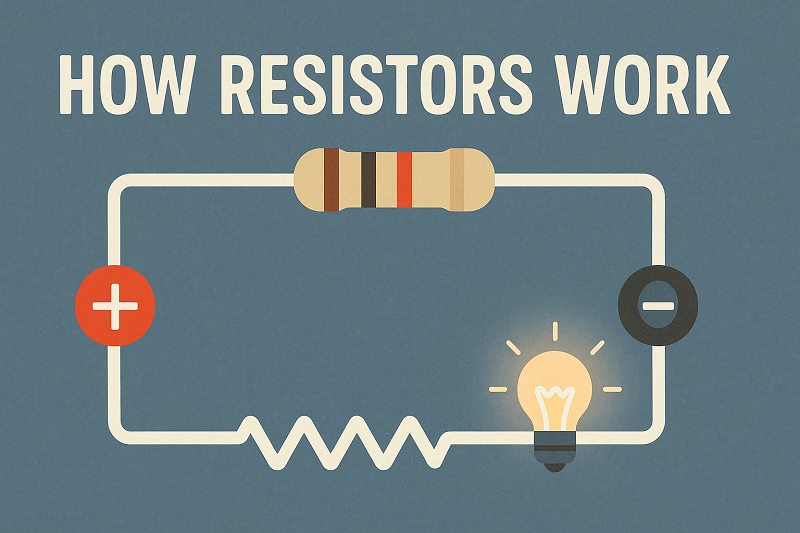
How Resistors Work: From Basic Principles to Advanced Applications2025-07-30
DC Switching Regulators: Principles, Selection, and Applications2025-05-30
FPGA vs CPLD: In-depth Analysis of Architecture, Performance and Application2025-05-07
MOSFET Technology: Essential Guide to Working Principles & Applications2025-05-04
SMD Resistor: Types, Applications, and Selection Guide2025-04-30