The Kynix Blog
Stay Ahead with Expert Electronics Insights,
Industry Trends, and Innovative Tips
- Electronic Components
- News Room
- General electronic semiconductor
- Components Guide
- Sort by
- Robots
- Transmitters
- Capacitors
- IC Chips
- PCBs
- Connectors
- Amplifiers
- Memory
- LED
- Diodes
- Transistors
- Battery
- Oscillators
- Resistors
- Transceiver
- RFID
- FPGA
- Mosfets
- Sensor
- Motors, Solenoids, Driver Boards/Modules
- Relays
- Optoelectronics
- Power
- Transformer
- Fuse
- Thyristor
- potentiometer
- Development Boards
- RF/IF
- Semiconductor Information
- PCB
- transistor
Understanding LC NetworksLC networks are like magic keys that unlock clear signals. LC networks use inductors and capacitors to filter out noise, keeping your devices running smoothly without any annoying interference. Function and Application of LC FiltersLC filters play a big role in keeping electronic devices running smoothly. They cut down on electromagnetic interference (EMI) and radio frequency interference (RFI). This means your favorite gadgets, like smartphones and TVs, work better because these filters keep the noise out.Think of them as bouncers at a club who only let the good vibes in.These filters show up in lots of places - from power supply units to RF circuits. In industrial settings, they're key to making sure machines talk to each other without static messing things up.Whether it's for controlling temperature in a manufacturing plant or ensuring clear communication between control systems, LC filters are behind the scenes heroes. They help meet tough standards and ensure gadgets and gear do what they’re supposed to do without any glitchy surprises. Key Components: Inductors and CapacitorsInductors and capacitors are like the salt and pepper of the electronic world. They spice things up in LC filters. Inductors, such as transformers, coils, or chokes, store energy in a magnetic field when electric current flows through them.It's like they're holding onto energy for just the right moment to release it. Capacitors do something similar but with an electric field. They save up charge until the circuit needs it.These components work together perfectly to filter out unwanted noise from signals—think of it as cleaning up your favorite song so you can hear every note clearly.In the symphony of electronics, inductors provide the rhythm while capacitors hit the notes.These key players come in various types and sizes for different jobs—like smoothing out power supplies or making sure data gets where it’s going without interference. Some are made specifically for high-speed digital signal processors (DSPs) or analog to digital converters (ADCs), ensuring clear communication without losing any detail along the way.Just imagine trying to watch your favorite show with constant static interrupting—the right combo of these tiny heroes makes sure that doesn’t happen with your gadgets! Exploring RC NetworksDigging into RC networks, we find a world where resistors and capacitors team up. This duo controls electric flow and shapes signals, making our gadgets run smooth as silk. Role and Use of RC FiltersRC filters, made of resistors and capacitors, are the unsung heroes in gadgets we use every day. They control how fast or slow electrical signals change in devices like radios and TVs.This might not sound flashy, but without RC filters, listening to your favorite tunes or binge-watching shows would be a mess. Their main job? To smooth out signal flows, ensuring clear sounds and sharp pictures.Using these components is akin to adding just the right amount of sugar to your coffee; it has to be perfect. I recall hooking up an LED lighting project with some capacitors I had lying around.At first, the lights flickered like a disco ball! It was only after tweaking the resistor values that everything calmed down into a steady glow. That's RC filters at work – they help manage energy flow for smoother operations in electronics everywhere from data acquisition systems to microchip technology setups. Constituent Elements: Resistors and CapacitorsResistors and capacitors are the superheroes of RC networks, zapping away unwanted noise like champs. Think of resistors as the guardians that slow down the electric current, making sure it's just right.They come in various types such as variable resistors and PTC resettable fuses, ready to tackle any challenge. On the flip side, capacitors are like storage bins for electricity. They hold onto electric charge until it's needed and can release it in a flash.Their types range from feed through capacitors to ceramic filters, each with its special power.I once had a project where I mixed up my components and ended up with a wacky signal on my breadboard experiment. It was like trying to listen to your favorite radio station but only getting static—it drove me nuts! After some tinkering, I realized I had used a capacitor where I should have placed a resistor.Swapping them put everything back in harmony—clear tunes with no buzz or hum. This hands-on mess-up taught me the real-world magic these tiny parts play in controlling our electronic world. Comparing LC and RC NetworksChoosing between LC and RC networks is like picking sneakers or loafers - both get you places, but in different styles. LC networks, with their inductors and capacitors, ace at blocking unwanted noise in high-speed circuits.On the flip side, RC networks use resistors and capacitors to slow things down a bit, making them great for audio gear. Each has its spotlight moments depending on the gig! Advantages and Disadvantages of Each TypeLC networks shine because they block low-frequency noise like a champ. Imagine you're in a noisy cafe trying to listen to music. LC filters are like noise-canceling headphones for your device, keeping the annoying hum away.But, there's a catch – these network parts are bulky. Ever tried stuffing an oversized sweater into a small suitcase? That's what adding inductors feels like in circuit design.RC networks, on the other hand, are the compact backpacks of the filter world. They fit almost anywhere because of their simple resistor and capacitor setup. Perfect for tight spaces! But if LC filters are noise-canceling headphones, RC filters are more like basic earplugs.They can't quite handle those low-frequency noises as well. It's a bit like trying to block out café chatter with tissue paper stuffed in your ears - not as effective but better than nothing! ConclusionAlright, now you're in the know about EMI/RFI filters and how LC and RC networks play their part. These little wizards clean up the mess in our gadgets, making sure things run smooth without any annoying interference.Think of them like the unsung heroes behind your favorite devices, working hard so you can binge-watch or game on without a hitch. Whether you're dealing with industrial machines or just keeping your smartphone clear of static, these filters have got your back.It's all about keeping our tech happy and humming along nicely. FAQs1. What's the deal with EMI/RFI filters?Think of EMI/RFI filters as superheroes for your electronics. They fight off unwanted noise from electromagnetic interference (EMI) and radio frequency interference (RFI), keeping signals clean and devices happy.2. How do LC and RC networks fit into this picture?Imagine LC (inductor-capacitor) networks as bouncers at a club, only letting in the good vibes (frequencies). RC (resistor-capacitor) networks are like the club's managers, adjusting how much fun (signal strength) gets through to keep everything balanced.3. Can these filters really stop all that electronic noise?Yep! Whether it's buzz from power lines or chatter from other gadgets, these filters use components like capacitors and inductors to block out the racket, ensuring your device only listens to what it should.4. Are there different kinds for all my gadgets?Absolutely! From smartphones needing a tiny touch of quiet with integrated circuits, to big machines craving calm with chunky chokes and coils – there’s a filter for every device under the sun.5. Why do some devices have more than one type of filter?It's like wearing layers on a chilly day. Some devices face more electronic weather than others, so they layer up with both LC and RC networks to stay snug against all types of interference.6. Do I need to be an engineer to understand all this stuff about filters?Not at all! Just remember: EMI/RFI filters are the unsung heroes keeping your electronics free from invisible waves of disruption, ensuring smooth sailing for your favorite tech toys.
Allen On 2024-06-25
Overview: The article discusses the working principles, construction, and layers of the perovskite solar cells. It also highlights key challenges such as ion migration, moisture sensitivity, and toxicity affecting stability and efficiency in energy production. When compared with conventional silicon solar cells, perovskite structures are revolutionary in the domain of solar technology. Many benefits, including increased efficiency over the last decade, lower cost, reduced carbon emissions during manufacturing, bandgap tunability, and unlimited energy, have enabled perovskite cells to become more popular in producing greener energy. What is the more common perovskite structure?Perovskite is the general term for any substance with a formula . Where A is an organic or inorganic cation (MA, FA, Cs), B is a metal (Pb, Sn, Bi), and X is a halide anion (I, Br, Cl). Different perovskite structures can be created by varying the cations and anions, and their efficacy has been investigated. Methyl ammonium lead iodide is the most extensively studied structure for creating the most effective perovskite structure. whereMA (CH3NH3+) is the A cationPb is the heavy metal, B cationI is the halide anion Six iodine anions surround each lead cation to form an octahedral structure, as shown in Fig. 1. Each octahedral unit cell is connected via corners to form a cuboctahedral structure where a larger methyl ammonium cation is present in the center position, as shown in Fig. 2. This solar cell has a comparatively higher absorption coefficient and a direct bandgap of 1.55 eV. Additionally, their increased diffusion length allows the charge carriers to pass through the electrode for a greater distance before recombining, contributing to electricity. Due to these enhanced qualities, thin-film solar cells with comparatively less thickness than traditional bulkier silicon solar cells may now be produced with a power conversion efficiency exceeding 20%.Fig. 1: Illustration of methyl ammonium lead iodide perovskite solar cell. Source: Rakesh Kumar, Ph.D. Fig. 2: Illustration of cuboctahedral structure perovskite solar cell. Source: Rakesh Kumar, Ph.D. Challenges In Methyl Ammonium Lead Iodide Perovskite CellEven though these cells offer many benefits, they also present some challenges. Ion migration: When exposed to environmental factors, the MA ion diffuses or migrates inside the crystal structure; this process is called ion migration. This phenomenon of ion migration has a significant impact on the photostability of the perovskite structure. When these cells are studied in a controlled atmosphere, their efficiency is up to 20%; however, this will drop significantly to 15% when exposed to external forces. Replacing MA with a larger and longer-chain cation enhances structural stability through steric hindrance, which prevents ion movement inside the crystal structure. Alternatives should also satisfy the tolerance factor to attain a stable structure. The most popular substitute is formamidinium, which performs better than methyl ammonium lead iodide with a bandgap of 1.47 eV and a power conversion efficiency of 14.2%. Moisture and oxygen sensitivity: Interaction with moisture and humidity eventually causes degradation due to the distortion of the crystal structure. Toxicity: The Pb-based perovskite cell makes them toxic in nature. Non-lead-based perovskite cells are based on metals such as tin (Sn), germanium (Ge), and bismuth (Bi). They have been researched to produce effective and non-toxic perovskite materials. Among these alternatives, Sn has performed the best, but its stability is inferior to that of lead-based structures. Construction of Perovskite Solar CellProper construction of these cell layers is a critical factor in improving efficiency. A light-absorbing perovskite layer is sandwiched between p- and n-type semiconductor layers in a heterostructure. This lets electrons and holes be extracted selectively, enabling perovskite solar cells to work efficiently. In every structure, the energy level of each layer is seamlessly related to that of the next layer. High-quality perovskite layer manufacturing is essential for perovskite solar cells with high photovoltaic conversion efficiency. Based on the placement of alternating regions of layers, there are two types: NIP and PIN The structure of the NIP and PIN is diagrammatically illustrated in Fig. 3Fig. 3: Illustration of perovskite solar cell layers: a) n-i-p structure; b) p-i-n structure. Source: MDPI Perovskite Solar Cell LayersThe layers in high-quality perovskite solar cells areA light-absorbing perovskite layerAn electron transport layer (ETL)A hole transport layer (HTL)Conductive oxide layer (anode) Indium tin oxide (ITO) / fluorine-doped tin oxide (FTO)A Metal contact layer (cathode) HTL and ETL transport layers can be constructed using organic and inorganic materials. Electron Transport LayerTitanium dioxide is the more widely used electron transport layer, but it has drawbacks such as ion migration that causes deterioration and the requirement for high temperatures during annealing. Thus, several additional alternatives, including ZnO, CdS, and SnO2, are selected and researched. Because of its larger bandgap, lower fabrication temperature, and greater mobility, SnO2 showed increased stability and has more potential to be used as the electron transport layer. Hole Transport LayerSpiro-OMe TAD is the organic material that is employed in the HTL layer more frequently and produces higher efficiency. The more prevalent issues with this material are its high cost and active degradation, which impair perovskite cells' stability. On the other hand, inorganic HTLs are affordable, easy to fabricate, and highly stable, which serve as effective alternatives. The inorganic HTL that are used most often are poly triarylamine (PTAA), copper thiocyanate (CuSCN), FDT, copper phthalocyanines (CuPc), carbon (C), copper zinc tin sulfide (CuZnSnS2), copper indium disulfide (CuInS2), nickel oxide (NiO), and much more. Transparent Conductive Oxide LayerThe transparent conductive layer is the most important component of the perovskite structure because it fulfills two essential functions.Transmission of incident photons towards the light absorber layer.Transmission of generated electron-hole pair towards the external circuit. Proper fabrication of these conductive layers and balancing transparency and conductivity are critical factors for the efficient working of the perovskite cell. Working of Perovskite Solar CellThrough the transparent conductive oxide layer, the incident photon enters the perovskite absorber layer. The incident photon creates electron-hole pairs in the absorber layer. The resulting electron-hole pair is transferred to the external circuit via the hole transport layer, and the electron transport layer generates energy. In every structure, the energy level selection and band alignment of the material for each layer are seamlessly related to those of the next layer for improved efficiency. To conclude, the performance of solar cells is mainly dependent on the selection of materials for each layer, and their thickness and energy levels should be optimized to facilitate the proper transmission of charge carriers in energy production. Research is being conducted to develop stable perovskite solar cells that have increased efficiency and are anticipated to hit the market shortly. Summarizing the Key PointsPerovskite solar cells offer a promising alternative to traditional silicon cells, with relatively higher efficiency and lower manufacturing costs.The construction and proper selection of layers in perovskite solar cells are crucial to maximizing energy production efficiency.The selection of materials, their thickness, and energy levels are critical factors in ensuring the proper transmission of charge carriers for optimal energy generation. ReferencePriyanka Roy et al., “Perovskite Solar Cells: A Review of the Recent Advances,” Coatings 12, no. 8 (July 31, 2022): 1089, https://doi.org/10.3390/coatings12081089.Mritunjaya Parashar and Anupama B. Kaul, “Methylammonium Lead Tri-Iodide Perovskite Solar Cells with Varying Equimolar Concentrations of Perovskite Precursors,” Applied Sciences 11, no. 24 (December 9, 2021): 11689, https://doi.org/10.3390/app112411689.
Rakesh Kumar, Ph.D. On 2024-06-24
Key Considerations When Selecting Pushbutton SwitchesWhen choosing Pushbutton Switches, think about where you'll use them and what job they need to do. Consider if they must resist water or handle lots of clicks over time.Application EnvironmentChoosing the right pushbutton switches starts with understanding where they will be used. Imagine setting up buttons for outdoor industrial equipment. They need to stand strong against rain, dust, and maybe even a coffee spill or two. This is where Ingress Protection options like NEMA 4/4X/13, IP65, IP66, IP67 come into play. These ratings tell you how well the switch can keep out unwanted guests like water and dirt. From personal experience, I learned that not all environments are kind to electronics. Working on an outdoor project meant our switches had to weather storms quite literally! We opted for pushbuttons made from durable materials such as metal and polyester housed in rugged enclosures with high IP ratings. It was a game-changer ensuring that no matter how hard it rained or how much dust blew, our equipment kept running smoothly.The right switch thrives where it's planted.Switch FunctionalitySwitch functionality is all about what the switch does and how it does it. Think of switches like players on a soccer team; each one has a specific role. You've got your starters, like "on/off" switches that turn things up or down, just as you start or stop a game.Then there are more complex types such as "momentary" switches that bounce back like a sprinter after pushing forward, only making contact while you press them down. Others, called "latching," stay put after the initial push - think of keeping score in a game.For any setup, whether it's lighting up your room or controlling industrial machines, understanding these roles is key. I learned this hands-on while setting up my workshop with various electrical devices.The wrong type can throw off everything! For example, using a momentary switch where you need something to stay on without holding it can be like putting a goalie in the striker position - not effective! With options ranging from simple light buttons to emergency stops and power selectors for heavy machinery available at maximum supply voltage specifications including 120V and 24V among others, choosing right means knowing each player's strength on your team.Durability RequirementsPushbuttons need to survive in tough places. Think of a factory floor or outside where rain and dust never take a break. That's why switches like the Apogee Web are top-notch.This means they're protected against dust, water, and even strong jets of water from all directions. So, if your pushbutton needs to be as rugged as a superhero, these specs are your shield.Choosing the right switch also means thinking about what it's made of. Metal buttons like the 10250T-series offer solid protection with their zinc die-cast bodies getting thumbs up from big names in safety standards like CE, UL, and CSA.And then there's the E34 range crafted with die-cast construction draped in cathodic epoxy coating for an extra layer of invincibility against corrosion and wear. In simple words: these bad boys can face harsh sunlight or chemical spills without breaking a sweat. Momentary vs. Latching Pushbutton SwitchesChoosing between momentary and latching pushbutton switches is like deciding if you want your lights to turn off when you let go of the switch or stay on until you press it again. Momentary ones bounce back like a doorbell, while latching types stick like a toggle for your light at home. Understanding Momentary SwitchesMomentary switches work like a charm for tasks that need quick actions. Imagine pushing the play button on your music player; press, and it starts, release, and it stops. That's how these electrical switches operate—no need to keep them held down.They're perfect for applications where control needs to spring back immediately after activation, such as in industrial machines or doorbells.Pressing a momentary switch is like ringing a doorbell; simple push activates it.Their design allows for various uses across different setups, from surface mount installations on sleek panels to being part of larger electrical circuits with power supplies and signal transformers.Whether you're controlling LED lighting in your home or managing operations in an industrial setting, momentary switches make interaction straightforward and efficient, without any fuss. Understanding Latching SwitchesLatching switches are like the light switch in your room. You push it once, and it stays on until you push it again to turn it off. These switches keep their position even when you remove your hand or power stops flowing to them.They're great for devices that need to stay on or off until someone decides to change their state. Think of a latching switch as a faithful dog that sits patiently waiting for your next command.These switches come in various styles, such as twist-to-release or push-pull, fitting different panel mounts and applications. Whether it's controlling power supply in industrial machines or turning lights on and off, they offer a maintained operation option that proves essential in many setups.Colors range from red for stop functions to green for go, making them not just functional but also integral parts of any design language within equipment interfaces. So whether mounting one inside an electrical rack or using it as part of a larger control panel, latching switches provide reliability with each use. Waterproof and Dustproof OptionsIf you're putting switches where water or dust might crash the party, you'll need waterproof and dustproof ones. These tough guys can stand up to almost anything a wild environment throws at them. Importance in Harsh EnvironmentsIn harsh environments, having the right pushbutton switches can mean the difference between smooth operations and frequent, costly downtime. Think industrial settings or outdoor installations where dust, water, and extreme temperatures are common foes. Omega Engineering offers pushbutton options like NEMA 4/4X/13 rated and IP66/IP67 rated switches that stand up to these tough conditions. These aren't just any light switches; they're like superheroes of the switch world, with illuminated and non-illuminated styles to suit all kinds of dark or bright situations. Using robust materials such as die-cast construction with cathodic epoxy coating found in E34 30mm rugged push buttons ensures longevity and reliability. From my own experience, after installing these zinc die-cast 10250T-series 30.5mm metal push buttons in a manufacturing plant exposed to high moisture and particulate matter, the difference was night and day. There were fewer system failures, proving CE, UL, CSA-approved devices don’t just meet standards; they exceed expectations in keeping machines running without hitch in brutal conditions. So when you’re laying out your cables or connecting wireless charging systems in places that challenge conventional equipment’s survival,. Installation and Wiring ConsiderationsSetting up pushbutton switches correctly makes sure they work right. The right tools and techniques keep everything running smoothly.1.Choose the proper termination style for your switch. Options like solder sleeves, wire splices, terminal blocks, and circular connectors matter a lot. Each one works best in different scenarios. 2.Use stand-alone programmers to set up digital switches. These devices help program switches for specific functions and responses. 3.Pick the right wire for your setup. Things like power cables and solid or stranded wires have their own benefits depending on how much flexibility you need. 4.Consider a reliable soldering iron for creating strong electrical contacts. A good solder joint means less trouble down the road. 5.Keep desoldering braid handy for fixing mistakes. Sometimes wires need repositioning or removal, making this tool a lifesaver. 6.Install grounding mats around sensitive equipment to prevent static damage during installation. 7.Secure connections with high-quality spade connectors or circular connectors for industrial switches that face lots of wear and tear. 8.Plan for thermal management in tight spaces or high-power applications by using heat sinks or liquid cooling systems. 9.Ensure proper surge suppression to protect your pushbutton switches from unexpected voltage spikes that could cause damage. 10.Test your installation with multimeters to check voltage levels and verify connections are correct before finalizing your setup.With these steps in mind, installing pushbutton switches can be straightforward, ensuring they perform well in their intended application. ConclusionPicking the right pushbutton switch feels like finding a needle in a haystack, doesn't it? Fear not! This guide aimed to make that search much easier. From discussing types and what to look for, to specifics like momentary versus latching and waterproof options, we covered it all. Knowing your switches can really power up your project, just like choosing the right tool from crimpers to soldering irons sharpens your workbench skills. So now, armed with knowledge about actuators, circuits, and more, you're ready to hit that switch on your next big idea or fix-up project. Keep this guide handy; it's your toolbox for navigating pushbutton switches. Now go on; let those projects shine bright!FAQs1. What's the deal with pushbutton switches?Pushbutton switches are like the magic buttons of electronics. You press them, and boom! They control gadgets by connecting or breaking circuits. They come in all shapes and sizes for different jobs, like lighting up a bulb or turning on your computer. 2. How do I pick the right one?Choosing is not rocket science but close! Think about what you need it for. Does it need to handle lots of power? Check its current rating. Will it be pushed often? Look for something sturdy. There’s a switch out there that fits just like a glove for your project. 3. Can these switches connect to anything fancy?These little wizards can team up with plugs and sockets, jacks, and even get along with high-tech stuff like integrated circuits and optoisolators. It's like throwing a party where everyone's invited - from simple bulbs to complex electronic devices. 4. Is soldering necessary?Sometimes it’s part of the adventure! Many pushbutton switches need soldering irons to join them into their new home on circuit boards alongside other components like resistors and capacitors. But don’t worry; if you can make popcorn without burning it, you can probably solder too. 5. Do they play nice with computers?Absolutely! With some help from breakout boards and microchip technology, these buttons can send signals to computers making them do all sorts of tricks – from playing sounds to displaying images on OLED screens or even controlling games! 6. What if I want my gadget outside?Then give your switch a coat! Not literally though – look for ones designed to brave the elements or consider adding protective covers yourself (think raincoats but for buttons). That way, whether sunbathing or caught in a downpour, your project stays safe.
kynix On 2024-06-24
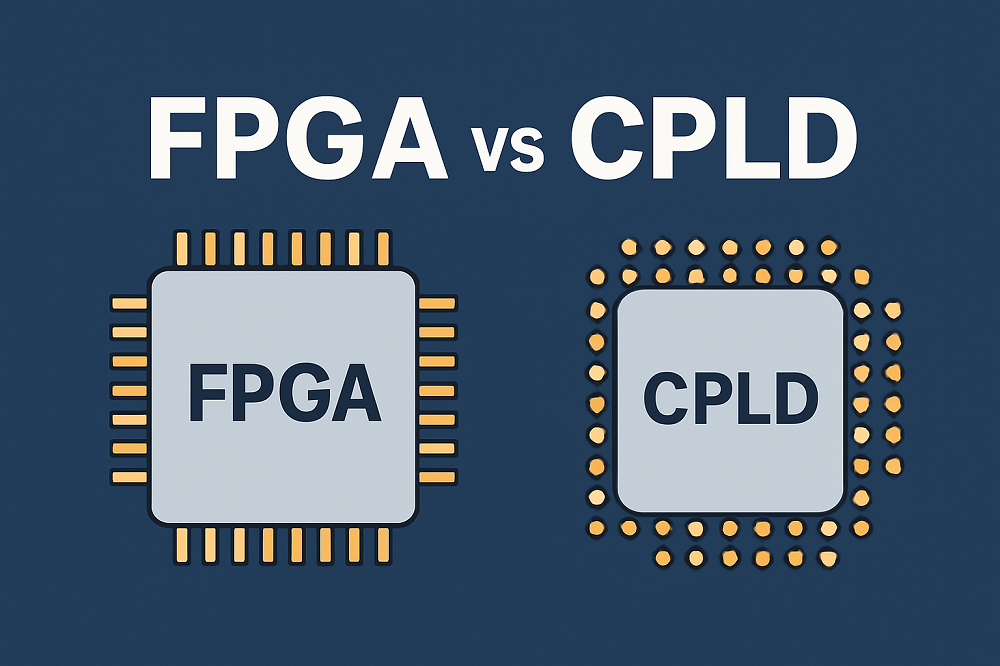
Overview of CPLDs CPLDs, also known as logic devices act as the powerful brains, behind electronic devices. They manage rules and decisions swiftly to enhance technologys intelligence and speed.Definition and Basic FunctionComplex Programmable Logic Devices (CPLDs) focus on enabling medium-sized digital circuits to perform their functions. Consider a container packed with logic gates that are configurable to execute various tasks.Picture a collection of miniature computers that can be educated to handle different responsibilities simultaneously. These devices utilize programmable logic to ensure they execute precisely the functions required by engineers, whether it be regulating an automobile's engine or coordinating signals in a mobile device.From my own experience working with these gadgets, I've learned that simplicity is key. You start with an idea for a circuit and then use hardware description languages (think of them as the instruction manual) to tell the CPLD how to behave.This might involve setting up sequences of operations or deciding which inputs lead to which outputs. It’s fascinating work because it feels like teaching a child basic steps and watching them learn how to perform complex tasks on their own.Key Components of CPLDsCPLDs light up with their logic blocks and macrocells each controlled by /OR arrays. Imagine them as neighborhoods where each building ( block) can be rearranged to meet the citys requirements.These blocks are linked through a system of switches that we can customize, similar, to choosing which streets, in our city should be one way or allow two way traffic. This adaptability enables us to transmit signals through the routes reducing time and energy consumption.In my own tinkering with CPLDs for a small robot project, I marveled at how EEPROMs play the role of memory keepers in these devices. Unlike regular memory that forgets everything once power goes off, EEPROM remembers its programming even after being switched off.This trait is crucial for gadgets that need to wake up and run with no delay because they don't have to be reprogrammed every time they turn on. It's like teaching an old dog new tricks but never having to teach them again. Comparing CPLDs to FPGAsCPLDs and FPGAs might seem like twins in the digital world, but they play very different games. CPLDs are simpler, making them a go-to for small tasks, while FPGas handle complex projects with more muscle.Architecture DifferencesFPGAs and CPLDs may appear similar, at glance. They are quite different in the world of electronics. FPGAs offer logic blocks (CLBs) that function like building blocks you can assemble in ways as you please.These blocks are versatile allowing you to construct designs with memory blocks for data storage and DSPs (Digital Signal Processors) for handling mathematical tasks. It's like having a brain that can tackle heavy lifting.On the hand CPLDs take an approach by using a fixed number of macrocells. Picture these as made Lego sets; while theres less room for customization they often provide just the right fit, for many projects.During my own tinkering adventures, I once tried using an FPGA for a basic project only to realize it was overkill – like driving a semi-truck to pick up groceries! Switching to a CPLD made more sense; its simpler architecture did the job without extra bells and whistles.This experience taught me that understanding these differences isn't just academic – it impacts what lands on your workbench. You get why choosing between them hinges on how complex your circuits need to be or how much speed matters for your specific task.Performance and ComplexityCPLDs shine in the race with their lean power appetite. FPGAs might sprint ahead with muscle and flex, offering more performance and resources, but they also guzzle more juice. Imagine a sports car versus a reliable sedan; one dazzles at high speeds while the other wins on efficiency over long distances.I once worked on a project where every watt mattered. We chose CPLDs for their thriftiness in power consumption, making our embedded system not just smart but also energy-smart.Tackling complexity, CPLDs keep it simple with their straightforward architecture. FPGAs boast of intricate arrangements that can handle vast logic designs and parallel tasks, stretching from field-programmable gate arrays to digital logic circuits.Yet this complexity is not everyone's cup of tea. For many designers like me who juggle timing analysis and hardware description languages, the simplicity of CPLDs makes them our go-to choice for streamlined projects where speed and need meet without causing headaches over tangled configurations or bloated costs.Cost ImplicationsMoney talks, especially in tech. If you're deciding between a CPLD (complex programmable logic device) and its cousins like FPGA (field programmable gate array) or ASIC (application-specific integrated circuit), cost is a big deal.FPGAs often come with more muscle for handling complex tasks but also carry a heavier price tag due to their design flexibility and performance capabilities. On the flip side, CPLDs are your go-to for simpler, less expensive solutions.They work well when you don't need all the bells and whistles but still want something reliable.I once had to choose between using a CPLD or an FPGA for a quick-turnaround project. The clock was ticking, and so was my budget meter. After crunching some numbers, it became clear that leveraging a CPLD's lower cost would let us meet our financial limits without sacrificing quality.This choice saved us thousands and allowed us to allocate funds towards other vital components of our design—like simulation tools Verilog for testing our logic thoroughly before launch.It’s moments like these that show: saving money while maintaining efficiency isn’t just good business; it’s smart engineering. Application Areas for CPLDsCPLDs show off their skills in gadgets we use every day, like phones and TVs. They also help cars talk to each other and keep our internet calls clear and fast.Consumer ElectronicsConsumer electronics like smartphones, game consoles, and TVs rely heavily on CPLDs. These gadgets need to process data quickly and effectively. CPLDs help them do just that by managing tasks in parallel, speeding things up.Thanks to their ability to handle sequential logic and glue logic operations, devices can perform multiple actions at once. This makes your phone or TV smarter and faster.In the design of these electronics, engineers use tools like Verilog, a hardware description language. They also employ simulators to test how the CPLD will behave under different conditions.This way, they make sure your gadget works well and reacts swiftly when you're switching between apps or streaming videos. With CPLDs embedded in consumer electronics, every click leads to instant responses, enhancing your experience with technology daily.Automotive IndustryCars are getting smarter every day. They use CPLDs in their electronics, especially for things like ADAS and self-driving cars. This tech helps cars make quick decisions on the road.In these vehicles, CPLDs play a major role. They process data fast, making sure everything runs smoothly. From controlling your car's speed to ensuring safe lane changes, CPLDs are key players behind the scenes in the automotive world.TelecommunicationsIn telecommunications, CPLDs play a big role. They handle the fast data we send and receive every day. Think about texting a friend or streaming a video. CPLDs help make sure those messages and movies get to us quickly and without errors.I once toured a telecom company and saw these devices in action. It was like seeing the internet's backstage—lots of blinking lights and complex setups, but all smoothly managed by CPLD technology.They also work well with field-programmable gate arrays (FPGAs) to manage networks efficiently. Together, they control how data moves through our phones and computers. This teamwork helps your apps run fast, even if the internet is busy.So next time your video call doesn't lag, you can thank both FPGAs and CPLDs for keeping things speedy! The Role of CPLDs in High-Speed Data ProcessingCPLDs turbo-charge data handling, making gadgets zip through tasks. Discover how these powerhouses speed up our tech world!Advantages in Speed and EfficiencyCPLDs shine with their fast timing for simple logic functions. They make quick decisions, handle data at high speeds, and reduce the need for extra chips on a board. Think of CPLDs as sprinters in a race; they're built for speed over short distances.This trait is invaluable in consumer gadgets where response time can make or break the user experience. By using these devices, designers cut down on system power use, which is essential for battery-powered electronics.From my desk full of gadgets and scribbles, I've seen CPLDs work magic in projects. They process commands swiftly, making them perfect for tasks requiring immediate action like signal processing or managing control systems in cars.These small yet powerful chips ensure that your favorite electronic devices are both fast and efficient with energy use. With tools like Verilog and simulation software, tweaking these tiny powerhouses to achieve optimal performance becomes an enjoyable puzzle to solve. Specific Use Cases in Data HandlingCPLDs shine in data handling by making things faster and using less juice. They're like superheroes, swooping in to take the heavy lifting off a device's main brain. Here’s a scoop on how they rock in the digital world:Managing Traffic: In a busy network, CPLDs act as traffic cops, directing data where it needs to go without causing delays. This keeps videos streaming smoothly and websites loading quickly.Super Quick Decisions: With their ability to handle multiple tasks at once, CPLDs make lightning-fast decisions that help self-driving cars avoid obstacles and drones fly safely.Keeping Secrets Safe: For security, CPLDs are like vaults. They encrypt data making it tough for hackers to crack, protecting everything from your phone calls to your bank account.Power Savers: By taking over smaller tasks, CPLDs allow the main processor to snooze more often, saving power. Phones last longer between charges because of this clever handoff.Heartbeat Monitors: In healthcare gadgets, CPLDs monitor heartbeats and other vital signs in real-time, ensuring doctors get accurate info ASAP.Talking Devices: They allow devices from different areas to speak the same language, whether it's a printer talking to a computer or a thermostat chatting with a smartphone app.7.Eyes and Ears: In security cameras and smart homes, CPLDs process images and sounds super fast, helping these gadgets understand what they see and hear without getting confused.8.Smooth Operators: Electronic brains need updates without hiccups. CPLDs manage these updates seamlessly, making sure your gadget doesn’t skip a beat while learning new tricks.9.Game Changers: For gamers, CPLDs keep lag at bay by processing complex game physics in real-time, ensuring that every explosion looks epic and every race feels speedy.10.Network Ninjas: In big server farms that power the internet, CPLD-equipped machines juggle data packets like hot potatoes, keeping everything from emails to social media posts zipping along without getting stuck.CPLDs spring into action across various fields with their multitasking prowess and energy efficiency, proving indispensable in our increasingly connected world. Design and Development Tools for CPLDsDesigning with CPLDs? You'll need the right tools, like language translators for hardware and test simulators. This toolkit makes creating fast and smart devices a breeze. Excited to learn more? Keep reading!Hardware Description LanguagesCPLDs get their smarts from programming, and that's where hardware description languages (HDLs) like Verilog and VHDL come into play. Think of HDLs as the instruction manuals for CPLDs.They tell the device how to behave, helping it understand complex logic equations and tasks. Using these languages, designers turn ideas into code that can be compiled, simulated, and then loaded onto a CPLD.It's a bit like writing a recipe for your computer to follow.I've used both Verilog and VHDL in my projects, crafting everything from simple light-blinking operations to more intricate signal-processing tasks. Each time, the process begins with an idea or problem needing a solution.Then comes sketching out the logic using these languages—sort of like planning out your chess moves before making them. This isn't just about typing commands; it's about structuring thoughts in a way machines comprehend.Once coded, tools transform this script into something the CPLD can execute—a magic moment where ideas become actions!Simulation and Verification ToolsSimulation and verification tools like ModelSim, Xilinx ISE Simulator, FormalPro, and JasperGold are crucial. They check if the CPLD designs work right before making them real. Imagine them as test runs for video games but for electronic design.These tools see through your code to find mistakes early. This saves time and money.Using these tools feels like having a crystal ball. You get to see the future of your project without guessing. They use hardware description language (HDL) to model how data moves in your design.It's like building with digital LEGO blocks on a computer screen, ensuring everything fits perfectly before you commit. Optimizing CPLD PerformanceTo get the most out of your CPLD, it's like tuning a race car; you focus on timing analysis and smart use of resources. Get ready to boost speed and efficiency with these tricks!Timing Analysis TechniquesTiming analysis helps designers make sure CPLDs and FPGAs work fast and right. Tools like Quartus Prime Timing Analyzer check the clock's timing across the whole chip. They look at how data moves and when signals hit their targets.This makes sure everything works together well without delays.Designers use this info to tweak their designs for better speed and reliability. They might adjust paths or reduce tasks that take too long. This way, embedded systems using CPLDs can handle data quickly and efficiently, making gadgets work smoother.Resource Utilization StrategiesTo get the most out of complex programmable logic devices (CPLDs), it helps to focus on smart strategies. Pipelining is a way to speed things up by organizing tasks in a line, so one starts as soon as the other ends.By balancing logic circuits, we make sure no part of the CPLD works too hard while others slack off. Pushing the clock frequency higher lets us do more tasks faster but demands careful planning to avoid errors.From my experience, sprinkling these techniques across the design makes a huge difference. On an embedded processor project, adjusting the clock's speed just right shaved milliseconds off our processing time – that might not sound like much, but in data transmission and image processing, it’s gold.Using software like Verilog for hardware description and then testing with simulation tools ensured we were on track without wasting resources on dead-end designs. It’s like finding the perfect balance on a seesaw; everything runs smoother when you distribute weight evenly. Future Trends in CPLD TechnologyCPLD technology is sprinting ahead, with new tricks up its sleeve. Expect smarter chips that learn on the fly and play nice with the latest gadgets. Keep reading to stay ahead of the curve!Market ProjectionsThe market for field programmable gate arrays (FPGAs) is on a fast track, expected to hit USD 12.5 billion by 2025. This growth isn't slowing anytime soon with a steady climb at a rate of 9.7% from now until then.It's clear that the demand for these integrated circuits, which include complex programmable logic devices (CPLDs), is skyrocketing across various sectors like computer vision and network functions virtualization.These projections show us that industries are banking more on technologies like FPGAs and CPLDs to power their innovations, especially in high-speed data processing tasks. With such crucial roles in computing languages, software development platforms, and even open computing language applications, it's evident that both today’s developers and tomorrow's innovations will lean heavily on these adaptable circuits.Innovations on the HorizonFuture trends in CPLD technology point to a world where combining complex programmable logic devices with microprocessors and ASICs becomes the norm. This blend creates more efficient solutions, perfect for tackling tasks that demand high-speed data crunching without breaking a sweat.Imagine having the power of both brains and brawn at your fingertips – this is what's coming.People who design those tiny yet powerful chips are already experimenting with ways to make them faster, smarter, and cheaper. By using tools like Verilog for hardware description and leveraging simulation technologies, these innovators ensure gadgets get smarter by the day.They're not just thinking about today; they're crafting the future of technology piece by piece, aiming for leaps in areas such as multi-access edge computing and software-defined networking that could change how we interact with devices around us.It's like giving steroids to an already fast runner, making sure they stay ahead of the pack by miles, not just steps. Choosing the Right CPLD for Your ProjectPicking the best CPLD for your project might feel like finding a needle in a haystack. You need to eye factors like speed, cost, and what tasks you want it to handle. Say you're working on a fast video game console or a smart car system.You'll favor CPLDs that juggle tasks quickly without breaking the bank. Deciding between CPLDs and their cousins, FPGAs, comes down to your project's size and how complex its brain needs to be.Don't forget about tools like Verilog or VHDL for crafting your designs. These programming languages are just the ticket for telling your CPLD how to behave — think of them as teaching an old dog new tricks! Simulation tools also step into the arena, letting you test drive your design before making anything real.In short: hunting down the perfect CPLD is all about matching its features with what you dream up in your head. Ready to play matchmaker? Let's get started! Factors to ConsiderChoosing the right CPLD for your project can feel like a maze. With various factors at play, making an informed choice ensures your project runs smoothly without unnecessary hiccups. Here's what to keep in mind:Complexity of Your Project: Consider how complex your design needs to be. CPLDs, with fewer logic blocks, work well for simpler designs. If your project involves more intricate operations, like those found in GPUs or advanced telecommunications protocols, you might need to think again.Performance Needs: High-speed data processing demands devices that can keep up. CPLDs excel in executing simple tasks quickly thanks to their architecture that supports parallelism, making them ideal for applications needing swift responses, such as interrupt handling in automotive systems.Time-to-Market: If you're racing against the clock, CPLDs could be your best bet. They typically require less development time compared to FPGAs or ASICs owing to their simplicity and pre-built logic structures.Power Consumption: For battery-operated devices where power is precious, the low power usage of CPLDs makes them stand out. Their static nature means they consume less power than FPGAs, extending the life of portable electronics.Design Flexibility: Need room for last-minute changes? CPLDs offer flexibility because they're reprogrammable devices. This feature allows you to tweak your design without starting from scratch.Cost Concerns: Budget always matters. Generally speaking, CPLDs cost less than FPGAs or ASICs both in terms of initial investment and during the product lifecycle due to lower power consumption and development costs.Size Restrictions: Sometimes size does matter! In projects where board space is limited, like wearable technology or small consumer gadgets, the compact footprint of a CPLD can be a deciding factor.Development Tools Availability: Access to powerful development environments such as Visual Studio or hardware description languages including C/C++ plays a crucial role in programming efficiency and ease.Future Scalability: Thinking ahead pays off. Consider whether your project might need more functionality down the line requiring more logic blocks or faster performance that only bigger or more advanced CPLDs can provide.10 Software Compatibility: Ensure that the operating system and other software layers your project relies on mesh well with the CPLD you choose to avoid compatibility nightmares later on.Each point directs you to a clearer decision-making path ensuring that whatever choice you make aligns perfectly with both current needs and future aspirations of your high-speed data processing projects. When to Opt for a CPLD Over an FPGAChoosing a CPLD instead of an FPGA makes sense for projects needing fast timing and straightforward logic operations. In my work, I've found that CPLDs shine in managing tasks like bus interfacing, bringing different parts of a system to talk smoothly with one another, or gluing various components together so they play nice.For setups where the focus is on speed rather than complexity—think quick decision-making over intricate data processing—CPLDs are your go-to.Take power management as an example. In a scenario where you need precise control over how and when power flows through your device's circuits, a CPLD can handle those demands efficiently due to its simple yet powerful setup.It executes actions quickly, making it ideal for applications where response time is critical but the overall system design doesn't call for the high levels of flexibility FPGAs offer.In essence, if your project has clear-cut needs without requiring extensive programmable resources, leaning towards a CPLD could save both time and money while delivering reliable performance. Common Questions About CPLDsGot burning questions about CPLDs? You're not alone! People often wonder how they stack up against FPGAs in power munching or if they're the right pick for their next big project. It's time to clear the air and get those answers.Keep reading, and let's crack this nut together!Differences in Power Consumption Between CPLDs and FPGAsCPLDs are like sprinters, quick and efficient for short distances, thanks to their simple structure. They use less juice than FPGAs because they're smaller and not as complex. Imagine a light bulb versus a spotlight; CPLDs are the light bulbs.Their power needs stay steady, making them reliable for tasks that need speed without draining energy.FPGAs, on the other hand, are more like marathon runners with extra gear strapped on. They pack more punch but also suck up more power due to their beefy architecture and flexibility in handling intricate designs.The catch? How much energy they gulp down can swing wildly based on how busy they get or how you've set them up – from the clock ticks to the logic gates buzzing inside. So if your project is like planning a city's electric grid versus lighting up a single street, FPGAs might be drawing more from your power plant.Suitability of CPLDs for Specific ApplicationsComplex programmable logic devices shine in control systems, automotive electronics, and industrial automation. Their lower power usage makes gadgets last longer before needing a recharge.For quick decisions in cars or machines, they're top-notch because of their simple design that works fast.Using them in projects means you can change parts without starting over—just update the software. I tried this on an automation project; tweaking was a breeze with just some clicks instead of soldering new circuits all day.They fit best where speed and flexibility count but without breaking the bank or using too much juice. ConclusionCPLDs are like the hidden wizards of gadgets, making everything work faster and smarter. They're not as famous as their cousin FPGAs, but they sure pack a punch in data processing speed.With tools like Verilog and cool innovations on the rise, picking the right CPLD could be your golden ticket in tech projects. So next time you’re up for some high-speed tech action, think CPLDs – small but mighty! FAQs1. What's a CPLD, and why should I care?Imagine a tiny box that can do magic tricks with data faster than you can blink. That's a CPLD (Complex Programmable Logic Device) for you! It’s like the brain behind making gadgets work quicker and smarter without taking coffee breaks.2. How does this CPLD thingy speed up my devices?CPLDs are like super-efficient office workers who organize data, make decisions on where it goes next, and don't waste time. They use flip-flops (no, not the sandals), Boolean logic (a way of using true/false to solve problems), and other smart tools to process information at lightning speed.3. Can CPLDs learn new tricks?Absolutely! Unlike your old dog, these chips can learn new skills through something called programming. You can teach them new ways to handle data or even play nice with other tech inside your gadgets.4. Are there different kinds of memory in these devices?Yes siree! Think of it as having different types of notebooks for various tasks - some you can erase (erasable programmable read-only memory), some you can rewrite over many times (electrically erasable programmable read-only memory), and some are just for reading what’s written down by someone else (read-only memory).5. Do I need to be a rocket scientist to work with CPLDs?Not at all! While it sounds complex, diving into the world of hardware design with things like state machines and sequential logic circuits is more about curiosity and less about having a PhD in rocket science.6.Could these gizmos get along with my computer stuff?You bet! CPLDs love playing nice with virtual machines, software defined networking, and even fancy graphics stuff like Vulkan or CUDA. They're pretty sociable in the tech world.
Allen On 2024-06-21
What is a Power Relay?A power relay is a superhero in the electrical world. It's like a switch that controls big energy circuits with just a tiny signal. Picture flipping a light switch, but instead of lighting up a room, you're directing electricity where it needs to go on a much larger scale.Since its creation in 1835, this gadget has been making sure that operators and their tools stay safe by keeping them away from high voltages.Using power relays can handle switching currents from several amps to even greater levels safely. They come with a top power rating; think of this as their strength limit. Inside these relays are coils and contacts, acting as the muscles and bones.When electricity hits the coil, it moves an armature (a type of lever), causing the contacts to move and either start or stop the flow of electricity through the circuit—like controlling water flow with a dam gate.This action happens whether you are turning on industrial machines or dimming your LED lights at home - all without touching the high-current directly! Types of Power Relays Power relays come in different styles, each with its own job. Some are small enough to fit on a circuit board, while others handle big tasks in factories. Miniature RelaysMiniature relays pack a big punch in tiny packages. Perfect for spaces where every millimeter counts, these little giants thrive on PCBs (printed circuit boards), bringing life to everything from smart appliances to personal gadgets.Their role? Simple yet vital: they act as switches that control large currents with smaller ones, making them crucial for devices to operate safely and efficiently.Their size doesn't limit their strength or versatility. Miniature relays can handle resistive loads like light bulbs with ease, proving that great power can come in small forms. They are also experts at reducing electrical interference, ensuring devices work smoothly without unwanted noise or delays.With attributes like normally open (NO) and normally closed (NC) contacts, these compact warriors adjust easily to meet the specific needs of each application.In electronics, miniature relays are the unsung heroes - small in stature but mighty in function. PCB RelaysPCB relays are like tiny superheroes for elevator controls, door systems, and turning lights on and off. They make sure everything runs smoothly without a hitch. Imagine you're in an elevator; the PCB relay is working behind the scenes to ensure a safe ride by managing all the controls quietly.These little devices fit perfectly on printed circuit boards (PCBs), making them ideal for tight spots.They also play a big part in keeping your home cozy or cool by controlling HVAC systems. Plus, they light up your world by taking care of lighting systems without breaking a sweat.With PCB relays, things like adjusting thermostats or setting mood lighting become effortless tasks. They handle high currents with ease, making sure power flows where it needs to go safely and efficiently.Next time you press a button to control something electrical, there's likely a PCB relay doing the heavy lifting silently but effectively. Industrial RelaysIndustrial relays are tough. They handle big jobs in places like elevators and escalators within tall buildings. Think of them as the muscle behind your building's movements, making sure people get where they need to go safely.These powerhouses can manage lots of electrical energy without breaking a sweat, ideal for systems that work hard all day.They also shine in areas needing solid reliability - from controlling heavy machinery to managing the flow in power grids. Industrial relays come equipped with features like high-current handling and resistance to extreme conditions.With options like electromechanical relays or solid-state types, they match up well with various industrial applications, ensuring everything runs smooth as silk without any hiccups or delays in operation. Key Functions of Power RelaysPower relays act like magic switches; they control big power flows with just a small signal. They're the go-to team for keeping your circuits in check and managing heavy current without breaking a sweat.Want to learn how they pull off this trick? Stick around, there's more cool stuff ahead!Circuit ControlRelays are like traffic cops for electricity in gadgets and machines. They manage where power flows. Picture a relay as a switch, controlling the path for current to travel, ensuring devices work right or stay safe.Relays come in handy for turning things on or off without needing someone right there to flip a switch.At its core, circuit control is about making sure power goes where it's needed, safely and efficiently.For example, consider your home's heating system. A relay allows the thermostat to signal the furnace to kick on or off without having to handle high currents directly. This isn't just smart; it's crucial for safety and saving energy.In cars, relays control headlights, wipers, and signals—important stuff that needs reliable switching action even under tough conditions like rain or heat.Using concepts like solid-state relays and electromechanical switches helps keep everything from your fridge light to city streetlights working as they should. These nifty devices don't show off but play a huge role in daily life by keeping our electric pals talking correctly to each other! Managing High-Level Current SwitchingSwitching big currents is like directing traffic at a busy intersection. Power relays step in to manage the rush without causing a jam. Imagine turning on an air conditioner or a car engine.These devices need a lot of power right at the start. That's where power relays shine. They deal with these high initial surge currents smoothly, making sure everything runs without hitches.I once had to fix my friend's vintage car that wouldn't start because of old, worn-out wiring. We used a heavy-duty relay designed for high-current applications, similar to those found in industrial machinery and automotive systems.It was like giving the car new life! The relay could handle the massive current needed to turn over the engine without breaking a sweat, proving just how crucial these components are for managing powerful electrical systems efficiently and safely. Applications of Power RelaysPower relays are everywhere, making things work smoothly from managing lights to controlling high voltage devices. They're the unseen heroes in gadgets and machines, turning them on or off with ease.Got a project that needs reliable switching? Power relays might just be your answer. Relays for LightingRelays work wonders in lighting systems. They manage power effectively, making sure electronic ballasts and LED lights perform at their best. Imagine turning on a stadium's floodlights with just a small switch.That's the power of relays in action. They handle the high current these lights need without breaking a sweat.I once had to set up lighting for an outdoor event. The challenge? Using energy-efficient LEDs without overloading the circuit. Inrush power relays were the heroes, ensuring everything lit up smoothly and stayed that way throughout the night.It was a perfect example of how crucial these components are for managing powerful lighting while keeping electricity use down. High Voltage DC ContactorsHigh voltage DC contactors handle a lot of power, especially in places like EV charging stations and solar inverters. Think about it as the big switch that controls when and how this high-level power moves around.For example, the ECP600B series shines in these environments by managing the flow without breaking a sweat. Working with such powerful gear requires careful thought on what goes into them - things like contact materials and how they're built play a huge part.Managing these beasts means dealing with sparks, heat, and sometimes even noise! But here's where good design steps in to save the day. Using silver tin oxide or gold alloy can make contacts last longer and work better because they don't wear out as fast.I've seen this firsthand when setting up systems for electric cars or hooking up those big solar panels you see on rooftops. It's not just about making sure everything works; it's making sure it keeps working under tough conditions.Controlling power is like directing traffic in the sky - you need clear signs and strong signals. Electromechanical Power Relays for Seamless Power FlowElectromechanical power relays are the unsung heroes in our electric world. They work hard to manage power flow smoothly, making sure your gadgets and machines run without a hitch.Picture these relays as traffic cops for electricity, directing it where to go safely and efficiently. SCHRACK power relays stand out because they can handle both high-power tasks and sensitive jobs with ease.Using one of these in a project taught me their value first-hand. Trying to get the lighting system right for a small theater, we encountered flickering issues whenever multiple lights switched off simultaneously.The fix? A robust electromechanic relay that could deal effortlessly with high-current devices like our lights while preventing annoying flickers or delays. It didn't just do its job; it enhanced the entire room's ambiance, proving its worth beyond doubt. Power Relays vs. Signal RelaysPower relays handle the heavy lifting, controlling big currents and loads. Signal relays are like the office workers of the relay world, managing smaller signals with a soft touch.Differences in FunctionalityPower relays are like the big, strong siblings in the relay family. They handle higher voltages and more current but get tired faster, meaning they have fewer life cycles. Think of power relays as heavy lifters in electrical circuits, managing tasks that need more muscle.Signal relays play a different game. With finesse, they deal with lower voltages and just a whisper of current. These little guys are built for endurance, not strength, making them perfect for delicate tasks where precision is key.Their world is one of subtle signals rather than brute force. Comparative AdvantagesSignal relays thrive in tasks that need high precision with low power, perfect for delicate electronics. They keep things running smoothly without needing much juice, making them a great choice for modern gadgets.Their ability to handle many cycles means they last longer, saving you money over time.Power relays take the crown for managing heavy-duty jobs where high currents are the norm. Think of them as the muscle needed to switch large loads on and off. When your setup calls for controlling big machines or entire lighting systems, these are your go-to.Choose wisely: signal relays for finesse and longevity; power relays when strength is key. Design Considerations for Power RelaysPicking a power relay isn't like grabbing the first tool you see. You've got to think about what it's made of and how it plays in the game.Contact MaterialsContact materials are crucial in power relays, determining how well they perform and last. Choices like silver cadmium oxide, silver tin oxide, or gold alloy make a big difference.Silver cadmium oxide fights off contact welding and can handle heavy loads, making it tough in rough conditions. On the flip side, gold alloy steps in for low-power uses where durability is key but the power isn't as high.Using the right material means your relay can take on its job without breaking a sweat. Think of it like picking shoes - you wouldn't wear flip-flops to run a marathon! In electrical relays, whether you're managing massive turbines or keeping small gadgets going, picking the correct contact material keeps everything running smoothly without unexpected hiccups. Common Configurations and RatingsRelays come in different shapes and sizes, each with its own job. Think of SPST (single pole, single throw) as the simple on-off switch for your lights at home. Then there's DPDT (double pole, double throw), which is like having two switches control two different circuits at the same time - handy for complex operations.For even bigger tasks, 3PDT and SP3T join the party, letting you handle multiple connections with a flick.Ratings tell us how much electric current these relays can safely manage without throwing a fit. Whether it's AC or DC currents, they have a limit, measured in amperes. It’s like knowing how much weight a bridge can hold before it decides to fall into the river below.This info helps engineers pick the right relay for powering everything from small LEDs to big machines that go whirr and brrr. Additional Design AspectsDesigning power relays also means thinking about noise and how to calm it down. Imagine a library where everyone whispers but there's still background chatter. That's like the electrical noise in relays we aim to quiet with smart design tricks.Using things like surge suppression helps protect against sudden spikes in power, kind of like putting up a shield in a superhero movie.We also have to deal with contact bounce - that annoying habit contacts have of not making up their minds when they touch. It’s like a light switch that flicks on and off quickly before staying on.By choosing the right materials for contacts and planning for ways to reduce this jitteriness, designers make sure your relay works smoothly every time you need it, just as you’d expect your favorite gadgets at home to behave. Selecting the Right Power RelayPicking the perfect power relay is like finding a needle in a haystack. You need to match your project's needs with the right features, such as electrical resistance and whether it uses latching mechanisms or not.Considerations Based on Application RequirementsChoosing the right power relay means looking at what you need it for. Different tasks call for different relays. Let's say your project involves lighting systems, like LED lighting.You'd want a relay that can handle frequent on-off cycles without a hitch. For this job, something designed to manage low-power signals won't cut it; you'd look into electromechanical power relays or specific solid-state options best suited for handling those quick switches and bright lights.Now, imagine you're working with high-powered machinery instead—maybe valve actuators in an industrial setting or DC converters in electronic devices. Here, overheating could spell disaster, so picking a relay with excellent thermal management becomes crucial—a heat sink attachment might be just what the doctor ordered.Also, consider electrical resistance and how much current your application will draw. Too little thought here and you'll have contact arcing issues before lunchtime! My own time tinkering with wireless charging pads taught me this the hard way: matching the power level with the relay's rating isn’t just recommended; it’s necessary for things not to go sideways fast. Importance of Configuration and RatingsPicking the right power relay is like choosing the perfect pair of shoes for a marathon. You need the correct size, material, and type that fits just right for your feet to last the race.Similarly, relays have their own "sizes" and "materials" in terms of voltage, current, and power specifications. These ratings tell you how much electrical load and pressure the relay can handle without breaking a sweat.Just as you wouldn't wear flip-flops to run a marathon, you wouldn't pick a relay with low ratings for heavy-duty work.The way a relay is wired up—its configuration—is another key piece of the puzzle. Imagine setting up a domino track with twists and turns; if one piece falls out of line, the entire chain reaction stops.Relay configurations ensure that electricity flows smoothly through your circuit's hurdles. Whether it's making sure lights turn on at dusk or protecting gadgets from overcurrents, getting this setup spotless makes all the difference.By matching these specs tightly with what your project needs—be it controlling high-powered electronics or managing delicate signals—you set yourself up for success every time. ConclusionSo, we've talked a lot about power relays - those little gadgets that play big roles in our tech-filled lives. From lighting up homes to powering cars, they're everywhere. Choosing the right one might seem tricky with all the options out there.Just think of it as picking the best tool for a job. Whether it's for a small project or something bigger, getting it right means things run smoothly. And hey, who doesn't want that? Keep these tips in mind and you'll be on your way to making smart picks in no time! FAQs1. What's a power relay and why do we need it?Imagine a tiny superhero inside your gadgets, controlling when they turn on or off with the flick of a switch. That's what a power relay does! It helps manage electricity flow in devices, making sure things like your fridge get power to keep your ice cream cold.2. How do "break-before-make" and "make-before-break" relays work?Think of it as a game of tag between circuits. In "break-before-make," one circuit says "tag, you're it!" and breaks off before another takes over. With "make-before-break," there’s no pause - one circuit tags another into play while still running, ensuring no break in action!3. Can you tell me about latching relays?Sure! A latching relay is like a light switch that stays put after you flip it. Flip once for on; flip again for off. It remembers its position without needing constant power, perfect for saving energy in gadgets around your house.4. Why are armatures and electromechanical relays important?Armatures are the muscles inside relays that move to make or break connections, kind of like how your muscles help you grab stuff. Electro-mechanical relays use these armatures to control big flows of electricity with just small signals – think turning on the lights with a little flick.5. What role do semiconductors play in powering our devices?Semiconductors are the brains behind managing power in our gadgets, from smartphones to microwaves. They decide how much juice each part gets so everything works smoothly without frying up.6. How does cooling affect electronic components like Peltier modules?Ever notice how laptops get hot? Electronic parts can overheat too! Cooling systems like Peltier modules act as mini air conditioners, keeping everything at just the right temperature so our gadgets don’t sweat under pressure.
Allen On 2024-06-21
Overview: The article reviews the advancements of perovskite solar cells, highlighting their superior characteristics and positioning them as a promising alternative to traditional solar cells in the domain of sustainable energy. Solar energy is among the most abundant and widely available energy sources. The advent and expanded implementation of solar technology, which uses solar cells to generate greener energy, is crucial. The use of solar panels continues to rise around the world. Crystalline silicon solar cells have been the most commonly utilized technology for over a decade since they are made from silica, Earth's second most abundant element, and have superior photovoltaic properties. Despite their limitless supply and advantages, producing silicon solar cells is a time-consuming process and requires a lot of heat to eliminate impurities. Even after an exhausting manufacturing technique, the solar cells produced have an efficiency of only 15 - 22%. Additionally, they are not cost-effective because they require a large initial investment. Solar cell manufacture using other components, such as copper indium gallium selenide and cadmium telluride, has also been proposed; however, it is a technique-sensitive process with limited resources and reduced efficiency. This decreases their market share, making them more expensive than silicon solar cells. Hence, researchers are looking for a promising and effective alternative because of the challenges presented by standard solar technologies. What are perovskite solar cells?Perovskite is a new generation of solar cells that is still being developed but has demonstrated better efficiency and promising outcomes. These solar cells are progressing quickly, with the most significant advantage being their low-cost material, simple fabrication process, and improved efficiency. Perovskite solar cell manufacture does not require expensive, complicated equipment or facilities, and there is no carbon emission process. The material utilized in the manufacture of these cells is comparably less since they measure only 0.5 microns in thickness when compared to substantially thicker silicon solar cells. The materials required to manufacture these cells are not uncommon or supply-limited. Structure of Perovskite CellPerovskite cells have a peculiar crystal structure that offers significant potential at low production costs. They are a family of materials with a crystal structure similar to calcium titanium oxide, which is the first component discovered with a perovskite structure. All those materials with crystalline structures , as shown in Fig. 1, are called perovskite. HereA is the organic or inorganic cation (MA, FA, Cs)B is the heavy metal (Pb, Sn, Bi)X is the anion (Halides, I, Br, Cl) It has a cubic structure, with A at the corner, B in the center, and X in the phase center position. With two different coordination numbers, they are two distinct cations. The coordination number of an A cation is 12, and that of a B cation is 6. Six anions (X) surround each B cation to form octahedra, as shown in Fig. 2. Every octahedra is linked to another unit cell via a corner. Each unit cell shares octohedra equally, and they coordinate with one another to produce cubo-octohedra geometry, as shown in Fig. 3. In a perovskite structure, A is often the large cation with coordination number 12 that occupies the center of the cubo-octahedral structure. This unique structure enables remarkable support for a wide range of ferroelectric, piezoelectric, superconductive, and photovoltaic applications. The most well-known perovskite compounds are barium titanate and calcium titanate. These materials are well-known for their ferroelectric and piezoelectric characteristics. According to researchers, adding organic cations led to the creation of a perovskite structure with a tunable bandgap and a wide range of optoelectronic uses that are used to make solar cells. These cells can integrate elements of varying valence, which can be used for various specific applications. The selection of these elements is mainly based on the tolerance factor. This allows for bandwidth tuning of the perovskite cells, which can adjust the material's bandgap for specific applications. Key Parameter: Tolerance FactorThe tolerance factor quantitatively determines the stability and distortion of a perovskite crystal structure, which is mostly dependent on the size of the ions utilized in it. The most commonly used is the Goldsmith tolerance factor, which is represented by the equation asWhererA- Radius of A cationrB- Radius of B cationrX- Radius of X anion The ideal tolerance factor for perovskite crystalline structure is 0.8≤t≤1. The perovskite cell with this range of tolerance factors exhibits optoelectronic properties.0.9 < t < 1 indicates an ideal perovskite with a perfect fit, which is the cubic symmetric phase of the perovskite, which is ideal and has a comparatively better performance.t > 1 indicates the larger size of the cation, preventing the formation of perovskite structures and leading to other structures like hexagonal or tetragonal.t < 0.8 indicates distortion of the crystal structure, forming different structures. These tolerance factors are critical parameters that act as guidelines to approximately determine the stability of the perovskite crystal structure. The tolerance value above or below the specified range results in the formation of different structures with properties differing from perovskite. Superior Photovoltaic Characteristics of PerovskitePerovskite solar cells demonstrate excellent photovoltaic characteristics.Improved absorption coefficient:It has a higher absorption coefficient; it can absorb greater amounts of light in the visible area of the spectrum than silicon solar cells.Wider diffusion length: It has a substantially longer diffusion length, which means the charge carriers (electron and hole generated) can travel a large enough distance through the electrode to be extracted as current before recombining.Bandgap tunability: The most important parameter is bandgap tunability, which can change the material's electrical and optical properties based on the requirements of specific applications.High power conversion efficiency: The efficiency of perovskite-based solar cells has grown dramatically from 3% to 29% over a decade, which is significantly greater than traditional monocrystalline or polycrystalline silicon solar cells, which can only achieve 15–21% efficiency.Easy fabrication: The fabrication method involves a low-temperature, low-carbon-emission surface-based or vapor-based approach that includes sintering or heating at low temperatures to produce thin films of high-performance solar cells. To conclude, perovskite solar cells present a promising alternative in the field of solar technology due to their superior photovoltaic characteristics. Summarizing the Key PointsPerovskite solar cells offer superior photovoltaic characteristics, including a high absorption coefficient and wide diffusion length, when compared to traditional silicon cells.Bandgap tunability in perovskite cells enables the alteration of electrical and optical properties needed for specific applications.The tolerance factor acts as a guideline in determining the stability of perovskite crystal structures, which is crucial for optimal performance and structural integrity.Perovskite's low-cost fabrication process and minimal environmental impact make it a promising and sustainable alternative to solar technology. ReferencePriyanka Roy et al., “Perovskite Solar Cells: A Review of the Recent Advances,” Coatings 12, no. 8 (July 31, 2022): 1089, https://doi.org/10.3390/coatings12081089.Marisa Di Sabatino, Rania Hendawi, and Alfredo Sanchez Garcia, “Silicon Solar Cells: Trends, Manufacturing Challenges, and AI Perspectives,” Crystals 14, no. 2 (February 7, 2024): 167, https://doi.org/10.3390/cryst14020167.
Rakesh Kumar, Ph.D. On 2024-06-20
Join our mailing list!
Be the first to know about new products, special offers, and more.
Feature Posts
How Resistors Work: From Basic Principles to Advanced Applications2025-07-30
DC Switching Regulators: Principles, Selection, and Applications2025-05-30
FPGA vs CPLD: In-depth Analysis of Architecture, Performance and Application2025-05-07
MOSFET Technology: Essential Guide to Working Principles & Applications2025-05-04
SMD Resistor: Types, Applications, and Selection Guide2025-04-30