Phone

    00852-6915 1330

The Kynix Blog

Stay Ahead with Expert Electronics Insights,
Industry Trends, and Innovative Tips

LED

Chiral-induced Spinning for More Efficient OLED Devices

SummaryAs is known,one of the main barriers to a wider adoption of OLED technology resides in its lack of efficiency compared to fluorescent lamps or Light-emitting diodes(LED).  The SOLED project hoped to solve this problem using chiral organic semiconductor structures. The difference is undisputable: when put side by side with an LED display (display modules), its OLED counterpart will stand out thanks to its sharper images, better contrast and crisp colours.  BodyEnergy efficiency, however, is a key concern for consumers, and OLED is still lagging behind other technologies in this regard. In fact, the only type of display it can top is LCD, but only marginally.To solve this problem, the Weizmann Institute kicked off the SOLED (Chiral organic semiconductor structures) project in January 2016. They aimed to tackle the OLED efficiency problem at its source: ‘The low efficiency of OLED technology is a result of low light emission yield due to the formation of triplet electronic states, in which the two electrons have the same orientation,’ explains Prof. Ron Naaman, coordinator of SOLED.The project’s plan was to use electrons’ spin control with a view to reducing the probability of producing triplet states. This is known as the spin-LED/OLED concept: electrons injected into and from the light-emitting species have a predetermined spin, which helps avoid the formation of ‘dark’, non-emitting triplet states. The team had already benefitted from past experience in this field. They could capitalise on their earlier research on the Chiral-induced spin selectivity (CISS) effect, and proposed to develop chiral organic semiconductor structures to control the spin state of injected electrons and holes in OLEDs.As they initiated the SOLED project, they expected this effect to be able to increase the energy efficiency of OLED devices by a factor of four. Prof. Naaman said "The chiral-induced spin selectivity effect is supposed to allow full control of the electrons’ spin orientation by ensuring that the electron that leaves the emitting molecule has the same spin orientation as the electron entering into the molecule." "Whilst the concept was successfully demonstrated in principle, the team quickly realised that further research would be required to reach their objective. In collaboration with the group of Richard Friend from Cambridge and E. W. (Bert) Meijer from Eindhoven, we could demonstrate our ability to affect the spin orientation in the OLED, but the efficiency of the process was not very high." . "The reason for it is the organisation of the molecules in the OLED. Now, we pursue this work with our collaborators towards better control of material organisation." Until this problem is solved, the team has had to postpone the pre-commercialisation measures they had originally planned for. However, Prof. Naaman is still hopeful that the technology will help OLED technology spread throughout European homes in the form of flexible light emitters. He also underlines the realisation that material organisation is the key factor in achieving spin control as a major outcome for the project. At the end,Prof. Naaman concluded:"We intend to study molecules that self-assemble into three dimensional organised structures, like micro-crystals. We hope to do that under either the FET-OPEN programme or other specific programmes." 
kynix On 2017-11-29   242
General electronic semiconductor

A New Breakthrough In Organic Electronics

SummaryPublished in the Joural Nature Materials in Nov.13,2017,reaearchers from Princeton University,the Georgia Institute of Technology and Humboldt Uniersity in Berlin is pointing the way to possibly more widespread use of organic electronics. Their research focuses on organic semiconductors,a class of materials prized for their applications in emerging technologies such as flexible electronics, solar energy conversion, and high-quality color displays for smartphones and televisions. In the short term, the advance should particularly help with organic light-emitting diodes that operate at high energy to emit colors such as green and blue.  Body“Organic semiconductors are ideal materials for the fabrication of mechanically flexible devices with energy-saving low-temperature processes,” said Xin Lin, a doctoral student in electrical engineering at Princeton and the lead author. “One of their major disadvantages has been their relatively poor electrical conductivity. In some applications, this can lead to difficulties and inefficient devices. We are working on new ways to improve the electrical properties of these organic semiconductors.” Semiconductors, typically made of silicon, are the foundation of modern electronics because engineers can take advantage of their unique properties to control electrical currents. Among many applications, semiconductor devices are used for computing, signal amplification and switching( signal switches ). They are used in energy-saving devices such as light-emitting diodes and devices that convert energy such as solar cells. In the doping process used to make semiconductors their chemical makeup is modified by adding a small amount of chemicals or impurities. By carefully choosing the type and amount of dopant, researchers are able to alter the electronic structure and electrical behaviour of the semiconductor in a number of ways. As the article shows,researchers have developed an approach for greatly increasing the conductivity of organic semiconductors,which are formed of carbon-based molecules rather than silicon atoms. The dopant, a ruthenium-containing compound, is a reducing agent, which means it adds electrons to the organic semiconductor as part of the doping process. The addition of the electrons is the key to increasing the semiconductor’s conductivity. The compound belongs to a newly introduced class of dopants called dimeric organometallic dopants. Unlike many other powerful reducing agents, these dopants are stable when exposed to air but still work as strong electron donors both in solution and solid state. Seth Marder and Stephen Barlow from the Georgia Institute of Technology, who led the development of the new dopant, called the ruthenium compound a “hyper-reducing dopant.” They said it is unusual, not only in its combination of electron donation strength and air stability, but in its ability to work with a class of organic semiconductors that have previously been very difficult to dope. In studies conducted at Princeton, the researchers found that the new dopant increased the conductivity of these semiconductors about a million times. The ruthenium compound is a dimer, which means it consists of two identical molecules, or monomers, connected by a chemical bond. As is, the compound is relatively stable and, when added to these difficult-to-dope semiconductors, it does not react and remains in its equilibrium state. That posed a problem because to increase the conductivity of the organic semiconductor, the ruthenium dimer needs to react with the semiconductor it and then split apart. The researchers looked for different ways to break up the ruthenium dimer and activate the doping, eventually they added energy by irradiating with ultraviolet light, which effectively excited the molecules in the semiconductor and initiated the reaction. Under exposure to the light, the dimers split into monomers, and the conductivity rose. "Once the light is turned off, one might expect the reverse reaction to occur" and the increased conductivity to disappear, Marder said. "However, this is not the case." The researchers found that the ruthenium monomers remained isolated in the semiconductor even though thermodynamics should return the molecules to their original configuration as dimers. The team's hypothesis is that the monomers are scattered in the semiconductor in such a way that it is very difficult for them to return to their original configuration and re-form the ruthenium dimer. They are, according to the team “kinetically trapped." The researchers also discovered that doping was continuously re-activated by the light produced by the device. The light activates the system more, which leads to more light production and more activation until the system is fully activated, Marder said. "This alone is a novel and surprising observation." The work was supported in part by the National Science Foundation and the U.S. Department of Energy. Article edited by kynix   
kynix On 2017-11-28   315
General electronic semiconductor

Build a Small Wind Turbine

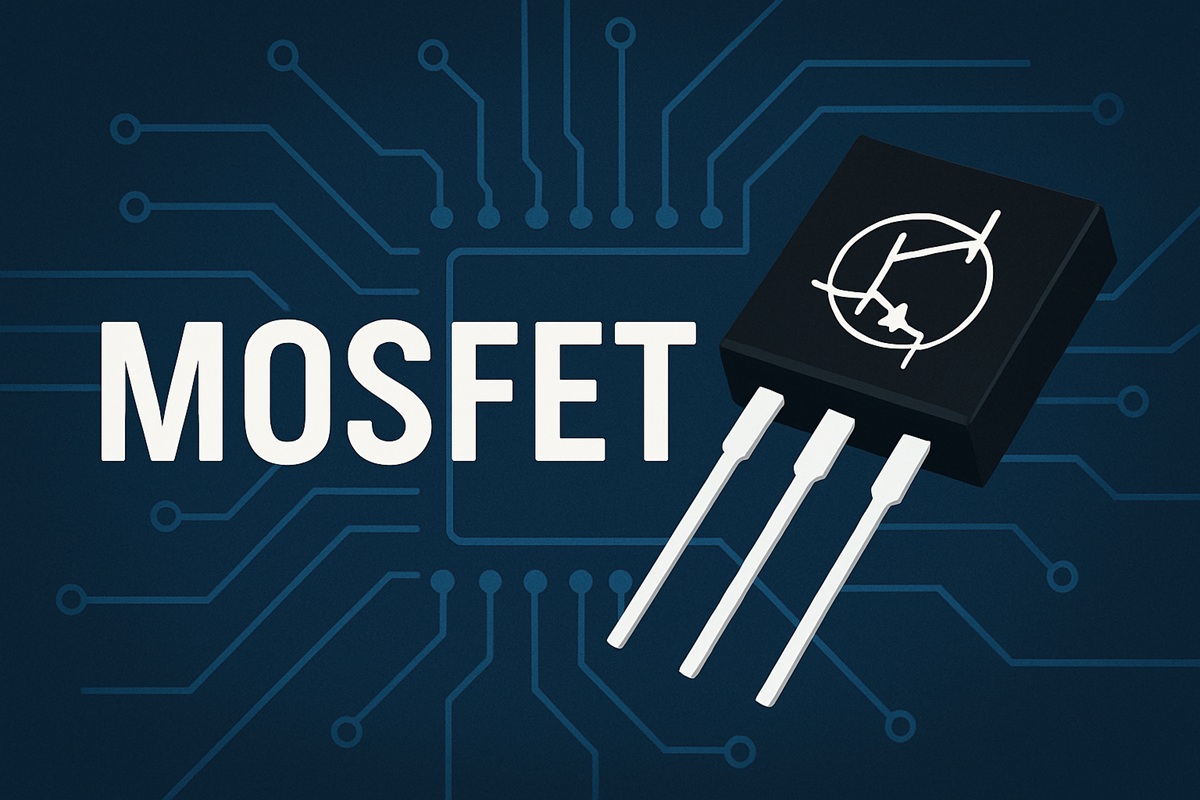
DescriptionFor everyone,electrical energy is essential. We always trying to get unlimited electrical energy without spending money. Now kynix share a simple design proposed as small wind turbine for home use or low power usage,it requires low initial cost and gives best return in terms of electrical energy. Use the following small wind turbine circuit and setup to charge laptop,to charge electronic gadgets or to electronic appliances in home and outstations.  NoteBefore we start,we should emphasis that we should note:* High voltage caution! This Circuit Involves in operating High voltage handle with extreme care.* Handle the Wind Turbine Generator and Rotor blade as per the Instructions given by manufacturer.  Windmill Generator DesignSmall 12V wind turbine generator is capable of producing alternate energy through wind, the Bridge rectifier and controller rectifies the energy came from wind turbine generator and regulator-battery charger circuit helps 12V/4.5Ah SLA battery to get charging, then Step-up inverter circuit produce high voltage AC enough to operate home appliances.  Schematic of Wind Turbine Generator is as following.  WorkingThere are five stages:  1. 12V Wind turbine generator/Bridge Rectifier Circuit  2. Regulator / Battery charger circuit  3. Inverter circuit using CD4047  4. mosFET Drivers  5. Output Stage 12V Wind Turbine Generator12 Volt wind turbine or windmill available with different watts range, choose depends on your requirement. Bridge RectifierWe know the bridge rectifier converts AC supply into DC and here we used 1N4007 diode as a bridge rectifier element, it converts the energy from wind turbine into Direct Current (DC) supply. Regulator / Battery ChargerThe LM317 adjustable three terminal Positive voltage Regulator used here and it can give output voltage range from 1.25 V to 37 V with more than 1.5A current rating. final output from the regulator is given to 12/4.5Ah SLA Battery, this Battery provides DC bias to the inverter circuit. Regulator LM317 output voltage Vout can be obtained asVout = 1.25V *(R2/R1+1) R2 => R2+VR1 for given inverter circuit.Inverter Circuit using IC CD4047 (Switching Pulse Oscillator) Monostable / Astable multivibrator  CD4047 used here to produce switching pulse, This IC works in low power and available in 14 pin Dual in line package. It provides full Oscillation output F at Pin 13, 1/2 of oscillation at Pin 10 as Q and Pin 11 as Q’. each output pin gives 50% duty cycle.f = 1/8.8RCHere R => R4+VR2 and C=> C3. by using this formula we can obtain frequency output at pin 13. For pin 10 and 11 the formula changes as f=1/4.4RC. MosFET driversIRF540 N Channel power mosfet from vishay siliconix used as a switching drivers for this inverter circuit. It gives fast switching, and have high operating temperature characteristics (175ºC). Output StageMain part of wind turbine generator is output stage, here transformer X1 is used in reverse with specifications as 230V primary, 9V-0-9V / 1.5A secondary winding center tapped transformer. MOV (Metal oxide Varistor) protects electronic device connected at output. Wind turbine generator output voltage is directly fed into LM317 positive Regulator circuit and it is adjusted to give 12 volt output and Battery connected to this bias through (3A, 50V) Schottky diode. The CD4047 IC is connected and configured as Astable multivibrator, When we turn ON SPST switch this circuit starts oscillation. Output Q and Q’ are directly fed into switching power mosfet IRF540 & drives X1 transformer secondary winding, here the current flow occurs particular duration and not for particular duration. So varying electromagnet induced and primary winding coil produce EMF, hence we get Alternating current output. Depends on the count of winding and switching frequency output Voltage/Frequency get varied. 
kynix On 2017-11-27   979
IC Chips

Electronics and Photonics Meet on One Chip

SummaryDo you think that electornics and light one day can go well toghther on a standard‘CMOS' chip one day? It's reported that researchers have succeeded in introducting a light connection into the heart of a semiconductor chip a few days. In this way,two circuits can communicate.Or: the worlds of electronics and photonics are connected. BodyWhat is particularly attractive is researcher of the university of Twente--Satadal Dutta's solution--A light connection into the heart of a semiconductor chip. There is no special materials or manufacturing processes are needed: the light comes from silicon. The light source, detector and the light channel can be made using the technology that is used to make the electronic circuits. Fully optical circuits are available nowadays, but they use materials like indium phosphide and gallium arsenide, which can't easily be combined with the CMOS chip processes used for semiconductor chips you'll find in today's smartphones.  Connecting WorldsThere is a predictions say that all-optical circuits may become the‘new electronics'. In the transition from electronic to optic circuits, hybrid circuits, like the one Dutta designed, could play an important role. Satadal Dutta (1990, Barrackpore, India) did his PhD research in the Semiconductor Components group of Prof Jurriaan Schmitz, together with the Integrated Circuit Design group of Prof. Bram Nauta. Dutta defended his thesis 'Avalanche-mode silicon LEDs for monolithic optical coupling in CMOS technology' on 8 November. It was supported financially by NWO-TTW in The Netherlands and by NXP Semiconductors.  Avalanche LEDThe alternative would be: make a LED out of silicon. And that's the problem: silicon only emits a tiny amount of infrared light, while a detector made out of silicon needs visible light. They are talking and listening at different wavelengths. Dutta therefore chooses a remarkable way out: connect the LED reverse. At low voltages, there's no current, but at a voltage that is high enough, there will be a small current that amplifies itself like an avalanche. In this 'avalanche mode', the LED will transmit visible light. Using the same process, the light detector, as well as the light channel in-between can be made. Thanks to the special comb structure that Dutta designed, the light source gets more uniform and energy efficient. IsolationAn optical link on a chip is a good way to 'galvanically' isolate two circuits from each other. This is often necessary in cases where one circuit is a low-voltage and low-current one, while the other is a high-power circuit. They should be connected, but not by conducting wires, for reasons of safety. A classic transformer is an option then, but an optical connection is often used as well. Until now, this is a separate 'optocoupler', which is large and has a limited bit rate. Dutta's new solution is much more compact as an alternative: it total, it is just a few tens of microns and it offers the protection that's needed. Compared to optical channels in full-optical circuits, the energy consumption is relatively high, as there is quite some scattering of light. On the other hand: designing the electronics around the optical link in an efficient way, the amount of light needed for a successful connection, can be kept to a minimum. 
kynix On 2017-11-25   397
General electronic semiconductor

Core Competencies of MCU Applications

DescriptionIt's not weird to discover that applications are becoming more complex,with connectivity just one of the drivers. And,as it become more complex.the number of sensors grows,as does the need for more capable user interfaces. At the same time,algoriths need more processing power,wireless stacks mandate larger memories and power budgets are shrinking.In order to coping with the growing list of demands, a great number of leading MCU manufacturers have recently launched Micro Controller Unit built around the ARM Cortex-M4 core. BodyThe M3 is general purpse and the M0+is low cost but the M4 is a more capable core in general if look at the Cortex range. Oivind Loe,a senior strategic marketing manager with Sillicon Laboratories said. Microchip's product marketing manager--Anand Rangara commented:“Something that sat around without the need to communicate now needs connectivity. When that happens, you need more flash and RAM, as well as graphics capability and perhaps the ability to support a touch interface. All this has to be offered at good power/performance and an attractive price.”  'Industrial Strength' MCUsSilicon Labs has expanded its EFM32 Gecko portfolio with what it calls ‘industrial strength’ MCUs. It says the EFM32GG11 Giant Gecko MCU family offers the ‘most advanced’ feature set available in the low-power MCU market.Loe noted that MCU development isn’t just about power. “It’s also about executing tasks efficiently. A simple program with a few clocks will run efficiently on an M0+ core. But if the workload is larger, the M4 core has some special instructions that can allow it to use less energy than the M0+ and more efficiently than some larger cores – and that's crucial for a range of application.” GG11 Geckos offer up to 2Mbyte of flash and 512kbyte of RAM to accommodate more code and comms stacks, such as a 10/100 Ethernet MAC and a dual CAN interface. Looking to meet power budgets, the parts boast an active power consumption of 77μA/MHz, while drawing 1.6μA in deep sleep mode. FPU to Increase System EffiencyMicrochip’s SAM D5x/E5x MCUs also take advantage of the Cortex-M4’s floating point unit (FPU) to increase system efficiency. Running at up to 120MHz, the D5x and E5x MCUs come with up to 1Mbyte of dual-panel flash and up to 256kbyte of SRAM. Rangarajan noted: “We’ve listened to our customers, so we’ve included more connectivity in these MCUs. But it's not just about adding memory , it’s also about more performance and the ability to provide more flexible peripherals, interfaces and connectivity options.” Meanwhile,he  pointed out that the original SAM D MCUs – developed by Atmel prior to its acquisition by Microchip – were based on the Cortex-M0+. “But we’ve always wanted to take the product line to the next level of performance. This allows Microchip to address a broader range of consumer and industrial automation applications.” Limited the Clock RateBucking the trend to a certain extent, both Silicon Labs and Microchip have limited the clock rate in their latest MCUs. Giant Geckos, for example, have a maximum clock of 72MHz. “These products are focused on energy efficiency,” Loe claimed. “If you build an MCU to run at 200MHz, for example, then each clock cycle will consume more energy than in an MCU running at 72MHz. A lot of MCUs will be used in battery powered apps, so we need to be energy efficient and to enable the CPU to sleep a lot.” Rangarajan agreed that clock rate is not always the primary factor when it comes to developing MCU portfolios. “We hear our customers saying don’t give me faster clock rates, make sure the MCUs meet my requirements. An app that runs from a battery requires a power efficient MCU. If you want a fast MCU, then you have to make trade offs.” In Loe’s views, MCU selection is all about the ability to perform certain tasks at a particular power efficiency. “That is always going to involve trade offs, but an M4 based MCU will generally be good for embedded applications with challenging energy consumption requirements.” Adopt the Concept of Smart PeripheralsBoth companies have adopted the concept of smart peripherals in their recent products. Loe explained: “Twenty years ago, most MCUs saw the CPU doing everything. That took a lot of CPU cycles, which meant you couldn’t do as much as you might have liked.“Today, most apps will take advantage of DMA, which offloads the CPU. In turn, this allows the CPU to do more.” Rangarajan said Microchip provides what he called ‘sleepwalking’ peripherals. “If there’s a requirement for them to do small numbers of transactions, this can be done without waking the CPU.” On the other hand,Sillicon Loe Noted that It’s all about when you have to wake up the M4 core. We’re trying to allow it to sleep for as much as possible. More than half of the peripherals in a Giant Gecko can run autonomously in deep sleep mode. Both Companies are Keen to Highlight Their Provision Silicon Labs has launched a starter kit to support Giant Gecko based application development(following picture) With this approach, a Giant Gecko’s A/D converter can operate while the CPU is in deep sleep mode. “It can sample and use DMA to pull the data into RAM,” Loe continued.Loe highlighted a couple of aspects. “We have included a cyrotimer that runs in shut off; the lowest energy mode. It’s a simple timer that’s useful when you need the CPU to be asleep for minutes. there’s the Peripheral Reflex System, which allows peripherals to talk. For example, the real time clock could tell the A/D converter to take a sample. It gives a level of determinism which you don’t get from a CPU.  Microchip's Product brings better power efficiency How does an MCU developer differentiate their products from similar devices with an M4 core? Rangarajan pointed to the integration of a buck regulator. “This brings better power efficiency,” he claimed, “which means lower active power consumption; as little as 65µA/MHz. The parts also support flexible pin options.”“We’re offering the best integrated security features,” Rangarajan contended. “SAM Dx/Ex MCUs have crypto hardware acceleration – symmetrical and asymmetrical – and public key encryption, amongst other features. It’s something Microchip has taken to heart and has made sure it’s all in the MCU.“We’re offering the best integrated security features,” Rangarajan contended. “SAM Dx/Ex MCUs have crypto hardware acceleration – symmetrical and asymmetrical – and public key encryption, amongst other features. It’s something Microchip has taken to heart and has made sure it’s all in the MCU.  EndLoe pointed to the security management unit (SMU) as an ‘upgrade’ to the memory protection unit (MPU) associated with the M4’s core. “While the MPU allows you to segment memory into eight regions, the SMU takes that further. The MPU is restricted to eight regions, so there is limited granularity. The SMU allows you to selectively say which pieces of code can access each peripheral.” “All of this is important,” Rangarajan concluded, “as security will become standard in the next few years.” 
kynix On 2017-11-24   270
Amplifiers

The Industry Continues to Strive to Creat ‘Ideal Op-amp’

Summary As we all know,originally developed to support analogue computers,the op amp has an elegantly simple core design. The industries are contining to spare no effect in creating‘ideal op-amp'.     Simply by wiring in different feedback configurations using passives,op amp can be massaged into roles that include buffers and integrators as well has high-gain amplifiers. It is little wonder the op amp has been as successful as it has been. What's more, people in the industry expect a few core parts to do almost any job and for the circuit to be ripe for integration cause the op amp is so readily tunerable.In practice,the choice of discrete op amps has never been wider. Steve Logan, executive business manager for Maxim Integrated’s core products groups, says: “If you don’t need terribly high bandwidth, high voltage for industrial systems or very low voltage for portable designs, those are times when op amps can be integrated.”   Subtly different edge cases push designer to discrete options Op amps often interface electronics to the outside world, so they need to take account of numerous subtly different edge cases, which pushes designers to discrete options. Each variant uses a specific choice of process and circuit topology to take on a job. Logan cites the wrist-worn heart rate monitor, which measures the light reflected back from a green LED. In these systems, input current noise has a large effect on signal quality, calling for op amps that can deliver much lower levels than generic options.   Signal-Conditioning of Systems Signal-conditioning of systems can turn out to be more complex than first appears. Logan says "“One application that’s not immediately obvious is driving a high-speed, high-resolution SAR A/D converter; it can be pretty demanding circuitry. The difference between a SAR and sigma-delta is in how it takes a big gulp of current. The op amp has to settle quickly, so you are talking settling time, slew rate and total harmonic distortion. You may need multiple stages to get the settling time, along with an input buffer, plus a gain stage and filter stage in front of that. You might think at first: how tough can it be? Then it turns into a two- or three-stage op-amp circuit.”   Dwight Byrd, marketing manager at Texas Instruments, says: “As demand for further sensors and signals increases, better conditioning and amplification of the sensor becomes paramount, thus making the proliferation of op amps possible.”     Art Eck, senior product marketing manager at Microchip Technology, adds: “We see a trend toward more designer op amps: op amps that are built for a particular application or set of applications.” At the same time,Kevin Tretter,the product marketing manager of Microchip notes that changes in application needs are creating new problems for op-amp components to address. “With the rapid expansion of wireless capabilities the industry has seen over the years, the presence of electromagnetic interference is becoming a larger issue. Sensitive analogue sensor circuits commonly sit next to wireless communication modules. More and more amplifier manufacturers are trying to combat the adverse effects by implementing on-chip filtering.”   Demand for Futher Sensors A lot of designs call for sensors to be added but for boards to be shrunk cause increasing noise is partly a by-product of the shrinking size of many designs as well ass the recent focus on making systems more aware of their surrounding environment.   Byrd notes: “Where the biggest driver in further technology trends comes in is package size. Previously, an SC-70 package was considered one of the smallest one-channel op amps available. Now, SOT553 is becoming commonplace.”   Logan says the trend continues all the way to wafer-level packages, measuring just more than 1mm on the longer side. Such tiny packages support the idea of an ‘analogue insurance policy’, where op amps and similar parts provide additional conditioning and protection such as buffering to integrated mixed-signal SoCs. “For a little extra size and cost, you can add these functions and make them more robust. The wafer-level package lets you do that.”   Renesas subsidiary Intersil Engineer Tom Kugelstadt said there is otential for circuit-level advances that could reduce the need for op-amp proliferation and so aid integration. “The biggest inevitable tradeoff is between low-power and high-bandwidth, or high-speed. In general, high-speed amplifiers require the fast charging and discharging of the gate capacitances of the internal transistors. This requires increases in bias and supply currents, which often leads to increased offset current and voltages. While high-speed op amps have improved significantly in these parameters, they still tower a magnitude above their low-speed, precision counterparts.“However, there are circuit topologies that aim for increased precision while trading only a minute portion of their high-speed performance. These designs, known as composite amplifiers, consist of a precision amp in open-loop and a high-speed amp in a closed-loop differentiator configuration.”   Complesity of Picking Right Op-amp The multiple novel circuit topologies that have appeared over the past few decades to deal with problems such as temperature drift and power consumption can have unexpected side effects that designers need to take into account. That adds to the complexity of picking the right op amp.   Logan points to the use of chopper-stabilised amplifiers. “These are great for low offsets, but push the noise out to a single frequency. One that pushes it out to 60kHz is great for DC, but if you have signals that reach 50kHz, you start to get into the noise skirt. These are nuanced things you might not see immediately from the datasheet.”   Frequency-related interactions often need careful examination, says Byrd, and datasheets should show them. “If the output impedance is relatively low and unchanging over a frequency range, it is normally indicative that the op amp will be more stable than one that does have a wide varying output impedance. The output impedance will be interacting directly with the op amp load, and normally a capacitor, it would create various filters as the frequency and therefore the output impedance changes.”   Kugelstadt says interactions with manufacturing choices at the PCB level can introduce unforeseen issues. “High-precision designs using auto-zeroing amplifiers can suffer in precision from asymmetric circuit design. Here, the solder joints around the amplifier form thermocouples that contribute more differential input voltage than the specified offset in the data sheet. Customers unfamiliar with this pitfall blame the device manufacturer for overstating its device performance. The remedy is good application support, such as including layout guidelines in the application section of the data sheet.”   Design Issues TI marketing manager Ying Zhou points out that the need to consider how the op amp is designed, particularly if the op amp is being co-opted for a secondary purpose. “If a dual- or quad-channel op amp is already used elsewhere on the board, sometimes the engineers would assign the left channels for comparator functions,” she says.Although many op amps have input clamping diodes to protect the input transistors but these can affect their behaviour as comparators. Zhou says ‘mux friendly’ versions of op amps that remove the clamps make them more suitable for use as comparators.   Logan notes: “Getting an evaluation kit and putting it on the board is a great thing to do. There is a lot of pin compatibility out there, so you can easily drop another one in to check its performance. But, you do have the issue of having a lot to choose from.”   The industry continues to strive to create the ‘ideal op amp’ and, although we continually get closer to that ideal, there will always be design trade-offs among speed, noise, power usage, size, et cetera. These trade-offs, coupled with continually growing application specific needs, will continue to drive a variety of amplifier types.”  
kynix On 2017-11-23   394

Kynix

Kynix was founded in 2008, specializing in the electronic components distribution business. We adhere to honesty and ethics as our business philosophy and have gradually established an excellent reputation and credibility in our international business. With the accurate quotation, excellent credit, reasonable price, reliable quality, fast delivery, and authentic service, we have won the praise of the majority of customers.

Follow us

Join our mailing list!

Be the first to know about new products, special offers, and more.

Kynix

  • How to purchase

  • Order
  • Search & Inquiry
  • Shipping & Tracking
  • Payment Methods
  • Contact Us

  • Tel: 00852-6915 1330
  • Email: info@kynix.com
  • Follow Us

authentication

Kynix

© 2008-2026 kynix.com all rights reserved.