Phone

    00852-6915 1330

The Kynix Blog

Stay Ahead with Expert Electronics Insights,
Industry Trends, and Innovative Tips

Transmitters

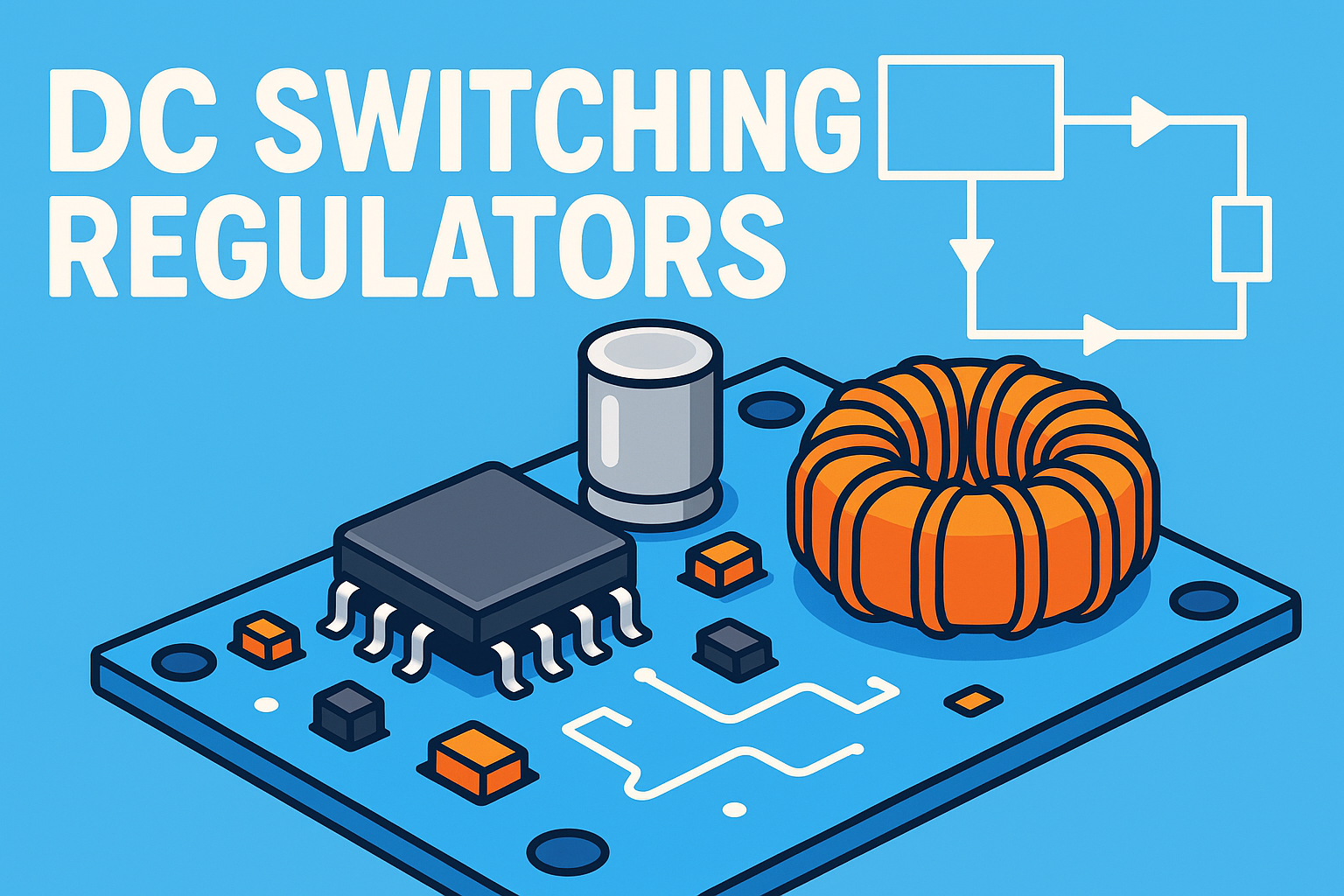
Two-wire Transmitter: How to Design the Isolated Micro-power Supply

Regarding the design of a micropower isolated power supply for the two-wire transmitter, we must know what is the transmitter first. When the output of the sensor is a specified standard signal, it is called a transmitter. A sensor, usually composed of sensitive elements and conversion elements, is a floorboard for a component or device that can be measured and converted into a usable output signal according to certain rules. And the common types are power transmitters, current-voltage transmitters, and so on.How to Build a FM Radio Transmitter CatalogI. Brief Introduction to Internal Micro-power Supply DesignII. Overall DesignIII. Constant Current Voltage Stabilizing CircuitIV. DC/CD in CircuitV. Isolated Power Source WindingVI. ConclusionFAQ I. Brief Introduction to Internal Micro-power Supply Design The design of an internal micro-power supply is very important when developing a low-power intelligent two-wire transmitter. Firstly, in order to satisfy the power supply of the micro-controller, A/D, D/A, and communication circuit, the intelligent transmitter with microprocessor needs more power than that of an ordinary 4~20mA one), and its power supply efficiency of the internal power supply must be higher.  In addition, for capacitive sensors and thermocouples, it is necessary to consider the case of grounding or the possibility of the sensor earthing. So the input and output of the designed transmitter circuit must be isolated, only this way can guarantee the normal operation of the follow-up control system and the ability of anti-common-mode interference.  Since the external circuit provides the maximum working current of 4mA for the two-wire transmitter system, specific requirements like this bring great difficulties and challenges to the design of the power supply of the system. Adopting a full integrated circuit, the isolated two-wire transmitter power supply with micro-input power has the advantages of simple structure, stable performance, and low cost. And it takes the 12~35V DC as the input power, designing the simple input circuit of the constant current and stable voltage front end, fixing the consumption of 315mA current, and providing two sets of isolated 3V power supply. In this case, the not isolated imputing group with maximum 5mA load capacity and the isolated imputing group with maximum 3mA load capacity, which can meet the requirements of input and output isolating two-wire transmitters for power supply.  II. Overall Design Fig.1 is a schematic diagram of the power supply. It consists of three main parts: 315mA/812V constant current voltage stabilizing circuit composed of U1, R1, and Z1; DC/DC converter circuit composed of U2 as the core; and a set of isolated power supply composed of L2 and U3. The system is designed to be concise and highly integrated, and all selected components can work at -40 ~ 85 ℃, which can ensure the reliable application of the power supply to field transmitters.Fig.1 Schematic Diagram of Power Supply III. Constant Current Voltage Stabilizing Circuit As a power supply to the two-wire transmitter, the maximum working current is 4mA. The transmitter with this power supply needs some low zero output indication, so the general system power supply standard is usually below 315mA, meanwhile, this type of power supply must have constant current characteristics to meet the operating requirements of the two-wire transmitter. And there are many ways to design constant-current sources. The design in Fig.2 adopts the three-terminal adjustable voltage stabilizer LM317L to design a constant-current source. LM317L is a three-terminal adjustable voltage stabilizer, and its application is as follows in Fig.2. Its basic application as a standard regulator is shown in Fig.2 (a), where a steady pressure difference is generated between the output and adjustment terminal, the typical value is 1125V, so its output voltage is VO=1125 (1+Ra/Rb). Because of the stable pressure difference of LM317, it is often used to design the constant-current source. Fig.2 (b) is a typical application circuit, which generates a current of I=1125 / R, consulting Fig.1; the R1 value in the design is 360Ω, so you can obtain a constant current of about 315mA.  Considering the working voltage range of the subsequent DC/DC chip is 4~11V and the actual out the power supply, a voltage stabilizer Z1 with 812V is used to parallel the voltage stabilizing function while providing a stable inlet voltage for U2. It requires that the U2 total current consumption is less than 314mA and Z1 must be the high-quality voltage stabilizer with the breakdown current less than 011mA (Philips products can be used, the lowest static stable current is only dozens of μA). Fig.2 Typical Application of LM317LThe D1 of the front end of the circuit is an anti-inversion diode( as shown in Fig.1), generally using 1N4148. The fuse is the PTC device self-recovery fuse, its parameter is 100mA/ 60V, which ensures that the external power supply will not be affected when the power supply fails. The field transmitter is the final application of the power supply. Its changing ambient temperature is in a wide range, so the temperature drift must be taken into account. The main temperature drift of the power supply is the constant current drift, which is caused by the temperature drift of the reference voltage difference of LM317L and the temperature drift of the constant current resistance R1. In reality, the temperature drift can be neglected when the temperature coefficient is below 5*10-6/℃.  The relationship between the reference pressure difference and temperature coefficient of LM317L is shown in Fig.3: The temperature effect is obvious in the temperature range of - 40-85%, thus compensation must be made in the high precision application. In intelligent transmitter systems, in order to correct sensors and compensate circuits, temperature sensors are commonly designed in the transmitter circuits, because the practical applications of power supply are aimed at intelligent transmitters. But the digital thermometric chip, like LM75 or TC77, does not design a special hardware compensation, while a software compensation algorithm provided when applying power supply to deal with temperature drift.  Fig.3 LM317L Benchmark Temperature CurveAs shown in Fig.3, the curve of the relationship between the reference pressure difference and temperature of LM317L is approximate to a simple cubic polynomial function. It only needs to design a compensation function for the reverse Y-axis, and the system is calibrated at 20 ℃ as the basic compensation. The specific compensation formula is ΔI=A (t-20)2+B (t-20) in which “t” is the ambient temperature. The coefficients A and B can be derived from the reference voltage temperature curve provided by the LM317L chip manual, the simplest method is to obtain two binary linear equation groups for solving A and B by taking two points of -20 ℃ and 60 ℃. In this way, it is easy to obtain an approximate function of the compensation curve with a good fitting degree, and the effect of compensated temperature drift can be neglected basically. The biggest difficulty of power supply design is that the input power is very small, thus the isolated feedback mode with high power consumption should be avoided in the design of the isolation terminal, and the open-loop auxiliary side should be used in the actual circuit. The specific process is using MAX639 to design the core circuit of DC/DC, which realizes the high power efficiency conversion. For example, when the input of 315mA is supplied, it can supply the circuit with a current much larger than that of 315mA, thus solving the need for a large current in an intelligent system. According to the requirements of the system, the core chip must have the advantages of low power consumption, high efficiency, wide input voltage range, and simple peripheral devices. The DC/DC chip in Fig.1 is MAXIM's MAX639, which is a step-down converter chip. Its main features are wide input voltage range (4~115V), high conversion efficiency (up to 90%) and low static current (10 μ A); fixed output or an adjustable output. IV. DC/CD in Circuit The circuit is designed for adjustable output and the output is set to 3V. Output current: Io=(Vi Ii η)/Vo, Vi is the input voltage; Ii is the input current, and η is the conversion efficiency and Vo is the output voltage. In the circuit, Vi=812V, Ii=315mA,η= 90%, Vo=3V, getting an approximation Io=816mA without considering the isolating side output, this output current is already a relatively large supply capacity in the low-power system. But the calculation of the above Io is only theoretical, if you want to make the circuit operate reliably under the condition of micro-input power such as 315mA/812V, and to obtain more than 90% conversion efficiency, it is necessary to design the circuit very carefully. The reliable operation of DC/DC is restricted by many conditions, the necessary condition is providing sufficient start-up pulse current. A 10μF tantalum electrolytic capacitor C2 in parallel to Z1 provides an operation guarantee, also it can effectively avoid the interference of DC/DC work on the constant current of LM317. The inductance L1 plays a decisive role in the conversion efficiency of DC/DC. The algorithm provided by the MAXIM manual is L1=50/I0, μH is the unit of L1 and A is the unit of I0. In the practical circuit, the value of L1 is 4mH, which can ensure the circuit work stably under the maximum output power, and it can keep the high conversion efficiency at the same time. what should be emphasized is that if L1 is small, the conversion efficiency of the circuit will be reduced, the starting current will increase and even can not operate. If L1 is larger, the output capacity will decrease and the DC/DC circuit will oscillate. To ensure the stability of the circuit, DC / DC chip has a high requirement for output capacitor C3, the most important is that its equivalent series resistance ESR must be smaller, and it must have enough capacity at the same time. So a 10μF tantalum electrolytic capacitor with excellent performance is used in the circuit design, which can guarantee a stable output. The DC/DC chip is the core of the circuit, and the actual circuit layout has a great influence on the performance of the circuit, especially on the output ripple. The unreasonable layout design of the circuit board will even bring extra parasitic oscillation in the output, so much more attention should be paid to the design. Thus the most important principle is that the ends of C2 and LI lead should be as close as possible to the MAX639 pin, and the grounding pins of C2, D2, MAX639, R3, and C3 should be as close as possible to each other, linking with thick wires. The setting input voltage of DC/DC is 812V, which is guaranteed by Z1. If the actual transmitter requires a lower power supply, Z1 can choose a lower stable voltage, which makes the whole power supply require a lower input voltage. The low threshold of the inlet voltage is 12V; if Z1 selects 612V, the threshold voltage can be reduced to 10V. V. Isolated Power Source Winding The main feature of the circuit is to provide an isolated power supply winding, which uses the method of "stealing" electricity on the DC/DC output energy storage inductor. In Fig.1, the L2 is the power supply coil for this isolated power supply. Because the isolating power supply is a secondary coil loaded on the energy storage coil of DC/DC, and its structure is an open loop, therefore its output stability is relatively poor. In order to obtain satisfactory results, it is necessary to consider the whole design from different angles.First of all: determine its output power. Because of the method of "stealing" electricity from the energy storage coil, its output power is limited and can only be smaller than the original side output power. The output of this set of isolated power supply is mainly supplied by sensor conversion circuit, front-end A/D converter, and isolated circuit in the application of specific transmitters. And the power consumption of analog measuring circuits of differential capacitance sensors, thermocouple sensors, and thermal resistance sensors reaches μA level. The front-end A/D is usually multi-integral or Σ-Δ, the power consumption is less than 1 mA, and the whole low power dissipation optoelectronic isolation can be below 1mA. Therefore, isolated windings provide 3mA that can meet the actual needs. It has been calculated that the maximum output of the circuit is 816mA without the secondary winding, so it is obvious that the 3mA current can be supplied in the case of the secondary winding. Secondly: Avoid working / hibernating rotation for devices with high power consumption. The isolation winding adopts an open-loop structure, and the change of load on the primary side directly affects the stability of the secondary side, so it is required that the power consumption stability of the original circuit system should be guaranteed as much as possible when the circuit is used in practice. What’s more, the circuit can provide the maximum 5mA current for the original edge and can fully meet the requirements of the commonly used low-power MCU control system without the use of sleep mode. In this way, the maximum system running speed can be obtained. Finally:  the low-voltage difference linear regulator and the DC/DC converter should be used in the design. The isolated power winding mainly supplies power to the front-end small-signal analog circuit, therefore, the quality of the power supply requires high. Noise reduction and voltage stabilization treatment of low voltage output converted by DC/DC through low dropout linear regulator(LDO), which can not only improve the efficiency of power supply but also meet the requirement of small ripple voltage. Specifically, LDO uses MAX1726 chip, its working current is the only 2μA, the output is 313V; The output amplitude before voltage stabilization depends on the output power of the original edge and the inductance of L2, the experiment confirmed that L2 is 3mH. When the primary current varies between 3~5mA and the secondary current is 2mA, the voltage fluctuates between 318V and 418V before the voltage stabilizes, which meets the input requirements of the LDO voltage stabilizer. VI. Conclusion The isolated power supply of two-wire transmitter is stable and reliable, and can meet various complex requirements of the use of two-wire transmitter. It has the characteristics of wide temperature range, wide input voltage range, high output efficiency, high integration, good isolation performance, small volume and low cost. And this power supply has been applied to the integrated intelligent temperature transmitter, after a long period of field test, finding that it has excellent performance and can fulfill the requirements of the isolated two-wire transmitter completely. FAQ 1. What does a transmitter do?In the Telecommunications world, a Transmitter is a device that produces radio waves radiating from an antenna. In the world of process control, a Transmitter is a device that converts the signal produced by a sensor into a standard instrumentation signal representing a process variable being measured and controlled. 2. What is called transmitter?In electronics and telecommunications a transmitter or radio transmitter is an electronic device which produces radio waves with an antenna. The transmitter itself generates a radio frequency alternating current, which is applied to the antenna. 3. What is transmitter and its types?Pressure transmitters are divided into three types: Absolute Transmitter: This transmitter take vacuum pressure as its base, and then measures process pressure. Gauge Transmitter: This type measures process pressure with the location's atmospheric pressure as a base. 4. What are the main features of transmitter?Some of the main features which make the transmitter complex are higher clock speed, higher transmit power, directional antennas and need for a linear amplifier. 5. What is transmitter frequency?A radio transmitter or just transmitter is an electronic device which produces radio waves with an antenna. Radio waves are electromagnetic waves with frequencies between about 30 Hz and 300 GHz. The transmitter itself generates a radio frequency alternating current, which is applied to the antenna. 6. What is the difference between transmitter and antenna?A transmitter is a different kind of antenna that does the opposite job to a receiver: it turns electrical signals into radio waves so they can travel sometimes thousands of kilometers around the Earth or even into space and back. Antennas and transmitters are the key to virtually all forms of modern telecommunication. 7. What is difference between transmitter and transducer? Transducers and transmitters are virtually the same thing, the main difference being the kind of electrical signal each sends. A transducer sends a signal in volts (V) or millivolt (mV) and a transmitter sends a signal in milliamps (mA). 8. What is transmitter PLC?Transmitters are also referred to as stationary instruments and convert measurement parameters into an electrical signal that is then sent to a BMS ( Building Management System), PLC ( Programmable Logic Controller), SCADA ( Supervisory Control and Data Acquisition). 9. What is the pressure transmitter?A Pressure Transmitter is an instrument connected to a Pressure Transducer. The output of a Pressure Transmitter is an analog electrical voltage or a current signal representing 0 to 100% of the pressure range sensed by the transducer. 10. Which oscillator is used in transmitter?Crystal oscillators are the most common type of linear oscillator, used to stabilize the frequency of most radio transmitters, and to generate the clock signal in computers and quartz clocks. You May Also LikeThe 3W PowerSpot transmitter for Power Over-the-air from PowercastBuild a Remote RC Firecracker and Firework lgniter Using RF Transmitter4 Channel 2 Core Twisted Pair Remote Controller Using PT2262
kynix On 2018-09-03   453
FPGA

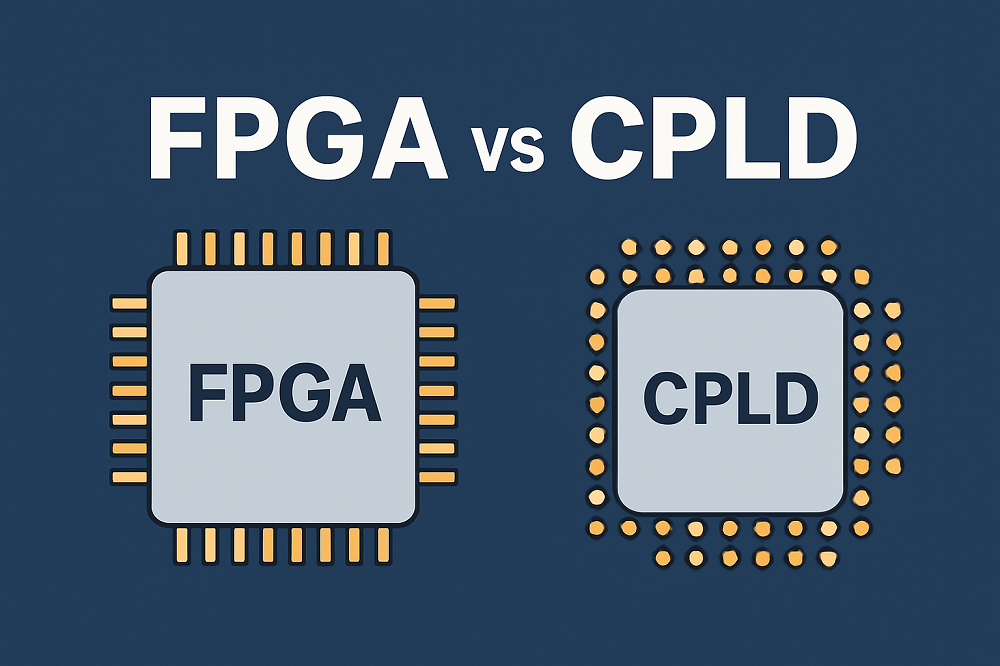
New SoM Combination Design Based on Processor and FPGA: FPGA and Processor

IntroductionMany embedded designs use single board computer based on micro-processor and micro-controller(SBC) and modular system (SoM). However, people with more embedded applications can't bear the delay caused by the response time associated with software. Only the custom hardware can achieve the higher performance that these applications required, and the quickest way to develop custom hardware is to use FPGA. This article will introduce the advantages of using SoM to develop embedded systems that require higher processing power from FPGA, and will also cover the various FPGA SoM, and also discuss how they work when embedded in design and development.What is an FPGA? Intro for BeginnersCatalogs CatalogsFPGA: The Role of Modular SystemNew SoM based on SoC with processor and FPGAFunctions of SoM and SBCConclusion FPGA: The Role of Modular SystemThe modular system (SoM) can help designers to develop special shape size embedded systems with custom interfaces without having to develop kernel processing systems from scratch. Designers can insert SoM which has pre-designed and tested into pre-designed or customized cards to create embedded designs with the same functions as fully customized designs, but take much less time to develop hardware.Using SoM has several advantages over developing hardware from scratch as follows:1) Saving cost( in the process of developing and debugging the circuit board based on SoC, the non-recurrent engineering cost will be very high.)2) Multiple choices(benefiting the insertion ability of SoM)3) Developing hardware and software at the same time4) Reducing design risks5) Small packagesThe market, once dominated by microprocessors and micro-controllers, is now replaced by SoM, with through holes and socket components losing their leading role. Pin compatibility allows designers to select from a range of compatible processors that have the correct clock speed and appropriate on-chip memory capacity. However, with the increase of the number of pins and the adoption of surface mount packaging technology, this design method has become obsolete. And SoM has emerged as the times require, its shape size and substrate surface have the same function as the previous series of pin compatible micro-controllers.If SoM is used as the computing platform of the project, the design engineer can concentrate his energy and resources to develop the final application without being lost in the details of designing computing platform. For example, at the clock speed of hundreds of megahertz (MHz), the layout of the SDRAM circuit board connected to the application processor becomes increasingly difficult due to differential wire delay, noise, crosstalk and many other challenges. However, SoM vendors have done a lot of design work before the start of the project, which can solve these problems and cut the time of product launch.To select the appropriate SoM series for embedded development projects, we must carefully analyze various factors, including the expected requirements of embedded resources, as well as the design extendibility, future adaptability and ease of use. This helps to select the appropriate shape and substrate size of SoM, providing alternative options to meet known challenges and unexpected future challenges. If the selected SoM family includes multiple product members and has compatible appearance dimensions and connector base surfaces, the selection of the designers can be expanded to make the product better able to withstand the test of the future. New SoM based on SoC with processor and FPGASoM usually uses SoC which includes multiple application processors, but a new embedded processor, SoC, integrating FPGA, applies to the SoM design either, like the Zynq®-7000 SoC, Xilinx’s fully programmable processor. Xilinx Zynq-7000 SoC integrates the software programmability of Arm Cortex-A9 application processors with the hardware programmability of FPGA. Arm microprocessor, built in Zynq SoC,  combines enhanced peripherals with SDRAM memory controllers (called Zynq SoC's "processing systems" or "PS"), and performs all the software-based tasks typically handled by embedded microprocessors or microcontrollers, while integrated FPGA (known as Zynq SoC's PL: Programmable Logic) provides hardware I / O response time and hardware acceleration for embedded tasks that require faster execution speed.Xilinx Zynq SoC offers a variety of processor configurations and speeds, with even more options for FPGA structures on a chip. Choosing the SoM family based on hybrid processor FPGA SoC can expand the selection range and improve the future adaptability of the product, like Xilinx Zynq-7000 series. One example of such a SoM series is the use of the TE0782 family from Trenz Electronic (Fig.1) and the SoM supporting test panel TEBT0782-01 which adopts the Xilinx Zynq-7000. Three Members of the SoC FamilyTE0782-02-035-2I based on Xilinx Zynq Z-7035 SoCTE0782-02-045-2I based on Xilinx Zynq Z-7045 SoCTE0782-02-100-2I based on Xilinx Zynq Z-7100 SoCAll three SoMs have the same connector substrate, including three Samtec LSHM nonpolar connectors and hundreds of I / O pins, in addition, there are power and grounding pins between the SoM and the board.Fig.1 Trenz Electronic TE0782 SoMFig.1: TE0782 SoM from Trenz Electronic uses one of three Xilinx Zynq Z-7000 SoC models, as well as providing 1GB SDRAM and other non-volatile memory.The best way to see the flexibility of SoM design is to look at the TE0703 carrier board of the TE0782 SoM family, and then go back to SoM through the I / O pins to see SoM's resources.Fig.2: Trenz TE0703 Board Divides Many I / O Pins from the Relevant 4 x 5 cm SoM Boards to the Rest of the Embedded System.Many of the important I / O functions separated from the SoM board are shown in the block diagram of TE0703 as follows:1 Gbit/s EthernetUSB and Micro-USBHundreds of I/O pins(it can be configured as a singular I / O pin, or as a low-voltage differential signal pair.)Fig.3 Physical Map of Trenz TE0703-05( Trenz TE0703 family) Functions of SoM and SBCProcessing speed, response time and I / O capability are significant characteristics of SoM. However, embedded systems often integrate SBC, such as Arduino Uno and Raspberry Pi, because these products also have wide-ranging technique support. So Trenz Electronic also offers related versions of Arduino and Raspberry Pi: TE0723-03M ArduZynq and TE0726-03M ZynqBerry based on Xilinx Zynq-7000 SoC. These SBC bridges many existing plug-in cards, such as the expansion boards of  Arduino and various Raspberry.The FPGA capacity of Zynq Z-7010 SoC integrated into TE0723-03M ArduZynq and TE0726-03M ZynqBerry SBC is significantly different from that of FPGA integrated into three Trenz Electronic SoMs (using Zynq Z-7035 Zynq Z-7045 and Zynq Z-7100 SoC ). Although all Zynq-7000 SoC apply dual-core Arm Cortex-A9 processor, their FPGA on components are different. Volume of the Xilinx Zynq SoC Programmable Logic Unit Block RAM (MB) DSP slices is Z-701028K2.180Z-7035275K17.6900Z-7045350K19.2900Z-7100444K26.52020, Xilinx Zynq-7000 SoC (Z-7035, Z-7045 and Z-7100) used in Trenz Electronics SoM provides more FPGA resources than that of Zynq Z-7010 used in Trenz Electronic ArduZynq and ZynqBerry SBC.Xilinx Zynq-7000 SoC (Z-7035, Z-7045 and Z-7100) used in Trenz Electronics SoM provides more FPGA resources than that of Zynq Z-7010 used in Trenz Electronic ArduZynq and ZynqBerry SBC. In addition, TE0723-03M ArduZynq and TE0726-03M ZynqBerry SBC provide only 512-MB on-board SDRAM, while TE0782 SoM provides 1GB.Trenz Electronic provides various boards for its SoM, including TE0703-05, TE0706-02, TE0701-06, and TEB0745-02, which provide a lot of standardized I / O functionality. A certain card may be suitable for a particular embedded application, but the embedded system design can also be split into a customized design board that can accept SoM series products to meet different processing requirements. This flexibility highlights the advantages of using the SoM family as the basis for embedded design. And consistent standardized connector substrate allows SoM to be easily interchangeable to accommodate changes in system specifications. ConclusionSoM can significantly cut the time requirement of prototype embedded systems and reduce project risk. As long as the SoM profile and connector substrate are supported,  more FPGA resources of SoM can be inserted to meet the growing demand. In addition, a variety of compatible SoM based on Xilinx Zynq-7000 SoC combine the processing power of dual-core Arm Cortex-A9 processor with FPGA resources, which is helpful to accelerate the development of embedded design. The embedded design method based on SoM can not only shorten the time required to develop the hardware part, but also allow the software development to start earlier in the project, thus reducing the design cost. FAQ1. What is a FPGA used for?Image result for FPGA and ProcessorFPGAs are mainly used to design application-specific integrated circuits (ASICs). First, you design the architecture of such a circuit. Then, you use an FPGA to build and check its prototype. Errors can be corrected. 2. Is an FPGA a processor?With an FPGA, there is no chip. The user programs the hardware circuit or circuits. The programming can be a single, simple logic gate (an AND or OR function), or it can involve one or more complex functions, including functions that, together, act as a comprehensive multi-core processor. 3. What is difference between FPGA and processor?CPUs offer the most versatility and so are the best suited to perform general purpose computing. FPGAs can be used to perform more specific and specialized tasks but are not ideal for general computing purposes. 4. How many times can you reprogram an FPGA?Altera guarantees you can reprogram windowed EPROM-based devices at least 25 times. Altera does not specify the number of times you can reprogram or reconfigure FPGA devices because these devices are SRAM-based. An SRAM-based device can be reconfigured as often as a design requires; there is no specific limit. 5. What is SoM FPGA?The CompactRIO System on Module (SOM) is a small, flexible, embedded computer for industrial applications that require high performance and reliability. It combines an ARM processor, the NI Linux Real-Time OS, a programmable Xilinx FPGA, and a high-density connector to interface with application-specific I/O. You May Also LikeDiscussion on the influencing factors of clock in FPGA designTo Solve the Problems of Cloud Skyrocket--Edge Processing
kynix On 2018-08-30   743
General electronic semiconductor

Switching Power Supply Tutorial: 4V~16V

This paper introduces a switching power supply with the half-bridge circuit. Its input voltage is AC 220V ±20V, the output voltage is DC 4V ~16V, the maximum current is 40A, and the working frequency is 50kHz. And its design idea, working principle, and characteristics of the power supply are introduced emphatically. 12V 10A switching power supply (with schematic and explanation)   Catalog   I. Introduction II. Main Technical Indicators III. Main Functions Description 3.1 AC EMI Filter and Rectifier Filter Circuit 3.2 Half-bridge Power Converter 3.3 Design of Power Transformer 3.4 Design of Auxiliary Power Supply 3.5 Drive Circuit 3.6 Fan Wind Speed Control Circuit 3.7 PWM Control Circuit 3.8 Current Fold back Circuit FAQ       I. Introduction Power supplies with the voltage of 5~15V and current at 5~40A are most commonly used in scientific research, production, experiments and other applications. The maximum current of the general experimental power supply is only 5A or 10A, For this purpose, a switching power supply with continuously adjustable voltage at 4V~16V and maximum output current of 40A has been developed. It adopts half-bridge circuit, with power MOS transistor as switching device and the switching frequency is 50kHz. Light weight, small volume and low cost are advantages of it.   II. Main Technical Indicators   1) Output Voltage: AC 220V±20%  2) Input Voltage: DC 4~16V(adjustable) 3) Output Current: 0~40A 4) Output Voltage Adjustment Rate: ≤1% 5) Ripple Voltage Up: p≤50mV 6) Current / Voltage Display Function and Fault Alarm Indication   Basic Working Principles and Schematic Diagrams The schematic block diagram of the power supply is shown in Fig.1. After 220V AC voltage is filtered by EMI and rectifier, about 300V DC voltage is added to the half-bridge converter to drive the power MOS tube with the dual pulse signal generated by the pulse width modulation(PWM) circuit. The quasi-square-wave voltage is gained by coupling and isolating the power transformer, and a stable DC output voltage can be obtained by rectifying filter feedback control. Fig. 1 Working Block Diagram of Integral Power Supply   III. Main Functions Description   3.1 AC EMI Filter and Rectifier Filter Circuit Fig.2 AC EMI Filter and Input Rectifier Filter Circuit The power line of the electronic equipment is an important way of electromagnetic interference (EMI) to get into or out of the electronic equipment, but installing the power line filter at the entrance of the power line of the equipment can effectively cut off the transmission path of EMI. And it composed of IEC plug power filter and PCB power filter.   The main purpose of the IEC plug power filter is to prevent the interference from the power grid from entering the power supply box, and for PCB power filter the purpose is to suppress the high frequency noise generated when the power switch is switched. Bridge rectifier circuit is used when AC input voltage is 220V, if JTI jumper is short-connected, then 110V is suitable.   Because the input voltage is high and the capacitor capacity is large, the surge impulse current will be produced at the moment when the power network is switched on, and the general surge current value is tens of times that of the steady current.   This may result in the damage of rectifier bridge and input fuse, or the saturation damage to power devices of high frequency transformer cores, and the reduction of the service life of high voltage electrolytic capacitors, etc. So the input soft start circuit composed of resistance R1 and relay K1 is added in front of rectifier bridge to avoid those damages.   3.2 Half-bridge Power Converter The power supply uses half-bridge converter circuit, as shown in Fig.3, its operating frequency is 50kHz, the main parts on the primary side are power transistors: Q4 and Q5, and capacitors: C34 and C35. Q4 and Q5 alternately conduct and cutoff, A positive and negative square wave pulse voltage of U1/2 is generated through the primary winding N1 of a high frequency transformer. The energy is transferred from transformer to the output, and Q4 and Q5 use IRFP460 power MOS transistor. Fig.3 Switching Power Supply Schematic   3.3  Design of Power Transformer   1) Setting of the Working Frequency The working frequency has a great influence on the volume, weight and circuit characteristics of the power supply. The output filter inductance and capacitance volume decrease with high working frequency, but the switching loss increases, the heat quantity increases and the radiator volume increases. Therefore, according to the factors such as components and cost performance, optimizing the operating frequency of power supply, the formula is fs=50kHz, T=1/fs=1/50kHz=20μs.   2)Core Selection ①Selecting the EE type ferrite core made of R2KB ferrite material, has many advantages, such as versatility, large lead space, convenient wiring operation, economics, and so on. ②Determination of Working Magnetic Induction Intensity: Bm The saturation magnetic induction intensity of R2KB soft magnetic ferrite material is Bs=0.47T, considering that Bs will decrease at high temperature, and in order to prevent the saturation of high-frequency transformer at the moment of closing,  selecting Bm=1 / 3Bs= 0.15T ③Calculation and Determination of Core Type The geometric cross-sectional area S and the window area Q of the magnetic core have a certain functional relationship with the output power Po. For half-bridge converters, when the pulse waveform is an approximately square wave, having SQ= (1) η—Efficiency j—Current density, generally 300~500A/cm2 kc—Fill factor of magnetic core, ferrite core kc=1 Ku—Filling coefficient of copper, related to the wire diameter, winding process, winding number, and so on, is generally about 0.1~0.5. The units of each parameter: Po—W,S—cm2, Q—cm2, Bm—T, fs—Hz, j—A/cm2. The values each parameter:  Po=640W,Ku=0.3,j=300A/cm2,η=0.8,Bm=0.15T, plugging these into formula(1) to get SQ=4.558cm4. From the manufacturer manual of EE55 magnetic core: S=3.54cm2, Q=3.1042cm2, calculating SQ=10.9cm4, the SQ value of EE55 magnetic core is larger than the calculated value. EE55 magnetic core is the option.   3) Calculating Turns of Primary and Secondary Side Windings Calculate the primary number turns of windings according to the lowest input voltage and the full load(the duty ratio is maximum). It is known that the DC input voltage of Umin=176V after rectifying and filtering is Udmin=1.2 × 176 = 211.2V. For the half-bridge circuit, the voltage applied on the primary winding of the power transformer is equal to half of the input voltage, that is Upmin=Udmin/2=105.6V, assuming Dmax=0.9(the maximum duty ratio), getting tonmax= T × Dmax= 20 × 0.9 μs.   Design of an Output Voltage 4~16V Switching Power Supply   Fig.4 Schematic Diagram of Auxiliary Power Supply Upmin×tonmax×104=105.6×9.0×10-6×104, plugging into formula N1=8.9 turns,  the maximum output voltage is Uomax=16V when calculating secondary turns; the secondary circuit uses full wave rectifier, Us as the inductive voltage on the secondary winding and Uo as the output voltage and Uf as the rectifier diode voltage drop, taking 1 V as the voltage drop, Uz is filter inductor equal circuit voltage drop taking 0.3V, getting Us=19.22V×N2=N1×8.9=1.8 turns; For the convenience of winding the transformer, if the secondary winding is 2 turns, then the primary winding will be corrected to N1=N2=10 turns.   4) Selected Wire Diameter When selecting the wire diameter of the winding, the skin effect of the wire should be considered. It is generally required that the wire diameter be less than two times the penetration depth, and the penetration depth Δ is determined by formula (2), Δ= (2), and the unit of penetration depth Δ is m. In formula ω is the angular frequency: ω=2πfs; μ is magnetic conductivity, for the relative permeability of copper wire: μr=1 , 则μ=μ0×μr=4π×10-7H/m; γ is the conductivity of copper, γ = 58 × 10 —6Ωm. The operating frequency of the transformer is 50kHz, and the penetration depth of the copper conductor is Δ=0.2956mm at this frequency, thus the diameter of the winding wire must be copper wire whose diameter is less than 0.59mm. In addition, the current density of copper wire is generally 3 ~ 6 A / mm2, the 0.56mm enamelled wire with 8 strands in parallel for the primary is 10 turns, and the thick 0.15mm flat copper strip with 2 turns in the secondary.   3.4 Design of Auxiliary Power Supply The auxiliary power supply using RCC converter (Ringing Choke Converter), is shown in Fig.4. The input voltage is AC 220 V, as rectifier filter voltage, and the output DC voltage is 12.5 V, the output DC current is 0.5 A. In the circuit, Q8 and transformer primary winding N1 and feedback winding N3 constitute self-excited oscillation. R72 is starting resistance. Q9, R77 constitutes primary overcurrent protection of auxiliary power supply. D20, C81, ZD1, Q11, R75, N76 constitutes voltage detection and voltage stabilizing circuit. The DC component of the base current of Q 8 keeps the output voltage constant, and the transformer is made of EE19 material and LP3 material. The primary is 180 turns, the feedback winding is 5.5 turns, the secondary is 11 turns, the primary inductance is 2.6 MHz, the core gap is 0.4mm.   3.5 Drive Circuit The drive circuit is shown in Fig.5. TL494 outputs the pulse signal of 50kHz and drives the power MOS transistor through the coupling of a high-frequency pulse transformer. The secondary pulse voltage is a timing MOS switch, during which Q7 ends, and the drain circuit formed by it does not work. Q7 conducts when the second pulse voltage is 0, rapidly releasing the gate charge of MOS, and accelerating MOS cutoff. R70 is the spike to suppress the driving pulse, R68, D15, R67 used to speed up driving and suppress the oscillation caused by driving pulse, D17, and the connected pulse transformer windings form a demagnetization circuit.  Fig.5 Driving Circuit Schematic Diagram 3.6 Fan Wind Speed Control Circuit Fan wind speed control circuit is shown in Fig.6. Based on the decreasing trend of diode forward tube pressure drop with increasing temperature, D9 and D10 are used as radiator temperature samplers close to the radiator. When the temperature of the radiator rises with the increase of output power, the level of the positive phase input of the operational amplifier N2A decreases, the output low level causes the transistor Q3 to start conducting, and the voltage on the fan rises.   The rotational speed rises and finally reaches the maximum speed. When the load is lighter and the radiator temperature is lower than 50 ℃, the output of N2A is high level, Q3 is not conductive, and auxiliary electricity 12.5V stepped down by resistance R57 supplying to fan, thus the fan is running at low speed and low noise. The circuit can improve the working life of the fan, increase the reliability of the circuit and reduce the noise caused by the fan in the case of a small load.   Fig.6 Fan Wind Speed Control Circuit 3.7 PWM Control Circuit The general pulse width modulator (TL494,) used in the control circuit has the advantages of generality and low cost, as shown in Fig.7. The output voltage is sampled by R40, RV2, RV1, R41 and then sent to the TL494 pin 1 after the R5 impedance matching. RV1 installed in power front panel to realize the output voltage adjustment. R103 and C14 sample the output inductor L1 front signal which delivering through R5 to TL494 pin 1 to improve power supply stability and eliminate the influence of L1 on loop stability.   3.8 Current Foldback Circuit In order to enhance the reliability of the power supply, this power supply adopts two-stage over-current protection: primary and secondary. Current transformer CT1 is initially used to detect the primary transformer current. The detected current signal is converted from R60 to voltage signal, then filtered by D2~D4 and C9, and then the voltage is divided by potentiometer RV3, and inverted by N3, finally added to the Q 1 tube base. When the primary current is abnormal, the inverter reverses the Q1 switch and adds a high level of VREF=5V to the TL494 pin 4 (the TL494 dead-zone control pin, which is turned off at a high level), TL494 is off. Overcurrent protection on the main output DC line uses R45-R56 resistance as the sampling resistance. When the output current increases, the level of pin15 becomes lower. When the output current is greater than 105% of 40A, the internal operational amplifier of TL494 acts. The pin3 level rises, limiting the increase of the output pulse width, and the power supply is in the limiting state. FAQ   1. How does a switching power supply work? The “switch” in a switching power supply is actually a semiconductor – a MOSFET that is either off or on – driven into its saturation range to transfer power across nearly zero resistance. It does this many thousands of times per second, creating the high-frequency AC intermediary.   2. What is difference between linear and switching power supply? Linear power supplies deliver DC by passing the primary AC voltage through a transformer and then filtering it to remove the AC component. Switching power supplies feature higher efficiencies, lighter weight, longer hold up times, and the ability to handle wider input voltage ranges.   3. What is a switching power supply 12v? Switching regulated 12VDC power supplies, sometimes referred to as SMPS power supplies, switchers, or switched mode power supplies, regulate the 12VDC output voltage using a complex high frequency switching technique that employs pulse width modulation and feedback. Acopian switching regulated power supplies also employ extensive EMI filtering and shielding to attenuate both common and differential mode noise conducted to the line and load. Galvanic isolation is standard in our 12VDC switchers, affording our users input to output and output to ground isolation for maximum versatility. Acopian switching regulated power supplies are highly efficient, small and lightweight, and are available in both AC-DC single and wide-adjust output and DC-DC configurations.   4. What is a DC switching power supply? A Switching DC power supply (also known as switch mode power supply) regulates the output voltage through a process called pulse width modulation (PWM). The PWM process generates some high frequency noise, but enables the switching power supplies to be built with very high power efficiency and small form factor.   5. When should you use a switching power supply? Switching power supplies are primarily used in digital systems such as telecommunication devices, computing equipment, audio equipment, mobile phone chargers, medical test devices, arc welding equipment and automotive chargers.   6. Is a switching power supply regulated? A switch mode power supply regulates an output voltage with pulse width modulation (PWM). This process creates high-frequency noise but it provides a high-efficiency rating in a small form factor. ... The low DC voltage is finally converted into a steady DC output with another set of diodes, capacitors, and inductors.   7. Is a switching power supply DC? A switching power supply takes an AC input, but rectifies and filters into DC first, is converted back into AC at some high switching frequency, steps down the voltage with a transformer, then is rectified and filtered into a DC output.   8. How do I know if my power supply is regulated? You can generally stick one probe into the middle of the connector, and hold the other against the outside. With a few exceptions, the middle is positive, so use the red lead there, and use the black lead on the outside shell. Regulated supplies, without any load, should measure very close to the target voltage of 12v.   9. Can I use a switching power supply to drive a DC motor? A simple unregulated analog power supply may be easier and be able to supply the large starting under load current more that the switching one. DC motors are not too fussy about the supply, and will usually run quite well on unfiltered DC.   10. What are the 3 types of power supply? There are three subsets of regulated power supplies: linear, switched, and battery-based. Of the three basic regulated power supply designs, linear is the least complicated system, but switched and battery power have their advantages.   You May Also Like Learn Some Basic Knowledge about Capacitor Voltage Transformer The Latest Development of Electric Vehicle Power Management Technology Design a Momentary Pushbutton in the Circuit of Laching Power Switch
kynix On 2018-08-27   1378
RFID

Radio Frequency Packages Tutorial: Integrated Laminate Substrates and Passive Devices

The laminate substrates, one of the most widely used carriers in RF module packaging. This method that combines the traditional laminate substrates technology with the integrated passive device technology (IPD) is a win-win solution that can achieve the best balance in cost, size, performance, and flexibility. The application of laminate substrates with IPD devices is discussed with two examples in this article.     Catalog I. General Introduction II. Comparison of IPD and SMD(Surface Mounted Devices) and LTCC Discrete   Device Circuits III. Application Examples IV. Conclusion FAQ   I. General Introduction   A wide range of packaging carrier technologies are available in radio frequency packages(hereinafter referred to as RF) and wireless products, including lead frames, laminate substrates, low-temperature co-fired ceramic (hereinafter referred to as LTCC), and silicon backplane. Because the increasing function has higher requirements for integration, also more demands put forward for the system-level packaging method (SiP). Lead frame substrate packaging technology has been greatly developed in the past few years, including etching inductors, adding passive devices to pins, stacking technology of chips, and so on. Frame substrates are the cheapest cost option, but higher functionality requires more wiring and more vertical space utilized, therefore framework package is rarely used in RF integration solutions.   LTCC has been proven to be a high-performance substrate material that provides high integration due to its multi-layer structure, the high dielectric is constant, and high-quality factor inductance. The passive device can be embedded in LTCC, such as independent RCL or functional blocks containing RCL, so that SMT(surface mounted technology) devices require minimal planar space and improved electrical performance.   Integration is the advantage of LTCC, however, warping, cracks, secondary reliability of substrate, and the whole supply chain structure (transfer of substrate during packaging) limit the LTCC, which makes it impossible to become a popular carrier substrate selection.   Silicon substrate carriers, such as the chip-scale module package(CSMP) of STATS ChipPAC, have been widely used in wireless solutions requiring high integration, excellent electrical performance, and small profile coefficients. CSMP is an ideal packaging form of a fully integrated solution that can include RFIC and baseband IC. However, such integration is not the lowest cost and is not required for all RF and wireless devices.   The above-mentioned reasons lead us to think of the laminate substrates, one of the most widely used carriers in RF module packaging. This method that combines the traditional laminate substrates technology with the integrated passive device technology (IPD) is a win-win solution that can achieve the best balance in cost, size, performance, and flexibility. The application of laminate substrates with IPD devices is discussed with two examples in this article.     II. Comparison of IPD and SMD(Surface Mounted Devices) and LTCC Discrete Device Circuits   RF modules need independent RCL or combined RCLs to implement functional blocks such as filters, diplexer, balun, which are usually the SMD or IPD.   The traditional laminate substrate is not suitable for embedded passive devices, and high dielectric material lamination is limited by large cost. Spiral inductors can be designed inside the laminate substrate, but the inductance is limited. Therefore, laminate substrates are more likely to combine SMT with IPD, which has the advantages of cost, shape size, performance, and so on.   It needs to trade-off when SMDs be used and when specific passive devices are designed into reasonable IPDs. For example, when a capacitor larger than 100.0pF is required, the use of SMT devices has the advantage of size and cost.   In addition, SMT passive devices are generally recommended when a small number of decoupling capacitors or independent inductors and resistors are required in the design. The surface mount device can make full use of the Z direction of the occupied space while the IPD mainly uses the XY direction, the latter has very limited utilization of the Z height direction.   Thus it is wise to use SMT devices when the surface area of the IPD devices exceeds the available space. In order to find the best balance between IPD and SMT devices, a curve describing the relationship between the device value and the area required by IPD is developed (Fig. 1) for design reference.   Fig.1 Inductance and Capacitance of IPD fabricated on Silicon substrate Using silicon-based IPD technology, an 0201 SMD device (0.15mm2) can generate a 25.0nH inductance value or 50.0pF capacitance value. In other words, If the capacity is smaller than these two values, the external dimensions of the devices/circuits scheme are smaller than that of 0201 devices.   IPD schemes are suitable for functional blocks for a variety of reasons. First, although the silicon-based IPD inductor also uses a spiral form, it can use smaller linewidth and isolation space. In addition, high-resistive silicon substrates are allowed to produce higher-quality inductors.   As a result, the mass and shape coefficients of an IPD inductor are comparable to those of SMD devices. Second, small-capacity capacitors (in RF applications) are easier to build in IPD. Finally, comparing with connecting SMD devices with PCB, or internal connections to LTCC, the interconnect paths on silicon substrates are shorter.   For an ultra-wideband (UWB) application filter, as an example, the existing LTCC filter size is 3.2mm × 2.5mm × 0.8mm, and if the same layout is used in IPD, the size will be 1.6mm × 1.0mm × 0.5mm (Figure 2). IPD filter has a thinner shape and its size has been reduced by five times. Fig.2 Size Comparison between LTCC Filter and IPD Filter Comparing with other cases, for filters (such as LPF or BPF), IPD can get five times smaller shapes; for unbalanced transformers, using IPD shape can be two times smaller.   Another way is to use embedded inductors (inside laminates) and SMT capacitors to make filters, but in this way means occupying more space than LTCC or IPD, also including performance limitations.   In addition, since the process of assembling a whole integrated functional block is split into two parts (PCB inductor and SMT capacitor), the package requirements must be stricter for the assembly processes.   SMT devices have different sizes. In the RF module application, the most commonly used is 0201. Smaller 01005 devices have just appeared, but they are usually more expensive and have limited device value.   These SMT devices are usually attached to the laminate using a high-speed mounting machine, which is then soldered back to the laminate.   Fig. 3 An IPD are Bonded on A Laminated Substrate or Upside Down on It in an RF Module The IPD can be in the form of a bare chip or a convex device and then welded to the substrate by wire bonding or inversion (Fig. 3). The convex IPD chip and SMT device can be pasted by a high-speed mounting machine. After finished, the other chips can be directly placed on the substrate by wire bonding.   III. Application Examples   Example 1—GSM Matching Circuit In an RF receiver, matching circuits are needed to improve the performance of PA and LNA active circuits. These matching circuits include RCL devices. Considering cost and performance, these RCL devices can be removed from the chip and implemented in the form of SMD or IPD.   We compare a client's GSM transport module with an out-of-chip adaptor. In this module, there are 73 passive devices for matching circuits and DC decoupling. If only SMD elements are used (assuming all devices can be 0201), the package size will be 11mm × 11mm. However, if some devices are implemented in the form of IPD, the size of the module can be significantly reduced (Table 1).   Table.1 Package Size Comparsion between SMD and IPD+SMD IPD is very suitable for the low frequency (860MHz) and high frequency (1800MHz) adapters of GSM. In addition to some large capacity decoupling capacitors, 55 RCLs can be made in a smaller IPD network, which the package size can be only 7mm × 7 mm. In order to simplify, the complexity of routing is not taken into account in all examples.   It should be noted that the IPD network is treated as an integrated chip because its shape coefficient and thickness are similar to that of an integrated circuit.   IPD network is stacked with the transport chip, although it increases the thickness of the module, the IPD thickness is only 0.25mm, thus there is no obvious effect on the thickness increase (although it increases the thickness of the module when the IPD network stacked with the transport chip, there is no obvious effect on the thickness as the IPD thickness is only 0.25mm).   Therefore, the IPD packaging stack saves space and can be stacked on top or bottom of another chip by wire bonding or flip-chip bonding.   Example 2—GSM Balun Circuits In order to suppress the noise and improve the PA performance, differential output settings are often used for PA, thus a transformer is needed to convert the single-step terminal to the differential one. However, transformers that can be supplied by the industry have a fixed impedance transformer ratio, such as 50.0~100. 0 Ω transformers or 50.0~200. 0 Ω transformers.   Most PAs have low output impedance to transmit high power, which requires a matching circuit between the transformer and PA, as shown in figure 5 (b). In this example, the output matching circuit and transformer function block of PA are used to demonstrate the effects of IPD technology.   Fig.4 Package Comparison of Two Schemes There are GSM low frequency (860 MHz) and high frequency (1800 MHz) circuits in the application. Different frequencies have different matching circuits and transformers to convert a differential-terminal output to a single-step output (50.0Ω). In the existing form of the product, a customer uses a standard chip LTCC transformer with dimensions of 2.0 mm * 1.25 mm * 0.95 mm and 1.6 mm * 0.8 mm * 0.8 mm * 0. 6 mm.   Because the standard transformer has 50.0Ωto 200.0Ωimpedance conversion and does not match the specific power amplifier output impedance, the module needs to be independent with a 4RCL device. The current LTCC + SMD solutions are shown in Table 2.   Table.2 Size Comparsion between IPD and LTCC + SMD     Because an IPD transformer can be designed to match any amplifier output impedance, there is no need to use a separate matching circuit (4 RCL) to each frequency band. In other words, the matching function can be embedded into the Balun transformer.   The overall size of the IPD scheme is 2.5 mm2, which is about four times smaller than the size of the existing LTCC+SMD scheme. In addition, the matchers and transformer circuits are only about 0.25mm high, which is also thinner than discrete LTCC devices.   Fig.5 (a) IPD Balun in the high and low frequency band of GSM, the sizes are 1.5mm*1.0mm and 1.0mm * 1.0mm, and Matching function has been embedded in Balun transformer. Figure 5 (b) The function-block solution of output matching circuit and transformer. IPD solution eliminates the use of SMD devices completely in matchers and transformer modules. It not only reduces the area by four times but also greatly cuts the cost of the packaging process. Because it is integrated into an IPD module instead of using a LTCC separator, balun transformer, and four RCLs, the effects of yield and process changes are improved.   IV. Conclusion     There have been many studies on the ideal solution of RF packaging in recent years, and the most important thing is to strike a balance between cost, volume, and performance. Although remarkable progress has been made in the lead frame technology, the performance of the LTCC substrate has been improved. The technology of IPD integration and laminate substrates is still the best considerate solution.   Laminate substrates have low cost, high flexibility, mature supply chains, and fast manufacturing cycles. IPD can produce excellent RF functional blocks and can be mounted on laminate substrates as easily as chips or SMT devices. Combining laminate substrates with IPD provides a very broad range of RF solutions. The two GSM examples studied in this article are just illustrating the typical size reduction. This technology can also be used in RF circuits of mobile TV, GPS, WLAN, and WiMax devices.     FAQ   1. What is RF and how it works? Radio frequency waves (RF) are generated when an alternating current goes through a conductive material. ... Frequency is measured in hertz (or cycles per second) and wavelength is measured in meters (or centimeters). Radio waves are electromagnetic waves and they travel at the speed of light in free space.   2. How do RF modules transmit data? An RF transmitter receives serial data and transmits it wirelessly through RF through its antenna connected at pin4. The transmission occurs at the rate of 1Kbps - 10Kbps. The transmitted data is received by an RF receiver operating at the same frequency as that of the transmitter.   3. How does RF transceiver work? RF transceiver module is used in a particular device where both the transmitter and receiver houses in a single module. Such devices transmit and receives RF signal, so that is named as RF Transceiver. ... The transmitter and Receiver parts in the RF transceivers called as RF Up converter and RF Down converter.   4.What is RF transmitter and receiver? RF signals travel in the transmitter and receiver even when there is an obstruction. It operates at a specific frequency of 433MHz. RF transmitter receives serial data and transmits to the receiver through an antenna which is connected to the 4th pin of the transmitter.   5. Is RF dangerous? RF radiation has lower energy than some other types of non-ionizing radiation, like visible light and infrared, but it has higher energy than extremely low-frequency (ELF) radiation. If RF radiation is absorbed by the body in large enough amounts, it can produce heat. This can lead to burns and body tissue damage.   6. Why is RF used? RF energy in more specific applications, like in the medical field, have equally specified purposes. MRI (Magnetic Resonance Imaging) uses RF waves to generate images of the human body. RF is also used to destroy cancer cells and perform cosmetic treatments that tighten skin, reduce fat, or promote skin cell healing.   7. Is WIFI a RF? Very basically, Wi-Fi is made up of stations that transmit and receive data. Wireless transmissions are made up of radio frequency signals, or RF signals, which travel using a variety of movement behaviors (also called propagation behaviors).   8. How is RF signal transmitted? As the RF waves move away from the transmitting antenna they move towards another antenna attached to the receiver, which is the final component in the wireless medium. The receiver takes the signal that it received from the antenna and translates the modulated signals and passes them on to be processed.   9. What devices use RF? Modern devices often generate electromagnetic fields of radio frequency (RF) ranging from 100 kHz to 300 GHz. Key sources of RF fields include mobile phones, cordless phones, local wireless networks and radio transmission towers. They are also used by medical scanners, radar systems and microwave ovens.   10.How far can RF travel? The distance a radio wave travels in a vacuum, in one second, is 299,792,458 meters (983,571,056 ft), which is the wavelength of a 1 hertz radio signal. A 1 megahertz radio wave (mid-AM band) has a wavelength of 299.79 meters (983.6 ft).   11. What RF sensing? Unlike traditional hardware sensors, RF sensing provides users with low-cost and unobtrusive services. Fur- thermore, due to the broadcast nature of RF sig- nals, RF sensing can be used not only to monitor multiple subjects, but also to capture changes in the environment over a large area.   12. What is the frequency range of RF? Radio frequency (RF) is the oscillation rate of an alternating electric current or voltage or of a magnetic, electric or electromagnetic field or mechanical system in the frequency range from around 20 kHz to around 300 GHz.   13. How do you calculate RF? The Rf value of a compound is equal to the distance traveled by the compound divided by the distance traveled by the solvent front (both measured from the origin).   14. How do I connect RF headphones to my TV? On the back of the headphone transmitter, connect the other end of the audio cable to the AUDIO IN jack. Connect the AC adapter into the transmitter's DC IN 9V jack and then plug it into a wall outlet. Adjust the TV volume to the desired level. Turn on the wireless headphones and adjust the volume to the desired level.   15. What is the difference between RF and IR? RF (radio frequency) technology uses radio waves to transmit the audio signal. These are susceptible to RF interference. IR (infrared) technology uses infrared light to carry the audio signal thus keeping the signal in the room and eliminating RF interference.   You May Also Like How Does RFID Make An Impact On Retail Industry Basic Introduction and Future Development Trend Analysis of RFID Technology Powercast Announced The Industry’s First RFID Sensor Tags Which Can Include Multiple Sensors in A Single Tag
kynix On 2018-08-22   778
Sensor

How to Use Ultrasonic Sensors for Distance Measurement?

  In daily production and life, ultrasonic ranging sensors are mainly used for non-contact automatic parking distance control (PDC) of automobiles, obstacle avoidance robots, construction sites and industrial working environments that require liquid level, well depth, pipeline length, etc. In general, there are two commonly used ultrasonic distance measurement methods:   - The ultrasonic ranging system based on single chip microcomputer or embedded equipment;   -  An ultrasonic ranging system based on CPLD (complex programmable logic device). In order to understand the design and application of ultrasonic ranging sensor, let us first understand the working principle of ultrasonic sensor. Introducing ultrasonic sensor & taking HC-SR04 as an example   Catalog   I What is ultrasonic sensor? II Methods for ultrasonic ranging III Principles for ultrasonic ranging IV Conclusion FAQ   I What is ultrasonic sensor?      Figure 1. Working principle of ultrasonic sensor ranging An ultrasonic sensor is a sensor that converts an ultrasonic signal into another energy signal (usually an electrical signal).  Ultrasonic is a mechanical shock wave generated in elastic media with a frequency greater than 20 kHz. Because of its strong directivity, slow energy consumption and relatively long propagation distance, it is often used in non-contact ranging.  In addition, ultrasonic has the big ability to penetrate liquid and solid, especially in the sunshine opaque solid. When an ultrasonic hits an impurity or an interface, itwill produce a significant reflection to form an echo,  and when it hits a moving object will cause a phenomenon called Doppler Effect.  Therefore, ultrasonic ranging has a good adaptability to the environment, and ultrasonic distance measurement can be well compromised in real time, precision, and price. II Methods for ultrasonic ranging At present, there are various methods for ultrasonic ranging:    -  round-trip time detection;   -  phase detection;   -  acoustic amplitude detection. The principle is that the ultrasonic sensor emits ultrasonic waves of a certain frequency, propagates through the air medium, and is reflected back after reaching the measurement target or the obstacle. After being reflected, the ultrasonic receiver receives the pulses, and the time it takes, is the round-trip time, which is related to the distance traveled by ultrasonic waves. Measuring the wave propagation time to get the wave propagation distance: Assuming that s is the distance between the measured object and the range finder, the time measured is t / s, and the velocity of ultrasonic propagation is expressed as v/m·s-1, then there is a relation (1): s=vt/2       (1) When the accuracy is required, the influence of temperature on the ultrasonic propagation speed needs to be considered, therefore the ultrasonic propagation speed is corrected according to relation (2) to reduce the error. v=331.4+0.607T        (2) Where T is the actual temperature, the unit is °C; v is the propagation speed of ultrasonic wave in the medium, and the unit is m/s. Figure 2. Working principle of ultrasonic ranging sensor   III Principles for ultrasonic ranging   The principle of ultrasonic ranging is to transmit ultrasonic waves in a specific direction through an ultrasonic transmitter, and start timing at the same time as the transmission. When ultrasonic waves propagate in the air and hit an obstacle, they will immediately return and be received by the ultrasonic receiver, and stop timing immediately. The ultrasonic ranging sensor uses the principle of ultrasonic echo ranging and uses precise time difference measurement technology to detect the distance between the sensor and the target. It has the advantages of small angle, small blind area, high measurement accuracy, non-contact ranging, waterproof, anti-corrosion, and low cost. Ultrasonic ranging sensors are usually used in a way that one transmitter corresponds to one receiver, but there are also multiple transmitters corresponding to one receiver. Therefore, the ultrasonic distance sensor can measure the return and return time of the ultrasonic wave to determine the distance of the object. This is how the ultrasonic distance sensor works. For the ultrasonic distance sensor, we recommend to use the Korean Hagisonic ultrasonic distance sensor module HG-C40U.   Figure 3. Ultrasonic distance sensor module HG-C40U   Ultrasonic distance sensor module has two optional transmission modes:   -  Free operation mode: when there is power supply, the sensor itself can send trigger and burst signals and it is usually for basic applications;   -  External trigger mode: the external system (controller or processor) controls trigger signals for advanced applications. These two modes are suitable for a variety of purposes.   In addition, the sensors also involve the choice of two input power supplies:   -  Low voltage (5V) for the processor circuit, the distance to the obstacle can be measured is 3.5m;   -  High voltage (12V) for the controller circuit, the distance to the obstacle can be measured is 5m. The data is transmitted by UART (universal asynchronous receiver-transmitter) with a resolution of less than 5mm. On the other hand, users can select different setting modes according to their own environment needs. Such as free-running / UART triggering / external trigger settings, etc.  At the same time, on the basis of baud rate of UART communication, the user can also decide whether to set up the circular buffer or not. The output signal uses high performance ASIC (application-specific integrated circuit) chip to ensure stable transmission and sensitive reception, and the communication between sensor and PC uses "interface board" (RS232, power regulator). The data show that the real received ultrasonic wave can be amplified in real time by using the monitor program on PC, the distance value can be output by UART (ASCII, mm), and then the detection signal can be converted into the rectangular TTL level signal (square wave) in real time. IV Conclusion Ultrasonic sensors are reliable, cost-effective and efficient solutions for distance sensing, level and obstacle detection. Once you understand how ultrasonic sensors work and which ultrasonic technology is most suitable rather than excellent, you can make more informed decisions about the correct sensor system for your application.   FAQ   1. What type of sensor is ultrasonic sensor? ultrasonic / level sensors measure the distance to the target by measuring the time between the emission and reception. An optical sensor has a transmitter and receiver, whereas an ultrasonic / level sensor uses a single ultrasonic element for both emission and reception.   2. How many types of ultrasonic sensors are there? four types. All together there are four types of ultrasonic sensors, classified by frequency and shape: the drip-proof type, high-frequency type, and open structure type (lead type and SMD type).   3. What is the range of ultrasonic sensor? For ultrasonic sensing, the most widely used range is 40 to 70 kHz. The frequency determines range and resolution; the lower frequencies produce the greatest sensing range. At 58 kHz, a commonly used frequency, the measurement resolution is one centimeter (cm), and range is up to 11 meters.   4. Can ultrasonic sensor detect human? Finally, ultrasonic sensors assist in detecting people for autonomous navigation of robots. Ultrasonic sensors can be used to set multiple tripwire distances to help navigate around people. Additionally, the high read rate allows you to quickly detect when a person may enter your robot's path.   5. Is ultrasonic sensor harmful? Occupational exposure to ultrasound in excess of 120 dB may lead to hearing loss. Exposure in excess of 155 dB may produce heating effects that are harmful to the human body, and it has been calculated that exposures above 180 dB may lead to death.   6. How do ultrasonic sensors work? Ultrasonic sensors work by emitting sound waves at a frequency too high for humans to hear. They then wait for the sound to be reflected back, calculating distance based on the time required. This is similar to how radar measures the time it takes a radio wave to return after hitting an object.   7. Why is ultrasonic sensor used? Ultrasonic sensors are used primarily as proximity sensors. They can be found in automobile self-parking technology and anti-collision safety systems. ... Ultrasonic sensors are also used as level sensors to detect, monitor, and regulate liquid levels in closed containers (such as vats in chemical factories).   8. Where are ultrasonic sensors used? Ultrasonic sensors have been used throughout many applications and industries. They are used within food and beverage to measure liquid level in bottles, they can be used within manufacturing for an automated process and control maximising efficiency on the factory floor.   9. Is ultrasonic sensor waterproof? Most ultrasonic distance sensors aren't waterproof which can be a problem if you need your project to withstand the elements outdoors. ... This sensor is suitable for outdoor applications such as car reversing sensors, security alarms, industrial inspection, etc.   10. Is ultrasonic sensor analog or digital? Usually, ultrasonic sensors are integrated with an Analog-to-Digital converter (ADC).   11. How do ultrasonic sensors measure distance? As the name indicates, ultrasonic sensors measure distance by using ultrasonic waves. The sensor head emits an ultrasonic wave and receives the wave reflected back from the target. Ultrasonic Sensors measure the distance to the target by measuring the time between the emission and reception.   12. How accurate is the ultrasonic sensor? The more accurate ultrasonic sensors can achieve 0.1 – 0.2% of the detected range under perfectly controlled conditions, and most good ultrasonic sensors can generally achieve between 1% and 3% accuracy.   13. What can ultrasonic sensors detect? Ultrasonic sensors can measure the distance to a wide range of objects regardless of shape, color or surface texture. They are also able to measure an approaching or receding object.   14. Are ultrasonic sensors affected by smoke? Ultrasonic sensors are superior to infrared sensors because they aren't affected by smoke or black materials, however, soft materials which don't reflect the sonar (ultrasonic) waves very well may cause issues.   15. Which is better ultrasonic or IR sensor? Ultrasonic sensors work using sound waves, detecting obstacles is not affected by as many factors. If reliability is an important factor in your sensor selection, ultrasonic sensors are more reliable than IR sensors. If you're willing to compromise reliability for cost, infrared sensors are ideal for your application.  
kynix On 2018-07-12   2906
General electronic semiconductor

List of Basic Electronic Components

The devices or components commonly used in electronic circuits include: resistors, capacitors, inductors, sensors, potentiometers, transformers, diodes, bipolar junction transistors (BJTs), photoelectric switches, resonators, oscillators, filters, silicon controlled rectifiers (SCRs), relays, dual inline package (DIP) switches, fuse holders, bridge rectifiers, emitters, reed switches, common mode chokes and ferrite beads, magnetic rings, etc. This article contains a lot of commonly used electronic components figures, and I hope you will find this information useful.A Simple Guide to Electronic Components FAQ1. What are basic electronic components?You will work with a number of basic electronic components when building electronic circuits, including resistors, capacitors, diodes, transistors, and integrated circuits. 2. What are electronic components called?They are also called Electrical elements or electrical components. e.g. Resistors, Capacitors, Diodes, Inductors. 3. What are the 3 classification of electronic components?Classification of Electronic Components: Components can be classified as passive, active, or electro-mechanic components.Active components are devices that can amplify an electric signal and produce power.Passive components can't introduce net energy into the circuit. 4. What are the two types of electronic components?These are of 2 types: Passive and Active Components. 5. What is passive electronic components?A passive element is an electrical component that does not generate power, but instead dissipates, stores, and/or releases it. Passive elements include resistances, capacitors, and coils (also called inductors). These components are labeled in circuit diagrams as Rs, Cs and Ls, respectively. 6. How do I choose electronic components?How to select electronic components?Manufacturers.Application Circuit Complexity.Electrical Parameters [voltage, current, power, accuracy, response time, speed, resolution, etc.]Mechanical Parameters [dimension, package, weight, etc.]Consideration w.r.t Manufacturing / Testing. 7. What is difference between active and passive components?Active components are the elements or devices which are capable of providing or delivering energy to the circuit. Passive components are the ones that do not require any external source for the operation and are capable of storing energy in the form of voltage or current in the circuit. 8. How to Test Electric Components with a Multimeter?Continuity tests measure if electricity can flow through the part.Resistance tests how much current is lost as electricity flows through a component or circuit.The third common test is for voltage, or the force of the electric pressure. 9. What are passive components?A passive component is an electronic component which can only receive energy, which it can either dissipate, absorb or store it in an electric field or a magnetic field. ... Passive components cannot amplify, oscillate, or generate an electrical signal. Common examples of passive components include: Resistors. Inductors. 10. How do I choose a PCB component?6 tips for choosing PCB componentsThink about component footprint decisions.Use good grounding practices.Assign virtual parts footprints.Ensure you have complete BOM Data.Sort reference designators.Check spare gates. Relevant information about "List of Basic Electronic Components"About the article "List of Basic Electronic Components", If you have better ideas, don't hesitate to write your thoughts in the following comment area. You also can find more articles about electronic semiconductor through Google search engine, or refer to the following related articles:Rectifiers and Filters NotesCharacteristics and Functions of DiodesReview and Application of Electronic skinSwitched Mode Power Supply Tutorial: Principles & Functions of SMPS CircuitsTransformers Basics: Construction, Types, Materials and Design
kynix On 2018-07-03   12462

Kynix

Kynix was founded in 2008, specializing in the electronic components distribution business. We adhere to honesty and ethics as our business philosophy and have gradually established an excellent reputation and credibility in our international business. With the accurate quotation, excellent credit, reasonable price, reliable quality, fast delivery, and authentic service, we have won the praise of the majority of customers.

Follow us

Join our mailing list!

Be the first to know about new products, special offers, and more.

Kynix

  • How to purchase

  • Order
  • Search & Inquiry
  • Shipping & Tracking
  • Payment Methods
  • Contact Us

  • Tel: 00852-6915 1330
  • Email: info@kynix.com
  • Follow Us

authentication

Kynix

© 2008-2026 kynix.com all rights reserved.