Phone

    00852-6915 1330

The Kynix Blog

Stay Ahead with Expert Electronics Insights,
Industry Trends, and Innovative Tips

General electronic semiconductor

Switch Mode Power Supply Circuit Design Tutorial

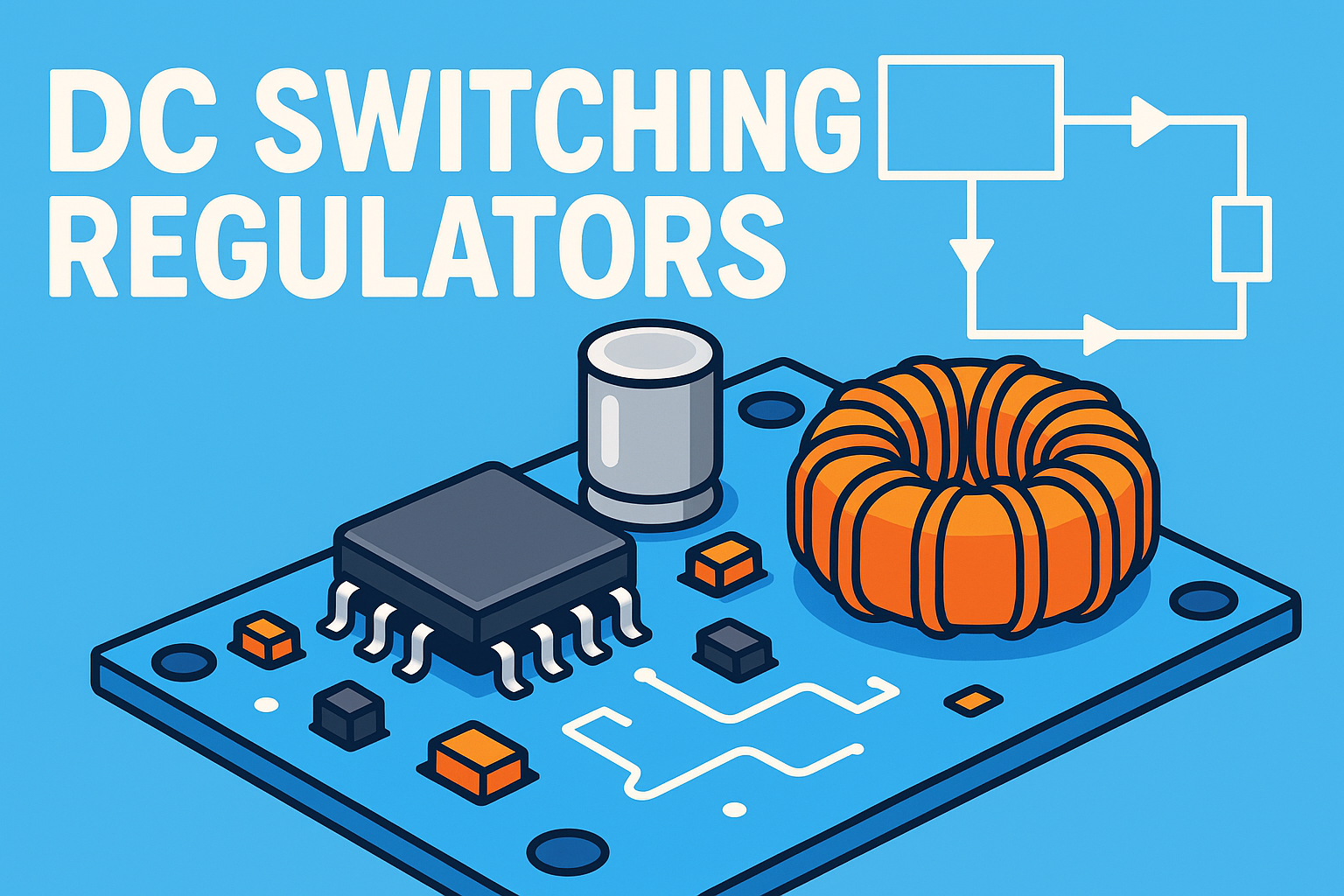
Many engineers who have not used the switching power supply may have some worry about it, such as the PCB layout, the parameter and type selection of components, and so on. In fact, as long as you understand the basic principle, the use of switching power supply design is very convenient. In today's article, we will introduce you to some basic knowledge of switch-mode power supply, along with some experience sharing when using the switch-mode power supply. SMPS Tutorial: Switch Mode Power Supplies and Power Conversion  Catalog I. What is the Switch Mode Power SupplyII. How to Debug the Switching Power Supply Circuit?III. What Needs to Be Grounded?3.1 Definition of Grounding3.2 Grounding Mode3.3 How is the Signal of the Single Board Grounded?3.4 How Do the Single Board Interface Devices   Grounding?3.5 How to Grounding the Shield Layer?IV. Introduction of Signal Backflow and TranspartitionV. Should Analog Separate from the Digital , and How?FAQ I. What is the Switch Mode Power Supply  A switch-mode power supply usually consists of a controller and an output part. Some controllers integrate MOSFET into the chip, which makes it easier to use and simplify the PCB design, but the flexibility of components is weakened. The switching controller is actually a closed-loop feedback control system, so there is a sampling circuit of output-voltage feedback and a feedback-loop control circuit. Therefore, this part of the design is to ensure an accurate sampling circuit and to control the feedback depth, because if the feedback loop response is too slow, it will have a great impact on the transient response-ability. The output parts include output capacitance, output inductor, MOSFET, and so on. The selection of these devices is basically to balance the performance need and cost. For example, the high switching frequency can use small inductance (which means small package and low cost), but a high switching frequency will increase interference and the switching loss of MOSFET, result in reducing efficiency and increasing cost. Lower switching frequency has the opposite effect. The selection of Rds_on parameters of MOSFET and the ESR for output capacitance is also very important. ESR is small can reduce output ripple, but the cost of the capacitor will increase. And It is important to note that switching power controllers can not be well driven with too much MOSFET. In general, suppliers of switching power supply controllers will provide specific formulas and usage options for engineers. Figure. 1 Switch Mode Power Supply Circuit   II. How to Debug the Switching Power Supply Circuit? (1)The output of the power supply circuit is installed to the board through the low resistance and high power resistor, so that the power circuit can be debugged first before welding resistance, avoiding the influence of the latter circuit.  (2)The switching controller is a closed-loop system. If the output deterioration beyond the range that the closed-loop can control, the switching power supply will work improperly. This situation requires careful examination of feedback and sampling circuits. Especially, if the output capacitance with a large ESR, lots of ripple of power supply will be produced, which will also affect the operation of switching power supply.  III. What Needs to Be Grounded? At the very start, the introduction of grounding technology is a protective measure to prevent lightning strikes on electric power or electronic equipment. The purpose is to introduce lightning current through the lightning rod to the earth to protect buildings. And meanwhile, grounding is also an effective way to protect personal safety.  When the phase line touches the shell of the equipment causing by some reason (such as poor insulation of the wire, line aging, etc.), there will be a dangerous voltage in the shell of the equipment. Having grounding, the resulting fault current will flow to the earth, thus it plays a protective role.  For example, in communication systems, the interconnection of signals between a large number of devices requires each device to have a point as a reference, and with the complication of electronic equipment, the signal frequency is becoming higher and higher, therefore, grounding design as special attention paid to the electromagnetic compatibility problems such as mutual interference between signals.  In addition, improper grounding will seriously affect the reliability and stability of system operation. Recently, the concept of "grounding" has also been introduced into high-speed signal backflow technology.  3.1  Definition of GroundingIn the modern concept of grounding, for line engineers, the term usually means "reference point for line voltage"; for system designers, it is often a cabinet or frame; for electrical engineers, it is a green and safe ground line or a wire connected to the earth. A more general definition is that "grounding is the low impedance channel which the current returns its source." Noting that the points are "low impedance" and "channel".  3.2  Grounding ModeThere are many ways of grounding: single-point grounding, multi-point grounding, and mixed type of grounding. Single-point grounding is divided into a series of single-point grounding and parallel single-point grounding. In general, single-point grounding is used in simple circuits, and low frequency (f10MHz) circuits use multipoint grounding or multilayer (complete a ground plane layer).  3.3   How is the Signal of the Single Board Grounded?For the general device, the near ground is the best. After adopting the multilayer design with a complete ground plane, the grounding of the general signal is very easy. The basic principle is to ensure the continuity of the line, reduce the number of holes, approach the ground plane or the power plane, etc. 3.4  How Do the Single Board Interface Devices  Grounding?Some veneers will have external input-output interfaces, such as serial port connectors, RJ45 connectors, etc. If their grounding is not well designed, it will also affect normal operation, such as error codes, packet loss, etc. And it will become an external source of electromagnetic interference sending the noise out. In general, a single interface grounding will be made, and the signal is connected by a thin wire connection, string 0 ohms, or small resistance. Thin lines can be used to block signal ground noise. At the same time, the interface and the interface power filter should also be considered seriously.  3.5  How to Grounding the Shield Layer? The shielding layer of cables is connected to the interface grounding instead of the signal grounding, because there are various noises on the signal grounding. If the shield layer is connected to the signal ground, the noise voltage will drive the common-mode current to interfere outward along the shield layer. Therefore, the poorly designed cable is generally the maximum noise output source of electromagnetic interference. Of course, the interface ground should keep clean. IV. Introduction of Signal Backflow and TranspartitionFor an electronic signal, it needs to find a way with the lowest impedance to return current to the ground, so how to deal with the signal backflow becomes very important. First, according to the formula, we can know that the radiation intensity is proportional to the area of the loop. Specifically, the longer the path the return is, the bigger the ring is formed, and the greater the external radiation interference is, thus the power-circuit flow back and signal loop area should as small as possible when design PCB. Second, for a high-speed signal, providing a good signal backflow can guarantee its signal quality. Because the characteristic impedance of the transmission line on the PCB is generally calculated by reference to the ground (or power layer), if there is a continuous ground plane near the high-speed line, the impedance of this line can be kept continuous, and if there is no ground reference near the section line, the impedance will change and the signal will be affected as well. Therefore, the high-speed lines should be distributed to the layer near the ground plane, or they should be walked in parallel next to each other, to shield interference and provide backflow nearly.  Third, do not divide wires when having power supply in wiring way, this is because the signal backflow path across different power layers will be longer, and be vulnerable to interference. For low-speed signals, it is not strictly required that, because the resulting interference signal can not be concerned about. But for high-speed signals should be checked carefully, do not cross as far as possible, you can adjust the power part of the wire. (this is for multiple power supplies on multilayer boards).  V. Should Analog Separate from the Digital , and How? Whether analog signal or digital signal should return to the ground. Because the digital signal changes quickly and the noise caused by the digital signal will be very large, if analog and digital mixing, the noise will affect the analog signal.  In general, the grounding of analog and digital processing must be separated, then connected by a thin line, or a single point. The general idea is to try to block the noise from the digital ground to the analog ground. But it is not a very strict requirement that analog and digital ground must be separated, if the analog section near the digital ground is still very clean, they can be combined. FAQ 1. What are the 3 types of power supply?There are three subsets of regulated power supplies: linear, switched, and battery-based. Of the three basic regulated power supply designs, linear is the least complicated system, but switched and battery power have their advantages. 2. What is meant by switch mode power supply?A switch mode power supply is a power converter that utilises switching devices such as MOSFETs that continuously turn on and off at high frequency; and energy storage devices such as the capacitors and inductors to supply power during the non-conduction state of the switching device. 3.What are the advantages and disadvantages of switch mode power supply?Advantages & disadvantages of switch mode power supply (SMPS)a. The switch mode power supply has a smaller in size.b. The SMPS has light weight.c. It has a better power efficiency typically 60 to 70 percent.d. It has a strong anti interference.e. SMPS has wide output range.f. Low heat generation in SMPS. 4. What is a DC switching power supply?A Switching DC power supply (also known as switch mode power supply) regulates the output voltage through a process called pulse width modulation (PWM). The PWM process generates some high frequency noise, but enables the switching power supplies to be built with very high power efficiency and small form factor. 5. What is the difference between a switching power supply and a linear power supply?Linear power supplies deliver DC by passing the primary AC voltage through a transformer and then filtering it to remove the AC component. Switching power supplies feature higher efficiencies, lighter weight, longer hold up times, and the ability to handle wider input voltage ranges. 6. Do I need a switching power supply?The switching power supply implies higher efficiency due to the high switching frequency, enabling it to use a smaller, less-costly high-frequency transformer as well as lighter, less-costly filter components. Switching power supplies contain more overall components, therefore are usually more expensive. 7. Is a switching power supply regulated?A switch mode power supply regulates an output voltage with pulse width modulation (PWM). This process creates high-frequency noise but it provides a high-efficiency rating in a small form factor. ... The low DC voltage is finally converted into a steady DC output with another set of diodes, capacitors, and inductors. 8. How do I know if my power supply is regulated?You can generally stick one probe into the middle of the connector, and hold the other against the outside. With a few exceptions, the middle is positive, so use the red lead there, and use the black lead on the outside shell. Regulated supplies, without any load, should measure very close to the target voltage of 12v. 9. Can I use a switching power supply to drive a DC motor?A simple unregulated analog power supply may be easier and be able to supply the large starting under load current more that the switching one. DC motors are not too fussy about the supply, and will usually run quite well on unfiltered DC. 10. Are switch mode power supplies any good?Switch mode power supplies, SMPS provide improved efficiency & space saving over traditional linear supplies, but care has to be taken to ensure noise on the output is low. Switch mode power supplies are widely used because of the advantages they offer in terms of size, weight, cost, efficiency and overall performance. You May Also LikeSwitching Power Supply Guide: Protection CircuitSwitching Power Supply Tutorial: 4V~16VSwitched Mode Power Supply Tutorial: Principles & Functions of SMPS Circuits
kynix On 2018-11-05   2213
General electronic semiconductor

Selection Guidance of Five Main Materials for Flexible Circuit Board

With the development of science and technology, electronic products are changing with each passing day. Also, electronic assembly technology is facing challenges. Following the development of electronic technology, people work harder to make innovations in electronic assembly technology.  And in this context, a flexible circuit board invented used which made of the thin-and-flexible polymer film. It can complete the application of surface mounting technology and bend without affecting the normal circuit operation.  Clear Flexible Printed Circuit Catalog I. Brief IntroductionII. Five Main Materials for Flexible Circuit Board2.1 Insulating Firm2.2 Bonding Sheet2.3 Copper Foil2.4 Overburden2.5 Reinforcement PlateFAQ I. Brief Introduction Today's flexible electrons are all made of SMT technology, so they are thin and exquisite with insulation thickness of fewer than 25 μm. It can be bent arbitrarily and rolled into a cylinder. And it makes full use of three-dimensional volume. It breaks the stereotype of the traditional area of use and creates the ability to make full use of the shape of the volume, which can significantly enhance the effective density of use in the length of the conductor currently routinely used per unit area, forming a high-density assembly. In recent years, flexible circuit technology has been applied in various fields, such as radio communication, computer, and automobile electronic equipment. Unlike in the past, flexible circuits have been used as substitutes for rigid cables, and they have been used as substitutes for rigid circuits and printed circuit boards (PCB) in applications where thin or three-dimensional circuits are required. In order to meet the requirements of rigid and flexible applications, it is combined flexible circuit technology in the rigid circuit board, making flexible circuit board used widely. The functions of the flexible circuit board can be divided into four categories, including the lead line, printed circuit, connector, and IntegraTIon of FuncTIon, which covers the computer, Computer peripheral auxiliary system, civil electrical appliances and cars, and other areas. For different applications, the material of the flexible circuit board should select carefully. And the followings are some rules of the five main materials of the flexible circuit board.  II. Five Main Materials for Flexible Circuit Board 2.1 Insulating FirmThe insulating film is flexible and can be used as the insulation carrier of the circuit board to form the basic layer of the circuit. When selecting the flexible dielectric film, the heat resistance, overlay, thickness, mechanical properties and electrical properties of the material should be tested.  Insulation film is usually available on the market, the most common is polyimide and polyester materials. Of all the flexible circuit manufacturers in the United States, nearly 80% use polyimide film as the material for flexible circuits, and about 20% use polyester film. Because polyimide material is nonflammable, stable geometry, high anti-tear, and able to withstand high temperature during welding. 2.2 Bonding Sheet It is made up of two insulating films coated with adhesive, the ability is gluing the film to the foil, and the film to the film in the flexible circuit, In order to provide mechanical support and eliminate stress during insertion of components and connectors. It also can provide protection and electrical insulation. Different types of adhesive sheets can be used for different film substrates, such as polyester bonding sheets and polyimide bonding sheets are different, for example, the polyimide substrate has epoxy resin and acrylic acid. 2.3 Copper FoilCopper foil is a conductor layer that is coated on the insulating substrate and then selectively etched to form a conductive line. The vast majority of this copper foil is rolled copper foil or electrolytic copper foil. The ductility and bending resistance of the rolled copper foil is better than that of the electrolytic copper foil.  The elongation of the rolled copper foil is 20%~45% and the electrolytic copper foil is 4%~40%. The commonly used thickness of copper foil is 35um (1oz), also they have 18um (O.5oz), 70um (2oz), or even 105um (30z). According to different applications, we have to choose different forms of copper foil.  If only to replace wires and connectors, and to reduce manufacturing time and cost, the best choice is electrolytic copper foil. The electrolytic copper foil will increase the weight of copper to level the load capacity of the current, thus obtaining the suitable width of the copper sheet. 2.4 OverburdenThe brand, Novaclad, created by Sheldahl, applies the vacuum metal spraying technology which is a patent. It is a technology that applying a thin layer of pure copper to the surface of a polyimide film, then electroplating into a specific thickness to form the substrate of Novaclad. The base material is used in Novaflex, a flexible circuit without adhesive. After all the circuits have been made, a layer of Novaflex insulation is applied. The Novaflex is designed to work under harsh conditions, and Novaflex without adhesive provides better flexibility, chemical resistance, high-temperature properties, and maximum heat dissipation properties. 2.5 Reinforcement PlateThe reinforced plate to the local position of the flexible plate plays the role of super supporting and strengthening the flexible film substrate, which is convenient for the connection, fixation, or other functions of the PCB. According to different needs, the reinforcement board materials commonly use polyester, polyimide sheet, epoxy fiberglass cloth plate, phenolic-aldehyde paper board, steel plate, aluminum plate, etc.  FAQ 1.What is a flexible circuit board?A flexible printed circuit board features a combination of several printed circuits as well as components that are positioned on a flexible substrate. These circuit boards are also known as flex circuit boards, flex PCBs, flex circuits, or flexible printed circuits. 2. What is flex circuit used for?Flex circuits are often used as connectors in various applications where flexibility, space savings, or production constraints limit the serviceability of rigid circuit boards or hand wiring. A common application of flex circuits is in computer keyboards; most keyboards use flex circuits for the switch matrix. 3. What are flexible circuit boards made of?Flexible circuits are thin, light-weight electrical circuits that conform to small spaces and contoured shapes. They consist of conductive strips of metal, usually copper, encapsulated with an insulating dielectric material made of polyimide or a solder mask. 4. Where are flexible PCBS used?a. Automobiles.b. Consumer electronics including smartphones, SLR cameras and camcorders,c. Medical systems and devices such as heart monitors, pacemakers and the bionic knee.d. Motion systems.e. GPS systems.f. Aerospace and avionics systems. 5. When was the first flex printed circuit made?From early applications during World War II to the present, growth and proliferation for flex circuits and flexible printed circuit boards continues exponentially. A flexible circuit in its purest form is a vast array of conductors bonded to a thin dielectric film. 6. What are the advantages and disadvantages of flexible circuit boards?The advantages of the flexible circuit board are mainly high assembly density, which can save the connection of redundant cables, in addition, it has good bendability, high flexibility, small size, simple structure, and convenient installation.Disadvantages of flexible circuit boards: 1. High initial cost 2. Difficult to change and repair 3. Size limited 4. Improper operation and easy damage, etc. 7. What do flexible circuit boards and rigid circuit boards mean?a.  Flexible circuit boards are used more in digital products. The difference between it and the rigid circuit board is that the substrate of the circuit board is different. As the name implies, the board can be bent and softer.b. "Multilayer board" and "double-sided board" mainly refer to the number of sides of wiring on the circuit board. Above 2 layers are multi-layer boards.From the perspective of the process flow, the multilayer board needs to be processed by the inner layer map, and the outer layer can be processed after being pressed. The processing flow of the outer layer is basically the same as the processing flow of the double-sided board. 8. What is the temperature resistance of fpc flexible circuit boards?FPC flexible circuit board can withstand high temperature of 280 degrees, about 1 hour. However, the recommended temperature for normal use is not less than -20 and not higher than 80. 9. With flexible circuit boards, why pcb hard printed circuit boards are still not eliminated?For PCBs that need to use plug-in components, only rigid boards can be used, which is what you call rigid boards; for many PCBs with stress requirements, only rigid boards can be used. The cost of flexible boards is currently much higher than rigid boards, more than doubled. And the straight-through rate of rigid boards is higher than that of flexible boards 10.Classification of flexible circuit boards?According to the combination of base material and copper foil, flexible circuit boards can be divided into two types: flexible boards with glue and flexible boards without glue. Among them, the price of the glueless flexible board is much higher than that of the glued flexible board, but its flexibility, the bonding force of the copper foil and the substrate, and the flatness of the pad are also better than the glued flexible board. You May Also LikeSwitching Power Supply Tutorial: 4V~16VWhat is A MCU’s internal Structure: Single Chip Micro-ComputerPCB Wring Tutorial: A/D converterMonitoring Technology in Communication Power Supply: Application GuideDIY CommunityDIY Flxible Printed CircuitsMake Flexible Circuit Boards Using A 3D Printer
kynix On 2018-11-01   364
Capacitors

Basic knowledge of Solid-State Capacitor

The solid-state capacitor is called a solid-state aluminum electrolytic capacitor. The biggest difference between it and ordinary capacitors (i.e. liquid aluminum electrolytic capacitors) lies in the use of different dielectric materials. The dielectric materials of liquid aluminum capacitors are electrolyte, while the dielectric materials of solid capacitors are electroconductive polymer materials.   Electronic Basics #14: Capacitors Catalog I. Solid State Capacitor Introduction II. Solid State Capacitor Advantages III. Solid State Capacitor Types IV. Advantages and Disadvantages of Solid Capacitors FAQ   I. Solid State Capacitor Introduction   In view of the many problems of liquid electrolytic capacitance, the solid aluminum electrolytic capacitor has emerged as the times require. Since the 1990s, solid conducting polymer material has been used as cathode instead of electrolyte for aluminum electrolytic capacitor, which has achieved great development. The conductivity of conductive polymer materials is usually 2 ~ 3 orders of magnitude higher than that of electrolytes.    The application of aluminum electrolytic capacitors can greatly reduce the ESR and improve the features of temperature frequency, what’s more, because of the good processability of polymer materials, it is easy to be packaged. All greatly promote the development of aluminum electrolytic capacitance.   On the market, there are two types of aluminum electrolytic capacitors: organic semiconductor aluminum electrolytic capacitors (OS-CON) and polymer conductor aluminum electrolytic capacitors (PC-AC) (PC-CON).    The structure of an organic semiconductor aluminum electrolytic capacitor is similar to that of a liquid aluminum electrolytic capacitor; both are packaged in straight-pin and vertical configurations.   The difference is the cathode material of solid aluminum polymer electrolytic capacitor using the organic semiconductor extract, which can effectively solve the tough problems of electrolyte evaporation, leakage, flammability, and so on. Also, a solid aluminum polymer patch capacitor is a unique structure formed by combining the characteristics of aluminum electrolytic capacitance and tantalum capacitance.   Like liquid aluminum electrolytic capacitors, solid aluminum polymers are mostly in the form of patches. The film of polymer electrode with high conductivity is deposited on alumina as cathode, carbon, and silver as an extraction electrode, which is similar to the structure of solid tantalum electrolytic capacitance.     II. Solid State Capacitor Advantages   (1)With high stability, the solid aluminum electrolytic capacitor can work stably in a high-temperature environment, and improve the performance of the motherboard directly. At the same time, it is suitable for power filters because of its stable impedance in a wide temperature range, provides a stable and abundant power supply effectively, especially in overclocking.    Solid-state capacitors can work at high temperatures and maintain various electrical properties. The capacitance changes less than 15% in the whole temperature range, which is obviously superior to the liquid electrolytic capacitance. Meanwhile, the capacitance of solid-state electrolytic capacitor is independent of its working voltage, so it can work stably in the environment of voltage fluctuation.   (2)The solid-state aluminum electrolytic capacitor has an extremely long service life (over 50 years). It longer than the liquid aluminum electrolytic capacitance. And it will not be broken down, nor need to worry about liquid electrolyte drying and leakage affecting the stability of the motherboard. Solid-state electrolytes do not expand or even burn as liquid electrolytes do at high temperatures. Even if the temperature of the capacitor exceeds its limit, it just melts, which does not cause the capacitor metal shell to burst, so it is very safe.    The working temperature has a direct effect on the life of electrolytic capacitance. Advantages of its electrolyte make a longer service life than liquid electrolytic capacitor under different temperature conditions.   (3)Low ESR(Equivalent Series Resistance) and high mA rms are important indexes of capacitance. The lower the ESR, the faster the charge and discharge speed of capacitance. It directly affects the decoupling performance of the microprocessor power supply circuit, which is more obvious in high-frequency circuits. Therefore, it can be viewed the biggest difference between solid-state electrolytic capacitance and liquid capacitance.   Solid aluminum electrolytic capacitance with the lower ESR and energy dissipation under high power operation conditions can fully absorb the high amplitude voltage between the power lines in the circuit and prevent its interference to the system. When the CPU changes from a low power state to a full load state, the transient (generally less than 5 milliseconds) power required for this CPU switch comes from the CPU power supply circuit, at this moment, the high peak current can be output instantly by the high-speed charge-discharge characteristic of the solid-state capacitor, which can guarantee sufficient power supply and ensure the CPU to work stably.     III. Solid State Capacitor Types     According to the medium, capacitors can be divided into inorganic dielectric capacitors, organic dielectric capacitors, and electrolytic capacitors three categories.   1. Inorganic dielectric capacitors: including familiar ceramic capacitors and mica capacitors, we will often see ceramic capacitors on the CPU. Ceramic capacitors have excellent comprehensive properties and can be used in GHz-class UHF devices, such as CPU/GPU, thus its price is also very expensive.   2.Organic dielectric capacitors: such as thin-film capacitors, which are often used in loudspeakers with their precision, high temperature, and high-pressure resistance.   3. Electrolytic capacitors: known as aluminum capacitors. The traditional method of classifying electrolytic capacitors is based on anode materials, such as aluminum, tantalum, or niobium. However, this method of judging capacitance performance based on the anode is out of date. At present, the key to determine the performance of electrolytic capacitance lies not in the anode, but in the electrolytic, cathode. According to the classification of cathode materials, electrolytic capacitors can be divided into electrolyte, manganese dioxide, TCNQ organic semiconductors, solid polymer conductors, and so on.      IV. Breif Analysis of Advantages and Disadvantages of Solid Capacitors   The dielectric of liquid electrolytic capacitors is liquid electrolyte: liquid particles are very active at high temperatures and have a low boiling point relative to the internal pressure of the capacitor, making it easily explosible. The solid-state capacitance is made of polymer dielectric: at high temperatures, the particle growth and behavior of solid particles are lower than that of liquid electrolytes, and its boiling point will reach 350 degrees Celsius, making it almost impossible to burst.    The ESR of solid-state capacitance in high-frequency operation is shown to be very weak, and the conductivity is very fine. It has the properties of lowering impedance and producing less heat, which is the most obvious between 100KHz and 10MHz.   Traditional electrolytic capacitance is easily influenced by the operating environment's temperature and humidity, and it is less stable at high and low temperatures. The ESR of the solid capacitance can be as low as 0.0040.005 ohms between minus 55 and 105 degrees Celsius, but the electrolytic capacitance varies with temperature.   In terms of capacitance values, liquid capacitance would be lower than the indicated capacitance value below 20 degrees Celsius, and the lower the temperature, the lower the capacitance value. At minus 20 degrees Celsius, capacitance decreases by around 13%, and at minus 55 degrees Celsius, capacitance decreases by 37%. Since solid capacitance decreases by less than 5% at minus 55 degrees, solid state capacitors are guaranteed not to be harmed by lower temperatures. The low-frequency response of solid-state capacitance is not as good as electrolytic capacitance.     In other words, a motherboard with all-solid-state capacitance is not the most reasonable. Whether solid or electrolytic capacitors, their main function is to filter clutter, so long as the capacity and quality of capacitance can reach certain requirements, it can also ensure a stable operation. Solid-state capacitors at 105C have the same lifetime as electrolytic capacitors for 2000 hours.    When the temperature drops, their lives increase, but the solid-state capacitors increase even more. In general, the operational temperature of the capacitor is 70 degrees or less. In addition, the service life of solid-state capacitance can last 23 years, almost six times than the electrolytic capacitance. Compared with electrolytic capacitors, the capacity of electrolytic capacitors is much larger than that of solid capacitors at the same volume and voltage.     At present, solid capacitors are mostly used in the CPU power supply of computer motherboard, but the capacity redundancy is very little, it is necessary to improve the switching frequency of the part of the CPU power supply. Both solid and electrolytic capacitors will have the problem of capacity attenuation in the process of use. However, although the capacity of the circuit board with solid-state capacitance fluctuates slightly, the power supply will appear ripples, which will cause the CPU to work improperly.     Therefore, the lifetime of the solid-state capacitor is very high theoretically, but not in practice. Maintenance when using solid-state capacitor computer board: the power supply part of the CPU is often connected with multiple capacitors, so the solid-state capacitance will not have deformation, explosive slurry, leakage, etc. There is no way to determine which one is out of order basically. Therefore, in maintenance, one of them is often removed (no matter good or bad), and a large-capacity capacitor can be replaced (often with electrolytic capacitance). This method can usually solve the problem quickly.      In theory, the lifetime of the solid-state capacitor is very long, but there will still be a lot of faults in the process of practical use. At present, it seems that most motherboards with overclocking as the selling point put forward by many manufacturers will use solid-state capacitors. But it is not the capacitance that determines the performance of the CPU. The design of the circuit, the development of BIOS, the quality of the CPU itself, and the heat dissipation measures may determine the success or failure of the CPU.   FAQ   1. What is a solid state capacitor? The full name of a solid capacitor is a conductive polymer aluminum electrolytic capacitor, also called a polymer aluminum capacitor. It is currently the highest level of capacitor products. The dielectric material of the solid capacitor is a functional conductive polymer, which can greatly improve the product.   2. Are Solid Capacitors better? Solid capacitors have a higher tolerance not only for higher temperatures, but they also perform better with higher frequencies and higher current than electrolytic capacitors. ... Because there is less impedance at higher frequencies, solid capacitors are more stable and generate less heat than electrolytic capacitors.   3. How do you read a solid state capacitor? If you have a capacitor that has nothing other than a three-digit number printed on it, the third digit represents the number of zeros to add to the end of the first two digits. The resulting number is the capacitance in pF. For example, 101 represents 100 pF: the digits 10 followed by one additional zero.   4. What do you need to know about solid state capacitors? Solid-state capacitors have already gone down the altar. Many common electronic and digital products use these products in large quantities. The solid-state capacitors are similar to the common aluminum electrolytic capacitors, some are replaceable, and there is a solid capacitor, sheet, for Replace the common tantalum capacitor.   5. Which is the best electrolytic capacitor for motherboard? Solid aluminum electrolytic capacitors can directly improve the performance of the motherboard. At the same time, it is suitable for power supply filtering due to its stable impedance over a wide temperature range. It can effectively provide a stable and abundant power supply, which is especially important in overclocking.   6. How do you read a solid state capacitor? If you have a capacitor that has nothing other than a three-digit number printed on it, the third digit represents the number of zeros to add to the end of the first two digits. The resulting number is the capacitance in pF. For example, 101 represents 100 pF: the digits 10 followed by one additional zero.   7. What is the average lifespan of a capacitor? Design lifetime at rated temperature. Manufacturers of electrolytic capacitors specify the design lifetime at the maximum rated ambient temperature, usually 105°C. This design lifetime can vary from as little as 1,000 hours to 10,000 hours or more.   8. What metals are capacitors made of? There are three different anode metals in use for electrolytic capacitors: Aluminum electrolytic capacitors use a high-purity etched aluminium foil with aluminium oxide as dielectric. Tantalum electrolytic capacitors use a sintered pellet (“slug”) of high-purity tantalum powder with tantalum pentoxide as dielectric.   9. When should you use a capacitor? Capacitors are widely used in electronic circuits for blocking direct current while allowing alternating current to pass. In analog filter networks, they smooth the output of power supplies.   10. How do I choose the right size capacitor? You mainly need to look at 2 values: the voltage and the capacity -both are written on most capacitors-. For example, if you are going to charge a capacitor with 24V, you need to make sure your capacitor will support that voltage; so you'll need a capacitor for at least 25V (plus error margin).       You May Also Like Operational Amplifier(OP Amp) Tutorial Instructions of Common problems in the Application of Inverter About Operational Amplifier LM358: 24 Classical Circuits DIY Community:  DIY Capacitor Flux Capacitor - Back TO The Future
kynix On 2018-10-29   6034
Amplifiers

What is Operational Amplifier? (Op Amp Tutorial)

  Op-amp is short for operational amplifier. In practical circuits, they are usually combined with a feedback network to form some kind of functional module. It was named "operational amplifier" because it was used in the early days of analog computers to realize mathematical operations, and the name has been continued to this day. An operational amplifier is a circuit unit named from the point of view of function, and can be implemented by discrete devices or in semiconductor chips. With the development of semiconductor technology, the majority of op amps exist today in the form of a single chip. Nowadays, there is a wide variety of op amps, which are widely used in almost all industries. What is an operational amplifier? Catalog   Working principle of operational amplifier  Why is operational amplifier called op amp? Types of op amp Features of op amp FAQ Working principle of operational amplifier  When an operational amplifier is used, its output is connected to its inverTIng input node to form a negative feedback configuration—negaTIve. The reason is that the voltage gain of the operational amplifier is very large, ranging from hundreds to tens of thousands of times, the use of negative feedback to ensure the stable operation of the circuit. But that doesn't mean the operational amplifiers can't be connected to the positive feedback. On the contrary, in many systems that need to generate oscillatory signals, OP Amp with positive feedback configuration is a common component. Operational amolifier schematic diagram    Why is operational amplifier called op amp? In an actual circuit, the feedback network is usually combined to form a certain functional module. Since it was used in analogue computer to realize mathematical operation, it is named "operational amplifier", which continues to this day. Operational amplifier is a circuit unit based on its function, which can be implemented by discrete devices or semiconductor chips. With the development of semiconductor technology, the vast majority of operational amplifiers are in the form of single chip. Nowadays, there are many kinds of operational amplifiers, which are widely used in almost all industries. History of operational amplifier    Summing amplifier In 1941, the first operational amplifier composed of vacuum tubes was invented by Karl D. Swartzel Jr. Of Bell Labs and got the American patent 2,401,779, named “Summing Amplifier”. Model K2-W In 1952, model K2-W, the first operational amplifier with vacuum tube was sold by George A. Philbrick Researches (GAP/R) in the market. μA702 In 1963, the first operational amplifier in the form of a single IC chip was the μA702 designed by Fairchild Senmiconductors's Bob Widlar, and it was introduced after modification in 1965 named μA709.  μA741 In 1968, Fairchild Semiconductor Inc. Introduced the μA741 still in production, it is one of the most successful operational amplifiers of all the time and one of the very few oldest IC models.   - In 1941, the first operational amplifier composed of vacuum tubes was invented by Karl D. Swartzel Jr. Of Bell Labs and got the American patent 2,401,779, named “Summing Amplifier”. - In 1952, model K2-W, the first operational amplifier with vacuum tube was sold by George A. Philbrick Researches (GAP/R) in the market. - In 1963, the first operational amplifier in the form of a single IC chip was the μA702 designed by Fairchild Senmiconductors's Bob Widlar, and it was introduced after modification in 1965 named μA709.  - In 1968, Fairchild Semiconductor Inc. Introduced the μA741 still in production, it is one of the most successful operational amplifiers of all the time and one of the very few oldest IC models.   Types of op amp - General type: Its performance parameters are suitable for general use (low frequency and slow signal change), such as 741A, LM358 (double OP Amp), LM324 and LF356  with FET as input stage. - High-Z type:The characteristic of this kind of amplifier is that the input impedance of differential mode is very high and the input bias current is very small. The main measure to achieve these targets is to make use of the high input impedance of FET, but the input offset voltage of this kind of operational amplifier is larger. Such operational amplifier have LF356, LF355, LF347, CA3130, CA3140, etc. - Low-temperature drift type:In precision instruments, weak signal detection and other automatic control instruments, the bias voltage of operational amplifier is small and does not change with the temperature. The low temperature drift operation amplifier is designed for this purpose. At present, the commonly used operational amplifier has OP07, OP27, OP37, AD508 and ICL7650 composed of MOSFET device and so on. - High slew-rate type:In fast A/D converter, D/A inverter and video amplifiers, the conversion rate of the operational amplifier must be high, and the BWG of the unit gain bandwidth must be large enough. Common operational amplifier has LM318, 175A and so on. - Low -consumption type: Due to the wide application of portable instruments, low power supply and low power consumption must be used. Commonly used low-power operational amplifier has TL-022C,TL-160C and so on. - High voltage and power type:The output voltage of operational amplifier is mainly limited by power supply. In ordinary operational amplifier, the maximum output voltage is only dozens of volts and the output current is only dozens of Ma. In order to increase the output voltage and current, the auxiliary circuit must be added to the external circuit of the operational amplifier. High-voltage and high-power operational amplifier can output high voltage and high current without any additional circuit.   Features of op amp The input resistance is very high, the output resistance is very small, the voltage magnification is very large, and the zero drift is very small. Characteristics of ideal operational Amplifier in Linear region - Virtual Ground: When the operational amplifier is in a linear state, the potential of the inverse input is zero. - Virtual Short Circuit: When the operational amplifier is in a linear state, the two input terminals can be regarded as equipotential, which is called virtual short circuit. But both sides are not real short circuit. - Virtual Open Circuit: When the operational amplifier is in a linear state, two input terminals can be regarded as equivalent open circuit, which is called virtual open circuit. Obviously, it doesn’t break the two inputs actually.   FAQ   1. What is an op amp used for? What is an Operational Amplifier (Op-amp)? An operational amplifier is an integrated circuit that can amplify weak electric signals. An operational amplifier has two input pins and one output pin. Its basic role is to amplify and output the voltage difference between the two input pins.   2. What is op amp in electronics? An operational amplifier (op amp) is an analog circuit block that takes a differential voltage input and produces a single-ended voltage output. ... The inverting input is denoted with a minus (-) sign, and the non-inverting input uses a positive (+) sign.   3. How do op amps work? An operational amplifier only responds to the difference between the voltages on its two input terminals, known commonly as the “Differential Input Voltage” and not to their common potential. Then if the same voltage potential is applied to both terminals the resultant output will be zero.   4. What is a 741 op amp used for? The most common Op-Amp is the 741 and it is used in many circuits. The OP AMP is a 'Linear Amplifier' with an amazing variety of uses. Its main purpose is to amplify (increase) a weak signal - a little like a Darlington Pair. The OP-AMP has two inputs, INVERTING ( - ) and NON-INVERTING (+), and one output at pin 6.   5. What are the characteristics of op amp? -Infinite open-loop gain G = vout / v. in -Infinite input impedance Rin, and so zero input current. -Zero input offset voltage. -Infinite output voltage range. -Infinite bandwidth with zero phase shift and infinite slew rate. -Zero output impedance R. out -Zero noise. -Infinite common-mode rejection ratio (CMRR)   6. Where are op amps used? Op-amps are linear devices that are ideal for DC amplification and are used often in signal conditioning, filtering or other mathematical operations (add, subtract, integration and d3.   7. What is operational amplifier and its types? An operational amplifier (op amp) is an analog circuit block that takes a differential voltage input and produces a single-ended voltage output. Op amps usually have three terminals: two high-impedance inputs and a low-impedance output port.   8. Why is it called operational amplifier? Op-amp stands for operational amplifier. ... Originally, op-amps were so named because they were used to model the basic mathematical operations of addition, subtraction, integration, differentiation, etc. in electronic analog computers. In this sense a true operational amplifier is an ideal circuit element.   9. What is the difference between amplifier and operational amplifier? Amplifiers can be either electronic or mechanical in common definition whereas operational amplifiers are electronic amplifiers. Amplifiers, in general, have a limited capability of amplifying DC signals but all op-amps are capable of amplifying DC signals.   10. What is the main function of operational amplifier? An operational amplifier is an integrated circuit that can amplify weak electric signals. An operational amplifier has two input pins and one output pin. Its basic role is to amplify and output the voltage difference between the two input pins.   11. What are the advantages of operational amplifier? Advantages:  1. increased circuit stability 2. increased input impedance  3. decreased output impedance  4. increased frequency bandwidth at constant gain.   12. What are op amps used for in real life? Op amps are widely used in amplifiers oscillators, filters, comparators, integrators and differentiation,voltage regulator, current regulator. Non linear applications include precision rectified log amplifier . It is also used in analog to digital and digital to analog converter.   13. Where are operational amplifiers used? Operational amplifiers are linear devices that have all the properties required for nearly ideal DC amplification and are therefore used extensively in signal conditioning, filtering or to perform mathematical operations such as add, subtract, integration and differentiation.   14. What is an ideal operational amplifier? Operational amplifier: The ideal op amp is an amplifier with infinite input impedance, infinite open-loop gain, zero output impedance, infinite bandwidth, and zero noise. It has positive and negative inputs which allow circuits that use feedback to achieve a wide range of functions.   15. Why does an operational amplifier need a power supply? Operational amplifiers have two power supply rails because they usually need to swing bipolar - output voltages that go either positive or negative in response to the normal range of input signals. ... Without the dual supplies the output signal would clip at the ground potential.   16. How op-amp can be used as a differentiator? An op-amp differentiator is an inverting amplifier, which uses a capacitor in series with the input voltage. ... Differentiators have frequency limitations while operating on sine wave inputs; the circuit attenuates all low frequency signal components and allows only high frequency components at the output.   17. Is an op amp a transistor? Well for starters, an op amp is simply a combination of transistors, so by varying the transistor you can get different properties. One thing to also remember is that op amps are class A amplifiers which basically means that they are always on and therefore drawing power which can be undesirable.   18. Why is op amp a versatile device? Op Amps or operational amplifiers, are fundamental building blocks in electronic design, mainly because these analog integrated circuits (ICs) are very versatile. ... The term “differential amplifier,” for instance, simply means that the op amp will try to amplify any difference between the signals.   19. Does op amp need ground? An Op Amp inverting input (-) is at zero potential (A virtual ground), even though it does not have a galvanic connection to ground.   20. What is the difference between real ground and virtual ground? Real ground is when a terminal is connected physically to the ground or earth. where as virtual ground is a concept used in Op-Amps in which a node is assumed to have the potential that of the ground terminal.  
kynix On 2018-10-23   3003
General electronic semiconductor

Inverter Application: Instruction to 10 Common Problems

  This technical article will introduce 10 common problems you might encounter with when apply inverter in your project.     What is Inverter? This video explains what inverter is and which inverter you need in your project.   1. Leakage Circuit Breakers are Prone to Tripping When Using Variable-Frequency Drive. The output waveform of the ac drive contains higher harmonic, and the leakage current will be generated between the motor and the cable between the inverter and the motor, what’s more, the leakage current is much larger than that of the motor driven by the power frequency.   The leakage current at the output side of the inverter is about three times that of the power frequency operation, in addition, adding the leakage current of the motor. The operation current of the selected leakage protector should be 10 times greater than that of the leakage current at the power frequency.    2. The Temperature Rise of the Motor Higher Than That of the Power Frequency When the AC Drive is Used. The output voltage waveform of the inverter is not sinusoid wave, but distorted wave, the motor current under rating torque is about 10% more than the power frequency, so the temperature rise is slightly higher than the power frequency.   3. How to Adjust Torque Boost. A. When the torque boost setting is too high and the load is very small, the current will increase due to the magnetic flux saturation of the motor core, and the variable-frequency drive may run overcurrent protection. Therefore, in order to improve the motor efficiency, the setting should be reduced when the load is lightened.   B. For heavy load, the voltage drop loss caused by stator winding and motor cable can be compensated by increasing the torque-boost setting value.   4. Carrier Frequency and How to Adjust It. A. The output voltage of the SPWM converter is a series of pulses whose pulse frequency is equal to the carrier frequency.   B. In the current of the motor, there is a strong harmonic component of the carrier frequency, which will cause the oscillation of the iron core of the motor and emit noise. If the frequency of the noise is equal to the inherent oscillation frequency of the motor core, the noise will increase. In order to reduce it, the frequency inverter can adjust the carrier frequency in a certain range to avoid the resonance frequency of the noise.   C. Harmonic component of carrier frequency has strong radiation, which will cause electromagnetic interference to external electronic equipment.   D. From the point of view of improving the current waveform, the higher the carrier frequency, the smoother the current waveform. However, the electromagnetic interference to the outside is also stronger.   E. The higher the carrier frequency is, the less the motor noise is, but the greater the switching loss of power device is, the more serious the frequency converter is. The lower the carrier frequency, the greater the motor noise, and the switching loss of the inverter is lower too.   5. DC Brake (1) It is used to control the precise parking of some equipments, to avoid "crawling" at low speed, and to start the function at the time of shutdown.   (2) Since the frequency conversion speed control system always starts from the lowest frequency, if the motor starts with a certain speed, and the frequency converter does not set the speed tracking function, the overcurrent or overvoltage will appear.   6. Should the Rating Frequency of the Load Motor be the Same as That of the Motor? This function parameter:  the fundamental frequency   A. If the fundamental frequency is set below the rated frequency of the motor, the motor voltage will increase, and the output voltage will increase will lead to the increase of the magnetic flux of the motor, making the saturation of the flux, the distortion of the exciting current, and the occurrence of a very large peak current. As a result, the converter tripped because of overcurrent.   B. If the fundamental frequency is higher than the rated frequency of the motor, the voltage and load capacity of the motor will decrease.   Difference Compensation Depending on the magnitude of the load current, the output frequency of the ac drive (internal improvement, actual display constant) is appropriately increased to compensate for the increase in the rotational difference due to the increase in the load.   7. AVR Function When the power network voltage drops, the reference frequency is reduced automatically and the flux K*U/F is constant, so as to ensure the load capacity of the motor unchanged.   Kinds of Common Load: 1)Constant Torque Load Although the rotational speed is different, resistance torque load is basically constant. The output power is proportional to the rotational speed, like the belt conveyer.   2)Constant Power Load Although the rotational speed is different, load power is basically constant. The output torque is proportional to the rotational speed. Like a winding device, such as a thin film or sheet.   3)Square Load The resistance torque load is proportional to the square of the rotational speed. Such as fans and pumps.     8. Frequency Control of Several Special Motors (1) Wound Rotor Asynchronous Motor The rotor winding of a wound rotor asynchronous motor is a set of star-schema three-phase windings. The end points of the three-phase windings are connected to the three collector rings, through it to collect the brush and the external resistor (starting or adjusting speed).   After adopting the frequency converter to adjust the speed, the rotor winding does not need to connect the resistor, so the terminal of the three-phase winding can be connected directly with the wire.   (2) Magnetic Brake Motor It is composed of ordinary motor and magnetic brake. The motor and the magnetic brake are connected to the power supply at the same time, and the armature of the electromagnet is absorbed, which makes the motor rotor rotate freely.   After cutting off the power supply, the excitation winding of the brake powers off and the rotor stops quickly. The excitation winding circuit of the electromagnet should be connected to the input side of the frequency converter after adopting the frequency converter, and turned on at the same time as motor.   9. Capacity Selection of a Single Inverter with Multiple Motors.  A. Simultaneous Start-up The rated current of the inverter should be greater than the sum of the maximum operating current of several motors.   B. Starting Time in Turn The rated current of the converter shall be greater than the sum of the rated current of the motor other than the maximum motor plus the seven-times rated current of the maximum motor.     10. Interference Mode and Treatment of Inverter Propagation Mode 1) Radiatedradiated Interference  2) Conducted Interference   Anti-jamming Measures Interference signals propagating by radiation are weakened mainly by wiring and shielding the radioactive sources and the interfered lines.   For the interference signal propagating through the circuit, the filter, reactor or magnetic ring are added to the input and output side of the inverter.   The Specific Methods and Precautions are as Follows:   (1) Signal lines and power lines should be vertically crossed or slotted separately. (2) Do not use different metal wires to connect to each other. (3) Shielding tube (layer) should be reliably grounded and ensure continuous and reliable grounding across the whole length. (4) Twisted-pair shielded cables should be used in signal circuits. (5) Grounding contacts of the shield layer should away from the frequency converter as far as possible, and separated from the connecting location of the frequency converter. (6) The magnetic ring can be used on the input power line and output line of the inverter. The method is as follows: the input line goes around four times in the same direction and the output line around three times in the same direction with magnetic rings. When winding the wire, the magnetic rings should close the frequency converter as far as possible. 7) Shielding and other anti-interference measures, such as the temperature control of injection molding machine, can be taken for the equipment.   FAQ   1. What does an inverter do? Inverters are also called AC Drives, or VFD (variable frequency drive). They are electronic devices that can turn DC (Direct Current) to AC (Alternating Current). It is also responsible for controlling speed and torque for electric motors.   2. What is the purpose and function of an inverter? An inverter converts the DC electricity from sources such as batteries or fuel cells to AC electricity. The electricity can be at any required voltage; in particular it can operate AC equipment designed for mains operation, or rectified to produce DC at any desired voltage.   3. What is inverter and how it works? The first thing to keep in mind when it comes to enriching your understanding of the internal structure of an inverter device, is that the converter circuit converts alternating current (AC) coming from the power source into direct current (DC), and the inverter circuit changes the converted direct current (DC) back into alternating current (AC). They work as a set.    4. Does inverter really save electricity? An inverter is energy saving technology that eliminates wasted operation in air conditioners by efficiently controlling motor speed. ... Compared to non-inverter type air conditioners, air conditioners with inverters have less power loss and can save in energy.   5. What can you plug into an inverter? A power inverter changes DC power from a battery into conventional AC power that you can use to operate all kinds of devices ... electric lights, kitchen appliances, microwaves, power tools, TVs, radios, computers, to name just a few.   6. How many hours can an inverter last? Usually, you can expect your inverter battery to last anywhere from 5 to 10 hours when it is fully charged. Most inverters show an estimated as soon as they start powering the appliances.   7. How many watts inverter do I need for home? Peak output is the wattage that an inverter can supply for short periods of time when the demand spikes, while continuous output is the limit for normal operation. If your devices draw a combined total of 600 watts, then you need to buy an inverter that has a continuous output rating of 600 watts   8. Is UPS and inverter same? The UPS is the electric device that has a rectifier for providing the backup power to the system whereas the inverter converts DC into AC. The main function of the UPS is to store the electric supply whereas the inverter converts the AC power into DC power.   9. Where should I install an inverter in my house? To install the inverter, place the inverter assembly on top of the main housing chassis in such a way that the inverter faces forward. Remember to remove power at the electricity board meter of the home.   10. What size inverter do I need to run a laptop? Volts (120) x Amps = Watts. For example if your DVD player draws 100 watts and your laptop another 100 watts, a minimum 300-watt inverter is recommended. If the item is motor driven, it requires additional start-up (surge) wattage (typically 2-3 times the continuous wattage required) to start the device.   11. What are the types of inverter? There are 3 major types of inverters - sine wave (sometimes referred to as a "true" or "pure" sine wave), modified sine wave (actually a modified square wave), and square wave.   12. How long will a 12V battery last with an inverter? For example: 12V 100Ah battery will be able to power 1000W inverter for ~30 minutes, 12V 200Ah battery will be able to power 2000W inverter for ~30 minutes, etc.   13. Is inverter An gate? An Inverter is a Logic Gate that has only one Input, it outputs the opposite Logic State of its Input. The Inverter is also called NOT Gate.   14. What is the disadvantage of inverter AC? If an inverter AC has lower capacity than requirement, the compressor runs at higher speeds for longer duration of time thereby increasing power consumption. On the other hand, if an inverter AC has higher capacity than heat load, it will run for short cycles and render the room over cooled and uncomfortable.   15. What is the difference between Eco mode and UPS mode in an inverter? In eco-mode the load is normally powered by the bypass path, allowing raw mains power to supply the load, and the UPS inverter is engaged only when the utility mains fails. In eco-mode the UPS inverter operates in a “standby” mode. In principle, this is a simple change in the control software of the UPS. You May Also Like About Operational Amplifier LM358: 24 Classical Circuits Switching Power Supply Guide: Protection Circuit Simplify Current Monitoring by Using Diode | Power Supply Negative End A Complete Guide to Solid State Drive (SSD)
kynix On 2018-10-22   628
Amplifiers

About Operational Amplifier LM358: 24 Classical Circuits

This article mainly tells about what's an op amp, and then briefly introduce LM358 about its features and parameters, the last we present you the 24 classical circuits of LM358.     Catalog   I. What is an Op Amp? II. LM358 Introduction      2.1 What is LM358?      2.2 LM358 Features      2.3 LM358 Parameters III. 24 Classic Circuits of LM358 FAQ   I. What is an Op Amp? This is a tutorial video introducing what's an opearational amplifier in details.   II. LM358 Introduction   2.1 What is LM358? The LM358 includes two independent, high gain, internal-frequency compensated dual operational amplifiers that are suitable for single power sources with a wide range of voltages, as well as dual-power operation modes. Under recommended operating conditions: the power supply current is independent of the power supply voltage. Its applying range includes sensor amplifiers, DC gain modules, audio amplifiers, industrial control, DC gain components, and all other situations where operational amplifiers can be used with a single power supply.   The LM358 has plug-in type and the patch type packaging which are the plastic package with double-row 8 lead wires.     2.2 LM358 Features       2.3 LM358 Parameters Input bias current 45 nA Input offset current 50 nA Input offset voltage 2.9mV Power suppression ratio (100dB) Common-mode suppression ratio (80dB) Input common-mode voltage maximum VCC about 1.5 V   III. 24 Classic Circuits of LM358   Schematic diagrams are as shown as following:  Figure 1. DIP Plastic Pin Diagram Figure 2. Circular Metal Shell Packaging Pin Diagram Figure 3. Internal Circuit Schematic Diagram Figure 4. DC Coupled Low Pass RC Active Filter Figure 5. LED Driver Figure 6. TTL Drive Circuit Figure 7. RC Bandpass Filter (BPF) Figure 8. Squarewave Oscillator Figure 9. Hysteresis Comparator Figure 10. Bandpass Filter (BPF) Figure 11. Lamp Driver Figure 12. Current Monitor Figure 13. Low Drift Peak Value Detector Figure 14. Voltage Follower Figure 15. Power Amplifier Peripheral Circuit Figure 16. Voltage Controlled Oscillator (VCO) Figure 17. Fixed Current Source Figure 18. Pulser Figure 19. AC Coupled Inverting Amplifier Figure 20. AC Coupled Non-Inverting Amplifier Figure 21. Adjustable Gain Instrument Amplifier Figure 22. DC Amplifier Figure 23. Pulser Figure 24. Bridge Current Amplifier FAQ   1. What is lm358 op amp? LM358 is a dual op-amp IC integrated with two op-amps powered by a common power supply. It can be considered as one half of LM324 Quad op-amp which contains four op-amps with common power supply. The differential input voltage range can be equal to that of power supply voltage.   2. What is lm358 used for? LM358 can be used as transducer amplifier, DC gain block etc. It has large dc voltage gain of 100dB. This IC can be operated on wide range of power supply from 3V to 32V for single power supply or from ±1.5V to ±16V for dual power supply and it also support large output voltage swing.   3. How does an lm358 work? IC LM358– LM358 consists of two independent, high gain operational amplifiers in one package. Important feature of this IC is that we do not require independent power supply for working of each comparator for wide range of power supply. LM358 can be used as transducer amplifier, DC gain block etc.   4. How do I know if my lm358 op amp is broken? Measure the DC voltage at the +input. then measure the DC voltage at the output. if the results are significantly different, the opamp is most likely shot. if they are the same, the opamp is most likely ok and the problem is something else.   5. What is the difference between lm386 and lm358? The LM386 is a complete audio power amplifier, the LM358 is a dual operational amplifier. When using the LM358 e.g. as a pre-amplifier, you will have to supply a separate power amplifier.   6. How to import lm358 into LTspice? 1. Download model file and unzip.2. Place .cir file in same folder as schematic.3. Place "opamp2" symbol on schematic.4. Change "opamp2" value to LMX58_LM2904.5. Place directive on schematic ". lib LMx58_LM2904. CIR" without quotes.   7. How many comparators are in LM358? 2 comparator. In this tutorial LM358 IC is used. It has got 2 comparator.   8. What is the difference between LM358 and LM741? Two commonly used opamp are LM741 & LM358. Difference between LM358 & LM741 is, LM358 is newer and have two OP-AMP on chip while in 741 only one OP-AMP is present. Both the IC's have 8 pins.   9. Why does an op amp require both positive and negative supply voltages? Without the dual supplies the output signal would clip at the ground potential. Operational amplifiers have two power supply rails because they usually need to swing bipolar - output voltages that go either positive or negative in response to the normal range of input signals.   10. Does op amp need ground? An Op Amp inverting input (-) is at zero potential (A virtual ground), even though it does not have a galvanic connection to ground. You May Also Like Rectifiers and Filters Notes A Load Insensitive High-Power Balanced Power Amplifier Discussion on the influencing factors of clock in FPGA design Brief introduction to the Application of some IC chips in Maxim Integrated DIY Community: Let's make amplifier Rechargable Pokect Sized Amplifier Portable - Mini Amplifier Speaker
kynix On 2018-10-16   4956

Kynix

Kynix was founded in 2008, specializing in the electronic components distribution business. We adhere to honesty and ethics as our business philosophy and have gradually established an excellent reputation and credibility in our international business. With the accurate quotation, excellent credit, reasonable price, reliable quality, fast delivery, and authentic service, we have won the praise of the majority of customers.

Follow us

Join our mailing list!

Be the first to know about new products, special offers, and more.

Kynix

  • How to purchase

  • Order
  • Search & Inquiry
  • Shipping & Tracking
  • Payment Methods
  • Contact Us

  • Tel: 00852-6915 1330
  • Email: info@kynix.com
  • Follow Us

authentication

Kynix

© 2008-2026 kynix.com all rights reserved.