The Kynix Blog
Stay Ahead with Expert Electronics Insights,
Industry Trends, and Innovative Tips
- Electronic Components
- News Room
- General electronic semiconductor
- Components Guide
- Sort by
- Robots
- Transmitters
- Capacitors
- IC Chips
- PCBs
- Connectors
- Amplifiers
- Memory
- LED
- Diodes
- Transistors
- Battery
- Oscillators
- Resistors
- Transceiver
- RFID
- FPGA
- Mosfets
- Sensor
- Motors, Solenoids, Driver Boards/Modules
- Relays
- Optoelectronics
- Power
- Transformer
- Fuse
- Thyristor
- potentiometer
- Development Boards
- RF/IF
- Semiconductor Information
- PCB
- transistor
Bosch Connected Devices and Solutions showcases three innovative sensor-based solutions in Las Vegas, USA. The devices help improve comfort, convenience and accountability, and new extension boards simplify the development of Internet of Things (IoT) applications.“Sensor-based connected devices and solutions lie at the heart of many applications today, including connected mobility, Industry 4.0 and logistics – and we offer some of the most innovative products in these dynamic sectors”.Increasing car driver safetyIn the event of an accident, a vehicle equipped with an eCall system will automatically contact emergency services. The Bosch Retrofit eCall plug is a smart device that uses acceleration sensors and intelligent embedded algorithms to detect an accident. Upon detection, it transmits data to a back-end IT system (via a Bluetooth smartphone app) to provide immediate assistance, e.g. it enables a call centre to call the driver, or immediately contact the emergency services if necessary.At CES, Bosch announces that Retrofit eCall can now be extended to Usage-Based Insurance and Concierge Services. At the push of a button, the Concierge Service connects drivers to a designated personal assistant at a service centre. This personal assistant can then provide the driver with specific directions or alternative routes, and can even book hotels and restaurants.Ensuring supply chain accountability The Transport Data Logger (TDL) ensures transparency across the entire supply chain. The TDL is a sensor-based device that can be attached to a shipment of sensitive or high-value goods. By monitoring and recording relevant parameters such as temperature, humidity, tilt, and shocks, the TDL makes the delivery process transparent and traceable.These measurements are subsequently documented and visualised via an app. If any parameter exceeds a user defined threshold, this is recorded, providing traceability and accountability. If no thresholds are exceeded, the TDL provides evidence of an incident-free transport chain.Extension boards for the cross domain development kitThe ability to quickly produce a demo or proof of concept is a key time saving factor when developing IoT projects. Bosch’s Cross Domain Development Kit (XDK) is a rapid prototyping tool that enables developers to bring their IoT designs to life, accelerating and simplifying the transition from prototype to mass production.At CES, Bosch Connected Devices and Solutions is also presenting three new extension boards expanding the feature set of the XDK. The first is the LoRaWAN connectivity extension board, which provides long-range network connectivity of up to 40km. The second is an infrared sensor extension board enabling the detection of heat signatures, for applications such as motion detection and temperature measurement. The last is an extension board for an additional temperature sensor providing an extended temperature measurement range, which is suited for industrial applications.The XDK is a fully integrated hardware and software product with Bluetooth and WiFi connectivity, containing a MEMS accelerometer, magnetometer and gyroscope, coupled with humidity, pressure, temperature, acoustic and digital light sensors. The software development environment offers access to various API layers, together with an algorithm library and sample applications, as well as access to the online development community.Reference:LM75AD"PCT2075DP"OH10/62
kynix On 2017-01-11
Designed for precision angle measurement, Contelec’s Vert-X 48E series non-contacting magnetic encoder is aimed at applications in agriculture, mining or construction equipment, and other applications where extreme environmental conditions exist and accurate control is required for steering, guiding or positioning etc.Available with full product and application engineering support from Variohm EuroSensor, the new sensor is a two-part design with no mechanical bearing or joint between the magnet and sensor components.The 48mm diameter and 17mm high sensor housing is fully sealed to IP68/IP69K and a choice of magnet designs allows maximum installation flexibility. The Vert-X 48E has resolution options of 12- or 14-bits with a choice of single and redundant output types for 0..10 V, and 4…20mA as well as single and redundant CANopen versions. The supply voltage of 8…35VDC will suit various position feedback tasks.With simple installation between rotating and stationary components in steering, drive chain, guide or other transmission mechanics, the sensor works with an air-gap of up to 13mm depending on the sensor type and an optional ‘detection of magnetic loss’ feature will signal a system shut-down in case of the magnetic actuator moving out of a valid air-gap range.The axial alignment allows up to 13mm between the sensor and magnet rotation axes as well as a good tolerance of tilting and radial misalignment. These factors combine with outstanding resilience to humidity, damp and dust as well as EN 60068-2-6 shock and EN 60068-2-27 vibration rated mechanical specifications, for exceptional levels of reliability and endurance.Other options for the range include selectable electrical angle in ten degree steps up to 360 degrees, settable mid-point, start and end point and gradient. One metre cable connection is standard with customised lengths and special connector options available on request. Reference:350-00029ALS-PT17-51C/L177/TR8EE-TP405-X
kynix On 2017-01-10
In order to help social-fitness fans stay motivated, STMicroelectronics has introduced smart motion sensors that enable always-on tracking applications to run for longer and record progress more accurately. These sensors, the LIS2DS12 3-axis 'pico' accelerometer, LSM6DSL/M 6-axis inertial module, and the LSM303AH eCompass help track movement continuously with minimal impact on device battery life by performing various motion-related calculations efficiently on-chip instead of using the main system processor. Pre-embedded algorithms that include high-precision pedometer, step detection, step counting, and significant motion and tilt detection effectively reduce engineering effort and accelerate time to market for imaginative new apps on devices such as fitness bands, medical monitors, personal navigation and Internet of Things (IoT) nodes, in addition to smartphones and wearable devices.ST’s smart motion sensors are already integrated in several smartphones to enable WeRun, a new feature of the WeChat messaging app used by more than 90% of people in China’s largest cities. “WeRun turns physical activity into a social pursuit, helping smartphone and wearable device users stay healthy,” commented Andrea Onetti, Group Vice President and General Manager, MEMS Sensors Division, STMicroelectronics. “ST’s smart motion sensors enable WeRun to track movements continuously, never missing a step, while preserving battery energy to power the device for longer. This enhances usability and helps attract more subscribers.”ST’s sensor device with the on-board pedometer suiting the WeRun app, the LSM303AH eCompass combines an accelerometer with a magnetic sensor that more than doubles the heading accuracy of other eCompass or pure magnetometer solutions tested at the same geographical latitudes. Combined with the continuous accurate step monitoring, this ensures precise location awareness by dead reckoning where there is no GPS signal, such as in offices, car parks, or shopping malls. In addition, ST has engineered advanced software that simplifies user calibration of the temperature drift and the magnetic sensor.ST’s smart sensors also implement selectable power modes and resolution that help optimise energy efficiency and performance. Additional features that simplify system design include an embedded FIFO, built-in self-test, integrated temperature sensor, and programmable interrupts for conditions such as freefall. The LIS2DS12, LSM6DSL/M, and LSM303AH smart sensors are in production now.
kynix On 2017-01-06
Instead of ordering batteries by the pack, we might get them by the ream in the future. Researchers at Binghamton University, State University of New York have created a bacteria-powered battery on a single sheet of paper that can power disposable electronics. The manufacturing technique reduces fabrication time and cost, and the design could revolutionize the use of bio-batteries as a power source in remote, dangerous and resource-limited areas."Papertronics have recently emerged as a simple and low-cost way to power disposable point-of-care diagnostic sensors," said Assistant Professor Seokheun "Sean" Choi, who is in the Electrical and Computer Engineering Department within the Thomas J. Watson School of Engineering and Applied Science. He is also the director of the Bioelectronics and Microsystems Lab at Binghamton."Stand-alone and self-sustained, paper-based, point-of-care devices are essential to providing effective and life-saving treatments in resource-limited settings," said Choi.On one half of a piece of chromatography paper, Choi and PhD candidate Yang Gao, who is a co-author of the paper, placed a ribbon of silver nitrate underneath a thin layer of wax to create a cathode. The pair then made a reservoir out of a conductive polymer on the other half of the paper, which acted as the anode. Once properly folded and a few drops of bacteria-filled liquid are added, the microbes' cellular respiration powers the battery. "The device requires layers to include components, such as the anode, cathode and PEM (proton exchange membrane)," said Choi. "[The final battery] demands manual assembly, and there are potential issues such as misalignment of paper layers and vertical discontinuity between layers, which ultimately decrease power generation."Different folding and stacking methods can significantly improve power and current outputs. Scientists were able to generate 31.51 microwatts at 125.53 microamps with six batteries in three parallel series and 44.85 microwatts at 105.89 microamps in a 6x6 configuration.It would take millions of paper batteries to power a common 40-watt light bulb, but on the battlefield or in a disaster situation, usability and portability is paramount. Plus, there is enough power to run biosensors that monitor glucose levels in diabetes patients, detect pathogens in a body or perform other life-saving functions. "Among many flexible and integrative paper-based batteries with a large upside, paper-based microbial fuel cell technology is arguably the most underdeveloped," said Choi. "We are excited about this because microorganisms can harvest electrical power from any type of biodegradable source, like wastewater, that is readily available. I believe this type of paper biobattery can be a future power source for papertronics."The innovation is the latest step in paper battery development by Choi. His team developed its first paper prototype in 2015, which was a foldable battery that looked much like a matchbook. Earlier this year they unveiled a design that was inspired by a ninja throwing star.Reference:AFPG804TL-5276/WAFPX-BATT
kynix On 2017-01-05
While investigating mass transit accidents, National Transportation Safety Board (NTSB) officials often rely on digital clues left behind in flash memories of any and all electronic devices—both personal and professional—at a crash site. With the physical forces and high-temperature fires associated with many crashes, memory units are often damaged and sometimes unreadable.Researchers at Binghamton University, State University of New York have figured out how much damage memory units can sustain before becoming unreadable and new repair techniques to retrieve clues off of damaged units, which might help prevent future tragedies."The biggest surprise was how much punishment these devices can take before ceasing to function," said Steve Cain, who is the project manager and a senior research support specialist in the Integrated Electronics Engineering Center (IEEC) at Binghamton University. "As part of their post-crash investigations, the NTSB collects anything and everything at the scene, including personal electronic devices. If the device was active during or just before the crash, it is possible that the data stored in the memory can provide clues as to the cause of the crash. Most of the time the device is ruined, but sometimes it is intact."The interdisciplinary Binghamton group of Cain, Preeth Sivakumar, Jack Lombardi, and Mark Poliks along with James Cash, Joseph Gregor, and Michael Budinski from the NTSB, presented "Fire Damage and Repair Techniques for Flash Memory Modules: Implication for Post-Crash Investigations" at the Fall 2016 International Symposium of Microelectronics.Scientists found plastic coverings started to break down after three hours of exposure to temperatures of 300 degrees Celsius, or about 572 degrees Fahrenheit or more, but memory chips were still readable.Researchers pointed out that even with the pressures and forces in play during past crashes, temperatures typically only reach those levels for short periods of time."Data integrity was maintained even in a plasma discharge," Cain said. "Basically, if the device doesn't burn up, there is a reasonable chance of the data being retained in the chip. The only problem is that the connections to the memory chips may be broken, so that the data cannot be read."For the second part of the study, researchers addressed the readability issue. The team purposely damaged memory units and then extracted memory chips using acid, lasers, plasma, or mechanical polishing.Lasers were the most effective extraction method and mechanical extractions was the simplest, but each method still damaged the wire bonds within memory chips and made many unreadable. A specialized metallic ink from a precision printer was used to restore functionality."These results expand the investigative scope for aviation accidents, where the data rather than the device is of paramount importance," the team concluded. "It is possible to repair the interconnections of flash memory modules, provided the chip is intact." Reference:MT16JTF51264AZ-1G6M1SDUS5EB-001GMD2202-D192
kynix On 2017-01-04
Clinical breast examinations can save women's lives, but, as doctors-in-training, new residents sometimes aren't thorough or experienced enough to detect potentially cancerous abnormalities.Now, future physicians could learn to give high-quality breast exams with help from high-tech sensors developed by University of Wisconsin-Madison engineers."This whole project is about facilitating the training of residents," says Hongrui Jiang, Lynn H. Matthias Professor in Engineering and Vilas Distinguished Achievement Professor in electrical and computer engineering.The project is working toward creating small fingertip sensors that can measure the pressure and hand motions used by physicians when probing for lumps. New residents will be able to compare their own exams against standards established from experienced doctors, and obtain feedback on whether or not they are being sufficiently thorough.Experienced clinicians long have been looking for an effective tool to establish standards for high-quality breast exams. Dr. Carla Pugh, the Susan Behrens, MD Professor of Surgical Education and a professor of industrial and systems engineering at UW-Madison, has attempted for years to create such a device, but the available sensing technology simply couldn't capture all of the subtle motions necessary for performing a comprehensive breast examination."They were using commercial products—but the sensors were not very good," says Jiang. "Commercial sensors have serious limitations."While some of the existing devices could quantify direct pressure reasonably well, nothing existed that could also measure the side-to-side and circular motion that real-world clinical procedures entail. So Pugh approached Jiang for help."It was very hard; we couldn't figure out a nice way to handle the problem until a year ago, when we had an 'aha' moment," says Jiang.Jiang and his student, Jayer Fernandez, realized that one traditional capacitive sensor alone couldn't possibly measure all of the necessary parameters. Instead, they fashioned a device that integrates information from four overlapping components to quantify pressure and shear from all three dimensions.That novel approach earned Fernandez top honors at the Institute of Electrical and Electronics Engineers' prestigious Sensors Conference in fall 2016. Fernandez gave a brief, informal presentation to a panel of experts, who were impressed by the capabilities of the device."I've never done an elevator pitch before, but it went well. People asked me a lot of interesting questions. I described why our sensor is more sensitive to the force range that we're looking at and gives us a nice way to do the readout in different directions," says Fernandez.Currently the researchers are working to further miniaturize the sensor, and to combine data from multiple devices at once. They will continue to collaborate with Pugh and other clinicians to develop the most useful device for working doctors."There's a real need to improve physician training," says Jiang. "We didn't realize there was such a clinical need. It's a very challenging problem, but very interesting and very significant." Reference:OVM7695-RAEAOV09726-A40A-1DOV05633
kynix On 2017-01-03
Join our mailing list!
Be the first to know about new products, special offers, and more.
Feature Posts
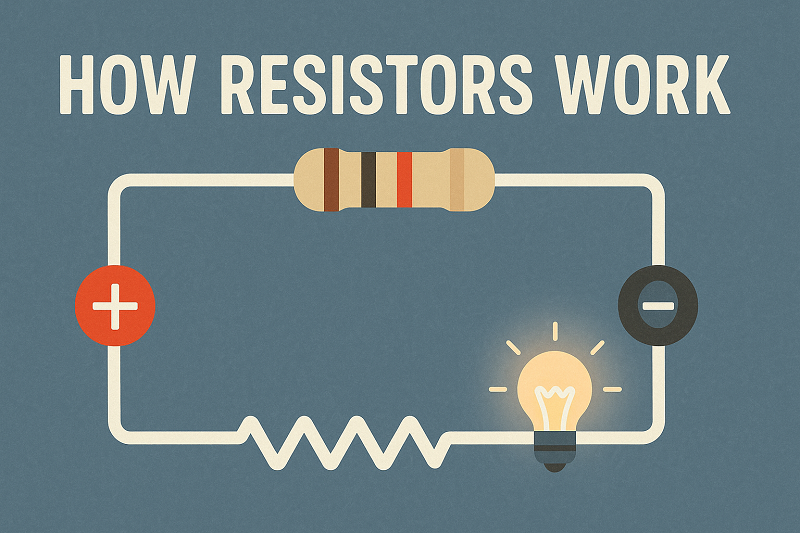
How Resistors Work: From Basic Principles to Advanced Applications2025-07-30
DC Switching Regulators: Principles, Selection, and Applications2025-05-30
FPGA vs CPLD: In-depth Analysis of Architecture, Performance and Application2025-05-07
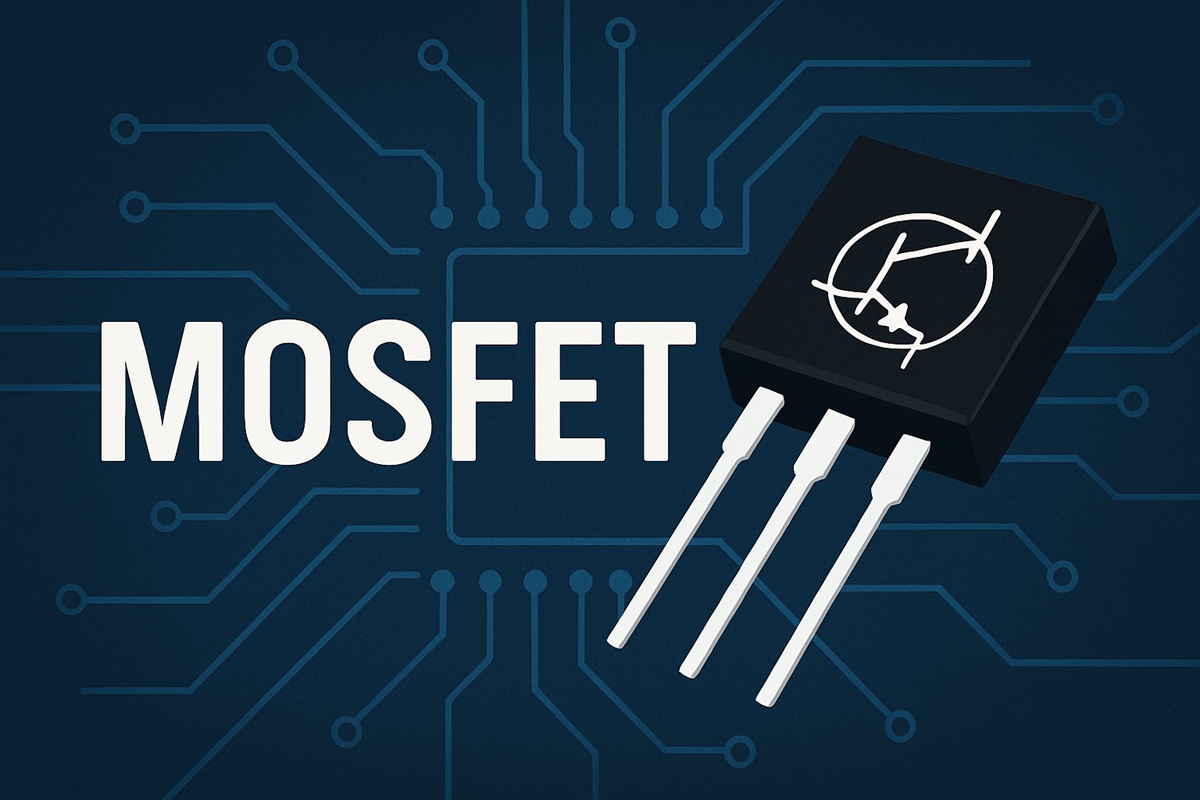
MOSFET Technology: Essential Guide to Working Principles & Applications2025-05-04
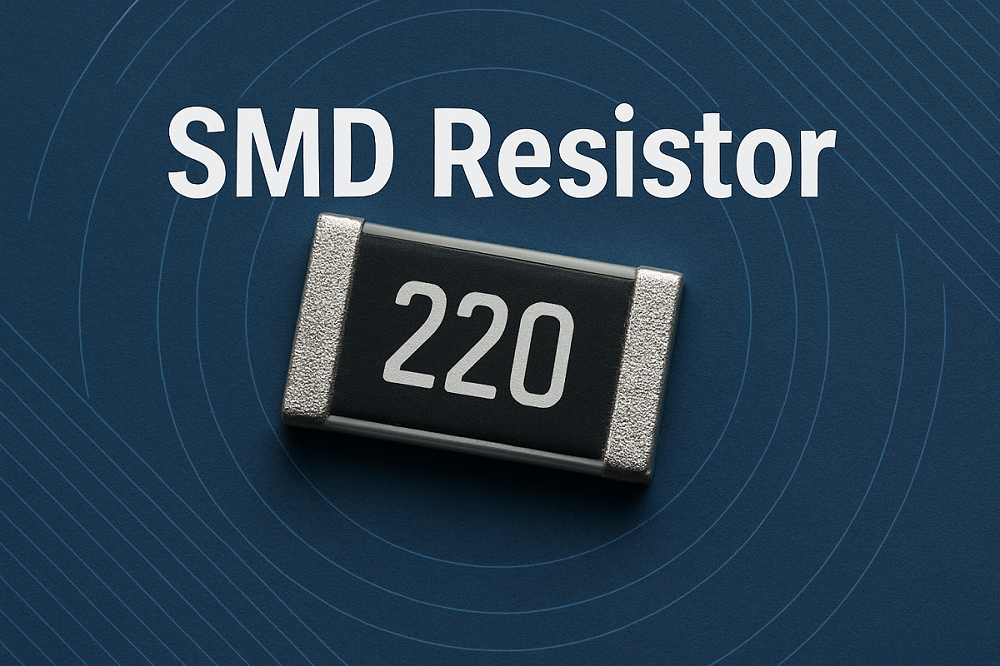
SMD Resistor: Types, Applications, and Selection Guide2025-04-30