electronic Related Articles
Stay Ahead with Expert Electronics Insights,
Industry Trends, and Innovative Tips
- Electronic Components
- News Room
- General electronic semiconductor
- Components Guide
- Sort by
- Robots
- Transmitters
- Capacitors
- IC Chips
- PCBs
- Connectors
- Amplifiers
- Memory
- LED
- Diodes
- Transistors
- Battery
- Oscillators
- Resistors
- Transceiver
- RFID
- FPGA
- Mosfets
- Sensor
- Motors, Solenoids, Driver Boards/Modules
- Relays
- Optoelectronics
- Power
- Transformer
- Fuse
- Thyristor
- potentiometer
- Development Boards
- RF/IF
- Semiconductor Information
- Sensors
- PCB
- transistor
As the development of socialty and technology,wearables are becoming an essential part of the tech world.They not only measure all manner of vital data,but alsw are somewhat of a styly trend.Because of the big need of wearables, A new chemical sensor designed for particularly hazardous applications -- "Smart ring" has been invented. This "smart ring" can detect invisible threats to the wearer, scanning for explosives and nerve-agents that may be present in vapour or liquid form. The technology is designed to be affordable and portable, to provide rapid alerts of any possible security threats nearby. According to IDC, 24.7 million devices were purchased in the first quarter of this year alone, with Fitbit and smartwatches, etc. accounting for the lion’s share of sales,these data have clearly explained that the wearables market is worth billions. These cool, colorful wristbands and watches measure your heart rate and blood pressure, count the number of steps you take and can even stop you from snoring. Specialist wearable devices which can alert you to chemical or biological threats in the environment are considerably less lucrative.Currently, wearables come in a number of non-invasive forms, from wristbands and headbands to tattoos. However, equipping such devices with advanced sensors would be a costly process, making them difficult to produce, the researchers explain. By putting the sensors in a ring, however, they say they’ve managed to create a device that’s both wearable and affordable. The ring can perform voltammetry and chronoamperometric analyses, and uses interchangeable screen-printed sensing electrodes that can quickly detect different chemicals. What's more,that could all be about to change as demand is steadily growing. In order to be successful though, the sensors will have to be compact, non-invasive and affordable. Researchers at the University of California, San Diego, have therefore integrated their “chemical alarm” into a ring which sits neatly and fashionably on your finger. The 3D-printed housing contains an electrochemical sensor cap and the electronics for the data processing and wireless communication to a smartphone or laptop. Use "Smart ring" to measure electric currents The ring can perform voltammetry and chronoamperometric analyses. The first is an electroanalytical method for the qualitative and quantitative analysis of the chemical composition of substances using current-potential curves. Chemical components lead to a sudden rise in current in the event of voltage which is typical for them. In chronoamperometry, however, chemical substances are identified using characteristic current-time curves. Together, both processes cover a broad spectrum of chemical threats. Researchers have already tested the prototype with explosive mixtures and neurotoxic substances both in gaseous and liquid form, and the ring reacted very sensitively and selectively. Applications could be relatively easily expanded in the future to include dangerous environmental conditions of all kinds. In addition to individuals who work in safety and security sensitive environments, the police and the military as well as airport and train station staff could, in particular, benefit from using the sensor ring. "Smart" ring's Function: The ring contains an electrochemical sensor cap and a small circuit boardCan detect chemical and biological threats, send data to a smartphone or laptopThe researchers say it can provide rapid alerts of possible security threats This could include explosive material or nerve-agents in vapour or liquid form
kynix On 2017-10-26
This is a good day because kynix will share an interesting project with you -- Luminous Halloween Costume ! Halloween is coming soon and I know at least that some of you are still procrastinationg you costume build. That's ok,I would share a fun and easy luminous Halloween costume that takes almost no time to buildstill impresses the pants off your friendsis appropriate for all ages So at first,we should prepare some components as follow: Knit Hat in Red, Green, Blue or White,etcBlack T-shirtElectrical TapeHot Glue Gun and GlueSoldering IronSolderQduino Mini Dev BoardWS2812 LED StripLiPo Battery Next,let's start to make it. The first step,I made the shirt which will represent the anode and cathode of the LED.Ake the electrical tape and cut it into two pieces. One should be about 2 inches shorter than your shirt, and the other about 4 inches shorter. On each piece cut one edge into a point. Then place them on the shirt parallel to each other, pointing downward from the collar. Set this aside. The second step, place the hat on whoever will be wearing the costume — or someone with a head similar in size. Fold up the bottom to make a small lip. Starting in the back, hot glue the LED strip to the hat, wrapping it around the hat from the bottom and moving up. Cut the LED strip when there is about 1 to 2 inches of hat left at the top. Next,take the hat off and count the number of LEDs on it. After that,we need to use the program provided below to program Qduino.You will need to make two small edits. First, update numPix variable to the number of LEDs on your hat. Then find the four colorWipe commands in the loop function. You will notice that I have included red, green, blue and white. Comment out the lines that are not the same color as your hat. If you have not already, you will need to install Adafruit’s Neopixel Library and the Qduino board into your board manager in Arduino. For more instructions on how to do this, please visit this Qduino Hookup Guide and our Arduino Library Installation tutorial. Upload your program using the code below://Melissa Felderman for SparkFun Electronics. Functions have been taken from the adafruit neopixel library example code. #include <Adafruit_NeoPixel.h> #define PIN 2 int numPix=150; Adafruit_NeoPixel strip = Adafruit_NeoPixel(numPix, PIN, NEO_GRB + NEO_KHZ800); void setup() { strip.begin(); strip.show(); // Initialize all pixels to 'off'} void loop() { // comment out all lines except the color you want on your hat. colorWipe(strip.Color(255, 0, 0), 50); // Red colorWipe(strip.Color(0, 255, 0), 50); // Green colorWipe(strip.Color(0, 0, 255), 50); // Blue colorWipe(strip.Color(0, 0, 0), 50); // White } // Fill the dots one after the other with a colorvoid colorWipe(uint32_t c, uint8_t wait) { for(uint16_t i=0; i<strip.numPixels(); i++) { strip.setPixelColor(i, c); strip.show(); delay(wait); }} Finally,Solder the LED strip’s leads to the Qduino. The DIN lead should go to D2 on the Qduino, VCC to VCC, and GND to GND. Pop in a LiPo battery to your Qduino and turn on to test. Put on the black shirt and then the hat. Fold the bottom edge over again to make a lip. Hide the Qduino and LiPo inside, and then turn it on. Now you are a luminous human!
kynix On 2017-10-25
As an exhibitor of the KES, Kynix send the warm congratulations on the successful 2017 Korea Electronic Show . What is KES Korea Electronics Show is 4 day event held from 17 October to 20th October 2017 at the COEX Korea Exhibition Center in Seoul, Korea. The participants are availed with ample of networking opportunities which help them to increase their revenue count as well aid them to create a strong footage in the domestic as well as in the international market. Korea Electronics Show is the perfect place where the attendees can come in contact with the manufacturers and exporters and discuss about the various business related issues. Various designer and purpose of lighting products are displayed so that the demands of the customers are completely fulfilled. Preview KES has always been walking along with the 51 years history of the Korean electronic industry and the most important threshold to the international markets. As an Asian IT show pilgrimage,KES has strong connections especially with Asian Pacific IT shows in Japan, Hong Kong, Taiwan, and China, the buyers from North Ameriaca,Europe,and Middle East tend to schedule every October. Held in COEX Hall A, Hall B,World Trade Center Seoul,Seoul, South Korea,KES ended its 48th exhibition successfully. With a scale over 1500 booths representing 500 companies ( including 100 overseas), 2017 KES show attracted over 70,000 visitors including 4,000 from foreign country. Under the theme--Where the Creative Things are, there are more well-known exhibitors such as UNION SEIMITSU CO., LTD.; SILICONE VALLEY CO., LTD.; SANYO DENKI (THAILAND) CO.,LTD.;MORNSUN took part in KES. What‘s more, KES has a lot of partners from home and abroad like CEAC,CCPIT,CECC,HQEW(China),TEEMA(Taiwan),JESA,AEECC(Asia Electronics Exhibition Cooperate Conference), Messe Berlin(Germany), CEA(U.S.A), RATEK(Russia), CMAI, TEMA(India), VEIA(Vietnam),etc. Greetings The Korean Electronic Show literally shows the modern and future electronic and IT industry of Korea from the perspective of industry and suggests the direction in which the industry will head towards. It is a specialized exhibition of electronics and IT which is a feast of cutting edge technology that leads global trends. Especially this year we constructed a theme hall with cutting edge technology and renovation goods that will lead our future and the latest trends and 3D printing, Broadcast Tech Korea, stage, masterpiece miniature exhibition medical device fusion hall etc. that can attract the attention of visitors. Not only it is exhibiting products, but also visitors and buyers will be able to discuss and experience technology in the experience hall and technology exchange hall under the name of “the Forum where Culture and Technology Meet.”KES try their best to make this event participatory by planning a ‘Story Tour’ that provide visitors with various spectacles with a story-telling based tour so that buyer and vistors can participate. Kynix Situations It is kynix’s honor to witness KES’s great success. In the KES, there are KES not only provided one-stop market place provision of global companies and a variety of 800 other companies of components,distributions,software,etc,but also the provision of a strong network between participating companies and buyers, and exchange forum. There are about 600 exibitors in KES. As one of the partners of KES,Kynix gained great benefits from it. Over 10 thousand visitors from all the world saw kynix’s stand and asked about electronic semiconductors every day between exhibition period. What's more pleasurable, we made cooperations with over 60 partners in the exhibition including Sumsung and LG. Thanks for KES, kynix won a lot of new partners and opened up kynix’s world market at the same time. Thanks for KES, kynix won a lot of new partners and opened up kynix’s world market at the same time . Congratulate on the successful 2017 Korea Electronic Show again!
kynix On 2017-10-24
Do you want a photo book incorportating the sound of the sea and birdsong,a novel with spoken dialog? Most Children may say yes.But how to invent such a product out? Yeah,this is all made possible by loudspeaker paper and electronic concealed in the cover. Such a T-book can currently be heard at the Frankfurt Book Fair ( here the T stands for the German word Ton,means sound ). Most fairs even book fairs are already loud enough. However,the future noise level looks like to keep increasing if the development on the display at the CPI booth of the Frankfurt(hall 4.0, booth F73) is successful. Not only in the halls of trade fairs, but also in living rooms, public transport and – God forbid – supermarkets, drugstores, and the like could all be equally affected. Tchnicians at TU Chemnitz have now introduced the latest generation of their “T-books”after years of research and experimentation. The “T” here has nothing to do with Telecom, but stands for Ton (sound). In other words, the pages of the book are simultaneously loudspeakers and can therefore emit sounds of any kind. Sensors detect which pages are open, and the necessary audio electronics and SD card are concealed in the book’s cover. Naturally, given their frequency response the sound quality has no chance even compared to a kitchen radio. The bass is much too “thin”, but high and medium frequencies are quite well reproduced. And surprisingly loud. The Reason about Mass-producible paper loudspeakers Actually the technology behind it is relatively simple.Perfectly ordinary paper is printed with two layers of a conductive organi polymer that act as electrondes.Next,the active element is between them,a piezoelectric layer that causes the paper to vibrate, thus exciting the air and producing the sound. The remaining difficulty is primarily that of developing a cost-effective mass production for it. There is a true news that two years ago, the Chemnitz researchers implemented the World Press Photo Foundation's Yearbook as a T-book under the cooperation with the Munich Advertising Agency Serviceplan. Unfortunately,this audio-tome,which was mainly down to the battery is too heavy while it weighted more than 3kg.Unsurprisingly, this small-series product ultimately proved too unwieldy and too expensive. That is why the original method of producing individual sheets is to be superseded by a roll process, which will optimize both performance and appearance of paper loudspeakers. In future, the electronic components will also be printed. This will considerably increase the efficiency of the entire manufacturing process and open up mass markets such as photobooks. In future, for example, instruction leaflets could read themselves aloud, and books could become accessible to blind people. The opposite effect is also possible – loudspeaker paper could be used to construct a force sensor or a microphone. What is called the “direct piezoelectric effect” responds to an elastically deformed solid by producing a voltage. This means that there are any number of useful applications, not necessarily things like chatty packaging, singing wallpaper and similar strident marketing hype.
kynix On 2017-10-19
As the technology landscape continues to evolve and becomes ever mor complexs,more and more traditional electronic components are having to evolve to support new capabilities expecially connectors. Even emerging technologies, whether that’s artificial intelligence, the use of big data analytics, or smart wearable devices and drones, are being appropriated by the world’s military in order to improve the effectiveness and capabilities of their armed forces. Connectors may not be considered the most technological of products, but they haven’t been immune to the mega trends sweeping through many industries, not least the need to supply components that are smaller but also lighter and smarter.The changes are significant with product performance in the military space and electrical integrity having a huge impact on connector systems and their design, whether in terms of the equipment being used by soldiers, rugged displays, communications equipment or in vehicle electronics. Bob Stanton--technology director at Omnetics said: Today’s newer electronic instruments can neither afford the space or the weight required by older cabling and connector systems.High performance product is required and it needs to offer customers space and weight benefits but without impacting on performance, reliability or functionality.” A growing list of connector suppliers are working on replacing two or three connectors with one miniature, dense multi-functional connector, for example, and that is having an impact on the kinds of cables people are looking to choose. ODU, a supplier of connector system's, has been working on developing connectors suitable for use with multiple interfaces that will be connecting the soldier of the future with their weapons and communications as well as with military vehicles and, according to the company’s managing director, Nick Harper, has been focused on developing one connector family capable of meeting the requirements for every application. (ODU has been heavily involved with supplying over 100,000 helmet connectors as part of the Ministry of Defence's Bowman programme.) While engineers are looking to supply smaller, more compact, connectors they have to also ensure that they are able to withstand temperature extremes, vibration, and be able to operate in an environment that might be sandy, wet or dirty – all of which could compromise the integrity of the connector. New surface treatments and technologies are being developed specifically to address the extreme environmental conditions expected in the military space. Take an example, connector manufacturer, LEMO, has developed NiCorAl a corrosion resistant conductive surface treatment that offers an alternative to Cadmium. Miniaturisation “New technologies are driving continuous miniaturisation of electronic equipment for communications, computing, surveillance, sensing and navigation,” according to Stanton. “Whether soldier-worn or on-board a UAV or UGV, small size and light weight are demanded – but no performance compromises can ever be accepted.” Many of the older military specification models are becoming outdated in the face of growing demands for micro- and nano-sized connectors that are needed to address the requirements of higher-technology electronics. “Trusted military connectors like MIL-DTL-24308 D-subs are being superseded by smaller, lighter alternatives like 83513 and 32139 Micro- or Nano-Ds,” explains Stanton. “Smaller can never mean weaker, though,” he warns. “Although they have very fine pitch (0.64mm for the Nano-Ds), they must be able to withstand environmental hazards like extremes of heat and cold and exposure to corrosive chemicals.” In order to address this, Omnetics uses open-ended beryllium-copper pins, which are shaped to maintain four continuous points of contact and are tempered for continuous spring force. “These have actually exceeded 2000 mate/de-mate cycles in testing, and the design gives extra travel in compression and expansion to ensure continuous electrical contact even during extremely harsh vibration,” Stanton continues, “Sockets are copper-alloy, and designed to increase contact pressure as they expand at higher ambient temperatures. When cold, the socket contracts without over-stressing the spring. Contacts are nickel/gold plated after forming, meeting ASTM B488 Type II, giving high corrosion resistance.” Soldiers can be under huge pressure in action, so speed and convenience are also critical. Stanton explained that at Omnetics we have designed innovative latching Nano-D families that connect securely without fiddly jackscrews, and which pass the stringent MIL-DTL-32139 shock and vibration specifications. Military connectors are also having to contend with another important trend and that is the dramatic increase in the amount of data that is being routed between devices and people. More data requires more sensors and where data is time critical and where interference is unacceptable connectors that are smaller and more rugged are required. Technological Arms Race “Keeping the technological upper hand is critical to ensure military success,” explained Stanton. “Today's military forces need to maintain their superiority in unfamiliar environments from mountainous deserts to urban areas and, accordingly, soldiers need to be quick on their feet, and unmanned aerial and ground vehicles are increasingly in demand for dangerous missions, close to the enemy.” Ben Green, Head of New Business at Harwin agree with it .“A key method for protecting frontline troops and ensuring that lives are not placed into unnecessarily dangerous situations is through greater use of smart technology. The interest in unmanned aerial vehicles (UAVs) and unmanned ground vehicles (UGVs) has grown significantly, as a result.” UAVs and UGVs enable the military to undertake a number of operations - including detailed surveillance, the transportation of vital supplies and even recovery missions - without placing service personnel at risk. “These types of vehicles have to rely on the incorporation of sophisticated electronic circuitry and, in turn, the support of high reliability cabling/interconnects - so that the power needed to drive the motors for propulsion purposes and data from an array of different sensors to allow timely manoeuvring can be delivered,” Green says. “The constituent components all need to be compact and light in order to deal with space and weight constraints, so that less impact is placed on their limited energy reserves and the vehicles can cover longer distances before they have to return.” These trends are combining to drive continuous miniaturisation of electronic equipment for communications, computing, surveillance, sensing and navigation Green says. “Whether soldier-worn or on-board a UAV or UGV, small size and light weight are demanded.” To address these demands, defence agencies and their military contractors need to be able to collaborate with suppliers who can provide them with robust, high performance components in small form factors. “The connectors specified as part of UAV/UGV design and development activity, for example, as with any other military-related application, need to possess elevated levels of reliability, as well as exhibiting high degrees resilience to electro-magnetic interference (EMI),” Green contends. “Dealing with all these different aspects is clearly challenging, so engaging with the right supplier is absolutely critical,” he concludes. But there is another reason why equipment needs to be compact, lightweight, and technically advanced, according to Stanton. “Today's arms races increasingly pit professional armies against militias that are adept at harnessing powerful consumer technologies, whether that’s smartphones, mobile data, GPS or quadcopters. “Overcoming these challenges demands smart thinking about even the finest of details – and that includes the connector.”
kynix On 2017-10-16
Background Nowadays,more and more people need wifi and they can not leave it.More and more family has connected with wifi even in undeveloping country or area.Today,let's make a wifi based home automation project to realize that controlling home devices by using wifi as wireless communication. In this project,we will using esp8266 wifi module and Arduino Uno R3,We have also posted a similar project using pic microcontroller based home automation over wifi. you may also like to check it. components we needESP8266 Wifi Module: ESP8266 is a wifi chip that provides Transfer Control Protocol (TCP) and Internet Protocol (IP). There are different ESP8266modules available in the market. In this project we are using the first model. It has 6 pins and operates on 3.3v. ESP8266 was initialized via the following commands:ATAT+CWMODE = 3AT+CIFSRAT+CIPMUX = 1ESP8266 was then connected to the mobile hotspot by the following commands:AT+CWLAP (returns the list of the available Wi-Fi networks available)AT+CWJAP = “SSID”, “password” Example: AT+CWJAP = “PTCL-BB”, “12345467”Arduino Uno: Arduino is development boards build around ATmega 328P. Arduino is perfect for this project as it provides much pins to interface relay module,16×2 LCD and ESP8266 wifi module4 channel Relay Module: Relay is used to switch on and off higher voltages devices by using low dc voltages such as signal from Arduino digital pin. In this project we used 4 channel relay module it is easy to interface with Arduino instead of connecting each relay separately. It can bears up to 250VAC and 10 amps of current.16X2 LCD: 16×2 LCD is used to display 16 characters in two lines. It is easy to interface with Arduino due to its available library. In this project this LCD is used to display the status of the appliances whether it is on or off. Project Circuit Diagram Connections 16×2 LCD:VSS to ground.VDD to supply voltage.VO to adjust pin of 10k potentiometer.RS to Pin A0.RW to ground.Enable to Pin A1.LCD D4 to Pin A2.LCD D5 to Pin A3.LCD D6 to Pin A4.LCD D7 to Pin A5.Ground one end of potentiometer.5v to other end of potentiometer. 4 Channel Relay modules:External 5 volt to JD VCC.Ground to ground.Ini1 to Pin 3.Ini2 to Pin 4.Ini3 to Pin5.Vcc to Arduino 5v.Connect one terminal of all bulbs to normally open terminal of relays. One end of 220VAC to all common terminals of relay and other end with other terminal of bulbs. ESP8266 wifi module to Arduino:Module Vcc to 3.3v.Module CH_PD to 3.3v.Module Ground to Arduino ground.Module Tx to Arduino Rx.Module Rx to Arduino Tx. Working Download the S Remote application from Google Play Store. Open the application, go to Setting>>Advance>>Layout and select the Button according to your desire. Then select IP and enter the IP address which is get when we initialize ESP8266 wifi module using this command “AT+CIFSR”. IP address is written in third line such as “192.168.10.4”. Then write the port which is “80” in port option. Go to Setting>>Keys and then select key1 and write the label to display on button and then the data which you want to send to Arduino. Click the TCP button. Similarly write the label and data in others keys. If you connect everything correctly then power up the circuit and open serial monitor, it takes few seconds to initialize wifi module. Press the button on application, the data is send by application to Arduino through Wifi and then Arduino performs operations according to instructions and the status on devices are display on LCD.
kynix On 2017-10-13
Join our mailing list!
Be the first to know about new products, special offers, and more.
Feature Posts
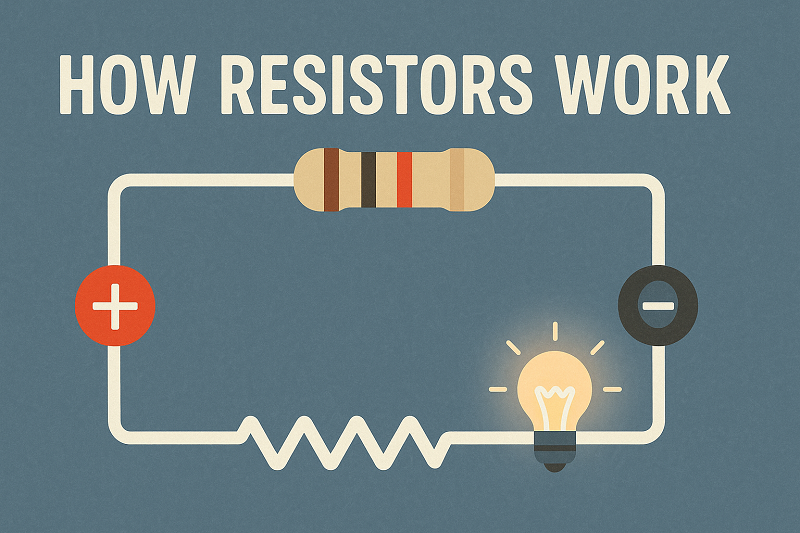
How Resistors Work: From Basic Principles to Advanced Applications2025-07-30
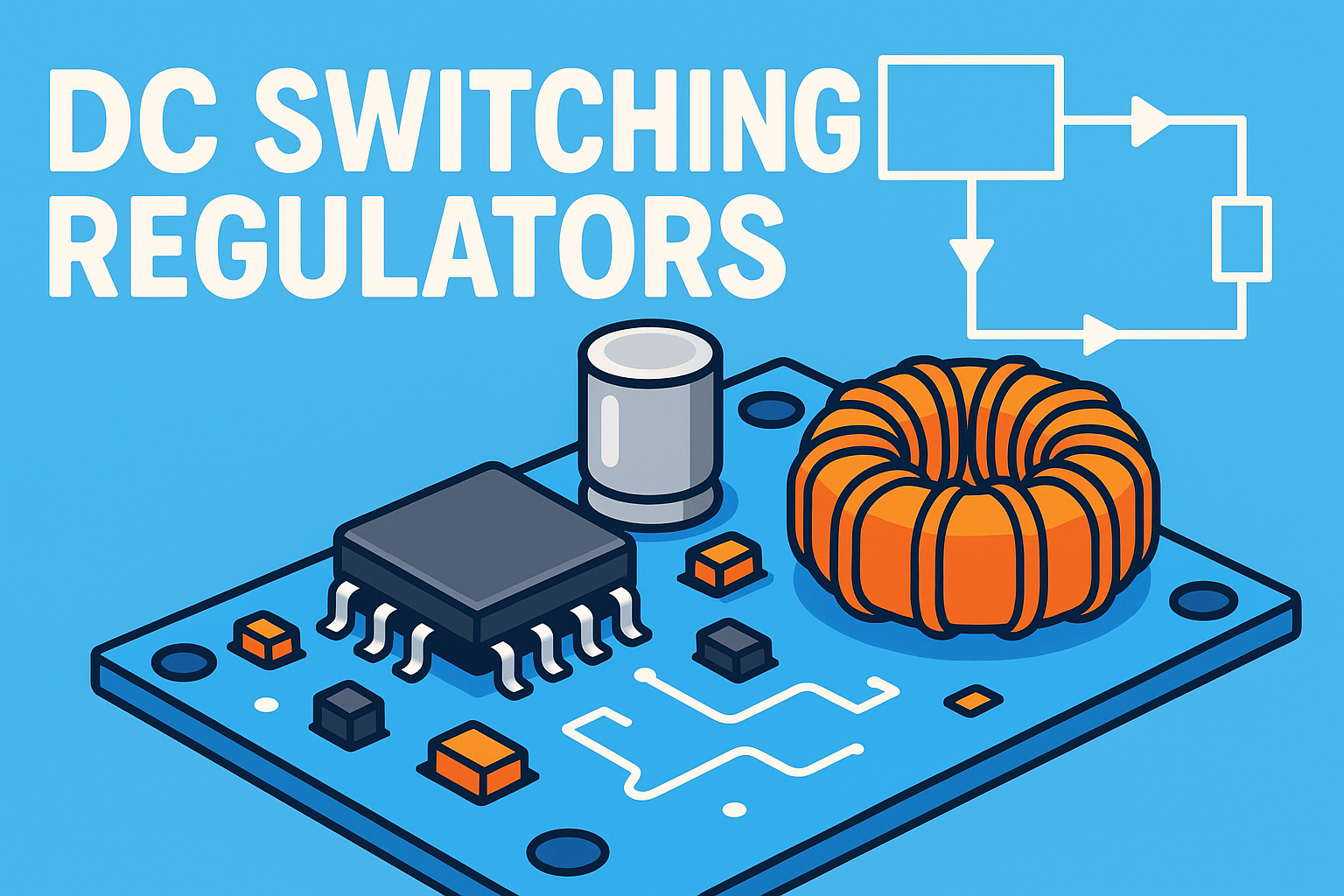
DC Switching Regulators: Principles, Selection, and Applications2025-05-30
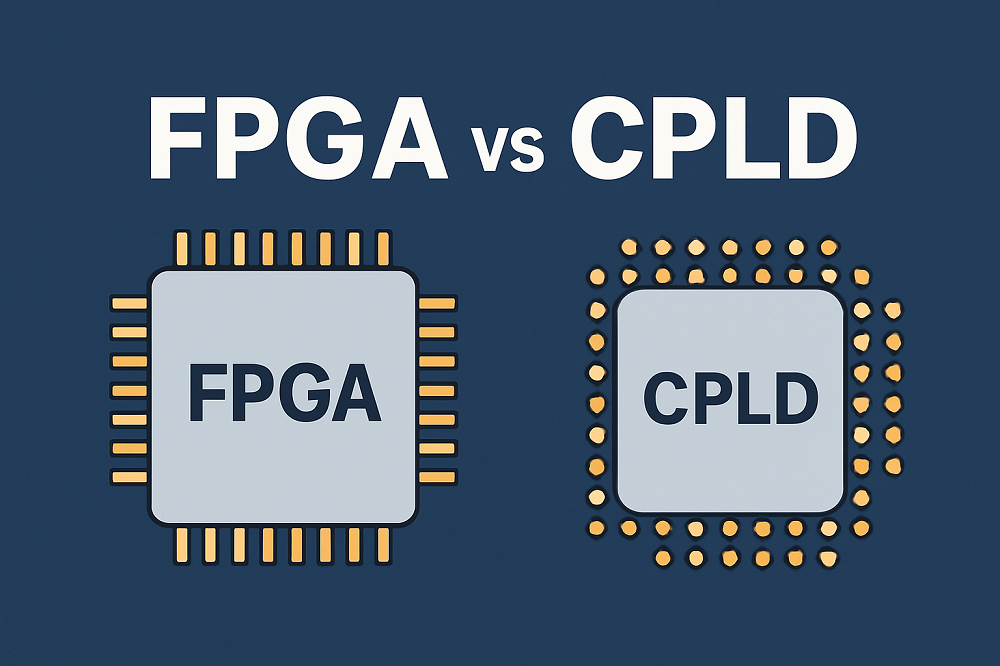
FPGA vs CPLD: In-depth Analysis of Architecture, Performance and Application2025-05-07
MOSFET Technology: Essential Guide to Working Principles & Applications2025-05-04
SMD Resistor: Types, Applications, and Selection Guide2025-04-30