battery Related Articles
Stay Ahead with Expert Electronics Insights,
Industry Trends, and Innovative Tips
- Electronic Components
- News Room
- General electronic semiconductor
- Components Guide
- Sort by
- Robots
- Transmitters
- Capacitors
- IC Chips
- PCBs
- Connectors
- Amplifiers
- Memory
- LED
- Diodes
- Transistors
- Battery
- Oscillators
- Resistors
- Transceiver
- RFID
- FPGA
- Mosfets
- Sensor
- Motors, Solenoids, Driver Boards/Modules
- Relays
- Optoelectronics
- Power
- Transformer
- Fuse
- Thyristor
- potentiometer
- Development Boards
- RF/IF
- Semiconductor Information
- Sensors
- PCB
- transistor
Do you want a photo book incorportating the sound of the sea and birdsong,a novel with spoken dialog? Most Children may say yes.But how to invent such a product out? Yeah,this is all made possible by loudspeaker paper and electronic concealed in the cover. Such a T-book can currently be heard at the Frankfurt Book Fair ( here the T stands for the German word Ton,means sound ). Most fairs even book fairs are already loud enough. However,the future noise level looks like to keep increasing if the development on the display at the CPI booth of the Frankfurt(hall 4.0, booth F73) is successful. Not only in the halls of trade fairs, but also in living rooms, public transport and – God forbid – supermarkets, drugstores, and the like could all be equally affected. Tchnicians at TU Chemnitz have now introduced the latest generation of their “T-books”after years of research and experimentation. The “T” here has nothing to do with Telecom, but stands for Ton (sound). In other words, the pages of the book are simultaneously loudspeakers and can therefore emit sounds of any kind. Sensors detect which pages are open, and the necessary audio electronics and SD card are concealed in the book’s cover. Naturally, given their frequency response the sound quality has no chance even compared to a kitchen radio. The bass is much too “thin”, but high and medium frequencies are quite well reproduced. And surprisingly loud. The Reason about Mass-producible paper loudspeakers Actually the technology behind it is relatively simple.Perfectly ordinary paper is printed with two layers of a conductive organi polymer that act as electrondes.Next,the active element is between them,a piezoelectric layer that causes the paper to vibrate, thus exciting the air and producing the sound. The remaining difficulty is primarily that of developing a cost-effective mass production for it. There is a true news that two years ago, the Chemnitz researchers implemented the World Press Photo Foundation's Yearbook as a T-book under the cooperation with the Munich Advertising Agency Serviceplan. Unfortunately,this audio-tome,which was mainly down to the battery is too heavy while it weighted more than 3kg.Unsurprisingly, this small-series product ultimately proved too unwieldy and too expensive. That is why the original method of producing individual sheets is to be superseded by a roll process, which will optimize both performance and appearance of paper loudspeakers. In future, the electronic components will also be printed. This will considerably increase the efficiency of the entire manufacturing process and open up mass markets such as photobooks. In future, for example, instruction leaflets could read themselves aloud, and books could become accessible to blind people. The opposite effect is also possible – loudspeaker paper could be used to construct a force sensor or a microphone. What is called the “direct piezoelectric effect” responds to an elastically deformed solid by producing a voltage. This means that there are any number of useful applications, not necessarily things like chatty packaging, singing wallpaper and similar strident marketing hype.
kynix On 2017-10-19
A New Breakthrough in Battery Technology The breakthrough comes from a team of engineers led by John Goodenough, the co-inventor of the lithium-ion battery. A new discovery has come out which could pave the way for batteries to last more, and it won’t explode. The breakthrough comes from a team of engineers led by John Goodenough, the co-inventor of the lithium-ion battery which is used to power everything from smartphones to electric cars. Led by John Goodenough and a team of engineers, the co-inventor of lithium-ion battery has made this breakthrough. The research was published in Energy and Environmental Science in December and publicized by the University of Texas last week. The research states that in the future a “solid-state” battery design could potentially hold up to three times more energy and charge faster than today’s batteries. The solid-state battery is still in the early stages of development and swaps out one of the essential parts of today’s lithium design—liquid electrolytes—for glass components. The glass electrolytes can store more energy and are much more stable since they prevent the formation of dendrites—metallic projections which grow through liquid electrolyte layers and cause short circuits and explosions. The researchers have stated that the glass electrolytes will allow them to exchange lithium for sodium, which would be cheaper and more eco-friendly option since it can be extracted from seawater. This means the batteries would not just be economical as well, but the will be more powerful than the current batteries we have today. The solid-state batteries can also work in extreme conditions, down to -4 degrees Fahrenheit. This could be a massive breakthrough for car batteries, which obviously have to work through extreme weather. This breakthrough sounds exciting—but it could still be a long way from coming to modern age smartphones. This was just preliminary research, similar to other solid state designs we have seen in the past, so there’s no timetable for when the batteries might actually be applied for practical use, if ever.As super battery started to be used in the works, lithium-ion may be history. Super battery with supercapacitors“Super” is a popular adjective when it comes to energy storage. Supercapacitors even have it in their name. Now they supposedly make it possible to charge smartphones in seconds and power them for a week. Super! Supercapacitors are already being used in plenty of everyday things as replacements for or supplements to batteries. They power the rear lights on our bicycles when we stop, fill in for interruption-free power supplies in the event of an emergency, prevent data loss in static memories (SRAMs) and provide a brief horsepower boost and save gasoline in racecars by accumulating recovered braking energy. Unlike lithium-ion batteries, they can release and absorb a great deal of energy in a short period of time—hundreds of thousands of times with deep discharging and high currents. However, the storable charge quantity is low. That is why they are still too large and too expensive to be used in smartphone or tablets. The reason that rechargeable batteries and supercapacitors, which are also known as ultra- or double-layer capacitors, have opposing characteristics is the way they store a charge. While this happens in “sluggish” chemical processes such as oxidation, reduction and the storage of molecules or ions in batteries, when it comes to supercapacitors, it generally happens through “swift” charge separation, which is gentle on the electrodes. Ref.KY605-NH50BP-2KY605-BP33-12S-B7
kynix On 2017-09-18
With the rapid increase in production of intermittent energy sources such as wind and solar, there is an increasing need for large-scale electrical energy storage systems to more efficiently match supply and demand for these renewable sources. Also, large-scale energy storage can increase the annual load factor (defined as the annual mean power divided by the maximum three-day mean power) by load leveling. Traditionally, pumped-hydro has been used for load leveling at large scale plants, but this is geographically limited to a small subset of locations.Flow batteries are especially attractive for these leveling and stabilization applications for electric power companies. In addition, they are also useful for electric power customers such as factories and office buildings that require increased capacities, uninterrupted supply, or backup power.And how much do you know anything about flow battery? Flow BatteryA flow battery is a type of rechargeable battery where rechargeability is provided by two chemical components dissolved in liquids contained within the system and most commonly separated by a membrane. This technology is akin to both a fuel cell and a battery - where liquid energy sources are tapped to create electricity and are able to be recharged within the same system. One of the biggest advantages of flow batteries is that they can be almost instantly recharged by replacing the electrolyte liquid, while simultaneously recovering the spent material for re-energization. Different classes of flow cells (batteries) have been developed, including redox, hybrid and membraneless. The fundamental difference between conventional batteries and flow cells is that energy is stored as the electrode material in conventional batteries but as the electrolyte in flow cells. A rechargeable battery to power a home from rooftop solar panelsRecently scientists have said that a rechargeable battery that could make storage of electricity from intermittent energy sources like solar and wind safe and cost-effective for both residential and commercial use. The new research builds on earlier work by members of the same team that could enable cheaper and more reliable electricity storage at the grid level. The mismatch between the availability of intermittent wind or sunshine and the variability of demand is a great obstacle to getting a large fraction of our electricity from renewable sources. This problem could be solved by a cost-effective means of storing large amounts of electrical energy for delivery over the long periods when the wind isn't blowing and the sun isn't shining. In the operation of the battery, electrons are picked up and released by compounds composed of inexpensive, earth-abundant elements (carbon, oxygen, nitrogen, hydrogen, iron and potassium) dissolved in water. The compounds are non-toxic, non-flammable, and widely available, making them safer and cheaper than other battery systems. "This is chemistry I'd be happy to put in my basement," says Michael J. Aziz, Gene and Tracy Sykes Professor of Materials and Energy Technologies at Harvard Paulson School of Engineering and Applied Sciences (SEAS), and project Principal Investigator. "The non-toxicity and cheap, abundant materials placed in water solution mean that it's safe—it can't catch on fire—and that's huge when you're storing large amounts of electrical energy anywhere near people." This new rechargeable battery chemistry was discovered by post-doctoral fellow Michael Marshak and graduate student Kaixiang Lin working together with co-lead author Roy Gordon, Thomas Dudley Cabot Professor of Chemistry and Professor of Materials Science at Harvard. "We combined a common organic dye with an inexpensive food additive to increase our battery voltage by about 50 percent over our previous materials," says Gordon. The findings "deliver the first high-performance, non-flammable, non-toxic, non-corrosive, and low-cost chemicals for flow batteries." Unlike solid-electrode batteries, flow batteries store energy in liquids contained in external tanks, similar to fuel cells. The tanks (which set the energy capacity), as well as the electrochemical conversion hardware through which the fluids are pumped (which sets peak power capacity), can be sized independently. Since the amount of energy that can be stored can be arbitrarily increased by scaling up only the size of the tanks, larger amounts of energy can be stored at lower cost than traditional battery systems. Application&BenefitsThe main benefits of flow batteries can be aggregated into a comprehensive value proposition.The main features that distinguish flow batteries are: Long service life: The semi-permanent electrolyte combined with minimal electrode degradation allows for a high number of full charge-discharge cycles before replacement is needed. The electrodes do not undergo physical/chemical changes, so they can be optimized for catalytic and electrical properties without having to design for holding active substances. Also, convective cooling of the electrodes by the pumped electrolyte aids in heat distribution and management. No standby loss: During prolonged gaps in use, there is little self-discharge since the charge-carrying electrolyte is stored in separate tanks. Low maintenance: The charge state of each cell is the same since the same electrolyte is used for all cells, thus overcharging is not necessary to guarantee a uniform a charge. Recyclability & Safety: Waste vanadium can be reused and cross-contamination across the positive and negative electrode compartments does not affect the composition. Also, the electrolytes are relatively nontoxic. Charging characteristics: Redox flow batteries are "not affected by fluctuating power demand, repeated total discharge, or charge rates as high as the maximum discharge rates." These actions severely reduce cycle life in other batteries. Modularity: Perhaps most important is that energy capacity can be scaled independently of the power; cell characteristics such as electrode area do not need to be changed to modify capacity. This allows for underground storage of electrolyte in freeform tanks, which has been demonstrated successfully in a 20 kW system. Ref.KY605-BP12-12-T2KY605-EB50-12-I2
kynix On 2017-09-15
(In a new concept for battery cathodes, nanometer-scale particles made of lithium and oxygen compounds (depicted in red and white) are embedded in a sponge-like lattice (yellow) of cobalt oxide, which keeps them stable.) Engineers from MIT propose that a new lithium-oxygen battery material could be packaged in batteries that are very similar to conventional sealed batteries yet provide much more energy for their weight. Lithium-air batteries are considered highly promising technologies for electric cars and portable electronic devices because of their potential for delivering a high energy output in proportion to their weight. But such batteries have some pretty serious drawbacks: They waste much of the injected energy as heat and degrade relatively quickly. They also require expensive extra components to pump oxygen gas in and out, in an open-cell configuration that is very different from conventional sealed batteries But a new variation of the battery chemistry, which could be used in a conventional, fully sealed battery, promises similar theoretical performance as lithium-air batteries while overcoming all of these drawbacks. The new battery concept, called a nanolithia cathode battery, is described in the journal Nature Energy in a paper by Ju Li, the Battelle Energy Alliance Professor of Nuclear Science and Engineering at MIT; postdoc Zhi Zhu; and five others at MIT, Argonne National Laboratory, and Peking University in China. One of the shortcomings of lithium-air batteries, Li explains, is the mismatch between the voltages involved in charging and discharging the batteries. The batteries’ output voltage is more than 1.2 volts lower than the voltage used to charge them, which represents a significant power loss incurred in each charging cycle. “You waste 30 percent of the electrical energy as heat in charging. … It can actually burn if you charge it too fast,” he says. Staying solid Conventional lithium-air batteries draw in oxygen from the outside air to drive a chemical reaction with the battery’s lithium during the discharging cycle, and this oxygen is then released again to the atmosphere during the reverse reaction in the charging cycle. In the new variant, the same kind of electrochemical reactions take place between lithium and oxygen during charging and discharging, but they take place without ever letting the oxygen revert to a gaseous form. Instead, the oxygen stays inside the solid and transforms directly between its three redox states, while bound in the form of three different solid chemical compounds, Li2O, Li2O2, and LiO2, which are mixed together in the form of a glass. This reduces the voltage loss by a factor of five, from 1.2 volts to 0.24 volts, so only 8 percent of the electrical energy is turned to heat. “This means faster charging for cars, as heat removal from the battery pack is less of a safety concern, as well as energy efficiency benefits,” Li says. This approach helps overcome another issue with lithium-air batteries: As the chemical reaction involved in charging and discharging converts oxygen between gaseous and solid forms, the material goes through huge volume changes that can disrupt electrical conduction paths in the structure, severely limiting its lifetime. The secret to the new formulation is creating minuscule particles, at the nanometer scale (billionths of a meter), which contain both the lithium and the oxygen in the form of a glass, confined tightly within a matrix of cobalt oxide. The researchers refer to these particles as nanolithia. In this form, the transitions between LiO2, Li2O2, and Li2O can take place entirely inside the solid material, he says. The nanolithia particles would normally be very unstable, so the researchers embedded them within the cobalt oxide matrix, a sponge-like material with pores just a few nanometers across. The matrix stabilizes the particles and also acts as a catalyst for their transformations. Conventional lithium-air batteries, Li explains, are “really lithium-dry oxygen batteries, because they really can’t handle moisture or carbon dioxide,” so these have to be carefully scrubbed from the incoming air that feeds the batteries. “You need large auxiliary systems to remove the carbon dioxide and water, and it’s very hard to do this.” But the new battery, which never needs to draw in any outside air, circumvents this issue. No overcharging The new battery is also inherently protected from overcharging, the team says, because the chemical reaction, in this case, is naturally self-limiting — when overcharged, the reaction shifts to a different form that prevents further activity. “With a typical battery, if you overcharge it, it can cause irreversible structural damage or even explode,” Li says. But with the nanolithia battery, “we have overcharged the battery for 15 days, to a hundred times its capacity, but there was no damage at all.” In cycling tests, a lab version of the new battery was put through 120 charging-discharging cycles, and showed less than a 2 percent loss of capacity, indicating that such batteries could have a long useful lifetime. And because such batteries could be installed and operated just like conventional solid lithium-ion batteries, without any of the auxiliary components needed for a lithium-air battery, they could be easily adapted to existing installations or conventional battery pack designs for cars, electronics, or even grid-scale power storage. Because these “solid oxygen” cathodes are much lighter than conventional lithium-ion battery cathodes, the new design could store as much as double the amount of energy for a given cathode weight, the team says. And with further refinement of the design, Li says, the new batteries could ultimately double that capacity again. All of this is accomplished without adding any expensive components or materials, according to Li. The carbonate they use as the liquid electrolyte in this battery “is the cheapest kind” of electrolyte, he says. And the cobalt oxide component weighs less than 50 percent of the nanolithia component. Overall, the new battery system is “very scalable, cheap, and much safer” than lithium-air batteries, Li says. The team expects to move from this lab-scale proof of concept to a practical prototype within about a year. “This is a foundational breakthrough, which may shift the paradigm of oxygen-based batteries,” says Xiulei Ji, an assistant professor of chemistry at Oregon State University, who was not involved in this work. “In this system, commercial carbonate-based electrolyte works very well with solvated superoxide shuttles, which is quite impressive and may have to do with the lack of any gaseous O2 in this sealed system. All active masses of the cathode throughout cycling are solid, which presents not only large energy density but compatibility with the current battery manufacturing infrastructure.” The research team included MIT research scientists Akihiro Kushima and Zongyou Yin; Lu Qi of Peking University; and Khalil Amine and Jun Lu of Argonne National Laboratory in Illinois. The work was supported by the National Science Foundation and the U.S. Department of Energy. Ref.KY605-CR2025VPKY605-NH12VP
kynix On 2017-09-06
(USC professor Sri Narayan's research focuses on the fundamental and applied aspects of electrochemical energy conversion and storage to reduce the carbon footprint of energy use and by providing energy alternatives to fossil fuel, Wednesday, June 10, 2014 in Los Angeles.) Scientists at USC have developed a water-based organic battery that is long lasting, built from cheap, eco-friendly components. The new battery -- which uses no metals or toxic materials -- is intended for use in power plants, where it can make the energy grid more resilient and efficient by creating a large-scale means to store energy for use as needed. "The batteries last for about 5,000 recharge cycles, giving them an estimated 15-year lifespan," said Sri Narayan, professor of chemistry at the USC Dornsife College of Letters, Arts and Sciences and corresponding author of a paper describing the new batteries that was published online by the Journal of the Electrochemical Society on June 20. "Lithium ion batteries degrade after around 1,000 cycles, and cost 10 times more to manufacture." Narayan collaborated with Surya Prakash, Prakash, professor of chemistry and director of the USC Loker Hydrocarbon Research Institute, as well as USC's Bo Yang, Lena Hoober-Burkhardt, and Fang Wang. "Such organic flow batteries will be game-changers for grid electrical energy storage in terms of simplicity, cost, reliability and sustainability," said Prakash. The batteries could pave the way for renewable energy sources to make up a greater share of the nation's energy generation. Solar panels can only generate power when the sun's shining, and wind turbines can only generate power when the wind blows. That inherent unreliability makes it difficult for power companies to rely on them to meet customer demand. With batteries to store surplus energy and then dole it out as needed, that sporadic unreliability could cease to be such an issue. "'Mega-scale' energy storage is a critical problem in the future of the renewable energy, requiring inexpensive and eco-friendly solutions," Narayan said. The new battery is based on a redox flow design -- similar in design to a fuel cell, with two tanks of electroactive materials dissolved in water. The solutions are pumped into a cell containing a membrane between the two fluids with electrodes on either side, releasing energy. The design has the advantage of decoupling power from energy. The tanks of electroactive materials can be made as large as needed -- increasing total amount of energy the system can store -- or the central cell can be tweaked to release that energy faster or slower, altering the amount of power (energy released over time) that the system can generate. The team's breakthrough centered around the electroactive materials. While previous battery designs have used metals or toxic chemicals, Narayan and Prakash wanted to find an organic compound that could be dissolved in water. Such a system would create a minimal impact on the environment, and would likely be cheap, they figured. Through a combination of molecule design and trial-and-error, they found that certain naturally occurring quinones -- oxidized organic compounds -- fit the bill. Quinones are found in plants, fungi, bacteria, and some animals, and are involved in photosynthesis and cellular respiration. "These are the types of molecules that nature uses for energy transfer," Narayan said. Currently, the quinones needed for the batteries are manufactured from naturally occurring hydrocarbons. In the future, the potential exists to derive them from carbon dioxide, Narayan said. The team has filed several patents in regards to design of the battery, and next plans to build a larger scale version. This research was funded by the ARPA-E Open-FOA program (DE-AR0000337), the University of Southern California, and the Loker Hydrocarbon Research Institute. Ref.ML-621S/DNVL-1220/HFNLC-R061R3P
kynix On 2017-08-14
(Integrated microscale flow batteries could power and cool future three-dimensional chip stacks.). Tightly packed electronic components generate a lot of heat. Tiny redox flow batteries will beneath supplying energy also dissipating the heat they produce. Researchers at ETH Zurich and IBM Research Zurich have built a tiny redox flow battery. This means that future computer chip stacks – in which individual chips are stacked like pancakes to save space and energy – could be supplied with electrical power and cooled at the same time by such integrated flow batteries. In a flow battery, an electrochemical reaction is used to produce electricity out of two liquid electrolytes, which are pumped to the battery cell from outside via a closed electrolyte loop. The chips are effectively operated with a liquid fuel and produce their own electricity. As the scientists use two liquids that are known to be suitable both as flow-battery electrolytes and as a medium to also effect cooling, excess heat can also be dissipated from the chip stack via the same circuit. The battery is only around 1.5 millimetres thick. The idea would be to assemble chip stacks layer by layer: a computer chip, then a thin battery micro-cell that supplies the chip with electricity and cools it, followed by the next computer chip and so on. Record-high outputPrevious flow batteries (see box) are usually large scale and used mainly in stationary energy storage applications, for instance in combination with wind farms and solar power plants, where they temporarily store the energy produced there so it can be used at a later time. These are the first scientists to build such a small flow battery so as to combine energy supply and cooling. The output of the new micro-battery also reaches a record-high in terms of its size: 1.4 watts per square centimetre of battery surface. Even if you subtract the power required to pump the liquid electrolytes to the battery, the resulting net power density is still 1 watt per square centimetre. In an experiment, the electrolyte liquids are actually able to cool a chip. They are even able to dissipate heat amounts many times over what the battery generates as electrical energy (which is converted into heat while the chip is in operation). Channel system optimised with 3D printingThe most serious challenge in constructing the new micro-flow batteries was to build them in such a way that they are supplied with electrolytes as efficiently as possible while at the same time keeping the pumping power as low as possible. It was important to find the ideal compromise. The electrochemical reactions in the battery occur in two thin and porous electrode layers that are separated by a membrane. The scientists used 3D-printing technology to build a polymer channel system to press the electrolyte liquid into the porous electrode layer as efficiently as possible. The most suitable of the various designs tested proved to be one made of wedge-shaped convergent channels. Interesting for large systems, tooThe scientists have now provided an initial proof-of-concept for the construction of a small flow battery. Although the power density of the new micro-flow battery is very high, the electricity produced is still not entirely sufficient to operate a computer chip. In order for the flow battery to be used in a chip stack, it must be further optimised by industry partners. The new approach is also interesting for other applications: in lasers, for example, which have to be supplied with energy and cooled; or for solar cells, where the electricity produced could be stored directly in the battery cell and used later when needed. The system could also keep the operating temperature of the solar cell at the ideal level. In addition, large flow batteries could also be improved with the optimised approach of forcing the electrolyte liquids through the porous electrodes. Ref.ML-2020/H1CNLC-RD1217P
kynix On 2017-08-04
Join our mailing list!
Be the first to know about new products, special offers, and more.
Feature Posts
How Resistors Work: From Basic Principles to Advanced Applications2025-07-30
DC Switching Regulators: Principles, Selection, and Applications2025-05-30
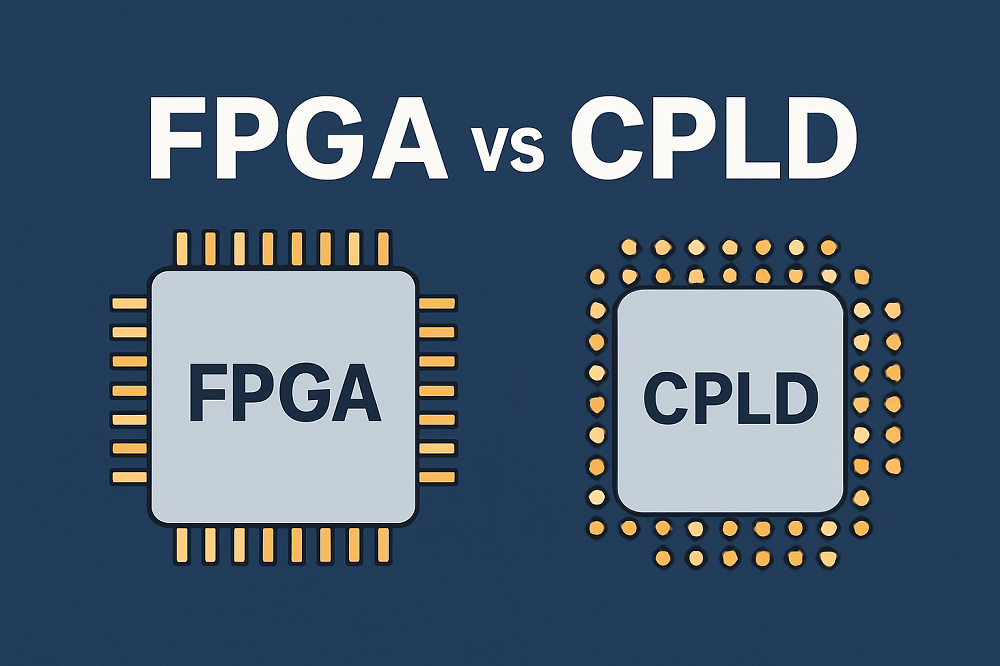
FPGA vs CPLD: In-depth Analysis of Architecture, Performance and Application2025-05-07
MOSFET Technology: Essential Guide to Working Principles & Applications2025-05-04
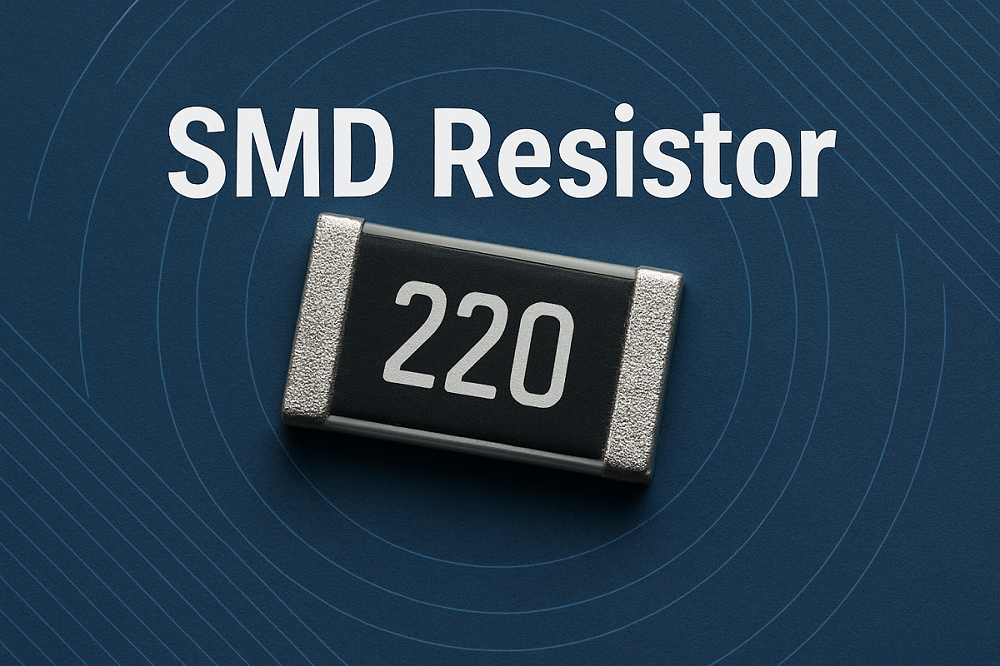
SMD Resistor: Types, Applications, and Selection Guide2025-04-30