The Kynix Blog
Stay Ahead with Expert Electronics Insights,
Industry Trends, and Innovative Tips
- Electronic Components
- News Room
- General electronic semiconductor
- Components Guide
- Sort by
- Robots
- Transmitters
- Capacitors
- IC Chips
- PCBs
- Connectors
- Amplifiers
- Memory
- LED
- Diodes
- Transistors
- Battery
- Oscillators
- Resistors
- Transceiver
- RFID
- FPGA
- Mosfets
- Sensor
- Motors, Solenoids, Driver Boards/Modules
- Relays
- Optoelectronics
- Power
- Transformer
- Fuse
- Thyristor
- potentiometer
- Development Boards
- RF/IF
- Semiconductor Information
- PCB
- transistor
IntroductionPhotoelectric sensor is a sensor that uses a photoelectric component as a conversion element. In electronics, the photoelectric sensor converts the light intensity into the electrical signals. It is generally composed of three parts: transmitter, receiver and detection circuit.The transmitter emits a light beam to the target, and the emitted light beam is generally a semiconductor light source, such as a light emitting diode (LED), a laser diode, and an infrared emitting diode. The beam is emitted continuously, or change the pulse width to accomplish it. The receiver is composed of a photodiode, a phototransistor, and a photocell commonly. In front of the receiver, optical components such as lens and aperture are installed. Behind it is the detection circuit, which can filter out the effective signal and make actions.What is Photoelectric Sensor?CatalogIntroductionⅠ Photoelectric Sensor Basic1.1 Photoelectric Sensor Characteristics1.2 Photoelectric Effect1.3 Optical Signals into Electrical SignalsⅡ Photoelectric Sensor Applications2.1 What are Photoelectric Sensors Used?2.2 Example: Infrared Photoelectric Sensor SwitchⅢ Photoelectric Sensor Development3.1 Advantages3.2 Smart Photoelectric SensorsⅣ Frequently Asked Questions about Photoelectric SensorⅠ Photoelectric Sensor Basic1.1 Photoelectric Sensor CharacteristicsPhotoelectric sensors can be used to detect non-electrical physical quantities that directly cause changes in light, such as light intensity, illuminance, radiation temperature measurement, gas composition analysis, etc., and can also be used to detect other non-electrical quantities that can be converted into light quantity changes, such as part diameter, surface roughness, displacement, vibration, speed, acceleration, as well as the recognition of the shape and working state of the object. It has the characteristics of non-contact, fast response, reliable performance, etc., So it is widely used in industrial automation devices and robots.1.2 Photoelectric EffectThe principle of photoelectric sensors is usually divided into three categories: (1) The phenomenon that can cause electrons to overflow the surface of an object under the action of light is called external photoelectric effect, such as photoelectric tube, photomultiplier tube, etc.(2) Under the action of light, the change of resistance is called the internal photoelectric effect, such as photoresistor, phototransistor, etc.(3) An object generates a certain directional electromotive force under the action of light is called the photovoltaic effect, such as photovoltaic cells.1.3 Optical Signals into Electrical SignalsPhotoelectric sensors that use photoelectric components based on photoelectric effect as sensing parts have a wide variety of applications. According to the nature output of the device, it has two principles:1) A continuously changing photocurrent can be used to measure the intensity of light and physical quantities such as temperature, light transmission ability, displacement and surface state of the object. For example: illuminance meter for measuring light intensity, photoelectric pyrometer, photoelectric colorimeter and turbidity meter, photoelectric alarm, automatic detection device for quality testing products. Semiconductor optoelectronic components are not only widely used in the civil industry, but also have an important role in the military. For example, lead sulfide photoresistors can be made into infrared night vision devices, infrared cameras and infrared navigation systems.2) Convert the measured stuff into a continuously changing photocurrent. Various photoelectric automatic devices are made with the characteristics of "with" or "without" electrical signal output when photoelectric elements are irradiated by light or no light. The photoelectric element is used as a switch-type photoelectric conversion element. For example, the photoelectric input device of the electronic computer, the switch type temperature adjusting device and the digital photoelectric speed measuring instrument, etc.Based on the above mentioned, the sensing types of photoelectric sensor include through-beam arrangement, reflective arrangement, laser-reflective, and diffuse type.Ⅱ Photoelectric Sensor Applications2.1 What are Photoelectric Sensors Used?1) Smoke and Dust Concentration MonitorPreventing industrial smoke and dust pollution is one of the important tasks of environmental protection. To eliminate it, we must first know the amount of smoke and dust emissions. Therefore, the source of the smoke and dust must be monitored, automatically displayed and alarmed for exceeding the standard. The turbidity of the smoke and dust in the flue is detected by the size of the change during the transmission of light in the flue. If it increases, the light emitted by the light source is absorbed and refracted by the soot particles, and the light reaching the photodetector decreases. Therefore, the strength of the output signal of the photodetector can reflect the change of flue turbidity.2) Barcode ScannerWhen the scanning pen moves on the bar code, if it encounters a black line, the light of the light-emitting diode will be absorbed by the black line, and the phototransistor will not receive the reflected light, present a high impedance and be in a cut-off state. When encountering the white interval, the light emitted by the LED is reflected to the base of the photosensitive triode, which generates a photocurrent to conduct. After the entire bar code is scanned, the phototransistor deforms the bar code into electrical pulse signals, which are amplified and then reshaped to form a pulse train, and finally processed by a computer to complete the identification of the bar code information.3) Product CounterWhen the product is running on the conveyor belt, it continuously shields the light path from the light source to the photoelectric sensor, so that the photoelectric pulse circuit generates an electrical pulse signal. Every time the light is shaded by products, the photoelectric sensor circuit generates a pulse signal. Therefore, the number of output pulses represents the number of products. The pulse is counted by the counting circuit and displayed by the display circuit.4) Photoelectric Smoke DetectorWhen there is no smoke, the light emitted by the LED travels in a straight line, and the phototransistor does not receive a signal. When there is no output, but having smoke, the light emitted by the light-emitting diode is refracted by the smoke particles, so that the triode receives the light, a signal output sends an alarm.5) Measuring SpeedCoated with black and white on the rotating shaft of the motor. When rotating, the reflected light and non-reflected light alternately appear. The photoelectric sensor correspondingly intermittently receives the reflected light signal, and outputs the intermittent electrical signal, which is amplified by the amplifier and the shaping circuit. The square wave signal is shaped and output, and finally the motor speed is output by the electronic digital display.6) Photocells in Photoelectric Detection and Automatic ControlWhen photocells used as photodetectors, their basic principles are the same as photodiodes, but their basic structures and manufacturing processes are not exactly the same. Since the photovoltaic cell does not require an external voltage when working, it has the advantages of high photoelectric conversion efficiency, wide spectral range, good frequency characteristics, low noise, etc. They are widely used in photoelectric readout, photoelectric coupling, grating ranging, laser collimation, film sound recovery, UV monitors and flameout protection devices for gas turbines, etc.2.2 Example: Infrared Photoelectric Sensor SwitchUses the blocking or reflection of the infrared light beam by the measured object to detect whether there is an object under test. When the detected object passes through the detection area, the output state of the infrared photoelectric switch will be change to achieve automatic detection. Moreover, objects that have the ability to reflect and block infrared light can be detected.Photoelectric Sensor Switch Design: Parameters and DrawingsParametersDescriptionsCurrent Consumption5mA~30mAOutput CurrentDC: less than 200mA AC: less than 200mA Relay Outputs, Contact Current: 1A~3AResponse TimeDC: less than 2.5ms AC: less than 30msDetect ObjectTransparent, OpaqueOpaqueTransparent, OpaqueOpaqueDifferential DistanceLess than 20% Less than 20% Pointing Angle 3°~20°3°~10° 3°~20°3°~10°Environmental IlluminanceSurface Light Intensity: Less than 3000lx (filament lamp) Less tan 10000lx (sun light)Insulation ResistanceOver 200MΩⅢ Photoelectric Sensor Development3.1 Advantages① Long Detection DistanceIf the detection distance of 10m or more is set in the through-beam type, it can detect remotely that other detection methods (magnetic, ultrasonic, etc.).② Less Restrictions on Detecting ObjectsAs the detection principle is based on the shading and reflection caused by the detection object, unlike proximity sensors, which limit the detection object to metal. Photoelectric sensor can detect almost all objects such as glass, plastic, wood, and liquid.③ Short Response TimeThe light itself is high speed, and the circuit of the sensor is composed of electronic parts, so there is no mechanical working time, and the response time is very short.④ High ResolutionHigh-resolution can be achieved by using advanced design technology to concentrate the projected light beam on a small spot, or by forming a special light-receiving optical system. It can also detect small objects and high-precision position.⑤ Non-contact DetectionThe detection can be achieved without mechanically touching the detection object, so it will not cause damage to the detection object and the sensor. Therefore, the photoelectric sensor can be used for a long time.⑥ Color DiscriminationThe reflectance and absorptivity of the light formed by the detection object differ according to the combination of the wavelength of the light projected and the color of the detection object. Using this characteristic, the color of the detected object can be detected.⑦ Easy to AdjustIn the type of projected visible light, because the projected light beam is visible to the eyes, the position of the detection object can be moved easily.3.2 Smart Photoelectric SensorsDiscover the best Photoelectric Sensors in the future. Smart photoelectric sensors provide essential input for every process chain. They support dynamic, real-time-optimized, and self-organized industry processes. The functions of the smart photoelectric sensor are: self-compensation, self-calibration, self-diagnosis, numerical processing, two-way communication, information storage, and digital output. With the development of science and technology, the functions of smart photoelectric sensors will gradually increase. It will use artificial neural networks, artificial intelligence, and information processing technologies (such as sensor information fusion technology, fuzzy theory, etc.) to enable sensors to have more advanced intelligence, analysis skill, and judgment. So its self-adaptation and self-learning functions can complete complex tasks such as image recognition, feature detection, and multi-dimensional detection. Ⅳ Frequently Asked Questions about Photoelectric Sensor1. What is a photoelectric sensor?A photoelectric sensor is a device that detects a change in light intensity. Typically, this means either non-detection or detection of the sensor's emitted light source. 2. How does a photoelectric sensor work?A Photoelectric Sensor consists primarily of an Emitter for emitting light and a Receiver for receiving light. When emitted light is interrupted or reflected by the sensing object, it changes the amount of light that arrives at the Receiver. The Receiver detects this change and converts it to an electrical output. 3. Where are photoelectric sensors used?Checking objects on production lines or conveyors: photoelectric sensors can detect items' sizes to spot any errors, or simply spot their absence, as well as picking up problems like misaligned caps on bottles. They are widely used in the food and pharmaceutical industries, and in packaging plants. 4. What are the three types of photoelectric devices?There are three major types of photoelectric sensors: thru-beam, retroreflective, and diffused. Each sensor has its own strengths and can be used in a variety of ways. 5. What are the two basic components of a photoelectric sensor?Basically, there are two major components in the photoelectric sensor. They are a transmitter (light source) and receiver (sensor). 6. What are the three basic parts of the photoelectric sensor?A photoelectric sensor is constructed of a light source, light receiver, the main circuit, and an output circuit, and the parts have the following functions respectively. The photodiodes and phototransistors of the light receiver receive the light emitted from the light source and convert it to an electrical signal. 7. What is a photoelectric switch sensor?A photoelectric sensor is a type of switch. It is a switch that is. turned off and on by the presence or absence of received light. The inherent advantages of such a 'non-contact' switch have. resulted in widespread application throughout the industry. 8. What is the use of a photoelectric sensor?A photoelectric sensor emits a light beam (visible or infrared) from its light-emitting element. A reflective-type photoelectric sensor is used to detect the light beam reflected from the target. A thru beam-type sensor is used to measure the change in light quantity caused by the target crossing the optical axis. 9. How do I connect my photoelectric sensor?Connect one black wire on the photocell to the black wire that comes from the building. Be sure to twist the exposed copper wire so that it forms a tight connection. Connect the second black wire on the photocell to the black wire on your light fixture, making sure that the copper wire is twisted together completely. 10. How do you test a photoelectric sensor?The easiest way to determine how your photocell works is to connect a multimeter in resistance-measurement mode to the two leads and see how the resistance changes when shading the sensor with your hand, turning off lights, etc. Because the resistance changes a lot, an auto-ranging meter works well here.
kynix On 2021-04-13
IntroductionFLASH is a type of non-volatile memory that retains data even when power is disconnected. Unlike RAM, which can rewrite data at the byte level, flash memory operates differently. A flash memory chip consists of an array of data storage cells organized into blocks, with each block containing multiple pages (typically 64 to 256 pages in modern devices, though older devices used 32 pages). A page is usually 2KB, 4KB, 8KB, or 16KB in modern NAND flash, though the original specification was 512 bytes plus spare area, as flash was initially developed as a disk replacement technology.What Is Flash Memory?Ⅰ Types of Flash MemoryFlash memory is widely used as a storage medium in digital cameras, smartphones, tablets, USB drives, SSDs, and various consumer electronics. Flash memory cards come in various form factors depending on manufacturers and applications, including USB flash drives, CompactFlash (CF card), MultiMediaCard (MMC card), Secure Digital (SD card, microSD), Memory Stick, and XD-Picture Card (XD card). Note that SmartMedia (SM card) and Microdrive have been discontinued. While these flash cards have different physical formats and specifications, their underlying technical principles remain similar.Flash memory includes two main architectural types: NOR Flash and NAND Flash. NOR Flash is a random access device with dedicated address and data lines (similar to SRAM), allowing byte-level read and write operations and direct access to any memory location, making it an excellent ROM alternative, such as in computer BIOS chips. NAND Flash, however, lacks dedicated address lines and cannot be directly addressed. It is controlled by sending commands and addresses through an I/O interface, meaning NAND Flash can only be accessed in pages, making it more suitable for sequential data storage.Ⅱ NAND Flash MemoryNAND Flash is extensively used in high-capacity storage devices such as memory cards, USB drives, SSDs, eMMC, and UFS storage. NAND Flash cells are categorized by the number of bits stored per cell: SLC (Single-Level Cell), MLC (Multi-Level Cell), TLC (Triple-Level Cell), and QLC (Quad-Level Cell). SLC stores 1 bit per cell, MLC stores 2 bits, TLC stores 3 bits, and QLC stores 4 bits per cell.As more bits are stored in a single cell, the read/write performance decreases, endurance diminishes, but cost per gigabyte is reduced, making higher-density options more economical for consumer applications.ItemsSLCMLCTLCQLCBits Per Cell1234P/E Cycles50,000-100,0003,000-10,0001,000-3,000100-1,000Read Time (μs)255075100Program Time (μs)200-300600-900900-13501350-2000Erase Time (ms)1.5-234.56-8SLC is primarily used in enterprise, industrial, and military applications due to its high-speed writing, low error rate, and exceptional durability.MLC is targeted at consumer and prosumer applications, offering twice the capacity of SLC at lower cost. It's suitable for USB drives, smartphones, digital cameras, and consumer-grade SSDs.TLC has become the mainstream choice for consumer SSDs and SD cards due to its balance of cost, capacity, and acceptable performance for everyday use.QLC, introduced more recently, offers even higher density and lower cost per gigabyte, making it increasingly popular in budget SSDs and high-capacity storage solutions, though with reduced endurance.As a practical solid-state storage medium, NAND Flash has unique physical characteristics requiring specialized management. Designers face several key challenges:1) Erase-before-write requirement: Data cannot be overwritten directly; blocks must be erased before new data can be written2) Wear mechanism: Limited program/erase (P/E) cycles impose durability constraints3) Read/write interference: Operations can cause data errors in adjacent cells4) Data retention: Charge leakage over time can cause data loss5) Bad block management: Both factory defects and runtime failures must be managedKey technologies addressing these challenges include:1) Cell type selection: Choosing appropriate NAND type (SLC/MLC/TLC/QLC) based on application requirements2) Wear leveling algorithms: Distributing write operations evenly across all blocks to maximize lifespan3) Bad block management: Identifying and mapping out defective blocks to ensure data integrity4) Error Correction Code (ECC): Detecting and correcting bit errors using advanced algorithms like BCH or LDPC5) Write amplification mitigation: Minimizing unnecessary write operations to extend device life6) Garbage collection: Consolidating valid data and reclaiming space from partially used blocksData is stored as electrical charge in Flash memory cells. The amount of stored charge depends on the voltage applied to the Control Gate, which controls whether charge is injected or removed from the floating gate.1) For programming (writing) NAND Flash, voltage is applied to the Control Gate to inject electrons into the floating gate. When charge exceeds the threshold voltage (Vth), the cell represents a logical 0.2) For erasing NAND Flash, electrons are removed from the floating gate. When charge falls below the threshold voltage (Vth), the cell represents a logical 1. Ⅲ NOR Flash MemoryNOR Flash, similar to conventional memory, supports random access, enabling XIP (eXecute In Place) functionality. This allows code execution directly from the flash without copying to RAM, making it ideal for boot code, BIOS/UEFI firmware, and embedded system applications requiring immediate code execution.NOR Flash is categorized into two types based on host interface: Parallel NOR Flash and Serial NOR Flash.Parallel NOR Flash connects directly to the host controller with its contents mapped into the CPU address space, eliminating the need to copy to RAM. Early BIOS implementations used the FWH (Firmware Hub) interface, a parallel connection that has been largely obsoleted due to pin count and speed limitations.Serial NOR Flash is more cost-effective than Parallel NOR Flash and typically connects to the host processor or Platform Controller Hub (PCH) via SPI (Serial Peripheral Interface), Quad-SPI (QSPI), or Octal-SPI interfaces. Modern implementations support higher speeds through multi-lane configurations.Today, virtually all UEFI/BIOS firmware, embedded systems, IoT devices, and many consumer electronics use NOR Flash. Typical capacities range from 1MB to 256MB, with 16MB-128MB being common for modern UEFI implementations. While more expensive per gigabyte than NAND, NOR Flash offers superior reliability and random access performance.NOR Flash has slower erase speeds and lower erase cycle counts compared to NAND, but these limitations rarely impact BIOS/firmware performance or cause device failures due to the infrequent update nature of firmware. Ⅳ NAND Flash vs NOR FlashCompared with NOR flash memory, NAND flash memory requires fewer transistors per cell to store the same amount of data, resulting in smaller die size and higher storage density. This architectural difference makes NAND significantly more cost-effective for high-capacity storage applications.In terms of read speed, NOR flash memory offers faster random access than NAND flash memory, with typical access times of 50-100ns compared to NAND's page-based access. However, NAND flash memory significantly outperforms NOR in sequential write and erase operations. NAND's block-based erase operation is simpler and faster, erasing entire blocks (typically 128KB-4MB) at once.NOR flash memory requires all bits to be set to 1 during erase operations before programming. While NOR flash memory provides faster random access and simpler byte-level operations, its lower storage density and higher cost make it more suitable for code storage and execution. NAND flash memory provides extremely high cell density (modern single chips can exceed 1TB capacity), making it ideal for mass data storage with fast write and erase speeds. Additionally, NAND flash operates on page-based read/write units (typically 4KB-16KB) and block-based erase units, making it functionally similar to traditional disk drives.NAND Flash is more susceptible to bit errors than NOR Flash, necessitating robust Error Detection and Correction (EDC/ECC) algorithms. Modern NAND implementations use advanced ECC schemes like BCH (Bose-Chaudhuri-Hocquenghem) or LDPC (Low-Density Parity-Check) codes. Additionally, NAND Flash develops bad blocks over its lifetime. File systems like FAT on SD cards experience frequent rewrites of the file allocation table, and the P/E cycle count per block is critical to NAND Flash longevity. Balancing erase cycles across all blocks and managing bad blocks requires specialized firmware-level functionality including bad block management, wear leveling, ECC, and garbage collection. This management layer is called the FTL (Flash Translation Layer). Based on FTL implementation location, Flash Memory is categorized as Raw Flash or Managed Flash.Raw Flash requires the host system to implement FTL functionality, giving designers complete control but requiring significant software development. Managed Flash (such as eMMC, UFS, SD cards) includes an integrated controller that handles FTL operations transparently, simplifying host system design at the cost of reduced low-level control.Ⅴ Universal Flash Storage Versions ComparisonStorage performance significantly impacts device responsiveness and user experience. Universal Flash Storage (UFS) has become the dominant standard for high-performance mobile and embedded storage, replacing the older eMMC standard. UFS provides a standardized flash storage specification optimized for smartphones, tablets, automotive systems, and other performance-critical applications. Version numbers indicate generational improvements, with higher versions offering substantially better performance, features, and efficiency.✔️Version Comparison (Main Parameters)UFS Version1.01.12.02.13.03.14.0Introduced2011-02-242012-06-252013-09-182016-04-042018-01-302020-01-302023-09-14Bandwidth per lane300 MB/s600 MB/s1450 MB/s (HS-G3)2900 MB/s (HS-G4)5800 MB/s (HS-G5)Max. number of lanes12Max. total bandwidth300 MB/s1200 MB/s2900 MB/s (HS-G3)5800 MB/s (HS-G4)11600 MB/s (HS-G5)M-PHY version1.03.04.15.0UniPro version1.41.61.82.0✔️UFS 2.1 vs UFS 2.2The primary enhancement in UFS 2.2 over UFS 2.1 is the Write Booster feature, which significantly improves write performance. Write Booster uses SLC (Single-Level Cell) cache to accelerate write operations, providing faster application launches, improved browser cache loading, reduced video encoding times, and enhanced overall system responsiveness. This feature is particularly beneficial for burst write scenarios common in mobile devices.As eMMC has been phased out from mainstream consumer devices and NAND flash prices have decreased, UFS adoption has accelerated. UFS 2.2 briefly served as a transitional standard before UFS 3.x became mainstream in flagship devices.✔️UFS 3.0 vs UFS 3.1UFS 3.1 introduces three significant enhancements over UFS 3.0:1) Write Booster (Enhanced)Write Booster in UFS 3.1 is an enhanced version that increases device write speed substantially. This feature can boost write speeds up to 700 MB/s, compared to UFS 3.0's typical sequential write performance of around 500 MB/s. The mechanism works similarly to SLC caching in SSDs: a portion of TLC/QLC storage is dynamically configured to operate in SLC mode, providing faster write performance. Data is initially written to this high-performance buffer, then migrated to standard storage during idle periods, freeing the cache for subsequent operations.2) Deep Sleep ModeDeep Sleep enables the flash memory to enter an ultra-low-power state during extended idle periods, significantly reducing standby power consumption. This feature helps extend battery life during device standby and contributes to overall device thermal management. Deep Sleep can reduce idle power consumption by up to 40% compared to standard sleep modes.3) Host Performance Booster (HPB)HPB addresses long-term performance degradation by improving random read performance. As devices are used over time, file system fragmentation and the need to frequently reload the Logical-to-Physical (L2P) mapping table can cause performance degradation. HPB leverages the host device's RAM to cache portions of the L2P mapping table, reducing latency for random read operations. This is particularly effective at maintaining consistent performance after extended use, preventing the "slowdown over time" phenomenon common in storage devices. HPB can improve random read IOPS by up to 70% in fragmented scenarios.✔️UFS 4.0 - The Latest GenerationReleased in September 2023, UFS 4.0 represents the latest advancement in mobile storage technology. Key improvements include:• Doubled bandwidth: Up to 11.6 GB/s (5800 MB/s per lane with dual-lane configuration) using HS-G5 gear• Improved power efficiency: Lower power consumption per bit transferred compared to UFS 3.1• Enhanced thermal management: Better heat dissipation characteristics for sustained performance• Advanced features: Builds upon Write Booster, Deep Sleep, and HPB with further optimizationsUFS 4.0 is designed for next-generation flagship smartphones, tablets, and high-performance mobile devices requiring extreme storage bandwidth for 8K video recording, advanced computational photography, and AI workloads. Frequently Asked Questions about Flash Memory1. What are the different types of flash memory?Flash memory comes in two fundamental architectural types: NOR and NAND. NOR flash offers random access and execute-in-place capabilities, making it ideal for code storage. NAND flash provides higher density and faster write speeds, making it suitable for data storage. Within NAND flash, there are further subdivisions based on bits per cell: SLC (1 bit), MLC (2 bits), TLC (3 bits), and QLC (4 bits), each offering different trade-offs between performance, endurance, and cost. 2. What are the characteristics of flash memory?Flash memory has several distinctive characteristics: it is significantly less expensive than EEPROM and doesn't require batteries for data retention unlike SRAM. It is non-volatile, meaning data persists without power. Flash offers fast read access times (microseconds), high resistance to physical shock compared to hard disk drives, low power consumption, and silent operation. However, it has limitations including finite write/erase cycles, block-level erase requirements, and potential for bit errors requiring ECC. 3. What is the purpose of flash memory?Flash memory serves as a non-volatile storage solution widely used in embedded systems, consumer electronics, and enterprise storage. It retains data without power, can be electrically erased and reprogrammed, and offers advantages over traditional magnetic storage including faster access times, lower power consumption, better durability, and compact form factors. Flash memory evolved from EEPROM technology and has become the dominant storage technology for mobile devices, SSDs, USB drives, memory cards, and embedded systems. 4. What is the difference between NAND flash and NOR flash?NOR flash provides faster random read access and supports execute-in-place (XIP), allowing direct code execution without copying to RAM, making it ideal for firmware and boot code. However, it's more expensive and has slower erase/write operations. NAND flash offers higher storage density, lower cost per gigabyte, and much faster sequential write and erase speeds, making it ideal for mass storage applications. NAND is accessed serially through a shared I/O interface, while NOR has parallel address and data buses allowing random access. NAND requires more complex error correction due to higher bit error rates. 5. What is the difference between UFS and eMMC?UFS (Universal Flash Storage) is the successor to eMMC (embedded MultiMediaCard) and offers several significant advantages: UFS supports full-duplex operation allowing simultaneous read and write operations, while eMMC is half-duplex. UFS uses a faster serial interface with higher bandwidth (up to 11.6 GB/s in UFS 4.0 vs. 400 MB/s in eMMC 5.1). UFS also features command queuing for better multitasking performance, lower latency, and improved power efficiency. These advantages make UFS the preferred choice for modern flagship smartphones and high-performance mobile devices. 6. How does wear leveling work in flash memory?Wear leveling is a technique used to extend flash memory lifespan by distributing write and erase cycles evenly across all memory blocks. Since flash memory has a limited number of program/erase cycles per block, repeatedly writing to the same blocks would cause premature failure. Wear leveling algorithms track the erase count of each block and preferentially use blocks with lower erase counts for new writes. This ensures all blocks wear out at approximately the same rate, maximizing the overall device lifespan. Modern flash controllers implement sophisticated wear leveling algorithms as part of the Flash Translation Layer (FTL). 7. What is 3D NAND technology?3D NAND (also called V-NAND) is a flash memory architecture that stacks memory cells vertically in multiple layers, rather than arranging them in a single planar layer. This technology allows for higher storage densities without requiring smaller manufacturing process nodes. Modern 3D NAND implementations can have over 200 layers, significantly increasing capacity while improving performance and endurance compared to planar NAND. 3D NAND also offers better power efficiency and can achieve higher performance due to reduced cell-to-cell interference. This technology has become the standard for modern SSDs and high-capacity storage devices.
Kynix On 2021-07-19
This article mainly tells about what's an op amp, and then briefly introduce LM358 about its features and parameters, the last we present you the 24 classical circuits of LM358. Catalog I. What is an Op Amp? II. LM358 Introduction 2.1 What is LM358? 2.2 LM358 Features 2.3 LM358 Parameters III. 24 Classic Circuits of LM358 FAQ I. What is an Op Amp? This is a tutorial video introducing what's an opearational amplifier in details. II. LM358 Introduction 2.1 What is LM358? The LM358 includes two independent, high gain, internal-frequency compensated dual operational amplifiers that are suitable for single power sources with a wide range of voltages, as well as dual-power operation modes. Under recommended operating conditions: the power supply current is independent of the power supply voltage. Its applying range includes sensor amplifiers, DC gain modules, audio amplifiers, industrial control, DC gain components, and all other situations where operational amplifiers can be used with a single power supply. The LM358 has plug-in type and the patch type packaging which are the plastic package with double-row 8 lead wires. 2.2 LM358 Features 2.3 LM358 Parameters Input bias current 45 nA Input offset current 50 nA Input offset voltage 2.9mV Power suppression ratio (100dB) Common-mode suppression ratio (80dB) Input common-mode voltage maximum VCC about 1.5 V III. 24 Classic Circuits of LM358 Schematic diagrams are as shown as following: Figure 1. DIP Plastic Pin Diagram Figure 2. Circular Metal Shell Packaging Pin Diagram Figure 3. Internal Circuit Schematic Diagram Figure 4. DC Coupled Low Pass RC Active Filter Figure 5. LED Driver Figure 6. TTL Drive Circuit Figure 7. RC Bandpass Filter (BPF) Figure 8. Squarewave Oscillator Figure 9. Hysteresis Comparator Figure 10. Bandpass Filter (BPF) Figure 11. Lamp Driver Figure 12. Current Monitor Figure 13. Low Drift Peak Value Detector Figure 14. Voltage Follower Figure 15. Power Amplifier Peripheral Circuit Figure 16. Voltage Controlled Oscillator (VCO) Figure 17. Fixed Current Source Figure 18. Pulser Figure 19. AC Coupled Inverting Amplifier Figure 20. AC Coupled Non-Inverting Amplifier Figure 21. Adjustable Gain Instrument Amplifier Figure 22. DC Amplifier Figure 23. Pulser Figure 24. Bridge Current Amplifier FAQ 1. What is lm358 op amp? LM358 is a dual op-amp IC integrated with two op-amps powered by a common power supply. It can be considered as one half of LM324 Quad op-amp which contains four op-amps with common power supply. The differential input voltage range can be equal to that of power supply voltage. 2. What is lm358 used for? LM358 can be used as transducer amplifier, DC gain block etc. It has large dc voltage gain of 100dB. This IC can be operated on wide range of power supply from 3V to 32V for single power supply or from ±1.5V to ±16V for dual power supply and it also support large output voltage swing. 3. How does an lm358 work? IC LM358– LM358 consists of two independent, high gain operational amplifiers in one package. Important feature of this IC is that we do not require independent power supply for working of each comparator for wide range of power supply. LM358 can be used as transducer amplifier, DC gain block etc. 4. How do I know if my lm358 op amp is broken? Measure the DC voltage at the +input. then measure the DC voltage at the output. if the results are significantly different, the opamp is most likely shot. if they are the same, the opamp is most likely ok and the problem is something else. 5. What is the difference between lm386 and lm358? The LM386 is a complete audio power amplifier, the LM358 is a dual operational amplifier. When using the LM358 e.g. as a pre-amplifier, you will have to supply a separate power amplifier. 6. How to import lm358 into LTspice? 1. Download model file and unzip.2. Place .cir file in same folder as schematic.3. Place "opamp2" symbol on schematic.4. Change "opamp2" value to LMX58_LM2904.5. Place directive on schematic ". lib LMx58_LM2904. CIR" without quotes. 7. How many comparators are in LM358? 2 comparator. In this tutorial LM358 IC is used. It has got 2 comparator. 8. What is the difference between LM358 and LM741? Two commonly used opamp are LM741 & LM358. Difference between LM358 & LM741 is, LM358 is newer and have two OP-AMP on chip while in 741 only one OP-AMP is present. Both the IC's have 8 pins. 9. Why does an op amp require both positive and negative supply voltages? Without the dual supplies the output signal would clip at the ground potential. Operational amplifiers have two power supply rails because they usually need to swing bipolar - output voltages that go either positive or negative in response to the normal range of input signals. 10. Does op amp need ground? An Op Amp inverting input (-) is at zero potential (A virtual ground), even though it does not have a galvanic connection to ground. You May Also Like Rectifiers and Filters Notes A Load Insensitive High-Power Balanced Power Amplifier Discussion on the influencing factors of clock in FPGA design Brief introduction to the Application of some IC chips in Maxim Integrated DIY Community: Let's make amplifier Rechargable Pokect Sized Amplifier Portable - Mini Amplifier Speaker
kynix On 2018-10-16
IntroductionWith the advancement of automobile technology, an increasing number of cars are equipped with car tire pressure monitoring systems, which provide us with a quick and real-time understanding of the car tire pressure, and we no longer have to worry about insufficient and excessive tire pressure before driving, and the car tire pressure monitoring system has brought great convenience to our car. Currently, most car tires are equipped with pressure sensors to detect pressure changes in order to ensure the safety of car driving. According to relevant statistics, tire pressure reaches a reasonable value, which can not only improve driving safety but also reduce fuel consumption. So, how does a car tire pressure sensor work? This article will introduce in detail.Video: Tire Pressure Sensors CatalogIntroductionⅠ Principles of Tire Pressure Sensors in AutomobilesⅡ Design Background of TPMSⅢ Tire Pressure Sensors in a Tire Pressure Monitoring SystemⅣ Details of Tire Pressure Sensors in Direct Tire Pressure Monitoring SystemⅤ SummaryⅥ Frequently Asked Questions about Tire Pressure Sensors Ⅰ Principles of Tire Pressure Sensors in Automobiles1.Strain Sensors in AutomobilesThe principle of a strain sensor is primarily based on the resistive strain effect,when the conductor undergoes mechanical deformation due to external action, a corresponding change in resistance value occurs. Calculate the required pressure by first calculating the magnitude of strain using the relationship between the change in resistance value and the change in output electrical signal. The strain gauge pressure sensor is primarily used to measure the dynamic or static pressure of a flowing medium, such as the inlet and outlet gas or liquid pressure of power pipeline equipment, engine pressure, internal combustion engine pipeline pressure, and so on.The most widely used strain gauge is the paste strain gauge (strain gauge). Its main disadvantages are small output signal, narrow linear range, and poor dynamic response (see resistance strain gauge, semiconductor strain gauge). However, due to the small size of strain gauge, many specifications of commercial strain gauge can be selected, and the form of elastic sensor can be flexibly designed to adapt to various applications, strain type pressure sensor made by strain gauge is still widely used. According to the different structure of elastic sensor, strain type pressure sensor can be roughly divided into strain tube type, diaphragm type, strain beam type and combined type.Figure:Strain Sensors in Automobiles 2.Piezoresistive Pressure Sensors in AutomobilesThe piezoresistive pressure sensor's pressure sensitive element is a piezoresistive element that operates on the piezoresistive effect. The term "piezoresistive element" actually refers to the diffusion resistance created by integrated circuit technology on a semiconductor substrate. When subjected to external force, its resistance changes due to resistivity change. During normal operation, diffusion resistors must be attached to elastic elements, and monocrystalline silicon diaphragms are commonly used.The piezoresistive pressure sensor's main advantages are its small size, relatively simple structure, good dynamic response, high sensitivity, and ability to measure micro pressures of more than ten Pascals. It is a relatively ideal one, and it is currently being developed and applied at a rapid pace. Sensor of pressure. Non-linearity and temperature affect the measurement accuracy of this sensor, affecting the size of the piezoresistive coefficient. Microprocessors are used in today's intelligent piezoresistive pressure sensor to compensate for nonlinearity and temperature. It integrates the sensor and computer on the same silicon chip using large-scale integrated circuit technology, and it has functions such as signal detection, processing, and memory. As a result, the sensor's stability and measurement accuracy are greatly improved.Figure:Piezoresistive Pressure Sensor 3.Other Automotive Pressure SensorsFurthermore, differential transformer type pressure sensors (LVDT) and surface elastic wave pressure sensors are available (SAW). SAW type pressure sensors have small size, light weight, low power consumption, high reliability, high sensitivity, high resolution, digital output, and so on. LVDT type pressure sensors have larger output, easy to digital output, but poor anti-interference. It is used to detect the pressure of an automobile suction valve and can operate reliably in high temperatures. Ⅱ Design Background of TPMSThe tire pressure influences both the car's excellent performance and the length of the tire's service life. According to SAE (Society of Automotive Engineers) data, there are more than 260,000 traffic accidents caused by tire failure in the United States each year, with flat tires accounting for 70% of highway accidents. Furthermore, natural tire leakage or under-inflation is the leading cause of tire failure. Every year, approximately 75% of tire failures occur. The data also shows that in high-speed driving, punctures caused by tire failure are a major cause of traffic accidents.Flat tires, the unseen killer, have caused numerous human tragedies and incalculable economic losses to the country and businesses. As a result, in order to reduce the number of traffic accidents caused by flat tires, the US federal government has mandated that automakers accelerate the development of TPMS ( Tire Pressure Monitoring System).Figure:Tire Pressure Monitoring System Ⅲ Tire Pressure Sensors in a Tire Pressure Monitoring SystemThere are two main tire pressure monitoring system solutions: direct system and indirect system.The direct tire pressure monitoring system measures tire pressure directly using the pressure sensor installed in each tire and displays and monitors the tire pressure. The system will automatically alert if the tire pressure is too low or if there is a leak.To monitor tire pressure, the indirect tire pressure monitoring system compares the speed difference between tires using the wheel speed sensor of the automobile abs system.The main disadvantages of this type of system are as follows: 1. The accurate instantaneous air pressure value of each tire cannot be displayed; 2. It is not possible to alarm when the pressure of the same axle, same side wheel, or all tires drops at the same time; and 3. Factors such as vehicle speed and detection accuracy cannot be taken into account simultaneously.Figure:Tire Pressure Sensors in a TPMS Ⅳ Details of Tire Pressure Sensors in Direct Tire Pressure Monitoring SystemThere are two types of direct tire pressure monitoring systems: active and passive.The active system makes capacitive or piezoresistive pressure sensors on silicon using mems technology. Each rim has a pressure sensor, and the signal is transmitted via radio frequency. It is set up in the wireless cab. The pressure sensitive signal is received by the receiving device, which then displays the current tire pressure after some signal processing.The advantage of active technology is that it is relatively mature, and the modules developed can be applied to tires of various brands, but the disadvantages are also more noticeable. Its induction module requires battery power, posing a problem with system service life.The passive tire pressure monitoring system's sensor is based on surface acoustic waves. A radio frequency electric field is used to generate a surface acoustic wave in this sensor. The surface acoustic wave changes as it passes through the surface of the piezoelectric substrate material. The change in the surface acoustic wave can indicate tire pressure. Although this technology does not require battery power, it does necessitate the integration of the transponder into the tire, and it can only be implemented if tire manufacturers agree on a common standard. The tire pressure monitoring system must detect abnormal tire pressure conditions, and it can only do so with high resolution and accuracy. Battery life is limited, and capacity is affected by temperature as well. It is best for the sensor to perform passive detection in order to improve system reliability. According to studies, the information collected by tire pressure sensors can be used to monitor vehicle suspension failures and correct navigation systems. As a result, the future automotive pressure sensor should be a passive intelligent sensor with multiple functions. Ⅴ SummaryIn recent years, automotive sensors have been the fastest growing and most widely used sensor category. The growth of the automotive industry encourages the rapid development of automotive pressure sensors. Sensor performance is improving as a result of advances in manufacturing and process technology, and tire pressure monitoring is becoming increasingly important. Ⅵ Frequently Asked Questions about Tire Pressure Sensors1.When should a tire pressure sensor be replaced?TPMS sensors are designed to last for many years.5-10 years is a likely lifespan. Given their cost, most drivers will be inclined to replace TPMS sensors on an “as needed” basis.In other words, only once their batteries have expired, or other TPMS components have failed. 2.Is it safe to drive with tire pressure sensor fault?No, driving with the TPMS Light on is not safe. It means one of your tires is underinflated or overinflated. This can cause undue wear on the tire, potentially lead to a tire failure, and cause a blowout dangerous to you and other drivers on the road. 3.How much does it cost to replace a tire pressure sensor?The average cost for TPMS sensor replacement is between $207 and $257. Labor costs are estimated between $53 and $67 while parts are priced between $154 and $190. This range does not include taxes and fees, and does not factor in your specific vehicle or unique location. Related repairs may also be needed. 4.How do you fix a tire pressure sensor?Without starting the car, turn the key to the “On” position. Press the TPMS reset button and hold it until the light blinks three times, then release it. Start the car and let it run for 20 minutes to reset the sensor. You'll usually find the tire pressure monitor reset button beneath the steering wheel. 5.How do I know if my tire pressure sensor is bad?A small light illuminates at the dashboard's display panel whenever there is a problem with the tire pressure sensors. It appears as a vivid yellow exclamation point inside of a U symbol; you'd be easily able to spot it. As soon as it turns on, the driver must check the tire for less or no air.
kynix On 2021-08-26
CatalogIntroductionⅠ Milwaukee Battery TypesⅡ The Procedure to Reset the Milwaukee M18 BatteryⅢ 15 Most Common Milwaukee Battery Questions1. What is the Warranty on Milwaukee Batteries?2. What Happens under a Warranty Claim?3. Are Milwaukee M18 Batteries Interchangeable with DeWalt?4. Do Milwaukee Batteries Fit Any Other Brands?5. How do you Reset a Milwaukee Battery?6. How Long does a Milwaukee M12 Battery Last?7. How Long does a Milwaukee M18 Battery Last?8. What is the Longest lasting Milwaukee Battery?9. How Long are Milwaukee Batteries Warrantied?10. Does the Milwaukee Battery Fit all Tools?11. What is Compatible with a Milwaukee Battery?12. What is the Difference Between Milwaukee M12 and M18?13. What is the Difference Between XC and CP Batteries?14. What does XC Mean on the Milwaukee Battery?15. Why are Milwaukee Batteries so Good?ConclusionIntroductionEvery Milwaukee battery pack offered comes with a warranty. Milwaukee has been emphasizing for years that its M18 platform would remain its primary system. Cordless tool users spend a lot of money on batteries these days, and the company's goal is to not push customers to invest in a new cordless system. That means Milwaukee will have to come up with creative ways to give the tools users demand while being constrained to 18 volts. We thought the Milwaukee battery warranty policy was rather straightforward—until we looked into it. As it turns out, the manufacturer offers different warranties for different batteries. The length of the Milwaukee battery warranty for each pack is determined by the model(s) you ordered. Your BUYING and USING the Milwaukee M18 Battery ALL WRONG! Ⅰ Milwaukee Battery TypesThere are 3 main M18 battery size categories: CP, XC, and HD.CP battery packs are the compact batteries, with 5 Li-ion cells.XC batterypacks are "extended capacity" battery packs that contain ten Li-ion cells.HD batterypacks are High Demand batteries that are made up of 15 Li-ion cells.Ⅱ The Procedure to Reset the Milwaukee M18 BatteryThe Milwaukee M18 battery should be reset after every 30th charging to ensure an accurate circuit. When the circuit deviates from its regular state, it can transmit the erroneous signal to the sensors, resulting in the tool shutting down unexpectedly or working at a marginal charge.To reset the Milwaukee M18, follow these simple steps:step 1Use the tool to discharge the power bank until it turns off. The lithium-ion M18 batteriesare slow to discharge. Furthermore, the battery isn't completely depleted; the gadget shuts off at the critical reading, allowing the power bank to retain enough voltage to charge and refill.step 2Remove the battery from the tool and place it on a charger that is not connected to the power supply. Install the voltage indicator for the battery's maximum allowable voltage (20V).step 3Turn on the charging appliance and allow it to charge the battery until it reaches its maximum capacity. Though it is preferable to disconnect the charger once the power bank is full, the Milwaukee charger will not allow it to be overcharged and will cut the voltage once the sensor indicates the battery is full.step 4Turn off the charger, remove the battery, and insert it into the tool. Allow it to run for a few minutes to fully charge the battery bank. This is done to ensure the battery's optimal operation, as lithium-ion batteries do not hold the maximum charge well. The battery has been reset and can now be used normally.Ⅲ 15 Most Common Milwaukee Battery Questions1. What is the Warranty on Milwaukee Batteries?Milwaukee batteries' warranty provisions are exactly what the warranty agreement that comes with Milwaukee batteries states.2. What Happens under a Warranty Claim?If Milwaukee decides the battery qualifies for warranty coverage, the battery pack will be repaired or replaced. However, you must first return the battery pack freight prepaid and insured to a Milwaukee manufacturer service center or approved service station. The warranty procedure starts at that point.3. Are Milwaukee M18 Batteries Interchangeable with DeWalt?They may have the same Voltage and Amps/Hour, but there may be a difference in the way they connect or the attachment designed to prevent you from connecting, just to protect their product so they can sell you their battery pack, which you can't use with any other company for the same reason that GM parts won't fit on a Ford or any other car company.4. Do Milwaukee Batteries Fit Any Other Brands?No, with battery-operated instruments, the batteries are all the same, but the cases are different enough that you have to buy their casings, as well as their batteries. (Unless you buy your own 18650 cells and refill the casings.)5. How do you Reset a Milwaukee Battery?Depending on the condition of charge of the milwaukee battery you're trying to resuscitate, this may or may not work. Establish your positive and negative on both cells by fully charging a second battery of the same voltage rating (m12, m18). Get a couple of cables and connect them to the good battery. Touch off (1-second contact) from the good battery once to reset the other battery. With a dvom, check the voltage of the faulty batteries. The m12 battery should be able to handle a charge of at least 10.8 volts. M18 battery has a voltage of 16.4V. If the charge is not at the baseline, touch off 3 or 4 times from the good battery in 1-second increments. Keep an eye on the voltage of the good battery. A poor battery that has been badly drained may necessitate recharging the good one. The defective battery will never have the same longevity as the good battery, but it should live a little longer.6. How Long does a Milwaukee M12 Battery Last?That will be determined by the load you apply to the drill when using that milwaukee M12 battery.I had one and used it to construct a massive metal shed. It drove over a hundred self-drilling trek screws in the M12 drill before I needed to charge it - I could work for about half a day on each charge.a fantastic tool My M12 battery was stolen, and I now have its larger brother, the M18, but I loved the lightweight of the M12 and was satisfied with the amount of work I got out of each charge.7. How Long does a Milwaukee M18 Battery Last?Lithium-ion batteries are warranted for 2–3 years by Bosch, DeWalt, Metabo HPT (Hitachi), Makita, Milwaukee Tool, and Ridgid. That's a pretty decent sign of what they're expecting from those packets. If you take care of your batteries, there's no reason why they shouldn't last at least that long, if not longer.8. What is the Longest lasting Milwaukee Battery?When we learned Milwaukee was launching new High-Output M18 6.0 Ah and 12.0 amp-hour batteries, the atmosphere at Acme Tools was electrifying! The new 12.0Ah battery is the longest-lasting 18-volt battery on the market, and it's jam-packed with innovations and engineering to make your job easier.9. How Long are Milwaukee Batteries Warrantied?Surprisingly, the length of a Milwaukee battery guarantee is determined by the battery pack ordered. The following is a comprehensive list of batteries, along with their descriptions and warranty durations. Some of these may surprise you, especially if you assumed all Milwaukee batteries came with a three-year warranty.The warranty period is five years / two thousand charges from the date of purchase, whichever comes first. The first 1000 charges or two years of warranty, whichever comes first, are covered by free battery replacement. This implies that for the first 1000 charges or two years from the date of purchase/first charge, Milwaukee will deliver a replacement battery to the client free of charge for any damaged battery.Following that, any leftover costs up to a total of 2000 or the duration of the 5 years from the date of purchase, whichever comes first, will be covered pro-rata. This means that, depending on the amount of use, each client receives an additional 1000 charges or three years of pro-rata guarantee on these battery packs.10. Does the Milwaukee Battery Fit all Tools?No, the batteries cannot be swapped. M12 batteries are only compatible with M12 tools, while M18 batteries are only compatible with M18 tools.11. What is Compatible with a Milwaukee Battery?In some cases, there is also battery compatibility between Dewalt and Milwaukee batteries. Furthermore, Makita 18v batteries are compatible with Milwaukee 18v tools. However, keep in mind that Milwaukee Fuel batteries are designed to work with brushless motor tools.12. What is the Difference Between Milwaukee M12 and M18?M12 batteries are exclusively designed to work with M12 tools. Aside from tool compatibility, they vary in that they are 12V batteries that are smaller and sleeker. M18 batteries are better for extended usage, and their larger design is ideal for heavier jobs that require power.13. What is the Difference Between XC and CP Batteries?The tiny batteries, with 5 Li-ion cells, are known as CP battery packs. The CP labeling is quite new and should help to clarify matters. XC battery packs are "extended capacity" battery packs that contain ten Li-ion cells. M18 XC batteries, unless modified, will provide a minor power boost to some tools.14. What does XC Mean on the Milwaukee Battery?There will be some overlap in the acronyms due to the recent release of the new HO batteries. The 12.0ah milwaukee battery, for example, is classified as both High Output and High Demand, as is the new CP3.15. Why are Milwaukee Batteries so Good?XC = Extended Capacity.HD = High Demand.HO = High Output.There will be some overlap in the acronyms due to the recent release of the new HO batteries. The 12.0ah milwaukee battery, for example, is classified as both High Output and High Demand, as is the new CP3.ConclusionAs far as we know, every Milwaukee battery cordless M12/M18 power tools come with a 5-year warranty. When it comes to their other items, such as hand tools and pneumatic systems, the warranty varies slightly, so be sure to check the website if you're unsure whether your tool is still under warranty.
kynix On 2022-04-24
CatalogⅠIntroductionⅡ Brief introduction of a CapacitorⅢ What is Parallel Plate Capacitor ?Ⅳ The Working Principle and Application of Parallel Plate Capacitor4.1 Construction & Principle4.2 The Application of Parallel Plate CapacitorⅤ Parallel Plate Capacitor Formula5.1 The formula5.2 How to Derivate Parallel Plate CapacitorⅥ Solved Examples6.1 Exemplification 16.2 Exemplification 2Ⅶ Frequently Questions about Parallel Plate Capacitor ⅠIntroductionWe are so reliant on mobile applications and devices for entertainment and work in the digital electronic platform. Laptops and mobile phones have rechargeable batteries to make them more convenient. These batteries are subject to the charging and discharging phenomena. When these are charged, they become mobile. Capacitors are used in all rechargeable circuits. These capacitors are filled with various dielectrics, resulting in various capacitor types. Paper capacitors, for example, mica capacitors, and so on. Similarly, a parallel plate capacitor is a type of capacitor that can increase capacitance. These are the most common energy-storing elements. Ⅱ Brief introduction of a CapacitorThe capacitor, a component, like a small rechargeable battery, has the ability or "capacity" to store energy in the form of an electrical charge that produces a potential difference (Static Voltage) across its plates.Capacitors contain various sizes and shapes, ranging from very small capacitor beads used in resonance circuits to large power factor correction capacitors, but they all do the same thing: they store charge.A capacitor, in its most basic form, is made up of two or more parallel conductive (metal) plates that are not connected or touching each other, but are electrically separated by air or some form of good insulating material such as waxed paper, mica, ceramic, plastic, or some form of a liquid gel as used in electrolytic capacitors. The Dielectric is the insulating layer that exists between the plates of a capacitor. Ⅲ What is Parallel Plate Capacitor ? A parallel plate capacitor consists of two parallel metal conductor plates that are separated in the middle by a dielectric material. There will be an electrostatic field distribution between the two plates when there is a certain potential difference between them. The area between the two plates has a uniform electric field distribution. The electric field lines at the capacitor's edge are curved and divergent due to the edge effect. The parallel plate capacitor is the most basic type of capacitor. Any non-parallel plate capacitor can be thought of as a series and parallel connection of a number of small parallel plate capacitors.A parallel plate capacitor is an arrangement of two plates that are parallel to each other and separated by a dielectric material. These plates perform the function of electrodes. Figure1: basics of a parallel plate capacitor Ⅳ The Working Principle and Application of Parallel Plate Capacitor This section will be divided into two parts. The first section introduces construction steps. Another section will demonstrate how a parallel plate capacitor works. 4.1 Construction & Principle The parallel plate capacitor can be built by following the steps outlined below:The plates used to build the parallel plate capacitor must have the same dimensions.The power supply for these plates has to be provided.Positive charges are necessary for a plate to connect the positive side of the battery.Similarly, the plate connected to the supply's negative terminal is charged with negative charges.As a result, an electric field is formed between those plates.As a result, an electric field is formed between those plates. Figure2: the construction of parallel plate capacitor The parallel plate capacitor operates on the following principle:• A plate in the capacitor is charged to a specific value.• As the number of charges applied to the plate increases, so does the potential.• The charges may leak due to the increase in potential.• To overcome such a situation, another plate is placed next to the first positively charged plate.• The negative charges are transferred to the next plate that is placed.• Both plates are now charged.• Because of the presence of negative charges on the second plate, the potential difference on the first plate tends to be reduced.• Similarly, the presence of positive charges on the opposite side of the second plate tends to increase the potential difference on the first plate.• However, the effect of potential difference due to negative charges on the second plate is significant. As a result, the first plate receives a greater number of charges. Figure3: the principle of parallel plate capacitor 4.2 The Application of Parallel Plate CapacitorCapacitors, in addition to storing electricity, play an important role in electricians and electronic circuits. Capacitors are used in the control of current and voltage in an alternating current circuit, the generation of oscillating current in a transmitter, tuning in a receiver, filtering in a rectifier circuit, time delay in an electronic circuit, and so on.Parallel plate capacitors operate in the following applications:• This type of capacitor works in batteries (Rechargeable Energy System).• Such capacitors are applied to dynamic digital memory systems.• Such capacitors are used in radars and Pulsed LASER circuits.• Parallel plate capacitors are used in signal suppression or signal coupling. Ⅴ Parallel Plate Capacitor FormulaThe electric field's direction is defined as the direction in which the positive test charge would flow. Capacitance is the body's inability to store an electric charge. Each capacitor has its own capacitance. A typical parallel-plate capacitor is made up of two metallic plates of area A separated by d. 5.1 The formulaThe parallel plate capacitor formula is given byC=kϵ0AdWhere,ϵo is the permittivity of space (8.854 × 10⁻¹² F/m)k is the relative permittivity of dielectric material Figure4:Parallel Plate Capacitor Formula 5.2 How to Derivate Parallel Plate Capacitor A parallel plate capacitor is depicted in the diagram below. Two large plates are parallel to each other and separated by a small distance d. As shown by the dotted array, the space between the plates is filled with a dielectric medium. The two plates are charged in opposite directions. Figure5:Two plates We can see that the first plate has a charge +Q and the second plate has a charge –Q. Each plate's area is A, and the distance between these two plates is d. The distance d is much smaller than the area of the plates, and we can write dA, so the effect of the plates is treated as that of an infinite plane sheet with uniform surface charge density, and the electric field generated by them is treated as that of an infinite plane sheet with uniform surface charge density. Because the total charge on plate 1 is Q and the plate area is A, the surface charge density can be calculated as :Similarly, for plate 2 with a total charge of –Q and area A, the surface charge density can be calculated as follows:The regions surrounding the parallel plate capacitor are divided into three sections, with area 1 being the area to the left of the first plate, area 2 being the area between the two planes, and area 3 being the area to the right of plate 2.Let's compute the electric field in the vicinity of a parallel plate capacitor.Region I: The magnitude of the electric field due to infinite plane sheets I and II is the same at any point in this region, but the direction is opposite. The two forces cancel each other out, and the overall electric field is given as,Region II: The magnitude and direction of the electric field due to plane sheets I and II in these regions are the same, and the overall effect is as follows:Region III: As in Region I, the magnitude of the electric field generated by plane sheets I and II is the same, but the direction is opposite, yielding the same result as,The electric field is uniform throughout and runs from the positive plate to the negative plate in this case. The potential difference across the capacitor can be calculated by multiplying the electric field by the distance between the planes, as shown in the equation.The following is the capacitance of parallel plate capacitor: Ⅵ Solved Examples 6.1 Exemplification 1A parallel plate capacitor is kept in the air and has an area of 0.50m2 and a distance of 0.04m between them. Determine the parallel plate capacitor.Solution:Given:Area A = 0.50 m2,Distance d = 0.04 m,relative permittivity k = 1,ϵo = 8.854 × 10⁻¹² F/mThe parallel plate capacitor formula is as follows:C=k0Ad = 8.8541092 0.50 / 0.044.427 x 1012 / 0.04As a result, C = 110.67 x 10¹² F. 6.2 Exemplification 2If the capacitance is 25 nF and the separation between the plates is 0.04m, calculate the area of a parallel plate capacitor in the air.Solution:Given:Capacitance is equal to 25 nF.d = 0.04 m distancek = relative permittivity8.854 1012 F/m = o The parallel plate capacitor formula is as follows:C=k0Ad A=dCk0 = 0.04 25109 / 18.5541012A = 1 x10⁹/ 8.854 1012As a result, the area of the parallel plate capacitor is 112.94 m2. Ⅶ Frequently Questions about Parallel Plate Capacitor1. What happens to the charge on A parallel plate capacitor?What happens to the charge on a parallel-plate capacitor if the potential difference doubles? The charge on each plate doubles. You want to increase the maximum potential difference of a parallel-plate capacitor. Describe how you can do this for a fixed plate separation. 2. When a battery is connected to a capacitor Why do the two plates?Explanation: In any circuit, electrons are neither created nor destroyed according to the laws of conservation of charge, but are transferred from one point to another on the circuit. When the plates of a capacitor are connected to battery, the battery pushes the electron to move due to its potential difference. 3. How do you find the charge on each plate of a capacitor?The amount of charge that moves into the plates depends upon the capacitance and the applied voltage according to the formula Q=CV, where Q is the charge in Coulombs, C is the capacitance in Farads, and V is the potential difference between the plates in volts. 4. How can we increase the capacitance of a parallel plate capacitor?Hence the capacitance can be increased by either increasing the plate area or decreasing the spacing between plates. Hence, by decreasing the plate separation, the capacitance of a parallel-plate capacitor can be increased. Thus, option (E) is the correct answer. 5. How many types are there for increasing the capacitance of parallel plate capacitor?If you want to increase the Capacitance of Parallele Plate Capacitor then increase the surface area, reduce the separation between the plate and use a dielectric material in between the plate which have higher dielectric breakdown strength.
kynix On 2021-08-26
Join our mailing list!
Be the first to know about new products, special offers, and more.
Feature Posts
How Resistors Work: From Basic Principles to Advanced Applications2025-07-30
DC Switching Regulators: Principles, Selection, and Applications2025-05-30
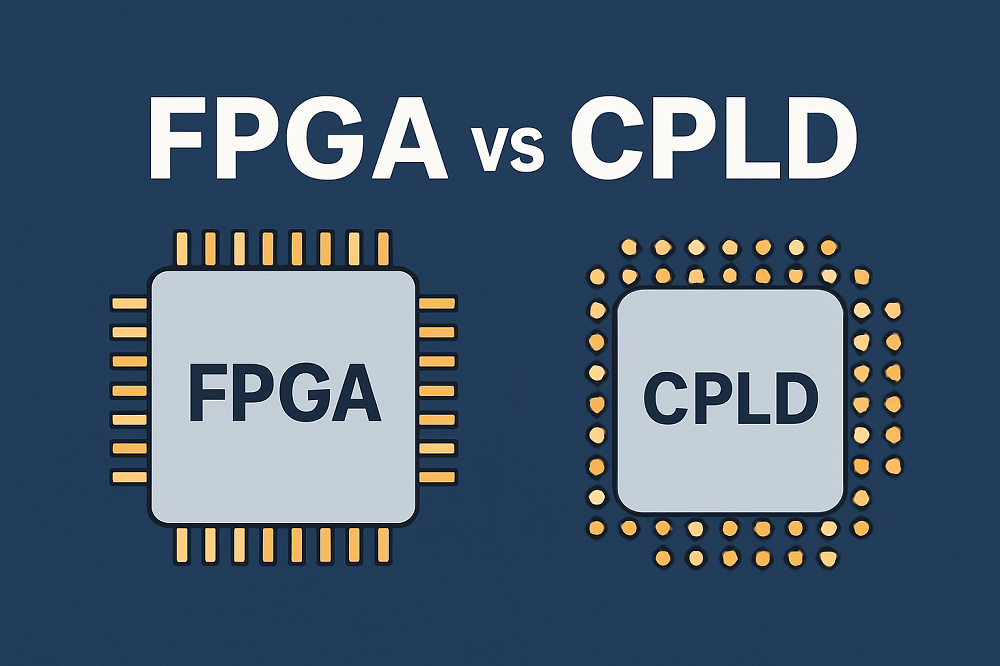
FPGA vs CPLD: In-depth Analysis of Architecture, Performance and Application2025-05-07
MOSFET Technology: Essential Guide to Working Principles & Applications2025-05-04
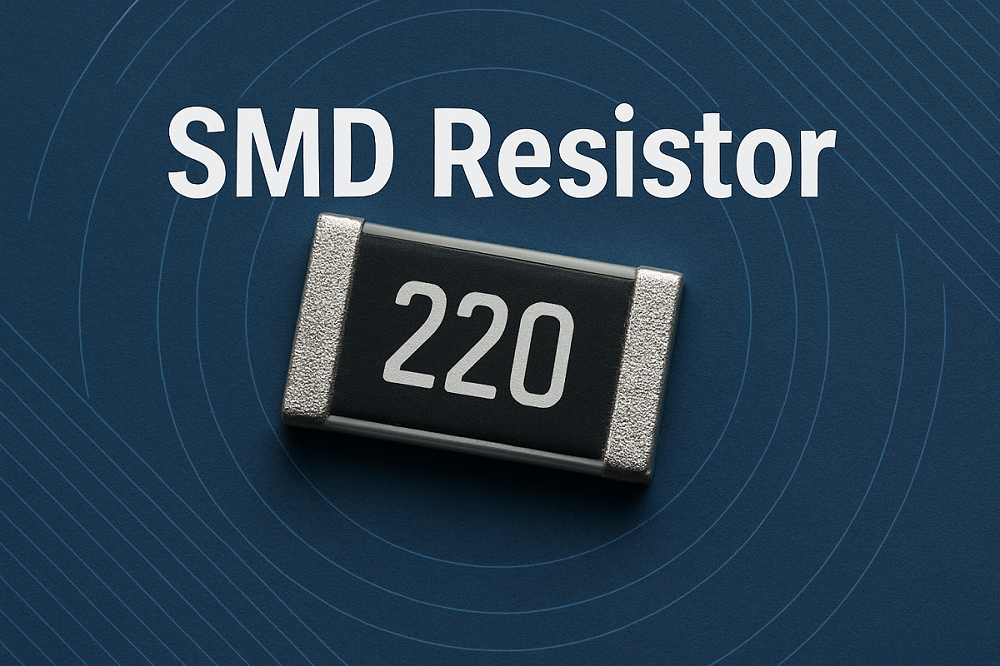
SMD Resistor: Types, Applications, and Selection Guide2025-04-30