Phone

    00852-6915 1330

The Kynix Blog

Stay Ahead with Expert Electronics Insights,
Industry Trends, and Innovative Tips

Relays

What is a Solid State Relay? Basic Introduction

In this article, we will present you a comprehensive introduction to solid state relay, covers from its definition, characteristics, structure, pros and cons, and some problems you might encounter with during using SSR and so on. Catalog I. What is a Solid State Relay? 1.1 Brief Introduction 1.2 Structure of Solid State Relay 1.3 Characteristics of Solid State Relay 1.4 Difference Between Solid State Relay & Normal   Relay II. Pros and Cons of Solid State Relay III. Common Problems of Solid State Relays IV. Maintenance Method of Solid State Relay V. Application of Solid State Relay FAQ I. What is a Solid State Relay? 1.1 Brief Introduction The solid state relay (SSR) is a non-contact switch composed of microelectronic circuits, discrete electronic devices, and power electronic power devices. It is a component of a full electronic circuit combination. It depends on the electromagnetic and optical characteristics of semiconductor devices and electronic components. Its isolation and relay switching functions.   This video tells briefly what solid state relay is. Compared with the traditional electromagnetic relay, the solid-state relay is a relay without machinery and no moving parts, but has essentially the same functions as the electromagnetic relay.   Solid state relays are widely used in industrial automation control, such as electric furnace heating systems, familiar control machinery, remote control machinery, motors, solenoid valves and signal lights, flashers, stage lighting control systems, medical equipment, photocopiers, washing machines, fire protection systems, etc. It works reliably, has no contact, no spark, long life, no noise, no electromagnetic interference, fast switching speed, and achieves the purpose of directly driving a large current load with a tiny control signal. 1.2 Structure of Solid State Relay The solid state relay is composed of three parts: input circuit, isolation (coupling) and output circuit.   1. Input circuit: According to the different types of input voltage, the input circuit can be divided into three types: DC input circuit, AC input circuit and AC/DC input circuit. Some input control circuits are also compatible with TTL/CMOS, positive and negative logic control and inverting functions, and can be easily connected with TTL and MOS logic circuits.   For a control signal with a fixed control voltage, a resistive input circuit is used. The control current is guaranteed to be greater than 5mA. For the control signal with a large variation range (such as 3~32V), a constant current circuit is used to ensure reliable operation of the current greater than 5mA within the entire voltage variation range.   2. Isolation and coupling The input and output circuits of solid state relays can be isolated and coupled in two ways: photoelectric coupling and transformer coupling: photoelectric coupling usually uses photodiodes-phototransistors, photodiodes-bidirectional light-controlled silicon controlled thyristors, photovoltaic cells, to achieve control side and load side Isolation control; high-frequency transformer coupling is a self-excited high-frequency signal generated by the input control signal is coupled to the secondary, detected and rectified, and processed by a logic circuit to form a drive signal.   3. Output circuit The power switch of the SSR is directly connected to the power supply and the load side to realize the on-off switching of the load power supply. Mainly use high-power transistors, unidirectional thyristors (or SCR), bidirectional thyristors (Triac), power field effect transistors (MOSFET), and insulated gate bipolar transistors (IGBT).   The output circuit of solid state relay can also be divided into DC output circuit, AC output circuit and AC/DC output circuit. According to the load type, it can be divided into DC solid state relay and AC solid state relay. Bipolar devices or power FETs can be used for DC output, and two thyristors or one bidirectional thyristor are usually used for AC output. The AC solid-state relays can be divided into single-phase AC solid-state relays and three-phase AC solid-state relays. AC solid-state relays can be divided into random AC solid-state relays and zero-crossing AC solid-state relays according to the timing of turn-on and turn-off. 1.3 Characteristics of Solid State Relay The solid state relay is a non-contact electronic switch with isolation function, and there are no mechanical contact parts during the switching process. Therefore, in addition to the same functions as electromagnetic relays, solid state relays also have logic circuit compatibility, vibration resistance and mechanical shock resistance, unlimited installation location, and good moisture, mildew and corrosion resistance. It also has excellent performance in explosion protection and prevention of ozone pollution. It also has the characteristics of low input power, high sensitivity, low control power, good electromagnetic compatibility, low noise and high operating frequency.   (1) The SSR has no internal mechanical parts, and the structure adopts a fully sealed method of perfusion. Therefore, the SSR has the advantages of vibration resistance, corrosion resistance, long life and high reliability, and its switch life is up to 10.1 million times; (2) Low noise: AC SSR adopts zero-crossing trigger technology, so the voltage rise rate dv/dt and current rise rate di/dt value are effectively reduced on the line, so that the SSR has minimal interference to the mains during long-term operation; (3) Its switching time is short, about 10ms, which can be used in higher frequency occasions; (4) It adopts photoelectric isolation between its input circuit and output circuit, and the insulation voltage is above 2500V; (5) Its input power consumption is very low, compatible with TTL and COMS circuits; (6) Its output terminal has a protection circuit; (7) Strong load capacity. 1.4 Difference Between Solid State Relay & Normal Relay Ordinary relays are generally composed of relay coils and static and dynamic contacts. The movable contact is actuated by the electromagnetic attraction force of the relay coil to realize the connection and disconnection of the circuit. So there is mechanical movement. When the current reaches a certain level, the contacts will spark. Ordinary relays are cheap and simple in structure, but sparks and mechanical movements during operation will have a certain impact on its life.   The advantages of ordinary relays are: simple drive, good isolation, and good short-term overload tolerance. The disadvantages of ordinary relays are: large size (heavy), slow response speed (up to ms level), and large power consumption to drive the relay.   The comparison between traditional relays and solid-state relays, as there are many types involved, the following is a comparison between electromagnetic relays and corresponding solid-state relays to illustrate their differences:   1. Structural difference: Electromagnetic relays work by using the suction force generated by the circuit in the input circuit between the electromagnet core and the armature; solid-state relays use electronic components to perform their functions without mechanical moving components, and the input and output are isolated.   2. Difference in working mode: Electromagnetic relay uses the principle of electromagnetic induction to control the on-off of the circuit through the power of electromagnet. Therefore, when DC is used to connect the coil, the contacts can pass AC and DC; solid state relays rely on the electrical, magnetic and optical characteristics of semiconductor devices and electronic components to complete their isolation and relay switching functions. Therefore, they are divided into DC input-AC output type and DC Input-branch output type, AC input-AC output type, AC input-DC output type.   3. Differences in working status: Electromagnetic relays make use of the suction force generated between the armature to make and break the circuit. Therefore, the action response is slow, noisy, and life is limited; solid state relays have fast response, operate without noise, and have a long life.   4. Operating environment: In the influence of temperature, humidity, atmospheric pressure (altitude), sand and dust pollution, chemical gas and electromagnetic interference, electromagnetic relays are generally inferior to solid state relays.   5. Electrical performance difference: Compared with the corresponding solid-state relay, the electromagnetic relay is simple to drive, but has large power consumption, good isolation, good short-term overload tolerance, and is not as good as the latter in high-current and high-power situations. And when controlling the circuit with frequent action, the life of the electromagnetic relay is not as long as the latter.   In short, traditional relays and solid state relays have their own advantages. The latter is more and more popular because of its reliable operation, no contacts, no sparks, long life, no noise, no electromagnetic interference, and fast switching speed.   II. Pros and Cons of Solid State Relay Pros: (1) Long life and high reliability: SSR has no mechanical parts and solid components to complete the contact function. Because there are no moving parts, it can work in a high impact and vibration environment. Because of the components that make up the solid state relay The inherent characteristics determine the long life and high reliability of solid state relays.   (2) High sensitivity, low control power, and good electromagnetic compatibility: The solid state relay has a wide input voltage range and low drive power, and is compatible with most logic integrated circuits without the need for buffers or drivers.   (3) Fast switching: Because solid-state relays use solid-state devices, the switching speed can range from a few milliseconds to several microseconds.   (4) Electromagnetic interference: The solid state relay has no input "coil", no arc ignition and rebound, thus reducing electromagnetic interference. Most AC output solid state relays are a zero-voltage switch, which is turned on at zero voltage and turned off at zero current, reducing the sudden interruption of the current waveform, thereby reducing the switching transient effect.   Cons: (1) After the solid state relay is turned on, the tube voltage drop is large, and the forward voltage drop of the thyristor or two-phase thyristor can reach 1~2V, and the saturation voltage drop of the high-power transistor is also between 1~2V. Generally, the on-resistance of the power FET is also larger than the contact resistance of the mechanical contacts.   (2) The semiconductor device can still have a leakage current of several microamperes to several milliamperes after it is turned off, so ideal electrical isolation cannot be achieved.   (3) Due to the large pressure drop of the tube, the power consumption and heat generation after the turn-on are also large, the volume of the high-power solid-state relay is much larger than the electromagnetic relay of the same capacity, and the cost is also higher.   (4) The temperature characteristics of electronic components and electronic circuits have poor anti-interference ability and poor radiation resistance. If effective measures are not taken, the working reliability of solid state relays will be reduced.   (5) Solid state relays are more sensitive to overload and must be protected by fast fuse or RC damping circuit. The load of the solid state relay is obviously related to the ambient temperature. As the temperature rises, the load capacity will drop rapidly. III. Common Problems of Solid State Relays When the solid state relay is open and there is voltage at the load terminal, there will be a certain amount of leakage current at the output terminal. Care should be taken to prevent electric shock when using or designing. When solid state relays fail to be replaced, products with the same original model or technical parameters should be used as much as possible to match the original application circuit to ensure the reliable operation of the system. Among all, overheat, overcurrent and overvoltage are always the common problems you might encounter when using a solid state relay.   overheat When the SSR is turned on, the component will withstand the dissipation power of P=V (tube pressure drop) × I (load), where the effective value of V and the effective value of I are the effective values of the saturation voltage drop and the operating current, respectively.   The load capacity of the solid state relay is greatly affected by the ambient temperature and its own temperature rise. It must be based on the actual working environment conditions and strictly refer to the allowable case temperature rise (75°C) at the rated working current. Reasonably select the size of the radiator or reduce the current for use. During installation and use, ensure that it has good heat dissipation conditions, otherwise it will cause loss of control due to overheating, and even cause product damage.   Generally speaking, under 10A, an instrument base plate with good heat dissipation conditions can be used, and a product with a rated working current above 10A should be equipped with a radiator.   Below 30A, use natural air cooling. When the continuous load current is greater than 30A, the instrument fan must be used for forced air cooling. Products above 100A should be equipped with a radiator and a fan for forced cooling.   When installing, pay attention to the good contact between the bottom of the relay and the radiator, and consider applying a proper amount of thermal grease to achieve the best heat dissipation effect.   For example, when the relay is working at high temperature for a long time (40℃~80℃), the user can consider derating according to the curve data of the maximum output current and ambient temperature provided by the manufacturer to ensure normal operation.   Reasons for overheating of solid state relays: When the solid state relay is working normally, there is a certain power loss on its internal chip. This power loss is mainly determined by the product of the output voltage drop of the solid state relay and the load current, and is consumed in the form of heat.   Therefore, the quality of heat dissipation directly affects the reliability of the solid state relay, and the excellent thermal design can avoid failure and damage caused by poor heat dissipation.   Overcurrent and overvoltage When the relay is in use, the internal output thyristor of the SSR solid state relay will be permanently damaged due to overcurrent and load short circuit. You can consider adding a fast fuse and an air switch to the control loop for protection (the product output protection should be selected when selecting the relay, built-in Varistor absorption circuit and RC buffer can absorb surge voltage and improve dv/dt tolerance).   Fast fuse and air switch are general overcurrent protection methods. Fast fuse can be selected according to 1.2 times of rated working current, generally small capacity fuse can be used. Pay special attention to load short circuit, which is the main cause of damage to SSR products.   For inductive and capacitive loads, in addition to the internal RC circuit protection, it is recommended to use a varistor in parallel at the output as a combined protection. The area of the metal zinc oxide varistor (MOV) determines the absorption power, and the thickness determines the protection voltage value.   For AC 220V SSR, select MYH12-430V varistor; 380V select MYH12-750V varistor; for larger capacity motor transformer, select MYH20 or MYH2024 varistor with large current capacity. The selection principle is to use 500V-600V varistors for 220V, and 800V-900V varistors for 380V. IV. Maintenance Method of Solid State Relay 1. When selecting solid state relays used on printed circuit boards with low current specifications, since the lead terminals are made of high thermal conductivity materials, the soldering should be carried out under the conditions of a temperature less than 250℃ and a time less than 10S. If the surrounding temperature is considered, If necessary, derating can be considered. Generally, the load current should be controlled within 1/2 of the rated value.   2. Selection of solid state relays for various load surge characteristics   The controlled load will generate a large inrush current at the moment of switching on. Because the heat is too late to dissipate, it is likely to damage the SSR's internal thyristor.   Therefore, the user should analyze the surge characteristics of the controlled load when selecting the relay, and then select the relay. The relay can withstand this surge current under the premise of ensuring steady-state operation. When selecting, refer to the derating factor of various loads in Table 2 (at normal temperature).   If the selected relay needs to work in the occasions with more frequent work, high life and reliability requirements, it should be multiplied by 0.6 on the basis of Table 2 to ensure reliable work.   Generally, follow the above principles when selecting, and when low voltage requires low signal distortion, you can choose a DC solid-state relay that uses a field effect tube as an output device; for example, for AC resistive loads and most inductive loads, you can choose a zero-crossing relay. Extend the life of loads and relays, and also reduce their own radio frequency interference. For phase output control, random solid state relays should be used.   3. The influence of ambient temperature   The load capacity of solid state relays is greatly affected by the ambient temperature and its own temperature rise. During installation and use, ensure that it has good heat dissipation conditions. Products with a rated operating current of more than 10A should be equipped with a radiator, and products with a rated operating current of more than 100A should be equipped with a radiator. Equipped with a radiator and a fan for forced cooling. When installing, pay attention to the good contact between the bottom of the relay and the radiator, and consider applying a proper amount of thermal grease to achieve the best heat dissipation effect.   For example, when the relay is working at high temperature for a long time (40℃~80℃), the user can consider derating according to the curve data of the maximum output current and ambient temperature provided by the manufacturer to ensure normal operation.   4. Overcurrent and overvoltage protection measures   When the relay is used, the internal output thyristor of the SSR solid-state relay will be permanently damaged due to overcurrent and load short-circuit. Consider adding a fast fuse and air switch to the control loop to protect it (the product output protection should be selected when choosing the relay, built-in Varistor absorption circuit and RC buffer can absorb surge voltage and improve dv/dt tolerance); RC absorption circuit and varistor (MOV) can also be connected in parallel at the output of the relay to achieve output protection. The selection principle is to use 500V-600V varistors for 220V, and 800V-900V varistors for 380V.   5. Relay input circuit signal   When in use, when the input voltage is too high or the input current is too large and exceeds its specified rated parameters, consider connecting a voltage divider resistor in series at the input end or a shunt resistor in parallel at the input port, so that the input signal does not exceed its rated parameters value.   6. In specific use, the control signal and load power supply should be stable, and the fluctuation should not be greater than 10%. Otherwise, voltage stabilization measures should be taken.   7. Keep away from electromagnetic interference and radio frequency interference sources during installation and use to prevent the relay from malfunctioning and out of control.   8. When the solid state relay is open circuit and there is voltage at the load terminal, there will be a certain amount of leakage current at the output terminal. Pay attention to it when using or designing.   9. When the solid state relay is replaced by failure, try to choose the product with the same original model or technical parameters to match the original application circuit to ensure the reliable operation of the system. V. Application of Solid State Relay The dedicated solid-state relay can have short-circuit protection, overload protection and overheat protection functions, and the combination logic solidification package can realize the intelligent module required by the user, which can be directly used in the control system.   Solid state relays have been widely used in: (1) Computer peripheral interface equipment, constant temperature system, temperature adjustment, electric furnace heating control, motor control, numerical control machinery, remote control system, industrial automation device; (2) Signal light, dimming, flasher, lighting stage lighting control system; (3) Instruments, medical equipment, photocopiers, automatic washing machines; (4) Automatic fire-fighting, security systems, as well as the switch of power capacitors for power factor compensation of the power grid, etc. In addition, solid state relays are widely used in chemical, coal, and other occasions that require explosion-proof, moisture-proof, and corrosion-proof. FAQ 1. What is solid state relay and how it works? A solid state relay (SSR) is an electronic switching device that switches on or off when an external voltage (AC or DC) is applied across its control terminals. It serves the same function as an electromechanical relay, but has no moving parts and therefore results in a longer operational lifetime. 2. What is the difference between a relay and a solid state relay? The main difference between solid state relays and general relays is that there is no movable contacts in solid state relay (SSR). In general, solid state relays are quite similar to the mechanical relays that have movable contacts. ... SSR provide high-speed, high-frequency switching operations. 3. How fast is a solid state relay? The SSR output is activated immediately after applying control voltage. Consequently, this relay can turn on anywhere along the AC sinusoidal voltage curve. Response times can typically be as low as 1 ms. The SSR is particularly suitable in application where a fast response time is desired, such as solenoids or coils. 4. Do solid state relays get hot? All solid state relays develop heat as a result of a forward voltage drop through the junction of the output device. Beyond a point, heat will cause a lowering (or derating) of the load current that can be handled by the SSR. ... Loads greater than 4 Amps will require heat sinks. 5. What causes solid state relay failure? What are the main causes and solutions of the Solid-state Relays (SSR)'s failures? If an inrush current exceeds the rated making current of the SSR due to the high inrush current of loads such as motors and lamps, SSR output elements are damaged. Consider using an SSR with a higher capacity. 6. Can a solid state relay switch DC? Solid state relays can be designed to switch both AC or DC currents by using an SCR, TRIAC, or switching transistor output instead of the usual mechanical normally-open (NO) contacts. 7. How do you test a solid state relay with a multimeter? Using Multimeter:  1. Set the multimeter in continuity test mode. 2. Place the probes of the multimeter on the coil terminals. 3. If the multimeter beeps (or show any sign of continuity), the coil is electrically closed (good). 4. If the multimeter does not beep, the coil is open & damaged. The relay needs to be replaced. 8. How reliable are solid state relays? Solid-state relays are the preferred choice for system reliability because they have no moving parts or contacts. Over time, the plating on the contacts inside EMRs can erode. This erosion can cause the contacts to weld shut; therefore they no longer open/close properly, and the relay has to be replaced. 9. Is a solid state relay a transistor? Solid-State Relay: A sort of hybrid between a conventional relay and a transistor, these relays switch a load using an LED activated by the control circuitry. The LED activates a light-activated MOSFET that controls the load. 10. How do I know if my solid state relay is bad? Solid-state relays should be checked with an ohmmeter across the normally open (N.O.) terminals when control power is off. The relays should be open, switched to OL, and closed (0.2 , the internal resistance of the ohmmeter) when control power is applied. 11. How do I choose a solid state relay? When selecting a Solid State Relay, consider: Current rating, as a general rule consider using the relay at no more than 70% of its rated current. Electrical environment,. i(In harsh electrical environments, consider a relay with an line voltage rating above the application line voltage.) 12. Do solid state relays need a diode? 2 Answers. The control side of solid state relays is usually just a LED, sometimes two LEDs back to back, and sometimes with integrated resistor. ... If the relay is on the same board as whatever is driving it, then no inductive kickback diode is needed. It's no different than driving any other on-board LED. 13. Do solid state relays leak voltage? Solid State relays have leakage. If you want to repeatedly switch something on / off, use them. But when you want the SSR to be fully off, say after pressing an off switch, a mechanical relay should be across the load to take it off the SSR. ... The SSR control is attached to the atmega328 through a 200ohm resistor.
kynix On 2021-06-01   120
Resistors

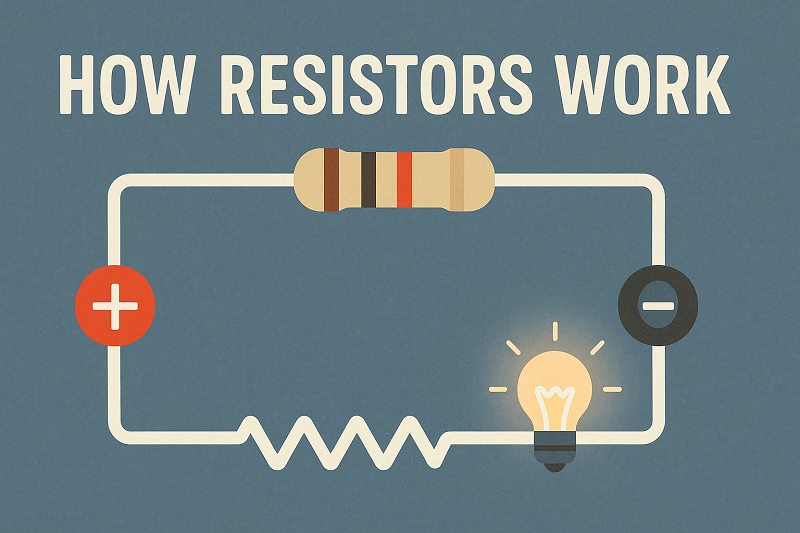
5 Frequently Asked Questions about Blower Motor Resistor

This article is a collection of 5 frequently asked questions about blower motor resistor. Catalog I. What is a Blower Motor Resistor? II. How Does the Blower Motor Resistor Work? III. How Do I Know If My Blower Motor Resistor is Bad or Broke? IV. How to Test a Blower Motor Resistor? V. Can I Fix the Blower Motor Resistor by Myself? FAQ I. What is a Blower Motor Resistor? The blower motor resistor is the blower motor component that regulates the speed. When you raise the thermostat on the air conditioner, the resistor sends a signal to the blower motor to speed up and blow more air. When you turn it down, the opposite happens. It is an electronic component that sends electronic pulses corresponding to the information you send through the adjustment dial. The electrical signal increases or decreases, which affects the overall motor speed of the fan. As far as electrical systems are concerned, they are simple, but as you might see, if something interrupts the flow of power, problems can occur.   Behind these vents in the dashboard, there is a blower motor that starts when you need heating or air conditioning. Usually, it is located in the dashboard on the other side of the steering wheel. You can't see it because it is inside the vehicle, but there it is.   A digital speed controller controls a variable speed motor. The controller typically receives a digital input from the speed switch or HVAC control head. The control head then sends a command to the motor controller to adjust the speed to the driver's requirements.   The motor controller rapidly pulses the ground circuit on and off to achieve the desired speed. So a half-speed driver request will result in the blower motor controller pulsing the ground connection off twice as often as when the fan is running at full speed.   The blower motor resistor or control module is often positioned within one of the ducts in the HVAC system, close to the blower motor, in most modern vehicles. This is done so that the resistor or control module can be cooled by passing air. A blower motor resistor was fitted on the firewall of some older vehicles, with access from under the hood.  II. How Does the Blower Motor Resistor Work? This video will give a detailed explanation of blower motor circuit to help you better understand how eactly it works. III. How Do I Know If My Blower Motor Resistor is Bad or Broke? There are a few indications that your car's blower motor resistor has failed. Because the symptoms may overlap with difficulties in other systems in your vehicle, you may require the assistance of a specialist to help you diagnose them. These are some of the most typical warning signs. (1)  No air. As simple as it may sound, one of the most noticeable indicators to look for is a lack of air moving through the vents when trying to get the heater or air conditioner to function. If nothing comes out when you turn the knob or press the button and it's intended to start blowing air, it's a good clue that the blower motor resistor has failed. This can be a sign of a variety of different issues, so don't take it as a given if this is the only signal you're receiving.   (2)  High speeds only. As previously stated, a blower motor resistor is not required in two situations. When the fan is totally turned off or when it is running at high power. Because the current does not need to be modulated at high power, it bypasses the resistance. So, if you discover that your heat and air conditioning can only switch from being completely off to being on at high power, it's almost certain that you have a broken blower motor resistor.   (3)  Low speeds only. When your fan only works at low speed, this may be a signal of poor blower motor resistance as well. However, when there is a wiring problem between the blower motor resistor and the blower motor itself, it may only work at low speeds.   (4)  The fan will not turn off. If you can't turn off the fan no matter what you do, and no matter how you try to go up, down, or turn off the fan, the fan is constantly running, which means that the blower motor resistor cannot properly regulate the current.   (5)  The blower motor works under certain settings, but does not work under other settings. The blower motor should have a series of settings, from low to high, which can be set in a variety of intermediate ranges. If you find that some of these intermediate settings are working and some of them do nothing at all, it probably means that there is a problem with the switch, and how the switch sends a signal about your settings to the blower motor resistor blower motor.   (6)  Smoking vents. This is an unusual signal of a faulty blower motor resistor, though it is not unheard of. If there is a short around the blower motor resistor and wires begin to melt, the fan may spew smoke from those melting wires back into your car's cabin.   A solid rule of thumb is that if smoke starts flowing in via your car's vents, you should pull over immediately and figure out what's wrong. If it isn't the blower motor resistor, it could be something more serious, and you should get it checked out as soon as possible.   (7)  Burning Smell. Similarly to the smoking vent issue, it is not always as dangerous as actual smoke billowing into the car's cabin, but you will detect the distinct burning smell that indicates that some metal or plastic is overheated somewhere in the vehicle. This is frequently associated with one of the other signals we've already mentioned above. IV. How to Test a Blower Motor Resistor? Blower motor resistor test V. Can I Fix the Blower Motor Resistor by Myself? Whether you can repair the blower motor resistor yourself obviously depends on how much you know about blower motor resistors and general car maintenance. If you are reading a guide on blower motor resistance and its functions, you may not be familiar with them. Therefore, we recommend that you do not try to fix this problem yourself, as this is not a beginner-level fix.   This is not to say that you cannot replace the blower motor resistance yourself, but it will be a complicated task. But we provide you with some basic methods to diagnose and repair some simple blower motor problems, for reference only. For specific steps, please consult professionals or check related videos on youtube.   (1) The blower only works in high speed. This is a sure sign of a bad blower motor resistor, not a faulty speed switch. Change the resistor.   (2) The blower only works in low speed. Check for a blown fuse or a faulty high-speed relay. Replace the high-speed relay with a relay of the same part number. Check the fuse for the high speed relay's control side as well. Verify that the high speed relay's ground side is good.   (3) Repeated failures of the blower motor resistor Check for full airflow at the vents. If airflow appears to be restricted or lower than typical, a blocked cabin air filter is to blame. Examine the cabin air filter. If everything is ok, look for debris on the evaporator or heater. When the airflow is reduced, the blower motor resistor overheats and fails. Reduced airflow forces the blower motor to work harder and draw more current, which might result in repeated blower motor resistor failures. FAQ 1. What does a resistor do on a blower motor? Blower resistors are resistors which are used to control the fan speed of automotive blowers. The fan speed can be changed either by switching the blower resistor resistance mechanically, using a rotating lever, or electronically by the air conditioning system. 2. Can I bypass blower resistor? Blower resistors are resistors which are used to control the fan speed of automotive blowers. The fan speed can be changed either by switching the blower resistor resistance mechanically, using a rotating lever, or electronically by the air conditioning system. 3. What can cause a blower motor to stop working? In a situation where the motor doesn't work on any speed, the most likely causes are: a blown power supply fuse, a bad motor ground connection, bad motor speed control module or a failed motor. On all systems, a failed blower motor is least likely. ... Start by checking the blower fuse and HVAC controller fuse. 4. How do you test a blower motor resistor with a multimeter? Place one lead of the Ohmmeter on terminal 1 of the resistor. Place the other lead on terminal 2 and check against specifications. If this circuit is open, showing infinity on the Ohmmeter, the blower resistor must be replaced. Move the lead from terminal 2 to terminal 3 and check this reading against specifications. 5. Is the blower motor resistor supposed to get hot? Yes that resistor will get very hot. Most people don`t know this but it is faster to defrost the windshield on low or medium fan speed due to that resistor putting off heat. Also that resistor needs to be cooled off with the air flow or it will burn up . 6. What is the function of a blower motor resistor? A blower motor resistor is an adjustable resistor. This electrical component is used to control the air conditioning system of a vehicle. It is the part that controls the fan speed of the fan motor according to settings that can be changed by turning the knob to the left or right, thereby increasing or decreasing the resistance of the electric current flowing to the rotating fan motor connected to the fan. 7. Where is the blower motor resister? A blower motor resistor, typically located beneath the passenger side dashboard, contains three resistors, or sets of terminals designed to generate voltage in proportion to electrical current. 8. How do you replace a blower motor resistor? Safety Tip: Always wear safety glasses when working on your motor. Wear other personal protective equipment (PPE) when necessary, for example latex gloves or closed toe shoes. 1.Remove the negative battery terminal.2.Locate the blower motor resistor on the passenger side under the dash board. It is mounted to the the blower housing near the blower motor.3.Disconnect the electrical connector to the blower motor resistor.4.Remove the screws or bolts to the blower motor resistor and remove the resistor.5.Installation is the reverse of the removal. 9. Can you test a blower motor resistor? Yes. Set your multimeter to Diod or continuity and place leads on either side of the resistor. If no tone and infinite resistance it is bad. If tone but no resistance it is bad. If you have continuity to ground, something has shorted to ground look for heat damage. If you have tone and resistance it is good.  10. Why does a blower motor resistor keep going out? If you are constantly blowing that part. You ether have the motor pulling to much amps. If it is home unit it could also be a inline control board cap.
kynix On 2021-05-27   1632
Resistors

ECC Memory or Not for Computer Server? ECC Server RAM

IntroductionAs everyone knows, Error correction code memory (ECC memory) is a type of computer data storage technique. It identifies and fixes the most common errors which could otherwise lead to data corruption or system crashes. In other words, it is one of the most important techs for this loss and system errors prevention. There will be people who have such a question: now the memory technology is improved greatly, it’s possible to use ECC server RAM inside of your regular desktop computer at home, but is it something you SHOULD do? This note will help you find clues step by step.ECC Memory ExplainedCatalogIntroductionⅠ What Causes Errors in RAM?Ⅱ Is ECC RAM Better?Ⅲ ECC Server RAM or Regular Home Desktop?Ⅰ What Causes Errors in RAM?The ram error is caused by electromagnetic interference inside the computer. This interference will cause the units of DRAM (Dynamic Random Access Memory) to spontaneously change to the opposite state. Unit errors may be hidden, that is, they will not have a serious impact on the data. However, the memory units are interrelated, so unit changes may affect the entire operating system, resulting in system errors, especially when the strict operation is required. To be specific, memory errors will cause security vulnerabilities, crashes, transcription errors, lost transactions and corrupted or lost data, and one of the most common types of memory error is a single-bit error.Ⅱ Is ECC RAM Better?In the face of these problems, if memory can fix the error itself, what will it look like? That is ECC RAM.Memory Chips DifferenceECC RAM is server memory. This type of memory module has an ECC error check storage chip (the number of storage chips is an odd number). The application of ECC can ensure that the server is safer and more stable during operation. However, the number of chips stored in ordinary memory sticks is even. In reality, ECC RAM has 9 memory chips instead of 8. Error Checking and CorrectingThe ECC memory is equipped with ECC error-checking technology. After error checking and correction, the stability and reliability of the server system can be effectively guaranteed. For ordinary ram, when the word detects an error, the error location cannot be determined, and the error cannot be corrected. Therefore, for a single task that takes a long time and cannot be suspended or error, ECC memory is an inevitable choice. However, ordinary PCs will not use because of high-cost price. Application DifferenceBecause ECC memory can effectively store and maintain data integrity and is equipped with check and correction technology, ECC memory further reduces data corruption. Therefore, it is mostly used in servers and graphics workstations such in financial and scientific industries. Non-ECC memory sticks are more suitable for the general public's use. Capacitor DifferenceAs server memory applications require higher capacity, ECC memory modules usually start at 4GB, while ordinary memory modules usually start at 2GB. The standard configuration on home computers is 4~8GB of memory. Price DifferenceDue to the higher-tech of ECC memory sticks, their capacity is also larger than ordinary memory. Therefore, ECC memory sticks are more expensive than ordinary memory.Ⅲ ECC Server RAM or Regular Home Desktop?ECC memory is usually used in servers or graphics workstations. Because of the check and correction function, when there are some read and write errors in the memory, the ECC RAM can correct these errors and reduce the probability of downtime/blue screen. Guaranteed data storage and accuracy of reading and writing.Server memory and ordinary PC memory are very similar, there is no obvious difference in appearance and structure, but its price is higher than ordinary memory. There are three main types of server memory: SDRAM, DDR, and DDR2. At present, server memory is mostly used by DDR and DDR2. As time goes by, the server uses some new technologies now, such as ECC, chip kill, register, hot-swap technology, FB-DIMM (full buffer memory module), etc. More server memory currently adopts ECC and REG ECC technologies. The chips on REG ECC memory are generally 2-3 more than ordinary motherboards, mainly PLL (phase-locked loop) and Register IC. ECC and ECC REG memory have been developed for a period, and the frequency mainly has 133, 266, 333, 400, 533, and 667 stages. What is RECC? The specific uses of RECC memory are as follows: phase-locked loop chip, the bottom of the memory stick are smaller than Register ICs. Generally, there is only one, which can adjust the clock signal and ensure signal synchronization between the memory modules. The smaller IC chip (2-3 pieces) at the bottom plays a role in improving the driving capability. Server products need to support large-capacity memory. The motherboard alone cannot drive such a large-capacity memory. Instead, the memory module with Register is used to improve the driving ability, so that the server can support up to 32GB of memory. Because of the PLL and Register chips, the server memory capacitor can be made very large, it can better meet the endless requirements of the ever-increasing software for memory. Therefore, it is recommended that the server whose requirement is over 16G use RECC RAM.RECC has one more register. We can understand the function of the memory as a book directory. When the memory receives a read and write command, it will retrieve this directory first, and then perform read and write operations, which will greatly improve the efficiency of the server memory. So some people mistakenly think that RECC RAM runs slower than ECC RAM. The Register memory that can be used at present also has an ECC function, and some motherboards require the memory to support Register. In fact, all registered memory is ECC memory. The use of ECC memory requires the support of other computer components, such as the motherboard and cpu, and may also need to be set in the BIOS before it can be used on most server CPUs and motherboards (some non-server CPUs and motherboards also support). In addition, when purchasing ecc memory, you need to pay attention to whether it is ecc udimm or ecc rdimm or ecc lrdimm or ecc 3ds rdimm or something else. Because your computer configuration may not support some types.What’s more, all of the modern, contemporary storage drives use ECC at some level internally. HDD, SSDs. The data densities of the HDD push the edge where need to keep up with track integrity. NAND in SSDs tend to loose data bits in usage over time. The SSD controller in the T2 isn't remarkable on the ECC dimension. All the ones that store the data encrypted 'at rest' basically have to if going to be competently implemented. In addition, ECC generally works on all Ryzen Chips minus the APUs (with the exception of the pro apus), they tend to not be on the QVL since it costs time and money to do that. Frequently Asked Questions about ECC Server Memory1. What is ECC memory?Error correction codeError correction code (ECC) memory is a type of RAM memory found in workstations and servers. It's valued by professionals and businesses with critical data for its ability to automatically detect and correct memory errors, thus fighting data corruption. 2. Which is better ECC or non-ECC memory?Non-ECC (also called non-parity) modules do not have this error-detecting feature. ... Using ECC decreases your computer's performance by about 2 percent. Current technology DRAM is very stable, and memory errors are rare, so unless you have a need for ECC, you are better served with non-parity (non-ECC) memory. 3. How does ECC memory work?ECC memory uses the extra bits to store an encrypted code when writing data to memory, and the ECC code is stored at the same time. ... As data is processed, ECC memory is constantly scanning code with a special algorithm to detect and correct single-bit memory errors. 4. What is the benefit of ECC memory?ECC memory protects your system from potential crashes and inadvertent changes in data by automatically correcting data errors. This is achieved with the addition of a ninth computer chip on the RAM board, which acts as an error check and correction for the other eight chips. 5. Who needs ECC RAM?Error-correcting code memory (ECC memory) is a type of computer data storage that can detect and correct the most common kinds of internal data corruption. ECC memory is used in most computers where data corruption cannot be tolerated under any circumstances, such as for scientific or financial computing.
kynix On 2021-05-25   6214
Diodes

How to Test Diode? Instruction to 11 Types of Diode Testing

For electronics enthusiasts, technicians, and engineers, the diode is a fundamental component. Knowing how to verify its condition is a critical skill for troubleshooting circuits. Whether you are using a classic analog multimeter or a modern digital multimeter (DMM), the principles remain the same.In this updated article, we will cover the testing methods for 11 different types of diodes, ranging from standard rectifiers to specialized laser and high-frequency components.I. Testing of a Standard DiodeVideo Overview: The basics of testing diode polarity and continuity.Modern Tip for 2025: Most technicians now use Digital Multimeters.Analog Meter: Looks for needle deflection (resistance).Digital Meter (DMM): Use the "Diode Mode" (symbol: ➔+). A good silicon diode drops between 0.5V and 0.8V. If it reads "OL" (Open Loop) in both directions, it is open. If it reads 0.00V, it is shorted.II. Testing 11 Specialized Types of Diodes2.1 Testing of Low-power Crystal DiodesA. Discriminating Positive and Negative Electrodes(1) Housing Symbol: Observe the symbol mark on the housing. Usually, the diode is marked with a standard arrow symbol. The end with the triangular arrow is the positive electrode (Anode), and the flat line is the negative electrode (Cathode).(2) Color Bands/Dots: On point-contact diodes, look for polar color points (white or red). Generally, the marked end is positive. However, on standard cylindrical diodes, the colored ring/band indicates the negative (Cathode) side.(3) Multimeter Measurement: Using the resistance setting (Ohms), the connection that results in a smaller resistance value indicates forward bias. For analog meters, the black lead acts as positive internal voltage; for digital meters, the red lead is positive.B. Detecting Highest Working Frequency ($f_M$)The operating frequency depends on the internal construction. Point-contact diodes are typically high-frequency, while surface-contact diodes are for low-frequency rectification. When testing with an analog multimeter at $R \times 1k$, high-frequency tubes often show a forward resistance of less than 1kΩ.C. Detecting Highest Reverse Breakdown Voltage ($V_{RM}$)The highest reverse working voltage is the peak AC voltage the diode can block. Note that the actual breakdown voltage is usually much higher (often 2x) than the rated working voltage to ensure safety margins.2.2 Testing of Glass-Sealed Silicon High-Speed Switching DiodesCommon examples include the 1N4148. The testing method is identical to ordinary diodes. However, note that the forward resistance might appear slightly higher than power rectifiers. Test values (Analog): Forward resistance 5kΩ to 10kΩ ($R \times 1k$ scale); Reverse resistance is infinite.2.3 Testing of Fast Recovery and Ultra-Fast Recovery DiodesThese are critical in Switching Power Supplies (SMPS). Testing follows the plastic-encapsulated silicon rectifier method.Step 1: Use $R \times 1k$ block. Forward resistance is roughly 4.5kΩ; reverse is infinite.Step 2: Use $R \times 1$ block. Forward resistance drops to a few ohms; reverse remains infinite.2.4 Testing of Bidirectional Trigger Diode (DIAC)Commonly found in dimmer switches (e.g., DB3). Resistance Check: With a multimeter at $R \times 1k$, resistance should be infinite in both directions. If the pointer swings or the DMM reads low ohms, the component has a leakage fault.Voltage Test: To test the breakover voltage ($V_{BO}$), you need a high-voltage source (like a Megohmmeter). Measure the voltage at which conduction begins. The symmetry is good if the forward and reverse breakover voltages are close in value.2.5 Testing of Transient Voltage Suppression Diode (TVS)TVS diodes protect circuits from voltage spikes.Unipolar TVS: Tests like a normal diode. Forward resistance ~4kΩ, reverse infinite.Bipolar (Two-way) TVS: Should read infinite resistance in both directions during a standard low-voltage multimeter test. If it conducts, it is likely shorted (which is its failure mode after absorbing a massive spike).2.6 Testing of High-Frequency DiodesA. Polarity: Usually identified by color codes. Similar to standard diodes, the band (often green) indicates the Cathode (negative).B. Measurement: Using a 500-type multimeter at $R \times 1k$, normal forward resistance is 5kΩ to 5.5kΩ, with infinite reverse resistance.2.7 Testing of Varactor DiodeUsed in tuning circuits. Set the multimeter to $R \times 10k$. Regardless of lead swapping, the resistance between pins should remain infinite. Any resistance reading suggests leakage or breakdown. To test the actual capacitance change, you would need an LCR meter or specialized tester.2.8 Testing of Monochromatic Light-Emitting Diodes (LEDs)Note on Voltage: Modern LEDs (especially Blue and White) typically require >3V to light up. The traditional "1.5V battery" trick may not work.The Test: Most Digital Multimeters in "Diode Mode" output enough voltage to make an LED glow faintly. If using an external power source: Connect a 3V battery (like a CR2032) or two 1.5V batteries in series. Result: When positive connects to positive, the LED should light up. If it remains dark in both orientations, it is open.2.9 Testing of Infrared (IR) LEDsA. Polarity: Long pin is Anode (+), Short pin is Cathode (-). Internally, the wider electrode is usually the negative side.B. Resistance Test: At $R \times 1k$, forward resistance is ~30kΩ, reverse >500kΩ.C. The Camera Trick (New): Since human eyes cannot see IR light, power the LED and look at it through your smartphone camera. Digital sensors can "see" IR light—it will appear purple/white on the screen if the LED is working.2.10 Testing of Infrared Receiving DiodeA. Polarity: On the receiving window side, pins are usually positive (left) and negative (right), but always verify with the datasheet. Look for a beveled/oblique edge on the casing; the pin closest to the bevel is usually negative.B. Test: In ambient light, measure resistance. Shield the window with your hand (darkness) -> resistance should increase. Expose it to light -> resistance should decrease. This change confirms the sensor is reactive.2.11 Testing of Laser DiodeSAFETY WARNING: Never look directly into a laser diode or point it at eyes.Using a multimeter at $R \times 1k$: Determine pins similar to a normal diode. Note: Laser diodes have a higher forward voltage drop than standard diodes. The meter pointer might deflect only slightly (high resistance) even in the forward direction. Reverse resistance should be infinite.Frequently Asked Questions (FAQ)1. What is a diode and its symbol?A diode is an electronic component that functions as a one-way valve for electricity, allowing current to flow in only one direction. In circuit diagrams, it is represented by a triangle pointing towards a line (the line represents the barrier/cathode).2. What is special about a diode?Its ability to block reverse current is unique. Furthermore, special types like LEDs emit photons (light) when electrons change energy levels across the junction. This electroluminescence makes them essential for modern lighting.3. Are diodes AC or DC?Diodes work with both but handle them differently. They allow DC to pass. When applied to AC, they block the negative half of the cycle, effectively converting Alternating Current (AC) into pulsating Direct Current (DC). This process is called Rectification.4. Why do we use a Zener diode?Unlike normal diodes that burn out if forced to conduct backwards, Zener diodes are designed to conduct in reverse at a specific, precise voltage (Breakdown Voltage). This makes them perfect for Voltage Regulation and reference voltages.5. What is the unit of a diode?The diode itself is a component, not a quantity, so it has no "unit." However, its characteristics are measured in standard units: Forward Voltage ($V_F$): Volts (V) Current Rating: Amperes (A) Power Dissipation: Watts (W)6. Do diodes have resistance?Yes, but it is non-linear. Unlike a resistor which has a fixed value, a diode's resistance changes dynamically based on the voltage applied. When forward-biased, resistance is very low; when reverse-biased, it is extremely high.7. Does a diode reduce current?Indirectly, yes. Because a diode consumes a small amount of voltage (Voltage Drop, typically 0.7V for Silicon), the total voltage available to the load decreases, which can slightly reduce current according to Ohm's Law. It also completely blocks current flowing in the wrong direction.8. How are diodes classified?They are classified by material (Silicon, Germanium), construction (Point contact, Surface mount/SMD), and function (Rectifier, Zener, Schottky, LED, Photodiode, Laser, TVS).9. What is the most common diode?The 1N4007 is likely the most common power rectifier diode, found in almost every adapter. For low-signal switching, the 1N4148 is the industry standard.10. What is the difference between a Zener and a Schottky diode?Schottky Diodes are designed for speed and low voltage drop (efficiency), often used in high-speed switching. Zener Diodes are designed for voltage stability, meant to operate in the reverse breakdown region to regulate voltage.11. What is the difference between Schottky diode and normal diode?A normal PN junction diode connects P-type and N-type semiconductors. A Schottky diode connects an N-type semiconductor to a Metal plate. This results in a much lower forward voltage drop (approx. 0.2V-0.4V) and faster switching speeds compared to normal silicon diodes (0.7V).12. Why is it called a diode?The name comes from the Greek root "di" (two) and "ode" (path/electrode). It literally refers to a device with two electrodes: the Anode and the Cathode.13. Is a diode the same as a resistor?No. A resistor limits current equally in both directions (linear). A diode acts as a gate, allowing current only one way (non-linear). Using one in place of the other usually causes circuit failure.14. How much voltage can a diode take?This depends on the "Peak Inverse Voltage" (PIV) rating. Small signal diodes might handle 75V, while rectifier diodes like the 1N4007 can withstand up to 1000V.15. Can a resistor replace a diode?Generally, no. Since a resistor conducts both ways, replacing a diode (rectifier) with a resistor would allow AC to pass where DC is required, potentially blowing up capacitors or destroying sensitive chips.
Kynix On 2021-05-25   2240
Resistors

How 555 Timers Work? Circuit Modes Analysis

IntroductionFor people who have been in touch with digital circuits or analog circuits, the 555 IC is definitely classic work. With its low cost and reliable performance, it is widely used in various electrical appliances, including instruments and meters, household appliances, electric toys, and automatic control. The 555 timer only needs a few external resistors and capacitors to realize pulse generation and conversion circuits, such as multiple oscillators, monostable triggers and schmitt triggers. So how does it work in the circuit? What the role of its circuit? Here gives several typical 555 circuit examples for specific analysis.555 Timers Circuit LearningCatalogIntroductionⅠ Basic 555 Timer Circuit AnalysisⅡ 555 Multivibrator Circuit AnalysisⅢ 555 Timer Monostable Flip Flop Circuit AnalysisⅣ Classic 555 Timer Circuits DiagramsⅤ 555 Timer IC ModesⅠ Basic 555 Timer Circuit Analysis555 Means What?555 timer is a convenient and powerful IC, which is widely used in signal generation, conversion, control and detection. The origin of this name, because it is divided by three 5KΩ resistors. The 555 timer is a simple integrated circuit that can be used to make many different electronic circuits. With the following circuits analysis you will know how 555 IC works.Figure 1. Basic 555 Timer Circuit✔️ Circuit AnalysisR is not the reset terminal, when set to 0, Q is 0,  is 1, Uo outputs 0, and is 1 added to the base of the transistor T, the transistor is in the conducting state.① When R=0, Q=1, uo=0, T is saturated and turned on.② When R=1 (there is no reset function at this time):UTH>2VCC/3, UTR>VCC/3, C1=0, C2=1, Q=1 or =0, uo=0, T is saturated and turned on. (Analysis: C1's positive input terminal is 2VCC/3, C1's negative input UTH terminal is greater than the positive input terminal, working in saturation, and output 0. C2's negative input terminal is 1VCC/3, which is smaller than the positive input Terminal UTH, and outputs 1. There is a horizontal line above RD and SD, which means low level, meaning is Reset. C1 outputs 0, RD is valid, then Q is 0, not 1, Uo outputs 0, and is not acting on the base of the triode.)③ When R=1, UTH<2VCC/3, UTR>VCC/3, C1=1, C2=1, Q and remain unchanged, uo and T remain unchanged. (Analysis is the same as above)④ When R=1, UTH<2VCC/3, UTR<VCC/3, C1=1, C2=0, Q=0, =1, uo=1, T is cut off. (Analysis is the same as above) Learn how the inputs interact with the supply voltage to trigger and reset the output high and low. Find out which pins can be used to adjust the threshold at which that change happens.Ⅱ 555 Multivibrator Circuit AnalysisFigure 2. 555 Multivibrator Circuit Analysis Figure 3. 555 Multivibrator Circuit Example✔️ Circuit Analysis First, the power supply VCC charges the capacitor C through R1 and R2, and the voltage of the capacitor must be relatively small, less than 1VCC/3. Similarly, the positive terminal of C1 is 2VCC/3, the negative terminal of C2 is 1VCC/3, and the TH and TR terminals are connected At the same time, it is less than 1VCC/3 at the beginning. At this time, C1 outputs 1, C2 outputs 0, and the set terminal is valid (with detailed confirmation): Q is 1, is not 0, and uo is 1, the transistor is cut off, and outputs high level. At this time, the power supply is still charging the capacitor. When the TH and TR terminals are connected together, the voltage is less than 2VCC/3 and greater than 1VCC/3; C1 outputs 1, C2 outputs 1, the transistor is cut off, and uo is 1. When the capacitor is greater than 2VCC/3, C1 outputs 0 and C2 outputs 1. At this time, Q is 0, is not 1, uo is 0, the output is low, and the transistor is turned on. The capacitor will be discharged through pin 7. After this, the voltage at the point where TH and TR connected will gradually decrease, less than 2VCC/3 and greater than 1VCC/3, and then it will be less than 1VCC/3, to form a harmonic oscillator.The pulse width tp1 of the first transient state, that is, the time required for uc to rise from VCC/3 charging to 2VCC/3 (charged through two resistors):The second transient state pulse width tp2, that is, the time required for uc to discharge from 2VCC/3 to VCC/3:Duty cycle: the time that the high level occupies the entire cycle., it can be seen that its duty cycle is always greater than 50%.Examples 1Circuit with Adjustable Duty Cycle (add an adjustable resistor)Figure 4. Circuit with Adjustable Duty Cycle (add an adjustable resistor)It can be calculated:Where T1=0.7R1C (T1 is charging time), T2=0.7R2C (T2 is discharging time)Total time T=T1+T2=0.7(R1+R2)CSo R1, R2, and C are determined, and the period T is also determined.Duty Cycle Calculation Example 2Circuit with Adjustable Duty Cycle (1KHz)Figure 5. Circuit with Adjustable Duty Cycle (1KHz)✔️ Circuit AnalysisT = 0.7(R1+R2)C, f = 1/T, the duty cycle circuit only needs to adjust the resistance value. Ⅲ 555 Timer Monostable Flip Flop Circuit AnalysisWorking Characteristics① It has two different working states: steady state and transient state.② Under the action of an external trigger pulse, it can switch from the steady state to the transient state. After the transient state is maintained for a period of time, the circuit can automatically return to the steady state.③ The transient state cannot be maintained for a long time, and the duration of its sustaining time depends on the parameters of the circuit itself and has nothing to do with the trigger pulse. So what is the principle of a monostable circuit?Figure 6. 555 Timer Monostable Circuit Analysis Figure 7. 555 Timer Monostable Circuit Example✔️ Circuit AnalysisFirst, the TR terminal is at a high level ui, which must be greater than 1VCC/3. At this time, C2 outputs 1, and the power supply charges capacitor C through R. The charging voltage is less than 1VCC/3 (TH), CO voltage is equal to 2VCC/3, C1 outputs 1, and it is in the holding state at this time. Assuming that the non-reset terminal of R is reset before power on, the output of uo is 0, and then the previous state is still maintained and the output is 0 at this time. is 1, the transistor is turned on, the capacitor is discharged through pin 7, and uc is zero level. At a certain moment, ui is low, C1 still outputs 1, C2 outputs 0, Q is 1, is 0, uo outputs 1 (high level), and the transistor has been in the cut-off state. At this time, VCC can charge the capacitor (uc is getting larger). When uc is between 1VCC/3~2VCC/3, assuming that the TR terminal returns to the original state (high level), C1 outputs 1 , C2 outputs 1, at this time uo keeps in original state, it is still 1, and the transistor is in the cut-off state. When uc is greater than 2VCC/3, C2 is still 1, C1 output is 0, Q is 0, is 1, and uo is 0, the transistor is turned on and in a discharging state, at this time, uc is getting smaller and smaller.Summery:1. As long as a low-level trigger signal is given, the temporary stable stay time is the charging time of voltage 0V~ 2Ucc/3 (the time represented by tp).2. Charging time Tp=1.1RC3. It can be used as a timing circuit, and the time can be determined by RC.Example: Timing Circuit Design (1s delay time)Figure 8. 555 Timer Delay Circuit ExampleⅣ Classic 555 Timer Circuits DiagramsThere are A LOT of projects out there using the 555 in various ways and it’s easy to find schematics to make a project that has already been proven. Here lists some typical projects using 555 timer in circuits. Let’s have a look. 🔺 Car Tachometer🔺 SIREN🔺 Flashing Lights🔺 Knight Rider Circuit🔺 Laser Ray🔺 Latch🔺 LED Dimmer🔺 555 Amplifier🔺 Light Detector🔺 Machine Gun🔺 Metal Detector🔺 Motor PWM🔺 Music Box🔺 Zener Diode Tester Ⅴ 555 Timer IC Modes555 timer will use different models in different circuits to meet circuit requirements. Therefore, it has many derivative models produced by different companies with different pin functions, and uses CMOS design. What;s more, some chips include several integrated 555 timers. Some common models of the 555 chip family are as follows:ManufacturerModelRemarksCustom Silicon SolutionsCSS555/CSS555CCMOS chip, minimum working voltage 1.2V, IDD < 5µACEMIULY7855*ECG SemiconductorsECG955MTimer Single Rc-type OscillatorExarXR-555Highly stable controllerFairchildNE555/KA555Time-delay or mono-stableHarrisHA555*IK SemiconILC555CMOS chip, minimum working voltage 2VTexas InstrumentsSE555/NE555*RenesasICM7555CMOS RC timersLithic SystemsLC555Available in Industry's Smallest 8-Bump DSBGAMaximICM7555CMOS RC timers, minimum working voltage 2VMotorolaMC1455/MC1555Monolithic timerNational SemiconductorLM1455/LM555/LM555C*National SemiconductorLMC555CMOS chip, minimum working voltage 1.5VNTE SylvaniaNTE955MAccurate time delaysRaytheonRM555/RC555*RCACA555/CA555C*STMicroelectronicsNE555N/ K3T647*Texas InstrumentsSN52555/SN72555*Texas InstrumentsTLC555CMOS chip, minimum working voltage 2VZetexZSCT1555Precision single cell timerNXPICM7555CMOSHitachi SemiconductorHA17555Accurate time delays or oscillations Frequently Asked Questions about 555 Timer Circuit1. What does a 555 timer do in a circuit?The 555 timer IC is a very cheap, popular and useful precision timing device which can act as either a simple timer to generate single pulses or long time delays, or as a relaxation oscillator producing a string of stabilised waveforms of varying duty cycles from 50 to 100%. 2. How much voltage can a 555 timer take?The standard TTL 555 can operate from a supply voltage between 4.5 volts and 18 volts, with its output voltage approximately 2 volts lower than its supply voltage VCC. The 555 can source or sink a maximum output current of 200mA, (but it may get hot at this level), so the circuit variations are unlimited. 3. What are the modes of operation of a timer?The timer registers can be used in two modes. These modes areTimer mode and the Counter mode. The only difference between these two modes is the source for incrementing the timer registers. 4. What are the basic operation modes of the 555 timer?The operating modes of a 555 timer are astable, bistable and monostable. Each mode of operation signifies with a circuit diagram and its output. 5. What is the maximum frequency of a 555 timer?2MHzaccording to the website, the 555 timer has a maximum frequency of 2MHz.
kynix On 2021-05-21   5397
Diodes

What is A Schottky Diode? Basics of Schottky Diode

When it comes to low-power, high-current, and ultra-high-speed semiconductor devices, many electronics hobbyists or engineers must first think of Schottky diodes (SBD). But do you really know how to use Schottky diodes? Compared with other diodes, what is special about Schottky diodes? This article will answer these questions for you and introduce Schottky diodes in details. This short video gives a brief introduction to Schottky Diode Catalog I. Schottky Diode Brief Introduction II. How does Schottky Diode Work? III. The Structure of Schottky Diode IV. How to Test Schottky Diode? V. Pros and Cons of Schottky Diode VI. Where to Use Schottky Diode? VII. How to Use Schottky Diode Correctly? FAQ I. Brief Introduction to Schottky Diode  Schottky diodes are named after their inventor, Dr. Schottky. The full name is: Schottky RecTIfier Diode (abbreviated as SR), also called: Schottky barrier diode, or SBD.   Schottky diode is a low-power, ultra-high-speed semiconductor device. The most notable feature is its extremely short reverse recovery time (can be as small as a few nanoseconds), and the forward voltage drop is only about 0.4V. It is mostly used as high-frequency, low-voltage, high-current rectifier diodes, freewheeling diodes, protection diodes, and also useful as rectifier diodes and small-signal detector diodes in circuits such as microwave communications. It is more common in communication power supplies, inverters, etc.   A typical application of Schottky diodes is in the switching circuit of a bipolar transistor BJT. By connecting a Shockley diode to the BJT to clamp, the transistor is actually close to the off state when the transistor is on, thereby improving the transistor’s performance. Switching speed. This method is a technique used in the TTL internal circuits of typical digital ICs such as 74LS, 74ALS, and 74AS.   The biggest feature of Schottky diodes is that the forward voltage drop VF is relatively small. In the case of the same current, its forward voltage drop is much smaller. In addition, its recovery time is short. It also has some shortcomings: the withstand voltage is relatively low, and the leakage current is slightly larger. It must be fully considered when selecting. II. How does Schottky Diode Work? Schottky diodes are metal-semiconductor devices made of precious metals (gold, silver, aluminum, platinum, etc.) A as the anode and N-type semiconductor B as the cathode. The barrier formed on the contact surface of the two has rectification characteristics.   Because there are a large number of electrons in N-type semiconductors, and there are only a small amount of free electrons in noble metals, electrons diffuse from the high concentration of B to the low concentration of A. Obviously, there are no holes in metal A, and there is no diffusion movement of holes from A to B.   As electrons continue to diffuse from B to A, the electron concentration on the surface of B gradually decreases, and the electrical neutrality of the surface is destroyed, so a potential barrier is formed, and the direction of the electric field is B→A. But under the action of this electric field, the electrons in A will also produce a drifting movement from A→B, thereby weakening the electric field formed by the diffusion movement.   When a space charge region with a certain width is established, the drifting movement of electrons caused by the electric field and the diffusion movement of electrons caused by different concentrations reach a relative balance, forming a Schottky barrier.   The internal circuit structure of a typical Schottky rectifier is based on an N-type semiconductor, and an N-epitaxial layer with arsenic as a dopant is formed on it. The anode uses materials such as molybdenum or aluminum to make a barrier layer. Use silicon dioxide (SiO2) to eliminate the electric field in the edge area and improve the withstand voltage of the tube.   The N-type substrate has a small on-state resistance, and its doping concentration is 100% higher than that of the H-layer. An N+ cathode layer is formed under the substrate, and its function is to reduce the contact resistance of the cathode. By adjusting the structural parameters, a Schottky barrier is formed between the N-type substrate and the anode metal.   When a forward bias is applied to both ends of the Schottky barrier (the anode metal is connected to the positive pole of the power supply, and the N-type substrate is connected to the negative pole of the power supply), the Schottky barrier layer becomes narrower and its internal resistance becomes smaller; on the contrary, if When reverse bias is applied to both ends of the Schottky barrier, the Schottky barrier layer becomes wider and its internal resistance becomes larger.   In summary, the structure principle of Schottky rectifier is very different from PN junction rectifier. The PN junction rectifier is usually called the junction rectifier, and the metal-semi-conductor rectifier is called the Schottky rectifier.   Aluminum-silicon Schottky diodes manufactured by the silicon plane process have also come out, which not only saves precious metals, but also Significantly reduce costs and improve the consistency of parameters. III. The Structure of Schottky Diode The structure and materials of the new high-voltage SBD are different from the traditional SBD. Traditional SBD is formed by contacting metal and semiconductor. The metal material can be aluminum, gold, molybdenum, nickel, titanium, etc., and the semiconductor is usually silicon (Si) or gallium arsenide (GaAs).   Since electrons have higher mobility than holes, in order to obtain good frequency characteristics, N-type semiconductor materials are selected as the substrate. In order to reduce the junction capacitance of the SBD and increase the reverse breakdown voltage without making the series resistance too large, a high-resistance N-thin layer is usually epitaxially on the N+ substrate.   CP is the parallel capacitance of the shell and tube, LS is the lead inductance, RS is the series resistance including the semiconductor body resistance and lead resistance, and Cj and Rj are the junction capacitance and junction resistance (both are functions of bias current and bias voltage), respectively.   As we all know, there are a large number of conductive electrons inside a metal conductor. When the metal is in contact with the semiconductor (the distance between the two is only an order of magnitude of the atom), the Fermi level of the metal is lower than the Fermi level of the semiconductor. At the sub-energy level corresponding to the conduction band of the semiconductor inside the metal, the electron density is less than that of the conduction band of the semiconductor.   Therefore, after the two contact, electrons will diffuse from the semiconductor to the metal, so that the metal is negatively charged and the semiconductor is positively charged. Since metal is an ideal conductor, negative charges are only distributed in a thin layer with the size of an atom on the surface.   For N-type semiconductors, the donor impurity atoms that have lost electrons become positive ions, which are distributed in a larger thickness. As a result of the diffusion and movement of electrons from the semiconductor to the metal, a space charge zone, self-built electric field and potential barrier are formed, and the depletion layer is only on the side of the N-type semiconductor (all the barrier zone falls on the semiconductor side).   The direction of the self-built electric field in the barrier zone points from the N-type region to the metal. With the increase of the thermionic self-built field, the drift current opposite to the diffusion current direction increases, and finally a dynamic equilibrium is reached, forming a contact potential between the metal and the semiconductor Barrier, this is the Schottky barrier.   When the applied voltage is zero, the diffusion current of electrons is equal to the reverse drift current, achieving dynamic equilibrium. When a forward bias is applied (that is, a positive voltage is applied to a metal and a negative voltage is applied to a semiconductor), the self-built field is weakened and the barrier on the semiconductor side is lowered, thus forming a positive current from the metal to the semiconductor.   When a reverse bias is applied, the self-built field increases, and the barrier height increases, forming a smaller reverse current from the semiconductor to the metal. Therefore, the SBD, like the PN junction diode, is a non-linear device with unidirectional conductivity. IV. How to Test Schottky Diode? Here we show you three testing method for three different diodes. 1. Detect low-power crystal diodes   A. Discrimination of positive and negative electrodes   (1) Observe the symbol mark on the housing. Usually the diode is marked with the symbol of the diode on the housing of the diode, one end with a triangular arrow is the positive electrode, and the other end is the negative electrode.   (2) Observe the color dots on the shell. The case of point contact diodes is usually marked with polar color points (white or red). Generally, the end marked with a colored dot is the positive electrode. Other diodes are marked with a color ring, and the end with the color ring is the negative electrode.   (3) Based on a measurement with a smaller resistance value, the end connected to the black test lead is the positive electrode, and the end connected to the red test lead is the negative electrode.   B. Detect the highest working frequency fM. The operating frequency of crystal diodes can be found in the relevant characteristic table. In practice, they are often distinguished by observing the contact wires inside the diode.    For example, point contact diodes are high-frequency tubes, and surface contact diodes are mostly low-frequency tubes. In addition, you can also use the multimeter R×1k block to test, generally the forward resistance is less than 1k high frequency tube.   C. Detect the highest reverse breakdown voltage VRM. For alternating current, because of constant changes, the highest reverse working voltage is also the peak alternating current voltage that the diode bears.   It should be pointed out that the highest reverse working voltage is not the breakdown voltage of the diode. Under normal circumstances, the breakdown voltage of the diode is much higher than the maximum reverse working voltage (about twice as high).   2. Detection of high frequency varistor diodes   A. identification diode positive and negative   The difference in appearance between high-frequency varistor diodes and ordinary diodes is that their color code is different. The color code of ordinary diodes is generally black, while the color code of high-frequency varistor diodes is light. Its polarity law is similar to that of ordinary diodes, that is, the end with the green ring is the cathode, and the end with the green ring is the anode.   B. Measure the forward and reverse resistance to judge whether it is good or bad   The specific method is the same as the method of measuring the forward and reverse resistance of ordinary diodes. When using a 500-type multimeter to measure the R×1k gear, the forward resistance of a normal high-frequency varistor diode is 5k~55k, and the reverse resistance is infinity.   3. Transient voltage suppression diode (TVS) detection   Use a multimeter to measure the quality of the tube. For a unipolar TVS, according to the method of measuring ordinary diodes, the forward and reverse resistance can be measured. Generally, the forward resistance is about 4kΩ, and the reverse resistance is infinite.   For the two-way polar TVS, the resistance between the two pins should be infinite when the red and black test leads are arbitrarily exchanged. Otherwise, the tube has poor performance or has been damaged. V. Pros and Cons of Schottky Diode Pros:  Schottky diodes have the advantages of high switching frequency and reduced forward voltage, but their reverse breakdown voltage is relatively low, mostly not higher than 60V, and the highest is only about 100V, which limits its application range.   Like in the switching power supply (SMPS) and power factor correction (PFC) circuit, the freewheeling diode of the power switch device, the high frequency rectifier diode of 100V or more used in the transformer secondary, the 600V~1.2kV high speed diode in the RCD snubber circuit, and For PFC boosting 600V diodes, only fast recovery epitaxial diodes (FRED) and ultra-fast recovery diodes (UFRD) are used.   The reverse recovery time Trr of UFRD is also above 20ns, which cannot meet the needs of 1MHz~3MHz SMPS in fields such as space stations. Even for SMPS with hard switching of 100kHz, due to the large conduction loss and switching loss of UFRD, the case temperature is very high, and a larger heat sink is required, which increases the size and weight of SMPS, which does not meet the requirements of miniaturization and lightness. Development trend.   Therefore, the development of high-voltage SBDs above 100V has always been a research topic and a hot spot of concern. In recent years, SBD has made breakthrough progress. High-voltage SBDs of 150V and 200V have been put on the market, and SBDs with more than 1kV made of new materials have also been successfully developed, thus injecting new vitality and vitality into their applications.   Cons:  The biggest disadvantage of Schottky diodes is their low reverse bias voltage and large reverse leakage current. For example, Schottky diodes using silicon and metal as materials have the highest reverse bias voltage rating. To 50V, and the reverse leakage current value is a positive temperature characteristic, it is easy to increase rapidly as the temperature rises, and it is necessary to pay attention to the hidden concern of thermal runaway in practical design.   In order to avoid the above-mentioned problems, the reverse bias voltage of the Schottky diode in actual use will be much smaller than its rated value. However, the technology of Schottky diodes has also progressed, and its reverse bias voltage rating can reach up to 200V. VI. Where to Use Schottky Diode? The structure and characteristics of SBD make it suitable for high-frequency rectification in low-voltage and high-current output occasions. It is used for detection and mixing at very high frequencies (such as X-band, C-band, S-band and Ku-band). Used as a clamp in high-speed logic circuits. SBD is often used in ICs. SBD*TTL integrated circuits have long become the mainstream of TTL circuits and are widely used in high-speed computers.   In addition to the characteristic parameters of ordinary PN junction diodes, SBD electrical parameters used for detection and mixing also include intermediate frequency impedance (referring to the impedance presented by the SBD to the specified intermediate frequency when the rated local oscillator power is applied, generally between 200Ω and 600Ω) , Voltage standing wave ratio (generally ≤ 2) and noise figure, etc. VII. How to Use Schottky Diode Correctly? Schottky diodes are widely used in circuits such as switching power supplies, frequency converters, and drivers. In different applications, different factors need to be considered, and different devices have different performances. Therefore, when selecting Schottky diodes, the following key parameters need to be considered comprehensively.   1. The conduction voltage drop VFVF is the voltage drop across the diode when the diode is forward-conducting. When the current through the diode is larger, the VF is larger; when the diode temperature is higher, the VF is smaller.   2. The reverse saturation leakage current IRIR refers to the current that flows through the diode when the reverse voltage is added to the two ends of the diode. The reverse leakage current of the Schottky diode is relatively large. The choice of Schottky diode is to choose a diode with a smaller IR as much as possible.   3. The rated current IF refers to the average current value calculated according to the allowable temperature rise during long-term operation of the diode.   4. The maximum surge current IFSM allows excessive forward current to flow. It is not a normal current, but an instantaneous current, which is quite large.   5. Even if the maximum reverse peak voltage VRM does not have reverse current, as long as the reverse voltage is continuously increased, the diode will be damaged sooner or later.   This reverse voltage that can be applied is not an instantaneous voltage, but a forward and reverse voltage repeatedly applied. Because the AC voltage is added to the rectifier, its maximum value is a specified important factor.   The maximum reverse peak voltage VRM refers to the maximum reverse voltage that can be applied to avoid breakdown. Currently Schottky's highest VRM value is 150V. FAQ 1. What is Schottky diode used for? Schottky diodes are used for their low turn-on voltage, fast recovery time and low-loss energy at higher frequencies. These characteristics make Schottky diodes capable of rectifying a current by facilitating a quick transition from conducting to blocking state. 2. What is the difference between Schottky diode and normal diode? In the normal rectifier grade PN junction diode, the junction is formed between P type semiconductor to N type semiconductor. Whereas in Schottky diode the junction is in between N type semiconductor to Metal plate. The schottky barrier diode has electrons as majority carriers on both sides of the junction. 3. How does Schottky diode work? In a Schottky diode, a semiconductor–metal junction is formed between a semiconductor and a metal, thus creating a Schottky barrier. The N-type semiconductor acts as the cathode and the metal side acts as the anode of the diode. This Schottky barrier results in both a low forward voltage drop and very fast switching. 4. What are the two important features of a Schottky diode? We have seen here that the Schottky Diode also known as a Schottky Barrier Diode is a solid-state semiconductor diode in which a metal electrode and an n-type semiconductor form the diodes ms-junction giving it two major advantages over traditional pn-junction diodes, a faster switching speed, and a low forward bias. 5. What is Schottky diode made of? Schottky diodes made from palladium silicide (PdSi)[clarification needed] are excellent due to their lower forward voltage (which has to be lower than the forward voltage of the base-collector junction). 6. Why Schottky is called hot carrier diode? When a Schottky diode is in unbiased condition, the electrons lying on the semiconductor side have a very low energy level when compared to the electrons present in the metal.Thus, the electrons cannot flow through the junction barrier which is called the Schottky barrier. If the diode is forward biased, electrons present in the N-side get sufficient energy to cross the junction barrier and enters the metal.These electrons enter into the metal with tremendous energy. Consequently, these electrons are known as hot carriers. Thus the diode is called a hot-carrier diode. 7. What is Schottky barrier rectifier? The Schottky diode or Schottky Barrier Rectifier is named after the German physicist “Walter H. Schottky”, is a semiconductor diode designed with a metal by the semiconductor junction. It has a low-forward voltage drop and a very rapid switching act. ... Actually, it is one of the oldest semiconductor devices in reality. 8. What is meant by Schottky effect? Schottky effect, increase in the discharge of electrons from the surface of a heated material by application of an electric field that reduces the value of the energy required for electron emission. ... The effect is named after its discoverer, the German physicist Walter Schottky. 9. Why Schottky barrier is formed? When a metal is put in direct contact with a semiconductor, a so called Schottky barrier can be formed, leading to a rectifying behavior of the electrical contact. 10. What is the barrier potential of Schottky diode? The forward voltage drop ranges from 0.3 volts to 0.5 volts. The barrier of forward voltage drop is made of silicon. The forward voltage drop is proportional to the doping concentration of N type semiconductor. Due to high concentration of current carriers, the V-I characteristic of Schottky diode is steeper.
kynix On 2021-05-21   818

Kynix

Kynix was founded in 2008, specializing in the electronic components distribution business. We adhere to honesty and ethics as our business philosophy and have gradually established an excellent reputation and credibility in our international business. With the accurate quotation, excellent credit, reasonable price, reliable quality, fast delivery, and authentic service, we have won the praise of the majority of customers.

Follow us

Join our mailing list!

Be the first to know about new products, special offers, and more.

Kynix

  • How to purchase

  • Order
  • Search & Inquiry
  • Shipping & Tracking
  • Payment Methods
  • Contact Us

  • Tel: 00852-6915 1330
  • Email: info@kynix.com
  • Follow Us

authentication

Kynix

© 2008-2026 kynix.com all rights reserved.