The Kynix Blog
Stay Ahead with Expert Electronics Insights,
Industry Trends, and Innovative Tips
- Electronic Components
- News Room
- General electronic semiconductor
- Components Guide
- Sort by
- Robots
- Transmitters
- Capacitors
- IC Chips
- PCBs
- Connectors
- Amplifiers
- Memory
- LED
- Diodes
- Transistors
- Battery
- Oscillators
- Resistors
- Transceiver
- RFID
- FPGA
- Mosfets
- Sensor
- Motors, Solenoids, Driver Boards/Modules
- Relays
- Optoelectronics
- Power
- Transformer
- Fuse
- Thyristor
- potentiometer
- Development Boards
- RF/IF
- Semiconductor Information
- PCB
- transistor
The current memory landscape spans from venerable DRAM to hard disk drives to ubiquitous flash. But in the last several years PCM has attracted the industry's attention as a potential universal memory technology based on its combination of read/write speed, endurance, non-volatility and density. For example, PCM doesn't lose data when powered off, unlike DRAM, and the technology can endure at least 10 million write cycles, compared to an average flash USB stick, which tops out at 3,000 write cycles. This research breakthrough provides fast and easy storage to capture the exponential growth of data from mobile devices and the Internet of Things. Applications IBM scientists envision standalone PCM as well as hybrid applications, which combine PCM and flash storage together, with PCM as an extremely fast cache. For example, a mobile phone's operating system could be stored in PCM, enabling the phone to launch in a few seconds. In the enterprise space, entire databases could be stored in PCM for blazing fast query processing for time-critical online applications, such as financial transactions. Machine learning algorithms using large datasets will also see a speed boost by reducing the latency overhead when reading the data between iterations. How PCM Works PCM materials exhibit two stable states, the amorphous (without a clearly defined structure) and crystalline (with structure) phases, of low and high electrical conductivity, respectively. To store a '0' or a '1', known as bits, on a PCM cell, a high or medium electrical current is applied to the material. A '0' can be programmed to be written in the amorphous phase or a '1' in the crystalline phase, or vice versa. Then to read the bit back, a low voltage is applied. This is how re-writable Blue-ray Discs store videos. Previously scientists at IBM and other institutes have successfully demonstrated the ability to store 1 bit per cell in PCM, but today at the IEEE International Memory Workshop in Paris, IBM scientists are presenting, for the first time, successfully storing 3 bits per cell in a 64k-cell array at elevated temperatures and after 1 million endurance cycles. "Phase change memory is the first instantiation of a universal memory with properties of both DRAM and flash, thus answering one of the grand challenges of our industry," said Dr. Haris Pozidis, an author of the paper and the manager of non-volatile memory research at IBM Research - Zurich. "Reaching three bits per cell is a significant milestone because at this density the cost of PCM will be significantly less than DRAM and closer to flash." To achieve multi-bit storage IBM scientists have developed two innovative enabling technologies: a set of drift-immune cell-state metrics and drift-tolerant coding and detection schemes. More specifically, the new cell-state metrics measure a physical property of the PCM cell that remains stable over time, and are thus insensitive to drift, which affects the stability of the cell's electrical conductivity with time. To provide additional robustness of the stored data in a cell over ambient temperature fluctuations a novel coding and detection scheme is employed. This scheme adaptively modifies the level thresholds that are used to detect the cell's stored data so that they follow variations due to temperature change. As a result, the cell state can be read reliably over long time periods after the memory is programmed, thus offering non-volatility. "Combined these advancements address the key challenges of multi-bit PCM, including drift, variability, temperature sensitivity and endurance cycling," said Dr. Evangelos Eleftheriou, IBM Fellow. The experimental multi-bit PCM chip used by IBM scientists is connected to a standard integrated circuit board. The chip consists of a 2 × 2 Mcell array with a 4- bank interleaved architecture. The memory array size is 2 × 1000 μm × 800 μm. The PCM cells are based on doped-chalcogenide alloy and were integrated into the prototype chip serving as a characterization vehicle in 90 nm CMOS baseline technology. Source from IBM
kynix On 2016-08-20
A new highly efficient power amplifier for electronics could help make possible next-generation cell phones, low-cost collision-avoidance radar for cars and lightweight microsatellites for communications.Fifth-generation, or 5G, mobile devices expected around 2019 will require improved power amplifiers operating at very high frequencies. The new phones will be designed to download and transmit data and videos faster than today's phones, provide better coverage, consume less power and meet the needs of an emerging "Internet of things" in which everyday objects have network connectivity, allowing them to send and receive data.Power amplifiers are needed to transmit signals. Because today's cell phone amplifiers are made of gallium arsenide, they cannot be integrated into the phone's silicon-based technology, called complementary metal-oxide-semiconductor (CMOS). The new amplifier design is CMOS-based, meaning it could allow researchers to integrate the power amplifier with the phone's electronic chip, reducing manufacturing costs and power consumption while boosting performance."Silicon is much less expensive than gallium arsenide, more reliable and has a longer lifespan, and if you have everything on one chip it's also easier to test and maintain," said Saeed Mohammadi, an associate professor of electrical and computer engineering at Purdue University. "We have developed the highest efficiency CMOS power amplifier in the frequency range needed for 5G cell phones and next-generation radars."Findings are detailed in two papers, one to be presented during the IEEE International Microwave Symposium on May 24 in San Francisco, authored by former doctoral student Sultan R. Helmi, who has graduated, and Mohammadi. They authored another paper with former doctoral student Jing-Hwa Chen to appear in a future issue of the journal IEEE Transactions on Microwave Theory and Techniques.The amplifier achieves an efficiency of 40 percent, which is comparable to amplifiers made of gallium arsenide.The researchers created the new type of amplifier using a high-performance type of CMOS technology called silicon on insulator (SOI). The new amplifier design has several silicon transistors stacked together and reduces the number of metal interconnections normally needed between transistors, reducing "parasitic capacitance," which hinders performance and can lead to damage to electronic circuits."We have merged transistors so we are using less metallization around the device, and that way we have reduced the capacitance and can achieve higher efficiencies," Mohammadi said. "We are trying to eliminate metallization between transistors."The new amplifiers could bring low-cost collision-avoidance radars for cars and electronics for lightweight communications microsatellites.The CMOS amplifiers could allow researchers to design microsatellites that are one-hundredth the weight of today's technology.
kynix On 2016-08-20
It goes without saying that with many distributors of electronic component available, it becomes difficult to find out a reliable one, who emphasizes on mutual growth. If you have been looking for this kind of electronic distributor or wholesaler, you have to be little precautious and keep certain things in mind. This piece of writing is intended to help you on how you should select the best distributor.Try to maintain harmonious relationshipYou are suggested to emphasize on establishing good and harmonious relationship with your business partner. Trust is by far the most important factor to maintain when dealing with a supplier or wholesaler of electronic components. If you fail to gain trust on your business partner, your business operations would be imprudent to carry out.Comprehend financial stabilityIt would be better if you emphasize on checking out a few things before signing a deal. These factors include financial stability and association with reputed entities. Along with this, you should check if whether or not your electronic distributor is backed by a well-established sales department, if yes, how many employees it has in the same. Also, you should conduct an extensive market research to ensure whether they provide professional service and support or not.Comprehensive knowledge of the marketYou are suggested to check whether your electronic component distributor has a thorough knowledge of the competitive products and prices. For example, when buying the resistors, you should know the exact category and the price. Along with this, ask for whether they have a good network of representatives and contacts, which could further help your business thrive. If they do have such contacts, check how many years' experience they have in their field. In this manner, you would be able to determine their ability to execute business related functions. You can approach reputed TI Wholesale Distributors to get complete information about the trends prevailing in the market.Wide networkA distributor wholesaler with a wide distribution channel would be able to deliver the ordered consignments to every nook and cranny of the city or state. Thereby making you reach out to the customers in an efficient manner. This enables you to expand your business.Extensive range of servicesBefore closing a deal with your distributor, duly check if it offers services such as procurement and distribution, inventory management, and others. These services benefit your business to a greater extent. A dealer offering such services helps promote your business in an efficient manner.Transparent customer-centric policiesIn order to maintain a long-term business relationship with a distributor, it is important that they offer you comprehensive and transparent customer-centric policies. Only customer-oriented policies can be a foundation of a good rapport.
kynix On 2016-08-17
An alliance led by IBM Research today announced that it has produced the semiconductor industry's first 7nm (nanometer) node test chips with functioning transistors. The breakthrough, accomplished in partnership with GLOBALFOUNDRIES and Samsung at SUNY Polytechnic Institute's Colleges of Nanoscale Science and Engineering (SUNY Poly CNSE), could result in the ability to place more than 20 billion tiny switches—transistors—on the fingernail-sized chips that power everything from smartphones to spacecraft.To achieve the higher performance, lower power and scaling benefits promised by 7nm technology, researchers had to bypass conventional semiconductor manufacturing approaches. Among the novel processes and techniques pioneered by the IBM Research alliance were a number of industry-first innovations, most notably Silicon Germanium (SiGe) channel transistors and Extreme Ultraviolet (EUV) lithography integration at multiple levels.Industry experts consider 7nm technology crucial to meeting the anticipated demands of future cloud computing and Big Data systems, cognitive computing, mobile products and other emerging technologies. Part of IBM's $3 billion, five-year investment in chip R&D (announced in 2014), this accomplishment was made possible through a unique public-private partnership with New York State and joint development alliance with GLOBALFOUNDRIES, Samsung, and equipment suppliers. The team is based at SUNY Poly's NanoTech Complex in Albany."For business and society to get the most out of tomorrow's computers and devices, scaling to 7nm and beyond is essential," said Arvind Krishna, senior vice president and director of IBM Research. "That's why IBM has remained committed to an aggressive basic research agenda that continually pushes the limits of semiconductor technology. Working with our partners, this milestone builds on decades of research that has set the pace for the microelectronics industry, and positions us to advance our leadership for years to come."Microprocessors utilizing 22nm and 14nm technology power today's servers, cloud data centers and mobile devices, and 10nm technology is well on the way to becoming a mature technology. The IBM Research-led alliance achieved close to 50 percent area scaling improvements over today's most advanced technology, introduced SiGe channel material for transistor performance enhancement at 7nm node geometries, process innovations to stack them below 30nm pitch and full integration of EUV lithography at multiple levels. These techniques and scaling could result in at least a 50 percent power/performance improvement for next generation mainframe and POWER systems that will power the Big Data, cloud and mobile era."Governor Andrew Cuomo's trailblazing public-private partnership model is catalyzing historic innovation and advancement. Today's announcement is just one example of our collaboration with IBM, which furthers New York State's global leadership in developing next generation technologies," said Dr. Michael Liehr, SUNY Poly Executive Vice President of Innovation and Technology and Vice President of Research. "Enabling the first 7nm node transistors is a significant milestone for the entire semiconductor industry as we continue to push beyond the limitations of our current capabilities."The 7nm node milestone continues IBM's legacy of historic contributions to silicon and semiconductor innovation. They include the invention or first implementation of the single cell DRAM, the Dennard Scaling Laws, chemically amplified photoresists, copper interconnect wiring, Silicon on Insulator, strained engineering, multi core microprocessors, immersion lithography, high speed SiGe, High-k gate dielectrics, embedded DRAM, 3D chip stacking and Air gap insulators.
kynix On 2016-08-17
Has your child swallowed a small battery? In the future, a tiny robot made from pig gut could capture it and expel it.Researchers at the Massachusetts Institute of Technology are designing an ingestible robot that could patch wounds, deliver medicine or dislodge a foreign object. They call their experiment an "origami robot" because the accordion-shaped gadget gets folded up and frozen into an ice capsule."You swallow the robot, and when it gets to your stomach the ice melts and the robot unfolds," said Daniela Rus, a professor who directs MIT's Computer Science and Artificial Intelligence Laboratory. "Then, we can direct it to a very precise location."It's still a long way before the device can be deployed in a human or animal. In the meantime, the researchers have created an artificial stomach made of silicone to test it.Rus said one of the robot's most important missions could be to save the lives of children who swallow the disc-shaped button batteries that increasingly power electronic devices. If swallowed, the battery can quickly burn through the stomach lining and be fatal.The robots could seek out and capture the battery before it causes too much damage, pushing it down through the gastrointestinal tract and out of the body.The robot's flexible frame is biodegradable, made of the same dried pig intestine used for sausage casing. The researchers scoured markets in Boston's Chinatown before finding the right material to build an agile robot body that could dissolve once its mission was accomplished."They tried rice paper and sugar paper and hydrogel paper, all sorts of different materials," Rus said. "We found that sausage casing has the best properties when it comes to folding and unfolding and controllability."Embedded in its meaty body—it wouldn't be hard to make a kosher version, Rus said—is a neodymium magnet that looks like a tiny metal cube.Magnetic forces control its movement. Researchers use remote-control joysticks to change the magnetic field, allowing the robot to slip and crawl through the stomach on the way to the object it is trying to retrieve or the wound where it must deliver drugs.Would it hurt to ingest a robot? Probably not, said research team member Steven Guitron, an MIT graduate student in mechanical engineering."I'm sure if you swallowed an ice cube accidently, it's very similar," he said.MIT's team has a patent pending and presented its research at a robotics conference in Sweden this spring. Rus said medical companies have expressed interest in clinical applications, which require going through the regulatory process of conducting animal and human studies."It's a nifty idea," but it could be a decade or so before hospitals could use such a device, said William Messner, a professor of mechanical engineering at Tufts University in Massachusetts who is not involved with the project. He said it could also have promise in performing biopsies.The U.S. Food and Drug Administration "has to get involved with anything like this and they're rightfully very careful about any kind of medical instrument," Messner said. "The big problem is: What if it gets stuck? Now you've really got a problem."The multidisciplinary project fits into the growing field of soft robotics that coalesced with the 2013 founding of the peer-reviewed Soft Robotics Journal, based at Tufts. The Boston region is a hub for research into the moving machines made of flexible materials that can change shape and size, making them useful for surgery and other complex environments.
kynix On 2016-08-16
Research challengeElectrical harvesting is the conversion of freely available ambient energy such as vibrations into electrical power. This power can then be used to supply low-power, autonomous electronic semiconductor systems such as wireless sensor networks used in the energy, transport, aeronautical and military sectors.Energy harvesters can be used to replace batteries in wireless devices reducing the maintenance costs of replacing the millions of batteries that are thrown away each year and enabling these wireless sensors to be placed in inaccessible and hazardous locations.Research at Southampton is leading the way in developing devices that can turn these vibrations into useable energy in a cost-effective, user-friendly way.ContextIn the future energy harvesting is set to play a significant role in the powering of autonomous electronic systems and wireless sensor networks around the globe. Our solutionSouthampton’s research team has been working for more than 15 years on a solution to our growing energy needs. Since their research began they have produced the world’s first piezoelectric vibration energy harvester and high efficiency electromagnetic energy harvesters. Their work has placed them at the forefront of vibration energy harvesting research internationally.Today they continue to lead the research into realising the full potential of vibration energy harvesting.What was the impact?Southampton’s research has spearheaded the development of a multi-million pound industry and enabled large-scale deployment of wireless sensors in the rail network and other industry.In 2004 the Southampton team commercialised its research by launching the spin out company Perpetuum. The company is a global leader in vibration energy harvesting and has already attracted almost £10m in venture capital. It has developed the world’s first practical electromagnetic micro-generator that is capable of delivering enough power to transmit large amounts of data. This wireless sensor system is already monitoring the condition of bearings on hundreds of UK and European trains to improve rail safety and reduce maintenance costs. Its generators have also been used by Shell to help monitor the condition of its gas field equipment in Norway.Southampton’s research has also helped develop international standards, influenced the decisions of funding bodies and raised the profile of energy harvesting among industry and the wider public.
kynix On 2016-08-16
Join our mailing list!
Be the first to know about new products, special offers, and more.
Feature Posts
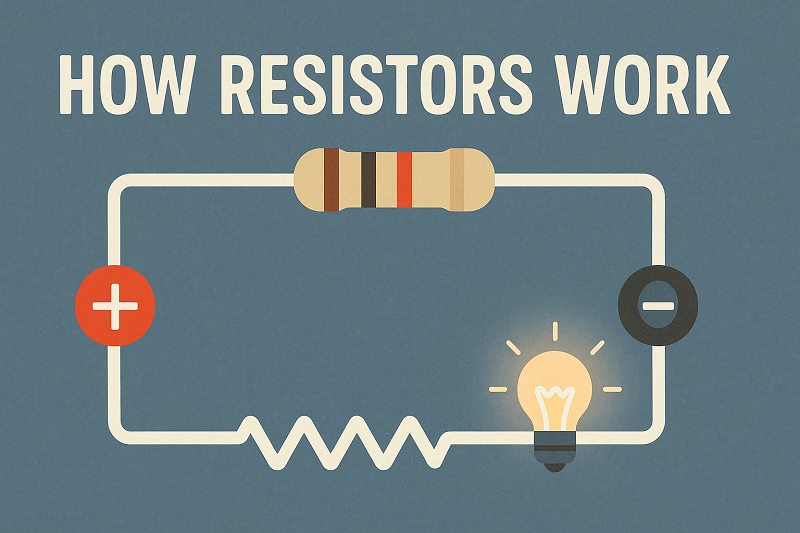
How Resistors Work: From Basic Principles to Advanced Applications2025-07-30
DC Switching Regulators: Principles, Selection, and Applications2025-05-30
FPGA vs CPLD: In-depth Analysis of Architecture, Performance and Application2025-05-07
MOSFET Technology: Essential Guide to Working Principles & Applications2025-05-04
SMD Resistor: Types, Applications, and Selection Guide2025-04-30