Phone

    00852-6915 1330

The Kynix Blog

Stay Ahead with Expert Electronics Insights,
Industry Trends, and Innovative Tips

RFID

What is RFID? How RFID works? RFID Explained in Detail

RFID is the abbreviation of Radio Frequency Identification.Its principle is the contactless data communication between the reader and the tag to achieve the purpose of identifying the target. RFID has a wide range of applications, typical applications include animal chip, car chip immobilizer, access control, parking control, production line automation, and material management.What is RFID? How RFID works? RFID Explained in DetailCatalogI Overview of RFIDII Working principle of RFIDIII How RFID system is composed?3.1 About the reader3.2 About electronic tagsIV Features4.1 Applicability4.2 High efficiency4.3 Uniqueness4.4 SimplicityFAQI Overview of RFIDRadio frequency identification, or radio frequency identification technology, is a type of automatic identification technology that uses wireless radio frequency for non-contact two-way data communication. It uses radio frequency to read and write recording media (electronic tags or radio frequency cards) to achieve the purpose of identification and data exchange. It is considered to be one of the most promising information technologies in the 21st century.Radio frequency identification technology uses radio waves without contact with fast information exchange and storage technology, combines wireless communication with data access technology, and then connects to the database system to achieve non-contact two-way communication. In this way, the purpose of identification is achieved, and it can be used for data exchange, connecting an extremely complex system in series.In the identification system, the reading and writing and communication of electronic tags are realized through electromagnetic waves. According to the communication distance, it can be divided into near-field and far-field. For this reason, the data exchange mode between the read/write device and the electronic tag is correspondingly divided into load modulation and backscatter modulation.  II Working principle of RFIDThe basic working principle of RFID technology is not complicated: After the tag enters the reader, it receives the radio frequency signal from the reader, and uses the energy obtained by the induced current to send out the product information stored in the chip (Passive Tag, passive tag or passive tag). ), or the tag actively sends a signal of a certain frequency (Active Tag, active tag or active tag). After the reader reads and decodes the information, it is sent to the central information system for relevant data processing.A complete RFID system is composed of three parts: a reader, an electronic tag, a so-called transponder, and an application software system. Its working principle is that the reader emits radio wave energy of a specific frequency to drive the circuit to send out the internal data. At this time, the Reader receives the interpretation data in order and sends it to the application program for corresponding processing.From the perspective of the communication and energy sensing methods between the RFID card reader and the electronic tag, it can be roughly divided into two types: inductive coupling and backscatter coupling. Generally, low-frequency RFID mostly adopts the first method, and high-frequency RFID mostly adopts the second method.The reader can be a read or read/write device depending on the structure and technology used, and it is the information control and processing center of the RFID system. The reader usually consists of a coupling module, a transceiver module, a control module and an interface unit.The reader and the tag generally adopt a half-duplex communication mode for information exchange, and the reader provides energy and timing to the passive tag through coupling. In practical applications, management functions such as the collection, processing and remote transmission of object identification information can be further realized through Ethernet or WLAN. III How RFID system is composed?The complete RFID system consists of three parts: Reader, Tag and data management system. 3.1 About the readerThe reader is a device that reads the information in the tag or writes the information that the tag needs to store into the tag. Depending on the structure and technology used, the reader can be a read/write device, which is the information control and processing center of the RFID system. When the RFID system is working, the reader sends radio frequency energy in an area to form an electromagnetic field, and the size of the area depends on the transmit power.The tag in the coverage area of the reader is triggered to send the data stored in it, or modify the data stored in it according to the instructions of the reader, and can communicate with the computer network through the interface. The basic composition of the reader usually includes: transceiver antenna, frequency generator, phase-locked loop, modulation circuit, microprocessor, memory, demodulation circuit and peripheral interface composition.(1) Transceiver antenna: Send radio frequency signals to the tag, and receive the response signal and tag information returned by the tag.(2) Frequency generator: Generates the operating frequency of the system.(3) Phase-locked loop: Generate the required carrier signal.(4) Modulation circuit: Load the signal sent to the tag to the carrier wave and send it out by the radio frequency circuit.(5) Microprocessor: Generates the signal to be sent to the label, decodes the signal returned by the label, and sends the decoded data back to the application program. If it is an encrypted system, a decryption operation is also required.(6) Memory: store user programs and data.(7) Demodulation circuit: demodulate the signal returned by the tag and deliver it to the microprocessor for processing.(8) Peripheral interface: to communicate with the computer.3.2 About electronic tagsThe electronic tag consists of a transceiver antenna, AC/DC circuit, demodulation circuit, logic control circuit, memory and modulation circuit.(1) Transceiver antenna: Receive the signal from the reader and send the required data back to the reader.(2) AC/DC circuit: Utilize the electromagnetic field energy emitted by the reader, output by the voltage regulator circuit to provide a stable power supply for other circuits.(3) Demodulation circuit: Remove the carrier from the received signal and demodulate the original signal.(4) Logic control circuit: decode the signal from the reader, and send back the signal according to the requirements of the reader.(5) Memory: As a location for system operation and storage of identification data.(6) Modulation circuit: The data sent by the logic control circuit is loaded to the antenna and sent to the reader after the modulation circuit.IV FeaturesGenerally speaking, the radio frequency identification technology has the following characteristics.  4.1 ApplicabilityRFID technology relies on electromagnetic waves and does not require physical contact between the connecting parties. This makes it possible to establish connections without regard to dust, fog, plastic, paper, wood and various obstacles, and to complete communications directly. 4.2 High efficiencyRFID system read and write speed is extremely fast, a typical RFID transmission process is usually less than 100 milliseconds. RFID readers in the high frequency band can even identify and read the contents of multiple tags simultaneously, greatly improving the efficiency of information transmission.  4.3 Uniquenesseach RFID tag is unique, through the RFID tag and product one-to-one correspondence, you can clearly track the subsequent circulation of each product. 4.4 SimplicityRFID tag structure is simple, high recognition rate, the required reading equipment is simple. Especially with the gradual popularization of NFC technology on smart phones, each user's cell phone will become the simplest RFID reader.FAQ 1. What is RFID used for?Radio Frequency Identification (RFID) is the wireless non-contact use of radio frequency waves to transfer data. Tagging items with RFID tags allows users to automatically and uniquely identify and track inventory and assets.2. What is RFID and how it works?RFID is a method of data collection that involves automatically identifying objects through low-power radio waves. Data is sent and received with a system consisting of RFID tags, an antenna, an RFID reader, and a transceiver.3. What RFID means?Radio Frequency Identification (RFID) refers to a wireless system comprised of two components: tags and readers. The reader is a device that has one or more antennas that emit radio waves and receive signals back from the RFID tag.4. Is RFID harmful to human?It is a non-ionizing type of radiation, but some researches show that it could have a negative impact on the human body in a long-term period [11, 12]. So, for the safety reasons, manufacturers of the RFID systems have limited the range of the RFID antennas used in their systems.5. Is RFID tag and FASTag same?FASTag is a device that employs Radio Frequency Identification (RFID) technology for making toll payments directly while the vehicle is in motion. FASTag (RFID Tag) is affixed on the windscreen of the vehicle and enables a customer to make the toll payments directly from the account which is linked to FASTag.6.What is RFID and its advantages?RFID technology automates data collection and vastly reduces human effort and error. RFID supports tag reading with no line-of-sight or item-by-item scans required. RFID readers can read multiple RFID tags simultaneously, offering increases in efficiency.7. Why is RFID bad?Some negative effects are that its deadly, if RFID tags combine with static electricity you can die. Another negative effect is that the government is slowly taking away surviving resources and giving ultimatums, such as if you don't get the RFID tracking chip your public assistance will be terminated.8.What are the disadvantages of RFID?a. Materials like metal & liquid can impact signal.b. Sometimes not as accurate or reliable as barcode scanners.c. Cost – RFID readers can be 10x more expensive than barcode readers.d. Implementation can be difficult & time consuming.9.How do I charge my RFID FASTag?In order to recharge your FASTag sticker, just hit the Add Money option in your Paytm app. FASTag will automatically reserve some amount from your wallet, which can be used at toll plazas later. Do note that FASTag can be used only after 20 mins of adding money to the Paytm Wallet.10. Can I use existing RFID for FASTag?If a vehicle already has an RFID tag, it might already be activated. When you buy the vehicle, RFID tag payment was also done. It might also have a minimum balance of INR 100 or 200 as is required by the bank. You can recharge it with your Customer ID or Wallet ID of FASTag.11. How does RFID work without power?Passive RFID tags have no power of their own and are powered by the radio frequency energy transmitted from RFID readers/antennas. The signal sent by the reader and antenna is used to power on the tag and reflect the energy back to the reader.12. What are the types of RFID tags?RFID tags can be grouped into three categories based on the range of frequencies they use to communicate data: low frequency (LF), high frequency (HF) and ultra-high frequency (UHF). Generally speaking, the lower the frequency of the RFID system, the shorter the read range and slower the data read rate.13.How do I know if I have an RFID chip?The best way to check for an implant would be to have an X-ray performed. RFID transponders have metal antennas that would show up in an X-ray. You could also look for a scar on the skin. Because the needle used to inject the transponder under the skin would be quite large, it would leave a small but noticeable scar.14. Does RFID require power?Active RFID tags possess their own power source – an internal battery that enables them to have extremely long read ranges as well as large memory banks. Typically, active RFID tags are powered by a battery that will last between 3 - 5 years, but when the battery fails, the active tag will need to be replaced.15. What is the difference between a QR code and RFID?QR codes must always be “read-only”, whereas RFID tags can be “read-write”, depending on the radio frequency that's being used. ... So, not only are RFID tags futuristic and have more uses than QR tags, they also have many more applications. The read range is far superior for an RFID tag. 
Kynix On 2025-04-29   3145
FPGA

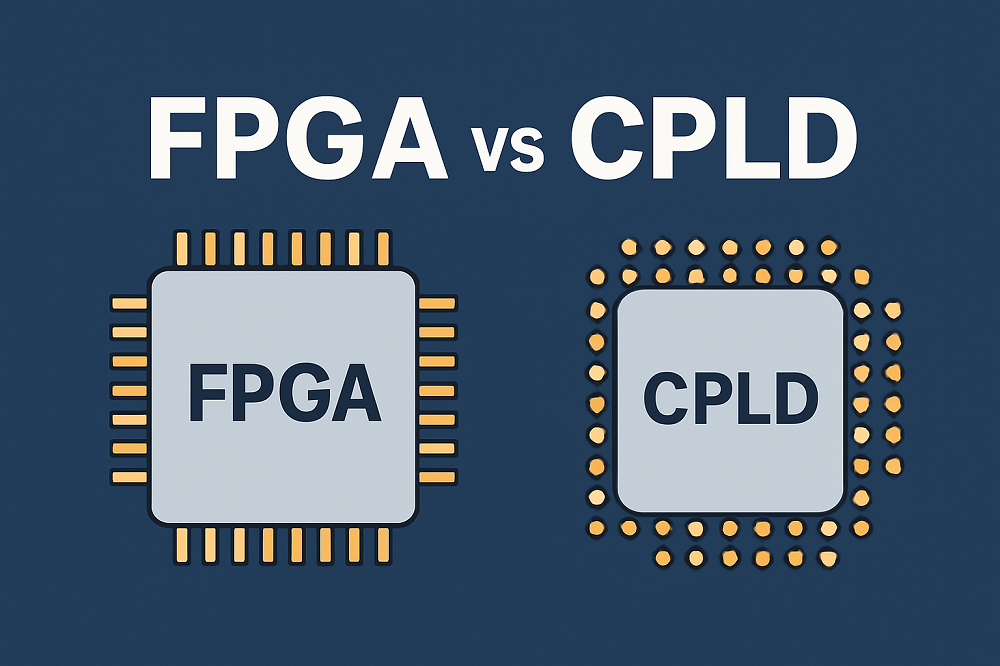
What is an FPGA? A Basic Introduction [FAQ]

FPGA (Field-Programmable Gate Array), it is the product of further development on the basis of PAL, GAL, CPLD and other programmable devices. It appears as a kind of semi-custom circuit in the field of application specific integrated circuit (ASIC). It not only solves the shortage of custom circuit, but also overcomes the shortcoming of limited number of gates in the original programmable devices.What is an FPGA, and how does it compare to a microcontroller?CatalogI. What is FPGA?II. Principles of FPGAs III. FPGA Pros & ConsIV. FPGA Chip StructureV. FPGA FeaturesFAQI. What is FPGA?FPGA (Field Programmable Gate Array) is a product of further development on the basis of programmable devices such as PAL and GAL. It emerged as a semi-custom circuit in the field of application-specific integrated circuits (ASIC), which not only solves the deficiencies of custom circuits, but also overcomes the shortcomings of the limited number of gate circuits of the original programmable devices.II. Principles of FPGAs FPGA adopts the concept of Logic Cell Array (LCA), which consists of Configurable Logic Block (CLB), Input Output Block (IOB) and Internal Interconnect. Three parts. FPGAs are programmable devices with a different structure than traditional logic circuits and gate arrays (such as PAL, GAL and CPLD devices). The logic of the FPGA is implemented by loading programmed data into the internal static memory cell, and the values stored in the memory cell determine the logic function of the logic cell and the connection between the modules or between the modules and the I/O. The value stored in the memory cell determines the logical function of the logic unit and the way the modules are linked to each other or to the I/O, and ultimately determines the functions that the FPGA can achieve.III. FPGA Pros & Cons - The Pros of FPGAs:(1) FPGAs consist of hardware resources such as logic cells, RAM, multipliers, etc. By organizing these hardware resources rationally, hardware circuits such as multipliers, registers, address generators, etc. can be implemented.(2) FPGAs can be designed by using block diagrams or Verilog HDL, from simple gate circuits to FIR or FFT circuits.(3) FPGAs can be infinitely reprogrammed, loading a new design solution in a few hundred milliseconds, reducing hardware overhead with reconfiguration.(4) The operating frequency of the FPGA is determined by the FPGA chip as well as the design, and can be modified by modifying the design or replacing it with a faster chip to meet certain demanding requirements (of course, the operating frequency is not unlimited and can be increased, but is governed by current IC processes and other factors).  - The Cons of FPGAs:(1) All functions of FPGAs rely on hardware implementation and cannot implement operations such as branching conditional jumping.(2) FPGAs can only implement fixed-point operations.To conclude: FPGAs rely on hardware to implement all functions and can be compared to dedicated chips in terms of speed, but there is a big gap in design flexibility compared to general purpose processors.IV. FPGA Chip StructureMainstream FPGA is still based on look up table technology, has far exceeded the basic performance of previous versions, and integrates common features (such as RAM, clock management and DSP). FPGA chips have seven main parts: programmable input/ output unit, basic programmable logic unit, complete clock management, embedded block RAM, rich wiring resources, embedded bottom functional unit and embedded special hardware module.The functions of FPGA chip structure are as follows:1. Programmable Input and Output BlockThe programmable input/ output block is referred to as I/ O port. It is the interface part between the chip and the external circuit, which can drive and match the input/ output signals under different electrical characteristics. I/ O in FPGA is classified by group, and each group can support different I/ O standards independently. With the flexible configuration of the software, different electrical standards and I/ O physical characteristics can be met, the drive current can be adjusted, and the frequency of I/ O port of the and pull-up resistor and pull-down resistor can be changed, so that the frequency of the I/ O port can be higher and higher. Some high-end FPGA can support data rate up to 2Gbps through DDR register.Fig 1. IOB Internal Structure DiagramThe external input signal can be read into the FPGA through the memory cell of the IOB module, or directly written into the inside of the FPGA. When the external input signal passes through the memory cell of the IOB module read into the inside of the FPGA, the requirement of hold time  can be reduced, which usually the windows default is 0.In order to facilitate management and adapt to a variety of electrical standards, FPGA's IOB is divided into several banks, each bank interface standard is determined by its interface voltage VCCO, in addition, a bank can only have one VCCO, but each bank VCCO can be different. Only ports with the same electrical standard can be connected together, and the same VCCO voltage is the basic requirement of the interface standard.2. Configurable Logic Block (CLB)CLB is the basic logical unit within the FPGA. The actual number and characteristics of CLBs vary depending on the device, but each CLB contains a configurable switch matrix that consists of 4 or 6 inputs, some lectotype circuits (multiplexers, etc.) and flip-flops. The switch matrix is highly flexible and can be configured to work with combinational logic, shift registers, or RAM. In Xilinx's FPGA device, the CLB consists of multiple (usually 4 or 2) identical Slices and additional logic. Each CLB module be used to realize combinational logic and sequential logic, and it can also be configured as distributed RAM and distributed ROM.Fig 2. CLB Structure DiagramSlice is a basic logical unit defined by Xilinx. A Slice consists of two 4-input functions, carry logic, arithmetic logic, storage logic and function multiplexer. Arithmetic logic includes a  XORG and a MULTAND. XORG enables a Slice to implement the full operation of 2bit, and MULTAND improves the efficiency of multipliers. Carry logic consists of a dedicated carry signal and a function multiplexer for fast arithmetic addition and subtraction operations; 4-input functions generator is used to implement the 4-input LUT, distributed RAM or 16-bit shift register. Carry logic includes two fast carry chains to improve the processing speed of the CLB module.Fig 3. Inputting Slice Structure Diagram3. Digital Clock Management (DCM)Most of the industry's FPGA offer digital clock management. FPGA offers digital clock management and phase loop locking. Phase loop locking can provide accurate clock synthesis, reduce jitter and achieve filtering.4. Block Random Access Memory (BRAM)Most FPGAs have embedded block RAM, which greatly extends the applications and flexibility of the FPGA. The block RAM may be configured as a single-port RAM, a dual-port RAM, a content address memory (CAM), and a common storage structure such as a FIFO. CAM memory has a comparison logic in each of its internal memory cells, the data written into the CAM will be compared with each of the data in the interior, and the address of all data that is the same as the port data, so that there is a wide range of address switches in the route application. In addition to the block RAM, the LUT in the FPGA can be flexibly configured as a RAM, a ROM, and a FIFO. In practical application, that number of block RAM in the internal block of the chip is also an important factor in the chip selection.The capacity of the monolithic RAM is 18k bits, that is, the bit width is 18 bits and the depth is 1024. It can change the bit width and depth according to the need, but two principles must be satisfied: firstly, the modified capacity (bit width depth) cannot be greater than 18k bits; Second, the maximum bit width cannot exceed 36 bits. Of course, it is possible to concatenate multiple blocks of RAM to form a larger RAM, which is limited only by the number of RAM blocks in the chip and is no longer constrained by the above two principles.5. Wiring SourceAll the parts are connected with wiring resources in the FPGA, and the length and process of the connection determine the driving ability and the transmission speed of the signal on the wire. There are abundant wiring resources in the FPGA chip, according to the process and length, width and distribution position, which are divided into 4 different categories. First is the global routing resource, which is used for the internal global clock and the global reset/ position routing. Second is the long line resource, which is used to complete the wiring of the high-speed signal and the second global clock signal between chip banks. Third is short-line resources, which are used to perform logical interconnection and cabling between basic logical units. Fourth is a distributed wiring resource, which is used as control signal lines for a proprietary clock or a reset.In practice, the designer does not need to select the routing resources directly, and the layout scheduler can automatically select the better routing resources according to the topology of the input logical grid table and constraint conditions to connect each module unit. In essence, the use of routing resource types has a close and direct relationship with the results of the design.6. Underlying Built-in Function The underlying built-in function mainly refers to a DLL (Delay Locked Loop), a PLL (Phase Locked Loop), a DSP, and a CPU, which belong to core softcore. The more and more built-in functional units make the single-chip FPGA a system-level design tool, so that it has the capability of joint design of hardware and software, and gradually turn to the SOC platform.DLL and PLL have similar functions, such as high-precision clock and low jitter frequency doubling and frequency division, duty cycle adjustment and phase shift, etc. Xilinx integrated the DLL, Altera made the PLL, Lattice combined both two, which can be easily managed and configured through IP core-generated tools on Lattice's new chip. Fig 4. Typical DLL module schematics7. Special Built-in Hard CoreThe embedded special hard core is relative to the soft core embedded in the bottom, which means that the hard core with strong processing ability of FPGA is equivalent to the ASIC. To improve FPGA performance, chip manufacturers integrate some dedicated hard cores on the chip. For example, to improve the multiplication speed of FPGA, special multipliers are integrated in the mainstream FPGA, and in order to match the communication bus and interface standard, a lot of high-end FPGA are integrated SERDES, which can achieve the receiving and dispatching speed of  Gbps. V. FPGA Features1) The ASIC circuit is designed by adopting the FPGA, and the user does not need to put the chip into production, so that a shared chip can be obtained.2) FPGA can be used as a trial sample of other fully customized or semi-custom ASIC circuits.3) There are rich flip-flops and I/ O pins within the FPGA.4) FPGA is one of the devices with the shortest design cycle, the lowest development cost and the least risk among ASIC circuits.5) FPGA adopts high-speed CMOS process, low power consumption, and can be compatible with CMOS and TTL.It can be said that FPGA chip is one of the best choices for small batch system to improve system integration and reliability.The working state of FPGA is set by the program stored in the on-chip RAM, so it is necessary to program the on-chip RAM when working. Users can use different programming methods according to different configuration modes.When the power is on, the FPGA chip reads the data from the EPROM into the on-chip programming RAM. After the configuration is completed, the FPGA enters the working state. After power off, FPGA internal logic disappears. Therefore, FPGA can be programmed repeatedly. And the programming of FPGA does not require a special programmer, a general-purpose EPROM or PROM programmer can meet the requirement. When you need to modify the FPGA functionality, just replace a piece of EPROM. In this way, the same piece of FPGA, with different programming data, can produce different circuit functions. Therefore, the use of FPGA is very flexible.FAQ 1. What is FPGA and why it is used?FPGA Basics: Architecture, Applications and Uses. The field-programmable gate array (FPGA) is an integrated circuit that consists of internal hardware blocks with user-programmable interconnects to customize operation for a specific application.2. Is FPGA faster than CPU?They also found that using custom FPGAs to implement the Rowhammer exploit would cause far more of the "bit flips" that they wanted to see. A FPGA can hit the data cell faster and more often than a CPU can do it meaning the FPGA causes more results to occur during an attack. It all goes faster when an FPGA is used.3. Are FPGAs dead?Yes, it's a dead end. If you enjoy creating hardware, RTL design targeting FPGAs is still a good choice (although there is a huge amount of effort here to make it more like creating software than hardware).4. What are FPGAs good for?FPGAs are particularly useful for prototyping application-specific integrated circuits (ASICs) or processors. An FPGA can be reprogrammed until the ASIC or processor design is final and bug-free and the actual manufacturing of the final ASIC begins. Intel itself uses FPGAs to prototype new chips.5. Is FPGA a microprocessor?Microprocessors are more complex than FPGAs. Microprocessors have fixed instructions while FPGAs don't. FPGAs and microprocessors are often mixed into a single package.6. What are the advantages of FPGA?FPGA advantages:Long-term availability.Updating and adaptation at the customer.Very short time-to-market.Fast and efficient systems.Acceleration of software.Real-time applications.Massively parallel data processing.7. Why is FPGA slow?FPGAs tend to get faster in max speed, but the limit actually has to do with process variation affecting static timing. The chips have to have a soultion that works on all of them. So you lose performance of the device to make sure any device will work with it. And as your design gets bigger it runs slower.8. What are the disadvantages of FPGA?Drawbacks or disadvantages of FPGA:The programming is not as simple as C programming used in processor based hardware. Moreover engineers need to learn use of simulation tools. ➨The power consumption is more and programmers do not have any control on power optimization in FPGA. No such issues in ASIC.9. Can FPGA replace CPU?There will always be a need for a general purpose CPU to run most things, and while you can implement a CPU on an FPGA, that gives you the worst of both worlds - no improvement from specialised hardware design, and you still need to pay the “FPGA tax”. So no, FPGAs will never replace CPUs.10. Why use an FPGA vs microcontroller?A FPGA can be used if the design requires complex logic and requires high processing ability and if the cost is comparable to the performance achieved. In case of a design that requires limited hardware, and is set to perform only some specific functions, then Microcontroller is preferred.
Kynix On 2025-04-29   3631
Resistors

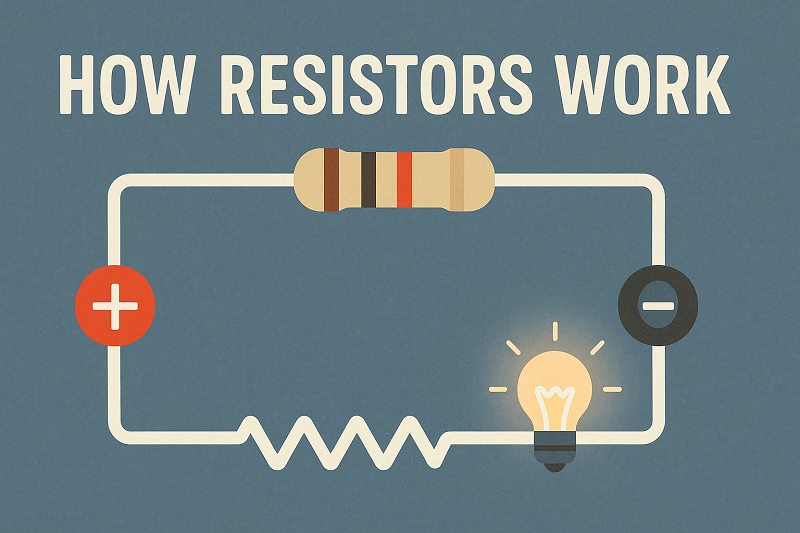
What Is A Resistor? Basics about Resistors

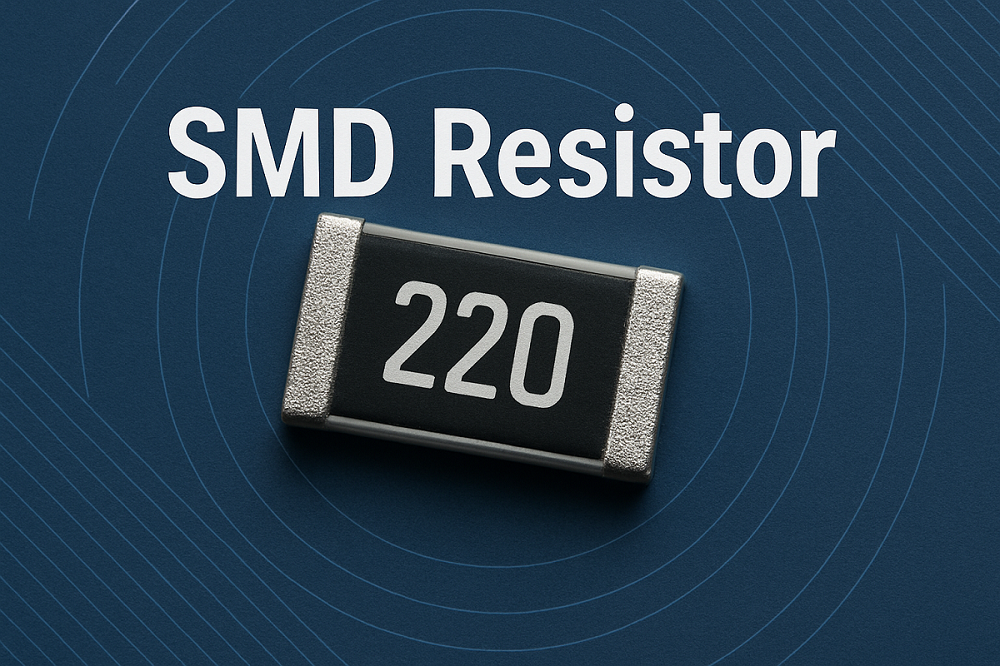
What is a resistor? In short, resistors are electronic components which have a specific, never-changing electrical resistance. The resistor's resistance limits the flow of electrons through a circuit. So in this article today, we will have a detailed discussion on resistors, which will present you as much as information about resistor as possible.I What is a Resistor?1.1 Brief IntroductionResistors are passive electrical components that limit electric current. This video explains in an easy way the most basic background to help you understand resistors and use them.A resistor refers to a two-terminal electronic element made of resistor material with a certain structure that can limit the current passing through the circuit. It is the most widely used component in electronic circuits, which usually form different series according to its power and resistance values. Its function in circuits is to regulate and stabilize current and voltage, that is,  used as shunt and voltage divider, or circuit matching load. According to the circuit requirements, it can also be used for negative feedback or positive feedback of amplifying circuit, voltage-current conversion, voltage or current protecting element when existing input overload. With the capacitor, it can form an RC circuit, which can be used as oscillation, filter, bypass, differential, Integral and time constant elements, etc. Those whose resistance values cannot be changed are called fixed resistors, and those with variable resistance values are called potentiometers or variable resistors. Some special resistors, such as thermistors, varistors, and sensitive elements, have a nonlinear relationship between voltage and current.1.2 Resistor and ResistanceThe resistor is a current limiting element in daily life. Resistance is a physical quantity describing the conductivity of a conductor, represented by R. Resistance is defined by the ratio of the voltage U at the two ends of the conductor and the current I passing through the conductor, that is, R=V/I. When the resistor is connected to the circuit, the resistor's resistance is fixed by two pins, which can limit the current to flow through the branch of the resistor. The resistance that cannot be changed is called a fixed resistor. In addition, a variable resistance is called a potentiometer or a variable resistor. The ideal resistor is linear, that is, the instantaneous current of the resistor is positive to the applied instantaneous voltage, for example, the variable-voltage resistor is used as a voltage divider. On a bare resistor, there are one or two removable metal contacts, and the contact position determines the resistance between any end of the resistor and the contact.  The terminal voltage and current have a definite function relation, and the two-terminal device which embodies the conversion of electric energy into other forms, represented by the letter R, and its unit is Ω. Devices such as light bulbs, heating wires, resistors, and so on can be expressed as resistor elements.The resistance value of the resistor is generally related to temperature, material, component length, and cross-section area. The physical quantity of measuring resistance affected by the temperature is the temperature coefficient, which is defined as the percentage of resistance value changing when the temperature rises 1℃. The main physical characteristic of resistors is transforming the electricity into heat energy, also the resistor can be said to be an energy dissipation element because the internal energy will be generated when current flows through it. Resistors usually act as a divider and shunt in a circuit. And for signals, both AC and DC signals can pass through resistors.In physics, resistance is a figure to indicate the magnitude of a conductor's hindrance to current. The greater the resistance of a conductor, the greater the resistance of the conductor to the current. Generally, different conductors have different resistances, in other words, resistance is a characteristic of the conductor itself. The resistance element is a kind of energy dissipation element which hinders the current. The stuff under the action of matter called resistive substance because of its blocking effect on the current. The resistor will lead to the change of the electron flux. When the voltage at both ends of the conductor is fixed, the larger the resistance, the smaller the current passing through, on the other hand, the smaller the resistance, the greater the current passing through. 1.3 Resistor BasicsThe resistor consists of three parts of a resistor body, a framework, and a lead-out end (the resistor body of the solid-core resistor is integrated with the framework), and the resistor body plays an important part in this electronic component. For a resistor body with a uniform cross-section, the resistance value is calculated by the following formula: ρ is the electrical resistivity (ohm-cm), L is the length (cm) of the resistor, and A is the cross-sectional area of the resistor (square centimeter).R=ρ× L/AThe thickness of the thin film resistor is very small and difficult to measure accurately, and ρ varies with the thickness values, so the constant related to the film material is regarded as the film resistance. In fact, it is the resistance of the square film, so it is also known as the square resistance. For homogeneous films, W is the width of the film (cm), in general, Rs should be in a limited range because large Rs will affect the stability of resistor performance. Therefore the cylindrical resistor is notched and the planar resistor uses the etching method of a detour to extend the range of resistance and to fine-tune the resistance.R=Rs×L/WThe volt-ampere characteristic is a graph that represents the relationship between the voltage and the current of the resistor terminal. When the voltage-current is proportional (representing a straight line), it is called a linear resistor, otherwise referred to as a non-linear resistor.The vertical coordinates of this diagram are current I and the transverse coordinates are voltage U. This graph is also called the current-voltage curve, more often is referred to as the volt-ampere characteristics curve. As we can see, the blue curve is a straight line passing through the origin, and its resistance does not change with the change of voltage and current, in fact, elements that satisfy this volt-ampere characteristic curve are called linear elements. On the other hand, for the red curve, we can see that it is a curve, its resistance value changes with the change of voltage and current.The main parameters used to characterize the resistance have nominal resistance, allowable deviation, rated power, load characteristic, resistor temperature coefficient, and so on.1.4 Resistor Operation TheoryOhm's lawThe behavior of an ideal resistor is dictated by the relationship specified by Ohm's law:V=I ∙ ROhm's law states that the voltage (V) across a resistor is proportional to the current (I), where the constant of proportionality is the resistance (R). For example, if a 300-ohm resistor is attached across the terminals of a 12-volt battery, then a current of 12/300 = 0.04 amperes flows through that resistor.Practical resistors also have some inductance and capacitance which affect the relation between voltage and current in alternating current circuits.In addition, linear or ohmic resistance meets Ohm's law, but nonlinear resistance does not satisfy Ohm's law.The nominal resistance is the design resistance of the sign on the resistor with a digital or color code. The units are Ω, KΩ, and MΩ. Resistance values are written according to standardized priority series, which correspond to allowable deviations.The electrical resistance of a resistor is measured in ohms. The symbol for an ohm is the greek capital-omega: Ω. The ohm (symbol: Ω) is the SI unit of electrical resistance, named after Georg Simon Ohm. An ohm is equivalent to a volt per ampere. Since resistors are specified and manufactured over a very large range of values, the derived units of milliohm (1 mΩ = 10−3 Ω), kilohm (1 kΩ = 103 Ω), and megohm (1 MΩ = 106 Ω) are also in common usage. For example, a 4,700Ω resistor is equivalent to a 4.7kΩ resistor, and a 5,600,000Ω resistor can be written as 5,600kΩ or (more commonly as) 5.6MΩ. 1.5 Resistor Electronic SymbolsNotation1Ω= 1 Ohms1 KΩ= 1 Kilo Ohms1 MΩ= 1 Mega Ohms1 GΩ= 1 Giga OhmsWhen the value can be expressed without a prefix (that is, multiplicator 1), an "R" is used instead of the decimal separator. For example, 1R3 indicates 1.3Ω, and 15R indicates 15Ω.Marking method for Resistance and Tolerance of Resistors:① Direct Scaling MethodThe resistance and error of the resistor are directly printed on the resistor by numbers and letters (no error is indicated as the tolerance ±20%). There are also manufacturers who use customary marking methods, such as:3Ω3Ⅰis represent the resistance 3.3Ω, tolerance is ±5%1 K 8 represents the resistance 1.8 KΩ, tolerance is ±20%5 M 1Ⅱis represent the resistance 5.1 MΩ, tolerance is ±10% ② Resistor Color Bands/CodesThis Physics video tutorial is explaining the fundamentals of color code for four colour bands in a carbon resistor.The color bands are coated on the resistor to indicate the nominal value of the resistor and the allowable tolerance. The corresponding values of various colors and the recognition rules of the color bands/codes of the reading principle of the fixed resistor are shown in the following figure.Four-band ResistorsIn the standard four-band resistors, the first two bands indicate the two most significant digits of the resistor’s value. The third band is a weight value, which multiplies the two significant digits by a power of ten.The final band indicates the tolerance of the resistor. The tolerance explains how much more or less the actual resistance of the resistor can be compared to what its nominal value is. No resistor is made to perfection, and different manufacturing processes will result in better or worse tolerances. For example, a 1kΩ resistor with 5% tolerance could actually be anywhere between 0.95kΩ and 1.05kΩ.Example: red-orange black gold=23*10^0=23Ω(±5%)Five-band and six-band ResistorsFive band resistors have a third significant digit band between the first two bands and the multiplier band. Five band resistors also have a wider range of tolerances available.Six band resistors are basically five band resistors with an additional band at the end that indicates the temperature coefficient. This indicates the expected change in resistor value as the temperature changes in degrees Celsius. Generally, these temperature coefficient values are extremely small, in the ppm range.Example: red blue green black brown=265*10^0=265Ω(±1%)ToleranceThe maximum tolerance between the actual resistance and the nominal resistance, represented by percentages. Commonly used are ±5%, ±10%, ±20%, precision is less than ±1%, high precision up to 0.001%. The accuracy is determined by both the tolerance and the irreversible resistance.Power RatingMaximum power dissipation allowed for continuous operation of resistors at rated temperature (maximum ambient temperature) tR. And the maximum operating voltage is also specified for each resistor, that is, the maximum operating voltage cannot be exceeded even if the resistance value is high.Identification of rated Power of ResistorsThe rated power of a resistor refers to the maximum power that a resistor is allowed to consume in a long-term continuous operation in a DC or AC circuit. There are two marking methods: the resistance above 2W is directly printed on the resistor body, and the resistance below 2W is represented by its own volume. When the resistance power is expressed on the circuit diagram, the following symbols are used: 1) Load CharacteristicWhen the working temperature is lower than tR, the resistor can not exceed its rated power, and the load power must be reduced when it exceeds tR. Each resistor has its own specified load characteristic. In addition, the load is allowed to be reduced accordingly at low pressure. Under pulse load, the average power of the pulse is much lower than the rated power, the load is according to the practical situation.2) Resistance Temperature CoefficientThe average relative variation of the resistance value at each change of 1℃ is expressed in terms of ppm/ ℃ within a specified range of ambient temperature. In addition to the above parameters, there are other technical indicators, such as nonlinearity (the extent to which the characteristics of the current and the applied voltage deviate from the linear relationship), the voltage coefficient (the relative rate of change of the voltage at which the voltage is applied, the relative rate of change of the volt resistance), current noise (the ratio of the effective value of the noise potential generated by the current flow in the resistor to the measured voltage, expressed by the current noise index), the high-frequency characteristic (due to the effect of the distributed capacitance and the distributed inductance in the resistor; a curve in which the resistance value decreases as the operating frequency increases; long-term stability (such as irreversible changes in resistance values affected by environmental conditions during long term use or storage).II Resistor CharacteristicsDependent on the application, the electrical engineer specifies different properties of the resistor. The primary purpose is to limit the flow of electrical current; therefore the key parameter is the resistance value. The manufacturing accuracy of this value is indicated with the resistor tolerance in percentage. Many other parameters that affect the resistance value can be specified, such as long-term stability or the temperature coefficient. The temperature coefficient, usually specified in high precision applications, is determined by the resistive material as well as the mechanical design.In high-frequency circuits, such as in radio electronics, the capacitance and inductance can lead to undesired effects. Foil resistors generally have a low parasitic reactance, while wire-wound resistors are amongst the worst. For accurate applications such as audio amplifiers, the electric noise must be as low as possible. This is often specified as microvolts noise per volt of applied voltage, for a 1 MHz bandwidth. For high-power applications, the power rating is important. This specifies the maximum operating power the component can handle without altering the properties or damage. The power rating is usually specified in free air at room temperature. Higher power ratings require a larger size and may even require heat sinks. Many other characteristics can play a role in the design specification. Examples are the maximum voltage or the pulse stability. In situations where high voltage surges could occur this is an important characteristic.Resistors in series and parallel ConnectionIn electronic circuits, resistors are very often connected in series or in parallel. A circuit designer might for example combine several resistors with standard values (E-series) to reach a specific resistance value. For series connection, the current through each resistor is the same and the equivalent resistance is equal to the sum of the individual resistors. For parallel connection, the voltage through each resistor is the same, and the inverse of the equivalent resistor value is equal to the sum of the inverse values for all parallel resistors. In the articles resistors in parallel and series, a detailed description of calculation examples is given. To solve even more complex networks, Kirchhoff’s circuit laws may be used.The Total resistance of resistors connected in series is the sum of each single individual resistance value.The total resistance of resistors connected in parallel is the reciprocal of the sum of the reciprocals of the individual resistors.As a special case of this equation: if you have just two resistors in parallel, their total resistance can be calculated with this slightly-less-inverted equation:Termination and MountingResistors will come in one of two termination types: through-hole or surface-mount. These types of resistors are usually abbreviated as either PTH (plated through-hole) or SMD/SMT (surface-mount technology or device).Through-hole resistors come with long, pliable leads which can be stuck into a breadboard or hand-soldered into a prototyping board or printed circuit board (PCB). These resistors are usually more useful in breadboarding, prototyping, or in any case where you’d rather not solder tiny, little 0.6mm-long SMD resistors. The long leads usually require trimming, and these resistors are bound to take up much more space than their surface-mount counterparts.The most common through-hole resistors come in an axial package. The size of an axial resistor is relative to its power rating. A common 1/2W resistor measures about 9.2mm across, while a smaller 1/4W resistor is about 6.3mm long.Surface-mount resistors are usually tiny black rectangles, terminated on either side with even smaller, shiny, silver, conductive edges. These resistors are intended to sit on top of PCBs, where they’re soldered onto mating landing pads. Because these resistors are so small, they’re usually set into place by a robot and sent through an oven where solder melts and holds them in place.III Resistor TypesMost types of the resistor are linear devices that produce a voltage drop across themselves when an electrical current flows through them because they obey Ohm’s Law, and different values of resistance produce different values of current or voltage. This can be very useful in Electronic circuits by controlling or reducing either the current flow or voltage produced across them we can produce a voltage-to-current and current-to-voltage converter.Resistors come in a variety of shapes and sizes. They might be through-hole or surface-mount. They might be a standard, static resistor, a pack of resistors, or a special variable resistor. The different types of resistors are discussed in the following section.1. Classified by Volt-ampere Characteristic*Linear resistors*Non-linear resistorsFor most conductors, at a certain temperature, the resistance is almost unchanged and is a certain value, the resistors having this kind of resistance is called a linear resistor. The resistors of some materials vary obviously with the current (or voltage) change, and the volt-ampere characteristic of them is a curve, which is called a nonlinear resistor. Under a given voltage (or current), the ratio of voltage to current is the static resistance at the working point, and the slope on the voltage-ampere characteristic curve is dynamic resistance. The expression of nonlinear resistance characteristics is complicated, but these nonlinear relations are widely used in electronic circuits.2. Classified by Material1) Wirewound resistor is made of resistive wires, wound high resistance alloy wires on an insulating skeleton, and coated with a heat-resistant glaze insulating layer or insulating paint. The wire-wound resistor has a low-temperature coefficient, high resistance accuracy, good stability, sound heat resistance, and corrosion resistance. It is mainly used for precise and high power resistance. The shortcoming is that the high-frequency performance is poor and the time constant is large.  ApplicationsIt has high securityAccurate measurement and balance current control is required.2) The carbon composition resistor is made from the mixer of granulated or graphite, an insulation filter, and a resin binder. The actual resistance of the resistor is determined by the ratio of the insulation material. The shape of the insulating binder is in the shape of roads and there are two metal caps at both the end of the roads. At both ends of the resistor, it has two wire conductors for easy connectivity in the circuit design. There are different colors that are printed on the resistor to find the value of it and the road is covered with the plastic coat.   ApplicationsThe composition resistor is used in the high energy pulses.·It has a relatively small size.·High voltage power supplies·Welding·High power3) A carbon film resistor is plated with a carbon layer on the porcelain tube, and the crystalline carbon is deposited on the ceramic rod framework. Furthermore, the temperature coefficient is from -100 to -900 ppm/°C. The carbon film resistor has the advantages of low cost, stable performance, wide resistance range, low-temperature coefficient, and low voltage coefficient, and is the most widely used resistor.  ApplicationsThe carbon film resistors are available in High plus stability.4) A metal film resistor is coated with a layer of metal on the ceramic tube, and the alloy material is plated on the surface of the ceramic rod skeleton by vacuum evaporation.Metal film resistor is more accurate than carbon film resistor, other advantages such as good stability, small noise, low-temperature coefficient. It is widely used in instrumentation and communication equipment.5) Metal oxide film resistors are coated with tin oxide on the ceramic tube, and a layer of metal oxide is deposited on the insulating rod. Because its body is an oxide, so it has high temperature stability, heat shock resistance, sound load capacity. According to the purpose, it is divided into universal, precision, high frequency, high voltage, high resistance, and high power type, also it can forms resistors network.IV Special Resistors1) KNP-RF: it also called a fuse resistor, which functions like a resistor and a fuse in the normal condition. When the circuit fails to make the power exceed the rated power, it will be blown as if the fuse is blown and the connection circuit is disconnected. The general resistance of the fuse resistance is small (0.33Ω ~ 10KΩ), and the power is also small. The common types of fuse resistors are RF10 type, RF111-5 fuse resistor symbol type, RRD0910 type, RRD0911 type, etc.2) Sensitive resistor: a resistor whose resistance value is sensitive to certain physical quantities (such as temperature, humidity, light, voltage, mechanical force, gas concentration, etc.). When these quantities change, The resistance value of the sensitive resistors will change with the change of physical quantity, showing different resistance values. According to the sensitivity to different physical quantities, the sensitive resistor can be classified as heat-sensitive, humidity-sensitive, photosensitive, pressure-sensitive, force-sensitive, magnetic sensitive, and gas sensitive. Sensitive resistors are almost made of semiconductor materials, thus they are also known as semiconductor resistors.The resistance of the thermistor varies with the change of temperature, when the temperature rise, this resistor is a negative temperature coefficient (NTC) thermistor. In most cases, the NTC thermistor is widely used, according to its different use, it can be divided into common NTC thermistor, steady-voltage NTC thermistor, thermometric NTC thermistor, and so on. The resistance of the photosensitive resistor changes with the intensity of the incident light. When the incident light is enhanced, the resistance decreases and the resistance increases when the incident light weakens.V How to Select a Suitable Resistor1) There are many types of fixed resistors, what materials and structures should be selected, it is necessary to consider the specific requirements of the application circuit. In high-frequency circuits, non-wire-wound resistors with small distributed inductance and capacitance should be selected,  such as carbon film resistor, metal resistor, and metal oxide film resistor, thin-film resistor, thick film resistor, alloy resistor, corrosion-resistant film resistor, etc. In high gain and small-signal amplifying circuits, low noise resistors should be used, such as metal film resistors, carbon film resistors, and wire-wound resistors, rather than synthetic carbon film resistors and organic solid resistors with high noise.There are different types of the resistor which are in the following:Carbon compositionCarbon PileCarbon filmPrinted carbon resistorThick and thin filmMetal filmMetal oxide filmWire woundFoil resistorAmmeter shuntGrid resistorSpecial veritiesLed ArrangementThe resistance value of the selected resistor shall be close to a nominal value of the calculated value in the application circuit, and the standard series resistor shall be preferred. The tolerance of resistors used in general circuits is ±5%~±10%. Precision resistors should be used in precision instruments and special circuits, with precision within 1%, such as 0. 01%, 0.1% or 0. 5% tolerance. The rated power of the selected resistor should not be arbitrarily increased or reduced in order to meet the requirements of the power capacity of the resistor in the application circuits.If the circuit is required to be a power resistor, the rated power can be 2 times higher than that required by the practical application circuit.Selection of Fuse ResistorFuse resistor, a kind of resistor with a protective function. The dual performance should be considered and the parameters such as resistance and power should be selected according to the specific requirements of the circuits. It is not only to ensure that it can fuse quickly when it is overloaded but also to guarantee that it can work stably for a long time under normal conditions. In addition, if the resistance is too high or the power is too large, it can not play a protective role either.Three basic principles for the selection of resistors:Select high-level standard resistors manufactured by a production line certified by the certification administrations.Select resistors manufactured by manufacturers with advantages of function, quality, efficiency,  price, and service.Select the manufacturer who meets the above requirements.VI Things Needing AttentionThe resistors should be checked before use, checking their performance is to measure whether the actual resistance value is consistent with the nominal value and whether the error is within the allowable range. The method is to measure the resistance by the multimeter.Two points need to pay attention to when measuring.1)The range should be determined according to the measured resistance when the pointer is indicated in the middle of the scale, which is easy to observe.2)After determining the resistor range, having zero adjustments is that the two table pens are directly touching (short circuit), that is, the "zero adjustments" device is adjusted so that the pointer is accurately pointed to the "0" of the Ω scale, and then the resistance value is measured again. Also, be careful not to touch both ends of the resistor or the metal part of the pen, otherwise, the test error will be caused.If the resistance measured by the multimeter is close to the nominal value, the basic quality is good, and if the difference is big or the multimeter does not work at all, this resistor is bad.VII Resistor Detection1. Appearance CheckFor a fixed resistor, check the logo clear firstly: intact protective paint, no charring, no scars, no cracks, no corrosion, resistive body and pin connected closely. For potentiometers, the axis flexible, proper tight, the comfortable handle should be the key point. If there is a switch, checking the switch whether is working properly.2. Multimeter Detection① detection of fixed resistanceWhen measuring, the different resistances are measured by the proper electric gears of the multimeter. For the pointer type multimeter, because the indicator of electric gear is nonlinear, the larger the resistance value, the more dense the indicator number is, so the more accurate the reading is, the larger the angle of needle deviation should be, to make more accurate reading numbers. If the measured result exceeds the error range of the resistor, the resistance value is infinite, unstable, or zero, which indicates that the resistor has been broken.In the measuring process, the hands holding the resistor should not contact the two pins of the resistor, which will affect the accuracy of the measurement. In addition, the multimeter can not be used to detect the resistance during power on, because online detection shouldn’t be allowed.② Detection of fuse resistors and sensitive resistorsThe resistance range of fuse resistors is generally only a few to dozens of Ω. If the detecting resistance is infinite, it indicates that the fuse has been fused. The resistance can also be measured online, measuring the grounding voltage at both ends respectively, if one end is equal to the power supply voltage and another end voltage is 0V, indicating the fuse resistor has broken.There are many kinds of sensitive resistors, in this section, taking thermistors as an example. As above mentioned, it is divided into positive temperature coefficient(PTC) thermistors and negative temperature coefficient(NTC) thermistors. For the PTC thermistor, the resistance value is usually small at normal temperatures. In the measurement, when using the electric soldering iron with burning heat close to the resistor, the resistance value will be obviously increased, which indicates the resistor is normal, and if no change appears, indicating the component is damaged. The NTC thermistor is the opposite.Under the circumstance without light, the resistance value of light-sensitive resistors is large, on the contrary, the measuring resistance will be reduced obviously when there is light, if there is no change, the component is damaged.③ Detection of variable resistors and potentiometerFirstly, measuring whether the resistance values between the two fixed ends are normal, if the detecting values are infinite or zero, or is larger or small than the nominal values, exceeding the tolerances, which indicates the device is damaged. If the resistance value of the resistive body is normal, then a meter pen of the multimeter is connected with the sliding end of the potentiometer, the other pen is connected with any fixed end of the potentiometer (adjustable resistor), and the footstalk is slowly rotated to observe whether the meter needle is stably changed.when the resistance value is changed from zero to the nominal value (or vice versa) from one end to the other end, and there is no jump or jitter in the course of rotation, which indicating the potentiometer is normal, if any, it is indicated that the sliding point of resistance is in poor contact3. Measuring resistance with bridgeIf the accurate measurement of resistor resistance is required, it can be measured by a bridge (digital). The resistance can be read from the display by inserting the resistor into the measuring end of the bridge by selecting an appropriate range. For example, when a resistor is made from a wire or a fixed resistor is processed to obtain a more accurate resistance value, under this situation, the resistance of the self-made resistor must be measured by a bridge.Different applications, the purpose of applying varistor, different voltage/current stress acting on the varistor, so the requirements for the varistors are different, thus it is necessary to pay attention to detecting. According to the purpose of the application, the varistors can be divided into two categories: the protection varistor and the circuit function varistor.1) Distinguish between the power supply, signal lines, and data wire protection for varistors, because they should meet the requirements of different technical standards.2) According to the difference of the continuous working voltage applied on the varistors, the power lines can be divided into two types: AC or DC, in addition, the aging characteristics of varistors under these two voltage stresses are different.3) According to the abnormal overvoltage of varistors, it can be divided into three types: surge suppression type, high power type, and high energy type.Surge suppression type: it is used to suppress transient overvoltages caused by lightning and improper operation. Transient overvoltages are random, aperiodic, and the peak value of current voltages may be very large.High power type: it is used to absorb a continuous group of pulses occurring in a period, for example, a varistor connected to a switching power converter, where the impulse voltage period occurs, and the period is knowable, so the energy value can generally be calculated. From this, we can see the peak value of voltage is not large, but occurs frequently, thus its average power is quite large.High energy type: it is used to absorb magnetic energy in large inductance coils such as generator excitation coils, lifting electromagnet coils, etc. For such applying requirements, the main technical index is energy absorption capacity.The protection of varistor can be used repeatedly in most applications, but sometimes it can be made into a one-off protection device such as a current fuse. For example, a varistor with short-circuit contact connected to a load of some current transformers. VIII How to Recognize a Resistor1. Color bands resistorThe first and second bands with four color bands represent the first two digits of the resistance respectively; the third band represents the multiplier; the fourth band represents the tolerance.   ColorDigitMultiplierToleranceBlack0100 Brown11011Red21022Orange3103 Yellow4104 Green51050.5Blue61060.25Violet71071Grey8108 White9109 Gold 10-15Silver 10-210None  20(1) The key to fast recognition is to determine the resistance value within a certain magnitude according to the color of the third band, and then to recognize the resistance of first and second band, following this way, the number can be read out quickly.GoldunitsBlacktensBrownhundredsRedthousandsOrangeten thousandsYellowhundred thousandsGreenmillionsBlueten millions(2) Memorize the number of colors represented by the first and second rings, the following table is the number each color represents.On the order of magnitude, they can be divided into three grades: gold, black, brown is Ω; red, orange, yellow are KΩ; green, blue is MΩ.(3) When the second band is black, the third band is represented by an integer, and a special case at the time of reading needs to be noted, for example, the third band is red, the resistance value is a whole number kΩ.(4) Remember the errors represented by the fourth band color, that is, gold is 5%, silver is 10%, colorless is 20%.Examples(1) When the four-color bands are yellow, orange, red, and gold successively because the third ring is red, the resistance range is several kΩ, according to the representing number of yellow and orange is "4" and "3" respectively, the reading number is 4.3 kΩ, and the fourth band is gold, so the error is 5%.(2) When the four-color bands are brown, black, orange, and gold in turn, because the third band is orange and the second band is black, the resistance range should be tens of kΩ, the brown is representing “1”, so the reading number is 10 kΩ, the fourth band is gold, its error is 5%.2. Chip resistorsChip resistors have the advantages of small size, lightweight, high installation density, high seismic resistance, sound anti-interference ability, and good high-frequency characteristic. It is widely used in computers, mobile phones, electronic dictionaries, medical e-products, video cameras, VCD machines,s, etc.Chip components can be divided into three types according to their shape: rectangular, cylindrical, and special-shaped. There are resistors, capacitors, inductors, transistors, and small integrated circuits. The nominal method of the chip components is different from that of the common components. The following is mainly about the nominal method of chip resistors.The resistance value of a chip resistor is the same as that of a general resistor. There are three methods of nominal resistance, but it is not exactly the same as that of general resistors.1) Digital nominal method (usually for general rectangular chip resistors)This method is using a three-digit number on the resistance body to indicate its resistance. Its first digit and second digit are significant digits, and the third digit represents the numbers of "0" added after the significant number, and this digit place does not appear as a letter.Example: “472′” represents “4700Ω”, “151” represents “150”.If it is a decimal, use "R" to denote "decimal point" and take up an effective digit, and the remaining two digits are valid numbers.Example: “2R4” represents “2.4Ω”, “R15” represents “0.15Ω”.2) Colour bands nominal method (used in general cylindrical fixed resistors)The chip resistor, like general resistors, is usually indicated by four/five/six bands. The first band and second band are significant numbers and the third band is a multiplier.IX. Resistor FunctionSmall power resistors are usually made of carbon film packaged in plastic shells, while high power resistors are usually wire wound resistors, which are made by metal wires with high resistance wrapped on the porcelain core.If the resistance value of a resistor is close to 0Ω, the resistor has not any effect on the current. In parallel with this kind of resistors, the circuit will be short-circuited and the current is infinitely large. If resistance is very large or infinite, the circuit is in series with such a resistor can be regarded as an open circuit, that is, the current is 0A. The commonly used resistor in the industry is between two these extreme cases. In other words, it has a certain resistance and can pass through a certain current, but the current is not as large as in a short circuit. The resistor's current limiting effect is similar to that of a small diameter tube connected to two large-diameter tubes to limit water flow. It is defined as the resistance corresponding to that 1V voltage is added to the conductor to generate 1A current, in fact, the term "resistance" refers to a property, whereas in electronic products, it often refers to a component such as a resistor.FAQ1. How does a resistor work?A resistor is a little package of resistance: wire it into a circuit and you reduce the current by a precise amount. ... A resistor like this is described as wire-wound. The number of copper turns controls the resistance very precisely: the more copper turns, and the thinner the copper, the higher the resistance.2. What are the 4 types of resistors?Resistor types:Fixed resistors.Variable resistors.Thermistors.Varistors.Light dependent resistors.3. What is resistor and its unit?Resistor is an electrical component that reduces the electric current. The resistor's ability to reduce the current is called resistance and is measured in units of ohms (symbol: Ω). If we make an analogy to water flow through pipes, the resistor is a thin pipe that reduces the water flow.4. What is resistor in simple words?A resistor is a passive two-terminal electrical component that implements electrical resistance as a circuit element. In electronic circuits, resistors are used to reduce current flow, adjust signal levels, to divide voltages, bias active elements, and terminate transmission lines, among other uses.5. What is the main function of resistor?A resistor is a passive electrical component with the primary function to limit the flow of electric current.6.How do you identify a resistor?Some resistors have contact plates on the bottom. Read the 3 or 4 numbers on the resistor. The first 2 or 3 represent the significant digits and the last indicates the number of 0s that should follow. For example, a resistor reading 1252 indicates a rating of 12,500 ohms or 1.25 kilo-ohms.7. What is resistor formula?According to Ohm's law, the voltage drop, V, across a resistor when a current flows through it is calculated by using the equation V=IR, where I is current in amps (A) and R is the resistance in ohms (Ω). So the voltage drop across R1 is V1=IR1, across R2 is V2=IR2, and across R3 is V3=IR3.8. What is difference between resistor and resistance?Resistance is the property of a conductor, which determines the quantity of current that passes through it when a potential difference is applied across it. A resistor is a electrical componet with a predetermined electrical resistance, like 1 ohm, 10 ohms 100 ohms 10000 ohms etc.9. What are the 2 types of resistors?The resistors are mainly divided into two types, first Fixed Resistors and second, variable resistors. In Fixed resistors, the electrical resistance of the resistor the remains same while in variable resistor it does change with some physical variable.10. What are the five examples of fixed resistor?The different types of fixed resistors include:Wire wound resistor.Carbon composition resistor.Carbon film resistor.Metal film resistor.Metal oxide film resistor.Metal glaze resistor.Foil resistor.11. What can be used as a resistor?Explained another way: an electrical circuit that has a difference of 2 volts, with 1 Ampere of current flowing through it, has a resistance of 2 Ohms. All electrically conductive materials are somewhat resistive, too. Because of this, even a good electrical conductor, such as metal wire, can be used as a resistor.12. How do you use a resistor in a circuit?Dividing voltage: You can also use resistors to reduce voltage to a level that's appropriate for specific parts of your circuit. For example, suppose your circuit is powered by a 3 V battery but a part of your circuit needs 1.5 V. You could use two resistors of equal value to split this voltage in half, yielding 1.5 V.13. What happens if there is no resistor in a circuit?If there really were no resistance in the circuit, the electrons would go around the circuit, and arrive back at the beginning of the circuit with as much energy as the potential difference (the voltage). That final energy is usually what is dissipated as heat or other types of energy by the circuit.14. How do you connect a resistor?Resistors are said to be connected in “Series”, when they are daisy chained together in a single line. Since all the current flowing through the first resistor has no other way to go it must also pass through the second resistor and the third and so on.15. What is the use of resistor color code?Components and wires are coded with colors to identify their value and function. Resistor Color Coding uses colored bands to quickly identify a resistors resistive value and its percentage of tolerance with the physical size of the resistor indicating its wattage rating.You May Also LikeHow to Distinguish Resistor Color Codes? (Axial Resistors)
Kynix On 2025-04-29   4087
Sensor

GPS and Inertial Sensors for Driverless Car

This blog is about GPS and inertial sensors for driverless cars. GPS is an essential technology for today's driving locations. However, due to the error, multi-path, and low update frequency of GPS, we cannot rely on it for positioning. Inertial sensors have a high update frequency and can be used in conjunction with GPS. CatalogI Self-driving car positioning technologyII Introduction to GPSIII Introduction to inertial sensorsIV GPS and inertial sensor fusionV GPS vs inertial sensor & GPS vs   inertial sensor fusionVI ConclusionFAQI Self-driving car positioning technologyDriving location is one of the core technologies of Driverless cars. Global positioning system (GPS) also plays a very important role in driverless positioning. However, unmanned vehicles are driving in complex dynamic environments, especially in metropolitan areas, where GPS multipath reflections can be significant. This GPS positioning information is very easy to produce an error. Such errors are likely to cause traffic accidents for cars traveling at high speed over limited widths. Therefore, we must rely on other sensors to assist positioning and enhance the positioning accuracy. In addition, due to the low frequency of GPS update (10Hz), it is difficult to provide accurate real-time positioning when the vehicle is driving fast.The inertial sensor (IMU) is a high-frequency (1KHz) sensor that detects acceleration and rotational motion. After the inertial sensor data is processed, we can get the displacement and rotation information of the vehicle in time. However, the inertial sensor itself also has the effect of deviation and noise . By using Kalman filter-based sensor’s fusion technology, we can integrate GPS and inertial sensor data to achieve better positioning results. Because unmanned driving’s requirements for reliability and safety are very high, positioning based on GPS and inertial sensors is not the only way to locate. We also match LiDAR with high-precision map, or position by visual odometer, so that a variety of positioning method will be adopted to correct each other in order to achieve more accurate results.II Introduction to GPS Global Positioning System (GPS) is an indispensable technology for current driving location and plays a very important role in driverless positioning. The GPS system includes 32 GPS satellites in space, 1 master control station on the ground, 3 data injection stations and 5 monitoring stations, and a GPS receiver as a subscriber station. With at least three of these satellites, the location and altitude of the client on Earth can be quickly determined. Now civilian GPS can reach about 10 meters positioning accuracy. The GPS system uses low-frequency signals and maintains considerable signal penetration, even in poor weather. Following i will analysis GPS operating principle and technical flaws.Figure 1. GPS three-way measurement of positioning2.1 Trilateration methodAs shown in Figure 1, GPS positioning system is the use of satellite basic triangulation Principle, utilizing GPS receiver to measure the transmission time of radio signals to measure the distance. From the location of each satellite, the distance between each satellite and the receiver can be measured to calculate the coordinates of the three-dimensional space of the receiver. Users receive the device as long as the use of three satellite signals received, you can set the user's location. In practice, GPS receiving devices use more than four satellite signals to locate the location and height of the user. Triangle positioning works as follows:Assuming that we measure the distance of the first satellite to 18,000 km, we can limit the current range of possible locations to 18,000 km above the surface of the Earth from the first satellite.Next, suppose we measure a distance of 20,000 km from the second satellite, and then we can further limit the current location to an intersection of 18,000 km from the first satellite and 20,000 km from the second satellite.Then we will measure the third satellite again and locate the current position through the intersection of the three satellites. Normally, the GPS receiver uses the location of the fourth satellite to confirm the position measurements of the first three satellites for better results.2.2 Distance measurement and precise time stampingIn theory, distance measurement is a simple process, and we only need to multiply the signal propagation time by the speed of light to get the distance information. But the problem is that the measured propagation time, any error, will result in a huge distance error. There is a certain amount of error in the clock we use every day. If we use quartz clock to measure the propagation time, there is a big error in GPS-based positioning. To solve this problem, atomic satellites are installed on each satellite to achieve nanosecond-level accuracy. In order for the satellite positioning system to use a synchronous clock, we need to have atomic clocks installed on all receivers as well. But atomic clocks cost tens of thousands of dollars, making it impractical for every GPS receiver to install such an expensive thing. In order to solve this problem, atomic clocks can still be used on every satellite, but ordinary quartz clocks often need to be calibrated at the receiver. Receivers receive signals from four or more satellites and calculate their own errors to adjust their own clock to a uniform time value.2.3 Differential GPSAs mentioned above, there are problems such as errors caused by satellite clocks and delays in satellites' distance measurement. Using differential technology, we can eliminate or reduce these errors, so GPS to achieve higher accuracy. The principle of differential GPS operation is quite simple: if both GPS receivers are fairly close to each other, the signals from both will have almost the same error. If the error of the first receiver can be accurately calculated, The results of the two receivers are corrected.Figure 2. Differential GPSHow to accurately calculate the error of the first receiver? We can place the reference receiver reference station at a known and accurate location. As shown in Figure 2, the GPS receiver installed on the reference station can observe three satellites and perform three-dimensional positioning to calculate the measurement coordinate of the base station. Then we can calculate the error by comparing the measured coordinates with the known coordinates. The reference station then sends the error value to a differential GPS receiver within a radius of 100 km to correct their measurement data.Figure 3. Multipath problem2.4 Multi-path problemAs shown in Figure 3, the multipath problem refers to the error of the signal propagation time caused by the reflection and refraction of GPS signals, which leads to positioning errors. Especially in urban environments, there are many suspended media in the air that reflect and refract GPS signals, and signals that reflect and refract on the outer walls of tall buildings, all of which cause confusion in distance measurements. The current high-precision military differential GPS, in the static and "ideal" environment can indeed achieve centimeter-level accuracy. The "ideal" environment here means that there is not too much suspended medium in the atmosphere, and the GPS has a stronger received signal when measured. However, unmanned vehicles are driving in a complex and dynamic environment, especially in large cities, GPS multipath reflections will be more obvious. This GPS positioning information is very easy to have a few meters of error, is likely to lead to traffic accidents.Even with all sorts of problems, GPS is still a relatively accurate sensor, and GPS errors do not increase over time. However, one problem with GPS is the low update frequency, which is around 10Hz. Due to the speed of unmanned vehicles, we need real-time precise positioning to ensure the safety of unmanned vehicles. Therefore, we must rely on other sensors to assist positioning and enhance the positioning accuracy.III Introduction to inertial sensorsThe inertial sensor (IMU) is a sensor that detects acceleration and rotational movement. The basic inertial sensors include accelerometers and MEMS gyroscope. This article focuses on MEMS-based six-axis inertial sensors, mainly by the three-axis acceleration sensor and three-axis gyroscope components.Here is a video introducing Inertial Sensor in detail:Inertial sensor introductionMEMS inertial sensors are divided into three levels: Low-precision inertial sensors are mainly used in consumer electronics products, smart phones, such sensors priced at 50 cents to a few dollars, but the measurement error will be relatively large. Intermediate inertial sensors are mainly used in automotive electronic stability systems and GPS-assisted navigation systems, such sensors priced at hundreds to thousands of dollars, relative to the low-end inertial sensors, intermediate inertial sensors in the control chip measurement error correction, So the measurement result is more accurate. However, after a long period of operation, the cumulative error will increase. High-precision inertial sensors as a military-grade and space-grade products, requiring high-precision, temperature zone, shock and other indicators. Mainly used for communications satellite wireless, missile seeker, optical aiming system and other stable applications. Such sensors are priced in the hundreds of thousands of US dollars range, even after a long run, such as transcontinental intercontinental missiles, still can achieve the rice level accuracy.Unmanned aerial vehicles are generally low-level inertial sensors. It is characterized by high update frequency (1KHz), can provide real-time location information. But the fatal disadvantage of an inertial sensor is that its error increases over time, so we can only rely on inertial sensors for positioning in a short period of time.Figure 4. Accelerometer3.1 AccelerometerFigure 4 shows the MEMS accelerometer, which works by virtue of the inertia of the moveable part of the MEMS. Because of the large mass of the intermediate capacitor plate and its cantilever configuration, the inertial force it receives exceeds the force that holds or supports it when the speed or acceleration is large enough, at which point it moves, keeping it up and down The distance between the plates will change, the upper and lower capacitors will change accordingly. Capacitance changes with the acceleration is proportional to. Depending on the measurement range, the strength or spring constant of the cantilever structure of the intermediate capacitor plate can be designed differently. And if you want to measure the acceleration in different directions, the structure of this MEMS will be very different. Capacitor changes will be another piece of dedicated chip into a voltage signal, and sometimes the voltage signal will be amplified. The voltage signal is digitized and processed through a digital signal that is output after zero and sensitivity correction.Figure 5. MEMS gyroscope3.2 MEMS gyroscopeFigure 5 shows the MEMS gyroscope, which works on the principle of conservation of angular momentum. It is a non-rotating object whose axis of rotation does not change with the rotation of the support carrying it. Similar to the working principle of an accelerometer, the upper active metal of the gyroscope forms a capacitance with the underlying metal. As the gyroscope rotates, the distance between the gyro and the underlying capacitive plate changes, and the upper and lower capacitances change accordingly. The change in capacitance is proportional to the angular velocity, so we can measure the current angular velocity.3.3 Inertial sensor problemDue to the production process, inertial sensor measurements usually have some error. The first error is the offset error, ie, the gyroscope and accelerometer will have non-zero data output even without rotation or acceleration. To get the displacement data, we need to integrate the accelerometer's output twice. After two integrations, even a small offset error will be magnified and as time progresses, the displacement error will accumulate, ultimately resulting in no further tracking of the UAV's position. The second error is the ratio error, the ratio between the measured output and the change in the sensed input. Similar to the offset error, after two integrals, the error caused by the displacement will accumulate over time. The third kind of error is the background white noise that, if not corrected, can also prevent us from tracking the location of the UAV.In order to correct these errors, we must calibrate the inertial sensor, find the offset error, the proportional error, and then use the calibration parameters to correct the original data of the inertial sensor. But the complication is that the error of the inertial sensor will also change with the temperature. Even if we make the best adjustments, as time goes on, the displacement error will continue to accumulate, so it is very difficult for us to use inertial sensors to locate UAV alone.IV GPS and inertial sensor fusionAs mentioned above, GPS is a relatively accurate positioning sensor even with multi-path problems. However, the update frequency is low and can not meet the requirements of real-time calculation. The inertial sensor positioning error will increase with the running time, but because it is a high-frequency sensor, in a short period of time can provide stable real-time location updates. Therefore, as long as we find a way to combine the advantages of these two sensors, each director, you can get more real-time and accurate positioning. Below we discuss how to use the Kalman filter to fuse the two sensor data.4.1 Introduction to Kalman FilterKalman filter predicts the position coordinates and velocity of an object from a set of observations that contain a limited set of noise-containing object positions. It has strong robustness. Even if there is an error in the observation of the object's position, we can accurately estimate the position of the object based on the historical state of the object and the current observation of the position. The Kalman filter is mainly divided into two phases: the prediction phase predicts the current position based on the position information of the previous time point; the update phase updates the position of the object by correcting the position prediction by observing the current position of the object.To give a concrete example, suppose you have a power outage without any light and you want to walk back to the bedroom from the living room. You know the relative position of the living room to the bedroom, so you walk in the dark and try to predict the current position by counting steps. Halfway through, you touch the TV. Since you know in advance the approximate location of the television in the living room, you can correct your prediction of the current location by the location of your television set, and then continue to rely on the calculated steps based on the more accurate adjusted position estimate Several to the bedroom forward. Relying on the calculation of the number of steps and touch the object, you eventually dark from the living room back to the bedroom, the truth behind this is the core principle of Kalman filter.Figure 6. GPS and IMU sensor fusion positioning4.2 Multi-sensor fusionAs shown in Figure 6, the fusion of inertial sensors and GPS data using a Kalman filter is very similar to the example given above. Inertial sensor here is equivalent to a few steps, and GPS data equivalent to the location of the reference TV. First of all, based on the last position estimation, we use the inertial sensor to predict the current position in real time. Before getting new GPS data, we can only predict the current position by integrating the data of inertial sensors. However, the positioning error of inertial sensors increases with runtime, so we can use this GPS data to update the current position prediction as new, more accurate GPS data is received. By constantly implementing these two steps, we can take the director of both to accurately locate the unmanned vehicle in real time. Assuming that the frequency of the inertial sensor is 1 KHz and the frequency of the GPS is 10 Hz, we can use 100 inertial sensor data points for position prediction between every two GPS updates.V GPS vs inertial sensor & GPS vs inertial sensor fusionThis article describes the principle of using GPS and inertial sensors to accurately position a vehicle in an unmanned location. The system consists of three parts, a relatively accurate but low-frequency update GPS, a high-frequency update but increasingly unstable precision inertial sensors over time, and a Kalman filter-based mathematical model to fuse both Sensors, take the director, in order to achieve fast and accurate positioning effect. However, since driverless reliability and safety requirements are very high, in addition to GPS and inertial sensors, we often use positioning methods such as LiDAR and high-precision map matching, visual odometer and the like to make various positioning France correct each other in order to achieve more accurate results.VI ConclusionThis article focuses on GPS and inertial sensors for driverless applications. GPS is an indispensable technology for current driving location.But due to GPS error, multipathing and low update frequency, we can not rely on GPS for positioning. The inertial sensor has a high update frequency that can complement with GPS. Using sensor fusion technology, we can integrate GPS and inertial sensor data in order to achieve better positioning results.FAQ 1. What is GPS and its uses?The Global Positioning System (GPS) has been developed in order to allow accurate determination of geographical locations by military and civil users. It is based on the use of satellites in Earth orbit that transmit information which allow to measure the distance between the satellites and the user. 2. What GPS means?Global Positioning System. The Global Positioning System (GPS) is a U.S.-owned utility that provides users with positioning, navigation, and timing (PNT) services. 3. How does the GPS work?GPS is a system of 30+ navigation satellites circling Earth. We know where they are because they constantly send out signals. A GPS receiver in your phone listens for these signals. Once the receiver calculates its distance from four or more GPS satellites, it can figure out where you are. 4.What is importance of GPS?Why GPS is Important? GPS includes space-base satellites, computers and receivers which provide your location information in every weather conditions anywhere at any time in the world. It was originally made for the US military to locate their troops in deserted areas and forests. 5. How is GPS useful in our daily life?Using GPS tracking systems, you can manage employee transportation fleet and improve its efficiency. You can save time and fuel, thereby minimizing expenses. While travelling, the feature in the GPS could track the luggage, laptop, and important personal belongings. 6. What is an IMU sensor?An IMU is a specific type of sensor that measures angular rate, force and sometimes magnetic field. ... Technically, the term “IMU” refers to just the sensor, but IMUs are often paired with sensor fusion software which combines data from multiple sensors to provide measures of orientation and heading. 7. How does an inertial device work?How Does an IMU Work? IMUs can measure a variety of factors, including speed, direction, acceleration, specific force, angular rate, and (in the presence of a magnetometer), magnetic fields surrounding the device. IMUs combine input from several different sensor types in order to accurately output movement. 8. How do you use the IMU sensor?An IMU sensor unit working can be done by noticing linear acceleration with the help of one or additional accelerometers & rotational rate can be detected by using one or additional gyroscopes. Some also contain a magnetometer which can be used as a heading reference. 9. Why magnetometer is used in IMU?The third component of our IMU is the magnetometer. This is where I have seen people facing difficulties. It is a device capable of measuring magnetism. It is able to help us find orientation using the earth's magnetic field, similar to a compass. 10. How do I choose an IMU sensor?Some of the aspects we have to consider when we have to select an IMU are performance, underlying technology, SWaP (Size, Weight, and Power) and Cost. Besides, another important factor in UAVs is the ruggedness of the IMU. In harsh UAV applications, vibrations can reach a high level and different temperatures. 
Kynix On 2025-04-29   557
IC Chips

Detailed Analysis of Flexible Electronics Materials and Applications

  After 20 years, your life may be like this:The electronic skin on your pulse can monitor your heart rate and blood sugar at any time to realize intelligent pulse detection;The electronic skin on your throat can "voice" for the deaf and mute by feeling the pressure changes produced by the movement of the throat muscles;Your whole body may become a network center, and the sensors in your body will connect with the outside world...All this seems very far away, but these technologies are quietly gestating, and are very likely to become disruptors of new technologies.Flexible Electronics: The Future of TECHNow is the era of smart phones, but the current smart electronic products are still rigid electronic devices. In the future, mankind is about to enter a new era, the era of flexible electronics. Flexible electronic devices that are as soft as human skin will be the next development trend of the electronics industry, and may even subvert human life. Catalog I What is Flexible electronics?II Applications of flexible electronics2.1 Flexible electronic display2.2 Thin film solar panels2.3 RFID2.4 Electronic skinIII ConclusionFAQ  I What is Flexible electronics? The concept of flexible electronics started in the 1980s, when people tried to replace inorganic semiconductors such as silicon with organic semiconductors, so that organic electronic devices have flexible characteristics.Flexible electronic technology is a brand-new electronic technology revolution. It is an emerging electronic technology that makes organic and inorganic materials electronic devices on flexible, malleable plastic or thin metal substrates. It has a wide range of fields in information, energy, medical treatment, and national defense.  Applications of flexible electronics In addition to integrating electronic circuits, functional materials, micro-nano manufacturing and other fields of technology, flexible electronic technology also spans industries such as semiconductors, packaging, testing, materials, chemicals, printed circuits, and display panels. Not only that, it can also help the transformation and upgrading of traditional industries, such as plastics, printing, chemicals, and metal materials.By improving its performance and industrial added value, flexible electronics will frequently appear in human life, bringing revolutionary changes to the industrial structure and future life. As technology upgrades, flexible electronics materials research and development and rich application products have emerged.II Applications of flexible electronicsWith the development of flexible electronic technology, various electronic products have emerged. Just as microelectronics technology provides a technology platform for large-scale integrated circuits and computer chip technologies, flexible electronic technology provides a brand-new technological platform for the research and development of new products. 2.1 Flexible electronic displayThe flexible electronic display is a brand-new product developed on the flexible electronic technology platform. Unlike traditional flat-panel displays, such displays can be repeatedly bent and folded, thus bringing great convenience to our lives.For example, all visual materials, including books, newspapers, magazines, and video files, can be presented on this display and can be viewed anytime, anywhere. Although current popular MP4 players and personal digital assistants (PDAs) can meet such use needs, the display screen cannot be bent and folded, and can only be read and viewed in a small screen area. And video, visual effects are greatly constrained. In contrast, flexible electronic displays have unparalleled advantages. They are like newspapers. When they are needed, they are unfolded. When they are used, they are curled or even folded. This guarantees the convenience of portability while giving full consideration to the visual effects.Flexible electronic displaySamples of flexible electronic displays have been successfully developed and it is believed that it will be a long way from entering the market. It is worth mentioning that flexible electronic displays use more lightweight organic materials instead of inorganic materials, so their weight is lighter than traditional displays, and this feature helps to improve their portability. In addition, the use of high molecular organic materials offers possibilities for reducing costs. In addition, the flexible electronic display has the characteristics of a thin thickness, and its thickness can be much smaller than that of the popular liquid crystal display. Therefore, another name of the flexible electronic display is a paper-like electronic display.2.2 Thin film solar panelsThin film solar panel is another specific application of flexible electronics technology. In today's world, energy has become a topic of global concern. China not only faces energy shortages but also faces environmental pollution. As a clean energy source, solar energy can effectively alleviate the contradiction of energy shortage under the premise of zero environmental pollution.As the most common way to use solar energy, solar panels can cover a large area at the lowest cost to effectively use solar energy. At present, thin film amorphous Sili-Con solar panels have been successfully developed and marketed. Thin film solar panel Thin-film solar panels based on flexible electronic technology can meet high-power generation needs, such as the use of thin-film solar panels in solar power plants in sunny desert areas.In addition, it can also make full use of its flexible and lightweight features to integrate it into clothing. Putting on such clothes to walk or exercise in the sun, the power of small appliances (such as MP3 players and laptops) that are carried around can be supplied by the thin-film solar panels on the clothes, thus achieving the purpose of saving and environmental protection.2.3 RFIDRadio frequency identification (RFID) technology can be used to complete information input and processing, fast and convenient operation, and rapid development without manual contact, and is widely used in production, logistics, transportation, medical, food, security and other fields. RFID systems usually consist of transponders and readers.The electronic tag is one of many forms of transponder, and can be understood as a transponder with a thin film structure, which has the characteristics of convenient use, small size, thin and light, and can be embedded in the product. More and more electronic tags will be used in future RFID systems.Flexible Electronics in RFIDIn this response to Covid-19, flexible electronic technology has played a huge role in body temperature measurement.Group body temperature measurement has problems such as huge number of monitoring people, cumbersome temperature measurement work, and difficulty in continuous temperature recording. Wearable temperature measuring stickers made by introducing flexible electronic technology can record and analyze the body temperature data of the target population. In this way, potential threats can be discovered and eliminated through long-term monitoring, thereby helping management departments to achieve personnel management monitoring.2.4 Electronic skinAnother important application of flexible electronics is electronic skin. Electronic skin, also called skin-like electrons, is basically characterized in that various electronic components are integrated on a flexible substrate to form a skin-like circuit board, which has high flexibility and elasticity like skin and can be used in many other applications. electrical equipment.It can be said that the potential of flexible electronic skin is great. With the popularization of technologies such as smart medical care, virtual reality, and artificial intelligence, the demand for wearable devices has surged, and flexible electronic skin is a perfect combination of wearable devices. Think about an electronic component installed on the body and used as a skin, isn't it sci-fi?Electronic skinIII Conclusion Folding computers, folding mobile phones, and wearable digital products are in the ascendant. With the development of science and technology, flexible electronic devices have received more and more attention from the society. Such devices can still work under bending, folding, twisting, compression or stretching conditions. In the future, flexible electronic equipment will have a very broad development space in the fields of energy, medical, information and communication.Pieces of work brought by flexible electronics are interpreting the integration of innovation and tradition in the era of the Internet of Everything, and the era of science and technology connecting everything is approaching.You can boldly imagine that in 20 years, your life might be like this:In the morning, the flexible electronic skin watch on your body wakes you up and reports the quality of your sleep. Put on your glasses, and the day’s schedule has been displayed for you on the transparent screen. After washing, the robot has prepared breakfast for you and your family; After going out, the smart watch on your wrist shows that the air quality is excellent; the smart assistant called "Flying" for you and has parked outside the house, waiting for you to start your day's itinerary... FAQ 1. Why are electronics flexible?The key advantages of flexible electronics, compared with current silicon technologies, are low-cost manufacturing (e.g. ink-jet printing and roll-to-roll imprinting) and inexpensive flexible substrates (e.g. plastics). ... In principle, flexible electronics is ideal for integration. 2. Where are flexible electronics used?Consumer electronics devices make use of flexible circuits in cameras, personal entertainment devices, calculators, or exercise monitors. Flexible circuits are found in industrial and medical devices where many interconnections are required in a compact package. 3. How could Flexible Electronics benefit the consumer?Among the benefits of flexible electronics (compared to traditional, rigid alternatives) are size, weight, portability, and energy efficiency. Above all, they make previously impossible designs and technologies (such as wearable devices) possible. 4. When was flexible electronics invented?1960s. Flexible electronics have a long history. The first flexible device was made in the 1960s by thinning crystalline silicon solar cells for use in extraterrestrial satellites. Today, smart credit cards carry bendable microchips which are made using stretchable Silicon. 5. What are flexible electronics made of?Flexible Electronics: generally refers to a class of electronic devices built on conformable or stretchable substrates, usually plastic, but also metal foil, paper and flex glass. 6. What are the two major approaches of making flexible electronics?(1) Transfer and bonding of completed circuits to a flexible substrate(2) Fabrication of the circuits directly on the flexible substrate  7. What makes flexible electronic display attractive?One property of flexible electronics which deserves to be highlighted is their robustness. This makes a great difference for applications such as wearables, notebooks and other consumer electronics which traditionally feature glass-based displays or sensors. 8. How flexible electronics are made?Compared with conventional microelectronics, flexible electronics does not require extrinsic packages such as ceramics. Instead, flexible circuits and packages can be manufactured and integrated together using only plastics. ... These layers can then be stacked together to complete the flexible electronic systems. 9. Why are flexible electronics important?Among the benefits of flexible electronics (compared to traditional, rigid alternatives) are size, weight, portability, and energy efficiency. Above all, they make previously impossible designs and technologies (such as wearable devices) possible. 10. Why do we need flexible materials?Not only does flexible packaging use less material than its rigid counterparts, leading to a lower overall packaging cost, it also creates less waste. Fres-co states that flexible packaging formats create 50 percent less waste than rigid ones, while also reducing greenhouse gas emissions and BTU consumption. 
Kynix On 2025-04-29   924
General electronic semiconductor

Electronic Skin: What are the Functions and Applications?

In ancient Asia and Europe, "cutting the flesh to cure a boil" has a history of nearly 2500 years, but considering the level of medical treatment and anesthesia at that time, this seems to be more of torture. For irreparable damage to skin tissue, skin grafting is almost the only option considering the body's repulsive reaction. Doctors mainly rely on the removal of the patient's own skin or the skin of others for transplantation repair. Not to mention the unbearable pain, it will also leave new wounds on the patient's skin.In addition, the source of skin grafts for patients with large-area skin injuries is also a problem. The skin after transplantation is very fragile, with sequelae such as weakened sense of touch and decreased immunity.With the efforts of scientists from all over the world, the super-simulation electronic skin model is maturing. If it is put into human trials, this will be a good news for patients. This is a video introducing electronic skin Based on the development of electronic skin in recent years and the shortcomings of current wearable devices, this blog will introduce you to the structure of electronic skin and its future applications in the field of mobile health. Catalog  Ⅰ Introduction to electronic skinⅡ Development of electronic skinⅢ Electronic skin system architecture3.1 Flexible substrate3.2 Flexible battery3.3 Wireless communicationsⅣ Electronic Artificial Skin for   ApplicationⅤ ConclusionFAQ   Ⅰ Introduction to electronic skin Electronic skin, a system that allows robots to produce tactile sensations. It is not only simple in structure, but also can be processed into various shapes, and can even be attached to the surface of the device like clothes, allowing the robot to perceive information such as the location, orientation, and hardness of the object.Basic functions of electronic skin:From obtaining physical stimulation to distributed sensor array;Preprocess the sensor signal;The signal is transmitted wirelessly to higher-level systems (such as smart phones)The electronic skin is equipped with highly sensitive conductive nanomaterials, which can accurately cause slight tremors of the electrical changes of the muscle group. At the same time, the electronic skin is extensible (for example, it supports joint movement), and can even form integrated chemical sensors and biosensors.Therefore, electronic skin enables us to perceive different shapes and textures, temperature changes and different contact pressure levels. And, this is an integrated, scalable sensor network that can provide tactile and thermal signals to the brain, allowing us to operate safely and effectively in the surrounding environment. Human skin with distinctive features is a physical barrier to our interaction with the surrounding environment. Inspired by these features of human skin, researchers are working hard to create a flexible, scalable, and highly sensitive electronic device. Therefore, the development of electronic skin has become a research hotspot, especially in the fields of intelligent robots and electronic medicine.Ⅱ Development of electronic skinThe development of electronic skin technology could be divided into two stages:1)From 1970s to 1990s, the concept of e-skin appeared for the first time and got a preliminary development.2)Since 2000s, more researchers have been involved and have made a significant progress in recent years.In 1974, Clippinger demonstrated the feedback of a discrete sensor for a prosthetic hand. In 1985, General Electric first built a robotic arm sensitive skin which enabled to interact with the environment, placed on a flexible, curved sheet using discrete infrared sensors. In the 1990s, more and more teams began to create large-area, ultra-thin, multi-sensor flexible sheets. Jiang et al. first proposed a bent sensor sheet which obtained by etching thin silicon wafers and then integrating them on flexible polyimide film. In 2000, the organic transistor electronic nose was developed. Later, more achievements were made, such as scalable inverters, flexible active matrix technology, high resolution optical sensors, microstructured pressure sensors and so on. In 2003, the research team at the University of Tokyo in Japan made thin films by using low molecular organic compounds and realized the pressure of electronic skin through the pressure sensors on its surface. In 2010, the University of California, Berkeley, developed a technology to attach nanowire transistors to a sticky substrate, the resulting e-skin therefor could apperceive less than 50 grams of fine pressure and has been subjected to bending 2000 times. A woman scientist of Stanford University Bao Zhenan and her team have developed a highly sensitive flexible plastic film material that mimics human skin and senses subtle pressure. At the same time, the team developed the world's newest stretch solar cells, allowing electronic skin to self-generate electricity. In 2011, a researcher named John A.Rogers introduced an electronic patch for monitoring patient vital signs which described as "electronic skin." This device embedded the sensors in a film and placed the film on a flexible polyester substrate, like a kind of tattoo on the body. Physiological indexes of human health In 2014, electronic skin, developed by a researcher from the Chinese Academy of Sciences, was pasted on the human skin by static electricity, enabling real-time monitoring of physiological indexes of human health such as pulse, heartbeat, body temperature, muscle group vibration and so on, to promptly make a respond with feedback on changes of human health data. Ⅲ Electronic skin system architectureCompared with the current intelligent wearable devices, electronic skin has the characteristics of high sensitivity, ultra-thin, bendability and comfort in guardianship and monitoring the important physiological information of human body. E-skin system is a new type of flexible and extensible sensing system. By making sensors and circuits built on flexible substrates, e-skin systems can obtain unique ductility and more sensible to the various physical, chemical and biological signals. In the field of health care, the emergence of electronic skin will change the imprecise measurement of wearable devices, reduce the number of heavy monitoring equipment in the ward, and enable medical staff obtain the patient's physiological parameters in real time.Figure 1. Architecture of electronic skin systemFigure 2. E-skin structureFigure 3. Relationship between modules of e-skin system in medical applicationsThis system provides flexible circuits on flexible substrate, including microprocessors, Bluetooth and a variety of sensors (temperature, humidity and pressure sensors, blood oxygen, skin impedance and ECG sensors, etc.), which are connected to smart phones via Bluetooth. With the help of big data technology and cloud computing analyzes the data,  giving the diagnosis and treatment in time.Figure 4. Application scene of electronic skin system in mobile healthcareFigure 5. Electronic skin attached to temple to track brain wavesJohn Rogers, a professor of materials at the University of Illinois, Urbana-Champaign, has developed an e-skin called Biostamp, which can track brain waves in real time by sticking a flexible small sensor to a user's temple, able to show your deepest thoughts and feelings and translate them into information.Figure 6. Industrial designers of wearable health-monitoring electronicsIn the above structures, different applications have different requirements for sensors, and microcontrollers are becoming more and more lightweight in the field of electronic skin. So the following three parts of flexible substrate, power management and wireless communication technology will be described in detail.3.1 Flexible substrateOne of the most basic properties of electronic skin is that it has bending property, which can better attach to a large area of surface of human body One of the most basic properties of electronic skin is that it has bending property, which can better attach to a large area of human body surface. To achieve this property, the choice of materials is crucial. Advances in technology have enabled e-skin to be manufactured largely through the development of new materials and new processing methods. At present, polydimethylsiloxane (PDMS) and nanomaterials are commonly used as substrate materials:3.1.1 PDMSPDMS film is one of the most popular flexible substrates, including the advantages of good chemical inertia, being stable in a wide range of temperature, high transparency, variable mechanical properties and good adhesion to silicon wafer. At present, many research groups use PDMS as a flexible substrate. Sigurd Wagner and others used PDMS as a flexible substrate and found that wavy wires built into the film greatly enhanced its extensibility, such as obtaining skin tactile sensor arrays by printing silk screen on the PDMS film. The hypersensitive electronic skin equipment was fabricated by combining homogeneous microcosmic PDMS films with carbon nanocrystalline films.3.1.2 Nanophase materialsNanomaterials are a new type of materials developed in recent years. The current technological trends in the field of new materials are as follows:1. Carbon nanotubes: Compared with the zero-dimensional nanostructures such as carbon black, the one-dimensional carbon nanotubes have higher draw ratio and better electrical conductivity, which are used as conductive filler and then filled with the polymer composite can show lower resistivity and higher electrical conductivity.Figure 7. Schematic of carbon nanotube2. Graphene: Graphene is a hexagonal honeycomb structure consisting of a single layer of carbon atoms. It is the thinnest and strongest superconducting material ever known, which has a superior thermal, mechanical and electrical properties to carbon nanotubes, and with the tunneling effect it obtains a tactile sensor with high sensitivity, having a great application prospect in the field of conductive composite materials. Carbon nanotubes and graphene can be used not only as flexible substrates, but also as various good materials for high sensitivity sensors and flexible batteries. There are teams have so far made achievements in these areas and we are believing that nanomaterials will dominate in the near future.Figure 8. Graphene's atoms arranged in honeycomb pattern3.2 Flexible batteryLightness and softness are two of the most basic characteristics of e-skin. Traditional batteries can no longer meet the requirements of e-skin, but the  foldable and bendable flexible cell has become an indispensable part of e-skin equipment.Table 1. Comparison of current flexible batteryResearch instituteCellPerformanceProLogium Corporation, TaiwanUltra-Thin、Flexible FPC Lithium-Ceramic BatteryCuttable like paper, but cause no fire or explosion under bending, hammering, piercing, and 700-1300 ℃ high temperature gun fireImprint Energy, California, USAFlexible ultrathin zinc polymer battery3D printers in general use can be mass-produced at lower costRice University, USASuper-thin, High -performance flexible lithium free BatteryAfter 10,000 times of charge and discharge, or a thousand bends, it still maintains a capacity of 76%New Jersey Institute of TechnologyFlexible carbon nanotube cellIt can be made into various shapes and sizes, even DIY at homeSamsung Corp.Flexible bendable cellOrganic thin-film solar cellsFraunhofer Institute for Applied Polymer Research, GermanyOrganic thin film solar cellOrganic thin-film solar cellsNorthwestern University,USAFlexible stretchable lithium batteryStretchable, bendable, foldable and rechargeable wirelessly In addition to the flexible batteries mentioned above, a wireless charging technology developed in recent years also provides an alternative to the realization of electronic skin, including kinetic energy (motion, vibration, rotation) thermal energy, piezoelectricity and even radio waves (which can be viewed as wireless energy recovery) can be converted into usable electricity to provide a long-time even permanent energy supply. While it is still hard to really apply it to reality at the moment, it will be a new and innovative breakthrough in the future.3.3 Wireless communicationsIn recent years, in order to meet the requirement of intelligent equipment short-range communication, the automation short-range wireless technology emerges as the times require. At present, among all kinds of short-range wireless communication technologies, several mainstream of it such as Wi-Fi, ZigBeec, NFC, BLEID, UWB and so on become the main means for intelligent devices to communicate with each other at present. In e-skin system, wireless communication is still an indispensable part, and even has a higher requirements in communication performance, application environment and low power consumption.Table 2 Comparison of Wireless Communication TechnologyWireless technologyTransmission range / mMaximum transmission rate /MbpsTransmitting power / MWWi-Fi10-3054<50Zigbee10-100250kbps30NFC<20cm424kbps Bluetooth(BLE)10-1001~10RFID(UHF)<30~100kbps UWB3-10480 Wi-Fi is widely used in smart phones, and its fast transmission speed is an obvious advantage. Bluetooth is a wireless technology with low power consumption, ideal transmission distance and low cost. With the popularity of smart phones and the integration of Bluetooth modules, along with its gradually enhanced storage and computing capabilities, continuous real-time monitoring of the human body becomes possible. At the same time, the smart phone is used in the wearable health monitoring system as the information gateway to transmit the received physiological information, therefore the real-time monitoring of patients' health status has realized together with the emergence of big data technologies and cloud Computing. Bluetooth technology is the first choice for human-body monitoring system to transmit physiological signals in electronic skin. Ⅳ Electronic Artificial Skin for Application Figure 9. Electronic skin to monitor heart rateBiological tissue tends to be curved and soft, and most of the current wearable health monitoring devices are hard, rigid and difficult to achieve a large area of surface attachment. From an application point of view, this is not conducive to obtaining physiological signals from the human body. However because the e-skin has a flexible substrate which can be attached to a large area of tissue surface, and its sensors with high sensitivity can obtain the physiological signals of human body more accurately. Due to the unique properties of e-skin and the development of miniaturization technology, e-skin has great application potential in the fields of health monitoring, prosthesis, robot and so on.Figure 10. Intrinsically stretchable transistorIn the field of health care, electronic skin will have more applications, as shown in figure 11: Blood glucose detection;Speech recognition;Infant temperature monitoring;Intelligent Drug Administration, etc.Figure 11. Applications of electronic skin in health careIt is important for diabetics to be able to know their blood sugar changes all the time. Continuous blood glucose monitoring system can measure the patients’ blood glucose concentration with sensors containing specific enzymes.Speech recognition system(ASR) is an e-skin device attached to the throat of human body. It can monitor the weak pressure changes produced by muscle movement and transform them into speech, helping the deaf and mute to realize their dream of "speaking".Infant monitoring system can monitor the temperature, heart rate and other physical status of the baby in real time, and meanwhile feed back to the intelligent terminal in time.The intelligent drug delivery system can inject drugs regularly and quantitatively by placing them into the e-skin and monitoring the recovery of wounds by intelligent terminal control.With the combination of electronic skin and intelligent equipment, it is only necessary to transmit and analyze the signals obtained by e-skin to the intelligent equipment through wireless communication technology, then it has been able to monitor and provide feedback on the health condition of the human body in real time and in long distance. Electronic skin, as a new type of wearable device, will in the future provide real-time detection of blood pressure, blood sugar, heart rate, body temperature and etc. It is the best choice for real-time diagnosis and evaluation of human health. Ⅴ Conclusion The application prospect of e-skin is very extensive, not only in the field of health care, but also in the fields of consumer electronics, military affairs and even the more sci-fi robot "imitation of human skin", which will bring about revolutionary breakthroughs.With the endless emergence of wearable electronic devices, high sensitivity and miniaturization will become the mainstream trend. The emergence of electronic skin will undoubtedly bring about major technological breakthroughs and innovation opportunities for flexible wearable electronic devices.  FAQ 1. What is electronic skin used for?Flexible circuits inspired by human skin offer options for health monitoring, prosthetics and pressure-sensing robots. 2. What are the advantages of an e-skin?It helps the body to adjust after the transplant. It can make robots more sensitive. The use of tiny electronic wires allows the skin to generate impulses, similar to that of the body's own nervous system. It could lead to advancements in medical equipment. 3. What electronic skin is flexible?Electronic skin refers to flexible, stretchable and self-healing electronics that are able to mimic functionalities of human or animal skin. ... Advances in electronic skin research focuses on designing materials that are stretchy, robust, and flexible. 4. What is the main difference between flexible skin like sensors and the human skin?Like human skin, AISkin also is quite durable; however, while human skin can only stretch about 50 percent, the sensor-based skin can stretch up to 400 per cent of its length without breaking, making the material useful in wearable technology applications. 5. Who invented electronic skin?Researchers from the National University of Singapore have developed an 'electronic skin', capable of recreating a sense of touch thanks to more than 100 small sensors. They hope the technology can be applied to prosthetic limbs, allowing users to feel texture, temperature and pain. 6. Where has electronic skin been developed?National University of Singapore. A team from the National University of Singapore created the skin device, which measures 1 square centimeter. The system contains 100 small sensors that attempt to recreate things like texture, temperature and even pain. The researchers call the device Asynchronous Coded Electronic Skin, or ACES. 7. What can the skin sense?Receptors that let the body sense touch are located in the top layers of the skin - the dermis and epidermis. The skin contains different types of receptors. Together, they allow a person to feel sensations like pressure, pain, and temperature. ... They may sense pain, temperature, pressure, friction, or stretch. 8. What is a skin sensor?Electronic skin sensors, also known as the wearable thin film sensors, can be directly placed on the human body to measure body parameters such as body temperature, heartbeat, sweat composition etc. ... Electronic skin sensors have applications in many areas such as healthcare, sports, robotics and prosthetics, etc. 9. How do you replicate human skin?It was found that the most common materials used to simulate skin are liquid suspensions, gelatinous substances, elastomers, epoxy resins, metals and textiles. Nano- and micro-fillers can be incorporated in the skin models to tune their physical properties. 10. How is electronic skin made?Research into conductive electronic skin has taken two routes: conductive self-healing polymers or embedding conductive inorganic materials in non-conductive polymer networks. ... embedded silver nanoparticles (AgNPs) into a polymer matrix, making the e-skin conductive. 
Kynix On 2025-04-29   2142

Kynix

Kynix was founded in 2008, specializing in the electronic components distribution business. We adhere to honesty and ethics as our business philosophy and have gradually established an excellent reputation and credibility in our international business. With the accurate quotation, excellent credit, reasonable price, reliable quality, fast delivery, and authentic service, we have won the praise of the majority of customers.

Follow us

Join our mailing list!

Be the first to know about new products, special offers, and more.

Kynix

  • How to purchase

  • Order
  • Search & Inquiry
  • Shipping & Tracking
  • Payment Methods
  • Contact Us

  • Tel: 00852-6915 1330
  • Email: info@kynix.com
  • Follow Us

authentication

Kynix

© 2008-2026 kynix.com all rights reserved.