The Kynix Blog
Stay Ahead with Expert Electronics Insights,
Industry Trends, and Innovative Tips
- Electronic Components
- News Room
- General electronic semiconductor
- Components Guide
- Sort by
- Robots
- Transmitters
- Capacitors
- IC Chips
- PCBs
- Connectors
- Amplifiers
- Memory
- LED
- Diodes
- Transistors
- Battery
- Oscillators
- Resistors
- Transceiver
- RFID
- FPGA
- Mosfets
- Sensor
- Motors, Solenoids, Driver Boards/Modules
- Relays
- Optoelectronics
- Power
- Transformer
- Fuse
- Thyristor
- potentiometer
- Development Boards
- RF/IF
- Semiconductor Information
- PCB
- transistor
A server architecture is complex and involves many different hardware and software components. All components in a server collaborate to deliver the required computational services to applications and users. One crucial component that makes the rest of the components operational is the "connector".A connector serves as a bridge that enables connections and signaling between components within the server. Therefore, this article talks deeply about connectors in server architecture, covering their role and highlighting the different types of connectors used in servers.How Connectors Help to Achieve Connections and Signaling Between Components Within the ServerThe connections and signaling in the server are highly dependent on connectors. Below are some common ways through which connectors ensure connections and signaling between components:Physical Connections:Connectors provide the means to physically connect components to the motherboard and each other. Connectors like PCIe slots, power connectors, USB ports, and SATA connectors provide physical connection to CPUs, storage drives, and other components.Power Distribution:Server components need power to function, and ATX-style connectors provide the medium for that. They route the required electricity from the power supply to each component in the server, such as the motherboard, CPU, connected devices, etc.Data Transfer:Data transfer is an essential activity in the server where different components exchange data with each other continuously. Ethernet ports and other connectors help to ensure fast data transfer between components within servers or between servers and other external devices.Carry Signals and Control Information:Connectors not only connect components, but they also carry signals and control information. Front-panel connectors provide pins for status LEDs, power buttons, and other purposes for letting users know about the server state.Server Components Expansion:The server often needs additional components, like network adapters, graphic cards, etc. Connectors like PCIe slots allow servers to connect additional components and address the requirements effectively.In short, connectors are the crucial components of servers that provide the connection and signaling route for the rest of the components. They ensure that the server delivers the functionality as required and easily adapts to different workloads.Different Types of Connectors Used in ServersNow that we know the necessity and use of connectors in servers, let's discuss the different types of connectors commonly used in servers. Although the list of connectors can vary from server to server, below are the common ones you will see on most servers:1. LGA SocketsThe Land Grid Array (LGA) socket is a connector that connects the CPU with the server. This socket includes the pins, while the CPU has the corresponding flat pads. So, the LGA socket's pins connect with the CPU pads. Since the pins are on the socket, it helps to protect the CPU pins from getting damaged.Today, LGA sockets are the latest of all sockets. Many Intel sockets are LGA-based, such as LGA 1150, LGA 120, etc.2. PGA SocketsThe Pin Grid Array (PGA) socket is another connector to connect the CPU to the server. PGA sockets are opposite to LGA sockets, as the pins are on the CPU while the socket has holes to make the connection.Intel 80386 and 80486 processors use PGA sockets. Since PGA sockets make the CPU pins more vulnerable to damage, they are less commonly used in today's server designs.3. Power ConnectorsPower connectors are used to provide the power to the motherboard and other components. There are two common types of power connectors used in servers, i.e., ATX power connector and EPS power connector.ATX power connector is a 20-24 pin connector that supplies power from the power supply unit to the server's motherboard at various voltage levels. In contrast, an EPS power connector is an 8 pin (4+4 pin) connector that provides additional power to high-performance CPUs for consistent power delivery.4. PCIePeripheral Component Interconnect Express (PCIe) is a serial expansion bus standard and one of the most important components of a server. Its job is to connect the server to one or multiple peripheral devices, such as network adapters, GPUs, etc.A typical server contains multiple PCIe slot sizes (such as PCIe x1, x8, and x16) to connect different card types. It is commonly used to connect high-speed server components5. Memory SlotsMemory slots are used to install Dual In-Line Memory Modules (DIMMs). DIMMs modules hold the memory chips on the motherboard. So, memory slots provide the slots DIMMs need.Mostly, a server has multiple DIMM slots, which empowers users to install a large RAM depending on the workload.6. M.2 SlotsM.2 slots are the alternative to mSATA mini PCI Express that provides a compact, high-speed storage solution for SSDs. These slots are used to connect SSDs as primary storage in servers.M.2 slots are becoming more popular in today's servers as the use of SSDs and the desire for high-performance storage in compact size is rising. 2242, 2262, 22110, and others are common M.2 sizes, where each size reflects the SSD length in millimeters.7. Audio Interfaces Audio interfaces are less common connectors in servers but are used where there is the need to process or output audio. They are used mostly in media servers and provide input and output audio capabilities.Audio interfaces often come in the form of 3.5mm audio ports or digital audio connectors (S/PDIF) for providing input and output capabilities.8. USB PortsUSB ports are seen in almost all servers today due to their compatibility and versatility. USB ports are used to connect a wide range of devices, such as USB drives, keyboards, etc.They can be used to transfer data to and from servers and connect mice, printers, or other external devices.9. Ethernet PortsEthernet port is another usable connector in a server that provides network connectivity. Servers often have multiple ethernet ports to ensure smooth connectivity and fast data communication.Besides the above nine common connectors in servers, you can find many other connectors as well, such as VGA/HDMI ports, SAS connectors, SATA connectors, and similar others. In short, there exists a wide range of server connectors that ensure servers operate as required.ConclusionA server architecture is highly dependent on connectors. The connectors play a vital role in the server's operations, reliability, and expandability. Simply put, connectors are all-in-one components that help power the rest of components, transfer data within/outside the server, expand server capabilities, carry signals, and do much more. Moreover, technological advancements are further making connectors more advanced and efficient to fully more advanced server architecture needs. To sum up, servers are not operational without connectors, making connectors the lifeblood of server architecture.
Kynix On 2023-09-11
Power grids are becoming more decentralized as renewable energy sources take over as the dominant factor. These cutting-edge technological advancements, while providing opportunities for greater productivity.Why is a new reliability framework necessary?The new components of today's power systems bring up novel difficulties that necessitate a new reliability framework, which has recently been implemented. Assessing the reliability of modern power systems necessitates not only assessing various electro-magnetic and mechanical stability difficulties but also introducing new ideas related to local reliability.New Reliability ConceptA new methodology for reliability analysis in contemporary power systems should be established in order to address the issues brought on by new power system technology. It could keep the main ideas of adequacy and security while also taking into account the effects of grid modernization.Modern Power System Adequacy AssessmentThe cyber-physical structure of the current power system, which consists of three layers—power, communication, coupling, and decision—explains the adequate nature of this system. The proposed adequacy assessment framework is depicted in Fig. 1 in order to address all the drawbacks of reliability evaluation methodologies.Fig. 1. Framework for modern power system adequacy assessment. Source: IEEE Open Journal of Power Electronics As illustrated in Fig. 1, the suggested framework allows for the evaluation of the cyber-physical power system's suitability at three hierarchical levels: generation, generation-transmission, and distribution.GenerationFirst and foremost, sufficient generation system capacity is needed to meet system demand as a whole. As a result, the generating sufficiency in HL I can be assessed similarly to the sufficiency of the traditional power system, as illustrated in Fig. 2(a).Fig. 2. Conventional framework for adequacy assessment. Source: IEEE Open Journal of Power ElectronicsCyber-Physical Generation-Transmission SystemTo make sure that the cyber-physical generation-transmission system in HL II is good enough, the effects of the cyber-layers and the effects of distribution generation must be modeled. Large-scale generation units and distribution networks based on microgrids are shown in simplified form in Fig. 3(a). The microgrids are modeled as a specific node at a Point of Common Coupling (PCC), which is depicted in Fig. 3(b), in order to assess the adequacy of these systems. Fig. 3. Scalable framework for modern power system adequacy: a) main structure as a simplified grid; b) equivalent model of microgrids from distribution systems; c) local adequacy for each microgrid. Source: IEEE Open Journal of Power Electronics Depending on the topology and accompanying power management technique inside each microgrid, this special PCC node may be a load or a generation unit for each microgrid in a distribution network. For example, in the substation microgrid comprising medium-scale generators to provide its load, the equivalent load (which is equal to the generation minus the load) can be taken into account at the PCC in Fig. 3(b). Additionally, the equivalent generation can be assumed at the PCC in Fig. 3(b) if the substation microgrid's generation is greater than its load. The substation's internal generation unit availability, load power, and upstream switch reliability all have an impact on this equivalent generation unit's availability. The MV distribution networks can therefore be characterized for transmission system analysis as equivalent loads or generations. The cyber-physical availability model, as shown in Fig. 2(b), can therefore be used for modeling the reliability of the cyber-physical transmission system.Cyber-Physical Distribution SystemThe reliability of cyber-physical distribution networks can be modeled in HL III for each microgrid based on its structure in HL III-A and for the distribution network in HL III-B, as illustrated in Fig. 1. In distribution networks, there are four different types of microgrid structures: single-customer, partial feeder, full feeder, and substation microgrid. The single customer microgrid's adequacy can be modeled by simplifying its structure, as seen in Fig. 3(c). The distribution network outside of the single-customer microgrid is represented in this form as an equivalent generation unit. The local adequacy of the microgrid must be met depending on the application of the single-customer microgrid, such as household load, hospital load, etc. The partial or full feeder microgrid's adequacy can be evaluated similarly to the single-customer microgrid by treating the single-customer microgrids inside it as a specific equivalent node at PCC, which can be a load or generator. Additionally, by modeling the feeder microgrids as special nodes at PCC, the substation microgrid's adequacy is assessed. The distribution network adequacy assessment's primary focus is on the accessibility as well as the availability of energy sources in each sub-grid. This may necessitate restrictions across sub-grids, particularly for single customers who may wish to be islanded during grid outages in order to retain their adequate supply despite the upstream microgrid's declining adequacy. A distribution network consists of numerous substations, which are connected to the high-voltage grid and to one another by MVAC or MVDC transmission systems. Thus, by modeling each substation microgrid as a particular node at their PCC, be it a load or a generator, which is connected to the main grid, it is possible to assess the adequateness of the cyber-physical distribution systems. Due to the presence of DGs and DESS, distribution system reliability, unlike traditional power systems, necessitates local adequacy assessment. The suggested scalable reliability modeling for distribution networks' microgrids ensures each microgrid's adequate suitability.Modern Power System Security AssessmentIn addition to being adequate, modern power systems also need to be secure due to the various sources of uncertainty they include. Similar to conventional power systems, security can be characterized as a system's capacity to tolerate unforeseen events. As indicated in Fig. 4, the security of modern power systems can be examined in three domains: static, dynamic, and cyber. Fig. 4. Framework for security assessment in modern power systems. Source: IEEE Open Journal of Power ElectronicsStatic SecurityThe steady-state operation of the system following any unforeseen event is referred to as static security. The system frequency, bus voltages, and temperature limits of the equipment must therefore remain within a reasonable range. In contrast to traditional power systems, converters specifically for HV and MV transmission lines require appropriate analysis of their thermal limits due to their restricted overloading capacity. Therefore, corrective measures must be taken to maintain system security because any contingency could lead to link overload. Additionally, after any contingency that results in the islanding of the microgrids, the distribution networks must guarantee that the power quality standards are met in addition to the voltage limitations. This is because the power quality requirements for various applications cannot be the same. Therefore, after islanding the microgrids, active and passive filters must be properly relocated in distribution networks to fulfill static security.Dynamic SecurityIn addition, the power system needs to be dynamically secure in case of an emergency. Modern power systems heavily rely on fluctuating energy sources with low inertia; hence, dynamic security is crucial. It could cause problems with voltage and frequency stability in the power systems. Without the proper voltage regulators, intermittent output power or renewable resources may degrade the grid voltage, which may impact the stability of the voltage. Furthermore, the absence of inertia in more or full renewable energy supplies may have an impact on the stability of the grid's frequency. Intercommuting to nearby grids with HVDC systems and using energy storage systems are required to resolve the frequency stability difficulties in the grid. The overall system security can control the size and placement of renewable energy sources, as well as the connection points, capacity, and ancillary services of HVDC networks. Proper system design can guarantee the entire security of the power system. As a result, just like traditional power systems, power system security evaluation calls for an analysis of voltage, frequency, and angular stability. Additionally, due to the widespread use of power electronic converters, the EMM stability difficulties in modern power systems must be taken into account in security evaluation. Power systems and microgrids may experience serious stability problems as a result of EMM interactions. Due to the quick dynamics of converter control systems, the EMM stability assessment within contingency analysis may be a challenging and time-consuming operation. Therefore, adequate models and tools for EMM stability analysis for security evaluation in modern power systems should be established.Cyber SecurityModern power systems are vulnerable to cyber-security vulnerabilities in addition to static and dynamic security problems. Cyber problems may be connected to either the decision layer or the communication and coupling layer. The physical malfunction of monitoring and measurement devices, as well as the lack of data availability, can have an impact on the system's performance at the communication and coupling layers. Additionally, cyberattacks affecting sensors and shift measurements, as well as physical failure of decision equipment that results in false data being injected into communication links, can lead to poor decisions and malfunctions in power systems. The security of the power system must be ensured against physical failure, data loss, and cyberattacks. These issues could have a number of detrimental effects on the system, including angular and frequency stability due to poor decision-making and a change in the demand-generation balance, issues with islanding detection and grid separation, as well as effects from equipment overloading, all of which could jeopardize the security of the entire system. Therefore, in security evaluation and management, it is necessary to consider the cyber-security of modern power systems.Summarizing the Key PointsThe decentralization of power grids due to renewable energy sources requires a new approach to assessing their reliability. The cyber-physical structure of the current power system consists of three layers: power, communication and coupling, and decision. The main ideas of adequacy and security are taken into account in new reliability framework. The new framework can address all the drawbacks of reliability evaluation methodologies. The cyber-security of modern power systems is a crucial consideration in security evaluation and management.ReferencePeyghami, Saeed, Peter Palensky, and Frede Blaabjerg. “An Overview on the Reliability of Modern Power Electronic-Based Power Systems.” IEEE Open Journal of Power Electronics 1 (2020): 34–50 https://doi.org/10.1109/ojpel.2020.2973926.
Rakesh Kumar, Ph.D. On 2023-08-25
Overview: This article presents a review of control and modulation methods for DC-DC power converters. The focus is on high-performance power converters, but the methods are applicable to any DC-DC power converter. Pulse-width modulation (PWM) and small-signal-based feedback controls forms the basis of many commercial controller executions for DC-DC converters. Alternatively, many large-signal approaches are available. This article aims to provide a review of control and modulation methods, as well as methods for controller tuning, for DC-DC switching power converters.Do conventional control methods maximize efficiency?New, higher-level controls are inspired by the development of fast wide-bandgap switches in addition to the ongoing progress in digital signal processing and sensors. Fast processors and digital signal processing make new computational techniques for power converter control possible. Traditional methods of control almost never maximize available performance. The focus here is on high-performance converters, a rapidly expanding industry.Role of Converter TopologyThe converter topology serves as a constraint in the control process. In theory, with the right constraints, a single control method can be applied to a wide variety of circuits. Power regulation for digital electronics is very often done by voltage regulation. Using LED lighting encourages the use of current-regulated loads. Most battery chargers have settings for regulating both the voltage and the current. DC sources and loads in microgrids, as well as digital loads, benefit from droop relationships. The methods presented are not limited to these converter types; rather, they can be used with any DC-DC converter. Hard-switched converters, state feedback control, and large-signal tuning are all highlighted.Control Objectives for DC-DC ConvertersTable 1 summarizes the four different types of goals that DC-DC converter controls should meet. Both static and dynamic conditions are part of the operational necessities. Control is not always related to other operational needs, such as electromagnetic interference (EMI), efficiency, and dependability. The need for fault management and protection are typically dealt with independently. Some large-signal controllers can directly manage many requirements in Table 1 that appear to be independent. The entire set of specifications shown in Table 1 is related to converter design.Table 1. Converter Objectives With Control Implications. Source: IEEE Open Journal of Power Electronics Inductor and capacitor selection affect the ripple bands and slew rate limits. Layout and parasitics both have an impact on EMI. However, it is theoretically possible to define a cost function J(x) that is connected to all of the operating variables and converter parameters, as shown in equation (1) where ai are weights, x are independent variables, and fi(x) are functions of x and other parameters. The root-mean-square (RMS) current and flux (associated with losses), the output voltage error and ripple, the rise time of the load current, the peak voltage stresses of the device, the peak junction temperature, and the switching frequency variation are examples. To take into account various operating points, converter topologies, and component considerations, the multi-objective optimization of power converters is formulated as a geometric program, a type of convex optimization problem. To increase the power density of DC-DC converters, it is also possible to incorporate electromagnetic effects and thermal management into the electrical design. Similar terms could have been used to define a performance index, which is the opposite of a cost function. An optimization problem can be formed from a design or control problem, and the cost function must be minimized.Control Methods to Address Timing ProblemThe timing issue is simple to frame but difficult to solve in practice. With simplified requirements, it is easy to solve for simple converters. However, the difficulty of the issue increases with the inclusion of further specification details and uncertainty. It does inspire particular methods. The goal of trajectory-based controls is to reformulate the timing problem as one with state variables. Alternatively, fast response relied on dedicated circuits like clamps. A converter is even modified with additional switches and devices to achieve faster disturbance rejection.Challenges with Solving the Timing ProblemBecause there is no simple solution to the generic switch timing problem, designers are limited to feasible methods. This typically adds two additional restrictions to those listed in Table 1. There are limitations on the converter's operating regime. Setting a mandatory minimum switching frequency is a typical example. The foundation for control design and operation is a simplified model of the converter. Implementing a small-signal linearization of an averaged model is a classic example. The first restriction reduces the amount of timing flexibility and makes the issue a cycle-by-cycle duty ratio. The second results in model-limited control, which may prevent access to the converter's full dynamic capabilities.Factors Affecting the Control MethodsThe block diagram of a fundamental feedback and feedforward buck converter control system is shown in Fig. 1. To prevent ripple effects, the feedback sensing block is band limited. Additional signal conditioning and analog-to-digital converters (ADCs) are required for digital control. For accurate output regulation or tracking, output feedback is necessary. Control or current-regulated loads can both benefit from inductor current feedback. Either output feedback or state feedback can be used to control a converter. Using input voltage, load current, or other data, feedforward action can improve disturbance rejection, lower audio susceptibility, and lower output impedance. To produce the gate signal for the controllable switch, the controller drives a modulator. A limiter function is necessary for the modulator in a boost converter. Fig. 1. Feedback control of a buck converter. Source: IEEE Open Journal of Power ElectronicsSmall-Signal ControlThere are a wide variety of uses for small-signal controllers. Network analyzers and other testing tools support the useful connection to conventional frequency-domain design procedures. Small-signal controllers have distinct soft start and inrush management, protection management, and strategies to adapt to a broad load range due to the need to design for a specified operating point. Improvements in dynamic performance are the subject of a large body of research. The advantage of connecting to well-established frequency-domain design tools is a benefit of small-signal models and tuning. However, small-signal methods and models do not offer a systematic way to run dynamic response up to slew rate limits and do not take into account nonlinear factors like duty ratio saturation or current limits. Also, small-signal controls require independent blocks for large-signal startup and fault protection.Large-Signal ControlLarge-signal controllers, on the other hand, can facilitate changes between seemingly incompatible operating states. Conversions can make use of the slew rate capabilities of the converter. Both switching boundaries and operating points can be applied to the problem of starting up and handling faults. Large-signal controllers provide useful alternatives for applications requiring fast dynamic response or a broad range of load conditions. Geometric controls can be visualized as involving multi-segment boundaries for functions like startup and fault protection. To conclude, the robustness and sensitivity issues between small-signal and large-signal methods are actually fairly consistent. Knowing the parameters is helpful for both; feedforward is advantageous for both; the model performs best when it is accurate and complete; and adaptation to changing circumstances is helpful for both.Summarizing the Key PointsNew, higher-level controls for power converters are possible due to the development of fast wide bandgap switches, digital signal processing, and sensors. Converter topology serves as a constraint in the control process, but with the right constraints, a single control method can be applied to a wide variety of circuits. Pulse-width modulation and small-signal based feedback controls are commonly used for converters, but large-signal approaches are also available. Geometric controls based on piecewise-linear large-signal analysis can provide the quickest dynamic response for high-performance DC-DC converters. Low-cost digital controls make it possible to sample quickly and switch boundary controls, and high-performance DC-DC converters may benefit from the use of online adaptive geometric controls.ReferenceKapat, Santanu, and Philip T. Krein “A Tutorial and Review Discussion of Modulation, Control, and Tuning of High-Performance DC-DC Converters Based on Small-Signal and Large-Signal Approaches.” IEEE Open Journal of Power Electronics 1 (2020): 339–71. https://doi.org/10.1109/ojpel.2020.3018311.
Rakesh Kumar, Ph.D. On 2023-08-10
1: IntroductionElectronics and communication technology serves as the foundation of modern civilization. The industrial revolution that shaped the 21st century would not have been possible without the advent of modern electronics. Internet, smart phones, computers, satellites, and all such revolutionary technologies are off-shoots of electronics and communication technology. In this article, we will discuss the latest applications and innovations in electronics components industry.1.1: Overview of Integrated Circuits and Electronics ComponentsIntegrated circuits (ICs) also known as chips or microchips, are tiny electronic circuits etched on a small piece of semiconductor material. Modern ICs can house billions of transistors and other electronic components. Due to incredibly high-speed, small size, and efficiency, the IC technology has transformed the entire landscape of modern electronics and computing industry.Before the invention of ICs, electronic circuits were created using discrete components that greatly limited their size, performance, complexity, and efficiency. Since, the invention of ICs, the graph of innovation in electronics and computing industry has sky-rocketed. Microprocessors, memory chips, microcontrollers, and ASICs are all examples of modern ICs.Despite the revolution brought forth by ICs, discrete components still have their applications and are widely used in modern electronic circuits. Examples of discrete electronic components include resistors, capacitors, coils, diodes, transistors, and sensors. Most modern electronic circuits use a combination of integrated and discrete components to achieve optimal performance, low power consumption, and high cost-efficacy.1.2: Significance of Innovations in the IndustryIn the face of changing requirements and emerging challenges, electronics industry is constantly striving for new and innovative solutions. This innovation is the primary driving force behind the technological and industrial progress. Some of the salient advantages of innovations in electronic components industry include: enhanced computing power, reduced form factor, improved energy efficiency, advanced connectivity, and integration with latest AI technologies. Each new invention and improvement opens up doors for new business opportunities, research, and consumer satisfaction.2: AI Chips and Intelligent Computing2.1: Understanding AI Chips and Their ArchitectureArtificial intelligence is an emerging technology that has far-reaching implications for all sectors and industries. AI systems require massive computing power and therefore, the need for specialized electronic hardware for AI applications exists. AI processors or accelerators are specialized ICs that are designed to handle complex AI algorithms and calculations. These chips utilize parallel processing and matrix multiplication functions to provide necessary computing power for AI applications.2.2: Advancements in AI Chips for Deep Learning and Neural NetworksApart from artificial intelligence, AI chips are also playing a crucial role in advanced computing technologies like neural networks, fuzzy logic, machine learning, and big data analytics. Due their enhanced computing power, these chips are able to process large data sets in a short span of time. The advancements in AI chip architecture such as systolic arrays and tensor processing units (TPUs) have further enhanced the accuracy and speed of AI algorithms.2.3: AI Chips in Edge Devices and IoT ApplicationsOne of the most impactful applications of AI chips is their integration with edge computing devices and IoT nodes. By bringing the AI processing closer to the data source, latency is minimized and need for cloud computing is reduced. These benefits make AI chips excellent for IoT applications requiring real-time processing and low power consumption.3: 5G Technology and RF Components3.1: The Role of Integrated Circuits in 5G Technology5G is the next big thing in the mobile communications and internet industry. With its ultra-fast speed, extremely low latency, and high bandwidth, 5G is set to revolutionize the digital and online world. 5G technology aims to provide the network infrastructure for the smart cities and smart factories of the future. These advanced 5G-enabled technologies will provide unprecedented levels of automation, efficiency, and productivity.5G technologyLike all other digital technologies, 5G communication also depends on the advancement in ICs and electronics components. Advanced ICs designed for high-frequency and high-speed applications will play a crucial role in handling the complex modulation schemes, MIMO antenna arrays, and massive data traffic of the future 5G networks.3.2: Advancements in RF (Radio Frequency) Components for 5GCommunication in all mobile networks including 5G takes place through the transmission and reception of radio frequency (RF) signals. Therefore, advanced RF components and ICs are required for the implementation of 5G hardware. Examples of 5G RF devices include power amplifiers, low-noise amplifiers, filters, mixers, and multiplexers. Without the development of advanced RF ICs and components, the roll-out of 5G networks would not have been possible.3.3: Applications of 5G Integrated Circuits in Smart Cities and IoTIoT devices are already transforming the industries, offices, and homes with advanced automation features. One of the most ambitious use-cases of IoT is the creation of smart cities. 5G and IoT are two of the most important technologies for the creation of smart cities. When the high-speed of 5G networks and remote control/monitoring capabilities of IoT are combined, innovative solutions can be created for traffic system, public transportation, energy distribution, water management and surveillance.4: ICs for Power Electronics and Electric VehiclesWith the rising awareness of global warming and climate change, the focus of masses is shifting towards green technologies. The widespread popularity of electric vehicles (EVs) is a living proof of this trend. However, the mass production of electric vehicles would never have been possible without the advancements in power electronic components and ICs.4.1: Power Electronics for EV Propulsion SystemsElectric vehicles incorporate electric motors for propulsion instead of internal combustion engines. The control of these motors is achieved through advanced ICs designed for efficient power conversion, smart motor control, and energy management. Existing semiconductor materials prove to be insufficient for EV applications. Therefore, new and more efficient semiconductor materials are utilized for EV applications including Silicon Carbide (SiC) and Gallium Nitride (GaN). These advanced materials offer the advantages of higher efficiency, lower losses, and enhanced power density that lead to increased driving range and reduced charging times.4.2: On-Board Charging SystemsAdvanced ICs and power electronic components have significantly improved the on-board charging systems of EVs. Smart charge controllers and power management ICs enable quick and safe charging of EVs. With the advent of advanced semiconductor materials and power electronic components, new use-cases are emerging for EVs including vehicle-to-grid (V2G) integration. Wireless charging technologies also have a promising future in regards to EVs.4.3: Battery Management SystemBatteries play a crucial role in EVs as they serve as the main power source for driving the propulsion motor. Efficient and safe management of batteries has a direct impact on driver’s safety and vehicle’s range. The battery management system of an EV is a sophisticated electronic control system that monitors, balances, and protects the battery pack. Advanced IC and electronic components on the BMS allow for accurate cell voltage monitoring, state-of-charge estimation, and temperature management. BMS is a hot area of research and latest innovations in this domain include multi-cell integrated solutions and predictive algorithms.5: ConclusionInnovations in electronic components and ICs are the driving force behind all the modern technological progress. Modern electronic circuits are a combination of ICs and discrete electronic components. The advances in the IC and electronic components technology have revolutionized all areas of life including artificial intelligence, 5G networks, and electric vehicles. These new technologies require fast processing speed, low latency, low power consumption, and high efficiency. Therefore, new ICs and electronic components are being developed for these applications. In this article, we have discussed the applications and innovations in ICs and electronic components industry, for the creation of novel solutions for AI, IoT, 5G, and EV industries.
Kynix On 2023-08-01
Overview: The article discusses the rapid growth of renewable energy resources, particularly photovoltaic and wind turbines, as the most attractive power generation options due to strong government incentives and encouragement to use green energy. Over the past ten years, the use of renewable energy resources has grown rapidly throughout the world. Renewable energy sources, especially photovoltaic (PV) and wind turbines (WT), have emerged as the most attractive power generation options.Challenges in Renewable Energy Based Power SystemsThe installed wind turbine capacity increased from 540 GW to 591 GW between 2017 and 2018, while the installed solar photovoltaic capacity increased from 405 GW to 505 GW. The output of the photovoltaic and wind turbines exhibits unstable characteristics because it is heavily dependent on weather factors such as wind and cloud movement. The utility grid faces significant technical challenges with regard to power quality, generation dispatch control, and grid reliability as a result of the substantial penetration of these types of intermittent renewable energy sources. As a result, operators of renewable energy plants will face pressure to deliver consistent power, much like conventional fossil fuel power plants have done. Overgeneration and restrictions are the grid operators' growing concerns as more photovoltaic and wind turbines are connected to the grid. There are primarily two reasons for the curtailment of renewable energy, namely regional supply excess and regional transmission constraints. Although higher levels of curtailment have also been reported, the typical range of curtailment levels for wind generation is between 1% and 4%. When rigid traditional generators, like nuclear and coal plants, are unable to be used to generate lower power, negative pricing and the curtailment of renewable energy generation occur. The duck curve, which is depicted in Fig. 1, can be used to show the enormous difficulty of incorporating solar and wind energy as well as the likelihood of overgeneration and curtailment. Fig. 1. Duck curve illustration. Source: IEEE AccessThe Idea of Hybrid Power SystemsIt is generally accepted that any individual wind or solar source cannot sustainably power a load. It should also be noted that the hours of maximum output for wind and solar systems vary throughout the day and the year. The weather and climate patterns actually make solar and wind energy resources mutually beneficial. Thus, on a seasonal or daily basis, the energy produced by wind-photovoltaic resources keeps reversing. Since photovoltaic and wind turbines have benefits that complement one another in terms of power profiles, the hybrid utilization of the two should receive more attention. It is possible to develop hybridization techniques to deal with the intermittent nature of solar and wind power.Wind-Solar Hybrid Power SystemsThe wind-solar hybrid power system (WSHPS) combines photovoltaic and wind turbine subsystems to boost overall system efficiency, reduce energy storage capacity needs, and make the power grid more reliable. Wind-solar hybrid power systems are better than single photovoltaic or wind turbine systems in deficient utilities because they can compensate for unwanted intermittent variations with a single renewable energy source. In addition, the wind-solar hybrid power system can help the points of generation and consumption be adjacent to each other, which reduces infrastructure costs, particularly for rural electrification projects. As a result, wind-solar hybrid power system schemes at a single location are becoming a prominent trend in the worldwide transition to renewable energy. Voltage and frequency regulation, the mismatch between generated power and load demand, grid operation economics, and the scheduling of generation units are just some of the difficulties associated with the incorporation of large amounts of intermittent renewable energy into the utility. Therefore, grid operators must take extra measures to guarantee the reliability of the system. Because of the addition of solar and wind energy to the grids, fossil fuel generators, for example, need to be switched on and off or have their outputs adjusted more frequently to account for power fluctuations. In addition to raising maintenance costs, frequent cycling of fossil fuel generators also reduces efficiency. With high solar penetration, the cost of cycling ranges from $0.47/MWh to $1.28/MWh per fossil-fueled generator. Therefore, the aforementioned economic challenges necessitate a constant power dispatch commitment from the wind-solar hybrid power system framework at an acceptable interval.Energy Storage SystemsAdding the energy storage system (ESS) to the wind-solar hybrid power system framework will further mitigate the risks associated with renewable energy sources. In particular, the energy storage system makes it possible to provide supplementary services like voltage regulation, frequency regulation, harmonic reduction, transient stability, and load leveling. There are a variety of energy storage systems on the market, but two of the most popular are batteries and supercapacitors (SC). The characteristics of the battery and supercapacitors are compared in Table 1. There are many similarities between the supercapacitors and the conventional capacitors, with the main differences being the supercapacitors' smaller size and longer lifespan. Table 1: Battery and SC Performance Comparison Source : IEEE Access The battery energy storage system (BESS) has a low-power ramp rate, which indicates that the BESS charging-discharging rates are insufficient to meet peak or pulse load demand despite its high energy density property. The energy density is low, but the power ramp rate is high in the supercapacitor energy storage system (SESS). So, the supercapacitors can't keep up with the load for as long as it's needed. It's obvious that neither of these energy storage systems has both a high power density and a high energy density. Therefore, if only one kind of energy storage system is deployed to meet both the power and energy capacity specifications, a high installation cost may be needed to meet both the energy and power capacity needs.Hybrid Energy Storage SystemTherefore, a cost-effective energy storage system can be developed through the use of a hybrid energy storage system (HESS) consisting of a battery energy storage system and a supercapacitor energy storage system, with the supercapacitor facilitating the fast-changing power components passing through the battery, which increases the service life of the battery.Hybrid Energy Storage for Wind-Solar Hybrid Power SystemsThe main goal is to improve the way that renewable energy is used so that the wind-solar hybrid power system output power can be sent to the power grid every hour for a whole day, as desired. For this, the wind-solar hybrid power system architecture incorporates a hybrid energy storage system made up of lithium-ion batteries and supercapacitors, which can store the collected wind-solar hybrid power system energy and transform the intermittent energy into a reliable supply that can be dispatched when needed.Dispatching SchemeTo provide the wind-solar hybrid power system's output power to the utility grid, a dispatching scheme has been employed rather than the conventional peak shaving or smoothing approach. The wind-solar hybrid power system can be regulated like other conventional generators, such as thermal and hydropower plants, because of the utility's dispatching scheme. When combined with the dispatched scheme by which wind-solar hybrid power system output power is supplied to the grid, this flexibility extends to the utility grid in many ways, including the scheduling of generation units, the economics of grid operation, and the provision of grid ancillary services.Low Pass FilterA low pass filter (LPF) is used to split the energy produced by the hybrid energy storage system into two groups: the SC group receives power with a fast-dynamic response, while the battery group receives power with a slow-dynamic response. The battery's lifespan is increased by using this method because it helps the battery avoid rapid charging and discharging cycles and a large discharge current. In addition, the most cost-effective hybrid energy storage system for hourly dispatching of the wind-solar hybrid power system power scheme is sought by using curve fitting and Particle Swarm Optimization (PSO) techniques. The goal is to minimize the cost of the hybrid energy storage system while keeping the energy storage system's state-of-charge (SOC) within a certain range and meeting the power demand during each dispatching period.Summarizing the Key PointsRenewable energy resources, particularly solar and wind, have grown rapidly due to strong government incentives. The output of these energy sources exhibits unstable characteristics due to weather factors such as wind and cloud movement. Hybrid power systems that integrate wind and solar energy can maximize the potential of renewable energy. Technical challenges in photovoltaic and wind turbine power systems need to be addressed to overcome the unstable characteristics of renewable energy. The integration of energy storage systems can help mitigate the variability of renewable energy sources.ReferenceRoy, Pranoy, Jiangbiao He, and Yuan Liao. “Cost Minimization of Battery-Supercapacitor Hybrid Energy Storage for Hourly Dispatching Wind-Solar Hybrid Power System.” IEEE Access 8 (2020): 210099–115. https://doi.org/10.1109/access.2020.3037149.
Rakesh Kumar, Ph.D. On 2023-07-25
Overview: This article explores the integration of smart grids, renewables, and communication technologies in the energy sector. It highlights the importance of energy storage systems, home energy management, and electric vehicles. The incorporation of a "smart grid" into today's electrical infrastructure is essential. Notable studies in the field of smart grids that relate to the Energy Internet can be broken down into the various subfields that will be covered below.Home Energy ManagementWith the aid of home energy management systems, the consumer can monitor the energy usage of each appliance in their home and make changes as necessary. The Energy Internet can be managed and operated by household energy cells through a home energy management system. Traditional energy infrastructure typically sends customers monthly bills detailing their energy consumption. The Energy Internet's home energy management systems offer a wealth of data, including consumption data, electricity generated locally via rooftop solar PV, current market rates, and storage capacity, all in real-time. Smart home energy management systems are built on a foundation of connected appliances, controls, networks, and displays. Home energy management systems provide feedback on energy use and other smart features. Consumers can make choices about their energy usage via in-home displays. For instance, Smarter Homes is a company that installs home energy management technologies to control solar rooftop PV, storage devices, and home appliances through the use of the internet of things and consumer electronic devices like iPads and Amazon Alexas. Energy management systems for the home make it easier to connect energy storage to the home's electrical network. An effective home energy management system is necessary for the envisioned energy internet to enable extensive energy trade.The Concept of Vehicle-to-Grid (V2G)Rechargeable batteries and an electric motor provide the power for plug-in electric vehicles. An energy port installed in a home or public space supplies power to a rechargeable battery. If electric vehicles are managed in a distributed fashion along with other electrical loads, they can play an important role in the demand-side management of the smart grid. When compared to stationary energy storage devices, electric vehicles have the distinct advantage of portability, as they can be driven from one location to another. Therefore, vehicle-to-grid and grid-to-vehicle initiatives can't be carried out without the widespread adoption of electric vehicles. Range anxiety is the key factor in determining how many people will sign up for vehicle-to-grid programs. Thus, even in developed nations, the rate of adoption of electric vehicles is low. But from the perspective of the power grid, vehicle-to-grid provides a variety of useful ancillary services, such as peak load management and voltage and frequency regulation. Even privately owned electric vehicles parked in a parking lot can contribute significantly to grid power during periods of inactivity with minimal disruption to the owner. Despite these advantages, people still have doubts about vehicle-to-grid. A lack of knowledge about vehicle-to-grid technical aspects is cited as the cause of this doubt. Policy-wise, many nations lack a well-developed plan for vehicle-to-grid. On the technological side, researchers are focusing on planning the distribution infrastructure to incorporate vehicle-to-grid and planning the vehicle-to-grid infrastructure to optimally operate the distribution network.Renewable Energy Integration into Grid and Distributed GenerationWith the help of a smart grid, renewable energy sources can be easily incorporated into power transmission and distribution systems. Due to the high cost of extending the power grid to rural areas, the electrification process in many countries is on hold. Research into completely independent island energy systems has been going on for a long time. The decentralized storage systems can guarantee a safer energy supply than large centralized systems. Such a system can use V2G technology to take advantage of renewable energy's full potential while also regulating peak demand. Surprisingly, the incorporation of renewable energy can resolve the challenging energy-water nexus that island nations face. For these countries, going from a state of "full input of energy and water" (FIEW) to "zero input of energy and water" (ZIEW) means they can stop relying on the mainland for their energy and water needs. The decarbonization of centrally managed energy systems and the installation of distributed energy systems with renewable energy as their main source are accelerating the transformation of the energy landscape. Based on the basic principle of incorporating distributed energy sources, controllable loads, and storage devices, the concept of a micro-grid has emerged. However, due to the fluctuation and interruption issues of renewable energy systems, managing distributed energy sources in the microgrid is a challenging task. Multi-agent-based approaches are able to handle such complexities. Distributed generation has many benefits, including efficiency gains, reduced carbon emissions, and the delaying of costly transmission line upgrades and expansions. The numerous economic, technological, and environmental advantages of distributed generation have led to its widespread acceptance as the future power paradigm. Additionally, unlike large traditional grids, distributed energy systems that are connected to small-scale generators can respond more quickly and effectively to changes in load curves. So, one of the primary goals of ongoing smart grid research and development activities is to better integrate distributed generation resources into the grid.Energy Storage SystemsFaster adoption of renewable energy sources and smart grids relies heavily on electric power storage facilities. Because of their high price and low efficiency, traditional energy storage systems were not particularly useful, relevant, or functional. It is crucial to take advantage of renewable energy generation and storage in order to set up a fully functional and optimized dynamic grid. The development of these industries requires the formulation of a crucial set of financial and regulatory policies. Devices that store and release energy can meet peak power demands without using additional, costly forms of generation. In addition, storage devices can play a crucial role in enabling cost-effective, efficient, and environmentally friendly operation of the distribution network by offsetting the demand and supply mismatch.Communication TechnologiesThe term "advanced metering infrastructure" (AMI) refers to the combination of "smart" meters, "communication networks," "meter data management systems," "software platforms," and "user interfaces". Through AMI, the utility and the end-user are able to have a two-way interaction about the end-user's energy consumption as well as the utility's price signals and load-control signals. The evolution of the smart grid’s communication technology is shown in Fig. 1.Fig. 1: Smart Grid Evolution Source: IEEE AccessThe data is sent to a centralized server, where it is stored and processed. Therefore, there must be a means of communication established that allows for the free flow of data. The information exchange channel is two-way communication. The utility's capacity for asset maintenance, energy demand management, and energy planning can all be managed through two-way communication. It is anticipated that AMI will become "smarter" in the future. It is predicted that in the near future, consumers will opt for Artificial Intelligent Meters (AIMs) that can regulate their power usage independently, irrespective of external signals. AIM also reduces the amount of human involvement in particular decision-making processes. With computational power and channel bandwidth being limited factors, it is difficult to provide a lightweight communication architecture for the transmission of big data that can quickly respond to network congestion and management requirements. As a result, many different algorithms for transmitting large amounts of data are currently under development.Summarizing the Key PointsSmart grid research aims to integrate distributed generation resources into the grid for improved efficiency and functionality. Energy storage systems are crucial for the adoption of renewable energy sources and the optimization of the dynamic grid. Electric vehicles have the advantage of portability and can contribute to the grid through vehicle-to-grid initiatives. Range anxiety and lack of knowledge hinder the widespread adoption of electric vehicles and vehicle-to-grid programs. Communication technologies play a vital role in enabling the flow of data and information exchange in the energy sector. Advanced metering infrastructure (AMI) enables two-way communication between utilities and end-users for efficient energy management. Artificially Intelligent Meters (AIMs) are predicted to become smarter, reducing human involvement in decision-making processes.ReferenceJoseph, Akhil, and Patil Balachandra. “Smart Grid to Energy Internet: A Systematic Review of Transitioning Electricity Systems.” IEEE Access 8 (2020): 215787–805. https://doi.org/10.1109/access.2020.3041031.
Rakesh Kumar, Ph.D. On 2023-07-13
Join our mailing list!
Be the first to know about new products, special offers, and more.
Feature Posts
How Resistors Work: From Basic Principles to Advanced Applications2025-07-30
DC Switching Regulators: Principles, Selection, and Applications2025-05-30
FPGA vs CPLD: In-depth Analysis of Architecture, Performance and Application2025-05-07
MOSFET Technology: Essential Guide to Working Principles & Applications2025-05-04
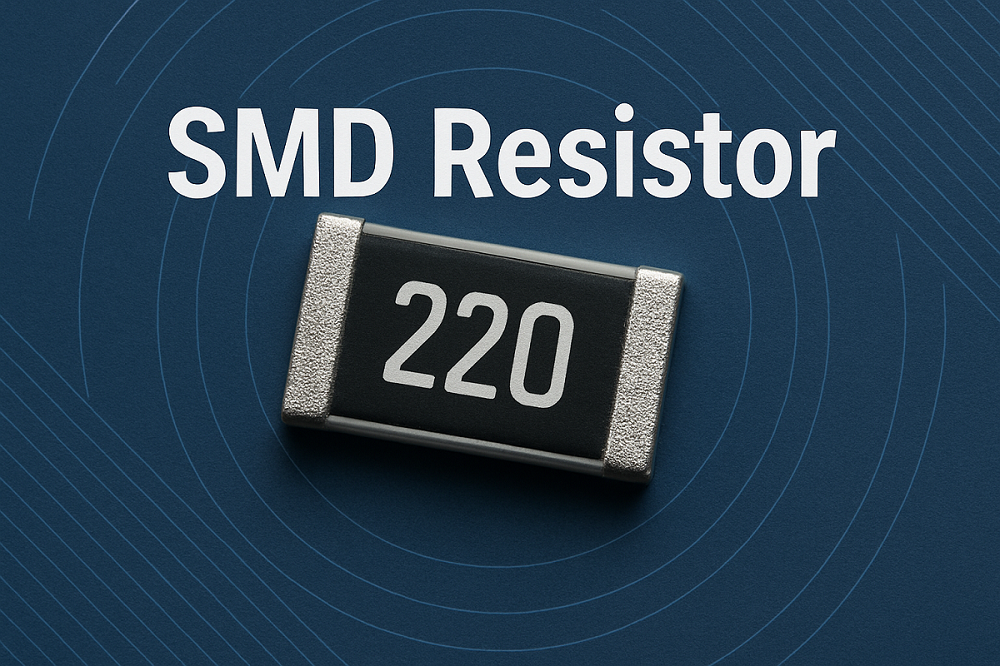
SMD Resistor: Types, Applications, and Selection Guide2025-04-30