The Kynix Blog
Stay Ahead with Expert Electronics Insights,
Industry Trends, and Innovative Tips
- Electronic Components
- News Room
- General electronic semiconductor
- Components Guide
- Sort by
- Robots
- Transmitters
- Capacitors
- IC Chips
- PCBs
- Connectors
- Amplifiers
- Memory
- LED
- Diodes
- Transistors
- Battery
- Oscillators
- Resistors
- Transceiver
- RFID
- FPGA
- Mosfets
- Sensor
- Motors, Solenoids, Driver Boards/Modules
- Relays
- Optoelectronics
- Power
- Transformer
- Fuse
- Thyristor
- potentiometer
- Development Boards
- RF/IF
- Semiconductor Information
- PCB
- transistor
What is Breadboard?When learning how to build a circuit, the breadboard is one of the most basic parts. There are many small jacks on the breadboard, which are specially designed and manufactured for solderless experiments of electronic circuits. A breadboard consists of plastic block holding a matrix of electrical sockets of a size suitable for gripping thin connecting wire, component wires or the pins of transistors and integrated circuits (ICs). The sockets are connected inside the board, usually in rows of five sockets. Since various electronic components can be inserted or pulled out at will according to needs, welding is eliminated, circuit assembly time is saved, and components can be reused, so it is very suitable for the assembly, debugging and training of electronic circuits.What is Breadboard?Topics Covered in this GuideWhat is Breadboard?Why are breadboards called breadboards?How Breadboard Looks like?IC & DIPHow to Use Breadboards?Types of BreadboardsBasic Principles of Breadboard WiringBreadboard Using Tips for BeginnersMaintenance of the BreadboardsWhich Breadboard is Best?What are the Holes in the Breadboard Called?Is a Breadboard Necessary?How much Voltage can a Breadboard Handle?How Does Current Flow in a Breadboard?How Many Amps Can a Breadboard Take?Why are breadboards called breadboards?The name of the breadboard can be traced back to the era of vacuum tube circuits. At that time, most of the circuit components were large in size. People usually fixed them on a wooden board for cutting bread with screws and nails for connection. Later, the circuit components became more and more smaller, but the name of the breadboard is still used. The breadboard most commonly used today is usually made of white plastic and is a pluggable (solderless) breadboard. It was designed by Ronald J. Portugal in 1971.It is a process of verifying ideas by creating an initial model. If you are not sure how a circuit will react normally under a given parameter setting, it is best to build a prototype to test it. For those who are new to electronic circuits, the breadboard is a good start. The advantage of a breadboard is that it can hold the simplest and most complex circuits at the same time. If your circuit cannot be accommodated by the current breadboard, you can splice other boards to adapt to all circuits of different sizes and complexity. Such as integrated circuits (ICs). When you try to master how a module works and need to rewire multiple times, you certainly don't want to solder the circuit interface every time. Once you find a problem, you can disassemble each part to prepare for some troubleshooting. How Breadboard Looks like?The shape of the breadboard is mostly cuboid, with different sizes. The breadboard generally has two layers, the top is a grid shape with double-sided tape adhering to it( you can tore it to fix the breadboard in a certain position). The upper layer of the breadboard is composed of a grid of rows and columns, and there is no conduction between rows.The whole board is made of thermosetting phenolic resin, and there are metal strips at the bottom of the board. Holes are punched at the corresponding positions on the board so that the components can be in contact with the metal strips when inserted into the board, so as to achieve the purpose of conducting electricity. Generally, every 5 orifice plates are connected by a metal strip. There are two rows of vertical jacks on both sides of the board, also a group of 5. These two sets of jacks are used to provide power to the components on the board.Breadboard Layout ExampleSome breadboards have two columns on the left and right sides. These two columns are customarily used as the positive and negative poles of the power supply (This is not necessarily true, depending on your own usage habits and circuit needs). Each of the five grids in the same column of the two columns is a group, which is conductive. But there is no conduction between columns. Then in the middle part, every five columns of grids form a group, and the five grids in this group are conductive. There is generally a groove in the center of the board, which is designed for the needs of integrated circuit (IC) and chip testing, and is used to separate the left and right parts of a board. Some breadboards do not have two columns on the left and right sides due to the size, but the other structures are the same.The motherboard uses a glass fiber board with a conductive layer of copper foil, which is used to fix the solderless breadboard and lead out the power terminal.There may be slight differences in the structure between different breadboards, but they are basically the same. IC & DIPAn unique feature of the breadboard is: Integrated Circuit (IC) and Dual in-line Package (DIP)Dual in-line Package (DIP) Chip:MA2053Do you see the small gap in the middle of the breadboard? There is a reason for this gap, the use of integrated circuits. There are ICs in almost every electronic device. They run motors, regulate voltage, act as timers, perform logic tasks, and perform almost everything you need to perform.ICs can have different numbers of pins, sizes and functions. However, many ICs are suitable for a standard called dual in-line packaging (DIP), which means they all share a set width. As you guessed, the width fits the gap in the middle of the breadboard. This makes it easier to use the IC without having to worry about connecting the wrong pins together. the holes of the breadboard are spaced 0.1” (2.54mm) apart in both the X and Y direction which is the spacing used for adjacent DIP IC leads as well as many other components such as headers.IC & DIP Example on Breadboard How to Use Breadboards?You can use breadboard to make quick electrical connections between components- like resistors, LEDs, capacitors, etc, so that you can test your circuit before permanently soldering it together. Without welding and manual wiring, the circuit and components can be tested by inserting the component into the hole, which is convenient to use. Before use, determine which component's pins should be connected together, and then insert them into the same group of 5 small holes.How to Use a Breadboard?Example: LED Lighting1) MaterialsOne breadboard, several connecting wires (the connecting wires should use needle-shaped wires at both ends), one led light, and one 3V button battery.2) First, put the battery into the battery holder (this can be bought online), and plug it into the breadboard. Then, insert the battery holder into the left and right parts of the breadboard. Parts are separated by grooves to avoid short circuit between the positive and negative poles of the power supply).3) Lead two wires from the positive and negative poles of the battery, and then plug the LED into any two grids that are not conductive on the breadboard (the long pin of the led is positive and the short pin is negative), and finally connect the wires from the positive and negative poles of the battery to the two LED segments.Types of Breadboards1) Solderless BreadboardA solderless breadboard is a motherboard that does not serve as a base, and does not have a soldering power socket to draw out but can expand a single breadboard. Connect the two poles of the power supply to the sockets on both sides of the breadboard, and then you can plug in the components for experiment (the power supply should be disconnected during the process of inserting the components). When more than 5 components or a set of jacks cannot be inserted, you need to connect multiple sets of jacks with a breadboard cable.The advantages of solderless breadboards are small size and easy to carry, but the disadvantages are relatively simple, inconvenient power connection, and small area. It is not suitable for large-scale circuit experiments. If you want to use it for large-scale circuit experiments, you need to fix multiple breadboards on a large wooden board with screws, and then connect them with wires.2) Single BreadboardA single breadboard is a part with a motherboard as a base and a dedicated terminal for power access, and even some breadboards that can perform high-voltage experiments include ground terminals. This kind of board is more convenient to use, that is, directly connect the power supply to the terminal, and then insert the components for experiment (the power supply should be disconnected during the process of inserting the components) when more than 5 components or a set of jacks cannot be inserted, you need to use breadboard cables to connect multiple sets of jacks.The advantage of a single breadboard is that it is small in size, easy to carry, and can easily switch on and off the power supply, but it has a small area and is not suitable for large-scale circuit experiments.3) Composite breadboardComposite breadboard is a board composed of many solderless breadboards. Generally, 2-4 solderless breadboards are fixed on the motherboard, and then the power cords of each board are connected together with the copper foil in the motherboard. The kind of breadboards is also specially designed for different circuit units to control the power supply, so that each board can carry different voltages according to the needs. The use of the composite breadboard is the same as the single breadboard.The advantage of the composite breadboard is that it can conveniently switch on and off the power supply, has a large area to carry out large-scale experiments, and is highly mobile, and has a wide range of uses. However, it is large and heavy for carrying, so it is suitable for laboratories and electronic hobbyists use. Basic Principles of Breadboard WiringComplete the circuit overlap on the breadboard, different people have different styles. However, no matter what style or habit, the following basic principles must be paid attention to when completing the circuit overlap:1. The fewer connection points, the better.Each additional connection point actually increases the probability of failure artificially. There are common faults such as impassability in the breadboard hole, loose wire, and broken wire inside.2. Try to avoid overpasses.The so-called "overpass" means that components or wires ride on other components or wires. Beginner is easy to make such mistakes. It will bring trouble to the replacement of components in the later stage. On the other hand, in the event of a failure, the messy wires can easily make people lose confidence.3. Try to be as reliable as possible.There are two phenomena that need attention:① Breadboard integrated circuits are easy to loosen. Therefore, for integrated circuits such as operational amplifiers, it is necessary to press down forcefully. Once it is not reliable, the position needs to be changed.② The pins of some components on the breadboard are too thin, so please be careful to move them slightly. If you find that they are not secure, you need to change the position.Electronic BreadboardBreadboard Using Tips for Beginners1. When installing discrete components, it should be easy to see their polarity and signs. After placing the component pins, bend them where needed. In order to prevent the exposed leads from short-circuiting, a wire with a sleeve must be used, and the component pins are generally not cut to facilitate repeated use. Generally, do not insert components with a pin diameter> 0.8mm, so as not to damage the elasticity of the contact piece inside the socket.2. The pins of integrated circuits that have been used many times must be repaired neatly, the pins cannot be bent, and all the pins should be slightly skewed outward, so that the lead angles and the jacks can be reliably contacted. The arrangement of the components on the breadboard should be determined according to the circuit diagram in order to facilitate the wiring. In order to be able to correctly route and facilitate wire checking, the insertion direction of all ICs must be kept the same, and which cannot be inserted upside down for the convenience of temporary wiring or to shorten the length of the wire.3. According to the sequence of the signal flow, the method of installation and debugging is adopted. After the components are installed, first connect the power cord and the ground wire. In order to check the line conveniently, try to use different colors for the line. For example, the positive power supply generally uses a red wire, the negative power supply uses the blue, the ground wire uses the black, and the signal wire uses the yellow. Other colors can also be selected according to the real conditions.4. The breadboard should use a single-strand wire with a diameter of about 0.6mm. Cut the wire according to the distance of the wire and the length of the jack. The wire end is required to be cut into a 45º, and the stripped length of the wire end is about 6mm. All the wires are required to be inserted into the bottom plate to ensure good contact. In addition, bare wires should not be exposed to prevent disconnection with other wires.5. The connection is required to be tightly attached to the breadboard to avoid collision and ejection of the breadboard, resulting in poor contact. The wiring must pass around the integrated circuit, and it is not allowed to cross the integrated circuit, and the wires must not be overlapped with each other, try to be horizontal and vertical. This is conducive to line wiring and checking, and components replacement.6. It is best to connect a capacitor with a capacity of tens of microfarads in parallel between the input terminal of each power supply and the ground, so as to reduce the impact of current during transients. In order to suppress the high-frequency components in the power supply, a high-frequency decoupling capacitor should be connected in parallel at both ends of the capacitor, generally 0.01~0.047Uf.7. During the wiring process, it is required to place the various components on the corresponding position on the breadboard and mark the pin numbers used on the circuit diagram to ensure the smooth progress of debugging and troubleshooting.8. All ground wires must be connected together to form a common reference point. Maintenance of the BreadboardsUsing a breadboard is more convenient than using a soldering method, easy to replace wires and components, and can be used multiple times. However, the breadboard should be maintained during daily use. In the multiple use of the breadboard, the spring sheet will become loose and the elasticity will become poor, which is easy to cause poor contact and virtual welding. They are difficult to find out.The breadboard that has been used many times should be uncovered from the back, and the spring sheet with poor elasticity should be taken out, repaired and then inserted into the original position. This can enhance the elasticity and increase the reliability and service life of the breadboard. In addition, pay attention to where the breadboard is used. Large-volume, high-quality or high-power components cannot be plugged into the breadboard because the breadboard jacks are small and the leads of such large components are relatively thick. At this time, the components can only be placed outside the board. Use a single strand of hard wire to solder to the lead, and then insert it into the breadboard.Breadboards are not suitable for high-frequency circuits, because the lead inductance and distributed capacitance of the breadboard are relatively large, which has a great impact on the performance of high-frequency circuits. Breadboard is suitable for integrated circuits, especially for digital integrated circuits, because digital integrated circuits usually have low operating frequency and low power, and they use fewer RC components. It is more difficult for discrete component circuits to use breadboards, especially for circuits with high frequency and high power. Which Breadboard is Best?Best Breadboard Kit ReviewsELEGOO Upgraded Electronics Fun KitREXQualis Electronics Component Fun KitElegoo EL-CP-003 3 MB-102 830-pin solderless PCB board kitFreenove Solderless Breadboard Ultimate Starter KitKeywishbot Electronic Component BreadboardREXQualis Solderless BreadboardKuman GPIO expansion kit for Raspberry PieBoot 3 400-point solderless circuit breadboardPaxcoo 4 breadboard kits with 120 jumper wires for ArduinoSmraza Basic Starter KitSunFounder breadboard kit RAB holderTEKTRUM Solderless plug-in breadboard kitMicrotivity IB401 400-point experiment breadboardElenco 9440 breadboard with 350 jumper wire set kitMakeronics Breadboard + Electronics Fun Kit What are the Holes in the Breadboard Called?Breadboards are designed to work with through-hole electronic components. They have many tiny sockets (called 'holes') arranged on a 0.1" grid. The leads of most components can be pushed straight into the holes. ICs are inserted across the central gap with their notch or dot to the left.The holes in the top-most rail are highlighted in orange and the holes in the bottom-most one are highlighted in green. In the central area of the board are vertical lines of five holes that are electrically connected. These lines of five holes are known as nodes. Is a Breadboard Necessary?Although a breadboard is essential to prototype circuits without having to solder them together and when you have verified that the circuits works you can solder it onto a perfboard. But note that breadboards are never necessary. A properly-milled and constructed panel should generally stay flat under normal conditions, so the only time I add a breadboard end is if I think the design benefits from it visually.In addition, high frequency (above 10MHz) Where the additional breadboard capacitance would present problems (oscillators, etc) Where glitches due to poor wire connections would result in poor operation. Where most of the parts are not through hole 0.1" (2.54mm) centers. How much Voltage can a Breadboard Handle?Breadboards are mostly used for low voltage and current applications, however, breadboards can handle 12 volts. Breadboards are made by different manufacturers, so the voltages they can handle depends on how they are constructed. How Does Current Flow in a Breadboard?The vertical columns of the breadboard are called terminals, while the horizontal long rows are called power rails because they are mostly used to connect the power supply to the breadboard. The positive rails are indicated by red lines, while the negative rails are indicated by black ones. That means our electric current, which is made up of moving charges, flows out of the positive side of the battery, through the wire and into the breadboard power bus. It then flows out of the black wire and into the second power bus, through the power bus and back to the negative side of the battery. How Many Amps Can a Breadboard Take?Due to the temporary nature of the contacts, most breadboard has a current limit of one amp or less. Breadboard generally cannot handle frequencies greater than ten megahertz because of the nature of the contacts, which create a stray capacitance of around two to twenty picofarads (pFs) for every connection.
kynix On 2021-08-06
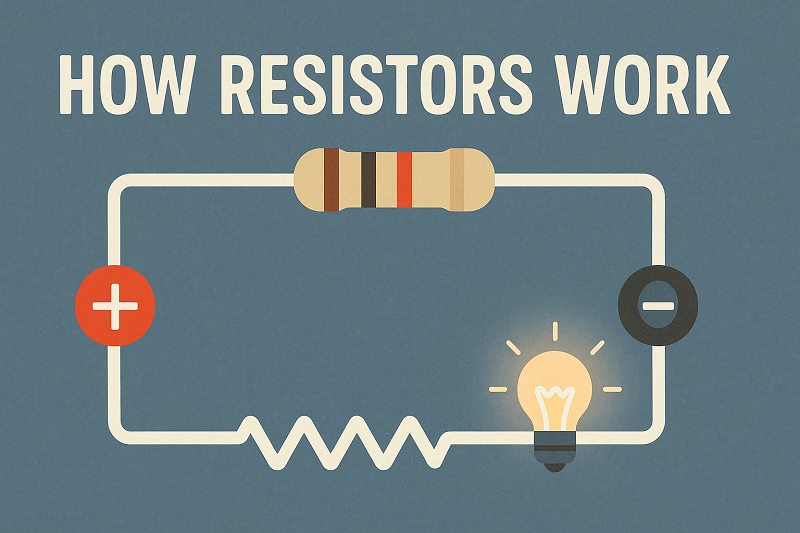
CatalogⅠ What is a Ballast Resistor ?Ⅱ Types of Ballast Resistors2.1 Fixed Resistors2.2 Self-Variable ResistorsⅢ The Working Principle of Ballast ResistorsⅣ Ballast Resistor – Uses and Applications4.1 Ballast Resistor in Fluorescent Lamps4.2 Ballast Resistor for Automotive Applications4.3 Ballast Resistor in a LED CircuitⅤ Symptons of Failture Ballast-ResistorⅥ Frequently Asked Questions about Ballast resistors Introduction “Ballast” is generally considered as “something that provides stability in English dictionary. ” Thus, when we refer to an electrical ballast, we are referring to an electrical device that is important in maintaining the stability of the electrical circuit. However, you might be wondering how it provides stability. Depending on the circuit in which they are used, some electric ballasts limit current while others limit voltage. By doing so, they reduce the risk of overvoltage or overcurrent in the circuit, thereby improving system stability. The complexity of electric ballast varies greatly. It can be as simple as a resistor, capacitor, inductor, or a combination of these, or as complex as the electronic ballast found in fluorescent lamps. Ⅰ What is a Ballast Resistor ? A ballast resistor is an electronic component that is usually used to regulate the current in a circuit. Some devices, such as fluorescent lamps, can exhibit negative resistance characteristics, and an increase in current will result in a decrease in voltage. Negative resistance can cause damage to the power supply or equipment. Ballast resistors are usually connected in series with the negative load, taking advantage of the fact that all components in the series circuit receive the same current. Some ballasts are just series resistors, while others use capacitors and more complex components. Figure1: complex components Ⅱ Types of Ballast ResistorsA resistor is a current-limiting electronic component that can reduce circuit voltage and current. Ballast resistors are classified into three types: fixed, variable, and reactive.2.1 Fixed ResistorsThis genre of ballast resistors have a fixed resistance. A high resistance value is primarily taken considered for most applications. This genre of ballast resistor is commonly used in simple circuits with low-powered loads such as neon or LED lamps. This fixed resistor is also applied to control the ventilation fan speed. It employs a fixed ballast resistor with two center taps. The fan speed selector switch detours portions of the ballast. Therefore, the entire ballast resistor is suitable for full speed, while no section of the ballast resistor is suitable for the low speed.2.2 Self-Variable ResistorsThese ballast resistors have the property of resistance in response to changes in current, such as an increase in current increasing resistance and a decrease in current decreasing resistance. Incandescent lamps frequently use these ballast resistors. As the current through the lamp increases, the ballast resistor heats up, and the resistance rises with the temperature, as does the voltage drop across the resistor. When the current is down, the temperature of the ballast resistor decreases as well, as does its resistance and thus the voltage drop. The benefits of using this type of ballast resistor are that it provides more precise current control than a suitable fixed resistor. Another benefit is that the power lost in the resistive ballast is decreased because a smaller section of the overall power is lost in the ballast when compared to a fixed resistor. Ⅲ The Working Principle of Ballast Resistors When 220V 50HZ AC power is applied to the switch closed circuit, the current flows through the ballast, and the lamp filament starter heats the filament(The starter was turned off in the beginning. The gas arc discharge in the jumping bubble in the starter caused the bimetallic sheet to heat and deform due to the application of an AC voltage greater than 190V, and the two electrodes were close together to form the filament heated by the passage.) Because there is no arc discharge when the two electrodes of the starter are close together, the bimetal cools and the two poles separate. As the ballast is inductive, when the circuit is suddenly interrupted, 600V is generated at both ends of the lamp for about 1ms. The pulse voltage is -1500V; the exact voltage value depends on the type of lamp. When the lamp discharges, the voltage at both ends drops immediately. At this point, the ballast limits the lamp current on the one hand while also supplying power on the other. There is a phase difference of 55° to 65° between the voltage and the working current of the lamp in order to keep the secondary starting voltage of the lamp stable.Figure2: the working principle of a ballast resistor Due to its simple structure, inductive ballast, as the first type of ballast to work with fluorescent lamps, has a relatively large market share. However, on account of its low power factor, poor low-voltage startup performance, heavy energy consumption, stroboscopic and many other shortcomings , its market is gradually being replaced by electronic ballasts. The energy consumption of inductive ballasts: 40W (lamp tube power) + 10W (inductive ballast self-heating consumption) is equal to the total power 50W consumption of the whole set of lamps and lanterns. An electronic ballast is a converter that converts low frequency alternating current power to high frequency alternating current power. Its basic operation is as follows: after passing through a radio frequency interference (RFI) filter, full-wave rectification, and a passive (or active) power factor corrector (PPFC or APFC), the industrial frequency power supply becomes a DC power supply. The output of high-frequency AC power of 20K-100KHZ is added to the LC series resonant circuit connected to the lamp via the DC/AC converter to heat the filament, but the lamp is "discharged" into the "on" state and then enters the light-emitting state. At this point, the high-frequency inductor limits the current increase, ensuring that the lamp tube receives the voltage and current required for normal operation. Various protection circuits, such as abnormal protection, surge voltage, and current protection, temperature protection, and so on, are frequently constructed to improve reliability. Ⅳ Ballast Resistor – Uses and Applications Ballast resistors are most commonly used to adjust the current to a negative resistance load. They can also be applied in other contexts. Fixed ballast resistors are common in low-power devices like light-emitting diodes (LEDs) and neon lights. LEDs are a positive resistive load that can benefit from ballast resistors. 4.1 Ballast Resistor in Fluorescent Lamps Fluorescent lighting, as we all know, is a popular and efficient lighting system. However, there is a disadvantage to using this type of lighting system. When directly connected to a voltage source, it heats up very quickly. This situation is due to the lamp's uncontrollable current draw as soon as its operation. A ballast resistor, connected in series with the lamp, is applied to the circuit to prevent overheating caused by excessive current draw. Therefore, the function of ballast resistor is to regulates the current and reduces the voltage. However, for the lamp to light up, an arc has to be formed between its two electrodes. This necessitates a high starting voltage that is nearly equal to the supply voltage. The ballast resistor provides the required voltage during startup, and then immediately after an arc is established, it reduces the voltage while also regulating the current flow. Figure3: application in fluorescent lamp 4.2 Ballast Resistor for Automotive Applications Ballast resistors are generally included in the ignition kits of automotive machines such as automobile engines. Such devices are often called Ignition Ballast Resistors because of their application. The application of this device reduces the possibility of coil failure. It is connected between the ignition coil's primary voltage source and the coil stud. This connection helps to reduce the coil voltage and coil current, so the coil does not get as hot as it would without it, extending the coil's life. However, a high voltage equal to the primary voltage source is required to start the ignition engine. As a result, a jumper wire is frequently connected to the ballast resistor. This jumper wire provides the voltage required to start the engine. Figure4: application in automotives 4.3 Ballast Resistor in a LED Circuit If the source voltage in an LED circuit is greater than the rated voltage of an LED lamp, the LED may be damaged. It is strongly advised to connect a ballast resistor in series with the lamp to avoid this case. By connecting the ballast resistor in this manner, the voltage across the LED is down to a tolerable level. The circuit diagram for the same is shown in the figure below. Figure5: application in leds The following formula is the value of resistance of the ballast :R = (E – Vf)/IFWhere: R= resistance of the ballast resistorE = voltage sourceVf = forward voltage of the LEDIF =Forward current of the LED. So, let's say you have an LED with a voltage rating of 4 volts, a forward current of 10 mA, and a voltage source of 6 volts. This means that the voltage across the LED should be 4 or less than 4 volts. As a result, the resistance of the ballast resistor should be R= (6-4)/0.010 = 200 or greater. Now that we've covered the applications briefly, let's look at the different types of ballast resistors on the market. Ⅴ Symptons of Failture Ballast-Resistor A ballast resistor is a device in your car that limits the amount of current flowing through an electric circuit. Because they did not have the benefit of circuit boards like most modern vehicles, ballast resistors are commonly found in older vehicles. Normal wear and tear can damage the ballast resistor over time, so there are a few things to look for if you suspect a bad or failing ballast resistor needs servicing. 1. Vehicle starts, then immediately goes out The most obvious symptom is that the vehicle starts but then dies as soon as you remove the key. If this occurs, Your Mechanic's experts will be able to measure the voltage coming from the ballast resistor and determine if it needs to be replaced. They will inform you of the condition of your ballast resistor once they have read the voltage. 2. Not starting at all The vehicle will not start if the ballast resistor is not functioning properly. Because it is an electrical system, it is best left to the professionals. The only way to get the vehicle running again is to replace the ballast resistor. 3. Don’t jump the resistor Some people attempt to jump the resistor, which means that the ballast resistor is ignored and the extra current is routed to the points. The points are not designed to withstand the additional voltage, causing them to wear out and fail prematurely. This will result in a much more extensive repair than if the ballast resistor was replaced at the start. Furthermore, because you are tampering with electricity, it can be dangerous, especially if you don't know what you're doing. 4. Let the vehicle beIf your ballast resistor is out of work, your vehicle will not start and you will need to have it towed to a mechanic's shop. Because the professionals at Your Mechanic make house calls, you will be able to save money on towing. Furthermore, because the vehicle will not start, it is not a dangerous situation as long as you leave it alone. Do not attempt to bypass the ballast resistor and do not continue to try to start the engine. Allow the professionals to repair it so you can get back on your way. Ⅵ Frequently Asked Questions about Ballast resistors 1. Is a ballast resistor necessary? If the coil required a ballast resistor when it was used with points, then you must still use the resistor. If it didn't, then no resistor is necessary. The ballast resistor keeps the engine running by preventing the engine from receiving full amperage from the ignition once started. 2. Why do ignition coils need ballast resistor? In simple terms, the ballast resistor in a Mopar limits the amperage, or current flow, through the coil while the engine is running, thereby extending the life of the coil and breaker points of the distributor. 3. How do you know if a ballast resistor is bad?To test your ballast resistor you need an ohm meter or multimeter set to ohms. Remove the connectors from both sides of the resistor. The ohms should read between 1.8 and 5 ohms. You should be getting 9 volts to the positive side of the coil. 4. What causes a ballast resistor to fail?The resistance through the ballast resistor varies with current flow which varies with engine rpm. This naturally causes the resistor to expand and contract from heat. That's why they eventually fail. 5. Can a resistor wire go bad? The only way the wire will "go bad" is if it gets a break in it so it has infinite resistance (an open circuit). 6. Which circuit the ballast resistor is used? Ballasts can also be used simply to limit the current in an ordinary, positive-resistance circuit. Prior to the advent of solid-state ignition, automobile ignition systems commonly included a ballast resistor to regulate the voltage applied to the ignition system. 7. What is inside of a ballast? A magnetic ballast (also called a choke) contains a coil of copper wire. The magnetic field produced by the wire traps most of the current so only the right amount gets through to the fluorescent light. That amount can fluctuate depending on the thickness and length of the copper wire. 8. What's the difference between a ballast and non ballast coil? Basically, a non-ballast coil is designed to produce full spark output with 12 volts on the input (+ terminal). A ballast coil is designed to produce the same spark output, but with only 6 to 9 volts on the input.
kynix On 2021-08-03
What is a Laser Diode?A laser diode (injection laser diode, or diode laser) is a semiconductor device that can generate laser light, emitting a narrow light containing a single color, which is similar to a light-emitting diode (LED). The three conditions for generating laser light are: achieving particle number inversion, meeting threshold conditions and resonance conditions. Since laser diodes are extremely electrostatic sensitive, they should be used with care to prevent static electricity. They can be divided into homojunction laser, single heterojunction (SH) laser, double heterojunction (DH) laser and quantum well (QW) laser according to the different PN junction materials.Topics Covered in this GuideLaser Diode Tech Guide in 2021What is a Laser Diode?Laser Diode SpecificationsLaser Diode CharacteristicsLaser Diode ApplicationsHow Does a Laser Diode Work?What is the Laser Diode Symbol?What are the types of Laser Diode?Laser Diode Using TipsHow to Test a Laser Diode?How to Make a Laser Diode?How to Power a Laser Diode?How to Build a Laser Diode Driver Circuit?How to Wire a Laser Diode?How to Select the Right Laser Diode?How to Drive Pulse Laser Diode?What is Power Source of 532 Laser Diode?What is the Difference between Laser Diode(LD) and LED?What is the Wavelength Range of a Laser Diode?Is Diode Laser Permanent?Is LED a Laser Light?How Long do Diode Lasers Last?Can an LED be Used as a Laser?What are the Advantages of Using Laser Diode Instead of an LED?What is the Disadvantage of Laser?FAQsLaser Diode Specifications(1) Wavelength– It is the laser tube working wavelength, including 635nm, 650nm, 670nm, 690nm, 780nm, 810nm, 860nm, 980nm, etc, used for photoelectric switch laser.(2) Threshold Current– The current at which the laser tube starts to generate laser oscillation. For general low-power laser tubes, the value is about tens of mA, and the threshold current of laser tubes with multi-quantum well structure can be as low as 10mA or less.(3) Operating Current– It is the drive current that laser tube to achieve the rated output power, which is more important for the design and commissioning of the laser drive circuit.(4) Vertical Divergence Angle– It is the open angle that the laser diode's light-emitting band in the direction of the vertical PN junction, generally in the 15˚ ~ 40˚ or so.(5) Horizontal Divergence Angle– It is open angle that the laser diode's light-emitting band in the parallel direction with the PN junction, generally in 6˚ ~ 10˚ or so.(6) Monitoring Current– It is the current flowing on the PIN tube when the laser tube is at rated output power. Laser Diode CharacteristicsThe basic structure of the semiconductor laser diode is shown in the figure. A pair of parallel planes perpendicular to the PN junction surface form the Fabry-Perot resonant cavity, they can be the solution surface of the semiconductor crystal, but also can be polished plane. The remaining two sides are relatively rough to eliminate the laser action in other directions than the main direction. In addition, lasers consist of three main components: a lasing medium (solid, liquid or gas), a stimulating energy source (pump) and an optical resonator.Figure 1. Semiconductor Laser Diode StructureOne of the characteristics of laser diodes is the ability to modulate the intensity of their output light directly from current. Because the relationship between output optical power and input current is mostly linear, laser diodes can use analog or digital current to directly modulate the output light intensity, no need for expensive modulators, which makes the diode more economical to use.The most important characteristic of a diode is its unidirectional conductivity, and laser diodes, as one of the diode types, have the same features. In a circuit, current can only flow in from the positive terminal of the diode and out from the negative terminal. The following are specific descriptions.1) Forward FeatureIn electronic circuits, the diode conducts when the positive terminal of the diode is connected to the high potential terminal and the negative terminal to the low potential terminal. In terms of this connection, it called forward bias. In addition, when the forward voltage applied to both ends of the diode is very small, the diode still cannot conduct and the forward current flowing through is very small. Only when the forward voltage reaches a certain value (this value is called the "threshold voltage", about 0.2V for germanium tubes and 0.6V for silicon tubes), the diode can conduct. After it, the voltage across the diode remains basically unchanged (about 0.3V for germanium and 0.7V for silicon diode), which is called the "forward voltage drop".2) Reverse FeatureIn electronic circuits, the positive terminal of the diode is connected to the low potential terminal, and the negative terminal is connected to the high potential terminal. When there is almost no current flowing through the tube, the diode is in the cutoff state. This connection called reverse bias. Diode in reverse bias, there will still be a weak reverse current flow through, called leakage current. When the reverse voltage across the diode increases to a certain value, the reverse current will increase sharply, the diode will lose its unidirectional conductive characteristics, this state is called diode breakdown. Laser diode injection current must be greater than the critical current density, which is related to the temperature of the contact surface and indirectly affects the tube performance, to meet the residence reversal conditions and emit laser. When operating at high temperatures, the critical current increases, reducing efficiency and even damaging the component. Laser Diode ApplicationsAs the most common type of laser products, laser diodes have the advantages of high efficiency, small size and long life, but their low output power (generally less than 2mW), poor linearity and monochromaticity are not good for cable TV system applications, because they cannot transmit multi-channel and high-performance analog signals. Based on the advantages of laser diodes, they play a important role in many applications areas. For example, in the return module of bi-directional optical receivers, uplink transmission generally uses quantum well laser diodes as the light source. Also it is widely used in the computer on the CD-ROM drive, laser printer in the print head, bar code scanner, laser ranging, laser medical, optical communications, laser indication and other small power optoelectronic equipment. The lighting, laser surgery, laser welding and laser weapons and other high-power equipment have laser diodes too.Compared with LEDs, With different light source, lasers are more powerful and operate at faster speeds than LEDs, and they can also transmit light farther with fewer errors. They are also much more expensive than LEDs.Figure 2. Laser DiodeHow Does a Laser Diode Work?Light Emitting PrincipleLight emission in semiconductors is usually caused by carrier complexation. When a positive voltage is applied to the PN junction, it will weaken the PN junction barrier, forcing electrons to be injected into the P region from the N region, and holes to be injected into the N region from the P region. These non-equilibrium electrons and holes injected near the PN junction will be compounded, thus emitting photons of wavelength λ with the following equation.λ=hc/EgWhere: h - Planck's constant, c - speed of light, Eg - band gap width of the semiconductor.The above luminescence phenomenon due to the spontaneous compounding of electrons and holes is called spontaneous radiation. When the spontaneous radiation generated by the photon through the semiconductor, once the electron-hole pair has been emitted near, it can excite the two composite to generate new photons. This photon has been induced to excite the carrier compound and issued a new photon known as excited radiation.If the injection current is large enough, a carrier distribution opposite to the thermal equilibrium state will be formed, that is, the particle number reversal. When the carrier within the active layer in the case of a large number of inversion, a small amount of spontaneous radiation generated by the photons due to the resonant cavity two end reflect and then have induction radiation, resulting in frequency-selective resonance positive feedback, or a gain for a frequency. When the gain is greater than the absorption loss, a coherent light with good spectral lines can be issued from the PN junction, that is, the laser.How Laser Diodes Work?As for Laser diode light-emitting principle, the P-N junction in a laser diode is formed by two doped GaAs layers. It has two flat-ended structures, parallel to a end (highly reflective surface) and a partial reflection. Laser diodes emit coherent light in which all the waves are at the same frequency and phase. The wavelength of the light to be emitted is exactly related to the length of the junction. When the P-N junction is forward biased by an external voltage, the electrons move through the junction and recombine as in a normal diode. When the electrons are compounded with holes, photons are released. These photons hit the atoms, causing more photons to be released. As the forward bias current increases, more electrons enter the depletion region and cause more photons to be emitted. Eventually, some of the photons randomly drifting in the depletion region strike the reflecting surface vertically, thus reflecting back along their original path. The reflected photons are again reflected back from the other end of the junction. This movement of photons from one end to the other is continuous several times. During the photon motion, more atoms release more photons due to the avalanche effect. This process of reflection and production of more and more photons produces a very intense laser beam.Each photon produced in the emission process explained above is identical to the other photons in terms of energy level, phase relationship and frequency. Thus, the emission process gives a laser beam of a single wavelength. To produce a laser beam, the current in the laser diode must be made to exceed a certain threshold level. Currents below the threshold level force the diode to behave as an LED, emitting incoherent light. What is the Laser Diode Symbol?The laser diode symbol used is often the same one used for light emitting diodes in circuit diagrams. It uses the basic semiconductor diode symbol with arrows indicating the generation and emanation of light.Figure 3. Laser Diode Symbol What are the types of Laser Diode?There are several types of laser diodes:✔️Quantum well lasers✔️Quantum cascade lasers✔️External-cavity diode lasers✔️Interband cascade lasers✔️Separate confinement heterostructure lasers✔️DHL (double heterostructure lasers)✔️DFB-LD (distributed feedback laser diode)✔️DBR-LD (distributed bragg reflector laser)✔️FBG (FBG laser diodes laser diodes)✔️VCSEL ( vertical-cavity surface-emitting laser)✔️VECSEL(vertical-external-cavity surface-emitting-laser)✔️MOEMS-LD (micro-opto-electro-mechanical systems laser diode) Laser Diode Using Tips1) laser diode emitted laser light may cause harm to the human eyes. When using, don’t directly watch the light source. It requires warning signs.2) The device needs a suitable drive power supply, the instantaneous reverse current should not exceed 2uA, and the reverse voltage should not exceed 3V. In the power supply on and off, to prevent inrush current. When testing the drive circuit with an oscilloscope, disconnect the power supply and then connect the oscilloscope probe, if the probe is tested under power on, the inrush current may damage the device.3) The device should be stored or worked in a clean environment.4) Working at higher temperatures will increase the threshold current, lower conversion frequency and accelerate the aging of the device. When adjusting the amount of light input, use the optical power meter to detect to prevent exceeding the large rated output.5) The output power works higher than the specified parameters, which will accelerate the aging of the components.The following measures can be taken to slow down device aging. a. Driving the laser diode with a DC constant current source. b. Connect a current limiting resistor in series with a bypass capacitor to the laser diode circuit. c. Since an increase in the temperature of the laser diode will increase the current flowing through it, the heat dissipation measures must be applied to ensure that the device operates within a certain temperature range.(4) To avoid the laser diode breakdown due to withstand excessive reverse voltage, it can be connected in reverse parallel on both ends of the fast silicon diode.(6) The machine needs to be fully dissipated or used under cooling conditions to prevent high temperature use. The output wavelength of the laser is affected by the operating current and heat dissipation, to maintain good heat dissipation conditions and reduce the temperature of the tube core when working.7) Diodes are electrostatic sensitive devices, to take appropriate anti-static measures.Figure 4. Injection Laser DiodeHow to Test a Laser Diode?a. Resistance measurement methodRemove the laser diode, use a multimeter R × 1k or R × 10k file to measure its positive and negative resistances. If normal, the forward resistance value is between 20~40kΩ, and the reverse resistance value is ∞ (infinity). If the measured forward resistance value has exceeded 50kΩ, it means that the performance of the laser diode has declined. If the measured forward resistance value is greater than 90kΩ, it means that the diode has been seriously aged, can no longer be used.b. Current measurement methodUse a multimeter to measure the voltage drop across the load resistor in the laser diode drive circuit, and then estimate the current value flowing through the tube according to Ohm's law. When the current exceeds 100mA, if the laser power potentiometer is adjusted, and no significant change in current, the laser diode can be judged to be seriously aged. If the current increases sharply and out of control, it means that the optical resonant cavity of the laser diode has been damaged.c. Pins DetectionThe laser diode has three pins: LD transmitter, PD receiver, LD-N common1) To distinguish between LD and PD. Use R × 1k block to measure the resistances of laser diode three pins. If a resistance value between the two pins reaches a few thousand ohms, at this time, the black pen is connected to the end of the PD anode, the red pen is connected to the pin for the common terminal, the remaining pin for the LD cathode, so as to distinguish the PD part (bc part of the figure) and LD part ( This distinguishes the PD part (bc part of the figure) and the LD part (ab part of the figure).2) Detect the PD part. PD part of the laser diode is essentially a photosensitive diode, using a multimeter test method is as follows: R × 1k block to measure its resistance, if the forward resistance of a few thousand ohms, the reverse resistance is infinite, it initially indicates that the PD part is good. If the forward resistance is 0 or infinity, it shows that the PD part has been bad. If the reverse resistance is not infinity, it means that the PD part has reverse leakage and the tube quality has become poor.3) Detect the LD part. Use the multimeter R × 1k block to measure the forward resistance of the LD part, that is, the black pen connected to the common terminal b, red pen connected to the a, the forward resistance should be between 10kΩ ~ 30kΩ, the reverse resistance should be infinity. If the measured forward resistance value is greater than 55kΩ, the reverse resistance value of 100kΩ or less, indicating that the LD part has been seriously aging, so the use of the effect will become worse. How to Make a Laser Diode?Step 1: Before made a laser diode, you should clear somethings firstly, including safety equipment, procedures, training in place, as well as disposal etc. Step 2: Build a working laser yourself you start with buying the diode. then you need a lens , and a heat sink , and a powersupply that won't blow it (they're very sensitive) .... all these components are on online, and that's quiet a tricky job ...much easier and cheaper to buy an assembled laser.Step 3: Spend a couple of pounds to purchase a laser pointer, and pull the diode & circuit out of that.Step 4: Don't power it up when it's direction is not firmly fixed away from your eyes, from anyone's eyes , and there might be reflective surfaces on the beam path nearby. Pay attention, do it legally where you are. How to Power a Laser Diode?Laser diodes are operated in forward conduction mode within a specified current range that is optimal for lasing operation, because they are current-driven devices. Laser diode power supplies can operate in one of two modes, constant current (CC) and automatic power control (APC). Most, but certainly not all, smaller laser diodes (5.6- and 9-mm packages) are operated in APC mode. For APC operation, the power supply must have a photodiode mounted inside the laser diode package. How to Build a Laser Diode Driver Circuit?Firstly, you should know that a laser diode driver circuit is a circuit which is used to limit the current and then supplies to the laser diode, and then follow the below steps:Step 1: Have a project with laser diode.Step 2: Find out all the useful parts and their parameters from your project.Step 3. Build the circuits according to the related project schematic.Step 4. Connect the Laser Diode and test it. How to Wire a Laser Diode?According to unidirectional conductivity, laser diodes only allow current to flow in one direction, and they're always polarized. First look at the positive and negative poles of the diode, and then the positive potential is connected to the anode of the diode, and the negative potential is connected to the cathode of the diode. How to Select the Right Laser Diode?Choose a laser diode for your application according to the following steps:Step 1: Turn application requirements into laser parametersStep 2: Selecting the laser typeStep 3: Selecting the laser materialStep 4: Make your final chart and go searching How to Drive Pulse Laser Diode?Laser Diode Driver is to provide current to the laser diode. With the amount of current controlled by the user or some automatic apparatus, you can drive a pulse laser diode. In addition, a laser driver can only regulate the current as long as the laser voltage stays within certain limits, so you should have a check the circuit parameters to select a proper diode driver. What is Power Source of 532 Laser Diode?Check the following table to find out the power source of 532 laser diode:532nm Green Laser DiodePowerPackageDescription0.004WTO-Can- Integrated Photodiode- Compact Size0.005WTurn-Key Module- Compact Size- Long Lifetime0.01WTurn-Key Module- Fiber-Coupled Output- Integrated Photodiode0.1WTO-Can- Integrated Photodiode- Compact Size0.2WTO-Can- Integrated Photodiode- Mode-Hop Supression0.4WButterfly- Integrated Photodiode- Integrated Heater0.5WButterfly- Internal Heater- Integrated PhotodiodeWhat is the Difference between Laser Diode(LD) and LED?LDs and LEDs both emit photons to produce light, but both of them have many differences according to the following table:ParametersLDLEDWorking PrincipleStimulated emissionSpontaneous emissionOmnidirectional emissionFull FormLight Amplification by Stimulated Emission of RadiationLight Emitting DiodeResponseFast response in comparison to LEDSlow responseDriving CurrentRanges from 5 to 40mARanges from 50 to 100mANature of Emitted LightCoherent and MonochromaticIncoherent and consists of various colors.Junction Area during ManufacturingNarrow and small JunctionWide Junction AreaBandwidth RangeRanges from 1MHz to 2MHZRange from10 to 50THzPower to light Conversion EfficiencyApprox 70 %Approx 30%Numerical Aperture of the obtained Light BeamExtremely low as compared to LEDs.Higher in LEDsCostHigh cost and thus used in the specific application.Low cost and thus economicalWhat is the Wavelength Range of a Laser Diode?Diode lasers deliver wavelengths ranging from 810 to 1064 nm. Diode lasers are compact and portable solid-state units. They are used strictly for soft tissue procedures and penetrate 2 to 3 mm or more into soft tissue, depending on the wavelength and tissue biotype. Is Diode Laser Permanent?Diode lasers use a single wavelength of light that has a high abruption rate in melanin. As the melanin heats up it destroys the root and blood flow to the follicle disabling the hair growth permanently. ... Diode lasers deliver high frequency, low fluence pulses and can be safely used on all skin types. Is LED a Laser Light?LEDs typically last longer than lasers, while lasers are faster. ... LEDs have a higher output with wider bandwidths, meaning that they can produce a broad range of less-concentrated light. Lasers have a lesser output and a small bandwidth, produced with a tiny pinpoint of light. How Long do Diode Lasers Last?Typical lifetime of laser diode modules are 25,000 to 50,000 hours. If the laser diode temperature continues to rise exceeding the maximum operating temperature, the diode can be catastrophically damaged or the long term performance may degrade significantly. Can an LED be Used as a Laser?The LED and laser emit light in a relatively narrow range of wavelengths. However, lasers put all their energy in a single wavelength, which emits from a tiny spot. LEDs spread the energy over more wavelengths and send that light from a larger spot into wide cone. What are the Advantages of Using Laser Diode Instead of an LED?It produces a very intense beam of light or infrared radiation which is having following properties. Laser diode used in optical fiber systems are made of gallium arsenide phosphide. The laser having size of grain of sand can produce power output of about 10 mWatt. ON/OFF switching speed of laser is faster than LED. What is the Disadvantage of Laser?Following are the drawbacks or disadvantages of Laser:It is expensive and hence more expenditure to the patients requiring laser based treatments.It is costly to maintain and hence more cost to doctors and hospital management. Increases complexity and duration of the treatment based on laser devices or equipments. FAQs1. Why do we prefer GaAs for laser diode?GaAs advantagesGaAs devices are relatively insensitive to overheating, owing to their wider energy band gap, and they also tend to create less noise (disturbance in an electrical signal) in electronic circuits than silicon devices, especially at high frequencies. 2. What is the advantage of laser over LED?The output power of a 1 watt LED can be < 100 milliwatts. Besides dramatic differences in total output, the laser also offers a significant advantage in terms of how usable that power is to the optical system. Specifically, the laser is a point source of coherent light that produces a well-behaved beam. 3. Why is laser light monochromatic?Monochromatic Laser LightThe light from a laser typically comes from one atomic transition with a single precise wavelength. So the laser light has a single spectral color and is almost the purest monochromatic light available. 4. What happens if the laser diode is forward biased?Forward bias injects charges into the junction, causing spontaneous emission of photons. When the diode is forward-biased, charges are injected into the active area of the junction, while electrons and holes recombine in the junction, creating spontaneous emission of photons. 5. Is a laser diode an LED?Light-emitting diodes (LEDs), like laser diodes, generate radiation via electrical current injection into a junction. LED light comes from spontaneous emission, whereas laser diode light arises from stimulated emission. Thus, LEDs generally have lower output powers and omnidirectional emission.
kynix On 2021-08-03
CatalogⅠ What is Coolant Temperature SensorⅡ Function and Structure of Coolant Temperature SensorⅢ The Working Principle of Coolant Temperature SensorⅣ Application of Coolant Temperature Sensor in Vehicles 4.1 Location on Automobiles 4.2 Ways of Testing Coolant Temperature SensorⅤ How to Replace the Faulty Coolant Temperature SensorⅥ Frequently Asked Questions about Coolant Temperature Sensor Analysis Ⅰ What is Coolant Temperature SensorEvery driver is aware that coolant/antifreeze is applied to keep an engine operating at peak efficiency. However, how do cooling systems recognize when the engine is at the proper operating temperature? We take a closer inspection at coolant temperature sensors in this guide, providing information on what they do and how they work, as well as step-by-step instructions for diagnosing and replacing a faulty sensor. A coolant temperature sensor (CTS) (also known as an ECT sensor or ECTS (engine coolant temperature sensor)) measures the temperature of the coolant/antifreeze mix in the cooling system, indicating how much heat the engine is producing. The sensor communicates with the vehicle's ECU and continuously monitors coolant temperature to ensure that the engine is operating at the proper temperature. Ⅱ Function and Structure of Coolant Temperature Sensor The coolant temperature sensor is installed on the water jacket of the engine block or cylinder head, contracting with the coolant directly. The CTS is applied to detect the temperature of the engine coolant. The internal part is equipped with a negative thermistor with negative temperature characteristics. The feature of a negative thermistor is that the higher the temperature, the smaller the resistance, the lower the temperature, the greater the resistance.Figure1: the circuit image of coolant temperature sensor The signal of the coolant temperature sensor is a correction signal, and its function is to inspect the temperature of the engine coolant. The temperature of the engine coolant transmit the signal to the ECU, and the ECU measured temperature and correct the fuel injection volume according to the signal indication. When the cold car starts or the engine warms up, the ECU will correct the fuel injection.When the car is hot, the ECU will correct to inject the leaner mixture; the same way, when the engine coolant temperature signal is detected, the ECU controls the cooling and the fan is turned on and off. Ⅲ The Working Principle of Coolant Temperature Sensor Generally, the structure of the coolant temperature sensor seems to be a negative thermistor. Therefore, its temperature is inversely proportional to resistance, and its voltage is also inversely proportional to resistance. The range of temperature changes: -40 to 195°C. When the engine cools down from the start of the cold car to the hot car, the parameters of the fluid temperature sensor gradually increase, and the vehicle is idling when the engine is completely warmed up. The coolant temperature should be 85~105℃ when operating, if the parameter of CTS is -40℃, it indicates that there is a short-circuit in CTS. If the parameter is higher than 185℃, it means that there was the same failure as-40℃. The voltage change range is 0 ~ 5V. When the temperature parameter is -40℃, the corresponding voltage is 4.98V,while the temperature parameter is 185℃, the corresponding voltage is 0.02V. The cooling system in a car with an internal combustion engine keeps the engine at the proper temperature and prevents it from overheating. The temperature of the liquid coolant is measured by an engine coolant temperature sensor or ECT. A Negative Temperature Coefficient (NTC) thermistor is a type of engine cooling temperature sensor in which the electrical resistance decreases as the temperature rises. The ECT sensor's tip protrudes into a cooling system passage and is submerged in coolant.This vedio show that how coolant temperature sensor works Ⅳ Application of Coolant Temperature Sensor in Vehicles4.1 Location on Automobiles Many automobiles have multiple coolant temperature sensors. The primary ECT sensor (ECT sensor 1) is usually located near the thermostat in the cylinder head or block, or on the thermostat housing. Sensor for electrocardiography (ECT) the engine computer, or PCM, is connected to the ECT sensor. A second coolant temperature sensor could be installed in the radiator or in another part of the engine. Instead of or in addition to the ECT sensor, some cars use a cylinder head temperature or CHT sensor. The CHT sensor (shown in the photo) works in the same way, but it measures the temperature of the cylinder head metal rather than the coolant temperature. This enables the CHT sensor to accurately measure the temperature of the engine even when coolant is lost. This may help prevent overheating in some cases. The main computer is connected to an ECT sensor (powertrain control module or PCM). The PCM provides a constant reference voltage (typically 5 volts) and monitors the ECT sensor signal. When the temperature reaches a pre-determined level, the PCM adjusts the engine performance and operates the electric radiator fans based on this signal. If the sensor signal is missing or outside of the expected range, the PCM illuminates the Check Engine light and records the associated trouble code. 4.2 Ways of Testing Coolant Temperature SensorTesting the ECT/CHT Sensor Resistance: One method is to measure the sensor's resistance at various engine temperatures and compare the results to the service manual's specifications.We tested the resistance of the ECT sensor in this car, for example. Only when the sensor is disconnected from the circuit can the resistance be measured. The reason for this is that measuring the resistance of any electrical component that is still connected to the circuit will result in inaccurate results. When the engine was cold, the resistance was 2,953 Ohm. After the engine was fully warmed up, it dropped to 248.5 Ohm; see photo. This sensor complies with the manufacturer's specifications. Of course, the resistance specifications differ from car to car. Figure2:one way to test the resistance of senser Checking the ECT/CHT Sensor Voltage:With the ignition on, another way to test the sensor is to measure the voltage across the sensor terminals. The voltage of the engine coolant temperature (ECT) sensor is measured. The voltage of the ECT sensor is being checked. The engine computer is linked to the sensor (PCM). The reference voltage (typically 5 volts) is supplied by the PCM, and the sensor ground is provided by another wire. The ground as well as the reference voltage must be checked first. The voltage drops as the sensor's resistance decreases as the engine warms up. We probed the ECT sensor inversely in this photo to keep it connected to the circuit. We measured 3.96 Volt when the car was cold. The voltage dropped to 0.988 Volt on a fully warmed-up engine. The multimeter will read 5 volts when the sensor is disconnected. If you don't see any voltage, the circuit is either open or shorted to the ground. One of the wires in the sensor harness, for example, could break or rub against a metal part, causing a short. Figure3: another way to test sensor Voltage 4.3 Symptoms of a bad or failing coolant temperature Poor fuel economy Poor fuel economy is one of the first signs of failure with the coolant temperature sensor. If the coolant temperature sensor fails, it can send a false signal to the computer, causing fuel and timing calculations to be thrown off. It's not uncommon for the coolant temperature sensor to fail and send a signal to the computer that's always cold. This will trick the computer into thinking the engine is cold when it isn't, causing it to consume more fuel than is necessary. The poor fuel economy will suffer as a result, and engine performance may suffer as a result. Black smoke from engine Black smoke from the vehicle's exhaust is another sign of a possible problem with the coolant temperature sensor. If the coolant temperature sensor fails and sends a cold signal to the computer, the computer may become confused and enrich the fuel mixture unnecessarily. If the fuel mixture becomes too rich, it will burn up in the exhaust pipes, resulting in black smoke. In severe cases, the black smoke may be so awful that the vehicle can not be started. Overheating engine An overheating engine is another sign of a problem with the coolant temperature sensor. The coolant temperature sensor can also fail in such a way that it sends an always-hot signal. This can cause the computer to compensate for a lean signal incorrectly, resulting in overheating, misfires, and even engine ping. Check Engine Light comes on Another sign of a problem with the coolant temperature sensor is an illuminated Check Engine Light. If the computer detects a problem with the sensor's signal or circuit in some vehicles, the Check Engine Light will illuminate. The Check Engine Light will stay illuminated until the trouble is resolved. Ⅴ How to Replace the Faulty Coolant Temperature SensorBegin with a cold engine. Drain the cooling system by jacking the car up and using jack stands. Wear safety glasses and glovesMterials:1. coolant collection pan2. flat head screwdriver3. new coolantTools:1. eyewear and golves 2. pliers3. funmel4. jack standsTip: Only do this job when the engine is completely cold and hasn't been running for at least an hour. Because you'll be underneath the car and the risk of coolant splashing in your face is high, it's a good idea to protect your face with a safety shield. If the engine is not cold, wear safety glasses and gloves to protect your hands from the hot coolant. Step1: Locate the SensorThe CTS is usually found near the radiator or thermostat housing in the front of the engine. You may need to use a light or torch to locate it because it's a small component that's often found lower down inside the engine bay. If it's near the thermostat housing, removing the engine cover can also help you find it.Figure4: firstly, locate the coolant sensor Step2: Remove the Connector Cable from the Terminal A connector connects the CTS to the ECU, which you must unfasten and remove. Do this with caution, as the plastic connector and wiring can be brittle and require replacement if they break. Remove the connector and place the cable somewhere out of the way.Figure5: release the connector Step3: Loosen and Remove the Old Sensor Coolant sensors are installed similarly to spark plugs, so they must be unscrewed to be removed. Carefully loosen the sensor in an anticlockwise direction with a deep socket and ratchet, without applying too much pressure. A squirt of release spray can aid in the unsticking of stuck sensors. Remove the sensor from the socket by unscrewing it by hand once it is loose. Because coolant is likely to leak at this point, have a new one on hand or consider draining the coolant if necessary.Figure6: Remove the clip and old sensor Step4: Install the New Sensor Clean the area with a rag or cloth to remove any dust or debris that could influence the new CTS' performance. Set the new sensor in the threads and hand-twist clockwise to ensure it is securely seated in the socket. Tighten the sensor with a torque wrench to the amount specified in the manufacturer's instructions.Figure6: install the new coolant sensor Step5 : Reinstate the Connector Cable The only thing left to do now is reconnect the cable after the new sensor has been installed. Make sure the connector is clean and free of debris before carefully plugging it into the new sensor and tightening any clips to ensure a good connection. Start the engine to ensure the new sensor is working, and as it warms up, keep an eye on the temperature gauge on the dash to ensure the correct temperature is maintained.Figure7: reconnect the cableⅥ Frequently Asked Questions about Coolant Temperature Sensor Analysis1. Can you drive with a bad coolant sensor?It is possible to drive a vehicle with a faulty coolant temperature sensor as the management system defaults to a static reading. A vehicles coolant sensor is a critical component used by the engine management system. It directly effects, cooling and fueling of the engine and therefore effects how the engine performs. 2. What does the coolant temperature sensor do?A coolant temperature sensor (CTS) (also known as an ECT sensor or ECTS (engine coolant temperature sensor) is used to measure the temperature of the coolant/antifreeze mix in the cooling system, giving an indication of how much heat the engine is giving off. 3. What causes a coolant temperature sensor to fail?The engine may run in fail-safe mode:Many Check Engine light codes related to the (ECT) sensor; could also be caused by other reasons. Such as a bad thermostat or issues with the cooling system; including even a leaking head gasket. Therefore, The problem must be properly diagnosed. 4. How long do coolant temp sensors last?About 100,000 miles. Often, the engine coolant temperature sensor must be replaced at about 100,000 miles. If you don't properly maintain the engine cooling system, the sensor could fail much earlier. 5. Do you need to drain coolant to change coolant temperature sensor?Open the radiator valve and drain about two to three quarts of coolant. You only need to remove enough to drop the level below the sensor. Then close the drain valve. This will minimize coolant waste when you remove the sensor. 6. Can you run a car without a temperature sensor?Generally it should be ok to drive without the thermostat fitted, as it will only cause the engine to take longer to reach operating temperature. The thermostat is designed to allow the engine to reach ideal operating temperature as quickly as possible, so it would not be recommended to drive without it. 7. Can a bad coolant temp sensor cause rough idle?A faulty coolant sensor that always reads cold may cause the fuel control system to run rich, pollute and waste fuel. A coolant sensor that always reads hot may cause cold drive ability problems such as stalling, hesitation and rough idle. ... This also affects engine performance and fuel economy. 8. Does coolant temp sensor affect AC?In a properly operation system the engine coolant temperature should not affect the cooling of the air conditioner. The A/C condenser is located in front of the radiator and is first to receive the incoming airflow.
kynix On 2021-07-28
IntroductionIn electronics, the diode has the unique characteristic of unidirectional conduction. The main functions are rectification, voltage stabilization, and detection. In addition, there are light-emitting diodes(LED) added with different materials for indication and illumination. In a diode circuit, current can only flow in from the anode and flow out of the cathode. According to different circuit requirements, there are many different types of diodes to choose from. Most of the early diodes were made of germanium single crystals. Later, with the solution of silicon materials and manufacturing processes, silicon tubes have been developed and popularized. Here's how to distinguish silicon(Si) diodes and germanium(Ge) diodes.CatalogIntroductionⅠ Circuit Properties: Si Tube vs Ge Tube1.1 Differences between Ge and Si Diode1.2 Differences between Ge and Si Transistor1.3 SummeryⅡ Common Diode Types UsesⅢ Common Transistor Models UsesⅣ New Development: SiC Schottky Diodes4.1 SiC Schottky Diode Basic4.2 SiC Tech Characteristics4.3 SiC Schottky Diode ApplicationsⅠ Circuit Properties: Si Tube vs Ge Tube1.1 Differences between Ge and Si DiodeThe circuit properties of Si diodes and Ge diodes are the same, and the manufacturing process is also the same. Due to the difference in materials, the thermal stability of Si diodes is good, and the thermal stability of Ge diodes is slightly poor.1) When the current is the same, the DC resistance of the Ge tube is smaller than that of the Si tube. However, as for AC resistance, the situation is opposite.2) According to experimental research, the Ge diode starts to have current at 0.2V in the forward direction, while the Si diode does not start to have current until 0.5V, that is to say, the initial voltages for the two to reach conduction are different.3) Under reverse voltage, the leakage current of silicon tube is much smaller than that of germanium tube. After the start of conduction, the Ge tube current increases slowly, and the Si tube current increases relatively quickly.4) The threshold voltage of silicon tube is higher than that of germanium tube, because the threshold current of silicon tube is much smaller than that of germanium tube. Generally, the threshold voltage of a silicon tube is about 0.5V~0.6V, and the threshold voltage of a germanium tube is about 0.1V~0.2V.5) Temperature changes have a greater impact on Ge diodes, but less on silicon diodes. Therefore, silicon tubes have better high temperature resistance than Ge tubes.6) Forward voltage required for diode conduction:Diode TypesForward Conduction VoltageSi0.7VGe0.15VIt can be seen from the above table that the forward voltage required for the silicon tube to be turned on is higher than that of the germanium tube, so the diode can be distinguished by knowing the forward voltage.In addition, there is a very direct method to measure your diode with the Ω barrier of a multimeter. As shown in the figure, the red pen (anode) of the multimeter is connected to the cathode of the diode, and the black pen (cathode) is connected to the anode of the diode. If the resistance of the tested diode is around 1kΩ, it is a germanium tube; if the resistance is 4~8kΩ, it is a silicon tube.Compared with germanium diodes, silicon diodes have higher voltage resistance, shorter response time, and stable performance. In most circuits, silicon tubes can replace germanium tubes, but its forward pressure drop is higher than that of germanium tubes. Therefore, in some specific environments, such as small signal detection circuits, germanium tubes are better.1.2 Differences between Ge and Si TransistorThe main difference is that the junction voltage drop is different, the forward voltage drop of the germanium tube is lower about 0.3V, and the silicon tube is higher about 0.7V. In addition, silicon materials are abundant and manufacturing processes are suitable for mass production, so they are widely used and become the protagonist of electronic devices.Germanium semiconductor materials have high electron mobility and are suitable for low-voltage and high-current devices, but the temperature characteristics of it is worse than that of silicon materials. The reverse leakage current of PN junctions is much larger than that of silicon materials. Therefore, silicon tubes have to be used in high-power devices and high back-pressure devices. The triode has two PN junctions. In terms of a PN junction, the forward voltage of the PN junction of the germanium tube is reduced to only 0.3V, while the silicon tube is 0.7V. The reverse withstand voltage germanium tube is very low, so it is easy to reverse breakdown. Therefore, the penetrating current of the Ge tube is relatively large, noise will be generated in the amplifying circuit, and it is easy to be damaged. 1.3 SummeryGermanium diodes was used a lot in early electronics, such as radios, but they have largely been replaced by silicon diodes. Because the structure of germanium crystals will be destroyed at higher temperature, while Silicon crystals are not easily damaged by excess heat. What's more, peak inverse voltage ratings of silicon diodes are greater than germanium diodes. As for price, Silicon material has low cost and its producibility of high quality silicon dioxide needed for impurity diffusion and surface passivation processes. Therefore, germanium tubes were only produced before the 1970s. Ⅱ Common Diode Types Uses① Zener DiodesThe Zener diode is also made of a PN structure. It is in the reverse breakdown state when working (the ordinary diode will be damaged in the reverse breakdown zone). When connected to the circuit, it should be reversed, that is, the anode of the Zener diode should be connected with the cathode of the voltage stabilizing circuit, so is the rest. The voltage stabilizing tube uses its reverse breakdown current to change in a wide range, the reverse breakdown voltage is basically unchanged, to achieve the purpose of voltage stabilization.② Light-emitting DiodesThe light-emitting diode emits light when it passes forward current, and has the performance of electro-optical conversion. The visible light includes red, yellow, green, blue, purple, etc. It is widely used in various electronic equipment as working status indicator.③ PhotodiodesThe reverse current of the photodiode increases with the increase of the light intensity. Its main feature is: the tube works in the reverse state, and the reverse current is proportional to the illuminance.④ Rectifier Diodes for AutomobilesThe working principle of the diode for automobile silicon rectifier generator is basically the same as that of other diodes, but the external structure is different from that of general diodes. It has one lead pole and the other pole is a shell. It is divided into two types: positive diode and negative diode. The terminal is the positive pole and the shell is the negative pole, while the leading end of the negative diode is the negative pole and the shell is the positive pole. In order to facilitate identification, the positive diode is usually coated with a red dot and the negative diode is coated with a black dot.⑤ Freewheeling DiodeFreewheeling diodes are common used in automobiles. In addition, fast recovery diode (a kind of semiconductor diode with good switching characteristics and short reverse recovery time) is mainly used for switching power devices (such as IGBT or MOSFET) of various power converters to play a freewheeling effect. Ⅲ Common Transistor Models UsesThe following table lists some commonly used transistor models and their main parameters, packages and alternative models.ModelBasic ParametersDescriptionPcVCBOVCEOVEBOhFEIC2SC2655(NPN, TO-92L)0.9W50V50V5V*2AHigh-speed switching tube, used for high-current PWM push-pull drive, complementary to the 2SA10202SC9013(NPN, TO-92)0.625W40V20V5V84-2020.5AComplementary to the SS90122N5551(NPN, TO-92)0.63W180V160V6V30-2500.3AHigh voltage tube, complementary to the 2N5401KSP2222A(PN2222A)(NPN, TO-92)0.625W75V40V6V35-30006AUniversal switch type, complementary to the KSP2907AS8050(NPN, TO-92)0.625W40V25V5V50-3000.5AComplementary to the S8550BD681A(NPN, TO-12640W100V100V5V750-15004ACan drive large relays, Darlington tubeTIP41/A/B/C(NPN, TO-220)60W40~100V40~100V5V15-756AMiddle Power tubes, complementary to the TIP42, can be used for IGBT PWM driveMPSA44(NPN, TO-92)0.625W500V400V6V40-3000.3AHigh voltage tubeKSP2907A(PNP, TO-92)0.625W-60V-60V-5V50-3000.6ACommon-type, complementary to the KSP2222AS8550(PNP, TO-92)0.625W-40V-25V-5V50-3000.5AComplementary to the S80502SA1020(PNP, TO-92L)0.9W-50V-50V-5V40-2402AHigh-speed switch tube, complementary to the 2SC26552SA684(PNP, TO-92L)1W-60V-50V-5V50-3401ADarlington tubeTIP42/A/B/C(PNP, TO-220)65W-40~-100V-40~-100V-5V15-756AMiddle power tubes, complementary to the TIP41, can be used for IGBT PWM driveKSP94(PNP, TO-92)0.625W-400V-400V-6V40-3000.3AHigh voltage tubeⅣ New Development: SiC Schottky Diodes4.1 SiC Schottky Diode BasicSchottky diodes, also known as hot carrier diodes, form a Schottky barrier through metal and semiconductor contacts to achieve rectification. Compared with ordinary PN junction diodes, the reverse recovery inertia of it is very low. Therefore, Schottky diodes are suitable for high-frequency rectification or high-speed switching.Silicon carbide (SiC) is a high-performance semiconductor material, so SiC Schottky diode have advantages of higher energy efficiency, higher power density, smaller size and higher reliability. It can be used in power electronics to break the limit of silicon, and becomes the preferred device for new energy and power electronics.4.2 SiC Tech CharacteristicsSiC is a compound semiconductor composed of silicon and carbide. It provides a number of advantages over silicon. The band gap of SiC is 2.8 times that of silicon (wide band gap), reaching 3.09 eV. Its insulation breakdown field strength is 5.3 times that of silicon, up to 3.2MV/cm, and its thermal conductivity is 3.3 times that of silicon, about 49w/cm·k. Like silicon semiconductor materials, it can be made into junction devices, field-effect devices, and special Schottky diodes. Here is SiC characteristics:1) Silicon carbide single-carrier devices have a thin drift region and low on-state resistance, about 100-300 times smaller than silicon devices. Due to the small on-resistance, the forward loss of the silicon carbide power device is small.2) The silicon carbide power device has a high breakdown voltage due to its high breakdown electric field. For example, the voltage of commercial silicon Schottky diode is less than 300V, while the breakdown voltage of the first commercial SiC Schottky diode has reached 600V.3) SiC has higher thermal conductivity.4) SiC devices can work at higher temperatures, while the maximum operating temperature of Si devices is only at 150ºC.5) SiC has high resistance to radiation.6) The forward and reverse characteristics of SiC power devices vary little with temperature and time, and their reliability is good.7) SiC devices have good reverse recovery characteristics, with low reverse recovery current and switching loss.8) SiC devices can reduce the volume of power devices and circuit losses.4.3 SiC Schottky Diode ApplicationsSiC Schottky diodes can be widely used in medium and high power fields such as switching power supplies, power factor correction (PFC) circuits, uninterruptible power supplies (UPS), photovoltaic inverters, etc., which can significantly reduce circuit losses and improve circuit operating frequency.Substituting SiC SBD(Schottky barrier diodes) for the original silicon FRD(fast recovery diodes) in the PFC circuit can make the circuit work above 300kHz, and the efficiency remains basically unchanged, while the efficiency of the circuit using silicon FRD above 100kHz drops sharply. As the operating frequency increases, the volume of passive components such as inductors decreases correspondingly, and the volume of the entire circuit board decreases by more than 30%. Frequently Asked Questions about Silicon and Germanium Diodes1. Why silicon diode is better than germanium diode?The structure of Germanium crystals will be destroyed at higher temperature. However, Silicon crystals are not easily damaged by excess heat. Peak Inverse Voltage ratings of Silicon diodes are greater than Germanium diodes. Si is less expensive due to the greater abundance of element. 2. How can I tell if I have a Ge or Si diode?You can easily distinguish Silicon and Germanium Diodes. Silicon diodes should read approx 0.7V and Germanium diodes should read 0.3V. A little difficult to distinguish Schottky diodes though. They should show approx 0.2V which is close to 0.3V. 3. What are the differences between silicon and germanium semiconductor?The key difference between silicon and germanium is that the Germanium has d electrons, but Silicon does not have any d electrons. Silicon and germanium, are both in the same group (group 14) of the periodic table. Hence, they have four electrons in the outer energy level. 4. What is difference between silicon and germanium?Silicon and germanium have four valence electrons but at the given temperature germanium will have more free electrons and higher conductivity than silicon. Silicon is more widely used in the electronic device than germanium since it can be used at a higher temperature. 5. What is the difference between silicon and germanium transistors?To answer you actual question, there are two significant differences between silicon and germanium transistors: germanium has a low melting point and germanium transistors have much less tolerance for high temperatures. The forward voltage drop of a germanium junction is lower than for silicon.
kynix On 2021-07-28
IntroductionAs one type of relays, reed relays use an electromagnetic coil to control one or more flexible ferromagnetic metal reed switches directly. It is composed only by the contacts themselves that triggers the conduction in the secondary circuit. Reed relay switches can be used as magnetic proximity switches or relays, which are smaller in size, higher in speed and longer in working life than general mechanical switches. Here, let's explore this special relay.What is a Reed Relay? Characteristics IntroductionCatalogIntroductionⅠ A Special Relay: Reed RelayⅡ Structure Comparison: Relay vs Reed RelayⅢ Reed Relay CharacteristicsⅣ What is a Reed Relay Used For?Ⅰ A Special Relay: Reed RelayIn electronic circuits, relays are the switches which close and open the circuits contacts electronically as well as electromechanically. When the relay coil is energized or de-energized, it plays the role of automatic regulation, safety protection and circuit conversion. Relays are available with two main types. As everyone knows, relays are divided into mechanical relays and semiconductor relays.Figure 1. Mechanical Relay vs Semiconductor RelayOn the insulation detection circuit of BMS, we often use a device called PhotoMOS, which is used to switch the Wheatstone bridge. Actually, it is a semiconductor relay.Figure 2. PhotoMOS AQV258For example, AQV258 is a model we often choose.PhotoMOS is a semiconductor relay with LED as input and MOSFET as output, but we are not mainly discussing PhotoMOS today.In recent years, another device has appeared on the insulation detection circuit, which is called Reed Relay Switch, Reed Switch, Reed Relays, etc. It is also used for the switch of the Wheatstone bridge arm. Ⅱ Structure Comparison: Relay vs Reed RelayReed relay is a kind of mechanical relays, but its structure is different from the traditional electromagnetic relay. The traditional electromagnetic relay is an electrical relay that uses the suction force generated by the circuit in the input circuit between the electromagnet core and the armature to work. This kind of relay is large in size, slow in action, and limited in life, but it is reliable. With the development of electronic appliances in the direction of miniaturization, new requirements have been put forward for relays. In this case, reed relays can meet the needs of this development in many aspects.Figure 3. Electromagnetic Relay StructureThe reed relay is composed of two parts: a reed switch and a coil. Compared with other types of relays, it is more compact and has higher energy efficiency. The following describes its structure and principle in detail.As shown in the figure below, the magnetic reed switch consists of two magnetic reeds, which are sealed inside a glass tube. The two magnetic reeds have a contact overlap area at the middle end of the glass tube, and has a small gap. The inside of the glass tube is filled with inert gas, such as nitrogen, to prevent oxidation. In order to improve the strength of electrical breakdown, the inside of the glass tube can also be evacuated.Figure 4. Reed Relay StructureThe magnetic reed body is made of nickel-iron alloy, and the surface of the contact overlap area of the two magnetic reeds is plated with hard metals such as rhodium or ruthenium to play a role in wear resistance. Placing the magnetic reed switch in a magnetic field, when the two magnetic reeds are magnetized into opposite polarities, they generate attractive force, and the contact overcomes the elastic force to connect. Similarly, when the magnetic field disappears, the contact is pulled away without magnetic force.In order to allow the reed switch to be closed or opened by human control, the coil is wound on the surface of the glass tube, and the coil is energized, thus forming an electromagnet, which generates a magnetic field for the reed switch to act.Figure 5. Relay CoilTherefore, as a circuit switch device controlled by a magnetic field signal, the reed switch can be used as a sensor for counting and limiting (in the security system, it is mainly used for the production of door and window magnets). It is widely used in various communication devices. In practical applications, permanent magnets are usually used to control whether the two metal pieces are connected or not, so they are also called magnetic relay.What’s more, the more turns the coil has, the less current reed relay switch needs to work. The relationship between the number of turns and the working voltage is restricted by the following factors: the wire diameter of the coil, the number of turns, the resistivity of the conductor, and the size of the reed contact.In theory, the working principle of the reed relay is like a switch: when the permanent magnet is close to the reed switch or the magnetic field formed by the coil winding on the reed switch magnetizes the reed, the contact part of the reed will be attracted by the magnetic force. When the attractive force is greater than the elastic force of the reed, the normally open contact will attract and close; when the magnetic force is reduced to a certain extent, the contact is opened by the elastic force of the reed.Figure 6. Reed Relay Magnetic FieldThe lifespan of reed switches is shorter than that of semiconductor switches, but much longer than general electromagnetic relays. The following figure shows the operating parameters of a certain type of reed switch, which can be switched on and off millions of times.Figure 7. Life Test DataThe reason for using the reed relay in the bridge method is that it has higher insulation and withstand voltage regardless of the load end or input/output. Ⅲ Reed Relay Characteristics1) High reliabilityThe failure rate of general relays is set at 50ppm, so in order to meet this requirement, the quality level of reed switches is much higher than this standard. So far, there has not been any electromechanical device that can achieve this level of quality.2) High securityReed relay switch has excellent insulation properties. Its insulation resistance can reach up to 1015Ω, that is, its leakage current only has 10-15A. Such extremely low leakage levels are widely used in medical electronic equipment, such as probes inserted into the human body or cardiac pacemakers, because these equipment require no leakage current close to the heart, even if the current is microampere or submicroampere, which will change the electrical properties of key parts of the heart.3) High adaptabilityThe reed sensor is sealed. Because the switch components is airtightly sealed in an inert gas, it will not contact the external environment, so it can work in almost any environment without being sensitive to humidity and not affected by the outside world. At the same time, the reed switch has no special requirements for the ambient temperature and has a wide temperature adaptability. The typical working temperature range can be from -50℃ to +150℃, and no special additional conditions, restrictions or costs are required.4) Long lifespanBecause the reed switch is a wear-free component and does not use a sliding component, there will be no worn metals, ensuring practically unlimited mechanical service life. At the same time, because the contact made of inert precious metal rhodium has a high melting point, it can reduce the loss of arc power generation on the contact surface, so it is more resistant to wear and can maintain a longer working life. General reed switches can work up to a million times under low-level loads (less than 5V and lower at 10mA).5) Small sizeThe reed relay switch can be installed in a limited space and is very suitable for miniaturized equipment.6) Superior electrical performanceReed relay switches have a series of excellent electrical properties. For example, their contacts have extremely low on-resistance when they are turned on, typically as low as 50mΩ. In addition, their direct switching signals can range from a few nanovolts to thousands of volts, and the current ranges from micro An to An, etc.7) High speed operationSince each movable component has only a very small weight, the operating speed is very high, making the reed switch a part that can be used in transistor circuits or integrated circuits.Ⅳ What is a Reed Relay Used For?Reed relay switches have been widely used in many fields of automatic control systems, such as machinery, automobiles, electronics, electric power, petroleum, chemical industry, office automation, communications and other engineering. For example, in the military field, high-voltage reed relays are related to national defense components for modern weapons and equipment. Frequently Asked Questions about Reed Relay Basics and Uses1. What is a reed relay used for?Reed Relays are ideally used for switching applications requiring low and stable contact resistance, low capacitance, high insulation resistance, long life and small size. 2. What is the difference between relay and reed relay?A relay switch is composed of an electromagnet that actuates a high power switch made of two metallic contacts. ... A reed switch is composed only by the contacts themselves that triggers the conduction in the secondary circuit. 3. Why is reed relay used in a switching circuit?The reed relay consists of a switch with magnetic contacts that move under the influence of an external magnetic or the induced field from its solenoid. They have faster switching speed compared to the electromechanical ones but their switching current and voltage is lower mainly because of its contacts thickness. 4. What is required to operate a reed relay in a switching circuit?The coil surrounds the reed switch and generates the axial magnetic field needed to close the reed contacts. 5. Where is a reed switch used?Reed switches are used in fluid level sensors for brake fluid reservoirs and to monitor motor oil levels. They are also used in speed sensors for engine control and power steering. Automatic door locks, air bags, parking brakes, seat, door, and hood proximity sensors also utilize reed switches.
kynix On 2021-07-26
Join our mailing list!
Be the first to know about new products, special offers, and more.
Feature Posts
How Resistors Work: From Basic Principles to Advanced Applications2025-07-30
DC Switching Regulators: Principles, Selection, and Applications2025-05-30
FPGA vs CPLD: In-depth Analysis of Architecture, Performance and Application2025-05-07
MOSFET Technology: Essential Guide to Working Principles & Applications2025-05-04
SMD Resistor: Types, Applications, and Selection Guide2025-04-30