The Kynix Blog
Stay Ahead with Expert Electronics Insights,
Industry Trends, and Innovative Tips
- Electronic Components
- News Room
- General electronic semiconductor
- Components Guide
- Sort by
- Robots
- Transmitters
- Capacitors
- IC Chips
- PCBs
- Connectors
- Amplifiers
- Memory
- LED
- Diodes
- Transistors
- Battery
- Oscillators
- Resistors
- Transceiver
- RFID
- FPGA
- Mosfets
- Sensor
- Motors, Solenoids, Driver Boards/Modules
- Relays
- Optoelectronics
- Power
- Transformer
- Fuse
- Thyristor
- potentiometer
- Development Boards
- RF/IF
- Semiconductor Information
- PCB
- transistor
Article provided by University of Illinois at Urbana-ChampaignArticle edit by kynix A new methord to make Green LEDs more brighter and more efficient have been developed by researchers who at the University of lllinois at Urbana Champaign. Researchers have created gallium nitride(GaN) cubic crystals grown on a silicon substrate that are capable of producing powerful green light for advanced solid-state lighting. "This work is very revolutionary as it paves the way for novel green wavelength emitters that can target advanced solid-state lighting on a scalable CMOS-silicon platform by exploiting the new material, cubic gallium nitride," said Can Bayram, an assistant professor of electrical and computer engineering at Illinois who first began investigating this material while at IBM T.J. Watson Research Center several years ago. "The union of solid-state lighting with sensing (e.g. detection) and networking (e.g. communication) to enable smart (i.e. responsive and adaptive) visible lighting, is further poised to revolutionize how we utilize light. And CMOS-compatible LEDs can facilitate fast, efficient, low-power, and multi-functional technology solutions with less of a footprint and at an ever more affordable device price point for these applications." GaN was formed ethier hexagonal or cubic typically. HExagonal GaN is thermodynamically stable and is by far the more conventional form of the semiconductor. However, hexagonal GaN is prone to a phenomenon known as polarization, where an internal electric field separates the negatively charged electrons and positively charged holes, preventing them from combining, which, in turn, diminishes the light output efficiency. Until now, the only way researchers were able to make cubic GaN was to use molecular beam epitaxy, a very expensive and slow crystal growth method when compared to the widely used metal-organic chemical vapor deposition (MOCVD) method that Bayram used. Bayram and his graduate student Richard Liu made the cubic GaN by using lithography and isotropic etching to create a U-shaped groove on Si (100). This non-conducting layer essentially served as a boundary that shapes the hexagonal material into cubic form. "Our cubic GaN does not have an internal electric field that separates the charge carriers—the holes and electrons," explained Liu. "So, they can overlap and when that happens, the electrons and holes combine faster to produce light." At the end, Bayram and Liu still believe their cubic GaN method may lead to LEDs free from the "droop" phenomenon that has plagued the LED industry for years. For LED lighting color like green, blue, or ultra-violet LEDs , their light-emission efficiency declines as more current is injected, which is characterized as "droop." "Our work suggests polarization plays an important role in the droop, pushing the electrons and holes away from each other, particularly under low-injection current densities," said Liu, who was the first author of the paper, ""Maximizing Cubic Phase Gallium Nitride Surface Coverage on Nano-patterned Silicon (100)", appearing Applied Physics Letters. Having better performing green LEDs will open up new avenues for LEDs in general solid-state lighting. For example, these LEDs will provide energy savings by generating white light through a color mixing approach. Other advanced applications include ultra-parallel LED connectivity through phosphor-free green LEDs, underwater communications, and biotechnology such as optogenetics and migraine treatment. Having better performing green LEDs will open up new avenues for LEDs in general solid-state lighting. For example, these LEDs will provide energy savings by generating white light through a color mixing approach. Other advanced applications include ultra-parallel LED connectivity through phosphor-free green LEDs, underwater communications, and biotechnology such as optogenetics and migraine treatment.
kynix On 2017-11-10
An entirely new model of the way electrons are briefly trapped and released in tiny electronic devices suggests that a long-accepted, industry-wide view is just plain wrong about the way these captured electrons affect the behavior of hardware components such as flash memory cells. The model which devised by scientists at the National Institute of Standards and Technology (abbreviation NIST),a measurement standards laboratory, and a non-regulatory agency of the United States Department of Commerce and its mission is to promote innovation and industrial competitiveness, was test to explain how electron capture and emission creates the insidious nosise that increasingly threatens performance as electronic devices continue to shrink in size. KIN Cheung, NIST researcher Kin Cheung also the lead author of a new report in IEEE Transactions on Electron Devices said "Such a burst noise,popcorn noise or random telegraph noise(abbreviation RTN) have become a major problem for extremely small devicess". Charge trapping is one of the known causes of flash memory failure. The new model, which NIST physicist John Kramar called "a major paradigm shift in charge-trapping modeling," could lead to a different approach to manage this problem, and potentially, a new way of making the memory cells smaller. John Kramar explained:" Charge trapping is one of the known causes of flash memory failure,the new model whicl I called it a major paradigm shift in charge-trapping modeling,could lead to a different approach to manage this problem,and potentially,a new way of making the memory cells smaller. What is RTN noise? RTN noise consists of abrupt random drops in voltage or current caused by itinerant electrons that are briefly captured from, and then rejoin, the main flow along a current channel in, for example, a common type of transistor called a MOSFET. "The effect was mostly negligible back in the good old days when devices were larger and there were lots of electrons flowing around," Cheung said. But in today's advanced devices, with feature dimensions in the range of 10 nanometers (nm, billionths of a meter) or less, the active area is so small that it can be swamped by a single trapped charge. "As you get down to the very smallest sizes, RTN can be nearly 100 percent as strong as the signal you're trying to measure," Cheung said. "In those conditions, reliability disappears." In the case of RTN, the basics are known: The noise is caused by the action of electrons near the interface between two materials such as an insulator layer and the bulk of the semiconductor in a transistor. Specifically, an electron is pulled out of the current flow and trapped in a defect in the insulator; after a short time, it is emitted back into the main current in the semiconductor. What actually happens on the atomic scale at each stage of the process, however, is incompletely understood. The orthodox approach to account for those effects is to treat all the trapped electrons as a single 2-D sheet of charge that extends uniformly across the center of the insulator. Each emitted electron is thought to return to the semiconductor in a reverse of the same process by which it was captured, causing very little change in the presumably stable state along the insulator/semiconductor boundary. The model is suitable for very small devices,however,it didn't make sense to the NIST scientists. Among other difficulties, it ignored the fact that, once they are immobilized, electrons cause considerable distortions in local electrical field conditions along the boundary, affecting current flow. "We're saying the traditional way doesn't really work," Cheung said. "You have to rethink this thing. The old model doesn't make reasonable assumptions about how charge carriers behave." The researchers proposed a new model, based on local effects, in which the mechanisms of capture and emission are dramatically different from the standard picture. For one thing, they determined that quantum mechanics, the modern theory that describes the behavior of these systems, makes it hugely improbable, if not impossible, for electrons to get out of the insulator the same way they got in. "It's like a highway where there is an exit ramp, but there's no on ramp," says NIST co-author Jason Campbell. "You can go in, but you can't come back that way. You've got to come back a different way. That is, there is a set of rules for capture that don't apply to emission." "When you realize that the capture and emission processes are decoupled," Cheung added, "you quickly have a very different view of the problem." The standard RTN picture supposes a weak interaction of trapped charge with its local surroundings―in this case, the highly separated electric charge in the silicon dioxide that often makes up the insulator layer in a transistor. NIST scientists found that a weak interaction is inconsistent with known physics and not in agreement with reports from two independent laboratories. Indeed, the interaction energy of a captured electron can be more than 10 times greater than previously believed. Recognition of this stronger interaction energy enables the new local field picture to explain RTN naturally. The success of the new model, and the resulting drastic change in the understanding of both capture and emission, suggested that many long-held ideas would have to be thoroughly reconsidered. "It's a very scary and very unsetting conclusion,I mean,this is tear-up-the textbook stuff." Campbell said. As an end, NIST researchers hope the new model will help chip engineers and designers understand in much greater detail how devices degrade and hat will be required to get to the next stage of miniaturization while maintaining reliability and reducing noise.
kynix On 2017-11-09
Two new 0°to 360°angle sensor ICs which can provide contactless high-resolution angular position information based on magnetic Circular Vertical Hall(CVH) technology has been introduced by Allegro MicroSystems, a leader in developing, manufacturing and marketing high-performance semiconductors.Called A1333 and A12339, the devices include a system-on-chip (SoC) architecture the involves: digital signal processing,CVH front end and supports multiple digital output formats as well as the first moto commutation ouputs (UVW) and encoder output(A,B,I) for angle sensor ICs which operate at either 3.3V~5.5V.CatalogI What is A1333?II Why A1333 be designed?III What is A1339?IV Why A1339 be designed?V The 0° to 360° Angle Sensor ICs I What is A1333? The A1333 is a 360° angle sensor IC based on magnetic Circular Vertical Hall (CVH) technology that provides non-contact, low-latency, high-resolution angular position information. It has a system-on-chip (SoC) architecture that includes: CVH front-end, digital signal processing and motor commutation (UVW) or encoder outputs (A, B, I). It also includes on-chip EEPROM technology, capable of supporting up to 100 read/write cycles for flexible end-of-line programming of calibration parameters.The A1333 is ideal for automotive applications requiring 0° to 360° angle measurements, such as electronic power steering (EPS), rotary PRNDL, and throttle systems. - The A1333 supports customer integration into safety-critical applications. - The A1333 is available in a two-chip 24-pin eTSSOP and a single 14-pin TSSOP package. These packages are lead (Pb)-free and feature a 100% matte tin-lead frame plating. - All in all, A1333 is a Precision, High Speed, Hall-Effect Angle Sensor IC with Integrated Diagnostics for Safety-Critical Applications. II Why A1333 be designed?Allegro’s single and dual die A1333 devices were designed in accordance with ISO26262:2011 requirements for hardware product development for use in safety-critical applications(pending assessment). The single die version was designed to meet ASIL B requirements and the dual die was designed to meet ASIL D requirements when integrated and used in conjunction with the appropriate system level control, in the manner proscribed in the A1333 Safety Manual.Please click here to download a copy of the A1333 high speed, Hall-effect angle sensor IC data sheet.III What is A1339? The A1339 is a 360° angle sensor IC based on magnetic Circular Vertical Hall (CVH) technology that provides non-contact, low-latency, high-resolution angular position information. It has a system-on-chip (SoC) architecture that includes: CVH front-end, digital signal processing and motor commutation (UVW) or encoder outputs (A, B, I). It also includes on-chip EEPROM technology capable of supporting up to 100 read/write cycles for flexible end-of-line programming of calibration parameters. the A1339 is ideal for automotive applications requiring 0° to 360° angle measurements, such as electronic power steering (EPS), rotary PRNDL and throttle systems. - The A1339 supports customer integration into safety-critical applications. - The A1339 is available in a two-chip 24-pin eTSSOP and a single 14-pin TSSOP package. These packages are lead (Pb)-free and feature a 100% matte tin-lead frame plating.All in all, A1339 is a Precision, High Speed, Hall-Effect Angle Sensor IC with Integrated Diagnostics for Safety-Critical Applications. IV Why A1339 be designed?Allegro’s single and dual die A1339 devices were designed in accordance with ISO26262:2011 requirements for hardware product development for use in safety-critical applications(pending assessment). The single die version was designed to meet ASIL B requirements and the dual die was designed to meet ASIL D requirements when integrated and used in conjunction with the appropriate system level control, in the manner proscribed in the A1339 Safety Manual.Please click here to download a copy of the A1339 high speed, Hall-effect angle sensor IC data sheet. V The 0° to 360° Angle Sensor ICsThe A1333 and A1339 are available in single- and dual-mode versions for systems requiring redundant sensors. They both include on-chip EEPROM technology, capable of supporting up to 100 read/write cycles for flexible end-of-line programming of calibration parameters. Both devices are ideal for automotive applications requiring angular measurements from 0° to 360°, such as motor position measurements for steering and braking systems and other high-speed actuators for pumps and transmissions that require low latency and high resolution. a1339 alsoThe A1339 also includes an integrated turns counter and a low power mode feature that allows it to track changes in the target magnetic field in automotive applications, even when the vehicle is in a "key off" state.Both the single-mode and dual-mode A1333 and A1339 devices are designed to meet the hardware development requirements of ISO 26262:2011 (to be evaluated). The single-chip version is targeted to meet ASIL B requirements, while the dual-chip product is designed to meet ASIL D requirements when used in conjunction with appropriate system-level controls. The stacked nature of the dual-chip assembly provides better channel-to-channel matching than traditional side-by-side assembly techniques. This is a key parameter in safety critical applications where the outputs of two sensors are compared to ensure safe system operation.
kynix On 2017-11-08
There are a good news that ERP Power LLC,one of the leading provider of small,smart and connected LED drivers for the lighting industry,lanched the world's smallest programmable output drivers with wireless communication for indoor lighting applications on 25.Oct.,2017 and demonstrated it on 27-30th,Oct.,2017 at Hongkong. According to Michael Archer,the CEO of ERP,"ERP is accelerating the Internet of Lights by embedding intelligence, connectivity and dimming into a very small footprint,every LED luminaire design engineer who has held our driver in their hand simply says ‘Wow!' and comments on the industry-leading combination of compact size, extensive dimmer compatibility, and high efficiency at competitive cost. There is no longer a need to compromise the creative style or capabilities of new lighting fixture designs." The UL Class P next generation ERP driver design is one-fifth smaller than similar capacity drivers in the industry; programmable for flexible deployment in a broad range of constant current applications; connected with wired and wireless controls; and high efficiency to reduce electricity consumption. The new ERP drivers are designed in California and built to last with a 5-year limited warranty. Now The patent-pending power electronics design includes 30W/40W/50W models which help LED lighting fixture manufacturers meet the technical requirements of ENERGY STAR®, California Title 24 and the DesignLights Consortium (DLC) specifications. Programmable OutputCustomers can deploy a single driver across multiple lighting fixtures if the power output is programmable. This lowers inventory costs in the customer's supply chain. The ERP next generation driver output is high efficiency and fully programmable in a wide range of output currents while maintaining efficiency of 90% from 50-100% of load with power factor greater than 0.9 and THD less than 20%. ERP’s programmable LED drivers with integrated Bluetooth® mesh communications make dimming, scheduling, and ambient scene control as simple as a swipe of your finger or the sound of your voice. The secure, plug-and-play, Bluetooth® mesh wireless controls architecture leverages a turnkey solution of app, cloud, and firmware pre-integrated with proven LED drivers designed to last for the lifetime of the installation. Tri-Mode DimmingExtensive dimmer compatibility is provided through ERP Power's unique Tri-Mode Dimming™ feature which provides TRIAC, ELV & 0-10 V support and dim-to-off along with options for alternative linear and logarithmic dimming profiles from 1-100%. Wireless ConnectivityOther wireless controls based on Wi-Fi, ZigBee, or IEEE 802.15.4 are available in addition to wired controls protocol support for DALI, DMX, Lutron and others.
kynix On 2017-11-07
Before I share it ,I would like to warn that: Fireworks are illegal in many countries. Before you go lighting off fireworks, check for any local restrictions. Stay safe!There are many articles about remote control lgnition system if you google it. However,I would like to share one but it has some differences between them cause the circuit is combined with my ideas and my friend who is an engineer. Let's see the the complete project details that allow you to ignite firecrackers from a safe distance! This circuit comprises three equally important key parts: an electronic igniter,an RF transmitter and RF receiver . Electronic IgniterThe “red-hot” part of the project is an electromagnetic relay controlled heating wire/fuse. The circuit diagram of the electronic igniter shown following is straightforward and self-explanatory. Here, galvanically isolated electromagnetic relay driver circuitry is used to control the heating element/fuse (1.5 in. of 40AWG Nichrome80 wire) from the output of the RF receiver. Because the RF remote control has four independent channels (pins 10–13 of HT12D IC in the receiver), you can replicate this electronic igniter circuitry to build multiple (four) heating lines. However, as 1.5 in. of 40AWG Nichrome wire draws current close to 1.5 A, without a healthy 12-V battery, the electronic igniter probably couldn’t ignite a firework on its output channels. RF Transmitter and Receiver A transmitter (or radio transmitter) is an electronic device which produces radio waves with the help of an antenna. A transmitter generates a radio frequency current applied to the antenna, which in turn radiates radio waves.There are several different kinds of transmitter ICs. At Future Electronics we stock many of the most common types categorized by data rate, supply current, supply voltage, frequency range, packaging type and output power. Well,An RF module (radio frequency module) is a (usually) small electronic device used to transmit and/or receive radio signals between two devices. In an embedded system it is often desirable to communicate with another device wirelessly. ... RF communications incorporate a transmitter and a receiver. The RF transmitter consists of a 434-MHz license-exempt radio transmitter module and an encoder chip HT12E, while the RF receiver consists of a 434-MHz radio receiver module and a decoder chip HT12D. In case you are facing difficulties in getting this specific item, you can build your own circuitry (on perfboards) by following the open-hardware schematic (shown below) rendered by the eBay seller (B.M. Embedded Solutions, New Delhi, India). TestAfter I made one,I test it with a 9-V PP3-type battery as the power source of the radio transmitter and a 12-V/2-A lab power supply as the power source for the radio receiver and electronic igniter. With the limited free space there, I didn’t want to risk being responsible for a fire that burned my lab. So I just fired only a couple of homemade fuses as the proof-of-concept. Picture is as following:
kynix On 2017-11-06
As one of the electornic hobbier,I like to make all kinds of electronic projects. Every time I ended an electronic project and saw my trophy,I am so happy and perfectly satisfied. Today I wolud like to share an electronic about LED motorcycle helmet. The costs of helmet you made by yourself are less and meaningful. Now let me introduce it step-by-step. Parts we need: Helmet ( any kind you like)LED RGB Addressable StripQduino MiniLiPo BatteryBattery ChargerString or threadTapeHot GlueSoldering kitWireVelcro tabs Process to create: 1. Plan out your LED design with string and tape (make sure you have a good place to hide the electronics!)2. Cut the LED roll into strips to fit the helmet (make sure they are all in the right direction to make a circuit)3. Stick the LED strips onto the helmet - they are sticky enough to stay on at least temporarily4. Cut open the plastic at the end of the strips to expose the leads you need to solder5. Solder all the LED strips together (this may take some time, so get comfortable)6. Solder the Qduino Mini to the end of the LED circuitGND - GNDDin - D85V - VCC7. Count the number of LEDs and program the Qduino Mini8. Test with a LiPo Battery9. Insulate all solder joints with hot glue, as well as any wires that might be exposed if their plastic casing melted off while soldering10. Optional: If the LED strips don’t stick onto your helmet as well as you’d like, you can either hot glue them or use an adhesive to make sure they won’t come off while riding11. Use Velcro to add the Qduino Mini and LiPo battery to the inside of your helmet12. Plug in, turn on and ride off in style. Trophy Picture Feeling: I'm also an avid motorcycle rider and now I always wear it to go for a drive ! More passer-by will look at me !
kynix On 2017-11-03
Join our mailing list!
Be the first to know about new products, special offers, and more.
Feature Posts
How Resistors Work: From Basic Principles to Advanced Applications2025-07-30
DC Switching Regulators: Principles, Selection, and Applications2025-05-30
FPGA vs CPLD: In-depth Analysis of Architecture, Performance and Application2025-05-07
MOSFET Technology: Essential Guide to Working Principles & Applications2025-05-04
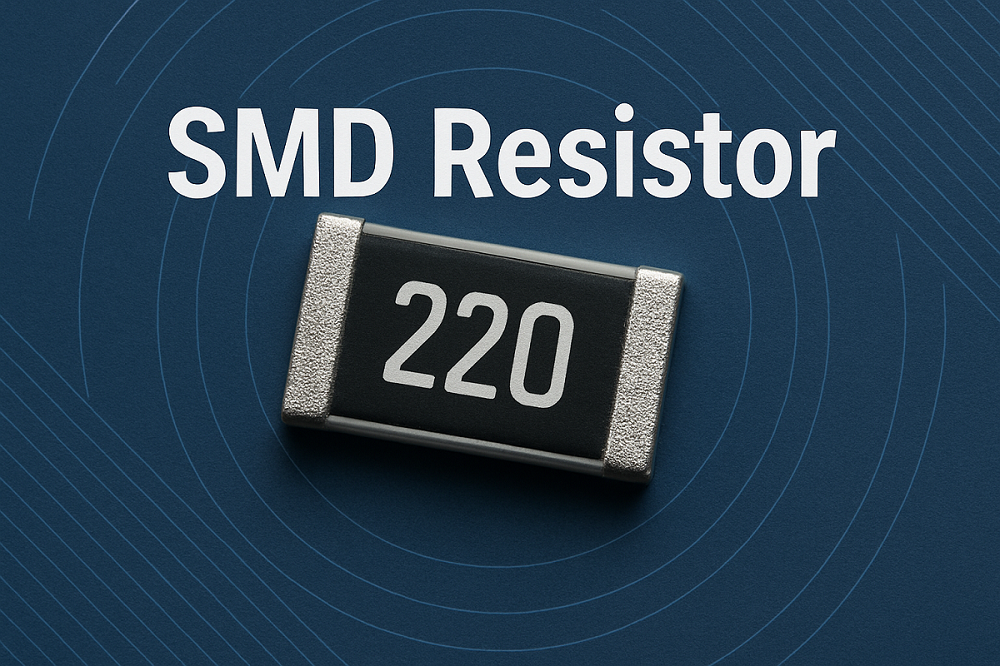
SMD Resistor: Types, Applications, and Selection Guide2025-04-30