The Kynix Blog
Stay Ahead with Expert Electronics Insights,
Industry Trends, and Innovative Tips
- Electronic Components
- News Room
- General electronic semiconductor
- Components Guide
- Sort by
- Robots
- Transmitters
- Capacitors
- IC Chips
- PCBs
- Connectors
- Amplifiers
- Memory
- LED
- Diodes
- Transistors
- Battery
- Oscillators
- Resistors
- Transceiver
- RFID
- FPGA
- Mosfets
- Sensor
- Motors, Solenoids, Driver Boards/Modules
- Relays
- Optoelectronics
- Power
- Transformer
- Fuse
- Thyristor
- potentiometer
- Development Boards
- RF/IF
- Semiconductor Information
- PCB
- transistor
In recent years Artificial intelligence (AI) has become a technology that global companies are desperately trying to take advantage of, as it is one of the most emerging and competitive technologies. However, a lot of AI technologies focus on the software, with operating speeds low which makes them a poor fit for mobile devices. For this reason big companies are focusing on developing AI with low power and high speeds, hoping to make AI fit for mobile use. Professor Hoi-Jun Yoo of the Department of Electrical Engineering, along with his research team and collaboration with start-up company, UX Factory Co, has developed a semiconductor chip, CNNP (CNN Processor), which runs AI algorithms with ultra-low power, and K-Eye, a face recognition system using CNNP. Consisting of two different formats, the K-Eye series is available as a wearable type and a dongle type. The wearable type device can be used with a smartphone via Bluetooth, and it can operate for more than 24 hours with its internal battery. By conveniently hanging the K-Eye around their necks users can check information about people by using their smartphone or smart watch, which connects K-Eye and allows users to access a database via their smart devices. A smartphone with K-EyeQ, the dongle type device, can recognise and share information about users at any time. It works by recognising an authorised user looking at the screen, which then automatically turns the smartphone on, without a fingerprint, passcode or iris authentication. The smartphone cannot be tricked by the user’s photograph, as it can distinguish whether an input face is coming from a saved photograph versus a real person. Other distinct features are carried out by the K-Eye series. Detecting a face at first and then recognising it is one, and it is possible to maintain ‘Always-on’ status with low power consumption of less than 1mW. The research team devised two key technologies to complete this: an image sensor with ‘Always-on’ face detection and the CNNP face recognition chip. The ‘Always-on’ image sensor, the first key technology, is able to determine if there is a face in its camera range. Then, it can capture frames and set the device to operate only when a face exists, reducing the standby power significantly. Additionally the face detection sensor combines analogue and digital processing to reduce power consumption. Using this approach, the analogue processor, combined with the CMOS Image Sensor array, distinguishes the background area from the area likely to include a face, and the digital processor then detects the face only in the selected area. Therefore, it becomes effective in terms of frame capture, face detection processing, and memory usage. Following this the second key technology, CNNP, is able to achieve incredibly low power consumption, by optimising a convolutional neural network (CNN) in the areas of circuitry, architecture, and algorithms. Specially designed to enable data to be read in a vertical direction as well as in a horizontal direction, the on-chip memory integrated in CNNP also has immense computational power with 1024 multipliers and accumulators operating in parallel and is capable of directly transferring the temporal results to each other without accessing to the external memory or on-chip communication network. Additionally, convolution calculations with a two-dimensional filter in the CNN algorithm are approximated into two sequential calculations of one-dimensional filters to achieve higher speeds and lower power consumption. CNNP achieved 97% high accuracy but consumed only 1/5000 power of the GPU thanks to these new technologies. Face recognition can be performed with only 0.62mW of power consumption, and the chip can show higher performance than the GPU by using more power. Developed by Kyeongryeol Bong, a PhD student under Professor Yoo, these chips were presented at the International Solid-State Circuit Conference (ISSCC) held in San Francisco earlier this year. CNNP, which has the lowest reported power consumption in the world, has achieved a huge amount of attention, which has led to the development of the present K-Eye series for face recognition. Professor Yoo commented: “AI - processors will lead the era of the Fourth Industrial Revolution. With the development of this AI chip, we expect Korea to take the lead in global AI technology.” Ref.MT9V022 OV05633
kynix On 2017-07-18
In this internet-connected age, all of our devices are constantly communicating with each other. Chances are you've got a phone, a laptop, a television, a car radio, maybe a smart home device or some other WiFi-capable appliance, along with a smartwatch or Bluetooth speaker. All of these devices are talking with each other and the wider world constantly. This is all done through radio signals. All of your devices communicate by sending and receiving radio signals at specific frequencies. But why don't cellphone calls collide against Wi-Fi signals? Mostly, it's because there are agreed-upon standards for what devices get to broadcast at what frequency. The radio spectrum is heavily partitioned so different kinds of traffic stay in their own lanes and all the data gets where it needs to go. A similar situation is playing out underwater. Under the sea, there are submarines, research vessels, robots, buoys, and tracking tags on animals, and they've all got to communicate. But radio signals don't work underwater, so the established radio communication standards are useless. Instead, underwater signals are sent via acoustic waves, but until recently there was no standard for which frequencies to use. That's all been changed now, thanks to a new standard being pioneered by NATO. Called JANUS—after the Roman god of gateways—the new system partitions the range of possible underwater communication frequencies and lets everything communicate with everything else. The JANUS protocol establishes a single frequency—11.5 kilohertz—that is reserved for initial communication between two systems, as well as frequencies for announcing a system's presence to everyone nearby. Once two crafts or robots make contact with each other, they can switch to a different frequency for extended communication. JANUS is opening the door to a better way to communicate underwater. Because of this new standard, all kinds of new collaborations are now possible. Entire fleets of robots can communicate with each other at a distance, communications buoys can send signals from the air into the water, and everyone can finally talk to one another. Considering the ocean floor is less explored than outer space, it's about time we figured out a way to communicate from there. Ref.CC3000MODRESP8266
kynix On 2017-07-17
Ion Transistors for the transport of both positive and negative ions, as well as biomolecules had been previously developed by a group of Organic Electronics research team at Linköping University. Now Tybrandt has now succeed in developing circuits using these Transistors similar to traditional silicon electronics. In essence of this technology we can build computer chips that can directly interface with our body cells.The major advantage of chemical circuit is that the charge carrier consists of chemical substances with various functions and this gives us new opportunities to regulate and control signal paths of Human Body Cells.In a conventional transistor there are three terminals Gate, Source and Drain. When signal is applied to Gate terminal, electrons flow from Source to Drain. Electrons are the charge carrier in conventional transistor, but in the new Ion Transistor the ionic neurotransmitter acetylcholine is the charge carrier. NAND gates and Inverters can be created using these Ion transistors, which means that it can be used to implement any logic function.Magnus Berggren, Professor of Organic Electronics and leader of the research group says that, it can be used to send signals to muscle synapses when our muscle signalling system may not works for some reasons and our chips works with common signalling substances such as acetylcholine.The research in Ion Transistors which can control and transport ions and charged biomolecules was begun before 3 years by Berggren (professor in Organic Electronics at the Department of Science and Technology at Linköping University) and Tybrandt (a doctoral student). Researchers at Karolinska Institute then used this Transistors to control the delivery of the signalling substance acetylcholine to individual cells. It hopes that it can restore the lost movement of paralysed peoples.Mr. Tybrandt in conjunction with Robert Forchheimer (Professor of Information Coding at LiU) has taken the next steps by developing chemical chips which contains logic gates, that allows the construction of all logic functions.Ref:KY56-C4706KY56-KSC5024RTUKY56-MJL21193G
kynix On 2017-07-14
(This is a high precision control of printed electronics.)Printed electronic transistor circuits and displays, in which the colour of individual pixels can be changed, are two of many applications of ground-breaking research at the Laboratory of Organic Electronics, Linköping University. New groundbreaking results on these topics have been published in the scientific journal Science Advances. The researchers in organic electronics have a favourite material to work with: the conducting polymer PEDOT:PSS, which conducts both electrons and ions. Displays and transistors manufactured from this polymer have many advantages, which include that they are simple and cheap to manufacture, and the material itself is non-hazardous. It has, however, been difficult to create devices that switch rapidly at a specific voltage, known as the "threshold voltage." This gives that it has, so far, been difficult to control the current state of the transistors or the color state of the displays in a precise manner. "The lack of any threshold in the redox-switching characteristics of PEDOT:PSS hampers bistability and rectification, characteristics that would allow for passive matrix addressing in display or memory functionality" says Simone Fabiano, senior lecturer at the Laboratory of Organic Electronics, LOE, who is the principal author of the article in Science Advances, together with Negar Sani from the research institute RISE Acreo. More than five years ago a wild idea arose at the Laboratory of Organic Electronics: could you solve this problem by combining electrochemistry with ferroelectricity? Ferroelectric materials consist of dipoles. One end of a dipole has a positive charge and the other a negative charge, and these "ferroelectric" dipoles rotate when they are exposed to an electric field beyond a specific threshold. Head of the laboratory Professor Magnus Berggren couldn't let this idea rest, and when he was awarded a research grant from the Knut and Alice Wallenberg Foundation in December 2012 to use freely, this was one of the high-risk projects he chose to invest in. "We called the research then breakneck research, and here is a result. Our demonstration proves that truly leading research typically take a long time and require considerable patience. Simone Fabiano has done tremendous work here, and refused to give up when others have doubted," says Magnus Berggren. After many years of tenacious experiments, Simone Fabiano and his colleagues at the Laboratory of Organic Electronics have managed to apply a thin layer of a ferroelectric material onto one electrode in organic electrochemical devices and circuits. "The thickness of the layer determines the voltage at which the circuit switches or the display changes colour. Transistors are no longer required in the displays: we can control them pixel-by-pixel simply through a thin ferroelectric layer on the electrode," says Simone Fabiano. The LOE research group shows in the article that "ferroelectrochemistry," the combination of ferroelectricity and electrochemistry, can be used in displays in the field of printed electronics and in organic transistors. The scientists envisage, however, many other areas of application. "Ferroelectrochemical components can easily be integrated into memory matrices and into bioelectronic applications, just to give a couple of examples," says Simone Fabiano. The technology is now protected by patents. "The field of ferroelectrochemistry doesn't actually exist, but we have achieved success using this combination," Magnus Berggren concludes. Ref.KY56-2SA1987KY56-KSC5024RTUKY56-FJI5603D
kynix On 2017-07-13
Techniques and coding theories in information sciences have helped to design new concepts for faster and better data storage. Rapid and reliable data storage is crucial for the success of businesses, online platforms, information repositories and research centres. The EU-funded INFO-STORE (Novel data storage by advancing information sciences) project investigated how to overcome challenges and limitations in emerging data storage applications.Combining theory, practice and expert discussions in a series of five subprojects, the project examined how to improve information storage through breakthroughs in coding theory and related theoretical disciplines. The project made significant progress with respect to multilevel non-volatile memories and their trade-offs between storage density and read/write speeds. This included designing new coding frameworks to improve read/write speeds, maximising the number of writes, reading memory cells in parallel, and balancing density and speed in multilevel memories. To develop high-throughput memory systems for network switches and routers, INFO-STORE produced a coding framework that switches packets between input and output ports. This also involved new codes for optimal switching guarantees, algorithms that exploit such codes in a network switch or router, and compression of forwarding databases. The achievements in this vein overcame the challenge of memory contention in network switches and routers. High-density memristor (resistive memory) storage and associated reliability challenges were also studied to avoid a key obstacle known as sneak paths. In addition, work on memristor issues involved using regular arrays of memristor devices that combine storage and logic. Another important project milestone involved distributed storage systems and the need for flexible data reconstruction in the presence of failing and busy nodes. To overcome this obstacle, INFO-STORE developed a 2D coding framework that allows only a number of nodes to provide a small portion of their stored information – i.e. partial delivery. Lastly, researchers proposed efficient data distribution schemes that work well with the short packet blocks. As data distribution schemes using fountain codes operate optimally only when the packet blocks are very large, the team produced a coding scheme to optimise encoder operation for the receiver's state. This lowers the overhead considerably for short blocks. The project's results were followed by many other ideas and proposals, including a publication on elastic compression of content in web servers to improve server security against denial-of-service attacks. The project's research findings have already begun contributing to the development of quicker, better and safer data storage. Ref.KY32-CY7C1357S-100AXCKY32-CY7C131E-55NXI
kynix On 2017-07-12
Omron Electronic Components has extended its non-contact MEMS thermal sensor range with a new narrow-field version specifically designed to provide accurate non-contact measurements of an objects’ surface temperature for industrial control, medical and building automation systems. Omron is relaunching its full range of MEMS thermal sensors in Europe, including wider field versions ideal for detecting room occupancy and similar applications. The new Omron D6T-1A-02 is a super-sensitive infra-red (IR) temperature sensor that makes full use of proprietary Omron MEMS sensing technology. It can measure the surface temperature of an object between -40 up to +80°C in the target area with an accuracy of +/-1.5°C and a resolution of 0.06°C. The device includes a state-of-the-art MEMS thermopile, a sensor ASIC (Application Specific Integrated Circuit) and a signal processing microprocessor in a tiny package of only 12.0mm x 11.6mm x 9.2mm. The D6T-1A-02 features a narrow field of view of 26.5 degrees square, allowing it to accurately assess the surface temperature of a specific object in this area. Features also include a digital I2C output which offers excellent noise immunity (measured as noise equivalent temperature difference) of 140mK. The Omron D6T thermal sensor is also ideal for building automation applications, measuring the temperature in a room, or detecting occupancy even when people are stationary. For these applications, Omron is offering versions with a wider field of view. These include a 1x1 device, the D6T-1A-01, with a field 58 degrees square. A 4x4 version and a 1x8 version are also available. These ultra-sensitive sensors are an outstanding alternative to pyroelectric sensors or PIR detectors in home automation, building automation, healthcare, security and industrial applications, which often fail to distinguish between an unoccupied space and a stationary person. While standard thermal sensors are only able to measure temperature at one contact point, the D6T range can measure the temperature of an entire area contactlessly. Signals generated by infrared rays are extremely weak. To achieve reliable detection, Omron has developed and manufactured every part of the new high sensitivity thermal sensor in-house, from the MEMS sensors to the ASICs and other application-specific parts. The technology behind Omron’s D6T thermal sensors combines a MEMS micro-mirror structure for efficient IR radiation detection with a high-performance silicon lens to focus the infrared rays onto its thermopiles. The ASIC then uses proprietary algorithms to make the necessary computations and convert sensor signals into digital I2C outputs. All components were developed in-house and are fabricated in Omron’s own MEMS facilities. Ref.KY66-G6SK-2-DC5KY66-G5LA-14-DC5
kynix On 2017-07-11
Join our mailing list!
Be the first to know about new products, special offers, and more.
Feature Posts
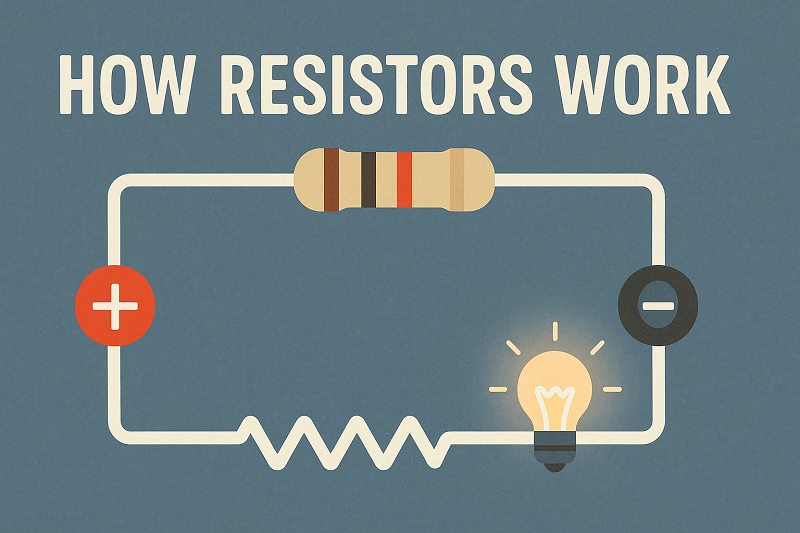
How Resistors Work: From Basic Principles to Advanced Applications2025-07-30
DC Switching Regulators: Principles, Selection, and Applications2025-05-30
FPGA vs CPLD: In-depth Analysis of Architecture, Performance and Application2025-05-07
MOSFET Technology: Essential Guide to Working Principles & Applications2025-05-04
SMD Resistor: Types, Applications, and Selection Guide2025-04-30