sensor Related Articles
Stay Ahead with Expert Electronics Insights,
Industry Trends, and Innovative Tips
- Electronic Components
- News Room
- General electronic semiconductor
- Components Guide
- Sort by
- Robots
- Transmitters
- Capacitors
- IC Chips
- PCBs
- Connectors
- Amplifiers
- Memory
- LED
- Diodes
- Transistors
- Battery
- Oscillators
- Resistors
- Transceiver
- RFID
- FPGA
- Mosfets
- Sensor
- Motors, Solenoids, Driver Boards/Modules
- Relays
- Optoelectronics
- Power
- Transformer
- Fuse
- Thyristor
- potentiometer
- Development Boards
- RF/IF
- Semiconductor Information
- Sensors
- PCB
- transistor
Developer of force-sensing technology, Peratech, is aiming to give users of smartphones and tablets a more intuitive user experience while unleashing more creative opportunities for product and app developers by adding new ways for consumers to interact with their devices. The most recent forecasts indicate that shipments of smartphones will exceed 1.5bn units in 2016 with tablet shipments expected to reach at least 240m. Peratech is working with several well-known manufacturers of these devices to add QTC force sensors to multiple surfaces on their products. The sensors, which are supplied in the form of a polymer membrane as thin as 50µm, can be applied under displays, along the edges and on the backs of handheld consumer electronic devices. They can be configured to sense X-Y position through touch and applied force in the Z-axis. There are single-touch and multi-touch versions.Sensors used under a display can sense the force applied across the entire screen and compute the touch pressure for individual zones or functions. Alternatively, they can provide discrete pressure buttons in regions that match the graphical user interface layout. Home buttons can be made multi-functional and wear-prone dome switches replaced with a force-sensing button where a light touch of the finger gives a quick wake up to check the time or messages and a firmer press reads the fingerprint and unlocks the phone.QTC sensors work under most surfaces. When applied to the sides and/or back of a smartphone, they sense the user’s grip and the amount of pressure applied, which can be used to control basic functions or apps. In addition, the back of a smartphone or tablet can be configured as a single- or multi-zone touch pad, opening up many more options for gaming input and interaction. On the device edges, QTC sensors may be used as switches and volume or brightness controls. Here, cutting holes in the case is eliminated and it’s easier to make products more robust and waterproof.Peratech CEO, Jon Stark, commented: “Adding a third dimension – force – to the user interface of a smartphone or tablet, and being able to do that anywhere on the surface of the device, offers designers infinitely greater opportunity to differentiate their products. They can become more creative with the interactions they provide, as can app developers, while at the same time making devices more intuitive and responsive”.Reference:FSG15N1AFS20-5-0-0000-1500FC2231-0000-0010-LFC2231-0000-0025-L
kynix On 2016-10-24
Bird’s new Wideband Power Sensor series of USB Thruline power meters feature five models each suited to a particular application. All capable of measuring True Average Power, Peak Power and Duty Cycle, as well as VSWR/Return Loss, Average Burst Power and CCDF, the WPS series will work with any modulation scheme.The vast majority of RF power meters on the market today, in the milliwatt range, are all focussed on measuring power levels of typically -10dBm +/- 30dB. However, Bird Technologies are one of the few manufacturers to offer RF enquirers equipment capable of measuring “real world” transmitter power levels without the need to use directional couplers or high power attenuators.These new USB Power Meters for “real world” RF power measurements cover; 350MHz to 4GHz (150mW to 150W); 350MHz to 4GHz (25mW to 25W); 25MHz to 1GHz (500mW to 500W); 150MHz to 4GHz (100mW to 25W) and 25MHz to 1GHz (100mW to 100W).Insertion loss is less than 0.1dB (typically 0.05dB) with a VSWR of 1.1:1max (typically 1.05:1), plus a directivity specification of typically 30dB. These parameters contribute to an average power accuracy for all models of ±4% of reading, or 0.17dB, over the full power range at +15 to +350C.All Bird Wideband Power Sensors come with ‘Virtual Power Meter’ software to allow connection to a PC. In addition the WPS will interface with the Bird 5000-XT Digital Power meter, or the majority of the Bird SA / SH series of Site Analysers or SignaHawks.Also announced is the new 7020 Power Sensor, a low cost USB Power Meter similar in operation to the 501XB range. The 7020 contains the same ‘True Average Power’ measurement capabilities within the frequency range of 350MHz to 4GHz (0.15W to 150W), and has an identical accuracy of reading at ±4% +0.05W, or 0.17dB. The 7020 Power Sensor is an ideal low cost, but accurate, USB power meter for many applications.Reference:1005919-1PCUC30M72AV
kynix On 2016-10-17
Inside a secretive AI nonprofit backed by Elon Musk and other Silicon Valley figures, a handful of robots designed to help out in warehouses are gradually learning how to do useful household chores.OpenAI, which was created to do basic AI research, is reprogramming robots developed by Fetch Robotics, a company that supplies warehouse automation hardware. Researchers at OpenAI are equipping the robots with software that lets them train themselves through trial and error.The effort reflects a bet that innovations in software and machine learning, rather than breakthroughs in hardware, are the way to give robotics remarkable new capabilities. Fetch makes a range of robots for warehouses, including systems that follow workers around a building, carrying items dropped into a basket. OpenAI is using a system that features a mobile base but also 3-D depth sensors, a 2-D laser scanner, and a robotic arm with seven degrees of freedom.In April, OpenAI recruited Pieter Abbeel, a professor at the University of California, Berkeley, and a leading expert on robot learning. Abbeel has shown how robots can use a machine-learning approach called deep reinforcement learning to acquire completely new skills that would be hard to program by hand, such as folding towels or retrieving items from a refrigerator. Google DeepMind, an AI subsidiary based in the U.K., uses this technique to get computers to play computer games at a superhuman level (see “Google’s AI Masters Space Invaders”).Abbeel’s robots learn tasks from scratch, using a neural network that receives sensor input and controls physical movement. The network adjusts its parameters automatically as it inches closer to its goal. A robot might try thousands of grips, for instance, in the process of learning how to hold a certain object.“If this goal can be achieved, then there will be economic and industrial benefits,” says Marc Deisenroth, an expert on reinforcement learning at Imperial College London. “Imagine a Roomba not only cleaning your floor but also doing the dishes, ironing the shirts, cleaning the windows, preparing breakfast.”Deisenroth says using off-the-shelf robots could drive costs down. “Currently, the software seems to be the bottleneck,” he adds. “However, independent of this, better hardware could also lead to substantial improvements.” Soft manipulators and elastic feet similar to a monkey’s feet are concepts that researchers have started working on, he says.Some manufacturers, including the Japanese company Fanuc, are testing reinforcement learning as a way to train industrial robots quickly in new tasks such as learning to grasp unfamiliar objects. When many robots work in parallel, the training time required is reduced accordingly. Robot researchers at Google are testing similar learning techniques.“Moving away from having to program robots by hand by endowing robots to learn autonomously is a key element for the future of robotics,” says Jens Kober, an expert on robot learning at Delft University of Technology in the Netherlands. Kober says having robots share the information they have learned will be crucial.While robots such as those made by Fetch are finding their way into many factories and warehouses, domestic robot helpers remain the stuff of science fiction. Performing seemingly simple tasks like washing dishes or folding laundry in a messy home setting is incredibly hard for a machine. A robot programmed the conventional way can easily be thrown off by an unfamiliar object or a slight variation in lighting.OpenAI confirmed that it is working with the robots from Fetch, but it declined to comment further. Melonee Wise, the company’s founder, couldn’t be reached for comment (see “Innovators Under 35: Melonee Wise”).OpenAI was created by Musk and a handful of well-known (and well-heeled) Silicon Valley entrepreneurs, including investor Peter Thiel, Y Combinator president Sam Altman, and the incubator’s cofounder Jessica Livingston. The nonprofit’s backers have committed $1 billion in funding to the project, and it is being led by Ilya Sutskever, a prominent AI researcher who left Google to join the project, and Greg Brockman, an early employee at the high-profile digital payment company Stripe.While OpenAI has committed to making the technology it develops publicly available, it could certainly benefit companies backed by Musk and Thiel, as well as those emerging from Y Combinator.
kynix On 2016-10-14
Texas Instruments today announced the industry's first flexible high frequency 13.56 MHz sensor transponder family. The highly integrated ultra-low-power RF430FRL153HCRGER system-on-chip (SoC) family combines an ISO 15693-compliant Near Field Communication (NFC) interface with a programmable microcontroller (MCU), non-volatile FRAM, an analog-to-digital converter (ADC) and SPI or I2C interface. The dual-interface RF430FRL153HCRGER NFC sensor transponder is optimized for use in fully passive (battery-less) or semi-active modes to achieve extended battery life in a wide range of consumer wearables, industrial, medical and asset tracking applications.Non-volatile FRAM combines the speed, flexibility and endurance of SRAM with the stability and reliability of flash – while providing the industry's lowest power consumption and virtually unlimited write cycles. FRAM allows developers to create products that can quickly store sensor data and enables easy configuration of the transponder and sensors to meet any application's needs.Integrating NFC sensors into medical, industrial and asset-tracking applicationsDevelopers can now design products that require an analog or digital interface, data-logging capabilities and data transfers to an NFC-enabled reader. The RF430FRL153HCRGER transponder acts as a sensor node for these applications and generates an IoT-ready solution when an NFC-enabled device pushes the data to the cloud.In medical or health and fitness applications, the RF430FRL153HCRGER can be used in disposable patches that sense temperature, hydration and more. This allows patients to monitor and share vital data securely with their health providers. The device monitors and logs data in local storage (FRAM) before transferring it to an NFC-enabled tablet or smartphone.The RF430FRL153HCRGERenables the design of maintenance-free and hermetically sealed galvanic isolated sensor systems in the industrial markets. These sensors are powered out of the RF field and communicate wirelessly through NFC to collect and log data.Logistics applications such as food tracking need constant temperature control, which can be monitored and logged with the RF430FRL153HCRGER transponder. It allows the design of highly integrated, size-optimized and easy-to-use data loggers with several sensors that connect to NFC-enabled devices and readers throughout the distribution channel.Features and benefits of TI's RF430FRL153HCRGER NFC sensor transpondersSupports wireless communication via the ISO/IEC 15693, ISO/IEC 18000-3 compliant RFID interface.Optimized for 1.5 V single-cell-battery-powered designs or battery-less designs that harvest energy from the RF field generated from an NFC reader at the same reading distance. Intelligent power management includes a battery switch to ensure long battery life.14-bit sigma-delta ADC with ultra-low input current, low noise and ultra-low offset enables developers to connect up to three additional external sensors in addition to the integrated temperature sensor.SPI or I2C interface can support digital sensors or connect the device to a host system.Application code embedded in ROM manages RF communication and sensor readings to provide the ultimate flexibility in configuring the device. Developers can configure sampling rates, measurement thresholds and alarms.Universal non-volatile memory (FRAM) allows data storage as well as extension and adjustment of application code.Integrates a 16-bit ultra-low-power programmable MSP430 CPU core that is supported by a robust ecosystem of development tools.Fully integrated into TI's Code Composer Studio (CCS) and IAR's Embedded Workbench® integrated development environments (IDEs).
kynix On 2016-10-12
Thermal Solution Resources, LLC (TSR) introduced the world's smallest wireless LED lamp – the intelliSSL MR16 – which can be controlled remotely from IOS, Android or Windows smartphones, tablets or PCs. The intelliSSL lamp incorporates an ultra-compact driver architecture with a powerful antenna system, designed to maximize reception strength, and uses the ultra-low-power JN5168 wireless microcontroller from NXP Semiconductors N.V.. The TSR intelliSSL wireless MR16 lamp will be featured in the NXP booth this week at LIGHTFAIR (no. 2453) and the LEDdynamics booth (no. 100), as well as the ZigBee Alliance booth (no. 3251) as part of a ZigBee Light Link network. The patent-pending intelliSSL design provides strong wireless reception, eliminating signal interference even under high temperatures, while conforming to a standard ANSI format – 1.98 inches in diameter and 1.98 inches in length – with a GU 5.3 base. A GU 10 base version is planned for release later this year. Compliant with the IEEE 802.15.4 standard for wireless communication, TSR's new wireless MR16 LED can be used with a wide range of network software stacks, including ZigBee Light Link, ZigBee Home Automation and JenNet-IP. The intelliSSL smart MR16 LED is ideal for commercial, architectural and outdoor lighting installations, as well as general lighting applications. "Wireless lighting control is becoming a strategic investment for commercial and residential buildings, with significant ROI in terms of energy savings and total cost of ownership, as well as safety and security," said Mikhail Sagal, president of Thermal Solution Resources. "With the world's first wireless MR16 LED, we've opened a host of new use cases for wireless smart lighting. The flexible, ultra-compact design of the intelliSSL lamp enables wireless LED replacement lamps to be integrated in nearly any type of lighting installation, as well as security systems and devices such as motion sensors, cameras and automated shade controls." The intelliSSL smart MR16 LED lamp is made with TSR's moduLED design, which eliminates thermal bottlenecks and inefficient assembly steps, while strengthening wireless range and data accuracy. TSR, a design and manufacturing firm for LED lighting headquartered in Rhode Island, offers unique expertise and IP in thermal management, LED lighting design, manufacturing and wireless integration. "Wireless smart lighting has been embraced enthusiastically by tech-savvy consumers. Now with the first wirelessly-enabled MR16 from TSR, we expect to see broader adoption, also by businesses, for commercial and architectural lighting installations," said Marcel Walgering, general manager, smart home and energy product line, NXP Semiconductors. "As part of a connected home, smart building or intelligent city network, smart LEDs have the potential to significantly change the way we manage lighting, security and energy consumption on a grand scale."
kynix On 2016-10-07
It's only a centimeter long, it's placed under your skin, it's powered by a patch on the surface of your skin and it communicates with your mobile phone. The new biosensor chip developed at EPFL is capable of simultaneously monitoring the concentration of a number of molecules, such as glucose and cholesterol, and certain drugs.The future of medicine lies in ever greater precision, not only when it comes to diagnosis but also drug dosage. The blood work that medical staff rely on is generally a snapshot indicative of the moment the blood is drawn before it undergoes hours - or even days - of analysis.Several EPFL laboratories are working on devices allowing constant analysis over as long a period as possible. The latest development is the biosensor chip, created by researchers in the Integrated Systems Laboratory working together with the Radio Frequency Integrated Circuit Group. Sandro Carrara is unveiling it today at the International Symposium on Circuits and Systems (ISCAS) in Lisbon.Autonomous operation"This is the world's first chip capable of measuring not just pH and temperature, but also metabolism-related molecules like glucose, lactate and cholesterol, as well as drugs," said Dr Carrara. A group of electrochemical sensors works with or without enzymes, which means the device can react to a wide range of compounds, and it can do so for several days or even weeks.This one-centimetre square device contains three main components: a circuit with six sensors, a control unit that analyses incoming signals, and a radio transmission module. It also has an induction coil that draws power from an external battery attached to the skin by a patch. "A simple plaster holds together the battery, the coil and a Bluetooth module used to send the results immediately to a mobile phone," said Dr Carrara.Contactless, in vivo monitoringThe chip was successfully tested in vivo on mice at the Institute for Research in Biomedicine (IRB) in Bellinzona, where researchers were able to constantly monitor glucose and paracetamol levels without a wire tracker getting in the way of the animals' daily activities. The results were extremely promising, which means that clinical tests on humans could take place in three to five years - especially since the procedure is only minimally invasive, with the chip being implanted just under the epidermis."Knowing the precise and real-time effect of drugs on the metabolism is one of the keys to the type of personalised, precision medicine that we are striving for," said Dr Carrara.
kynix On 2016-09-27
Join our mailing list!
Be the first to know about new products, special offers, and more.
Feature Posts
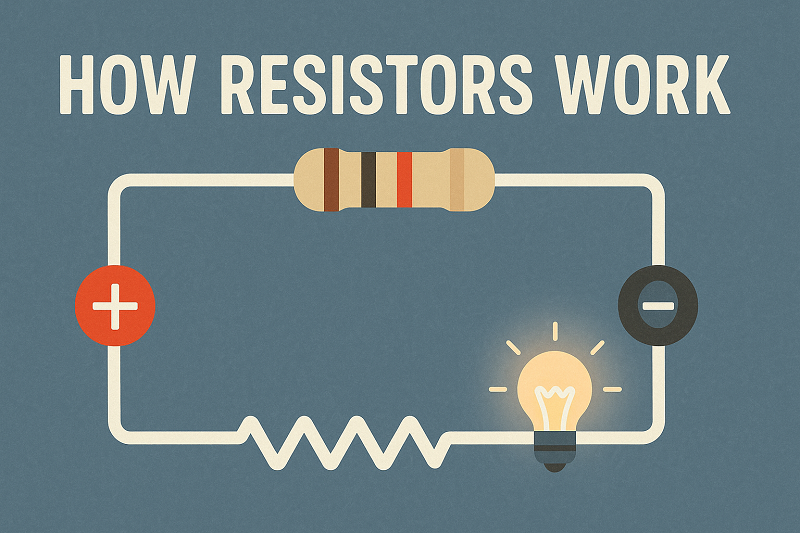
How Resistors Work: From Basic Principles to Advanced Applications2025-07-30
DC Switching Regulators: Principles, Selection, and Applications2025-05-30
FPGA vs CPLD: In-depth Analysis of Architecture, Performance and Application2025-05-07
MOSFET Technology: Essential Guide to Working Principles & Applications2025-05-04
SMD Resistor: Types, Applications, and Selection Guide2025-04-30