The Kynix Blog
Stay Ahead with Expert Electronics Insights,
Industry Trends, and Innovative Tips
- Electronic Components
- News Room
- General electronic semiconductor
- Components Guide
- Sort by
- Robots
- Transmitters
- Capacitors
- IC Chips
- PCBs
- Connectors
- Amplifiers
- Memory
- LED
- Diodes
- Transistors
- Battery
- Oscillators
- Resistors
- Transceiver
- RFID
- FPGA
- Mosfets
- Sensor
- Motors, Solenoids, Driver Boards/Modules
- Relays
- Optoelectronics
- Power
- Transformer
- Fuse
- Thyristor
- potentiometer
- Development Boards
- RF/IF
- Semiconductor Information
- PCB
- transistor
Eight years ago, Ted Adelson’s research group at MIT’s CSAIL unveiled a new sensor technology, called GelSight, that uses physical contact with an object to provide a remarkably detailed 3D map of its surface. Now, by mounting GelSight sensors on the grippers of robotic arms, two MIT teams have given robots greater sensitivity and dexterity. The researchers presented their work in two papers at the International Conference on Robotics and Automation.In one paper, Adelson’s group uses the data from the GelSight sensor to enable a robot to judge the hardness of surfaces it touches — a crucial ability if household robots are to handle everyday objects.In the other, Russ Tedrake’s Robot Locomotion Group at CSAIL uses GelSight sensors to enable a robot to manipulate smaller objects than was previously possible.The GelSight sensor is, in some ways, a low-tech solution to a difficult problem. It consists of a block of transparent rubber — the “gel” of its name — one face of which is coated with metallic paint. When the paint-coated face is pressed against an object, it conforms to the object’s shape.The metallic paint makes the object’s surface reflective, so its geometry becomes much easier for computer vision algorithms to infer. Mounted on the sensor opposite the paint-coated face of the rubber block are three colored lights and a single camera.“[The system] has colored lights at different angles, and then it has this reflective material, and by looking at the colors, the computer … can figure out the 3D shape of what that thing is,” explains Adelson, the John and Dorothy Wilson Professor of Vision Science in the Department of Brain and Cognitive Sciences.In both sets of experiments, a GelSight sensor was mounted on one side of a robotic gripper, a device somewhat like the head of a pincer, but with flat gripping surfaces rather than pointed tips.For an autonomous robot, gauging objects’ softness or hardness is essential to deciding not only where and how hard to grasp them but how they will behave when moved, stacked, or laid on different surfaces. Tactile sensing could also aid robots in distinguishing objects that look similar.In previous work, robots have attempted to assess objects’ hardness by laying them on a flat surface and gently poking them to see how much they give. But this is not the chief way in which humans gauge hardness.Rather, our judgments seem to be based on the degree to which the contact area between the object and our fingers changes as we press on it. Softer objects tend to flatten more, increasing the contact area.The MIT researchers adopted the same approach. Wenzhen Yuan, a graduate student in mechanical engineering and first author on the paper from Adelson’s group, used confectionary molds to create 400 groups of silicone objects, with 16 objects per group. In each group, the objects had the same shapes but different degrees of hardness, which Yuan measured using a standard industrial scale.Then she pressed a GelSight sensor against each object manually and recorded how the contact pattern changed over time, essentially producing a short movie for each object. To both standardise the data format and keep the size of the data manageable, she extracted five frames from each movie, evenly spaced in time, which described the deformation of the object that was pressed.Finally, she fed the data to a neural network, which automatically looked for correlations between changes in contact patterns and hardness measurements. The resulting system takes frames of video as inputs and produces hardness scores with very high accuracy.Yuan also conducted a series of informal experiments in which human subjects palpated fruits and vegetables and ranked them according to hardness. In every instance, the GelSight-equipped robot arrived at the same rankings. Ref:KY45-AT42QT1110-AUKY45-STMPE1208SQTRKY45-MPR032EPR2
kynix On 2017-06-08
Isolation comes from ADI’s ADuM4135 isolated gate driver (see diag below), with IXYS IXDN630YI booster providing silicon carbide gate drive voltages. “The design provides customers with an isolated dual-gate driver switch for evaluating SiC mosfets in a number of topologies, said Microsemi. This includes modes optimised for half-bridge switching with synchronous dead time protection and asynchronous signal transfer with no protection.” It can also be configured for concurrent drive to study un-clamped inductive switching (UIS) or double pulse testing, and the board supports changing gate resistor values to accommodate different mosfet characteristics. According to Microsemi, when comparing the drives of Si devices to those of SiC devices, there are two important differences to consider: Slew rate at the output of a SiC half bridge can be much higher than with silicon – easily 35kV/μS. This affects the design of the gate drive signal isolation and EMI mitigation. It creates potential issues with the method of implementation of parts of the system, such as the gate power dc-dc function. The intention of this board is to provide an off-the-shelf test solution which addresses these issues. Compared to silicon mosfets, SiC mosfets are normally driven at wider gate voltages – typically from -5 to 20V. Lower positive voltages can be used if the resulting higher Ron is acceptable. Lower negative drive voltages can be used, possibly down to zero. The reference design is intended for markets including: aerospace (actuation, air conditioning and power distribution), automotive (power-trains, battery chargers, dc-dc converters and energy recovery), defence (power supply and high power motor drive), industrial (photovoltaic inverters, motor drives, welding, un-interruptible power supply, switched-mode power supply and induction heating) and medical (MRI and x-ray power supply). Analog Devices’ iCoupler technology, used here, has better than 50ns propagation delay with 5ns matching, and common-mode transient immunity of better than 100kV/us. Lifetime working voltages are available up to 1.5kV in a single package. Ref: KY32-TC4429CAT KY32-IXDD414CI KY32-TPS2819QDBVRQ1
kynix On 2017-06-07
Today, at the imec technology forum (ITF2017), imec demonstrated the world's first self-learning neuromorphic chip. The brain-inspired chip, based on OxRAM technology, has the capability of self-learning and has been demonstrated to have the ability to compose music.The human brain is a dream for computer scientists: it has a huge computing power while consuming only a few tens of Watts. Imec researchers are combining state-of-the-art hardware and software to design chips that feature these desirable characteristics of a self-learning system. Imec's ultimate goal is to design the process technology and building blocks to make artificial intelligence to be energy efficient so that that it can be integrated into sensors. Such intelligent sensors will drive the internet of things forward. This would not only allow machine learning to be present in all sensors but also allow on-field learning capability to further improve the learning.By co-optimizing the hardware and the software, the chip features machine learning and intelligence characteristics on a small area, while consuming only very little power. The chip is self-learning, meaning that is makes associations between what it has experienced and what it experiences. The more it experiences, the stronger the connections will be. The chip presented today has learned to compose new music and the rules for the composition are learnt on the fly.It is imec's ultimate goal to further advance both hardware and software to achieve very low-power, high-performance, low-cost and highly miniaturized neuromorphic chips that can be applied in many domains ranging for personal health, energy, traffic management etc. For example, neuromorphic chips integrated into sensors for health monitoring would enable to identify a particular heartrate change that could lead to heart abnormalities, and would learn to recognize slightly different ECG patterns that vary between individuals. Such neuromorphic chips would thus enable more customized and patient-centric monitoring."Because we have hardware, system design and software expertise under one roof, imec is ideally positioned to drive neuromorphic computing forward," says Praveen Raghavan, distinguished member of the technical Staff at imec. "Our chip has evolved from co-optimizing logic, memory, algorithms and system in a holistic way. This way, we succeeded in developing the building blocks for such a self-learning system." Ref:KY32-MAX1490AEPG+KY32-LN3251MPW
kynix On 2017-06-05
In the future, a new sensor cable could be used to protect airports, industrial complexes and people’s yards without a great deal of expense. It registers even the tiniest changes in the Earth’s magnetic field.Plenty of things go unnoticed by our senses. One of them is the Earth’s magnetic field. Unlike migratory birds and sea turtles, we need technical aids to make use of it. Like the good old compass. It has been helping seamen navigate the seven seas since the 12th century. Sort of a primitive precursor of today’s magnetic field sensors. Then in 1832, mathematician and physicist Carl Friedrich Gauss laid the cornerstone for modern magnetic sensor technology when he developed a method for measuring both the direction and intensity of the Earth’s magnetic field.Since then, magnetic-field sensors have become quite important because they make entirely new solutions for difficult measuring tasks possible. And not just for research and industry—also for our private lives. For example, they help determine location and position in our smartphones. And with Apps such as Telemeter 11th, they even turn a digital Swiss knife into a metal detector.Magnetic burglar alarmSaarland University’s “All-round Warning Alarm” is based on a similar principle. When attached to fencing, a thin magnetic field sensor cable can tell whether the wind, a bird or wire cutters are “interacting” with the wire mesh. Buried in the ground of future traffic-guidance systems, it can tell which direction automobiles are driving. Not even smartphones or zippers can go undetected. That is because everything within a few meters that influences the Earth’s magnetic field is registered by highly sensible magnetic field sensors and transmitted to a smartphone via Bluetooth.The sensor cable is flexible and can be adapted to a wide variety of requirements, and it consumes very little electricity. It is also practically wear free, and measurements do not dependent on weather conditions. In addition, no data is stored and the sensor system has proved a hard nut for hackers to crack.The technology is based on the fact that the Earth’s weak magnetic field (approx. 50 microtesla) is always everywhere. And that every ferromagnetic object measurably disturbs this field for magnetic field sensors with sensitivities in the nanotesla range. Corresponding electronics and algorithms then determine metallic properties, size and direction of motion. Every type of “disturbance” has its own magnetic fingerprint.Magnetic field sensors for every purposeResearchers have been working a “magnetic” recognition systems for a good 15 years. As part of the development process, experiments were conducted with so-called AMR (anisotropic magnetoresistance) and GMR (giant magnetoresistance) sensors. The latter can be found in billions of read heads in hard disk drives, and the physicists who discovered them, Peter Gruenberg from Forschungszentrum Jülich and Albert Fert from Université Paris-Sud, were awarded the Nobel Prize in Physics in 2007. Both work sensors are based on the so-called magnetoresistance effect, which says that ferromagnetic materials change their resistance in a magnetic field.Burglars in a “tunnel”The first trials with the third member of the magnetoresistance team, i.e. GMI (giant magnetoimpedence) sensors, are now underway in Saarland. In this case, impedance (alternating current resistance) depends on the intensity of an applied, relatively weak external magnetic field.But that’s not all: The prototype recently introduced by Saarland University researchers uses a fourth variant, i.e. TMR (tunnel magnetoresistance) sensors, which have only been commercially available for a short time. As the word “tunnel” suggests, these magnetic field sensors make use of quantum mechanics effects. Due to their high change in resistance of 20%, TMRs are extremely interesting for a number of applications. They are provided by Sensitec(Germany), one of the partners in this project, which is sponsored by Germany’s Federal Ministry of Research.With the exception of the AMR effect, all magnetoresistance effects were discovered after 1988. In other words, this is still a relatively new, rapidly growing research sector with the prospect of extraordinary sensor solutions for various electronics sectors in the years to come. It will be interesting to see what happens! Ref:KY45-HMR3400KY45-HMC6343KY45-HMC2003
kynix On 2017-06-01
Texas Instruments (TI) (NASDAQ:TXN) today introduced two new device families that help reduce size and weight in motor drive applications. When used together, DRV832x brushless DC (BLDC) gate drivers and CSD88584/99 NexFET™ Power Blocks require as little as 511 mm2, half the board space of competing solutions.The DRV832x BLDC gate drivers feature a smart gate-drive architecture that eliminates up to 24 components traditionally used to set the gate drive current while enabling designers to easily adjust field-effect transistor (FET) switching to optimize power loss and electromagnetic compliance. The CSD88584Q5DC and CSD88599Q5DC power blocks leverage two FETs in a unique stacked-die configuration, which doubles power density and minimizes the FET resistance and parasitic inductances typically found in side-by-side FET configurations.An 18-volt compact BLDC motor reference design demonstrates how the DRV8323 gate driver and CSD88584Q5DC power block can drive 11 W/cm3 power and enable engineers to jump-start their designs for smaller, lighter-weight power tools, integrated motor modules, drones and more. Benefits of using a CSD88584/99 and DRV832x device togetherMaximum power density: The combined solution delivers 700 W of motor power without a heat sink, providing 50 percent higher current than conventional solutions without increasing the footprint.High peak current: As demonstrated by the 18-volt BLDC reference design, the smart gate driver and power block are capable of driving a peak current of up to 160 A for more than 1 second.Optimal system protection: The combination enables shorter trace lengths and actively prevents unintended FET turn-on, while also providing undervoltage, overcurrent and thermal protection.Superior thermal performance: The CSD88584Q5DC and CSD88599Q5DC power blocks come in TI's DualCool™ thermally enhanced package, which enables designers to apply a heat sink to the top of the device to decrease thermal impedance and increase the amount of power dissipated to maintain safe operating temperatures for the board and end application.Clean switching: The power blocks' switch-node clip helps eliminate parasitic inductance between high- and low-side FETs. Additionally, the DRV832x gate driver's passive component integration minimizes board traces.Tools and support to jump-start designIn addition to the 18-volt BLDC motor reference design, engineers can search for other motor reference designs that use the power blocks and gate drivers to help solve their system design challenges. The three-phase smart gate-driver evaluation module (EVM) allows designers to drive a 15-A, three-phase BLDC motor using the DRV8323R gate driver, CSD88599Q5DC power block and MSP430F5529microcontroller LaunchPad™ development kit. The EVM is available from the TI store for US$99.00.Package, availability and pricingThe new DRV832x BLDC smart gate drivers offer peripheral and interface options for engineers to select the best device for their design: with or without an integrated buck regulator or three integrated current-shunt amplifiers. Each device option is available in a hardware or serial interface and comes in quad flat no-lead (QFN) packaging. The CSD88584/99 power blocks come in DualCool small outline no-lead (SON) packaging, with 40- or 60-V breakdown voltage (BVDSS) choices. Ref:KY32-MSP430F5529IPNKY362-DRV8301-69M-KITKY32-DRV8301DCAR
kynix On 2017-05-31
The idea of home automation is not bounded to houses, the application area can be extended to security systems, auditoriums, function halls, Libraries etc. Home automation is just a catchy usage.Here, the medium for automation is not considered, only the switchboard connections are discussed. Every automation circuit finally has to control a relay through the port of the microcontroller. So, the circuit is similar up to the relay control, it slightly differs at the load terminals of the relay. Generally, NO and COM terminals of the relay are used for load control, here NC is also used. Basic Idea All the home automation circuits have a remote control feature, and it may be operated through Radio Frequency, Bluetooth, Infra-Red, GSM, Wi-Fi etc. But how to connect them to the existing switchboards, and what if the remote control is misplaced or if the circuit is malfunctioning? To avoid such disturbances in a practical scenario, it is better to have manual control as well similar to the switchboards. If the relays of home automation circuits are connected in series with the existing switches, they provide semi-manual control i.e., Turn OFF is possible, but to turn ON the load, the relay has to operate. So, this is not a suitable type of connection. Combining Two-Way switch and relay Two-way switches offer a solution to this. The relay is just similar to a two-way switch in terms of terminals i.e. both have three terminals like NC, COM, NO. Two-way switch connection for Staircase lighting actually gave this idea, but now, in this case, one manual switch and one electro-mechanical relay are used. Toggling any of them changes the ON/OFF state of the load. Actual wiring By using this, existing switchboards can be modified by replacing one-way switches with two-way switches. As already mentioned, the idea of home automation is not bounded to house, the application area can be extended to security systems, auditoriums, function halls, Libraries etc. Home automation is just a catchy usage. In the above image, Phase wire is run through all the switches on the top terminal i.e. terminal 1 and these are again connected to NC terminal of all the relays. Common terminals of switches i.e. terminal 2 of the switches are connected to the COMMON terminal of respective relays. Terminal 3 of switches are connected to loads and again connected to NO terminal of relays. So, while modifying the existing one-way switchboard, the common phase is connected to terminal 1 of two-way switches and loads are connected to terminal 3 of two-way switches. In addition to this, three terminals of switches are connected to three terminals of relays as, Two-way switchRelay Terminal 1 ——- NC Terminal 2 –—– COM Terminal 3 ——- NO Now, the loads can be turned ON/OFF manually through switchboard as well as remotely. Suppose if manual operation is not used, then turn OFF all the switches, now this state is similar to One-way switchboard with all the switches in OFF state. All the loads can be operated remotely. Their status can be known from the remote device itself. Suppose, if automation circuit fails i.e., relays in OFF state, then loads can be operated manually similar to One-way switchboard. While using manual along with automated operation, in order to get the status of the loads, an additional circuit is required to read the ON/OFF state of the loads. This is generally required if the user is at a remote location like for a house, if the operator is at the office or on a journey, reading the load status is required. But it is not essential, when the user/operator is in sight of the loads, for example, ON/OFF status of the load is directly visible. Relay board can be placed below the switchboard in a separate enclosure along with the automation circuit. However, in typical situations and requirements, an opto-coupler based sensing circuit can be included in the circuit, if the status of loads is required. Ref: KY66-G3F-203SN DC5-24 KY66-CMRD6055 KY66-CKRA2420
kynix On 2017-05-25
Join our mailing list!
Be the first to know about new products, special offers, and more.
Feature Posts
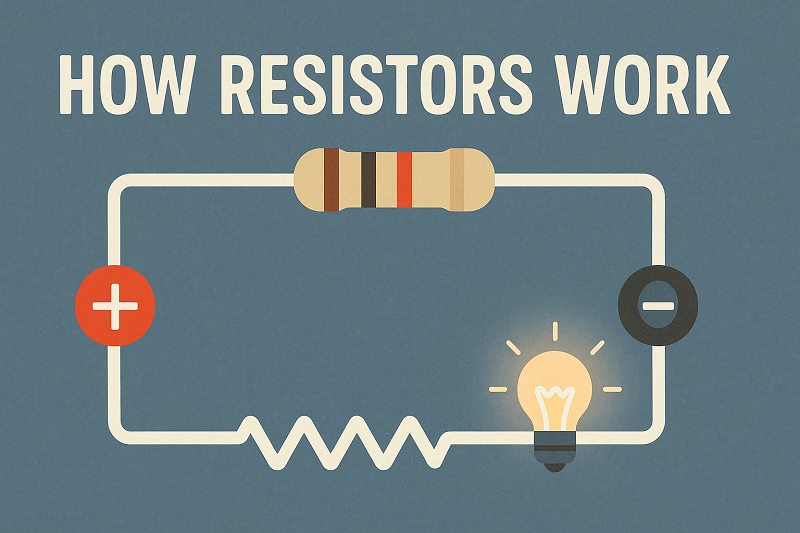
How Resistors Work: From Basic Principles to Advanced Applications2025-07-30
DC Switching Regulators: Principles, Selection, and Applications2025-05-30
FPGA vs CPLD: In-depth Analysis of Architecture, Performance and Application2025-05-07
MOSFET Technology: Essential Guide to Working Principles & Applications2025-05-04
SMD Resistor: Types, Applications, and Selection Guide2025-04-30