The Kynix Blog
Stay Ahead with Expert Electronics Insights,
Industry Trends, and Innovative Tips
- Electronic Components
- News Room
- General electronic semiconductor
- Components Guide
- Sort by
- Robots
- Transmitters
- Capacitors
- IC Chips
- PCBs
- Connectors
- Amplifiers
- Memory
- LED
- Diodes
- Transistors
- Battery
- Oscillators
- Resistors
- Transceiver
- RFID
- FPGA
- Mosfets
- Sensor
- Motors, Solenoids, Driver Boards/Modules
- Relays
- Optoelectronics
- Power
- Transformer
- Fuse
- Thyristor
- potentiometer
- Development Boards
- RF/IF
- Semiconductor Information
- PCB
- transistor
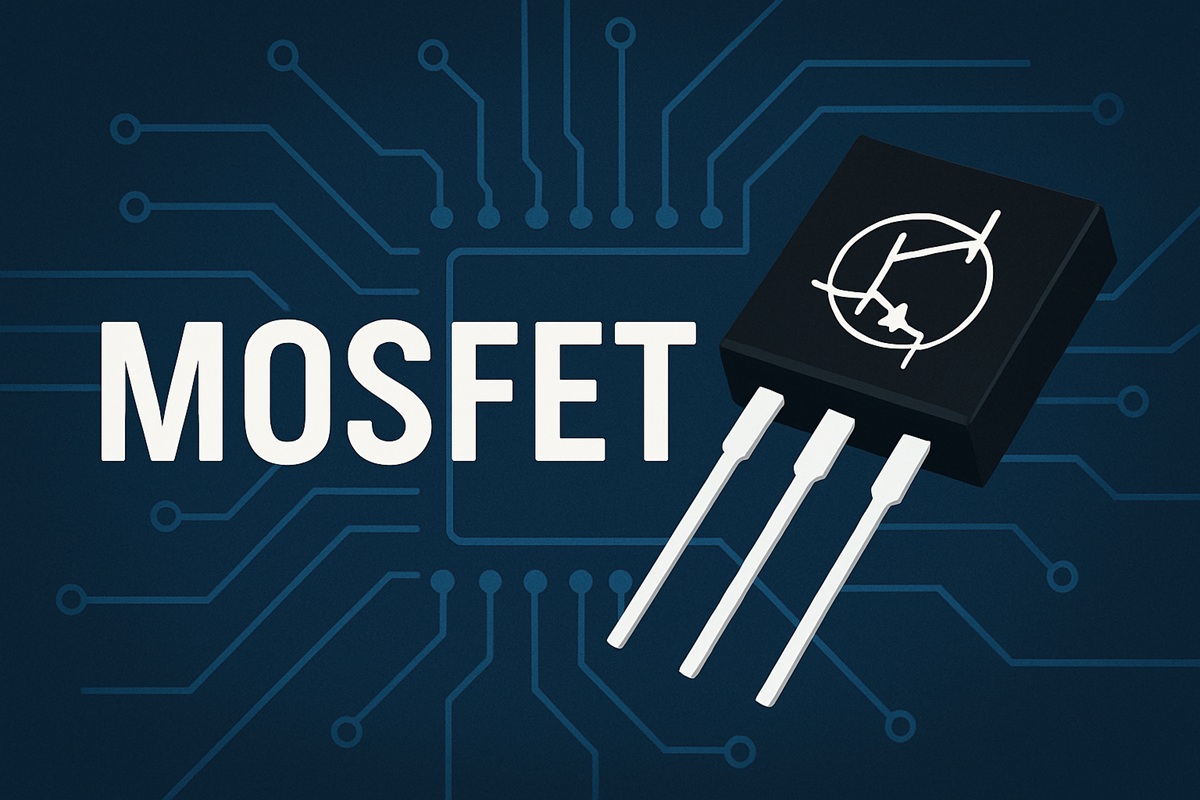
Catalog Overview Structure and Working Principle of Power MOSFET Structure of Power MOSFET WorkingPrinciple of Power MOSFET Basic Characteristics of Power MOSFET Static Properties Dynamic Characteristics Switching Speed of MOSFET Improvement of Dynamic Performance Principle and Performance Analysis of High Voltage MOSFET Principle and Method of Reducing on Resistance of High Voltage MOSFET On-Resistance Distribution of MOSFET with Different Voltage Resistance The Idea of Reducing the On-Resistance of High Voltage MOSFET Main Characteristics of Built-In Transverse Electric Field MOSFET The Decrease of On-Resistance The Reduction of Package and the Reduction of Thermal Resistance Improvement of Switching Characteristics Anti-Avalanche Breakdown Ability and SCSOA Development Status of Built-in Transverse Electric Field High Voltage MOSFET Comparison Between COOLMOS and IGBT Power MOSFET Drive Circuit Introduction and Analysis of Several MOSFET Drive Circuits An Unisolated Complementary Drive Circuit Isolated Drive Circuit 1. Overview The original meaning of MOSFET is Metal-Oxide-Semiconductor Field-Effect-Transistor. MOS means that the gate of the metal layer (M) is separated by the oxide layer (O) to control the field effect transistor of the semiconductor (S) by the effect of electric field. Power field effect transistors are divided into junction type and insulated gate type, but it usually refers to the MOS type(Metal Oxide Semiconductor FET) in the insulation grid type, which is referred to as power MOSFET. Junction power field effect transistors are generally referred to as Static Induction Transistor (SIT). It is characterized in that the gate voltage is used to control the drain current, the drive circuit is simple, the drive power is small, the switching speed is fast, the working frequency is high, and the thermal stability is better than that of GTR. However, its current capacity is small and it can just withstand low voltage. Generally speaking, it is only suitable for power electronic devices whose power does not exceed 10kW. 2. Structure and working principle of Power MOSFET Types of Power MOSFET: According to the conductive channel, it can be divided into P channel and N channel. According to the amplitude of gate voltage, it can be divided into: depletion type and enhancement type. Power MOSFET is mainly N-channel enhancement type. 2.1 Structure of Power MOSFET The internal structure and electrical symbols of the power MOSFET are shown in figure 1. When a monopole transistor is turned on, only one polar carrier (multiple carriers) is involved in the conduction. The conductive mechanism is the same as that of the low power MOSFET, but the structure is quite different. The low power MOSFET is a transverse conductive device. The power MOSFET mostly adopts the vertical conductive structure, also known as VMOSFET (Vertical MOSFET), which greatly improves the voltage and current resistance of MOSFET devices. Fig 1. According to the difference of vertical conductive structure, it can be divided into two types. One is VVMOSFET, which use V-shaped slot to achieve vertical conduction. Another is VDMOSFET (Vertical Double-diffused MOSFET), which has vertical conductive double diffusion MOS structure. In this article, VDMOS devices are discussed as an example. The power MOSFET is a multivariate integrated structure, such as the hexagonal unit adopted by the HEXFET of International Rectifier, the square unit adopted by the SIPMOSFET of Siemens and rectangular unit adopted by TMOS of Motorola. 2.2 Working principle of Power MOSFET Cut-off: Positive power supply is added between drain and source, and the voltage between gate and source is zero. The J1 of the PN junction formed between the P base region P and the drift region N is inversely biased, and there is no current flow between the drain and source. Conduction: By adding a positive voltage UGS between the gate sources, the gate is insulated, so no gate current flows through it. However, the positive voltage of the gate pushes away the holes in the region P below it, and attracts the electrons, minority carrier in the region P to the surface of the region P below the gate. When the UGS is greater than the UT (turn-on voltage or threshold voltage), the electron concentration on the surface of the region P under the gate will exceed the hole concentration, making the P-type semiconductor inverse into the N-type and become the inversion layer. The inversion layer forms the N channel and makes the PN junction J1 disappear. The drain and source conduct electricity. 2.3 Basic characteristics of Power MOSFET 2.3.1 Static properties: the transfer and output properties are shown in figure 2. Fig 2. The relationship between drain current ID and gate source voltage UGS is called the transfer characteristic of MOSFET. When the ID is large, the relationship between ID and UGS is approximately linear, and the slope of the curve is defined as transconductance Gfs. The drain volt-ampere characteristics (output characteristics) of MOSFET are as follows: Cutoff region (corresponding to the cutoff region of GTR) Saturation region (corresponding to the magnification region of GTR) Unsaturated region (corresponding to the saturation region of GTR) The power MOSFET works in the switching state, which means that it switches back and forth between the cut-off zone and the unsaturated zone. There is a parasitic diode between the drain and source of power MOSFET, and the device is turned on when the reverse voltage is applied between the drain and source. The on-state resistance of power MOSFET has a positive temperature coefficient, which is beneficial to the current sharing of the devices connected in parallel. 2.3.2 Dynamic characteristics; the test circuit and switching process waveforms are shown in figure 3 Fig 3. 2.3.3 Switching Speed of MOSFET The switching speed of MOSFET has a lot to do with the charge and discharge of Cin. The user can not reduce the Cin, but can reduce the internal resistance of the drive circuit Rs, reduce the time constant and speeds up the switching speed. MOSFET only depends on multiple carriers to conduct electricity, and there is no minority carrier storage effect, so the turn-off process is very fast. The switching time is between 10-100ns, and the working frequency can reach more than 100kHz, which is the highest among the main power electronic devices. When the field control device is static, there is little need for input current. However, during the process of switching, the input capacitor needs to be charged and discharged, and a certain amount of drive power is still needed. The higher the switching frequency, the greater the drive power required. 2.4 Improvement of dynamic performance In the application of the device, in addition to considering the voltage, current and frequency of the device, we must also grasp how to protect the device in the application so as not to damage the device in the transient change. Of course, the thyristor is a combination of two bipolar transistors, coupled with the large capacitance brought by large area, so its dv/dt capability is relatively fragile. For di/dt, it also has a conduction zone extension problem, so it also brings quite strict restrictions. The case of power MOSFET is very different. Its dv/dt and di/dt capabilities are often measured by its ability per nanosecond rather than per microsecond. But in spite of this, it also has the limitation of dynamic performance. These can be understood from the basic structure of power MOSFET. Fig. 4 is the structure of the power MOSFET and its corresponding equivalent circuit. In addition to the fact that almost every part of the device has a capacitance, it must also be considered that the MOSFET is connected in parallel with a diode. At the same time, from a certain point of view, it also has a parasitic transistor, just as IGBT is parasitic on a thyristor. These aspects are very important factors to study the dynamic characteristics of MOSFET. Fig 4. First of all, the intrinsic diode attached to the MOSFET structure has certain avalanche ability. It is usually expressed as the ability of a single avalanche and the ability of repeated avalanche. When the reverse di/dt is very large, the diode will withstand a very fast pulse spike. It may enter the avalanche area, once its avalanche capacity is exceeded, the device may be damaged. As any kind of PN junction diode, it is very complex to study its dynamic characteristics carefully. They are very different from the simple concept that we generally understand that the PN junction is conducted when it is forward and blocked when it is backward. When the current drops rapidly, the diode loses its reverse blocking ability and this is the so-called backward recovery time. When the PN junction requires rapid conduction, there will be a period of time when the resistance is not very low. Once the diode has a positive injection in the power MOSFET, the injected minority carriers will also increase the complexity of the MOSFET as a multi-subdevice. During the design process of power MOSFET, measures are taken to make the parasitic transistors as ineffective as possible. The measures are different in different generation of power MOSFET, but the general principle is to make the transverse resistance RB under the drain as small as possible. Because only when the transverse resistance under the region N of drain flows through enough current to establish the positive deviation condition for the region N, the parasitic bipolar thyristor begins to cause difficulties. However, under severe dynamic conditions, the transverse current caused by dv/dt through the corresponding capacitance may be large enough. At this point, the parasitic bipolar transistor will start, possibly causing damage to the MOSFET. Therefore, when considering the transient performance, attention must be paid to the internal capacitance of the power MOSFET device, which is the channel of the dv/dt. The transient situation is closely related to the line condition, which should be paid enough attention in the application. In order to understand and analyze the corresponding problems, it is necessary to have an in-depth understanding of the device. 3. Principle and Performance Analysis of High Voltage MOSFET In power semiconductor devices, MOSFET plays an important role in all kinds of power conversion, especially in high frequency power conversion with high speed, low switching loss and low drive loss. In the low voltage field, MOSFET has no competitors, but with the increase of the voltage resistance of MOS, the on-resistance increases to the power of 2.4 to 2.6. The growth rate makes MOSFET manufacturers and users have to reduce the rated current by tens of times in order to compromise the contradiction between rated current, on resistance and cost. Even so, the on-voltage drop caused by the on-resistance of the high-voltage MOSFET at the rated junction temperature is still high. The rated junction temperature and current of the MOSFET withstanding voltage above 500V are very high, and the on-voltage above 800V is astonishingly high. The conduction loss accounts for two-thirds to four-fifths of the total loss of MOSFET, which greatly limits the application. 3.1 Principle and Method of Reducing on Resistance of High Voltage MOSFET 3.1.1 On-resistance distribution of MOSFET with different voltage resistance: The resistance proportional distribution of each part of the on-resistance of MOSFET with different voltage resistance is also different. For example, the epitaxial layer resistance of 30V MOSFET is only 29% of the total on resistance, and the epitaxial layer resistance of 600V MOSFET is 96.5% of the total on resistance. From this, it can be inferred that the on-resistance of 800V MOSFET will be almost occupied by the epitaxial layer resistance. In order to obtain high blocking voltage, the epitaxial layer with high resistivity must be used and thickened. This is the fundamental reason for the high on resistance caused by the conventional high voltage MOSFET structure. 3.1.2 The Idea of Reducing the On-Resistance of High Voltage MOSFET Increasing the core area can reduce the on-resistance, but the cost is not allowed by commercial products. Although the introduction of minority carrier for conducting electricity can reduce the conduction voltage drop, but the price is the decrease of switching speed and the appearance of trailing current, the increase of switching loss and the loss of the high speed advantage of MOSFET. The above two methods can not reduce the on-resistance of high voltage MOSFET, the remaining idea is how to separately solve the low doping of high voltage, high resistivity region and the high doping, low resistivity of conductive channel. For example, it has no other use except that the high voltage epitaxial layer low doping can only increase the on resistance. In this way, whether we can realize the conductive channel with high doping and low resistivity, and try to clamp the channel in some way when the MOSFET is turned off, so that the voltage withstand of the whole device depends only on the low doping N-epitaxial layer. Based on this idea, INFINEON introduced a built-in transverse electric field voltage of 600V COOLMOS in 1988 to realize this idea. The profile structure of the high voltage MOSFET with built-in transverse electric field and the schematic diagram of high blocking voltage and low on resistance are shown in figure 5. Different from the conventional MOSFET structure, the MOSFET with the built-in transverse electric field embeds the vertical region P and clamps the region N of the vertical conductive region in the middle, so that when the MOSFET is turned off, the transverse electric field is established between the vertical P and N. The N doping concentration in the vertical conductive region is higher than that in the epitaxial region. When VGS is less than VTH, the N-type conductive channel caused by the inversion of electric field cannot be formed, and the positive voltage between D and S makes the PN junction inside MOSFET backward bias to form a depletion layer and the vertically conductive region N is exhausted. This depletion layer has a longitudinal high blocking voltage, as shown in figure 5 (b), where the voltage resistance of the device depends on the voltage resistance of P and N-. Therefore, low doping and high resistivity of N-are necessary. Fig 5. When CGS is greater than VTH, the N-type conductive channel is formed by the inversion of electric field. The electrons in the source region enter the exhausted vertical region N to neutralize positive charge through the conductive channel, thereby restoring the exhausted N-type characteristics, so the conductive channel is formed. Because of the low resistivity in the vertical region N, the on-resistance will be significantly lower than that of the conventional MOSFET. Through the above analysis, we can see that the blocking voltage and on-resistance are in different functional areas. The contradiction between the blocking voltage and the on-resistance is solved by separating the blocking voltage from the on-resistance function. At the same time, the surface PN junction is transformed into a buried PN junction, and the blocking voltage can be further increased at the same N-doping concentration. 3.2 Main Characteristics of Built-in Transverse Electric Field MOSFET 3.2.1 The decrease of on-resistance The MOSFET of the built-in transverse electric field of the INFINEON withstands 600V and 800V respectively. Compared with conventional MOSFET devices, the on-resistance with the same core area decreases to one fifth and one tenth of conventional MOSFET, and the on-resistance decreases to one second and one third respectively at the same rated current. Under the conditions of rated junction temperature and rated current, the conduction voltage is reduced from 12.6V, 19.1V to 6.07V, 7.5V, and the conduction loss is reduced to one second and one third of conventional MOSFET, respectively. Because of the decrease of conduction loss, the decrease of heat and the relative coolness of the device, it is called COOLMOS. 3.2.2 The reduction of package and the reduction of thermal resistance Compared with the conventional MOSFET, the core of the COOLMOS with the same rated current is reduced to one third and one fourth, which reduces the package by two shell specifications. Because the thickness of COOLMOS core is only one third of that of conventional MOSFET, the RTHJC of TO-220 package is reduced from 1 ℃ / W to 0.6 ℃ / W, and the rated power is increased from 125W to 208W, which improves the heat dissipation capacity of the core. 3.2.3 Improvement of switching characteristics The gate charge and switching parameters of COOLMOS are obviously better than those of conventional MOSFET. Due to the decrease of QG, especially QGD, the switching time of COOLMOS is about one second of that of conventional MOSFET, and the switching loss is reduced by about 50%. The decrease of turn-off time is also related to the low gate resistance in COOLMOS. 3.2.4 Anti-avalanche breakdown ability and SCSOA At present, the new MOSFET has the ability to resist avalanche breakdown without exception. COOLMOS also has the ability to resist avalanche. At the same rated current, the IAS of COOLMOS is the same as ID25 ℃. However, because of the decrease of the core area, when the IAS is smaller than the conventional MOSFET, and has the same core area, the IAS and EAS are larger than the conventional MOSFET. One of the biggest features of COOLMOS is that it has a short circuit safe operation area (SCSOA), but the conventional MOS does not have this feature. The SCSOA of COOLMOS is mainly due to the change of transfer characteristics and the decrease of core thermal resistance. The transfer characteristics of COOLMOS are shown in figure 6. As we can see from figure 6, when VGS is greater than 8V, the drain current of COOLMOS no longer increases, showing a constant current state. Especially when the junction temperature increases, the constant current value decreases, and at the highest junction temperature, it is about twice as much as ID25 ℃, that is, 3 to 3.5 times of the normal working current. In the short circuit state, the drain current will not rise to an intolerable ID25 ℃ due to the 15V drive voltage of the gate, so that the power dissipated by the COOLMOS in the short circuit is limited to 350V × 2ID25 ℃, so as to reduce the core heat during the short circuit as much as possible. The decrease of the thermal resistance of the core can make the heat generated by the core radiate quickly to the shell and restrain the rising rate of the core temperature. Therefore, COOLMOS can be driven by normal gate voltage, withstand 10 MS short circuit shock under 0.6VDSS power supply voltage for 1000 times without damage and the time interval is greater than 1s. Therefore, COOLMOS can be protected effectively in short circuit like IGBT. Fig 6. 3.3 Development Status of Built-in Transverse Electric Field High Voltage MOSFET Following the introduction of COOLMOS in 1988, ST introduced 500V internal structure similar to COOLMOS in early 2000, so that 500V, 12A MOSFET can be packaged in TO-220 shell, the on-resistance is 0.35 Ω, which is lower than that of IRFP450, and the current rating is similar to that of IRFP450. IXYS also has MOSFET that uses COOLMOS technology. IR also introduced the super MOSFET, rated current of 35A and 59A in SUPPER220, SUPPER247 package, and the on-voltage drop of about 4.7V when the on-resistance is 0.082 Ω, 0.045 Ω and 150C, respectively. From the comprehensive index, these MOSFET are superior to the conventional MOSFET. The proportional decrease of on resistance is not due to the increase of core area. Therefore, it can be considered that the above MOSFET must have a special structure similar to the transverse electric field. It can be seen that trying to reduce the conduction pressure drop of high pressure MOSFET has become a reality, and will promote the application of high voltage MOSFET. 3.4 Comparison between COOLMOS and IGBT The high temperature conduction voltage drop of 600V and 800V COOLMOS is about 6V and 7.5V respectively, the turn-off loss is reduced by one second, and the total loss is reduced by more than one second, so that the total loss is 40% to 50% of that of conventional MOSFET. The conduction loss of the conventional 600V MOSFET accounts for about 75% of the total loss, and the equilibrium point corresponding to the same total loss and ultra-high speed IGBT is 160KHZ, of which the switching loss accounts for about 75%. Because the total loss of COOLMOS is reduced to 40% to 50% of that of conventional MOSFET, the corresponding IGBT loss balance frequency will be reduced from 160KHZ to about 40KHZ, which increases the application of MOSFET in high voltage. From the above discussion, it can be seen that the new high voltage MOSFET solves the problem of high conduction voltage drop, and can simplify the design of the whole machine, such as the volume of heat dissipation device can be reduced to about 40%, drive circuit and buffer circuit are simplified. It has the ability to resist avalanche breakdown and short circuit, simplify the protection circuit and improve the reliability of the whole machine. 4. Power MOSFET drive circuit Power MOSFET is a voltage type driver. Because there is no minority carrier storage effect, the input impedance is high, the switching speed can be very high, the drive power is small, and the circuit is simple. However, the interpolar capacitance of the power MOSFET is large, and the relationship between the input capacitance CISS, the output capacitance COSS, the feedback capacitance CRSS and the interpolar capacitance can be expressed as follows: The gate input of the power MOSFET is equivalent to a capacitive network, and its working speed is related to the internal impedance of the drive source. Due to the existence of CISS, the gate drive current is almost zero in static state, but a certain drive current is still needed in the dynamic process of turning on and off. It is assumed that the gate voltage required for saturation conduction of the switch tube is VGS, the turn-on time TON of the switch includes two parts: the turn-on delay time TD and the rise time TR. During the turn-off process of the switch tube, CISS is discharged through ROFF, COSS is charged by RL, COSS is larger, VDS(T) rises slowly. With the increase of VDS(T), COSS decreases rapidly to close to zero, and VDS(T) increases rapidly. According to the above analysis of the characteristics of the power MOSFET, the drive requirements are as follows: The trigger pulse should have a fast enough rise and fall speed; Charging with low resistance gate capacitance when turned on, and providing low resistance discharge circuit for gate when turned off in order to improve the switching speed of power MOSFET; In order to enable the power MOSFET to turn on by trigger, the trigger pulse voltage should be higher than the opening voltage of the tube. In order to prevent misconduction, a negative gate source voltage should be provided at its cut-off time; When the power switch switches, the drive current is the charge and discharge current of the gate capacitance. The larger the interelectrode capacitance of the power tube is, the greater the required current is, that is, the greater the load capacity is. 4.1 Introduction and Analysis of Several MOSFET Drive Circuits 4.1.1 An unisolated complementary drive circuit Figure 7 (a) is a commonly used low power drive circuit, which is simple, reliable and low cost. It is suitable for low power switchgear that does not require isolation. The drive circuit shown in figure 7 (b) has fast switching speed and strong drive capability. In order to prevent the two MOSFET tubes from going straight through, a 0.5 × 1 Ω low resistance is usually connected in series for current limiting. The circuit is suitable for medium power switchgear that does not require isolation. These two kinds of circuits are characterized by simple structure. Fig 7. Power MOSFET is a voltage type control device. As long as the voltage applied between the gate and the source exceeds its threshold voltage, it will be turned on. Because of the junction capacitance of MOSFET, the sudden rise of the voltage at both ends of the drain source will produce interference voltage at both ends of the gate source through the junction capacitance when it is turned off. The turn-off circuit of the commonly used complementary drive circuit has small impedance and fast turn-off speed, but it cannot provide negative pressure, so its anti-interference is poor. In order to improve the anti-interference of the circuit, a circuit composed of V1, V2 and R can be added to the drive circuit to produce a negative pressure. The circuit schematic diagram is shown in Fig. 8. Fig 8. When V1 is turned on, V 2 is turned off, the gate and source of the upper tube in the two MOSFET are discharged, and the gate and source of the lower tube are charged, that is, the upper tube is turned off and the lower tube is turned on, which is turned off by the driven power tube. On the contrary, when V1 is turned off, V 2 is turned on, the upper tube is turned on, and the lower tube is turned off thus to turn on the driven pipe. Because the gate and source of the upper and lower tubes are charged and discharged through different circuits, including the circuit of V 2 and because V2 will continue to exit saturation until it is turned off, it is slower for S1 to turn on than to turn off, and faster to turn on than to turn off for S2. Therefore, the degree of fever of the two tubes is not exactly the same; S1 is more serious than S2. The disadvantage of the drive circuit is that it needs double power supply, and because the value of R cannot be too large, otherwise it will make V1 deeply saturated and affect the turn-off speed. So, there will be a certain loss on R. 4.1.2 Isolated drive circuit Forward drive circuit The circuit principle is shown in figure 9 (a). N3 is demagnetizing winding and S2 is the driven power tube. R2 is a damping resistance to prevent voltage oscillation at the gate and source end of the power tube. Because the leakage sense is not required to be small, and in terms of speed, R2 is generally small, so it is ignored in the analysis. Fig 9. Its equivalent circuit diagram, as shown in figure 9 (b), is a secondary side parallel resistor R1, which is not required for pulse and used as a false load of the forward converter to eliminate the misconduction caused by output voltage oscillations during the turn-off period. At the same time, it can also be used as an energy release circuit when the power MOSFET is turned off. The conduction speed of the drive circuit is mainly related to the driven S2 gate, the equivalent input capacitance of the source, the speed of the drive signal of S1 and the current provided by S1. From the simulation and analysis, we know that the smaller the duty ratio D, the larger R1, the larger L, the smaller the magnetization current, the smaller the U1 value, the slower the turn-off speed. The circuit has the following advantages: The structure of the circuit is simple and reliable, and the isolated drive is realized; Only a single power supply can provide positive pressure when on and negative pressure when off; When the duty ratio is fixed, the drive circuit can have a fast switching speed through the reasonable parameter design. The disadvantages of the circuit are as follows: First, because the secondary side of the isolation transformer needs a false load to prevent oscillation, so the circuit loss is large; second, when the duty ratio changes, the turn-off speed changes greatly. When the pulse width is narrow, the turn-off speed of MOSFET gate becomes slower due to the decrease of stored energy. A complementary drive circuit with an isolation transformer As shown in figure 10, V1 and V2 are complementary, capacitance C acts as an isolated DC, and T1 is a magnetic ring or tank with high frequency and high magnetic flux. Fig 10. The voltage on the isolation transformer is (1 / D) Ui when it is on and D Ui when it is turned off. If the voltage of the main power tube S by conduction is 12 V and the original side-to-turn ratio N1/N2 of the isolation transformer is 12 / [(1 / (1) Ui], the C value can be slightly larger in order to ensure the voltage stability of GS during the conduction period. The circuit has the following advantages: The circuit structure is simple and reliable, and has the function of electrical isolation. The turn-off ability of the drive does not change when the pulse width changes; The circuit only needs one power supply, that is, it works as a single power supply. The function of isolated capacitance C can provide a negative pressure when the driven tube is turned off, which accelerates the turn-off of the power tube and has high anti-interference ability; However, one of the major disadvantages of the circuit is that the amplitude of the output voltage will change with the change of duty ratio. When D is small, the negative voltage is small, the anti-interference of the circuit becomes worse, and the positive voltage is higher, so we should pay attention to make its amplitude not exceed the allowable voltage of MOSFET gate. When D is greater than 0.5, the positive voltage of drive voltage is less than its negative voltage, so it should be noted that the negative voltage does not exceed the allowable voltage of MOAFET gate. Therefore, the circuit is more suitable for situations where the duty ratio is fixed or the duty ratio variation range is small or the duty ratio is less than 0.5. Drive Circuit composed of Integrated Chip UC3724/3725 The circuit composition is shown in fig. 11. UC3724 is used to generate high frequency carrier signal, and the carrier frequency is determined by capacitance CT and resistance RT. In general, the carrier frequency is less than 600kHz, and high frequency modulation waves are generated at both ends of feet 4 and 6. After being isolated by high frequency small magnetic ring transformer, it is sent to feet 7 and 8 of UC3725 chip and modulated by UC3725 and the Drive signal is obtained. A Schottky rectifier bridge in UC3725 simultaneously rectifies the high frequency modulation waves of feet 7 and 8 into a DC voltage for drive power.Generally speaking, the higher the carrier frequency is, the shorter the drive delay time will be, but the anti-interference will become worse if it is too high. The larger the magnetization inductance of the isolation transformer is, the smaller the magnetization current, the less the UC3724 heat will be. However, with the increase of the number of turns, the influence of parasitic parameters becomes greater, and the anti-interference ability will also be weakened.According to the experimental data, it is concluded that for the signal whose switching frequency is less than 100kHz, it is better to choose (400 to 500) kHz carrier frequency, the transformer uses high magnetic conductivity such as 5K, 7K and other high frequency ring magnetic core, the original magnetization inductance is less than about 1 milligram. This kind of drive circuit is only suitable for the situation where the signal frequency is less than 100kHz. If the signal frequency relative carrier frequency is too high, the relative delay is too much, and the drive power is increased, and the heating temperature of UC3724 and UC3725 chips is higher. Therefore, the switching frequency above 100kHz can only be applied to the MOSFET with smaller pole capacitance. When switching frequency of 1kVA is less than 100kHz, it is a good drive circuit. The circuit has the following characteristics: single power supply, the control signal is isolated from the drive, and the structure is simple and small, especially suitable for the situation where the duty ratio is uncertain or the signal frequency is also changed. Fig 11.
kynix On 2016-09-01
The ongoing research in the field of microelectronics and semiconductor microchips is made by Dr. Yue Kuo, professor in the Artie McFerrin Department of Chemical Engineering at Texas A&M University, is continuing, which is evolving everyday technology such as cellphones, televisions, computers and more through the use of light emitting diodes (LED).Kuo's research group focuses on the development of semiconductors for micro and nano electronic uses. This has entailed working with technologies from television screens to devices like universal serial bus (USB) flash drives to make them faster, smaller and more power efficient.Kuo and his research group have developed a new type of LED known as a solid state incandescent light emitting device (SSI-LED). This device would emit light for an extended lifetime at a very low energy cost. Kuo currently has one of these LEDs his group has deployed that has been continuously emitting light for in excess of 18,000 hours. The development of these LED devices has progressed from the same kind of technology that powered the first incandescent light bulb developed by Thomas Edison."The chips used to make electronic devices work from the vacuum tube," Kuo said. "It was invented in 1907, and this tube was big. The first computer ever invented was made of thousands of these tubes. However, these vacuum tubes are not very reliable and the power consumption is very high and they burn out easily."Kuo explains that technology has leaped from the vacuum tube, to transistor, to the modern microchip, which enables scientists to fit billions and billions of transistors into a single chip. Beyond microchips are the semiconductors that Kuo primarily works with that form the essential computer hardware components of electronic circuits. While advanced, similar issues that plagued traditional vacuum tubes such as a short life span and energy inefficiency, still effect modern day semiconductors, according to Kuo."What I and my group have done is invented a new light bulb that is very similar in comparison to the leap from a vacuum tube to a computer chip," Kuo said. "We make a small chip with no vacuum that can emit light, but is so small, smaller than your fingernail, that it will not burn out after even 20,000 hours of use.For comparison, current larger incandescent light bulbs have a maximum lifespan of around 2,000 hours of use, meaning that Kuo's SSI-LED is both more energy efficiency and has greater device longevity than conventional technology in addition to being no bigger than a human fingernail. The SSI-LED that Kuo and his group have developed has many uses, one of which includes potentially using the light emitting technology to transfer electrical signals within computing devices. Kuo believes that a development of this magnitude would change the way everyday computer users are able to communicate with one another."The computer chips we have today are very fast, but as you know nothing satisfies us and no matter how fast we have, we want faster," Kuo said. "We've come, in terms of the modern design for computer chips, almost near the limit. The current speed is limited by how fast the signal is transmitted by metal. What we want to do is to transmit signals by light."The LED Kuo's group has invented is made out of silicon, giving it the potential to transmit signals in machines by light. This method would send signals tens of thousands of times faster than current transmission methods allow."SSI-lEDs are an extension of Edison's technology in a way," Kuo said. "Inside each are many, many small dots that emit light, each one is like Edison's lamp. The engineers in my group use chemical engineering training to make computer chips and transistors that we make into things like your LCD TV's that affect the lives of all people every day and that kind of potential is limitless."
kynix On 2016-09-01
In this article today, you will learn what transistor is, how does it work, how long is its history, and how many kinds of transistor are there, how to replace one when your transistor is broke and so many more. Say no more and off we go. Catalog I. What is a Transistor? 1.1 General View 1.2 Transistor Structure and Operation II. Transistor History III. Transistor Development IV. Transistor Advantage V. Transistor Classification VI. Transistor Power Control VII. Transistor Test Replacement VIII. How to Judge the Electrode of a Transistor IX. Transistor Replacement Principle FAQ I. What is a Transistor? 1.1 General View Transistors make our electronics world go round. They're critical as a control source in just about every modern circuit. Sometimes you see them, but more-often-than-not they're hidden deep within the die of an integrated circuit. The transistor is a kind of solid semiconductor device. It has many functions, such as detection, rectifier, amplifier, switch, voltage stabilizer, signal modulation, and so on. As a variable current switch, transistors can control output currents based on input voltages. Unlike conventional mechanical switches (such as relay, switch), transistors use telecommunication signals to control their opening and closing, and the switching speed can be very fast, for example, the switching speed in the labs can be higher than 100GHz. Strictly speaking, transistors refer to all single components based on semiconductor materials, including diodes, transistors, field-effect transistors, silicon control, and so on. In addition, transistors usually mean crystal triodes. The transistors are divided into two main categories: bipolar junction transistors (BJT) and field-effect transistors (FET). The transistor has three poles. The three poles of bipolar junction transistor, composed of the emitter(made up of N-type and P-type), base, and collector respectively. For the field-effect transistors, they are the source, gate, and drain respectively. Because the transistor has three polarities, there are also three ways to use them, namely, emitter grounding (called common emitter amplification, CE configuration), base grounding (called common base amplification, CB configuration), and collector grounding (called common set amplification, CC configuration, emitter-coupled logic). Transistors are semiconductor devices, which are commonly used as amplifiers or electrically controlled switches. Transistors are important components that regulate the operation of computers, mobile phones, and all electronic devices. Due to their high response speed and accuracy, transistors can be used for a wide variety of digital and analog functions design, including amplifiers, switches, and voltage stabilizers, signal modulation, and oscillator circuits. Transistors can be packaged independently or in a very small area, which can accommodate 100 million or more transistors integrated into a part of the circuit. 1.2 Transistor Structure and Operation Transistors are made by stacking three different layers of semiconductor material together. Some of those layers have extra electrons added to them, which called “doping”, and others have electrons removed (doped with “holes” – the absence of electrons). A semiconductor material with extra electrons is called an N-type (negative) and a material with electrons removed is called a P-type (positive). With some hand waving, we can say electrons can easily flow from N-regions to P-regions if they have a little force (voltage) to push them. But flowing from a P-region to an N-region is really hard (requiring more force—voltage). The NPN transistor is designed to pass electrons from the emitter to the collector (the conventional current flows from collector to emitter). The emitter emits electrons into the base, which controls the number of electrons. In fact, most of the electrons emitted are “collected” by the collector, which sends them along to the next part of the circuit. A PNP has a little special area. The base still controls current flow, but that current flows in the opposite direction, that is, from emitter to collector, instead of electrons, the emitter emits “holes” which are collected by the collector. The transistor is kind of like an electron valve. The pin of the base is likely to a handle you can adjust to allow more or fewer electrons to flow from emitter to collector. II. Transistor History The invention of transistors can date back to the middle& later 1920s, an engineer Physicist Julius Edgar Lilienfeld filed a patent for a field-effect transistor (FET) in Canada in 1925, which was intended to be a solid-state replacement for the triode. Lilienfeld also filed identical patents in the United States in 1926 and 1928. However, it was limited to the technical level at the time, the material used to make it couldn’t meet the high-quality requirement, making it impossible to actually construct a working device at that time. In December 1947, the first practically implemented device was a point-contact transistor invented by American physicists John Bardeen, Walter Brattain, and William Shockley from Bell Labs. Due to the complex manufacturing process of point-contact transistors, many products fail, and it also has disadvantages, such as high noise, difficulty to control when power is high and narrow application range. To overcome these shortcomings, Shockley put forward the idea of replacing metal-semiconductor contacts with a "rectifier junction", and they also proposed the working principle of it. The transistor revolutionized the field of electronics and paved the way for smaller and cheaper radios, calculators, and computers, among other things. The transistor is on the list of IEEE milestones in electronics, and Bardeen, Brattain, and Shockley shared the 1956 Nobel Prize in Physics for their achievement. In 1950, the first P-N junction transistor came out, and its performance was exactly the same as the assumption of William Shockley. Most of today's transistors are still P-N junction transistors. (the so-called P-N junction is a combination of P-type and N-type, and P-type multiplex with holes, N-type multiplex with electrons.) In the first test, it can amplify the audio signal 100 times, its shape is shorter than the firewood stick but thicker. In naming the device, Walter Brattain thought of its resistive conversion properties, that is, it works on a transfer current from "low-resistance input" to "high-resistance output," so it's called trans-resistor, later this abbreviated as a transistor. The innovation of transistors was a major invention in the 20th century and the forerunner of the microelectronics revolution. Because the transistor is the key active component in practically all modern electronics. With it, a small, low-power-consuming electronic device can be used to replace a large, high-power-consuming electronic tube. What's more, the development of integrated circuits based on the invention of transistors. In 2016, a team at Lawrence Berkeley National Laboratory broke the physical limit and cut the most sophisticated transistor process available from 14nm to 1nm, making a breakthrough in computing technology. III. Transistor Development 1) vacuum triode In February 1939, there was a great discovery in the Bell Labs, the birth of a silicon PN junction. In 1942, a student, Seymour Benzer, was on a team led by Lark_Horovitz at Purdue University, found that monocrystalline germanium has excellent rectifying performance which other semiconductors do not. These findings laid the groundwork for the later invention of transistors. A triode is a vacuum tube with three electrodes which are cathode, anode, and a control grid. The function of an additional third electrode is to serve as an electrostatic screen that shields the cathode from the electrostatic field of anode triode is used for amplification of weak AC signals of frequency ranging from 0 to 100 MHz. 2) point-contact transistor The point-contact transistor is the first type of transistor to be successfully demonstrated. It was developed by research scientists John Bardeen and Walter Brattain at Bell Laboratories in December 1947. Bardeen and Brattain applied two closely-spaced gold contacts held in place by a plastic wedge to the surface of a small slab of high-purity germanium. The voltage on one contact modulated the current flowing through the other, amplifying the input signal up to 100 times. The group had been working together on experiments and theories of electric field effects in solid-state materials, with the aim of replacing vacuum tubes with a smaller device that consumed less power. 3) bipolar and unipolar transistors On the basis of bipolar transistors, Shockley put forward the concept of unipolar junction transistors in 1952, which is called junction transistors today. Its structure is similar to that of PNP or NPN bipolar junction transistors, but there is a depletion layer at the interface of P_N to form a rectifier contact between the gate and the conductive channels of source and drain. At the same time, both ends of the semiconductor as the gate to adjust the current between the source and drain. 4) silicon transistors The first working silicon transistor was developed at Bell Labs on January 26, 1954, by Morris Tanenbaum. The first commercial silicon transistor was produced by Texas Instruments in 1954. Silicon transistors and germanium transistors have the function of current amplification. The difference is that the threshold voltage(Even if the positive voltage is applied, it must reach a certain value before it can start to turn on. This is called threshold voltage, for silicon transistor, it is about 0.7V and for germanium transistor is about 0.3V) of silicon transistor is larger than that of germanium transistor; the reverse current of the silicon transistor is much smaller than that of the germanium transistor; the maximum operating temperature of the silicon transistor is higher than that of the germanium transistor; the stability of the silicon transistor is better than that of the germanium transistor. 5) integrated circuit (IC) After the invention of the silicon transistor in 1954, the great application prospect of the transistor has become more and more obvious. The next goal of scientists is how to connect transistors, conductors, and other devices efficiently. The invention of transistors gives birth to the integrated circuit as time requires. As we all know, an IC is a collection of electronic components—resistors, transistors, capacitors, etc.—all stuffed into a tiny chip and connected together to achieve a common goal today. 6) field-effect transistors(FET) and metal-oxide-semiconductor field-effect transistor(MOSFET) The field-effect transistor was first patented by Julius Edgar Lilienfeld in 1926 and by Oskar Heil in 1934, but practical semiconducting devices (the junction field-effect transistors) were developed later after the transistor effect was observed and explained by the team of William Shockley at Bell Labs in 1947. The basic principle of the field-effect transistor was first patented by Julius Edgar Lilienfeld in 1925. In 1959, Dawon Kahng and Martin M. (John) Atalla at Bell Labs invented the metal-oxide-semiconductor field-effect transistor (MOSFET) as an offshoot to the patented FET design. In 1962, Stanley, Heiman, and Hofstein in an RCA device integrated study group found that a MOS tube can be constructed by a conductive strip, a high-resistance channel region, an oxide layer, and an insulating layer on a Si substrate through diffusion and thermal oxidation. 7) CPU A central processing unit (CPU), also called a central processor or main processor, is the electronic circuitry within a computer that carries out the instructions of a computer program by performing the basic arithmetic, logic, controlling, and input/output (I/O) operations specified by the instructions. But fewer people know that modern CPUs contain millions of individual transistors that are microscopic in size. Because transistors are the building blocks of the integrated circuits, and more transistors in CPUs means higher processing efficiency. IV. Transistor Advantage Compared with the electron tube, the transistor has many advantages: (1)Fewer consumption No matter how good an electron tube is, it will gradually deteriorate due to changes in cathode atoms and chronic gas leakage. For technical reasons, the same problem existed at the beginning of transistor fabrication. With advances in materials and improvements in many ways, transistors live typically 100 to 1000 times longer than electron tubes. Consumption of electric energy is only 1/10 or dozens of times of the electron tube. It does not require heating the filament to produce free electrons like an electron tube. For example, a transistor radio can be listened to for half a year or more long with a few dry batteries, which is difficult for an electronic tube radio. (2)No need to preheat Work as soon as you turn on the machine. For example, a transistor radio, you can hear the sound as soon as it turns on, and pictures come up quickly when turn on a transistor TV. But electron tube equipment cannot do this. Obviously, transistors have great advantages in electric equipment, medical treatment, industrial measurement, etc. (3)Solid and reliable More reliable than the tube because of its shock resistance and vibration resistance. In addition, transistors release less heat due to their smaller size, so they can be used in small, complex, reliable circuits. Although the fabrication process of transistors is precise, the process is simple, it is helpful to increase the installation of it on the devices. (4)Importance Transistors are the key active components in all modern electrical appliances. The importance of transistors in today's society is mainly due to their ability to use highly automated processes for mass production, which greatly reducing unit production costs. While millions of monolithic transistors are still in use, but most transistors are assembled on microchips (chips) with diodes, resistors, and capacitors to make complete circuits. Analog or digital design or both are integrated on the same chip. The cost of designing and developing a complex chip is quite high, but the price per chip is minimal when the cost apportioned to millions of units. V. Transistor Classification According to material The semiconductor material used as a transistor can be divided into silicon material transistors and germanium material transistors. Furthermore, the polarity of the transistor can be divided into four types: germanium NPN transistors and PNP transistors, silicon NPN transistors, and PNP transistors. According to craft Transistors can be divided into diffusion transistors, alloy type transistors, and planar transistors according to their structure and fabrication process. According to the current capacity Transistors can be divided into low-power transistors, medium-power transistors, and high-power transistors by current capacity. According to service frequency Transistors can be divided into low-frequency transistors, high-frequency transistors, and ultra-high-frequency transistors. According to packaging Types The transistors can be divided into metal, plastic, glass, and ceramic packaging transistors. According to applications Transistors can be divided into low noise amplification transistors, middle and high-frequency amplification transistors, low-frequency amplification transistors, switching transistors, Darlington transistors, high reversion voltage transistors, damping transistors, phototransistors, and magnetic sensitive transistors, and so on. The low cost, flexibility, and reliability of transistors make them the general choice for non-mechanical tasks, such as digital computing. In the control of electric appliances and machinery, transistor circuits are also replacing motor equipment because of its lower cost and high efficiency. Specific Types Expressions 1) transistors It is a semiconductor device with two PN junctions inside and usually three eliciting electrodes outside. The transistor is divided into two main categories: bipolar junction transistor (BJT) and field-effect transistor (FET), which have slight differences in their application in a circuit. A bipolar junction transistor has terminals labeled base, collector, and emitter. A small current at the base terminal (that is, flowing between the base and the emitter) can control or switch a much larger current between the collector and emitter. For a field-effect transistor, the terminals are labeled gate, source, and drain, and voltage at the gate can control the current between source and drain. 2) giant transistor The power transistor is a high voltage, high current bipolar transistor (Bipolar Junction Transistor-BJT), so it is sometimes called Power BJT; its characteristics are: high voltage, high current, good switching characteristics, but the driving circuit is complex, driving power is large; the principle of GTR and ordinary bipolar junction transistor is the same. 3) phototransistor The phototransistor is a device that is able to sense light and alter the current flowing between emitter and collector according to the level of light it receives. Phototransistors and photodiodes can both be used for sensing light, but the phototransistor is more sensitive in view of the gain provided by the transistor. This makes phototransistors more suitable in a number of applications. Phototransistors adopt the basic transistor concept as the basis of their operation. In general, a phototransistor can be made by exposing the semiconductor of an ordinary transistor to light. Phototransistors were made by not covering the plastic encapsulation of the transistor with black paint in the early stage. 4) bipolar transistor This is a transistor widely used in audio circuits. The bipolar means the flow of current in two kinds of semiconductor materials. Bipolar transistors can be divided into NPN type or PNP type according to the polarity of operating voltage. 5) bipolar junction transistor—BJT The bipolar junction transistor (BJT) is a type of transistor that uses both electron and hole charge carriers. On the contrary, unipolar transistors, such as field-effect transistors, only use one kind of charge carrier. For their operation, BJTs use two junctions between two semiconductor types, N-type and P-type. BJTs have two types, NPN and PNP, and are available as individual components, or fabricated in integrated circuits, often in large numbers. BJTs have an amplification function, concretely, they can amplify current, mainly depending on its emitter current transmission through the base area to the collector. To ensure this transmission process, on the one hand, it requires to meet the internal conditions, that is, the impurity concentration in the emission region needs much larger than the impurity concentration in the base region, and meanwhile, the thickness of the base region should be very small. On the other hand, the external conditions should be satisfied, that is, the emission junction should be positive bias (adding positive voltage), and the collector junction should be inversely biased. This allows BJTs to be used as amplifiers or switches, giving them wide applicability in electronic equipment, including computers, TVs, mobile phones, audio amplifiers, industrial control, radio transmitters, and so on. There are many kinds of BJT, according to frequency, high frequency, low frequency, according to power, small, medium, high power, according to the semiconductor material, silicon, and germanium tube. The amplifier circuit consists of the common emitter, common base, and common collector. 6) field-effect transistor(FET) The meaning of "field effect" is that the principle of the transistor is based on the electric field effect of the semiconductor. The field-effect refers to the modulation of the electrical conductivity of a material by the application of an external electric field. There are two main types of FET: junction FET (JFET) and metal-oxide-semiconductor FET (MOS-FET). Unlike BJT, FET is conducted by only one carrier, therefore, it is also known as a unipolar transistor. It belongs to voltage-controlled semiconductor devices that have the advantages of high input resistance, low noise, low-power consumption, wide dynamic range, easy integration, no secondary breakdown, wide safe working area, and so on. In a metal, the electron density that responds to applied fields is so large that an external electric field can penetrate only a very short distance into the material. However, in a semiconductor, the lower density of electrons (and possibly holes) that can respond to an applied field is sufficiently small that the field can penetrate quite far into the material. This field penetration alters the conductivity of the semiconductor near its surface and is called the field effect. The field-effect underlies the operation of the Schottky diode and of field-effect transistors, notably the MOSFET, the JFET, and the MESFET. The field effect is to change the direction or magnitude of the applied electric field perpendicular to the surface of the semiconductor to control the density or type of most carriers in the conducting layer (channel) of the semiconductor. The current in the channel is modulated by voltage, and the working current is transported by most carriers in the semiconductor. This type of transistor, which has only one polar carrier to conduct electricity, is also called a unipolar transistor. Compared with bipolar transistors, FET is widely used in various amplifiers, digital circuits, and microwave circuits because of its high input impedance, low noise, high limit frequency, low power consumption, simple manufacturing process, and good temperature characteristics. 7) static induction transistor The static induction transistor(SIT), which was born in 1970, is actually a junction field-effect transistor. A high-power SIT device can be made by changing the transverse conductive structure of a small-power SIT device used for information processing into a vertical conductive structure. The operating frequency of SIT is comparable to that of the power MOSFET, or even higher than that of the electric MOSFET. The power capacity is also larger than the power MOSFET, so it is suitable for high-frequency and high-power devices. At present, it has been used in radar communication equipment, ultrasonic power amplification, pulse power amplification, and high-frequency induction heating, and so on. However, the SIT is conducted when no signal is added to the gate, and the gate is turned off when the negative bias is applied, which is called the normal on-type device, thus it is inconvenient to use. In addition, due to the large on-state resistance and consumption of SIT, it has not been widely used in most power electronic devices. 8) single-electron transistor A kind of transistor that can record signals with one or a small number of electrons. With the development of semiconductor etching technology, more and more large-scale integrated circuits can be made. It is considered an important component of nanotechnology, single-electron transistors provide high operating speed and low power consumption. Single-electron transistors are usually made by keeping two tunnel junctions in series. The transistor consists of a source electrode and a source-drain, which is joined with the help of a tunneling island that is also connected to a gate capacitively. The electrons can flow to another electrode only through the insulator. There are two categories of single-electron transistors: metallic and semiconducting. The former makes use of a metallic island, and its electrodes using a shadow mask are mostly evaporated onto an insulator. The latter, on the contrary, depends on severing the two-dimensional electron gas that forms at the interface of the semiconductors for the junction. Insulated-gate bipolar transistor(IGBT) is also a three-terminal device: gate, collector, and emitter. It combines the advantages of the giant transistor and power MOSFET. Therefore, it is widely used in many fields due to its sound characteristics. a. main parameters The main parameters of the transistor include current magnification factor, dissipation power, frequency characteristic, maximum collector current, maximum reverse voltage, reverse current, and so on. b. amplification coefficient DC current magnification factor also called static current magnification factor or DC magnification factor. It refers to the ratio of transistor collector current to base current, which is usually expressed by hFE or β when the static signal input is not changed. c. ac magnification AC magnification also called AC current magnification factor or dynamic current magnification factor. It refers to the ratio of transistor collector current variation to base current variation in AC state. In addition, the two parameters are close at a low-frequency state. d. dissipation power Dissipation power is also called the maximum allowable dissipation power of the collector, which refers to the maximum dissipation power of the collector when the transistor parameter does not exceed the prescribed allowable value. The dissipation power is closely related to the maximum allowable junction and collector current of the transistor. The actual power consumption of transistors is not allowed to exceed the maximum allowable dissipation power value, otherwise, the transistor will be damaged by overload. The transistor whose dissipation power is less than 1W is usually called the low-power transistor, that value is equal to or greater than 1W, and less than 5W, such transistor is called the medium-power transistor; whose value is equal to or greater than 5W is called the high-power transistor. When the operating frequency of the transistor exceeds the cutoff frequency fβ or fα, the current amplification factor β will decrease with the increase of characteristic frequency fT(fT refers to the operating frequency of the transistor when the β value is reduced to 1). Usually, the transistors whose fT is less than or equal to 3MHZ are called low-frequency transistors; transistors whose fT is greater than or equal to 30MHZ are called high-frequency transistors; those whose fT is greater than 3MHZ and less than 30MHZ are called intermediate frequency transistors. e. maximum frequency fM The maximum oscillation frequency is the corresponding frequency when the power gain of the transistor is reduced to 1. In general, the maximum oscillation frequency of high-frequency transistors is lower than the common base cutoff frequency fα, while fT is higher than the cutoff frequency fα of the common base and lower than the cutoff frequency fβ of the common collector. f. maximum current Collector maximum current is the maximum current allowed by transistor collector. When the collector current of the transistor exceeds it, the β value of the transistor will change obviously, which will affect the normal operation of the transistor and even damage it. g. maximum reverse voltage Maximum reverse voltage is the maximum operating voltage that the transistor is allowed to apply. It includes collector-emitter reverse breakdown voltage, collector-base reverse breakdown voltage, and emitter-base reverse breakdown voltage. (1) Collector-collector reverse breakdown voltage This voltage refers to the maximum allowable reverse voltage between the collector and emitter when the base of the transistor is open circuit, usually expressed in VCEO or BVCEO. (2) Base-base reverse breakdown voltage This voltage refers to the maximum allowable reverse voltage between the collector and the base when the transistor emitter is open circuit, expressed in VCBO or BVCBO. (3) Emitter-emitter reverse breakdown voltage This voltage refers to the maximum allowable reverse voltage between the emitter and the base when the collector of the transistor is open circuit, expressed in VEBO or BVEBO. (4) ICBO: reverse current between collector and base electrodes ICBO, also called collector junction reverse leakage current. It refers to the reverse current between collector and base when the emitter of the transistor is open circuit. ICBO is sensitive to temperature, thus the smaller the value is, the better the temperature characteristic of the transistor is. (5) ICEO: the reverse breakdown current between collector and emitter refers to the reverse leakage current between the collector and emitter when the base of the transistor is open. The smaller the current, the better the performance of the transistor. h. switches It is a most fundamental application of a transistor is using it to control the flow of power to another part of the circuit, that is, using it as an electric switch. Applying it in either cutoff or saturation mode, the transistor can create the binary on/off the effect of switches. A transistor switch is a critical circuit-building block; it is used to make logic gates, which go on to create microcontrollers, microprocessors, and other integrated circuits. VI. Transistor Power Control Today's power transistors can control hundreds of kilowatts of power, and using power transistors as switches has many advantages, mainly as follows: (1) Easy to turn off and few auxiliary components needed. (2) The switching speed is quick and works at a very high frequency. (3) The voltage resistance range is wide. Performance improvement of power transistors. Such as: (1) An increase in the effective working area of switching transistors. (2) Technical processing simplification. (3) Recombination of transistors. (4) The progress of base driving technology for the high power switch. Today's base driving circuits not only drive power transistors but also protect power transistors, which are called "non-centralized protection" (as opposed to centralized protection). The functions of the integrated drive circuit include: (1) Turning-on and turning-off power switches. (2) Monitoring auxiliary power supply voltage. (3) Limiting maximum and minimum pulse width. (4) Thermal protection. (5) Monitoring saturation voltage drop of switches. VII. Transistor Test Replacement The transistors in the circuit mainly include crystal diode, transistor, thyristor, field-effect transistor, and so on. The most commonly used transistor and diodes are the transistor and diode. How to correctly judge the good or bad of the transistors is one of the keys to maintenance. The key function of an ideal diode is to control the direction of current flow. Current passing through a diode can only go in one direction, called the forward direction. Currently trying to flow the reverse direction is blocked. They’re like the one-way valve of electronics. If the voltage across a diode is negative, no current can flow, and the ideal diode looks like an open circuit. In such a situation, the diode is said to be off or reverse biased. As long as the voltage across the diode isn’t negative, it’ll “turn on” and conduct current. Ideally, a diode would act like a short circuit (0V across it) if it was conducting current. When a diode is conducting current it’s forward biased (electronics jargon for “on”). First of all, we should know whether the diode belongs to a silicon tube or a germanium tube. The forward voltage drop of the germanium tube is generally between 0.1~0.3V, while that of the silicon tube is generally between 0.6~0.7V. The method of measurement is as follows: two multimeters are used. one multimeter is used to measure the forward resistance and another multimeter is measuring the voltage drop of its tube. Therefore, whether germanium tube or silicon tube can be judged according to the voltage drop values. In addition, the greater the difference between the positive and negative resistance of the measured diode, the better. For example, the forward resistance is several hundred or thousands of ohms, and the reverse resistance is more than tens of kilos, it can be concluded that the diode is good. And meanwhile, the positive and negative electrodes of the diodes can be determined: when the measured resistance values are hundreds of ohm or thousands of ohm, it indicates that is the positive resistance. In addition, if the forward and backward resistance is infinite, it indicates the internal breakage; if the forward and backward resistance is the same, there is also a problem with such a diode; and the forward and backward resistance is zero to indicate the short circuit. Crystal Triode: It mainly plays an amplification role, so how to determine the amplification capacity? The method is as follows: the multimeter is adjusted to the level R×100 or R×1K. When the NPN tube is measured, the positive meter pen is connected with the emitter and the negative meter pen is connected with the collector, the finally measured value should be thousands of ohm. Then a 100kΩ resistor is connected in series between the base and collector, and the resistance measured by the multimeter should be significantly reduced. The greater the change, the stronger the amplification ability of the transistor. If the change is small or no change at all, that means the transistor does not have amplification ability or this ability is very weak. VIII. How to Judge the Electrode of a Transistor Using R×100 level of multimeter germanium transistors to measure and for silicon transistors is R×1K. The red meter pen is in contact with an electrode, and the other two electrodes are measured by a black meter pen. If you can’t find two small resistors, you can move the red meter pen to the other electrodes to measure continuously. Neither works, you can move the black meter pen. When two small resistors are found, the measuring electrode of the fixed meter pen is the base. If the fixed meter pen is a black pen, the transistor is the NPN type, and if the fixed one is a red pen, the transistor is a PNP type. A. method for judging resistances of collector and emitter A multimeter is used to measure the resistance at the extreme poles of the base removal, and the exchange meter pen is measured twice. In the case of a germanium tube, the smaller resistance is measured for the first time. In the case of the PNP type, the black meter pen is connected to the emitter, and the red meter pen is connected with a collector electrode as if it is an NPN type. The black meter pen is connected to the collector, the red meter pen is connected to the emitter; If it is a silicon tube, the first time the measured resistance is larger if it is PNP type, the black meter pen is connected with the emitter, the red meter pen is connected with the collector, if the type is NPN, the black meter pen is connected with the collector, and the red meter pen is connected with the emitter. B. PN junction forward resistance method Measuring the forward resistance of two PN junctions, the value of the emitter is larger and the value of the collector is smaller. C. amplification coefficient method Using the two-meter pens of the multimeter to contact the two electrodes except for the base, if it is PNP, using the finger to touch the base and the electrode that red meter pen connected to see the swing of the pointer. Change the meter pens to test again, selecting the large swing. At this time, the electrode of the red meter pen connected is the collector. If it is NPN, using the finger to touch the base and the electrode that the red meter pen connected to see the swing of the pointer. Change the meter pens to test again, selecting the large swing, at this time, the electrode of the black meter pen connected is the collector. Note: The between analog multimeter and the digital multimeter is different. For the analog multimeter, the red meter pen is connected to the negative pole of the power supply, whereas the digital meter is the opposite. IX. Transistor Replacement Principle The replacement principle of transistors can be summarized as three: same type, similar characteristics, and similar appearance. One—same type 1.The material is the same, that is, the germanium tube replaces the germanium tube, silicon tube replaces the silicon tube. 2.The polarity is the same, that is, NPN-type tube replaces NPN-type tube and PNP-type tube replaces PNP-type tube. Two—similar characteristics The characteristics of the transistors used for replacement should be similar to those of the original transistors, and their main parameter values and characteristic curves should not differ much. 1. Maximum DC dissipation power (PCM) of collector board PCM of the replaced transistor is generally required to be equal to or larger than the original transistor. However, in a practical test, if the actual DC dissipation power of the original transistor in the whole circuit is much smaller than its PCM, it can be replaced by a transistor with a smaller PCM. 2. Maximum allowable DC current (icm) of collector Icm of replacing transistor is generally required to be equal to or larger than the original transistor. 3. Breakdown voltage Transistors for replacement must be able to withstand the maximum operating voltage throughout the machine. 4. Frequency characteristics The frequency characteristic parameters of transistors are as follows: (1) characteristic frequency ft: it refers to the frequency when the test frequency is high enough of the common emitter current magnification factor. (2) cutoff frequency fb: When replacing transistors, the main consideration is ft and fb. Transistors usually required for replacement should not be less than the corresponding ft and fb of the original one. 5. Other parameters In addition to the above main parameters, for some special transistors, the following parameters should be taken into consideration when replacing: (1) For low noise transistors, transistors with small or equal noise coefficients should be used in replacement. (2) For transistors with automatic gain control performance, transistors with the same automatic gain control characteristics should be used during replacement. (3) For the switch tube, the related switching parameters should be considered when replacing the switch tube. Three—similar appearance The small power transistors are similar in shape, so long as the lead line of each electrode is marked clearly, and the order of the lead line is the same as that of the tube to be changed, it can be replaced. The appearance of high-power transistors is quite different. In order to install well and maintain normal heat dissipation conditions, the transistors with similar appearance and same size should be selected for replacement. FAQ 1. What is a transistor and how does it work? A transistor is a miniature electronic component that can do two different jobs. It can work either as an amplifier or a switch: When it works as an amplifier, it takes in a tiny electric current at one end (an input current) and produces a much bigger electric current (an output current) at the other. 2. What are transistors used for? Transistor, semiconductor device for amplifying, controlling, and generating electrical signals. Transistors are the active components of integrated circuits, or “microchips,” which often contain billions of these minuscule devices etched into their shiny surfaces. 3. What is transistor and its types? Transistors are a three terminal semiconductor device used to regulate current, or to amplify an input signal into a greater output signal. ... There are a varieties and different types of transistors available in today's market including Bipolar, Darlington, IGBT, and MOSFET Transistors. 4. What is the principle of transistor? A transistor consists of two PN diodes connected back to back. It has three terminals namely emitter, base and collector. The basic idea behind a transistor is that it lets you control the flow of current through one channel by varying the intensity of a much smaller current that's flowing through a second channel. 5. What are the two main applications of transistor? Transistors are commonly used in digital circuits as electronic switches which can be either in an "on" or "off" state, both for high-power applications such as switched-mode power supplies and for low-power applications such as logic gates. 6. What is PNP and NPN transistor? In an NPN transistor, a positive voltage is given to the collector terminal to produce a current flow from the collector to the emitter. In a PNP transistor, a positive voltage is given to the emitter terminal to produce current flow from the emitter to collector. 7. Why is more transistors better? By squeezing more transistors into a smaller space, a microprocessor can be produced which does more work in less time (more powerful). It also allows one chip to perform more functions - what used to require several chips can all fit into one chip. 8. How do you read a transistor? The typical format for the transistor is a digit, letter and serial number. The first digit is the number of leads minus one. An ordinary bipolar transistor has three leads, so the first digit for it will be 2. The letter N is for semiconductors, so this will be the letter written on a transistor using this system. 9. How do you connect two transistors together? Two NPN transistors can be connected in series with the collector of the lower transistor connected to the emitter of the upper transistor, figure 4, which provides a way to switch off the load from two different signals. Either input can turn off the load but both need to be on for the load to be on. 10. Are smaller transistors faster? The smaller the transistor, the smaller the gate, and the less charge you have to move around. Fourth, you can make the chip faster. The FET effect is not instantaneous, there is a propogation delay involved. Smaller transistors have a shorter delay, so you can operate at higher clock frequencies. You May Also Like Basic IGBT Tutorial: Short-circuit Protection and Driving Circuit
kynix On 2016-08-31
When a global leader in providing equipment, services and software used for manufacturing semiconductors makes an announcement, industry players sit up and listen, as the technologies are going to impact market activity in devices such as smartphones, flat screen TVs and solar panels. Tuesday's announcement from Applied Materials was big. The Santa Clara, California based equipment supplier announced the launch of its Endura Volta CVD Cobalt chip making machine. This is the only tool capable of encapsulating copper interconnects in logic chips beyond the 28nm node by depositing precise, thin cobalt films, said the company. The news is in the word "cobalt." The company sees cobalt as a superior metal encapsulation film. "Applied Materials announced that the Endura Volta CVD Cobalt system represents the first material change in more than 15 years of copper barrier/seed (CuBS) development, "a new materials era" for extending copper interconnect technology. It is not only the first material change but an important change in materials for microchip wiring. Actually, the news is in the word "cobalt" and in the word "wiring." The reliability and performance of the wiring that connects the billions of transistors in a chip is critical to achieve high yields for device manufacturers. "As wire dimensions shrink to keep pace with Moore's Law, interconnects are more prone to killer voids and electromigration failures," said Dr. Randhir Thakur, executive vice president and general manager of the Silicon Systems Group at Applied Materials.Writing in the Applied Materials blog, Kavita Shah, global product manager, commented on the announcement: With today's dimensions, she said, "it becomes exceptionally difficult to achieve perfect copper fill in 100% of the trenches and vias that make up the circuitry of a device. Other performance-degrading effects, such as electro-migration, which can cause movement of copper that leaves voids in the wiring, also become significantly more problematic. The smallest defect can kill a device; interconnect performance and reliability begin to suffer under these conditions."The announcement said that complete envelopment of copper lines with cobalt creates an engineered interface that demonstrates over 80x improvement in device reliability.Writing in The Wall Street Journal, Don Clark said the company has announced a way "to head off defects that are becoming a stumbling block as manufacturers keep shrinking the size of transistors that act as tiny switches on chips." Customers who want to make the shift will buy the production machine to apply the cobalt, using a process called chemical vapor deposition (CVD).According to the article, Sundar Ramamurthy, Applied's vice president and general manager of metal deposition products. said 75 of the CVD chambers for processing individual wafers are already in customer hands for testing purposes. Clark said, "The machines aren't likely to be introduced in large volumes "until manufacturers are ready for their next process change to create smaller transistors."
kynix On 2016-08-31
Vendors and consumers can agree: connectivity matters, and not just poetically speaking, or in the context of social networking. As for many, staying digitally connected is quite real a requirement and has become a lifeline of its own, in terms of ability to do work and in terms of access to vital information. San Diego-based Ethertronics is a business that provides connectivity via antenna and RF systems solutions. On Tuesday the company announced news of an active steering IC, with embedded processor for Multiple Input Multiple Output (MIMO) applications. This is the EC482, with potential impact on cable and satellite markets. The company said its team can integrate EC482 products, including access points, set-top boxes, WiFi clients, WiFi extenders, wearables and other Internet of Things (IoT) devices.Translating what this means, Gigaom's senior writer Kevin Fitchard, who covers mobile broadband, carriers and wireless technologies, said that the new chip from Ethertronics "will bring its active steering algorithms to Wi-Fi antennas, increasing their range and boosting their throughput in less than optimal conditions." Ethertronics Chief Scientist Jeff Shamblin told Firchard that with the new version of the EtherChip, "active steering helps signals navigate multiple walls and ceilings which often separate a router from a Wi-Fi device."Quoted in RCR Wireless News, Shamblin, referring to the Active Steering technology, said, "Now that we can dynamically control the radiation pattern, not only can we improve the communication link you're trying to establish, we can start to null out interfering sources, so it brings interference mitigation."The EE Times explained that the company was leveraging its experience developing embedded antennas to create a line of dedicated beamforming chips. "Algorithms on EC482's processor monitor RF link performance on a wireless device to generate up to four radiation patterns and select the optimal antenna for the best performance," wrote Jessica Lipsky, associate editor. "The company's EtherChip EC482 aims to improve RF signal for Wi-Fi and 5 GHz backend applications."The company said the EtherChip EC482 had "superior single- and multi-antenna performance at frequencies even beyond the WiFi high-band." The operating frequency range is 100 MHz to 7000 MHz. The small footprint is just 3.0 x 3.0 x 0.75 mm3 in a QFN 24-pin package. Very low power consumption is required for operation, said the news release, which makes the EC482 suitable for even battery-operated systems.Ethertronics will show its new EtherChip EC482 and "Active Steering" solutions during Mobile World Congress next month in Barcelona.Laurent Disclos, Ethertronics CEO, shared his predictions in January for the new year in RCR Wireless News. "Regardless of the application – streaming a favorite show via a 5 GHz set-top box, keeping tabs on one's health via a wearable, or simply placing a voice call via a smartphone – the antenna is the only RF sensor in a wireless device, and those of us working to make that heartbeat stronger will have an exciting year in 2015, and beyond."
kynix On 2016-08-30
Sony's advance in image sensors appears quite natural: the company has developed a set of curved CMOS image sensors based on the curvature of the eye. A report on the sensors in IEEE Spectrum said that, "in a bit of biomimicry," Sony engineers were able to achieve a set of curved CMOS image sensors using a "bending machine" of their own construction.Sony's Kazuichiro Itonaga, a device manager, reported on the new development in Hawaii, at the 2014 Symposia on VLSI Technology and Circuits. This is a conference on semiconductor technology and circuits, which took place from June 9 to June 13.It was unclear how much the chips were curved, said IEEE Spectrum, although Itonaga said they did achieve the same level of curvature found in the human eye. The curved systems were 1.4 times more sensitive at the center of the sensor and twice as sensitive at the edge, according to the Sony engineers.According to IEEE Spectrum, "Photodiodes at the periphery of a sensor array will be bent toward the center, which means light rays will hit them straight on instead of obliquely. What's more, the strain induced on a CMOS sensor by bending it alters the band gap of the silicon devices in the sensor region, lowering the noise created by 'dark current'—the current that flows through a pixel even when it is receiving no external light." A curved CMOS sensor has an edge over a planar sensor, Itonaga noted. Considering its geometry, it can be paired with a flatter lens and larger aperture, which lets in more light.Two chips were reported. First, there was a full-size chip that measured some 43 millimeters along the diagonal, suitable for a camera. A smaller chip with smaller pixels suitable for mobile phones was also reported. Gizmodo said the 43mm was possibly to suit a follow-up to the RX1 compact camera. There is no date yet on when the sensors will make their way into consumer products, but IEEE Spectrum said the team made about 100 full size sensors with their bending machine. No official word yet on when the sensors will show up in products for sale has not deterred speculations on how and where they might appear. SonyAlphaRumors said the full frame curved sensor is likely to come on the new RX2. No matter when, PetaPixel a photography blog, said on Friday that the curved full-frame sensor promises to be "an impressive leap forward in digital imaging technology:"
kynix On 2016-08-29
Join our mailing list!
Be the first to know about new products, special offers, and more.
Feature Posts
How Resistors Work: From Basic Principles to Advanced Applications2025-07-30
DC Switching Regulators: Principles, Selection, and Applications2025-05-30
FPGA vs CPLD: In-depth Analysis of Architecture, Performance and Application2025-05-07
MOSFET Technology: Essential Guide to Working Principles & Applications2025-05-04
SMD Resistor: Types, Applications, and Selection Guide2025-04-30