The Kynix Blog
Stay Ahead with Expert Electronics Insights,
Industry Trends, and Innovative Tips
- Electronic Components
- News Room
- General electronic semiconductor
- Components Guide
- Sort by
- Robots
- Transmitters
- Capacitors
- IC Chips
- PCBs
- Connectors
- Amplifiers
- Memory
- LED
- Diodes
- Transistors
- Battery
- Oscillators
- Resistors
- Transceiver
- RFID
- FPGA
- Mosfets
- Sensor
- Motors, Solenoids, Driver Boards/Modules
- Relays
- Optoelectronics
- Power
- Transformer
- Fuse
- Thyristor
- potentiometer
- Development Boards
- RF/IF
- Semiconductor Information
- PCB
- transistor
A lot has happened since the 1970s, when microcontroller (MCU) technology first emerged. Recently, numerous trends in the MCU industry have impacted how these devices are designed and work (function). Today, MCUs (essentially computers encased in an integrated circuit (IC), that can be configured (programmed) to carry out specific tasks) are the brains behind a plethora of modern electronic gadgets, ranging from automobile infotainment systems and home appliances to sophisticated medical equipment and SCADA systems used to control industrial processes. The basic microcontroller, which is just over half a century old, represents nearly all of the entire electronic-component market. Microcontrollers remain king of the semiconductor landscape for a valid reason: they are highly adaptable, versatile, and easy to implement (code). With MCUs being used in virtually all electronic devices/equipment from mobile phones and laser printers to dishwashers and air conditioners, the microcontroller shipment data offers a rational display of the state of the electronics market. Based on different applications and needs, there are various types of microcontrollers available. Over time, MCU manufacturers have designed/developed tailored (application-specific) versions to address the needs of use cases, including motor control, cordless communication, and efficient power consumption. Arduino and STM32 are examples of microcontrollers widely used in many electronic projects. Some MCU technologies come with highly programmable A/D chucks, which draw architectural concepts from FPGAs rather than MCUs. Also, other MCU technologies are designed as general-purpose control devices, which include a variety of fixed-function modules ranging from Analog-to-Digital and Digital-to-Analog converters to serial communication devices, timers/counters, general-purpose input/output (GPIO), and cryptographic accelerators to enable a wide range of applications. MCU Market exhibits Persistent Growth According to Global Research Insights, the World microcontroller (MCU) market size was valued at USD 19.04 billion in 2022 and is expected to hit USD 26.54 billion by 2030, growing at a CAGR of 4.8 percent between 2023 and 2030. The impact of the COVID-19 pandemic and the ongoing Russia-Ukraine War were taken into account when evaluating market sizes. Key players in the global MCU market are Netherland-based semiconductor designer and manufacturer NXP Semiconductors; American corporation Microchip Technology; Japanese Renesas Electronics, Swiss STMicroelectronics, German Infineon Technologies, and others. The top five global producers control more than 55% of global market share. Asia-Pacific boasts the largest market share of more than 50%, while Europe and North America combined have around 40 of the market share. Regarding products, 32-bit Microcontrollers have the biggest segment of more than 50%. When it comes to application, the automotive industry tops the list of the sectors/fields where MCUs are highly used, while industrial, communication, and computer follow in that order. Future Trends of MCUs While the MCU market is expected to expand in the coming years, do the technical specifications and features of microcontroller technologies need to evolve to match customer demands? Are general-purpose MCUs being phased out in favor of application-specific versions? "Customers define the product requirements," states Joe Thomsen, VP of Microchip Technology's 16-bit MCU Business Unit. "One of the things we do regularly is to evaluate what our customers are putting on their boards and what else is being implemented alongside the microcontroller," he said. "Then we can determine how we can interface to those items more easily, more effectively, or [whether] we can actually integrate those features into the MCU itself," added Mr. Thomsen. Modern MCUs are often extremely practical, fully integrated chips meant to provide a one-chip solution for numerous designs. Modern and future MCUs are designed to meet evolving application use cases and contemporary customer needs. Here are features and specifications that characterize modern and future MCUs. 1. Small-sized MCUs designed for embedded technologies The increasing popularity of MCU applications in embedded technologies is a notable trend in the semiconductor industry. These microcontrollers have exceptionally low power consumption without sacrificing functionality. Manufacturers will employ a variety of techniques to reduce MCU power consumption, such as lower clock frequencies, per-device power control, clock gating, and dynamic scaling among other methods. Since these devices consume less power, this helps significantly reduce the size of the devices. A small battery can power a low-power gadget for a long period. Numerous MCU producers have been motivated by this trend to manufacture low-power-consuming, energy-efficient microcontrollers for embedded applications that are easy to configure. 2. Rugged and sturdy MCUs for industrial applications The growing popularity of microprocessors in the industrial field is a further development in the MCU market. Industrial MCUs are used for controlling a vast range of equipment and processes, such as autonomous robots, production systems, machine tools, conveyors, etc. Industrial MCUs are usually designed to be exceedingly rugged and durable to resist extreme industrial conditions like high temperature and pressure. The widespread adoption of microcontrollers in "Industry 4.0," which describes the integration of cutting-edge technologies including, the Internet of Things (IoT), artificial intelligence (AI), and machine learning (ML) into convoluted, automated production processes, is one instance of this trend. Manufacturing is expected to go through a revolution thanks to Industry 4.0, and microcontrollers will be critical for making such developments possible. 3. Power-efficient MCUs for edge devices/technologies, smart devices, and wearable Manufacturers, tech commentators, and users have all their attention focused on one major trend: the increasing development of f low-power MCUs being used for edge technologies, wearables, home automation, smart construction, and Internet of Things (IoT) applications. Because of their extremely low power consumption, these microcontrollers are ideal for portable electronics and other gadgets that must run continuously for long periods without a power source. Since they offer the computational (processing) power and connectivity required for data collection, analysis, and transmission, microcontrollers are a crucial part of the Internet of Things and smart home technologies. The increasing popularity of cordless connectivity options, such as Wi-Fi, Bluetooth, and Zigbee, is one development associated with MCUs for the Internet of Things and smart home applications. These contemporary technologies facilitate the integration of MCUs into products. 4. Vast application of Healthcare MCUs Another significant trend in the MCU market is the increasing application of microcontrollers in the healthcare industry. Today, microcontrollers are used in an increasing variety of medical applications, including diagnostic instruments, patient monitoring infrastructure, and other medical devices. The increasing need for improved healthcare technology is predicted to drive an enormous rise in the application of microcontrollers in the medical field in the upcoming years. Modern medical equipment can be used to gather patient data and make decisions that can enhance care, medication, and results because of increased processing capacity. A handful of these technologies are replacing physicians in tasks like examining patients' symptoms. This is a significant development in the medical industry as it lowers treatment costs while increasing the standards of medical care provided. 5. Advanced MCU security The increasing focus on MCU security is another area of concern and a trend. The rapid growth of IoT technologies, home automation, and numerous other connected devices/technologies increases the risk of cyberattacks and security breaches. Since MCUs are potentially susceptible to hacking and various other security risks, microcontrollers could experience disastrous consequences. Manufacturers of microcontrollers have been trying to address this issue by creating increasingly secure microprocessors that are impervious to hacking, data breaches, and other types of cyberattacks. One trend in MCU security is using encrypted communication protocols, such as secure sockets layer (SSL) and transport layer security (TLS). These technological advancements guarantee the security and privacy of sensitive data and assist in preventing data breaches. Using hardware-based security features, like secure boot, Time-Based One-Time Passwords (TOTPs), and hardware-based authentication, to provide protection against unauthorized access to systems is another trend. 6. Automobile MCUs with Advanced processing power Also, as technology advances, there is a vast variety of MCU applications requiring more sophisticated processing. As a result, manufacturers have designed/developed microcontrollers with powerful CPUs and greater memory capacity. Specifically, the growing use of MCUs in automobiles has resulted in the development of customized automobile MCUs with advanced technical features and specifications. With features like voice-controlled entertainment systems, autonomous driving abilities, and advanced driver assistance systems (ADAS), contemporary automobiles are becoming increasingly "intelligent." These developments have created massive business opportunities for innovators. The processing power needed for all of these functions is substantial, and it is provided by microcontrollers with cutting-edge processing capabilities that are approved and built for rigorous automotive applications. Automobile manufacturers are optimizing fuel consumption in response to rising fuel prices and global warming by using Electronic Control Units (ECUs). ECUs are essentially microcontrollers used to monitor vehicles' energy consumption and efficiency in real time. Modern automobiles are equipped with ECUs which serve as the primary controlling unit that also monitors a variety of other vehicular activities, including infotainment, remote functionality, self-driving functions, parking assistance, and electronic driving assistance (such as park-assist functions and lane-keep assist). Therefore, in order to run interoperable software and platforms and accomplish the necessary essentials, ECUs require extremely dependable and durable hardware. Final thoughts With the MCU technology receiving so much transformation and widespread acceptance by users and tech commentators, one would wonder when this industry will come to an end and be replaced by another technology. The justifications in favor of or against this change go beyond technical details. For design purposes, engineers and developers invest a lot of time and finances when choosing an MCU family so they will want the architecture to stay for a long period. More importantly, MCUs are generally less expensive and consume less power compared to other technologies.
Kynix On 2023-10-20
Overview: The article discusses the SC robustness, surge energy, and overvoltage robustness of GaN HEMTs. Additionally, the article highlights recent achievements in ultrafast SC protection circuits and alternative circuit approaches. For many applications, including motor drives, automobile powertrains, and electric grids, the ability of power devices to stand up to overvoltage, overcurrent, and surge-energy events is a crucial need for robustness. For Si and SiC power transistors, UIS (avalanche) and SC tests are typically used to measure robustness. Does gallium nitride possess SC robustness? It is known that GaN HEMTs lack avalanche capabilities and have restricted SC robustness. Furthermore, compared to Si and SiC devices, GaN HEMTs behave considerably differently in terms of stress tolerance and failure under specific out-of-safe-operating area situations. The SC robustness, surge energy, and overvoltage robustness of GaN HEMTs will be discussed. Fig. 1 shows an illustration of GaN SP-HEMT and GaN HD-GIT.Fig. 1. Illustration of (a) GaN SP-HEMT and (b) GaN HD-GIT. Source: IEEE Transactions on Power Electronics SC Robustness When there is a conduction path with minimum resistance between the power source and the switching transistor, SC fault occurrences take place. SC events typically drive devices into saturation mode, which stresses the device with high voltage and high conduction current. Objectives Standard SC robustness criteria are:10 μs SC withstanding time (tSC) under the bus voltage (VBUS) The driving conditions must be identical to the application-use operation.Note: The U.S. Department of Energy 2025 Vehicle Drive Roadmap states that a 2 μs tSC of the power device along with the ultrafast protection circuit is required if the 10 μs tSC is not achievable. Types of SC Robustness In power electronics systems, there are typically four types of SC situations that can occur: Arm SC, also known as the hard-switching fault (HSF) or SC type ISeries arm SCOutput SCGround SCHSF is typically used in these situations to assess the robustness of the SC power device. The findings of repeated SC tests, failure modes, and single-event tSC for GaN HEMTs are compiled in this section. Reasons for Restricted SC in GaN HEMT A lot of work has been done to figure out what limits the SC capability of GaN HEMTs, especially when the bus voltage is high. Devices fail thermally in long SC duration tests with low bus voltage. At high bus voltages, several reports point to an electrical failure. It is suggested that the high electric field produced by the hole accumulation beneath the gate—where the holes are produced by impact ionization—may be the reason for the SC failure. The relationship between electric field crowding at the drain-side gate edge and the high carrier density caused by the SC has been reported. A wafer-level transient voltage measurement keeps track of the potential profile in the gate-drain region under SC stress. It is found that the failure is dependent on the speed at which the electric field propagates; impact ionization causes the failure when a high electric field reaches the drain edge. Results of Repetitive SC stresses on GaN HEMTs It has been documented that GaN HEMTs are not sufficiently robust to repetitive SC stresses within the single-event SC SOA. In SP-HEMTs, the repetitive SC stresses cause a decrease in drain-leakage currents and a rise in on-resistance (RDS,ON) at lower bus voltages. All of these parametric shifts point to the possibility of electron trapping during the repetitive SC operation in the buffer and gate areas. In HD-GIT repetitive SC tests, the progression of developing cracks and aluminum extrusion at this load has been seen.In cascode HEMT, two additional strategies have been identified to constrain the SC robustness The first thing that can happen is that the parasitics of the Si-GaN chip interconnection can cause the self-sustained gate oscillation to excite. This can make the GaN HEMT turn on by accident and fail. Secondly, the cascode HEMT's thermal self-regulation capability on the gate control is lower than that of HD-GITs and SP-HEMTsMethods to Overcome SC Faults Protection circuits must be included for applications where the SC fault may arise due to the short SC withstanding time of contemporary GaN HEMTs. Within 100–200 ns, the protection circuit should identify the issue and clear it. Conventional desaturation circuits have a long response time, which makes it difficult to achieve this. Ultrafast SC protection circuits for GaN HEMTs have recently been achieved by several groups. These circuits typically exhibit fault detection and clearance times of less than 100 ns. Some other good qualities that have been talked about are strong dv/dt noise immunity, use with parallel-connected GaN HEMTs, and monolithic integration with the GaN device. Alternative circuit approaches to improve the SC capability in addition to quick protection are also suggested, such as coupling the GaN HEMT to a Si mosfet.Device-level enhancements have also been reported to enhance the SC withstanding time of GaN devices, in addition to circuit techniques. Removing parts of the 2DEG channel along the width of the GaN HEMT is an easy way to minimize the saturation current. With this method, an SC withstanding time over 3 μs is possible in industrial cascode GaN HEMTs. Surge Energy Power devices would greatly benefit from the ruggedness against surge energy in addition to SC robustness. Si/SiC MOSFETs and IGBTs have relied on their avalanche ability—an impact ionization and multiplication effect—to support high current at high drain-to-source bias. Why is surge energy important for power devices? When devices are exposed to surge energy, drain-to-source bias quickly climbs to and clamps at avalanche breakdown voltage. Avalanching in the device causes the drain current to decrease to zero and the surge energy to be resistively dissipated. The dissipation of energy stops converters from circulating energy further. For this reason, avalanche ruggedness is another name for surge-energy ruggedness. An essential indicator of device robustness is avalanche energy, which is the maximum energy that a power device can dissipate without causing a thermal runway. Surge Energy in GaN HEMTS However, the intrinsic avalanche capacity is absent from GaN HEMTs. The JEDEC JC 70 committee has just identified their surge-energy robustness as a crucial evaluation problem. GaN HEMTs show a quick rise in drain-to-source bias when they are exposed to surge energy. This is because of the resonance between output capacitance and parasitic inductance in the circuit. This standing process cannot release energy until the resonance voltage drops, which causes the GaN HEMTs to turn on in reverse. The device's overvoltage margin is the principal cause of electrical failure in the withstand process. The convergence of overvoltage and surge-energy robustness for GaN HEMTs is demonstrated in the discussion above. GaN HEMTs can generally tolerate higher surge energies at the expense of slower switching speed when they are constructed with a larger output capacitance and a higher dynamic breakdown voltage. Any nonavalanche power device can be designed or chosen with this tradeoff in mind for a variety of applications. Summarizing the Key PointsUIS (avalanche) and SC tests are typically used to measure the robustness of Si and SiC power transistors. GaN HEMTs lack avalanche capabilities and have restricted SC robustness compared to Si and SiC devices. Standard SC robustness criteria include 10 μs SC withstanding time under the bus voltage and identical driving conditions to the application-use operation. Recent achievements in ultrafast SC protection circuits for GaN HEMTs and alternative circuit approaches have improved SC capability. And, device-level enhancements have been reported to enhance the SC withstand time of GaN devices.Surge energy, which is the maximum energy that a power device can dissipate without causing a thermal runway, is also important for power devices in addition to SC robustness since it is an essential indicator of device robustness.GaN HEMTs can generally tolerate higher surge energies at the expense of slower switching speed when they are constructed with a larger output capacitance and a higher dynamic breakdown voltage.ReferenceKozak, Joseph Peter, Ruizhe Zhang, Matthew Porter, Qihao Song, Jingcun Liu, Bixuan Wang, Rudy Wang, Wataru Saito, and Yuhao Zhang. “Stability, Reliability, and Robustness of GaN Power Devices: A Review.” IEEE Transactions on Power Electronics 38, no. 7 (July 2023): 8442–71. https://doi.org/10.1109/tpel.2023.3266365.
Rakesh Kumar, Ph.D. On 2023-10-13
Overview: This article proposes a wind-solar hybrid power system that combines solar and a wind turbine power dispatching system that uses a battery and supercapacitor hybrid energy storage subsystem in the process of cost minimization.The proposed wind solar hybrid power system (WSHPS) architecture, which combines a wind energy system (WES) and a photovoltaic energy system (PVES), is shown in Fig. 1.Architecture of Wind Solar Hybrid Power SystemThe PVES has a 1 MW PV array, a maximum power point tracking (MPPT) controller, and a unidirectional DC/DC boost converter. An AC/DC rectifier, a pitch angle controller, and a 1.5 MW direct-drive three-phase permanent magnet synchronous generator (PMSG) linked to a wind turbine make up the WES.Fig. 1. A wind-solar hybrid power system with HESS Source: IEEE AccessPhotovoltaic Energy SystemThe output of the PV array is very sensitive to two environmental factors: PV irradiation and PV cell temperature. MPPT with incremental conductance (IC) controls the duty ratio of the unidirectional boost converter to draw the maximum amount of power from the PV array. In contrast to the more traditional methods used to extract maximum power from PV systems, an IC MPPT is easy to implement and very effective. As a result, IC MPPT has seen widespread application despite the fact that it can cause slight fluctuations in the maximum power point. One nonlinear device that can be modeled as a current source is a photovoltaic cell. The PV output power and capacity factor are both negatively affected when the PV cell temperature is higher than the ambient temperature.Wind Energy SystemThe WES consists of a wind turbine (WT), permanent magnet synchronous generator (PMSG), pitch angle control, drivetrain, and power converter. Without a gearbox, the WES-based PMSG can connect to the WT. PMSG, based on WES, utilizes a two-step process for energy conversion. The WT blades first convert the kinetic energy into mechanical energy. The second step is for the shaft to transmit the mechanical energy to the PMSG, which then uses the energy to generate electricity.LCL FilterTo satisfy smart grid regulations, an inverter's interaction with the grid additionally necessitates a small output harmonic filter. Because of its superior efficiency and ability to dampen harmonics, an LCL filter has been developed.Calculating the Dispatched PowerFurthermore, the WT's output is proportional to the wind speed passing through the rotor. The real solar irradiance, temperature, and wind speed data recorded at NREL to forecast the dispatched power hour by hour for a full day is expressed as PGrid,ref. Therefore, the WSHPS and HESS will continue to contribute the required amount of power to the utility grid throughout each hourly dispatching period. The WSHPS relies on both the PV array and the WT system to generate an average output power throughout each dispatching period.Dispatchable Power from Photovoltaic Energy SystemThe average output power of the PV array is calculated for each dispatching period using the average irradiance and temperature from the NREL solar statistics inputs. Input factors, including solar cell type, number of parallel cells, and number of series cells, as well as environmental circumstances, are used by the PV array module in Matlab/Simulink to generate power-voltage characteristic curves. NREL's solar data has a resolution of one sample per minute. To generate solar data with a resolution of 120 samples/minute, the cubic spline interpolation method is used. After that, the mean operation method is used to get the average irradiance and temperature for each dispatching time. PPVES,est is the estimated power of the PVES derived from the average irradiation, whereas ηPVES,est is the estimated efficiency of the PVES derived from the average temperature. The ultimate estimated power dispatchable by PVES (PPVES) can be written as follows: PPVES = PPVES,est * ηPVES,est (1)Dispatchable Power from Wind Energy SystemSimilarly, the estimated WES dispatchable power (PWES) is determined. Based on user input parameters such as base wind speed, base rotational speed, blade pitch angle, and maximum power at base wind speed, the WT model in MATLAB/Simulink gives the WT power characteristic curve. Then, the average wind speed is obtained using the mean operation and cubic spline interpolation methods. The PWES is an estimated power output based on the average wind speed. Finally, Equation (2) is used to determine the typical power output of the wind solar hybrid power system, which is expressed as PWSHPS. PWSHPS = PPVES + PWES (2)Hybrid Energy Storage SystemEach ESS is connected to a bidirectional DC/DC converter, and the HESS is paired in parallel with the WSHPS. Parallel connections between the WSHPS and HESS and the DC-link capacitor bank that functions as the DC bus lead to a three-level T-type inverter that provides clean, stable DC power. By regulating the current through the power converters, it is possible to regulate the output power from the WSHPS and HESS in this architecture. Because of its great efficiency, low total harmonic distortion (THD), and lower common-mode voltage, a three-level T-type inverter is used. Controlling the system power that is fed into the utility grid is the responsibility of the HESS. Calculating the HESS reference power (PHESS,ref) is as simple as subtracting the PGrid,ref from the PWSHPS: PHESS,ref = PGrid,ref - PWSHPS (3) Rapidly fluctuating power components can severely shorten a battery's service life. To assign high-frequency power reference components for the supercapacitor energy storage system SESS (PSESS,ref) and low-frequency power reference components for the battery energy storage system BESS (PBESS,ref), the PHESS,ref is supplied through the LPF. In addition, when the ideal value of depth of discharge (DOD) is determined, a rule-based state of charge (SOC) control algorithm is used to keep the BESS SOC within the optimal range (DOD optimum). As with the SESS, after the best value of DOD has been determined, a rule-based SOC control algorithm is put into place to govern the SESS SOC.HESS DOD OptimisationThe DOD and the rate of change of the charging-discharging power are the two most important factors in determining the ESS's useful life. There is an almost exponential link between cycle life and DOD consumption. There are two primary determinants of ESS costs: (i) the ESS's expected service life and (ii) the ESS's minimum capacity. The minimal capacity of the BESS increases as the DOD decreases in use. However, the BESS's service life decreases with increasing discharge depth. Thus, the simulations are run with all possible values of the BESS DOD to find the optimal value of DOD that results in the cheapest BESS for dispatching the WSHPS electricity. Similarly, research into the ideal DOD for the SESS has been conducted. Unlike Li-ion batteries, supercapacitors can be charged and drained indefinitely. Therefore, the total number of charging-discharging cycles for the SESS is taken to be constant.HESS Cost MinimizationThe BESS and SESS use the LPF as their power reference. Minimum SESS capacity is proportional to the LPF time constant, while minimum BESS capacity is inversely related to the LPF time constant. The total cost of the HESS can be reduced by selecting an appropriate value for the filter time constant. The PSO strategy is used to determine the optimal LPF time constant once the suitable cost formula of the HESS as a function of the LPF time constant has been acquired via the curve fitting method. Because of its many benefits, including easy implementation, increased credibility in locating global optimums, the need for the adjustment of only a small number of parameters, and rapid convergence, the PSO method is used. Although genetic algorithms are also commonly used as an optimization approach in renewable energy systems, the PSO typically provides faster evaluation times and higher-quality solutions.Estimation BESS and SESS LifespanThe charging-discharging characteristics of the BESS over a period of time are utilized to evaluate its service life due to the fluctuating nature of the WSHPS output power. Because of calendar aging, the BESS's predicted lifetime decreases. Calendar aging and cycling are both taken into account by the SESS aging model.Estimating the Cost of HESSThe ESS cost is examined while taking into account the costs associated with both cycle and calendar aging. The capital cost, power conversion system cost, and operation and maintenance (O&M) cost of the ESS make up its total expense. Thus, it is possible to estimate the overall cost related to the BESS (CBat,overall) using equation (4): CBat,overall = CCap + Cconv + CO&M (4)Summarizing the Key PointsThe article proposes a wind-solar hybrid power system that combines solar and wind turbine power dispatching systems.The system uses a battery and supercapacitor hybrid energy storage subsystem to minimize costs.The wind energy system consists of a wind turbine, permanent magnet synchronous generator, pitch angle control, drivetrain, and power converter.The photovoltaic energy system has a 1 MW PV array, a maximum power point tracking controller, and a unidirectional DC/DC boost converter.The article aims to optimize energy storage and power dispatching in wind-solar hybrid systems for cost-effective and reliable electricity supply.ReferenceRoy, Pranoy, Jiangbiao He, and Yuan Liao. “Cost Minimization of Battery-Supercapacitor Hybrid Energy Storage for Hourly Dispatching Wind-Solar Hybrid Power System.” IEEE Access 8 (2020): 210099–115. https://doi.org/10.1109/access.2020.3037149.
Rakesh Kumar, Ph.D. On 2023-09-27
Microcontrollers, also known as embedded controllers, are integrated circuit (IC) chips that contain all the components of a small computer on a single chip. A microcontroller incorporates key elements like a central processing unit (CPU), memory, input/output peripherals, and timers. Microcontrollers are embedded into larger systems and devices to provide automated and precise control. They have become ubiquitous in modern electronic devices due to their small size, low power consumption, and low cost. How Microcontrollers Work Although microcontrollers operate at high speeds, they execute instructions sequentially, unlike a typical computer. When powered on, the control logic register activates the quartz oscillator, charging the parasite capacitors briefly during initial setup. Once the oscillator frequency stabilizes at maximum voltage, the bit-writing process through special function registers commences based on the oscillator's clock cycle. All the electronics start functioning in nanoseconds according to this sequence. A microcontroller's main function is to operate as an independent unit utilizing its on-chip processor and memory. It can leverage its built-in peripherals similarly to an 8051 microcontroller. Classification by Bus Width The bus width refers to the number of parallel data lines in a microcontroller. Wider buses allow more data to be transferred simultaneously, increasing throughput. Microcontrollers are classified into 8-bit, 16-bit, and 32-bit architectures based on their bus width: 8-Bit Microcontrollers: These possess an 8-bit wide data bus, permitting 8 bits of data to be processed in one clock cycle. However, arithmetic operations on larger data sizes prove challenging. Popular examples include the Intel 8051, Motorola 68HC11, and Microchip PIC microcontrollers. Example Part:Part Number: ATmega328PManufacturer: Microchip TechnologyDescription: The ATmega328P is a popular 8-bit microcontroller used in Arduino boards. It features 32KB of flash memory, 2KB of SRAM, and 1KB of EEPROM. 16-Bit Microcontrollers: With their 16-bit bus, these can transfer 16 bits of data per cycle. Their 16-bit arithmetic logic unit (ALU) improves performance over 8-bit designs. The Motorola 68HC12 and Microchip PIC24 are common 16-bit microcontrollers.Example Part:Part Number: PIC24FJ128GA010Manufacturer: Microchip TechnologyDescription: The PIC24FJ128GA010 is a widely used 16-bit microcontroller with 128KB of flash memory, 8KB of RAM, and various peripherals. It is known for its low power consumption and high performance. 32-Bit Microcontrollers: Featuring a 32-bit bus width, these offer the highest throughput and precision. Complex applications like audio/video processing benefit from their fast processing capabilities. The Microchip PIC32 and Atmel AVR32 are 32-bit microcontroller product families.Example Part:Part Number: STM32F407VGManufacturer: STMicroelectronicsDescription: The STM32F407VG is a popular 32-bit microcontroller based on the ARM Cortex-M4 core. It offers 1MB of flash memory, 192KB of SRAM, and a wide range of peripherals, making it suitable for demanding applications. Classification by Memory Microcontrollers contain memory in two broad configurations:Embedded Memory Microcontrollers: In these microcontrollers, all required memory blocks like RAM, ROM, and flash are integrated on the single chip. The memory capacity is fixed and cannot be expanded externally in most cases. External Memory Microcontrollers: These have some memory blocks located off-chip, requiring external memory modules to function fully. While external memory increases capacity, it also increases the size and cost of the total system. Classification by Architecture The architecture defines how a microcontroller accesses its memory and executes instructions:Harvard Architecture: Program and data memory are separated in this design. Instructions and data can be accessed simultaneously via different buses, allowing for faster execution. The program memory stores code while data memory handles variables. Von Neumann Architecture: This uses a unified memory for both instructions and data. While simpler, it can experience bottlenecks from conflicting demands on the single memory bus. Most personal computers use the Von Neumann model. Modified Harvard Architecture: This attempts to get the best of both worlds by using a separate program and data memory but having a shared bus. This avoids conflicts while retaining fast access. Many modern microcontrollers leverage modified Harvard architectures. Classification by Instruction Set The instruction set architecture (ISA) consists of the basic commands and functions that a microcontroller CPU understands:CISC (Complex Instruction Set Computer): CISC microcontrollers have a large, complex set of instructions that enable programs to be coded efficiently in fewer lines. But the complexity slows operation. RISC (Reduced Instruction Set Computer): RISC ISAs use simpler instructions that execute rapidly, although programs require more lines of code. High-performance microcontrollers often employ RISC cores. Applications of Microcontrollers The versatility of microcontrollers enables them to be embedded into a diverse range of devices and machines:Automotive Systems: Microcontrollers monitor and control electrical systems in vehicles, including engine control modules, power windows, and anti-lock brakes. Industrial Automation: Microcontrollers provide precision programmable control of manufacturing processes, robotics, and assembly lines. Consumer Electronics: Appliances, gaming systems, and smart home devices rely on microcontrollers for automated and interactive capabilities. Medical Devices: Miniaturized microcontrollers allow smart medical devices to diagnose conditions, deliver treatments, and monitor patient health. Communications: Microcontrollers enable complex signal processing in modems, routers, cell phones, and other network gear. Aerospace Systems: Rugged, radiation-hardened microcontrollers are built for flight control, guidance systems, and other avionics applications. Conclusion Microcontrollers pack the power of a small computer into a single, highly-integrated chip. They are categorized based on criteria like bus width, memory architecture, and instruction set. Microcontrollers provide intelligent and precise control capabilities that have revolutionized embedded system design across industrial, consumer, medical, and communications applications. As microcontroller technology continues advancing, more innovative and personalized edge devices will emerge. FAQs Q1: What is the difference between a microcontroller and a microprocessor?A: A microcontroller is a single chip that integrates components like CPU, memory, and I/O interfaces. A microprocessor is just a CPU chip that requires external memory and peripherals. Microcontrollers are self-contained, low cost, and can independently complete control tasks. Microprocessors offer more power but need complex circuit design.Q2: What are the pros and cons of 8-bit vs 32-bit microcontrollers?A: 8-bit microcontrollers have an 8-bit data bus width, lower performance, and simpler design while being low cost. 32-bit microcontrollers have higher processing power and faster execution but also higher cost. 8-bit MCUs are good for simple applications while 32-bit suits more demanding tasks.Q3: How do Harvard and Von Neumann architectures differ in microcontrollers?A: The Harvard architecture has separate program and data memory buses, allowing simultaneous access and faster execution. The Von Neumann architecture uses unified memory for programs and data, causing bus contention and slower speed. Harvard architecture offers stronger real-time control capabilities.
Kynix On 2023-09-25
Overview: This article discusses the output capacitance losses and dynamic threshold voltage in Gallium nitride devices. The output capacitance losses are a significant percentage of the device's total loss. The dynamic threshold voltage is a very important factor in power applications. In the area of technological advancements, Gallium nitride (GaN) devices have emerged as a promising solution for various applications. However, despite their growing deployment, there remain persistent uncertainties surrounding their stability, reliability, and robustness. In both academia and industry, there is a growing focus on addressing the challenges related to the stability, reliability, and robustness of GaN devices. Gallium nitride high-electron mobility transistors (GaN HEMTs) have stability issues like dynamic on-resistance, dynamic threshold voltage, and output capacitance losses. All of these things are very important in power applications, especially at high frequencies. This article provides a detailed discussion on output capacitance losses and dynamic threshold voltageWhen using gallium nitride, how does output capacitance loss impact stability?GaN HEMTs are responsible for the output capacitance losses. When the off-state power device's equivalent output capacitance is charged and discharged, this loss occurs. In an ideal capacitor, this loss would be zero. Large-signal, dynamic double sweep in GaN HEMTs leads to power loss because of hysteresis in the relationship between the output charge and the drain-to-source bias. This loss problem has just been brought to light in GaN HEMTs; however, it was first noticed in Si superjunction devices. GaN HEMTs are experiencing significant output capacitance losses. In high-frequency soft-switching applications, this loss starts to become a significant percentage of the device's total loss from the perspective of the system. This loss is often significantly smaller than the other device losses in hard switching (HSW) or low-frequency applications. Unexpected increases in junction temperature can severely degrade system performance.Methods to Determine Output Capacitance LossThis loss has been quantified using a variety of approaches, including calorimetric (thermal) and electric (Sawyer-Tower, nonlinear resonance, and unclamped inductive switching), as shown in Fig. 1. There are benefits and drawbacks to each of these approaches. Fig. 1. Output Capacitance Loss Determining MethodThermal MethodCalorimetric MethodOne of these methods is the calorimetric method, which involves connecting the device under test (DUT) in parallel with an active switch, leaving the DUT unpowered while the active switch controls the drain-to-source bias, and figuring out the output capacitance loss from the change in junction temperature. This technique permits the measurement of the loss of the device under test in active soft-switched converters without regard to the operating frequency. However, system calibration in this approach may be time-consuming, and isolating device output capacitance loss from other losses may be difficult. At low power levels, the calorimetric measurement may also lose some of its precision.Electrical MethodElectrical technique implementation and related data processing are typically easier.Sawyer-Tower TechniqueTo generate the sinusoidal excitation, the Sawyer-Tower technique uses a network that includes the DUT, a reference capacitor, and a power amplifier. Since the DUT is always turned off, the input voltage and the capacitor voltage can be used to determine the DUT's large-signal charge-voltage waveforms; the output capacitance loss can then be extracted from the hysteresis of the waveforms.Nonlinear Resonance or Unclamped Inductive Switching TechniquesThe DUT can be switched on or off when using nonlinear resonance or unclamped inductive switching techniques.ChallangesWhile these electrical systems require a less complex setup, noise and variation in the waveforms and equipment used (such as narrow probe bandwidth, probe delays, and waveform distortion at high frequencies) may have an impact on their accuracy. Calorimetric and Sawyer-Tower methods only include the device in its off-state, so they can't be used to investigate how on-state current affects output capacitance loss. The output capacitance loss data from different approaches requires careful consideration of these factors. Finally, there is still a disagreement over where exactly the output capacitance loss in GaN HEMTs originates, despite widespread agreement that carrier trapping or de-trapping causes output capacitance hysteresis and is a major contributor. The relevant traps' physical origins, location, time constant, and energy level remain unknown. Output capacitance loss has been linked to both leakage current in the epitaxial structure and resonance on the Si substrate. There haven't been many reports on methods for minimizing output capacitance loss because its cause isn't fully understood. Redesigning the GaN HEMT architecture and epitaxial stack has been proven experimentally to decrease the output capacitance losses. Output capacitance loss has a major effect on the device selection for high- and very-high-frequency power converters from the perspective of the application. An established approach to characterization that takes into account both the on and off states of the device and faithfully depicts its steady-state switching in converters would greatly speed up this process.What causes threshold voltage in gallium nitride devices?The instability of the threshold voltage at high bias temperatures in Si and SiC MOSFETs has been a central topic of study for decades. GaN HEMTs of varying gate designs were also investigated. GaN metal-insulator-semiconductor (MIS) HEMTs were the primary focus of early research. In MIS-HEMTs, just like in Si and SiC MOSFETs, trapping at the insulator/GaN interface or in the bulk dielectric is what causes the unstable threshold voltage.Dynamic Threshold VoltageRecent years have seen a shift in research attention to commercial p-gate HEMTs as p-gate gradually becomes the prevailing E-mode GaN technology. Unlike the threshold voltage instability seen in MOSFETs and MIS-HEMTs, the dynamic threshold voltage in SP-HEMTs is an inherent characteristic of the floating p-GaN layer. Fig. 2 depicts the SP-HEMT gate stack, which comprises a back-to-back set of p-GaN Schottky junctions coupled with a p-Gan/AlGaN/GaN p-n junction. This "floating" p-GaN layer is the result of the fact that its charges cannot be successfully supplied or removed in fast switching since the bias state (forward or reverse) of these two junctions is opposite each other. Fig. 2. Typical trapping locations Source: IEEE Transactions on Power Electronics Positive dynamic threshold voltage shifts are common due to the charge storage process in p-GaN. The off-state blocking voltage and switching frequency both contribute to a larger threshold voltage shift. An Ohmic contact on p-GaN is a notable component of the hybrid-drain gate injection transistor since it facilitates efficient charge supply and extraction and, in turn, a reliable threshold voltage. Trapping may potentially play a role in the dynamic threshold voltage, in addition to the free-floating p-GaN. There are two trapping mechanisms that can affect a threshold voltage shift when operating under a forward gate-to-source bias. The first technique causes a negative threshold voltage shift by recoverable hole trapping. The second mechanism causes a positive threshold voltage shift because electrons are trapped and take time to recover. The dynamic threshold voltage shift may have a significant impact on switching processes in devices. Power loss in SP-HEMT grows as the reverse conduction voltage rises with a positive shift. The dynamic threshold voltage of SP-HEMTs will influence the majority of their turn-on losses. As a result, the gate's dependability is compromised, and a large gate-drive voltage is required to properly turn on the device. Therefore, the dynamic threshold voltage should be taken into account in circuit simulations to accurately portray real-world circuit properties. The switching transients in a phase-leg circuit have been recently analyzed using a SPICE model with a dynamic threshold voltage.What are the additional problems associated with composite devices?Given their multi-chip nature, composite devices may experience instability problems stemming from both the GaN HEMTs and the interconnections between the Si devices and the GaN HEMTs. For instance, there have been reports of instability in cascode GaN HEMTs. A diverging oscillation can arise due to a capacitance mismatch between the GaN and Si switches during high-current turn-off situations. Internal switching losses may also rise as a result of the bond wires' inductance between the switches and the Si avalanche. The current generation of commercial cascode GaN HEMTs does not have internal bond wires between the two chips. Instead, the Si chip is stacked directly on the source pad of the GaN HEMT, which reduces the connectivity-induced loss. False turn-on events, however, are possible, as are catastrophic failures brought on by SC oscillations. Cascode GaN HEMTs and direct-drive devices, on the other hand, rarely have gate instability because a Si MOSFET drives them largely or because extra protection circuits are copackaged with the GaN HEMT.Summarizing the Key PointsGallium nitride (GaN) devices are a promising solution for various applications. Despite their growing deployment, there remain uncertainties surrounding their stability, reliability, and robustness. GaN HEMTs have stability issues like dynamic on-resistance, dynamic threshold voltage, and output capacitance losses. Output capacitance losses are a significant percentage of the device's total loss. Dynamic threshold voltage is a very important factor in power applications, especially at high frequencies. Addressing the challenges related to the stability, reliability, and robustness of GaN devices is a growing focus in both academia and industry.ReferenceKozak, Joseph Peter, Ruizhe Zhang, Matthew Porter, Qihao Song, Jingcun Liu, Bixuan Wang, Rudy Wang, Wataru Saito, and Yuhao Zhang. “Stability, Reliability, and Robustness of GaN Power Devices: A Review.” IEEE Transactions on Power Electronics 38, no. 7 (July 2023): 8442–71. https://doi.org/10.1109/tpel.2023.3266365.
Rakesh Kumar, Ph.D. On 2023-09-12
A server architecture is complex and involves many different hardware and software components. All components in a server collaborate to deliver the required computational services to applications and users. One crucial component that makes the rest of the components operational is the "connector".A connector serves as a bridge that enables connections and signaling between components within the server. Therefore, this article talks deeply about connectors in server architecture, covering their role and highlighting the different types of connectors used in servers.How Connectors Help to Achieve Connections and Signaling Between Components Within the ServerThe connections and signaling in the server are highly dependent on connectors. Below are some common ways through which connectors ensure connections and signaling between components:Physical Connections:Connectors provide the means to physically connect components to the motherboard and each other. Connectors like PCIe slots, power connectors, USB ports, and SATA connectors provide physical connection to CPUs, storage drives, and other components.Power Distribution:Server components need power to function, and ATX-style connectors provide the medium for that. They route the required electricity from the power supply to each component in the server, such as the motherboard, CPU, connected devices, etc.Data Transfer:Data transfer is an essential activity in the server where different components exchange data with each other continuously. Ethernet ports and other connectors help to ensure fast data transfer between components within servers or between servers and other external devices.Carry Signals and Control Information:Connectors not only connect components, but they also carry signals and control information. Front-panel connectors provide pins for status LEDs, power buttons, and other purposes for letting users know about the server state.Server Components Expansion:The server often needs additional components, like network adapters, graphic cards, etc. Connectors like PCIe slots allow servers to connect additional components and address the requirements effectively.In short, connectors are the crucial components of servers that provide the connection and signaling route for the rest of the components. They ensure that the server delivers the functionality as required and easily adapts to different workloads.Different Types of Connectors Used in ServersNow that we know the necessity and use of connectors in servers, let's discuss the different types of connectors commonly used in servers. Although the list of connectors can vary from server to server, below are the common ones you will see on most servers:1. LGA SocketsThe Land Grid Array (LGA) socket is a connector that connects the CPU with the server. This socket includes the pins, while the CPU has the corresponding flat pads. So, the LGA socket's pins connect with the CPU pads. Since the pins are on the socket, it helps to protect the CPU pins from getting damaged.Today, LGA sockets are the latest of all sockets. Many Intel sockets are LGA-based, such as LGA 1150, LGA 120, etc.2. PGA SocketsThe Pin Grid Array (PGA) socket is another connector to connect the CPU to the server. PGA sockets are opposite to LGA sockets, as the pins are on the CPU while the socket has holes to make the connection.Intel 80386 and 80486 processors use PGA sockets. Since PGA sockets make the CPU pins more vulnerable to damage, they are less commonly used in today's server designs.3. Power ConnectorsPower connectors are used to provide the power to the motherboard and other components. There are two common types of power connectors used in servers, i.e., ATX power connector and EPS power connector.ATX power connector is a 20-24 pin connector that supplies power from the power supply unit to the server's motherboard at various voltage levels. In contrast, an EPS power connector is an 8 pin (4+4 pin) connector that provides additional power to high-performance CPUs for consistent power delivery.4. PCIePeripheral Component Interconnect Express (PCIe) is a serial expansion bus standard and one of the most important components of a server. Its job is to connect the server to one or multiple peripheral devices, such as network adapters, GPUs, etc.A typical server contains multiple PCIe slot sizes (such as PCIe x1, x8, and x16) to connect different card types. It is commonly used to connect high-speed server components5. Memory SlotsMemory slots are used to install Dual In-Line Memory Modules (DIMMs). DIMMs modules hold the memory chips on the motherboard. So, memory slots provide the slots DIMMs need.Mostly, a server has multiple DIMM slots, which empowers users to install a large RAM depending on the workload.6. M.2 SlotsM.2 slots are the alternative to mSATA mini PCI Express that provides a compact, high-speed storage solution for SSDs. These slots are used to connect SSDs as primary storage in servers.M.2 slots are becoming more popular in today's servers as the use of SSDs and the desire for high-performance storage in compact size is rising. 2242, 2262, 22110, and others are common M.2 sizes, where each size reflects the SSD length in millimeters.7. Audio Interfaces Audio interfaces are less common connectors in servers but are used where there is the need to process or output audio. They are used mostly in media servers and provide input and output audio capabilities.Audio interfaces often come in the form of 3.5mm audio ports or digital audio connectors (S/PDIF) for providing input and output capabilities.8. USB PortsUSB ports are seen in almost all servers today due to their compatibility and versatility. USB ports are used to connect a wide range of devices, such as USB drives, keyboards, etc.They can be used to transfer data to and from servers and connect mice, printers, or other external devices.9. Ethernet PortsEthernet port is another usable connector in a server that provides network connectivity. Servers often have multiple ethernet ports to ensure smooth connectivity and fast data communication.Besides the above nine common connectors in servers, you can find many other connectors as well, such as VGA/HDMI ports, SAS connectors, SATA connectors, and similar others. In short, there exists a wide range of server connectors that ensure servers operate as required.ConclusionA server architecture is highly dependent on connectors. The connectors play a vital role in the server's operations, reliability, and expandability. Simply put, connectors are all-in-one components that help power the rest of components, transfer data within/outside the server, expand server capabilities, carry signals, and do much more. Moreover, technological advancements are further making connectors more advanced and efficient to fully more advanced server architecture needs. To sum up, servers are not operational without connectors, making connectors the lifeblood of server architecture.
Kynix On 2023-09-11
Join our mailing list!
Be the first to know about new products, special offers, and more.
Feature Posts
How Resistors Work: From Basic Principles to Advanced Applications2025-07-30
DC Switching Regulators: Principles, Selection, and Applications2025-05-30
FPGA vs CPLD: In-depth Analysis of Architecture, Performance and Application2025-05-07
MOSFET Technology: Essential Guide to Working Principles & Applications2025-05-04
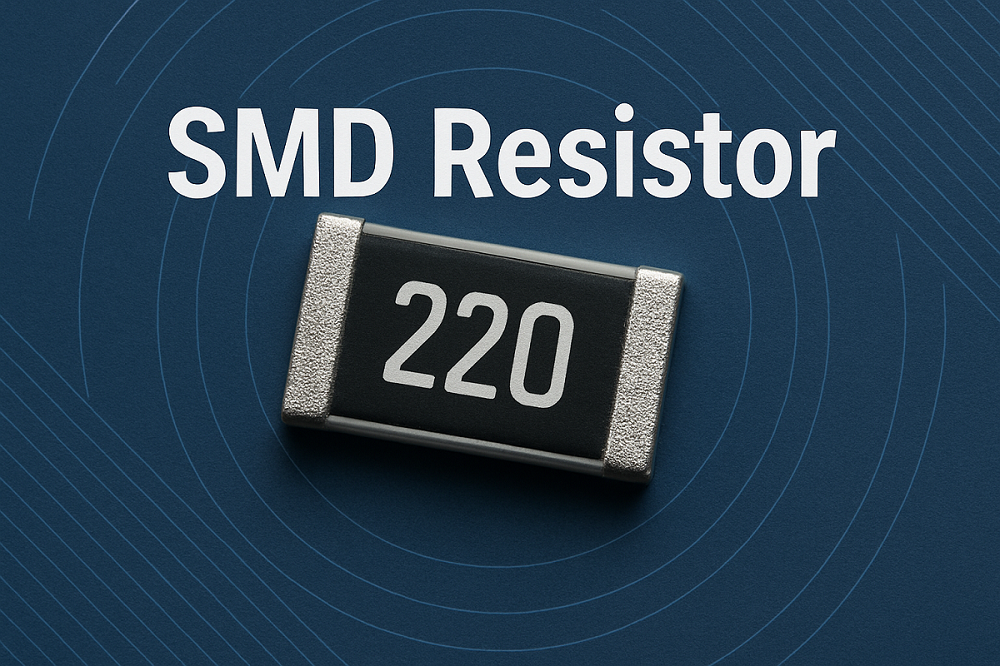
SMD Resistor: Types, Applications, and Selection Guide2025-04-30