The Kynix Blog
Stay Ahead with Expert Electronics Insights,
Industry Trends, and Innovative Tips
- Electronic Components
- News Room
- General electronic semiconductor
- Components Guide
- Sort by
- Robots
- Transmitters
- Capacitors
- IC Chips
- PCBs
- Connectors
- Amplifiers
- Memory
- LED
- Diodes
- Transistors
- Battery
- Oscillators
- Resistors
- Transceiver
- RFID
- FPGA
- Mosfets
- Sensor
- Motors, Solenoids, Driver Boards/Modules
- Relays
- Optoelectronics
- Power
- Transformer
- Fuse
- Thyristor
- potentiometer
- Development Boards
- RF/IF
- Semiconductor Information
- PCB
- transistor
Field Programmable Gate Arrays (FPGAs) help create custom hardware. They are very flexible and perform tasks quickly. FPGAs are used in telecommunications, cars, and artificial intelligence. They can make algorithms like RankBoost run 31.8× faster. They also use up to 30% less power than regular CPUs. MATLAB and Simulink make FPGA programming easier for beginners. You can run complex tasks, like motor control, on FPGAs. This requires little programming knowledge. Simulink uses models to create and send code automatically. This helps combine hardware and software easily. These tools let you focus on new ideas instead of coding details. Understanding FPGA Basics What is an FPGA, and how does it work? An FPGA is a special type of hardware you can program. Unlike regular processors, FPGAs let you design custom circuits. These circuits are made using programmable blocks and connections. You can use them to run complex tasks or control systems. FPGAs process data all at once, not step by step. This makes them faster than CPUs for some tasks. They are great for things like image processing and machine learning. Because they are fast and flexible, industries like cars and space use them. The FPGA market is growing and could reach $13.5 billion by 2032. Key building blocks of FPGA logic circuits FPGAs have important parts that make them work well. These include logic elements, flip-flops, multiplexers, and lookup tables (LUTs). Logic elements help create circuits for specific tasks. Flip-flops store data and keep it in sync with the clock. Multiplexers move signals around inside the FPGA. LUTs handle tricky logic tasks quickly. These parts need to stay reliable over time. Problems like BTI and HCI can make them slower. But tools like Ring Oscillators (ROs) check for issues and help fix them. This keeps FPGAs working well for a long time. Problem TypeWhat HappensHow It Affects FPGAsBias Temperature Instability (BTI)Positive ions build up, raising voltage.Slows down switching speed.Hot-Carrier Injection (HCI)Damage to the interface raises voltage.Hurts switching speed permanently.Ring Oscillators (ROs)Sensors watch for circuit problems.Finds issues early. Differences between FPGA programming and traditional software programming FPGA programming is very different from regular software programming. In software, you write instructions for a processor to follow one by one. With FPGAs, you design circuits that work all at the same time. This lets FPGAs handle lots of data very quickly. The tools and languages are also different. Software uses languages like Python or C++. FPGA programming uses HDLs like VHDL and Verilog. These HDLs describe how circuits behave instead of giving step-by-step commands. FPGA programming also needs you to know hardware basics. You’ll learn about timing, delays, and how to use resources. It might seem hard, but tools like MATLAB and Simulink make it easier for beginners. Introduction to MATLAB and Simulink for FPGA Programming Overview of MATLAB and Simulink features for FPGA design MATLAB and Simulink are helpful tools for FPGA projects. Simulink uses visuals to show how hardware and data move. This makes it simple to see how your design works. You can also use MATLAB code inside Simulink with special blocks. This saves time and keeps your work consistent. Another useful feature is testing your Simulink design with MATLAB. A test script checks if your design matches the MATLAB reference. This ensures your FPGA design is correct before using it. These tools make hard tasks easier, even for beginners. Benefits of using MATLAB and Simulink for beginners Starting FPGA programming can feel tricky, but these tools help. Their easy-to-use interfaces let you focus on designs, not coding. Simulink lets you drag and drop to build models. MATLAB has built-in functions to help create algorithms. These tools can also make HDL code automatically. For example, HDL Coder turns Simulink models into VHDL or Verilog code. This saves time spent on coding and fixing errors. Beginners can quickly turn ideas into working designs and feel more confident. Integration of MATLAB and Simulink with FPGA hardware MATLAB and Simulink work well with FPGA hardware. They help design, test, and check systems easily. You can connect them to devices like cameras and processors. This works for school projects and big industries like cars and planes. For example, tutorials show how to use MATLAB or Simulink with LabVIEW FPGA. They explain how to make VHDL code with HDL Coder and test it on hardware. Companies like Siglead use these tools for signal processing. Automatic code generation saves time, letting engineers focus on new ideas. Essential Steps in FPGA Programming Designing hardware architecture The first step in FPGA programming is planning the hardware. You decide how the FPGA will handle data and connect to parts. This includes setting up logic blocks, data paths, and control signals. A good plan helps the FPGA work faster and use resources wisely. You can use benchmarks to guide your design. Benchmarks test different parts of FPGA programming, like code creation and accuracy. The table below shows some common benchmarks: BenchmarkSizePLTypeFeaturesVerilogEval1561 (Verilog)Verilog code generation tasksDiverse tasks from simple circuits to finite state machines; automatic testing.HDLEval100MultipleLanguage-agnostic HDLEvaluates multiple HDLs using standardized test benches and formal verification.PyHDL-Eval168Python-embedded DSLsSpecification-to-RTL tasksFocuses on Python-based hardware design; includes Verilog reference solutions.RTLLM50Verilog, VHDL, ChiselDesign RTL generationCovers various HDL formats and complexities; includes automated evaluation.VHDL-Eval202VHDLVHDL code generation tasksAggregates Verilog and VHDL problems; uses self-verifying testbenches.GenBen351VerilogHardware design tasksEvaluates synthesizability, power, area, and timing for real-world applicability. Writing and simulating HDL code After planning, write the HDL code to describe the FPGA's behavior. Use languages like VHDL or Verilog to define the logic. Tools like MATLAB and Simulink can help by creating HDL code from models automatically. Testing your design with simulation is very important. It lets you check your design in a virtual setup before using real hardware. Simulink gives a visual way to test, while MATLAB runs scripts to confirm everything works. This step reduces mistakes and ensures your design is ready. Synthesis and implementation of FPGA designs Synthesis and implementation turn your HDL code into a working FPGA design. Synthesis changes the code into a gate-level netlist. This step makes the design faster and more efficient. Implementation places the netlist onto the FPGA's physical parts, finishing with routing and bitstream creation. Some methods make synthesis and implementation better: Pipelining splits tasks into steps for faster processing.Loop unrolling makes loops shorter, so tasks run together.Memory partitioning breaks memory into smaller parts for better use. The table below explains these methods: TechniqueDescriptionSynthesisTurns RTL code into a gate-level netlist, improving performance.ImplementationMaps the netlist to FPGA parts, including routing.PipeliningSplits tasks into steps for faster parallel processing.Loop UnrollingReduces loop steps to increase speed and parallelism.Memory PartitioningBreaks memory into smaller parts for better processing. These techniques make FPGA designs fast and dependable. Verification and debugging techniques. Checking and fixing are key steps in FPGA programming. They make sure your design works well before using it. If you skip these steps, mistakes can cause big problems later. Begin with testing through simulations. Use tools like MATLAB and Simulink to test designs virtually. Simulations let you see how your design acts in different situations. For example, you can test clock signals or input data to check outputs. This helps find mistakes early, saving time later. Then, try hardware-in-the-loop (HIL) testing. This connects your FPGA design to real hardware parts. HIL testing checks how your design works with devices like sensors or motors. It helps you see how your design performs in real life. Debugging tools are also very helpful. Many FPGA tools have built-in debugging features. For example, signal analyzers watch signals inside the FPGA. Logic analyzers help find timing problems by tracing signal paths. These tools make fixing issues easier. Lastly, follow a step-by-step debugging plan. First, find the problem by checking small parts of your design. Once you know the issue, change the HDL code or hardware setup. Test again to make sure the problem is fixed. Learning these methods helps you build strong FPGA designs. Checking and fixing improve your skills and make your projects successful. Practical Example: Blinking LED Project Setting up the project in MATLAB and Simulink To start the blinking LED project, set up MATLAB and Simulink. First, make a new Simulink model. Use the drag-and-drop feature to add blocks for hardware and logic. This visual method is easy for beginners. You can also write MATLAB scripts to set parameters or test your design. Simulink has a user-friendly interface to pick FPGA components. This makes creating HDL code simple. Tools like CASPER help move from simulation to real hardware smoothly. This setup teaches how software and hardware work together, which is important for FPGA projects. Designing the blinking LED logic The blinking LED logic controls when the LED turns on and off. A counter is a simple way to do this. The counter increases with a divided clock signal, setting the blink speed. For advanced designs, use multiple counters to create different blinking patterns. Here’s an example of basic counter logic in Verilog: always @(posedge clk) begin if (counter == MAX_COUNT) begin counter <= 0; led <= ~led; // Change LED state end else begin counter <= counter + 1; endend This code makes the LED blink at a steady speed. The clock frequency and counter value decide how fast it blinks. Simulating and testing the design Testing your design with simulation is very important. It helps find and fix problems before using real hardware. Use Simulink to test your blinking LED logic. Simulations check how your design works in different situations, even tricky ones. For example, during simulation, you can see how the LED behaves: Time Interval (ms)Frequency (Hz)LED Signal Behavior0 - 200100LED blinks very fast200 - 40050LED blinks slower400 - 60010LED blinks at a slow speed600 - 8001LED blinks very slowly Simulations make debugging easier than testing on hardware. Once the simulation works as expected, you can program the FPGA confidently. Deploying the design to FPGA hardware. After your design passes tests, it's time to put it on the FPGA hardware. This means programming the FPGA with a special file called a bitstream. Follow these simple steps to finish the process: Create the Bitstream FileUse your FPGA tools to make the bitstream file. This file tells the FPGA how to work. Tools like MATLAB HDL Coder or Simulink can make this file for you after the design is ready. Connect the FPGA BoardAttach your FPGA board to your computer using a USB or JTAG cable. Make sure the board is turned on and your computer recognizes it. Most boards come with software to help with this step. Load the BitstreamOpen the programming software for your FPGA, like Xilinx Vivado or Intel Quartus. Choose your FPGA device and load the bitstream file. Click "Program" to send the design to the FPGA. Test the HardwareCheck if the design works correctly on the FPGA. For example, in the blinking LED project, see if the LED blinks at the right speed. If there are problems, go back and check your tests and fixes. Tip: Always check the FPGA board's pin setup before programming. Wrong pin settings can damage the hardware. Here’s an example of a MATLAB command to program an FPGA: fpga = hdlcoder.FPGAProgrammingInterface('Xilinx');fpga.ProgramFPGA('bitstream.bit'); Putting your design on hardware lets you see it in action. It’s exciting to watch your ideas turn into real projects! Advanced Concepts for Beginners Introduction to sequential logic and D flip-flops (DFFs) Sequential logic is a circuit type where outputs depend on inputs and past states. This differs from combinational logic, which only uses current inputs. Sequential circuits are important for counting, storing data, and controlling FPGA processes. A key part of sequential logic is the flip-flop. So, what is a flip-flop? It’s a small circuit that holds one bit of data. The D flip-flop (DFF) is the most common type. It saves the input value (D) when the clock signal rises and keeps it until the next clock cycle. This makes it great for registers, counters, and memory. For instance, a D flip-flop can store the state of a blinking LED. It ensures the LED changes only at set clock times, preventing errors. Understanding timing, propagation delay, and clock domains Timing is very important in FPGA design. Propagation delay is the time a signal takes to move through a circuit. If delays are too long, the circuit might fail. Clock domains are parts of a design using different clock signals. Managing these prevents data errors or loss. Engineers use reports to check timing and clock domains. These reports find problems and improve designs: Report TypeWhat It DoesClock Networks ReportShows how clocks move through the design and their connections.Clock Interaction ReportFinds problems like data loss between different clock domains.Timing Summary ReportGives a full view of the design's timing for final checks.Datasheet ReportLists timing details and system requirements for integration. Knowing these ideas helps your FPGA work well, even in tough tasks. Best practices for coding in VHDL and Verilog Using good habits in VHDL or Verilog makes your code clear and easy to manage. Here are some tips: Write comments to explain signals and tricky code parts. This helps if you review the code later.Describe inputs and outputs clearly at the interface level. This makes reuse easier.Skip obvious comments. Use comments to explain hard-to-understand sections. Beginners should also know the difference between VHDL and Verilog. VHDL is detailed and good for big, complex projects. Verilog is simpler and popular in industries. Pick the one that fits your project and learning needs. By following these tips, you can write neat and effective designs. This is key for anyone learning hardware programming. Tips for Troubleshooting and Debugging Common problems in FPGA programming and how to fix them FPGA programming can be tricky, but knowing common problems helps. Here are some issues and ways to solve them: Asynchronous Logic: Timing errors happen with asynchronous logic. Use synchronous logic and clock all signals to avoid this.Underused DSP Slices: Beginners often use LUTs instead of DSP slices. This makes designs less efficient. Use DSP slices for math tasks to improve performance.Ignoring Device Primitives: Skipping built-in primitives can lead to poor designs. Learn about your FPGA's primitives to make better circuits. Sometimes, board designers and FPGA developers face teamwork issues. Working together and debugging as a team can fix these problems. For example, both teams should check timing errors in asynchronous logic. The table below shows error counts in FPGA programming: CategoryError CountDDR Rx CRC-132,616,455Ingress Drop Stats1,750UcH Fr Np-1115,685UcL Fr Np-131,852,547,525UcH ErrToNp-2129UcL ErrToNp-290,359 Fixing these problems early saves time and makes debugging easier. Tools and methods for debugging FPGA designs Debugging is important in FPGA design. Using the right tools helps you meet your goals. Here are some useful methods: Simulation Tools: Test your design with tools like MATLAB or Simulink. Simulations let you find bugs before using real hardware.Hardware Debugging Tools: Use signal probes and logic analyzers to check signals inside the FPGA. These tools help find errors and fix timing issues.Hardware-in-the-Loop (HIL) Testing: Connect your FPGA to real devices. HIL testing checks if your design works in real-world situations. The table below lists key debugging and optimization metrics: MetricDescriptionCorrectnessCheck if the design works as planned.Timing ComplianceMake sure the design meets timing rules to avoid errors.RobustnessTest the design in tough situations to ensure it’s reliable.Debugging and OptimizationFind and fix bugs while improving performance. These methods and tools help you build strong FPGA designs. Learning them makes solving hard debugging problems easier. Resources for Further Learning Suggested tutorials and books for FPGA programming Books and tutorials are great for learning more about FPGAs. A popular book is The FPGA Programming Handbook by Frank Bruno and Guy Eschemann. It starts with simple ideas and moves to harder topics. The book includes hands-on projects like making a calculator or connecting sensors. The authors have over 50 years of combined experience. They’ve worked with big companies like SpaceX and Analog Devices, so the book is trustworthy and helpful. AspectDetailsBook TitleThe FPGA Programming HandbookAuthorsFrank Bruno, Guy EschemannTarget AudienceHobbyists, students, and people curious about FPGA technologyContent OverviewCovers basics to advanced topics, includes hands-on projectsRecommended ForBeginners and those with some technical knowledgePractical ExamplesProjects like making a calculator and connecting sensorsAuthor's ExperienceWorked with companies like SpaceX and Analog Devices This book is perfect for beginners or anyone with basic technical skills. It gives a strong start for designing FPGA systems. Online courses and beginner communities Online courses and groups are great for learning FPGA programming. Websites like Coursera and Udemy have beginner-friendly FPGA courses. These courses include videos, quizzes, and projects. Some teach how to use MATLAB and Simulink for FPGA tasks. You can learn at your own speed, which is great for new learners. Communities like Reddit’s FPGA subreddit and forums like Stack Overflow are also helpful. You can ask questions, share ideas, and learn from experts. Joining these groups helps you solve problems and learn about new trends. Trying advanced projects and real-world uses After learning the basics, try harder FPGA projects. For example, you can work on image processing, robotics, or machine learning systems. These projects improve your skills and prepare you for real-world jobs. Industries like cars and space use FPGAs for tasks like signal processing and control systems. You can also use MATLAB and Simulink in your designs. These tools make hard tasks easier, like creating hardware for AI. Working on advanced projects gives you hands-on experience and boosts your problem-solving skills. Reference If you're learning FPGA programming with MATLAB and Simulink, having good resources is important. Here’s a list of books, websites, and tools to help you: Books 📚 "Digital Design and Computer Architecture" by David Harris and Sarah HarrisThis book teaches digital logic and hardware languages like VHDL and Verilog. It’s easy to follow and has real-world examples."FPGA Prototyping by VHDL Examples" by Pong P. ChuA beginner-friendly guide for learning VHDL. It includes projects like making LED controllers and counters. Online Resources 🌐 MATLAB DocumentationCheck MATLAB's official documentation for step-by-step guides on using MATLAB and Simulink for FPGA tasks.Intel FPGA TrainingIntel offers free courses to learn FPGA basics. Visit Intel FPGA Training.Xilinx Learning CenterXilinx has tutorials and webinars for beginners. Find them at Xilinx Learning Center. Tools and Simulators 🛠️ Tool NameWhat It DoesWebsite LinkHDL CoderTurns MATLAB/Simulink into HDL codeHDL CoderVivado Design SuiteHelps design and debug FPGAsVivadoQuartus PrimeIntel's software for FPGA designQuartus Prime Tip: Save these links for quick use. They’ll help you solve problems faster. Using these resources will give you a solid start in FPGA programming. You’ll feel ready to take on harder projects with confidence. You now know the basics of FPGA programming using MATLAB and Simulink. Begin with easy projects, like making LEDs blink. These simple tasks help you learn and gain confidence. Practice writing HDL code, fixing errors, and testing designs. Tools like Simulink make hard designs easier to handle. As you improve, try harder projects to grow your skills. Keep practicing regularly to become great at FPGA programming and create cool designs. FAQ What is digital design, and why does it matter in FPGA programming? Digital design means making circuits that handle binary data. It’s important in FPGA programming because it helps create parts like counters and controllers. These parts are the building blocks for making useful and efficient FPGA designs. How does MATLAB make FPGA programming easier? MATLAB makes FPGA programming easier with tools like HDL Coder. These tools turn your designs into HDL code automatically. You can also test and check your designs in MATLAB before using them on hardware. This saves time and avoids mistakes. Can Simulink be used for real-time FPGA tasks? Yes, Simulink works for real-time FPGA tasks. It lets you create and test designs visually. Simulink also connects to hardware to check how your design works in real life. This helps ensure your design performs well in real situations. What is a module in FPGA programming? A module is a small, reusable part of FPGA programming. It does one job, like counting or processing data. You can combine modules to make bigger designs. Using modules also makes your work easier to fix and understand. Do I need to know HDL languages to start FPGA programming? Knowing HDL languages like VHDL or Verilog is helpful but not required. Tools like MATLAB and Simulink can create HDL code for you. This lets you focus on designing and testing without writing HDL code yourself.
Karty On 2025-04-11
Artificial intelligence voice recording technology has developed rapidly over the past few years, revolutionizing the way we record and engage with sound. An AI voice recorder uses smart technology to record and improve sound quality. Unlike traditional recorders, AI-powered devices remove background noise, enhance voice clarity, and convert speech into text. This technology has transformed industries like media and entertainment, which generated the highest revenue in 2023. Building your own AI voice recorder offers numerous benefits: - Cost-effectiveness compared to hiring voice-over services - Time savings through automated transcription and processing - Customization to fit your specific needs - Control over features and functionalityThe AI voice tools market, valued at $3.56 billion in 2023, is growing rapidly and is projected to reach $10.8 billion by 2030. This growth is driven by the ability to provide users with personalized experiences and enhanced productivity.Understanding the BasicsBefore developing an AI voice recorder, it’s essential to understand sound signal processing and AI technology. Current AI voice technology relies on deep learning and neural network models to improve voice recognition accuracy.Key Concepts:Sound Signal Processing: Converting analog audio signals into digital data that computers can processAI and Machine Learning: Using techniques like deep learning to analyze and interpret audio data, enabling features such as speech-to-text conversion and audio summarizationHardware ComponentsSelecting the right hardware components is critical for an AI voice recorder. Each component works together to capture high-quality sound and process it effectively using AI algorithms.1. MicrophoneA good microphone is crucial for capturing clear audio. Look for microphones with a cardioid pattern to focus on your voice while reducing background noise.Options: - USB Microphones: Simple to use and affordable for beginners (Blue Yeti, Audio-Technica AT2020) - XLR Microphones: Require an audio interface but provide better sound qualityTips: - Position the microphone 4-6 inches from your mouth - Use a pop filter to block harsh sounds2. ProcessorA high-performance processor is necessary to handle microphone input and efficiently execute AI algorithms. Multi-core processors are ideal for real-time processing.Requirements: - At least 8GB of RAM (16GB recommended for faster processing) - Multi-core processor - GPU like NVIDIA RTX for enhanced performance (optional)Options: - Raspberry Pi for simple projects - ESP32 for portable applications - More powerful processors like Intel Xeon W for demanding tasks3. Sound CardA sound card converts analog audio signals to digital data that can be processed by AI algorithms.Popular options: - USB Sound Cards like Focusrite Scarlett series4. Storage DeviceAdequate storage is necessary for both audio recordings and generated text content.Options: - MicroSD cards for devices like Raspberry Pi - SSDs for more powerful setups - Cloud storage for scalability5. Power Supply (Battery)For portable recorders, a reliable battery ensures operation for extended periods without interruption.Preferred choice: - Rechargeable lithium-ion batteries - Energy-efficient components to maximize battery life6. Audio Output Components (Optional)For voice assistants or real-time feedback, speakers or headphones may be necessary.Examples: - 3W, 4Ω Speakers for delivering audio responsesComponentDescriptionExamplesMicrophoneCaptures clear audio. Multi-directional microphones are preferred.Blue Yeti, INMP MicrophoneProcessorHandles AI algorithms and audio processing. Multi-core processors are ideal.Raspberry Pi, ESP32, Intel Xeon WSound CardConverts analog audio to digital data.Focusrite Scarlett seriesStorage DeviceStores audio recordings and AI models.MicroSD Cards, SSDsPower SupplyEnsures continuous operation. Rechargeable batteries are common.Lithium-ion batteriesAudio OutputOptional for real-time feedback.3W, 4Ω SpeakersSoftware and Programming Environment SetupSetting up the right software and programming environment is vital for developing an AI voice recorder.Essential SoftwareAudio Recording ProgramsYou need software to record sound: - Audacity: Free and works on most computers with tools for editing and noise removal - GarageBand: Great for Mac users and easy to useAI Tools for Voice FeaturesAI frameworks add smart capabilities to your recorder: - TensorFlow: Easier for beginners with extensive documentation - PyTorch: Better for experimentation and researchDevelopment ToolsPython: Primary programming language with libraries like speech_recognition or pyaudioReplit: Platform for backend development and deploymentCursor AI: Coding environment for integrating AI modelsSetup StepsOperating System: Install a compatible OS (like Raspbian for Raspberry Pi)Development Tools: Install Python and necessary librariesSpeech Recognition APIs: Integrate APIs like Google Speech API or CMU SphinxExample Code (Python)import speech_recognition as sr# Create a speech recognition objectr = sr.Recognizer()# Use the microphone as the audio sourcewith sr.Microphone() as source: print("Please say something:") audio = r.listen(source)try: # Convert speech to text print("You said: " + r.recognize_google(audio))except sr.UnknownValueError: print("Google Speech Recognition could not understand audio")except sr.RequestError as e: print("Could not request results from Google Speech Recognition service; {0}".format(e))Cloud AI Services and APIsCloud services extend the capabilities of your AI voice recorder, especially if your hardware is limited.Cloud AI PlatformsGoogle Cloud: Offers speech-to-text, natural language processing, and other AI servicesAWS: Provides comprehensive AI tools through Amazon Web ServicesAPIs for Speech and TextOpenAI Whisper: Provides accurate transcription across multiple languagesGoogle Speech API: Offers robust speech-to-text capabilitiesCMU Sphinx: An open-source speech recognition systemAI Voice Cloning PlatformsElevenLabs: User-friendly voice cloning with free trialsResemble AI: Upload voice samples to train AI to replicate themTopMediai Voice Cloning: Create personalized AI voices using advanced machine learningRecording High-Quality AudioBest PracticesSelect a quality microphone appropriate for your needsMaintain proper microphone positioning (4-6 inches from mouth)Use headphones to monitor audio quality in real-timeAdd a pop filter to minimize plosive soundsRecord in a quiet environment to minimize background noiseCapture some ambient sound for easier editingSave recordings in WAV format for the highest qualityFile FormatsWAV: Uncompressed, highest quality, ideal for editing and AI processing (larger file size)MP3: Compressed format, smaller file size, good for sharing or storageFLAC: Lossless compression, good balance between quality and sizeIntegrating AI ModelsSteps to Integrate AI Models1. Choose an AI ModelSelect a suitable model based on your requirements: - Speech recognition - Emotion detection - Audio summarization2. Train or Use Pre-trained ModelsPre-trained models: Save time by using models that are already trainedCustom training: Train models with your specific data for better resultsBenefits of pre-trained models: - Save development time - Require less computational power - Work well even with limited data - Can be fine-tuned for specific needs3. Training Steps for Custom ModelsData Collection: Gather diverse audio samplesData Preprocessing: Clean and normalize the dataModel Training: Train using deep learning techniques (RNNs, CNNs)Testing: Evaluate with various speech patterns and accents4. IntegrationUse APIs or libraries to integrate the model into your voice recorder.5. Testing and OptimizationPerformance Evaluation: Assess recognition accuracy and response timeFeedback Iteration: Improve based on user feedbackError Reporting: Use logs to identify and fix issuesAdvanced Features1. Automatic TranscriptionConvert audio recordings to text automatically, saving time and enhancing productivity.Implementation options: - Use speech recognition APIs like Google Speech API - Implement custom models with TensorFlow or PyTorch - Integrate OpenAI Whisper API for high accuracy2. Noise Cancellation and Audio EnhancementAI tools can remove unwanted sounds and enhance voice quality: - Spectral subtraction: Removes consistent background noise - AI-based denoising: Learns to separate voice from noise - Compression: Evens out volume differences3. Voice CloningVoice cloning uses AI to replicate someone’s voice by analyzing pitch, tone, and rhythm:How it works: 1. The AI studies audio samples to learn voice characteristics 2. Deep learning processes large datasets to create realistic results 3. The trained model can generate speech that sounds like the original speakerTools for creating cloned voices: - ElevenLabs: User-friendly with free trial options - Resemble AI: Upload voice samples to train the AI - Tacotron 2: More control for advanced users4. Text-to-Speech (TTS)Convert written text into spoken words with natural-sounding voices: - Great for audiobooks, virtual assistants, or accessibility features - Advanced TTS allows customization of tone and speaking rate5. Multi-Language SupportAdding support for multiple languages makes your recorder useful worldwide: - Train with multilingual datasets - Use pre-trained models like OpenAI Whisper that already support many languages - Essential for global businesses or projects6. AI-Generated AvatarsCombine voices with visual animations to create lifelike characters: - Copy facial expressions and lip movements - Useful for virtual meetings or media projects - Tools like Synthesia pair your AI voice with avatarsUser Interface and Interaction DesignA well-designed interface improves user experience and makes your AI voice recorder more accessible.Design Principles: - User-Friendly Interface: Use clear and simple controls - Sound Feedback: Provide audio cues for user actions - Visual Indicators: Display recording status and errorsTools for Design: - Tkinter or PyQt for creating GUIs in PythonManaging and Storing RecordingsOrganizing FilesCreate a logical folder structure based on: - Projects - Dates - Content typesUse clear naming conventions like “Podcast_Episode1_2023.wav” for easy retrieval.Backup StrategiesImplement multiple backup methods: - Cloud storage (Amazon S3, Google Cloud Storage) - External drives for local backup - Regular update schedule to include new recordingsOptimizing PerformanceReducing LatencyLow latency is crucial for real-time applications: - Keep latency under 500ms for smooth communication - Aim for 20-50ms for the best experience - Use edge computing to process data closer to users - Implement lightweight models for faster processingBalancing Quality and SpeedBoth audio quality and processing speed are important: - Use noise filters and high-quality codecs - Implement automatic gain control (AGC) for voice enhancement - Preprocess data with noise samples for better real-world performancePractical Applications1. Business and MeetingsAutomatic transcription of discussionsMeeting note-taking without manual effortSeamless sharing of transcriptions with team members2. Education and LearningCapturing lectures and discussionsAllowing students to focus on understanding rather than note-takingCreating a more inclusive learning environment3. Personal ProductivityManaging tasks and ideas efficientlyBrainstorming and journaling on the goIntegration with productivity apps4. Interviews and JournalismCapturing accurate quotes without manual note-takingFocusing on the conversation rather than documentationPost-interview processing and organization5. Accessibility and HealthcareReal-time transcriptions for those with hearing impairmentsEnhanced communication in healthcare settingsDocumentation of patient interactionsFuture Outlook and ChallengesEmerging TrendsAdaptive Learning: AI models that improve by learning from user speech patternsVoice Emotion Recognition: Detecting emotional states from voice characteristicsAdvanced Voice Cloning: Creating more natural and personalized voice replicasChallengesPrivacy Concerns: Ensuring user data security and consentBias in AI Models: Addressing biases in speech recognition systemsEthical Use: Preventing misuse of voice cloning technologyCommon QuestionsQ1: What is the best microphone for an AI voice recorder?A1: The best microphone depends on your environment and quality requirements. USB microphones like Blue Yeti or Audio-Technica AT2020 are popular for their clarity and ease of use. For professional applications, XLR microphones with an audio interface provide superior quality.Q2: How much does it cost to build an AI voice recorder?A2: Costs vary based on component selection. A basic setup with a USB microphone and free software like Audacity can cost under $100. More advanced setups with professional microphones, interfaces, and cloud services may exceed $500.Q3: Do I need coding skills to build an AI voice recorder?A3: While coding knowledge helps, it’s not always required. Many tools and APIs provide user-friendly interfaces. Basic Python skills are beneficial for customization and integration.Q4: Can I use my AI voice recorder for live streaming?A4: Yes, with proper optimization for low latency. Use edge computing and lightweight models to minimize delays, and test thoroughly with streaming applications.Q5: How do I improve the accuracy of my AI voice recorder?A5: Improve accuracy by training with diverse datasets, optimizing hardware settings, using high-quality microphones, and minimizing background noise.Q6: Is voice cloning safe to use?A6: Voice cloning should be used ethically. Always obtain permission before cloning someone’s voice, and be aware of potential privacy and security implications.Kynix: Your Trusted Partner for AI Voice Recorder ComponentsPurchasing dependable, high-quality electronic components is crucial for achieving the best possible performance while developing an AI voice recorder. Leading international distributor of electronic components, Kynix, provides a wide selection of parts designed especially for AI and audio applications.ConclusionBuilding an AI voice recorder requires understanding hardware and software components, integrating appropriate AI models, and focusing on user experience. With the right components and approach, you can create a powerful tool that enhances productivity and accessibility.As AI technology continues to evolve, voice recorder capabilities will expand, making these devices increasingly valuable in our personal and professional lives. Whether you’re a beginner experimenting with basic components or an advanced developer pushing the boundaries of what’s possible, creating your own AI voice recorder is an exciting project with practical applications.ReferencesReddit: RambleFix - A voice recorder that uses AI to convert messy thoughts into clear textco: AI Meeting Notes GuideScreenApp: Audio Summarizercom: Open Source AI Voice Projectsio: Audio Data Collectionai: Top AI Voice RecordersHardware Development of Voice Recorder with AI Minutes Creation FunctionAI Voice Hardware Requirements Compatibility Guidefm: Recording High-Quality AudioGrand View Research: AI Voice Generators Market
Allen On 2025-03-26
Overview: This article covers logic circuits in digital systems, focusing on combination circuits and encoders, their types, functions, and applications for efficient data processing. Logic circuits for digital systems may be combination or sequential.What is a combination circuit?A combination circuit is a memoryless digital circuit consisting of logic gates whose output is determined from only the present combination of inputs. It comprises an interconnection of basic logic gates NAND, NOR, or NOT gates to produce switching circuits.There are no feedback circuits in which changes to the input signal will immediately affect the output. They can be considered decision-making circuits that transform binary information with n inputs to required output data with m number of outputs. Common types of combination circuits includeAdderSubtractorComparatorMultiplexerDemultiplexerEncoderDecoderThe encoder-decoder structure is a popular approach in many deep learning applications, especially for sequence-to-sequence tasks. An overview of encoders is given in this article.What is an encoder?A binary encoder is a combinational circuit that converts information from input lines into n-bit binary code. Only one input line is activated at a time, depending on which input is high, we get the specific code at the output.Types of EncodersThe most common types of encoders include4-to-2 Encoder8-to-3 Encoder (Octal Encoder)Decimal to BCD EncoderHexadecimal to Binary EncoderPriority Encoder4-to-2 EncoderConverts four input lines into two output lines, as shown in Fig. 1, applicable for data multiplexing and control signal generation. The block diagram of the 4-to-2 encoder is shown in Fig. 1, which converts = 4 input lines into n = 2 output lines.Fig. 1 Block diagram of 4:2 encoder. Source: Rakesh Kumar, Ph.D. Table. 1 Truth table of 4:2 encoder Source: Rakesh Kumar, Ph.D.DOD1D2D3XY100000010001001010000111 D0, D1, D2, and D3 are the input lines, and only one of these lines is active (1) at a time. X and Y are the output lines representing the binary code corresponding to the active input.The logical expression of 4:2 encoder can be derived from the truth table asX = D2 + D3Y = D1 + D3The logic circuit of the 4:2 encoder can be implemented with the help of the OR gate, as shown in Fig. 2Fig. 2 Logic circuit diagram of 4:2 encoder. Source: Rakesh Kumar, Ph.D.8-to-3 Encoder (Octal Encoder)The octal encoder converts eight input lines into three output lines, often used for octal to binary conversion. The block diagram of the 8-to-3 encoder, in which it converts = 8 input lines into n = 3 output lines, is shown in Fig. 3.Fig. 3 Block diagram of 8:3 encoder. Source: Rakesh Kumar, Ph.D. Table. 2 Truth table of 8: 3 encoder. Source: Rakesh Kumar, Ph.D. DOD1D2D3D4D5D6D7XYZ1000000000001000000001001000000100001000001100001000100000001001010000001011000000001111 The logical expression of 8:3 encoder can be derived from the truth table asX = D4 + D5 + D6 + D7Y = D2 + D3 + D6 + D7Z = D1 + D3 + D5 + D7The logic circuit of the 8:3 encoder can be implemented with the help of the OR gate, as shown in Fig. 4Fig. 4 Logic circuit diagram of 8:3 encoder Source: GeeksforGeeksDecimal to BCD Encoder:Decimal to BCD encoder converts decimal numbers (0–9) into 4-bit Binary-Coded Decimal (BCD).Hexadecimal to Binary EncoderIt converts 16 input lines into four output lines, which is useful for hexadecimal to binary conversion.Priority EncoderA priority encoder is a unique encoder that prioritizes the input with the highest priority when two or more inputs are high simultaneously. The block diagram of the 4:2 priority encoder is shown in Fig. 5.Fig. 5 Block diagram of 4:2 priority encoder Source: Rakesh Kumar, Ph.D. Table. 3 Truth table of 4:2 priority encoder Source: Rakesh Kumar, Ph.D.DOD1D2D3XY100000X10001XX1010XXX111 The logic expression of the priority encoder can be derived from the truth table asX = D3 + D2Y = D3 + D2’D1AdvantagesBinary encoders encode input information into a compact code, effectively reducing the number of bits required to represent the input data. They enable efficient data handling in digital systems. Their ability to reduce the required input/output (I/O) pins makes them invaluable when connecting numerous input devices to microcontrollers or processors.To conclude, encoders are a significant component for many applications, including encoding data for transmission, providing motion feedback for robotics and machinery, converting user actions to digital signals, data multiplexing, and signal generation.Summarizing the Key PointsCombination circuits in digital systems consist of logic gates that produce outputs based on current input combinations without memory of past inputs.Encoders are essential in converting multiple input signals into a compressed binary code, significantly reducing electronic systems' required output lines.Priority encoders prioritize the highest active input when multiple signals are high, ensuring reliable data processing.ReferenceKalamani, C., Murugasami, R., Usha, S., & Saravanakumar, S. (2023). Design of encoder and decoder using reversible logic gates. Measurement Sensors, 31, 100989. https://doi.org/10.1016/j.measen.2023.100989Sofeoul-Al-Mamun, M., Miah, M. B. A., & Masud, F. A. (2017). A novel design and implementation of 8-3 encoder using Quantum-Dot Cellular Automata (QCA) technology. European Scientific Journal ESJ, 13(15), 254. https://doi.org/10.19044/esj.2017.v13n15p254Singha, T. B., Konwar, S., Roy, S., & Vanlalchaka, R. H. (2014). Power efficient priority encoder and decoder. International Conference on Computer Communication and Informatics, 1–5. https://doi.org/10.1109/iccci.2014.6921806ALL ABOUT ELECTRONICS. (2022a, May 1). Encoder in Digital Electronics | Working, application and Logic circuit of Encoder [Video]. YouTube. https://www.youtube.com/watch?v=NWiPVMDh7GEALL ABOUT ELECTRONICS. (2022, May 13). Priority Encoder Explained (with Simulation) | 4 to 2 Priority Encoder | 8 to 3 Priority Encoder [Video]. YouTube. https://www.youtube.com/watch?v=gnoqn705LBg
Rakesh Kumar, Ph.D. On 2025-03-12
Kynix, a premier global distributor of electronic components, is excited to announce its participation in the 2025 electronica China, Asia’s leading trade fair for electronics and electronic components. The event will take place from April 15–17, 2025, at the Shanghai New International Expo Centre (SNIEC), with Kynix’s booth located in Hall N2, Distributor Zone, Booth N2.667. Visitors are invited to explore Kynix’s cutting-edge solutions and services daily from 9:00 AM to 6:00 PM.About electronica ChinaAs part of the globally renowned electronica network, electronica China is one of Asia’s most influential exhibitions for the electronics industry. The event attracts thousands of exhibitors and professionals from around the world, showcasing innovations across automotive electronics, IoT, embedded systems, 5G, AI, and power electronics. It serves as a pivotal platform for networking, knowledge exchange, and discovering the latest trends shaping the future of electronics.In 2025, the exhibition will feature dedicated zones for components, systems, applications, and emerging technologies, alongside technical forums and workshops led by industry experts. With its focus on sustainability and digital transformation, electronica China offers unparalleled opportunities for collaboration and business growth in the Asia-Pacific region and beyond.Why Visit Kynix at Booth N2.667?At Hall N2, Kynix will highlight its end-to-end supply chain solutions and extensive inventory of semiconductors, passive components, connectors, sensors, and cutting-edge modules. Visitors can expect:Live Demos: Hands-on displays of high-performance components for automotive, industrial automation, consumer electronics, and renewable energy applications.Technical Expertise: Engage with Kynix’s engineering team to discuss challenges in component sourcing, obsolescence management, and design optimization.Global Sourcing Network: Learn how Kynix’s robust logistics network ensures rapid delivery across 100+ countries, supported by real-time inventory tracking and flexible procurement options.Exclusive Offers: Explore tailored solutions for prototyping and mass production, including competitive pricing on hard-to-find components.About KynixWith over a decade of industry experience, Kynix has solidified its reputation as a trusted partner for OEMs, EMS providers, and R&D teams worldwide. The company specializes in bridging supply chain gaps through:Comprehensive Inventory: Over 1 million SKUs from 3,000+ manufacturers, including TI, STMicroelectronics, Infineon, Murata, and TE Connectivity.Quality Assurance: Rigorous testing and adherence to ISO standards to ensure reliability for mission-critical applications.Innovation-Driven Services: From AI-powered component matching to BOM management tools, Kynix empowers customers to accelerate time-to-market.Sustainability Commitment: Partnerships with eco-conscious suppliers and support for circular economy initiatives.Kynix’s presence at electronica China underscores its dedication to fostering innovation and addressing the evolving needs of the global electronics ecosystem.Join Kynix at electronica China 2025This exhibition is a prime opportunity to connect with Kynix’s team, discover industry trends, and explore collaborative opportunities. Whether you’re sourcing components for next-gen projects or seeking strategic partnerships, Kynix is poised to deliver solutions that drive success.Mark your calendar:Dates: April 15–17, 2025Location: Shanghai New International Expo Centre (SNIEC)Booth: Hall N2, Distributor Zone, N2.667For media inquiries or to schedule a meeting, contact info@kynix.com.Stay updated: Follow Kynix on LinkedIn and X for real-time exhibition highlights!
Kynix On 2025-03-08
Xilinx FPGAs and SoC devices are renowned for their powerful functionality and diverse applications, but their part number naming conventions and key parameters can be confusing for beginners. This guide will help you navigate the world of Xilinx components to make informed decisions for your next project.Key TakeawaysUnderstanding part number naming conventions helps quickly identify component features and applicationsPay attention to speed grades and temperature grades as they affect performance and reliabilitySelect components based on project requirements, balancing performance, cost, and power consumptionUtilize Xilinx official tools and documentation, such as DocNav, to improve selection efficiencyConsult third-party resources and community support to learn from others’ experiences and optimize your choicesXilinx Part Number Naming ConventionsXilinx Part Number BreakdownStructure and Meaning of Part NumbersXilinx part numbers follow a specific pattern that allows you to quickly understand basic information about the device. Here’s the basic structure:Product Family Prefix: XC for standard commercial products, XA for automotive-grade products, XQ for military/aerospace-grade products.Series Code: For example, 7 series, representing the device generation and functional characteristics.Device Type: Such as Virtex, Artix, Kintex, etc., representing different FPGA families with varying functionality and performance.Device Size: Usually represented in thousands of logic units, for example, 485 represents 485,000 logic units.Speed Option: Such as T for high performance.Speed Grade: Numerically represented, such as -2 for higher performance grades.Package Type: Such as FFG for flip-chip fine grid, followed by numbers indicating pin count.Temperature Grade: Such as 1C for commercial grade. Series Names and GenerationsXilinx device series names reflect their technology generation and application areas:Generation 6: Earlier devices suitable for basic applications.Generation 7: Includes SPARTAN, ARTIX, KINTEX, and VIRTEX, covering needs from low power to high performance.Ultrascale: Provides KINTEX and VIRTEX series, suitable for higher-performance designs.Ultrascale+: Added ARTIX, KINTEX, VIRTEX, and ZYNQ series, with ZYNQ integrating ARM chips for embedded applications.Versal: Focused on AI fields, divided into AI Core, AI Edge, Prime, and Premium series to meet various AI computing needs.At Kynix, we stock all generations of Xilinx components, from legacy Series 6 to cutting-edge Versal AI devices. Our inventory management system ensures you’ll find exactly what your project requires, with genuine components backed by our quality guarantee.Practical Application of Part Number Naming Conventions Example Analysis: How to Quickly Understand Component Characteristics Through Part NumbersLet’s take the part number “XC7A35T-1FTG256” as an example:XC: Indicates a Xilinx component.7A: Belongs to the 7th generation ARTIX series, suitable for low-power applications.35T: Provides 35K logic units, suitable for medium-scale designs.-1: Standard speed grade.FTG256: Indicates an FBGA package type with 256 pins.Through this part number, engineers can quickly understand its performance, packaging, and applicable scenarios.Key Parameter InterpretationSpeed GradeDefinition and Its Impact on PerformanceSpeed grade is an important parameter for Xilinx components, typically marked as “-1”, “-2”, “-3”, etc. The smaller the number, the higher the speed grade and performance. For example, “-1” indicates standard speed, while “-3” represents a higher performance grade. Speed grade directly affects the device’s clock frequency and data processing capability. For projects requiring high-performance computing, such as AI inference or high-speed data transmission, choosing components with higher speed grades is crucial.How to Choose Speed Grade Based on Project RequirementsEngineers should weigh performance needs against budget constraints when selecting speed grades. High-performance projects typically require higher speed grades, but this also increases cost and power consumption. For low-power embedded designs, standard speed grades may be sufficient. By combining project requirements with component performance, engineers can more efficiently select the best Xilinx components.Temperature GradeDifferences Between Industrial, Commercial, and Military GradesTemperature grade determines the reliability of components in different environments. Here’s a comparison of the three main temperature grades:GradeOperating Temperature RangeCommercial0°C ~ +70°CIndustrial-40°C ~ +85°CMilitary-55°C ~ +125°CCommercial grade is suitable for indoor environments, industrial grade is appropriate for wider industrial scenarios, and military grade can handle extreme environments.Impact of Temperature Grade on Reliability and CostHigher temperature grades provide greater reliability but also increase cost. For industrial equipment that needs to operate long-term, choosing industrial-grade components can improve system stability. For budget-sensitive consumer products, commercial-grade components may offer better value.Package TypesCommon Package Types and Their Applicable ScenariosPackage type affects the physical dimensions, heat dissipation performance, and applicable scenarios of components. Here are several common package types and their applications:Package TypeApplicable ScenariosDIPSuitable for through-hole soldering on PCBs, applicable to early microprocessors and logic devices.PQFP and PFPSuitable for high-frequency use, applicable to large-scale or very large-scale integrated circuits.PGAAdapts to higher frequencies, applicable to Intel series CPUs such as 80486 and Pentium.BGASuitable for high-density packaging, applicable to modern high-performance chips.CSPSuitable for applications with strict space requirements.Impact of Package Type on Heat Dissipation and PCB DesignPackage type significantly affects heat dissipation and PCB design:Package type influences heat conduction efficiency.PCB layout should separate high-power components to maximize heat dissipation area.More copper layers in PCB improve thermal performance.Increasing heat sink size significantly improves thermal performance.Engineers should optimize heat dissipation design based on component package type to ensure stable system operation.Other Key ParametersLogic Unit Quantity (LUTs) and Storage ResourcesThe number of Logic Units (LUTs) is one of the important metrics for measuring FPGA performance. LUTs determine the complexity of logic functions an FPGA can implement. For projects requiring high computational power, such as image processing or machine learning, choosing components with more LUTs is crucial. Conversely, for simple control logic or low-power applications, fewer LUTs may be sufficient.Storage resources are also key parameters. Internal storage resources in FPGAs include block RAM (BRAM) and distributed RAM. Block RAM is suitable for storing large amounts of data, such as image frames or data buffers, while distributed RAM is more appropriate for small data storage. When selecting components, engineers should reasonably assess the allocation of storage resources based on project requirements for storage capacity and speed.I/O Interface Quantity and TypesThe quantity and types of I/O interfaces directly affect an FPGA’s ability to communicate with external devices. Common I/O interfaces include LVDS, SERDES, and high-speed Ethernet interfaces. For applications requiring high-speed data transmission, such as communication base stations or video processing, choosing components that support high-speed interfaces is particularly important. For embedded designs, engineers may be more concerned with GPIO quantity and compatibility with low-speed interfaces.Additionally, voltage standards and signal integrity of I/O interfaces also need special attention. For example, some industrial applications may require support for 3.3V voltage, while consumer products may prefer 1.8V or lower voltage standards.Practical Tools and ResourcesOfficial Tools and DocumentationUsing DocNav to Quickly Find Component InformationDocNav is an efficient document management tool provided by Xilinx, designed specifically for engineers. It integrates all of Xilinx’s technical documentation, including data sheets, user guides, and application notes. Through DocNav, users can quickly search and locate needed information, saving considerable time. DocNav’s classification functionality is clear and straightforward, supporting filtering by product series, keywords, or document type. For engineers who need to frequently consult documentation, this is an indispensable tool.Tips for Using Product Selection Guides and Data SheetsXilinx’s product selection guides and data sheets provide detailed component information. Here are some practical tips:Understanding the structure and content of data sheets helps quickly grasp core parameters of components.Making good use of table of contents and index functions helps quickly find needed information.Paying attention to typical performance and usage recommendations helps avoid selection errors.Through these tips, engineers can more efficiently select the best Xilinx components, ensuring project performance and reliability.Need technical documents for Xilinx products? Kynix maintains a comprehensive library of datasheets, application notes, and selection guides. As an authorized distributor, we provide access to official documentation to support your design process from component selection through implementation.Third-Party Resources and Community SupportReference Value of Online Forums and Technical BlogsThird-party resources provide engineers with rich experience sharing and technical support. Online forums (such as Xilinx Community) and technical blogs are important channels for obtaining practical information. These platforms gather FPGA developers from around the world, where users can find solutions to common problems or raise their own questions. Technical blogs provide in-depth case analyses and design tips, helping engineers better understand complex design processes.Component Selection Experience from Open Source ProjectsOpen source projects provide valuable references for engineers. Many open source hardware and software projects include practical application cases of Xilinx components. By studying these projects, engineers can understand component performance in different scenarios and draw from selection experiences. For example, searching for FPGA-related projects on GitHub can reveal many practical cases regarding logic unit configuration, I/O interface usage, and performance optimization. These experiences provide important references for engineers selecting components in actual projects.Practical Case Analysis for Component SelectionCase 1: High-Performance Computing ProjectProject Requirements AnalysisHigh-performance computing projects have extremely strict requirements for components, comprehensively considering the following key needs:Electrical Characteristics: Components need to withstand maximum applied electrical stress, ensuring stable operation.Operating Temperature Range: The rated temperature range of components should cover the actual working environment of the project.Process Quality and Manufacturability: Choose components with mature processes and high yield rates to reduce risk.Stability: Under environmental changes, component parameters need to remain within allowable ranges.Lifespan: The working life of components should meet the expected life requirements of the device.Environmental Adaptability: Ensure components can function normally in special environments.Failure Modes: Understand typical failure modes of components to formulate response strategies.Maintainability: Choose components that are easy to install, remove, and replace.Availability: Ensure supplier diversity, with supply cycles meeting manufacturing plans.Cost: Choose components with good value while meeting performance requirements.How to Combine Part Numbers and Parameters to Select ComponentsIn high-performance computing projects, when selecting the best Xilinx components, engineers should prioritize speed grade and logic unit quantity (LUTs). For example, the Virtex Ultrascale+ series provides high performance and rich logic resources, suitable for complex computational tasks. For applications requiring high-speed data transmission, models supporting SERDES interfaces can be selected. Additionally, package form needs to match project heat dissipation requirements, with BGA packaging typically being the first choice for high-performance projects. By combining project requirements and component parameters, engineers can achieve the best balance between performance and cost.Case 2: Low-Power Embedded ProjectProject Requirements AnalysisComponent selection for low-power embedded projects needs to focus on the following aspects:System usage scenarios: Choose energy-efficient chips based on computational tasks.Power supply chips: Need to select low-power LDO or DCDC chips to extend battery life.Peripheral components: Use devices with shutdown functionality to reduce power consumption.Dynamic voltage frequency technology: Reduce power consumption of different modules in real-time through multi-level voltage design.How to Combine Part Numbers and Parameters to Select ComponentsIn low-power embedded projects, choosing appropriate part numbers and parameters is crucial. For example, the Artix-7 series is known for low power consumption and high value, suitable for embedded applications. Engineers can further optimize power consumption by reducing CPU operating frequency and shutting down unnecessary modules. Additionally, choosing components supporting Dynamic Voltage and Frequency Scaling (DVFS) technology, such as the Zynq series, can significantly reduce energy consumption. For power supply chips, TI’s TPS797 series can be selected, with its ultra-low power consumption characteristics being very suitable for battery-powered devices. Through reasonable configuration of part numbers and parameters, engineers can minimize power consumption while meeting performance requirements.ConclusionSelecting the best Xilinx components requires following three core steps: understanding part number naming conventions, focusing on key parameters, and combining project requirements. Part number naming conventions help engineers quickly identify component characteristics, while key parameters directly affect performance and reliability. By combining project requirements, engineers can find the best balance between performance, cost, and power consumption.It is recommended to prioritize using Xilinx official tools and documentation, such as DocNav and product selection guides. These resources provide detailed technical information and practical tips that can significantly improve selection efficiency. Additionally, avoid single-parameter orientation and comprehensively consider actual project requirements to ensure the scientific and rational nature of component selection.FAQ1. How can I quickly determine if a Xilinx component is suitable for my project?Through part number naming conventions and key parameters, engineers can quickly screen components.Part Number Naming Conventions: Help understand series, speed grade, and package type.Key Parameters: Such as logic unit quantity, storage resources, and I/O interface quantity.Tip: Combine project requirements and prioritize using official tools like DocNav.2. Why is speed grade so important for performance?Speed grade determines the clock frequency and data processing capability of FPGAs.High Speed Grade: Suitable for high-performance computing and high-speed data transmission.Low Speed Grade: More suitable for low-power embedded designs.Note: When choosing speed grade, balance performance and cost.3. How do I choose an appropriate package type?Package type affects heat dissipation performance and PCB design.BGA Packaging: Suitable for high-density designs and high-performance projects.CSP Packaging: Suitable for space-constrained embedded applications.Recommendation: Choose package type based on project heat dissipation requirements and PCB layout.4. How does the temperature grade of Xilinx components affect projects?Temperature grade determines the reliability of components in different environments.Industrial Grade: Suitable for industrial equipment, with a wider temperature range.Commercial Grade: Suitable for indoor environments, with better value.Tip: Choose appropriate temperature grade based on actual working environment.5. How can I utilize third-party resources to optimize selection?Third-party resources provide rich experiences and cases.Online Forums: Obtain solutions to common problems.Open Source Projects: Reference component selection in actual applications.Recommendation: Combine official documentation and third-party resources to improve selection efficiency.
Kynix On 2025-03-08
Overview: This article examines the shift from relay systems to programmable logic controllers in industrial automation, highlighting their key components, workings, and advantages to improve accuracy in control systems across various industries.The trend of automating mechanical and electrical systems in industrial facilities and commercial buildings is advancing rapidly. Before, industrial automation relied heavily on relay-based control systems. These systems were primarily composed of banks of relays, which were electromechanical switches that opened and closed circuits in response to electrical signals.Relay systems presented several significant challenges, including complex wiring for inputs/outputs, making changes time-consuming. Additionally, the size of relay banks is relatively larger, consuming significant floor space and complicating maintenance efforts.The development of solid-state electronics and microchips allowed the command logic of relay-based systems to be replaced with software logic, leading to the rapid adoption of Programmable Logic Controllers (PLCs).What is a PLC?A Programmable Logic Controller is a special-purpose small computer that is an important part of control systems, converting data from sensors and other field devices into values that may operate devices. A PLC carries out pre-programmed actions or outputs such as arithmetic, counting, sequencing, logic, and timing based on inputs and a set of specific rules.Key Components and Working of PLCThe primary components of a PLC, as shown in Fig. 1, includeHardwareProgrammingFirmwareFig. 1 Key components of programmable logic controller Source: MDPIHardwareThe hardware component comprisesInput module: Input modules receive signals from sensors and convert them into a format the PLC can understand. These modules provide the physical connections between a PLC and the external world. They come in two primary types: digital (whether a device is in an on or off state, with no intermediate values) and analog (range of values, providing continuous data that reflects real-world conditions).The input module receives signals from process devices and converts the incoming signal to voltage, which the PLC can use. An isolator block is used to electrically isolate or protect the PLC from fluctuations in the input voltage/current signal. It sends the processed signal to the CPU for further processing.Central processing unit: The CPU is the brain of the PLC that processes input signals from sensors and devices connected to the PLC. It generates output signals based on the programmed logic to control actuators, motors, valves, and other devices. Integrated circuits, such as Modbus and LAN connections, enable remote communication for reprogramming or monitoring.Memory unit: This unit stores the PLC program and data necessary for operation. The two main components of PLC's small memory capacity are system memory configured with the CPU and user memory to store user programs.Power module: The power supply module provides the necessary electrical power to the PLC and its components even in harsh industrial environments where voltage fluctuations are common.Output module: Output modules send signals from the PLC to actuators and other devices to control their operation. These modules execute commands based on the logic defined in the program.Communications module: This module enables communication between the PLC and other systems, such as HMIs (Human-Machine Interfaces), other PLCs, or supervisory control systems.ProgrammingPLC programming involves developing a set of instructions that dictate how the PLC should monitor inputs, process data, and control outputs in an industrial automation process. It uses any of five standard languages defined by the IEC 61131-3 standard, which includeLadder Diagram (LD): LD is a graphical language created to replicate hard-wired relay logic.Structured Text (ST): ST is a textual language that is identical to the BASIC programming language.Sequential Function Chart (SFC): SFC is a graphical language that resembles a flow chart.Function Block Diagram (FBD): FBD is a graphical language that utilizes blocks to illustrate data flow. Logic functions, math functions, schedules, and proportional-integral-derivative (PID) control are all included in the blocks.Instruction List (IL): This is a low-level text-based programming language used for PLC.FirmwarePLC firmware serves as the operating system, governing the PLC's interactions and data exchange with the physical environment. It acts as a bridge between the hardware and software. Firmware interprets code into binary signals influencing inputs, outputs, internal flags, registers, and network communications.AdvantagesPLCs also eliminate the need for complex and expensive wiring. They are simple to replace if they fail, reducing intermission time and production losses.PLCs enable real-time process control, which increases the accuracy of operations and significantly reduces the risk of human errors.PLCs can be easily programmed and reprogrammed to adapt to changing process requirements without the need to rewire the control cabinet.PLCs are designed for rigorous industrial work, offering superior longevity and typically serving for 20 to 30 years.PLCs are designed to be user-friendly and simple to program and monitor using a graphical user interface (GUI) or other software.They are easily expandable by adding more modules and replacing them whenever more I/O capacity is neededApplicationsPLCs are employed in commercial and industrial applications, such as automation, robotics, and smart technologies, to automate processes with minimal, and sometimes even zero, manual intervention. The operation can range from simple on/off control based on the status of inputs to more advanced responses based on calculations, sequences, and logic.PLCs are used in a wide range of industrial automation applications, including the manufacturing industry, oil and gas power generation, water and wastewater treatment, transportation, etc.Summarizing the Key PointsThe transition from relay-based control systems to PLCs has revolutionized industrial automation, simplifying wiring and enhancing efficiency in control processes across various sectors.PLCs serve as special-purpose small computers in control systems, converting sensor data into digital values to execute pre-programmed tasks, thereby improving operational accuracy and reliability.Key components of PLCs include input/output modules, a central processing unit, memory, and communication interfaces, all working together to enable efficient data processing and control.ReferenceYao, K., Lin, C., & Pan, C. (2024). Industrial Sustainable Development: The development trend of Programmable Logic Controller technology. Sustainability, 16(14), 6230. https://doi.org/10.3390/su16146230Wang, Z., Zhang, Y., Chen, Y., Liu, H., Wang, B., & Wang, C. (2023). A survey on programmable Logic controller vulnerabilities, attacks, detections, and forensics. Processes, 11(3), 918. https://doi.org/10.3390/pr11030918Walters, E., & Bryla, E. (2016). Software Architecture and Framework for Programmable Logic Controllers: A Case Study and Suggestions for research. Machines, 4(2), 13. https://doi.org/10.3390/machines4020013
Rakesh Kumar, Ph.D. On 2025-02-21
Join our mailing list!
Be the first to know about new products, special offers, and more.
Feature Posts
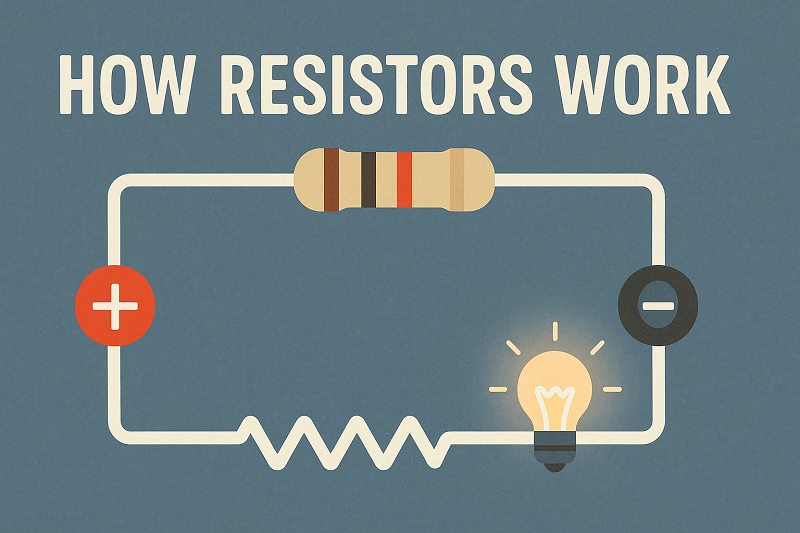
How Resistors Work: From Basic Principles to Advanced Applications2025-07-30
DC Switching Regulators: Principles, Selection, and Applications2025-05-30
FPGA vs CPLD: In-depth Analysis of Architecture, Performance and Application2025-05-07
MOSFET Technology: Essential Guide to Working Principles & Applications2025-05-04
SMD Resistor: Types, Applications, and Selection Guide2025-04-30