Phone

    00852-6915 1330

The Kynix Blog

Stay Ahead with Expert Electronics Insights,
Industry Trends, and Innovative Tips

News Room

Secure passwords can be sent through your body, instead of air

Sending a password or secret code over airborne radio waves like WiFi or Bluetooth means anyone can eavesdrop, making those transmissions vulnerable to hackers who can attempt to break the encrypted code.Now, University of Washington computer scientists and electrical engineers have devised a way to send secure passwords through the human body—using benign, low-frequency transmissions generated by fingerprint sensors and touchpads on consumer devices."Fingerprint sensors have so far been used as an input device. What is cool is that we've shown for the first time that fingerprint sensors can be re-purposed to send out information that is confined to the body," said senior author Shyam Gollakota, UW assistant professor of computer science and engineering.These "on-body" transmissions offer a more secure way to transmit authenticating information between devices that touch parts of your body—such as a smart door lock or wearable medical device—and a phone or device that confirms your identity by asking you to type in a password.This new technique, which leverages the signals already generated by fingerprint sensors on smartphones and laptop touchpads to transmit data in new ways, is described in a paper presented in September at the 2016 Association for Computing Machinery's International Joint Conference on Pervasive and Ubiquitous Computing (UbiComp 2016) in Germany."Let's say I want to open a door using an electronic smart lock," said co-lead author Merhdad Hessar, a UW electrical engineering doctoral student. "I can touch the doorknob and touch the fingerprint sensor on my phone and transmit my secret credentials through my body to open the door, without leaking that personal information over the air."The research team tested the technique on iPhone and other fingerprint sensors, as well as Lenovo laptop trackpads and the Adafruit capacitive touchpad. In tests with 10 different subjects, they were able to generate usable on-body transmissions on people of different heights, weights and body types. The system also worked when subjects were in motion—including while they walked and moved their arms."We showed that it works in different postures like standing, sitting and sleeping," said co-lead author Vikram Iyer, a UW electrical engineering doctoral student. "We can also get a strong signal throughout your body. The receivers can be anywhere—on your leg, chest, hands—and still work."The research team from the UW's Networks and Mobile Systems Lab systematically analyzed smartphone sensors to understand which of them generates low-frequency transmissions below 30 megahertz that travel well through the human body but don't propagate over the air.The researchers found that fingerprint sensors and touchpads generate signals in the 2 to 10 megahertz range and employ capacitive coupling to sense where your finger is in space, and to identify the ridges and valleys that form unique fingerprint patterns.Normally, sensors use these signals to receive input about your finger. But the UW engineers devised a way to use these signals as output that corresponds to data contained in a password or access code. When entered on a smartphone, data that authenticates your identity can travel securely through your body to a receiver embedded in a device that needs to confirm who you are.Their process employs a sequence of finger scans to encode and transmit data. Performing a finger scan correlates to a 1-bit of digital data and not performing the scan correlates to a 0-bit.The technology could also be useful for secure key transmissions to medical devices such as glucose monitors or insulin pumps, which seek to confirm someone's identity before sending or sharing data.The team achieved bit rates of 50 bits per second on laptop touchpads and 25 bits per second with fingerprint sensors—fast enough to send a simple password or numerical code through the body and to a receiver within seconds.This represents only a first step, the researchers say. Data can be transmitted through the body even faster if fingerprint sensor manufacturers provide more access to their software.Reference:HMR3400HMC6343HMR3000-D00-232HMR2300-D00-485 
kynix On 2016-11-03   152
Transistors

Ultralow power transistors could function without a battery for years

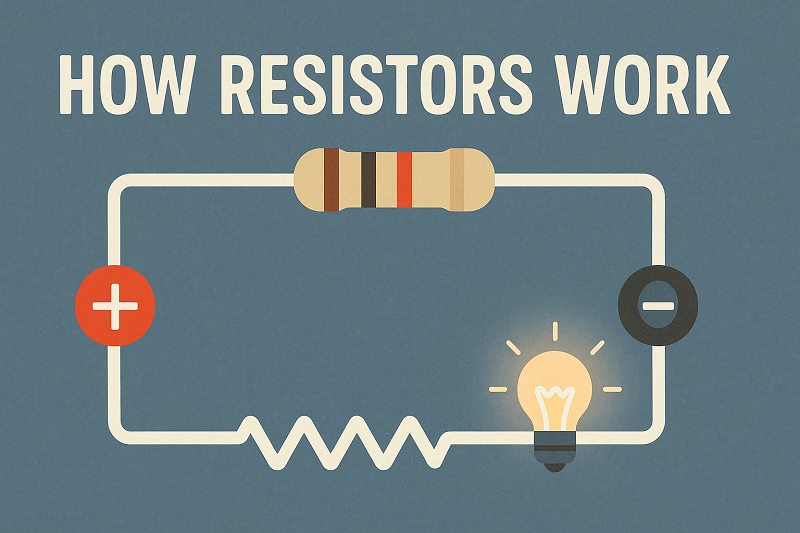
A newly-developed form of transistor opens up a range of new electronic applications including wearable or implantable devices by drastically reducing the amount of power used. Devices based on this type of ultralow power transistor, developed by engineers at the University of Cambridge, could function for months or even years without a battery by 'scavenging' energy from their environment.Using a similar principle to a computer in sleep mode, the new transistor harnesses a tiny 'leakage' of electrical current, known as a near-off-state current, for its operations. This leak, like water dripping from a faulty tap, is a characteristic of all transistors, but this is the first time that it has been effectively captured and used functionally. The results, reported in the journal Science, open up new avenues for system design for the Internet of Things, in which most of the things we interact with every day are connected to the Internet.The transistors can be produced at low temperatures and can be printed on almost any material, from glass and plastic to polyester and paper. They are based on a unique geometry which uses a 'non-desirable' characteristic, namely the point of contact between the metal and semiconducting components of a transistor, a so-called 'Schottky barrier.'"We're challenging conventional perception of how a transistor should be," said Professor Arokia Nathan of Cambridge's Department of Engineering, the paper's co-author. "We've found that these Schottky barriers, which most engineers try to avoid, actually have the ideal characteristics for the type of ultralow power applications we're looking at, such as wearable or implantable electronics for health monitoring."The new design gets around one of the main issues preventing the development of ultralow power transistors, namely the ability to produce them at very small sizes. As transistors get smaller, their two electrodes start to influence the behaviour of one another, and the voltages spread, meaning that below a certain size, transistors fail to function as desired. By changing the design of the transistors, the Cambridge researchers were able to use the Schottky barriers to keep the electrodes independent from one another, so that the transistors can be scaled down to very small geometries.The design also achieves a very high level of gain, or signal amplification. The transistor's operating voltage is less than a volt, with power consumption below a billionth of a watt. This ultralow power consumption makes them most suitable for applications where function is more important than speed, which is the essence of the Internet of Things."If we were to draw energy from a typical AA battery based on this design, it would last for a billion years," said Dr Sungsik Lee, the paper's first author, also from the Department of Engineering. "Using the Schottky barrier allows us to keep the electrodes from interfering with each other in order to amplify the amplitude of the signal even at the state where the transistor is almost switched off.""This will bring about a new design model for ultralow power sensor interfaces and analogue signal processing in wearable and implantable devices, all of which are critical for the Internet of Things," said Nathan.Reference:2SA19872sb1647FJA4213RTU  
kynix On 2016-11-02   220
Memory

Flexible memory device is inspired by the brain

Last March, the AI program AlphaGo beat Korean Go champion LEE Se-Dol at the Asian board game. "The game was quite tight, but AlphaGo used 1200 CPUs and 56,000 watts per hour, while Lee used only 20 W. If a hardware that mimics the human brain structure is developed, we can operate artificial intelligence with less power," points out Professor YU Woo Jong.In collaboration with Sungkyunkwan University, researchers from the Center for Integrated Nanostructure Physics within the Institute for Basic Science (IBS), have devised a new memory device inspired by the neuron connections of the human brain.The research, published in Nature Communications, highlights the devise's highly reliable performance, long retention time and endurance. Moreover, its stretchability and flexibility makes it a promising tool for next-gen soft electronics attached to clothes or body.The brain is able to learn and memorise thanks to a huge number of connections between neurons. The information you memorise is transmitted through synapses from one neuron to the next as an electro-chemical signal.Inspired by these connections, IBS scientists constructed a memory called two-terminal tunnelling random access memory (TRAM), where two electrodes, referred to as drain and source, resemble the two communicating neurons of the synapse.While mainstream mobile electronics, like digital cameras and mobile phones use the so-called three-terminal flash memory, the advantage of two-terminal memories like TRAM is that two-terminal memories do not need a thick and rigid oxide layer."Flash memory is still more reliable and has better performance, but TRAM is more flexible and can be scalable," explains Professor Yu.TRAM is made up of a stack of one-atom-thick or a few atom-thick 2D crystal layers: One layer of the semiconductor molybdenum disulfide (MoS2) with two electrodes (drain and source), an insulating layer of hexagonal boron nitride (h-BN) and a graphene layer.In simple terms, memory is created (logical-0), read and erased (logical-1) by the flowing of charges through these layers. TRAM stores data by keeping electrons on its graphene layer. By applying different voltages between the electrodes, electrons flow from the drain to the graphene layer tunnelling through the insulating h-BN layer.The graphene layer becomes negatively charged and memory is written and stored and vice versa, when positive charges are introduced in the graphene layer, memory is erased.IBS scientists carefully selected the thickness of the insulating h-BN layer as they found that a thickness of 7.5 nm allows the electrons to tunnel from the drain electrode to the graphene layer without leakages and without losing flexibility.Flexibility and stretchability are indeed two key features of TRAM. When TRAM was fabricated on flexible plastic (PET) and stretachable silicone materials (PDMS), it could be strained up to 0.5% and 20%, respectively.In the future, TRAM can be useful to save data from flexible or wearable smartphones, eye cameras, smart surgical gloves, and body-attachable biomedical devices.Last but not least, TRAM has better performance than other types of two-terminal memories known as phase-change random-access memory (PRAM) and resistive random-access memory (RRAM).Reference:MT16JTF51264AZ-1G6M1MD2202-D192MD2203-D576
kynix On 2016-11-02   222
News Room

Sensor material enables sensitive readings of biological signals

cientists have created a material that could make reading biological signals, from heartbeats to brainwaves, much more sensitive. Organic electrochemical transistors (OECTs) are designed to measure signals created by electrical impulses in the body, such as heartbeats or brainwaves. However, they are currently only able to measure certain signals.Now researchers led by a team from Imperial College London have created a material that measures signals in a different way to traditional OECTs that they believe could be used in complementary circuits, paving the way for new biological sensor technologies.Semiconducting materials can conduct electronic signals, carried by either electrons or their positively charged counterparts, called holes. Holes in this sense are the absence of electrons - the spaces within atoms that can be filled by them.Electrons can be passed between atoms but so can holes. Materials that use primarily hole-driven transport are called 'p-type' materials, and those that use primarily electron-driven transport are called, and 'n-type' materials.An 'ambipolar' material is the combination of both types, allowing the transport of holes and electrons within the same material, leading to potentially more sensitive devices. However, it has not previously been possible to create ambipolar materials that work in the body.The current most sensitive OECTs use a material where only holes are transported. Electron transport in these devices however has not been possible, since n-type materials readily break down in water-based environments like the human body.But in research published today in Nature Communications, the team have demonstrated the first ambipolar OECT that can conduct electrons as well as holes with high stability in water-based solutions.The team overcame the seemingly inherent instability of n-type materials in water by designing new structures that prevent electrons from engaging in side-reactions, which would otherwise degrade the device.These new devices can detect positively charged sodium and potassium ions, important for neuron activities in the body, particularly in the brain. In the future, the team hope to be able to create materials tuned to detect particular ions, allowing ion-specific signals to be detected.Lead author Alexander Giovannitti, a PhD student under the supervision of Professor Iain McCulloch, from the Department of Chemistry and Centre for Plastic Electronics at Imperial said:"Proving that an n-type organic electrochemical transistor can operate in water paves the way for new sensor electronics with improved sensitivity. "It will also allow new applications, particularly in the sensing of biologically important positive ions, which are not feasible with current devices. For example, these materials might be able to detect abnormalities in sodium and potassium ion concentrations in the brain, responsible for neuron diseases such as epilepsy." Reference:2N3811DMA204020RDMMT5551S-7-F 
kynix On 2016-11-01   145
News Room

Transparent sensors for imaging the brain

when University of Wisconsin–Madison engineers announced in the journal Nature Communications that they had developed transparent sensors for use in imaging the brain, researchers around the world took notice. Then the requests came flooding in. “So many research groups started asking us for these devices that we couldn’t keep up,” says Zhenqiang (Jack) Ma, the Lynn H. Matthias Professor and Vilas Distinguished Achievement Professor in electrical and computer engineering at UW–Madison.Ma’s group is a world leader in developing revolutionary flexible electronic devices. The see-through, implantable micro-electrode arrays were light years beyond anything ever created.Although he and collaborator Justin Williams, the Vilas Distinguished Achievement Professor in biomedical engineering and neurological surgery at UW–Madison, patented the technology through the Wisconsin Alumni Research Foundation, they saw its potential for advancements in research.“That little step has already resulted in an explosion of research in this field,” says Williams. “We didn’t want to keep this technology in our lab. We wanted to share it and expand the boundaries of its applications.”As a result, in a paper published in the journal Nature Protocols, the researchers have described in great detail how to fabricate and use transparent graphene neural electrode arrays in applications in electrophysiology, fluorescent microscopy, optical coherence tomography, and optogenetics. “We described how to do these things so we can start working on the next generation,” says Ma.Now, not only are the UW–Madison researchers looking at ways to improve and build upon the technology, they also are seeking to expand its applications from neuroscience into areas such as research of stroke, epilepsy, Parkinson’s disease, cardiac conditions, and many others. And they hope other researchers do the same.“We didn’t want to keep this technology in our lab. We wanted to share it and expand the boundaries of its applications.”“This paper is a gateway for other groups to explore the huge potential from here,” says Ma. “Our technology demonstrates one of the key in vivo applications of graphene. We expect more revolutionary research will follow in this interdisciplinary field.”Funding for the initial research came from the Reliable Neural-Interface Technology program at the U.S. Defense Advanced Research Projects Agency. Other authors on the Nature Protocols paper include Dong-Wook Park, Sarah Brodnick, Jared Ness, Lisa Krugner-Higby, Solomon Mikael, Joseph Novello, Hyungsoo Kim, Dong-Hyun Baek, Jihye Bong, Kyle Swanson and Wendell Lake of UW–Madison; Farid Atry, Seth Frye and Ramin Pashaie of the University of Wisconsin-Milwaukee; Amelia Sandberg of Medtronic PLC Neuromodulation; Thomas Richner of the University of Washington; and Sanitta Thongpang of Mahidol University in Bangkok, Thailand.Reference:ISL29120IROZ-T7ADJD-J823TCS3200D-TR Like this Article? Register to receive updates here 
kynix On 2016-11-01   160
LED

Commercial LED Light is the Best Option for Every Type of Business or Commercial Settings

Application of LED lights is now common in various types of commercial settings. Irrespective of the type of business you own, you will find usage of commercial LED light within the premise. Reason for this is that such lights are of environment friendly type and give appealing look at different settings. Along with this, LED type of lights gives plenty of benefits and applications in different settings, about which experts have discussed here. In Various Mining EndeavorsToday, most of the mining industries are employing LED area light bulbs in wide range of settings because of their ability to provide outstanding strength, exceptional safety and longevity. Even people will find illuminating caverns comprise of LED lights used mainly in spotlights mounted on helmets and almost in every place, where they require usage of lights. Usage in Hospitality SectorHospitality industry is also a key area, where you will find LED lighting types of projects are making their headways. Majority of people have found significant decrease in the overall utility costs. Along with providing plenty of decorative lighting options to users and enhanced life spans, LED bulbs very hardly require replacements leading to reduction in maintenance costs. Application in City SettingsReplacement of only one traffic light with LED equivalent plays significant role to save the city's costing by about 93 percent of the energy consumed previously. Similarly, city authorities may replace lights displaying exit signs and down lights of vehicles with the help of LED down light options available in the market.  In fact, if you consider about commercial signage, you will find that it leads to about 2 percent of the total electrical consumption in different areas of United States every year. On the other side, by using of LEDs, one can expect to save money with a decrease of 80 percent in actual use. Savings obtained in terms of expenditure of energy for any small city may rise quickly to up to the range of six figures. Pay off associated with investments in cost saving yet affordable LED lights require only a period of about 2 to 3 years. Easy Replacement is PossibleBiggest benefit associated with LED bulbs is that design of those products fits perfectly in almost every possible type of light fixtures available in the market. Whether you own canned lighting type of business, traditional lamps or panels of fluorescent lights, you will expect to save many bucks by accommodating a single type of LED bulb. Reference:EB-251LRW5SM-GZHZ-1ABC02LSM670-H2K1-1
kynix On 2016-10-31   166

Kynix

Kynix was founded in 2008, specializing in the electronic components distribution business. We adhere to honesty and ethics as our business philosophy and have gradually established an excellent reputation and credibility in our international business. With the accurate quotation, excellent credit, reasonable price, reliable quality, fast delivery, and authentic service, we have won the praise of the majority of customers.

Follow us

Join our mailing list!

Be the first to know about new products, special offers, and more.

Kynix

  • How to purchase

  • Order
  • Search & Inquiry
  • Shipping & Tracking
  • Payment Methods
  • Contact Us

  • Tel: 00852-6915 1330
  • Email: info@kynix.com
  • Follow Us

authentication

Kynix

© 2008-2026 kynix.com all rights reserved.