The Kynix Blog
Stay Ahead with Expert Electronics Insights,
Industry Trends, and Innovative Tips
- Electronic Components
- News Room
- General electronic semiconductor
- Components Guide
- Sort by
- Robots
- Transmitters
- Capacitors
- IC Chips
- PCBs
- Connectors
- Amplifiers
- Memory
- LED
- Diodes
- Transistors
- Battery
- Oscillators
- Resistors
- Transceiver
- RFID
- FPGA
- Mosfets
- Sensor
- Motors, Solenoids, Driver Boards/Modules
- Relays
- Optoelectronics
- Power
- Transformer
- Fuse
- Thyristor
- potentiometer
- Development Boards
- RF/IF
- Semiconductor Information
- PCB
- transistor
ABOUT KNYIX OverviewKynix Semiconductor HongKong Limited was founded in 2008, which specializes in electronic components distribution business. With an experienced research and development,sales and management team, we have gradually established an excellent reputation and credibility in our international business. As our business philosophy, honesty and ethics are always in the first place when we serve our customers. For the accurate quotation, excellent credit, reasonable price, reliable quality, fast delivery, authentic service, we have won favorable comments of our customers.After years of steady development, Kynix has established good relationships of cooperation with well-known brand agents and manufacturers in Japan, Korea and some western countries (LG,INTEL,Foxconn,etc.). Also we have stable and good supply channels. At the meanwhile, we attach great importance to relationships with everyone in this field, and cherish every opportunity of cooperation and sharing. Company profile Company nameKynix Semiconductor HongKong LimitedYear Established2008Area of BusinessElectronic components distributionAddress of companyFlat 08,4/F Shing Yip Ind Bldg,19,19-21 Shing Yip Street Kwun Tongkowloon Hong KongProductsOptical devices, embedded systems, semiconductors, circuit protection components, passive components, connectors, sensors, etc.ServicesOffering over 60 days after-sales services Development History Kynix’s Advantages ·Our Operation SystemStrong enterprise management system, high intelligent procurement system, super stable order system, strong warehouse management system, professional inspection technology of professional shipment,convenient and efficient delivering system, applicable to PC/mobile devices. We are pleasure to serve for over 9000 clients around the world. We have spend 13 years to meet the needs from our worldwide clients and satisfy them, so we know clearly about the importance of safe delivery, timely after-sales service and intimate service. ·Warehouse ManagementWe strictly comply with the warehouse management rules. By implementing ERP system, we master the warehouse data accurately, which fundamentally ensure the accuracy and unity of actual operation, delivery status and the backend database. At the same time, it further improves the working efficiency and accomplishes the scientific management of the warehouse. Corporate Culture Kynix is constantly committed to constructing a strong corporate culture and sharing its prosperity with all of its employees. Kynix is devoted to carrying out its core corporate culture of “honesty, efficiency and reliability”, adhering to the development concept of its quality culture under the theme of human-nurturing before goods-building and earnestness, etc. Close cooperation among departments plays a key role in a company’s operation. To ensure that all of our customers can get reliable and efficient service promptly, Kynix sales department always pays high attention to each RFQ sent by our customers and proceeds it in the first place. Our purchasing department is responsible for goods purchasing and quality assurance. Every staff in Kynix is trying their best to do their jobs well, which makes our company better and better. Customers’ Reviews With the good cooperation, Kynix won a lot of praise from our customers. Follows are some reviews from them. “Both price and goods is suitable for my design! The seller’s service is really good! Anyway, I am indeed content with shopping of this time. Recommending Kynix strongly to everyone who wants to purchase electronic components.”——Nikita Silva “About one year ago I ordered a first shipment of parts from Kynix, so I′m giving a long-therm evaluation here. Kynix in my opinion is a reputable, professional supplier with great pricing, communication, care taking/handling and reassurance that no fake-parts are sold. I am very confident in their service and I′m currently preparing another shipment of same size......”——Florian Poeschko “Great seller, the best service.Very pleasant to deal business with such company.”——Crystal Ling “I placed a trial order in Kynix Semiconductor’s website, and I received the parts.They are all good and well packaged. The service is also excellent. I think I will but again!”——Madele “This is my second order. I got an excellent service and the delivery is very fast. I am very satisfied. Thank you.”——Gustavo “I am a regular customer of Kynix Semiconductor. After years of purchasing components here, I have to say these good points about it. And these are the reason why I want to recommend Kynix if you want to buy components for your design. Items: Standard, hard-to-get and long obsolete components like - Transistors (e.g. Sanyo 2SK44, Fairchild FQPF11P06) - Diodes (e.g. Rohm 1S2473, Toshiba 1S1588) - Integrated circuits (e.g. National Semiconductors LM308) Quotation: The quotation (pre-buy) was turned around fast, it was accurate and clear (including shipping costs). Several parts needed communication on my behalf with a sales assistant who was able to answer every question I had (e.g. is component definitely from the manufacturer I specified, can I see another picture, etc.). All my necessities we′re met and all components/manufacturers could be found. Pictures were sent for confirmation where needed and matched parts sent. Parts: After working with the parts over the past year I can say they are all of genuine brand/manufacturer and I haven′t yet had a single defective component. Packaging: All parts were sent in sealed soft-bags/hard batch-casings and accurately labelled (part number, manufacturer and amount). Bags can be opened and sealed again which makes them great for both storage and regular use. Shipment: The whole shipment was packed carefully and no damage to any parts. It was delivered faster as expected and customs were taken care of hassle-free. The cost was very reasonable. Pricing: The pricing was excellent especially with greater amounts which was why I could purchase a greater amount for surplus (In some instances several hundreds of them.) I feel really good with their good quality and excellent service. Hope this evaluation can help you!”——Pinellis Sam Kynix’s ProspectIn 2015, Kynix Semiconductor’s annual value of production had reached $50 million. And our partners in electronics field increased to 700 in 2016. Now the Chinese version of Kynix website is moving ahead and will be launched soon. ContactIf you want to know more about Kynix Semiconductor and our products, please view our website! Or you can contact us through our email: info@kynix.com. Come and buy good products at lower price from us!
kynix On 2017-09-13

Three fingers on a new soft robotic gripper each have specialized sensors that can estimate the size and shape of an object accurately enough to identify it from a set of multiple items. Robots have many strong suits, but delicacy traditionally hasn't been one of them. Rigid limbs and digits make it difficult for them to grasp, hold, and manipulate a range of everyday objects without dropping or crushing them. Recently, researchers from MIT's Computer Science and Artificial Intelligence Laboratory (CSAIL) have discovered that the solution may be to turn to a substance more commonly associated with new buildings and Silly Putty: silicone. At a conference this month, researchers from CSAIL Director Daniela Rus' Distributed Robotics Lab demonstrated a 3-D-printed robotic hand made out of silicone rubber that can lift and handle objects as delicate as an egg and as thin as a compact disc. Just as impressively, its three fingers have special sensors that can estimate the size and shape of an object accurately enough to identify it from a set of multiple items. "Robots are often limited in what they can do because of how hard it is to interact with objects of different sizes and materials," Rus says. "Grasping is an important step in being able to do useful tasks; with this work we set out to develop both the soft hands and the supporting control and planning systems that make dynamic grasping possible." The paper, which was co-written by Rus and graduate student Bianca Homberg, PhD candidate Robert Katzschmann, and postdoc Mehmet Dogar, will be presented at this month's International Conference on Intelligent Robots and Systems. The hard science of soft robots The gripper, which can also pick up such items as a tennis ball, a Rubik's cube and a Beanie Baby, is part of a larger body of work out of Rus' lab at CSAIL aimed at showing the value of so-called "soft robots" made of unconventional materials such as silicone, paper, and fiber. Researchers say that soft robots have a number of advantages over "hard" robots, including the ability to handle irregularly-shaped objects, squeeze into tight spaces, and readily recover from collisions. "A robot with rigid hands will have much more trouble with tasks like picking up an object," Homberg says. "This is because it has to have a good model of the object and spend a lot of time thinking about precisely how it will perform the grasp." Soft robots represent an intriguing new alternative. However, one downside to their extra flexibility (or "compliance") is that they often have difficulty accurately measuring where an object is, or even if they have successfully picked it up at all. That's where the CSAIL team's "bend sensors" come in. When the gripper hones in an object, the fingers send back location data based on their curvature. Using this data, the robot can pick up an unknown object and compare it to the existing clusters of data points that represent past objects. With just three data points from a single grasp, the robot's algorithms can distinguish between objects as similar in size as a cup and a lemonade bottle. "As a human, if you're blindfolded and you pick something up, you can feel it and still understand what it is," says Katzschmann. "We want to develop a similar skill in robots—essentially, giving them 'sight' without them actually being able to see." The team is hopeful that, with further sensor advances, the system could eventually identify dozens of distinct objects, and be programmed to interact with them differently depending on their size, shape, and function. How it works(“We want to ... give robots‘sight’ without them actually being able to see,” says MIT grad student Robert Katzschmann. ) Researchers control the gripper via a series of pistons that push pressurized air through the silicone fingers. The pistons cause little bubbles to expand in the fingers, spurring them to stretch and bend. The hand can grip using two types of grasps: "enveloping grasps," where the object is entirely contained within the gripper, and "pinch grasps," where the object is held by the tips of the fingers. Outfitted for the popular Baxter manufacturing robot, the gripper significantly outperformed Baxter's default gripper, which was unable to pick up a CD or piece of paper and was prone to completely crushing items like a soda can. Like Rus' previous robotic arm, the fingers are made of silicone rubber, which was chosen because of its qualities of being both relatively stiff, but also flexible enough to expand with the pressure from the pistons. Meanwhile, the gripper's interface and exterior finger-molds are 3-D-printed, which means the system will work on virtually any robotic platform. In the future, Rus says the team plans to put more time into improving and adding more sensors that will allow the gripper to identify a wider variety of objects. "If we want robots in human-centered environments, they need to be more adaptive and able to interact with objects whose shape and placement are not precisely known," Rus says. "Our dream is to develop a robot that, like a human, can approach an unknown object, big or small, determine its approximate shape and size, and figure out how to interface with it in one seamless motion." Ref.KY45-TSL1401CLKY45-11242-11
kynix On 2017-09-12
(A test sample comprised of a thermal chip, a heat spreader and a microcooler demonstrates the efficiency of diamond for removing heat from hotspots in semiconductor electronics.) Powerful electronic components can get very hot. When many components are combined into a single semiconductor chip, heating can become a real problem. An overheating electronic component wastes energy and is at risk of behaving unpredictably or failing altogether. Consequently, thermal management is a vital design consideration. This becomes particularly important in devices made from gallium nitride. "Gallium nitride is capable of handling high voltages, and can enable higher power capability and very large bandwidth," says Yong Han from the A*STAR Institute of Microelectronics. "But in a gallium nitride transistor chip, the heat concentrates on tiny areas, forming several hotspots." This exacerbates the heating problem. Han and co-workers demonstrate both experimentally and numerically that a layer of diamond can spread heat and improve the thermal performance of gallium nitride devices. The researchers created a thermal test chip that contained eight tiny hotspots, each 0.45 by 0.3 millimeters in size, to generate the heat created in actual devices. They bonded this chip to a layer of high quality diamond fabricated using a technique called chemical vapor deposition. The diamond heat spreader and test chip were connected using a thermal compression bonding process. This was then connected to a microcooler, a device consisting of a series of micrometer-wide channels and a micro-jet impingement array. Water impinges on the heat source wall, and then passes through the micro-channels to remove the heat and keep the structure cool. Han and the team tried their device by generating 10–120 Watts of heating power in test chips of 100 and 200-micrometer thickness. To dissipate the heating power, the diamond heat spreading layer and microcooler helped maintain the structure at a temperature below 160 degrees Celsius. In fact, the maximum chip temperature was 27.3 per cent lower than another device using copper as the heat spreading layer, and over 40 per cent lower than in a device with no spreading layer. The experimental results were further confirmed by thermal simulations. The simulations also indicated that the performance could be improved further by increasing the thickness of the diamond layer, and that good bonding quality between the gallium nitride chip and the diamond heat spreader was crucial to obtain the best performance. "We next hope to develop a novel micro-fluid cooler of higher and more uniform cooling capability, and to achieve thermal management using a diamond layer of high thermal conductivity near an electronic gate," says Han. Ref.KY56-MJL4302AKY56-PZTA06KY56-FZT958TA
kynix On 2017-09-11
The world's most precise clock has been fine-tuned to boost radar and GPS capabilities.The Cryogenic Sapphire Oscillator, or Sapphire Clock, has been enhanced by researchers from the University of Adelaide in South Australia to achieve near attosecond capability. The oscillator is 10-1000 times more stable than competing technology and allows users to take ultra-high precision measurements to improve the performance of electronic systems. Increased time precision is an integral part of radar technology and quantum computing, which have previously relied on the stability of quartz oscillators as well as atomic clocks such as the Hydrogen Maser. Atomic clocks are the gold-standard in time keeping for long-term stability over months and years. However, electronic systems need short-term stability over a second to control today's devices. The new Sapphire Clock has a short-term stability of better than 1x10-15, which is equivalent to only losing or gaining one second every 40 million years, 100 times better than commercial atomic clocks over a second. The original Sapphire Clock was developed by Professor Andre Luiten in 1989 in Western Australia before the team moved to South Australia to continue developing the device at the University of Adelaide. Lead researcher Martin O'Connor said the development group was in the process of modifying the device to meet the needs of various industries including defence, quantum computing and radio astronomy. The 100cm x 40cm x 40cm clock uses the natural resonance frequency of a synthetic sapphire crystal to maintain a steady oscillator signal.Associate Professor O'Connor said the machine could be reduced to 60 per cent of its size without losing much of its capability."Our technology is so far ahead of the game, it is now the time to transfer it into a commercial product," he said. "We can now tailor the oscillator to the application of our customers by reducing its size, weight and power consumption but it is still beyond current electronic systems." The Sapphire Clock, also known as a microwave oscillator, has a 5 cm cylinder-shaped crystal that is cooled to -269C. Microwave radiation is constantly propagating around the crystal with a natural resonance. The concept was first discovered by Lord Rayleigh in 1878 when he could hear someone whispering far away on the other side of the church dome at St Paul's Cathedral. The clock then uses small probes to pick up the faint resonance and amplifies it back to produce a pure frequency with near attosecond performance."An atomic clock uses an electronic transition between two energy levels of an atom as a frequency standard," Associate Professor O'Connor said."The atomic clock is what is commonly used in GPS satellites and in other quantum computing and astronomy applications but our clock is set to disrupt these current applications." The lab-based version already has an existing customer in the Defence Science and Technology Group (DST Group) in Adelaide, but Associate Professor O'Connor said the research group was also looking for more clients and was in discussion with a number of different industry groups. The research group is taking part in the Commonwealth Scientific and Industrial Research Organisation's (CSIRO's) On Prime pre-accelerator program, which helps teams identify customer segments and build business plans. Ref.KY45-E3X-DA6KY163-TX179
kynix On 2017-09-08
There are a number of hot new technologies on the forefront of online and offline retail including machine learning, the Internet of Things (IoT) and Blockchain, the information-sharing technology behind Bitcoin.We have written a bit lately about machine learning because it perhaps has the highest “world-changing” potential. But the IoT – especially when it comes to radio frequency identification (RFID) – also has huge potential to transform any retail operation.RFID has been around for many years and has been adopted by a range of retailers including Walmart, Macy’s and Amazon. The way it works is simply that each product is given a radio frequency ID tag and that tag has its own unique magnetic signature. That signature is picked up by a receiver or “RFID reader” that not only records the unique ID, but also the location of the tagged product. RFID is also the same technology that you see on new tap-and-go credit cards. Because the tags are read magnetically, it is a more efficient system than a typical visual scanning system because the tag and the reader do not need to be line-of-site to communicate. Therefore, the immediate benefit for an RFID-based system is that a typical retailer can reduce the time required to take a typical physical inventory by something like 90 percent. In other words, if it took 3 days to take an inventory using barcode scanning, that same inventory would take 45 minutes using RFID. RFID also increases accuracy substantially. Usually manual-scanned physical inventory has a 4 percent inaccuracy rate. And that number is compounded throughout the year, so cycle counts done throughout the fiscal year can reach more than 60 percent inaccuracy by the holiday selling season. Conversely, RFID typically has less than a 0.5 percent inaccuracy rate, meaning that inventory is much more accurate throughout the year.Here are some more innovative uses for RFID: Adhering To The Master Merchandising Plan Most chain retail stores have their own planogram, designating where each product should go in the store. However, the more stores that a retail chain operates, the harder it is to get each store to execute the central buyer’s merchandise plan precisely. With enough readers placed in strategic locations throughout the store, most merchandise can be tracked within a very small area. This means that the central buyer can get a report of all of the misplaced merchandise in each store. This means that if a cellphone accessory is mistakenly placed in the video game section, it will show up on a report and can be immediately remedied in the field. In addition, oftentimes products remain in the stockroom when in fact they should be out on the floor. A solid RFID system will be able to detect whether or not items are still in the backroom, where they probably won’t sell well. Inventory Accuracy – Improving Click & CollectMost retailers have an omnichannel strategy – meaning that customers can buy online and then pick up their orders in the store. Of course, this kind of click-and-collect strategy is predicated upon the accuracy of the inventory count in each store. In other words, if the system says that there are two units of a certain SKU in a particular store, but actually there is an inaccuracy and there are zero, they will deliver a terrible customer experience when the customer shows up at the store only to find out that the product is not there. The far better accuracy of RFID will allow retailers to have a much greater confidence level that the product is actually in the place that the system says it is. Understanding the Store’s Hot SpotsAnother benefit of RFID is that there is a record of where products are displayed in a store. And that record can be overlaid with sales data so that we understand what specific displays and traffic areas within the store deliver the most sales. Of course, different spots within a particular store may work better with some products than they do with others. RFID technology can also help determine the best possible scenario when considering the SKU type, store type and display area. Fast & Accurate CheckoutOne of the most customer-facing use cases for RFID is being able to pay for the products much more quickly than ever before. With RFID, the cashier does not even need to take the products out of the customer’s basket in order ring them up in the system. The ability to skip the manual scanning process entirely makes a radical difference in wait times, especially during peak periods. In addition, RFID capability at checkout greatly reduces the cash reconciliation error at the register. Detecting Fake Goods: A product’s legitimate manufacturer can embed an RFID tag into the product in a hidden place, allowing a reseller to scan for the signal to prove that the product is authentic. The trickier issue is whether or not the actual RFID tag can be forged, but that is fodder for another discussion. There are more and more companies that can deliver a range of RFID-related products and services, from hardware to full-blown systems.Kynix is one of them. Ref. KY78-A4650KY78-B82450A2364A
kynix On 2017-09-07
(In a new concept for battery cathodes, nanometer-scale particles made of lithium and oxygen compounds (depicted in red and white) are embedded in a sponge-like lattice (yellow) of cobalt oxide, which keeps them stable.) Engineers from MIT propose that a new lithium-oxygen battery material could be packaged in batteries that are very similar to conventional sealed batteries yet provide much more energy for their weight. Lithium-air batteries are considered highly promising technologies for electric cars and portable electronic devices because of their potential for delivering a high energy output in proportion to their weight. But such batteries have some pretty serious drawbacks: They waste much of the injected energy as heat and degrade relatively quickly. They also require expensive extra components to pump oxygen gas in and out, in an open-cell configuration that is very different from conventional sealed batteries But a new variation of the battery chemistry, which could be used in a conventional, fully sealed battery, promises similar theoretical performance as lithium-air batteries while overcoming all of these drawbacks. The new battery concept, called a nanolithia cathode battery, is described in the journal Nature Energy in a paper by Ju Li, the Battelle Energy Alliance Professor of Nuclear Science and Engineering at MIT; postdoc Zhi Zhu; and five others at MIT, Argonne National Laboratory, and Peking University in China. One of the shortcomings of lithium-air batteries, Li explains, is the mismatch between the voltages involved in charging and discharging the batteries. The batteries’ output voltage is more than 1.2 volts lower than the voltage used to charge them, which represents a significant power loss incurred in each charging cycle. “You waste 30 percent of the electrical energy as heat in charging. … It can actually burn if you charge it too fast,” he says. Staying solid Conventional lithium-air batteries draw in oxygen from the outside air to drive a chemical reaction with the battery’s lithium during the discharging cycle, and this oxygen is then released again to the atmosphere during the reverse reaction in the charging cycle. In the new variant, the same kind of electrochemical reactions take place between lithium and oxygen during charging and discharging, but they take place without ever letting the oxygen revert to a gaseous form. Instead, the oxygen stays inside the solid and transforms directly between its three redox states, while bound in the form of three different solid chemical compounds, Li2O, Li2O2, and LiO2, which are mixed together in the form of a glass. This reduces the voltage loss by a factor of five, from 1.2 volts to 0.24 volts, so only 8 percent of the electrical energy is turned to heat. “This means faster charging for cars, as heat removal from the battery pack is less of a safety concern, as well as energy efficiency benefits,” Li says. This approach helps overcome another issue with lithium-air batteries: As the chemical reaction involved in charging and discharging converts oxygen between gaseous and solid forms, the material goes through huge volume changes that can disrupt electrical conduction paths in the structure, severely limiting its lifetime. The secret to the new formulation is creating minuscule particles, at the nanometer scale (billionths of a meter), which contain both the lithium and the oxygen in the form of a glass, confined tightly within a matrix of cobalt oxide. The researchers refer to these particles as nanolithia. In this form, the transitions between LiO2, Li2O2, and Li2O can take place entirely inside the solid material, he says. The nanolithia particles would normally be very unstable, so the researchers embedded them within the cobalt oxide matrix, a sponge-like material with pores just a few nanometers across. The matrix stabilizes the particles and also acts as a catalyst for their transformations. Conventional lithium-air batteries, Li explains, are “really lithium-dry oxygen batteries, because they really can’t handle moisture or carbon dioxide,” so these have to be carefully scrubbed from the incoming air that feeds the batteries. “You need large auxiliary systems to remove the carbon dioxide and water, and it’s very hard to do this.” But the new battery, which never needs to draw in any outside air, circumvents this issue. No overcharging The new battery is also inherently protected from overcharging, the team says, because the chemical reaction, in this case, is naturally self-limiting — when overcharged, the reaction shifts to a different form that prevents further activity. “With a typical battery, if you overcharge it, it can cause irreversible structural damage or even explode,” Li says. But with the nanolithia battery, “we have overcharged the battery for 15 days, to a hundred times its capacity, but there was no damage at all.” In cycling tests, a lab version of the new battery was put through 120 charging-discharging cycles, and showed less than a 2 percent loss of capacity, indicating that such batteries could have a long useful lifetime. And because such batteries could be installed and operated just like conventional solid lithium-ion batteries, without any of the auxiliary components needed for a lithium-air battery, they could be easily adapted to existing installations or conventional battery pack designs for cars, electronics, or even grid-scale power storage. Because these “solid oxygen” cathodes are much lighter than conventional lithium-ion battery cathodes, the new design could store as much as double the amount of energy for a given cathode weight, the team says. And with further refinement of the design, Li says, the new batteries could ultimately double that capacity again. All of this is accomplished without adding any expensive components or materials, according to Li. The carbonate they use as the liquid electrolyte in this battery “is the cheapest kind” of electrolyte, he says. And the cobalt oxide component weighs less than 50 percent of the nanolithia component. Overall, the new battery system is “very scalable, cheap, and much safer” than lithium-air batteries, Li says. The team expects to move from this lab-scale proof of concept to a practical prototype within about a year. “This is a foundational breakthrough, which may shift the paradigm of oxygen-based batteries,” says Xiulei Ji, an assistant professor of chemistry at Oregon State University, who was not involved in this work. “In this system, commercial carbonate-based electrolyte works very well with solvated superoxide shuttles, which is quite impressive and may have to do with the lack of any gaseous O2 in this sealed system. All active masses of the cathode throughout cycling are solid, which presents not only large energy density but compatibility with the current battery manufacturing infrastructure.” The research team included MIT research scientists Akihiro Kushima and Zongyou Yin; Lu Qi of Peking University; and Khalil Amine and Jun Lu of Argonne National Laboratory in Illinois. The work was supported by the National Science Foundation and the U.S. Department of Energy. Ref.KY605-CR2025VPKY605-NH12VP
kynix On 2017-09-06
Join our mailing list!
Be the first to know about new products, special offers, and more.
Feature Posts
How Resistors Work: From Basic Principles to Advanced Applications2025-07-30
DC Switching Regulators: Principles, Selection, and Applications2025-05-30
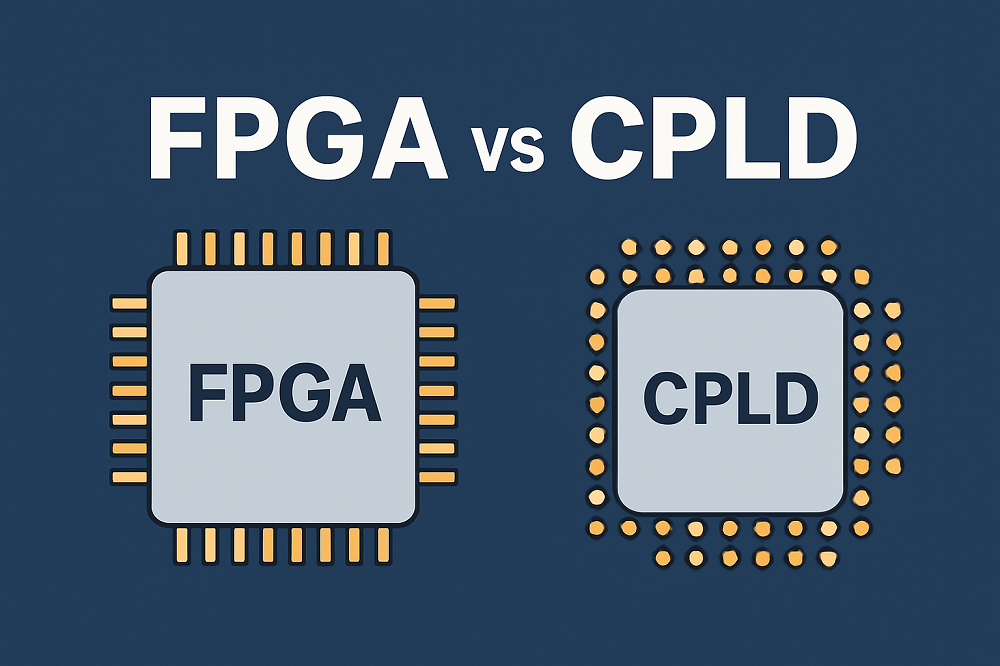
FPGA vs CPLD: In-depth Analysis of Architecture, Performance and Application2025-05-07
MOSFET Technology: Essential Guide to Working Principles & Applications2025-05-04
SMD Resistor: Types, Applications, and Selection Guide2025-04-30