Phone

    00852-6915 1330

The Kynix Blog

Stay Ahead with Expert Electronics Insights,
Industry Trends, and Innovative Tips

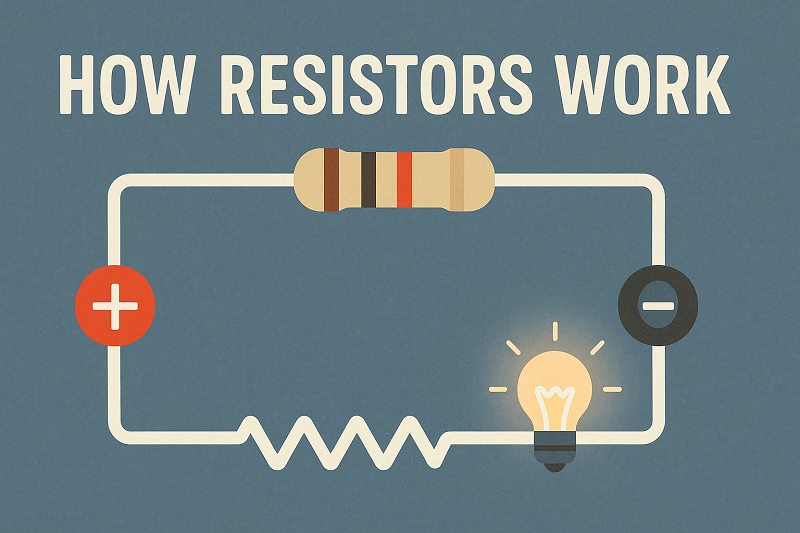
Resistors

How 555 Timers Work? Circuit Modes Analysis

IntroductionFor people who have been in touch with digital circuits or analog circuits, the 555 IC is definitely classic work. With its low cost and reliable performance, it is widely used in various electrical appliances, including instruments and meters, household appliances, electric toys, and automatic control. The 555 timer only needs a few external resistors and capacitors to realize pulse generation and conversion circuits, such as multiple oscillators, monostable triggers and schmitt triggers. So how does it work in the circuit? What the role of its circuit? Here gives several typical 555 circuit examples for specific analysis.555 Timers Circuit LearningCatalogIntroductionⅠ Basic 555 Timer Circuit AnalysisⅡ 555 Multivibrator Circuit AnalysisⅢ 555 Timer Monostable Flip Flop Circuit AnalysisⅣ Classic 555 Timer Circuits DiagramsⅤ 555 Timer IC ModesⅠ Basic 555 Timer Circuit Analysis555 Means What?555 timer is a convenient and powerful IC, which is widely used in signal generation, conversion, control and detection. The origin of this name, because it is divided by three 5KΩ resistors. The 555 timer is a simple integrated circuit that can be used to make many different electronic circuits. With the following circuits analysis you will know how 555 IC works.Figure 1. Basic 555 Timer Circuit✔️ Circuit AnalysisR is not the reset terminal, when set to 0, Q is 0,  is 1, Uo outputs 0, and is 1 added to the base of the transistor T, the transistor is in the conducting state.① When R=0, Q=1, uo=0, T is saturated and turned on.② When R=1 (there is no reset function at this time):UTH>2VCC/3, UTR>VCC/3, C1=0, C2=1, Q=1 or =0, uo=0, T is saturated and turned on. (Analysis: C1's positive input terminal is 2VCC/3, C1's negative input UTH terminal is greater than the positive input terminal, working in saturation, and output 0. C2's negative input terminal is 1VCC/3, which is smaller than the positive input Terminal UTH, and outputs 1. There is a horizontal line above RD and SD, which means low level, meaning is Reset. C1 outputs 0, RD is valid, then Q is 0, not 1, Uo outputs 0, and is not acting on the base of the triode.)③ When R=1, UTH<2VCC/3, UTR>VCC/3, C1=1, C2=1, Q and remain unchanged, uo and T remain unchanged. (Analysis is the same as above)④ When R=1, UTH<2VCC/3, UTR<VCC/3, C1=1, C2=0, Q=0, =1, uo=1, T is cut off. (Analysis is the same as above) Learn how the inputs interact with the supply voltage to trigger and reset the output high and low. Find out which pins can be used to adjust the threshold at which that change happens.Ⅱ 555 Multivibrator Circuit AnalysisFigure 2. 555 Multivibrator Circuit Analysis Figure 3. 555 Multivibrator Circuit Example✔️ Circuit Analysis First, the power supply VCC charges the capacitor C through R1 and R2, and the voltage of the capacitor must be relatively small, less than 1VCC/3. Similarly, the positive terminal of C1 is 2VCC/3, the negative terminal of C2 is 1VCC/3, and the TH and TR terminals are connected At the same time, it is less than 1VCC/3 at the beginning. At this time, C1 outputs 1, C2 outputs 0, and the set terminal is valid (with detailed confirmation): Q is 1, is not 0, and uo is 1, the transistor is cut off, and outputs high level. At this time, the power supply is still charging the capacitor. When the TH and TR terminals are connected together, the voltage is less than 2VCC/3 and greater than 1VCC/3; C1 outputs 1, C2 outputs 1, the transistor is cut off, and uo is 1. When the capacitor is greater than 2VCC/3, C1 outputs 0 and C2 outputs 1. At this time, Q is 0, is not 1, uo is 0, the output is low, and the transistor is turned on. The capacitor will be discharged through pin 7. After this, the voltage at the point where TH and TR connected will gradually decrease, less than 2VCC/3 and greater than 1VCC/3, and then it will be less than 1VCC/3, to form a harmonic oscillator.The pulse width tp1 of the first transient state, that is, the time required for uc to rise from VCC/3 charging to 2VCC/3 (charged through two resistors):The second transient state pulse width tp2, that is, the time required for uc to discharge from 2VCC/3 to VCC/3:Duty cycle: the time that the high level occupies the entire cycle., it can be seen that its duty cycle is always greater than 50%.Examples 1Circuit with Adjustable Duty Cycle (add an adjustable resistor)Figure 4. Circuit with Adjustable Duty Cycle (add an adjustable resistor)It can be calculated:Where T1=0.7R1C (T1 is charging time), T2=0.7R2C (T2 is discharging time)Total time T=T1+T2=0.7(R1+R2)CSo R1, R2, and C are determined, and the period T is also determined.Duty Cycle Calculation Example 2Circuit with Adjustable Duty Cycle (1KHz)Figure 5. Circuit with Adjustable Duty Cycle (1KHz)✔️ Circuit AnalysisT = 0.7(R1+R2)C, f = 1/T, the duty cycle circuit only needs to adjust the resistance value. Ⅲ 555 Timer Monostable Flip Flop Circuit AnalysisWorking Characteristics① It has two different working states: steady state and transient state.② Under the action of an external trigger pulse, it can switch from the steady state to the transient state. After the transient state is maintained for a period of time, the circuit can automatically return to the steady state.③ The transient state cannot be maintained for a long time, and the duration of its sustaining time depends on the parameters of the circuit itself and has nothing to do with the trigger pulse. So what is the principle of a monostable circuit?Figure 6. 555 Timer Monostable Circuit Analysis Figure 7. 555 Timer Monostable Circuit Example✔️ Circuit AnalysisFirst, the TR terminal is at a high level ui, which must be greater than 1VCC/3. At this time, C2 outputs 1, and the power supply charges capacitor C through R. The charging voltage is less than 1VCC/3 (TH), CO voltage is equal to 2VCC/3, C1 outputs 1, and it is in the holding state at this time. Assuming that the non-reset terminal of R is reset before power on, the output of uo is 0, and then the previous state is still maintained and the output is 0 at this time. is 1, the transistor is turned on, the capacitor is discharged through pin 7, and uc is zero level. At a certain moment, ui is low, C1 still outputs 1, C2 outputs 0, Q is 1, is 0, uo outputs 1 (high level), and the transistor has been in the cut-off state. At this time, VCC can charge the capacitor (uc is getting larger). When uc is between 1VCC/3~2VCC/3, assuming that the TR terminal returns to the original state (high level), C1 outputs 1 , C2 outputs 1, at this time uo keeps in original state, it is still 1, and the transistor is in the cut-off state. When uc is greater than 2VCC/3, C2 is still 1, C1 output is 0, Q is 0, is 1, and uo is 0, the transistor is turned on and in a discharging state, at this time, uc is getting smaller and smaller.Summery:1. As long as a low-level trigger signal is given, the temporary stable stay time is the charging time of voltage 0V~ 2Ucc/3 (the time represented by tp).2. Charging time Tp=1.1RC3. It can be used as a timing circuit, and the time can be determined by RC.Example: Timing Circuit Design (1s delay time)Figure 8. 555 Timer Delay Circuit ExampleⅣ Classic 555 Timer Circuits DiagramsThere are A LOT of projects out there using the 555 in various ways and it’s easy to find schematics to make a project that has already been proven. Here lists some typical projects using 555 timer in circuits. Let’s have a look. 🔺 Car Tachometer🔺 SIREN🔺 Flashing Lights🔺 Knight Rider Circuit🔺 Laser Ray🔺 Latch🔺 LED Dimmer🔺 555 Amplifier🔺 Light Detector🔺 Machine Gun🔺 Metal Detector🔺 Motor PWM🔺 Music Box🔺 Zener Diode Tester Ⅴ 555 Timer IC Modes555 timer will use different models in different circuits to meet circuit requirements. Therefore, it has many derivative models produced by different companies with different pin functions, and uses CMOS design. What;s more, some chips include several integrated 555 timers. Some common models of the 555 chip family are as follows:ManufacturerModelRemarksCustom Silicon SolutionsCSS555/CSS555CCMOS chip, minimum working voltage 1.2V, IDD < 5µACEMIULY7855*ECG SemiconductorsECG955MTimer Single Rc-type OscillatorExarXR-555Highly stable controllerFairchildNE555/KA555Time-delay or mono-stableHarrisHA555*IK SemiconILC555CMOS chip, minimum working voltage 2VTexas InstrumentsSE555/NE555*RenesasICM7555CMOS RC timersLithic SystemsLC555Available in Industry's Smallest 8-Bump DSBGAMaximICM7555CMOS RC timers, minimum working voltage 2VMotorolaMC1455/MC1555Monolithic timerNational SemiconductorLM1455/LM555/LM555C*National SemiconductorLMC555CMOS chip, minimum working voltage 1.5VNTE SylvaniaNTE955MAccurate time delaysRaytheonRM555/RC555*RCACA555/CA555C*STMicroelectronicsNE555N/ K3T647*Texas InstrumentsSN52555/SN72555*Texas InstrumentsTLC555CMOS chip, minimum working voltage 2VZetexZSCT1555Precision single cell timerNXPICM7555CMOSHitachi SemiconductorHA17555Accurate time delays or oscillations Frequently Asked Questions about 555 Timer Circuit1. What does a 555 timer do in a circuit?The 555 timer IC is a very cheap, popular and useful precision timing device which can act as either a simple timer to generate single pulses or long time delays, or as a relaxation oscillator producing a string of stabilised waveforms of varying duty cycles from 50 to 100%. 2. How much voltage can a 555 timer take?The standard TTL 555 can operate from a supply voltage between 4.5 volts and 18 volts, with its output voltage approximately 2 volts lower than its supply voltage VCC. The 555 can source or sink a maximum output current of 200mA, (but it may get hot at this level), so the circuit variations are unlimited. 3. What are the modes of operation of a timer?The timer registers can be used in two modes. These modes areTimer mode and the Counter mode. The only difference between these two modes is the source for incrementing the timer registers. 4. What are the basic operation modes of the 555 timer?The operating modes of a 555 timer are astable, bistable and monostable. Each mode of operation signifies with a circuit diagram and its output. 5. What is the maximum frequency of a 555 timer?2MHzaccording to the website, the 555 timer has a maximum frequency of 2MHz.
kynix On 2021-05-21   5392
Diodes

What is A Schottky Diode? Basics of Schottky Diode

When it comes to low-power, high-current, and ultra-high-speed semiconductor devices, many electronics hobbyists or engineers must first think of Schottky diodes (SBD). But do you really know how to use Schottky diodes? Compared with other diodes, what is special about Schottky diodes? This article will answer these questions for you and introduce Schottky diodes in details. This short video gives a brief introduction to Schottky Diode Catalog I. Schottky Diode Brief Introduction II. How does Schottky Diode Work? III. The Structure of Schottky Diode IV. How to Test Schottky Diode? V. Pros and Cons of Schottky Diode VI. Where to Use Schottky Diode? VII. How to Use Schottky Diode Correctly? FAQ I. Brief Introduction to Schottky Diode  Schottky diodes are named after their inventor, Dr. Schottky. The full name is: Schottky RecTIfier Diode (abbreviated as SR), also called: Schottky barrier diode, or SBD.   Schottky diode is a low-power, ultra-high-speed semiconductor device. The most notable feature is its extremely short reverse recovery time (can be as small as a few nanoseconds), and the forward voltage drop is only about 0.4V. It is mostly used as high-frequency, low-voltage, high-current rectifier diodes, freewheeling diodes, protection diodes, and also useful as rectifier diodes and small-signal detector diodes in circuits such as microwave communications. It is more common in communication power supplies, inverters, etc.   A typical application of Schottky diodes is in the switching circuit of a bipolar transistor BJT. By connecting a Shockley diode to the BJT to clamp, the transistor is actually close to the off state when the transistor is on, thereby improving the transistor’s performance. Switching speed. This method is a technique used in the TTL internal circuits of typical digital ICs such as 74LS, 74ALS, and 74AS.   The biggest feature of Schottky diodes is that the forward voltage drop VF is relatively small. In the case of the same current, its forward voltage drop is much smaller. In addition, its recovery time is short. It also has some shortcomings: the withstand voltage is relatively low, and the leakage current is slightly larger. It must be fully considered when selecting. II. How does Schottky Diode Work? Schottky diodes are metal-semiconductor devices made of precious metals (gold, silver, aluminum, platinum, etc.) A as the anode and N-type semiconductor B as the cathode. The barrier formed on the contact surface of the two has rectification characteristics.   Because there are a large number of electrons in N-type semiconductors, and there are only a small amount of free electrons in noble metals, electrons diffuse from the high concentration of B to the low concentration of A. Obviously, there are no holes in metal A, and there is no diffusion movement of holes from A to B.   As electrons continue to diffuse from B to A, the electron concentration on the surface of B gradually decreases, and the electrical neutrality of the surface is destroyed, so a potential barrier is formed, and the direction of the electric field is B→A. But under the action of this electric field, the electrons in A will also produce a drifting movement from A→B, thereby weakening the electric field formed by the diffusion movement.   When a space charge region with a certain width is established, the drifting movement of electrons caused by the electric field and the diffusion movement of electrons caused by different concentrations reach a relative balance, forming a Schottky barrier.   The internal circuit structure of a typical Schottky rectifier is based on an N-type semiconductor, and an N-epitaxial layer with arsenic as a dopant is formed on it. The anode uses materials such as molybdenum or aluminum to make a barrier layer. Use silicon dioxide (SiO2) to eliminate the electric field in the edge area and improve the withstand voltage of the tube.   The N-type substrate has a small on-state resistance, and its doping concentration is 100% higher than that of the H-layer. An N+ cathode layer is formed under the substrate, and its function is to reduce the contact resistance of the cathode. By adjusting the structural parameters, a Schottky barrier is formed between the N-type substrate and the anode metal.   When a forward bias is applied to both ends of the Schottky barrier (the anode metal is connected to the positive pole of the power supply, and the N-type substrate is connected to the negative pole of the power supply), the Schottky barrier layer becomes narrower and its internal resistance becomes smaller; on the contrary, if When reverse bias is applied to both ends of the Schottky barrier, the Schottky barrier layer becomes wider and its internal resistance becomes larger.   In summary, the structure principle of Schottky rectifier is very different from PN junction rectifier. The PN junction rectifier is usually called the junction rectifier, and the metal-semi-conductor rectifier is called the Schottky rectifier.   Aluminum-silicon Schottky diodes manufactured by the silicon plane process have also come out, which not only saves precious metals, but also Significantly reduce costs and improve the consistency of parameters. III. The Structure of Schottky Diode The structure and materials of the new high-voltage SBD are different from the traditional SBD. Traditional SBD is formed by contacting metal and semiconductor. The metal material can be aluminum, gold, molybdenum, nickel, titanium, etc., and the semiconductor is usually silicon (Si) or gallium arsenide (GaAs).   Since electrons have higher mobility than holes, in order to obtain good frequency characteristics, N-type semiconductor materials are selected as the substrate. In order to reduce the junction capacitance of the SBD and increase the reverse breakdown voltage without making the series resistance too large, a high-resistance N-thin layer is usually epitaxially on the N+ substrate.   CP is the parallel capacitance of the shell and tube, LS is the lead inductance, RS is the series resistance including the semiconductor body resistance and lead resistance, and Cj and Rj are the junction capacitance and junction resistance (both are functions of bias current and bias voltage), respectively.   As we all know, there are a large number of conductive electrons inside a metal conductor. When the metal is in contact with the semiconductor (the distance between the two is only an order of magnitude of the atom), the Fermi level of the metal is lower than the Fermi level of the semiconductor. At the sub-energy level corresponding to the conduction band of the semiconductor inside the metal, the electron density is less than that of the conduction band of the semiconductor.   Therefore, after the two contact, electrons will diffuse from the semiconductor to the metal, so that the metal is negatively charged and the semiconductor is positively charged. Since metal is an ideal conductor, negative charges are only distributed in a thin layer with the size of an atom on the surface.   For N-type semiconductors, the donor impurity atoms that have lost electrons become positive ions, which are distributed in a larger thickness. As a result of the diffusion and movement of electrons from the semiconductor to the metal, a space charge zone, self-built electric field and potential barrier are formed, and the depletion layer is only on the side of the N-type semiconductor (all the barrier zone falls on the semiconductor side).   The direction of the self-built electric field in the barrier zone points from the N-type region to the metal. With the increase of the thermionic self-built field, the drift current opposite to the diffusion current direction increases, and finally a dynamic equilibrium is reached, forming a contact potential between the metal and the semiconductor Barrier, this is the Schottky barrier.   When the applied voltage is zero, the diffusion current of electrons is equal to the reverse drift current, achieving dynamic equilibrium. When a forward bias is applied (that is, a positive voltage is applied to a metal and a negative voltage is applied to a semiconductor), the self-built field is weakened and the barrier on the semiconductor side is lowered, thus forming a positive current from the metal to the semiconductor.   When a reverse bias is applied, the self-built field increases, and the barrier height increases, forming a smaller reverse current from the semiconductor to the metal. Therefore, the SBD, like the PN junction diode, is a non-linear device with unidirectional conductivity. IV. How to Test Schottky Diode? Here we show you three testing method for three different diodes. 1. Detect low-power crystal diodes   A. Discrimination of positive and negative electrodes   (1) Observe the symbol mark on the housing. Usually the diode is marked with the symbol of the diode on the housing of the diode, one end with a triangular arrow is the positive electrode, and the other end is the negative electrode.   (2) Observe the color dots on the shell. The case of point contact diodes is usually marked with polar color points (white or red). Generally, the end marked with a colored dot is the positive electrode. Other diodes are marked with a color ring, and the end with the color ring is the negative electrode.   (3) Based on a measurement with a smaller resistance value, the end connected to the black test lead is the positive electrode, and the end connected to the red test lead is the negative electrode.   B. Detect the highest working frequency fM. The operating frequency of crystal diodes can be found in the relevant characteristic table. In practice, they are often distinguished by observing the contact wires inside the diode.    For example, point contact diodes are high-frequency tubes, and surface contact diodes are mostly low-frequency tubes. In addition, you can also use the multimeter R×1k block to test, generally the forward resistance is less than 1k high frequency tube.   C. Detect the highest reverse breakdown voltage VRM. For alternating current, because of constant changes, the highest reverse working voltage is also the peak alternating current voltage that the diode bears.   It should be pointed out that the highest reverse working voltage is not the breakdown voltage of the diode. Under normal circumstances, the breakdown voltage of the diode is much higher than the maximum reverse working voltage (about twice as high).   2. Detection of high frequency varistor diodes   A. identification diode positive and negative   The difference in appearance between high-frequency varistor diodes and ordinary diodes is that their color code is different. The color code of ordinary diodes is generally black, while the color code of high-frequency varistor diodes is light. Its polarity law is similar to that of ordinary diodes, that is, the end with the green ring is the cathode, and the end with the green ring is the anode.   B. Measure the forward and reverse resistance to judge whether it is good or bad   The specific method is the same as the method of measuring the forward and reverse resistance of ordinary diodes. When using a 500-type multimeter to measure the R×1k gear, the forward resistance of a normal high-frequency varistor diode is 5k~55k, and the reverse resistance is infinity.   3. Transient voltage suppression diode (TVS) detection   Use a multimeter to measure the quality of the tube. For a unipolar TVS, according to the method of measuring ordinary diodes, the forward and reverse resistance can be measured. Generally, the forward resistance is about 4kΩ, and the reverse resistance is infinite.   For the two-way polar TVS, the resistance between the two pins should be infinite when the red and black test leads are arbitrarily exchanged. Otherwise, the tube has poor performance or has been damaged. V. Pros and Cons of Schottky Diode Pros:  Schottky diodes have the advantages of high switching frequency and reduced forward voltage, but their reverse breakdown voltage is relatively low, mostly not higher than 60V, and the highest is only about 100V, which limits its application range.   Like in the switching power supply (SMPS) and power factor correction (PFC) circuit, the freewheeling diode of the power switch device, the high frequency rectifier diode of 100V or more used in the transformer secondary, the 600V~1.2kV high speed diode in the RCD snubber circuit, and For PFC boosting 600V diodes, only fast recovery epitaxial diodes (FRED) and ultra-fast recovery diodes (UFRD) are used.   The reverse recovery time Trr of UFRD is also above 20ns, which cannot meet the needs of 1MHz~3MHz SMPS in fields such as space stations. Even for SMPS with hard switching of 100kHz, due to the large conduction loss and switching loss of UFRD, the case temperature is very high, and a larger heat sink is required, which increases the size and weight of SMPS, which does not meet the requirements of miniaturization and lightness. Development trend.   Therefore, the development of high-voltage SBDs above 100V has always been a research topic and a hot spot of concern. In recent years, SBD has made breakthrough progress. High-voltage SBDs of 150V and 200V have been put on the market, and SBDs with more than 1kV made of new materials have also been successfully developed, thus injecting new vitality and vitality into their applications.   Cons:  The biggest disadvantage of Schottky diodes is their low reverse bias voltage and large reverse leakage current. For example, Schottky diodes using silicon and metal as materials have the highest reverse bias voltage rating. To 50V, and the reverse leakage current value is a positive temperature characteristic, it is easy to increase rapidly as the temperature rises, and it is necessary to pay attention to the hidden concern of thermal runaway in practical design.   In order to avoid the above-mentioned problems, the reverse bias voltage of the Schottky diode in actual use will be much smaller than its rated value. However, the technology of Schottky diodes has also progressed, and its reverse bias voltage rating can reach up to 200V. VI. Where to Use Schottky Diode? The structure and characteristics of SBD make it suitable for high-frequency rectification in low-voltage and high-current output occasions. It is used for detection and mixing at very high frequencies (such as X-band, C-band, S-band and Ku-band). Used as a clamp in high-speed logic circuits. SBD is often used in ICs. SBD*TTL integrated circuits have long become the mainstream of TTL circuits and are widely used in high-speed computers.   In addition to the characteristic parameters of ordinary PN junction diodes, SBD electrical parameters used for detection and mixing also include intermediate frequency impedance (referring to the impedance presented by the SBD to the specified intermediate frequency when the rated local oscillator power is applied, generally between 200Ω and 600Ω) , Voltage standing wave ratio (generally ≤ 2) and noise figure, etc. VII. How to Use Schottky Diode Correctly? Schottky diodes are widely used in circuits such as switching power supplies, frequency converters, and drivers. In different applications, different factors need to be considered, and different devices have different performances. Therefore, when selecting Schottky diodes, the following key parameters need to be considered comprehensively.   1. The conduction voltage drop VFVF is the voltage drop across the diode when the diode is forward-conducting. When the current through the diode is larger, the VF is larger; when the diode temperature is higher, the VF is smaller.   2. The reverse saturation leakage current IRIR refers to the current that flows through the diode when the reverse voltage is added to the two ends of the diode. The reverse leakage current of the Schottky diode is relatively large. The choice of Schottky diode is to choose a diode with a smaller IR as much as possible.   3. The rated current IF refers to the average current value calculated according to the allowable temperature rise during long-term operation of the diode.   4. The maximum surge current IFSM allows excessive forward current to flow. It is not a normal current, but an instantaneous current, which is quite large.   5. Even if the maximum reverse peak voltage VRM does not have reverse current, as long as the reverse voltage is continuously increased, the diode will be damaged sooner or later.   This reverse voltage that can be applied is not an instantaneous voltage, but a forward and reverse voltage repeatedly applied. Because the AC voltage is added to the rectifier, its maximum value is a specified important factor.   The maximum reverse peak voltage VRM refers to the maximum reverse voltage that can be applied to avoid breakdown. Currently Schottky's highest VRM value is 150V. FAQ 1. What is Schottky diode used for? Schottky diodes are used for their low turn-on voltage, fast recovery time and low-loss energy at higher frequencies. These characteristics make Schottky diodes capable of rectifying a current by facilitating a quick transition from conducting to blocking state. 2. What is the difference between Schottky diode and normal diode? In the normal rectifier grade PN junction diode, the junction is formed between P type semiconductor to N type semiconductor. Whereas in Schottky diode the junction is in between N type semiconductor to Metal plate. The schottky barrier diode has electrons as majority carriers on both sides of the junction. 3. How does Schottky diode work? In a Schottky diode, a semiconductor–metal junction is formed between a semiconductor and a metal, thus creating a Schottky barrier. The N-type semiconductor acts as the cathode and the metal side acts as the anode of the diode. This Schottky barrier results in both a low forward voltage drop and very fast switching. 4. What are the two important features of a Schottky diode? We have seen here that the Schottky Diode also known as a Schottky Barrier Diode is a solid-state semiconductor diode in which a metal electrode and an n-type semiconductor form the diodes ms-junction giving it two major advantages over traditional pn-junction diodes, a faster switching speed, and a low forward bias. 5. What is Schottky diode made of? Schottky diodes made from palladium silicide (PdSi)[clarification needed] are excellent due to their lower forward voltage (which has to be lower than the forward voltage of the base-collector junction). 6. Why Schottky is called hot carrier diode? When a Schottky diode is in unbiased condition, the electrons lying on the semiconductor side have a very low energy level when compared to the electrons present in the metal.Thus, the electrons cannot flow through the junction barrier which is called the Schottky barrier. If the diode is forward biased, electrons present in the N-side get sufficient energy to cross the junction barrier and enters the metal.These electrons enter into the metal with tremendous energy. Consequently, these electrons are known as hot carriers. Thus the diode is called a hot-carrier diode. 7. What is Schottky barrier rectifier? The Schottky diode or Schottky Barrier Rectifier is named after the German physicist “Walter H. Schottky”, is a semiconductor diode designed with a metal by the semiconductor junction. It has a low-forward voltage drop and a very rapid switching act. ... Actually, it is one of the oldest semiconductor devices in reality. 8. What is meant by Schottky effect? Schottky effect, increase in the discharge of electrons from the surface of a heated material by application of an electric field that reduces the value of the energy required for electron emission. ... The effect is named after its discoverer, the German physicist Walter Schottky. 9. Why Schottky barrier is formed? When a metal is put in direct contact with a semiconductor, a so called Schottky barrier can be formed, leading to a rectifying behavior of the electrical contact. 10. What is the barrier potential of Schottky diode? The forward voltage drop ranges from 0.3 volts to 0.5 volts. The barrier of forward voltage drop is made of silicon. The forward voltage drop is proportional to the doping concentration of N type semiconductor. Due to high concentration of current carriers, the V-I characteristic of Schottky diode is steeper.
kynix On 2021-05-21   817
General electronic semiconductor

What is A Resonator? Working Principle, Types, Comparison with Oscillator

This article is an introduction article on the resonator, information like its working principle, types, and some main parameters will be introduced in detail, also including the analysis of the difference between resonator and oscillator.     Catalog I. What is A Resonator? II. The Working Principle of Resonator      2.1 The Structure of Resonator      2.2 Piezoelectric Effect III. Resonator Types IV. Main Parameters of Resonator V. What’s the Difference Between Resonator and Oscillator? 5.1 General Difference Between Resonator &   Oscillator 5.2 Pros and Cons Analysis of Resonator &   Oscillator FAQ   I. What is A Resonator? This video introduce resonator in details.   A resonator refers to an electronic component that generates a resonant frequency.   A resonator refers to an electronic component that generates a resonant frequency. It is a typical passive device and requires a peripheral circuit to drive its work to generate a clock output.   Crystal resonators are commonly divided into quartz crystal resonators and ceramic resonators. The function of generating frequency has the characteristics of stability and good anti-interference performance and is widely used in various electronic products.   The frequency accuracy of quartz crystal resonators is higher than that of ceramic resonators, but the cost is also higher than that of ceramic resonators. The resonator mainly plays the role of frequency control, and all electronic products involve frequency transmission and reception require a resonator. The types of resonators can be divided into the in-line type and patch type according to their appearance. II. The Working Principle of Resonator   2.1 The Structure of Resonator   Quartz crystal resonator is a kind of resonant device made by using the piezoelectric effect of quartz crystal (a crystal of silicon dioxide).   Its basic composition can be roughly described as follows: cut a thin slice (referred to as a wafer, which can be square, rectangular or circular, etc.) from a piece of quartz crystal at a certain azimuth angle, and coat silver layers as electrodes on its two corresponding surfaces. Weld a lead wire on each electrode to the pin, and add a package shell to form a quartz crystal resonator. Its products are generally packaged in metal shells, but also in glass, ceramic or plastic packages.   2.2 Piezoelectric Effect   If an electric field is applied to the two electrodes of the quartz crystal, the wafer will be mechanically deformed. Conversely, if mechanical pressure is applied to both sides of the wafer, an electric field will be generated in the corresponding direction of the wafer. This physical phenomenon is called the piezoelectric effect.   If an alternating voltage is applied to the two poles of the wafer, the wafer will produce mechanical vibration, and at the same time, the mechanical vibration of the wafer will produce an alternating electric field. In general, the amplitude of the mechanical vibration of the wafer and the amplitude of the alternating electric field is very small, but when the frequency of the applied alternating voltage is a certain value, the amplitude is obviously increased, which is much larger than the amplitude at other frequencies. This phenomenon is called piezoelectric resonance, which is very similar to the resonance phenomenon of the LC circuit. Its resonant frequency is related to the cutting method, geometry, and size of the wafer. III. Resonator Types   Quartz crystal resonators are composed of quartz crystal resonators (ie resonators and oscillation circuits) with extremely high-quality factors. The quality of the crystal, the cutting orientation, the structure of the crystal oscillator and the circuit form, etc., jointly determine the performance of the resonator.   The International Electrotechnical Commission (IEC) divides quartz crystal resonators into 4 categories: ordinary crystal oscillator (SPXO), voltage-controlled crystal resonator (VCXO), temperature compensated crystal oscillator (TCXO), and thermostatically controlled crystal oscillator (OCXO). Digitally compensated crystal loss oscillation (DCXO) is currently under development.   (1) Ordinary crystal resonator (SPXO) can produce frequency accuracy of the order of 10-5~10-4, the standard frequency is 100MHZ, and the frequency stability is ±100ppm. SPXO does not use any temperature and frequency compensation measures are low in price and are usually used as a clock device for microprocessors. The package size ranges from 21×14×6mm and 5×3.2×1.5mm.   (2) The accuracy of the voltage-controlled crystal resonator (VCXO) is in the order of 10-6 to 10-5, and the frequency range is 1 to 30 MHz. The frequency stability of the low-tolerance resonator is ±50ppm. Usually used in phase-locked loops. The package size is 14×10×3mm.   (3) The temperature-compensated crystal resonator (TCXO) uses temperature-sensitive devices for temperature and frequency compensation, with a frequency accuracy of 10-7~10-6, a frequency range of 1-60MHz, and frequency stability of ±1~±2.5ppm, The package size ranges from 30×30×15mm to 11.4×9.6×3.9mm. Usually used in handheld phones, cellular phones, two-way wireless communication devices, etc.   (4) The thermostatically controlled crystal resonator (OCXO) places the crystal and oscillation circuit in a thermostat to eliminate the influence of environmental temperature changes on the frequency. The frequency accuracy of OCXO is in the order of 10-7~10-8, even higher for some special applications. The frequency stability is the highest among the four types of resonators. IV. Main Parameters of Resonator   The main parameters of the crystal oscillator are nominal frequency, load capacitance, frequency accuracy, frequency stability, etc. Different crystal oscillators have different nominal frequencies, and most of the nominal frequencies are marked on the crystal housing.   For example, the nominal frequencies of common ordinary crystal oscillators are 48kHz, 500 kHz, 503.5 kHz, 1MHz~40.50 MHz, etc. The frequency of crystal oscillators with special requirements can reach 1000 MHz or more, and there are also non-nominal frequencies, such as CRB, ZTB, Ja, etc.   The load capacitance refers to the sum of all the effective capacitances inside and outside the IC block connected by the two leads of the crystal oscillator, which can be regarded as the series connection capacitance of the crystal oscillator in the circuit. The different load frequency determines the different oscillation frequency of the resonator. For crystal oscillators with the same nominal frequency, the load capacitance may not be the same.   Because the quartz crystal resonator has two resonant frequencies, one is a low-load capacitance crystal of a series resonant crystal oscillator, and the other is a high-load capacitance crystal of a parallel resonant crystal. Therefore, when the crystal oscillators with the same nominal frequency are exchanged, the load capacitance must be the same, and they cannot be exchanged rashly, otherwise, it will cause the electrical appliances to work abnormally.   Frequency accuracy and frequency stability: Because the basic performance of ordinary crystal oscillators meets the requirements of general electrical appliances, certain frequency accuracy, and frequency stability are required for high-end equipment. Frequency accuracy varies from magnitude to magnitude. The stability varies from ±1 to ±100ppm. Choosing the appropriate crystal oscillator according to the specific equipment needs, such as communication network, wireless data transmission and other systems require a more demanding quartz crystal resonator.   Therefore, the parameters of the crystal oscillator determine the quality and performance of the crystal oscillator. In practical applications, the appropriate crystal oscillator should be selected according to specific requirements. Because of the different prices of crystal oscillators with different performances, the higher the requirements, the more expensive the price. Generally, the choice only needs to meet the requirements. V. What’s the Difference Between Resonator and Oscillator?     5.1 General Difference Between Resonator & Oscillator   The so-called resonator includes not only quartz crystal resonators but also ceramic resonators, LC resonators, and so on. A crystal oscillator is the abbreviation of the crystal oscillator. It is an oscillator component composed of a combination of a crystal resonator and a circuit, especially an oscillator component made of a quartz crystal.   So the complete naming should be "Quartz Crystal Resonator" and "Quartz Crystal Oscillator". In addition, the resonator is a passive device, which requires a peripheral circuit to drive its work and generate a clock output. The oscillator is an active device with its own built-in circuit to provide a more stable clock output.   A crystal oscillator is an oscillating circuit that uses a crystal as a frequency-selecting component. Compared with other oscillating circuits, it has the advantages of good frequency selection characteristics (high Q value) and high-frequency stability.   The fundamental difference between a resonator and an oscillator is active and passive, which can also be said to be active and passive. The oscillator has one more control circuit than the resonator.   Crystal resonators have some equivalent parameters, and different use environments may have different requirements. For example, some users require load capacitance C0 / C1. When selecting, consider the environmental temperature, load capacitance, frequency accuracy, and even DLD requirements. This requires some control of the parameters of the peripheral oscillator circuit to output a stable frequency.   The crystal oscillator avoids these troubles. The oscillating circuit has been completed by the manufacturer, and only a stable power supply is needed to have a stable output. In addition, the oscillator has some auxiliary functions, such as voltage-controlled crystal oscillator (VCXO), temperature-compensated crystal oscillator (TCXO), constant temperature crystal oscillator (OCXO), etc. These oscillators can meet some precision controls that are difficult to achieve when directly using resonators. . The frequency accuracy of OCXO can reach the order of E-9.   Secondly, the crystal oscillator is made of a crystal resonator, in order to be used as a signal carrier or timing on other components. To meet the requirements of the products produced.   An oscillator is simply a frequency source and is generally used in a phase-locked loop. In detail, it is a device that can convert DC power into AC power without external signal excitation. Generally divided into two types: positive feedback and negative resistance.   The so-called "oscillation", its meaning implies exchange, the oscillator includes a process and function from no oscillation to oscillation. It can complete the conversion from DC power to AC power. Such a device can be called an "oscillator."   Any communication or electronic system should have a level value within a normal range at some given point. The components that are adjusted to the normal level value are amplifiers and attenuators. The point of excessively low level is the point where noise is introduced, and the point of excessively high level will cause overload and make the amplifying component appear intolerable nonlinear distortion. It is not difficult to understand the role of the attenuator. There are two types of attenuators: fixed and variable.     5.2 Pros and Cons Analysis of Resonator & Oscillator   In this sector, we are going to analyze the pros and cons of crystal resonator and ceramic resonator, resonator, and oscillator.   (1) pros and cons of crystal resonator and ceramic resonator   The introduction of the crystal resonator has been mentioned above, so I won't repeat it here. Let's take a look at ceramic resonators.   A ceramic resonator is a piezoelectric ceramic device used to oscillate at a specific frequency. The materials used to make such devices excite resonance characteristics during the production process.   Because this resonance characteristic is within the production error range, and its quality factor is much lower than that of quartz, the frequency stability that ceramic resonators can provide is not as good as crystal resonators. Generally, ceramic resonators are used in occasions where the cost is low and the performance requirements are not high.   Pros: Compared with crystals, the cost of ceramic resonators is only half that of crystals and the size is smaller.   Cons: Compared with crystals, it lacks frequency and temperature stability. Its accuracy is poor, probably between 1% and 0.1%.     (2) pros and cons of resonator and oscillator   The oscillator is an energy conversion device that converts DC power into AC power with a certain frequency. The circuit formed by it is called an oscillator circuit. The oscillator is an active device. The oscillator has one more control circuit than the resonator.   Oscillators are electronic components used to generate repetitive electronic signals (usually sine waves or square waves). The circuit formed by it is called an oscillating circuit. An electronic circuit or device that can convert direct current into an alternating current signal with a certain frequency.   There are many types. According to the oscillation excitation mode, it can be divided into the self-excited oscillator and separately excited oscillator; according to the circuit structure, it can be divided into the resistance-capacitance oscillator, inductance-capacitance oscillator, crystal oscillator, tuning fork oscillator, etc.; according to the output waveform can be divided into It is a sine wave, square wave, sawtooth wave, and other oscillators. It is widely used in the electronics industry, medical treatment, scientific research, etc.   Pros: The crystal oscillator signal quality is good, relatively stable, and the connection method is relatively simple (mainly to do a good job of power filtering, usually a PI filter network composed of a capacitor and an inductance is used, and the output terminal uses a small resistance resistor to filter the signal. Yes), no complicated configuration circuit is required. For applications with sensitive timing requirements, the performance of crystal oscillators is relatively good.   Cons: Compared with the crystal resonator, the defect of the crystal oscillator is that its signal level is fixed, and the appropriate output level needs to be selected. It is less flexible and expensive. In addition, the quartz oscillator takes a long time to start.   Volume: Compared with passive crystals, crystal oscillators are usually larger in volume. With the improvement of technology, some crystal oscillators are now surface-mounted, and the volume is comparable to crystal resonators.   Summary: The typical initial accuracy of ceramic resonators is in the range of 0.5% to 0.1%, and drift caused by aging or temperature changes may change this accuracy range.   The tolerances of cheap ceramic resonators are only ±1.1%, and the accuracy of higher-end automobiles is ±0.25% and ±0.3%, respectively. The future application lies in the automotive CAN (controller area network) bus application with an operating temperature of -40°C to +125°C. Low-cost ceramic resonators with frequencies ranging from 200 kHz to about 1 GHz are suitable for embedded systems that do not have strict timing requirements.   Ceramic devices start faster and are generally smaller than quartz devices. They are also more able to withstand shock and vibration.     FAQ   1. What does a resonator do? A resonators' sole purpose in life is to change a vehicle's engine noise before it reaches the muffler for a final decibel reduction.   2. What is a resonator in electronics? A resonator is a device or system that exhibits resonance or resonant behavior. ... Resonators are used to either generate waves of specific frequencies or to select specific frequencies from a signal. Musical instruments use acoustic resonators that produce sound waves of specific tones.   3. What does removing the resonator do? A resonator delete changes the way that the pulses generated by your vehicle move through the exhaust system. Think of this device as if it were a large echo chamber. It takes those pulses, optimizes their frequencies, and this makes it possible to achieve better power production.   4. Which is better muffler delete or resonator delete? If you want a louder and lighter vehicle, you'll be better off with the muffler delete. If you're after a good sound and a little more power, the resonator delete is the way to go. ... After all, the difference between a resonator delete and muffler delete isn't that significant.   5. What is difference between crystal and resonator? The ceramic resonator utilizes a frequency within the electrical component but unlike the crystal which has a frequency tolerance of 10~30 PPM , a ceramic resonator carries a 0.5% or 5,000 PPM frequency tolerance which is generally used in microprocessor applications where absolute stability is not important.   6. Is intake resonator necessary? An air intake resonator is a crucial component to an automobile engine's intake system. It allows the engine to run more quietly as well as more efficiently. ... An air intake resonator is a crucial component to an automobile engine's intake system. It allows the engine to run more quietly as well as more efficiently.   7. Do resonators restrict airflow? Magnaflow resonators dont restrict flow at all, its just like adding a section of straight pipe as they are straight through. magnaflow's design uses no chambers, but rather a perforated straight pipe surrounded by a sound-absorbing material.   8. Which is the best frequency for a noise resonator? The resonator is designed to work best in the frequency range where the engine makes the most noise; but even if the frequency is not exactly what the resonator was tuned for, it will still produce some destructive interference.   9. Will a resonator quiet my exhaust? Mufflers and resonators work together to quiet your car's exhaust and reduce annoying sounds. While they function differently, they both help improve your exhaust note. Mufflers and resonators can also be deleted for a louder, more aggressive exhaust sound.   10. Does removing the resonator increase horsepower? As a rule; the quieter an exhaust system is, the more horsepower it is stealing from your engine. ... Removal of all mufflers and resonators will provide slightly greater increases but remember as the restrictions are removed the exhaust grows louder.  
kynix On 2021-05-19   776
Resistors

What is RC Low Pass Filter? Calculation and Applications

IntroductionAs everyone knows, in order to create a passive low pass filter, combing resistive elements with reactive elements happens often. Put simply, a typical circuit composed of resistors and capacitors or inductors. According to theories, the resistor–inductor (RL) low-pass topology is equivalent to the resistor-capacitor (RC) low-pass topology in terms of filtering capability. However. in fact, RC low pass filters are more common, so this article will focus on first-order RC low pass filters.In this video, Passive RC Low Pass Filter has been discussed. CatalogIntroductionⅠ Typical RC Circuit1.1 Time Domain1.2 Frequency DomainⅡ First-order Low Pass Filter on Software2.1 Basic Filtering Algorithm2.2 Basic Algorithm of First-order RC Digital FilteringⅢ Optimization Method- Filtering Coefficients AdjustmentⅠ Typical RC CircuitThe RC circuit has thousands of uses and is a very important circuit to study. Not only can it be used to time circuits, it can also be used to filter out unwanted frequencies in a circuit and used in power supplies, like the one for your computer, to help turn ac voltage to dc voltage.Figure 1. Typical RC Circuit (DC, AC, and Pulse Signals can all use it)1.1 Time DomainCapacitor Current:According to Kirchhoff’s Voltage Law:Where, the unit of Ui is volts, the unit of RC is seconds, and τ=RC, get:Suppose the initial voltage of the capacitor is 0, where:R=1000ΩC=4.7uFUi=1Vt=0.0001~0.1sτ=RCVc(τ)=0.632 Figure 2. Step Response Curve of a First-order RC System1.2 Frequency DomainTaking the capacitor voltage as the output, the network function of the circuit is:Where u1=Ui, u2=UoLet ωc be equal to:, which is the cut-off frequency.Amplitude and phase angle function:Value of variables:R=1000ΩC=4.7uF |A(fc)|=0.707θ(fc)=-45, f=0.001, 1, …….100000.Amplitude and phase frequency characteristics:Figure 3.Figure 4.Logarithmic representation of amplitude-frequency characteristic:Figure 5.Analysis:When ω<ωc, the amplitude is a straight line parallel to the coordinate, and there is no attenuation. When ω>ωc, it is a straight line whose slope is proportional to -20dB/decade.When ω=ωc, the gain is attenuated to 0.707, which is -3dB, and the phase lags by 45 degrees, corresponding to a low-pass filter. This frequency is usually called the cutoff frequency. Disadvantages:When using this analog filter to suppress low-frequency interference, the filter is required to have a larger time constant and a high-precision RC network. Increasing the time constant requires increasing the value of R, and meanwhile, the leakage current increases accordingly, thereby reducing the filtering effect.Figure 6. RC CircuitⅡ First-order Low Pass Filter on SoftwareAdvantages1) The use of digital filtering algorithms to achieve dynamic RC filtering can well overcome the shortcomings of analog filters.2) This kind of algorithm is more practical when the simulation constant is required.3) It has a good inhibitory effect on periodic interference.4) Save RAM space Disadvantages1) Exit phase lag, resulting in low sensitivity.2) It cannot filter out interference with a frequency higher than half of the sampling frequency (called the Nyquist frequency. For example, if the sampling frequency is 100 Hz, it cannot filter out interference signals above 50Hz). In this case, an analog filter should be used.3) For the single-chip microcomputer without multiplication and division running instructions, the workload of the program operation is relatively large.2.1 Basic Filtering AlgorithmOrigin of the AlgorithmThe transfer function of the first-order RC low-pass filter in the S domain for frequency analysis:Through z-transformation (there are many methods, such as first-order forward difference, bilinear transformation, etc. Here, the first-order backward difference method is used): Into the S-domain Transfer Function After the derivation is transformed into the difference equation, we can get:The transfer function in the S domain can be transformed into a difference equation in the time domain through the Z transformation.2.2 Basic Algorithm of First-order RC Digital FilteringX is the input, Y is the output value after filtering, then: a is a parameter related to the RC value, called the filter coefficient, its value determines the weight of the new sample value in the filtering result of this time, and its value is usually far less than 1, when the sampling interval t is small enough:1) The smaller the filtering coefficient, the smoother the filtering result, but the lower the sensitivity.2) The larger the filtering coefficient, the higher the sensitivity, but the more unstable the filtering result.3) The output value this time mainly depends on the last filtered output value, and the current sampled value has a relatively small effect on this output, which plays a corrective role.4) Cutoff frequencyFor example: t=0.5s (f=2Hz), a=1/32where fl=(1/32)/(2*3.14*0.5)=0.01Hz Basic ProgramWrite the program according to the basic principles and formulas of first-order filter, as follows:/*In the program, integer arithmetic is faster than decimal arithmetic. In order to speed up the processing speed of the program, for calculation convenience, a is an integer (from 0~255), 1-a is replaced by 256-a, which means that the new sample value is being filtered. The weight in the result (you can also change the base of 1-a to 100-a, and the calculation result will be processed accordingly)*/#define a 128 char value; //Last filtering valuechar filter(){    char new_value;    new_value=get_ad();//Sampling value    return(256-a)*value/256+a*new_value/256;}Initial Optimization of the ProgramReduce the number of operations of multiplication and division to increase the speed of operations.Specific optimization methods:First compare the new sampled value with the previous filtering result, and then use different formula calculations based on the comparison, so that the calculation efficiency of the program is doubled.Resolve the basic formula to get: ProcessNotes:S → New Sampling ValueR → Previous Filtering ResultC→ Filter CoefficientN→ New Filtering Result Program/*Int: NEW_DATA     New sampling values       OLD_DATA       Last filtering result       k        Filter coefficient (0~255)  Out:         The filtering results */ char filter_1(char NEW_DATA,char OLD_DATA,char k){    int result;    if(NEW_DATA<OLD_DATA)    {        result=OLD_DATA-NEW_DATA;        result=result*k;        result=result+128;//+128 Round Up        result=result/256;        result=OLD_DATA-result;    }    else if(NEW_DATA>OLD_DATA)    {        result=NEW_DATA-OLD_DATA;        result=result*k;        result=result+128;//+128 Round Up        result=result/256;        result=OLD_DATA-result;    }    else result=OLD_DATA;    return((char)result);} Filtering AnalysisWhen the filtering coefficient is 30:Figure 7.When the filtering coefficient is 128:Figure 8.When the filtering coefficient is 200:Figure 9.It can be seen that the smaller the filtering coefficient, the smoother the filtering result, but the lower the sensitivity. On the contrary, the larger the filtering coefficient, the higher the sensitivity, but the more unstable the filtering result.Insufficient1) The contradiction between sensitivity and smoothness2) Errors caused by discarding decimals.For example: the current sampling value=25, the last filtering result=24, and the filtering coefficient=10;According to the algorithm, the filtering result of this time = 24.0390625In single-chip microcomputers, floating-point numbers are rarely used, and the fractional part is either discarded or needs to round up. In this way, the result is 24. If the sampling value is always 25, the result will always be 24. Because the filtering result and the actual data will always have an error that cannot be eliminated. Sometimes it will cause the filtering result curve to deviate from the actual value when the sampling data is stable at a certain value (that is, there is a large error between the filtering result and the actual result although in a stable case). Be Careful1) Changing the filtering coefficient, increasing it will reduce the smoothness, and if it is too large, the filtering will lose its meaning.2) The use of decimal part in calculations will bring heavy computational pressure to the CPU. Ⅲ Optimization Method- Filtering Coefficients AdjustmentRealize the Function1) When the data changes rapidly, the filtering results can be followed up in time, and the faster the data changes, the higher the sensitivity should be (sensitivity priority principle).2) When the data becomes stable and oscillates within a range, the filtering result can become stable (the principle of stability first).3) When the data is stable, the filtering result can be approximated and finally equal to the sampling data (eliminate the error caused by decimals in the calculation). Judgment before Adjustment1) Whether the data changes consistently. For example, when the two consecutive sampling values are larger than the previous filtering result, it is normal, otherwise it is regarded as inconsistent.2) Whether the data changes quickly, which is to judge the difference between the sampling value and the previous filtering result.Adjustment Principle1) When the two data changes are inconsistent, it means there is jitter. Clear the filtering coefficient to zero, and delete the new sampling value.2) When the data changes consistently, gradually increase the filtering coefficient to provide the weight of this sampling.3) When the data changes quickly (difference value> debounce count acceleration response threshold), the filtering coefficient should be increased quickly. Adjusting Filter Coefficient Process① Calculate the difference (absolute value) between the current sampling value and the last filtering result; Set the data change direction flag.② Two changes in the same direction?③ First order filter coefficient + coefficient increment (the maximum value is taken when the result is greater than the maximum value). Several Constant Parameters and Their Ranges1. Debounce counting acceleration response threshold is determined according to the actual situation.2. The maximum value of debounce count, which is generally 10.3. The increment of filtering coefficient range is 10~30.4. The maximum value of the filtering coefficient is generally 255.Before starting the first-order filtering program, open the adjustment filter coefficient program to adjust the coefficients in real time. Filtering Effect1. When the sampled data is accidentally interfered, the interference in the filtering result is completely filtered out.2. When the data oscillates within a range, the filtering result curve is very smooth, almost a straight line.3. When the sampling data has real changes, the filtering results can be followed up in a relatively timely manner.4. When the sampling data becomes stable, the filtering result gradually approaches and is finally equal to it.Finally, improve the algorithm. Taking into account the requirements of sensitivity and stability; and meanwhile, it does not consume too much RAM space. As long as a few constants are adjusted reasonably, the algorithm is more suitable for practical applications. Frequently Asked Questions about RC Low Pass Filter1. What is RC low pass filter?A low pass filter is a filter which passes low-frequency signals and blocks, or impedes, high-frequency signals. ... Low pass filters can be constructed using resistors with either capacitors or inductors. A low pass filter composed of a resistor and a capacitor is called a low pass RC filter. 2. Why RC circuit is low pass filter?Then by carefully selecting the correct resistor-capacitor combination, we can create a RC circuit that allows a range of frequencies below a certain value to pass through the circuit unaffected while any frequencies applied to the circuit above this cut-off point to be attenuated, creating what is commonly called a rc low pass fiter. 3. What is difference between RC low pass filter and RC high pass filter?Low pass filter is the type of frequency domain filter that is used for smoothing the image. It attenuates the high frequency components and preserves the low frequency components. High pass filter: ... It attenuates the low frequency components and preserves the high frequency components. 4. What is the transfer function of a low pass filter?Low Pass Filters and their Transfer FunctionsAs its name implies, a low pass filter is an electronic device that allows low frequency AC signals to pass a current through the filter circuit. The output from the filter circuit will be attenuated, depending on the frequency of the input signal. 5. How is low pass filter frequency calculated?The cut-off frequency or -3dB point, can be found using the standard formula, ƒc = 1/(2πRC). The phase angle of the output signal at ƒc and is -45o for a Low Pass Filter.
kynix On 2021-05-18   8401
Resistors

Which Battery Can Replace CR2032?

IntroductionThe modern automobile industry is developing very rapidly. Take car keys for example, the traditional mechanical keys are basically replaced now. Because our remote control keys and even smart keys are already very common. However, this also brings some troubles to many consumers-what should I do if the key is out of power or the battery is damaged? How to replace the battery? What type of battery should I choose?For example, in most cases, temperatures too high or too low still compromise their ability to store and release energy. Put simply, cold weather will decrease the lifespan of your battery because it will require charging more often. Here will give you some basic ideas of car key batteries comparison in modern life.CatalogIntroductionⅠ What Are CR Batteries?1.1 CR×××× Definition1.2 CR Button Battery ExamplesⅡ SummeryⅠ What Are CR Batteries?1.1 CR×××× DefinitionGenerally speaking, the batteries of car keys are button batteries, which have a relatively long service life. Conventionally, a battery can be used for more than 3 years. To replace the battery of the car key, you must buy the right model. Not all car keys use CR2032, while CR2450, CR2025, and CR2016 are also optional. Here, what models are CR2032 and CR2025? What does CR stand for in battery? According to IEC rules, in Lithium batteries, Chromium is also used in it that is why it's also called CR batteries. Most of the people related CR with the button or coin batteries but it's a chemical designation of Chromium.C-denotes Lithium Manganese Dioxide.R-after another letter denotes a round cell with the chemistry shown by the first letter.Digit-The next four digits indicate the size, the first two digits indicate the diameter, and the last two digits indicate the thickness.All the batteries who have this chemical substance in their batteries they can use this abbreviation CR.1.2 CR Button Battery Examples🚩CR2032 BatteryMax Size: 20.0×3.2mmNominal Capacity: 240mAhNominal Voltage: 3.0VOperating Temperature: -20°C ~+60°CRef.Weight: 3.0gCR2032 batteries is the most common battery coin providing long-lasting, reliable power for various devices. They are used to power small electronics devices such as calculators, wrist watches, various medical devices, fitness appliances, toys etc. As for CR2032 run time, that is, how long should a 2032 battery last? For example, a typical LED uses about 20mA and the capacity of a CR2032 Coin Cell is 200mAh. 🚩CR2016 BatteryMax Size: 20.0×1.6mmNominal Capacity: 90mAhNominal Voltage: 3.0VStandard Current: 0.1mAMax Continuous Current: 1.0mAMax Pulse Current: 15mARef.Weight: 1.8gCR2016 batteries are commonly used in calculators, digital watches, memory back-up, laser pens, car key remotes, calculator, toys, fitness appliances and medical devices like a clinical thermometer and a tensiometer. It has a proven track record for appliances where conventional batteries cannot be used. 🚩CR2025 BatteryMax Size: 20.0×2.5mmNominal Capacity: 170mAhNominal Voltage: 3.0VMax Continuous Current: 2.0mAMax Pulse Current: 20mARef.Weight: 2.5gCR2025 batteries provide long-lasting reliable power in various devices. This battery is frequently used in car key remotes, medical devices, digital watches, fitness devices and other electronics. 🚩CR1632 BatteryMax Size: 16.0×3.2mmNominal Capacity: 120mAhNominal Voltage: 3.0VMax Continuous Current: 1.0mAMax Pulse Current: 15mARef.Weight: 1.8gCR1632 batteries mainly used for low power consumption electronic products, generally its output current from 0.001mA to 5mA. For example, CR1632 batteries are often used in car key remotes, watches, toys and other electronic appliances. Also it provides long-lasting reliable power. Store in room temperature, ventilated, dry environment (humidity not more than 60%), having period of validity up to 2 years. 🚩CR2450 BatteryMax Size: 24.0×5.0mmNominal Capacity: 520mAhNominal Voltage: 3.0VOperating Temperature: -30°C ~+60°CMax Continuous Current: 3.0mAMax Pulse Current: 20mARef.Weight: 5.8gVery high weight-to-power ratioNo mercury addedHigh leak protectionCR2450 batteries have certain accomplishments for applications where traditions where traditional cannot be used. Use them for calculators, digital watches, laser pens, car keys, medical devices like a clinical thermometer and a tensionmeter and fitness appliances. Store in room temperature, ventilated, dry environment (humidity not more than 60%), having period of validity up to 3-5 years.🚩Recommended Readingcr2025 vs cr2032cr2016 vs cr2032Ⅱ SummeryThey are not rechargeable, and are all lithium primary batteries. That is, they are very similar to each other. The shelf life of lithium coin cells stored at normal room temperature and relative humidity is 10 years. If the manufacturing level is not high or the quality control is not good, their life will be greatly shortened. What’s more, if the use environment is ideal, their life span can reach 10 years or more. They are often used on computer motherboard CMOS batteries, memory functions or power-off protection modules, electronic scales, calculators, electronic dictionaries and other products, and can also be used on car remote control keys. With the requirements of new industries, there are also specially improved with very different capacities, mainly to improve their high-current output capabilities, such as those used in flashing lights or RF products.From the above, we can see the difference between them. As for interchangeable batteries, if you are a consumer, replace the battery with the same one that was originally intended, as the holder was designed to fit either one or the other.A derivative problem, what happens to old lithium batteries? Since they cannot be recharged, they has to be disposed of properly. For proper disposal of large numbers of lithium batteries at the same time, they can be disposed of by scattering them in different directions so that they will not touch one another. In short, you can't throw away lithium-ion batteries with your regular trash or even in your blue recycling bin. What you should do is dropping them off at a battery recycling center or battery drop-off, or requesting a battery pick-up through your local government's website. Frequently Asked Questions about Difference between Cr2032 and CR2025, CR2016, CR24501. Can I replace a CR2016 battery with a CR2032?They are not the same in thickness, the cr2016 is thinner then the cr2032 although if you stack two of the cr2016 batteries then it will then be the same thickness as the cr2032 battery and they both worked for the car stereo remote and key fob. That is, if it fits in the device's battery slot and makes a good electrical connection, a CR2016 can substitute for a CR2032. However, it will have less than half the CR2032's lifetime. 2. Can I use a CR2032 in place of a CR2025?2032 and 2025 are literally the dimensions of the battery. For as long as either fits in the battery compartment, the CR2025 and CR2032 may be used interchangeably with minimal effect although the CR2032 would probably last slightly longer simply because it has a higher capacity (mAh). 3. Are CR1632 and CR2032 interchangeable?The CR1632 battery is very similar to CR2032 or CR2025 but they are not interchangeable because of their dimensions. The name CR1632 indicates that the battery is 16mm wide and 3.2mm thick. It is rated for 3V and 130mAh capacity. 4. Is CR2450 the same as CR2032?CR2450 vs CR2032CR2450 is often compared with a very popular lithium 3.0 volts CR2032 battery. Output voltages of these batteries are the same for the same chemistry types. However, due to the larger volume of CR2450, it features a larger capacity - 600-620 mAh (CR2450) vs 210-230 mAh (CR2032). 5. What battery is equivalent to CR2032?
kynix On 2021-05-14   41077
Connectors

What is a DB9 connector?

DB9 connectors are commonly used in serial communication. This article will focus on the definition and test method of DB9 connector port and introduce DB9 port in detail. Soldering DB9 Connectors Catalog I What is a DB9 connector? II Where are DB9 Connectors used? 2.1 Communication ports 2.2 Network port 2.3 Computer video output, game controller port III How to test the quality of the serial port cable? IV Is serial cable directly connected or crossed? FAQ I What is a DB9 connector? What is DB9 connector and what are the applications of DB9 female and male connectors? Many people do not understand what is DB9 connector. In fact, DB9 connector is a common electrical connector, is one of the common D-Sub type of connectors. DB9 is the smallest model of D-Subminiature connector, DB9 female connector has 9 pin holes, while DB9 male connector is 9 pins. In addition, DB9 connector is DE9 D-sub 9-pin connector, just incorrectly called "DB9" connector, where E is the size of the shell. For example, computer first used DB25 connector as its serial and parallel port when PC serial port started to use DE9 D-sub 9-pin connector. However, due to ignorance, it was usually labeled as DB9 instead of DE9 connector, incorrectly using B to indicate the fact of shell size. So now it is common to sell DE9 connectors as DB9 connectors, and DB9 means 9-pin connector with E size shell. II Where are DB9 Connectors used? 2.1 Communication ports The most widespread use of D-subs connectors is for RS-232 serial communications, although the standard does not mandate such connectors. RS-232 devices originally used DB25, but for many applications, the less common signals were omitted, allowing the use of DB9 female and male connectors. Many uninterruptible power supply units are equipped with DB9 connectors to send signals to a connected computer through the RS-232 interface. These typically do not send data serially to the computer, but instead use a handshake control line to indicate low battery, power failure, or other conditions. However, this use is not standardized between DB connector manufacturers and may require special cables. 2.2 Network port DE9 connectors are used for some token ring networks as well as other computer networks. DB9 connectors are usually used for CAN: DB9 female connectors are located on the bus, while DB9 male connectors are located on the device. 2.3 Computer video output, game controller port III How to test the quality of the serial port cable? 1. Use a multimeter to test whether the two ends are connected directly with a multimeter to determine whether the two ends are connected, just test 2/3/5 pins. To measure the female head, you need to put the multimeter into the pin air. Because the measuring end of the multimeter is relatively thick, it is necessary to weld two relatively thin metal pins or pins with resistance to the pins of the multimeter to facilitate the measurement of the female head. Use the multimeter to measure 2/3/5 of the serial cable. When measuring, use a straight connection, 2/3/5 corresponds to 2/3/5, and cross-wire 2 to 3, 3 to 2, 5 to 5 for measurement (that is, the 2 on one end of the cross serial port is measured at the other end of 3). 2. The situation of using the serial port assistant to send and receive is to connect RXD to TXD and TXD to RXD, use the serial port assistant to short-circuit the 2/3 pin of DB9, and use the serial port assistant to send data. If there is no problem with the serial port, self-transmit and self-receive can be realized. IV Is serial cable directly connected or crossed? 1. Serial port interface and connection method Male and female headers are divided into three types: male-to-female, male-to-male, and female-to-female. The above three types of connection lines have crossover lines and straight lines, so there are a total of 6 connection modes. 2. What is the direct connection and the crossover connection serial cable: 2 pairs 2, 3 pairs 3, 5 pairs 5. Crossover serial cable: 2 to 3, 3 to 2, 5 to 5. 3. Why are there crossover and direct serial lines? The standard DB9 definition is that pin 2 is RXD and pin 3 is TXD. When designing the circuit, some people connect pin 2 to TXD and pin 3 to RXD in order to use a direct connection. If you don’t reversely connect the transceiver and the standard pin definitions when designing the circuit, you have to use a crossover cable. Under normal circumstances: the two female ends are cross wires, and one male and one female are straight lines. Communication conditions: RXD is connected to TXD, TXD is connected to RXD, and the choice is crossover or direct connection according to the circuit design. Make a serial cable: when there is only a straight cable at hand, you can cut it off. Welding 2 to 3, 3 to 2, and 5 to 5 is a crossover cable. FAQ 1. Is DB9 and VGA the same? The VGA connector can use a classic DB9 connector or (more commonly today) a DB15 style connector. ... The VGA connector (15 pin) is still widely used and while it was originally used to carry a 640 x 480 pixel format it is used to carry a variety of geometries including HDTV formats. VGA is an analog standard. 2. What does DB in DB9 stand for? The DB moniker used on multiple Aston Martin models actually stands for David Brown, who purchased Aston Martin in 1947. 3.What is a D-sub connector used for? D-Sub ports are used for connecting external devices to a computer. They are an older method of connection, but some modern computers still contain them. These ports are gradually being replaced by more efficient connection technology, such as USB and Thunderbolt. 4. Is DB9 the same as RS232? RS-232 is a signalling standard, and DB9 is a connector standard. Most cables that are intended to carry RS-232 signals, have DB9 connectors -- but some RS-232 cables have different connectors, and some cables for other signals have DB9 connectors. 5. What devices use DB9? DB9 connectors were commonly used for serial peripheral devices like keyboards, mice, joysticks, etc. Also they are used on DB9 cable assemblies for data connectivity. Today, the DB9 has mostly been replaced by more modern interfaces such as USB, PS/2, Firewire, and others. 6. What is DB 9 connector used for? The DB9 connector is mainly used in serial ports, allowing asynchronous data transmission according to the RS-232 standard (RS-232C). Note that there are DB9-DB25 adapters that easily convert a DB9 socket to DB25 and vice versa. 7. Can you connect DB9 to VGA? Quickly and easily connect your hard-wired MultiSync® monitor from the VGA video card to a 9-pin cable input. Make the right connection! This adapter allows the MultiSync® DB9 style video output port on a desktop or laptop computer to connect to a VGA (HD15) style video input port on a monitor. 8. On what type of cable would you find a DB9 connector? Serial Cable. 6ft DB9 Female to 3.5mm Serial Cable. This is a generic serial cable for devices. It has a stereo 3.5 mm Jack to DB9-F serial port. You can use this cable when you want transfer serial data back and forth from small devices like mobile phones. 9. Which pins on the db9 connector are for communication? Serial communication devices make use of 9 or 25 pin D-type connectors for their cabled connections. They are commonly designated as DB-9 or DB-25 with the number used to differentiate between the pin counts. 10. What is the difference between DB25 and db9 serial ports?
kynix On 2021-05-14   2335

Kynix

Kynix was founded in 2008, specializing in the electronic components distribution business. We adhere to honesty and ethics as our business philosophy and have gradually established an excellent reputation and credibility in our international business. With the accurate quotation, excellent credit, reasonable price, reliable quality, fast delivery, and authentic service, we have won the praise of the majority of customers.

Follow us

Join our mailing list!

Be the first to know about new products, special offers, and more.

Kynix

  • How to purchase

  • Order
  • Search & Inquiry
  • Shipping & Tracking
  • Payment Methods
  • Contact Us

  • Tel: 00852-6915 1330
  • Email: info@kynix.com
  • Follow Us

authentication

Kynix

© 2008-2026 kynix.com all rights reserved.