Phone

    00852-6915 1330

microcontrollers Related Articles

Stay Ahead with Expert Electronics Insights,
Industry Trends, and Innovative Tips

Development Boards

Transitioning from Arduino to ESP32: A Comprehensive Guide

IntroductionThe transition from Arduino to ESP32 has become a significant topic for enthusiasts and developers alike. If you're looking to enhance your projects with wireless capabilities and advanced features, ESP32 is the way to go. This blog post will serve as your comprehensive guide, walking you through the key differences, board selection, programming, and much more. Whether you're a beginner or an experienced maker, get ready to unlock the full potential of ESP32 and take your creations to new heights.Performance ComparisonLet's kick things off with a comparison of the Arduino Uno and the ESP32 DevKitC. In a prime number finding test that ran for 30 seconds, the results were staggering. The Arduino Uno, equipped with a 16MHz ATmega328P microcontroller, managed to find around 3,000 prime numbers. In contrast, the ESP32 DevKitC, housing a 240MHz chip, soared past with over 125,000 prime numbers. This isn't just a marginal difference; it showcases the ESP32's superior processing power, making it a far more capable choice for complex and computationally demanding tasks.Board Selection for BeginnersIf you're just starting your journey with ESP32, the ESP32 DevKitC is highly recommended. It's an entry-level development board that comes with a built-in antenna and a total of 38 pins. Out of these, 26 are GPIO pins, providing you with a wide range of connectivity options for your projects. The board also features a standard ESP32 chip, ensuring reliability and compatibility. You can easily find clones of this board in the market, like the one used in the video, which function almost identically. This availability makes it convenient and cost-effective for beginners to get started. When purchasing, make sure to check for any additional components or accessories you might need, such as micro USB cables for power and programming. With the ESP32 DevKitC, you'll have a solid foundation to build upon as you explore the world of ESP32.Programming Setup with Arduino IDEOne of the most convenient aspects of working with ESP32 is the ability to program it using the familiar Arduino IDE. Here's a step-by-step breakdown:Install the ESP32 Board Package: Open the Arduino IDE and navigate to the Board Manager. In the search bar, type "ESP32" and install the latest version of the board package. This step is crucial as it provides the IDE with the necessary files and configurations to recognize and work with the ESP32.Select Your ESP32 Board: Once the installation is complete, go to the "Tools" menu, select "Board," and then choose the specific ESP32 model you're using, such as the ESP32 DevKitC. This ensures that the IDE compiles and uploads the code correctly for your particular board.Code Compatibility: When writing your sketches, remember that most Arduino libraries have ESP32 equivalents. However, be cautious as some libraries may not be fully compatible. For instance, if you're using Arduino functions in your code, make sure to include "Arduino.h" at the top. Additionally, certain libraries like Servo and TimerOne might have issues. In such cases, look for ESP32-specific versions like ESP32Servo and ESP32TimerInterrupt, which offer similar functionality.By following these steps, you'll be able to harness the power of the Arduino IDE to program your ESP32 with ease, opening up a world of possibilities for your projects.Power Options and PrecautionsWhen it comes to powering your ESP32, you have several options, each with its own considerations. The most straightforward way is via a USB cable, which is not only convenient but also provides a stable power source, especially when you're programming or testing your device. This is often the go-to method for beginners and during the initial setup phase.Another option is to supply power through the 5V and GND pins. This can be useful when you have a 5V power supply readily available, such as from a wall adapter or a battery pack. However, it's crucial to note that the ESP32 has built-in voltage regulation for the 5V input, which means it can handle this voltage level without issues. But always make sure the power source is reliable and within the specified range to avoid any potential damage.For more power-sensitive applications or when you want to power the ESP32 directly from a 3.3V source, you can use the 3.3V and GND pins. This is the native operating voltage of the ESP32, and using a 3.3V supply can help optimize power consumption. But be extremely cautious not to over-volt this pin. Unlike the 5V pin, the 3.3V pin does not have extensive voltage regulation, and applying excessive voltage can quickly damage the board.In any case, always double-check your power connections and ensure that the voltages are stable. Using a multimeter to measure the voltages at the pins can be a good practice to confirm everything is in order before powering up your project. This attention to detail will save you from potential headaches and protect your valuable ESP32 board.Pinout and FunctionalityNow, let's delve into the pinout of the ESP32. With a total of 38 pins, it offers a wealth of connectivity options. Out of these, 6 pins are dedicated to power, and another 6 are reserved or have specific limitations, leaving us with 26 GPIO (General Purpose Input/Output) pins. These GPIO pins are where the real magic happens.Compared to the Arduino's GPIO pins, the ESP32's offer enhanced functionality. For instance, 22 of the ESP32's GPIO pins support 16-bit PWM (Pulse Width Modulation), allowing for much finer control of devices like LEDs or motors. This means you can simulate values from 0 to 65,535, as opposed to the 0 to 255 range on the Arduino. Additionally, 16 pins have 12-bit ADC (Analog-to-Digital Converter) capabilities, enabling them to read analog signals with a resolution of 0 to 4,095. In contrast, the Arduino typically has a 10-bit ADC, limiting its analog reading range to 0 to 1,023. The ESP32 also features 2 DAC (Digital-to-Analog Converter) channels, which can generate analog signals, opening up possibilities for audio and other analog applications.To make the most of these pins, it's essential to refer to the official pinout diagrams, especially when connecting peripherals. Incorrect pin usage can lead to unexpected behavior or even damage to the board. For example, some pins have specific functions like being connected to internal components and should not be used for general I/O. By understanding the pinout and functionality, you can design more efficient and reliable circuits for your projects.Connecting PeripheralsConnecting peripherals to your ESP32 requires some careful consideration due to its 3.3V operating voltage. Many common peripherals, such as sensors and actuators, are designed to work with either 3.3V or 5V. If you're using a 3.3V peripheral, like a specific type of temperature sensor, you can usually connect it directly to the appropriate GPIO pins of the ESP32. However, when dealing with 5V peripherals, things get a bit more complicated.For instance, let's say you want to connect an ultrasonic sensor that operates at 5V to your ESP32. In this case, you can't simply wire it up directly, as the higher voltage could potentially damage the ESP32. This is where level shifters come into play. A level shifter acts as a translator between the two different voltage levels. It takes the 5V signal from the ultrasonic sensor and converts it down to 3.3V, making it safe for the ESP32 to receive. Similarly, if the ESP32 needs to send a signal back to a 5V peripheral, the level shifter can boost the 3.3V signal up to 5V.Here's a simple example of how to establish communication between an ESP32 and an Arduino using a level shifter. First, you'd define the pins on each board that will be used for communication. Let's say you choose GPIO 2 on the ESP32 and digital pin 9 on the Arduino. Then, you'd connect these pins to the appropriate channels on the level shifter. Once everything is wired up, you can use code to initialize the serial communication. On the ESP32 side, you might use the Serial.begin() function to set up the communication speed, and on the Arduino side, you'd do something similar. By sending and receiving data through these connected pins and the level shifter, you can achieve seamless interaction between the two devices, opening up a world of possibilities for combining the strengths of both the ESP32 and Arduino in your projects.Communication ProtocolsCommunication protocols play a crucial role in the seamless operation of microcontrollers. When it comes to the Arduino Uno and ESP32, there are significant differences in their support and utilization of protocols like UART, I2C, and SPI.The UART (Universal Asynchronous Receiver/Transmitter) protocol is widely used for serial communication. The Arduino Uno typically has one UART port, which limits its ability to handle multiple simultaneous serial connections. In contrast, the ESP32 boasts three UART ports. This abundance of ports provides greater flexibility, allowing you to connect multiple devices that require UART communication, such as GPS modules, fingerprint sensors, or other serial peripherals. For instance, you could have a GPS module providing location data while simultaneously communicating with a serial display to show relevant information, all without the need for complex multiplexing.Moving on to the I2C (Inter-Integrated Circuit) protocol, which is excellent for connecting multiple devices using just two wires (SDA and SCL). The Arduino Uno has a basic implementation with limited flexibility. On the other hand, the ESP32 takes I2C to the next level. It allows for more advanced configurations and the ability to connect a larger number of I2C devices. This is particularly useful when building projects that involve multiple sensors or actuators that communicate over I2C. You could effortlessly attach a temperature sensor, a humidity sensor, and an accelerometer to the ESP32 using the I2C bus, retrieving data from all of them with ease.Finally, the SPI (Serial Peripheral Interface) protocol is known for its high-speed, synchronous data transfer. The Arduino Uno has a fixed set of pins dedicated to SPI, which can be restrictive when you want to use other peripherals that might conflict with these pins. The ESP32, however, offers more versatility. It provides multiple SPI interfaces, such as VSPI and HSPI, and allows you to reconfigure the pins used for SPI communication through software. This means you can optimize the pin usage based on your project's requirements, whether it's interfacing with high-speed SD card readers, displays, or other SPI-compatible devices.In conclusion, the ESP32's enhanced support for these communication protocols makes it a more adaptable and powerful choice, especially for projects that demand complex interactions between multiple peripherals. Understanding these differences will help you make the most of your microcontroller and design more efficient and feature-rich projects.Wi-Fi and Bluetooth CapabilitiesOne of the most remarkable features of the ESP32 is its built-in Wi-Fi and Bluetooth capabilities, which open up a world of possibilities for wireless connectivity.The Wi-Fi functionality of the ESP32 supports three modes: Station, Access Point, and Dual Mode. In Station mode, the ESP32 functions much like your smartphone or laptop when it connects to an existing Wi-Fi network. This allows it to access internet services, download data, and interact with web APIs. For instance, you could build a weather display project that fetches real-time weather data from an online service. Or, you could even integrate GPT functionality, enabling your device to have intelligent conversations or perform advanced text-based tasks.In Access Point mode, the ESP32 creates its own Wi-Fi network. Other devices can then connect to this network, and you can host a web server on the ESP32. This means that other devices can send information to it via a web browser. You could use this to control a set of smart home devices connected to the ESP32, adjusting settings like lighting brightness or temperature, all through a simple web interface accessible from your phone or computer.The Dual Mode is where the ESP32 truly shines. It can simultaneously connect to an existing Wi-Fi network and act as an access point. This unique feature allows it to maintain internet access while also providing a direct connection for other devices. For example, in a local network setup, you could have multiple sensors connected to the ESP32's access point, and the ESP32 could then forward the collected data to an internet server in Station mode. This enables seamless data transfer between local devices and the wider internet.In addition to Wi-Fi, the ESP32 also supports Bluetooth connectivity. This allows it to pair with other Bluetooth-enabled devices, such as smartphones, tablets, or even other microcontrollers. You can use apps like "Dabble" to send information from your phone to the ESP32. This is incredibly useful for applications where a direct, short-range connection is needed. For instance, you could create a wearable device that sends health data, like heart rate or step count, to your phone for further analysis. Or, you could build a wireless control system for a robotic project, where commands are sent from a Bluetooth-connected device to the ESP32 to control the robot's movements.Overall, the Wi-Fi and Bluetooth capabilities of the ESP32 make it a versatile and powerful choice for a wide range of wireless applications, from home automation and IoT projects to wearable technology and robotics.ESP-NOW: A Unique Wireless ProtocolIn addition to Wi-Fi and Bluetooth, the ESP32 offers yet another powerful communication tool: the ESP-NOW protocol. Developed by Espressif, ESP-NOW is designed to enable direct, low-latency communication between multiple ESP32 devices without the need for a Wi-Fi router.Think of it as a dedicated, high-speed link that allows for quick data transfer. For example, in a home automation project, you could have multiple ESP32-based sensors scattered throughout your house. Instead of relying on Wi-Fi for every data transmission, which can introduce latency and consume more power, ESP-NOW can be used to send sensor readings from one node to another in real-time. This is especially useful for applications where immediate action is required, like a security system that needs to trigger an alarm as soon as a sensor detects an intrusion.Compared to Wi-Fi, ESP-NOW offers lower power consumption and faster response times for short-range, device-to-device communication. While Wi-Fi is great for connecting to the internet and handling large amounts of data over longer distances, ESP-NOW excels in scenarios where you need to quickly exchange small packets of information between nearby devices. In contrast to Bluetooth, ESP-NOW provides a more reliable and persistent connection. Bluetooth connections can sometimes be interrupted or have pairing issues, especially in environments with multiple devices. ESP-NOW's pairing process is more straightforward, and once paired, the connection remains stable, making it suitable for critical applications where data integrity and continuous communication are essential.To use ESP-NOW, you first need to pair the devices. This involves obtaining the MAC address of the receiving ESP32, which serves as its unique identifier. Once paired, you can send and receive data with minimal overhead. The protocol supports both encrypted and unencrypted communication, giving you the flexibility to choose the level of security based on your project's requirements. For instance, if you're transmitting sensitive data like personal health information from a wearable device to a central hub, you can opt for encryption to protect the data. On the other hand, for simple sensor readings in a less critical environment, unencrypted communication can save processing power.Overall, ESP-NOW expands the capabilities of the ESP32, making it an even more versatile choice for a wide range of projects, from industrial control systems to smart home networks and beyond. By leveraging this unique protocol, you can create more efficient, responsive, and reliable wireless applications.ConclusionIn conclusion, the ESP32 offers a remarkable upgrade over traditional Arduino boards, especially when it comes to wireless capabilities and processing power. Its ability to handle complex tasks, communicate seamlessly with other devices, and support a wide range of peripherals makes it a top choice for modern IoT and embedded projects. Whether you're a hobbyist looking to add some smart features to your home automation setup or a professional developer working on industrial-grade applications, the ESP32 has the potential to meet and exceed your expectations.Don't be afraid to dive in and start experimenting. The learning curve might seem a bit steep at first, but with the wealth of resources available, including online tutorials, forums, and official documentation, you'll be well-equipped to overcome any challenges. Remember, every great project starts with a single step, and the ESP32 could be that first step towards unlocking your creative potential in the world of microcontrollers. So, go ahead, grab your ESP32 board, and start building something amazing today!For further learning and exploration, here are some useful resources:Espressif Official Website: The home of ESP32, providing detailed technical specifications, product information, and the latest updates.Arduino IDE Download: To get started with programming your ESP32 using the familiar Arduino IDE.ESP32 Community Forum: A vibrant community where you can ask questions, share your projects, and learn from experienced developers.
Daisy On 2025-01-06   463
IC Chips

FPGAs vs Microcontrollers

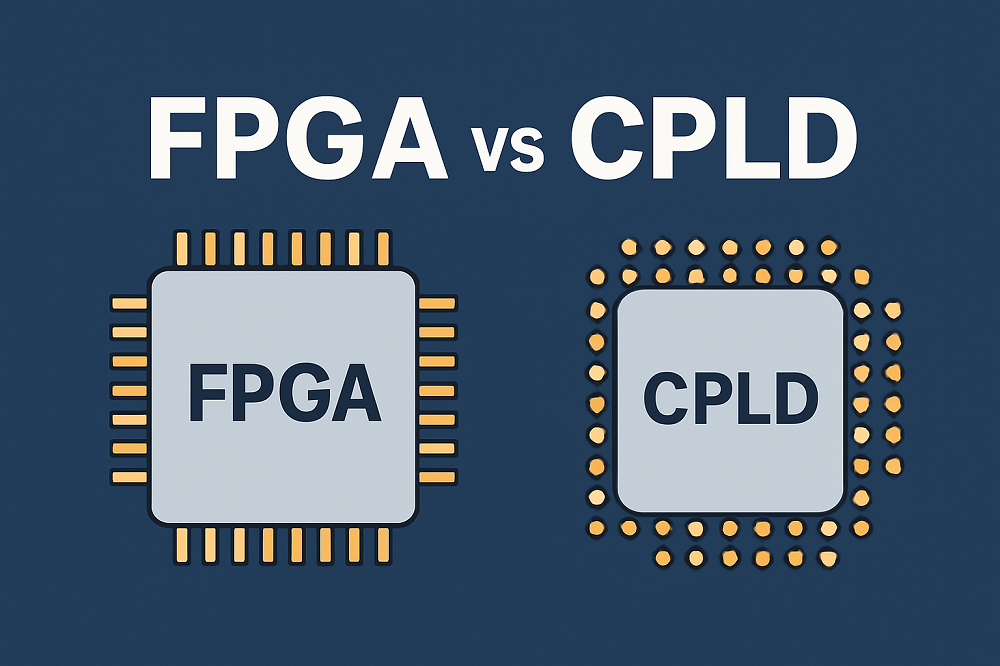
Introduction & Technical Background:Investigating the intriguing domains of FPGA (Field-Programmable Gate Array) and microcontrollers demonstrates the critical roles these two technologies play in embedded systems and digital design. By programming FPGAs at the hardware level, users can design unique digital circuits using these incredibly adaptable integrated circuits. Because of their great flexibility, they are perfect for complicated applications that need to be reconfigurable and prototyped quickly. Microcontrollers, on the other hand, are small integrated circuits that house a CPU core, memory, and several peripherals on a single chip. They offer an affordable option for simple to moderately complicated applications and are built for specialized needs. A microcontroller is a small integrated circuit that is used in embedded systems to control particular functions. Integrated circuits known as Field Programmable Gate Arrays (FPGAs) are frequently offered off-the-shelf. The reason they are called "field-programmable" is because they enable users to modify the hardware after it has been manufactured to satisfy certain use case specifications. FPGAs are "field-programmable," meaning that users can program the hardware after it is manufactured, whereas microcontrollers can only be more loosely customized. Microcontrollers:"Microcontrollers (MCU) are used in embedded systems to perform a certain task, handle communication, and control other hardware components." ( Pervasive Cardiovascular and Respiratory Monitoring Devices, 2023). To manage a single function in a device, a microcontroller is integrated into a system. It accomplishes this by using its core CPU to evaluate data that it gets from its I/O peripherals. In the home and workplace, building automation, manufacturing, robotics, automotive, lighting, smart energy, industrial automation, communications, and Internet of Things (IoT) deployments are just a few of the industries and applications that use microcontrollers. FPGAs"An FPGA is, as the name implies, a component comprising a large number of logic gates and other functional parts connected by a network, the connectivity of which can be determined by “programming” the device." (High-Performance Computing, 2018). The majority of FPGAs are programmed using an SRAM-based methodology. These FPGAs require external boot devices, but they can be programmed and reprogrammed in-system. Digital signal processing, biomedical instrumentation, device controllers, software-defined radio, random logic, medical imaging, computer hardware emulation, voice recognition, cryptography, filtering and communication encoding, and more are some of the specific applications that make use of an FPGA. Comparison between Microcontrollers and FPGAs:Power Consumption:In comparison and contrast, FPGAs are less efficient than parts like ASICs (Application Specific Integrated Circuits). When logic utilization drops due to reprogramming an FPGA, inefficiency also results. Similarly, more power is consumed when transistors are not in use. Microcontrollers are slower than FPGAs, though. The degree of customization and complexity that separates an FPGA from a microcontroller is the primary distinction. Their cost and level of usability also differ. In essence, an FPGA enables more intricate operations, higher levels of customization, and hardware modifications that can be made in the past. Because of their massive number of programmable parts and parallel architecture, FPGAs typically use more power than microcontrollers. An FPGA's power consumption is influenced by several variables, including the quantity of active logic parts, the interconnect switching frequency, and the I/O activity. Processing Speed:A microcontroller's typical processing speed falls between MHz to 50 MHz. While on the other hand, clock rates for FPGAs typically range from 100 MHz to 200 MHz. Compared to a CPU, which can readily operate at 3 GHz or higher, these rates are far lower. Flexibility & Programmability:When deciding between FPGAs and microcontrollers, the desired application's needs for customization and flexibility must be taken into account. An FPGA might be a preferable option if the application calls for a high level of hardware customization and flexibility. A microcontroller, however, would be more appropriate if the application could profit from the software-based customization and integrated peripherals that microcontrollers provide. It is crucial to take the target application's complexity and development time into account while deciding between FPGAs and microcontrollers. An FPGA can be a preferable option if the application calls for a high level of hardware customization and the development team has the required FPGA development experience. A microcontroller might be a better option, though, if the application can take advantage of the simpler and quicker development process that microcontrollers provide and the development team has more software development experience. The decision between FPGAs and microcontrollers can also be influenced by development time and complexity. A microcontroller can be a better option because of its easier and quicker development process if the development team has more experience with software development and high-level programming languages. On the other hand, an FPGA can be a preferable option if the team has experience with FPGA development and the application requires a high level of hardware customization. Through meticulous examination of the specifications and comparative analysis of various technologies, designers can make well-informed choices that optimize performance, power efficiency, flexibility, and development time, all while meeting the demands of their intended application. It is crucial to assess the unique needs of the intended application and balance the benefits and drawbacks of each technology when evaluating cost-related issues. An FPGA might be a preferable option if the application requires high-performance parallel processing and can afford the higher initial price of FPGAs. A microcontroller might be more appropriate, though, if the application can profit from the cheaper initial costs and easier development process that microcontrollers provide. Application FieldsMicrocontrollers are utilized in automatically operated items and gadgets, including power tools, toys, office equipment, appliances, implanted medical devices, remote controls, car engine control systems, and other embedded systems. Small, inexpensive, programmable microcontrollers are used to regulate the operation and behavior of a wide range of consumer electronics devices. They can communicate with sensors, buttons, LEDs, displays, motors, and other parts since they are integrated into circuits. Numerous characteristics of microcontrollers make them suited for use in embedded systems, including: Because every required peripheral is housed on a single integrated circuit chip, they are self-contained. They are intended to execute one specific application.FPGAs are perfect for applications like data analytics, machine learning, and scientific simulations because they can be programmed to create specialized hardware circuits that can execute certain algorithms far quicker than CPUs and GPUs. Because of their ability to make use of both temporal and spatial parallelism, FPGAs are frequently employed as implementation platforms for real-time image processing applications. FPGAs are advantageous in excellent-performance Computing applications because of their excellent energy efficiency, low latency, and parallel processing capabilities. They have been applied to several High-Performance Computing use cases, including data compression, cryptography, and machine learning. ConclusionIn conclusion, diverse applications can benefit from the distinct benefits and challenges that FPGAs and microcontrollers offer. Microcontrollers have a simpler development process and use less power than FPGAs, but FPGAs are better at parallel processing workloads and allow a great degree of hardware customization. It is crucial to take into account aspects like cost, development time, performance, power consumption, adaptability, and the particular needs of the intended application while deciding between various technologies. Through meticulous assessment of these variables and comprehensive consideration of the benefits and drawbacks of each technology, designers are better equipped to make options that best suit their projects' requirements, maximizing flexibility, power efficiency, performance, and development time.
Allen On 2023-12-29   81
IC Chips

Different Types of Microcontrollers and Their Applications

Microcontrollers, also known as embedded controllers, are integrated circuit (IC) chips that contain all the components of a small computer on a single chip. A microcontroller incorporates key elements like a central processing unit (CPU), memory, input/output peripherals, and timers. Microcontrollers are embedded into larger systems and devices to provide automated and precise control. They have become ubiquitous in modern electronic devices due to their small size, low power consumption, and low cost. How Microcontrollers Work Although microcontrollers operate at high speeds, they execute instructions sequentially, unlike a typical computer. When powered on, the control logic register activates the quartz oscillator, charging the parasite capacitors briefly during initial setup. Once the oscillator frequency stabilizes at maximum voltage, the bit-writing process through special function registers commences based on the oscillator's clock cycle. All the electronics start functioning in nanoseconds according to this sequence. A microcontroller's main function is to operate as an independent unit utilizing its on-chip processor and memory. It can leverage its built-in peripherals similarly to an 8051 microcontroller. Classification by Bus Width The bus width refers to the number of parallel data lines in a microcontroller. Wider buses allow more data to be transferred simultaneously, increasing throughput. Microcontrollers are classified into 8-bit, 16-bit, and 32-bit architectures based on their bus width: 8-Bit Microcontrollers: These possess an 8-bit wide data bus, permitting 8 bits of data to be processed in one clock cycle. However, arithmetic operations on larger data sizes prove challenging. Popular examples include the Intel 8051, Motorola 68HC11, and Microchip PIC microcontrollers. Example Part:Part Number: ATmega328PManufacturer: Microchip TechnologyDescription: The ATmega328P is a popular 8-bit microcontroller used in Arduino boards. It features 32KB of flash memory, 2KB of SRAM, and 1KB of EEPROM. 16-Bit Microcontrollers: With their 16-bit bus, these can transfer 16 bits of data per cycle. Their 16-bit arithmetic logic unit (ALU) improves performance over 8-bit designs. The Motorola 68HC12 and Microchip PIC24 are common 16-bit microcontrollers.Example Part:Part Number: PIC24FJ128GA010Manufacturer: Microchip TechnologyDescription: The PIC24FJ128GA010 is a widely used 16-bit microcontroller with 128KB of flash memory, 8KB of RAM, and various peripherals. It is known for its low power consumption and high performance. 32-Bit Microcontrollers: Featuring a 32-bit bus width, these offer the highest throughput and precision. Complex applications like audio/video processing benefit from their fast processing capabilities. The Microchip PIC32 and Atmel AVR32 are 32-bit microcontroller product families.Example Part:Part Number: STM32F407VGManufacturer: STMicroelectronicsDescription: The STM32F407VG is a popular 32-bit microcontroller based on the ARM Cortex-M4 core. It offers 1MB of flash memory, 192KB of SRAM, and a wide range of peripherals, making it suitable for demanding applications. Classification by Memory Microcontrollers contain memory in two broad configurations:Embedded Memory Microcontrollers: In these microcontrollers, all required memory blocks like RAM, ROM, and flash are integrated on the single chip. The memory capacity is fixed and cannot be expanded externally in most cases. External Memory Microcontrollers: These have some memory blocks located off-chip, requiring external memory modules to function fully. While external memory increases capacity, it also increases the size and cost of the total system. Classification by Architecture The architecture defines how a microcontroller accesses its memory and executes instructions:Harvard Architecture: Program and data memory are separated in this design. Instructions and data can be accessed simultaneously via different buses, allowing for faster execution. The program memory stores code while data memory handles variables. Von Neumann Architecture: This uses a unified memory for both instructions and data. While simpler, it can experience bottlenecks from conflicting demands on the single memory bus. Most personal computers use the Von Neumann model. Modified Harvard Architecture: This attempts to get the best of both worlds by using a separate program and data memory but having a shared bus. This avoids conflicts while retaining fast access. Many modern microcontrollers leverage modified Harvard architectures. Classification by Instruction Set The instruction set architecture (ISA) consists of the basic commands and functions that a microcontroller CPU understands:CISC (Complex Instruction Set Computer): CISC microcontrollers have a large, complex set of instructions that enable programs to be coded efficiently in fewer lines. But the complexity slows operation. RISC (Reduced Instruction Set Computer): RISC ISAs use simpler instructions that execute rapidly, although programs require more lines of code. High-performance microcontrollers often employ RISC cores. Applications of Microcontrollers The versatility of microcontrollers enables them to be embedded into a diverse range of devices and machines:Automotive Systems: Microcontrollers monitor and control electrical systems in vehicles, including engine control modules, power windows, and anti-lock brakes. Industrial Automation: Microcontrollers provide precision programmable control of manufacturing processes, robotics, and assembly lines. Consumer Electronics: Appliances, gaming systems, and smart home devices rely on microcontrollers for automated and interactive capabilities. Medical Devices: Miniaturized microcontrollers allow smart medical devices to diagnose conditions, deliver treatments, and monitor patient health. Communications: Microcontrollers enable complex signal processing in modems, routers, cell phones, and other network gear. Aerospace Systems: Rugged, radiation-hardened microcontrollers are built for flight control, guidance systems, and other avionics applications. Conclusion Microcontrollers pack the power of a small computer into a single, highly-integrated chip. They are categorized based on criteria like bus width, memory architecture, and instruction set. Microcontrollers provide intelligent and precise control capabilities that have revolutionized embedded system design across industrial, consumer, medical, and communications applications. As microcontroller technology continues advancing, more innovative and personalized edge devices will emerge. FAQs Q1: What is the difference between a microcontroller and a microprocessor?A: A microcontroller is a single chip that integrates components like CPU, memory, and I/O interfaces. A microprocessor is just a CPU chip that requires external memory and peripherals. Microcontrollers are self-contained, low cost, and can independently complete control tasks. Microprocessors offer more power but need complex circuit design.Q2: What are the pros and cons of 8-bit vs 32-bit microcontrollers?A: 8-bit microcontrollers have an 8-bit data bus width, lower performance, and simpler design while being low cost. 32-bit microcontrollers have higher processing power and faster execution but also higher cost. 8-bit MCUs are good for simple applications while 32-bit suits more demanding tasks.Q3: How do Harvard and Von Neumann architectures differ in microcontrollers?A: The Harvard architecture has separate program and data memory buses, allowing simultaneous access and faster execution. The Von Neumann architecture uses unified memory for programs and data, causing bus contention and slower speed. Harvard architecture offers stronger real-time control capabilities.
Kynix On 2023-09-25   311
IC Chips

How Embedded Controllers are Changing the World

  With the evolving times and fast-advancing technologies, smart devices, computerized systems and other industrial applications are heavily relying on miniature computing.  In today’s world, embedded systems are a critical part of the daily average person ranging from their application in homes, offices, industries and even personal gadgets.   These embedded systems have become a crucial part of real life partly due to their ease of use, minimal intervention and availability. The engineering behind these systems is to meet the requirements while being efficient, low powered and meeting essential demands. Some of the devices that we used daily with smart devices include microwaves, smart ovens, refrigerators, washing machines, and smart lighting, to mention but a few.   Artificial intelligence and machine learning in recent days have been in the limelight with many investors and a major key player in the world of technology contributing to its growth. The application of machine learning and artificial intelligence is virtually limitless. The heart of most devices using this technology are embedded systems. As the use of embedded systems continues to grow within every industry and sector, so does technology.   Embedded systems and embedded controllers are often used interchangeably and for the most part, can pass for each other. However, there is a slight difference in meaning. Embedded Systems vs Embedded Controllers An embedded system is a combination of hardware and software designed for a specific purpose, often with real-time constraints. It typically consists of a microcontroller, memory, input/output peripherals, and sometimes additional hardware such as sensors or actuators. Embedded systems are used in a wide range of applications, including consumer electronics, automotive, aerospace, and industrial automation.   An embedded controller is a type of microcontroller, often just referred to as a microcontroller, that is specifically designed for controlling a specific device or system. It is typically used in embedded systems that require precise control over the operation of mechanical or electrical components. Embedded controllers often have specialized features such as analogue-to-digital converters, timers, and communication interfaces that make them well-suited for controlling a specific system.   In general, an embedded controller is a specific type of microcontroller that is designed to perform a specific function within an embedded system. Meanwhile, an embedded system can consist of various components, including microcontrollers, and is designed to perform a specific task or set of tasks. Thus, an embedded system is the device and interface that we interact with daily while the microcontroller is the control unit that gives life to the technology.   Over the years, embedded controllers have evolved significantly with major improvements and advancements from the earliest microprocessors and iterations of a microcontroller to the advanced microcontrollers we use today. Why embedded controllers Embedded controllers are found in a wide variety of devices, products and systems from household appliances and medical devices to industrial machinery and automotive systems. Their application also can be vastly diverse from simple automation applications such as light control to entire industrial automation setups. With the rise of IoT and industrial application of IoT (IIoT), applications in the industrial sector have rapidly expanded.   Aside from their simplicity, inexpensiveness and a vast array of applications, embedded systems are chosen for their other advantages. Compared to traditional computers and microprocessors, embedded controllers are the key enablers of modern automation.   Here are a few key indicators of how embedded systems have evolved and changed the world of automation and modern miniaturized computing: Improved efficiency  Embedded controllers are helping to improve efficiency in a variety of applications, from smart homes to industrial automation. By automating routine tasks and optimizing processes, these controllers can help reduce waste, save energy, and streamline operations.   Enhanced functionality  Embedded controllers are enabling new and innovative features in a wide range of products, from cars and smartphones to medical devices and appliances. These controllers are making it possible to deliver new levels of performance, functionality, and convenience to consumers and businesses.   Increased automation Embedded controllers are helping to drive the automation of many industries, from manufacturing and logistics to agriculture and healthcare. By automating routine tasks, these controllers can help increase productivity, reduce costs, and improve quality control.   Greater precision and accuracy Embedded controllers are enabling greater precision and accuracy in many applications, from medical devices and scientific instruments to automotive systems and consumer electronics. By controlling and monitoring specific functions, these controllers can help ensure that products and systems operate reliably and accurately.   Advancements in technology Embedded controllers are driving advancements in technology, from the Internet of Things (IoT) to autonomous vehicles and smart cities. These controllers are enabling the development of new technologies and systems that are transforming the way we live, work, and interact with the world around us.   Integration of communication interfaces In the mid-2000s, microcontrollers began to integrate communication interfaces, such as Ethernet, Wi-Fi, and Bluetooth, which made it possible to connect devices to the internet and other devices. This paved the way for the development of the Internet of Things (IoT).   Advancements in power efficiency In recent years, microcontrollers have become more power-efficient, with the development of low-power processors, sleep modes, and power management systems. This has enabled the development of battery-powered devices that can operate for extended periods.   Advanced functionality and security Today's microcontrollers offer advanced functionality, such as real-time operating systems, graphics processing, and machine learning capabilities. They also incorporate advanced security features to protect against cyber threats.   Embedded controllers are shaping the world we live in, enabling new levels of efficiency, functionality, and automation across a wide range of industries and applications. As technology continues to advance, microcontrollers are likely to continue to evolve and play an increasingly important role in our lives.   Exploring Embedded Controllers in Real Life As earlier said, the application of embedded controllers has become immense and the potential of further exploration is still underway. With these advancements and vast applications, the impact of this technology is revolutionary and is shaping the future.   Embedded controllers are changing the world in several ways, thanks to their ability to improve efficiency, increase productivity, and enhance functionality in a wide range of applications. Here are a few examples:   Smart Home Automation and Home Appliances In terms of vast applications and the most widely explore uses of embedded controllers, home automation carries the day. This is perhaps due to the simplicity of using embedded controllers and embedded systems, enabling small applications, simple smart devices, DIY projects of automation and other reliable solutions to smart monitoring and even security systems. Embedded controllers are a key component of the smart home revolution, enabling homeowners to remotely monitor and control their appliances, heating and cooling systems, security systems, and more. This allows for greater energy efficiency, convenience, and comfort.   Health Management Systems Embedded controllers are playing an important role in healthcare, enabling the development of advanced medical devices that can monitor and administer medication with greater accuracy and precision. This improves patient outcomes and reduces the risk of errors.   Medical Devices Over the longest time, medical devices and other healthcare-related systems have tried to incorporate embedded systems. This allows for easier monitoring, management and even automation of simple processes. The systems can gather and collect data on a patient’s condition and monitor progress in treatment by monitoring heart rate, pulse rate and other vitals. The information can be relayed to caregivers or doctors via the cloud.   Medical devices, such as pacemakers and insulin pumps, rely on embedded controllers to monitor vital signs and even administer medication. These controllers are designed to operate reliably and accurately in a wide range of conditions Automobiles and Autonomous Vehicles With the advent of the booming exploration in autonomous and self-driving vehicles, such as self-driving cars, autonomous submarines and unmanned drones, the use of embedded controllers has played a key role. Providing navigation systems, IoT modules, battery management systems and other subsystems that relay all the needed data to the users. Embedded controllers are a critical component of autonomous vehicles, enabling them to monitor their surroundings, make decisions, and take action without human intervention. This has the potential to revolutionize transportation and make it safer and more efficient.   In modern automobiles, embedded systems are designed and fitted to provide a better customer experience whilst also providing enhanced safety on the road. The result of this has been realized with lower traffic fatalities over the years.Adaptive speed control, automobile breakdown warning, pedestrian detection, merging assistance, airbags, and other active safety systems are some prominent examples. These are a few of the characteristics that are expected to reduce the risk of accidents and increase demand for embedded systems throughout the world.   Industrial automation With Industry 4.0 on the cusp of fruition, embedded controllers are playing a vital role in its realization being the link between modern technology, IoT and industrial systems. Most industrial systems and setups are adopting machine learning and artificial intelligence to improve work efficiency, accuracy, repeatability, and safety and reduce the cost of labour. This is possible since machines using sophisticated algorithms can identify defects, reduce downtime and diagnose systems before failure.   Embedded controllers are used in industrial automation systems to control machinery and monitor production processes. These controllers can operate in harsh environments and are designed to withstand high temperatures, vibrations, and other stresses. In such applications robots are designed to perform tasks that are considered dangerous. Robots are equipped with embedded systems, employing the use of sensors actuators and feedback from other systems to perform the tasks safely.   Consumer electronics Devices like smartphones, tablets, and smart speakers use embedded controllers to manage their complex functions and interfaces. These controllers help to optimize battery life, reduce power consumption, and enhance user experiences.   Overall, the evolution of microcontrollers has enabled the development of a wide range of devices and systems, from simple household appliances to complex industrial machinery and the Internet of Things. As technology continues to advance, microcontrollers are likely to continue to evolve and play an increasingly important role in our lives.   FAQs What is an embedded controller? An embedded controller, also known as a microcontroller, is a small computer system that is designed to control and manage specific tasks within electronic devices.   Embedded controllers are changing the world in several ways, such as improving efficiency, enhancing functionality, increasing automation, and enabling new technologies and systems.   What are some examples of applications that use embedded controllers? Examples of applications that use embedded controllers include smart homes, medical devices, automotive systems, industrial automation, and the Internet of Things (IoT).   Embedded controllers are playing an important role in healthcare, enabling the development of advanced medical devices that can monitor and administer medication with greater accuracy and precision, leading to improved patient outcomes and reduced risk of errors.   Embedded controllers are a critical component of the IoT, enabling devices to communicate with each other and with the internet, and enabling the development of new technologies and systems that are transforming the way we live and work.   What are some future developments in embedded controllers? Future developments in embedded controllers are likely to include advancements in processing power and memory, integration of communication interfaces, improvements in power efficiency, and advanced functionality such as machine learning and artificial intelligence          
Karty On 2023-03-27   315
Resistors

Analog to Digital Converters (ADC) Overview: Working, Types and Applications

Ⅰ IntroductionIn an analog world surrounded by digital devices, we exist in a fascinating intersection of two domains. In nature, everything we observe, feel, or measure is analog—such as light, temperature, speed, pressure, and sound. However, most electronic devices around us are digital, ranging from basic digital watches to sophisticated supercomputers and AI systems. Therefore, for microcontrollers, microprocessors, and modern computing systems to understand and process real-world phenomena, we need devices that can convert these analog parameters into digital values. This conversion is performed by an ADC (Analog-to-Digital Converter), and in this comprehensive guide, we will explore their functionality, types, and applications in modern electronics.Ⅱ Definition of ADC (Analog-to-Digital Converter)An Analog-to-Digital Converter (ADC) is a circuit that converts continuous voltage values (analog signals) into binary values (digital data) that can be interpreted and processed by digital computers and microcontrollers. These ADC circuits can be found as standalone integrated circuits (ICs) or embedded within microcontrollers, system-on-chip (SoC) designs, and digital signal processors (DSPs). The conversion process involves sampling the analog signal at discrete time intervals and quantizing the amplitude into digital codes.Modern ADCs are fundamental components in virtually all electronic systems that interface with the physical world, from smartphones and IoT devices to medical equipment and automotive sensors.Ⅲ The Reasons for Using ADCsToday's electronics ecosystem is predominantly digital; the era of analog computers has long passed. However, the physical world we inhabit remains inherently analog and continuous. Digital systems can only process discrete values—essentially ones and zeros—which creates a fundamental incompatibility with analog signals.For example, a temperature sensor such as the LM35 outputs a temperature-dependent voltage—specifically, 10 mV per degree Celsius. If we connect this directly to a digital input pin, the microcontroller will only register it as either HIGH or LOW based on threshold voltages (typically around 0.8V for LOW and 2V for HIGH in 5V systems), which provides no useful temperature information. Instead, we use an ADC to convert the analog voltage input into a multi-bit digital value that can be directly processed by the microprocessor's data bus, enabling precise calculations, data logging, and control decisions.Key reasons for using ADCs include:Enabling digital processing of real-world analog signalsFacilitating data storage and transmission in digital formatAllowing complex mathematical operations on sensor dataEnabling machine learning and AI applications with sensor inputsProviding noise immunity through digital signal processingⅣ Working Principles of ADCUnderstanding ADC operation is best approached by viewing it as a mathematical mapping function. The ADC maps continuous analog voltage values to discrete binary numbers within a defined range. This process involves three fundamental steps: sampling, quantization, and encoding.The ADC needs to bridge the gap between the analog voltage domain and the digital logic domain. Since digital registers can only accept discrete logic levels (HIGH/LOW), directly connecting an analog signal would produce unreliable results. The ADC acts as an intelligent interface that periodically samples the analog input and converts each sample into a binary representation.Figure 1: Analog to Digital Conversion ProcessHere are the essential characteristics of ADCs that determine their performance and suitability for different applications:4.1 Reference VoltageNo ADC operates in absolute terms; instead, it requires a reference voltage that defines the full-scale range. The reference voltage represents the maximum analog input that corresponds to the highest possible digital output value. For example, in a 10-bit converter with a 5V reference voltage, the binary value 1111111111 (1023 in decimal—the highest possible 10-bit number) corresponds to 5V, while 0000000000 (0 in decimal) corresponds to 0V.Since 10 bits provide 210 = 1024 possible values (0-1023), each binary step represents approximately 5V / 1024 ≈ 4.88 mV. This measure is called the resolution or LSB (Least Significant Bit) voltage of the ADC. The formula is:Resolution (V) = VREF / 2nwhere VREF is the reference voltage and n is the number of bitsIf the analog voltage changes by less than one LSB (4.88mV in this example), the ADC cannot detect the change—this creates a quantization error. To minimize this error and improve measurement precision, you can either use an ADC with higher resolution (more bits) or reduce the reference voltage to match your signal range more closely.Modern ADCs are available with resolutions ranging from 8 bits (256 levels) for simple applications to 32 bits (over 4 billion levels) for precision scientific instruments, though 12-bit and 16-bit converters are most common in embedded systems.4.2 Sample Rate (Sampling Speed)The sample rate, also called sampling frequency, refers to the number of analog-to-digital conversions the ADC performs per second, measured in samples per second (S/s or SPS). High-performance ADCs can achieve sample rates exceeding 1 GS/s (giga-samples per second, or one billion samples per second), while precision ADCs might operate at just a few samples per second.According to the Nyquist-Shannon sampling theorem, to accurately reconstruct a signal, the sampling rate must be at least twice the highest frequency component in the signal. For example, to digitize audio signals with frequencies up to 20 kHz, you need a sampling rate of at least 40 kHz (which is why CD audio uses 44.1 kHz).The sampling speed depends on the ADC architecture and the required accuracy. Generally, there's a trade-off between speed and resolution: high-speed ADCs (like flash ADCs) typically have lower resolution (8-10 bits), while high-resolution ADCs (like sigma-delta ADCs) operate at lower speeds. This is because achieving higher precision requires more time to accurately measure and convert the analog signal.4.3 Additional Key SpecificationsSignal-to-Noise Ratio (SNR): Measures the ratio of the desired signal power to background noise, typically expressed in decibels (dB). Higher SNR indicates better performance.Effective Number of Bits (ENOB): Accounts for real-world imperfections and indicates the actual resolution achieved in practice, which is typically less than the nominal bit count.Input Impedance: The electrical resistance presented by the ADC input, which affects how it loads the source circuit. High input impedance is generally desirable to minimize signal distortion.Ⅴ Types of ADCsVarious ADC architectures have been developed to optimize for different combinations of speed, resolution, power consumption, and cost. Here are the most common types:5.1 Flash ADCs (Parallel ADCs)Flash ADCs are the fastest type of analog-to-digital converter, capable of conversion rates exceeding 1 GS/s. They consist of a resistor ladder voltage divider and an array of comparators—one for each quantization level. For an n-bit flash ADC, 2n - 1 comparators are required.Figure 2: Flash ADC ArchitectureAll comparators operate simultaneously (in parallel), comparing the input voltage against their respective reference levels. The comparator outputs are then fed through a priority encoder that converts the thermometer code into binary format. The conversion speed is limited only by the propagation delays of the comparators and encoder, making flash ADCs ideal for high-speed applications like video processing and radar systems.Advantages: Extremely fast, simple operationDisadvantages: High power consumption, large chip area, limited resolution (typically 8-10 bits due to exponential growth in component count), expensive for high-resolution designs5.2 Successive Approximation Register (SAR) ADCsSAR ADCs are among the most popular and widely used converters, offering an excellent balance between speed, resolution, and power consumption. They consist of a sample-and-hold circuit, a comparator, a Digital-to-Analog Converter (DAC), and successive approximation logic.The conversion process uses a binary search algorithm. Starting with the most significant bit (MSB), the SAR sets each bit to '1' and compares the DAC output with the input voltage. If the DAC output exceeds the input, the bit is cleared to '0'; otherwise, it remains '1'. This process repeats for each bit from MSB to LSB, requiring n clock cycles for an n-bit conversion.SAR ADCs are ubiquitous in microcontrollers (including Arduino, STM32, ESP32, and most ARM Cortex-M devices) and can achieve resolutions from 8 to 18 bits with sampling rates from 100 kS/s to several MS/s.Advantages: Good resolution, moderate speed, low power consumption, cost-effectiveDisadvantages: Slower than flash ADCs, requires n clock cycles for n-bit conversion5.3 Sigma-Delta (ΣΔ) ADCsSigma-delta ADCs achieve very high resolution (16 to 32 bits) by using oversampling and noise-shaping techniques. They sample the input at a rate much higher than the Nyquist rate and use digital filtering to achieve high effective resolution at lower output data rates.These converters are ideal for precision measurement applications such as digital scales, industrial sensors, audio recording equipment, and medical instrumentation where accuracy is paramount and speed is less critical.Advantages: Excellent resolution and linearity, good noise rejection, simple analog circuitryDisadvantages: Slow conversion rate, complex digital filtering required, higher latency5.4 Dual-Slope (Integrating) ADCsDual-slope ADCs integrate the input signal for a fixed period, then integrate a reference voltage of opposite polarity until the integrator returns to zero. The time required for the second integration is proportional to the input voltage. A counter measures this time, providing the digital output.While slow, dual-slope ADCs offer excellent noise rejection (especially for 50/60 Hz line frequency noise) and are commonly used in digital multimeters and panel meters.Advantages: High accuracy, excellent noise rejection, low costDisadvantages: Very slow conversion speed, typically limited to a few conversions per second5.5 Pipeline ADCsPipeline ADCs divide the conversion into multiple stages, with each stage resolving a few bits. The residue from each stage is amplified and passed to the next stage. This architecture allows for high sampling rates (10-100 MS/s) with moderate resolution (8-16 bits), making them popular in video processing, communications, and imaging applications.Ⅵ Applications of ADCs6.1 Digital Oscilloscopes and MultimetersWhile analog oscilloscopes provide real-time display with minimal processing delay, they cannot store waveforms, perform automated measurements, or conduct advanced signal analysis. Digital oscilloscopes solve these limitations by employing high-speed, high-resolution ADCs (typically 8-12 bits at sampling rates up to several GS/s).Modern digital oscilloscopes can capture transient events, perform FFT analysis, decode serial protocols, and store thousands of waveforms for later analysis. Similarly, digital multimeters use precision ADCs (often dual-slope or sigma-delta types) to provide accurate voltage, current, and resistance measurements with 3½ to 8½ digit resolution.6.2 Microcontrollers and Embedded SystemsNearly all modern microcontrollers include integrated ADCs, making them essential for IoT devices, sensor interfaces, and embedded control systems. Common examples include:Arduino (ATmega328P): 10-bit SAR ADC, 6 channels, up to 15 kS/sSTM32 series: 12-bit SAR ADC, multiple channels, up to 5 MS/s (varies by model)ESP32: 12-bit SAR ADC, 18 channels, up to 2 MS/sRaspberry Pi Pico (RP2040): 12-bit SAR ADC, 4 channels, 500 kS/sNordic nRF52 series: 12-bit SAR ADC for low-power wireless applicationsThe Arduino IDE provides a convenient analogRead() function that reads an analog voltage on any analog input pin and returns a 10-bit integer value (0-1023), making ADC usage accessible even for beginners.6.3 Digital Power Supplies and Battery ManagementModern programmable power supplies and battery management systems rely heavily on ADCs to monitor output voltage, current, and temperature. These measurements enable precise regulation, protection features, and user interfaces displaying real-time parameters. High-resolution ADCs (16-24 bits) are often used in precision laboratory power supplies to achieve millivolt-level accuracy.6.4 Audio Recording and ProcessingProfessional audio equipment uses high-quality sigma-delta ADCs with 24-bit resolution and sampling rates of 44.1 kHz, 48 kHz, 96 kHz, or even 192 kHz. These converters enable digital recording, processing, and storage of audio signals with exceptional fidelity. Consumer devices like smartphones and laptops also incorporate audio ADCs for voice recording and communication.6.5 Medical InstrumentationMedical devices such as ECG monitors, pulse oximeters, blood glucose meters, and patient monitoring systems all depend on precision ADCs to convert physiological signals into digital data for analysis, display, and storage. These applications demand high accuracy, low noise, and often require specialized ADCs designed for biomedical signals.6.6 Automotive and Industrial SensorsModern vehicles contain hundreds of sensors monitoring engine parameters, emissions, tire pressure, temperature, acceleration, and more—all requiring ADCs for digital processing. Industrial automation similarly relies on ADCs for process control, quality monitoring, and predictive maintenance applications.Ⅶ How to Use External ADC ICsWhen the built-in ADC of a microcontroller doesn't meet your requirements—whether due to insufficient resolution, speed, or channel count—external ADC ICs provide a solution. Popular external ADC modules include the ADS1115, MCP3008, AD7606, and ADS1256, which can be interfaced with microcontrollers, Raspberry Pi, and other digital systems.Let's examine the Texas Instruments ADS1115, a popular 16-bit ADC with advanced features and excellent performance:Figure 3: ADS1115 16-bit ADC Module7.1 Key Features of Modern ADC ICsI²C/SPI Interface: The ADS1115 uses the I²C bus for communication, making it easy to interface with Arduino, Raspberry Pi, ESP32, and other platforms. Extensive libraries are available in multiple programming languages, simplifying implementation. The I²C interface also allows multiple ADCs to share the same bus using different addresses.Low Power Consumption: Modern ADC ICs are designed for efficiency, with the ADS1115 consuming only 150 µA in continuous conversion mode and less than 1 µA in power-down mode. The operating voltage range of 2.0V to 5.5V makes it compatible with both 3.3V and 5V systems.Programmable Gain Amplifier (PGA): The ADS1115 includes a built-in PGA with selectable gain settings (±6.144V, ±4.096V, ±2.048V, ±1.024V, ±0.512V, ±0.256V), allowing you to optimize the measurement range for your signal amplitude and maximize resolution.Flexible Input Configuration: The four analog inputs can be configured as four single-ended inputs or two differential pairs, providing versatility for different measurement scenarios. Differential inputs are particularly useful for rejecting common-mode noise.Programmable Comparator: An integrated comparator with programmable thresholds can generate interrupts when the input exceeds specified limits, enabling efficient event-driven programming without continuous polling.High Resolution: With 16-bit resolution, the ADS1115 provides 65,536 discrete levels, offering significantly better precision than typical 10-bit or 12-bit microcontroller ADCs. At the ±4.096V range, this translates to approximately 125 µV per step.Ⅷ Limitations and Considerations of ADCsWhile ADCs are essential components, they do have inherent limitations that designers must consider:Conversion Time: ADCs require finite time to perform conversions, ranging from nanoseconds (flash ADCs) to milliseconds (high-resolution sigma-delta ADCs). This introduces latency that may be problematic in real-time control systems.Quantization Error: The discrete nature of digital representation means that analog values between quantization levels cannot be precisely represented, introducing an inherent error of up to ±½ LSB.Aliasing: If the input signal contains frequency components above half the sampling rate (Nyquist frequency), aliasing occurs, causing high-frequency signals to appear as lower frequencies in the digital output. Anti-aliasing filters are required to prevent this.Noise and Interference: ADCs are sensitive to electrical noise, which can degrade measurement accuracy. Proper PCB layout, grounding, filtering, and shielding are essential for optimal performance.Input Impedance Effects: The ADC input impedance can load the source circuit, potentially affecting the signal being measured. Buffer amplifiers may be necessary for high-impedance sources.Cost and Complexity: High-performance ADCs (high resolution and high speed) are expensive and may require complex supporting circuitry, including precision voltage references, low-noise power supplies, and sophisticated digital signal processing.Power Consumption: High-speed ADCs can consume significant power, which may be problematic in battery-powered or energy-constrained applications.Ⅸ Frequently Asked Questions (FAQ)1. Why do we need an ADC converter?The physical world is inherently analog—sound waves, light, temperature, pressure, and other phenomena exist as continuous values. However, digital computers and microcontrollers can only process discrete binary numbers (ones and zeros). ADCs bridge this gap by sampling analog signals and converting them into digital representations that computers can store, process, and analyze. This enables applications ranging from digital audio recording and sensor data logging to medical diagnostics and industrial automation. Without ADCs, modern digital systems would be unable to interact with or measure real-world phenomena.2. What is the slowest type of ADC?Dual-slope (integrating) ADCs are among the slowest, typically performing only a few conversions per second. However, this slow speed is often intentional—these ADCs integrate the signal over a long period, which provides excellent noise rejection, particularly for 50/60 Hz power line interference. They're commonly used in digital multimeters where accuracy is more important than speed. Sigma-delta ADCs can also be quite slow when configured for maximum resolution, though they offer superior performance compared to dual-slope designs.3. What is the difference between 8-bit, 10-bit, and 12-bit ADCs?The bit count determines the resolution—how finely the ADC can divide the voltage range. An 8-bit ADC provides 256 discrete levels (2⁸), a 10-bit ADC provides 1,024 levels (2¹⁰), and a 12-bit ADC provides 4,096 levels (2¹²). With a 5V reference: an 8-bit ADC has ~19.5 mV per step, a 10-bit ADC has ~4.9 mV per step, and a 12-bit ADC has ~1.2 mV per step. Higher resolution allows detection of smaller voltage changes, making the measurement more precise. However, higher resolution often comes with trade-offs in speed, cost, and complexity. Choose the resolution based on your application's accuracy requirements.4. What is the difference between ADC and DAC?An ADC (Analog-to-Digital Converter) is an input device that converts continuous analog signals into discrete digital values for processing by digital systems. A DAC (Digital-to-Analog Converter) performs the opposite function—it's an output device that converts digital values into continuous analog signals. For example, when recording audio, an ADC converts sound waves (analog) into digital data; when playing back that audio, a DAC converts the digital data back into analog signals that drive speakers. Both are essential for digital systems to interact with the analog world.5. How does the ADC inside a microcontroller work?Most microcontrollers use SAR (Successive Approximation Register) ADCs due to their good balance of speed, resolution, and power efficiency. The process involves: (1) A sample-and-hold circuit captures and holds the input voltage stable during conversion; (2) The SAR logic performs a binary search, testing each bit from MSB to LSB by comparing the input against a DAC output; (3) After n clock cycles (for n bits), the final binary value is stored in a register where the CPU can read it. The entire process typically takes a few microseconds, and many microcontrollers can perform conversions automatically in the background using DMA (Direct Memory Access).6. How do you convert analog to digital?The conversion process involves three main steps: (1) Sampling: The continuous analog signal is measured at discrete time intervals determined by the sampling rate; (2) Quantization: Each sampled voltage value is mapped to the nearest discrete level based on the ADC's resolution; (3) Encoding: The quantized level is represented as a binary number. The sampling rate must be at least twice the highest frequency in the signal (Nyquist theorem) to avoid aliasing, and the resolution must be sufficient to capture the required detail in the amplitude.7. Why do we need to convert analog to digital?Digital representation offers numerous advantages: (1) Processing: Digital signals can be easily manipulated using algorithms, filters, and mathematical operations; (2) Storage: Digital data can be stored indefinitely without degradation; (3) Transmission: Digital signals are less susceptible to noise and interference during transmission; (4) Accuracy: Digital systems can perform precise calculations and measurements; (5) Integration: Digital data can be easily shared between different systems and processed by computers; (6) Advanced Features: Digital signals enable machine learning, pattern recognition, and sophisticated analysis impossible with analog systems.8. What are common applications of ADCs?ADCs are used in countless applications: digital oscilloscopes and multimeters for test equipment; microcontrollers and embedded systems for sensor interfaces; audio recording and playback equipment; medical devices (ECG, pulse oximeters, blood pressure monitors); automotive sensors (engine management, safety systems); industrial process control; telecommunications equipment; digital cameras and imaging systems; touchscreen interfaces; battery management systems; smart home devices and IoT sensors; scientific instrumentation; and data acquisition systems. Essentially, any application requiring a digital system to measure or respond to analog phenomena requires an ADC.9. What's the difference between analog and digital signals?Analog signals are continuous in both time and amplitude—they can take any value within a range and change smoothly over time. Examples include sound waves, temperature variations, and light intensity. Digital signals are discrete in both time and amplitude—they exist only at specific time intervals (samples) and can only take specific values (quantization levels). Digital signals are typically represented as binary numbers (sequences of 1s and 0s). While analog signals directly represent physical phenomena, digital signals are representations that approximate the analog world in a form that computers can process.10. What factors should I consider when choosing an ADC?Key selection criteria include: (1) Resolution: How many bits are needed for your accuracy requirements? (2) Sampling Rate: How fast must you sample to capture your signal's frequency content? (3) Input Range: Does it match your signal amplitude? (4) Number of Channels: How many signals need to be measured? (5) Interface: SPI, I²C, parallel, or integrated? (6) Power Consumption: Critical for battery-powered applications; (7) Cost: Balance performance with budget; (8) Package Size: PCB space constraints; (9) Input Type: Single-ended or differential? (10) Additional Features: Built-in PGA, reference, comparator, etc. Consider your application's priorities—speed, accuracy, power, or cost—and choose accordingly.Ⅹ ConclusionAnalog-to-Digital Converters are fundamental building blocks of modern electronics, serving as the essential bridge between our analog physical world and the digital systems that process information. From the simplest temperature sensor in a home thermostat to the sophisticated signal processing in medical imaging equipment, ADCs enable digital systems to perceive, measure, and respond to real-world phenomena.Understanding ADC specifications—resolution, sampling rate, input range, and architecture—is crucial for selecting the right converter for your application. Whether you're using the built-in ADC in a microcontroller for a hobby project or designing a precision measurement system with external high-resolution ADCs, the principles remain the same: sample the analog world accurately and convert it to digital form for processing.As technology advances, ADCs continue to improve in resolution, speed, and power efficiency while decreasing in cost and size. This ongoing evolution enables new applications in IoT, wearable devices, autonomous vehicles, and countless other fields where the digital and analog worlds intersect.Last Updated: November 2025
Kynix On 2021-01-19   5640
FPGA

New Software for C2000 MCUs Eliminates the FPGA in industrial designs

A software called DesignDRIVE Fast Current Loop that makes C2000 microcontrollers (MCUs) the first devices to push current-loop performance to less than 1 microsecond, has been introduced by Texas Instruments. Together, TI's C2000 MCU portfolio and DesignDRIVE software delivers System-on-Chip (SOC) functionality which simplifies drive control system development.       The DesignDRIVE Fast Current Loop software out performs traditional microcontroller (MCU)-based current-loop solutions and can simplify designs by eliminating the Field-Programmable Gate Array (FPGA) typically used for external current-loop control. Fast Current Loop software is a free update available for C2000 controlSUITE software.   TI's DesignDRIVE technology is a unified hardware and software platform that makes it easier for engineers to develop and evaluate solutions for a variety of industrial drive and servo topologies. As a key part of DesignDRIVE solutions, the Fast Current Loop software enables developers to achieve higher control performance while saving valuable board space and simplifying thermal considerations.     Features and benefits of TI's DesignDRIVE Fast Current Loop software   · Innovative subcycle Pulse-Width Modulation (PWM) update techniques significantly improve control-loop bandwidths to potentially triple the motor torque response. · A novel cycle-scavenging C2000 MCU needs only 460 nanoseconds for field-oriented control processing. · A new complex controller replaces traditional proportional integration control and facilitates greater stability at higher speeds. · Industrial drive systems designed with Fast Current Loop software on a C2000 MCU, like the TMS320F28379, delivers SOC functionality to reduce board space, complexity and overall cost.      Ref. KY32-TMS320F28379 KY362-C2000    
kynix On 2017-07-03   413

Kynix

Kynix was founded in 2008, specializing in the electronic components distribution business. We adhere to honesty and ethics as our business philosophy and have gradually established an excellent reputation and credibility in our international business. With the accurate quotation, excellent credit, reasonable price, reliable quality, fast delivery, and authentic service, we have won the praise of the majority of customers.

Follow us

Join our mailing list!

Be the first to know about new products, special offers, and more.

Kynix

  • How to purchase

  • Order
  • Search & Inquiry
  • Shipping & Tracking
  • Payment Methods
  • Contact Us

  • Tel: 00852-6915 1330
  • Email: info@kynix.com
  • Follow Us

authentication

Kynix

© 2008-2026 kynix.com all rights reserve.