The Kynix Blog
Stay Ahead with Expert Electronics Insights,
Industry Trends, and Innovative Tips
- Electronic Components
- News Room
- General electronic semiconductor
- Components Guide
- Sort by
- Robots
- Transmitters
- Capacitors
- IC Chips
- PCBs
- Connectors
- Amplifiers
- Memory
- LED
- Diodes
- Transistors
- Battery
- Oscillators
- Resistors
- Transceiver
- RFID
- FPGA
- Mosfets
- Sensor
- Motors, Solenoids, Driver Boards/Modules
- Relays
- Optoelectronics
- Power
- Transformer
- Fuse
- Thyristor
- potentiometer
- Development Boards
- RF/IF
- Semiconductor Information
- PCB
- transistor
This technical article will introduce 10 common problems you might encounter with when apply inverter in your project. What is Inverter? This video explains what inverter is and which inverter you need in your project. 1. Leakage Circuit Breakers are Prone to Tripping When Using Variable-Frequency Drive. The output waveform of the ac drive contains higher harmonic, and the leakage current will be generated between the motor and the cable between the inverter and the motor, what’s more, the leakage current is much larger than that of the motor driven by the power frequency. The leakage current at the output side of the inverter is about three times that of the power frequency operation, in addition, adding the leakage current of the motor. The operation current of the selected leakage protector should be 10 times greater than that of the leakage current at the power frequency. 2. The Temperature Rise of the Motor Higher Than That of the Power Frequency When the AC Drive is Used. The output voltage waveform of the inverter is not sinusoid wave, but distorted wave, the motor current under rating torque is about 10% more than the power frequency, so the temperature rise is slightly higher than the power frequency. 3. How to Adjust Torque Boost. A. When the torque boost setting is too high and the load is very small, the current will increase due to the magnetic flux saturation of the motor core, and the variable-frequency drive may run overcurrent protection. Therefore, in order to improve the motor efficiency, the setting should be reduced when the load is lightened. B. For heavy load, the voltage drop loss caused by stator winding and motor cable can be compensated by increasing the torque-boost setting value. 4. Carrier Frequency and How to Adjust It. A. The output voltage of the SPWM converter is a series of pulses whose pulse frequency is equal to the carrier frequency. B. In the current of the motor, there is a strong harmonic component of the carrier frequency, which will cause the oscillation of the iron core of the motor and emit noise. If the frequency of the noise is equal to the inherent oscillation frequency of the motor core, the noise will increase. In order to reduce it, the frequency inverter can adjust the carrier frequency in a certain range to avoid the resonance frequency of the noise. C. Harmonic component of carrier frequency has strong radiation, which will cause electromagnetic interference to external electronic equipment. D. From the point of view of improving the current waveform, the higher the carrier frequency, the smoother the current waveform. However, the electromagnetic interference to the outside is also stronger. E. The higher the carrier frequency is, the less the motor noise is, but the greater the switching loss of power device is, the more serious the frequency converter is. The lower the carrier frequency, the greater the motor noise, and the switching loss of the inverter is lower too. 5. DC Brake (1) It is used to control the precise parking of some equipments, to avoid "crawling" at low speed, and to start the function at the time of shutdown. (2) Since the frequency conversion speed control system always starts from the lowest frequency, if the motor starts with a certain speed, and the frequency converter does not set the speed tracking function, the overcurrent or overvoltage will appear. 6. Should the Rating Frequency of the Load Motor be the Same as That of the Motor? This function parameter: the fundamental frequency A. If the fundamental frequency is set below the rated frequency of the motor, the motor voltage will increase, and the output voltage will increase will lead to the increase of the magnetic flux of the motor, making the saturation of the flux, the distortion of the exciting current, and the occurrence of a very large peak current. As a result, the converter tripped because of overcurrent. B. If the fundamental frequency is higher than the rated frequency of the motor, the voltage and load capacity of the motor will decrease. Difference Compensation Depending on the magnitude of the load current, the output frequency of the ac drive (internal improvement, actual display constant) is appropriately increased to compensate for the increase in the rotational difference due to the increase in the load. 7. AVR Function When the power network voltage drops, the reference frequency is reduced automatically and the flux K*U/F is constant, so as to ensure the load capacity of the motor unchanged. Kinds of Common Load: 1)Constant Torque Load Although the rotational speed is different, resistance torque load is basically constant. The output power is proportional to the rotational speed, like the belt conveyer. 2)Constant Power Load Although the rotational speed is different, load power is basically constant. The output torque is proportional to the rotational speed. Like a winding device, such as a thin film or sheet. 3)Square Load The resistance torque load is proportional to the square of the rotational speed. Such as fans and pumps. 8. Frequency Control of Several Special Motors (1) Wound Rotor Asynchronous Motor The rotor winding of a wound rotor asynchronous motor is a set of star-schema three-phase windings. The end points of the three-phase windings are connected to the three collector rings, through it to collect the brush and the external resistor (starting or adjusting speed). After adopting the frequency converter to adjust the speed, the rotor winding does not need to connect the resistor, so the terminal of the three-phase winding can be connected directly with the wire. (2) Magnetic Brake Motor It is composed of ordinary motor and magnetic brake. The motor and the magnetic brake are connected to the power supply at the same time, and the armature of the electromagnet is absorbed, which makes the motor rotor rotate freely. After cutting off the power supply, the excitation winding of the brake powers off and the rotor stops quickly. The excitation winding circuit of the electromagnet should be connected to the input side of the frequency converter after adopting the frequency converter, and turned on at the same time as motor. 9. Capacity Selection of a Single Inverter with Multiple Motors. A. Simultaneous Start-up The rated current of the inverter should be greater than the sum of the maximum operating current of several motors. B. Starting Time in Turn The rated current of the converter shall be greater than the sum of the rated current of the motor other than the maximum motor plus the seven-times rated current of the maximum motor. 10. Interference Mode and Treatment of Inverter Propagation Mode 1) Radiatedradiated Interference 2) Conducted Interference Anti-jamming Measures Interference signals propagating by radiation are weakened mainly by wiring and shielding the radioactive sources and the interfered lines. For the interference signal propagating through the circuit, the filter, reactor or magnetic ring are added to the input and output side of the inverter. The Specific Methods and Precautions are as Follows: (1) Signal lines and power lines should be vertically crossed or slotted separately. (2) Do not use different metal wires to connect to each other. (3) Shielding tube (layer) should be reliably grounded and ensure continuous and reliable grounding across the whole length. (4) Twisted-pair shielded cables should be used in signal circuits. (5) Grounding contacts of the shield layer should away from the frequency converter as far as possible, and separated from the connecting location of the frequency converter. (6) The magnetic ring can be used on the input power line and output line of the inverter. The method is as follows: the input line goes around four times in the same direction and the output line around three times in the same direction with magnetic rings. When winding the wire, the magnetic rings should close the frequency converter as far as possible. 7) Shielding and other anti-interference measures, such as the temperature control of injection molding machine, can be taken for the equipment. FAQ 1. What does an inverter do? Inverters are also called AC Drives, or VFD (variable frequency drive). They are electronic devices that can turn DC (Direct Current) to AC (Alternating Current). It is also responsible for controlling speed and torque for electric motors. 2. What is the purpose and function of an inverter? An inverter converts the DC electricity from sources such as batteries or fuel cells to AC electricity. The electricity can be at any required voltage; in particular it can operate AC equipment designed for mains operation, or rectified to produce DC at any desired voltage. 3. What is inverter and how it works? The first thing to keep in mind when it comes to enriching your understanding of the internal structure of an inverter device, is that the converter circuit converts alternating current (AC) coming from the power source into direct current (DC), and the inverter circuit changes the converted direct current (DC) back into alternating current (AC). They work as a set. 4. Does inverter really save electricity? An inverter is energy saving technology that eliminates wasted operation in air conditioners by efficiently controlling motor speed. ... Compared to non-inverter type air conditioners, air conditioners with inverters have less power loss and can save in energy. 5. What can you plug into an inverter? A power inverter changes DC power from a battery into conventional AC power that you can use to operate all kinds of devices ... electric lights, kitchen appliances, microwaves, power tools, TVs, radios, computers, to name just a few. 6. How many hours can an inverter last? Usually, you can expect your inverter battery to last anywhere from 5 to 10 hours when it is fully charged. Most inverters show an estimated as soon as they start powering the appliances. 7. How many watts inverter do I need for home? Peak output is the wattage that an inverter can supply for short periods of time when the demand spikes, while continuous output is the limit for normal operation. If your devices draw a combined total of 600 watts, then you need to buy an inverter that has a continuous output rating of 600 watts 8. Is UPS and inverter same? The UPS is the electric device that has a rectifier for providing the backup power to the system whereas the inverter converts DC into AC. The main function of the UPS is to store the electric supply whereas the inverter converts the AC power into DC power. 9. Where should I install an inverter in my house? To install the inverter, place the inverter assembly on top of the main housing chassis in such a way that the inverter faces forward. Remember to remove power at the electricity board meter of the home. 10. What size inverter do I need to run a laptop? Volts (120) x Amps = Watts. For example if your DVD player draws 100 watts and your laptop another 100 watts, a minimum 300-watt inverter is recommended. If the item is motor driven, it requires additional start-up (surge) wattage (typically 2-3 times the continuous wattage required) to start the device. 11. What are the types of inverter? There are 3 major types of inverters - sine wave (sometimes referred to as a "true" or "pure" sine wave), modified sine wave (actually a modified square wave), and square wave. 12. How long will a 12V battery last with an inverter? For example: 12V 100Ah battery will be able to power 1000W inverter for ~30 minutes, 12V 200Ah battery will be able to power 2000W inverter for ~30 minutes, etc. 13. Is inverter An gate? An Inverter is a Logic Gate that has only one Input, it outputs the opposite Logic State of its Input. The Inverter is also called NOT Gate. 14. What is the disadvantage of inverter AC? If an inverter AC has lower capacity than requirement, the compressor runs at higher speeds for longer duration of time thereby increasing power consumption. On the other hand, if an inverter AC has higher capacity than heat load, it will run for short cycles and render the room over cooled and uncomfortable. 15. What is the difference between Eco mode and UPS mode in an inverter? In eco-mode the load is normally powered by the bypass path, allowing raw mains power to supply the load, and the UPS inverter is engaged only when the utility mains fails. In eco-mode the UPS inverter operates in a “standby” mode. In principle, this is a simple change in the control software of the UPS. You May Also Like About Operational Amplifier LM358: 24 Classical Circuits Switching Power Supply Guide: Protection Circuit Simplify Current Monitoring by Using Diode | Power Supply Negative End A Complete Guide to Solid State Drive (SSD)
kynix On 2018-10-22
This article mainly tells about what's an op amp, and then briefly introduce LM358 about its features and parameters, the last we present you the 24 classical circuits of LM358. Catalog I. What is an Op Amp? II. LM358 Introduction 2.1 What is LM358? 2.2 LM358 Features 2.3 LM358 Parameters III. 24 Classic Circuits of LM358 FAQ I. What is an Op Amp? This is a tutorial video introducing what's an opearational amplifier in details. II. LM358 Introduction 2.1 What is LM358? The LM358 includes two independent, high gain, internal-frequency compensated dual operational amplifiers that are suitable for single power sources with a wide range of voltages, as well as dual-power operation modes. Under recommended operating conditions: the power supply current is independent of the power supply voltage. Its applying range includes sensor amplifiers, DC gain modules, audio amplifiers, industrial control, DC gain components, and all other situations where operational amplifiers can be used with a single power supply. The LM358 has plug-in type and the patch type packaging which are the plastic package with double-row 8 lead wires. 2.2 LM358 Features 2.3 LM358 Parameters Input bias current 45 nA Input offset current 50 nA Input offset voltage 2.9mV Power suppression ratio (100dB) Common-mode suppression ratio (80dB) Input common-mode voltage maximum VCC about 1.5 V III. 24 Classic Circuits of LM358 Schematic diagrams are as shown as following: Figure 1. DIP Plastic Pin Diagram Figure 2. Circular Metal Shell Packaging Pin Diagram Figure 3. Internal Circuit Schematic Diagram Figure 4. DC Coupled Low Pass RC Active Filter Figure 5. LED Driver Figure 6. TTL Drive Circuit Figure 7. RC Bandpass Filter (BPF) Figure 8. Squarewave Oscillator Figure 9. Hysteresis Comparator Figure 10. Bandpass Filter (BPF) Figure 11. Lamp Driver Figure 12. Current Monitor Figure 13. Low Drift Peak Value Detector Figure 14. Voltage Follower Figure 15. Power Amplifier Peripheral Circuit Figure 16. Voltage Controlled Oscillator (VCO) Figure 17. Fixed Current Source Figure 18. Pulser Figure 19. AC Coupled Inverting Amplifier Figure 20. AC Coupled Non-Inverting Amplifier Figure 21. Adjustable Gain Instrument Amplifier Figure 22. DC Amplifier Figure 23. Pulser Figure 24. Bridge Current Amplifier FAQ 1. What is lm358 op amp? LM358 is a dual op-amp IC integrated with two op-amps powered by a common power supply. It can be considered as one half of LM324 Quad op-amp which contains four op-amps with common power supply. The differential input voltage range can be equal to that of power supply voltage. 2. What is lm358 used for? LM358 can be used as transducer amplifier, DC gain block etc. It has large dc voltage gain of 100dB. This IC can be operated on wide range of power supply from 3V to 32V for single power supply or from ±1.5V to ±16V for dual power supply and it also support large output voltage swing. 3. How does an lm358 work? IC LM358– LM358 consists of two independent, high gain operational amplifiers in one package. Important feature of this IC is that we do not require independent power supply for working of each comparator for wide range of power supply. LM358 can be used as transducer amplifier, DC gain block etc. 4. How do I know if my lm358 op amp is broken? Measure the DC voltage at the +input. then measure the DC voltage at the output. if the results are significantly different, the opamp is most likely shot. if they are the same, the opamp is most likely ok and the problem is something else. 5. What is the difference between lm386 and lm358? The LM386 is a complete audio power amplifier, the LM358 is a dual operational amplifier. When using the LM358 e.g. as a pre-amplifier, you will have to supply a separate power amplifier. 6. How to import lm358 into LTspice? 1. Download model file and unzip.2. Place .cir file in same folder as schematic.3. Place "opamp2" symbol on schematic.4. Change "opamp2" value to LMX58_LM2904.5. Place directive on schematic ". lib LMx58_LM2904. CIR" without quotes. 7. How many comparators are in LM358? 2 comparator. In this tutorial LM358 IC is used. It has got 2 comparator. 8. What is the difference between LM358 and LM741? Two commonly used opamp are LM741 & LM358. Difference between LM358 & LM741 is, LM358 is newer and have two OP-AMP on chip while in 741 only one OP-AMP is present. Both the IC's have 8 pins. 9. Why does an op amp require both positive and negative supply voltages? Without the dual supplies the output signal would clip at the ground potential. Operational amplifiers have two power supply rails because they usually need to swing bipolar - output voltages that go either positive or negative in response to the normal range of input signals. 10. Does op amp need ground? An Op Amp inverting input (-) is at zero potential (A virtual ground), even though it does not have a galvanic connection to ground. You May Also Like Rectifiers and Filters Notes A Load Insensitive High-Power Balanced Power Amplifier Discussion on the influencing factors of clock in FPGA design Brief introduction to the Application of some IC chips in Maxim Integrated DIY Community: Let's make amplifier Rechargable Pokect Sized Amplifier Portable - Mini Amplifier Speaker
kynix On 2018-10-16
Circuit protection is a frequently discussed topic, and the various types of circuit protection differ due to the various problems in the circuit. Short-circuit, overload, grounding, and lightning strikes are the most common faults in power supply systems. To ensure the safe and dependable operation of the power supply system, protection devices must be installed to monitor the working conditions of the power supply system, detect faults in time, and cut off the power supply of the faulty equipment, preventing the accident from spreading. In general, the protection circuit is made up of various relays, signal indicating devices, and other components. This blog provides an in-depth discussion on several circuit protections. Below is an introduction video about short circuit protection. DIY Short Circuit (Overcurrent) Protection Catalog I Introduction to circuit protection II Switching power principle and characteristics 2.1 Operational principle of switching power 2.2 Characteristic of switching power III DC Switching power supply protection 3.1 Overcurrent protection circuit 3.2 Overvoltage protection circuit 3.3 Soft start protection circuit 3.4 Overheat protection circuit IV Conclusion FAQ I Introdcution to circuit protection The operation of electronic equipment can not be separated from electricity, so DC switching power supply which can control the electricity is playing a more and more important role. And it has entered various fields of electronics and electrical equipment: SPC exchange, communication, electronic testing equipment power supply and controlling equipment power supply, which are widely used DC switching power supply. Meanwhile, with the development of many high-tech technologies, including high-frequency switching technology, soft-switching technology, power factor correction technology, synchronous rectifier technology, intelligent technology, surface installation technology, etc., switching power supply technology is constantly innovating. This provides a wide range of development for DC switching power supply. DC current diagram But the circuit is complex to control in the switching power supply, the transistor and the integrated device have poor resistance to electricity and thermal shock, which brings great inconvenience to the user in the process of using. In order to protect the safety of switching power supply itself and load, the overheat protection, over-current protection, over-voltage protection and soft start protection circuit are designed according to the principle and characteristics of DC switching power supply. II Switching power principle and characteristics 2.1 Operational principle of switching power DC switching power supply is composed of input part, power conversion part, output part and control part. The power conversion part is the core of the switching power supply. It performs conversion which needed for the output on the high-frequency and unstable DC. It is mainly composed of switching transistor and high frequency transformer. Figure 1. DC Switching power supply principle Figure 1 shows the schematic diagram and equivalent schematic block diagram of DC switching power supply, which is composed of full wave rectifier, switching tube V, excitation signal, fly-wheel diode Vp, energy storage inductance and filter capacitance C. In fact, the core part of DC switching power supply is a DC transformer. 2.2 Characteristic of switching power In order to meet the needs of users, the world's major switching power supply manufacturers are committed to the simultaneous development of new and highly intelligent components, especially by reducing the loss of the secondary rectifier. In order to improve the magnetic properties under high frequency and high magnetic flux density, power ferrite (Mn-Zn) materials have been developed. At the same time, the application of SMT technology in the field of switching power supplies has also made considerable progress. The components are arranged on both sides of the circuit board to ensure that the switching power supply is light, small and thin. Therefore, high frequency, high reliability, low power consumption, low noise, anti-interference and modularization are the development trends of DC switching power supplies. However, DC switching power supplies also have disadvantages. The DC switching power supply switch has serious interference, and its ability to adapt to harsh environments and sudden failures is weak. There is still a certain gap in microelectronics technology in developing countries. Specifically, the production technology of resistors and capacitors and the technology of magnetic materials are compared with those of some technologically advanced countries. Therefore, the manufacture of DC switching power supplies is very difficult. In most parts of the world, maintenance is difficult and the cost is high. III DC Switching power supply protection Based on the characteristics of DC switching power supply and the actual electrical condition, in order to make DC switching power supply work safely and reliably in bad environment and sudden fault, this paper designs a variety of protection circuits according to different conditions. 3.1 Overcurrent protection circuit Figure 2. Input Overcurrent protection circuit In DC switching power supply circuit, in order to avoid short circuit and overflow damage to protect the regulator tube in the circuit, the basic method is that, when the output current exceeds a certain value, the regulator tube is in the reverse bias state, thus the circuit current is cut off automatically. As shown in Fig. 2, the over-current protection circuit consists of transistor BG2 and divider resistor R4, R5. When the circuit works normally, the base potential of BG2 is lower than that of emitter through the partial voltage interaction between R4 and R5, and the emitter junction bears reverse voltage. So the BG2 is in the cutoff state (equivalent to open circuit), which is used to stabilize the voltage. But the voltage stabilizing circuit has no effect. When the circuit is short circuit, the output voltage is zero and the emitter of BG2 is equivalent to grounding, then the BG2 is in the state of saturation conduction (equivalent to short circuit), so that the regulator tube BG1 base and emitter are close to short circuit, and in the cut-off state, the circuit current is cut off to achieve the purpose of protection. 3.2 Overvoltage protection circuit The overvoltage protection of switching regulator in DC switching power supply includes input overvoltage protection and output overvoltage protection. If the voltage of the unstabilized DC power supply (such as batteries and rectifiers) used by the switching regulator is too high, it will cause the switching regulator to fail to work properly and even damage the internal devices. Therefore, it is necessary to use the input overvoltage protection circuit in the switching power supply. Fig. 3 is a protection circuit composed of transistors and relays, in which the voltage of the input DC power supply is higher than the breakdown voltage of the zener diode, at this condition, current flows through resistor R, making diode T conducts. Following these electrical actions, relay operates and common closed contact disconnected, inputting current. The polarity protection circuit of the input power supply can be combined with the input overvoltage protection to form the polarity protection identification and overvoltage protection circuit. Figure 3. Input overvoltage protection circuit 3.3 Soft start protection circuit The circuit of switching power supply is complex, the input end of switching regulator is usually connected with small inductance and large-capacitance input filter. At start-up instant, the filter capacitor flows through a large surge current that can be several times the normal input current. Such a large surge current melts the contacts of the normal power switch or the relay and melts the input fuse. In addition, surge current can also damage capacitors, shorten their life, cause premature damage. To this end, a current-limiting resistance should be connected in the circuit, through this current-limiting resistance to charge the capacitor. In order not to consume too much power by the current limiting resistance, and avoid affecting the normal operation of the switching regulator, therefore a relay is used to connect it automatically after the transient process is finished, which makes the DC power supply directly to the switching regulator. This is called the "soft start" circuit of DC switching power supply. Figure 4. Soft start-up protection circuit When the power supply is switched on, capacitor C is charged by input voltage through rectifier bridge (D1 ~ D4) and current-limiting resistance R1 to limit the surge current. The inverter works normally when the capacitor C is charged to about 80% rated voltage. The trigger signal of thyristor is generated by auxiliary winding of main transformer, which makes thyristor switch on and short circuit current-limiting resistance R1, and the switching power supply is in normal operation state. In order to improve the accuracy of the delay time and prevent the relay operation from shaking and oscillating. The delay circuit can replace the RC delay circuit by the circuit shown in figure 4(b). 3.4 Overheat protection circuit The high integration and light weight of switching regulator in DC switching power supply greatly increase the power density per unit volume, so if the internal components of the power supply do not have a corresponding increase in the temperature of its working environment, it will inevitably make the circuit performance damaged and components life service shortened prematurely. Therefore, overheating protection circuit should be installed in high power DC switching power supply. Figure 5. Overtemperature protection circuit In this paper, the temperature relay is used to detect the internal temperature of the power supply device. When the inside of the power supply device is overheated, the temperature relay operates, which makes the alarm circuit of the whole machine in the state of alarm and realizes the protection of the overheating of the power supply. As shown in Fig. 5 (a), the P type control gate thermal thyristor is placed near the power switch transistor in the protection circuit. According to the characteristics of the TT102 (the on-on temperature of the device is determined by the Rr value, the larger the Rr is, The lower the conduction temperature), when the temperature of the power tube or the temperature inside the device exceeds the allowable value, the thermal thyristor is switched on and the LED is lighting to give an alarm. If cooperate with photoelectric coupler which can make whole machine alarm circuit operation, protecting switch power supply. The circuit can also be designed as shown in Fig. 5 (b) to protect the power transistor from overheating. The base current of the switching transister is bypassed by the TT201 of the N type control gate thermal thyristor, and the switch tube is cut off, also the collector current is cut off, and the overheating is prevented. IV Conclusion This blog mainly discusses various protection methods of internal devices in DC switching power supply, and introduces some concrete circuits. For a given DC switching power supply, it is very important for the security and reliability of the power supply device whether the protection circuit is perfect and set up to work necessarily. Because the protection scheme and circuit structure of switching power supply are diverse, reasonable protection scheme and circuit structure should be chosen for specific power supply devices. In practical application, several protection methods are usually used to form a perfect protection system to ensure the normal operation of DC switching power supply. FAQ 1. What is the purpose of circuit protection? The basic goals of circuit protection are to 1) localize and isolate the condition or fault and 2) prevent and minimize any unnecessary power loss. There are several types of abnormal conditions that may occur throughout a building's life, in which an electrical system must be designed to correct or overcome. 2. What protective devices are used in circuits? Fuses, MCBs, RCDs, and RCBOs are all devices used to protect users and equipment from fault conditions in an electrical circuit by isolating the electrical supply. 3. How do you protect a circuit design? The most basic device is a fuse, a type of low resistance resistor that acts as a sacrificial device to provide over current protection, of either the load or source circuit. A fuse protects the circuit, but once it's utilized, it's kaput. 4. What are the two main circuit protection devices? The two types of circuit protection devices discussed in this chapter are fuses and circuit breakers. A fuse is the simplest circuit protection device. It derives its name from the Latin word "fusus," meaning "to melt." Fuses have been used almost from the beginning of the use of electricity. 5. What is a DC switching power supply? A Switching DC power supply (also known as switch mode power supply) regulates the output voltage through a process called pulse width modulation (PWM). The PWM process generates some high frequency noise, but enables the switching power supplies to be built with very high power efficiency and small form factor. 6. What are the differences between linear DC power supply and switching power supply? Linear power supplies deliver DC by passing the primary AC voltage through a transformer and then filtering it to remove the AC component. Switching power supplies feature higher efficiencies, lighter weight, longer hold up times, and the ability to handle wider input voltage ranges. 7. Can I use a switching power supply to drive a DC motor? A simple unregulated analog power supply may be easier and be able to supply the large starting under load current more that the switching one. DC motors are not too fussy about the supply, and will usually run quite well on unfiltered DC. 8. Do I need a switching power supply? The switching power supply implies higher efficiency due to the high switching frequency, enabling it to use a smaller, less-costly high-frequency transformer as well as lighter, less-costly filter components. Switching power supplies contain more overall components, therefore are usually more expensive. 9. What are the 3 types of power supply? There are three subsets of regulated power supplies: linear, switched, and battery-based. Of the three basic regulated power supply designs, linear is the least complicated system, but switched and battery power have their advantages. 10. What is a switching mode power supply used for? Switched-mode power supplies are used to power a wide variety of equipment such as computers, sensitive electronics, battery-operated devices and other equipment requiring high efficiency.
kynix On 2018-10-13
NewsKynix will attend the 49th Korea Electronics Show (KES) 2018 from 24,October to 27, October 2018 in Korea; hours: 10 a.m.- 5 p.m. on Oct. 24 to 26 / 10 a.m.- 4 p.m. on Oct. 27. Our Booth Number in Korea Electronics Show is E320. we sincerely invites you to visit this exhibition.It is believed that you can have a better understanding of our company and we can form a stable partnership. Following are some information about the Korea Electronics Show. About Korea Electronics ShowThe Korea Electronics Show (KES) is a professional electronic Show certified by the international UFI. It is well known in the Asia-pacific region. It is one of the exhibitions of the Asia electronic Show alliance (AEECC).For a long time, Korea electronics show has become a bridge for cooperation between Chinese and Korean enterprises. Chinese electronics and household appliances enterprises have also gained the opportunity to exchange and cooperate with excellent Korean enterprises in the exhibition, and have rapidly opened up the Korean and overseas markets, thus enabling China to launch a step.Believe that there will be greater harvest! Times The 49th Korea Electronics Show (KES) takes place on 4 days from 24,October to 27, October 2018 in Korea.Hours: 10 a.m.- 5 p.m. on Oct. 24 to 26 / 10 a.m.- 4 p.m. on Oct. 27 Themes of the exhibitionConvergence and Innovation Open up the Future Events in Number Exhibiting Companies:500Attendees:60000Exhibition Area:13500sqmFrequency:Annually Well-known Exhibitors Profile Booth Number Company Name E320 Kynix C262 Avnet E518 cvilux C480 Daimler AG A221 Gve S113 Luxy Star Electronics Inc. E520 Chip One Stop, Inc. S114 RITDISPLAY D192 Inlife-Handnet Co., Ltd. S110 LENOO ELECTRONICS CO., LTD A148 OUTTOS INDUSTRIAL CO ., LTD A147 FRONTIER CIRCUIT LTD Exhibitor Profile Home entertainment automotive electronics products digital television Automobile navigation system LCD/PDP TV on-board computer DVD intelligent transportation system (ITS) terminal AddressCoex, 513, Yeongdong-daero, Gangnam-gu, Seoul, Korea, 06164Korea Electronics Show is one of the largest and modern fairgrounds of the world, a full member of The Global Association of the Exhibition Industry UFI in categories of Exhibition Organizers and Exhibition Centres.Coex official caterer is Gramercy Banquet & Conventions providing delicious options for your event. From small to large-scale events, Gramercy offers delicious fare and differentiated services to meet the need of your event and participants. This includes breakfasts, brunches, lunches, cocktail parties, dinners, banquets, themed parties, and special events. About kynixKynix Semiconductor has founded over 10 years since 2008. These 10 years have witnessed our company's trials of becoming a better and better distributor and supplier in electronic components industry.In 2009, our company established the International Sales Department and became members of TBF and HKInventory. In 2010, we established cooperative relationships with accredited testing organizations like CECCLab, White Horse Lab, AAA...In 2013, we established a strategic partnership with dozens of well-known electronic components manufacturers including TI.In 2015,we reached an electronic components supply strategic partnership with Foxconn. Also ,our B2B trading platform was launched officially,whose members have exceeded 15,000 in 2017. Our partners in electronics field have increased to 700 up to now.In 2017, We attended Korea Electronic Show(KES), we won a lot of new partners and opened up kynix’s world market. Our advantages 1. Strong operation system2. Good warehouse management3. Cooperation with advanced international testing companies4. Cooperation with international high standard logistics companies like UPS, DHL, TNT, FedEx5. Competitive supply from SumSung / Micron / BroadCom / Freescale / Atmel / Cypress and etc...6.After-sales Services7.Gurantee8.Commitment to Quality Kynix attened the 2018 EXPO ELECTRONICAExpo Electronica in Moscow is an international exhibition of electronic components, modules and systems. The show is constantly growing and every year attracts more exhibitors and visitors from Russia, the CIS and other foreign countries. ContactIf you have any questions, please contact us through the following contact information! Hope the exhibition finishes perfectly! We will be there and waiting for your coming! Telephone: +86-0755-88605655Fax: 0755-88603420Email: info@kynix.com
kynix On 2018-10-11
From November 13th to 16th in 2018, the Electronica Munich 2018, the biggest International Exhibition of electronic components,modules and systems will be held this year in Messe München Exhibition Center. As an exhibitor of the exhibiton, Kynix Semiconductor sincerely invites you to visit this exhibition. It is believed that you can have a better understanding of our company and we can form a stabler partnership.Following are some information about the exhibition.Electronica Munich 2018OverviewWorld's largest industry gathering with contacts at the highest level. After expanding by one hall in 2016, Electronica is continuing to grow, and will fill 17 halls for the first time in 2018. And the range of exhibits at electronica covers technologies, products and solutions in the entire electronics industry. The trade fair presents industry trends and, in doing so, helps visitors stay oriented on the electronics industry's global market. Electronica's visitors represent nearly all consumer segments and user branches of industry.Electronica Munich 2018 Exhibit areas:ICM—Internatioales Congress Center München, GermanyTheme:Connecting everything-smart, safe & secureVenue:Messe München exhibition center, Munich, GermanyOrganizer: Messe München GmbH | Messegel?nde | 81823 München Tel. +49 89 949-11458 | Fax +49 89 949-11459 Info@electronica.deDate: November 13th-16th, 2018.Opening Time:Tuesday-Thursday: 09:00-18:00 Friday: 09:00-17:00Our Booth Number: C4. 229-3/4 Electronica Map Exhibition SectorsAutomotiveTest and measurementDisplaysMicro- and nanosystemsElectromechanics/System peripheryPassive componentsElectronic design (ED/EDA)SensorsEmbedded systemsServicesEMS Electronic manufacturing servicesPower suppliesSemiconductorsSystem components/Assemblies and subsystemsPCBs and other circuit carriersWirelessFamous Exhibitors About KynixKynix Semiconductor has founded over 10 years since 2008. These 10 years have witnessed our company's trials of becoming a better and better distributor and supplier in electronic components industry.In 2009, our company established the International Sales Department and became members of TBF and HKInventory. In 2010, we established cooperative relationships with accredited testing organizations like CECCLab, White Horse Lab, AAA...In 2013, we established a strategic partnership with dozens of well-known electronic components manufacturers including TI.In 2015,we reached an electronic components supply strategic partnership with Foxconn.Also ,our B2B trading platform was launched officially,whose members have exceeded 15,000 in 2017. Our partners in electronics field have increased to 700 up to now.In 2017, We attended Korea Electronic Show(KES), we won a lot of new partners and opened up kynix’s world market.After-sales ServicesGuranteeEach product from Kynix has been given a warranty period of 1 YEAR . During this period , we could provide free technical maintenance if there are any problems about our products.If you find quality problems about our products after receiving them , you could test them and apply for unconditional refund if it can be proved.But it's just on this premise that the product is not used and the packing is not damaged.Commitment to QualityKynix has always been laying emphasis on the quality of its products and maintaining a sound cooperative relation with electronic components manufacturers since its founding. It has been conducting quality-monitoring system following the rigid rules in terms of the quality of the product, delivery, and it's after-sales service. It is claimed by Kynix that all products sold are 100% authentic. Each product has been tested carefully before being sent to the customer. It is our aim to be responsible for our customers and make them satisfactory.Electronica 2018 showcases the electronics industry's entire range of technologies, trends, products and solutions. Stop by the Kynix Semiconductor stand to discover the newest products and technologies to support your design and prototyping needs. Come and see how we're engineering plenty of fun at this year's leading trade fair for electronic components, systems and applications. The 2018 EXPO ELECTRONICA We have atteneded:From Apr. 17th to 19th in 2018, the EXPO ELECTRONICA,the 21st International Exhibition of electronic components,modules and systems held in CROCUS EXPO,MOSCOW,RUSSIA. As an exhibitor of the exhibiton, Kynix Semiconductor invited to join this great exhibition. It is believed that you can have a better understanding of our company and we can form a stabler partnership. The EXPO ELECTRONICA is a big party for electronic companyies and comsumers, also a good chance to make friends with all over the world people.The 2017 Electronic Show We have atteneded: In 2017,we attened the Korean Electronic Show which held from 17 October to 20th October 2017 at the COEX Korea Exhibition Center in Seoul, Korea. Under the theme--Where the Creative Things are, there are more well-known exhibitors such as UNION SEIMITSU CO., LTD.; SILICONE VALLEY CO., LTD.; SANYO DENKI (THAILAND) CO.,LTD.; MORNSUN took part in KES.ContactIf you have any questions, please contact us through our emails! Hope the exhibition finishes perfectly! We will be there and waiting for your coming!Tel:00852-81928838 Email:info@kynix.com
kynix On 2018-10-11
The diode and the negative end of the power supply are connected in series to monitor the current, and the fixed range digital multimeter (DMM) is used to detect the current. This simple design example can realize the current monitoring from a number of μA to 100mA in a single range. This design example has proved to be very useful and simple. Only 3 to 4 modules are needed to monitor the current from the μA over to 100mA in a single range. Home Energy Monitor Project: Current As defined by the diode formula IF≅I0 × exp (eVF/kT), the voltage on the diode increases with the logarithmic current flowing through it. Where IF is a forward current, IO is a reverse saturation current, the charge is (1.602 × 10 ~ (-19) C) V _ F is a forward voltage T is the temperature (K), k is the Boltzmann constant (1.380 × 10 ~ (-23) J/K). Depending on the purpose, the following formulas can be extracted: VF∝logIF(temperature fixed) Catalog I Shunt Diode II Adding Extra Diodes III. LTspice IV Conclusion FAQ I Shunt Diode Now let ' s look at a diode with a measuring instrument . When the current is low , it indicates the milliampere ( mA ) level current that flows through the meter rather than the diode; while in a large current it displays the voltage on the diode, and the logarithm of the current thus derived ( imagining the diode as a self-adjusting shunt ) . Therefore the bottom of the meter scale is therefore quite linear and the top has enough logarithmic properties and the middle is a transition phase , so the entire range is very useful. As shown in Fig.1, using a Schottky rectifier, a 100μA/1.7kΩ meter and an appropriate series resistor can monitor the current from 10 μA to over 100mA within a single range, and the indicated speed is limited to the pendulum speed of the meter. Fig. 1 Schottky rectifier, 100 μ A / 1.7 kΩ meter and suitable series resistance This simple circuit often has more problems than the number of components, in addition to the high-precision calibration process, the circuit also has two main drawbacks: series voltage drop and temperature stability. The diode voltage drop is as high as 400mV, so it is best to use a new or charged battery when monitoring, otherwise your measured components may show that the battery is low. Or treat the circuit as a convenient low-voltage test circuit that might add a short-circuit switch. II Adding Extra Diodes At the bottom of the scale, almost all current flows through the instrument, which is limited by the machine and magnetic temperature coefficients, and the measured temperature coefficient is very low. But at large currents, a voltage drop can be seen on the diode, which will drop at a rate of about 2mV/K, as predicted by the diode formula. This not only affects the slope of low of logarithm, but also affects the transition point from linear to logarithmic. In addition, the meter windings account for a large part of the total series resistance, and the TCR of copper at room temperature is 3930 ppm/kg. Fig.2 shows the relation curves of deviation and current of 1N5817 at 0℃, 25℃ and 50℃. These curves take into account the TCR of the measuring circuit and the temperature coefficient of the diode, but ignore the self-heating effect of the latter, but there is no problem at relatively stable temperature. Fig. 2 Deviation and current curve Self-heating mainly exists in D1 will have no impact on current. Suppose the current flowing through is 100mA, the voltage drop D1 is 400mV—that's 40mW. According to the manual, the basic thermal resistance of a D0-41 1N5815 with a slightly longer pin and a large amount of radiating copper is 50 K/W. When these data are taken into account, the temperature rise of the node is only 2℃ at 100mA, which is equivalent to the reduction of VF by about 4mV, or the error of about 1% at full scale. Try to keep the diode to a short pin and high thermal quality, noting that there may be high transient currents during conduction, as these can lead to errors until the temperature of the node cools again. Fig. 3 An improved version of the offset temperature coefficient Fig. 4 The bias and current curve after adding a diode Fig. 4 shows the curve of the circuit. Note that most of the curve is now in logarithmic form, and that extra diode effectively suppresses the initial linear region. However, the selection of this diode is critical because the forward voltage of D2 should be slightly lower than that of D1, but other features should match. III LTspice D1 using 10MQ060N and D2 using BAT54—this is the first pair of components emulated. Both are cheap, modeled by LTspice and are therefore recommended components. A pair of 10MQ060N works almost consistently (but a pair of BAT54 is inconsistent). In most of the time, this group combines with other components showing worse temperature variations and strange indications, so it is necessary to model the circuit before building it. If the sensitivity and resistance of the instrument are appropriate, R1 can be omitted. On the same thermal properties, the D1 and D2 can track mutual temperature changes. Silicon P-N junction diodes generally have a very straight (log IF) / VF relation, while Schottky's straight line is not. This is because their structures have higher series resistance, are more closed to linear than logarithmic at very low currents, and have protection loops to control the potential gradient of P-N diodes that are parallel to Schottky nodes. Therefore, in practice, the exact logarithmic law will change with the current and the type of component. Although a used diode may be fine for the first pair, due to the inevitable inaccuracy of the circuit, the double diode design still needs to be carefully selected. Schottky diodes can provide more reference resources. 100 μ A /1700 Ω indicators, which are very common, very tightly connected, very useful, and their linear and structure are well consistent with units, just match the 35mm × 14mm aperture, so select them. The calibration points used in Fig.5 are generated by arranging a series of combinations of monitors, batteries, fixed and variable resistors, and the DMM series. Existing test scales are marked at the appropriate points and then removed and scanned, which are used as templates for the final layout. The simulation results are used to generate the reference point in Fig.5 (left), and the results well reflect the actual operation, although the multimeter is poor. These scales can save time, but are not as accurate as they are newly made (obviously these measuring structures need different scales), and R1 can be calibrated slightly (the instrument is set at ±20%). Both scales consider the non-linearity of the instrument structure. Fig.5 The calibration point (right) of the monitor, battery, fixed and variable resistor, and DMM combination IV Conclusion Whatever, now that these circuits are embedded in most of my development projects and even in production testing devices, they are effective in finding a variety of faults and problems, from power lines short-circuiting to the pull-up pins of miscoding. In order to facilitate the monitoring of the current, it is necessary to connect the appropriate diode with the negative end of the power supply and monitor its forward voltage drop. After some simple calibration, you can monitor the supply current in full sync with the other parameters you want to detect. FAQ 1. What is a shunt diode? In electronics, a shunt is a device that creates a low-resistance path for electric current, to allow it to pass around another point in the circuit. ... The origin of the term is in the verb 'to shunt' meaning to turn away or follow a different path. 2. What is shunt and its uses? shunt is a device which allows electric current to pass around another point in the circuit by creating a low resistance path. A shunt (aka a current shunt resistor or an ammeter shunt) is a high precision resistor which can be used to measure the current flowing through a circuit. 3. How does a shunt diode work? The shunt regulator operates by maintaining a constant voltage across its terminals and it takes up the surplus current to maintain the voltage across the load. One of the most common examples of the shunt regulator is the simple Zener diode circuit where the Zener diode acts as the shunt element. 4. What are the disadvantages of shunts? a. It has poor efficiency for large load currents. b. It has high output impedance. c. The output DC voltage is not absolutely constant because both VBB and VZ voltages decrease with increase in room temperature. 5. Where is shunt used? The shunt is used in the galvanometer for measuring the large current. It is connected in parallel to the circuit of the galvanometer. The galvanometer is the current sensing devices. The direction of flow of current inside the circuit is determined by the pointer of the galvanometer. 6. Why shunt is always connected in parallel? A shunt resistance should be connected in parallel to the galvanometer so as to keep its resistance low. Such low resistance galvanometer ( ammeter) is used in series with the circuit to measure the strength of current through the circuit. 7.How is shunt current calculated? How to Calculate a Shunt: a. Write down the Ohm's law expression of "V = I * R" where "V" is the voltage drop across shunt resistor, "I" is the current flowing through shunt and "R" is the shunt resistance. b. Substitute value of voltage "V" and current "I" in the Ohm's law expression. 8. What size shunt do I need for battery monitor? A 100 amp shunt would be plenty if you are only using 12v devices like water pump, furnace blower and lights. We have an inverter and pass up to 200 amps sometimes. The shunt that came with our monitor is good for 500 amps. It doesn't hurt to have a shunt larger than you need. 9. Why shunt is used in galvanometer? Since galvanometer is a very sensitive instrument that it can not measure the heavy currents . to do so A shunt is connected with parallel with galvanometer to convert it into ammeter. ... so after that it can measure heavy currents in the circuit. 10. Is a shunt a resistor? A shunt is a low-ohm resistor that can be used to measure current. Shunts are always employed when the measured current exceeds the range of the measuring device.
kynix On 2018-10-05
Join our mailing list!
Be the first to know about new products, special offers, and more.
Feature Posts
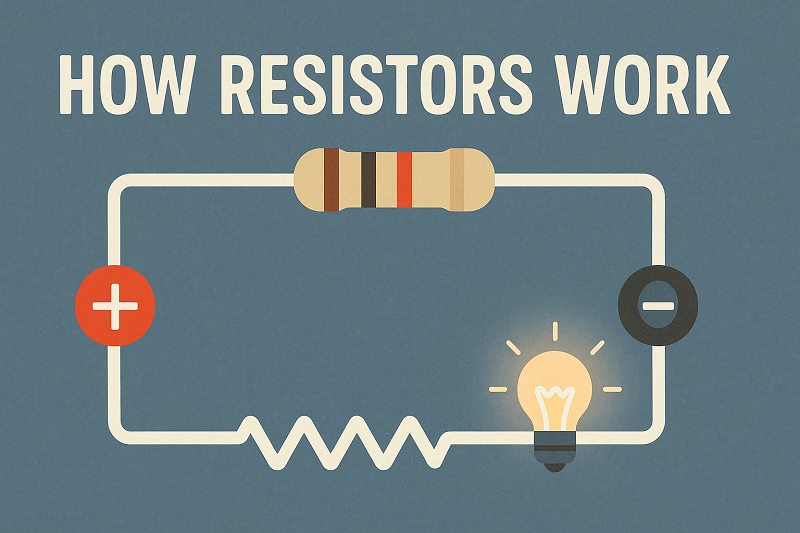
How Resistors Work: From Basic Principles to Advanced Applications2025-07-30
DC Switching Regulators: Principles, Selection, and Applications2025-05-30
FPGA vs CPLD: In-depth Analysis of Architecture, Performance and Application2025-05-07
MOSFET Technology: Essential Guide to Working Principles & Applications2025-05-04
SMD Resistor: Types, Applications, and Selection Guide2025-04-30