inverter Related Articles
Stay Ahead with Expert Electronics Insights,
Industry Trends, and Innovative Tips
- Electronic Components
- News Room
- General electronic semiconductor
- Components Guide
- Sort by
- Robots
- Transmitters
- Capacitors
- IC Chips
- PCBs
- Connectors
- Amplifiers
- Memory
- LED
- Diodes
- Transistors
- Battery
- Oscillators
- Resistors
- Transceiver
- RFID
- FPGA
- Mosfets
- Sensor
- Motors, Solenoids, Driver Boards/Modules
- Relays
- Optoelectronics
- Power
- Transformer
- Fuse
- Thyristor
- potentiometer
- Development Boards
- RF/IF
- Semiconductor Information
- Sensors
- PCB
- transistor
Ⅰ IntroductionThe energy storage units of several devices we come across every day are batteries; they are available in various shapes, sizes, parameters, and shapes. They can usually be found in vehicles, emergency power sources, mobile devices, tablets, iPads, and many other portable electronic devices. But not all devices will use the same type of battery; each device has its own specifications and power supply requirements, and to choose the right battery for your application, you will need a battery selection guide. So, the considerations to consider when choosing a battery for your next electronic product design will be investigated in this post. If you are completely new to batteries, then it is recommended that you read this article on battery types and their applications before continuing further to understand the fundamentals of batteries selection.CatalogⅠ IntroductionⅡ Some Factors to ConsiderⅢ Rechargeable / Non-Rechargeable BatteriesⅣ Availability of SpaceⅤ System Operating VoltageⅥ Operating TemperatureⅦ Capacity-Power & EnergyⅧ ChemistryⅨ CostⅩ Shelf LifeⅪ How to Choose a BatteryⅫ FAQⅡ Some Factors to ConsiderYou must be aware of the important parameters involved in its activity when selecting a battery for your application. The truth of the battery is that, because no battery is ideal, there is no common form of battery for all applications. You should be able to manage the exhaustion of other parameters when you choose to use one parameter of the battery. For example, if you want your battery to provide a lot of energy for your application, the internal resistance of the cell should be reduced, which can only be accomplished by increasing the surface area of the electrode. Inactive components such as current collectors and conductive aid are also improved by this because energy density is traded off to gain power. You must give up anything to get the other in a battery in order to get exactly what you want in your application. In the following picture, the important battery parameters are given.Now, to understand its significance and effect on battery efficiency during service, let's briefly look at each battery parameter.Ⅲ Rechargeable / Non-Rechargeable BatteriesIn deciding between a main and secondary battery, there might not be much uncertainty, you only have to decide whether you want the battery to be used once or several times. The primary (non-rechargeable) battery can be used for occasional applications such as toys, flashlights, smoke detectors, etc. They are also used in products such as pacemakers, wristwatches and hearing aids where charging is not feasible. The secondary (rechargeable) batteries can be used in applications where a standard power source such as cell phones, computers, cars, etc. is needed. Compared to primary batteries, secondary batteries often have a higher self-discharge rate because of their ability to recharge, which is an ignorant fact.Ⅳ Availability of SpaceThe batteries, including button cells, cylindrical cells, pouch cells and prismatic cells, are available in different shapes and sizes. In order to make your computer comfortably portable, the battery size really matters. AA, AAA and 9V batteries suitable for portable devices are the standard sizes available. In applications where there is less room but more power needed, lithium batteries (pouch type) are widely preferred. If the power demand is lower since they are very lightweight and the smallest of battery types, coin cells may also be considered.Ⅴ System Operating VoltageOne of the most significant characteristics of the battery, which is calculated based on the electrode & electrolyte used, is the battery voltage (Chemical Reaction). There is a common misconception that in any device, it is not the case that a fully discharged battery would have 0V. In fact, if the battery reads 0V, it's probably dead. A battery's output voltage should always be read from its nominal voltage level. Water is used as an electrolyte by the zinc-carbon battery and nickel-metal hydride battery and provides a nominal voltage of 1.2V to 2V, while the lithium-based batteries use organic electrolytes that can provide a nominal voltage of 3.2 to 4V. Most of the equipment's electronic parts run in the 3V voltage range. A single cell battery would be enough to power the equipment if you use a lithium-based battery. Note that the battery voltage will not be constant and will differ between the minimum value and the maximum value, depending on the battery power available. This is the minimum and maximum value shown below for each battery. Your nominal voltage would only be 3.2V to 4V if your circuit is running at 5V and you are charging it with a lithium battery. Boost converter circuits are used in these cases to convert the battery voltage required for the circuit to 5V. If your operating voltage is very high, like 24V or 12V, you can either use a 12V lead-acid battery or combine more than one lithium cell in series to increase the resulting output voltage if you need high power density.Ⅵ Operating TemperatureFor example, the battery operating with aqueous electrolytes can not be used in temperature conditions below 0 ° C as the aqueous electrolyte could be frozen below 0 ° C, in the same way, the lithium-based batteries could work up to -40 ° C, but the efficiency could be reduced. The battery performance can be drastically modified by the temperature. The optimum charging rate for the lithium-ion batteries is between the temperature ranges of 20 ° C to 45 ° C. If you want to use a lower current/voltage outside this temperature range, this will result in a longer charge time. Lithium dendrite plating can be produced in the electrolyte if the temperature drops below 5 ° C or 10 ° C, which must be avoided by trickle charging.Ⅶ Capacity-Power & EnergyThe battery's strength determines the battery's runtime. Battery power/capacity is expressed in watt-hours (Wh). By multiplying the battery voltage (V) by the amount of current a battery can produce over a given amount of time, the watt-hour is determined. The battery voltage is almost set and the current that can be supplied by a battery is written on the battery, expressed in the Ampere-hour rating (Ah or mAh). Consider a 5V battery with a capacity of 2 amp-hours (Ah), so it has a power of 10Wh. The 2Ah battery will produce 2 Amps for 1 hour or 0.2A for 10 hours or 0.02A (20mA) for 100 hours. At a given discharge rate, temperature, and cut-off voltage, battery manufacturers often specify the power, where the capacity always depends on all three variables. A battery's capacity can tell us how much energy it can supply to an application. For instance, consider a 12V, 10Ah car battery, the battery's actual capacity is 120Wh (12V x 10Ah), but it will have a capacity of 36Wh in a 3.6V laptop battery that has the same 10Ah dissipation (3.6Vx 10Ah). You can see from the example that the amount of power a car battery can hold is three times higher than a laptop battery, even though they have the same Ah.High-power batteries always have quick discharge capabilities at high drain speeds, such as power tools or applications for vehicle starter batteries, with poor energy capacity for most high-power batteries.Ⅷ ChemistryYou would have learned by this time that all the characteristics of a battery are often dependent on the chemistry involved in the battery, so when selecting the type of battery, you should be more conscious. Batteries are known as Lead Acid Batteries, Alkaline Batteries, Ni-Cad Batteries (Nickel Cadmium), Ni- MH Batteries (Nickel Metal Hydride), Li-Ion (Lithium-Ion) and LiPoly (Lithium Polymer) Batteries based on the chemistry used in the process.Ⅸ CostThe battery will be one of the costly things in the Bill of Materials (BOM) for most portable electronic devices, so it will impact the total cost of your electronic applications most of the time. Therefore, you should know your product specifications and budget and then pick the right battery for your product.Ⅹ Shelf LifeNot all batteries are used directly after development, but they remain on the shelf for a long time before they are used. A battery's shelf life informs you how long it is possible to keep a battery unused. In primary batteries, the shelf life is largely known as a reality only because the secondary batteries can be recharged once they are used. The battery could sit idle there for years, for example, in a fire alarm siren device, until it detects a fire and activates the alarm. The battery maintains its output even if it is left unused for a long time, so care should be taken.Ⅺ How to Choose a BatteryNow that we've looked at the criteria that you should consider before selecting the battery for a portable electronic application, let's look at the common battery selection cases. Bear in mind that these are just tips and not difficult written guidelines.• You can use lead-acid batteries for items that consume more electricity, including projectors, large sound systems, and motorized projects. You can go for 'Sea deep cycle' batteries if you're going to have heavy battery use.• You can go for the lithium coin cells or small lithium polymer cells if your electronics need to be very small, about an inch on either side.• If you are going to manufacture the part, use inexpensive alkaline batteries of common sizes in large quantities. So the client considers it easy to replace them.• If you want the product to be user-serviceable, the battery can be adjusted by the customers themselves for batteries of 9V or AA capacity.• Use 3 Alkaline (4.5V) or 4NiMH (4.8V) cells if the circuit needs an input of approximately 5V.• Use a battery holder from your local shop to build a rechargeable battery pack and stick it with NiMH batteries and then begin recharging your battery.• If you want to replace any of the rechargeable batteries with your alkaline battery, test your system to make sure it will work at a lower voltage without any problems.• Always use a high-quality charger with sensors to ensure proper charging and trickle charging if you want your battery to have a longer life span since using a cheap charger would destroy your cells in the battery pack.How To Buy the Right Battery for Your CarⅫ FAQ1. How do I choose a battery?Factors to be considered while choosing a BatteryRechargeable / Non-Rechargeable batteriesAvailability of SpaceSystem Operating VoltageOperating TemperatureCapacity of the battery - Power & EnergyBattery ChemistryCost of Battery 2. What size battery does my car take?Your car's battery group size can be found in the battery section of the owner's manual. If you no longer have access to your original owner's manual, you may also consult the reference guides provided by battery retailers to determine the appropriate battery group size for your car. 3. How many Ah battery do I need for home?The battery you need will have to be powerful enough to provide the required power for at least 2 hours. As battery voltage is generally taken at 12 Volts, here is how you calculate the battery capacity. So, a battery with capacity equal to or higher than 140 Ah will suffice for your home. 4. How do I choose the right battery?To get the right battery power for your vehicle, you need to consider the cold cranking amps (CCA) and reserve capacity (RC). Cranking amps is the measure of your battery's starting power and should always match the standard requirements of your vehicle. Check the owner's manual for these specifications. 5. What brand of car battery lasts the longest?Best Rated Car Batteries for Long Lasting Performance 2020Optima RedTopExide Edge AGM Sealed BatteryOdyssey PC680ACDelco 94RAGM Professional
kynix On 2021-01-18
This technical article will introduce 10 common problems you might encounter with when apply inverter in your project. What is Inverter? This video explains what inverter is and which inverter you need in your project. 1. Leakage Circuit Breakers are Prone to Tripping When Using Variable-Frequency Drive. The output waveform of the ac drive contains higher harmonic, and the leakage current will be generated between the motor and the cable between the inverter and the motor, what’s more, the leakage current is much larger than that of the motor driven by the power frequency. The leakage current at the output side of the inverter is about three times that of the power frequency operation, in addition, adding the leakage current of the motor. The operation current of the selected leakage protector should be 10 times greater than that of the leakage current at the power frequency. 2. The Temperature Rise of the Motor Higher Than That of the Power Frequency When the AC Drive is Used. The output voltage waveform of the inverter is not sinusoid wave, but distorted wave, the motor current under rating torque is about 10% more than the power frequency, so the temperature rise is slightly higher than the power frequency. 3. How to Adjust Torque Boost. A. When the torque boost setting is too high and the load is very small, the current will increase due to the magnetic flux saturation of the motor core, and the variable-frequency drive may run overcurrent protection. Therefore, in order to improve the motor efficiency, the setting should be reduced when the load is lightened. B. For heavy load, the voltage drop loss caused by stator winding and motor cable can be compensated by increasing the torque-boost setting value. 4. Carrier Frequency and How to Adjust It. A. The output voltage of the SPWM converter is a series of pulses whose pulse frequency is equal to the carrier frequency. B. In the current of the motor, there is a strong harmonic component of the carrier frequency, which will cause the oscillation of the iron core of the motor and emit noise. If the frequency of the noise is equal to the inherent oscillation frequency of the motor core, the noise will increase. In order to reduce it, the frequency inverter can adjust the carrier frequency in a certain range to avoid the resonance frequency of the noise. C. Harmonic component of carrier frequency has strong radiation, which will cause electromagnetic interference to external electronic equipment. D. From the point of view of improving the current waveform, the higher the carrier frequency, the smoother the current waveform. However, the electromagnetic interference to the outside is also stronger. E. The higher the carrier frequency is, the less the motor noise is, but the greater the switching loss of power device is, the more serious the frequency converter is. The lower the carrier frequency, the greater the motor noise, and the switching loss of the inverter is lower too. 5. DC Brake (1) It is used to control the precise parking of some equipments, to avoid "crawling" at low speed, and to start the function at the time of shutdown. (2) Since the frequency conversion speed control system always starts from the lowest frequency, if the motor starts with a certain speed, and the frequency converter does not set the speed tracking function, the overcurrent or overvoltage will appear. 6. Should the Rating Frequency of the Load Motor be the Same as That of the Motor? This function parameter: the fundamental frequency A. If the fundamental frequency is set below the rated frequency of the motor, the motor voltage will increase, and the output voltage will increase will lead to the increase of the magnetic flux of the motor, making the saturation of the flux, the distortion of the exciting current, and the occurrence of a very large peak current. As a result, the converter tripped because of overcurrent. B. If the fundamental frequency is higher than the rated frequency of the motor, the voltage and load capacity of the motor will decrease. Difference Compensation Depending on the magnitude of the load current, the output frequency of the ac drive (internal improvement, actual display constant) is appropriately increased to compensate for the increase in the rotational difference due to the increase in the load. 7. AVR Function When the power network voltage drops, the reference frequency is reduced automatically and the flux K*U/F is constant, so as to ensure the load capacity of the motor unchanged. Kinds of Common Load: 1)Constant Torque Load Although the rotational speed is different, resistance torque load is basically constant. The output power is proportional to the rotational speed, like the belt conveyer. 2)Constant Power Load Although the rotational speed is different, load power is basically constant. The output torque is proportional to the rotational speed. Like a winding device, such as a thin film or sheet. 3)Square Load The resistance torque load is proportional to the square of the rotational speed. Such as fans and pumps. 8. Frequency Control of Several Special Motors (1) Wound Rotor Asynchronous Motor The rotor winding of a wound rotor asynchronous motor is a set of star-schema three-phase windings. The end points of the three-phase windings are connected to the three collector rings, through it to collect the brush and the external resistor (starting or adjusting speed). After adopting the frequency converter to adjust the speed, the rotor winding does not need to connect the resistor, so the terminal of the three-phase winding can be connected directly with the wire. (2) Magnetic Brake Motor It is composed of ordinary motor and magnetic brake. The motor and the magnetic brake are connected to the power supply at the same time, and the armature of the electromagnet is absorbed, which makes the motor rotor rotate freely. After cutting off the power supply, the excitation winding of the brake powers off and the rotor stops quickly. The excitation winding circuit of the electromagnet should be connected to the input side of the frequency converter after adopting the frequency converter, and turned on at the same time as motor. 9. Capacity Selection of a Single Inverter with Multiple Motors. A. Simultaneous Start-up The rated current of the inverter should be greater than the sum of the maximum operating current of several motors. B. Starting Time in Turn The rated current of the converter shall be greater than the sum of the rated current of the motor other than the maximum motor plus the seven-times rated current of the maximum motor. 10. Interference Mode and Treatment of Inverter Propagation Mode 1) Radiatedradiated Interference 2) Conducted Interference Anti-jamming Measures Interference signals propagating by radiation are weakened mainly by wiring and shielding the radioactive sources and the interfered lines. For the interference signal propagating through the circuit, the filter, reactor or magnetic ring are added to the input and output side of the inverter. The Specific Methods and Precautions are as Follows: (1) Signal lines and power lines should be vertically crossed or slotted separately. (2) Do not use different metal wires to connect to each other. (3) Shielding tube (layer) should be reliably grounded and ensure continuous and reliable grounding across the whole length. (4) Twisted-pair shielded cables should be used in signal circuits. (5) Grounding contacts of the shield layer should away from the frequency converter as far as possible, and separated from the connecting location of the frequency converter. (6) The magnetic ring can be used on the input power line and output line of the inverter. The method is as follows: the input line goes around four times in the same direction and the output line around three times in the same direction with magnetic rings. When winding the wire, the magnetic rings should close the frequency converter as far as possible. 7) Shielding and other anti-interference measures, such as the temperature control of injection molding machine, can be taken for the equipment. FAQ 1. What does an inverter do? Inverters are also called AC Drives, or VFD (variable frequency drive). They are electronic devices that can turn DC (Direct Current) to AC (Alternating Current). It is also responsible for controlling speed and torque for electric motors. 2. What is the purpose and function of an inverter? An inverter converts the DC electricity from sources such as batteries or fuel cells to AC electricity. The electricity can be at any required voltage; in particular it can operate AC equipment designed for mains operation, or rectified to produce DC at any desired voltage. 3. What is inverter and how it works? The first thing to keep in mind when it comes to enriching your understanding of the internal structure of an inverter device, is that the converter circuit converts alternating current (AC) coming from the power source into direct current (DC), and the inverter circuit changes the converted direct current (DC) back into alternating current (AC). They work as a set. 4. Does inverter really save electricity? An inverter is energy saving technology that eliminates wasted operation in air conditioners by efficiently controlling motor speed. ... Compared to non-inverter type air conditioners, air conditioners with inverters have less power loss and can save in energy. 5. What can you plug into an inverter? A power inverter changes DC power from a battery into conventional AC power that you can use to operate all kinds of devices ... electric lights, kitchen appliances, microwaves, power tools, TVs, radios, computers, to name just a few. 6. How many hours can an inverter last? Usually, you can expect your inverter battery to last anywhere from 5 to 10 hours when it is fully charged. Most inverters show an estimated as soon as they start powering the appliances. 7. How many watts inverter do I need for home? Peak output is the wattage that an inverter can supply for short periods of time when the demand spikes, while continuous output is the limit for normal operation. If your devices draw a combined total of 600 watts, then you need to buy an inverter that has a continuous output rating of 600 watts 8. Is UPS and inverter same? The UPS is the electric device that has a rectifier for providing the backup power to the system whereas the inverter converts DC into AC. The main function of the UPS is to store the electric supply whereas the inverter converts the AC power into DC power. 9. Where should I install an inverter in my house? To install the inverter, place the inverter assembly on top of the main housing chassis in such a way that the inverter faces forward. Remember to remove power at the electricity board meter of the home. 10. What size inverter do I need to run a laptop? Volts (120) x Amps = Watts. For example if your DVD player draws 100 watts and your laptop another 100 watts, a minimum 300-watt inverter is recommended. If the item is motor driven, it requires additional start-up (surge) wattage (typically 2-3 times the continuous wattage required) to start the device. 11. What are the types of inverter? There are 3 major types of inverters - sine wave (sometimes referred to as a "true" or "pure" sine wave), modified sine wave (actually a modified square wave), and square wave. 12. How long will a 12V battery last with an inverter? For example: 12V 100Ah battery will be able to power 1000W inverter for ~30 minutes, 12V 200Ah battery will be able to power 2000W inverter for ~30 minutes, etc. 13. Is inverter An gate? An Inverter is a Logic Gate that has only one Input, it outputs the opposite Logic State of its Input. The Inverter is also called NOT Gate. 14. What is the disadvantage of inverter AC? If an inverter AC has lower capacity than requirement, the compressor runs at higher speeds for longer duration of time thereby increasing power consumption. On the other hand, if an inverter AC has higher capacity than heat load, it will run for short cycles and render the room over cooled and uncomfortable. 15. What is the difference between Eco mode and UPS mode in an inverter? In eco-mode the load is normally powered by the bypass path, allowing raw mains power to supply the load, and the UPS inverter is engaged only when the utility mains fails. In eco-mode the UPS inverter operates in a “standby” mode. In principle, this is a simple change in the control software of the UPS. You May Also Like About Operational Amplifier LM358: 24 Classical Circuits Switching Power Supply Guide: Protection Circuit Simplify Current Monitoring by Using Diode | Power Supply Negative End A Complete Guide to Solid State Drive (SSD)
kynix On 2018-10-22
It's a summer night in 2025, and suddenly a power cut strikes. Naturally, you expect your ceiling fan to keep spinning, but instead, it slows to a halt. When you check your power backup system, you find the inverter body is excessively hot to the touch. Worse yet, the battery itself feels dangerously warm. This overheating issue is a common challenge in modern households with increasing energy demands. However, there is no need to panic; with the right maintenance strategies, you can resolve this heating problem and extend your system's lifespan.Here are some professional solutions for the inverter battery overheating problem:1. Monitor the maximum load capacity:Overloading is a primary cause of battery overheating. If your power draw exceeds the inverter's rated capacity, internal resistance spikes, generating excess heat. Read your instruction manual to note the optimum load capacity. In 2025, many "Smart Inverters" feature LCD displays or mobile apps that show real-time load percentage—use these tools to ensure your connected devices never exceed the maximum limit.2. Inspect your connections for resistance:Faulty wiring is a silent fire hazard. Loose connections between the inverter, the mains, and the battery terminals create electrical resistance, which manifests as heat. You must check these connections frequently. Ensure nuts and bolts are tightened securely and that current is flowing without obstruction to prevent unnecessary thermal buildup.3. Optimize charging cycles (Avoid Deep Discharge):Older advice suggested fully discharging batteries, but for modern Lead-Acid and Tubular batteries, frequent deep discharging significantly shortens their lifespan and increases heat during recharge. Instead, aim for shallow cycles. Ensure your battery is fully recharged after use. If you anticipate a long period of inactivity, reliable charging habits prevent the hardening of electrolytes (sulfation), which is a leading cause of overheating.4. Eliminate corrosion on battery terminals:Carbon buildup and rust on battery terminals act as insulators, forcing the system to work harder and generate heat. regularly inspect your terminals for white or greenish deposits. Clean any corrosion using a solution of hot water and baking soda with an old toothbrush. Once clean and dry, apply a thin layer of petroleum jelly (Vaseline) to the terminals to seal them against future oxidation.5. Maintain electrolyte levels with distilled water:For Flooded Lead-Acid or Tubular batteries, electrolyte loss is natural over time. Low water levels expose the lead plates, causing rapid overheating and permanent damage. Check the water level indicators once a month. Top up *only* with distilled water to the specified mark. Note: Never use tap water, as impurities will damage the cells. If you use Sealed Maintenance Free (SMF) or Lithium batteries, this step does not apply.6. Ensure proper ventilation:Placement is critical. Batteries emit heat during charging and discharging. If they are stored in a closed cabinet or a room with poor airflow, that heat accumulates. The ideal operating temperature for most inverter batteries is around 25°C (77°F). Ensure there is at least 6 inches of clearance around the unit for air circulation to dissipate heat effectively.Leading manufacturers like Microtek have updated their technology for [Current Year] to include smart thermal management and high-efficiency designs. investing in these modern, sustainable power sources can provide a pocket-friendly solution that minimizes maintenance faults.
Kynix On 2016-11-21
Join our mailing list!
Be the first to know about new products, special offers, and more.
Feature Posts
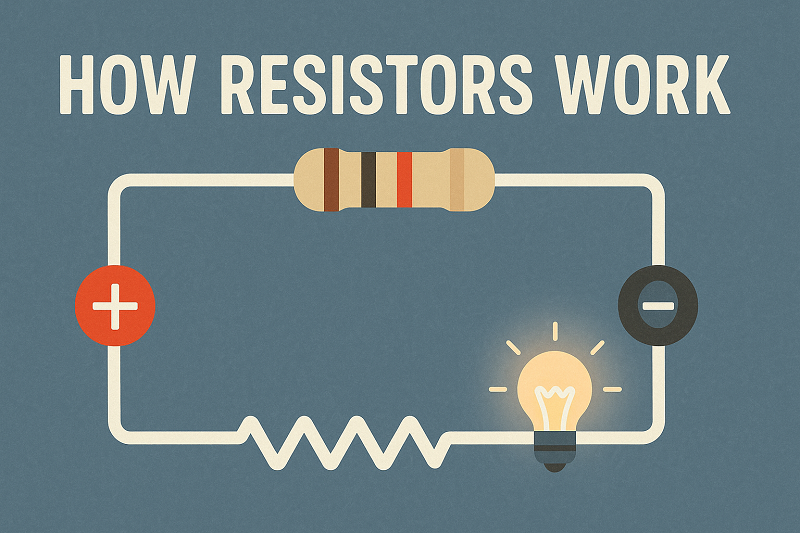
How Resistors Work: From Basic Principles to Advanced Applications2025-07-30
DC Switching Regulators: Principles, Selection, and Applications2025-05-30
FPGA vs CPLD: In-depth Analysis of Architecture, Performance and Application2025-05-07
MOSFET Technology: Essential Guide to Working Principles & Applications2025-05-04
SMD Resistor: Types, Applications, and Selection Guide2025-04-30