ic Related Articles
Stay Ahead with Expert Electronics Insights,
Industry Trends, and Innovative Tips
- Electronic Components
- News Room
- General electronic semiconductor
- Components Guide
- Sort by
- Robots
- Transmitters
- Capacitors
- IC Chips
- PCBs
- Connectors
- Amplifiers
- Memory
- LED
- Diodes
- Transistors
- Battery
- Oscillators
- Resistors
- Transceiver
- RFID
- FPGA
- Mosfets
- Sensor
- Motors, Solenoids, Driver Boards/Modules
- Relays
- Optoelectronics
- Power
- Transformer
- Fuse
- Thyristor
- potentiometer
- Development Boards
- RF/IF
- Semiconductor Information
- Sensors
- PCB
- transistor
SummaryThe invention of electril trucks has bring a lot of benefit for human being. An electric truck is a truck powered by electricity. For information on trucks using a combination of internal combustion engines and electric propulsion, see Hybrid electric truck. Now they are having a moment in the spotlight,however,they still have a long haul cause the costs and other limitations. Tesla Inc. plans to unveil a semi tractor-trailer this week, its first foray into trucking after more than a decade of making cars and SUVs. German automaker Daimler AG showed off its own electric semi last month and says it could be on sale in a few years. Truck rental company Ryder just added 125 all-electric vans made by California startup Chanje to its fleet. "It's kind of like the checkered flag is being waved," said Glen Kedzie, energy and environmental counsel with the American Trucking Associations. "We've seen different fuels come and go, and electric has gotten to the front of the line." According to the data of Navigant Research, global sales of pure electric trucks are expected to grow exponentially from 4,100 in 2016 to 70,600 in 2026 as battery costs fall and more options enter the market.elivery companies, mail services and utilities will be among the biggest purchasers, and most of the growth will come from Europe, China and the U.S. Most electric trucks on the road will be medium-duty vehicles like delivery vans or garbage trucks. They're quiet and emission-free, and they can be plugged in and charged at the end of a shift. They're ideal for predictable urban routes of 100 miles or less; a longer range than that requires more batteries, which are heavy and expensive. Battery Costs IssueHowever,it's cost that cause a big issue. A medium-duty electric truck costs about $70,000 more than equivalent diesel trucks, according to the consulting firm Deloitte. Buyers considering electrics have to weigh what they can save on fuel and maintenance costs, since electrics have fewer parts.Heavy-duty trucks like electric semis have even further to go before they can be competitive with diesels. Some of those trucks are used for shorter routes, but to achieve a longer range of 300 miles, they require more batteries. Expensive EletrificationDeloitte estimates electrification adds around $150,000 to the cost of a heavy-duty vehicle, or more than double the cost of some diesel tractor-trailers. Electric semi trucks will have the added problem of long charging times and little highway charging infrastructure."I see it being relevant but not ready for prime time," Chanje CEO Bryan Hansel said of long-haul electric trucks. He thinks it will be five years or more before the battery technology and infrastructure can support cross-country electric trucking. "It's a big prize, but the physics haven't caught up yet," he said. Different ThinkingOther analysts,however,believe that this situation will change. Battery costs are expected to fall significantly over the next decade as technology improves. Deloitte expects battery costs for trucks to fall from $260 per kilowatt-hour in 2016 to $122 in 2026. That would cut the cost of a 300 kWh battery pack—like the one in Daimler's prototype semi —from $78,000 to $36,600. At the same time,regulations will drive interest in electric trucks. In the U.S., trucks must meet stricter emissions standards through 2027 under rules that went into effect last year. China is also tightening emissions standards. And several major cities, including Paris and Mexico City, have called for a ban on diesels by 2025 to improve air quality. Incentives are also enticing companies to add electric trucks to their fleets. Companies that buy or lease vans from Chanje are eligible for an $80,000 voucher per vehicle from the state of California, for example. France pays out 10,000 euros ($11,669) to buyers who replace diesel vehicles with electric ones. Companies' GoalsCompanies are also experimenting with electrics—and other alternatives, like natural gas—because they want to meet their own sustainability goals and figure out the optimal mix for their fleets. United Parcel Service, for example, has 300 electric trucks in its global fleet of 100,000 vehicles, mostly in the U.S. and Europe, said Scott Phillippi, UPS's Senior Director of Maintenance and Engineering for international operations. Many of UPS's delivery routes require trucks to travel less than 100 miles per day, a range easily met by an electric truck, Phillippi said. He said electric trucks also help the company take advantage of incentives. UPS has set a goal of having 25 percent of its fleet be made up of alternative fuel vehicles by 2020, in part to encourage manufacturers to keep building and improving such trucks. "The proof of concept time is over," he said. "Everybody is starting to agree it's not a matter of if, it's a matter of when."
kynix On 2017-11-17
SummaryThe robot comes perfectly if they can walk more naturally for humans.However,it's not an easy job for robots and their designers. Walking on two legs is actually a complicated task,requiring several muscles to perform delicate balancing acts.That's why in spite of years of major technological advancements in the field,humanoid robots are still far from being able to get around easily and reliably. Engineers at EPFL's Biorobotics Laboratory are testing new walking algoritms on a plateform called COMAN, short for COmpliant HuMANoid. This 95-cm-tall humanoid is designed specifically for studying walking – which is why it has no head. COMAN was developed under the EU AMARSi project and is being used by several research teams. The EPFL team is looking specifically at the "brains" of the machine. "We developed algorithms that can improve the robot's balance while it's walking," says Hamed Razavi, a researcher scientist at the Biorobotics Lab. Body One:Climbing Stairs and Opening Doors The algorithms are geared towards three types of realworld applications. The first is carrying out rescue missions in disastrous scenarios. "In environments designed by humans - like a nuclear power plant where there are stairs to climb and doors to open – humanoid robots can get around more easily than robots with wheels," says Razavi. The second is helping with tasks like carrying heavy boxes or moving objects (see box). And the third is creating exoskeletons for the disabled. "Making the robots more stable is just the tip of the iceberg," says Razavi. The next step is refining the algorithms so that the humanoids have a wider range of movement and can overcome obstacles and walk on irregular or sloped surfaces. Two:In Harmony with Symmetries One of COMAN's distinguishing features is its joints,which are integrated with elastic elements that give it greater flexibility when performing different tasks.The EPFL team came up with a novel control algorithm for the robot, based on the existing symmetries in the structure and dynamics of the robot' as well as the mathematical equations representing the robot dynamics. "You could say we're working in harmony with these symmetries rather than against them. As a result, we obtain a more natural and robust walking gait," says Razavi. The control algorithm uses sophisticated computer programs to carefully analyze the date received from the robot – including its position, velocity, joint angles, etc. – and sends appropriate commands to the motors, telling them what to do in order to maintain the robot's balance. "For example, if someone pushes COMAN, for example, our algorithms will calculate exactly where its foot should land in order to counteract the perturbation," says Razavi. Three: Humanoids Helping Humans As part of this project,Jessica Lanini and Hamed Razavi studied how two people carrying an object together are able to walk,turn and speed up in a coordinated manner - without communicating with each other.Their findings,recently published in PLOS ONE,indicate that the two people automatically synchronize their steps, like a quadruped. Now the researchers plan to apply their results to humanoid robots. Lanini explained:"Whether for manufacturing or natural disasters, we need robots that can interact with humans and help us carry heavy objects,but such robots don't exist. That's because, in order to operate safely and effectively, the robots would need to be able to make decisions and respond to unexpected circumstances." But such robots don't exist. The reason is that in order to operate safely and effectively, the robots would need to be able to make decisions and respond to unexpected circumstances." Article provided by Ecole Polytechnique Federale de Lausanne.
kynix On 2017-11-14
Article provided by University of Illinois at Urbana-ChampaignArticle edit by kynix A new methord to make Green LEDs more brighter and more efficient have been developed by researchers who at the University of lllinois at Urbana Champaign. Researchers have created gallium nitride(GaN) cubic crystals grown on a silicon substrate that are capable of producing powerful green light for advanced solid-state lighting. "This work is very revolutionary as it paves the way for novel green wavelength emitters that can target advanced solid-state lighting on a scalable CMOS-silicon platform by exploiting the new material, cubic gallium nitride," said Can Bayram, an assistant professor of electrical and computer engineering at Illinois who first began investigating this material while at IBM T.J. Watson Research Center several years ago. "The union of solid-state lighting with sensing (e.g. detection) and networking (e.g. communication) to enable smart (i.e. responsive and adaptive) visible lighting, is further poised to revolutionize how we utilize light. And CMOS-compatible LEDs can facilitate fast, efficient, low-power, and multi-functional technology solutions with less of a footprint and at an ever more affordable device price point for these applications." GaN was formed ethier hexagonal or cubic typically. HExagonal GaN is thermodynamically stable and is by far the more conventional form of the semiconductor. However, hexagonal GaN is prone to a phenomenon known as polarization, where an internal electric field separates the negatively charged electrons and positively charged holes, preventing them from combining, which, in turn, diminishes the light output efficiency. Until now, the only way researchers were able to make cubic GaN was to use molecular beam epitaxy, a very expensive and slow crystal growth method when compared to the widely used metal-organic chemical vapor deposition (MOCVD) method that Bayram used. Bayram and his graduate student Richard Liu made the cubic GaN by using lithography and isotropic etching to create a U-shaped groove on Si (100). This non-conducting layer essentially served as a boundary that shapes the hexagonal material into cubic form. "Our cubic GaN does not have an internal electric field that separates the charge carriers—the holes and electrons," explained Liu. "So, they can overlap and when that happens, the electrons and holes combine faster to produce light." At the end, Bayram and Liu still believe their cubic GaN method may lead to LEDs free from the "droop" phenomenon that has plagued the LED industry for years. For LED lighting color like green, blue, or ultra-violet LEDs , their light-emission efficiency declines as more current is injected, which is characterized as "droop." "Our work suggests polarization plays an important role in the droop, pushing the electrons and holes away from each other, particularly under low-injection current densities," said Liu, who was the first author of the paper, ""Maximizing Cubic Phase Gallium Nitride Surface Coverage on Nano-patterned Silicon (100)", appearing Applied Physics Letters. Having better performing green LEDs will open up new avenues for LEDs in general solid-state lighting. For example, these LEDs will provide energy savings by generating white light through a color mixing approach. Other advanced applications include ultra-parallel LED connectivity through phosphor-free green LEDs, underwater communications, and biotechnology such as optogenetics and migraine treatment. Having better performing green LEDs will open up new avenues for LEDs in general solid-state lighting. For example, these LEDs will provide energy savings by generating white light through a color mixing approach. Other advanced applications include ultra-parallel LED connectivity through phosphor-free green LEDs, underwater communications, and biotechnology such as optogenetics and migraine treatment.
kynix On 2017-11-10
Two new 0°to 360°angle sensor ICs which can provide contactless high-resolution angular position information based on magnetic Circular Vertical Hall(CVH) technology has been introduced by Allegro MicroSystems, a leader in developing, manufacturing and marketing high-performance semiconductors.Called A1333 and A12339, the devices include a system-on-chip (SoC) architecture the involves: digital signal processing,CVH front end and supports multiple digital output formats as well as the first moto commutation ouputs (UVW) and encoder output(A,B,I) for angle sensor ICs which operate at either 3.3V~5.5V.CatalogI What is A1333?II Why A1333 be designed?III What is A1339?IV Why A1339 be designed?V The 0° to 360° Angle Sensor ICs I What is A1333? The A1333 is a 360° angle sensor IC based on magnetic Circular Vertical Hall (CVH) technology that provides non-contact, low-latency, high-resolution angular position information. It has a system-on-chip (SoC) architecture that includes: CVH front-end, digital signal processing and motor commutation (UVW) or encoder outputs (A, B, I). It also includes on-chip EEPROM technology, capable of supporting up to 100 read/write cycles for flexible end-of-line programming of calibration parameters.The A1333 is ideal for automotive applications requiring 0° to 360° angle measurements, such as electronic power steering (EPS), rotary PRNDL, and throttle systems. - The A1333 supports customer integration into safety-critical applications. - The A1333 is available in a two-chip 24-pin eTSSOP and a single 14-pin TSSOP package. These packages are lead (Pb)-free and feature a 100% matte tin-lead frame plating. - All in all, A1333 is a Precision, High Speed, Hall-Effect Angle Sensor IC with Integrated Diagnostics for Safety-Critical Applications. II Why A1333 be designed?Allegro’s single and dual die A1333 devices were designed in accordance with ISO26262:2011 requirements for hardware product development for use in safety-critical applications(pending assessment). The single die version was designed to meet ASIL B requirements and the dual die was designed to meet ASIL D requirements when integrated and used in conjunction with the appropriate system level control, in the manner proscribed in the A1333 Safety Manual.Please click here to download a copy of the A1333 high speed, Hall-effect angle sensor IC data sheet.III What is A1339? The A1339 is a 360° angle sensor IC based on magnetic Circular Vertical Hall (CVH) technology that provides non-contact, low-latency, high-resolution angular position information. It has a system-on-chip (SoC) architecture that includes: CVH front-end, digital signal processing and motor commutation (UVW) or encoder outputs (A, B, I). It also includes on-chip EEPROM technology capable of supporting up to 100 read/write cycles for flexible end-of-line programming of calibration parameters. the A1339 is ideal for automotive applications requiring 0° to 360° angle measurements, such as electronic power steering (EPS), rotary PRNDL and throttle systems. - The A1339 supports customer integration into safety-critical applications. - The A1339 is available in a two-chip 24-pin eTSSOP and a single 14-pin TSSOP package. These packages are lead (Pb)-free and feature a 100% matte tin-lead frame plating.All in all, A1339 is a Precision, High Speed, Hall-Effect Angle Sensor IC with Integrated Diagnostics for Safety-Critical Applications. IV Why A1339 be designed?Allegro’s single and dual die A1339 devices were designed in accordance with ISO26262:2011 requirements for hardware product development for use in safety-critical applications(pending assessment). The single die version was designed to meet ASIL B requirements and the dual die was designed to meet ASIL D requirements when integrated and used in conjunction with the appropriate system level control, in the manner proscribed in the A1339 Safety Manual.Please click here to download a copy of the A1339 high speed, Hall-effect angle sensor IC data sheet. V The 0° to 360° Angle Sensor ICsThe A1333 and A1339 are available in single- and dual-mode versions for systems requiring redundant sensors. They both include on-chip EEPROM technology, capable of supporting up to 100 read/write cycles for flexible end-of-line programming of calibration parameters. Both devices are ideal for automotive applications requiring angular measurements from 0° to 360°, such as motor position measurements for steering and braking systems and other high-speed actuators for pumps and transmissions that require low latency and high resolution. a1339 alsoThe A1339 also includes an integrated turns counter and a low power mode feature that allows it to track changes in the target magnetic field in automotive applications, even when the vehicle is in a "key off" state.Both the single-mode and dual-mode A1333 and A1339 devices are designed to meet the hardware development requirements of ISO 26262:2011 (to be evaluated). The single-chip version is targeted to meet ASIL B requirements, while the dual-chip product is designed to meet ASIL D requirements when used in conjunction with appropriate system-level controls. The stacked nature of the dual-chip assembly provides better channel-to-channel matching than traditional side-by-side assembly techniques. This is a key parameter in safety critical applications where the outputs of two sensors are compared to ensure safe system operation.
kynix On 2017-11-08
There are a good news that ERP Power LLC,one of the leading provider of small,smart and connected LED drivers for the lighting industry,lanched the world's smallest programmable output drivers with wireless communication for indoor lighting applications on 25.Oct.,2017 and demonstrated it on 27-30th,Oct.,2017 at Hongkong. According to Michael Archer,the CEO of ERP,"ERP is accelerating the Internet of Lights by embedding intelligence, connectivity and dimming into a very small footprint,every LED luminaire design engineer who has held our driver in their hand simply says ‘Wow!' and comments on the industry-leading combination of compact size, extensive dimmer compatibility, and high efficiency at competitive cost. There is no longer a need to compromise the creative style or capabilities of new lighting fixture designs." The UL Class P next generation ERP driver design is one-fifth smaller than similar capacity drivers in the industry; programmable for flexible deployment in a broad range of constant current applications; connected with wired and wireless controls; and high efficiency to reduce electricity consumption. The new ERP drivers are designed in California and built to last with a 5-year limited warranty. Now The patent-pending power electronics design includes 30W/40W/50W models which help LED lighting fixture manufacturers meet the technical requirements of ENERGY STAR®, California Title 24 and the DesignLights Consortium (DLC) specifications. Programmable OutputCustomers can deploy a single driver across multiple lighting fixtures if the power output is programmable. This lowers inventory costs in the customer's supply chain. The ERP next generation driver output is high efficiency and fully programmable in a wide range of output currents while maintaining efficiency of 90% from 50-100% of load with power factor greater than 0.9 and THD less than 20%. ERP’s programmable LED drivers with integrated Bluetooth® mesh communications make dimming, scheduling, and ambient scene control as simple as a swipe of your finger or the sound of your voice. The secure, plug-and-play, Bluetooth® mesh wireless controls architecture leverages a turnkey solution of app, cloud, and firmware pre-integrated with proven LED drivers designed to last for the lifetime of the installation. Tri-Mode DimmingExtensive dimmer compatibility is provided through ERP Power's unique Tri-Mode Dimming™ feature which provides TRIAC, ELV & 0-10 V support and dim-to-off along with options for alternative linear and logarithmic dimming profiles from 1-100%. Wireless ConnectivityOther wireless controls based on Wi-Fi, ZigBee, or IEEE 802.15.4 are available in addition to wired controls protocol support for DALI, DMX, Lutron and others.
kynix On 2017-11-07
As one of the electornic hobbier,I like to make all kinds of electronic projects. Every time I ended an electronic project and saw my trophy,I am so happy and perfectly satisfied. Today I wolud like to share an electronic about LED motorcycle helmet. The costs of helmet you made by yourself are less and meaningful. Now let me introduce it step-by-step. Parts we need: Helmet ( any kind you like)LED RGB Addressable StripQduino MiniLiPo BatteryBattery ChargerString or threadTapeHot GlueSoldering kitWireVelcro tabs Process to create: 1. Plan out your LED design with string and tape (make sure you have a good place to hide the electronics!)2. Cut the LED roll into strips to fit the helmet (make sure they are all in the right direction to make a circuit)3. Stick the LED strips onto the helmet - they are sticky enough to stay on at least temporarily4. Cut open the plastic at the end of the strips to expose the leads you need to solder5. Solder all the LED strips together (this may take some time, so get comfortable)6. Solder the Qduino Mini to the end of the LED circuitGND - GNDDin - D85V - VCC7. Count the number of LEDs and program the Qduino Mini8. Test with a LiPo Battery9. Insulate all solder joints with hot glue, as well as any wires that might be exposed if their plastic casing melted off while soldering10. Optional: If the LED strips don’t stick onto your helmet as well as you’d like, you can either hot glue them or use an adhesive to make sure they won’t come off while riding11. Use Velcro to add the Qduino Mini and LiPo battery to the inside of your helmet12. Plug in, turn on and ride off in style. Trophy Picture Feeling: I'm also an avid motorcycle rider and now I always wear it to go for a drive ! More passer-by will look at me !
kynix On 2017-11-03
Join our mailing list!
Be the first to know about new products, special offers, and more.
Feature Posts
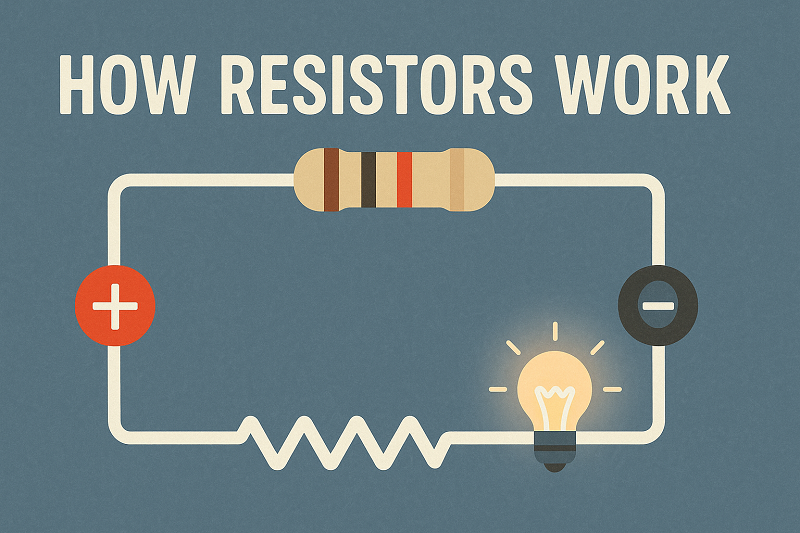
How Resistors Work: From Basic Principles to Advanced Applications2025-07-30
DC Switching Regulators: Principles, Selection, and Applications2025-05-30
FPGA vs CPLD: In-depth Analysis of Architecture, Performance and Application2025-05-07
MOSFET Technology: Essential Guide to Working Principles & Applications2025-05-04
SMD Resistor: Types, Applications, and Selection Guide2025-04-30