The Kynix Blog
Stay Ahead with Expert Electronics Insights,
Industry Trends, and Innovative Tips
- Electronic Components
- News Room
- General electronic semiconductor
- Components Guide
- Sort by
- Robots
- Transmitters
- Capacitors
- IC Chips
- PCBs
- Connectors
- Amplifiers
- Memory
- LED
- Diodes
- Transistors
- Battery
- Oscillators
- Resistors
- Transceiver
- RFID
- FPGA
- Mosfets
- Sensor
- Motors, Solenoids, Driver Boards/Modules
- Relays
- Optoelectronics
- Power
- Transformer
- Fuse
- Thyristor
- potentiometer
- Development Boards
- RF/IF
- Semiconductor Information
- PCB
- transistor
Overview: This article explores the integration of smart grids, renewables, and communication technologies in the energy sector. It highlights the importance of energy storage systems, home energy management, and electric vehicles. The incorporation of a "smart grid" into today's electrical infrastructure is essential. Notable studies in the field of smart grids that relate to the Energy Internet can be broken down into the various subfields that will be covered below.Home Energy ManagementWith the aid of home energy management systems, the consumer can monitor the energy usage of each appliance in their home and make changes as necessary. The Energy Internet can be managed and operated by household energy cells through a home energy management system. Traditional energy infrastructure typically sends customers monthly bills detailing their energy consumption. The Energy Internet's home energy management systems offer a wealth of data, including consumption data, electricity generated locally via rooftop solar PV, current market rates, and storage capacity, all in real-time. Smart home energy management systems are built on a foundation of connected appliances, controls, networks, and displays. Home energy management systems provide feedback on energy use and other smart features. Consumers can make choices about their energy usage via in-home displays. For instance, Smarter Homes is a company that installs home energy management technologies to control solar rooftop PV, storage devices, and home appliances through the use of the internet of things and consumer electronic devices like iPads and Amazon Alexas. Energy management systems for the home make it easier to connect energy storage to the home's electrical network. An effective home energy management system is necessary for the envisioned energy internet to enable extensive energy trade.The Concept of Vehicle-to-Grid (V2G)Rechargeable batteries and an electric motor provide the power for plug-in electric vehicles. An energy port installed in a home or public space supplies power to a rechargeable battery. If electric vehicles are managed in a distributed fashion along with other electrical loads, they can play an important role in the demand-side management of the smart grid. When compared to stationary energy storage devices, electric vehicles have the distinct advantage of portability, as they can be driven from one location to another. Therefore, vehicle-to-grid and grid-to-vehicle initiatives can't be carried out without the widespread adoption of electric vehicles. Range anxiety is the key factor in determining how many people will sign up for vehicle-to-grid programs. Thus, even in developed nations, the rate of adoption of electric vehicles is low. But from the perspective of the power grid, vehicle-to-grid provides a variety of useful ancillary services, such as peak load management and voltage and frequency regulation. Even privately owned electric vehicles parked in a parking lot can contribute significantly to grid power during periods of inactivity with minimal disruption to the owner. Despite these advantages, people still have doubts about vehicle-to-grid. A lack of knowledge about vehicle-to-grid technical aspects is cited as the cause of this doubt. Policy-wise, many nations lack a well-developed plan for vehicle-to-grid. On the technological side, researchers are focusing on planning the distribution infrastructure to incorporate vehicle-to-grid and planning the vehicle-to-grid infrastructure to optimally operate the distribution network.Renewable Energy Integration into Grid and Distributed GenerationWith the help of a smart grid, renewable energy sources can be easily incorporated into power transmission and distribution systems. Due to the high cost of extending the power grid to rural areas, the electrification process in many countries is on hold. Research into completely independent island energy systems has been going on for a long time. The decentralized storage systems can guarantee a safer energy supply than large centralized systems. Such a system can use V2G technology to take advantage of renewable energy's full potential while also regulating peak demand. Surprisingly, the incorporation of renewable energy can resolve the challenging energy-water nexus that island nations face. For these countries, going from a state of "full input of energy and water" (FIEW) to "zero input of energy and water" (ZIEW) means they can stop relying on the mainland for their energy and water needs. The decarbonization of centrally managed energy systems and the installation of distributed energy systems with renewable energy as their main source are accelerating the transformation of the energy landscape. Based on the basic principle of incorporating distributed energy sources, controllable loads, and storage devices, the concept of a micro-grid has emerged. However, due to the fluctuation and interruption issues of renewable energy systems, managing distributed energy sources in the microgrid is a challenging task. Multi-agent-based approaches are able to handle such complexities. Distributed generation has many benefits, including efficiency gains, reduced carbon emissions, and the delaying of costly transmission line upgrades and expansions. The numerous economic, technological, and environmental advantages of distributed generation have led to its widespread acceptance as the future power paradigm. Additionally, unlike large traditional grids, distributed energy systems that are connected to small-scale generators can respond more quickly and effectively to changes in load curves. So, one of the primary goals of ongoing smart grid research and development activities is to better integrate distributed generation resources into the grid.Energy Storage SystemsFaster adoption of renewable energy sources and smart grids relies heavily on electric power storage facilities. Because of their high price and low efficiency, traditional energy storage systems were not particularly useful, relevant, or functional. It is crucial to take advantage of renewable energy generation and storage in order to set up a fully functional and optimized dynamic grid. The development of these industries requires the formulation of a crucial set of financial and regulatory policies. Devices that store and release energy can meet peak power demands without using additional, costly forms of generation. In addition, storage devices can play a crucial role in enabling cost-effective, efficient, and environmentally friendly operation of the distribution network by offsetting the demand and supply mismatch.Communication TechnologiesThe term "advanced metering infrastructure" (AMI) refers to the combination of "smart" meters, "communication networks," "meter data management systems," "software platforms," and "user interfaces". Through AMI, the utility and the end-user are able to have a two-way interaction about the end-user's energy consumption as well as the utility's price signals and load-control signals. The evolution of the smart grid’s communication technology is shown in Fig. 1.Fig. 1: Smart Grid Evolution Source: IEEE AccessThe data is sent to a centralized server, where it is stored and processed. Therefore, there must be a means of communication established that allows for the free flow of data. The information exchange channel is two-way communication. The utility's capacity for asset maintenance, energy demand management, and energy planning can all be managed through two-way communication. It is anticipated that AMI will become "smarter" in the future. It is predicted that in the near future, consumers will opt for Artificial Intelligent Meters (AIMs) that can regulate their power usage independently, irrespective of external signals. AIM also reduces the amount of human involvement in particular decision-making processes. With computational power and channel bandwidth being limited factors, it is difficult to provide a lightweight communication architecture for the transmission of big data that can quickly respond to network congestion and management requirements. As a result, many different algorithms for transmitting large amounts of data are currently under development.Summarizing the Key PointsSmart grid research aims to integrate distributed generation resources into the grid for improved efficiency and functionality. Energy storage systems are crucial for the adoption of renewable energy sources and the optimization of the dynamic grid. Electric vehicles have the advantage of portability and can contribute to the grid through vehicle-to-grid initiatives. Range anxiety and lack of knowledge hinder the widespread adoption of electric vehicles and vehicle-to-grid programs. Communication technologies play a vital role in enabling the flow of data and information exchange in the energy sector. Advanced metering infrastructure (AMI) enables two-way communication between utilities and end-users for efficient energy management. Artificially Intelligent Meters (AIMs) are predicted to become smarter, reducing human involvement in decision-making processes.ReferenceJoseph, Akhil, and Patil Balachandra. “Smart Grid to Energy Internet: A Systematic Review of Transitioning Electricity Systems.” IEEE Access 8 (2020): 215787–805. https://doi.org/10.1109/access.2020.3041031.
Rakesh Kumar, Ph.D. On 2023-07-13
In recent years Electric cars have gained remarkable popularity as a more feasible alternative to the common combustion engine vehicles. There are many reasons why people are showing interest in these vehicles because they are producing less pollution and are environmentally friendly.Rather than the local petrol engine Electric cars uses an Electric Motor. When you drive an Electric car you can almost make no difference with the other gasoline cars. While driving Electric cars, the only thing that strikes you with its true nature is that it is almost silent. EV Electric VehiclesElectric vehicles also known as EVs, do not require IC engines to operate. Instead of local and basic gas engines an Electric motor is used in an Electric car. The controller is a device that provides energy to the motor. When the driver presses the accelerator pedal the controller regulates the power and hence Electric Motor gets energy. The Energy in these cars is stored in batteries that are rechargeable. These batteries can easily get charged by local home electricity. Electric cars use the energy stored in Rechargeable batteries which are then recharged by common electricity used in our homes. These EVs move on roads without burning fuel and producing pollution and toxic gases. How do Electric Vehicle Works?Just like the automatic cars Electric vehicles also have reverse and forward modes. When you start the vehicle and press the accelerator, the power received is in DC. For the Motor to run the power has to be converted from DC to AC. When the accelerator pedal is pressed a wave or an indicator is sent to the controller. Then the controller adjusts the speed of the vehicle according to the signal strength. When the brake pedal is pressed, the motor acts like an alternator and produces energy, which moves back to the battery. How Does an Electric Motor Work?Electric Motor is a device that converts electrical energy into mechanical energy is known as Electric Motor. This mechanical energy produces rotational motion. Unlike combustion engines that rely on burning fuel, electric motors utilize the power of magnets and electromagnetism to produce motion. The electric motor is basically based on the principle of “Ampere’s Law”,For understanding an electric motor, you first need to understand the components of an electric motor. First, we need to understand two major parts of an Electric Motor.StatorRotorThe motor of an Electric car works on a physical process. When the current passes through the fixed part of the motor known as the stator it produces a magnetic field which makes the rotor rotate. Components of Electric Motors:a. Stator:Stator is one of the major parts of an electric motor which is static and it consists of a series of copper coils stacked together. So, when an electric current travels through these copper coils it generates a magnetic field.b. Rotor:Moving or rotating part of the Electric Motor is called Rotor. It consists of permanent magnets. When the electric current passes through the stator, the magnetic field produced combines with the rotor, which causes the rotor to rotate.c. Bearings: Electric motors incorporate bearings to facilitate smooth rotation of the rotor. These bearings reduce friction and allow the motor to operate efficiently. Types of Electric Motors in Electric Cars:Electric Cars use different motors but the two most essential types of electric motors are:DC motors.AC motors.a) DC Motors:Direct Current (DC) motors have a simple design and are commonly found in smaller electric vehicles. They work by passing current through a coil of wire, called the armature, placed within a magnetic field. When current passes in the motor it first passes through the armature, where it produces a magnetic field. The magnetic field interconnects with the static magnetic field, causing the armature to rotate. This rotational motion is then transferred to the wheels, which then allows the vehicle to move forward.b) AC Motors:AC motors, specifically three-phase induction motors, are more commonly used in larger electric cars. These motors operate by creating a rotating magnetic field within the stator through the use of three alternating currents. When the rotating magnetic field interconnects with the rotor (known as the rotating part of the motor), it induces currents within the rotor, generating the necessary torque to propel the vehicle. Motor Controllers:Electric cars require sophisticated control systems to regulate the power and speed of the electric motors. Motor controllers, often referred to as inverters, are responsible for controlling the electricity flow between the battery pack and the motor. They convert the direct current from the battery into AC, which is required by the motor. Additionally, motor controllers play a crucial role in adjusting the torque and speed of the motor based on driver input and other factors.Advantages of Electric Motors in Electric Cars:a) Efficiency:Electric motors have higher efficiency compared to internal combustion engines, converting a larger portion of electrical energy into usable mechanical energy. This efficiency translates into better overall energy utilization and longer driving ranges for electric cars.b) Instant Torque:Maximum torque from zero RPM can be achieved by Electric motors, by providing instant acceleration. This characteristic makes electric cars highly responsive and enjoyable to drive.c) Regenerative Braking:Electric motors can act as generators during deceleration or braking. They can convert the kinetic energy of the moving vehicle back into electrical energy. The energy moved back is then deposited in the battery. This regenerative braking feature helps in increasing the overall efficiency of electric cars and extends their range.d) Simplified Transmission: Electric motors offer high torque output across a wide range of speeds, eliminating the need for complex transmissions found in internal combustion engines. This simplification reduces weight, cost, and maintenance requirements. Principles of Operation:a. Electromagnetic Induction:Electric motors rely on electromagnetic induction to generate motion. When an electric current flows through the stator's copper coils, a magnetic field is produced. The stator interconnects with produced magnetic field and creates a force, due to which the rotor turns.b. Commutation:It is the process of converting the electric current direction in the coils of the stator. This switching is crucial for the continuous rotation of the rotor. It is typically achieved using electronic controllers that precisely regulate the current flow. Conclusion:Electric motors form the heart of electric cars, converting electrical energy into the mechanical power needed to propel these vehicles. Whether it's a DC motor or an AC motor, these devices offer numerous advantages such as high efficiency, instant torque, and regenerative braking. As electric vehicle technology continues to evolve, we can expect further advancements in electric motor design and performance, contributing to a cleaner and more sustainable transportation future.
Karty On 2023-06-28
Overview: This article discusses cybersecurity's importance for electric vehicles and their charging infrastructure, highlighting vulnerabilities and protective measures against cyberattacks. Electric vehicles (EVs) have developed into one of the key technologies to help society meet challenging clean energy and decarbonization goals over the past ten years. The electric vehicle market has expanded by 60% annually on average. In the near future, this growth is anticipated to continue with even higher adoption rates. Electric Vehicle Advantages Many nations have implemented policies to promote the use of clean-fuel vehicles. The main obstacle to the adoption of electric vehicles is frequently identified as range anxiety. Recent advancements in battery and charging technology are reducing this range anxiety. For instance, the 100 kWh battery in the Tesla Model S is enough for a trip of up to 402 miles. Similarly, electric vehicle charging stations and the infrastructure that supports them have grown significantly in size and number. At the end of the year, there were 7.3 million electric vehicle charging stations implemented worldwide, an increase of 60% from the previous year. Additionally, the electric vehicle charging stations now have a higher charging capacity and can provide faster charging services. These electric vehicle charging stations with a rated charging power of up to 350 kW have been recently developed. An electric vehicle can be charged using these chargers in under 15 minutes. Smart electric vehicle charging features like remote control through smartphone apps are not only making electric vehicle charging faster but also more approachable and, therefore, more available to broader customer audiences. Cyberattacks in Electric Vehicles Although significant and well-publicized cyberattacks have not yet targeted smart electric vehicle charging stations, threats and reasonable ways of attack have been reported. According to Kaspersky Lab, ChargePoint Home's smartphone electric vehicle charging app has security flaws. Through the charging device's WiFi connection, this flaw would allow a remote attacker to break into the charger and interfere with electric vehicle charging. Cyberattacks might also target electric vehicle charging station web applications, such as those from Circontrol, an electric vehicle charging station vendor with over 80,000 electric vehicle charging stations in 60 nations. This flaw would make use of the poor login information for electric vehicle charging. These well-known vulnerabilities highlight the cyber risks associated with electric vehicles and electric vehicle charging stations. Protective Measures Against these Cyberattacks Because of these attacks and the social costs they produce, efforts are being made to standardize cyber-physical interfaces for both residential and commercial electric vehicle charging. Electric vehicles and electric vehicle charging stations are vulnerable to attacks that could harm equipment due to non-standard cyber-physical interfaces. For a number of electric vehicle charging architectures, the European Network on Cybersecurity suggested security standards. These standards provide security for both electric vehicle charging stations and their possessions. It also secures communications between charging station operators and power grid operators. The standard specifies access control, future security compatibility of charging stations, monitoring and controlling system security, and message encryption for secure communication. Additionally, due to flaws in these interfaces, it is possible to weaponize electric vehicles and use them to launch extensive demand-side cyberattacks against the power grid. Demand-side cyberattacks on electricity grids involve manipulating appliances like electric vehicles, distributed energy resources, and heating, ventilation, and air conditioning (HVAC) loads. These appliances are internet-connected and have high power. Although such attacks on power grids have not occurred in the past, there is growing awareness among electric vehicle owners that they could be carried out using vulnerabilities that already exist. Power grid operators won't be able to handle them. Smart Grids Cybersecurity A cyber-physical overview of the smart electric power grid is shown in Fig. 1. Resources that are IoT-enabled are still being used in all four power sectors, including generation, transmission, distribution, and customer service. However, by utilizing IoT-enabled devices, it also introduces new cyber threats to the power grid. An overview of these threats as they relate to smart grid cybersecurity can be found below. Fig. 1: A cyber-physical overview of the smart electric power grid Source: IEEE Access Stride Threat Model The STRIDE threat model, originally created by Microsoft to assess software threats, can be used to categorize cyberattacks. It is a categorical risk assessment model for spoofing, tampering, repudiation, integrity, denial-of-service (DoS), and elevation of privilege threats to a given cyber-physical system. Smart Grid Threats SCADA Threats SCADA is a centralized monitoring and control system that is frequently used in real-world power grids. It has four main parts: a central master terminal unit, a human-machine interface (HMI), field units like power line communications (PLC), remote terminal units (RTU), and communication channels. Despite having industry-standard defenses, the SCADA network is still susceptible to insider attacks. SCADA Field Unit Threats Intelligent electronic devices (IEDs), PLCs, RTUs, and phasor measurement units (PMUs) are examples of SCADA field units. Relays, sensors, and breakers are examples of microprocessor-based IEDs. IEDs are monitored by RTUs, which send measurements to PLCs, SCADAs, or both. PLCs and SCADAs, in turn, use RTUs to communicate control signals to IEDs. This control capability of PLCs enables some control actions to be performed decentralized without involving SCADA. The field units communicate with one another by using protocols. Additionally, these protocols are open to online threats. The system can become unstable if erroneous data is introduced into it. Advanced Metering Infrastructure (AMI) Threats To allow interaction between the utility, consumers, and distributed energy resources (DERs), power grids are increasingly deploying AMI, such as smart meters. Residential consumers or prosumers may have IoT-enabled devices like smartphones linked to the exact same network as their smart meter, while commercial DER operators plan to protect their smart meter-connected network with a VPN. Smart meters and their communication channels are vulnerable to all types of cyberattacks because of this attack surface. Demand Response Threats Demand response resources make use of AMIs and Smart meters, making them equally susceptible to threats. The data input and output of these devices can be manipulated causing problems to the grid operators. Threats from Devices With IoT Intruders can get into high-wattage devices and appliances with IoT interfaces by taking advantage of weak passwords on local networks and the fact that they can connect to remote devices like smartphones and smart TVs, which are vulnerable to supply chain threats. Electric Vehicle Charging Threats Cyberattacks on charging electric vehicles and the power grid pose greater social and economic risks. The charging methods can be wired charging or wireless charging, but the risks possessed are the same. Summarizing the Key Points Cybersecurity is crucial for the growing electric vehicle industry and its charging infrastructure to prevent potential cyberattacks.Standardizing cyber-physical interfaces and implementing security measures are essential to protect electric vehicles and charging stations.Vulnerabilities in electric vehicle charging systems can be exploited, posing risks to equipment and potentially impacting power grids.The European Network on Cybersecurity has suggested security standards to safeguard communication between charging station operators and power grid operators.The rapid growth of electric vehicles and charging infrastructure necessitates a proactive approach to address cybersecurity challenges and ensure a secure and sustainable future. References [1] Acharya Samrat, Yury Dvorkin, Hrvoje Pandzic, and Ramesh Karri. “Cybersecurity of Smart Electric Vehicle Charging: A Power Grid Perspective.” IEEE Access 8 (2020): 214434–53. https://doi.org/10.1109/access.2020.3041074.
Rakesh Kumar, Ph.D. On 2023-06-20
Overview: This article provides an overview of how artificial intelligence methods, including expert systems, fuzzy logic, metaheuristic techniques, and machine learning, can optimize power electronics systems. Artificial intelligence methods refer to a set of techniques and algorithms that enable machines to perform tasks that typically require human intelligence, such as learning, reasoning, perception, and decision-making. Artificial Intelligence MethodsAdvances in artificial intelligence are likely to yield substantial benefits for power electronics. Artificial intelligence methods can be broadly divided into expert systems, fuzzy logic, metaheuristic techniques, and machine learning. Figure 1. Sankey diagram of artificial intelligence methods and applications in each phase of the life-cycle of power electronic systems. Image used courtesy of IEEE Transactions on Power ElectronicsExpert SystemThe oldest artificial intelligence technique that has been successfully used in industrial applications is the expert system. The expert system is essentially a database that incorporates the expert information into a catalog of Boolean logic that serves as the foundation for simulating the IF-THEN logic rules used by human brains to reason. An intelligent system that simulates the inference process using the database answers the why-and-how questions. The database comprises simulation data, facts, and claims or field expert knowledge. It can be updated continuously. It is important to note that the utilization data in Figure 1 shows that expert system applications are as low as 0.9%. The expert system lacks universality since it is typically built on system principles and norms, which are closely related to the system of interest. It only applies to well-defined domains with reliable expert rules. Because of the quick growth of computer platforms, advanced artificial intelligence with improved inference and approximation skills, such as fuzzy logic and machine learning, can perform expert system functions. Fuzzy LogicFuzzy logic, which extends Boolean logic into multivalued conditions, is a rule-based approach similar to expert systems. To deal with system uncertainties and noisy measurements, fuzzy logic is the perfect instrument. Fuzzification is first carried out using fuzzy sets made up of many membership functions with a range of 0-1 rather than using the exact input crisp value directly. The inference step then aggregates the fuzzy input signals using fuzzy rules. The inference result undergoes defuzzification by considering the level of fulfillment that produces a crisp value. To complete the nonlinear mapping between the input and output, the crisp value is modified in a fuzzy space using precisely constructed principles. Components of Fuzzy LogicIn most applications, the four basic components of a fuzzy logic method are fuzzification, rule inference, knowledge base, and defuzzification. First, fuzzification is applied to the input of linguistic variables with membership functions such as triangular, trapezoidal, Gaussian, bell-shaped, singleton, and other custom-made shapes. Second, the inference module combines the signals following IF-THEN fuzzy rules drawn from expert experience and stored in the knowledge base. Third, defuzzification of the output signal is carried out. Metaheuristic MethodsOnce the optimization objective for a given application has been stated, the best solution can be found using either a deterministic programming method (such as linear or quadratic programming) or a nondeterministic programming method, such as the metaheuristic method. In deterministic programming techniques, their complexity in calculating the gradient and Hessian matrices makes them difficult to use in most optimization problems in power electronics. For various optimization tasks, metaheuristic approaches act as a general end-to-end tool that requires less specialized knowledge and is effective and scalable. The development of metaheuristic algorithms frequently draws inspiration from biological evolution, as seen in the genetic algorithm (GA) that uses the natural selection process and the ant colony optimization (ACO) algorithm that mimics ants in looking for an effective food path. Trial-and-error is a method that promotes the search for the ideal response. Metaheuristic Techniques and MethodsThe metaheuristic techniques fall into two categories: trajectory-based techniques (tabu search method, simulated annealing method, etc.) and population-based techniques (GA, particle swarm optimization (PSO), ACO, differential evolution, immunity algorithm (IA), etc.). Trajectory-Based TechniquesFor the trajectory-based techniques, there is only one candidate solution included in each exploration step, and it develops into another solution by a set of rules. The standard and effectiveness of the rule largely determine the approach's effectiveness. As a result, for nonconvex optimization tasks, the ultimate solution is frequently a local rather than a global solution, and the convergence speed of trajectory-based approaches is typically slow. Population-Based TechniqueThe population-based methods generate a large number of candidate solutions at random. To enhance the quality of the population in the current generation, these candidate solutions are either varied (e.g., crossover in the GA) or incorporated and replaced with fresh candidate solutions at each iterative exploration. As a result, the population's suitability is gradually increasing to get closer to the ideal solution. They are more effective than trajectory-based approaches regarding convergence speed and global searching ability and are particularly helpful for multiple optimization tasks. However, population-based approaches have a heavier computing requirement. For online application scenarios where effectiveness and speed are crucial, this difficulty must be considered. A list of power electronics-related metaheuristic techniques, together with their benefits and drawbacks, is presented in Table I. In terms of several crucial characteristics, such as implementation ease, global convergence, convergence speed, and parallelism, these metaheuristic algorithms are qualitatively compared. Most optimization issues in power electronics are resolved using population-based approaches due to their significant advantages. Table 1 shows various population-based techniques with enhanced versions for power electronics optimization problems. They are created and enhanced using various biological influences. Several other recently developed approaches, such as biogeography-based optimization, the crow search algorithm, grey wolf optimization, the firefly optimization algorithm, the bee algorithm, the colonial competitive algorithm, teaching-learning-based optimization, etc., have also been used on a limited scale in addition to the earlier, widely used metaheuristic methods.It is important to note that choosing the optimal strategy is a difficult task that depends on the application. As indicated in Figure 2, the two most common metaheuristic techniques used in power electronics are GA and PSO. They serve as the foundation and models, respectively, for evolutionary algorithms and swarm intelligence algorithms, upon which numerous variants are built. Practitioners can pick the method based on its superiority, as shown in Table I. Figure 2. Usage statistics of population-based metaheuristic methods in the optimization of power electronics Image used courtesy of IEEE Transactions on Power Electronics Machine Learning Machine learning is intended to automatically identify patterns and principles through experience gained from either data collection or interactions through trial and error. It is divided into three categories for use in power electronics: supervised learning, unsupervised learning, and reinforcement learning (RL). Summarizing the Key PointsArtificial intelligence methods have the potential to revolutionize power electronics by improving system efficiency, reliability, and performance.Expert systems can be used to diagnose faults in power electronics systems and provide recommendations for repair or replacement.Fuzzy logic can improve the accuracy of power electronics control systems by accounting for uncertainty and imprecision in sensor data.Metaheuristic techniques, such as genetic algorithms and particle swarm optimization, can be used to optimize power electronics systems by searching for the best combination of design parameters.Machine learning techniques, including supervised learning, unsupervised learning, and reinforcement learning, can automatically identify patterns and principles in power electronics data and improve system performance over time. ReferencesZhao, S., Blaabjerg, F., & Wang, H. (2021, April). An Overview of Artificial Intelligence Applications for Power Electronics. IEEE Transactions on Power Electronics, 36(4), 4633–4658. https://doi.org/10.1109/tpel.2020.3024914
Rakesh Kumar, Ph.D. On 2023-06-07
Overview: This article explores the opportunities and challenges of integrating clean technologies and information and communication technologies for efficient and sustainable energy management in smart grids. Decarbonization has accelerated the fundamental shift in society toward clean technologies. Electrical energy will be a significant factor in the decarbonization process. Electrical energy is one of the most common forms of energy carriers and is seeing growing usage. Increasing electricity demand forces the expansion of the generation and transmission systems, requiring a significant amount of investment. Power loss and reactive power flow in the transmission systems make the conventional, centralized structure of power systems less efficient. Distributed generations (DGs) have been incorporated into low- and medium-voltage distribution networks in order to increase system availability, efficiency, and cost-effectiveness. Furthermore, renewable-based distributed generation aids in the decarbonization of the electric energy sector.Evolution of Smart GridDistribution systems that have been powered up can function as a microgrid in the absence of the utility grid. A microgrid is an island-based distribution system that uses local distributed generation and energy storage to provide critical loads in island mode. Distribution systems with microgrid capabilities will have some benefits, such as increased productivity, dependability, accessibility, and power quality. However, information and communication technologies (ICTs) are necessary for the optimal and reliable operation of various distributed generation and energy storage systems in microgrids. To operate modern energy distribution systems as efficiently and dependably as possible, the smart grid concept has been introduced. To operate and plan grid systems with irregular output and variable power sources, ICTs must be available at both the generation and transmission levels. These systems enable power systems to meet customer demands by intelligently monitoring, making decisions, and controlling contemporary power systems. In addition to incorporating DGs into distribution networks, large-scale renewable power plants like photovoltaic (PV) and wind energy systems have been widely installed in power systems, and the power grids are currently moving toward more fully renewable energy systems. Figure 1. Concept of a Distributed Power Generation System Source IEEE Access Along with efficiency, flexibility, and operability benefits, smart grid technologies also present new difficulties for the design and management of modern power systems. Restructuring the power grids to incorporate renewable energy sources, microgrid technologies, ICTs, and power electronics can result in these difficulties. Smart Grid’s Future DirectionsThe idea of smart grids has changed with the development of technology. In recent years, the smart grid's research and development have increased. As a result, the implementation of smart grids has changed from virtual to real-time. However, there are several situations in which action needs to be taken to turn it into a complete real-time network service.Big Data ManagementThe input of real-time data is a key factor in a smart grid. It serves as the backbone of the network's functioning. Power transmission, generation, transformation, and utilization data are being collected for reliable and efficient working. All decisions are made based on the information gathered. The collection and management of such a vast amount of real-time data is a significant problem. To predict the demand for energy at various locations, the algorithms must use all the data gathered from the sensors and associated devices. To produce the best results, the algorithms must be optimized. One of the main study subjects in smart grid technology is IT infrastructure, data gathering, governance, data processing, and, most critically, data security.Investing in Smart Grid InfrastructureTo reduce carbon emissions, a number of countries have started implementing smart grid infrastructure. Many of them are engaged in projects designed to evaluate the feasibility of the network. The construction of the smart grid infrastructure has already started in nations including Australia, South Korea, and Japan. The initial investment, though, is the main concern. The ongoing maintenance of the entire network further raises the overall cost. Therefore, before making an investment of this size in the infrastructure, a thorough financial report should be made. The price of smart grids in a few emerging nations is shown in Table 1. This will estimate the starting sum that a developing nation must invest in order to create smart grid infrastructure. Additionally, it will provide a general concept of the maintenance costs as well as any other extra expenses necessary to guarantee the network's efficient operation.Business Model RestructuringThe business model has undergone considerable adjustment as a result of the new smart grid's emergence. New technologies have altered consumer perceptions and created a network of distributed power sources. Consequently, business practices are evolving. It is necessary to implement new policies to benefit consumer communications. To integrate the load and the generated power, the utility business model should be put into practice at the distribution level.Modernization of the Energy Production SystemCustomer needs have evolved due to the smart grid's evolution. As a result, there are fluctuations in energy demand. To accommodate the demand response, the system's capacity should be raised. Additionally, the energy-producing systems must change their production policies to integrate into the smart grid network. In the smart grid network, cloud-based data management strategies are applied. The existing system needs to be upgraded and changed in order to establish IoE activities. Cyber-physical power systems are the smart operation of future power systems, which include distributed generation, microgrids, and demand side management while utilizing information and communication technologies over the physical system. The ICTs are vulnerable to cyberattacks, data loss, and hardware failure. ICT malfunctions will reduce system performance and must be taken into account when planning a power system. Additionally, when operating power systems, cybersecurity must be taken into consideration because malicious intrusions from cyberattacks could result in a loss of power or energy. The network should incorporate security measures against cyberattacks.Summarizing the Key PointsThe paper highlights the importance of information and communication technologies in the optimal and reliable operation of distributed generation and energy storage systems in microgrids.The integration of information and communication technologies with power systems can lead to the development of cyber-physical power systems or smart grids.Smart grids enable power systems to meet customer demands by intelligently monitoring, making decisions, and controlling contemporary power systems.However, the adoption of clean technologies and information and communication technologies presents new challenges for the design and management of modern power systems.Smart grid technologies also present new difficulties for design and management but offer significant benefits such as flexibility, efficiency, operability, reliability, accessibility, and power quality. Reference(s)1.Peyghami, S., Palensky, P., & Blaabjerg, F. (2020). An Overview on the Reliability of Modern Power Electronic Based Power Systems. IEEE Open Journal of Power Electronics, 1, 34–50. https://doi.org/10.1109/ojpel.2020.29739262.Pal, R., Chavhan, S., Gupta, D., Khanna, A., Padmanaban, S., Khan, B., & Rodrigues, J. J. P. C. (2021, August 28). A comprehensive review on IoT‐based infrastructure for smart grid applications. IET Renewable Power Generation, 15(16), 3761–3776. https://doi.org/10.1049/rpg2.122723.Rafique, Z., Khalid, H. M., & Muyeen, S. M. (2020). Communication Systems in Distributed Generation: A Bibliographical Review and Frameworks. IEEE Access, 8, 207226–207239. https://doi.org/10.1109/access.2020.3037196
Rakesh Kumar, Ph.D. On 2023-05-22
Introduction: Drones, also known as unmanned aerial vehicles (UAVs), have revolutionized various industries by providing innovative solutions to complex problems. They are equipped with advanced technology and rely on a combination of mechanical, electrical, and electronic components to achieve flight and perform specific tasks. Among these components, the electronic components play a crucial role in controlling and coordinating the drone's operations. Drones have become increasingly popular in various industries, from aerial photography to package delivery. These unmanned aerial vehicles rely on a complex system of electronic components to function efficiently. In this report, we will explore the core electronic components found in a drone and discuss their functionalities and importance. Understanding these components is essential for anyone interested in drone technology or working with drones in different applications.Core electronic components:This report aims to provide an overview of the core electronic components found in a drone and explain their functionalities.1.Flight Controller:The flight controller is the brain of a drone. It is a microcontroller board that processes sensor data and commands from the pilot or an autonomous system to control the drone's flight. The flight controller uses an array of sensors, such as accelerometers, gyroscopes, and magnetometers, to measure the drone's orientation, speed, and position in real-time. It then adjusts the motor speeds and other control surfaces to maintain stability and achieve the desired flight maneuvers. 2.Electronic Speed Controllers (ESCs):ESCs are responsible for controlling the speed and direction of the drone's motors. They receive signals from the flight controller and convert them into specific voltage and current levels to drive the motors accordingly. ESCs play a vital role in maintaining stability, responsiveness, and overall flight performance. Modern drones often utilize electronic speed controllers with built-in firmware that provides advanced features like motor synchronization, motor braking, and support for various motor types. Fig 1: Electronic Speed Controllers3. Brushless Motors:Brushless motors are commonly used in drones due to their efficiency, durability, and high power-to-weight ratio. Unlike brushed motors, they do not rely on physical brushes for commutation, resulting in reduced friction and wear. Brushless motors generate rotational force by synchronizing the energization of multiple windings through electronic commutation. They are lightweight, compact, and provide precise control over motor speed and torque, making them ideal for drone applications.Fig 2: Brushless Motors4. Multi-Rotor control board: In this study, the drone has controlled via a Multi-Rotor control board. The multi-rotor's flying is managed by this controller. Its purpose is to stabilise the aircraft during flight and to do this, it takes signals from on-board gyroscopes (roll, pitch and yaw) and passes these signals to the Atmega324PA processor, which processes signals according the users designated firmware and passes the control signals to the mounted ESCs (Electronic Speed Controllers) and the mixture of these signals commands the ESCs to make fine adjustments to the motors rotational speeds which stabilises the craft. The Multi-Rotor control board additionally utilises radio signals via a receiver and transmits these signals, together with stabilisation signals, to the Atmega324PA IC via the user demand inputs for the aileron, elevator, throttle, and rudder. This information is analysed and delivered to the ESCs. It controls each motor's rotational speed to regulate the direction of flight (up, down, backwards, forwards, left, right, and yaw).Fig 2: Multi-Rotor control board5. Batteries and Power Distribution:Drones require a reliable power source to operate. Lithium-polymer (LiPo) batteries are commonly used due to their high energy density and lightweight characteristics. The battery provides electrical energy to the flight controller, ESCs, and other electronic components. To distribute power effectively, drones utilize power distribution boards (PDBs) or power management systems that regulate the voltage and current supplied to various components, ensuring stable and efficient operation. 6. Radio Control System:The radio control system allows the drone to be controlled remotely by a pilot or an autonomous system. It consists of a transmitter, receiver, and antennas. The pilot uses the transmitter to send commands to the drone, which are then received and decoded by the receiver on the drone. The radio control system operates on specific frequency bands and employs various modulation techniques to ensure reliable communication and minimize interference. 7. Sensors and Imaging Systems:Drones often incorporate a range of sensors and imaging systems to gather data about the environment or perform specific tasks. These can include cameras, infrared sensors, LiDAR (Light Detection and Ranging), GPS (Global Positioning System), altimeters, and more. Cameras and sensors provide visual and environmental feedback to the flight controller, enabling features such as aerial photography, mapping, obstacle avoidance, and autonomous flight modes.Drones incorporate a variety of sensors to gather data about the environment and aid in flight control. Some common sensors found in drones include:Accelerometers: Measure acceleration forces to determine the drone's orientation and movement.Gyroscopes: Measure angular velocity to help stabilize the drone and maintain its orientation.Magnetometers: Detect magnetic fields to assist in orientation and navigation.Barometers: Measure atmospheric pressure to estimate altitude and assist in altitude hold and altitude change functions.GPS: Global Positioning System sensors provide accurate positioning and navigation data.Infrared Sensors: Detect obstacles and aid in obstacle avoidance during flight. 8. Onboard Computing Systems:Many drones incorporate onboard computing systems to process data, perform complex calculations, and execute autonomous flight algorithms. These systems may include microprocessors, microcontrollers, and graphic processing units (GPUs). The onboard computing systems enable real-time decision-making, data analysis, and control algorithms for tasks such as autonomous navigation, object recognition, and collision avoidance. 9. Communication Systems:Drones often require communication systems to transmit data, telemetry, and control signals to and from the ground station or other drones. Wireless communication technologies such as Wi-Fi, Bluetooth, or radio frequency (RF) systems are commonly used. These systems ensure reliable and secure communication, enabling remote control, real-time video streaming, and swarm coordination in the case of multiple drones operating together.10. Safety and Redundancy Systems:To enhance safety and reliability, drones may incorporate various electronic components and systems. These can include redundant power systems, redundant flight controllers, backup sensors, and fail-safe mechanisms. Redundancy helps mitigate the risk of component failures and ensures that critical functions can continue operating in case of a system fault, improving the overall safety and resilience of the drone. 11. Transmitter and Receiver:The transmitter and receiver form the radio control system of a drone, enabling remote control and communication between the pilot and the drone. The transmitter is the handheld device held by the pilot, while the receiver is installed on the drone itself.Key aspects of the transmitter and receiver electronics components include:Transmitter: The transmitter is the control interface held by the pilot. It consists of control sticks, switches, buttons, and other input mechanisms. These controls allow the pilot to send commands and inputs to the drone, such as adjusting throttle, controlling direction, changing flight modes, or activating specific features. The transmitter typically operates on specific frequency bands and employs various modulation techniques to ensure reliable communication with the receiver.Receiver: The receiver is the counterpart of the transmitter installed on the drone. It receives the commands sent by the pilot through the transmitter and decodes them into control signals that are understood by the drone's flight controller. The receiver is connected to the flight controller or autopilot system, allowing the drone to interpret and execute the pilot's commands accurately.Antennas: Both the transmitter and receiver have antennas for transmitting and receiving radio signals. These antennas ensure the effective transmission and reception of control signals between the pilot and the drone. They can be external or internal, depending on the design of the drone and the radio system used. 12. Landing Gear:Landing gear provides support and protection for the drone during takeoff, landing, and ground operations. The design of the landing gear may vary depending on the drone's purpose, size, and terrain it operates in. Key aspects of drone landing gear include:Legs: The landing gear consists of legs that are attached to the drone's frame. The number and length of the legs depend on the drone's configuration and purpose. Most landing gears have three or four legs for stability.Material: Landing gear is typically made of lightweight and durable materials such as plastic, carbon fiber, or aluminum. These materials provide sufficient strength to support the weight of the drone while minimizing the additional weight.Shock Absorption: Some landing gears incorporate shock-absorbing mechanisms or dampeners to absorb the impact of landings and reduce vibrations. These features help protect the drone's components from damage and ensure a smooth landing experience.Retractable Landing Gear: Certain drones, especially professional photography or cinematography drones, may feature retractable landing gear. This allows the landing gear to be raised or retracted during flight, providing an unobstructed view for cameras or sensors mounted on the drone.Skids or Feet: The lower ends of the landing gear legs often have skids or feet that provide stability and grip during landing and ground operations. These skids or feet prevent the drone from tipping over or slipping on surfaces and help protect the drone's components from direct contact with the ground.Landing gear components are crucial for safe takeoffs, landings, and ground operations. They provide stability, protect the drone's components from damage, and ensure a smooth landing experience. The design of the landing gear is influenced by factors such as the drone's size, weight, intended use, and operating environment.Conclusion: Drones rely on a complex system of electronic components to achieve stable flight, perform specific tasks, and provide valuable functionalities across various industries. Understanding the core electronic components discussed in this report provides a foundation for comprehending the inner workings of drones. As drone technology continues to advance, these components will evolve, enabling drones to become more intelligent, versatile, and efficient in their operations.
Karty On 2023-05-17
Join our mailing list!
Be the first to know about new products, special offers, and more.
Feature Posts
How Resistors Work: From Basic Principles to Advanced Applications2025-07-30
DC Switching Regulators: Principles, Selection, and Applications2025-05-30
FPGA vs CPLD: In-depth Analysis of Architecture, Performance and Application2025-05-07
MOSFET Technology: Essential Guide to Working Principles & Applications2025-05-04
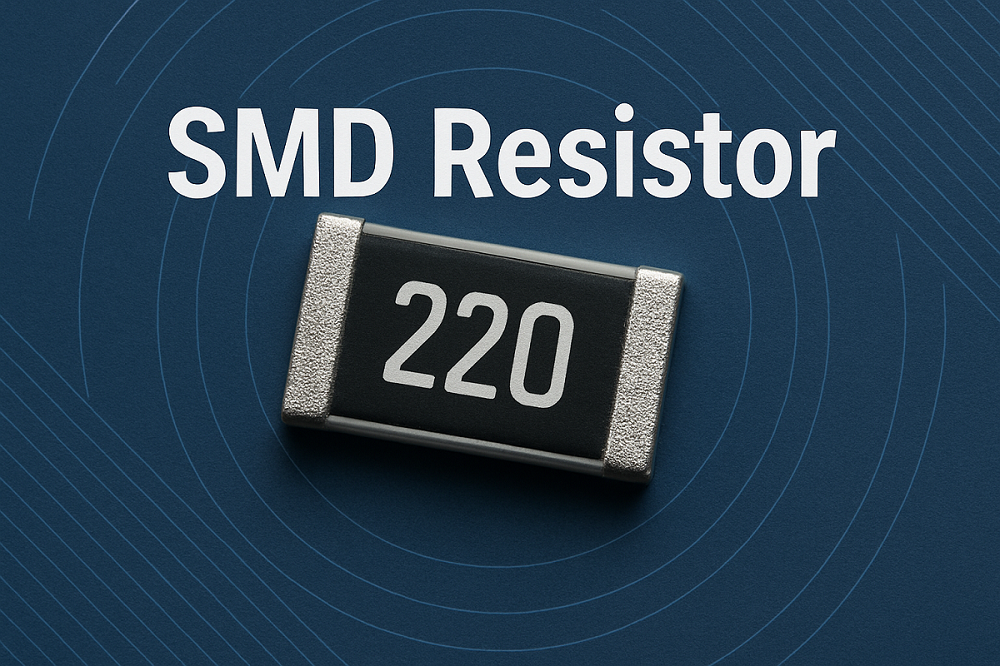
SMD Resistor: Types, Applications, and Selection Guide2025-04-30