The Kynix Blog
Stay Ahead with Expert Electronics Insights,
Industry Trends, and Innovative Tips
- Electronic Components
- News Room
- General electronic semiconductor
- Components Guide
- Sort by
- Robots
- Transmitters
- Capacitors
- IC Chips
- PCBs
- Connectors
- Amplifiers
- Memory
- LED
- Diodes
- Transistors
- Battery
- Oscillators
- Resistors
- Transceiver
- RFID
- FPGA
- Mosfets
- Sensor
- Motors, Solenoids, Driver Boards/Modules
- Relays
- Optoelectronics
- Power
- Transformer
- Fuse
- Thyristor
- potentiometer
- Development Boards
- RF/IF
- Semiconductor Information
- PCB
- transistor
SummaryIncreasing demand for energy and power encourages companies operating in energy and power industry to adopt solutions that can help them enhance production output with minimum errors and reduced down-time on a global scale. The products are offered specifically for the energy sector to enhance operations in the energy data management area. Industry 4.0 solutions help power plant owners, operators, and Original Equipment Manufacturers (OEMs) in the power industry make improved business decisions based on performance and operational readiness of their plant equipment.According to the MarketsandMarkets forecast, the Industry 4.0 market in energy and power was valued at $1.30m in 2016 and is expected to reach $3.22bn by 2022, at a CAGR of 16.33% between 2017 and 2022. IoT and Power IndustryIndustry 4.0 is being led by IoT and it plays an important role in condition monitoring and predictive and proscriptive maintenance of assets.Plant operators need to monitor and control the plant more efficiently, and for doing so, the adoption of advanced technologies such as HMI is increasing significantly in the energy and power industry. IoT provides flexibility to accommodate new energy sources, better management of assets and operations, greater reliability and enhanced security. Big Data to Transform Power IndustryThe energy and power industry has recognised the benefits of big data as it plays a vital role in solving business problems in utility companies.In this vertical, the big data solutions are gaining traction in various processes such as seismic data analysis, smart grid analytics, and data analysis related to production, testing, logging, and many other operations. Each year, smart grids and smart meters generate hundreds of terabytes of data, which include unstructured and semi-structured data. Companies in the energy and power industry have analysed this huge amount of data to get real time access to the situation. Being largely customer-centric, the energy companies are also making a shift toward providing more personalised products and services to their customers. Big data plays an important role in providing trends and patterns by analysing the data, which in turn are useful for product and service upgradation and enhancement. Real Time Monitoring in Battery ManagementReal-time monitoring is a technique that allows you to determine the current state of queues and channels within a queue manager. The information returned is accurate at the moment the command was issued.It can provide frequent information on batteries which can help protect the batteries.Real time monitoring in battery management can help replace manual checks by information available at monitoring systems. Sensor modules collect the voltage and temperature data from the batteries and data is transferred in real time can help supervisors identify issues if any and which will lead to operational efficiency. Predictive MaintenancePredictive maintenance (PdM) techniques are designed to help determine the condition of in-service equipment in order to predict when maintenance should be performed. This approach promises cost savings over routine or time-based preventive maintenance, because tasks are performed only when warranted.It helps in lowering operating and capital costs by facilitating proactive servicing and repair of assets while allowing more efficient use of maintenance personnel and replacement components.It enables companies to accurately diagnose and prevent failures in real time, which is vital in critical infrastructure applications. Battery failures can prove to be highly expensive in terms of repair costs, in addition to the delay in transporting goods from the resulting downtime. Predictive battery analytics can also help predict battery failures which allows the supervisors to reduce reliability risk and improve uptime.The need for longer battery life, reduced energy consumption, and lower costs will lead companies to provide intelligent solutions. Cognitive Power Electronics SystemsPower electronics systems equipped with intelligence unit can monitor data from sensors and the data can be used to detect faults in the electronic system for real time optimisation of an application.A power converter with monitoring capabilities would be able to detect impedance changes of a battery,enter into a safe state and send information to external systems for further evaluation. Article from MarketsandMarkets Research Private Ltd.Edit by Kynix
kynix On 2017-11-16
TroublesAs the deployment of Industrial IoT systems continues to proliferate,the streams of data transferred to the cloud skyrockets, drastically increasing the cost for cloud computing. SolutionIn order to meet this trouble, many systems designers are adopting edge computing,in which data processing is done close to the source like sensors in a bid to reduce data transfer,storage and processing costs,plus address a few other concerns over Cloud Computing,in particular security. What is Big DataBig Data is a broad label for the growing amount of data generated by IoT devices and smart systems. For instance, some aircraft engines have more than 5,000 elements that are monitored at relatively high sample rates. Most of the data is transferred to a ground station for the real-time monitoring of the engine and for future R&D work. But this is only part of a growing trend. Most ‘smart’ systems produce vast amounts of data which needs to be processed immediately or be stored for subsequent processing. Huge datacentres are required if you want to store Big Data.Big Data is a broad label for the growing amount of data generated by IoT devices and smart systems. For instance, some aircraft engines have more than 5,000 elements that are monitored at relatively high sample rates. Most of the data is transferred to a ground station for the real-time monitoring of the engine and for future R&D work. But this is only part of a growing trend. Most ‘smart’ systems produce vast amounts of data which needs to be processed immediately or be stored for subsequent processing. Cloud Computing's advantages and disadvantagesCloud Computing has a lot of advantages including cost efficiency (i.e. no need to invest in and maintain your own hardware), scalability, resource availability (for all your users irrespective of their geographic locations), lower latency (as you can specify servers that are closest to the relevant users/customers) and peace of mind in terms of back-ups. There are,however,some disadvantages also. The biggest of which is that no provider can guarantee 100% availability. Data security and privacy are also causes for concern, both on the cloud and for data in transit. Latency can be an issue for Big Data, and doing computationally intensive tasks on the cloud will increase the cost. Of these concerns the last two, in particular, can be negated through edge processing; i.e. performing much of the computationally intensive work near the source data. Benefits here include real-time or near-real-time data processing and reduced network traffic, as you need only transfer the product of the edge processing, thus resulting in lower Cloud Computing costs. Security and privacy can be improved by keeping the sensitive data (a.k.a. Hot Data) within the edge processing environment and only sending less sensitive (Cold) data to the cloud. FPGAs have the edgeThere are technologies that can be used for edge processing applications. These include the use of traditional CPUs (scoring high in terms of flexibility), application-specific processors (e.g. GPUs) and ASICs/SoCs (scoring high on performance). However, it is FPGAs that are slotting into most edge processing applications. Why is this so? Well, let’s consider the requirements. Edge processing needs to be high-performance and in this respect an FPGA can perform several different tasks in parallel. For example, consider executing many non-dependent computations (such as A=B+C, D=E+F and G=H+I). On a CPU, these would have to be performed sequentially, with each sum requiring a few clock cycles. In an FPGA, an array of adders could do the computations in parallel, possibly requiring only a single clock cycle. Power efficiency is essential too, as the end product may well be battery-powered. With an FPGA the function (design) need be the only circuit present, whereas the architecture of a CPU or GPU may not be fully utilized. Also, with an FPGA comes the benefit of reprogrammability. Higher security is afforded too because the edge processing functions are hard wired into the FPGA. It is also possible to encrypt the transaction bus and to even go as far as designing your own processor. ConnectingA prime example of where edge processing is extremely useful, and in which FPGAs can play a significant role, is within an embedded system in which data derived from images needs to be transferred. For example, in the automotive sector Advanced Driver Assistance Systems (ADAS) are under development to make driving safer, easier and more comfortable, and ADAS is regarded as a significant step towards fully autonomous cars. The data processed by an ADAS can be used to notify the driver of problems or to automatically trigger responses such as deceleration, braking and/or the execution of a manoeuvre. The data can also be useful outside the vehicle. Let's discuss the embedded vision system first though by considering an ADAS demo unit that was built for this year's Embedded Vision show in Santa Clara, California. The demo comprised a TySOM-2-7Z100 prototyping board (see figure 1) which includes a Xilinx Zynq XC7Z100 device and a TySOM-FMC-ADAS daughter board to interface with four 960 x 540 pixel cameras. The processing was shared between a dual-core ARM Cortex-A9 processor and FPGA logic (both of which reside within the Zynq device) and began with frame grabbing images from the cameras and applying an edge detection algorithm (‘edge’ here in the sense of physical edges, such as objects, lane markings etc.). This is a computational-intensive task because of the pixel-level computations being applied (i.e. more than 2 million pixels). To perform this task on the ARM CPU a frame rate of only 3 per second could have been realised, whereas in the FPGA 27.5 fps was achieved.This picture is a TySOM-2-7Z100 prototyping board. Mixed technology (like CPU and FPGA) boards are proving very popular for edge processing applications and for connecting with the cloud. The ARM CPU was mainly used for superimposing detected edges over the initial camera images, colour-space conversions, the formation of a composite image (see main image) and outputting it to an HD buffer. The FPGA and CPU could also work together to recognise and distinguish between obstacles and pedestrians close to the car and to provide lane departure warnings. What goes upSending the processed data to the cloud for further processing and/or storage is then a relatively simple task. Firstly, an AWS account would be created along with an AWS IoT environment. Next, we would configure a Thing (seeing as it is the IoT) and download the public and private keys needed for secure communications with the cloud.The embedded C MQTT standard would be the ideal Software Development Kit (SDK), because it is secure and requires minimal bandwidth. An application would then be prepared to run on the ARM CPU to publish the data onto the cloud. Imagine a scenario,howevber,under which we have data from thousands of vehicles going to the cloud.Analysis of the data could be performed on the cloud and made available for traffic systems or highway maintenance organisations, for example. There may also be instances where data from the cloud feeds into an edge-processing application, in which case applications are also available from AWS. All in all,there are both advantages and disadvantages associated with cloud computing. And many of the disadvantages will be overcome though edge-processing that FPGAs are a particularly suitable activity. Article provided by Farhad Fallah,an Application Engineer with EDA company AldecArticle edited by Kynix
kynix On 2017-11-15
SummaryThe robot comes perfectly if they can walk more naturally for humans.However,it's not an easy job for robots and their designers. Walking on two legs is actually a complicated task,requiring several muscles to perform delicate balancing acts.That's why in spite of years of major technological advancements in the field,humanoid robots are still far from being able to get around easily and reliably. Engineers at EPFL's Biorobotics Laboratory are testing new walking algoritms on a plateform called COMAN, short for COmpliant HuMANoid. This 95-cm-tall humanoid is designed specifically for studying walking – which is why it has no head. COMAN was developed under the EU AMARSi project and is being used by several research teams. The EPFL team is looking specifically at the "brains" of the machine. "We developed algorithms that can improve the robot's balance while it's walking," says Hamed Razavi, a researcher scientist at the Biorobotics Lab. Body One:Climbing Stairs and Opening Doors The algorithms are geared towards three types of realworld applications. The first is carrying out rescue missions in disastrous scenarios. "In environments designed by humans - like a nuclear power plant where there are stairs to climb and doors to open – humanoid robots can get around more easily than robots with wheels," says Razavi. The second is helping with tasks like carrying heavy boxes or moving objects (see box). And the third is creating exoskeletons for the disabled. "Making the robots more stable is just the tip of the iceberg," says Razavi. The next step is refining the algorithms so that the humanoids have a wider range of movement and can overcome obstacles and walk on irregular or sloped surfaces. Two:In Harmony with Symmetries One of COMAN's distinguishing features is its joints,which are integrated with elastic elements that give it greater flexibility when performing different tasks.The EPFL team came up with a novel control algorithm for the robot, based on the existing symmetries in the structure and dynamics of the robot' as well as the mathematical equations representing the robot dynamics. "You could say we're working in harmony with these symmetries rather than against them. As a result, we obtain a more natural and robust walking gait," says Razavi. The control algorithm uses sophisticated computer programs to carefully analyze the date received from the robot – including its position, velocity, joint angles, etc. – and sends appropriate commands to the motors, telling them what to do in order to maintain the robot's balance. "For example, if someone pushes COMAN, for example, our algorithms will calculate exactly where its foot should land in order to counteract the perturbation," says Razavi. Three: Humanoids Helping Humans As part of this project,Jessica Lanini and Hamed Razavi studied how two people carrying an object together are able to walk,turn and speed up in a coordinated manner - without communicating with each other.Their findings,recently published in PLOS ONE,indicate that the two people automatically synchronize their steps, like a quadruped. Now the researchers plan to apply their results to humanoid robots. Lanini explained:"Whether for manufacturing or natural disasters, we need robots that can interact with humans and help us carry heavy objects,but such robots don't exist. That's because, in order to operate safely and effectively, the robots would need to be able to make decisions and respond to unexpected circumstances." But such robots don't exist. The reason is that in order to operate safely and effectively, the robots would need to be able to make decisions and respond to unexpected circumstances." Article provided by Ecole Polytechnique Federale de Lausanne.
kynix On 2017-11-14
A while back,MEMS and Sensors Executive Congress that many designers,researchers and industry reoresentatives argued for putting MEMS devices such as accelerometers and microphones, and a wide variety of other sensors in just about everything was held in San Jose,Calif.. We heard about an electric snowboard with traction control, voice-controlled garbage cans, and accelerometers placed on the nose to listen for speech in noisy environments.But sometimes the simplest example is the most memorable. In this case, that was a MEMS accelerometer—like the one in your step-counter—that thwarts car thieves. "Passive keyless entry (PKE) systems can be made more secure with an inexpensive accelerometer." Lars Reger, chief technology officer for NXP's automotive division said,"PKE systems unlock a car—and allow it to start with a button push—by recognizing when the “key” is close to the car, either right next to it or inside of it. This is convenient for drivers, who don’t have to remove the key from a pocket or purse. But PKEs are ridiculously easy to hack—at least when a car is sitting in a driveway and the owner is at home." This hack which demoed by Swiss researchers in 2011 and still being used by car thieves around the world today,works because most people toss car keys in a basket or on a counter fairly close to their front door—close enough that a thief with a radio outside can pick up signals from the key. An accomplice with another radio stands near the front door of the car to pick up signals from the key and transmit those signals to the car. The system, concluding that the key is nearby, unlocks the car. Earlier this year, researchers pulled off the hack with US $22 worth of gear in a demo at a security conference reported in Wired. The team suggested that changing the timing of the calls and responses from the car and key could address the problem. At the sametime, PKE key holders were advised to keep their car keys in their refrigerators, whose metal exteriors would block the key's signals. NXP put forward another solution--Enter the accelerometer (and, of course, the company is bringing it to market soon, which is why representatives are willing to talk about it). Business development manager Marc Osajda told me that NXP had initially been working on a mechanical switch to turn the radio in the PKE key on and off. Then, after the company merged with Freescale Semiconductor in 2015, engineers at Freescale made the case for using a MEMS device instead, arguing that its lower power consumption made it a good fit for a gadget with an expected battery life of a year or more. The 50-cent component works on the assumption that if your PKE key has been sitting in one place for a while, you aren’t going anywhere, so it can turn off its radio and the microcontroller that was listening to the car’s radio; it will turn back on as soon as you pick it up. Osajda said that instead of reducing battery life, putting an accelerometer in the PKE key ends up extending battery life, because the accelerometer uses far less power than the parts it is allowing the key to turn off. It's not a easy work. Osajda said "mostly because car keys take a lot more abuse than wrist wearables". He also He pointed out that people frequently drop their keys (sometimes even out of second story windows onto concrete) or toss them into washing machines (not a surprise for keys designed to stay in your pocket). According to Osajda,NXP's MEMS switch is going into production and they will be incorporated into PKE keys from a variety of manufacturers during 2018.
kynix On 2017-11-13
A device that turns light into sound has allowed researchers to capture lightning in a bottle, in a sense, slowing down the light beams enough so that they can be easily stored and manipulated. Researchers at the University of Sydney in Australia, have figured out how to turn a light wave into a sound wave, creating an acoustic memory that they say will help data centers save energy by eliminating some electrical connections between processors. They reported their work in a recent issue of Nature Communications. “Our vision is to replace the electronic interconnects between different processors and computing machines with photonic ‘wires,’’’ said Birgit Stiller, a postdoctoral researcher who led the project. “So light transmission will be used instead of electronic connections.” The team built a chip that consists of a spiral-shaped waveguide made from a soft glass called chalcogenide, sandwiched between two stiffer pieces of silica glass. As a light beam travels through the chip, it is met by another pulse of light that has a slightly different frequency. The difference between the frequencies of the two light beams is a “beat,” a wave with a frequency 100,000 times lower, thus turning the light wave into a sound wave. The sound wave lives for a brief time—several nanoseconds—in the spiral chalcogenide waveguide. To read it out, the device reverses the process, adding the beat frequency to a light pulse to recreate the original light wave. In standard optical fibers, light waves are prevented from leaking out of the fiber by a difference in refractive index between the core of the fiber and the cladding wrapped around it. In a similar way, the two types of glass keep the sound wave in place; the speed of sound is much slower in the chalcogenide than in the silica. Slowing down the waves provides time to synchronize different signals coming from different processors. That eliminates the need to convert the optical signal to an electronic signal. Electronics can produce excess heat and require more energy, which are important issues in the big data centers owned by Google, Amazon, or Microsoft, Stiller says. Further work with the design and materials might allow the sound waves to be stored longer, although the memory already lasts long enough for the use they envision. She and her team hope to refine the work further, with an eye to building a prototype of a manufacturable chip within the next few years.
kynix On 2017-11-11
Article provided by University of Illinois at Urbana-ChampaignArticle edit by kynix A new methord to make Green LEDs more brighter and more efficient have been developed by researchers who at the University of lllinois at Urbana Champaign. Researchers have created gallium nitride(GaN) cubic crystals grown on a silicon substrate that are capable of producing powerful green light for advanced solid-state lighting. "This work is very revolutionary as it paves the way for novel green wavelength emitters that can target advanced solid-state lighting on a scalable CMOS-silicon platform by exploiting the new material, cubic gallium nitride," said Can Bayram, an assistant professor of electrical and computer engineering at Illinois who first began investigating this material while at IBM T.J. Watson Research Center several years ago. "The union of solid-state lighting with sensing (e.g. detection) and networking (e.g. communication) to enable smart (i.e. responsive and adaptive) visible lighting, is further poised to revolutionize how we utilize light. And CMOS-compatible LEDs can facilitate fast, efficient, low-power, and multi-functional technology solutions with less of a footprint and at an ever more affordable device price point for these applications." GaN was formed ethier hexagonal or cubic typically. HExagonal GaN is thermodynamically stable and is by far the more conventional form of the semiconductor. However, hexagonal GaN is prone to a phenomenon known as polarization, where an internal electric field separates the negatively charged electrons and positively charged holes, preventing them from combining, which, in turn, diminishes the light output efficiency. Until now, the only way researchers were able to make cubic GaN was to use molecular beam epitaxy, a very expensive and slow crystal growth method when compared to the widely used metal-organic chemical vapor deposition (MOCVD) method that Bayram used. Bayram and his graduate student Richard Liu made the cubic GaN by using lithography and isotropic etching to create a U-shaped groove on Si (100). This non-conducting layer essentially served as a boundary that shapes the hexagonal material into cubic form. "Our cubic GaN does not have an internal electric field that separates the charge carriers—the holes and electrons," explained Liu. "So, they can overlap and when that happens, the electrons and holes combine faster to produce light." At the end, Bayram and Liu still believe their cubic GaN method may lead to LEDs free from the "droop" phenomenon that has plagued the LED industry for years. For LED lighting color like green, blue, or ultra-violet LEDs , their light-emission efficiency declines as more current is injected, which is characterized as "droop." "Our work suggests polarization plays an important role in the droop, pushing the electrons and holes away from each other, particularly under low-injection current densities," said Liu, who was the first author of the paper, ""Maximizing Cubic Phase Gallium Nitride Surface Coverage on Nano-patterned Silicon (100)", appearing Applied Physics Letters. Having better performing green LEDs will open up new avenues for LEDs in general solid-state lighting. For example, these LEDs will provide energy savings by generating white light through a color mixing approach. Other advanced applications include ultra-parallel LED connectivity through phosphor-free green LEDs, underwater communications, and biotechnology such as optogenetics and migraine treatment. Having better performing green LEDs will open up new avenues for LEDs in general solid-state lighting. For example, these LEDs will provide energy savings by generating white light through a color mixing approach. Other advanced applications include ultra-parallel LED connectivity through phosphor-free green LEDs, underwater communications, and biotechnology such as optogenetics and migraine treatment.
kynix On 2017-11-10
Join our mailing list!
Be the first to know about new products, special offers, and more.
Feature Posts
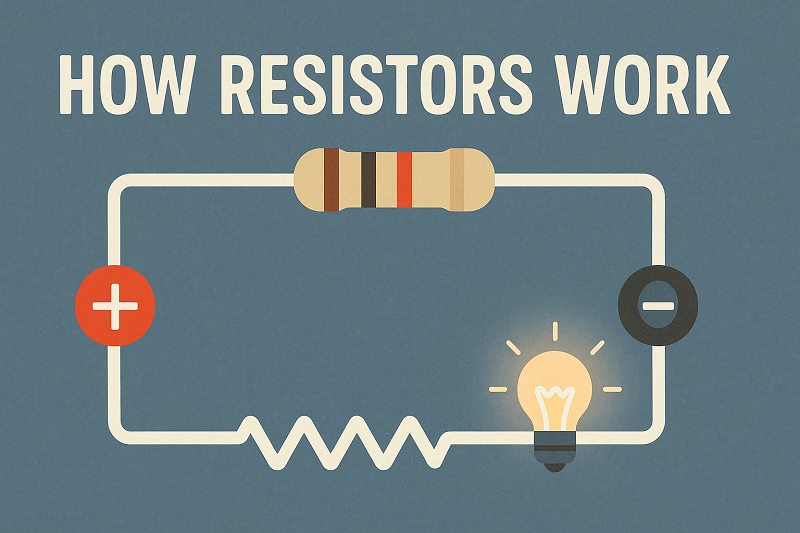
How Resistors Work: From Basic Principles to Advanced Applications2025-07-30
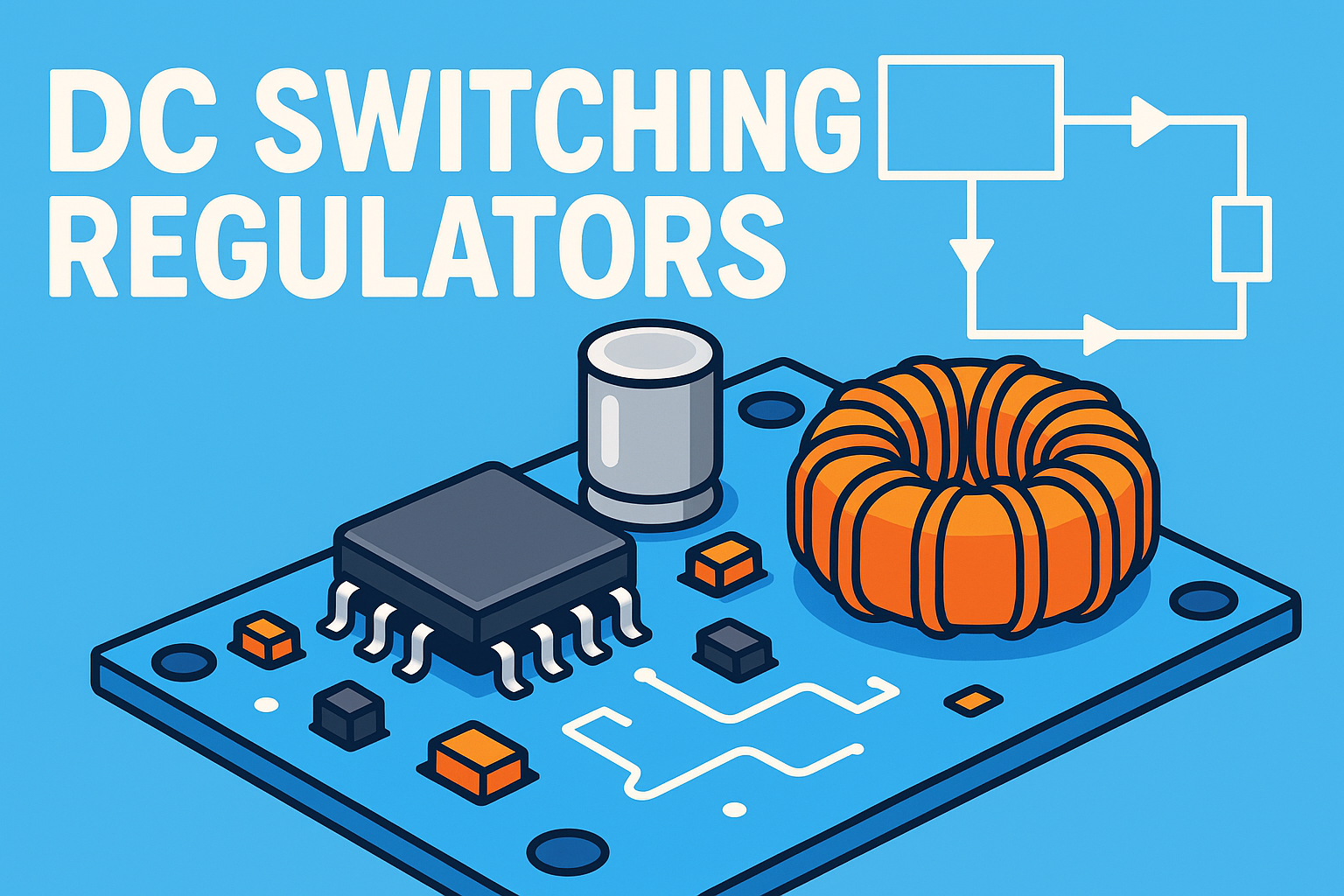
DC Switching Regulators: Principles, Selection, and Applications2025-05-30
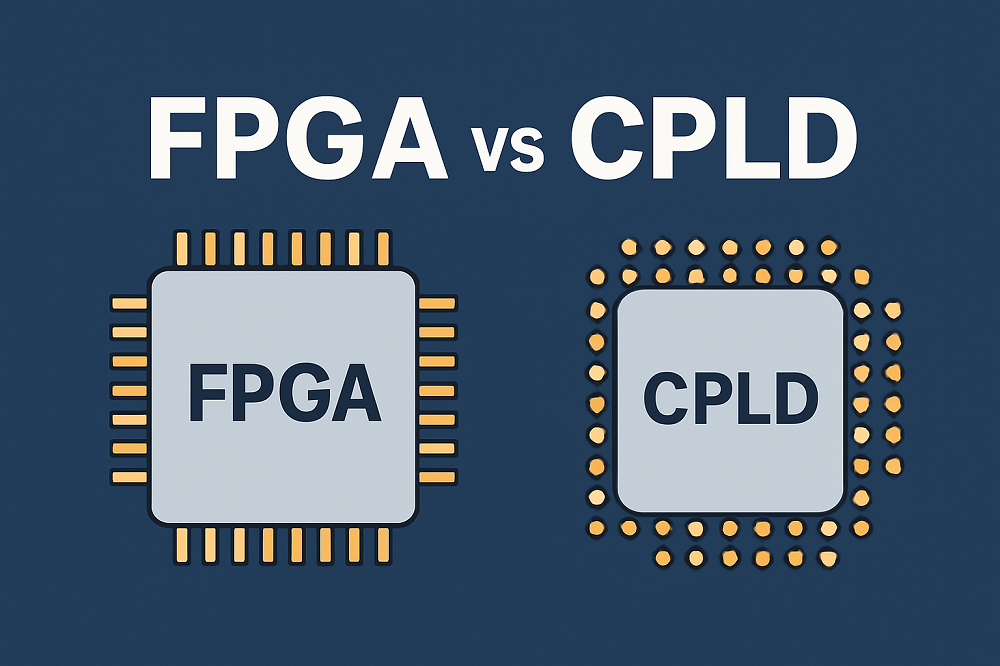
FPGA vs CPLD: In-depth Analysis of Architecture, Performance and Application2025-05-07
MOSFET Technology: Essential Guide to Working Principles & Applications2025-05-04
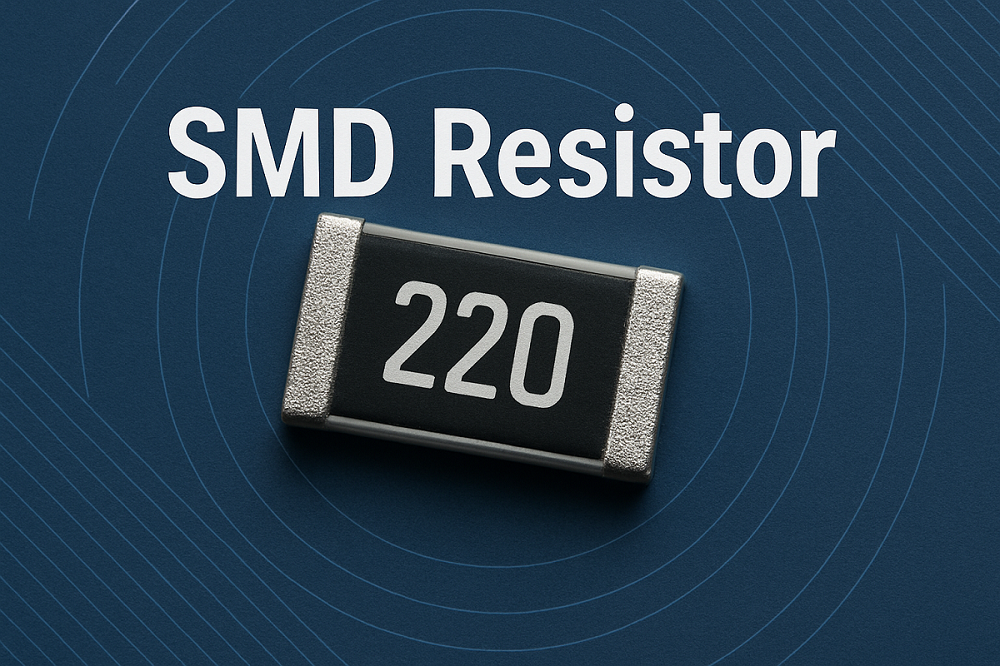
SMD Resistor: Types, Applications, and Selection Guide2025-04-30