The Kynix Blog
Stay Ahead with Expert Electronics Insights,
Industry Trends, and Innovative Tips
- Electronic Components
- News Room
- General electronic semiconductor
- Components Guide
- Sort by
- Robots
- Transmitters
- Capacitors
- IC Chips
- PCBs
- Connectors
- Amplifiers
- Memory
- LED
- Diodes
- Transistors
- Battery
- Oscillators
- Resistors
- Transceiver
- RFID
- FPGA
- Mosfets
- Sensor
- Motors, Solenoids, Driver Boards/Modules
- Relays
- Optoelectronics
- Power
- Transformer
- Fuse
- Thyristor
- potentiometer
- Development Boards
- RF/IF
- Semiconductor Information
- PCB
- transistor
Overview of Tantalum Capacitors Tantalum capacitors are able to store charge and release it upon demand in electronic circuits. They have high capacitance values and are reliable for a long time. Types of Tantalum CapacitorsTantalum capacitors are needed in many electronic devices or gadgets. They come in a variety of styles, each with unique features.Ordinary Tantalum CapacitorMakes up about 90% of the market.Known for stability and reliability.Used in power supplies and consumer electronics.High Polymer Tantalum CapacitorOffers higher capacitance values.Lower equivalent series resistance (ESR).Ideal for computer motherboards and smartphones.Solid Tantalum CapacitorContains a solid electrolyte.Performs well under high stress.It is common in military operations and space programs.Tantalum Capacitors With a Wet ElectrolyteFilled with a conductive liquid electrolyte.Can handle high ripple currents.Used in industrial machinery and medical devices.Surface-Mount Tantalum Capacitors (SMD)Compact size for circuit boards.Easy to solder onto printed circuit boards.Widely used in telecommunications equipment.Tantalum Polymer CapacitorsTantalum combines pentoxide with a conducting polymer.High surge current tolerance.Suitable for automotive industry and electric vehicles.Each type meets the specific requirements of various industries such as healthcare, consumer electronics, and defence. Key Features and BenefitsTantalum capacitors boast a high capacitance volume ratio on account of a thin insulating layer. This allows them to capture enormous amounts of energy while occupying very little space, which is particularly interesting in smaller gadgets.They provide low equivalent series resistance (ESR), reduce system losses, and improve performance. Furthermore, these capacitors exhibit stability over a wide range of temperatures and frequencies, ensuring consistent operation in a variety of environments.With excellent vibration resistance, tantalum capacitors enhance the reliability of systems facing mechanical stresses. They provide long-lasting reliability and high rates of efficiency, which are important for complex applications such as SMPS or automotive industries.Their design also provides protection against breakdown voltage issues and ensures low leakage current, further improving overall functionality and durability when used alongside aluminum electrolytic capacitors or multilayer ceramic capacitors (MLCCs). Applications of Tantalum Capacitors These capacitors power gadgets you use every day, like smartphones and laptops. They also keep your car running smoothly with better battery life and energy storage. Consumer ElectronicsTantalum capacitors power many of your favorite gadgets. You find them in mobile phones, SSDs, and servers for their high capacitance and small size. They help improve battery life by storing energy efficiently.These capacitors handle inrush current like champs. When you switch on a device, they manage the initial surge without breaking a sweat. Solid tantalum capacitors are popular because they last long and perform well under stress. Automotive IndustryCars and trucks rely heavily on tantalum capacitors. These small components ensure that electronic systems like GPS, infotainment, and engine control modules work efficiently. They handle high temperatures well, making them perfect for automotive environments.These capacitors also support energy harvesting technologies in electric vehicles. Regenerative braking systems depend on them to store harvested energy swiftly. Their compact size helps maximize space under the hood while providing stable performance over various voltages and temperatures. Industrial MachineryIndustrial machinery relies on tantalum capacitors for their reliable performance. These capacitors work well in harsh surroundings, handling high temperatures and vibrations without failing.This makes them vital in factories where machines run non-stop.Using TA capacitors helps keep the power supply stable. They also reduce ripple voltage which can harm delicate parts of a machine. The durable nature of these components ensures longer mean times between failures (MTBF), minimizing downtime for repairs or replacements.Thus, businesses save money and boost productivity by using tantalum electrolytic capacitors in their industrial setups. TelecommunicationsTantalum capacitors are crucial in telecommunications. They stabilize power and filter signals, making cell phones and base stations reliable. Tantalum capacitors offer high energy efficiency and perform well in challenging environments with varying temperatures.Telecom devices demand components that last long. Tantalum capacitors boast impressive mean time between failures (MTBF). This reliability ensures clear calls and smooth data transfer, even in harsh conditions.Their small size fits into compact telecom gadgets without sacrificing performance or durability. Aerospace and DefenseAerospace and defense sectors rely heavily on tantalum capacitors. They provide high reliability in critical systems like radar, avionics, and space equipment. These polarized capacitors handle harsh environments and offer stability under high temperatures.Their low leakage current makes them ideal for extended missions, ensuring consistent performance. As new technologies emerge in "new space" ventures, the demand for these power capacitors grows.They support modern innovations with their efficient energy storage capabilities, playing a key role in advancements across aerospace projects. Future Prospects of Tantalum CapacitorsTechnology is moving fast, with tantalum capacitors set to get even better. Companies are finding new ways to make them smaller and stronger while keeping costs low.Technological AdvancementsNano-scale storage is a game-changer. It allows capacitors to store more energy in tiny spaces. Tantalum thin film capacitors promise greater efficiency and durability. Engineers are also working on high voltage, high energy storage solutions.These innovations aim to make tantalum capacitors smaller but mightier.3D PCB printing of capacitors opens new doors too. Imagine designing circuit boards with built-in, efficient power systems using these printed components! Module-based solutions support both low-energy and high-energy applications now better than ever before.This means future electronics can be even more compact and powerful without sacrificing performance or space. Market Growth TrendsThe global market for tantalum capacitors is forecasted to hit USD 3256.7 million by 2032, showing a CAGR of 5.9%. This growth comes thanks to rising demand across various sectors such as consumer electronics and automotive industries.Technological advancements in fields like system-on-chip (SoC) also play a big role. Regions are expanding their markets, leading to more opportunities worldwide. The future looks bright with potential new applications emerging daily! Regional Market ExpansionsAsia-Pacific holds the largest market for tantalum capacitors. It commands about 60% of the global share. Key countries in this region include China, Japan, and South Korea. These nations lead in consumer electronics production, driving strong demand.North America and Europe follow closely behind. Together, they account for around 35% of the market. The United States is a major player here alongside Germany and France from Europe.Both regions benefit from advancements in automotive tech and industrial machinery. Potential New ApplicationsTantalum capacitors could soon shine in high-speed data communication. Devices like SSDs and enterprise SSDs demand reliable performance and stability, which tantalum capacitors provide.These tiny powerhouses might also find a home in servers, industrial machinery, or even embedded PCs where dependability is crucial.In telecom and networking, tantalum capacitors offer low voltage operation with impressive reliability. Imagine your phone call staying clear or your internet connection holding strong because of this silent hero inside the equipment.In aerospace and defense applications, their ability to handle harsh conditions makes them invaluable for critical missions and tools. Challenges in Tantalum Capacitor MarketSupply chain issues can make it hard to get the materials needed for tantalum capacitors.Supply Chain IssuesSupply chain issues often plague the tantalum capacitors market. MLCC capacitors face a supply shortage, making it tougher for manufacturers to meet demand. The COVID-19 pandemic and the Russia-Ukraine war have further strained the already tight supply chain.Disruptions in raw material sourcing affect production rates. For example, mining operations can come to a standstill due to geopolitical tensions or health crises. This delay trickles down from suppliers to manufacturers and eventually impacts consumers waiting for products like consumer electronics or industrial machinery that rely on these components. Competition from Alternative TechnologiesMLCC class II ceramic capacitors and hybrid polymer aluminum capacitors give tantalum capacitors a run for their money. These alternatives can often replace tantalum, taking up 15-20% of its functional areas.These newer technologies often offer benefits like lower cost or better performance in certain aspects, making them attractive choices. Tantalum faces pressure to innovate and prove its value over these competitors. ConclusionTantalum capacitors pack a punch in many industries. They are crucial for gadgets like phones and cars. Expect new tech and bigger markets to drive their future growth. Challenges, like supply issues, need tackling but the potential is huge.Keep an eye on tantalum capacitors—they're here to stay! FAQs1. What are tantalum capacitors used for?Tantalum capacitors are used in electronics to store electrical energy. They help in applications like switching power supplies, dc-dc converters, and filtering low-voltage signals.2. How do tantalum capacitors compare to aluminum electrolytic capacitors?Tantalum capacitors have lower leakage currents and better stability over time compared to aluminum electrolytic capacitors. They also offer higher capacitance per volume.3. Can tantalum capacitors handle high-frequency signals?Yes, they can handle high-frequency signals due to their low inductive reactance and stray capacitance properties. This makes them ideal for use in circuits that need fast response times.4. Are there any risks associated with using tantalum capacitors?They can be sensitive to reverse voltage and surge currents like inrush currents which might cause failure or damage if not properly managed with series resistors or parallel configurations.5. What is the future outlook for tantalum capacitor technology?The future looks promising with a growing CAGR (compound annual growth rate) as demand increases for more efficient electronic components in various industries including telecommunications and automotive sectors.6. How do you test a tantalum capacitor's performance?You can use tools like multimeters to measure its capacitance, impedance, dissipation factor, and dielectric absorption rates ensuring it meets desired specifications before integrating into your circuit design.
kynix On 2024-05-24
Basics of Discrete LED IndicatorsDiscrete LED indicators are like tiny spotlights for your gadgets. They come in sizes like 1.8mm to 3mm, perfect for lighting up small spots without taking up much room. These little lights can shine in colors across the rainbow, making sure you notice them when they flash or stay lit.With package types such as 2-LCC (J-Lead) and 2-PLCC, these LEDs fit snugly on all kinds of circuit boards and devices.These LEDs also play nice with rules: many are RoHS compliant, which means they're made without harmful substances. Their beam angles vary widely from a pinpoint zero degrees up to a wide spread of 162 degrees.This range lets designers create everything from focused beams that grab your attention to soft glows that gently inform you. Whether it's a power indicator on a laptop or a signal light on wireless charging equipment, discrete LEDs light the way without stealing the show.Key Uses of Discrete LEDsDiscrete LEDs light up our world in ways big and small. From the glow on your smartphone to the signals on electronic boards, they keep things bright and clear.Shine Alone: The Role of Individual LightingIndividual lighting makes things pop. Like a spotlight on a dark stage, discrete LEDs focus attention exactly where it's needed. Picture a small LED on your power supply unit. It tells you, "Hey, I'm working!" without shouting.This is what we mean by shine alone—using light to quietly make important things stand out.These tiny lights come in sizes like 1.8mm and up, perfect for pinpoint lighting jobs. They have different beam angles too, ranging from narrow to wide (0 to 162 degrees), giving you options for how focused or spread out the light should be.Say goodbye to guessing if your devices are powered; these LEDs will show you the way with just a glance at your jacks or signal transformers. They're like silent heroes—small but mighty in their task of making life easier and more certain.Together We Glow: Group Illumination ExplainedGroup illumination takes LED lighting to a whole new level. Imagine a team of LEDs working together, shining brightly to light up everything from your car's dashboard to big advertising signs.This isn't just about one LED doing all the work; it's like having a choir where every voice counts. In cars, these groups of lights can show you if your doors are open or if your battery is running low without saying a word.Using different colors like red, green, blue, and even tricolor options makes this teamwork really pop. This mix brings out vivid displays in electronic boards and fancy gadgets that catch our eye in stores or during concerts.It’s not only practical but also adds an artistic touch wherever used - turning ordinary objects into pieces of art with just the power of light.Exploring Types of Discrete LEDsDiving into different types of discrete LEDs is like opening a box of crayons – each one has its own cool job. From LEDs that stick to surfaces to those that signal messages, there's much to learn and use in projects.On the Surface: Surface Mounted LEDsSurface mounted LEDs stick directly onto the surface of circuit boards. Sizes vary from tiny (0402) to much larger ones like 3528. This method lets gadgets be sleek and compact. Think about how slim your smartphone is; surface mounted tech plays a big role here.These LEDs light up with a wide beam angle, anywhere between 0 to 162 degrees. This means they can spread light over large areas without using extra space or power. From dashboard displays in cars to the backlight on your TV, these tiny lights pack a punch.Signaling Solutions: LED IndicatorsLED indicators do a big job. They use colors like red, blue, and green to send signals. Think of them as traffic lights on your gadgets. These tiny lights can show if power is on or if there's an error without saying a word.Colors aren't just for show; they have meanings. Red might warn you, while green says all's good.These indicators come in many shapes such as cylindrical or rectangular, fitting different needs. Some are clear, others diffused, making sure the light doesn’t blind you but is still visible.They line up on panels or poke out from devices, ready to report status with a glance. Whether in home appliances or office equipment, these LEDs keep us informed and safe by using very little electricity yet shining bright enough to catch our eye.ConclusionSo, we've marched through the world of discrete LED indicators, shining a light on their workings, uses, and types. With tools like soldering guns and multimeters in hand, these tiny beacons guide our gadgets from cars to keyboards.They blink in reds and greens, signaling all's well or warning us when it's not. Think of them as the unsung heroes in our electronic orchestra—small but mighty. Every time you see that little glow, remember the big job it does with such ease and simplicity.Grab those wire cutters; there's more to explore and create in this bright world of LEDs! FAQs1. What are discrete LED indicators?Discrete LED indicators are like the traffic lights of electronics, guiding you on what's happening with your gadgets. They blink, glow, and wink to show power status or signal errors.2. Can I use them with any device?Absolutely! Whether it's a spaceship or a toaster, if it has a circuit board (PCB), you can jazz it up with these tiny light shows. Just make sure your device plays nice with LEDs before inviting them to the party.3. How do I choose the right one for my project?It's like picking out candy - lots of choices! Think about color, brightness, and size based on what your project needs. Want to impress? Go for something bright and bold!4. Do I need special tools to install them?You'll need more than just your charming personality—grab a soldering iron, some desoldering braid if you mess up (no shame!), and maybe even a multimeter to double-check connections.5. Will they eat up all my power supply?Nope! These little guys are pretty low-maintenance when it comes to energy consumption; think of them as sipping electricity through a tiny straw.6. Is there anything else cool I should know about using these indicators?Oh yeah! You can get creative by adding dimmers (rheostats) or making them dance in patterns with integrated circuits – basically turning your project into the life of the party without breaking the bank on power bills.
Allen On 2024-05-24
Overview: This article describes the advantages, applications, and types of tunable semiconductor lasers. It explores how these lasers can be finely tuned to emit specific wavelengths, offering essential precision and control for various applications. What are tunable semiconductor lasers?A semiconductor laser that can be adjusted to emit wavelength within a specific range is known as a tunable laser. Several methods can change the semiconductor substance's optical characteristics to accomplish this tuning. The greatest advantage of the tunable laser is that in managing various applications, tunable lasers can replace 80 or 160 pieces of equipment with a few lasers. Additionally, tunable lasers open up the possibility for various services and allow for the easy remote addition or deletion of bandwidth without the need for a service expert. Advantages of Tunable Semiconductor laserAll these lasers provide greater advantages for a wide range of applications in the scientific and academic fields. They haveExtremely monochromatic and continuous beamImproved Power and Wavelength StabilityMinimal power consumptionSuperior efficiencyCompact sizeAffordable Tunable Semiconductor Laser TypesPrimary types of semiconductor lasers can be broadly classified based on their structural characteristics.Distributed feedback semiconductor lasers (DFBs)External cavity semiconductor lasers (ECLs)Distributed Bragg reflector semiconductor lasers (DBRs)Super-Structure Grating Distributed Bragg Reflector (SSG-DBR)Vertical-cavity surface-emitting lasers (VCSELs) Distributed Feedback Semiconductor Lasers (DFBs)Distributed Feedback (DFB) lasers, as depicted in Fig. 1, are a particular kind of laser in which a diffraction grating or periodically structured element is located throughout the length of an active medium. A periodic arrangement called a grating allows certain wavelengths of light to flow through while reflecting others. It can operate in a single longitudinal mode and is less sensitive to changes in temperature. It generates signals with a single frequency and has a high modulation speed. In DFB, the temperature of the laser cavity is a critical factor in determining the tuning wavelength. A single DFB laser cavity can only tune across a narrow range of wavelengths, usually less than 5 nm. Thus, several laser cavities are used in DFB lasers for extensive tuning ranges. External Cavity Semiconductor Lasers (ECLs)External cavity lasers comprise a laser diode and other external optical components within a large optical cavity. The optical components include reflective mirrors or lenses and diffraction grating. Using reflective mirrors, light is reflected back into the laser diode. A grating, or other wavelength-selective elements, are adjusted to regulate the laser output with the desired wavelength. Employing the external cavity with optical components enables efficient management of the laser's wavelength, linewidth, and output power. They have wide tuning ranges, which are more than 40 nm. Whereas they have relatively slow tuning speeds. Distributed Bragg Reflector Semiconductor Lasers (DBRs)A DBR laser usually consists of one or more Bragg reflectors that function as mirrors at the ends and an active medium where light is amplified, as shown in Fig. 2. Bragg reflectors have a periodic structure composed of several layers of alternating materials with differing refractive indices. They are wavelength-selective and reflect particular light wavelengths. DBR lasers are much more stable in terms of output frequency. It enables the production of a single, steady wavelength of light. This selective reflection is essential to the laser's functioning. DBR lasers are widely used in many industries, including telecommunications, sensing, medical diagnostics, scientific research, etc., because of their consistent output and accurate wavelength control. Super-Structure Grating Distributed Bragg Reflector (SSG-DBR)One unique design in tunable semiconductor laser structures is the Super-Structure Grating Distributed Bragg Reflector (SSG-DBR). The laser typically comprises three parts:Active sectionGrating sectionPhase section The active region comprises a semiconductor material like InP/InGaAsP with electrons in a high energy state, which is responsible for stimulated emission and amplification of light. The superstructure grating that makes up the grating section allows for wavelength-selective reflection. Typically, this is achieved through many layers of dielectric materials that exhibit periodic structure. Two superstructure gratings, placed at the ends of the chip, enable it to be tuned over a wavelength range of about 40 nm. The phase section controls the laser's output wavelength, which adjusts the phase of the laser. The device exhibits numerous advantages, such asImproved flexibility and speed in wavelength switchingRapid tuning speed in the range of millisecondsSteady and high-power laser outputImproved wavelength tuning The wavelength of the emitted laser is mainly based on the current flow.The active region's current can be changed to fine-tune the optical gain and power to vary the output light's strength and intensity.The refractive index changes during the tuning process by introducing different currents into the grating section, resulting in a coarse wavelength adjustment.The phase section's current input variation enables accurate refractive index tuning.The multi-electrode tuning mechanism, where simultaneous grating and phase section tuning occurs, provides high-resolution wavelength tuning output. This specific laser chip is widely used in various fiber optic grating sensing devices. This laser can be extensively used in monitoring temperature, pressure, displacement, temperature, vibration, stress, and deformation. These applications, such as sensing and real-time monitoring devices, can be broadly employed in various domains listed below.Safety observation of expressways, high-speed railroads, and rail transportation networks.Structural safety alerts for large-scale structures like bridges and tunnels.Safety in wind power generationPower transmission networksOil industriesCoal mining Vertical-Cavity Surface-Emitting Lasers (VCSELs)All of the semiconductor lasers that were previously discussed emit light from the edges and are commonly referred to as edge-emitting devices. In contrast, the VCSEL laser, as seen in Fig. 3, emits light from the top surface of the device, where light is reflected up and down in a vertical direction due to mirrors reflecting on its top and bottom surfaces. Unlike traditional edge-emitting lasers, (VCSELs) are a semiconductor laser diode that emits light perpendicular to the surface of the wafer. VCSELs are well-known for their high efficiency, circular beam output, and lower production costs. Summarizing the Key PointsTunable semiconductor lasers offer precise wavelength control, stability, and accuracy, making them essential in telecommunications, medical diagnostics, and scientific research.Compact, portable, and energy-efficient, tunable semiconductor lasers are versatile tools used in scientific research, academia, and industry for precise and continuous laser beams.This article provides insights into the working principles behind tunable semiconductor lasers, understanding how they can replace multiple pieces of equipment with their versatile capabilities.It highlights the practical applications of these lasers, showcasing their role in fiber optic grating sensing devices for monitoring temperature, pressure, displacement, vibration, and more. ReferenceKong, Ling, Wenjie Lv, Haijing He, Yibo Yuan, and Libin Du. “Design of Control Circuit for Tunable Semiconductor Laser for Fiber Sensing.” Hardware 1, no. 1 (November 24, 2023): 4–28. https://doi.org/10.3390/hardware1010003.Zhang, Linyu, Xuan Li, Wei Luo, Junce Shi, Kangxun Sun, Meiye Qiu, Zhaoxuan Zheng, et al. “Review of 1.55 Μm Waveband Integrated External Cavity Tunable Diode Lasers.” Photonics 10, no. 11 (November 20, 2023): 1287. https://doi.org/10.3390/photonics10111287.nptelhrd. “Semiconductor Laser - III Single Frequency Lasers.” YouTube, October 4, 2013. https://www.youtube.com/watch?v=fqEHjTxNUe0.Bruce, Elizabeth. “Tunable Lasers.” IEEE Spectrum, February 9, 2023. https://spectrum.ieee.org/tunable-lasers.
Rakesh Kumar, Ph.D. On 2024-05-20
Overview: This article examines the fundamental concepts of absorption, stimulated emission, and the intricate working principles of lasers, it also highlights semiconductor lasers and discusses their transformative power across various technologies. Lasers are devices that provide precision to a great extent, making them valuable in various domains such as medicine, manufacturing, communication, and entertainment. From the precise cutting of materials to the delicate surgeries that restore vision, lasers have become an integral part of the technological infrastructure. Understanding the Basic ConceptsAbsorptionAbsorption is a process in which an electron in a lower energy state is excited by a photon of light and jumps to a higher energy state. For absorption, the photon's energy must be equal to the energy difference between the lower and higher energy states, neither less nor more. This process is the initial step toward achieving laser action, which is diagrammatically illustrated in Fig. 1 Fig. 1 Illustration of absorption. Source: Rakesh Kumar, Ph.D. Stimulated EmissionStimulated emission happens when an excited atom in the higher energy state reacts with an incoming photon and descends to a lower energy state, giving off a second photon in the process. The emitted photon’s frequency, phase, polarization, and direction are the same as the incoming photon of light, as shown in Fig. 2. This step is very important and allows for the coherent amplification of light in a laser. Fig. 2 Illustration of stimulated emission. Source: Rakesh Kumar, Ph.D. Active mediumIt can be a gas, liquid, solid, or semiconductor that contains atoms or molecules that can be excited to higher energy levels, as shown in Fig. 3. Fig. 3 Illustration of laser with active medium and optical cavity. Source: Rakesh Kumar, Ph.D. Optical CavityAs illustrated in Fig. 3, the active medium is placed between two mirrors, forming an optical cavity. One mirror is fully reflective, while the other is partially reflective. The optical cavity allows light to bounce back and forth, amplifying it.Pumping MechanismThere are several ways to supply energy for a laser, including electrical current, flash lamps, or another light source. The pumping mechanism aims to excite the atoms to a higher energy state. When more atoms are in an excited state than in their ground state, it is known as a population inversion. What is a laser?Lasers are devices that emit powerful, highly collimated, monochromatic, and coherent beams of light, as seen in Fig. 4. The acronym is Light Amplification by Stimulated Emission of Radiation. Fig. 4 Comparison of non-coherent and coherent beams of light produced by LED and LASER, respectively. Source: Rakesh Kumar, Ph.D. How does the laser work?A laser is produced when an active medium with abnormally many high-energy electrons placed in an optical cavity is pumped, emitting photons. The cavity acts as a resonator and reflects emitted photons back and forth within the active medium, stimulating more excited atoms to emit photons. This initiates cascaded stimulated emission, amplifying light and stimulating laser emission. The working principle is demonstrated in Fig. 5 Fig. 5 Diagrammatic illustration of working principles of laser. Source: Rakesh Kumar, Ph.D. What is a semiconductor laser?A wide variety of applications commonly use semiconductor lasers. They are made using semiconductor material. The most commonly used active mediums are indium phosphide or gallium arsenide. Usually, they operate in the 1310-nm or 1550-nm region of the spectrum. Semiconductor lasers are compact and have a greater degree of accuracy. Various methods are employed to create optical cavities in semiconductor lasers.CleavingMirrorDiffraction gratingCleavingThe semiconductor material is cleaved and polished on its edges to form mirrors. In contrast, the other method makes use of mirrors or diffraction gratings.Diffraction gratingIt comprises two dielectric materials layered in alternating order, each with a different refractive index. The main role is to reflect some light wavelengths while permitting others to pass through. Laser output can be tuned to the desired wavelength with the help of diffraction gratings, which are effective for selectively reflecting or transmitting light of particular wavelengths.Factors that Determine the Wavelength of Output LaserThe wavelength of the output laser is based on the following parametersThe length of the optical cavity, i.e., the distance between two reflective mirrorsTemperature inside the active mediumThe refractive index of the active mediumInjected electric currentApplicationsThese lasers are especially useful for applications likeSpectroscopyOptical communicationsWavelength division multiplexingEnvironmental sensingGrating demodulationMedical diagnosticsOptical communicationOptical fibers, which have a far higher data capacity than conventional copper cables, transfer data using lasers. Lasers make effective data transfer over great distances with negligible loss of light possible.Wavelength-division multiplexingCurrently, entire globes can be covered by a single fiber-optic fiber carrying numerous wavelengths, with each wavelength channel transmitting high bit-rate digital data. It is defined as Wavelength-division multiplexing (WDM). This procedure is a crucial component of the infrastructure supporting various applications.Environmental sensing and grating demodulationOptical fiber sensing is a technology that measures changes in the physical characteristics of light and efficiently demodulates or decodes the data to determine the extent of the changes brought about by external stimuli. These optical fiber properties are crucial for a variety of sensing applications.There are several ways to demodulate light parameters, but using a tunable semiconductor laser is the most crucial and successful one. Demodulating such signals and accurately identifying the degree of changes requires a tunable laser with a large tuning range, excellent stability, and precise linewidth. Tunable lasers are an indispensable element and are widely utilized in several fields, including air, temperature, pressure, position, biomedical sensors, etc.,Medical diagnosticsLasers provide a wide range of medical applications. Various sensors based on the working principle of laser are invasive procedures used in various surgeries, including eye surgery and removing tattoos, scars, and hair. They can precisely remove tumors and precancerous growths and be used for teeth whitening and removing decay. From bettering communication technologies to advancing medical treatments, lasers have transformed many facets of technology and daily life. They are excellent instruments in various applications due to their accuracy and control. Summarizing the Key PointsLasers play a pivotal role in diverse industries, offering unparalleled precision and versatility in applications ranging from manufacturing to healthcare.Semiconductor lasers, compact and accurate, are widely used, operating in specific regions of the spectrum for various purposes.Optical fiber sensing technology efficiently measures changes in light properties, which is crucial for environmental sensing and data demodulation.Medical diagnostics benefit greatly from laser technology, enabling precise surgeries, tumor removal, teeth whitening, and more.From communication advancements to medical treatments, lasers have revolutionized technology and daily life, showcasing their accuracy and control. ReferenceBruce, Elizabeth. “Tunable Lasers.” IEEE Spectrum, February 9, 2023. https://spectrum.ieee.org/tunable-lasers.Scientized. “How Lasers Work - A Complete Guide.” YouTube, March 26, 2017. https://www.youtube.com/watch?v=_JOchLyNO_w.“Advantages of Semiconductor Laser, Disadvantages of Semiconductor Laser,” n.d. https://www.rfwireless-world.com/Terminology/Advantages-and-Disadvantages-of-Semiconductor-laser.html.
Rakesh Kumar, Ph.D. On 2024-04-28
Overview: The article overviews fiber optic sensing technology, discusses principles and sensor classifications, highlights the concept of Bragg reflectors and Fiber Bragg Grating Sensors, and discusses their applications in various domains. Fiber optic sensing technology in engineering has grown significantly and marks substantial progress in the measuring and monitoring domains.What is an optical fiber?It is a versatile medium for light transmission. Optic fiber, as shown in Fig. 1, comprises,Core: Thinner than human hair and transmits light signalsCladding: Confines the light inside the coreCoating: Made of silica or plasticFig. 1: Cross section of optic fiberFiber Optic SensingUsing optical fibers, fiber optic sensing is a method that monitors changes in pressure, temperature, strain, and other characteristics. It works by measuring the degree to which intrinsic light parameters are modulated by external environmental factors that impact the way light waves move through optical fibers. It can function as single-mode fiber or multimode fiber.Principles of Optic Fibers SensingTotal internal reflection is the principle by which optic fibers work. When light is coming from a denser medium into a rarer (less dense) medium, it is reflected back into the original medium if the angle of incidence of the light is smaller than the critical angle. The reflected light is then analyzed to determine its physical properties. The optical fiber experiences variations in temperature, pressure, and strain, which can alter its electromagnetic wave characteristics like amplitude, frequency, phase, and polarization. The pivotal role of optic fiber sensors is decoding, or demodulating, and determining the level of pressure, strain, and temperature that is being applied to the fiber, as shown in Fig. 2. This facilitates the sensing of different physical quantities in the immediate surroundings. These core features of optical fiber and cable make them useful for addressing various issues in the real world.Fig. 2 Diagrammatic illustration of optic fibers sensing technology AdvantagesCompared to conventional sensing methods, optical fiber sensors provide several benefits. These advantages include:Remain unaffected by high temperatures, strain, and pressureThe capacity to multiplex several sensors along a single fiberResistance to electromagnetic interferencesEasily available componentsNon-destructiveCompact sizeNon-invasiveClassification of Optical Fibers SensorsFiber-optic sensors can be classified asIntrinsic sensorsExtrinsic sensorsIntrinsic SensorIntrinsic sensor sensing happens inside the optical fiber itself. Fiber indicates the variations caused by external stimuli by measuring the level of changes in the light's internal characteristics, like wavelength, polarization, intensity, phase, and transit time. There are several uses for intrinsic sensors, including measurement of temperature, pressure, strain, and other applications. Large-scale distributed sensing is something they can offer, which is very helpful for applications that need to monitor across vast distances or in difficult circumstances.Extrinsic SensorWhen sensing occurs outside the optical fiber, it is called an extrinsic sensor. The optical fiber in these sensors serves as a channel for light to go and come from the external sensing device. After exiting the fiber cable, the light beam interacts with the object being measured and is carried by optic fiber to a photodetector, which detects the changes in light.What is grating?Generally, a grating is any regularly spaced group of parallel, elongated, almost similar fragments.What is a Bragg reflector?A Bragg reflector, as shown in Fig. 3, is a form of optical reflector that is commonly utilized in optical fibers and many laser applications. It is made up of two separate dielectric materials layered in alternating order, each with a different refractive index. The Bragg reflector's main role is to reflect some light wavelengths while permitting others to pass through.Fig. 3: Illustration of Fiber Bragg Grating Fiber Bragg GratingIn the field of optical engineering, a particular kind of grating is called Fiber Bragg Grating (FBG). A brief section of optical fiber is used to create a distributed Bragg reflector, which transmits all other light wavelengths while reflecting specific ones. This is accomplished by giving regular fluctuations in the refractive index of the optic fiber. FBGs are employed in wavelength-specific sensing applications to block certain wavelengths. The reflected wavelength is also referred to as the Bragg wavelength.Interrogation TechniquesThe important step in FBG sensors is finding the shift in the Bragg wavelength that reflects the change in the physical parameter. Various methods of inquiry have been devised to precisely and effectively demodulate the Bragg wavelength shifts. The following are some essential methods:Spectrometer-Based Interrogation TechniqueFBG sensor wavelength interrogation is done using an optical spectrum analyzer. OSAs are precision instruments and essential tools in environmental sensing. However, they are costly, which makes them less attractive for certain functions.Tunable Laser-Based InterrogationWhen examining FBG sensors, a laser with adjustable wavelengths is used to scan the reflected Bragg wavelength from the FBG. This technique is known as tunable laser-based interrogation. The intensity of the reflected light is tracked. An observable peak in reflected intensity occurs when the laser wavelength and the Bragg wavelength coincide. The precise location of this peak makes it possible to measure the physical modifications that resulted in the shift in the Bragg wavelength. Tunable laser-based interrogation devices can be costly and difficult despite their advantages.Matched Edge Filter ConfigurationThis technique uses matching edge filter interrogation, which can be an affordable way to do sensing without compromising measurement precision.Application of FBG SensorsFBG sensors have a wide variety of applications in various domains, including:EnergyWind turbinesSolar panelNuclear plantsElectrical equipmentOilMedical and BiotechPhysiological parameter monitoring includes cardiac activity, respiratory activity, etc.Invasive surgeryStructural Health MonitoringStrain and defect detector in civil structureElectrical instrumentsTransportationAerospaceRailwaysShipSpacePerimeter sensingSecurityMilitaryGeotechnical monitoringLandslideSeismic activity In conclusion, the evolution of fiber optic sensing technology has significantly enhanced monitoring and measurement capabilities across various industries. Bragg reflectors and interrogation methods like tunable laser-based methods have improved as sensor types, and Fiber Bragg Grating sensors have found more uses in the energy, medical, transportation, and structural health monitoring fields. These innovations underscore the importance of fiber optic sensing in enabling precise and reliable data collection for critical operations, paving the way for further advancements in the field of optical fiber sensing. Summarizing the Key PointsFiber optic sensing technology offers precise monitoring of pressure, temperature, and strain using optical fibers, revolutionizing measurement capabilities in various industries.Sensor classifications include intrinsic and extrinsic sensors, each serving distinct purposes in detecting external stimuli within or outside the optical fiber.Bragg reflectors, such as Fiber Bragg Grating Sensors, utilize regular refractive index fluctuations to reflect specific wavelengths, enabling wavelength-specific sensing applications.These fiber optic sensing technology advancements have diverse applications in the energy, medical, transportation, and security sectors, enhancing monitoring and measurement efficiency in real-world scenarios. ReferencePendão, Cristiano, and Ivo Silva. “Optical Fiber Sensors and Sensing Networks: Overview of the Main Principles and Applications.” Sensors 22, no. 19 (October 5, 2022): 7554. https://doi.org/10.3390/s22197554.Kersey, A.D., M.A. Davis, H.J. Patrick, M. LeBlanc, K.P. Koo, C.G. Askins, M.A. Putnam, and E.J. Friebele. “Fiber Grating Sensors.” Journal of Lightwave Technology 15, no. 8 (1997): 1442–63. https://doi.org/10.1109/50.618377.
Rakesh Kumar, Ph.D. On 2024-04-23
Defining Logic Output Optocouplerslight-emitting diode (LED)The optical couplers at the logic output are like small security devices that transmit electronic messages. They ensure that signals travel safely from one side of a power line to the other side, without risk of damage.Imagine a narrow tunnel with no lightning. This distinction exists between a signal transmitter, which is a light-emitting diode (LED), and a signal receiver, which is a photodetector.The LED lights up when it receives an electrical signal, and the searchlight detects this light and seems to send smoke signals on its way but decides to light up with the same electrical message inside the electronics.In fact, those extraordinary capabilities are considered superheroes in electronics rooms, defending tirelessly against the insidious dangers of scrapers that can disrupt sensitive balances.Standing motionless as strong guards, they prevent excessive voltages or unwanted surges from reaching the sensitive electronic components involved, thus avoiding potential hazards and they ensure that the equipment is easy to operate.Also, the speed is definitely amazing to watch! The speed with which messages are transmitted, often referred to as "timeouts," requires the necessity for shorter responses, including computers or devices.Every nanosecond counts in the intense dance of changing mathematics, and these materials excel at facilitating lightning-fast interactions, providing seamless connections and fast responses that can has been crucial to the optimal operation of these devices.Take, if you will, the thrill of a relay race, in which athletes spin the pole with precision and speed, with each flawless transition illustrated in a display of sportsmanship and teamwork that is and around it.Similarly, these features ensure that the signals zip through all circuits with flawless timing and power, comparable to a simple alternative to a relay race rod, and drive the device successfully with unmatched speed and accuracy.As the relay team struggles to deliver the correct handshake, those components set up signals that cycle flawlessly at the same time, indicators of the mastery of electronics and exchanges that they are in the den. Exploring the Functionality of Logic Output Optocouplershow logic output optocouplers workImmersing yourself in how logic output optocouplers work can feel like opening a magic box. They are key players in getting devices to talk to each other safely, seamlessly converting complex signals into meaningful signals for both parties. Integration in IC CircuitsThe optical couplers in the logic output fit snugly into IC circuits, like puzzle pieces finding their proper place. Zip digital signals are transmitted over invisible wires, keeping things secure and separate.Think of it as a small circuit that can transmit messages without ever touching the underlying electric field. They work hard behind your favorite devices.In a world filled with noise and chaos, the presence of interconnected lights emerge as quiet heroes, adept at muffling the disturbing sounds that threaten to infiltrate our circuits.Their sensitivity goes beyond mere light, as they apply ultrasonic power to technology.These sparkling organizations boast impressive specifications that command the respect and admiration of technology enthusiasts around the world.With lightning-fast rise times of only 2 nanoseconds to 35 nanoseconds, and fall times of 2 nanoseconds to 56 nanoseconds, they exhibit remarkable flexibility for the most discerning engineers even nod their heads in agreement.Equipped with such unmatched capabilities, they are still poised and ready to deliver stellar performance on any circuit, while effortlessly taking over their surroundings the stress-free tension.Whether they’re a low-profile, soft-emitting LED light or a rugged motherboard cranking out activity within the confines of your computer, all of these features come together to ensure a seamless connection and a perfect connection without electrical interference without the disturbing effectsAs experienced drivers form rhythmic connections, these interlocking lights facilitate synchronized dialogue, ensuring smooth and error-free communication between each side, and engineering into a melody of energy working in perfect harmony emerges. Enhancing Isolation CapabilitiesIncreasing the isolation capacity at the logic output optocoupler all involves subtle control of the isolation voltage and temperature range. These devices work like competitors, preventing high voltages from damaging sensitive parts of electronic systems.Think of them as football players; The unwanted electrical "target" is stored. By paying attention to these measures, you ensure that your system remains secure and functional in a variety of circumstances.If you dive deeper, data sheets are like treasure maps to make better use of the optocouplers’ isolation features. You are instructed to choose a slower generator, which means lower temperatures and more efficiency in the electrical system.Also, as the maximum delay times for shipping and logistics are nailed down, noise or interruptions can cause the team to fall off, off the speed of your delivery plan. Types of Logic Output OptocouplersLogic output light couplers come in a variety of flavours, each with its own unique touch. You’ve got push-pull and logic gates, which are the chocolate and vanilla of this electronic world, providing ways to safely and effectively process signals in isolated circuits. Push-Pull Logic Output OptocouplersPush-pull logic output optocouplers stand out because they transmit signals that your everyday devices understand. They need a little extra water from an external power supply to work their magic.This relay race is like a handyman, it goes fast and doesn’t throw a baton.A push-pull optocoupler is a reliable team member that always knows when to pass the rod.These features integrate well with electronic systems, allowing the devices to talk to each other securely. They are the heroes behind the PCB, ensuring messages get where they need to go without messing around or causing any risk.Maybe your electronics onboard these guys will play together nicely. Logic-Gate-Output OptocouplersLogic-gate-output light couplers work like angels in electronics. They carry signals from one side to the other, making sure that nothing bad happens along the way. Think of them as stewards who keep everything running smoothly.These features are intelligent because they are able to recognize vital signs and need to be tapped. This makes them perfect for applications where safety and accuracy are paramount.These little heroes come in a variety of forms for different tasks, such as turning on lights or running machines safely. Their function is important because they protect sensitive parts from high or potentially damaging forces.By doing this, they ensure that your equipment is working properly without any hiccups. Uses of Logic Output OptocouplersLogic output optocouplers appear in locations you won't expect, together with making sure your digital gadgets speak to every different accurately.They are invisible heroes in a number of devices, from uncluttered signal amplification to precise manage of electricity float.In Electronic Instrumentation AmplifiersOptical couplers play an important role in logic output in electronic measuring devices. Digital signals are transmitted through a solitary barrier. This means that the input and output sides are untouched and everything is secure.These devices are like secret messengers who never reveal themselves. They ensure that nothing bad like power outage or data error happens to the devices.Optical couplers at the logic output of these amplifiers work with sensors and meters to accurately read the signals. They help avoid noise from other electronic devices that can impair readability.Imagine yourself in a serene room, enveloped in the soft glow of ambient lighting, as you settle into your favorite chair. Picture the gentle melody of your beloved song filling the air, each note resonating with clarity and depth.Now, contrast this with the jarring cacophony of loud car noises intruding upon your musical sanctuary. The discordant sounds disrupt the harmonious flow, robbing you of the joy and immersion that music brings.In a similar way, optical couplers act as guardians of your audio experience, shielding it from the disruptive interference that can distort and degrade the signal.By creating a barrier against external disturbances, these couplers ensure that the purity of the sound remains untainted, allowing for precise and reliable measurements to be taken with utmost accuracy and consistency.Just as a conductor orchestrates a symphony to perfection, these optical couplers conduct a seamless transmission, enabling you to revel in the unadulterated beauty of your music, undisturbed by the noisy chaos that seeks to disrupt your auditory pleasure. With TRIAC DevicesLogic output optocouplers combine with TRIAC devices for double power. They control the AC voltage, allowing things to turn on and off safely. This combination shines in areas like automation systems and consumer electronics.It is all about safe and accurate power management.This combination creates electrical noise and energy up to the curb. When used together, they enable and protect the electronic system. From high-intensity lighting devices to controls, they contribute to the efficiency and safety of many devices. ConclusionSo, we zipped together into the world of logic output optocouplers. They are like little superheroes in electronics, keeping things safe and communicating well over dangerous power outages.From safely routing signals through digital devices to counteracting surges in telecom gear, they do it all. With glass cooling from -40°C to +110°C and superhero speed for signal placement, there’s no denying their power.Whether you’re into building tools or making machines smarter, it’s a smart move to have these little winners on your side. Just remember, in busy cities with circuits and wires, they are quiet heroes keeping the peace. FAQs1. What's an optocoupler, and why do I need it?Think of an optical coupler as a secret messenger that sends text messages between the digital world of your devices without causing them to lose touch. This prevents your electronics from overheating each other at high voltages. So, if you like your device, you want one!2. How does this magic device work?Imagine teasing a friend through a hose in a playground; That's kinda how the optocoupler works. It takes your electrical signal, converts it into light inside its tiny body, and then converts it back into electricity on the other side—no physical connection required!3. Can it handle the big leagues like LED lighting or power supplies?exactly! Whether we’re talking LED lighting or electrical controls, our little hero can carry a huge load without breaking a sweat.4. Is there more than one type?Yes, Siri! Optocouplers come in different styles for different missions—some are like lone wolves (single style), while others like to work in pairs (two styles) Plus, there are different dress codes for different occasions: some SMD for fancy parties Wear /SMT suits and others wear through-the-hole suits for traditional gigs.5. Do these gizmos play nice with all temperatures?They are very dense cookies! They can cool down to really freezing temperatures and still hang around when things are heating up - just look at their glasses to see how hot or cold they can go before inviting you to your electronic party.6. Will my project be eco-friendly using these components?You betcha you! Most of these gadgets are RoHS compliant which means they consider their behavior by not using nasty ingredients that are harming our planet. So, you can tinker away knowing you’re being kind to Mother Earth.
kynix On 2024-04-19
Join our mailing list!
Be the first to know about new products, special offers, and more.
Feature Posts
How Resistors Work: From Basic Principles to Advanced Applications2025-07-30
DC Switching Regulators: Principles, Selection, and Applications2025-05-30
FPGA vs CPLD: In-depth Analysis of Architecture, Performance and Application2025-05-07
MOSFET Technology: Essential Guide to Working Principles & Applications2025-05-04
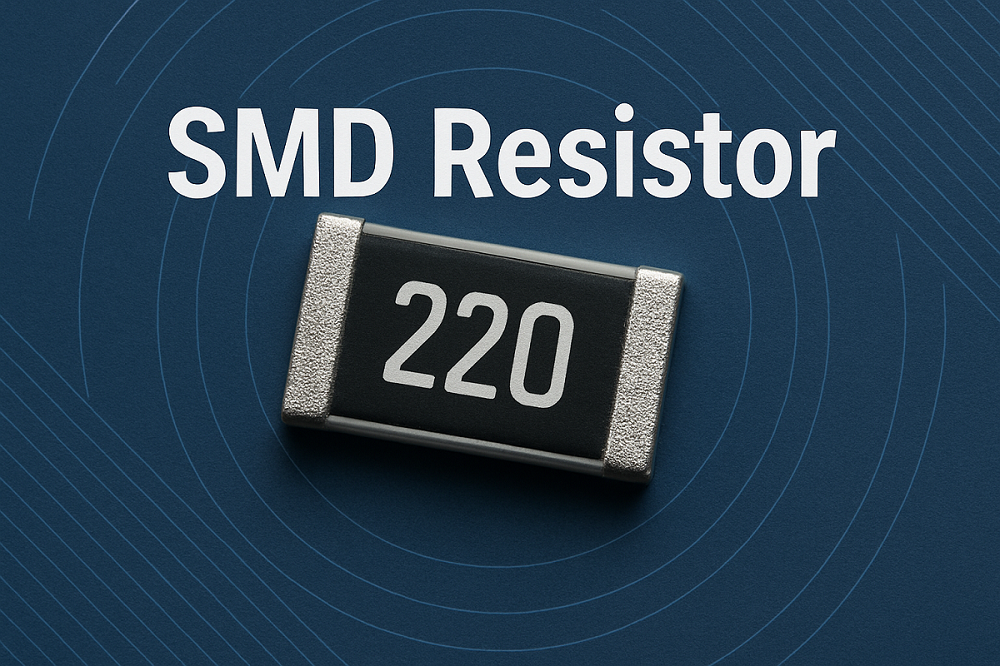
SMD Resistor: Types, Applications, and Selection Guide2025-04-30