The Kynix Blog
Stay Ahead with Expert Electronics Insights,
Industry Trends, and Innovative Tips
- Electronic Components
- News Room
- General electronic semiconductor
- Components Guide
- Sort by
- Robots
- Transmitters
- Capacitors
- IC Chips
- PCBs
- Connectors
- Amplifiers
- Memory
- LED
- Diodes
- Transistors
- Battery
- Oscillators
- Resistors
- Transceiver
- RFID
- FPGA
- Mosfets
- Sensor
- Motors, Solenoids, Driver Boards/Modules
- Relays
- Optoelectronics
- Power
- Transformer
- Fuse
- Thyristor
- potentiometer
- Development Boards
- RF/IF
- Semiconductor Information
- PCB
- transistor
The sensor offers a five-fold increase in proximity detection over previous-generation devices. The sensor’s integrated long-distance proximity sensor, ambient light sensor, and 940nm infrared-emitting diode (IRED) eliminate the need for additional light barriers and optical alignment of the IR emitter and photo diode.The device’s small outline saves space and gives design engineers greater flexibility in where and how they locate the sensor.A 16-bit, high-resolution ambient light sensor offers excellent sensing capabilities with sufficient selections to fulfill most applications whether a dark or high-transparency lens design.The devices offer individual programmable high- and low-threshold interrupt features to allow designers to best utilise resources and power on the microcontroller.For the 8-bit proximity-sensing function, VCNL4100 has a built-in intelligent cancelation scheme that eliminates background light issues. The device’s smart persistence scheme prevents false judgment of proximity sensing due to ambient light noise.It provides temperature compensation of -40 to +85 degrees Celsius to keep the output stable under changing temperature.Designers can easily operate proximity and ambient light sensor functions via the device’s I2C (SMBus-compatible) interface protocol.The device operates on a supply voltage range of 2.5V to 3.6V in a lead-free, RoHS-compliant 8.0 × 3.0 × 1.8mm package.Reference:T141AM61STMPE1208SQTRQT1101-ISG
kynix On 2016-12-23
The range maintained in stock for fast delivery is the general purpose high frequency 113 series comprising eight models with pressure measurement capabilities ranging 50-15,000psi and sensitivity ranging from 0.5-100mV/psi. Seven of the 113 series are ICP sensors requiring no signal conditioning with model 113B03 offering charge output for the highest measuring range to 15,000psi and sensitivity of 0.39pC/psi (±15%).Based on piezoelectric crystal technology, PCB’s pressure sensors are suitable for measuring dynamic pressure changes being able to detect the smallest of pressure fluctuations even in the presence of high static pressures. This makes them useful for transient measurements due to their high frequency responses and fast rise times. Applications include detection of pressure fluctuations in fuel lines and pipelines and cavitation from ship propellers. Dynamic pressure sensors can also be used in loud acoustic applications, for example, when measuring close to a F1 car as microphones are limited to a maximum of 174dB. Model 106B features a range of 8.3psi which is equivalent to 189dB and the company has other models that can exceed these levels.For applications in fracking, PCB offers a range of safe pressure sensors compatible with the long cables typically encountered in such environments. Additional applications include air blast and underwater explosion measurements, peak and total impulse, explosives research and structural loading, shock tube or closed bomb testing, wave velocity and/or time of arrival determinations and explosive testing.Model 105C02 is a subminiature ICP pressure sensor offering measurement range of 100psi with 50mV/psi sensitivity. This tiny sensor features a 17-42.5mm diameter diaphragm and is suitable for use in space restricted applications.Pressure sensors is backed by the company’s guarantee of Total Customer Satisfaction (TCS) and supported with a range of accessories including mounting adaptors to ensure best practice for a quality installation and avoidance of time consuming errors.Reference:13C5000PA4K19C050PA4KMLH100PGM01B
kynix On 2016-12-21
New Yorker Electronics has introduced a series ruggedised aluminium electrolytic capacitors with welded seals, the MLSG in both Flatpack and Slimpack. This series targets compact power supply applications in military and aerospace, as well as other critical systems.Design enhancements and an electrolyte push the MLSG to nearly double the operating life of its predecessor, the MLSH, at no added cost.Two principal package profiles are offered in this technology, the MLSG Flatpack which measures just 0.5" thick and 1.75" wide and the MLSG Slimpack measuring 0.5" thick by 1" wide, both offered in lengths of 1.5, 2, 2.5 or 3".MLSG Flatpack welded seals capacitors can be made to withstand up to 50g vibrations (10g standard) and altitudes greater than 80,000ft. With stainless steel cases and near hermetic welded seals, they are built for extended duty in very harsh conditions. Especially noteworthy is that a high level of performance is maintained over the full operating temperature range. Capacitance retention at -55°C is very strong, with excellent high temperature performance up to 125°C. The new electrolyte system is fully REACH compliant, allowing application of the components in a broad range of applications where space efficiency and extraordinarily long life are required.A wide range of standard capacitance values from 220 to 24,000µF are available, with voltage ratings up to 250VDC. The unique flat package design does more than save space. It is easily cooled, and can offer flexibility in ganging two or more devices in ways that conventional electrolytics can’t.Options include High Vibration (HVMLSG), for performance to 50g, and High Reliability (HRMLSG), with burn-in at rated voltage and 85°C. Where a true glass-to-metal hermetic seal is required, CDE offers the MLSH Slimpack, which is similarly constructed in a flat stainless steel package. It is available in nine values, from 120 to 3,200µF, with ratings up to 250VDC.With a profile of 1x0.5", the MLSG Slimpack welded seals capacitors fit into the tightest of spaces and meet a DC test of 5,000 hours at rated voltage, 125°C. MLSG Slimpack is a perfect fit for military and aerospace applications requiring a low profile, rugged design and long-life. The MSGL Slimpack is also available in an HRMLSG type for high reliability burn-in – and is rated to vibration levels of 80g.Features and benefits5,000 hours at rated voltage of 125°CStainless steel caseWithstands more than 80,000ft. altitudeType HR, high reliability burn-inType HV, high vibration levelsFlatpack to 50g; Slimpack to 80gApplicationsAerospaceMilitaryCritical systemsPower suppliesReference:F17724102900MKP1841410254BFC246816474
kynix On 2016-12-21
Toshiba has developed a super high quality image processing technology that achieves image quality comparable to that of larger image sensors. This new technology is able to apply a compact image sensor like the ones in smartphones and in-vehicle cameras. Our technology sequentially processes a continuous series of captured images to realize a high image quality previously attainable with only larger image sensors.With the miniaturization of semiconductors, the number of pixels in image sensors has been increasing year by year. It is now possible to take an image with higher resolution than ever before. However, the size of image sensors has not changed and this leads to increase of noise in the image because the amount of light received per pixel decreases as the pixel count increases. The long time exposure reduces image noise, but the image quality suffers due to camera shake. Conventionally, electronic image stabilization technology has been used to prevent image quality deterioration. In electronic image stabilization, several copies of the image are overlaid to compensate for the noise and a large amount of parallel memory is required to hold the multiple image copies. As a consequence, the noise reduction effect is limited by the number of image copies that can be kept in memory.Toshiba has developed the super high quality image processing technology, allowing the user to acquire a much higher quality image by significantly reducing noise and preventing camera shake without requiring a large amount of memory. This technology generates a very sharp image with less noise by overlaying many continuously recorded images. By correcting camera shake with our proprietary high-precision motion detection technology, the image is sequentially generated using the memory capacity required for just a single image. This new technology effectively and precisely detects everything from tiny vibrations to large camera shake. Random noise is canceled out by overlaying multiple images, and object edges are kept clear and crisp through the same process. The increase in the number of captured images makes it possible to obtain very high image quality using very little memory for storage, which to date has required a highly sensitive large image sensor. In particular, night scenes suffered from increased image noise. Our technology will enable users to produce extremely clear images at low light conditions.Toshiba plans to continue research and development of this technology toward a wide variety of practical uses. Our aim is that our technology will be used in a wide range of applications, including smartphones, tablets, automotive applications, security monitoring, and medical imaging devices such as endoscopes.Reference:OVM7695-RAEAMT9P001I12STCOV05633
kynix On 2016-12-20
In 2014, when University of Wisconsin-Madison engineers announced in the journal Nature Communications that they had developed transparent sensors for use in imaging the brain, researchers around the world took notice.Then the requests came flooding in. "So many research groups started asking us for these devices that we couldn't keep up," says Zhenqiang (Jack) Ma, the Lynn H. Matthias Professor and Vilas Distinguished Achievement Professor in electrical and computer engineering at UW-Madison.Ma's group is a world leader in developing revolutionary flexible electronic devices. The see-through, implantable micro-electrode arrays were light years beyond anything ever created.Although he and collaborator Justin Williams, the Vilas Distinguished Achievement Professor in biomedical engineering and neurological surgery at UW-Madison, patented the technology through the Wisconsin Alumni Research Foundation, they saw its potential for advancements in research. "That little step has already resulted in an explosion of research in this field," says Williams. "We didn't want to keep this technology in our lab. We wanted to share it and expand the boundaries of its applications."As a result, in a paper published Thursday (Oct. 13, 2016) in the journal Nature Protocols, the researchers have described in great detail how to fabricate and use transparent graphene neural electrode arrays in applications in electrophysiology, fluorescent microscopy, optical coherence tomography, and optogenetics. "We described how to do these things so we can start working on the next generation," says Ma.Now, not only are the UW-Madison researchers looking at ways to improve and build upon the technology, they also are seeking to expand its applications from neuroscience into areas such as research of stroke, epilepsy, Parkinson's disease, cardiac conditions, and many others. And they hope other researchers do the same."This paper is a gateway for other groups to explore the huge potential from here," says Ma. "Our technology demonstrates one of the key in vivo applications of graphene. We expect more revolutionary research will follow in this interdisciplinary field."Reference:GP1S036PKGS-00GXP1-RRB-3R0232-50
kynix On 2016-12-20
It's hardly a character flaw, but organic transistors—the kind envisioned for a host of flexible electronics devices—behave less than ideally, or at least not up to the standards set by their rigid, predictable silicon counterparts. When unrecognized, a new study finds, this disparity can lead to gross overestimates of charge-carrier mobility, a property key to the performance of electronic devices.If measurements fail to account for these divergent behaviors in so-called "organic field-effect transistors" (OFETs), the resulting estimates of how fast electrons or other charge carriers travel in the devices may be more than 10 times too high, report researchers from the National Institute of Standards and Technology (NIST), Wake Forest University and Penn State University. The team's measurements implicate an overlooked source of electrical resistance as the root of inaccuracies that can inflate estimates of organic semiconductor performance.Already used in light-emitting diodes, or LEDs, electrically conductive polymers and small molecules are being groomed for applications in flexible displays, flat-panel TVs, sensors, "smart" textiles, solar cells and "Internet of Things" applications. Besides flexibility, a key selling point is that the organic devices—sometimes called "plastic electronics"—can be manufactured in large volumes and far more inexpensively than today's ubiquitous silicon-based devices.A key sticking point, however, is the challenge of achieving the high levels of charge-carrier mobility that these applications require. In the semiconductor arena, the general rule is that higher mobility is always better, enabling faster, more responsive devices. So chemists have set out to hurry electrons along. Working from a large palette of organic materials, they have been searching for chemicals—alone or in combination—that will up the speed limit in their experimental devices.Just as for silicon semiconductors, assessments of performance require measurements of current and voltage. In the basic transistor design, a source electrode injects charge into the transistor channel leading to a drain electrode. In between sits a gate electrode that regulates the current in the channel by applying voltage, functioning much like a valve.Typically, measurements are analyzed according to a longstanding theory for silicon field-effect transistors. Plug in the current and voltage values and the theory can be used to predict properties that determine how well the transistor will perform in a circuit.Results are rendered as a series of "transfer curves." Of particular interest in the new study are curves showing how the drain current changes in response to a change in the gate electrode voltage. For devices with ideal behavior, this relationship provides a good measure of how fast charge carriers move through the channel to the drain."Organic semiconductors are more prone to non-ideal behavior because the relatively weak intermolecular interactions that make them attractive for low-temperature processing also limit the ability to engineer efficient contacts as one would for state-of-the-art silicon devices," says electrical engineer David Gundlach, who leads NIST's Thin Film Electronics Project. "Since there are so many different organic materials under investigation for electronics applications, we decided to step back and do a measurement check on the conventional wisdom."Using what Gundlach describes as the semiconductor industry's "workhorse" measurement methods, the team scrutinized an OFET made of single-crystal rubrene, an organic semiconductor with a molecule shaped a bit like a microscale insect. Their measurements revealed that electrical resistance at the source electrode—the contact point where current is injected into the OFET— significantly influences the subsequent flow of electrons in the transistor channel, and hence the mobility.In effect, contact resistance at the source electrode creates the equivalent of a second valve that controls the entry of current into the transistor channel. Unaccounted for in the standard theory, this valve can overwhelm the gate—the de facto¬ regulator between the source and drain in a silicon semiconductor transistor—and become the dominant influence on transistor behavior.At low gate voltages, this contact resistance at the source can overwhelm device operation. Consequently, model-based estimates of charge-carrier mobility in organic semiconductors may be more than 10 times higher than the actual value, the research team reports.Hardly ideal behavior, but the aim of the study, the researchers write, is to improve "understanding of the source of the non-ideal behavior and its impact on extracted figures of merit," especially charge-carrier mobility. This knowledge, they add, can inform efforts to develop accurate, comprehensive measurement methods for benchmarking organic semiconductor performance, as well as guide efforts to optimize contact interfaces.Reference:2SA1987C4706FJA4213RTU
kynix On 2016-12-15
Join our mailing list!
Be the first to know about new products, special offers, and more.
Feature Posts
How Resistors Work: From Basic Principles to Advanced Applications2025-07-30
DC Switching Regulators: Principles, Selection, and Applications2025-05-30
FPGA vs CPLD: In-depth Analysis of Architecture, Performance and Application2025-05-07
MOSFET Technology: Essential Guide to Working Principles & Applications2025-05-04
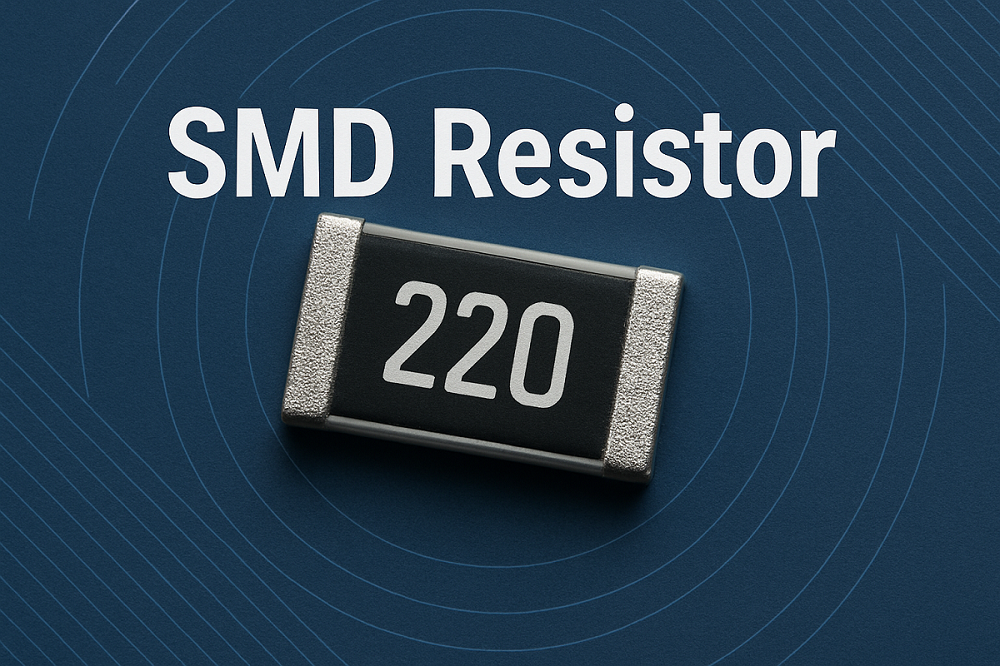
SMD Resistor: Types, Applications, and Selection Guide2025-04-30