Phone

    00852-6915 1330

The Kynix Blog

Stay Ahead with Expert Electronics Insights,
Industry Trends, and Innovative Tips

News Room

Omron Is Relaunching Its Full Range of MEMS Thermal Sensors in Europe These Days

 Omron Electronic Components has extended its non-contact MEMS thermal sensor range with a new narrow-field version specifically designed to provide accurate non-contact measurements of an objects’ surface temperature for industrial control, medical and building automation systems. Omron is relaunching its full range of MEMS thermal sensors in Europe, including wider field versions ideal for detecting room occupancy and similar applications.   The new Omron D6T-1A-02 is a super-sensitive infra-red (IR) temperature sensor that makes full use of proprietary Omron MEMS sensing technology. It can measure the surface temperature of an object between -40 up to +80°C in the target area with an accuracy of +/-1.5°C and a resolution of 0.06°C.  The device includes a state-of-the-art MEMS thermopile, a sensor ASIC (Application Specific Integrated Circuit) and a signal processing microprocessor in a tiny package of only 12.0mm x 11.6mm x 9.2mm. The D6T-1A-02 features a narrow field of view of 26.5 degrees square, allowing it to accurately assess the surface temperature of a specific object in this area. Features also include a digital I2C output which offers excellent noise immunity (measured as noise equivalent temperature difference) of 140mK. The Omron D6T thermal sensor is also ideal for building automation applications, measuring the temperature in a room, or detecting occupancy even when people are stationary. For these applications, Omron is offering versions with a wider field of view. These include a 1x1 device, the D6T-1A-01, with a field 58 degrees square. A 4x4 version and a 1x8 version are also available. These ultra-sensitive sensors are an outstanding alternative to pyroelectric sensors or PIR detectors in home automation, building automation, healthcare, security and industrial applications, which often fail to distinguish between an unoccupied space and a stationary person. While standard thermal sensors are only able to measure temperature at one contact point, the D6T range can measure the temperature of an entire area contactlessly. Signals generated by infrared rays are extremely weak. To achieve reliable detection, Omron has developed and manufactured every part of the new high sensitivity thermal sensor in-house, from the MEMS sensors to the ASICs and other application-specific parts. The technology behind Omron’s D6T thermal sensors combines a MEMS micro-mirror structure for efficient IR radiation detection with a high-performance silicon lens to focus the infrared rays onto its thermopiles. The ASIC then uses proprietary algorithms to make the necessary computations and convert sensor signals into digital I2C outputs. All components were developed in-house and are fabricated in Omron’s own MEMS facilities. Ref.KY66-G6SK-2-DC5KY66-G5LA-14-DC5
kynix On 2017-07-11   200

LED

You Can Choose the Color in Every Room With Smart Light Bulbs

Still using incandescent lighting in your home? Don't be dim. These boring old bulbs tend to jack up your electric bill, and they burn out, leaving you with the hassle of disposal and replacement. Give your home a much-deserved upgrade and achieve lighting enlightenment with Kasa LED Low Energy Bluetooth Smart Bulbs. These fun and functional lights can save you time and money—plus they'll help you create a fitting mood for nearly any room. Get a 2-pack of Kasa lights here for 44 percent off the regular price. Kasa Smart LEDs have a life span of 15 years under normal use, making them four times more efficient than traditional incandescent bulbs. They also use less electricity to create an equal amount of light, so upgrading your old bulbs to Kasa bulbs can actually reduce your utility bill. For those who believe good lighting can have a positive effect on happiness and comfort levels, Kasa bulbs will introduce you to a whole new world of control and customization. With the free Kasa app, you can trigger multiple lights, raise and lower brightness levels, and cycle through a palette of over 16 million colors. Go wild and match your lights to the season, your decor, or your current wardrobe—the possibilities are endless. You can even schedule bulbs to turn on or off throughout the day, or save a particularly pretty color combo and use it at another time. Ref.KY59-EB-251KY59-LRW5SM-GZHZ-1
kynix On 2017-07-10   245
FPGA

FPGAs Power Facial Recognition Technology Was Issued by NEC

To help detect and prevent possible incidents at critical facilities and public venues, Intel technology is powering a face recognition engine that can rapidly and accurately identify people, even when they are moving and in a crowd. NEC relied on Intel Arria 10 field programmable gate arrays (FPGAs) operating on Intel Xeon processor–based servers to increase the performance of its NEC NeoFace facial recognition engine to a level where an individual can be identified smoothly from a high-resolution image with dozens of faces.  “Facial recognition in a moving crowd requires highly advanced techniques when compared to still images because these cameras are affected by many factors: camera location, image quality and lighting, along with the subject’s size, walking speed and face direction,” said Tadashige Kadoi, general manager of IoT Platform Development Division, NEC. “Intel FPGAs and their parallel processing capability help NEC to enable fast and accurate collection and processing of images from even 4K high-resolution remote cameras.” Intel FPGA acceleration technology played a role in a recent achievement for NEC. In March, NEC NeoFace was ranked Number 1 in almost all tests by the US National Institute of Standards and Technology (NIST) specifically for face-in-video evaluation. The NIST tests evaluated the accuracy of the technology in two real-life test scenarios including a test for entry-exit management at an airport passenger gate. It determined whether and how well the engine could recognise people as they walked through an area one at a time without stopping or looking at the camera. NEC's face recognition technology won first place with a matching accuracy of 99.2%. The error rate of 0.8% is less than one-fourth of the second place error rate. In the second test, the technology was asked to detect suspicious individuals at an indoor stadium. This test was conducted with an individual situated far from the camera, with their face direction changing frequently. NEC's face recognition technology won first place with an error rate half that of the second place error rate. To create the NeoFace Accelerator, NEC’s NeoFace facial recognition engine software IP is integrated into an Intel Arria 10 FPGA, keeping the same accuracy level while achieving higher performance in facial recognition than the previous solution. Intel teams also worked with NEC to enhance the performance of NeoFace data centre server technology. NEC NeoFace Accelerator includes not only the Intel Arria 10 FPGA, but also an Intel MAX 10 low-cost FPGA and Intel Enpirion power devices. Ref.KY32-EP1S60B956C6KY32-EP4CGX150DF27I7 
kynix On 2017-07-07   344
LED

The World's Smallest Phase-cut DC Led Driver series--The NanoDriver Series is issued by Seoul Semiconductor

Seoul Semiconductor has developed the industry’s smallest phase-cut DC LED driver series, with a power density 10X higher than conventional LED drivers. The NanoDriver Series is the world’s smallest miniature converter at just 13.5 mm wide, and is available in four versions rated for 16 W and 24 W output power for operating LED lighting with input power of 120 V/230 V (50 – 60 Hz). Manufactured with Seoul Semiconductor’s original Acrich technology, the NanoDriver Series features an IC directly attached to the substrate, dramatically reducing the size of the converter.(NanoDriver Series phase-cut LED drivers measure just 13.5 mm × 13.5 mm × 1.42 mm)In the future, Seoul Semiconductor will also launch the MicroDriver Series high performance drivers for LED lighting fixtures from 900 to 2400 lumens. The MicroDriver Series is designed with a miniature package that reduces the size of the converter by more than 10X to enable the integration of the control circuitry with the external driver, making it possible to mount more light sources on the board, reduce the size of the board. The NanoDriver Series requires few external components, and delivers 16 W/24 W of output power in a package just 13.5 mm × 13.5 mm × 1.42 mm. These drivers are ideal for downlight, flush mount, track and spotlight fixtures. Their small size enables ultra-thin and novel fixture designs in wall sconces, making conventional lamp replacement possible without the need for a large volume recess for the driver, or a reduction in the light output. The resulting decrease in the LED drivers’ physical size has significant business implications for the lighting industry, giving lighting designers the ability to shrink the size of light fixtures by as much as 20, which reduces shipping and storage costs. Because conventional LED drivers are both heavy and bulky, they are typically shipped via sea freight from manufacturers in Asia to European and North American fixture companies, with transit times up to six weeks. The NanoDriver Series are small and lightweight enough to make airfreight practical and economical, reducing transit time and making the overall supply chain more flexible and responsive. The NanoDriver Series is available in four models rated for output power of 16 W and 24 W, for LED assemblies operating at input voltages of 120 V/230 V (50 – 60 Hz). The drivers have typical efficiencies of 85 and power factor correction (PFC) of > 0.9, and are rated for inrush current of <30 mA, with an over-temperature protection feature that limits the LED current at temperatures above 160 °C. Operating temperature range is –40 °C to +70 °C (ambient) and –40 °C to +120 °C (at TC point). The drivers are UL recognized, provide flicker-free, low ripple current operation for phase-cut dimmers, and are compliant to California Title 24, enabling lighting designers to meet the most challenging design requirements, including low flicker, high power factor, Class B EMI and 2 kV surge. Ref.KY59-UR101
kynix On 2017-07-06   343
LED

Linear Technology Recently Announces an 8-channel LED Driver LT3760

Linear Technology announces the LT3760, an 8-channel LED driver, utilizing a step-up DC/DC controller capable of driving up to a 45V string of 100mA LEDs per channel. Its internal 60V, 1MHz DC/DC boost mode controller is designed to operate as a constant current LED driver for up to 80 white LEDs. From a 12V input, the LT3760 can drive 8 channels, each with up to ten 100mA white LEDs in series while delivering efficiencies exceeding 92%. Its multichannel capability makes it ideal for medium and large-sized TFT-LCD backlighting applications. Its input voltage range of 6V to 40V makes it ideal for automotive, avionic, HDTV and industrial display applications. The LT3760 offers ±2.0% (±0.7% typical) LED current matching to ensure uniform brightness of the display. Dimming ratios as high as 3,000:1 can be attained by using True Color PWM™ dimming. A programmable 100kHz to 1MHz fixed frequency operation and current mode architecture offers stable operation over a wide range of supply and output voltages while minimizing the size of the external components. Additionally, the switching frequency is synchronizable to an external clock. Its thermally enhanced TSSOP-28 package offers a highly compact solution footprint for most LED backlighting applications. The LT3760 uses an external N-Channel MOSFET switch to provide a boost mode constant current source. However, even when VIN exceeds VOUT, the LT3760 will continue to accurately regulate the LED current. The internal boost controller uses an adaptive feedback loop to drive up to eight channels of ten 100mA LEDs to regulate the output voltage slightly higher than the required LED voltage to ensure maximum efficiency. If any of the LED strings experience an open circuit, the LT3760 will continue to regulate the existing strings and signal the FAULT alert pin. If higher current LEDs are required, multiple strings can be combined, enabling the LT3760 to drive up to four channels of ten 200mA LEDs or two channels of ten 400mA LEDs. Additional features include programmable LED current derating based on junction temperature and LED temperature and programmable output voltage limiting when all LED strings are disconnected. Summary of Features LT3760: Up to 45V of LEDs × 100mA, 8-Channel LED DriverWide Input Range: 6V to 40V±2.0% LED Current Matching at 20mA (Typ ±0.7%)Up to 3000:1 True Color PWM™ Dimming RangeSingle Resistor Sets LED Current (20mA to 100mA)LED Current Regulated Even for PVIN > VOUTOutput Adapts to LED VF for Optimum EfficiencyFault Flag + Protection for Open LED StringsProtection for LED Pin to VOUT ShortParallel Channels for Higher LED CurrentProgrammable LED Current Derating vs. TemperatureAccurate Undervoltage Lockout Threshold with Programmable HysteresisProgrammable Frequency (100kHz to 1MHz)Synchronizable to an External ClockThermally Enhanced 28-Pin TSSOP Package. The LT3760EFE is available in a thermally enhanced 28-lead TSSOP package in Kynix now. An industrial grade version, the LT3760IFE is tested and guaranteed to operate from a -40°C to 125°C operating junction temperature. Ref.KY32-LT3760EFE 
kynix On 2017-07-04   277
FPGA

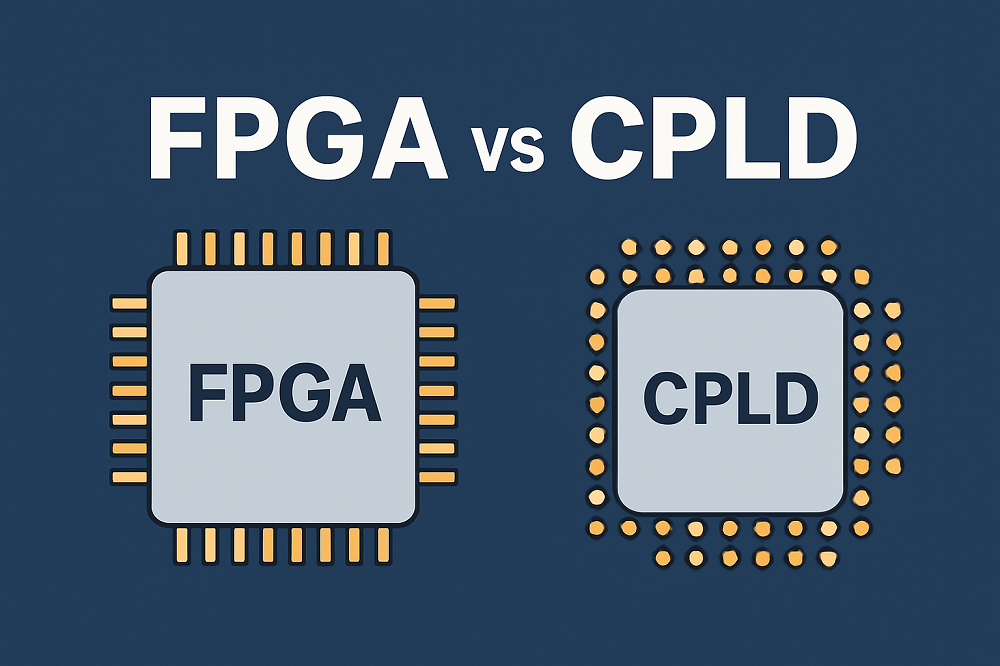
New Software for C2000 MCUs Eliminates the FPGA in industrial designs

A software called DesignDRIVE Fast Current Loop that makes C2000 microcontrollers (MCUs) the first devices to push current-loop performance to less than 1 microsecond, has been introduced by Texas Instruments. Together, TI's C2000 MCU portfolio and DesignDRIVE software delivers System-on-Chip (SOC) functionality which simplifies drive control system development.       The DesignDRIVE Fast Current Loop software out performs traditional microcontroller (MCU)-based current-loop solutions and can simplify designs by eliminating the Field-Programmable Gate Array (FPGA) typically used for external current-loop control. Fast Current Loop software is a free update available for C2000 controlSUITE software.   TI's DesignDRIVE technology is a unified hardware and software platform that makes it easier for engineers to develop and evaluate solutions for a variety of industrial drive and servo topologies. As a key part of DesignDRIVE solutions, the Fast Current Loop software enables developers to achieve higher control performance while saving valuable board space and simplifying thermal considerations.     Features and benefits of TI's DesignDRIVE Fast Current Loop software   · Innovative subcycle Pulse-Width Modulation (PWM) update techniques significantly improve control-loop bandwidths to potentially triple the motor torque response. · A novel cycle-scavenging C2000 MCU needs only 460 nanoseconds for field-oriented control processing. · A new complex controller replaces traditional proportional integration control and facilitates greater stability at higher speeds. · Industrial drive systems designed with Fast Current Loop software on a C2000 MCU, like the TMS320F28379, delivers SOC functionality to reduce board space, complexity and overall cost.      Ref. KY32-TMS320F28379 KY362-C2000    
kynix On 2017-07-03   406

Kynix

Kynix was founded in 2008, specializing in the electronic components distribution business. We adhere to honesty and ethics as our business philosophy and have gradually established an excellent reputation and credibility in our international business. With the accurate quotation, excellent credit, reasonable price, reliable quality, fast delivery, and authentic service, we have won the praise of the majority of customers.

Follow us

Join our mailing list!

Be the first to know about new products, special offers, and more.

Kynix

  • How to purchase

  • Order
  • Search & Inquiry
  • Shipping & Tracking
  • Payment Methods
  • Contact Us

  • Tel: 00852-6915 1330
  • Email: info@kynix.com
  • Follow Us

authentication

Kynix

© 2008-2026 kynix.com all rights reserved.