Phone

    00852-6915 1330

The Kynix Blog

Stay Ahead with Expert Electronics Insights,
Industry Trends, and Innovative Tips

News Room

ST will be showing off the world’s fastest ARM Cortex-M MCU on their Electronica booth

ST announced last week the world’s most powerful implementation of the ARM® Cortex®-M7 processor for the embedded market. Come and see it in action on our booth Hall 5, Stand 207. It is more than twice as fast as the STM32F7 series, the previous STM32 flagship series, meaning that its core frequency of 400 MHz has enabled ST to become the first ever to reach 2010 points in CoreMark with a Cortex-M MCU. This is possible because ST is the first to have shrunk its M7 implementation from a 90 nm process node to 40 nm. Although some manufacturers have started or are about to start mass producing SoCs in 10 nm technologies, it is important to understand that these components only have digital circuits, unlike ST’s embedded MCU, which includes digital circuitry as well as Flash memory, and analog components which require much more complex processes.Some reasons other than the technology shrink that enable the STM32H7 to set new performance records are detailed below.Three Domains, Memory-PackedTo optimize the STM32H7, its architecture has been divided into three domains. Very simply, the first one (D1) includes the core with its cache, Flash memory and high bandwidth peripherals like the module to drive a screen or the Chrom-Art graphics engine. D2, the connectivity domain, groups low-speed peripherals like USB, the cryptographic accelerator and the SD/MMC2 unit for storage. Finally, D3, the batch acquisition mode domain, is responsible for some of the most fundamental aspects of the MCU like its reset and clock control as well as ADCs, GPIO, RTC, the chip’s power management and a basic DMA (BDMA) controller.This structure allowed ST to design a flexible and efficient architecture that packs a massive internal memory compared to some STM32F7 series. Tthe L1 Cache is now four times bigger with 16 KB for instructions and the same amount for data. ST also included a total of 1 MB of SRAM and 2 MB of Flash, which is three times and twice as much respectively as the previous generation. However, instead of using a single block of SRAM, that would only benefit a certain domain, the STM32H7 placed various amounts at different locations to make the memory more versatile.Optimized Memory and FPUAnother great feature of the STM32H7 series is the ability to use ECC SRAM and Flash. The speed increase compared to the STM32F7 series is so high that ST now has the computational resources to add error correction and still break performance records.  By providing ECC, ST not only ensures data integrity, but also improves data retention in the Flash.The inclusion of a double precision (FP64) floating point unit may not always be obvious, but some of the products that will benefit the most from the STM32H7 series need to perform DSP-type computations. For instance, an embedded system that monitors a power grid and will need to compute fast Fourier Transform algorithms, or a connected device that will run a precise GPS system will rely heavily on double precision computations.The STM32H7 series also builds on the previous generation by adding 10 more communication peripherals, making a total of 35, it still offers cryptographic and hashing hardware acceleration, and remains pin to pin as well as software compatible with the STM32F7 series.Power Saving FeaturesDespite all this performance the STM32H7’s dynamic power consumption is 50% lower at only 250uA/MHz and it is possible to put D1 and D2 in a very low-powered standby mode (7µA) while D3 continues to capture data in its SRAM without needing to wake up the other domains, therefore greatly saving energy. There’s also a complex and elaborate clock-control scheme to ensure that different parts of the architecture run at varying speeds in order to further improve the MCU’s efficiency.The record-breaking STM32H7 series is sampling today to specific partners, and will be in mass production in Q2 2017. At this time, ST will have updated the mbed development platform to ensure developers can take full advantage of this groundbreaking architecture.More information about the STM32H7 series may be found on ST’s blog post or on it’s website. More information about ST’s Electronica presence, including the presentation program, can be found on the dedicated event pages.Meet also with the ST teams on the electronica Fast Forward startup platform. Ref:KY32-STM32F745IEK6KY32-STM32F745IGK6KY362-STM32F746G-DISCO 
kynix On 2017-05-22   174
PCBs

10 Things to Consider While choosing a PCB Prototype Service

The days of making a prototype board by hand by the artist are long gone. For many years, the ability to make one's own PCBs was the characteristic of an ideal design engineer (or a big shot electronic hacker). The art of making a homemade PCB has progressed over time, beginning with the use of ferric chloride solutions and progressing to laser toner printers and, more recently, 3D printers. The commercial PCB manufacturing process has evolved in tandem with the evolution of "homemade technology." Over the last few decades, the manufacturing process of the PCB (and the businesses involved in it) have expanded by leaps and bounds. The use of materials changed, and the cost of production dropped like never before, ushering in the age of affordable PCB prototype service by full scale pcb manufacturers. Designers seldom approached a full-service PCB manufacturer to print a prototype in the early days. Designers either created a prototype of their own or, in the majority of cases, approached a small-scale board manufacturer to have their images created. In those days, the expense of printing a prototype was prohibitively expensive. As technologies and processes have advanced, both designers now shift to full-service PCB manufacturers for prototyping. The advancement of technology and modern processes allowed full-scale PCB manufacturers to print prototypes and small volumes at a much lower cost than in the past. Let's dig a little deeper to see what are the 10 most important items a designer should consider when selecting a PCB prototype service are.How to Choose the Right PCB Prototype Service ? 1. CostThe first criterion to consider when selecting a PCB partner should be consistency. The prototype you print should be error-free (like a missing print or a small drill hole than the actual design). The materials selected by the PCB printing company should be free of flaws. All of these factors add up to consistency. The PCB manufacturer's quality is critical for getting your prototype correct and working. You may evaluate quality by examining the services provided by a PCB manufacturer. Examine how seriously they take a prototype client when it comes to PCB prototype operation. What is the significance of this PCB prototype service business to a specific manufacturing company? You may also speak with the customer service representatives to see how knowledgeable they are about the prototype service. A good company/manufacturer that is serious about prototype service will almost certainly have a separate segment dedicated to prototype service only. Their website will have details on the subject. Customer service will be very knowledgeable and supportive. Finally, before making a decision, conduct research on the internet about a specific manufacturer, especially in forums and communities. ALLPCB, Sunstone, EuroCircuits, 4PCB, and EpecTec are some PCB manufacturers that provide high-quality prototype services based on my experience (and other reviews). 4PCB is the only one of these five firms that does not have a dedicated section for prototype printing. Sunstone and AllPCB have whole parts devoted to prototyping services. Services for all PCBs start as low as $5 USD. 2. MOQ (Minimum Order Quantity)The minimum order quantity requested by the manufacturer, in my opinion, should be the second criterion in selecting a PCB prototype service. A prototype is a concept that is in its early stages and is subject to alteration. If a PCB manufacturer wants you to order a much larger minimum quantity (usually measured and quoted in square inches) than you can afford (or far exceeds your budget), you can avoid that manufacturer. The majority of manufacturers are willing to negotiate on this point.As a designer, you will negotiate with the manufacturer for potential orders. The main point here is that a MOQ that appears low or inexpensive to one designer (or design/production company) can be prohibitively expensive to another.33. CostThe cost/price quoted by the PCB manufacturer is the third factor to consider. In reality, the PCB printing industry is a highly competitive one. With the internet at their fingertips (4G and smartphones), everyone can search and compare quotes from various PCB manufacturing companies in a matter of hours. Because of the highly competitive climate, it is unlikely that there would be a significant difference in prices quoted by various manufacturers. Bear in mind that quality and price do not go together! Manufacturers with superior technologies, high-quality products, and overall quality would undoubtedly charge a higher price than their competitors. My advice is always to prioritize quality over price. Consider the following scenario: you had to reprint the prototype due to poor quality or a problem on the manufacturer's end. Weighing the additional cost (for reprinting) and time loss, I would probably choose a reputable manufacturer with good quality, even if the price is slightly higher.4. Turnaround TimeFast delivery of your prototype from the order date is a critical criterion to consider when selecting a PCB prototype service partner. It's pointless if a manufacturer takes two weeks from the order date to ship your prototype. The majority of prototype projects have strict deadlines. Typically, a manufacturer quotes 5 days or more to ship the prototype from the day the order is approved (Gerber files accepted). There are providers that provide quicker service as well; for example, ALLPCB provides prototype delivery within 2 to 3 days of Gerber file approval. EuroCircuits, a well-known PCB manufacturer, charges between 2 and 7 days for their prototype operation. Sunstone, another big player, provides a time guarantee in which they guarantee a refund if they fail to ship on the agreed-upon date. However, they are not as fast as the ALLPCB men, typically taking more than 5 days to complete an order (the maximum lead time of Sunstone is around 3 weeks). 5. Customization OptionsPrototypes are subject to alteration until they take on their final form. They can change scale, parts, and, in some cases, the entire form. It is difficult for any manufacturer to provide customizations on the fly. If customizations are important to you, look for a manufacturer who has the necessary equipment and facilities to provide what you want. 6. International DeliveryCheck to see if the manufacturer you've narrowed down offers delivery to your country, particularly if you're working with an overseas printing business. The majority of full-service manufacturers have foreign shipping to almost all business countries. The majority of designers now work with PCB manufacturers in China, who provide high-quality PCBs at a low cost. The majority of these well-established Chinese businesses provide worldwide shipping. 7. Instant Quote Facility The majority of well-known manufacturers provide instant quotes on their websites. Often go with manufacturers who provide this online quote service. Instant quotes provide us with an idea of the costs involved. 8. Industry ExperienceUnique and advanced projects need prior expertise in a specific industry. For example, if you're working on a communication technology project, it's best to work with a vendor that has a proven track record in the same industry. Similarly, as the number of layers on your board grows, go with existing players who are well-versed in multilayer printing. 9. Multi Disciplinary Services If you intend to outsource services such as PCB assembly, you should look for a manufacturer that provides a variety of options.10. Safe Packing & ShippingFinally, be certain that the manufacturer you choose adheres to healthy packaging and shipping practices. Nobody wants their goods to be harmed during delivery. If you need faster delivery, see if the manufacturer provides express shipping (often at a higher price). Ref:KY66-G6EU-134P-US DC6KY66-EF2-5NUKY66-G6K-2G-Y-DC4.5
kynix On 2017-05-19   377
Memory

High-endurance memory card for surveillance applications

New industrial-grade microSDHC/XC memory cards have been launched by Apacer Technology which are custom-built for video monitoring equipment to endure long hours of continuous data writing. Not only are Apacer microSDXC UHS-1(U3) memory cards available in capacities ranging from 4-128GB, their Ultra High Speed Class 3 specification also supports smooth Full-HD, 3D and 4K video recording, which is particularly significant in video monitoring applications that require continuous recording and sustain high wear rate.  Their durability, endurance and performance make them suitable for surveillance video recorders, dashcams for fleet vehicles and government use, and webcams.High-endurance memory cards, high-reliability assuranceUnlike those used for photographs and storing small files, Apacer memory cards are designed to endure extensive write cycles. Industrial-grade high-endurance microSDHC/XC memory cards are developed for security surveillance equipment that requires all-year-round uninterrupted data writing, ensuring high-quality images and data integrity required for long-lasting video recording. When using the 128GB ultra high capacity microSDXC memory card to record Full-HD in 20FPS, it can record for up to 20,000 hours; in loop recording, it can store 32 hours of video footage with automatic write-over. In an emergency when both quality and performance are required in the video surveillance system, Apacer microSD memory cards protect and store data securely, providing high endurance and high capacity.Improved speed, enhanced access performanceFeaturing Ultra High Speed Class 3 (U3) specification, Apacer microSD memory cards have maximum read/write speed of 75/65MB per second. The memory cards also support ECC (Error Correcting Code) to automatically check data and provide timely error correction, preventing data loss and damage, and increasing data accuracy and integrity. When teamed with 128GB (SDXC) large capacity, they become a suitable storage device for security surveillance systems.All Apacer microSDHC/SDXC memory cards are temperature-resistant, shockproof, waterproof, anti-static and x-ray-proof, allowing surveillance systems to operate reliably in a harsh environment. The memory cards also feature high quality MLC flash memory chip and customised firmware optimised management tools, such as write protect which prevents precious data from being written over or erased by mistake. Furthermore, the memory cards support ECC to reduce data error arising from constant overwrite, and wear-leveling and S.M.A.R.T. techniques which automatically monitor memory health status, improving product reliability and lifespan. Ref:KY32-K9T1G08U0M-YIBOKY32-CY7C1357S-100AXCKY32-70V639S10BC8
kynix On 2017-05-18   241
Sensor

Sensor hubs help cut smartphone power consumption

The BHA250 low-power sensor hub and BHI160 ultra-low power sensor hub from Bosch Sensortec is now in stock at distributor Mouser Electronics . Designed specifically for always-on sensor applications in smartphones running the Android operating system, the BHA250 and BHI160 enable designers to offload sensor processing from the main processor, which can reduce power consumption and extend battery life.  The sensor hubs integrate a best-in-class 3-axis MEMS accelerometer (BH250) or 6-axis gyroscope/accelerometer inertial measurement unit (BH160) with the new Bosch Sensortec digital signal processor, Fuser Core.The Fuser Core is a 32-bit floating-point microcontroller optimised to execute Bosch Sensortec's sensor fusion and activity-recognition algorithms with ultra-low power consumption — up to 95 percent less than that of other microcontrollers.The BHA250 and BHI160 are specifically designed for applications in Android smartphones — implementing a full Android sensor stack inside the devices to provide a flexible, low-power solution for always-on motion sensing and sensor data processing. In both devices, the 32-bit Fuser Core microcontroller features 96 kBytes of ROM, including the BSX sensor fusion library, and 48 kBytes of RAM for additional drivers, local data buffering, or feature updates.The devices provide up to three general-purpose input/outputs (GPIOs) and a high-speed I2C interface with data rates up to 3.4 MBit/s for power-efficient data transfer.They meet the requirements of smartphones, wearables, and other applications that demand highly accurate, real-time motion data at very low power consumption.Mouser also offers corresponding shuttle boards for the sensor hubs. Both the BHA250 shuttle board and BHI160 shuttle board, available to order from Mouser, include four external magnetometers that can be connected to the sensor hubs using the available jumpers on the PCB.The shuttle board allows easy access to the sensor‘s pins via a simple socket and can be plugged into the Bosch Sensortec Application Board. Ref:KY45-AD22293ZKY45-SS16-3KY45-TLE4998P3 
kynix On 2017-05-17   237
General electronic semiconductor

Arduino Alternatives: 5 Microcontrollers You Should Know

This article introduces 5 excellent microcontrollers that you might not be familiar with, offering alternatives to mainstream development boards.I Brief IntroductionEven if you are a casual microcontroller enthusiast, you've probably heard of the biggest names in the business: Arduino, Raspberry Pi, and ESP32. However, there are less renowned but still high-quality microcontrollers that you may have missed but should get to know.II Five Microcontrollers You Should Know About2.1 MSP430 LaunchPadLaunchPad is a low-cost, ultra-low-power microcontroller development platform from Texas Instruments. As of 2025, the MSP430 LaunchPad ecosystem has expanded significantly, with prices ranging from $10-30 depending on the model. The latest MSP430FR series features FRAM (Ferroelectric RAM) technology, offering non-volatile memory with extremely low power consumption.The MSP430 excels in battery-powered applications, with some models consuming less than 100nA in standby mode and waking up in less than 5 microseconds. Modern variants offer up to 256KB of FRAM and 8KB of SRAM. The platform is supported by Texas Instruments' Code Composer Studio IDE and is compatible with Energia, an Arduino-like programming environment, making it accessible for beginners while powerful enough for professional applications in IoT sensors, wearables, and medical devices.2.2 Nanode (Legacy Platform)Note: The Nanode project has been discontinued and is no longer actively maintained. While it was an innovative Arduino-compatible board with built-in Ethernet connectivity designed for Internet of Things applications, modern alternatives have superseded it.Modern Alternatives: For IoT projects in 2025, consider the ESP32 (with built-in WiFi and Bluetooth, $5-15), Arduino MKR WiFi 1010 ($30-35), or Raspberry Pi Pico W ($6) which offer better performance, active community support, and modern connectivity options.2.3 Pinguino (Limited Availability)Pinguino was an open-source microcontroller platform based on Microchip PIC microcontrollers, designed as an alternative to Arduino. However, the project has seen reduced activity in recent years, with limited board availability and community support.Current Status: While some Pinguino boards may still be available through specialty retailers, the ecosystem has largely stagnated. For PIC-based development in 2025, consider Microchip's official Curiosity development boards ($25-50) which offer better support, documentation, and integration with MPLAB X IDE.2.4 STM32 Discovery & NucleoSTMicroelectronics' STM32 ecosystem has grown tremendously and is now one of the most popular professional microcontroller platforms. As of 2025, the STM32 family includes hundreds of variants, from the ultra-low-power STM32L series to the high-performance STM32H7 series running at up to 550 MHz.Discovery boards ($15-50) feature specific peripherals for evaluation, while Nucleo boards ($10-25) offer Arduino-compatible headers. Modern STM32 boards feature 32-bit ARM Cortex-M cores (M0+ to M7), with RAM ranging from 20KB to over 1MB, and flash memory up to 2MB. The platform is supported by STM32CubeIDE (free), and has excellent Arduino compatibility through the STM32duino project, making it accessible to hobbyists while meeting professional requirements for automotive, industrial, and consumer electronics.2.5 Teensy 4.1The Teensy platform has evolved significantly since 2017. The current flagship Teensy 4.1 ($31.50) is a powerhouse featuring an ARM Cortex-M7 processor running at 600 MHz, 1MB RAM, 8MB flash, and optional microSD card slot. It's one of the fastest Arduino-compatible microcontrollers available.Teensy boards maintain their compact form factor while offering exceptional performance for audio processing, real-time data acquisition, and complex control systems. The Teensy 4.0 ($23.80) offers similar performance in an even smaller package. Full Arduino IDE compatibility, extensive library support, and the powerful Teensyduino add-on make these boards excellent for advanced projects requiring high processing power in a small footprint. Popular applications include synthesizers, high-speed data loggers, LED matrix controllers, and robotics.FAQ1. What is a microcontroller used for?Microcontrollers are embedded computers used to control electronic devices. In offices, they're found in keyboards, monitors, printers, and phone systems. At home, they control appliances like microwaves, washing machines, thermostats, smart home devices, and entertainment systems. In 2025, microcontrollers are essential in IoT devices, wearables, electric vehicles, drones, and medical equipment.2. What is a microcontroller and what does it do?A microcontroller is an integrated circuit (IC) containing a processor core, memory (RAM and ROM/Flash), and programmable input/output peripherals. It's designed to execute specific control tasks in embedded systems, reading sensors, making decisions, and controlling actuators or displays.3. What is the difference between microprocessor and microcontroller?A microprocessor (like those in PCs) contains only a CPU and requires external components for memory and I/O. A microcontroller integrates CPU, memory, and I/O peripherals on a single chip. Microprocessors are designed for general-purpose computing with maximum performance, while microcontrollers are optimized for specific control tasks with lower power consumption and cost.4. What are the advantages of microcontrollers?Key advantages include: low cost ($0.50-$50), low power consumption (microamps to milliamps), small size, integrated peripherals, reliability, reprogrammability, and real-time control capabilities. Modern microcontrollers also offer built-in security features, wireless connectivity, and advanced power management.5. What is Arduino?Arduino is an open-source electronics platform consisting of programmable circuit boards (containing microcontrollers) and development software (Arduino IDE). It simplifies microcontroller programming with an easy-to-learn language and extensive library support, making it popular for education, prototyping, and hobbyist projects.6. Which is faster: microcontroller or microprocessor?Microprocessors are generally faster, with modern CPUs running at 2-5+ GHz. Microcontrollers typically run at 8 MHz to 600 MHz (as of 2025). However, microcontrollers offer better real-time response and deterministic behavior for control applications, and their integrated peripherals eliminate external bus delays.7. Which is better: microcontroller or microprocessor?Neither is universally "better"—they serve different purposes. Choose microprocessors for complex computing tasks requiring high performance and large memory (computers, servers). Choose microcontrollers for dedicated control tasks requiring low power, small size, and real-time operation (embedded systems, IoT devices).8. How does a microcontroller work?A microcontroller executes programmed instructions stored in its memory. It continuously reads inputs from sensors or user interfaces, processes this data according to its program, and sends output signals to control devices like motors, LEDs, or displays. This happens in a loop, often thousands of times per second.9. What are the characteristics of a microcontroller?Key characteristics include: integrated CPU (8-bit to 32-bit), volatile RAM (1KB-1MB+), non-volatile program memory (Flash/EEPROM, 4KB-2MB+), digital I/O pins, analog-to-digital converters (ADC), timers/counters, communication interfaces (UART, SPI, I2C, USB), and often specialized peripherals like PWM, comparators, or wireless transceivers.10. What are the disadvantages of microcontrollers?Limitations include: limited processing power compared to microprocessors, fixed memory capacity, complexity for beginners, limited high-power device interfacing (requires external drivers), and platform-specific programming. However, modern development tools and extensive communities have significantly reduced these barriers.11. Why choose Arduino over bare microcontrollers?Arduino provides a complete ecosystem: pre-tested hardware, simplified programming environment, extensive libraries, and a massive community. This dramatically reduces development time and learning curve compared to programming microcontrollers directly. It's ideal for prototyping, education, and projects where development speed matters more than per-unit cost.12. What is the difference between Arduino and a microcontroller?A microcontroller is the chip itself. Arduino is a complete development platform that includes a microcontroller, supporting circuitry (voltage regulation, USB interface), standardized connectors, and software tools. Arduino makes microcontrollers accessible by handling low-level complexities.13. Are microcontrollers expensive?No, microcontrollers are very affordable. Basic chips cost $0.50-$5 in volume, while development boards range from $5-50. The integrated design reduces external component costs. Even high-performance 32-bit microcontrollers are typically under $10 in single quantities.14. Why are microcontrollers used in embedded systems?Microcontrollers are ideal for embedded systems because they integrate all necessary components (CPU, memory, I/O) in a single, compact, low-power, cost-effective package. They provide deterministic real-time performance essential for control applications and can operate reliably in harsh environments.15. Why is it called a microcontroller?"Micro" refers to the microscopic transistors (measured in nanometers in modern chips) and the small physical size. "Controller" indicates its primary purpose: controlling other devices and systems. The term distinguishes it from general-purpose microprocessors by emphasizing its control-oriented design.Article Updated: November 2025Original Publication: 2017
Kynix On 2017-05-16   636
Transistors

World's first vertically stacked gate-all-around Si nanowire CMOS transistors

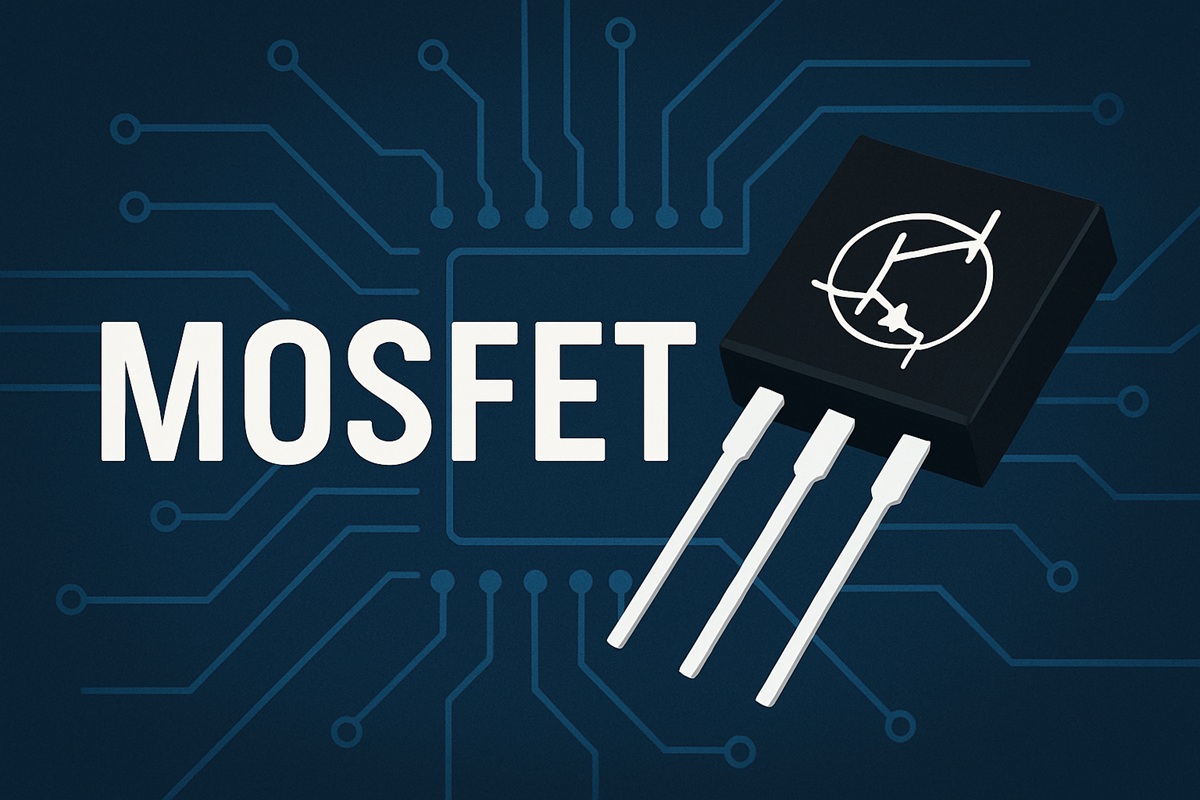
At this week's IEEE IEDM conference, world-leading research and innovation hub for nano-electronics and digital technology, imec, reported for the first time the CMOS integration of vertically stacked gate-all-around (GAA) silicon nanowire MOSFETs. Key in the integration scheme is a dual-work-function metal gate enabling matched threshold voltages for the n- and p-type devices. Also, the impact of the new architecture on intrinsic ESD performance was studied, and an ESD protection diode is proposed. These breakthrough results advance the development of GAA nanowire MOSFETs, which promise to succeed FinFETs in future technology nodes. GAA nanowire transistors are promising candidates to succeed FinFETs in 7nm and beyond technology nodes. They offer optimal electrostatic control, thereby enabling ultimate CMOS device scaling. In a horizontal configuration, they are a natural extension of today's mainstream FinFET technology. In this configuration, the drive current per footprint can be maximized by vertically stacking multiple horizontal nanowires. Earlier this year, imec scientists demonstrated GAA FETs based on vertically stacked 8nm diameter Si nanowires. These devices showed excellent electrostatic control, but were fabricated for n- and p-FETs separately.Imec now reports on the CMOS integration of vertically stacked GAA Si nanowire MOSFETs, with matched threshold voltages for n- and p-type devices. Key in the integration scheme is the implementation of dual-work-function metal gates to set the threshold voltages of the n- and p-FETs independently. In this process step, p-type work function metal (PWFM) is deposited in the gate trenches of all devices, followed by selectively etching the PWFM down to the HfO2 from the n-FETs and subsequent deposition of the n-type work function metal. The observation of matched threshold voltages (VT,SAT = 0.35V) for nMOS and pMOS devices validates the dual-work-function metal integration scheme.The impact of this new device architecture on the intrinsic ESD performance was investigated as well. Two different ESD protection diodes have been proposed, i.e. a gate-structure defined diode (gated diode) and a shallow-trench isolation defined diode (STI diode). The STI diode was the better ESD protection device, showing an excellent ratio of failure current (It2) over parasitic capacitance (C). Measurements and TCAD simulations also prove that the ESD performance in GAA nanowire based diodes is maintained in comparison to bulk FinFET diodes."GAA nanowire transistors enable ultimate CMOS device scaling, with low degree of added complexity compared to alternative scaling scenarios," stated Dan Mocuta, Director Logic Device and Integration at imec. The proposed integration scheme for Si GAA CMOS technology and the results on ESD protection are important achievements towards realizing these 7nm and beyond technology nodes. Future work will focus, among others, on further optimizing individual process steps, for example through the co-optimization of the junction and nanowire formation."Ref:KY56-2SA1987KY56-KSC5024RTUKY56-MJL4302A          
kynix On 2017-05-15   364

Kynix

Kynix was founded in 2008, specializing in the electronic components distribution business. We adhere to honesty and ethics as our business philosophy and have gradually established an excellent reputation and credibility in our international business. With the accurate quotation, excellent credit, reasonable price, reliable quality, fast delivery, and authentic service, we have won the praise of the majority of customers.

Follow us

Join our mailing list!

Be the first to know about new products, special offers, and more.

Kynix

  • How to purchase

  • Order
  • Search & Inquiry
  • Shipping & Tracking
  • Payment Methods
  • Contact Us

  • Tel: 00852-6915 1330
  • Email: info@kynix.com
  • Follow Us

authentication

Kynix

© 2008-2026 kynix.com all rights reserved.