The Kynix Blog
Stay Ahead with Expert Electronics Insights,
Industry Trends, and Innovative Tips
- Electronic Components
- News Room
- General electronic semiconductor
- Components Guide
- Sort by
- Robots
- Transmitters
- Capacitors
- IC Chips
- PCBs
- Connectors
- Amplifiers
- Memory
- LED
- Diodes
- Transistors
- Battery
- Oscillators
- Resistors
- Transceiver
- RFID
- FPGA
- Mosfets
- Sensor
- Motors, Solenoids, Driver Boards/Modules
- Relays
- Optoelectronics
- Power
- Transformer
- Fuse
- Thyristor
- potentiometer
- Development Boards
- RF/IF
- Semiconductor Information
- PCB
- transistor
Defining Logic Output Optocouplerslight-emitting diode (LED)The optical couplers at the logic output are like small security devices that transmit electronic messages. They ensure that signals travel safely from one side of a power line to the other side, without risk of damage.Imagine a narrow tunnel with no lightning. This distinction exists between a signal transmitter, which is a light-emitting diode (LED), and a signal receiver, which is a photodetector.The LED lights up when it receives an electrical signal, and the searchlight detects this light and seems to send smoke signals on its way but decides to light up with the same electrical message inside the electronics.In fact, those extraordinary capabilities are considered superheroes in electronics rooms, defending tirelessly against the insidious dangers of scrapers that can disrupt sensitive balances.Standing motionless as strong guards, they prevent excessive voltages or unwanted surges from reaching the sensitive electronic components involved, thus avoiding potential hazards and they ensure that the equipment is easy to operate.Also, the speed is definitely amazing to watch! The speed with which messages are transmitted, often referred to as "timeouts," requires the necessity for shorter responses, including computers or devices.Every nanosecond counts in the intense dance of changing mathematics, and these materials excel at facilitating lightning-fast interactions, providing seamless connections and fast responses that can has been crucial to the optimal operation of these devices.Take, if you will, the thrill of a relay race, in which athletes spin the pole with precision and speed, with each flawless transition illustrated in a display of sportsmanship and teamwork that is and around it.Similarly, these features ensure that the signals zip through all circuits with flawless timing and power, comparable to a simple alternative to a relay race rod, and drive the device successfully with unmatched speed and accuracy.As the relay team struggles to deliver the correct handshake, those components set up signals that cycle flawlessly at the same time, indicators of the mastery of electronics and exchanges that they are in the den. Exploring the Functionality of Logic Output Optocouplershow logic output optocouplers workImmersing yourself in how logic output optocouplers work can feel like opening a magic box. They are key players in getting devices to talk to each other safely, seamlessly converting complex signals into meaningful signals for both parties. Integration in IC CircuitsThe optical couplers in the logic output fit snugly into IC circuits, like puzzle pieces finding their proper place. Zip digital signals are transmitted over invisible wires, keeping things secure and separate.Think of it as a small circuit that can transmit messages without ever touching the underlying electric field. They work hard behind your favorite devices.In a world filled with noise and chaos, the presence of interconnected lights emerge as quiet heroes, adept at muffling the disturbing sounds that threaten to infiltrate our circuits.Their sensitivity goes beyond mere light, as they apply ultrasonic power to technology.These sparkling organizations boast impressive specifications that command the respect and admiration of technology enthusiasts around the world.With lightning-fast rise times of only 2 nanoseconds to 35 nanoseconds, and fall times of 2 nanoseconds to 56 nanoseconds, they exhibit remarkable flexibility for the most discerning engineers even nod their heads in agreement.Equipped with such unmatched capabilities, they are still poised and ready to deliver stellar performance on any circuit, while effortlessly taking over their surroundings the stress-free tension.Whether they’re a low-profile, soft-emitting LED light or a rugged motherboard cranking out activity within the confines of your computer, all of these features come together to ensure a seamless connection and a perfect connection without electrical interference without the disturbing effectsAs experienced drivers form rhythmic connections, these interlocking lights facilitate synchronized dialogue, ensuring smooth and error-free communication between each side, and engineering into a melody of energy working in perfect harmony emerges. Enhancing Isolation CapabilitiesIncreasing the isolation capacity at the logic output optocoupler all involves subtle control of the isolation voltage and temperature range. These devices work like competitors, preventing high voltages from damaging sensitive parts of electronic systems.Think of them as football players; The unwanted electrical "target" is stored. By paying attention to these measures, you ensure that your system remains secure and functional in a variety of circumstances.If you dive deeper, data sheets are like treasure maps to make better use of the optocouplers’ isolation features. You are instructed to choose a slower generator, which means lower temperatures and more efficiency in the electrical system.Also, as the maximum delay times for shipping and logistics are nailed down, noise or interruptions can cause the team to fall off, off the speed of your delivery plan. Types of Logic Output OptocouplersLogic output light couplers come in a variety of flavours, each with its own unique touch. You’ve got push-pull and logic gates, which are the chocolate and vanilla of this electronic world, providing ways to safely and effectively process signals in isolated circuits. Push-Pull Logic Output OptocouplersPush-pull logic output optocouplers stand out because they transmit signals that your everyday devices understand. They need a little extra water from an external power supply to work their magic.This relay race is like a handyman, it goes fast and doesn’t throw a baton.A push-pull optocoupler is a reliable team member that always knows when to pass the rod.These features integrate well with electronic systems, allowing the devices to talk to each other securely. They are the heroes behind the PCB, ensuring messages get where they need to go without messing around or causing any risk.Maybe your electronics onboard these guys will play together nicely. Logic-Gate-Output OptocouplersLogic-gate-output light couplers work like angels in electronics. They carry signals from one side to the other, making sure that nothing bad happens along the way. Think of them as stewards who keep everything running smoothly.These features are intelligent because they are able to recognize vital signs and need to be tapped. This makes them perfect for applications where safety and accuracy are paramount.These little heroes come in a variety of forms for different tasks, such as turning on lights or running machines safely. Their function is important because they protect sensitive parts from high or potentially damaging forces.By doing this, they ensure that your equipment is working properly without any hiccups. Uses of Logic Output OptocouplersLogic output optocouplers appear in locations you won't expect, together with making sure your digital gadgets speak to every different accurately.They are invisible heroes in a number of devices, from uncluttered signal amplification to precise manage of electricity float.In Electronic Instrumentation AmplifiersOptical couplers play an important role in logic output in electronic measuring devices. Digital signals are transmitted through a solitary barrier. This means that the input and output sides are untouched and everything is secure.These devices are like secret messengers who never reveal themselves. They ensure that nothing bad like power outage or data error happens to the devices.Optical couplers at the logic output of these amplifiers work with sensors and meters to accurately read the signals. They help avoid noise from other electronic devices that can impair readability.Imagine yourself in a serene room, enveloped in the soft glow of ambient lighting, as you settle into your favorite chair. Picture the gentle melody of your beloved song filling the air, each note resonating with clarity and depth.Now, contrast this with the jarring cacophony of loud car noises intruding upon your musical sanctuary. The discordant sounds disrupt the harmonious flow, robbing you of the joy and immersion that music brings.In a similar way, optical couplers act as guardians of your audio experience, shielding it from the disruptive interference that can distort and degrade the signal.By creating a barrier against external disturbances, these couplers ensure that the purity of the sound remains untainted, allowing for precise and reliable measurements to be taken with utmost accuracy and consistency.Just as a conductor orchestrates a symphony to perfection, these optical couplers conduct a seamless transmission, enabling you to revel in the unadulterated beauty of your music, undisturbed by the noisy chaos that seeks to disrupt your auditory pleasure. With TRIAC DevicesLogic output optocouplers combine with TRIAC devices for double power. They control the AC voltage, allowing things to turn on and off safely. This combination shines in areas like automation systems and consumer electronics.It is all about safe and accurate power management.This combination creates electrical noise and energy up to the curb. When used together, they enable and protect the electronic system. From high-intensity lighting devices to controls, they contribute to the efficiency and safety of many devices. ConclusionSo, we zipped together into the world of logic output optocouplers. They are like little superheroes in electronics, keeping things safe and communicating well over dangerous power outages.From safely routing signals through digital devices to counteracting surges in telecom gear, they do it all. With glass cooling from -40°C to +110°C and superhero speed for signal placement, there’s no denying their power.Whether you’re into building tools or making machines smarter, it’s a smart move to have these little winners on your side. Just remember, in busy cities with circuits and wires, they are quiet heroes keeping the peace. FAQs1. What's an optocoupler, and why do I need it?Think of an optical coupler as a secret messenger that sends text messages between the digital world of your devices without causing them to lose touch. This prevents your electronics from overheating each other at high voltages. So, if you like your device, you want one!2. How does this magic device work?Imagine teasing a friend through a hose in a playground; That's kinda how the optocoupler works. It takes your electrical signal, converts it into light inside its tiny body, and then converts it back into electricity on the other side—no physical connection required!3. Can it handle the big leagues like LED lighting or power supplies?exactly! Whether we’re talking LED lighting or electrical controls, our little hero can carry a huge load without breaking a sweat.4. Is there more than one type?Yes, Siri! Optocouplers come in different styles for different missions—some are like lone wolves (single style), while others like to work in pairs (two styles) Plus, there are different dress codes for different occasions: some SMD for fancy parties Wear /SMT suits and others wear through-the-hole suits for traditional gigs.5. Do these gizmos play nice with all temperatures?They are very dense cookies! They can cool down to really freezing temperatures and still hang around when things are heating up - just look at their glasses to see how hot or cold they can go before inviting you to your electronic party.6. Will my project be eco-friendly using these components?You betcha you! Most of these gadgets are RoHS compliant which means they consider their behavior by not using nasty ingredients that are harming our planet. So, you can tinker away knowing you’re being kind to Mother Earth.
kynix On 2024-04-19
Source - Alt: Someone opening a smartphone and fixing the electronics on the inside Think of your favorite and essential devices. Your phone, computer, maybe even that fancy coffee maker. The millions, if not billions, of electronic devices out there that our modern world relies on.Cash points and POS. Taxi and Uber software. Cinema screens. Hospital equipment.Each of these devices seamlessly performs its intended function, and in so many cases, there’s so little room for error when it comes to functionality and being a reliable, stable device.If you’ve ever wondered how this smooth operation is actually possible, what you might not realize is that tiny components called fixed inductors play such a crucial role.These components regulate electrical current, ensuring that each part of your device receives the precise amount of power for optimal performance.Whether you’re a seasoned electronics engineer, a curious hobbyist, or simply someone who appreciates technology's intricacies, this guide aims to illuminate the world of fixed inductors.This guide provides a technical overview of their function, the various forms they take, and their widespread applications within electronic devices.Consider this your resource for understanding these essential components in modern tech. An Introduction to Fixed Inductor BasicsInductors Explained - The basics how inductors work working principle What Are Fixed Inductors?Fixed inductors function as regulators of electrical current.They consist of a coil of wire, often wound around a specialized core, designed to maintain a consistent flow of electricity. This consistency is achieved through the creation of an electromagnetic field within the coil, which resists sudden fluctuations in current.Unlike variable inductors, which allow for adjustable inductance values, fixed inductors maintain a predetermined and unchanging inductance. This characteristic offers stability and predictability in electrical circuits.While variable inductors provide flexibility for applications such as radio tuning, fixed inductors provide reliable and unwavering control over electrical current. Why Are They Important?What Is Inductor and What Is It Used For?Modern devices run as smoothly as they do because of fixed inductors working tirelessly behind the scenes.These little components wear two important hats within your electronics. First, they're the power savers.Imagine how unstable your phone would be if it kept losing power for a split second here and there. Or how bad your WiFi connection would be if your router did the same thing.Fixed inductors fix the problem by acting like tiny energy reserves, soaking up power when it's flowing strong and releasing it during any dips. This ensures a smooth and consistent power delivery.But they don't stop there.Fixed inductors are also signal cleaners. In a world of wireless devices and radio communications, static can interfere with electrical signals, causing them to falter.Fixed inductors step in by filtering out those unwanted frequencies, creating a clear, crisp electrical signal. This ensures everything is working properly - exactly what consumers want when using your products and services. What are the Different Inductor Types?Source - Alt: A close-up of a motherboard with chips and wiresCommon Types of Fixed InductorsNot all fixed inductors are created equally, and the ones you choose for your own designs will depend on what kind of output and results you’re looking for in terms of shapes, sizes, and strengths. There are three main types you’ll want to consider:Air Core Inductors: The minimalists - typically just a coil of wire, nothing fancy in the middle. Perfect for high frequencies (like in your radio) and means they'll never get bogged down by a saturated core.Ferrite Core Inductors: Built with a special core made of ferrite, a kind of ceramic. Think of this core as a noise-canceling barrier for your circuit, making these perfect for keeping power supplies tidy and filtering out unwanted signals.Toroidal Inductors: The "donut-shaped" inductors. These champs keep their magnetic field super contained, perfect for when you need to squeeze components close together and avoid interference.This is just a taste of the variety out there. Each of those types has even more specialized cousins. Picking the right fixed inductor is all about matching its strengths to your project's specific needs.Let's break that down. Choosing the Right TypeHow to choose the right coil type (inductor)?!Choosing the right fixed inductor is a bit like picking the perfect tool for a construction project. A hammer won't help you cut wood, and the wrong inductor won't do your circuit any favors. The key to success is understanding your project's specific needs.First, ask yourself what the goal of your circuit is.Are you cleaning up noise in a power supply or designing something that works with high-frequency signals like a radio? Different inductor types excel in different areas, so knowing your objective is crucial.Next, consider the frequencies you'll be working with. Air core inductors are the stars of high-frequency circuits, while ferrite core or toroidal inductors might be more suitable for lower frequencies.Finally, think about the physical space you have available. If your circuit needs to fit in a tight spot, toroidal inductors are incredibly compact.Choosing the right inductor isn't just about finding one that works – it's about finding the one that works best. A carefully selected inductor will help your circuit perform at its peak, delivering the efficiency and results you're after. A Breakdown of Your Inductor GuideInductor specifications serve as a detailed guide for selecting the optimal component for a given circuit. Consider these essential specifications and their importance in the selection process:Key SpecificationsInductance (Henries, or H):Inductance tells you how strong the inductor's magnetic field is, which determines its ability to store energy or filter out signals. Choosing the right inductance is essential.Current Rating (Amps, or A): All inductors have a maximum heat tolerance. Exceeding its current rating can cause overheating and potentially damage the component. Therefore, you’ll need to always ensure the inductor can handle the current flowing through your circuit.Tolerance (%):Even with careful manufacturing, there’ll be slight variations in an inductor's actual inductance. A tighter tolerance means it will be closer to the ideal value, which is important for precision circuits. Putting Specs into PracticePlay Matchmaker: Always choose inductors specifically designed for your application. Does your circuit need power storage? Filtering? The specs need to align with those goals in terms of inductance, current handling, and any other requirements.Think Like an Engineer: Will your circuit face extreme temperatures or strong electromagnetic fields? If so, factor those environmental stresses into your inductor selection.Preventative Care: Even the best inductors benefit from a checkup. Visually inspect for damage or signs of overheating. You can even use a multimeter to check its resistance and ensure it's still within spec. Understanding these core specifications and making smart choices will give you the confidence to design circuits that work reliably, no matter what. Advanced Insight into Inductor TheoryL = (N²µA) / lThat’s the equation that tells you how powerful a fixed inductor is.Don't be intimidated, however, it basically says that the inductance (L) depends on the number of turns in the coil (N), the fancy magnetic properties of the core (µ), the area of the coil (A), and how long the coil is (l).Consider this your decoder ring for designing inductors with the perfect amount of power.On top of that, you have Current, Voltage, and Inductors.Picture an inductor as the stubborn friend of your circuit. It loves things staying the same. When the electrical current tries to change, the inductor pushes back with a voltage change.This pushback is how it stores energy, filters signals... basically how it does its job.Why does this matter?Understanding these ideas isn't just for bragging rights.It's the key to designing circuits that work as intended and spotting issues when things go wrong. Think of it like learning the secret handshake that lets you truly understand how inductors work their magic. Calculations and Real-world ConsiderationsLet's move from theory to practice.The first step in choosing the right fixed inductor is understanding what your circuit needs.Ask yourself: how much inductance is essential for everything to work as intended? Are you focused on storing energy or blocking unwanted signals?Once you know this, you can start searching for the perfect component.If you're the DIY type and building an inductor from scratch, our formula (L = (N²µA) / l) is your roadmap. But for most of us, it's about finding a ready-made inductor with the right inductance. Remember to double-check factors like its current rating (how much current it can handle) and its tolerance (slight variations in its actual value) to make sure it's a perfect fit.Tip: Online calculators and manufacturer selection tools are your friends. They can save you time and headaches when searching for the right inductor. Beyond the TextbookThe real world doesn't always cooperate with ideal designs.Keep in mind that inductors aren't immune to temperature changes. If your circuit will be used in extreme heat or cold, choose components that can handle a wide temperature range. Additionally, even the best-made inductors have slight variations. If your circuit demands ultra-precise performance, go for inductors with a tight tolerance range.The key takeaway? Thinking about these factors isn't about overthinking things; it's about building reliable circuits that work the way you designed them to, no matter what conditions they encounter. ConclusionUnderstanding fixed inductors – their types, theory, calculations, and real-world applications – is a powerful skill. It unlocks the door to building better, more efficient, and more reliable circuits.From humble beginnings to complex systems, the unsung heroes of electronics rely on these components for optimal performance. Ready to Elevate Your Designs? Kynix Semiconductor is your source for the best-fixed inductors. Whether you need the cost-effective CC0603CRNPO9BN9R0 or the ultra-precise 06035A9R0CAT2A, our wide selection has what you're looking for.Tap into exceptional quality and reliability to fuel your next big idea.Join the community of engineers who understand the importance of top-tier components. Explore Kynix's selection today and experience the difference.
Allen On 2024-04-12
IntroductionWhen locating the different electronic parts in the semiconductor electronics area, voltage regulators are a critical component that is used to determine the reliability and efficacy of the power circuit. These are actually three essential components of the stable DC supply that will deliver the unchanged output voltage to provide the necessary power, even if it should encounter any changes in input voltage or load variations. This article delves into the intricacies of voltage regulators, focusing on the two primary types: linear [efficient, low-noise] and switching regulators [more compact, inefficient, noisy design]. It forms the fundamental part of the investigation by exposing the existing loopholes, the comparison between new and old approaches, the novel design, and the tips on the improvement aspects. Linear Voltage RegulatorsLinear Voltage regulators are straightforward, and the most common varieties are the ones that are applied in the widest range of circuits. They have resistance characteristics through emptying the excess voltage in the form of heat, which eventually generates the output voltage equal to or lower than what has to be expected. Sure, what also comes with widespread uses of linear regulators being simple to operate, accurate and long-lasting is the same strong demand for this kind of regulator. There are three fundamental components of a linear voltage regulator: the series are passed through as examples, for instance, bipolar junction transistor and field-effect transistor. Another feature is that the device has a feedback circuit that senses the output voltage and tweaks as necessary to keep the pass element measurement and levels reasonably stable. The linear regulators can give us the possibility to obtain very good output voltages that have low noise, and by this, their linearity is stable and load-regulated. The humble linear regulator is not without its shortcomings, a major one being its tendency to produce heat while changing current into voltage. One of the major issues that may have arisen in the circuit would have been the power dissipation. Consequently, a large heatsink would have been required to lower temperatures as a larger power consumption is needed, especially since the difference between the input and output voltages is great.Switching Voltage RegulatorsSwitching voltage regulators or SMPS (switch-mode power supply) are proven to be an alternative to linear regulators because of their efficiency and economy. The underlying technique used in these controllers to obtain a constant output is the use of the inductive and capacitive properties and the rapid turning off of the input voltage just after the controlled system starts. The regulators' switching output is much more efficient than linear regulators, which constitutes a big advantage for all, even more so reaching 90% efficiency in some cases. The so-called high-frequency factor does not differ from the classic factor in that the extra voltage is not converted to heat because, being on and off as needed, the transformation element gets switched "on". Even though the switch regulators have a broader range of input voltages and can deliver step-up and step-down conversion, resulting in a breakdown is a consequence of them being limited to a single switch frequency. However, a switching regulator is not simpler than a linear regulator, as the latter has fewer components. In contrast, a switching regulator needs such components as a switching transistor, an inductor, and a control circuit. These features can also lead to increased cost and signal integrity issues, e.g., pumping noise and electromagnetic interference (EMI). Comparison Between Linear and Switching RegulatorsVoltage regulators can be classified as linear and switching voltage regulators. They are categorized with their different features and trading to meet their various applications. Linear regulators are usually simpler, economical, and feature much less noise, but they are best for situations where low power and low noise circuitry are needed. Apart from those, they are better in efficiency compared to other converters when the input and output tension changes, as there is no power wasted because of the pass element. Nonetheless, a switching converter is a superior technology that allows for a wider variation of operating voltages and uses less energy. In some cases, by virtue of their low-temperature heat dissipation ability, they play a vital role in generating heat as a result of the source power disintegration, particularly when it comes to high-power devices as well as battery-powered devices. The cost-added convenience of the switching regulators is realized in operations where a large gap of voltages exists between the input and output; that is, the voltage drops when the power is stepped up or stepped down. Applications of Voltage RegulatorsVoltage regulators find a wide range of applications in the semiconductor electronics industry, including: Power Supplies:Voltage regulators are the core component of power supply units, and their standard operations are to keep the constant and level output voltage necessary for most of the electric tools. Microcontroller and Microprocessor Circuits:The regulators play the role of fine tuners, ensuring a clean supply voltage within the permissible range so that microcontrollers and microprocessors sensitive to voltage variation get the required voltage. Analog and Digital Circuits:Voltage regulators give life to the designed analog and digital circuits, which contain operational amplifiers, data converters and digital logic gates. Thus, their proper working is ensured. Automotive Electronics:The phenomenon is that the car's battery voltage is constantly preserved through the comprehensive protection circuit's regulator, around the nominal value level, subserving various electronic components. Portable Electronics:Energy supply units such as smartphones, laptops, and wearable devices are crucial for portability. Increasing the endurance of portable gadgets is strategic. Industrial and Medical Equipment:A great variety of components from different types of plants and clinical diagnostics system manufacturers make them an essential tool to ensure the success of such mission-critical tasks by keeping error-free and on-time running. Design Considerations for Voltage RegulatorsWhen designing voltage regulators, engineers must consider several important factors, including: Input and Output Voltage Ranges: Regulating the voltage is important in an electric power system as the input and output voltage variation in different units needs to be handled and well controlled by the regulator. Load Requirements:The regulator needs to maintain the required current and power output while keeping the voltage of the output between zero and 12V constant. Efficiency and Heat Dissipation:The concentrations of heat closed time and performance efficiency are to be very carefully fixed in the linear regulator so that it can work and subsequently have no thermal issues. Transient Response and Stability:This regulator shall be equipped to respond quickly to any changes in the load variations or output voltage values that form its task. Noise and EMI:Noise and electromagnetic interference (EMI) in the circuit should be correctly isolated and taken care of whenever possible; the regulator should be in such a way that it doesn't generate noise and EMI. Cost and Size: The device has to be a greener option, and the price should be bearable and apparent to the user so that it can fit in the space available for the application. Future Trends and Technologies in Voltage RegulationThe field is constantly developing and gives birth to new technologies and approaches that are directly related to the exploration of the semiconductor picture of high-speed transition requirements. Some of the key future trends and technologies in voltage regulation include:Wide-bandgap Semiconductors:The high-power and high-frequency applications are undoubtedly a domain for the adoption of wide-bandgap semiconductor materials: silicon carbide (SiC) and gallium nitride (GaN).Integrated Voltage Regulators: On-chip voltage regulators are being incorporated into SoC (System on a Chip) designs, which means the electronic systems are less bulky and more comprehensible.Advanced Control and Monitoring:Control algorithms for voltage regulation and tech enhancements of monitoring devices are in progress, and in the not-so-long term, more sophisticated and adaptive power management becomes possible.Wireless Power Transfer:Stand radios coupled with charging technology allow for limitless power intensities and flexibility in terms of remote charging, applicable to portable and wearable devices.Energy Harvesting and Storage:The combination of the voltage regulators together with the energy harvesting and storage systems (e.g., solar cells and batteries) creates the perfect conditions to make the systems autonomous and a lot more eco-friendly. ConclusionBetween the linear and the switching voltage regulators, a profound distinction needs to be created in addition to understanding their usage, which is essential for building electronic circuits that are both efficient and reliable. As the new high-tech grows more quickly and faster, it gives all the possibility that voltage regulators will be needed and will participate in the developed technology systems and complicated electronic devices. This is such a small overview, but the main issues associated with voltage regulations in the semiconductor electronics industry are mentioned in it. So, this overview is aimed at professionals and enthusiasts who want to know about the essence of the problem.
Allen On 2024-04-12
IntroductionIn the world of electrical safety and circuit protection, PCT resettable fuses have gained attention as the primary support for a complete set of safety features that protect electronic devices from the damages caused by overcurrent and short circuit conditions. Innovative self-repairing devices that caused a stir in the market and became the trend in consumer electronics and auto driving are among the examples of such applications. This guide covers PTC resettable fuses from A to Z, explaining their derivate purpose, capabilities, areas of application, and physical characteristics, aiding with knowledge on the subject by professionals and hobbyists. Positive Temperature Coefficient (PTC) Resettable FusesThe Positive Temperature Coefficient (PTC) fuse is a resettable fuse for overcurrent fault protection that instantly resets after a fault condition occurs and is cleared. In contrast to a standard fuse that will be discarded after being used to break a circuit, the PTC fuse is in the normal state and can be used again. The electric fuse unites this specific property into its unique performance principle. This PTC thermistor means that the more heat the fuse is exposed to, the higher its resistance, and so does the capacity of the current flow limit in the case of an overcurrent. Types of Resettable FusesThere are two main types of resettable fuses: such as radial and surface mount leads. Each type has its unique characteristics and applications:Radial Leaded: These PTC parts are recommended for a hole drilled through which they are installed on a printed circuit board (PCB). They are found in the power supplies, chargers, and a lot of electronics products.Surface Mount: Surface mount resettable fuses are built for automatic assembly on the printed circuit board (PCB) through surface mount technology (SMT). They are small in size and can provide maximum current condition. The surface mount PTC units are commonly seen in high-density electronic applications, like smartphones and tablets. How Positive Temperature Coefficient (PTC) Resettable Fuses WorkThe core operation principle of a PTC fuse is based on the PTC thermistor material, consisting of a polymer or ceramic blend. In a normal state of operation, the fuse is characterized by low resistance in a way that will not interrupt the passing of current through the circuit. However, in case of an overcurrent or short circuit, the thermistor's resistance suddenly increases due to the generated heat. This rise of the resistance is sufficient to reduce the currents to safe levels so that this activity will not harm circuitry devices. Undoing the fault, the machine gets a hold, and thus, the resistance falls back to a level position, most probably allowing the normal flow of current to pass. What are the Specifications of a Resettable Fuse? Holding Current:the most amount of electricity flow the non-resettable fuse can handle and operating modes – from a low resistance state (during regular operation) to a high resistance state (after the maximum current has caused it to trip). The purpose of a fuse is that it holds a current higher than the maximum amount of electricity in a circuit, so it doesn’t trip during regular operation. Trip Current:the level of fullness that the fuse will burst, and then the circuit will be closed. They have high instantaneous currents that engage magnetic circuits, which jump in response to overcurrent conditions. The flow of the trip is usually more significant than the retentive force provided by the contact wires. Rated Voltage:the specified highest surgeable rating that a given fuse can tolerate before breakdown. The fuse voltage rating and the voltage being used must be the same, or the circuit voltage must be lower than the fuse voltage rating. Maximum Current:the maximum amount of electricity that will pass through a fuse, which limits the current to a certain level to avoid hazards. The rated maximum current is usually specified by thermistor manufacturers, taking into consideration the size, composition, and design of the thermistor developed. Max Time to Trip (MTT):the longest possible time it takes between the minimum and maximum of fast transition (a rapid switch from low-resistance state to high-resistance state) when an abnormal current appears. The trip time of the PPTC unit is defined as the duration from the initiation of a fault current till the device gets tripped. It depends on the degree and duration (details) of the fault current flowing and also on ambient temperature. Typical Power:the average amount of power usually could have been produced by a fuse when it tripped in steady air condition with an ambient temperature of 23°C. Advantages of Using Temperature Coefficient (PTC) Resettable FusesThe self-recovering feature of PTC fuses offers multiple advantages: Cost Efficiency:No more replacing the so-called equipment after a fault, less maintenance work will be done, and the times of downtime will be lessened as well. Enhanced Safety:Incorporates insulation reliable in noble protection of overcurrents and short circuits, enhancing electronic safety. Design Flexibility:PTC fuses are highly adjustable with multiple sizes and ratings, and this PTC fuse type can accommodate many applications. Ease of Use:It saves components in the design of the protective circuit as less number of components are required for overcurrent protection. Applications of Right Temperature Coefficient (PTC) Resettable FusePTC resettable fuses are versatile and find applications in multiple fields: Consumer Electronics:Used for current control in charging smartphones, laptops, and battery packs to avoid overcharging or circuit damage. Automotive Electronics:This feature prevents electrical overloads in the vehicle's electronic systems, including audio, lighting, and control units. Telecommunications:Ensure that the communication devices and infrastructure are functional by preventing the overcurrent assisting the damage. Industrial Automation:Prevents electrical faults from damaging industrial equipment and control systems and improves operational performance. Selecting the Right Temperature Coefficient (PTC) Resettable FuseChoosing the appropriate PTC fuse involves considering several factors: Rated Current: Current flowing through the device that the device is able to withstand before it becomes unstable. Therefore, it must be equal to or higher than the nominal working current of the circuit.Trip Current:The operating current that governs the transition of the device from a low-resistance state to a high-resistance state is the critical factor for the operation. It should be higher than the maximum average operating current but lower than the maximum working standard, which would be tiresome on the appliance.Voltage Rating:The maximum working voltage of the device should be given. Make sure you choose a resistor that offers the same or even higher DC voltage than your circuit's operating voltage.Time to Trip:The time the device takes to terminate the overcurrent condition. The time taken for this process of the device is called the time of limitation. It should be compliant and pass safety standards.Form Factor: Regarding the actual size and shape of the fuse, it would be required to verify if they would correspond with the boundaries of the demanded application. Installation and MaintenanceWhile PTC resettable fuses were built to assure longevity and reliability, proper installations should be deemed necessary to ensure they perform better. The installation algorithm should be used in compliance with the given supplier guidelines, including sun orientation and air gaps, to avoid overheating. Regular analysis of the elements can help anticipate the possible ones before they cause the circuits to fail up to date with the protection of your electronic system. ConclusionResettable PTC fuses are a considerable step forward in circuit protection technology. It is indeed a combination of safety, reliability, and cost-effectiveness. Besides providing continuous protection of the grid, their auto-healing nature lessens both maintenance workload and cost thrust. Knowing how to use them, their advantages, and selection criteria, designers and engineers can integrate these devices among a variety of applications, from consumer electronics to automotive systems, and increase the safety and reliability of electronic gadgets.
Allen On 2024-04-03
Source - Alt: A close-up of an open hard drive where you can see the inner workingsData is the lifeblood of the semiconductor industry, so the way you store that data has ripple effects throughout your designs. The two main options you have come in the form of Solid State Drives (SSDs) and Hard Disk Drives (HDDs), both of which have their place, but understanding the tradeoffs is critical. Think beyond cost-per-gigabyte, though—these differences impact speed, power, and even your device's lifespan.This guide isn't about specs you can find anywhere. We're going under the hood to see how SSDs and HDDs really behave in the trenches. Performance comparisons, yes, but also the kind of real-world scenarios that keep engineers up at night. Cost, energy draw, potential failure points... you'll leave with more than just theory.The goal is to give you the kind of insight that takes years in the field to build. The sort of stuff that helps you explain a storage decision to colleagues and the higher-ups.Let's dive in. Performance: Where SSDs Leave HDDs in the DustLet's be blunt: if raw speed matters in your design, SSDs blow HDDs out of the water. No spinning platters or read/write heads – SSDs use flash memory, translating into near-instant data access. Quite simply, a typical SSD can read and write at an impressive 520 - 550MB/s, whereas an HDD will achieve roughly 125MB/s, making SSD nearly four times faster.Here's the difference that makes:System Boot Times: An SSD-equipped system can boot in seconds, while an HDD might make you go grab a coffee. Think of the cumulative time saved across an entire team over a year. Minutes add up to hours, which can even add up to days.Application Launching: Applications snap open on an SSD instead of that frustrating lag. This boosts productivity and reduces user frustration. These days, people want speed and efficiency, and for products to succeed, this needs to be a primary focus.File Transfers: Need to move massive design files between systems? SSDs make it quick. With HDDs, you're likely facing significant downtime. And with content, media, and information being such a core part of the modern world (imagine editing, transferring, and uploading a two-hour YouTube documentary), this is essential.However, this isn't just about convenience. We're talking about the difference between rapid iteration on a project and getting bogged down while your hard drive churns. In competitive fields, the SSD advantage can mean getting your product to market first. Cost: It's Not Just About Price TagsDon't be fooled into thinking the SSD vs. HDD cost battle is just about dollars per gigabyte. Yes, HDDs are usually cheaper on day one, with an average 1TB internal 2.5-inch HDD costing between $40 and $60, with the cheapest SSDs of the same capacity costing around $80 (6 cents vs 8 cents per gigabyte, respectively).However, that's short-sighted accounting for semiconductor projects.Here's why:Manufacturing Differences: SSDs are fundamentally more complex to build. That means higher production costs, which you'll see reflected in the price.Flash Memory Fluctuations: Demand for flash memory spikes and falls, causing SSD prices to shift more than HDDs (which rely on more mature tech).The Total Cost of Ownership: Think beyond the purchase price. What's the cost of delays due to slow HDD performance? Will a shorter HDD lifespan mean replacement costs sooner? SSDs might make more financial sense over the life of your product.The bottom line is that budgeting for storage needs nuanced thinking.If every penny counts and performance isn't paramount, HDD might be your only option. But if speed impacts your time-to-market or user experience, the SSD investment may actually be the more cost-effective choice long-term. Durability: Where SSDs Really ShineSource - Alt: A close-up of an open HDD when you can see the internal discPicture this: a field engineer drops their device. If it has an HDD inside, you might face a costly data disaster. SSDs, though? No moving parts to break means they often shrug off that kind of impact.But durability isn't just about accidents:Harsh Environments: Designing for extreme temperatures, vibration, or altitude? HDDs are a risk factor; SSDs often aren't. That can save you a lot in specialized enclosures and testing.Write Endurance: Yes, SSDs do have a finite number of writes per cell. But for most semiconductor applications, this isn't a worry you should lose sleep over. We're talking years of heavy use before it's a concern. Reliability: Don't Discount HDDs EntirelySource - Alt: A repairman fixing a computer hard driveHDDs aren't made of glass. When treated well, they can last a surprisingly long time, and this is well worth thinking about in your own manufacturing process.If your design will be in a protected environment and performance isn't paramount, HDDs could be a reliable and maybe even overlooked way to save on costs.The Key Takeaway: "Durable" doesn't always mean the same thing. Match your storage to the real-world conditions your device will face. Often, that's where the SSD advantage becomes clear. Capacity: Where HDDs Still Hold an Edge (For Now)If you need raw, cheap storage, HDDs are still king of the hill. You'll routinely find multi-terabyte HDDs at budget-friendly prices, making them ideal for archiving or bulk data that doesn't need lightning-fast access.But here's where things get interesting for the semiconductor industry:SSDs are Closing the Gap: Not long ago, a high-capacity SSD was prohibitively expensive. That's changing fast. Keep an eye on price trends, especially for those mid-range capacities."Enough" is More Important than "Most": Do you really need to cram 18TB into a device? Or is the faster access of a smaller SSD a better tradeoff for your design?Hybrid Solutions: In some cases, using a smaller SSD for the OS and critical files, paired with a large HDD archive, is the smart call. Gives you the best of both worlds.Bearing this in mind, you mustn't default to "biggest is best". In the semiconductor world, capacity should be a strategic decision, not an afterthought. Power Consumption: SSDs' Hidden AdvantageSource - Alt: A data engineer using a laptop to fix problems in a large data centerThink of HDDs like old-school light bulbs: they get the job done, but they waste a lot of energy as heat. SSDs are more like LEDs – efficient, and that matters more than you might think in the semiconductor world:Battery Life: Need your device to run unplugged as long as possible? SSDs can dramatically extend battery life compared to HDDs. That's a potential selling point and less design headache for you.Datacenter Costs: Powering racks of spinning HDDs adds up fast. SSD density can offer serious power (and cooling) cost reductions at scale.The "Green" Factor:Sustainability matters more and more to clients. If you can design a lower-power device, that's a competitive advantage, and SSDs can be part of that story.Don't underestimate this: For a single laptop, the power savings might seem small. But scale that to a fleet of devices or a datacenter, and SSDs look like a very smart financial decision over the long haul. Use Cases: When to Choose SSD vs. HDDChoosing the right storage isn't one-size-fits-all. Here's a quick guide specifically tailored to the semiconductor industry:Go with SSDs if:Rapid Prototyping:Need to constantly load new firmware and data sets? An SSD will save you hours of waiting that HDDs just can't match.Wearable Devices: Battery life and shock resistance are paramount. SSDs are the clear winner here.High-Performance Workstations: Engineers working with massive CAD files or simulation data demand speed. SSDs make their work (and your product development) faster.Stick with HDDs if:Bulk Data Archival:Need to store old project files, rarely accessed? HDD is the most cost-effective way.Test Equipment Logs: Devices that generate sequential log data don't usually need SSD speed, so HDD can save on costs.Backup:A secondary HDD as an offline backup is smart even if your main system uses an SSD.The Key: Don't think "better" or "worse", think about the right tool for the job. Sometimes, that's an SSD, sometimes HDD, sometimes even a mix of both in the same design. The Bottom Line: HDDs and SSDs – Each Has a RoleThe semiconductor industry isn't about choosing the flashiest tech. It's about making smart tradeoffs to deliver the best possible product.SSDs bring the speed and ruggedness many modern designs need, while HDDs still have their place where raw capacity is the top priority.The key isn't just knowing which is "better", but how to use each as the most effective tool in your arsenal. Think beyond today's specs – watch for innovations that could shift the equation even further in the years ahead. Ready to take this knowledge to the next level? Visit Kynix to explore our full range of storage solutions and find the perfect fit for your next-generation projects. Let's work together to push the boundaries of performance and efficiency.
Allen On 2024-04-02
IntroductionIn the world of Radio Frequency (RF) systems signal efficiency is the most critical factor of success. RF coaxial connectors, which provide solid and high-quality connectivity between some elements, e.g., antennas, cables, and electronic devices, constitute the backbone of engineering innovations and solutions in complex technological environments. These functional proprietary connectors are tailored for RF applications as they meet the needs for low signal loss, shielding against electromagnetic interference (EMI), and precise impedance matching. In this detailed guide, we will look into the intricacies of RF coaxial connectors, their types, their applications, and the factors that determine the best connector for the RF system.Understanding Radio Frequency (RF) Coaxial ConnectorsRadiofrequency (RF) coaxial connectors are usually cylindrical and consist of two concentric conductors, which are separated by an insulating material. The outer conductor, traditionally made of metal, serves as a protector, restricting the excitation fields from external electromagnetic fields. On the inside, the conductor, which is usually solid or stranded wire, carries the RF signal. The said coaxial frame guarantees the secure and dissipation-free transfer of a correctly matched resistance frequency throughout the path of propagation. Types of Radio Frequency (RF) Coaxial ConnectorsThe Radio Frequency (RF) industry offers a wide range of coaxial connectors, each designed to meet specific requirements and applications. Here are some of the most common types: Applications of Radio Frequency (RF) Coaxial ConnectorsRadio Frequency (RF) coaxial connectors are essential components in various industries and applications, including: Telecommunications: Interface connectors are commonly found in cellular base stations, radio communication systems, and satellite communications; thus, maintenance of a well-timed and high data transfer rate is ensured.Broadcasting: Radio and television broadcasting involve the use of coaxial connectors for connecting antennas, transmitters and related components, thus facilitating the reception of high-quality signals.Test and Measurement Equipment: RF coaxial connectors are indispensable in testing and measurement apparatus, such as spectrum analyzers, signal generators, and network analyzers, as they can conveniently and efficiently allow for accurate signal analysis and measurement.Military and Aerospace: Coaxial connectors are basically a vital part of the military, aerospace, and satellite applications systems, as dependability and durability are the core characters of these systems.Industrial Automation: Coaxial connectors find broad application in industrial transmission due to the fact that they are used to link sensors, controllers, and other devices, thereby ensuring safe data transmission and stable control of devices. Factors to Consider When Selecting Radio Frequency (RF) Coaxial ConnectorsChoosing the suitable RF coaxial connector is essential for optimal performance and reliability in your RF system. Here are some key factors to consider: Proper Installation and MaintenanceFor Radio Frequency (RF) coaxial connectors to perform flawlessly and live long, correct installation and maintenance procedures are critical. Diligent cable readiness, connector installment, and fastening specifications should be observed to guarantee a robust and reliable connection. Frequent visual inspection of connectors will delay signal deterioration resulting from contamination or corrosion, allowing for a dependable performance over a long life span. ConclusionIn conclusion, Radio Frequency (RF) coaxial connectors provide a significant role for various RF systems, by ensuring connection between different modules of the systems which is used for signal transmission. Through grasping shafts, commissioning environments, installation, troubleshooting, and maintenance, you can select the appropriate connector for a particular RF application. Sound installation and maintenance practices once again ensure the invention of it in such a way that it can reach its maximum potential and function well.
Allen On 2024-04-02
Join our mailing list!
Be the first to know about new products, special offers, and more.
Feature Posts
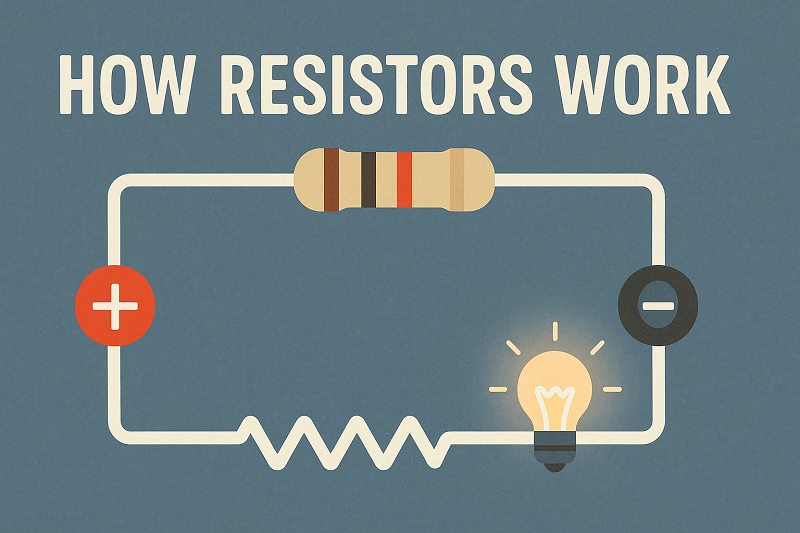
How Resistors Work: From Basic Principles to Advanced Applications2025-07-30
DC Switching Regulators: Principles, Selection, and Applications2025-05-30
FPGA vs CPLD: In-depth Analysis of Architecture, Performance and Application2025-05-07
MOSFET Technology: Essential Guide to Working Principles & Applications2025-05-04
SMD Resistor: Types, Applications, and Selection Guide2025-04-30