The Kynix Blog
Stay Ahead with Expert Electronics Insights,
Industry Trends, and Innovative Tips
- Electronic Components
- News Room
- General electronic semiconductor
- Components Guide
- Sort by
- Robots
- Transmitters
- Capacitors
- IC Chips
- PCBs
- Connectors
- Amplifiers
- Memory
- LED
- Diodes
- Transistors
- Battery
- Oscillators
- Resistors
- Transceiver
- RFID
- FPGA
- Mosfets
- Sensor
- Motors, Solenoids, Driver Boards/Modules
- Relays
- Optoelectronics
- Power
- Transformer
- Fuse
- Thyristor
- potentiometer
- Development Boards
- RF/IF
- Semiconductor Information
- PCB
- transistor
New research, led by the University of Southampton, has demonstrated that a nanoscale device, called a memristor, could be the 'missing link' in the development of implants that use electrical signals from the brain to help treat medical conditions.Monitoring neuronal cell activity is fundamental to neuroscience and the development of neuroprosthetics – biomedically engineered devices that are driven by neural activity. However, a persistent problem is the device being able to process the neural data in real-time, which imposes restrictive requirements on bandwidth, energy and computation capacity.In a new study, published in Nature Communications, the researchers showed that memristors could provide real-time processing of neuronal signals (spiking events) leading to efficient data compression and the potential to develop more precise and affordable neuroprosthetics and bioelectronic medicines.Memristors are electrical components that limit or regulate the flow of electrical current in a circuit and can remember the amount of charge that was flowing through it and retain the data, even when the power is turned off.Lead author Isha Gupta, Postgraduate Research Student at the University of Southampton, said: "Our work can significantly contribute towards further enhancing the understanding of neuroscience, developing neuroprosthetics and bio-electronic medicines by building tools essential for interpreting the big data in a more effective way."The research team developed a nanoscale Memristive Integrating Sensor (MIS) into which they fed a series of voltage-time samples, which replicated neuronal electrical activity.Acting like synapses in the brain, the metal-oxide MIS was able to encode and compress (up to 200 times) neuronal spiking activity recorded by multi-electrode arrays. Besides addressing the bandwidth constraints, this approach was also very power efficient – the power needed per recording channel was up to 100 times less when compared to current best practice.Co-author Dr Themis Prodromakis at the University of Southampton said: "We are thrilled that we succeeded in demonstrating that these emerging nanoscale devices, despite being rather simple in architecture, possess ultra-rich dynamics that can be harnessed beyond the obvious memory applications to address the fundamental constraints in bandwidth and power that currently prohibit scaling neural interfaces beyond 1,000 recording channels."
kynix On 2016-09-28
A new semiconductor device capable of emitting two distinct colours has been created by a group of researchers in the US, potentially opening up the possibility of using light emitting diodes (LEDs) universally for cheap and efficient lighting.The proof-of-concept device takes advantage of the latest nano-scale materials and processes to emit green and red light separated by a wavelength of 97 nanometres—a significantly larger bandwidth than a traditional semiconductor.Furthermore, the device is much more energy efficient than traditional LEDs as the colours are emitted as lasers, meaning they emit a very sharp and specific spectral line—narrower than a fraction of a nanometre—compared to LEDs which emit colours in a broad bandwidth.One of the main properties of semiconductors is that they emit light in a certain wavelength range, which has resulted in their widespread use in LEDs. The wavelength range in which a given semiconductor can emit light—also known as its bandwidth—is typically limited in the range of just tens of nanometres. For many applications such as lighting and illumination, the wavelength range needs to be over the entire visible spectrum and thus have a bandwidth of 300 nm.Single semiconductor devices cannot emit across the entire visible spectrum and therefore need to be 'put' together to form a collection that can cover the entire range. This is very expensive and is, to a large extent, the reason why semiconductor LEDs are not yet used universally for lighting.In this study, the researchers, from Arizona State University, used a process known as chemical vapour deposition to create a 41 micrometer-long nanosheet made from Cadmium Sulphide and Cadmium Selenide powders, using silicon as a substrate.Lead author of the study, Professor Cun-Zheng Ning, said: "Semiconductors are traditionally 'grown' together layer-by- layer, on an atom-scale, using the so-called epitaxial growth of crystals. Since different semiconductor crystals typically have different lattice constants, layer-by-layer growth of different semiconductors will cause defects, stress, and ultimately bad crystals, killing light emission properties."It is because of this that current LEDs cannot have different semiconductors within them to generate red, green and blue colours for lighting.However, recent developments in the field of nanotechnology mean that structures such as nanowires, nanobelts and nanosheets can be grown to tolerate much larger mismatches of lattice structures, and thus allow very different semiconductors to grow together without too many defects."Multi-colour light emission from a single nanowire or nanobelt has been realized in the past but what is important in our paper is that we realized lasers at two distinct colours. To physically 'put' together several lasers of different colors is too costly to be useful and thus our proof-of concept experiment becomes interesting and potentially important technologically."In addition to being used for solid state lighting and full color displays, such technology can also be used as light sources for fluorescence bio and chemical detection," continued Professor Ning.
kynix On 2016-09-27
It's only a centimeter long, it's placed under your skin, it's powered by a patch on the surface of your skin and it communicates with your mobile phone. The new biosensor chip developed at EPFL is capable of simultaneously monitoring the concentration of a number of molecules, such as glucose and cholesterol, and certain drugs.The future of medicine lies in ever greater precision, not only when it comes to diagnosis but also drug dosage. The blood work that medical staff rely on is generally a snapshot indicative of the moment the blood is drawn before it undergoes hours - or even days - of analysis.Several EPFL laboratories are working on devices allowing constant analysis over as long a period as possible. The latest development is the biosensor chip, created by researchers in the Integrated Systems Laboratory working together with the Radio Frequency Integrated Circuit Group. Sandro Carrara is unveiling it today at the International Symposium on Circuits and Systems (ISCAS) in Lisbon.Autonomous operation"This is the world's first chip capable of measuring not just pH and temperature, but also metabolism-related molecules like glucose, lactate and cholesterol, as well as drugs," said Dr Carrara. A group of electrochemical sensors works with or without enzymes, which means the device can react to a wide range of compounds, and it can do so for several days or even weeks.This one-centimetre square device contains three main components: a circuit with six sensors, a control unit that analyses incoming signals, and a radio transmission module. It also has an induction coil that draws power from an external battery attached to the skin by a patch. "A simple plaster holds together the battery, the coil and a Bluetooth module used to send the results immediately to a mobile phone," said Dr Carrara.Contactless, in vivo monitoringThe chip was successfully tested in vivo on mice at the Institute for Research in Biomedicine (IRB) in Bellinzona, where researchers were able to constantly monitor glucose and paracetamol levels without a wire tracker getting in the way of the animals' daily activities. The results were extremely promising, which means that clinical tests on humans could take place in three to five years - especially since the procedure is only minimally invasive, with the chip being implanted just under the epidermis."Knowing the precise and real-time effect of drugs on the metabolism is one of the keys to the type of personalised, precision medicine that we are striving for," said Dr Carrara.
kynix On 2016-09-27
At this year's Consumer Electronics Show in Las Vegas, the big theme was the "Internet of things"—the idea that everything in the human environment, from kitchen appliances to industrial equipment, could be equipped with sensors and processors that can exchange data, helping with maintenance and the coordination of tasks.Realizing that vision, however, requires transmitters that are powerful enough to broadcast to devices dozens of yards away but energy-efficient enough to last for months—or even to harvest energy from heat or mechanical vibrations."A key challenge is designing these circuits with extremely low standby power, because most of these devices are just sitting idling, waiting for some event to trigger a communication," explains Anantha Chandrakasan, the Joseph F. and Nancy P. Keithley Professor in Electrical Engineering at MIT. "When it's on, you want to be as efficient as possible, and when it's off, you want to really cut off the off-state power, the leakage power."This week, at the Institute of Electrical and Electronics Engineers' International Solid-State Circuits Conference, Chandrakasan's group will present a new transmitter design that reduces off-state leakage 100-fold. At the same time, it provides adequate power for Bluetooth transmission, or for the even longer-range 802.15.4 wireless-communication protocol."The trick is that we borrow techniques that we use to reduce the leakage power in digital circuits," Chandrakasan explains. The basic element of a digital circuit is a transistor, in which two electrical leads are connected by a semiconducting material, such as silicon. In their native states, semiconductors are not particularly good conductors. But in a transistor, the semiconductor has a second wire sitting on top of it, which runs perpendicularly to the electrical leads. Sending a positive charge through this wire—known as the gate—draws electrons toward it. The concentration of electrons creates a bridge that current can cross between the leads.But while semiconductors are not naturally very good conductors, neither are they perfect insulators. Even when no charge is applied to the gate, some current still leaks across the transistor. It's not much, but over time, it can make a big difference in the battery life of a device that spends most of its time sitting idle.Going negativeChandrakasan—along with Arun Paidimarri, an MIT graduate student in electrical engineering and computer science and first author on the paper, and Nathan Ickes, a research scientist in Chandrakasan's lab—reduces the leakage by applying a negative charge to the gate when the transmitter is idle. That drives electrons away from the electrical leads, making the semiconductor a much better insulator.Of course, that strategy works only if generating the negative charge consumes less energy than the circuit would otherwise lose to leakage. In tests conducted on a prototype chip fabricated through the Taiwan Semiconductor Manufacturing Company's research program, the MIT researchers found that their circuit spent only 20 picowatts of power to save 10,000 picowatts in leakage.To generate the negative charge efficiently, the MIT researchers use a circuit known as a charge pump, which is a small network of capacitors—electronic components that can store charge—and switches. When the charge pump is exposed to the voltage that drives the chip, charge builds up in one of the capacitors. Throwing one of the switches connects the positive end of the capacitor to the ground, causing a current to flow out the other end. This process is repeated over and over. The only real power drain comes from throwing the switch, which happens about 15 times a second.Turned onTo make the transmitter more efficient when it's active, the researchers adopted techniques that have long been a feature of work in Chandrakasan's group. Ordinarily, the frequency at which a transmitter can broadcast is a function of its voltage. But the MIT researchers decomposed the problem of generating an electromagnetic signal into discrete steps, only some of which require higher voltages. For those steps, the circuit uses capacitors and inductors to increase voltage locally. That keeps the overall voltage of the circuit down, while still enabling high-frequency transmissions.What those efficiencies mean for battery life depends on how frequently the transmitter is operational. But if it can get away with broadcasting only every hour or so, the researchers' circuit can reduce power consumption 100-fold."Ultralow leakage energy is critical for future sensor nodes that need the transmitter to be on only a very small percentage of time," says Baher Haroun, director of the Embedded Processing Systems Labs at Texas Instruments, which helped fund the MIT researchers' work. "Working with Anantha's research team on ultralow-power circuit and system ideas has always been beneficial to TI. We learn from his team's novel approaches and depth of understanding of the ultralow-power methods that apply to multiple functions, from digital to radio frequency."
kynix On 2016-09-26
Researchers at the University of Alabama at Birmingham have found a novel and practical way to combat malicious attacks on motion sensors inside mobile devices.In a study published in proceedings of the 9th Association for Computing Machinery Conference on Security & Privacy in Wireless and Mobile Networks, associate professor Nitesh Saxena, Ph.D., and Ph.D. students Prakash Shrestha and Manar Mohamed have created a way to defend mobile device users against motion-based touchstroke leakage with the injection of noise.Previous research shows that, much like the way a hacker can covertly capture inputs made from a regular computer keyboard, it is also possible to capture a user's inputs on a touchscreen. Currently, motion sensors on Android devices can be accessed by any application downloaded to the device, without a user's being prompted to give permission. By tricking a user into unknowingly downloading a malicious program, hackers could obtain sensitive information like passwords and PINs by tracking the vibrations made from the touchscreen and decoding the movements based on a keyboard's layout. Given the accuracy rate of this type of attack, mobile security experts consider it a significant threat to user privacy and are exploring methods to combat it."Most mobile platforms have established a sensor security access control model," Saxena said. "Android follows a model where read access to many sensitive sensors, like a phone's camera or microphone, is very restrictive or requires special permissions granted by the user. However, the read access to other sensors, like inertial sensors, is not restricted because Android may not consider these sensors explicitly sensitive. This openness in the Android sensor security architecture has given rise to potentially significant threat of motion-based side channel attacks."By utilizing a recently developed framework called SMASheD (Sniffing and Manipulating Android Sensor Data), initially created as a malicious application, the study's authors built a defense mechanism called Slogger that can be used to thwart sensor-based touchstroke logging attacks. As a user enters sensitive information, Slogger transparently inserts noisy sensor readings in order to obscure the original readings. Slogger works in the background of a device and is completely unnoticeable to a user and other trusted applications. It can be installed through the Android Debug Bridge, without the need to root the device or change its operating system.To test Slogger's effectiveness, the authors compromised an Android device using two of the latest touchstroke logging algorithms developed for touchstroke detection and inference. During this type of attack, the start and end points of a user's taps are monitored. With data recorded by the accelerometer, a hacker could determine whether a user is holding the device vertically or horizontally. They can also predict what areas of the screen were tapped by applying machine learning tools. Later, by mapping the predicted areas with the standard keyboard layout, a hacker can determine the series of taps.After installing the malicious application, the authors also installed Slogger. Upon being installed, Slogger prompts the user to do a series of typing tests, holding the device in various positions. This allows Slogger to learn the range of the sensor values based on the user's typing style. The user types while holding the phone in his or her hand and while it is lying on a flat surface. The values are later used to set the range of values for injecting noise during an attack."During the evaluation phase, we implemented Slogger in such a way that, whenever the user launches the application used for the attack, a noise inject request is sent to the Slogger server," Saxena said. "When the user closes the application, a request to stop Slogger is sent. The application can also be updated to send an inject request whenever the keyboard is running or whenever a user is entering sensitive information."Slogger searches for system files related to motion sensors such as an accelerometer or gyroscope, and injects noise until it receives a request to stop, like when the application being used for the malicious attack is closed. Without Slogger, the touchstroke detector had an 85 percent rate of accuracy. Once the Slogger application was enabled, the touchstroke detector was unable to detect any touchstrokes. During the touchstroke inference test, there was a 90 percent accuracy rate without Slogger. Slogger was able to reduce inference accuracy to 56 percent while the device lay on a flat surface. While the user held the device, inference accuracy was reduced by more than 20 percent.During the evaluation, the authors discovered Slogger was also highly effective in minimizing touchstroke leakage even when more than one motion sensor is leveraged by an attacker.
kynix On 2016-09-26
Japan's Toshiba is teaming up with US chip giant SanDisk to produce a "3D" memory chip they hope will allow users to save up to 50 hours of ultra-high definition video.In a deal worth a reported 500 billion yen ($4.84 billion) the companies will build a factory to make flash memory consisting of several layers of semiconductors stacked together to give as much as a terabyte—1,000 gigabytes—of storage.That is around 16 times bigger than the largest 64-gigabyte Toshiba memory currently available in smart phones and tablet devices.Toshiba will demolish its existing plant in Japan to build a new facility that will house production apparatus using technologies from both firms and which the firms hope will start operating in 2016, a statement said."In about five years (from the planned start of the factory), we would like to produce one-terabyte products," said a Toshiba spokeswoman.The plan comes at a time of increasing competition among the world's technology firms to meet demand for ever-higher capacity memory chips for consumers increasingly using mobile devices such as smart phones, tablet computers and wearable gadgets.The spread of high-definition video, with so-called 4K screens at the leading edge, is boosting demand for computing memory to store content."Small, high-capacity memories can of course be applied to smartphones, but they could also be used for wearable devices," the Toshiba spokeswoman said.Manufacturers have traditionally competed with regular chips by trying to make the physical object smaller.Toshiba, along with major rivals such as Samsung, believe they are reaching the physical limit, and are shifting toward 3D memories, where layering—effectively a third dimension—is used to boost the capacity of objects the same size.Yasuo Naruke, Toshiba senior vice president, said in a statement: "Our determination to develop advanced technologies underlines our commitment to respond to continued demand (for) flash memory."SanDisk president and chief executive Sanjay Mehrotra said the plant "will advance our leadership in memory technology into the 3D... era".
kynix On 2016-09-23
Join our mailing list!
Be the first to know about new products, special offers, and more.
Feature Posts
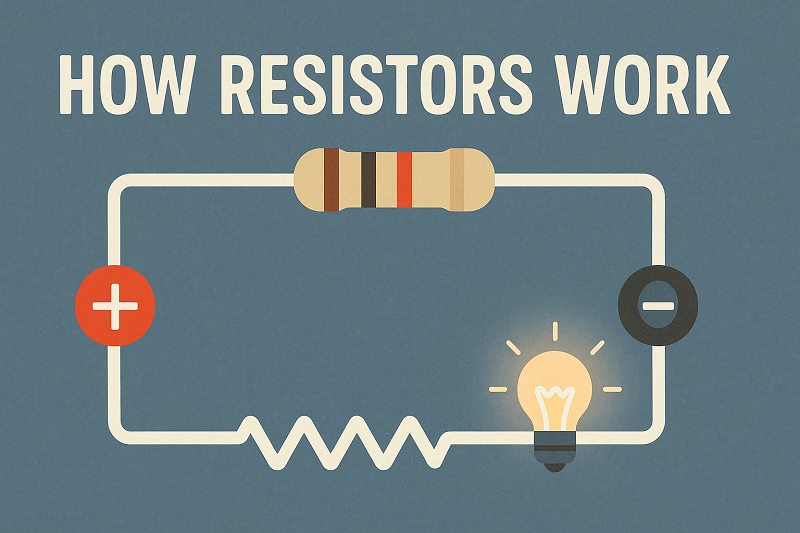
How Resistors Work: From Basic Principles to Advanced Applications2025-07-30
DC Switching Regulators: Principles, Selection, and Applications2025-05-30
FPGA vs CPLD: In-depth Analysis of Architecture, Performance and Application2025-05-07
MOSFET Technology: Essential Guide to Working Principles & Applications2025-05-04
SMD Resistor: Types, Applications, and Selection Guide2025-04-30