car Related Articles
Stay Ahead with Expert Electronics Insights,
Industry Trends, and Innovative Tips
- Electronic Components
- News Room
- General electronic semiconductor
- Components Guide
- Sort by
- Robots
- Transmitters
- Capacitors
- IC Chips
- PCBs
- Connectors
- Amplifiers
- Memory
- LED
- Diodes
- Transistors
- Battery
- Oscillators
- Resistors
- Transceiver
- RFID
- FPGA
- Mosfets
- Sensor
- Motors, Solenoids, Driver Boards/Modules
- Relays
- Optoelectronics
- Power
- Transformer
- Fuse
- Thyristor
- potentiometer
- Development Boards
- RF/IF
- Semiconductor Information
- Sensors
- PCB
- transistor
A while back,MEMS and Sensors Executive Congress that many designers,researchers and industry reoresentatives argued for putting MEMS devices such as accelerometers and microphones, and a wide variety of other sensors in just about everything was held in San Jose,Calif.. We heard about an electric snowboard with traction control, voice-controlled garbage cans, and accelerometers placed on the nose to listen for speech in noisy environments.But sometimes the simplest example is the most memorable. In this case, that was a MEMS accelerometer—like the one in your step-counter—that thwarts car thieves. "Passive keyless entry (PKE) systems can be made more secure with an inexpensive accelerometer." Lars Reger, chief technology officer for NXP's automotive division said,"PKE systems unlock a car—and allow it to start with a button push—by recognizing when the “key” is close to the car, either right next to it or inside of it. This is convenient for drivers, who don’t have to remove the key from a pocket or purse. But PKEs are ridiculously easy to hack—at least when a car is sitting in a driveway and the owner is at home." This hack which demoed by Swiss researchers in 2011 and still being used by car thieves around the world today,works because most people toss car keys in a basket or on a counter fairly close to their front door—close enough that a thief with a radio outside can pick up signals from the key. An accomplice with another radio stands near the front door of the car to pick up signals from the key and transmit those signals to the car. The system, concluding that the key is nearby, unlocks the car. Earlier this year, researchers pulled off the hack with US $22 worth of gear in a demo at a security conference reported in Wired. The team suggested that changing the timing of the calls and responses from the car and key could address the problem. At the sametime, PKE key holders were advised to keep their car keys in their refrigerators, whose metal exteriors would block the key's signals. NXP put forward another solution--Enter the accelerometer (and, of course, the company is bringing it to market soon, which is why representatives are willing to talk about it). Business development manager Marc Osajda told me that NXP had initially been working on a mechanical switch to turn the radio in the PKE key on and off. Then, after the company merged with Freescale Semiconductor in 2015, engineers at Freescale made the case for using a MEMS device instead, arguing that its lower power consumption made it a good fit for a gadget with an expected battery life of a year or more. The 50-cent component works on the assumption that if your PKE key has been sitting in one place for a while, you aren’t going anywhere, so it can turn off its radio and the microcontroller that was listening to the car’s radio; it will turn back on as soon as you pick it up. Osajda said that instead of reducing battery life, putting an accelerometer in the PKE key ends up extending battery life, because the accelerometer uses far less power than the parts it is allowing the key to turn off. It's not a easy work. Osajda said "mostly because car keys take a lot more abuse than wrist wearables". He also He pointed out that people frequently drop their keys (sometimes even out of second story windows onto concrete) or toss them into washing machines (not a surprise for keys designed to stay in your pocket). According to Osajda,NXP's MEMS switch is going into production and they will be incorporated into PKE keys from a variety of manufacturers during 2018.
kynix On 2017-11-13

In autumn, an abundance of fallen leaves from deciduous phoenix trees are scattered around the streets in Northern China. These leaves are generally burned in the colder season, exacerbating the country's air pollution problem.Investigators in Shandong, China, recently discovered a new method to convert this organic waste matter into a porous carbon material that can be used to produce high-tech electronics. The advance is reported in the Journal of Renewable and Sustainable Energy, by AIP Publishing. The investigators used a multistep, yet simple, process to convert tree leaves into a form that could be incorporated into electrodes as active materials. The dried leaves were first ground into a powder, then heated to 220 degrees Celsius for 12 hours. This produced a powder composed of tiny carbon microspheres. These microspheres were then treated with a solution of potassium hydroxide and heated by increasing the temperature in a series of jumps from 450 to 800 C. The chemical treatment corrodes the surface of the carbon microspheres, making them extremely porous. The final product, a black carbon powder, has a very high surface area due to the presence of many tiny pores that have been chemically etched on the surface of the microspheres. The high surface area gives the final product its extraordinary electrical properties.(Scanning Electron Microscopy (SEM) image of porous carbon microspheres.)The investigators ran a series of standard electrochemical tests on the porous microspheres to quantify their potential for use in electronic devices. The current-voltage curves for these materials indicate that the substance could make an excellent capacitor. Further tests show that the materials are, in fact, supercapacitors, with specific capacitances of 367 Farads/gram, which are over three times higher than values seen in some graphene supercapacitors. A capacitor is a widely used electrical component that stores energy by holding a charge on two conductors, separated from each other by an insulator. Supercapacitors can typically store 10-100 times as much energy as an ordinary capacitor, and can accept and deliver charges much faster than a typical rechargeable battery. For these reasons, supercapacitive materials hold great promise for a wide variety of energy storage needs, particularly in computer technology and hybrid or electric vehicles. This research is led by Hongfang Ma of Qilu University of Technology, and has been heavily focused on looking for ways to convert waste biomass into porous carbon materials that can be used in energy storage technology. In addition to tree leaves, the team and others have successfully converted potato waste, corn straw, pine wood, rice straw and other agricultural wastes into carbon electrode materials. Professor Ma and her colleagues hope to improve even further on the electrochemical properties of porous carbon materials by optimizing the preparation process and allowing for doping or modification of the raw materials. The supercapacitive properties of the porous carbon microspheres made from phoenix tree leaves are higher than those reported for carbon powders derived from other biowaste materials. The fine scale porous structure seems to be key to this property, since it facilitates contact between electrolyte ions and the surface of the carbon spheres, as well as enhancing ion transfer and diffusion on the carbon surface. The investigators hope to improve even further on these electrochemical properties by optimizing their process and allowing for doping or modification of the raw materials. This article is authored by Hongfang Ma, Zhibao Liu, Xiaodan Wang and Rongyan Jiang and is published in Journal of Renewable and Sustainable Energy. Ref.KY36-5KK560KOAAM(capacitor)KY36-DEBB33F222KA3B(capacitor)KY605-NH12VP(rechargeable battery)
kynix On 2017-08-30
Carbon-based memory materials promise to revolutionise how data is stored and to take computing to a new age in terms of speed, efficiency and power. Improved data storage represents the backbone of the knowledge economy, as well as modern industry, business and multimedia. Creating non-volatile data storage can be accomplished through new carbon-based memory materials, which was the aim of the Carbon resistive random access memory materials project.The project team investigated how to develop eco-friendly, cost-effective and energy-efficient memory materials that are scalable to the molecular level and boast a sub-nanosecond switching time with advanced functionality overall.To achieve its aims the team worked on two areas. On one hand it investigated amorphous-carbon based materials and devices in order to supplement current memory technologies such as hard disks and flash memory.On the other it considered graphene-oxide memories for possible use in flexible electronics applications. Storage capabilities in both concepts involved electrical resistive switching, which led to more in-depth research on the topic and establishment of the technology’s limitations, including minimum device size, temperature range and switching speed.The work involved experiments to pinpoint predicted lifetime at different temperatures, multi-level storage capability, suitability within specific applications, and several other pivotal parameters required to develop the technology. After intensive laboratory work, the team successfully built and characterised prototype devices that achieved almost all of the desired objectives.CARERAMM built nanometre amorphous-carbon based devices with sub-petajoule switching energy and oversaw their successful operation at temperatures reaching 300 degrees C. The project built graphene oxide-based devices with 4-level storage and endurance on flexible substrates, as well as GO-based devices that can resist more than 10,000 bending cycles and high bending radii.Overall the team has produced valuable knowledge on the cutting-edge of resistive switching concerning both amorphous carbon and graphene oxide based materials and devices. It combined atomistic scale modelling with nanoscale characterisation to improve switching considerably, paving the way for the commercialisation of advanced carbon-based memory in the near future.Reference:SDUS5EB-001GCXA1512M MT9VDDT6472HY-335 F2
kynix On 2017-01-23
Even if you can afford a new car this year, you might just enjoy hacking together your own version of the connected car of the future instead of buying the latest $50,000 fully electric car. If you have an iPhone or Android phone and about a hundred bucks, you can add a device to your current car that will sync with an app and provide a few of the Internet of Things features that will become standard as connected cars are made by every automaker.Connecting to the Connected CarThe key to making these devices work is that they all hook into a car’s OBD-II Port. Cars made in the US after 1996 are required to have this port, and the connector must be within 2 feet of the steering wheel or somewhere within reach of the driver. This port accesses the car’s main computer that records mileage, speed, emissions, and other critical data.The device used to connect to the OBD-II port is often called a dongle, and a variety of tech start-ups are making their own versions. These dongles take your car’s data and transmit it to your iPhone or Android device using Wi-Fi, Bluetooth, or cellular connectivity – meaning the dongle itself will have some kind of transmitter, such as a SIM card if it uses a cellular connection.Connected Car App BenefitsThe last piece is the mobile app on your phone, which analyzes the car data on the go. Typically, the same company that makes the dongle has an app that works with it.Connected car apps have three main categories of features:Automatic crash detection and roadside assistance – If you get into a car accident, the app will send out an alert on your phone to 911 and your predefined emergency contacts.Vehicle health diagnostics – The app tracks conditions such as engine codes, battery drain, fluids, and more, helping with preventative car maintenance.Real-time location monitoring – From finding your car quickly in a parking lot to geo-fencing a teen driver to tracking a stolen vehicle, this app features help you know where your car is.Most connected car apps offer a combination of these main benefits in some fashion. Other possible tools include standalone GPS mapping, remote lock/unlock, trip history, security features, driver awareness monitoring, and pole-position style games.There are plenty of options to choose from now on, it just depends on what interests you and how much you want to spend. Unless you can wait until these features are built into every car available.Reference:BVL120600003NBVL062000003N3202P
kynix On 2016-12-08
Samsung Electronics unveiled the industry’s first removable memory cards based on the JEDEC UFS 1.0 Card Extension Standard, for use in high-resolution mobile shooting devices such as DSLRs, 3D VR cameras, action cams and drones. Coming in a wide range of storage capacities including 256, 128, 64 and 32 GB, Samsung’s UFS cards are expected to bring a significant performance boost to the external memory storage market, allowing much more satisfying multimedia experiences.“Our new 256GB UFS card will provide an ideal user experience for digitally-minded consumers and lead the industry in establishing the most competitive memory card solution,” said Jung-bae Lee, senior vice president, Memory Product Planning & Application Engineering, Samsung Electronics.“By launching our new high-capacity, high-performance UFS card line-up, we are changing the growth paradigm of the memory card market to prioritise performance and user convenience above all.”Samsung’s new 256GB UFS removable memory card ─ simply referred to as the UFS card will provide greatly improved user experiences, especially in high-resolution 3D gaming and high-resolution movie playback.It provides more than five times faster sequential read performance compared to that of a typical microSD card, reading sequentially at 530 MB/s which is similar to the sequential read speed of the most widely used SATA SSDs.With this UFS card, consumers have the ability to read a 5GB, Full-HD movie in approximately 10 seconds, compared to a typical UHS-1 microSD card, which would take over 50 seconds with 95MB/s of sequential reading speed.Also, at a random read rate of 40,000 IOPS, the 256GB card delivers more than 20 times higher random read performance compared to a typical microSD, which offers approximately 1,800 IOPS.When it comes to writing, the new 256GB UFS card processes 35,000 random IOPS, which is 350 times higher than the 100 IOPs of a typical microSD card, and attains a 170MB/s sequential write speed, almost doubling the top-end microSD card speed.With these substantial performance improvements, the new 256GB UFS card significantly reduces multimedia data downloading time, photo thumbnail loading time and buffer clearing time in burst shooting mode, which, collectively, can be particularly beneficial to DSLR camera users.To shoot 24 large/extra fine JPEG photographs (1,120 MB-equivalent) continuously with a high-end DSLR camera, the 256GB UFS card takes less than seven seconds, compared to a UHS-1 microSD card which typically takes about 32 seconds, at 35MB/s.To achieve the highest performance and most power-efficient data transport, the UFS card supports multiple commands with command queuing features and enables simultaneous reading and writing through the use of separately dedicated paths, doubling throughput.As the leading memory storage provider, Samsung has been aggressive in preparing UFS solutions for the marketplace, while contributing to JEDEC standardisation of the Universal Flash Storage 2.0 specification in September 2013 and the UFS 1.0 Card Extension standard in March 2016.Following its introduction of the industry-first 128GB embedded UFS chip in January 2015, the company successfully launched a 256GB embedded UFS memory for high-end mobile devices in February of this year.As of earlier this month, Samsung also completed the Universal Flash Storage Association (UFSA)’s certification program that evaluates electrical and functional specifications for compatibility of a UFS card, and Samsung’s new UFS card products were approved as UFSA-certified UFS cards with the right to use the official UFS logo for the first time in the industry.Reference:S29GL032N11FFIS42S29GL064N90FFIS30S29AS016J70BFA040
kynix On 2016-11-04
Join our mailing list!
Be the first to know about new products, special offers, and more.
Feature Posts
How Resistors Work: From Basic Principles to Advanced Applications2025-07-30
DC Switching Regulators: Principles, Selection, and Applications2025-05-30
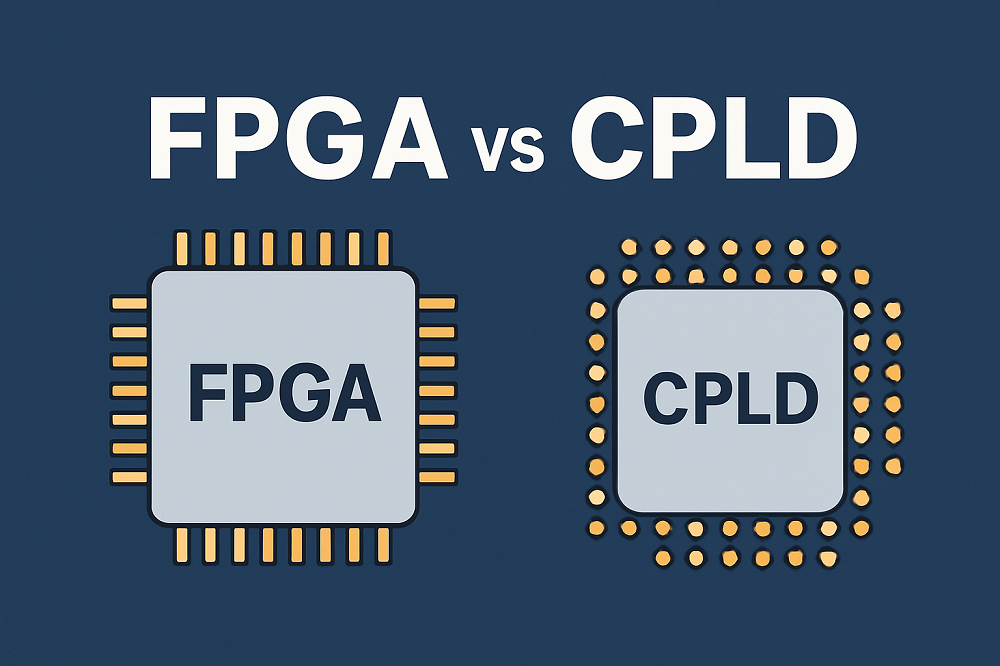
FPGA vs CPLD: In-depth Analysis of Architecture, Performance and Application2025-05-07
MOSFET Technology: Essential Guide to Working Principles & Applications2025-05-04
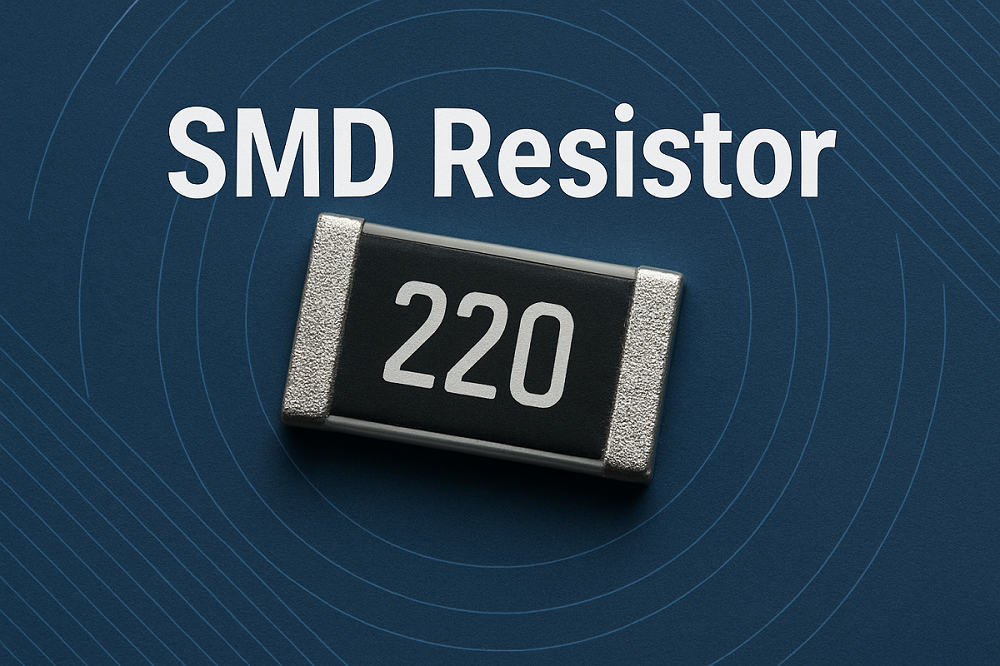
SMD Resistor: Types, Applications, and Selection Guide2025-04-30