The Kynix Blog
Stay Ahead with Expert Electronics Insights,
Industry Trends, and Innovative Tips
- Electronic Components
- News Room
- General electronic semiconductor
- Components Guide
- Sort by
- Robots
- Transmitters
- Capacitors
- IC Chips
- PCBs
- Connectors
- Amplifiers
- Memory
- LED
- Diodes
- Transistors
- Battery
- Oscillators
- Resistors
- Transceiver
- RFID
- FPGA
- Mosfets
- Sensor
- Motors, Solenoids, Driver Boards/Modules
- Relays
- Optoelectronics
- Power
- Transformer
- Fuse
- Thyristor
- potentiometer
- Development Boards
- RF/IF
- Semiconductor Information
- PCB
- transistor
Emergency lights assist the vehicles allocated for emergency response services to do better. Emergency lighting units are essential not just as a supplementary light supply, but also as a reliable guide to the normal public. However, LED lights are the most productive emergency lights that can assist emergency vehicles accomplish their responsibilities without inhibitions. Employing diverse colored lights for emergency vehicles boost their competence as guiding lights making them noticeable. Emergency LED lights come in several diverse colors to help the emergency vehicles direct the traffic and employ them as supplementary lighting systems. They're accessible in colors like blue, red, gree, yellow and amber, which can be employed individually or merged into one lightbar. Blue LED lights are most standard lights which can be noticed on police cars, and emergency ambulances.Blue LED lights are also the most productive when merged with other colored lights. Police vehicles employ these in combination with the red light emitting diodes to aware the general public about the emergency circumstance, or execure their patrolling responsibilities without any issues. Different colored LEDs can be assembled to blink in several diverse outlines that make them noticeable from nearly a mile. Though single colored light emitting diodes are noticeable from a distance, blinking manifold colored lightings make superior visual effect and convey the message very clearly. For instance, blue & red blinking ones from the police vehicles demands the right of way when there's a continious chase. Several other emergency cars employ the blue LEDs in numerous diverse forms. As strobe lamps, they're strong portable light supplies when required. As fully-fledged light bars, they could be apparanelty visible in the heavy traffic areas. They also available in the form of elaborated lightbars with built-in traffic advisers, which could direct traffic to take diversion ahead and avoid the emergency area.The blue lights made of LEDs can also be very productive dash lights which are rather essential for each emergency cars. Dash lights not just employed for undercover police cars, but are also essential for the security of emergency cars. They can perform as tail lights while the emergency cars stop at the emergency area, making them noticeable to other automobiles.These days blue LED highbay lights can be easily noticed in many of the pavements of your country due to their powerful lighting features.LED lights can surpass any other type of lamps and use less power than other types of illumination. This makes them the 1st option for emergency vehicles, since they require to maintain the lights burning for many hours. Purchasing them from the appropriate retailer assure the longest life span.Reference:KY59-EB-251KY59-LRW5SM-GZHZ-1KY59-LRW5SM-HYJY-1-Z
kynix On 2016-10-21
How many users get exasperated when their hard drive slows down? We've all found ourselves annoyed and feeling stressed watching that little spinning wheel. Will it ever stop? Usually the problem is with the hard drive. More often than not has been cluttered with all sorts of unnecessary information either malicious or otherwise. At the extreme, the hard drive becomes so corrupted that a data recovery specialist is needed. However if you keep your hard drive healthy, it can serve you well for many years.Delete your temporary files.The first port of call when your hard drive slows is to delete your temporary files. Internet browsers store these temporary files on your hard drive in an effort to speed up performance. Often they are not needed and many users never delete them. Potentially this can mean than hundreds of thousands of unnecessary files are indexed and stored on your hard disk drive. You can also remove files from your recycle bin that you are sure you want to be deleted forever. These simple actions will create a little bit more space in the data areas. Next time you attempt a read or write, there is much less ‘clutter' for the heads to work through. The result – a faster hard drive! You can always setup an automatic delete function through the operating system, weekly or monthly.Partition your hard drive.Partitioning your hard drive can reduce the risk of files being corrupted by viruses. Viruses are responsible for many performance issues and are very difficult to get rid of. Make sure your hard drive is organised by storing frequently used files and programs near each other. This also boosts the speed of your hard drive. It uses short stroking technology to minimize head repositioning delays. Although this greatly increases speed and performance it also decreases the capacity so is not always the best option, especially if you are nearing full capacity already.Install good anti-virus and anti-Trojan software.All of us understand the need for anti-virus software but how many know the difference between viruses and Trojans? Anti-virus software will not detect Trojans and these are primarily responsible for slow hard drives. Routinely run ‘on demand' scans from various different anti-Trojan applications and be sure to keep your anti-virus software upgraded. Defrag your hard drive.Defragmenting your hard drive increases the efficiency. Ordering all the blocks and rationalising the free space is a little like tidying up your garage. Next time you need to find something, it won't take you nearly as long! You can use specialised software easily found on your machine which looks at the physical location of the files on your hard drive and optimizes those files so the computer doesn't need to search around to find the information it needs. MyDefrag is a free program that once set up will run at least every other week to ensure that your hard drive is kept running effectively.Upgrade!Sometimes it's simply hardware issues which are affecting the speed of your hard drive. This means you need to just upgrade. Do some research into your current hard drive as well as other popular ones. Consider upgrading to a high efficiency hard drive, or consider an solid state drive(SSD).ReferenceKY259-SFSA128GV1AA4TO-I-NC-216-STDKY259-SFSA128GM1AA4TO-I-NC-616-STDKY259- SFSA128GV1AA4TO-C-NC-216-STD
kynix On 2016-10-20
With increasing OEM development of compact and low-cost Bluetooth low energy (BLE) devices and accessories, Fujitsu Components America has introduced a new family of ultra-compact, BLE modules based on the Nordic Semiconductor nRF51822 System-on-Chip (SoC). The modules provide an economical means for developers to reduce their time-to-market.Fujitsu's new MBH7BLZ01-109003 and MBH7BLZ02-109004 Bluetooth low energy modules are among the smallest on the market. Bluetooth V4.0 single-mode compliant, the modules allow OEMs to quickly develop tiny, power-conscious and cost-efficient Bluetooth Smart consumer devices, such as medical monitors, proximity sensors, smart watches and fitness monitors, as well as emerging applications, such as 3D motion sensors and environmental sensors.Fujitsu offers two versions: A 10.5 x 9.2 x 1.6 mm surface-mount module without antenna, and a 15.7 x 9.8 x 2.0 mm surface-mount module with antenna. The modules feature a built-in MCU, which allows adding upper layer profiles including private profiles and application code. With development tools available from Nordic Semiconductor, it is possible to implement specific processing into the module and compose functions without using an additional MCU. These blank modules contain the complete verified and qualified Bluetooth® low energy protocol stack, offering flexibility and a high level of customization.Nordic Technical Support Center has a range of development tools and reference designs to quickly implement specific processing into the modules. The Nordic Semiconductor nRF51822 SoC is built around a 32-bit ARM Cortex M0 CPU with 256kB flash + 16kB RAM. The separation of protocol stack and application code allows engineers to focus on developing the application code for Bluetooth Smart accessories with assurance that the protocol stack is fully tested and can't be corrupted by application software development. Currently available reference designs include keyboard, mouse and advanced navigation remotes.According to Bob Thornton, Fujitsu Component America's President, combining Fujitsu's proven module packaging technology, distribution network, environmental responsibility and customer privacy with Nordic Semiconductor's ultra-low power SoC, application software development and technical support is a win-win. "Developers will have everything they need to create next-generation BLE products quickly and at a low cost," he said.J. Darren O'Donnell, Director of Marketing & Sales - Americas at Nordic Semiconductor, agreed. "We are pleased to work with Fujitsu to offer the design community an ultra-compact, ultra-low power, single-chip solution that allows engineers to develop a range of Bluetooth low energy and 2.4GHz proprietary designs for cost, power, and size-constrained applications," he said.Reference:KY45-DL16-7PCBA3KY45-DL100-7-PCBA3KY45-ZEPIR0BBS02MODG
kynix On 2016-10-20
Holst Centre, imec and their partner Evonik have realized a general-purpose 8-bit microprocessor, manufactured using complementary thin-film transistors (TFTs) processed at temperatures compatible with plastic foil substrates (250°C). The new "hybrid" technology integrates two types of semiconductors—metal-oxide for n-type TFTs (iXsenic, Evonik) and organic molecules for p-type TFTs—in a CMOS microprocessor circuit, operating at unprecedented for TFT technologies speed—clock frequency 2.1kHz. The breakthrough results were published online in Scientific Reports, an open access journal from the publisher of Nature.Low temperature thin-film electronics are based on organic and metal-oxide semiconductors. They have the potential to be produced in a cost effective way using large-area manufacturing processes on plastic foils. Thin-film electronics are, therefore, attractive alternatives for silicon chips in simple IC applications, such as radio frequency identification (RFID) and near field communication (NFC) tags and sensors for smart food packaging, and in large-area electronic applications, such as flexible displays, sensor arrays and OLED lamps. Holst Centre's (imec and TNO) research into thin-film electronics aims at developing a robust, foil-compatible, high performance technology platform, which is key to making these new applications become a reality.The novel 8-bit microprocessor performs at a clock frequency of 2.1 kHz. It consists of two separate chips: a processor core chip and a general-purpose instruction generator (P2ROM). For the processor core chip, a complementary hybrid organic-oxide technology was used (p:n ratio 3:1). The n-type transistors are 250°C solution-processed metal-oxide TFTs with typically high charge carrier mobility (2 cm2/Vs). The p-type transistors are small molecule organic TFTs with mobility of up to 1 cm2/Vs.The complementary logic allows for a more complex and complete standard cell library, including additional buffering in the core and the implementation of a mirror adder in the critical path. These optimizations have resulted in a high maximum clock frequency of 2.1kHz. The general-purpose instruction generator or P2ROM is a one-time programmable ROM memory configured by means of inkjet printing, using a conductive silver ink. The chip is divided into a hybrid complementary part and a unipolar n-TFT part and is capable of operating at frequencies up to 650 Hz, at an operational voltage of Vdd=10V.Reference:KY56-KST2222KY56-KST06KY56-KSP14
kynix On 2016-10-19
As circuits become smaller and more densely populated with circuit protections, electrical characteristics of the components become more prone to the influence of the heat generated. "The interaction between thermal and electrical phenomena is one of the most troublesome problems in analog and digital integrated circuits," explain Ryo Ishikawa, Junichi Kimura and Kazuhiko Honjo from the University of Electro-communications in Chofu-shi, Japan. In this paper, the researchers report on the world's first method to compensate the disturbed electrical characteristics by using an electric circuit that cancels signal distortion caused by thermal behaviour of a heterojunction bipolar transistor. This research should help design devices that are better equipped to handle heat effects. A modulated high-frequency signal is distorted by the thermal behaviour through complex intermodulation phenomena, although the temperature response of the circuit is slow. The researchers modelled the thermal effects of a heterojunction bipolar transistor in an integrated circuit using thermal resistors and thermal capacitors. The circuit elements were arranged in a 'ladder circuit' comprising repeating units of thermal resistors and thermal capacitors. To compensate the signal distortion on the integrated circuit, an electric 'ladder circuit' was connected. Although the validity of the electric ladder circuit to compensate the signal distortion has already been confirmed by experiments and simulations, a theoretical derivation for the behaviour has so far been lacking. Honjo and his team derived nonlinear expressions describing the circuit parameters, and solved the expressions using series expansions. The model compared well with experiments and simulations. Experiments for an InGaP/GaAs heterojunction bipolar transistor power amplifier operating at 1.95GHz provide compelling validation for their analytical design, emphasising its potential for designing circuits that cope better with heat effects. Reference: KY438-PN-DESIGNKIT-38 KY438-PN-DESIGNKIT-37
kynix On 2016-10-19
New research, led by the University of Southampton, has demonstrated that a nanoscale device, called a memristor, could be used to power artificial systems that can mimic the human brain.Artificial neural networks (ANNs) exhibit learning abilities and can perform tasks which are difficult for conventional computing systems, such as pattern recognition, on-line learning and classification. Practical ANN implementations are currently hampered by the lack of efficient hardware synapses; a key component that every ANN requires in large numbers.In the study, published in Nature Communications, the Southampton research team experimentally demonstrated an ANN that used memristor synapses supporting sophisticated learning rules in order to carry out reversible learning of noisy input data.Memristors are electrical components that limit or regulate the flow of electrical current in a circuit and can remember the amount of charge that was flowing through it and retain the data, even when the power is turned off.Lead author Dr Alex Serb, from Electronics and Computer Science at the University of Southampton, said: "If we want to build artificial systems that can mimic the brain in function and power we need to use hundreds of billions, perhaps even trillions of artificial synapses, many of which must be able to implement learning rules of varying degrees of complexity. Whilst currently available electronic components can certainly be pieced together to create such synapses, the required power and area efficiency benchmarks will be extremely difficult to meet -if even possible at all- without designing new and bespoke 'synapse components'."Memristors offer a possible route towards that end by supporting many fundamental features of learning synapses (memory storage, on-line learning, computationally powerful learning rule implementation, two-terminal structure) in extremely compact volumes and at exceptionally low energy costs. If artificial brains are ever going to become reality, therefore, memristive synapses have to succeed."Acting like synapses in the brain, the metal-oxide memristor array was capable of learning and re-learning input patterns in an unsupervised manner within a probabilistic winner-take-all (WTA) network. This is extremely useful for enabling low-power embedded processors (needed for the Internet of Things) that can process in real-time big data without any prior knowledge of the data.Co-author Dr Themis Prodromakis, Reader in Nanoelectronics and EPSRC Fellow in Electronics and Computer Science at the University of Southampton, said: "The uptake of any new technology is typically hampered by the lack of practical demonstrators that showcase the technology's benefits in practical applications. Our work establishes such a technological paradigm shift, proving that nanoscale memristors can indeed be used to formulate in-silico neural circuits for processing big-data in real-time; a key challenge of modern society."We have shown that such hardware platforms can independently adapt to its environment without any human intervention and are very resilient in processing even noisy data in real-time reliably. This new type of hardware could find a diverse range of applications in pervasive sensing technologies to fuel real-time monitoring in harsh or inaccessible environments; a highly desirable capability for enabling the Internet of Things vision."Reference:KY259-SDUS5EB-002GKY259-SDUS5AB-002GKY259-SDUS5AB-001G
kynix On 2016-10-18
Join our mailing list!
Be the first to know about new products, special offers, and more.
Feature Posts
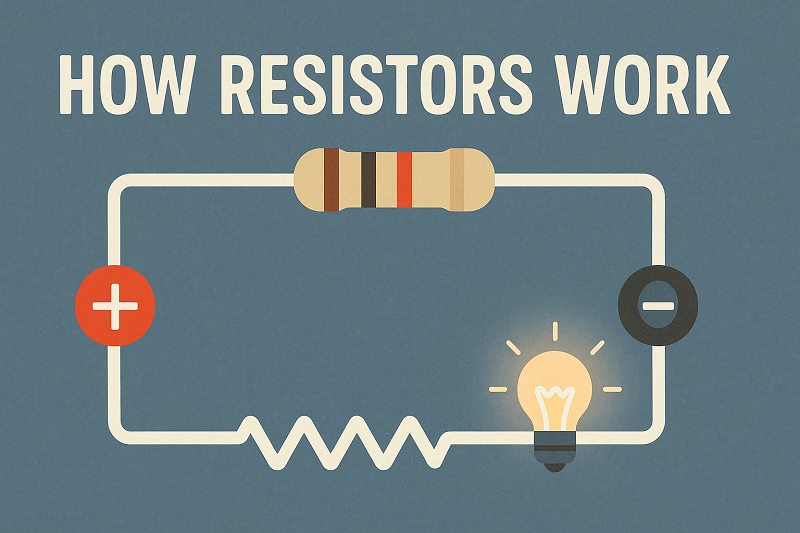
How Resistors Work: From Basic Principles to Advanced Applications2025-07-30
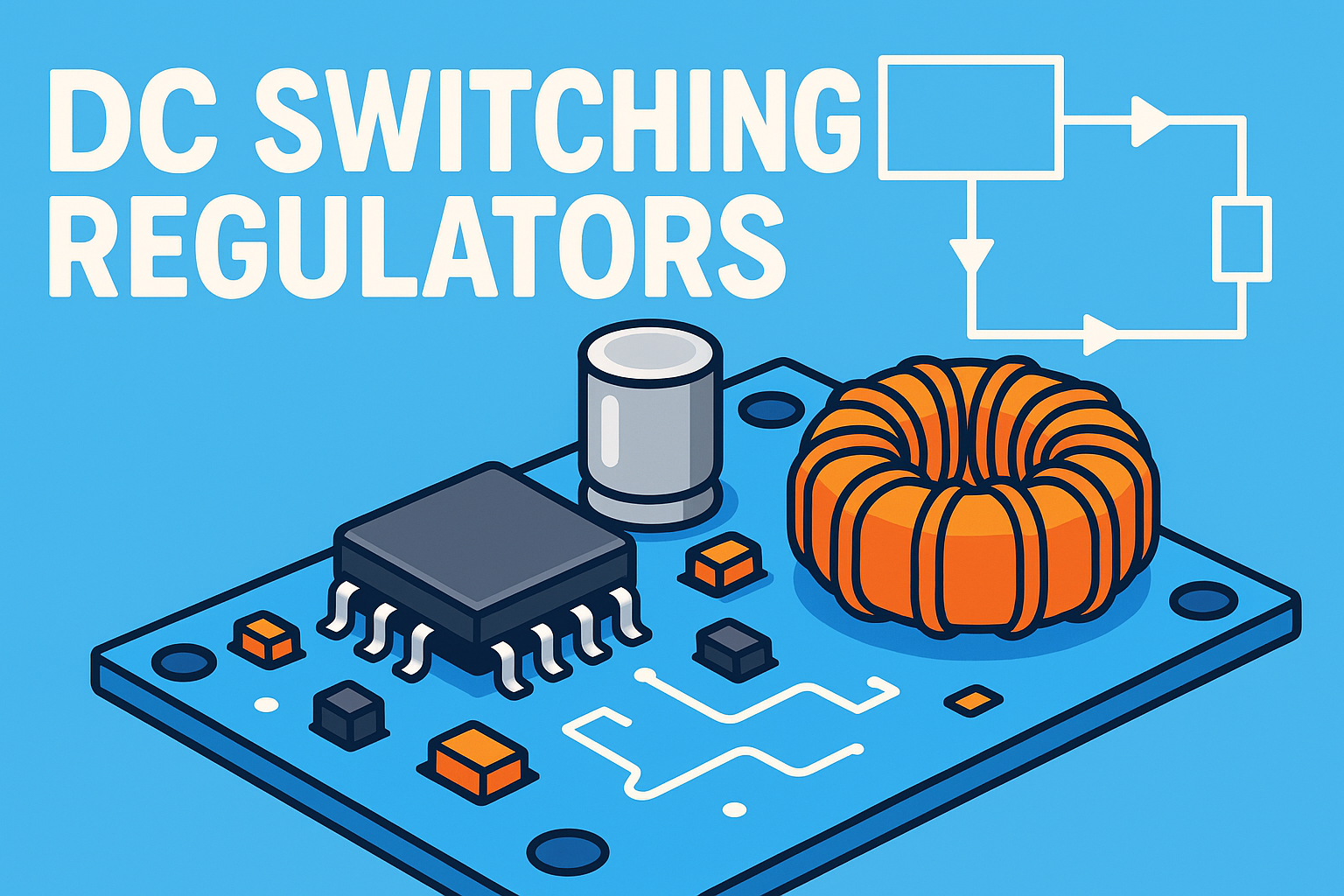
DC Switching Regulators: Principles, Selection, and Applications2025-05-30
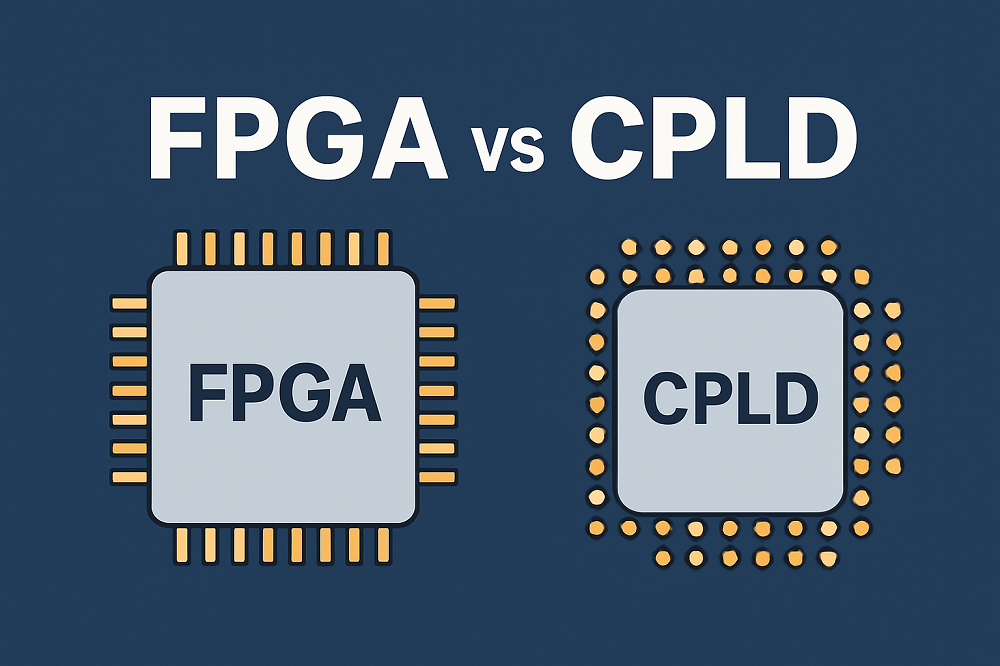
FPGA vs CPLD: In-depth Analysis of Architecture, Performance and Application2025-05-07
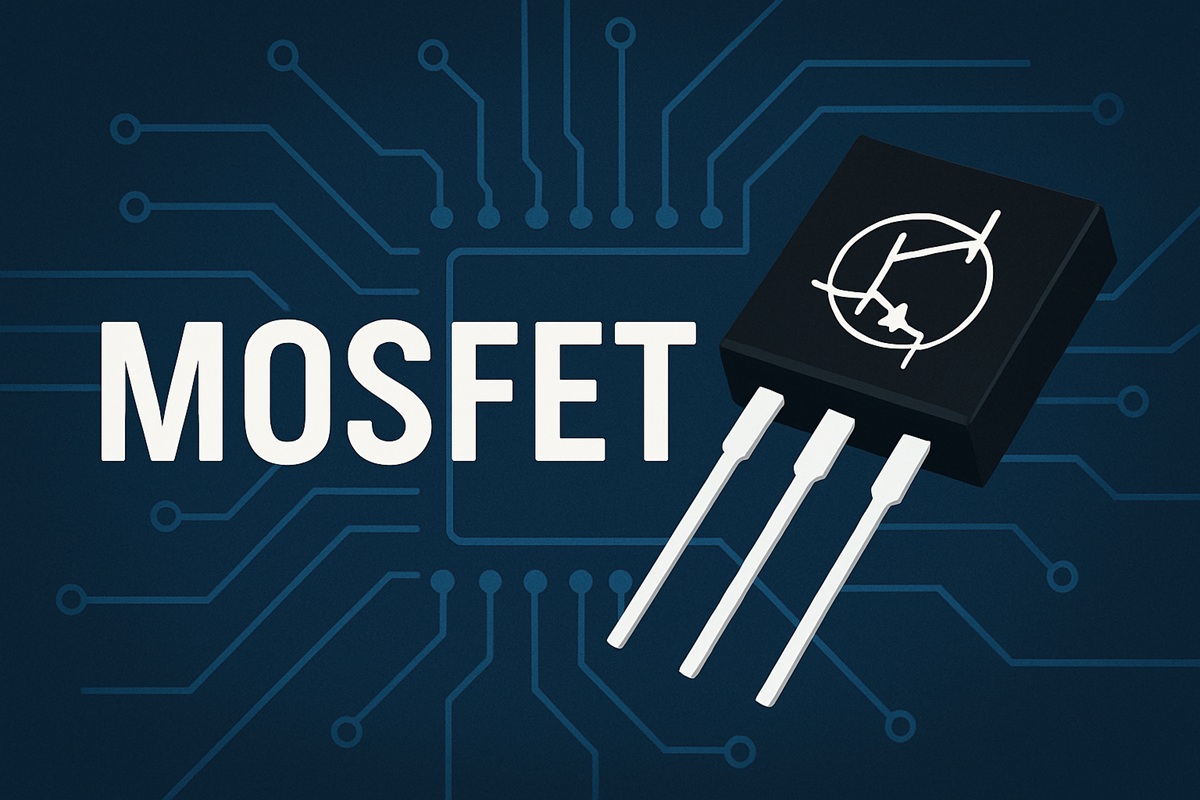
MOSFET Technology: Essential Guide to Working Principles & Applications2025-05-04
SMD Resistor: Types, Applications, and Selection Guide2025-04-30