bluetooth Related Articles
Stay Ahead with Expert Electronics Insights,
Industry Trends, and Innovative Tips
- Electronic Components
- News Room
- General electronic semiconductor
- Components Guide
- Sort by
- Robots
- Transmitters
- Capacitors
- IC Chips
- PCBs
- Connectors
- Amplifiers
- Memory
- LED
- Diodes
- Transistors
- Battery
- Oscillators
- Resistors
- Transceiver
- RFID
- FPGA
- Mosfets
- Sensor
- Motors, Solenoids, Driver Boards/Modules
- Relays
- Optoelectronics
- Power
- Transformer
- Fuse
- Thyristor
- potentiometer
- Development Boards
- RF/IF
- Semiconductor Information
- Sensors
- PCB
- transistor
Yes, current Wi-Fi-based smart home technology can turn on the lights with your smartphone or voice. But do you call that home automation, really? Isn’t it just a slightly more convenient light switch? How about this? When you unlock your front door, the lights in the foyer come on, the motion sensors on your alarm system turn off, the thermostat starts the air conditioning, and your entertainment system begins playing your favorite music—all before you put your keys down!Now that’s home automation, right? What about a more serious, or potentially life-and-death scenario, where hospital staff could track patients, staff members, and equipment from any console, PC, or tablet on the premises? While the best Wi-Fi systems allow us to take baby steps into building automation, wireless security, asset tracking, and more, a new technology called Bluetooth Mesh — an update to the standard Bluetooth wireless solution that most of us know — promises a better, more efficient, and much less expensive solution. “As people’s expectations for networks go up, they demand networks capable of handling hundreds (or thousands) of IP addresses, offering Wi-Fi-level of signal performance across the house and building,” Daniel Cooley, Senior Vice President of Silicon Labs, told Digital Trends. “People won’t put up with flaky Wi-Fi anymore. If they can get away with fewer antennas, it would be much better.” Cooley is a member of the Bluetooth Special Interest Group, or SIG, which oversees and develops Bluetooth technology. If he’s right—and industry watchers and makers of networking equipment are betting that he is—many aspects of our lives will soon be secured and simplified by this latest Bluetooth update. Traditional wireless networks, including one-to-one Bluetooth networks, are limited by distance between the two devices communicating. Wi-Fi makes that worse with an additional impediment—relatively high-power requirements. It’s difficult to make a Wi-Fi signal extend more than a few hundred feet without a massive antenna and large power supply. Bluetooth Mesh devices find a clever way to fix that. They connect to each other, and pass signals to peers that are within range, forming a web, or mesh, of interconnected devices capable of relaying data. This means that information is passed from one device to another, and another, and so on. This “managed flood” approach to data transmission, according to the Bluetooth SIG, “is uniquely suited for low-power wireless mesh networks, especially those handling a significant amount of multicast traffic.” “Multicast” is a form of network communication where a single sender broadcasts to multiple receivers. In a “flood network,” every device in the chain, or mesh, is multicasting to every device within its range, and so on. That creates a reliable network without the need for massive power draw or a big, beefy antennas. How Bluetooth Mesh works An important component of the Bluetooth protocol is its Generic Access Profile, or GAP, which controls how Bluetooth devices scan, broadcast, and connect to their peers. Until Bluetooth Mesh, GAP had a typical parent-child network relationship, where the parent did all the routing, and the child performed its allotted task. That’s what happens when you connect a Bluetooth keyboard to your tablet, for example. Ref.KY45-TMP421YZDRKY45-AD7814ARMZ
kynix On 2017-08-31
With increasing OEM development of compact and low-cost Bluetooth low energy (BLE) devices and accessories, Fujitsu Components America has introduced a new family of ultra-compact, BLE modules based on the Nordic Semiconductor nRF51822 System-on-Chip (SoC). The modules provide an economical means for developers to reduce their time-to-market.Fujitsu's new MBH7BLZ01-109003 and MBH7BLZ02-109004 Bluetooth low energy modules are among the smallest on the market. Bluetooth V4.0 single-mode compliant, the modules allow OEMs to quickly develop tiny, power-conscious and cost-efficient Bluetooth Smart consumer devices, such as medical monitors, proximity sensors, smart watches and fitness monitors, as well as emerging applications, such as 3D motion sensors and environmental sensors.Fujitsu offers two versions: A 10.5 x 9.2 x 1.6 mm surface-mount module without antenna, and a 15.7 x 9.8 x 2.0 mm surface-mount module with antenna. The modules feature a built-in MCU, which allows adding upper layer profiles including private profiles and application code. With development tools available from Nordic Semiconductor, it is possible to implement specific processing into the module and compose functions without using an additional MCU. These blank modules contain the complete verified and qualified Bluetooth® low energy protocol stack, offering flexibility and a high level of customization.Nordic Technical Support Center has a range of development tools and reference designs to quickly implement specific processing into the modules. The Nordic Semiconductor nRF51822 SoC is built around a 32-bit ARM Cortex M0 CPU with 256kB flash + 16kB RAM. The separation of protocol stack and application code allows engineers to focus on developing the application code for Bluetooth Smart accessories with assurance that the protocol stack is fully tested and can't be corrupted by application software development. Currently available reference designs include keyboard, mouse and advanced navigation remotes.According to Bob Thornton, Fujitsu Component America's President, combining Fujitsu's proven module packaging technology, distribution network, environmental responsibility and customer privacy with Nordic Semiconductor's ultra-low power SoC, application software development and technical support is a win-win. "Developers will have everything they need to create next-generation BLE products quickly and at a low cost," he said.J. Darren O'Donnell, Director of Marketing & Sales - Americas at Nordic Semiconductor, agreed. "We are pleased to work with Fujitsu to offer the design community an ultra-compact, ultra-low power, single-chip solution that allows engineers to develop a range of Bluetooth low energy and 2.4GHz proprietary designs for cost, power, and size-constrained applications," he said.Reference:KY45-DL16-7PCBA3KY45-DL100-7-PCBA3KY45-ZEPIR0BBS02MODG
kynix On 2016-10-20
Join our mailing list!
Be the first to know about new products, special offers, and more.
Feature Posts
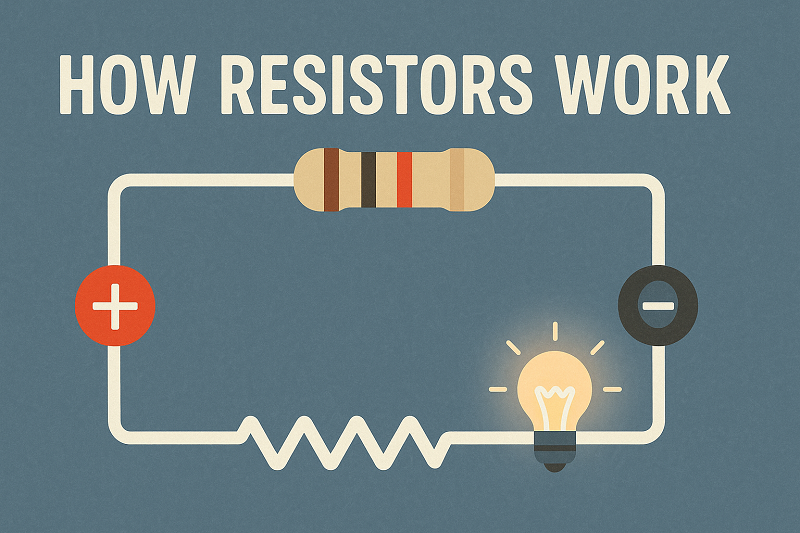
How Resistors Work: From Basic Principles to Advanced Applications2025-07-30
DC Switching Regulators: Principles, Selection, and Applications2025-05-30
FPGA vs CPLD: In-depth Analysis of Architecture, Performance and Application2025-05-07
MOSFET Technology: Essential Guide to Working Principles & Applications2025-05-04
SMD Resistor: Types, Applications, and Selection Guide2025-04-30