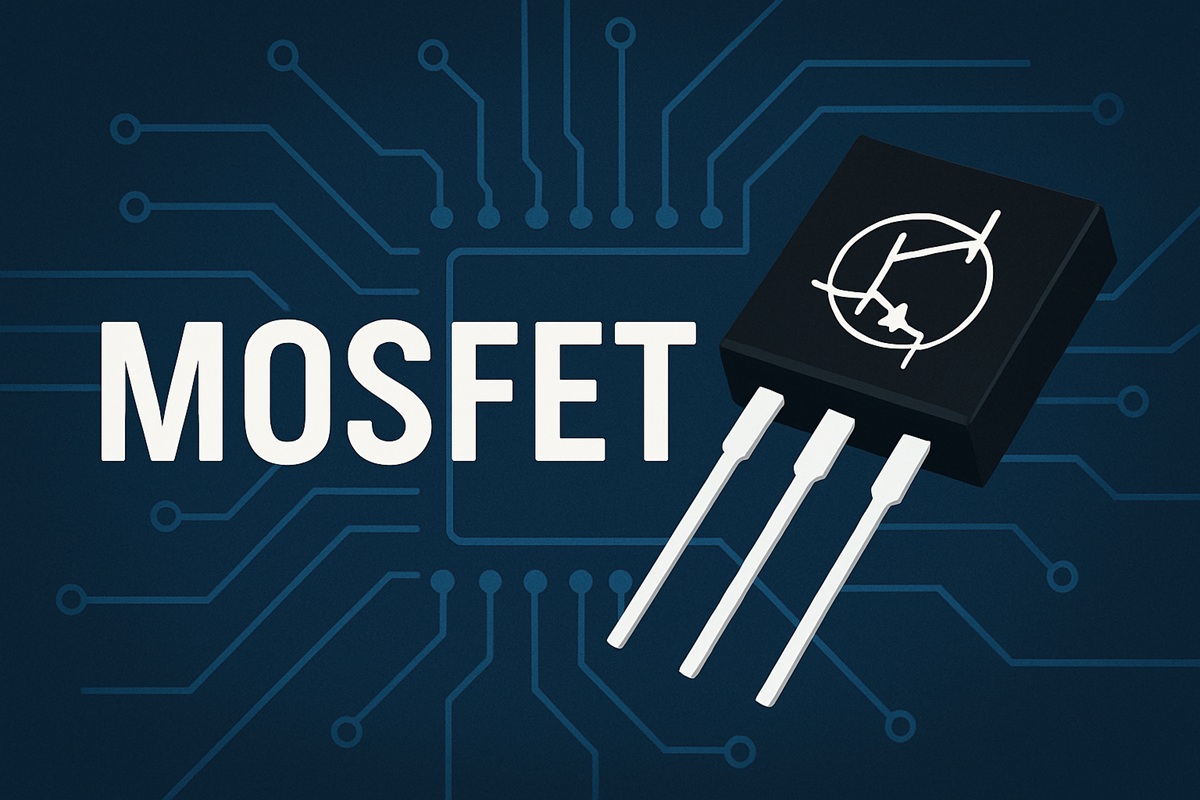
In this article today, you will learn what transistor is, how does it work, how long is its history, and how many kinds of transistor are there, how to replace one when your transistor is broke and so many more. Say no more and off we go. Catalog I. What is a Transistor? 1.1 General View 1.2 Transistor Structure and Operation II. Transistor History III. Transistor Development IV. Transistor Advantage V. Transistor Classification VI. Transistor Power Control VII. Transistor Test Replacement VIII. How to Judge the Electrode of a Transistor IX. Transistor Replacement Principle FAQ I. What is a Transistor? 1.1 General View Transistors make our electronics world go round. They're critical as a control source in just about every modern circuit. Sometimes you see them, but more-often-than-not they're hidden deep within the die of an integrated circuit. The transistor is a kind of solid semiconductor device. It has many functions, such as detection, rectifier, amplifier, switch, voltage stabilizer, signal modulation, and so on. As a variable current switch, transistors can control output currents based on input voltages. Unlike conventional mechanical switches (such as relay, switch), transistors use telecommunication signals to control their opening and closing, and the switching speed can be very fast, for example, the switching speed in the labs can be higher than 100GHz. Strictly speaking, transistors refer to all single components based on semiconductor materials, including diodes, transistors, field-effect transistors, silicon control, and so on. In addition, transistors usually mean crystal triodes. The transistors are divided into two main categories: bipolar junction transistors (BJT) and field-effect transistors (FET). The transistor has three poles. The three poles of bipolar junction transistor, composed of the emitter(made up of N-type and P-type), base, and collector respectively. For the field-effect transistors, they are the source, gate, and drain respectively. Because the transistor has three polarities, there are also three ways to use them, namely, emitter grounding (called common emitter amplification, CE configuration), base grounding (called common base amplification, CB configuration), and collector grounding (called common set amplification, CC configuration, emitter-coupled logic). Transistors are semiconductor devices, which are commonly used as amplifiers or electrically controlled switches. Transistors are important components that regulate the operation of computers, mobile phones, and all electronic devices. Due to their high response speed and accuracy, transistors can be used for a wide variety of digital and analog functions design, including amplifiers, switches, and voltage stabilizers, signal modulation, and oscillator circuits. Transistors can be packaged independently or in a very small area, which can accommodate 100 million or more transistors integrated into a part of the circuit. 1.2 Transistor Structure and Operation Transistors are made by stacking three different layers of semiconductor material together. Some of those layers have extra electrons added to them, which called “doping”, and others have electrons removed (doped with “holes” – the absence of electrons). A semiconductor material with extra electrons is called an N-type (negative) and a material with electrons removed is called a P-type (positive). With some hand waving, we can say electrons can easily flow from N-regions to P-regions if they have a little force (voltage) to push them. But flowing from a P-region to an N-region is really hard (requiring more force—voltage). The NPN transistor is designed to pass electrons from the emitter to the collector (the conventional current flows from collector to emitter). The emitter emits electrons into the base, which controls the number of electrons. In fact, most of the electrons emitted are “collected” by the collector, which sends them along to the next part of the circuit. A PNP has a little special area. The base still controls current flow, but that current flows in the opposite direction, that is, from emitter to collector, instead of electrons, the emitter emits “holes” which are collected by the collector. The transistor is kind of like an electron valve. The pin of the base is likely to a handle you can adjust to allow more or fewer electrons to flow from emitter to collector. II. Transistor History The invention of transistors can date back to the middle& later 1920s, an engineer Physicist Julius Edgar Lilienfeld filed a patent for a field-effect transistor (FET) in Canada in 1925, which was intended to be a solid-state replacement for the triode. Lilienfeld also filed identical patents in the United States in 1926 and 1928. However, it was limited to the technical level at the time, the material used to make it couldn’t meet the high-quality requirement, making it impossible to actually construct a working device at that time. In December 1947, the first practically implemented device was a point-contact transistor invented by American physicists John Bardeen, Walter Brattain, and William Shockley from Bell Labs. Due to the complex manufacturing process of point-contact transistors, many products fail, and it also has disadvantages, such as high noise, difficulty to control when power is high and narrow application range. To overcome these shortcomings, Shockley put forward the idea of replacing metal-semiconductor contacts with a "rectifier junction", and they also proposed the working principle of it. The transistor revolutionized the field of electronics and paved the way for smaller and cheaper radios, calculators, and computers, among other things. The transistor is on the list of IEEE milestones in electronics, and Bardeen, Brattain, and Shockley shared the 1956 Nobel Prize in Physics for their achievement. In 1950, the first P-N junction transistor came out, and its performance was exactly the same as the assumption of William Shockley. Most of today's transistors are still P-N junction transistors. (the so-called P-N junction is a combination of P-type and N-type, and P-type multiplex with holes, N-type multiplex with electrons.) In the first test, it can amplify the audio signal 100 times, its shape is shorter than the firewood stick but thicker. In naming the device, Walter Brattain thought of its resistive conversion properties, that is, it works on a transfer current from "low-resistance input" to "high-resistance output," so it's called trans-resistor, later this abbreviated as a transistor. The innovation of transistors was a major invention in the 20th century and the forerunner of the microelectronics revolution. Because the transistor is the key active component in practically all modern electronics. With it, a small, low-power-consuming electronic device can be used to replace a large, high-power-consuming electronic tube. What's more, the development of integrated circuits based on the invention of transistors. In 2016, a team at Lawrence Berkeley National Laboratory broke the physical limit and cut the most sophisticated transistor process available from 14nm to 1nm, making a breakthrough in computing technology. III. Transistor Development 1) vacuum triode In February 1939, there was a great discovery in the Bell Labs, the birth of a silicon PN junction. In 1942, a student, Seymour Benzer, was on a team led by Lark_Horovitz at Purdue University, found that monocrystalline germanium has excellent rectifying performance which other semiconductors do not. These findings laid the groundwork for the later invention of transistors. A triode is a vacuum tube with three electrodes which are cathode, anode, and a control grid. The function of an additional third electrode is to serve as an electrostatic screen that shields the cathode from the electrostatic field of anode triode is used for amplification of weak AC signals of frequency ranging from 0 to 100 MHz. 2) point-contact transistor The point-contact transistor is the first type of transistor to be successfully demonstrated. It was developed by research scientists John Bardeen and Walter Brattain at Bell Laboratories in December 1947. Bardeen and Brattain applied two closely-spaced gold contacts held in place by a plastic wedge to the surface of a small slab of high-purity germanium. The voltage on one contact modulated the current flowing through the other, amplifying the input signal up to 100 times. The group had been working together on experiments and theories of electric field effects in solid-state materials, with the aim of replacing vacuum tubes with a smaller device that consumed less power. 3) bipolar and unipolar transistors On the basis of bipolar transistors, Shockley put forward the concept of unipolar junction transistors in 1952, which is called junction transistors today. Its structure is similar to that of PNP or NPN bipolar junction transistors, but there is a depletion layer at the interface of P_N to form a rectifier contact between the gate and the conductive channels of source and drain. At the same time, both ends of the semiconductor as the gate to adjust the current between the source and drain. 4) silicon transistors The first working silicon transistor was developed at Bell Labs on January 26, 1954, by Morris Tanenbaum. The first commercial silicon transistor was produced by Texas Instruments in 1954. Silicon transistors and germanium transistors have the function of current amplification. The difference is that the threshold voltage(Even if the positive voltage is applied, it must reach a certain value before it can start to turn on. This is called threshold voltage, for silicon transistor, it is about 0.7V and for germanium transistor is about 0.3V) of silicon transistor is larger than that of germanium transistor; the reverse current of the silicon transistor is much smaller than that of the germanium transistor; the maximum operating temperature of the silicon transistor is higher than that of the germanium transistor; the stability of the silicon transistor is better than that of the germanium transistor. 5) integrated circuit (IC) After the invention of the silicon transistor in 1954, the great application prospect of the transistor has become more and more obvious. The next goal of scientists is how to connect transistors, conductors, and other devices efficiently. The invention of transistors gives birth to the integrated circuit as time requires. As we all know, an IC is a collection of electronic components—resistors, transistors, capacitors, etc.—all stuffed into a tiny chip and connected together to achieve a common goal today. 6) field-effect transistors(FET) and metal-oxide-semiconductor field-effect transistor(MOSFET) The field-effect transistor was first patented by Julius Edgar Lilienfeld in 1926 and by Oskar Heil in 1934, but practical semiconducting devices (the junction field-effect transistors) were developed later after the transistor effect was observed and explained by the team of William Shockley at Bell Labs in 1947. The basic principle of the field-effect transistor was first patented by Julius Edgar Lilienfeld in 1925. In 1959, Dawon Kahng and Martin M. (John) Atalla at Bell Labs invented the metal-oxide-semiconductor field-effect transistor (MOSFET) as an offshoot to the patented FET design. In 1962, Stanley, Heiman, and Hofstein in an RCA device integrated study group found that a MOS tube can be constructed by a conductive strip, a high-resistance channel region, an oxide layer, and an insulating layer on a Si substrate through diffusion and thermal oxidation. 7) CPU A central processing unit (CPU), also called a central processor or main processor, is the electronic circuitry within a computer that carries out the instructions of a computer program by performing the basic arithmetic, logic, controlling, and input/output (I/O) operations specified by the instructions. But fewer people know that modern CPUs contain millions of individual transistors that are microscopic in size. Because transistors are the building blocks of the integrated circuits, and more transistors in CPUs means higher processing efficiency. IV. Transistor Advantage Compared with the electron tube, the transistor has many advantages: (1)Fewer consumption No matter how good an electron tube is, it will gradually deteriorate due to changes in cathode atoms and chronic gas leakage. For technical reasons, the same problem existed at the beginning of transistor fabrication. With advances in materials and improvements in many ways, transistors live typically 100 to 1000 times longer than electron tubes. Consumption of electric energy is only 1/10 or dozens of times of the electron tube. It does not require heating the filament to produce free electrons like an electron tube. For example, a transistor radio can be listened to for half a year or more long with a few dry batteries, which is difficult for an electronic tube radio. (2)No need to preheat Work as soon as you turn on the machine. For example, a transistor radio, you can hear the sound as soon as it turns on, and pictures come up quickly when turn on a transistor TV. But electron tube equipment cannot do this. Obviously, transistors have great advantages in electric equipment, medical treatment, industrial measurement, etc. (3)Solid and reliable More reliable than the tube because of its shock resistance and vibration resistance. In addition, transistors release less heat due to their smaller size, so they can be used in small, complex, reliable circuits. Although the fabrication process of transistors is precise, the process is simple, it is helpful to increase the installation of it on the devices. (4)Importance Transistors are the key active components in all modern electrical appliances. The importance of transistors in today's society is mainly due to their ability to use highly automated processes for mass production, which greatly reducing unit production costs. While millions of monolithic transistors are still in use, but most transistors are assembled on microchips (chips) with diodes, resistors, and capacitors to make complete circuits. Analog or digital design or both are integrated on the same chip. The cost of designing and developing a complex chip is quite high, but the price per chip is minimal when the cost apportioned to millions of units. V. Transistor Classification According to material The semiconductor material used as a transistor can be divided into silicon material transistors and germanium material transistors. Furthermore, the polarity of the transistor can be divided into four types: germanium NPN transistors and PNP transistors, silicon NPN transistors, and PNP transistors. According to craft Transistors can be divided into diffusion transistors, alloy type transistors, and planar transistors according to their structure and fabrication process. According to the current capacity Transistors can be divided into low-power transistors, medium-power transistors, and high-power transistors by current capacity. According to service frequency Transistors can be divided into low-frequency transistors, high-frequency transistors, and ultra-high-frequency transistors. According to packaging Types The transistors can be divided into metal, plastic, glass, and ceramic packaging transistors. According to applications Transistors can be divided into low noise amplification transistors, middle and high-frequency amplification transistors, low-frequency amplification transistors, switching transistors, Darlington transistors, high reversion voltage transistors, damping transistors, phototransistors, and magnetic sensitive transistors, and so on. The low cost, flexibility, and reliability of transistors make them the general choice for non-mechanical tasks, such as digital computing. In the control of electric appliances and machinery, transistor circuits are also replacing motor equipment because of its lower cost and high efficiency. Specific Types Expressions 1) transistors It is a semiconductor device with two PN junctions inside and usually three eliciting electrodes outside. The transistor is divided into two main categories: bipolar junction transistor (BJT) and field-effect transistor (FET), which have slight differences in their application in a circuit. A bipolar junction transistor has terminals labeled base, collector, and emitter. A small current at the base terminal (that is, flowing between the base and the emitter) can control or switch a much larger current between the collector and emitter. For a field-effect transistor, the terminals are labeled gate, source, and drain, and voltage at the gate can control the current between source and drain. 2) giant transistor The power transistor is a high voltage, high current bipolar transistor (Bipolar Junction Transistor-BJT), so it is sometimes called Power BJT; its characteristics are: high voltage, high current, good switching characteristics, but the driving circuit is complex, driving power is large; the principle of GTR and ordinary bipolar junction transistor is the same. 3) phototransistor The phototransistor is a device that is able to sense light and alter the current flowing between emitter and collector according to the level of light it receives. Phototransistors and photodiodes can both be used for sensing light, but the phototransistor is more sensitive in view of the gain provided by the transistor. This makes phototransistors more suitable in a number of applications. Phototransistors adopt the basic transistor concept as the basis of their operation. In general, a phototransistor can be made by exposing the semiconductor of an ordinary transistor to light. Phototransistors were made by not covering the plastic encapsulation of the transistor with black paint in the early stage. 4) bipolar transistor This is a transistor widely used in audio circuits. The bipolar means the flow of current in two kinds of semiconductor materials. Bipolar transistors can be divided into NPN type or PNP type according to the polarity of operating voltage. 5) bipolar junction transistor—BJT The bipolar junction transistor (BJT) is a type of transistor that uses both electron and hole charge carriers. On the contrary, unipolar transistors, such as field-effect transistors, only use one kind of charge carrier. For their operation, BJTs use two junctions between two semiconductor types, N-type and P-type. BJTs have two types, NPN and PNP, and are available as individual components, or fabricated in integrated circuits, often in large numbers. BJTs have an amplification function, concretely, they can amplify current, mainly depending on its emitter current transmission through the base area to the collector. To ensure this transmission process, on the one hand, it requires to meet the internal conditions, that is, the impurity concentration in the emission region needs much larger than the impurity concentration in the base region, and meanwhile, the thickness of the base region should be very small. On the other hand, the external conditions should be satisfied, that is, the emission junction should be positive bias (adding positive voltage), and the collector junction should be inversely biased. This allows BJTs to be used as amplifiers or switches, giving them wide applicability in electronic equipment, including computers, TVs, mobile phones, audio amplifiers, industrial control, radio transmitters, and so on. There are many kinds of BJT, according to frequency, high frequency, low frequency, according to power, small, medium, high power, according to the semiconductor material, silicon, and germanium tube. The amplifier circuit consists of the common emitter, common base, and common collector. 6) field-effect transistor(FET) The meaning of "field effect" is that the principle of the transistor is based on the electric field effect of the semiconductor. The field-effect refers to the modulation of the electrical conductivity of a material by the application of an external electric field. There are two main types of FET: junction FET (JFET) and metal-oxide-semiconductor FET (MOS-FET). Unlike BJT, FET is conducted by only one carrier, therefore, it is also known as a unipolar transistor. It belongs to voltage-controlled semiconductor devices that have the advantages of high input resistance, low noise, low-power consumption, wide dynamic range, easy integration, no secondary breakdown, wide safe working area, and so on. In a metal, the electron density that responds to applied fields is so large that an external electric field can penetrate only a very short distance into the material. However, in a semiconductor, the lower density of electrons (and possibly holes) that can respond to an applied field is sufficiently small that the field can penetrate quite far into the material. This field penetration alters the conductivity of the semiconductor near its surface and is called the field effect. The field-effect underlies the operation of the Schottky diode and of field-effect transistors, notably the MOSFET, the JFET, and the MESFET. The field effect is to change the direction or magnitude of the applied electric field perpendicular to the surface of the semiconductor to control the density or type of most carriers in the conducting layer (channel) of the semiconductor. The current in the channel is modulated by voltage, and the working current is transported by most carriers in the semiconductor. This type of transistor, which has only one polar carrier to conduct electricity, is also called a unipolar transistor. Compared with bipolar transistors, FET is widely used in various amplifiers, digital circuits, and microwave circuits because of its high input impedance, low noise, high limit frequency, low power consumption, simple manufacturing process, and good temperature characteristics. 7) static induction transistor The static induction transistor(SIT), which was born in 1970, is actually a junction field-effect transistor. A high-power SIT device can be made by changing the transverse conductive structure of a small-power SIT device used for information processing into a vertical conductive structure. The operating frequency of SIT is comparable to that of the power MOSFET, or even higher than that of the electric MOSFET. The power capacity is also larger than the power MOSFET, so it is suitable for high-frequency and high-power devices. At present, it has been used in radar communication equipment, ultrasonic power amplification, pulse power amplification, and high-frequency induction heating, and so on. However, the SIT is conducted when no signal is added to the gate, and the gate is turned off when the negative bias is applied, which is called the normal on-type device, thus it is inconvenient to use. In addition, due to the large on-state resistance and consumption of SIT, it has not been widely used in most power electronic devices. 8) single-electron transistor A kind of transistor that can record signals with one or a small number of electrons. With the development of semiconductor etching technology, more and more large-scale integrated circuits can be made. It is considered an important component of nanotechnology, single-electron transistors provide high operating speed and low power consumption. Single-electron transistors are usually made by keeping two tunnel junctions in series. The transistor consists of a source electrode and a source-drain, which is joined with the help of a tunneling island that is also connected to a gate capacitively. The electrons can flow to another electrode only through the insulator. There are two categories of single-electron transistors: metallic and semiconducting. The former makes use of a metallic island, and its electrodes using a shadow mask are mostly evaporated onto an insulator. The latter, on the contrary, depends on severing the two-dimensional electron gas that forms at the interface of the semiconductors for the junction. Insulated-gate bipolar transistor(IGBT) is also a three-terminal device: gate, collector, and emitter. It combines the advantages of the giant transistor and power MOSFET. Therefore, it is widely used in many fields due to its sound characteristics. a. main parameters The main parameters of the transistor include current magnification factor, dissipation power, frequency characteristic, maximum collector current, maximum reverse voltage, reverse current, and so on. b. amplification coefficient DC current magnification factor also called static current magnification factor or DC magnification factor. It refers to the ratio of transistor collector current to base current, which is usually expressed by hFE or β when the static signal input is not changed. c. ac magnification AC magnification also called AC current magnification factor or dynamic current magnification factor. It refers to the ratio of transistor collector current variation to base current variation in AC state. In addition, the two parameters are close at a low-frequency state. d. dissipation power Dissipation power is also called the maximum allowable dissipation power of the collector, which refers to the maximum dissipation power of the collector when the transistor parameter does not exceed the prescribed allowable value. The dissipation power is closely related to the maximum allowable junction and collector current of the transistor. The actual power consumption of transistors is not allowed to exceed the maximum allowable dissipation power value, otherwise, the transistor will be damaged by overload. The transistor whose dissipation power is less than 1W is usually called the low-power transistor, that value is equal to or greater than 1W, and less than 5W, such transistor is called the medium-power transistor; whose value is equal to or greater than 5W is called the high-power transistor. When the operating frequency of the transistor exceeds the cutoff frequency fβ or fα, the current amplification factor β will decrease with the increase of characteristic frequency fT(fT refers to the operating frequency of the transistor when the β value is reduced to 1). Usually, the transistors whose fT is less than or equal to 3MHZ are called low-frequency transistors; transistors whose fT is greater than or equal to 30MHZ are called high-frequency transistors; those whose fT is greater than 3MHZ and less than 30MHZ are called intermediate frequency transistors. e. maximum frequency fM The maximum oscillation frequency is the corresponding frequency when the power gain of the transistor is reduced to 1. In general, the maximum oscillation frequency of high-frequency transistors is lower than the common base cutoff frequency fα, while fT is higher than the cutoff frequency fα of the common base and lower than the cutoff frequency fβ of the common collector. f. maximum current Collector maximum current is the maximum current allowed by transistor collector. When the collector current of the transistor exceeds it, the β value of the transistor will change obviously, which will affect the normal operation of the transistor and even damage it. g. maximum reverse voltage Maximum reverse voltage is the maximum operating voltage that the transistor is allowed to apply. It includes collector-emitter reverse breakdown voltage, collector-base reverse breakdown voltage, and emitter-base reverse breakdown voltage. (1) Collector-collector reverse breakdown voltage This voltage refers to the maximum allowable reverse voltage between the collector and emitter when the base of the transistor is open circuit, usually expressed in VCEO or BVCEO. (2) Base-base reverse breakdown voltage This voltage refers to the maximum allowable reverse voltage between the collector and the base when the transistor emitter is open circuit, expressed in VCBO or BVCBO. (3) Emitter-emitter reverse breakdown voltage This voltage refers to the maximum allowable reverse voltage between the emitter and the base when the collector of the transistor is open circuit, expressed in VEBO or BVEBO. (4) ICBO: reverse current between collector and base electrodes ICBO, also called collector junction reverse leakage current. It refers to the reverse current between collector and base when the emitter of the transistor is open circuit. ICBO is sensitive to temperature, thus the smaller the value is, the better the temperature characteristic of the transistor is. (5) ICEO: the reverse breakdown current between collector and emitter refers to the reverse leakage current between the collector and emitter when the base of the transistor is open. The smaller the current, the better the performance of the transistor. h. switches It is a most fundamental application of a transistor is using it to control the flow of power to another part of the circuit, that is, using it as an electric switch. Applying it in either cutoff or saturation mode, the transistor can create the binary on/off the effect of switches. A transistor switch is a critical circuit-building block; it is used to make logic gates, which go on to create microcontrollers, microprocessors, and other integrated circuits. VI. Transistor Power Control Today's power transistors can control hundreds of kilowatts of power, and using power transistors as switches has many advantages, mainly as follows: (1) Easy to turn off and few auxiliary components needed. (2) The switching speed is quick and works at a very high frequency. (3) The voltage resistance range is wide. Performance improvement of power transistors. Such as: (1) An increase in the effective working area of switching transistors. (2) Technical processing simplification. (3) Recombination of transistors. (4) The progress of base driving technology for the high power switch. Today's base driving circuits not only drive power transistors but also protect power transistors, which are called "non-centralized protection" (as opposed to centralized protection). The functions of the integrated drive circuit include: (1) Turning-on and turning-off power switches. (2) Monitoring auxiliary power supply voltage. (3) Limiting maximum and minimum pulse width. (4) Thermal protection. (5) Monitoring saturation voltage drop of switches. VII. Transistor Test Replacement The transistors in the circuit mainly include crystal diode, transistor, thyristor, field-effect transistor, and so on. The most commonly used transistor and diodes are the transistor and diode. How to correctly judge the good or bad of the transistors is one of the keys to maintenance. The key function of an ideal diode is to control the direction of current flow. Current passing through a diode can only go in one direction, called the forward direction. Currently trying to flow the reverse direction is blocked. They’re like the one-way valve of electronics. If the voltage across a diode is negative, no current can flow, and the ideal diode looks like an open circuit. In such a situation, the diode is said to be off or reverse biased. As long as the voltage across the diode isn’t negative, it’ll “turn on” and conduct current. Ideally, a diode would act like a short circuit (0V across it) if it was conducting current. When a diode is conducting current it’s forward biased (electronics jargon for “on”). First of all, we should know whether the diode belongs to a silicon tube or a germanium tube. The forward voltage drop of the germanium tube is generally between 0.1~0.3V, while that of the silicon tube is generally between 0.6~0.7V. The method of measurement is as follows: two multimeters are used. one multimeter is used to measure the forward resistance and another multimeter is measuring the voltage drop of its tube. Therefore, whether germanium tube or silicon tube can be judged according to the voltage drop values. In addition, the greater the difference between the positive and negative resistance of the measured diode, the better. For example, the forward resistance is several hundred or thousands of ohms, and the reverse resistance is more than tens of kilos, it can be concluded that the diode is good. And meanwhile, the positive and negative electrodes of the diodes can be determined: when the measured resistance values are hundreds of ohm or thousands of ohm, it indicates that is the positive resistance. In addition, if the forward and backward resistance is infinite, it indicates the internal breakage; if the forward and backward resistance is the same, there is also a problem with such a diode; and the forward and backward resistance is zero to indicate the short circuit. Crystal Triode: It mainly plays an amplification role, so how to determine the amplification capacity? The method is as follows: the multimeter is adjusted to the level R×100 or R×1K. When the NPN tube is measured, the positive meter pen is connected with the emitter and the negative meter pen is connected with the collector, the finally measured value should be thousands of ohm. Then a 100kΩ resistor is connected in series between the base and collector, and the resistance measured by the multimeter should be significantly reduced. The greater the change, the stronger the amplification ability of the transistor. If the change is small or no change at all, that means the transistor does not have amplification ability or this ability is very weak. VIII. How to Judge the Electrode of a Transistor Using R×100 level of multimeter germanium transistors to measure and for silicon transistors is R×1K. The red meter pen is in contact with an electrode, and the other two electrodes are measured by a black meter pen. If you can’t find two small resistors, you can move the red meter pen to the other electrodes to measure continuously. Neither works, you can move the black meter pen. When two small resistors are found, the measuring electrode of the fixed meter pen is the base. If the fixed meter pen is a black pen, the transistor is the NPN type, and if the fixed one is a red pen, the transistor is a PNP type. A. method for judging resistances of collector and emitter A multimeter is used to measure the resistance at the extreme poles of the base removal, and the exchange meter pen is measured twice. In the case of a germanium tube, the smaller resistance is measured for the first time. In the case of the PNP type, the black meter pen is connected to the emitter, and the red meter pen is connected with a collector electrode as if it is an NPN type. The black meter pen is connected to the collector, the red meter pen is connected to the emitter; If it is a silicon tube, the first time the measured resistance is larger if it is PNP type, the black meter pen is connected with the emitter, the red meter pen is connected with the collector, if the type is NPN, the black meter pen is connected with the collector, and the red meter pen is connected with the emitter. B. PN junction forward resistance method Measuring the forward resistance of two PN junctions, the value of the emitter is larger and the value of the collector is smaller. C. amplification coefficient method Using the two-meter pens of the multimeter to contact the two electrodes except for the base, if it is PNP, using the finger to touch the base and the electrode that red meter pen connected to see the swing of the pointer. Change the meter pens to test again, selecting the large swing. At this time, the electrode of the red meter pen connected is the collector. If it is NPN, using the finger to touch the base and the electrode that the red meter pen connected to see the swing of the pointer. Change the meter pens to test again, selecting the large swing, at this time, the electrode of the black meter pen connected is the collector. Note: The between analog multimeter and the digital multimeter is different. For the analog multimeter, the red meter pen is connected to the negative pole of the power supply, whereas the digital meter is the opposite. IX. Transistor Replacement Principle The replacement principle of transistors can be summarized as three: same type, similar characteristics, and similar appearance. One—same type 1.The material is the same, that is, the germanium tube replaces the germanium tube, silicon tube replaces the silicon tube. 2.The polarity is the same, that is, NPN-type tube replaces NPN-type tube and PNP-type tube replaces PNP-type tube. Two—similar characteristics The characteristics of the transistors used for replacement should be similar to those of the original transistors, and their main parameter values and characteristic curves should not differ much. 1. Maximum DC dissipation power (PCM) of collector board PCM of the replaced transistor is generally required to be equal to or larger than the original transistor. However, in a practical test, if the actual DC dissipation power of the original transistor in the whole circuit is much smaller than its PCM, it can be replaced by a transistor with a smaller PCM. 2. Maximum allowable DC current (icm) of collector Icm of replacing transistor is generally required to be equal to or larger than the original transistor. 3. Breakdown voltage Transistors for replacement must be able to withstand the maximum operating voltage throughout the machine. 4. Frequency characteristics The frequency characteristic parameters of transistors are as follows: (1) characteristic frequency ft: it refers to the frequency when the test frequency is high enough of the common emitter current magnification factor. (2) cutoff frequency fb: When replacing transistors, the main consideration is ft and fb. Transistors usually required for replacement should not be less than the corresponding ft and fb of the original one. 5. Other parameters In addition to the above main parameters, for some special transistors, the following parameters should be taken into consideration when replacing: (1) For low noise transistors, transistors with small or equal noise coefficients should be used in replacement. (2) For transistors with automatic gain control performance, transistors with the same automatic gain control characteristics should be used during replacement. (3) For the switch tube, the related switching parameters should be considered when replacing the switch tube. Three—similar appearance The small power transistors are similar in shape, so long as the lead line of each electrode is marked clearly, and the order of the lead line is the same as that of the tube to be changed, it can be replaced. The appearance of high-power transistors is quite different. In order to install well and maintain normal heat dissipation conditions, the transistors with similar appearance and same size should be selected for replacement. FAQ 1. What is a transistor and how does it work? A transistor is a miniature electronic component that can do two different jobs. It can work either as an amplifier or a switch: When it works as an amplifier, it takes in a tiny electric current at one end (an input current) and produces a much bigger electric current (an output current) at the other. 2. What are transistors used for? Transistor, semiconductor device for amplifying, controlling, and generating electrical signals. Transistors are the active components of integrated circuits, or “microchips,” which often contain billions of these minuscule devices etched into their shiny surfaces. 3. What is transistor and its types? Transistors are a three terminal semiconductor device used to regulate current, or to amplify an input signal into a greater output signal. ... There are a varieties and different types of transistors available in today's market including Bipolar, Darlington, IGBT, and MOSFET Transistors. 4. What is the principle of transistor? A transistor consists of two PN diodes connected back to back. It has three terminals namely emitter, base and collector. The basic idea behind a transistor is that it lets you control the flow of current through one channel by varying the intensity of a much smaller current that's flowing through a second channel. 5. What are the two main applications of transistor? Transistors are commonly used in digital circuits as electronic switches which can be either in an "on" or "off" state, both for high-power applications such as switched-mode power supplies and for low-power applications such as logic gates. 6. What is PNP and NPN transistor? In an NPN transistor, a positive voltage is given to the collector terminal to produce a current flow from the collector to the emitter. In a PNP transistor, a positive voltage is given to the emitter terminal to produce current flow from the emitter to collector. 7. Why is more transistors better? By squeezing more transistors into a smaller space, a microprocessor can be produced which does more work in less time (more powerful). It also allows one chip to perform more functions - what used to require several chips can all fit into one chip. 8. How do you read a transistor? The typical format for the transistor is a digit, letter and serial number. The first digit is the number of leads minus one. An ordinary bipolar transistor has three leads, so the first digit for it will be 2. The letter N is for semiconductors, so this will be the letter written on a transistor using this system. 9. How do you connect two transistors together? Two NPN transistors can be connected in series with the collector of the lower transistor connected to the emitter of the upper transistor, figure 4, which provides a way to switch off the load from two different signals. Either input can turn off the load but both need to be on for the load to be on. 10. Are smaller transistors faster? The smaller the transistor, the smaller the gate, and the less charge you have to move around. Fourth, you can make the chip faster. The FET effect is not instantaneous, there is a propogation delay involved. Smaller transistors have a shorter delay, so you can operate at higher clock frequencies. You May Also Like Basic IGBT Tutorial: Short-circuit Protection and Driving Circuit
kynix On 2016-08-31
1228
 info@kynix.com
 00852-6915 1330